
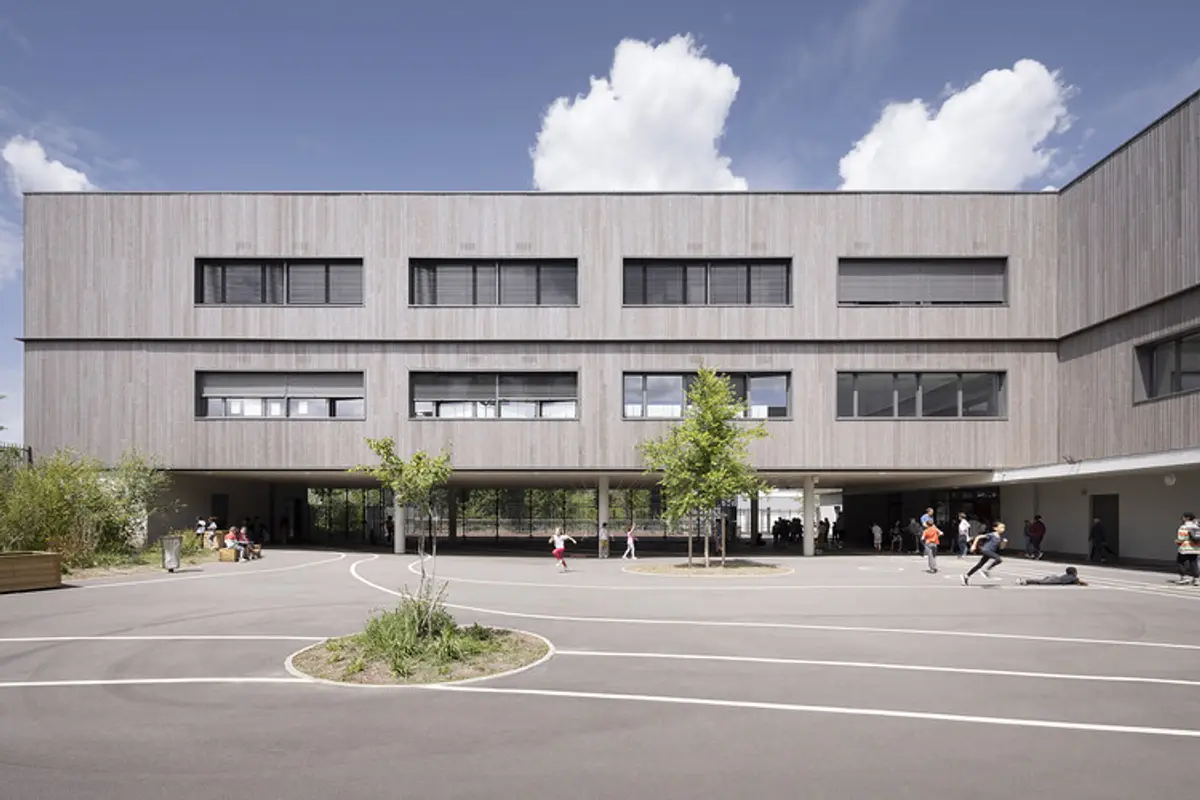
Vil Genis School by BPA ARCHITECTURE – Massy, France
Vil Genis School in Massy, France, features sustainable design, south-facing classrooms, community integration, accessible spaces, and modern educational architecture.


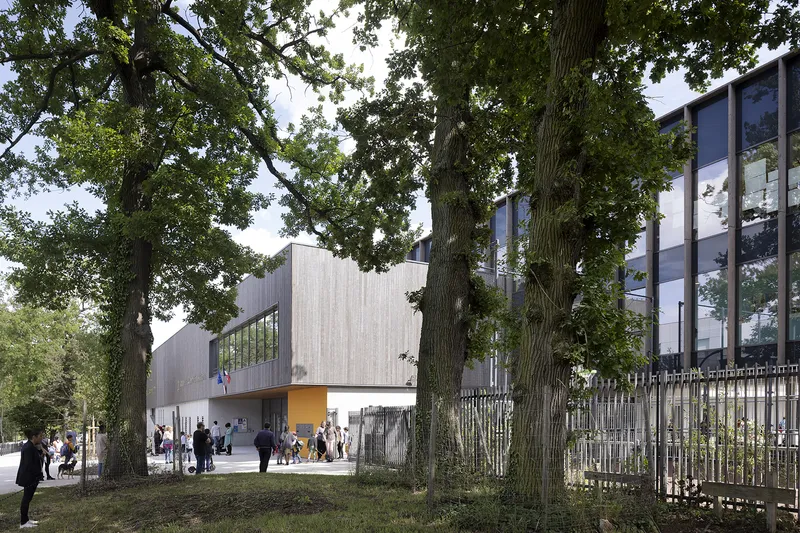
IntroductionVil Genis School, designed by BPA ARCHITECTURE in Massy, France, stands as a modern educational facility seamlessly integrating nature and urban life. Strategically located on the periphery of a developing neighborhood, the school bridges the edge between the city and natural landscapes. The project emphasizes high architectural quality, environmental sustainability, and optimized learning conditions for students.
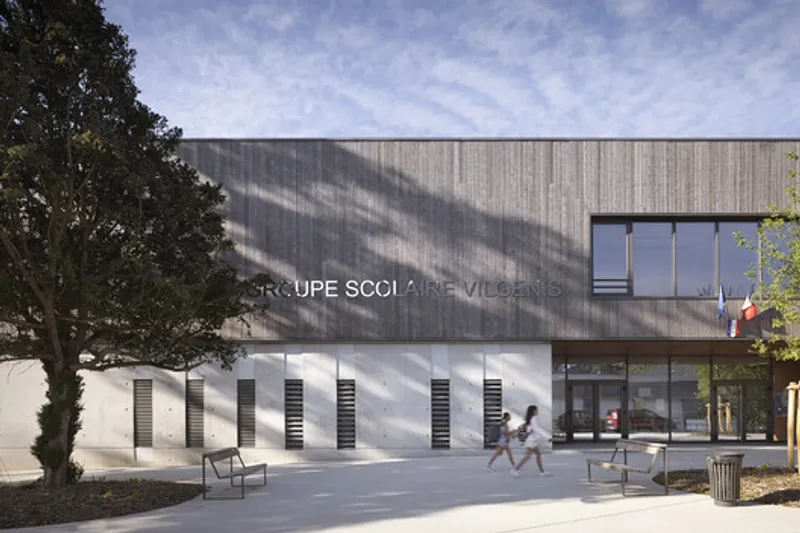
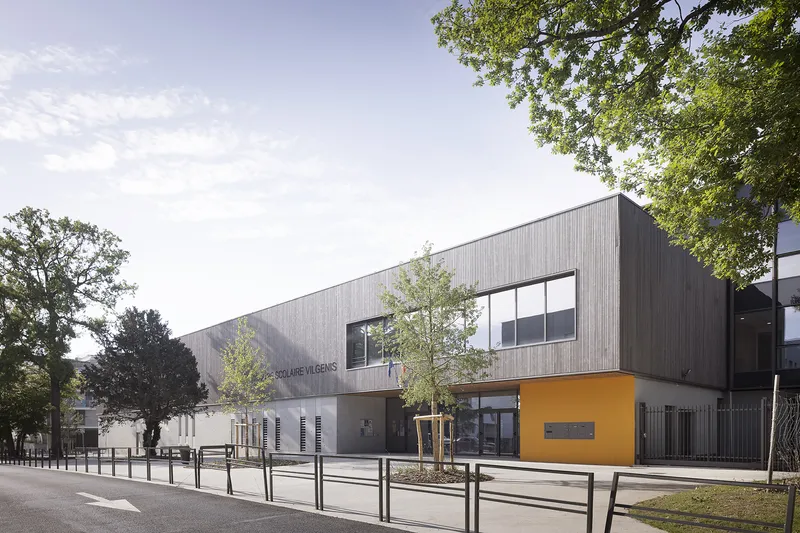
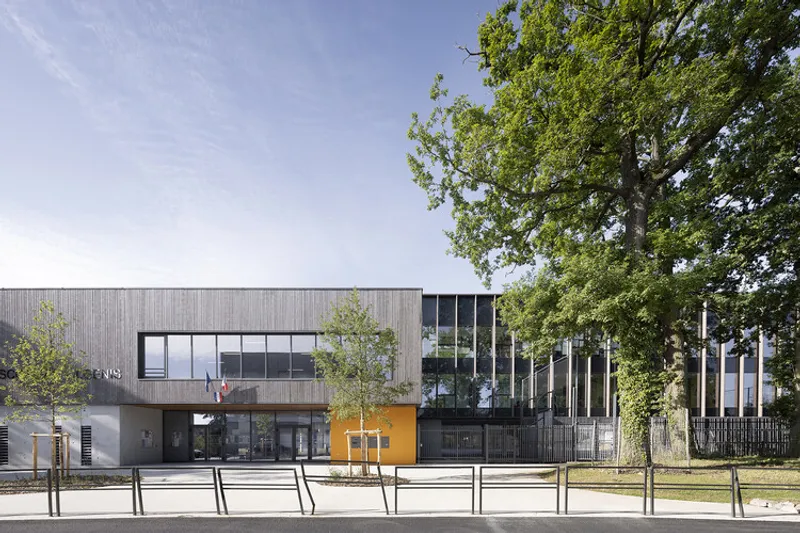
Urban Context & IntegrationThe school’s urban integration prioritizes connection with the local community while enhancing safety and accessibility. Its position near the Place des Écoles fosters proximity to residents, while the underground parking and delivery zones are placed along Vilgénis Street toward the Place des Commerces, ensuring secure access for staff, students, and visitors. The site’s layout creates a welcoming, safe environment for children and families.
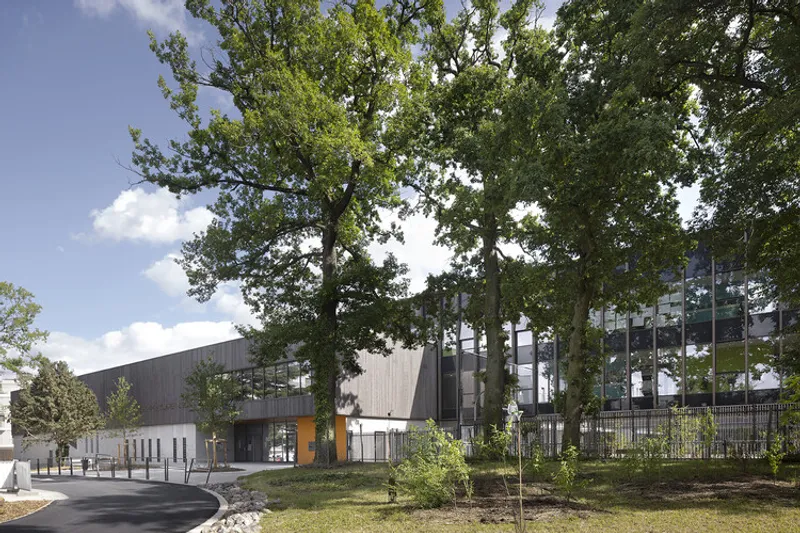
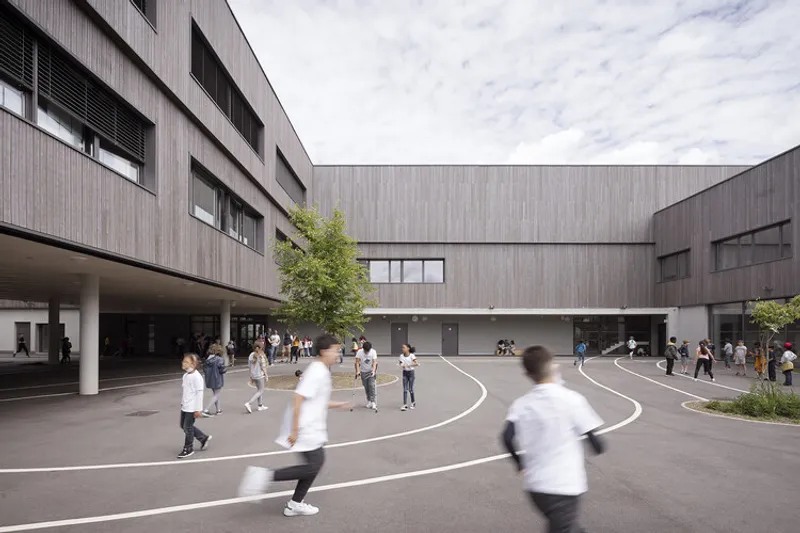
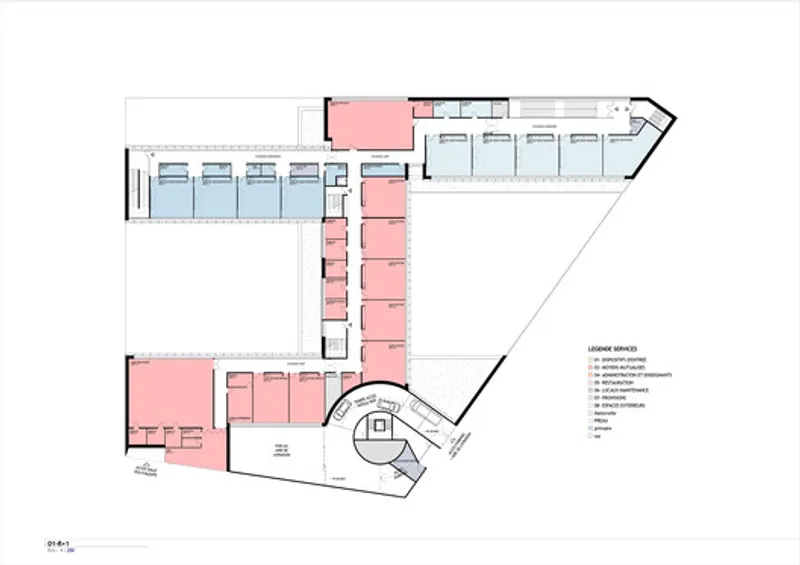
Architectural Design & OrganizationThe building adopts an H-shaped typology, offering a functional layout that organizes the various educational entities efficiently. This configuration optimizes natural light and ventilation throughout the school. Classrooms are oriented southward, maximizing daylight exposure, which supports teaching activities and improves student well-being. The design emphasizes accessibility for all levels, particularly for younger students, with reception areas, playgrounds, dining facilities, and classrooms easily reachable. Meanwhile, the upper floors accommodate older students, maintaining clear circulation and hierarchy within the building.
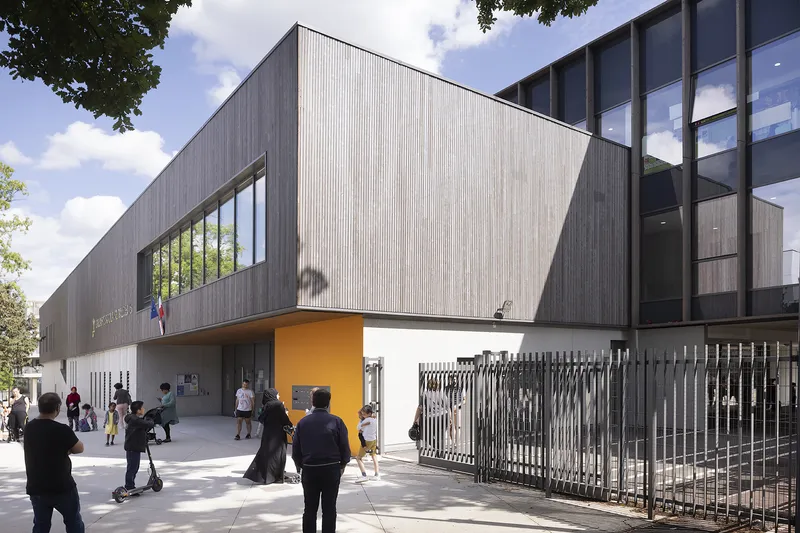
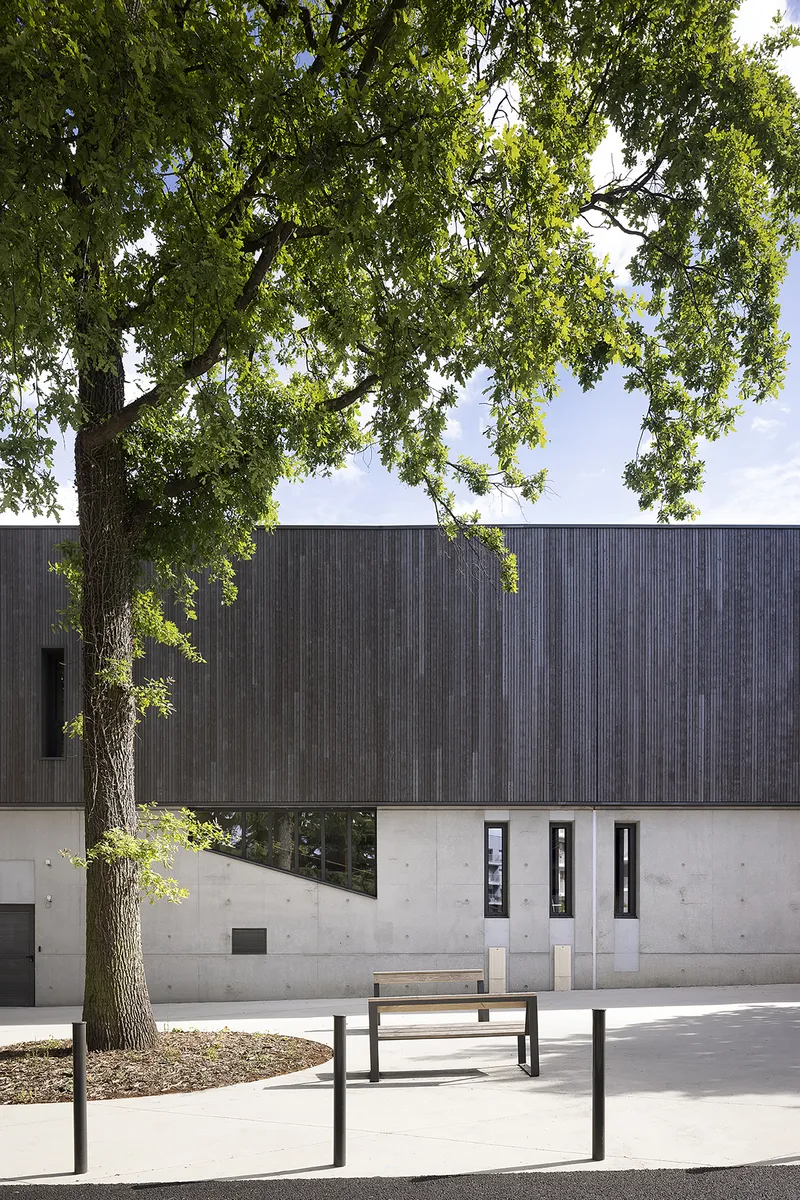
Sustainability & Environmental FeaturesVil Genis School demonstrates environmentally conscious architecture. The design incorporates bioclimatic strategies to regulate temperature and reduce energy consumption, including south-facing classrooms for passive heating and daylighting. Landscaping around the school promotes green outdoor spaces, contributing to biodiversity while providing safe recreational areas for students. The use of sustainable materials such as BETON BAS CARBONE ensures a lower carbon footprint, complementing the modern, responsible approach to school design.
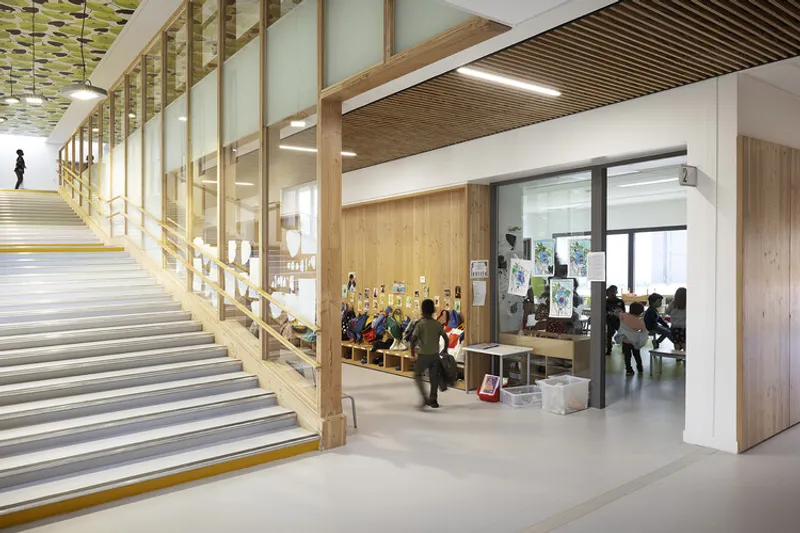
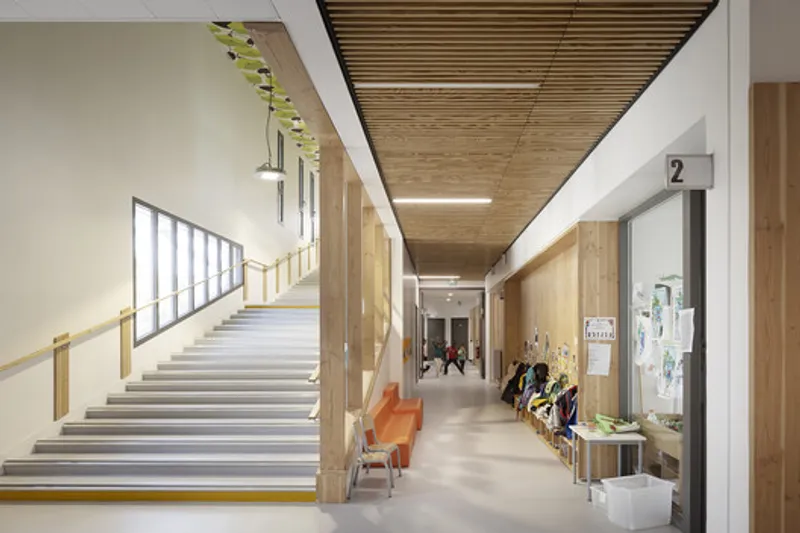
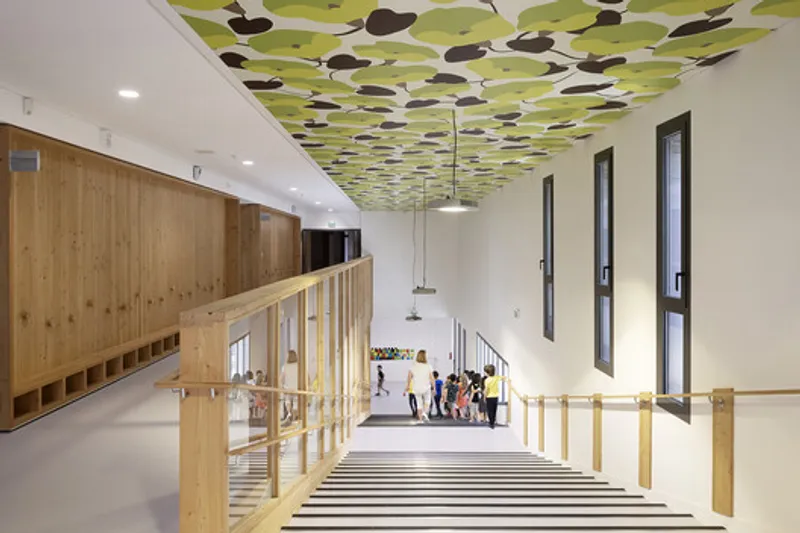
Interior Experience & FunctionalityThe school interior is designed to support collaborative learning and daily functionality. Stairwells, corridors, and shared spaces promote movement and visual connections, while classrooms and specialized facilities like the restaurant and activity areas prioritize comfort and accessibility. The design balances openness with spatial zoning, ensuring a harmonious environment where students, staff, and visitors can interact efficiently while maintaining privacy and safety.
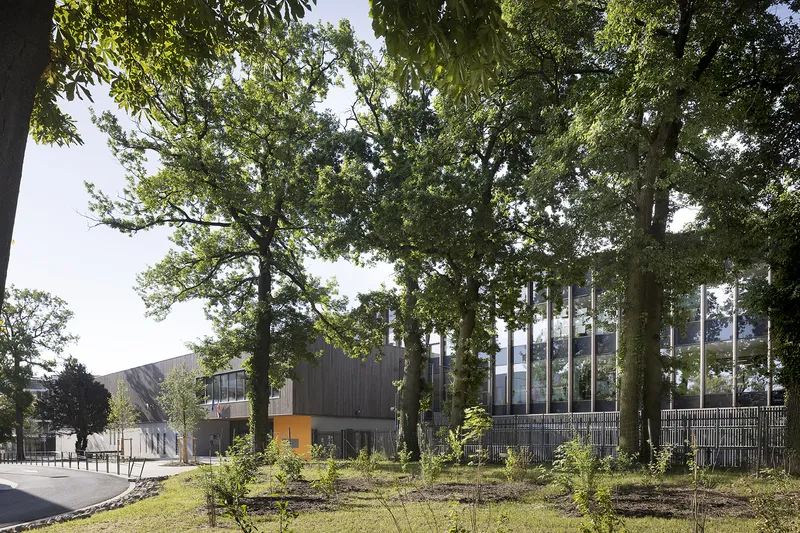
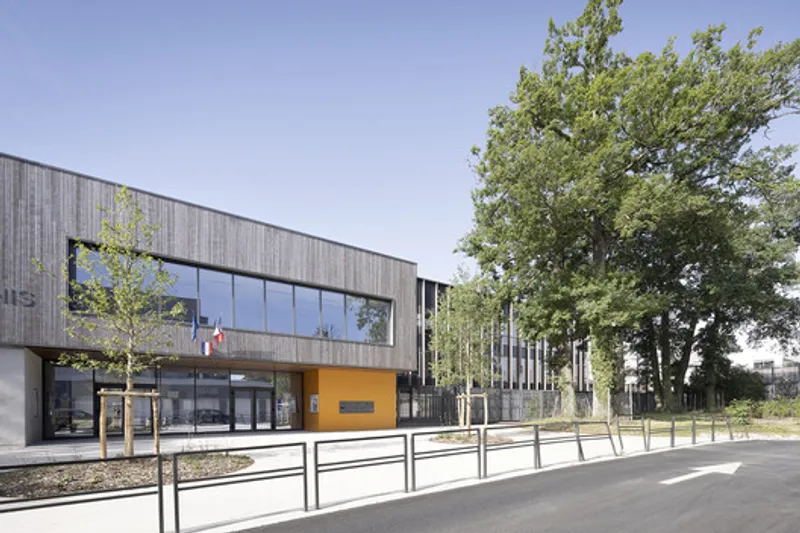
Vil Genis School is a forward-thinking educational facility that harmonizes modern architecture, sustainable design, and urban integration. Its thoughtful planning, functional H-shaped layout, and emphasis on environmental quality make it an exemplary model for contemporary school architecture. By prioritizing student well-being, natural light, and community engagement, BPA ARCHITECTURE has created a landmark institution that blends educational excellence with environmental responsibility.
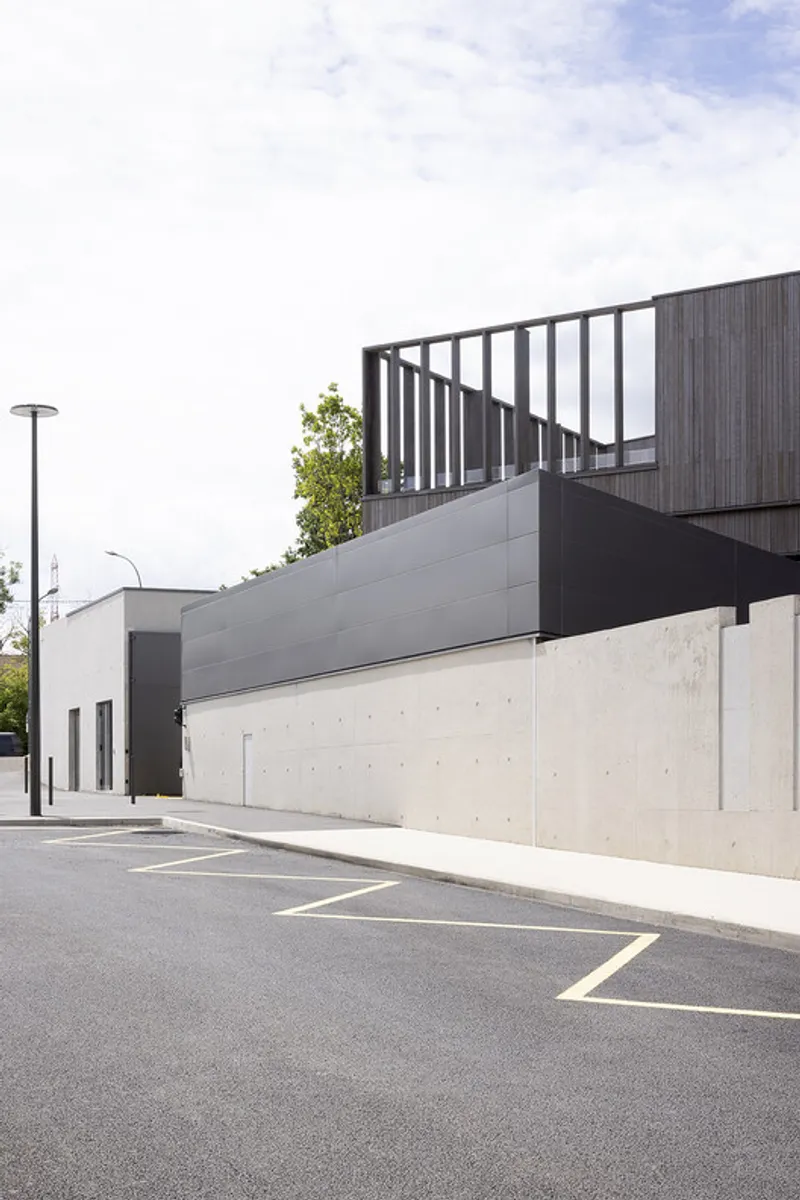
All the photographs are works of


Popular Articles
Popular articles from the community


Temporary Home for Dogs: A Reversed Zoo Rethinks Animal Shelter Architecture
In Bucharest, a sinuous corridor and freed landscape flip the logic of containment, designing a shelter that works to make itself unnecessary.

Tsunami Convergenics: Turning Catastrophic Ocean Forces into Underwater Housing Infrastructure
A speculative underwater settlement off the coast of Onagawa, Japan, treats tsunamis and typhoons as energy sources rather than threats.

Cloaked Colonization: A Mobile Underwater Habitat That Moves Like a Fish
Micah Abaya's shortlisted EHC Pacific entry reimagines ocean settlement as a dispersed network of self-sustaining architectural organisms.

Singing Woman: An Opera House That Performs Before the Curtain Rises
Ovidiu Cristian Pavel's conceptual opera house translates Estonia's choral identity into a sculpted waterfront landmark facing the Baltic Sea.

Similar Reads
You might also enjoy these articles


Hodi-Mandai Geram
Project Function: Preservation and revitalization of the Intangible heritage and socio-spatial identity of the Hodi by Housing, Cultural Memory Center, Sacred Grove, landscape, local tourism economy


Olio Towers: A Mid-Rise for Performers That Fuses Housing, Rehearsal, and Stage
Located blocks from Houston's Theater District, this modular tower stacks living units around a central performance atrium.

Oasis: Modular Green Housing Carved into Dhaka's Urban Fabric
A shortlisted Plugin Housing entry reclaims unauthorized settlements in Dhaka with stepped concrete volumes, green roofs, and ventilation-driven design.

Black Hole: A Floating Megastructure for the Post-Physical Era
Emiliano Mazzarotto envisions a spherical, self-scaling arena where e-sports, digital hotels, and holographic stadiums replace traditional public space.

Explore Pont-Aven School Competitions
Discover active competitions in this discipline

Challenge to design public laboratory

Challenge to reimagine the Iron Throne

Photograph architecture without architects

Illustrate the lost glory of Angkor Wat - Render Challenge
Comments (0)
Please login or sign up to add comments
No comments yet. Be the first to comment!