
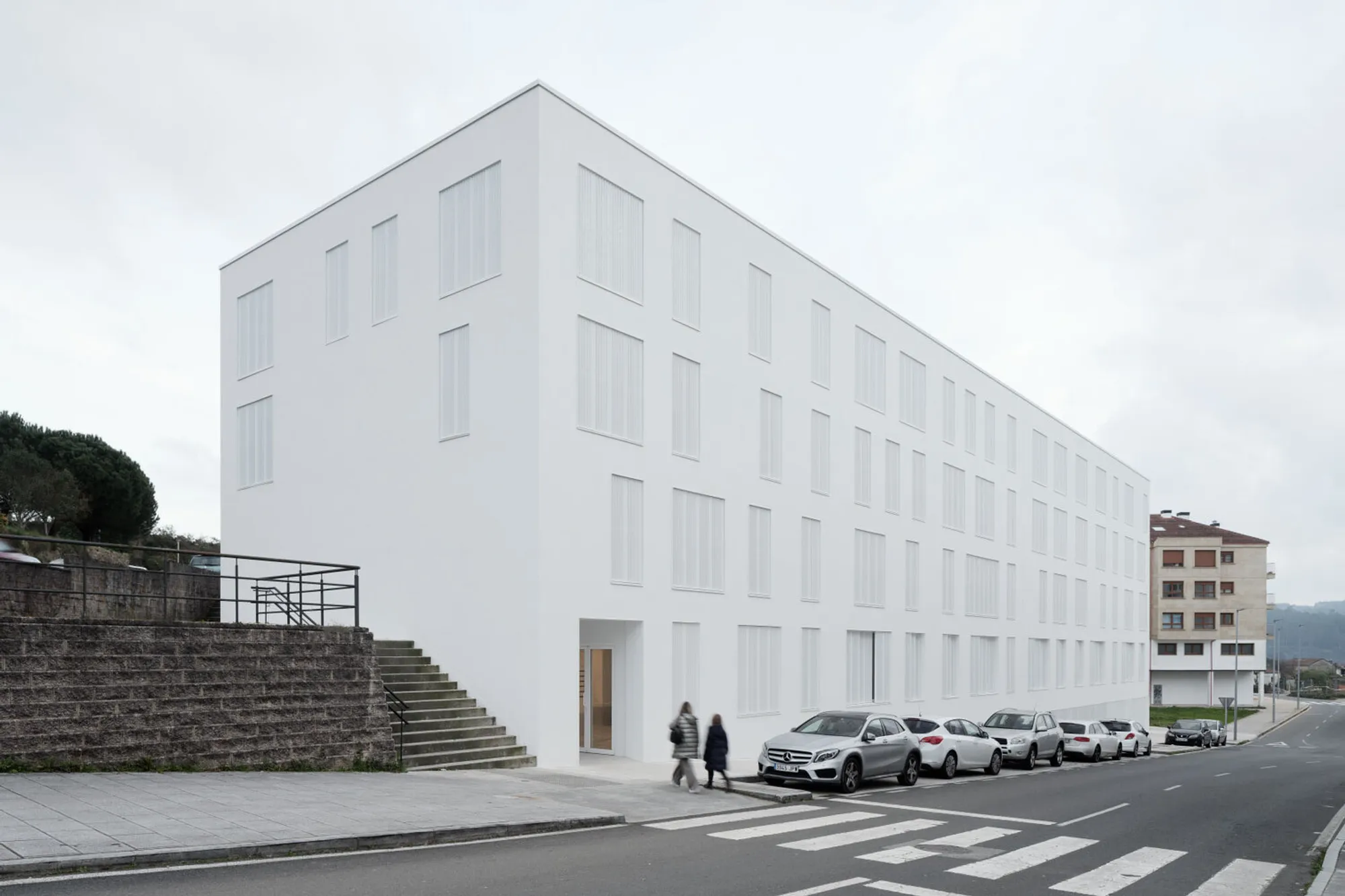
Alto Residencial Coop: Cooperative Housing Development in Santiago de Compostela by Carbajo Barrios Arquitectos
A linear cooperative housing complex blending white volumes and perforated metal façades, enhancing community living, natural light, privacy, and urban integration.


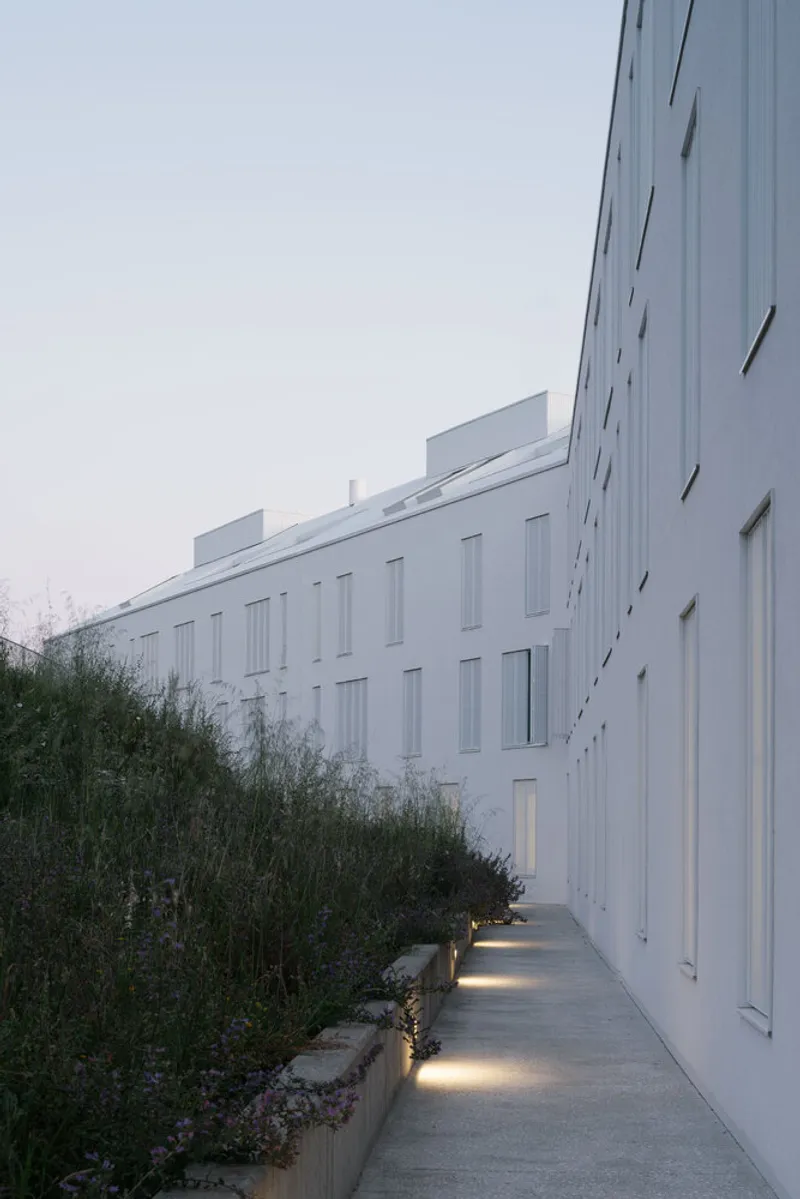
The Alto Residencial Coop stands as a contemporary residential development in Santiago de Compostela, Spain, designed by Carbajo Barrios Arquitectos. Completed in 2023, the 5,463 m² project introduces a socially driven and spatially efficient model of cooperative housing, emphasizing participatory decision-making, urban integration, and environmental performance. Through its linear architectural form, perforated metal façade system, and community-centered circulation concept, the project redefines collective living in one of the city’s last remaining developable residential plots.
A Cooperative Model Focused on Community and Affordability
The project originates from a group of future residents organized as a cooperative, enabling them to directly influence design decisions, spatial programs, and material choices. This participatory structure achieves three critical goals:
- Reduced construction costs by removing developer profit margins.
- Democratized decision-making, allowing residents to shape the building that will define their daily lives.
- A strong sense of belonging, fostering long-term community relationships and meaningful interaction within the shared spaces.
This cooperative approach aligns with contemporary housing models prioritizing affordability, inclusivity, and collaborative living, an essential direction for European residential developments.
Strategic Site Location Within a Transitional Urban Context
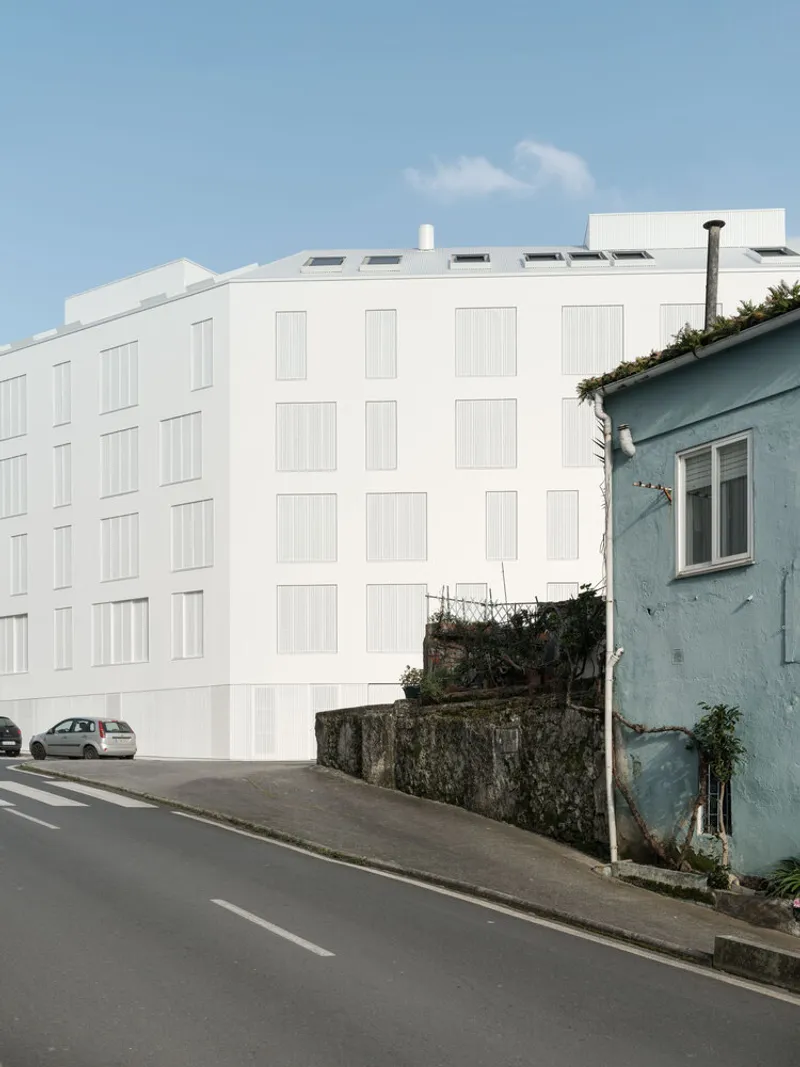
Positioned on one of the final vacant sites in a residential district that emerged in the 1990s around the Ermita de Santa Marta, the building borders the slopes leading to Monte de Conxo. This edge condition places the project at the intersection between consolidated urban land and a low-density residential fabric.
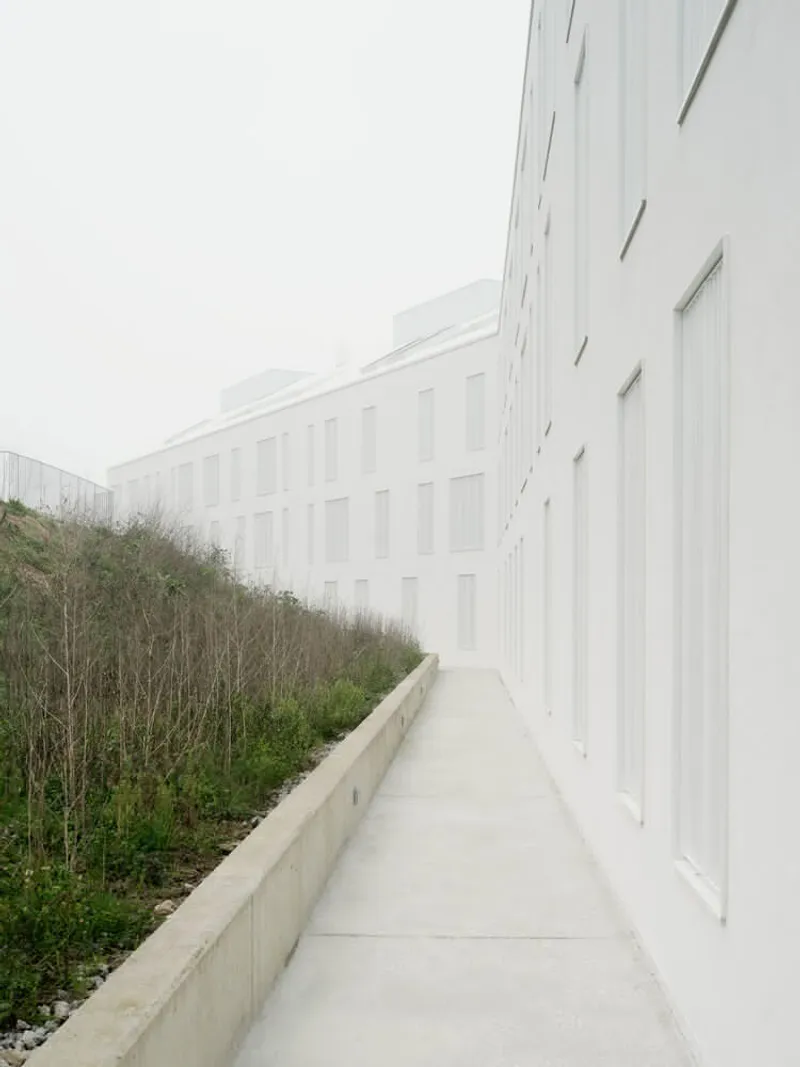
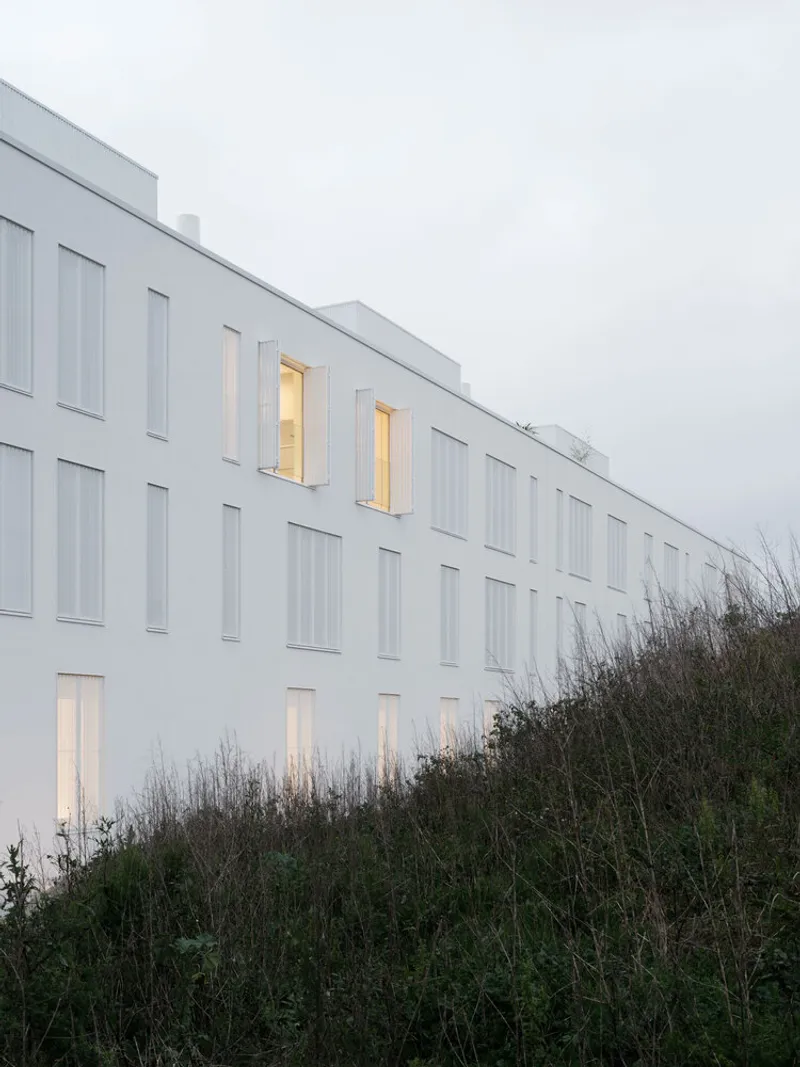
The plot’s eastern location requires the architecture to respond differently from the U-shaped blocks prevalent in the area. Instead, the scheme adopts a linear and sinuous open-block typology that adapts to the topography, negotiates steep gradients, and acts as a retaining and transitional element between multiple levels of public space. The building thus becomes a mediator between landscape, infrastructure, and community life.
Architectural Form and Material Expression
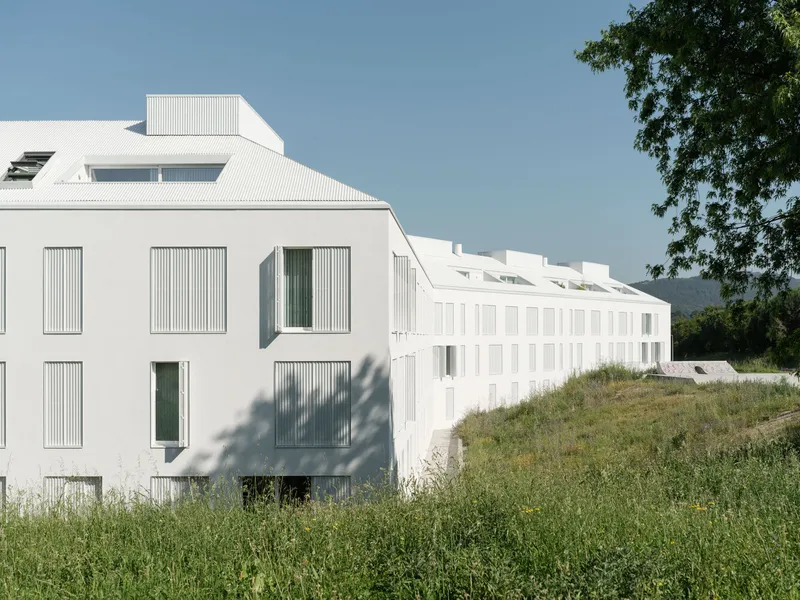
Volumetrically, the project is defined by a continuous linear volume that anchors the edge of the site. Its architectural identity emerges through a combination of contrasting façade textures:
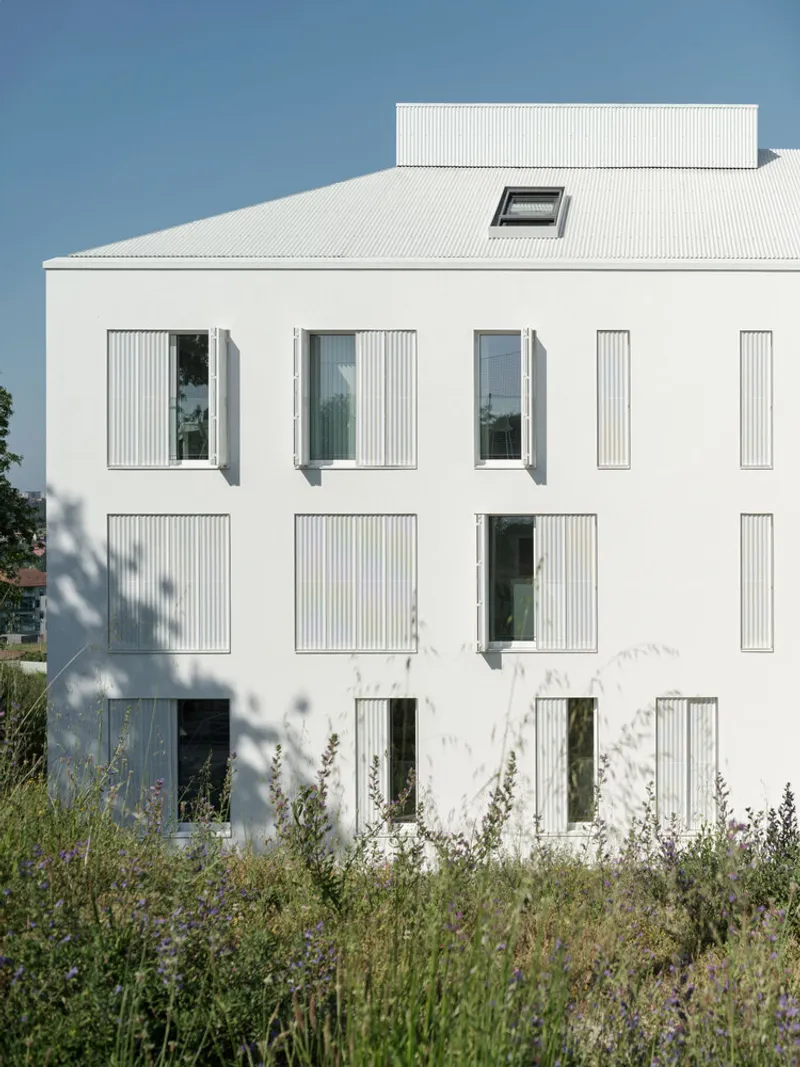
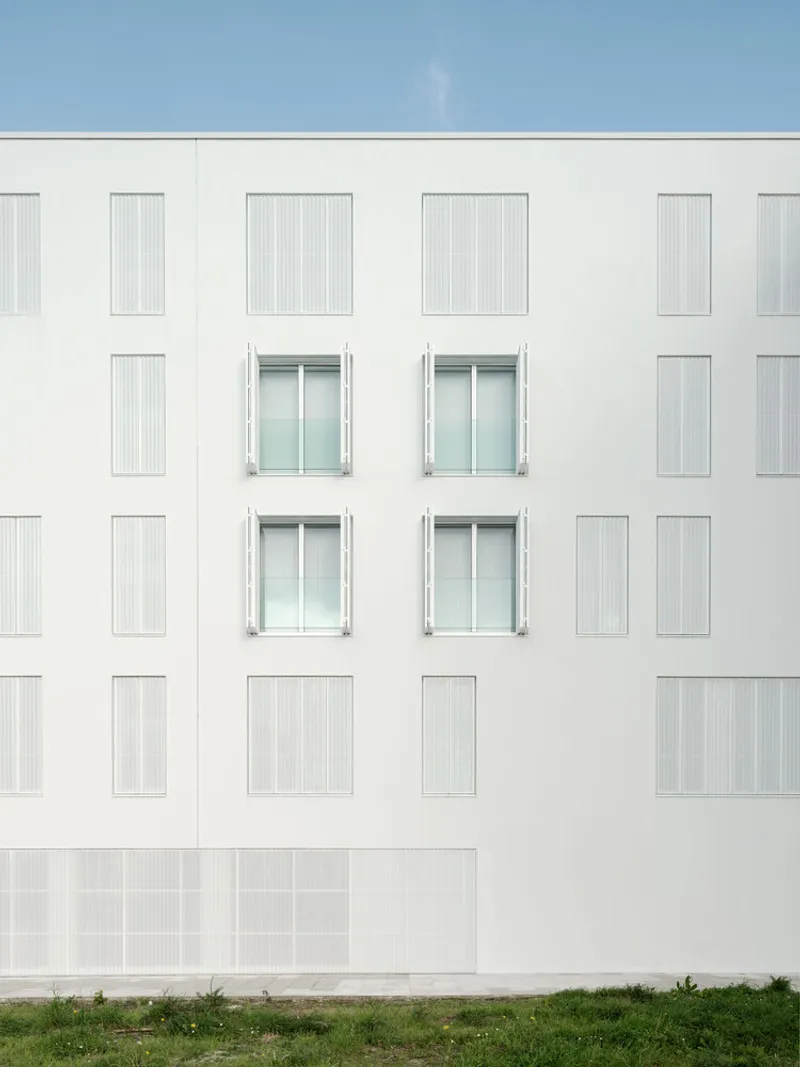
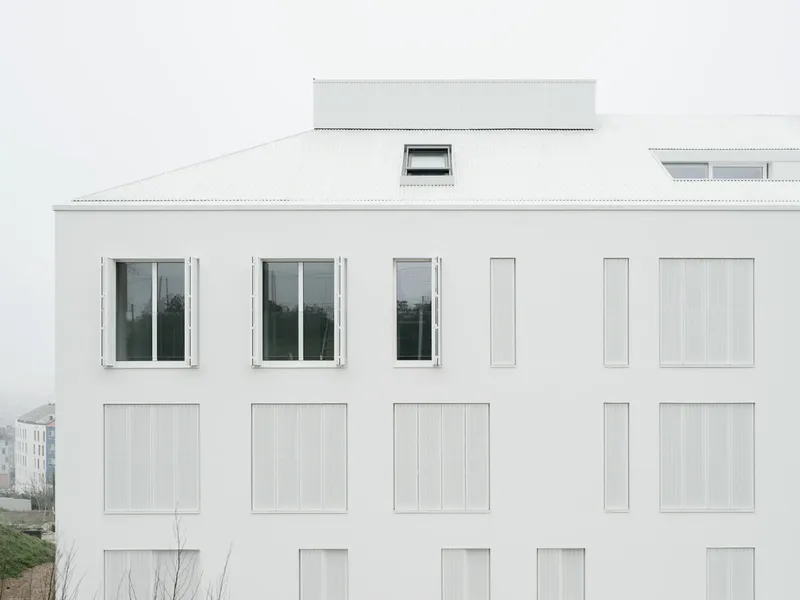
- Perforated metal sheets framing the openings, creating a semi-transparent mediating layer
- Smooth white cladding that emphasizes the solid massing of the building
- A sloping metallic roof that reinforces the cohesive typology
This interplay of solid and perforated surfaces creates a unified yet dynamic exterior, allowing the building to respond to daylight, orientation, and privacy needs.

A Centralized Circulation Spine Enhancing Community Interaction
All 34 dwellings are accessed through a single double-height corridor, which serves as the social and functional heart of the development. This shared entry sequence:
- Connects to five vertical circulation cores
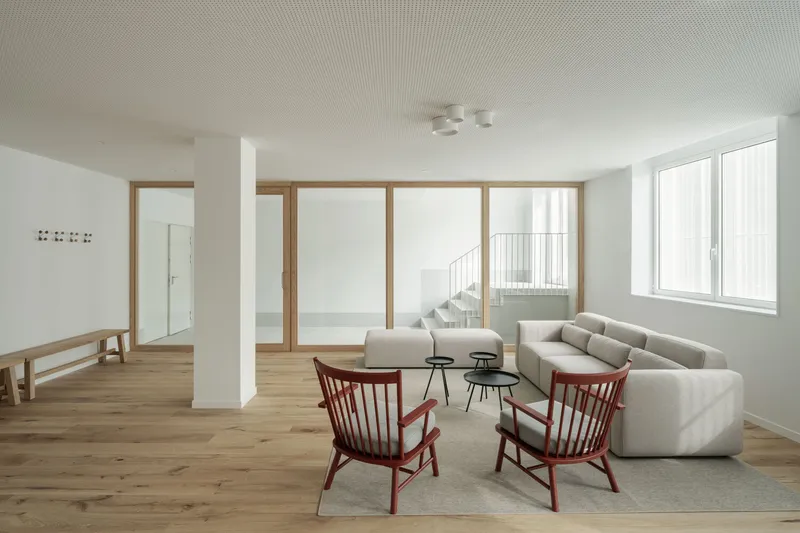
- Acts as a common vestibule that encourages daily encounters
- Leads directly to a community space at the far end of the building
- Opens toward a quieter public space on the opposite side of the plot
This configuration supports communal living while maintaining individual privacy, offering a balanced environment for cooperation and independence.

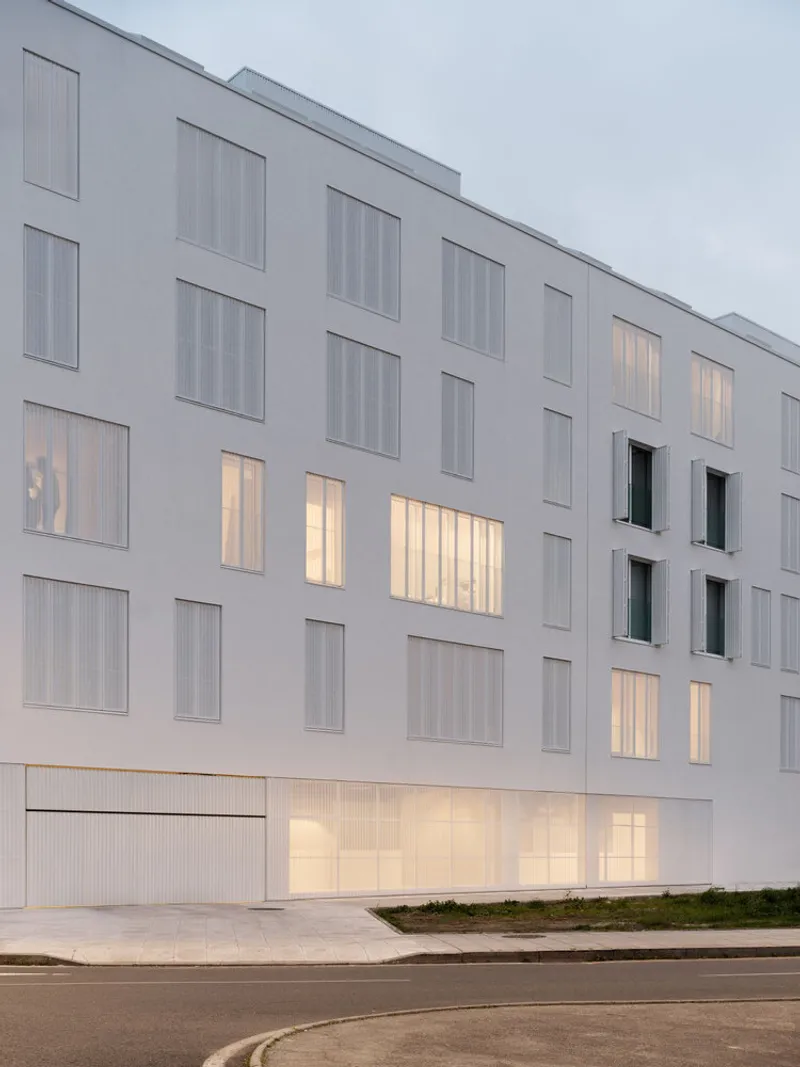
Façade Openings as Multifunctional Environmental Filters
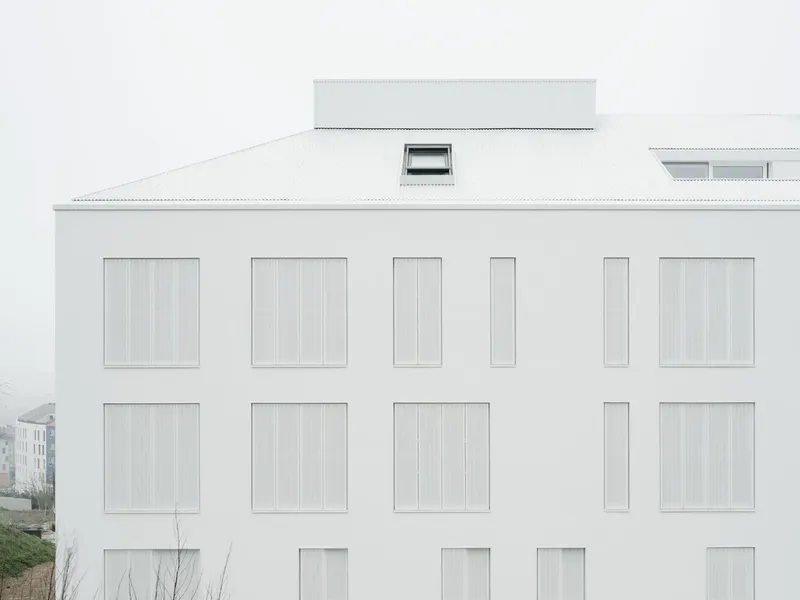
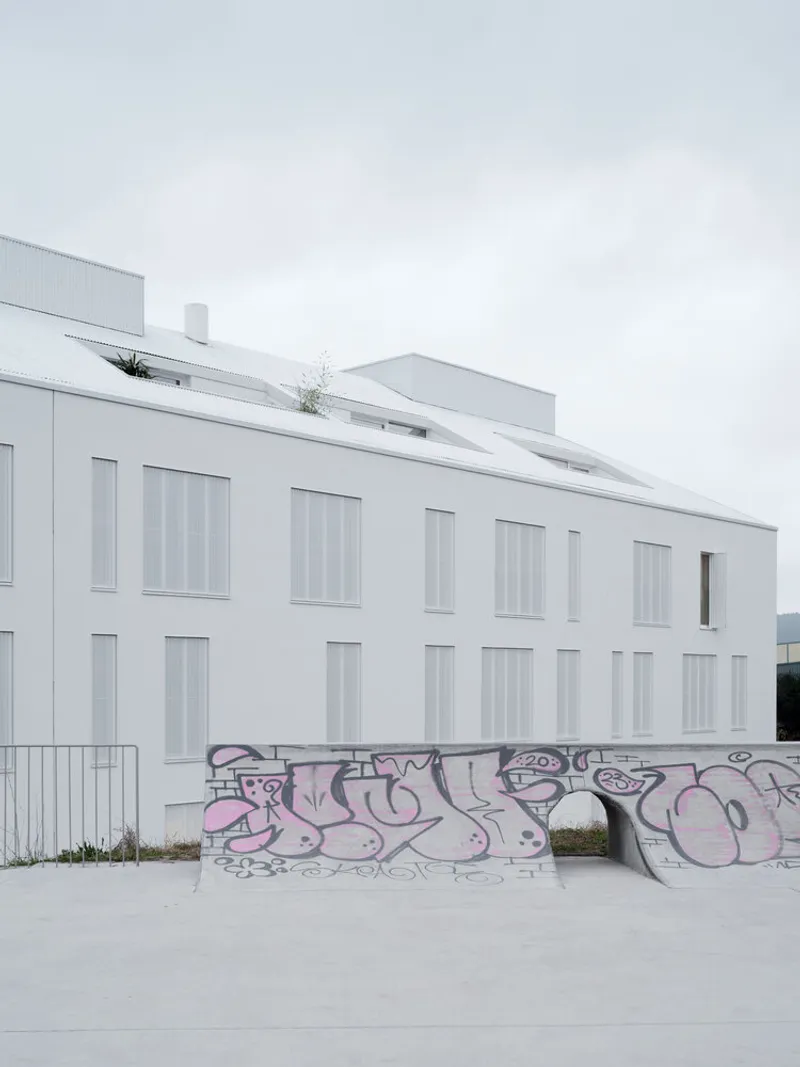
The architects designed each opening as a flexible interface between interior and exterior, allowing natural light and ventilation while offering adjustable privacy. The perforated metal layer plays a crucial environmental role:
- Filters sunlight and reduces thermal gain
- Modulates privacy levels depending on time of day
- Enhances airflow without compromising security
- Creates subtle variations of light and shadow within the dwellings
By incorporating this system, the project ensures that each home maintains thermal comfort, natural light quality, and visual protection throughout the year.
A Contemporary Model for Cooperative Urban Living
The Alto Residencial Coop demonstrates how architecture can respond to community-led initiatives while addressing urban constraints, topographical challenges, and environmental performance. Through its cohesive material palette, strategic linear form, and socially oriented design, the project establishes a new benchmark for cooperative housing in Spain.
All photographs are works of Luís Díaz Díaz


Popular Articles
Popular articles from the community


The Earth Pod: 3D Printed Homes for Resilient Refugee Communities
The Earth Pod reimagines refugee housing through 3D printed homes made from clay, combining resilience, self-sufficiency, and rapid shelter.

Hill & Cross Opera: Sculptural Opera House Architecture Shaped by Tallinn’s Landscape and Identity
Hill & Cross Opera reimagines opera house architecture in Tallinn through its sculptural hill, civic plaza, glass wave and a luminous cross.

The Ocean Hive: Sustainable Architecture for a Self-Sufficient Civilization at Sea
The Ocean Hive imagines sustainable architecture at sea, where modular habitats, algae, wave power and ocean waste sustain a growing colony.

Co-Life: Senior Housing Design That Reconnects Older Adults With the City
Co-Life reimagines senior housing design through healing gardens, shared streets, workshops, and a sustainable community across generations.


Similar Reads
You might also enjoy these articles


Hodi-Mandai Geram
Project Function: Preservation and revitalization of the Intangible heritage and socio-spatial identity of the Hodi by Housing, Cultural Memory Center, Sacred Grove, landscape, local tourism economy


Olio Towers: A Mid-Rise for Performers That Fuses Housing, Rehearsal, and Stage
Located blocks from Houston's Theater District, this modular tower stacks living units around a central performance atrium.

Oasis: Modular Green Housing Carved into Dhaka's Urban Fabric
A shortlisted Plugin Housing entry reclaims unauthorized settlements in Dhaka with stepped concrete volumes, green roofs, and ventilation-driven design.

Black Hole: A Floating Megastructure for the Post-Physical Era
Emiliano Mazzarotto envisions a spherical, self-scaling arena where e-sports, digital hotels, and holographic stadiums replace traditional public space.


Explore Housing Competitions
Discover active competitions in this discipline



Challenge to reimagine the Iron Throne


Photograph architecture without architects


Illustrate the lost glory of Angkor Wat - Render Challenge


Design challenge to reuse E-waste
Comments (0)
Please login or sign up to add comments
No comments yet. Be the first to comment!