

ÅBEN Brewery by pihlmann architects: A Contemporary Reimagining of Copenhagen’s Industrial Legacy
ÅBEN Brewery transforms a 1932 Copenhagen butchery into a transparent, industrial-chic brewery blending public space with production.


Located in the heart of Copenhagen’s historic Meatpacking District, the new ÅBEN Brewery by pihlmann architects breathes new life into a former industrial facility, reimagining a 1932 modernist butchery as a dynamic, publicly accessible craft beer production space. This transformation bridges heritage and innovation, retaining the spirit of the building’s utilitarian past while embracing the transparency and openness of a modern urban brewery.
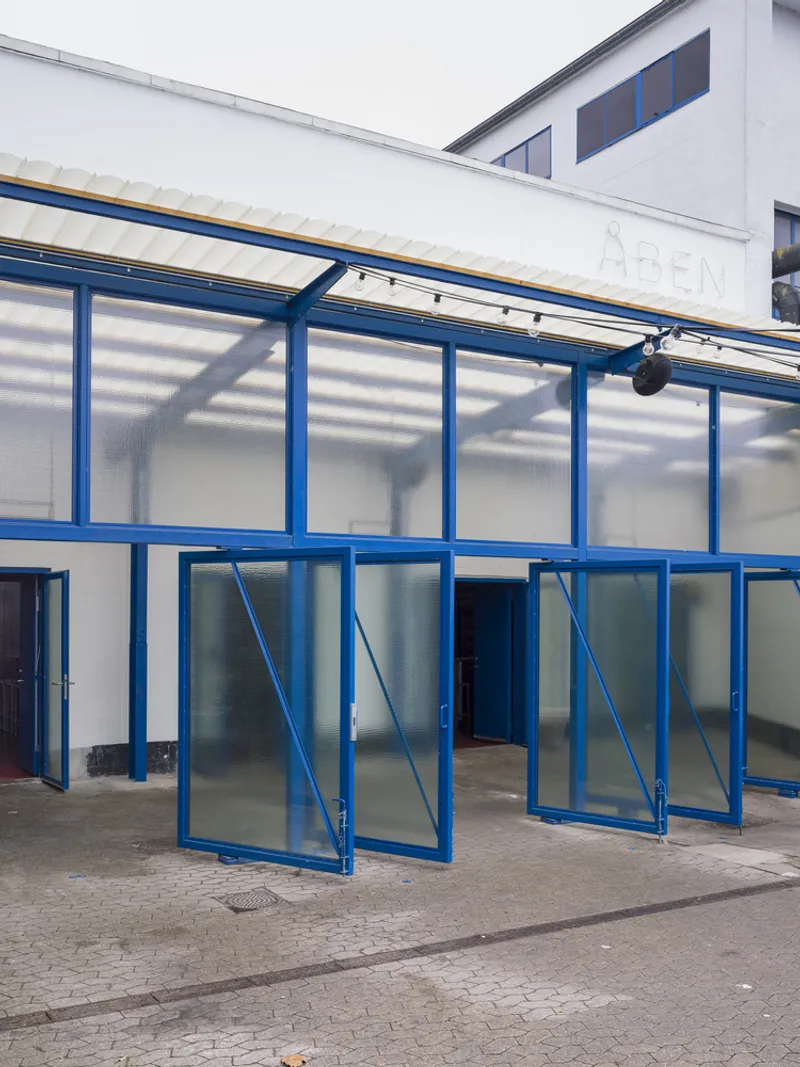
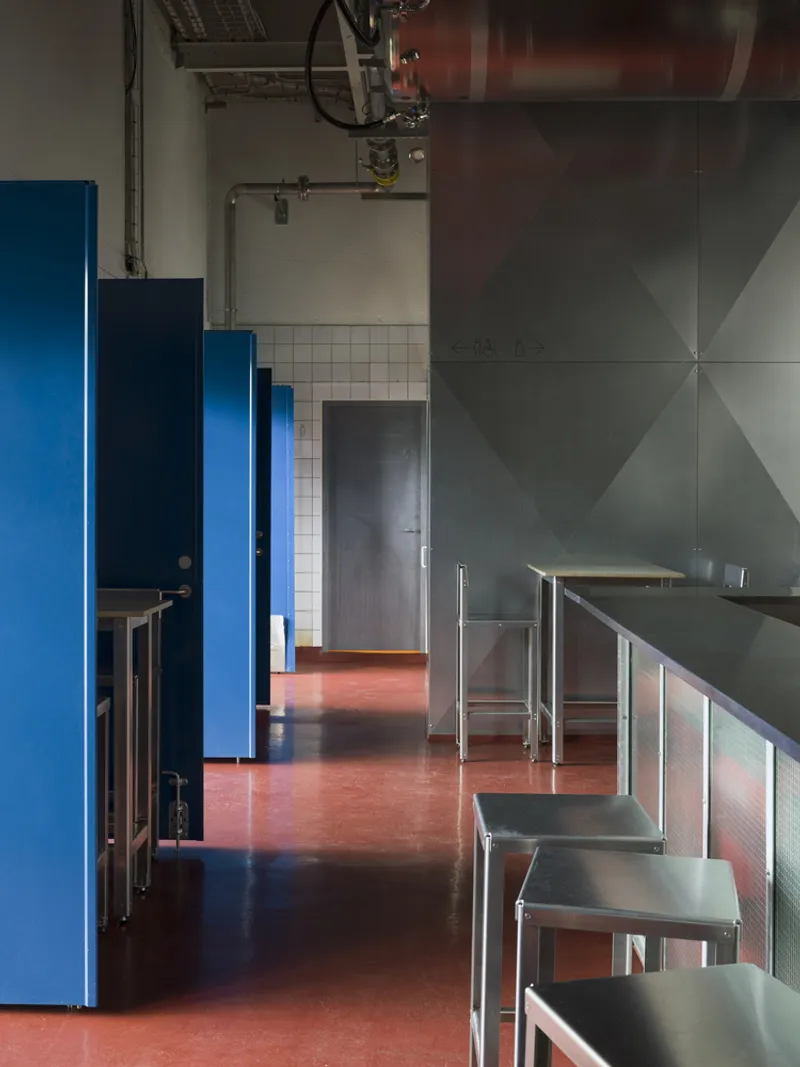
Adaptive Reuse in the Meatpacking District
Originally constructed as a large-scale slaughterhouse, the 950 m² building was designed to handle mass meat processing, with infrastructure such as robust hanging rail systems used to suspend nearly a thousand carcasses at once. After hosting various commercial tenants since the early 1990s, the building now emerges as a state-of-the-art brewery and production hub, combining industrial heritage with architectural restraint.
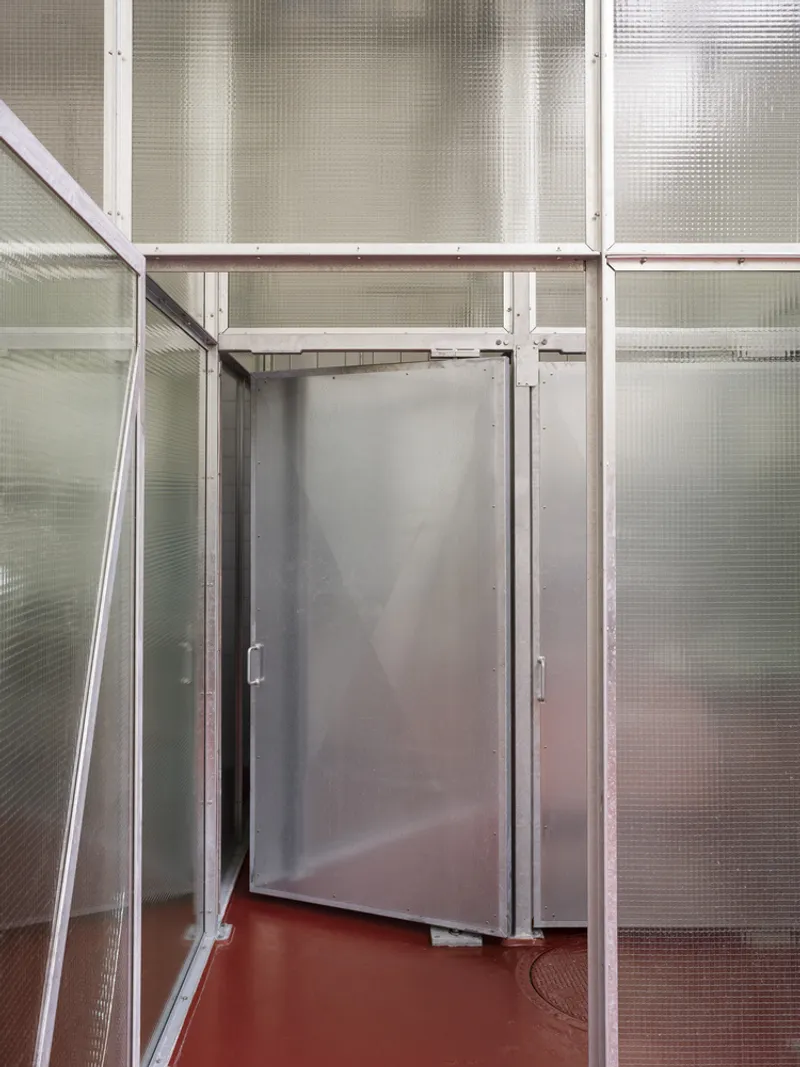
The project takes a critical approach to adaptive reuse architecture, maintaining much of the original structure and infrastructure, while stripping back decorative elements to highlight the stark beauty of exposed systems and raw materials. The architectural language remains minimalistic and functional, aligning with the rational and robust principles of the original design.
Industrial Transparency and Public Engagement
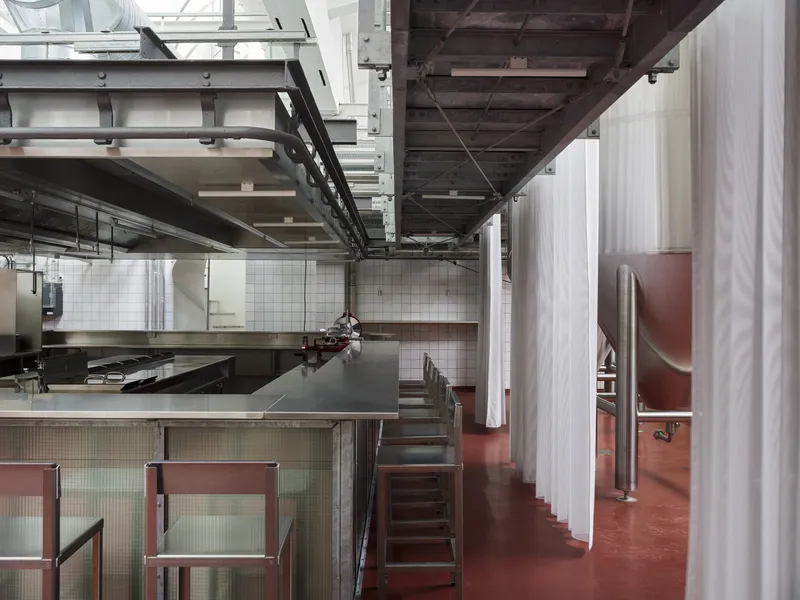
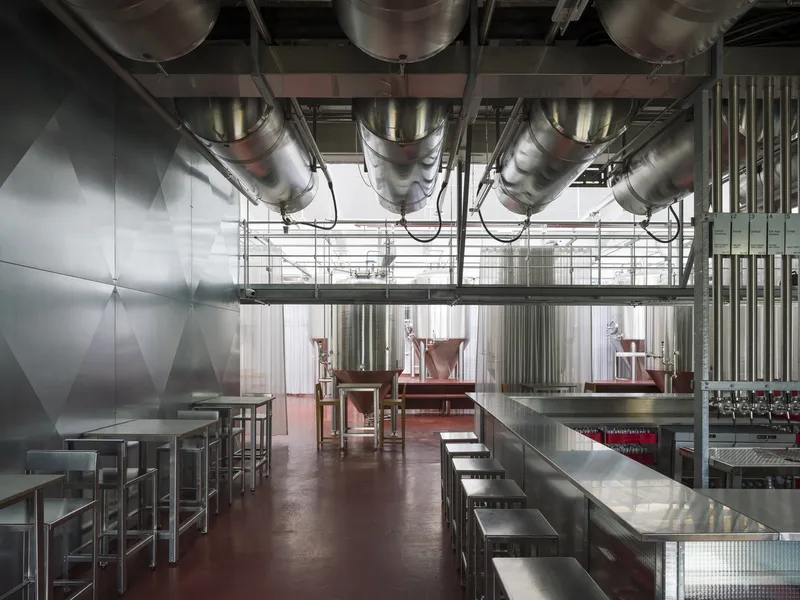
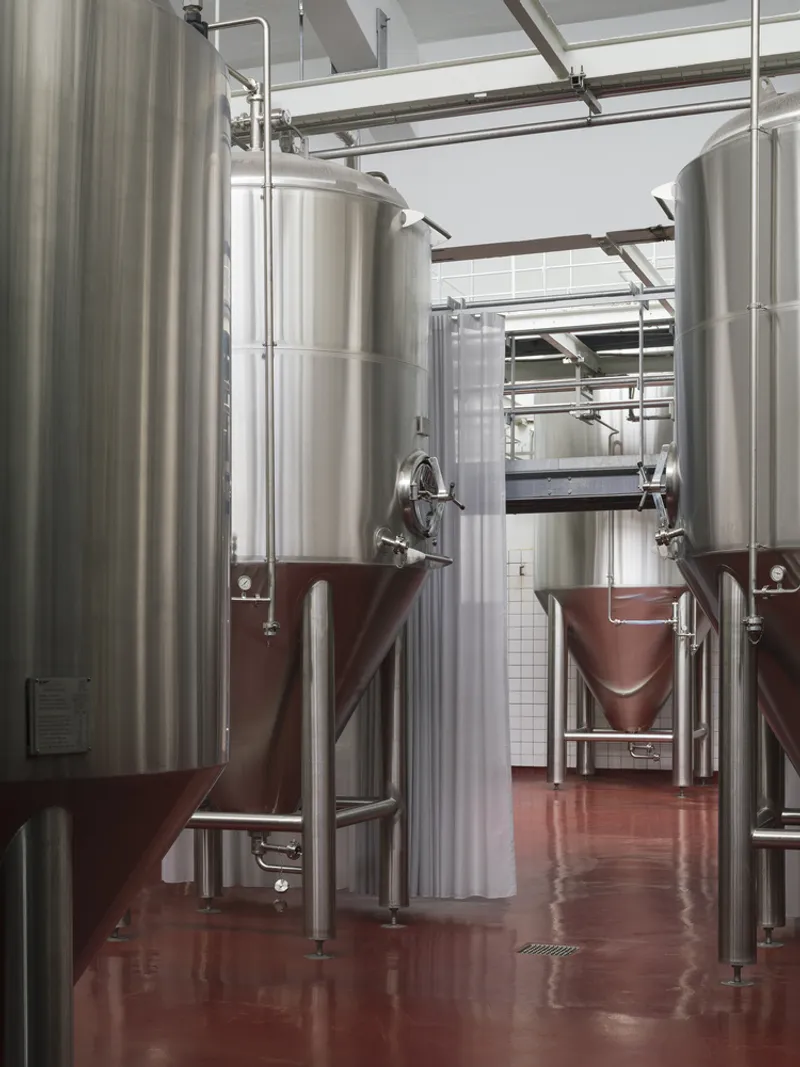
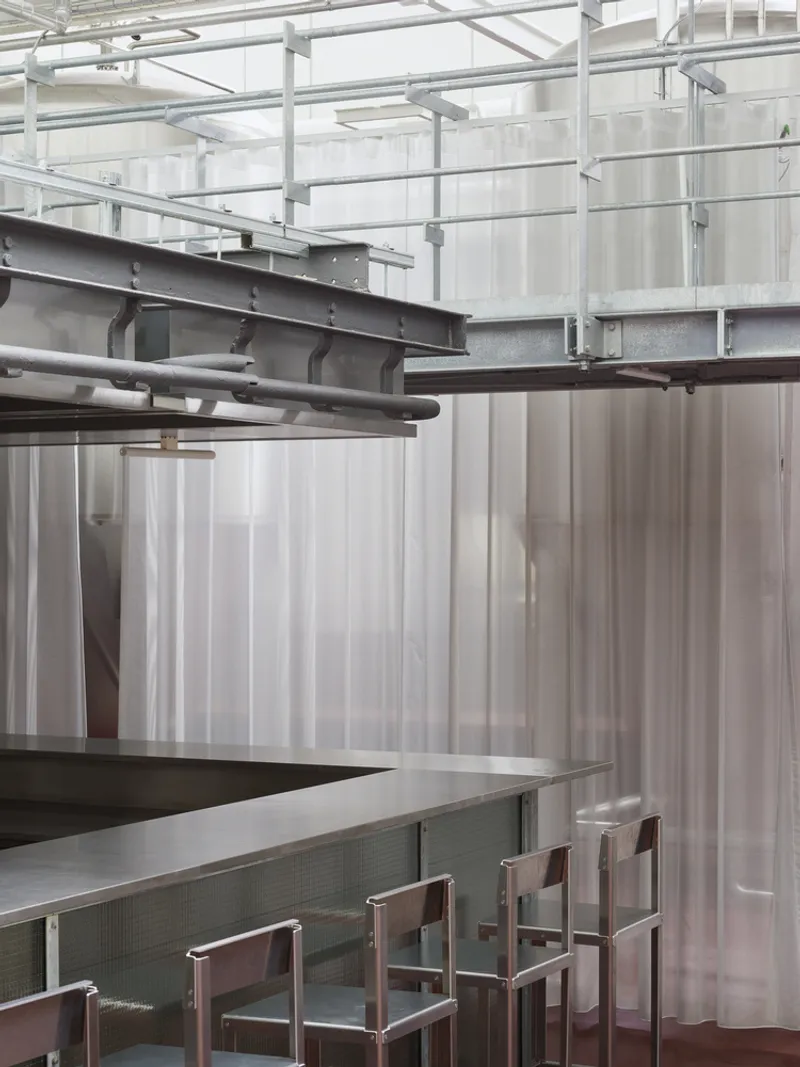
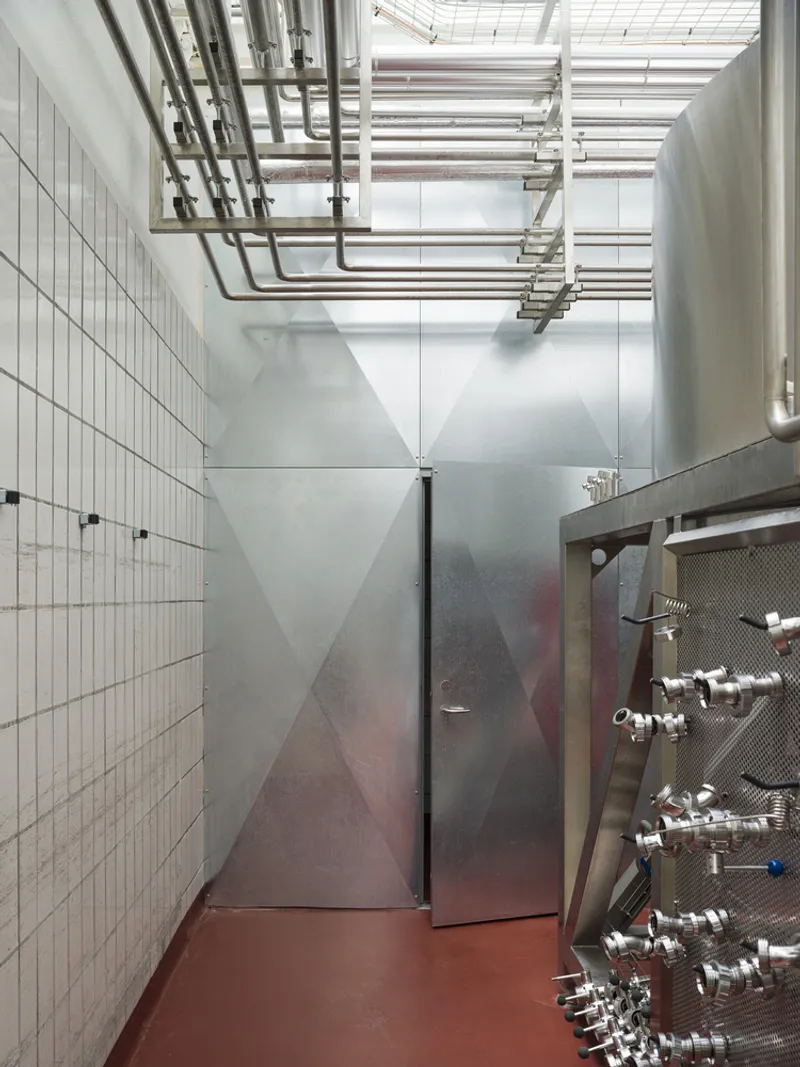
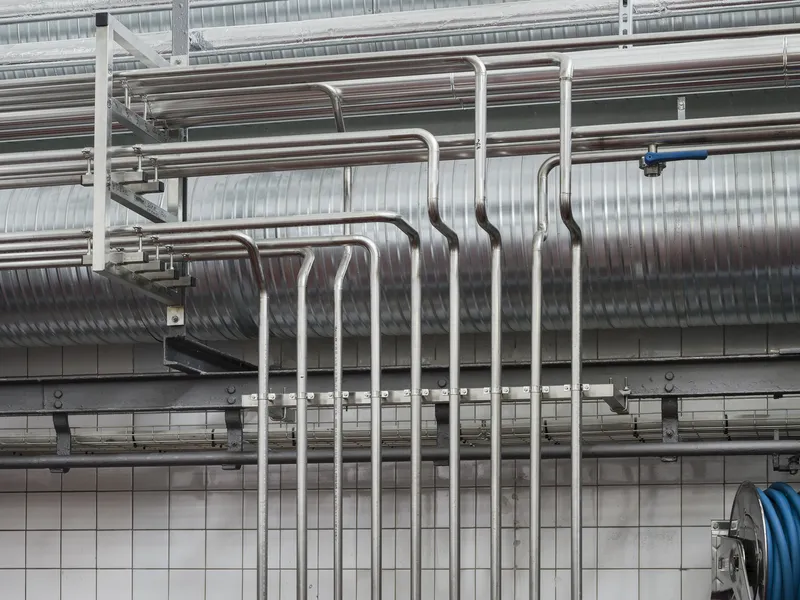
At the core of ÅBEN Brewery’s design philosophy is the ambition to blur the boundary between production and public space. Rather than concealing the brewing process, pihlmann architects embrace full visibility, turning the brewery equipment—conical fermentation tanks, stainless steel vessels, and kilometers of exposed piping—into architectural features. These installations define the spatial rhythm beneath the characteristic saw-tooth roof, echoing the cadence of the original factory design.
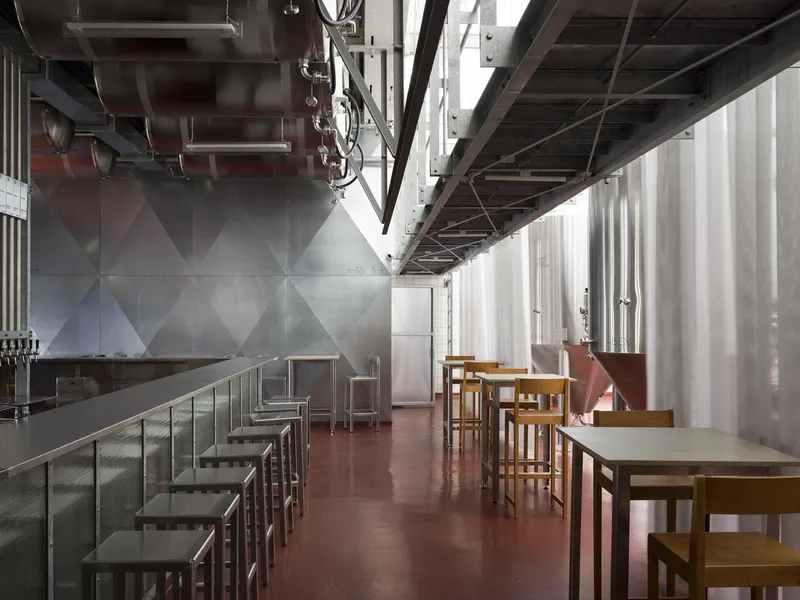
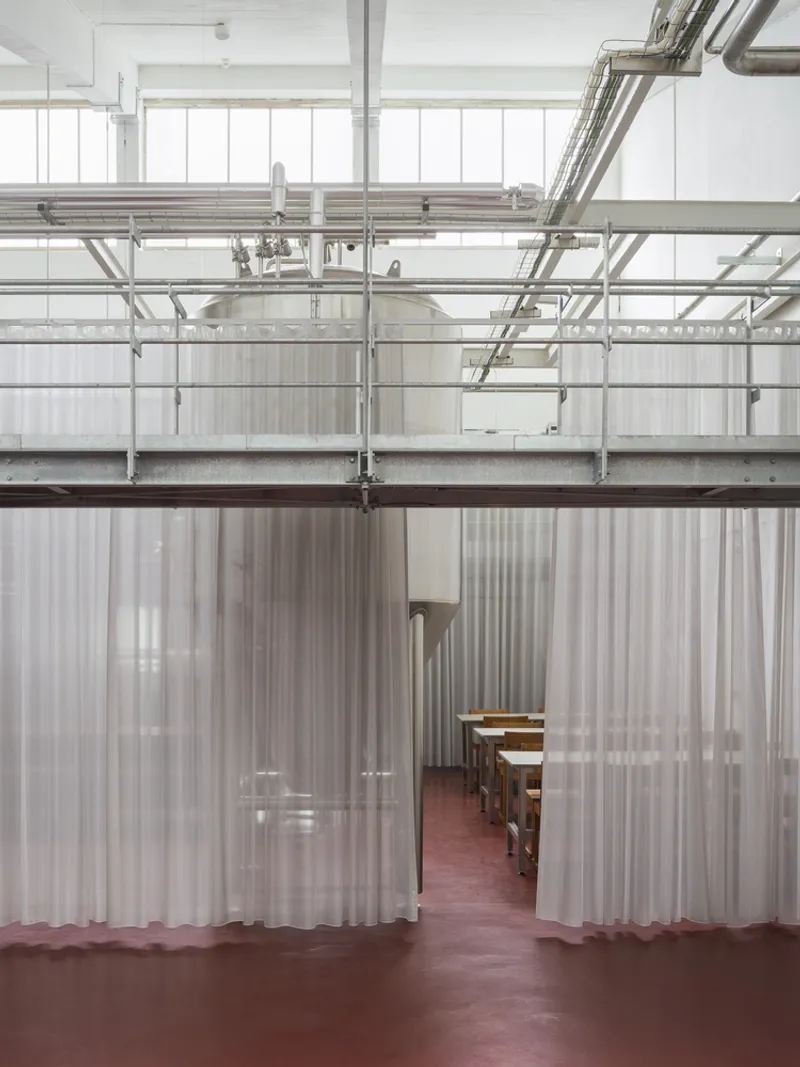
A low-hanging galvanized catwalk, semi-transparent slaughterhouse-style curtains, and neatly organized brewing vessels all contribute to a spatial typology that is both accessible and operational. The resulting spaces reflect the transformation of a closed industrial typology into an open, welcoming environment, inviting visitors to witness the brewing process firsthand.
Spatial Hierarchies and Brewing Logic
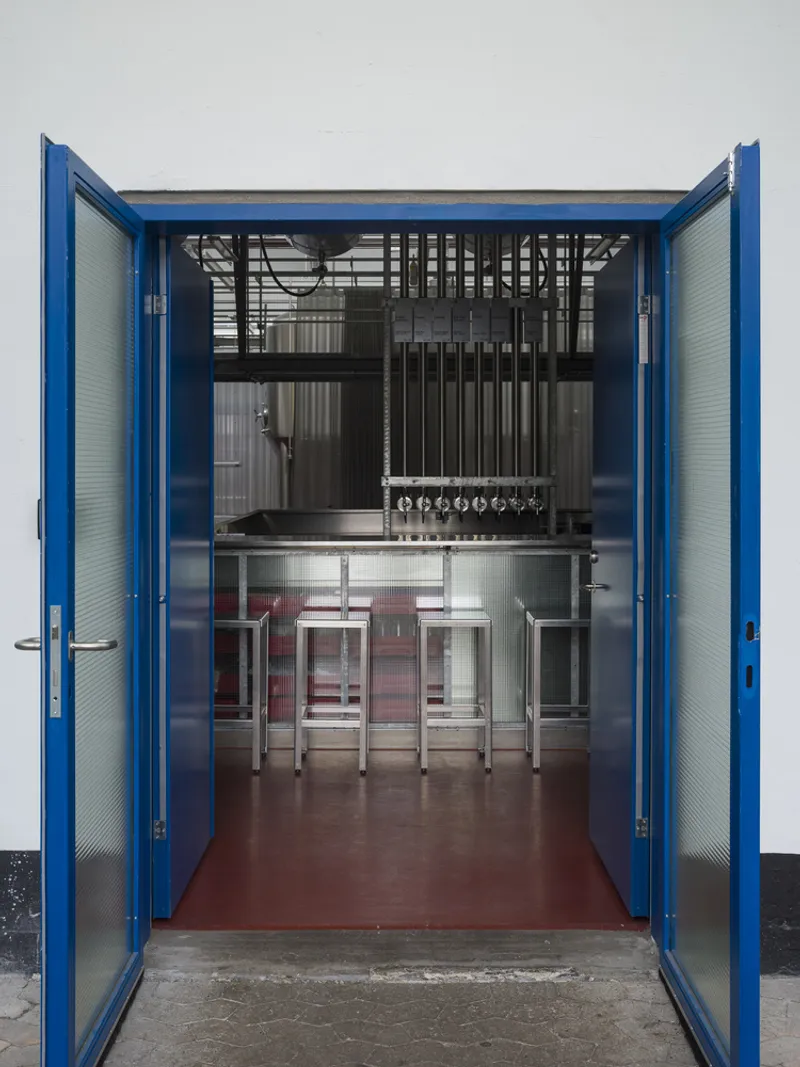
The building’s interior unfolds as a carefully choreographed sequence of spaces, guided by two interrelated flows: the increasing refinement of the beer as it moves from raw material to finished product, and the architectural purification of the space itself. At the entrance, lower ceilings and 14 horizontally suspended serving tanks create a sense of intimacy, aligning spatial compression with bodily scale.
As visitors move deeper into the space, the ceiling height opens up, and the machinery becomes more monumental. The final area, which houses the largest fermentation tanks, includes an open kitchen island—a gesture that fuses hospitality, community, and production into a single spatial moment.
This choreography not only supports the rational principles of beer production but also creates a layered and immersive visitor experience. The entire brewery is designed as an evolving journey from compressed, intimate spaces to grand industrial volumes.
Celebrating the Factory as Architecture
Far from romanticizing industrial aesthetics, ÅBEN Brewery emphasizes functionality and architectural clarity. Every element of the building—from the meat rails now repurposed to support brewing vessels, to the structural grid that dictates equipment placement—is celebrated as an integral part of the architectural narrative.
Pihlmann architects reframe the traditional concept of a factory—not as a space solely focused on productivity, but as a spatial installation in its own right. The project highlights the inherent aesthetic value of infrastructure, suggesting that architecture can emerge organically from the operational systems that support it.
Preservation and Innovation
The Meatpacking District has been recognized as one of Denmark’s 25 protected industrial monuments, with both interior and exterior elements of the building officially listed. In restoring the space, the architects have not only respected these protections but have arguably brought the building closer to its original state than it has been in decades.
Rather than impose new design narratives, the intervention carefully unfolds the latent architectural potential of the original structure. The result is a production facility 2.0—one that is robust, transparent, and deeply rooted in place.
All Photographs are works of Hampus Berndtson


Popular Articles
Popular articles from the community


U.GA Architects Wraps an Oval Rooftop Pool in Curved Board-Formed Concrete on Busan's Jeollidan-gil
In Busan's Jeonpo-dong, a 454 m² mixed-use block stacks a neighborhood facility, guest rooms and an oval rooftop pool inside spiraling concrete walls.

Jaramillo Van Sluys Arquitectura and Urbanismo Turn a Demolished Registry Lot in Quito into an Orchard Plaza
In Quito's Centro Histórico, a 2,800 m² plaza exposes the San Agustín convent wall and redraws its lost Augustinian orchard in volcanic stone.

David Macias Steps a Doorless Stone and Plaster House Down a Tropical Colombian Hillside
In the humid hills of Colombia, Threshold House replaces the front door with an open void and terraces its 850 m² down the slope instead of fighting it.

Architekt Andreas Gruber Scatters 23 Dark Timber Chalets Across a South Tyrolean Forest Edge
In Molini di Tures, Amonti Chalets breaks a resort into a hamlet of gabled timber houses, with parking, storage and services pushed into the slope.

Similar Reads
You might also enjoy these articles


Hodi-Mandai Geram
Project Function: Preservation and revitalization of the Intangible heritage and socio-spatial identity of the Hodi by Housing, Cultural Memory Center, Sacred Grove, landscape, local tourism economy


Olio Towers: A Mid-Rise for Performers That Fuses Housing, Rehearsal, and Stage
Located blocks from Houston's Theater District, this modular tower stacks living units around a central performance atrium.

Oasis: Modular Green Housing Carved into Dhaka's Urban Fabric
A shortlisted Plugin Housing entry reclaims unauthorized settlements in Dhaka with stepped concrete volumes, green roofs, and ventilation-driven design.

Black Hole: A Floating Megastructure for the Post-Physical Era
Emiliano Mazzarotto envisions a spherical, self-scaling arena where e-sports, digital hotels, and holographic stadiums replace traditional public space.

Explore Industrial Building Competitions
Discover active competitions in this discipline

Challenge to reimagine the Iron Throne

Photograph architecture without architects

Illustrate the lost glory of Angkor Wat - Render Challenge

Design challenge to reuse E-waste
Comments (0)
Please login or sign up to add comments
No comments yet. Be the first to comment!