

AD Classics: Interdesign Building by Khalil Khouri: Beirut’s Modernist Icon
The Interdesign Building in Beirut by Khalil Khouri is a Brutalist modernist showroom reflecting Lebanon’s history, design innovation, and architectural resilience.


The Interdesign showroom was more than just a building, it was the architectural embodiment of Khalil Khouri’s modernist philosophy and his thriving furniture business. Rooted in a family tradition of craftsmanship, the Interdesign brand began decades earlier with the bespoke works of Khouri’s father, Elias El-Khouri, a master carpenter and ebonist. Khalil, alongside his brother Georges, expanded the enterprise, launching one of the first modern furniture lines in Lebanon during the 1960s.
By producing contemporary furniture locally, Interdesign democratized modern furniture design in the MENA region, making high-quality pieces accessible to a broader audience. Khalil Khouri’s approach was unique: he not only designed furniture but also engineered the manufacturing processes and operated his own facilities, creating a seamless integration of design, production, and innovation. By the mid-1960s, Interdesign had become the region’s leading modern furniture producer, exporting to Europe and the United States. The showroom building was envisioned as the centerpiece of this modernist ambition.
A Challenging Construction History
Khalil Khouri acted as architect, client, and developer, outlining the project in 1973. Construction began shortly afterward but halted in 1975 as Lebanon descended into civil war. Despite several attempts to resume work during the conflict, the project remained stalled at ground level.
When the war ended in the early 1990s, Beirut’s socio-economic landscape had shifted. Undeterred, Khouri pursued completion, navigating mounting debts and dwindling business prospects. In 1996, 23 years after breaking ground, the Interdesign Building was finally completed, a testament to persistence and vision.
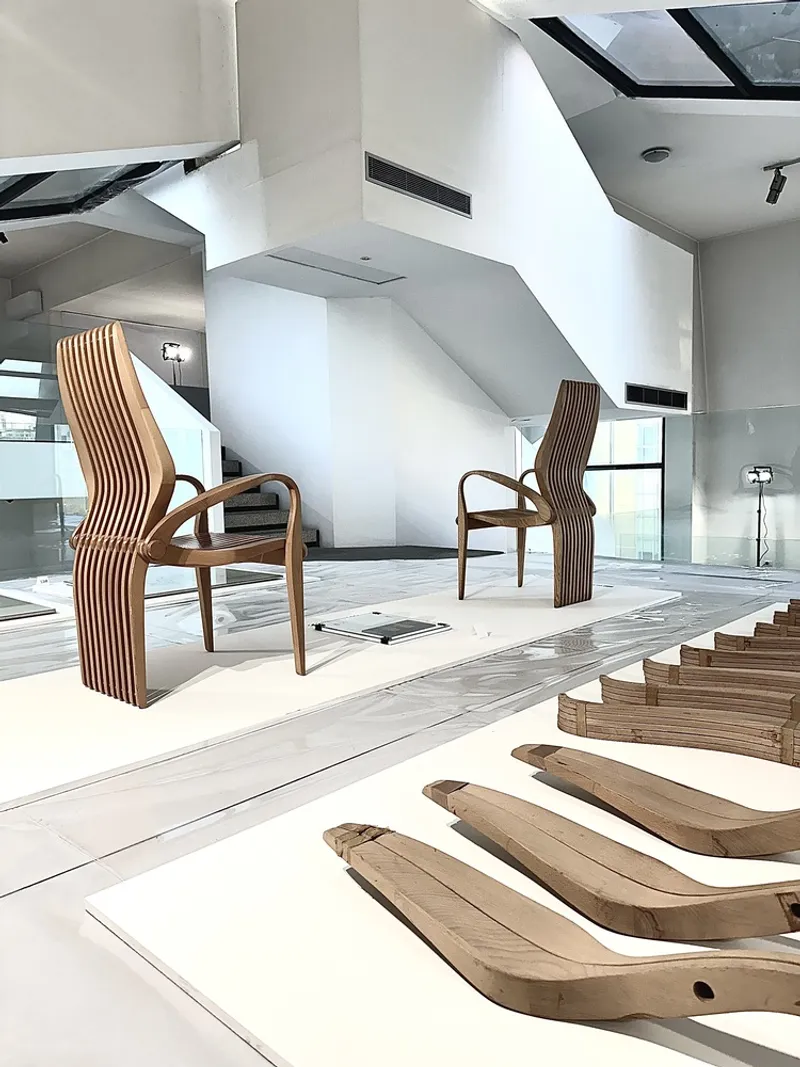
Despite this achievement, economic challenges and changing urban contexts meant the building was never used as intended. It briefly served as a training center before falling into disrepair. It wasn’t until May 2024, when Bernard and Teymour Khoury organized a four-day exhibition celebrating Khalil Khouri’s legacy, that the public could finally enter the enigmatic structure for the first time in 51 years.
Architectural Features
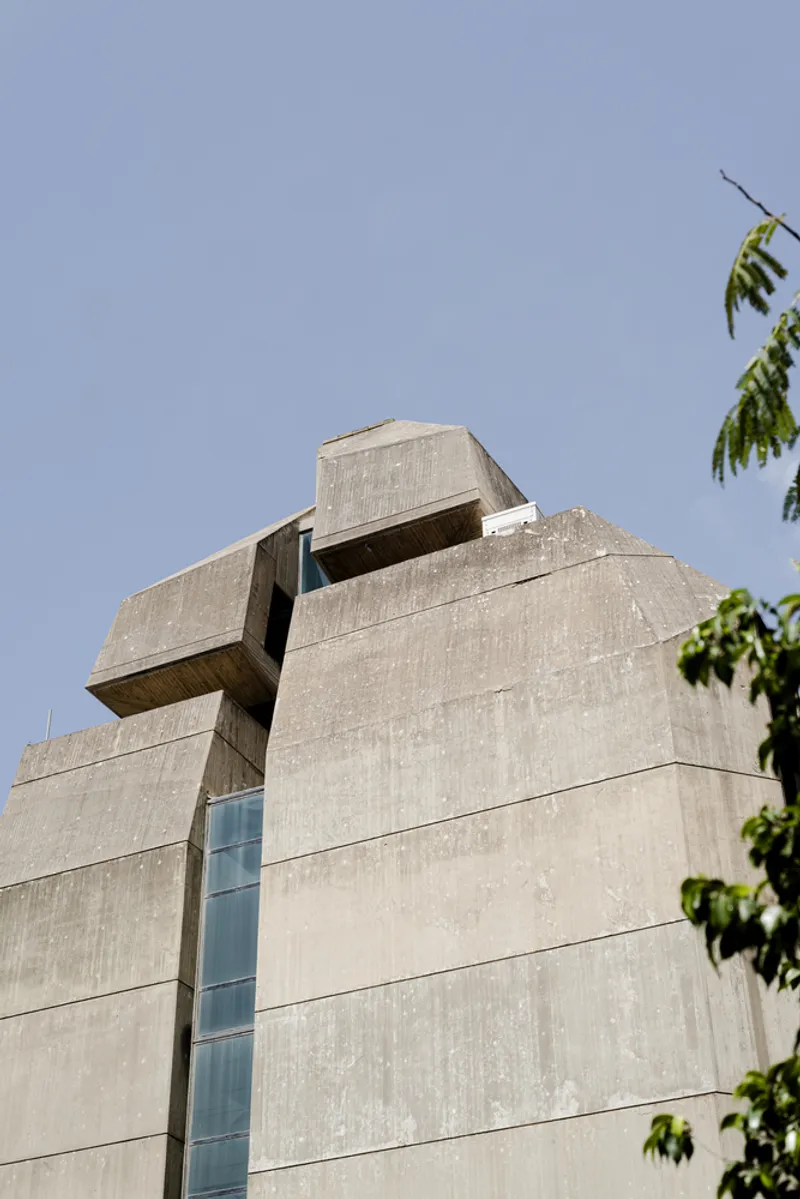
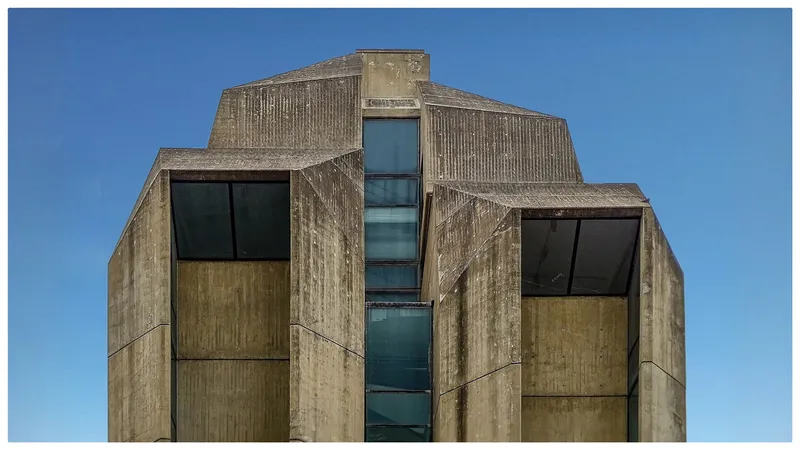
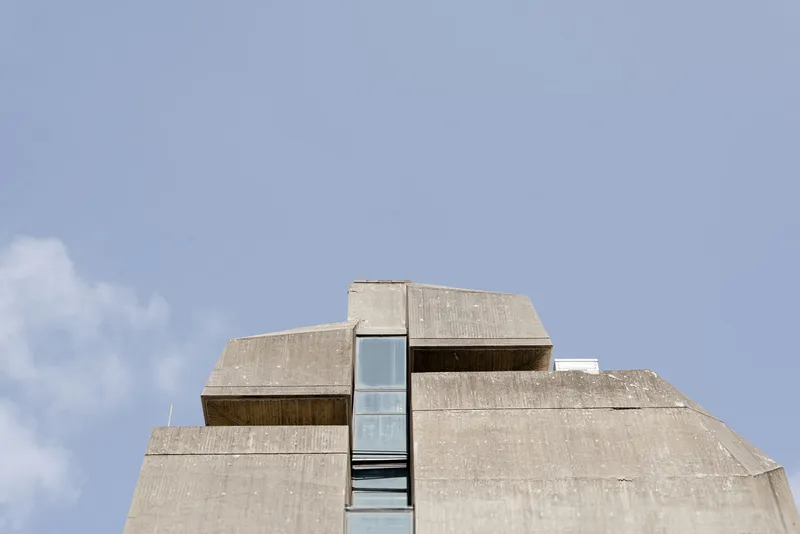
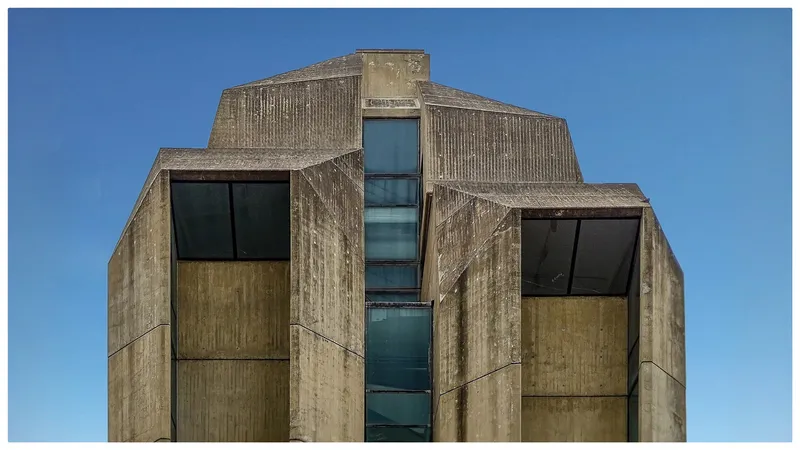
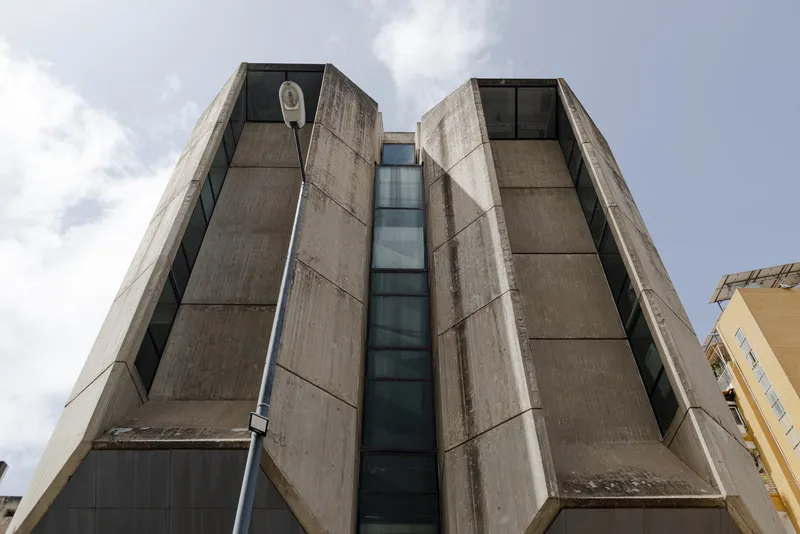
The Interdesign Building is instantly recognizable for its Brutalist aesthetic. Two angular towers in exposed concrete, separated by a narrow glazing strip, create a bold and imposing facade. The towers’ concave forms conceal windows, amplifying the building’s opaque, sculptural quality. A boulder-shaped roof, perched above the main volume, houses administrative functions, including a manager’s office and small meeting room, establishing a striking visual “head” atop the structure.
At street level, originally open window displays offered glimpses into the showroom, connecting the public with Interdesign’s furniture innovations. Though these displays are now sealed, they reflect Khouri’s original intent to merge architecture and object, using the building itself as a stage for modern design.
Interior Design
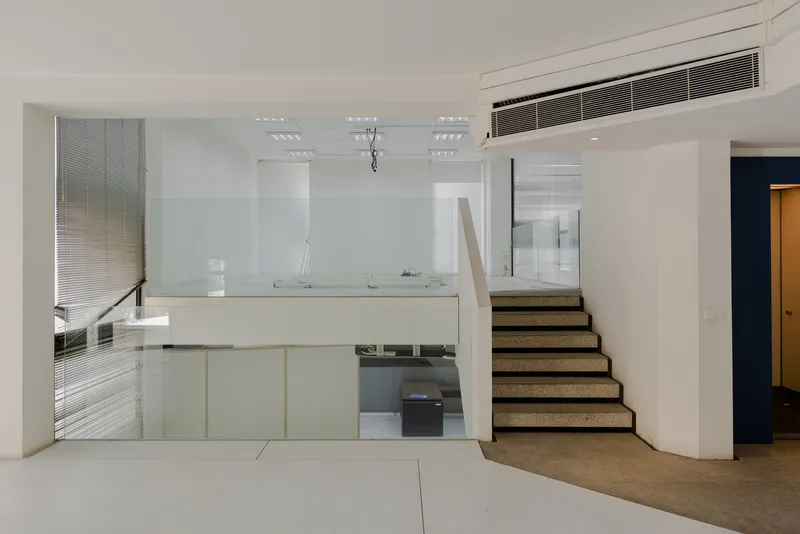
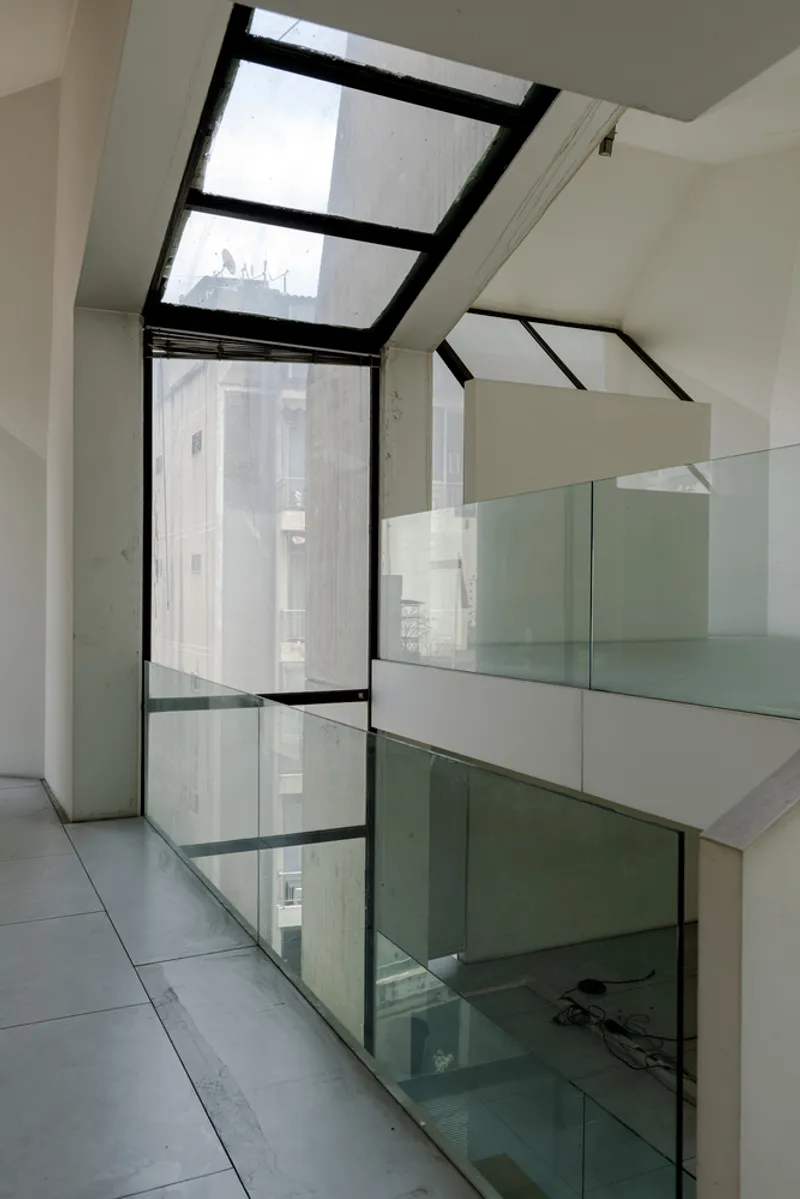
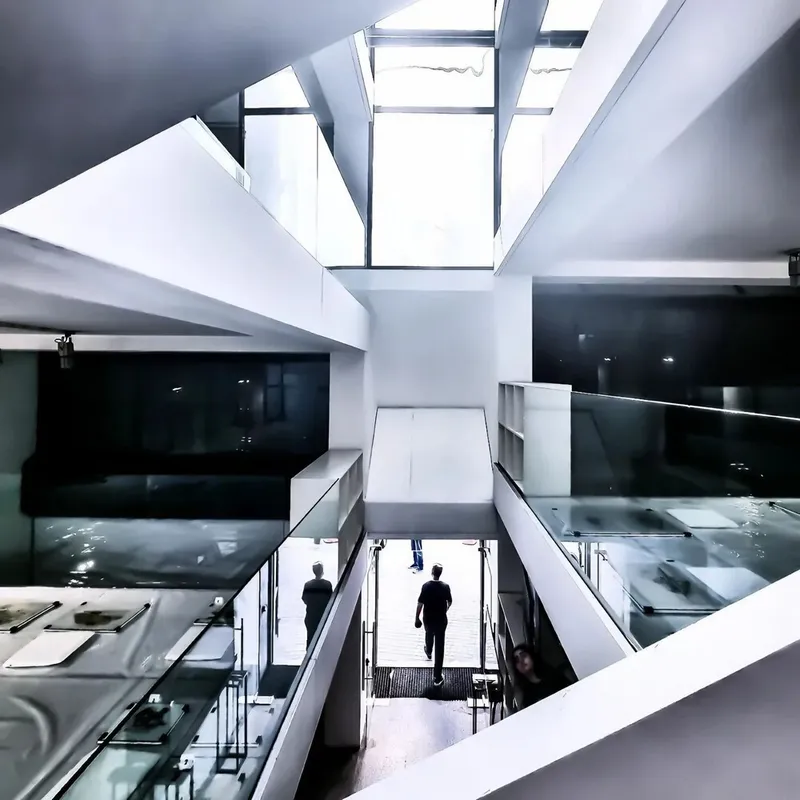
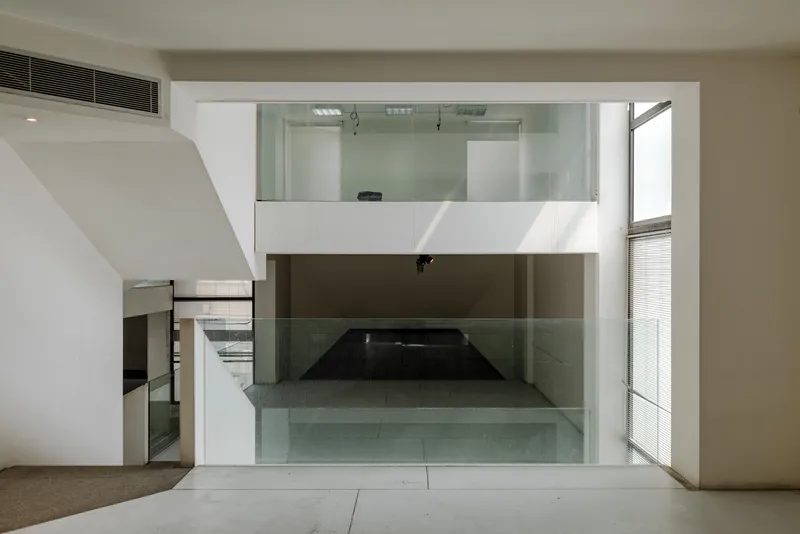
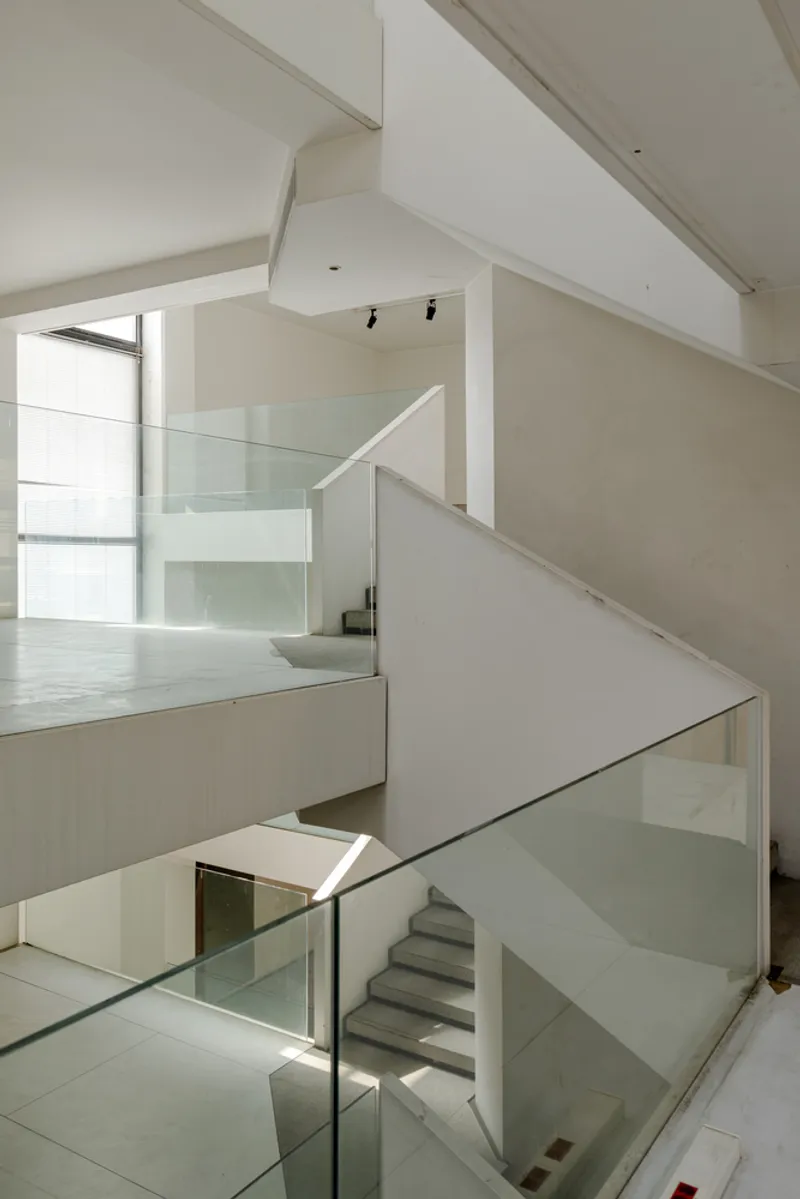
Inside, the building contrasts sharply with its external solidity. All-white interiors and generous natural light create a soft, airy atmosphere across 24 floors. The dynamic arrangement of stairs, voids, and interconnected levels allows visitors to experience furniture from multiple perspectives: above, below, or at eye level. This innovative interplay emphasizes architecture serving the object, reversing traditional museum and showroom hierarchies.
A Modernist Legacy
The Interdesign Building is not only an architectural landmark but also a poignant reflection of Lebanon’s socio-political and economic history. While many Lebanese architects gradually abandoned Modernism after the 1970s, Khalil Khouri remained steadfast in his belief that Modernism was a philosophy, not merely a style. Today, his conviction is etched into the concrete walls of the Interdesign Building, making it a rare and powerful symbol of Lebanese architectural heritage.
All photographs are works of Walid Rashid, Camille Ammoun


Popular Articles
Popular articles from the community


longwave studio Reorganizes a 112 m² Tainan Apartment Around the Daily Routines of a Family and Two Cats
In Tainan, Taiwan, birch plywood, rust-red furniture and a freestanding plaster wall link arrival, storage, work and family life in one apartment.

Jaramillo Van Sluys Arquitectura and Urbanismo Turn a Demolished Registry Lot in Quito into an Orchard Plaza
In Quito's Centro Histórico, a 2,800 m² plaza exposes the San Agustín convent wall and redraws its lost Augustinian orchard in volcanic stone.

LT2A and OPEN Architectes Thread a Brick and Glass High School Through a Wooded Belgian Campus
In Braine-l'Alleud, a 3,000 m² wing for Collège Cardinal Mercier pairs pale brick with a glazed colonnade, deferring to a small chapel and a dense wood.

Juan García Correa, John González and Claudia Rueda Sink a Circular Amphitheater into a Manizales Engineering Building
On the La Nubia campus in Manizales, Colombia, the S1 Building folds labs and offices into a hillside of ramped lawns that double as a campus route.

Similar Reads
You might also enjoy these articles


Hodi-Mandai Geram
Project Function: Preservation and revitalization of the Intangible heritage and socio-spatial identity of the Hodi by Housing, Cultural Memory Center, Sacred Grove, landscape, local tourism economy


Olio Towers: A Mid-Rise for Performers That Fuses Housing, Rehearsal, and Stage
Located blocks from Houston's Theater District, this modular tower stacks living units around a central performance atrium.

Oasis: Modular Green Housing Carved into Dhaka's Urban Fabric
A shortlisted Plugin Housing entry reclaims unauthorized settlements in Dhaka with stepped concrete volumes, green roofs, and ventilation-driven design.

Black Hole: A Floating Megastructure for the Post-Physical Era
Emiliano Mazzarotto envisions a spherical, self-scaling arena where e-sports, digital hotels, and holographic stadiums replace traditional public space.

Explore Architecture Competitions
Discover active competitions in this discipline

Challenge to reimagine the Iron Throne

Photograph architecture without architects

Illustrate the lost glory of Angkor Wat - Render Challenge

Design challenge to reuse E-waste
Comments (0)
Please login or sign up to add comments
No comments yet. Be the first to comment!