
Adaptive Commercial Architecture: A Case Study of Commercial Stores Morón 2929
Explore adaptive commercial architecture through the Morón 2929 project, showcasing flexibility, natural light, and sustainable design principles.

Adaptive Commercial Architecture
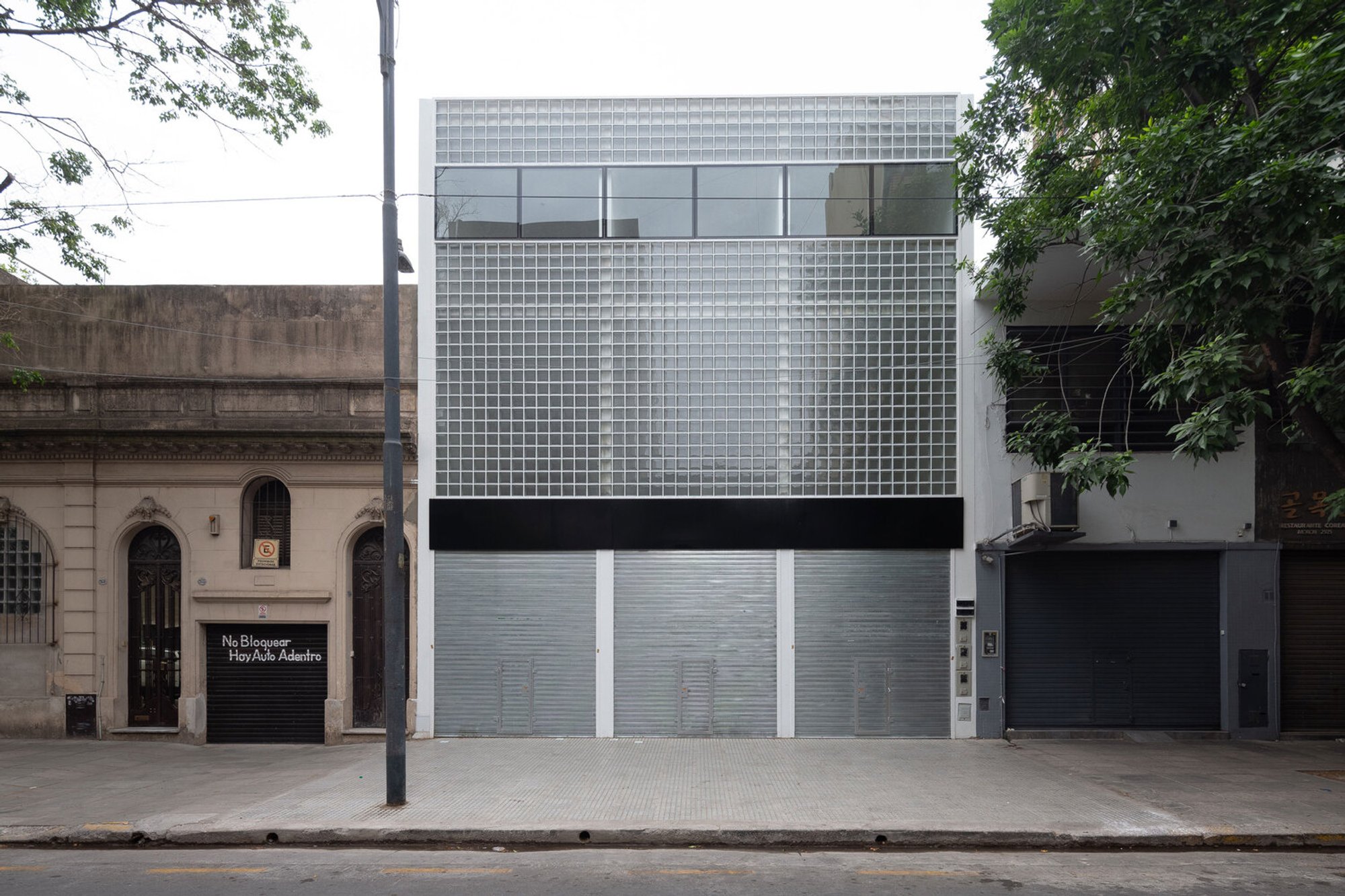
Adaptive commercial architecture represents a modern approach to designing spaces that prioritize flexibility, efficiency, and integration with their surroundings. This architectural style responds dynamically to the evolving needs of businesses and urban environments. A remarkable example of this philosophy is the Commercial Stores Morón 2929 in Buenos Aires, Argentina, designed by the innovative studio Castillo Lee Valdivieso.
In this article, we delve into how this project exemplifies adaptive commercial architecture, from its minimalist spatial design to its thoughtful use of materials and environmental considerations.
Designing for Flexibility and Functionality
Minimalist Spaces for Maximum Adaptability
At the core of the design philosophy for Morón 2929 is the idea of spaces with minimal character. This approach allows future occupants the freedom to tailor each unit to their specific needs, whether for retail, office use, or other purposes.
The project encompasses three commercial units arranged on a traditional narrow lot measuring 8.66 meters. To counteract the constraints of limited width, the architects incorporated double-height ground-floor spaces, enhancing the perception of openness and volume.
Strategic Mezzanine Floors
Mezzanines were introduced at strategic points to:
- Maximize natural light penetration.
- Enhance privacy between spaces.
- Provide dedicated areas for static programs, including offices and textile mold manufacturing.
This layering of functional zones ensures that the architecture supports diverse operational needs while maintaining aesthetic consistency.
The Role of Natural Light and Ventilation
Glass Brick Facade
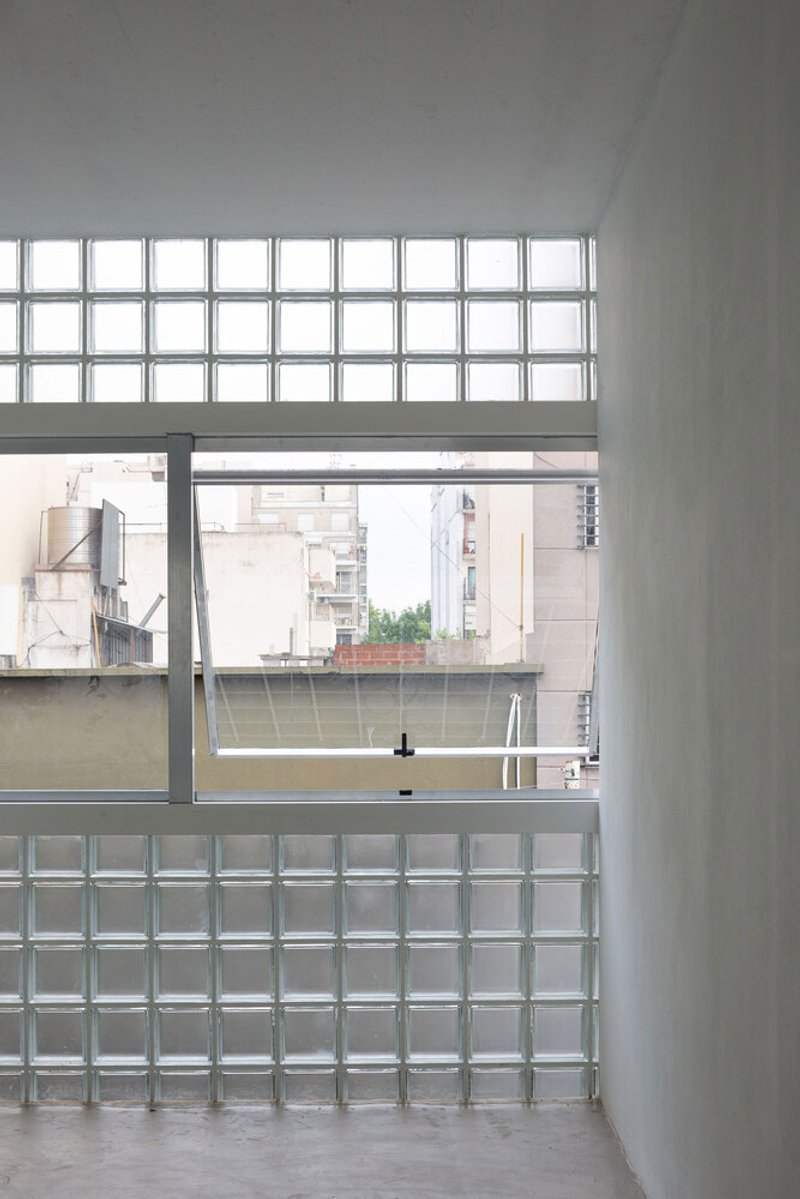
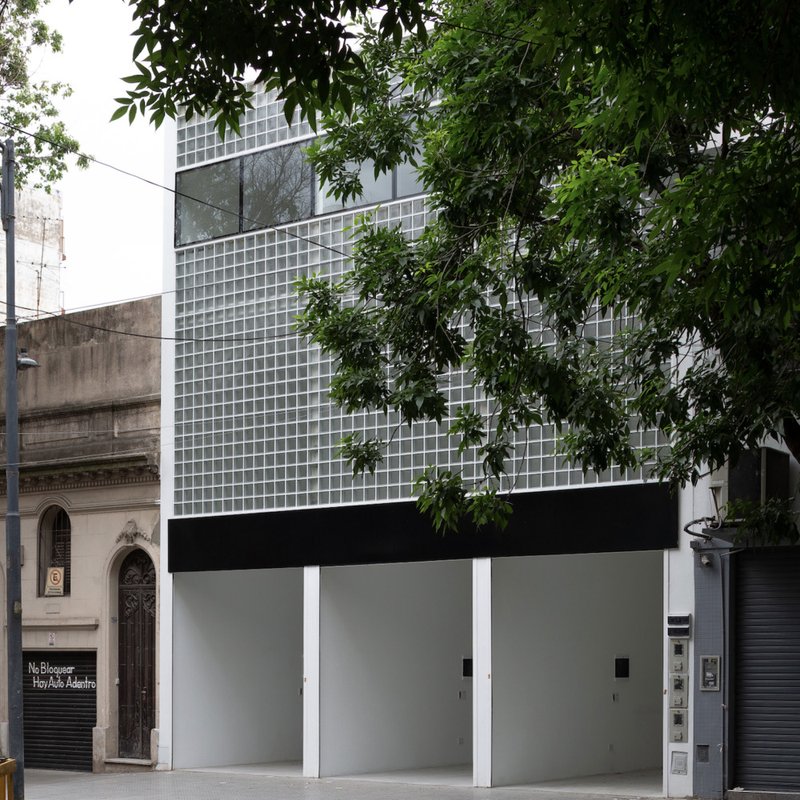
One of the standout features of this project is the use of glass bricks on the facade, which serve multiple purposes:
- Allowing abundant natural light to flood the interiors.
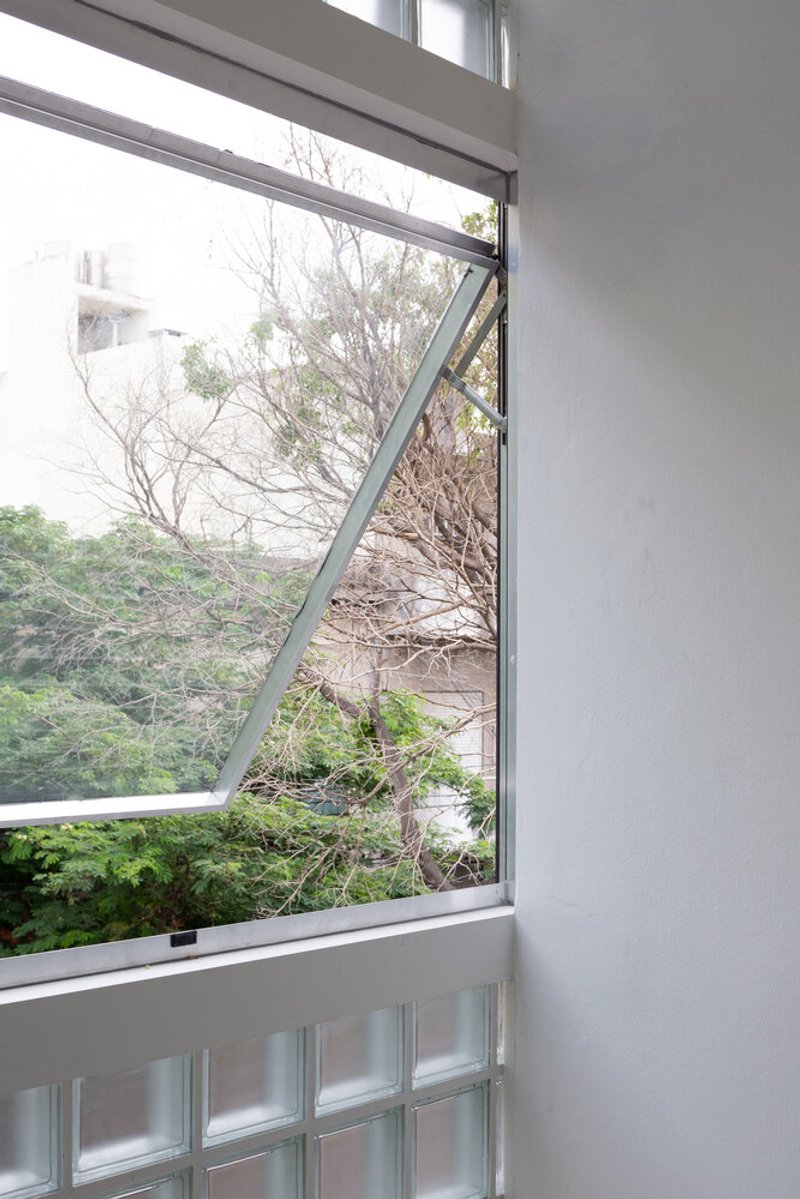
- Ensuring thermal comfort and visual privacy for the occupants.
Cross-Ventilation and Skylights
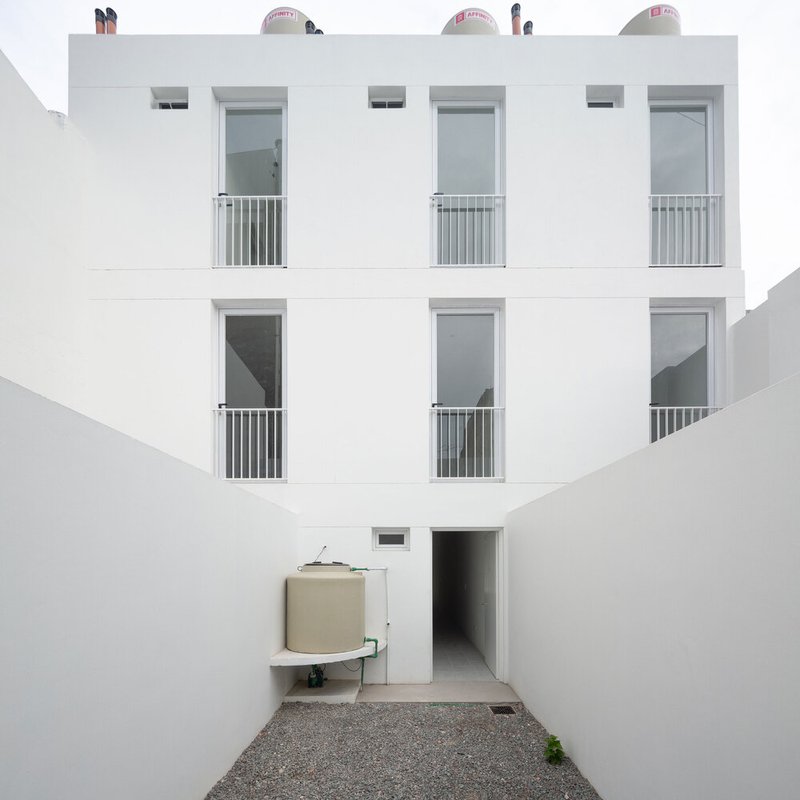
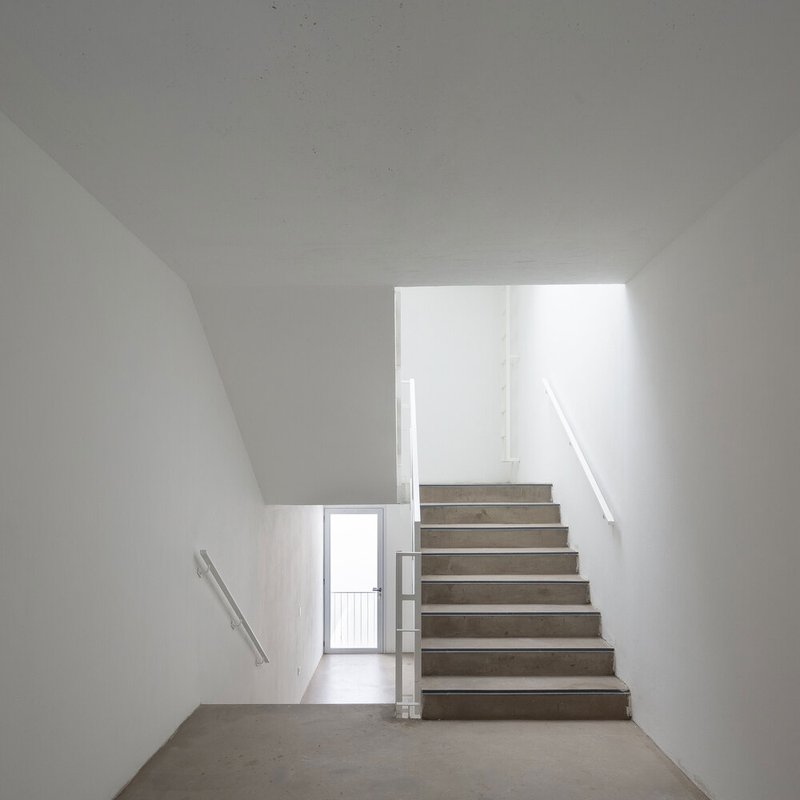
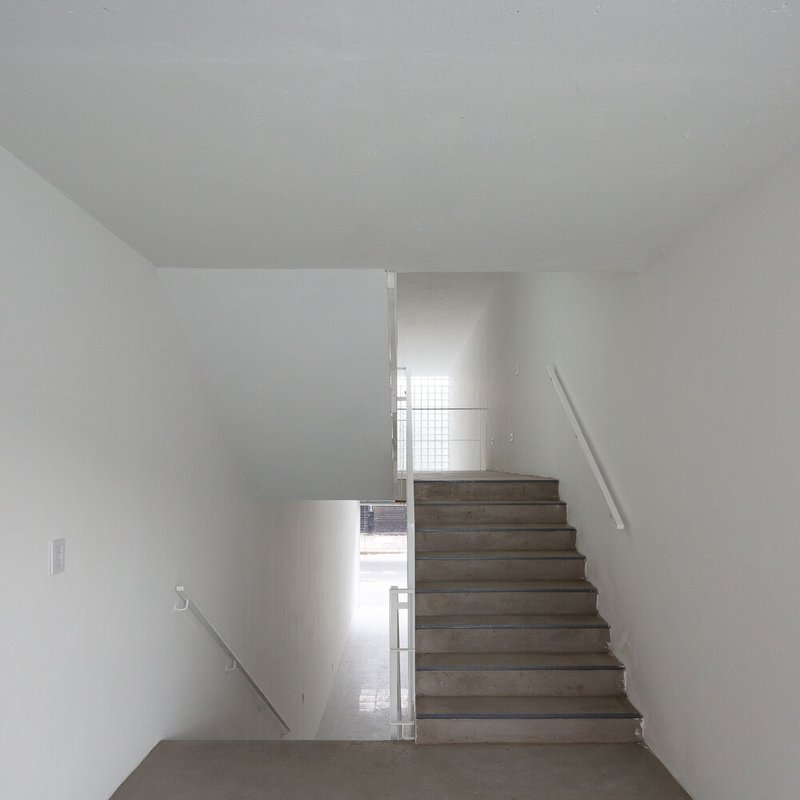
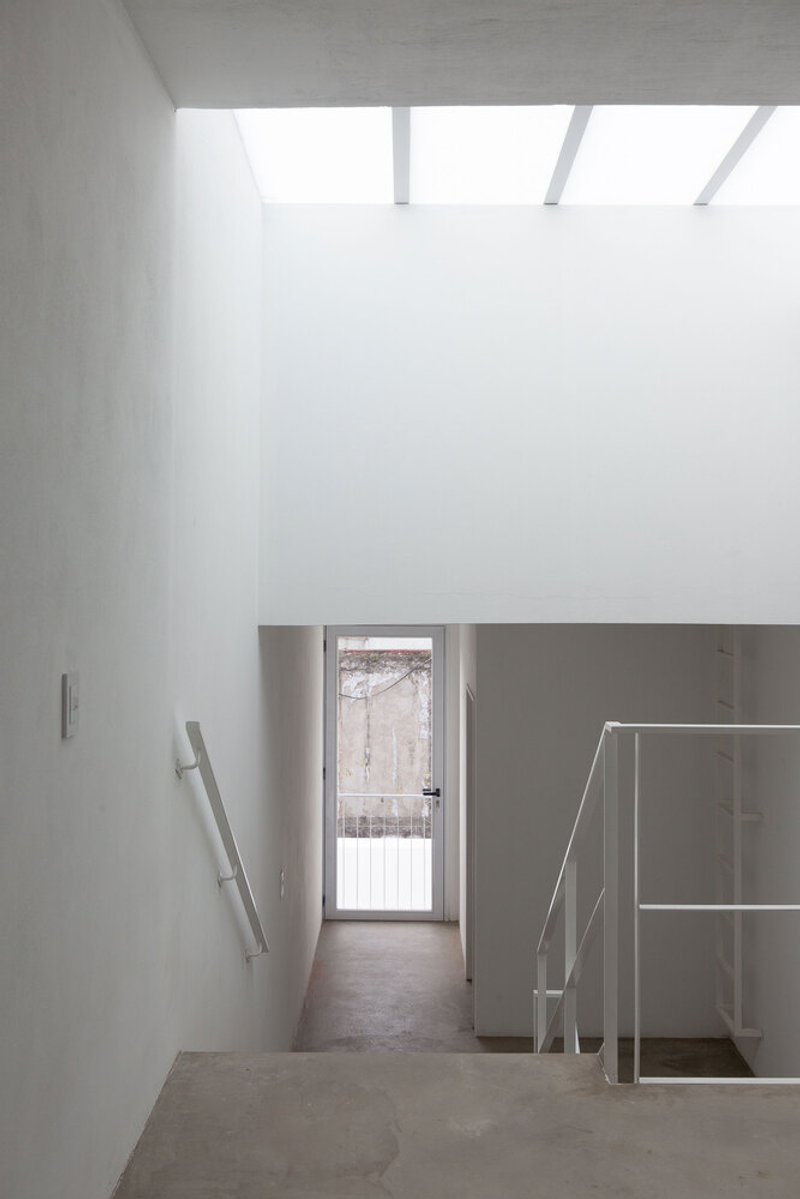
Incorporating large openings at the front and rear of the structure enabled cross-ventilation, reducing reliance on mechanical cooling systems. A prominent skylight above the central staircase further illuminates the interior, addressing the challenge of naturally lighting deeper spaces.
Structural Simplicity and Efficiency
Grid-Based Structural Framework
The project employs a structural grid system, with beams and columns spaced 3.75 meters apart. This modular approach ensures:
- Optimal load distribution.
- Seamless integration into walls and slabs, maintaining the minimalist aesthetic.
By hiding structural elements, the architects achieved an uncluttered and adaptable interior design.
Urban Integration
The facade and openings are carefully calibrated to harmonize with the surrounding urban fabric. This thoughtful integration fosters a connection between the project and its context, enhancing both its functionality and visual appeal.
Sustainable Features in Adaptive Architecture
Energy Efficiency Through Design
Adaptive commercial architecture often incorporates sustainability as a core principle. At Morón 2929, this is evident in the emphasis on passive lighting and ventilation strategies. The choice of materials, such as glass bricks, further reduces energy consumption while creating a visually striking exterior.
Future-Proofing Spaces
The design prioritizes future adaptability by equipping the mezzanine floors at the rear with essential installations. This ensures that spaces can evolve with changing occupant needs, reducing the environmental and financial costs of future renovations.
The Future of Adaptive Commercial Architecture
The Commercial Stores Morón 2929 project by Castillo Lee Valdivieso demonstrates how adaptive commercial architecture can transform narrow urban lots into versatile, light-filled spaces. By focusing on flexibility, sustainability, and integration, this design philosophy addresses contemporary urban challenges while offering a blueprint for the future of commercial architecture.
As businesses and urban landscapes continue to evolve, adaptive designs like Morón 2929 will play a pivotal role in shaping functional, efficient, and visually compelling spaces.
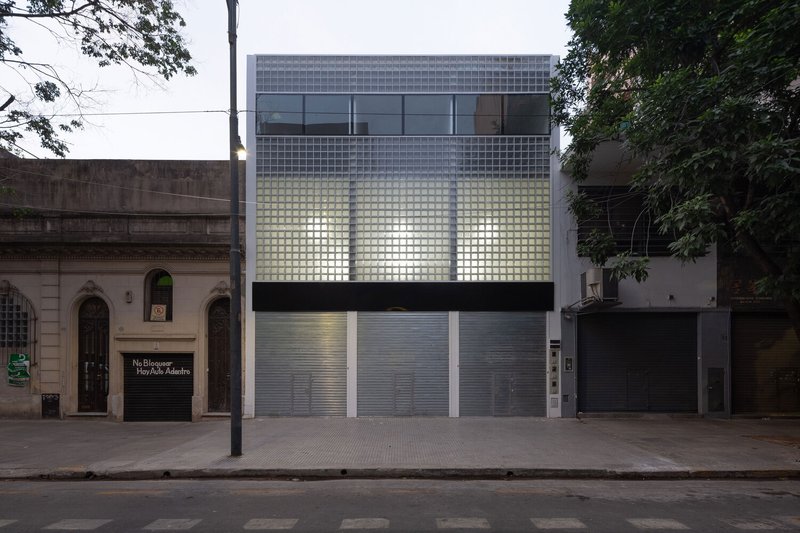
All Photographs are work of Javier Agustín Rojas




Popular Articles
Popular articles from the community

20 Most Popular Commercial Architecture Projects of 2025
From sustainable market concepts to heritage factories, the commercial buildings and proposals that drew the most attention on uni.xyz this year.

Bood Design Bureau Splits a Gilan Residence in Two to Let the Forest In
Double Side House negotiates privacy and openness through interlocking concrete volumes and planted courtyards in northern Iran's humid Caspian lowlands.
A Park Building That Wants to Be a Landscape
Omrania's Operations & Maintenance Building at King Salman Park dissolves industrial program into Riyadh's largest green infrastructure.

Filtering Space: A Gradual Spatial Experience
From urban intensity to spatial calm.


Similar Reads
You might also enjoy these articles
Filtering Space: A Gradual Spatial Experience
From urban intensity to spatial calm.


The Ken Roberts Memorial Delineation Competition (Krob)
As the most senior architectural drawing competition currently in operation anywhere in the world, it draws hundreds of entries each year, awarding the very best submissions in a series of medium-based categories.
Waterfront Redevelopment and Urban Revitalization in Mumbai: Forging a New Dawn for Darukhana
A transformative waterfront redevelopment project reimagining Darukhana’s shipbreaking heritage into an inclusive urban future.

OUT-OF-MAP: A Call for Postcards on Feminist Narratives of Public Space
Rhizoma Design and Research Lab invites artists, designers, architects, researchers, and students to reflect on how feminist perspectives can reshape public space. Selected works will be exhibited in Barcelona, October 2026. Submissions open until 15 April 2026.


Explore Architecture Competitions
Discover active competitions in this discipline




The International Standard for Design Portfolios


The Global Benchmark for Architecture Dissertation Awards


The Global Benchmark for Graduation Excellence


Challenge to reimagine the Iron Throne
Comments (0)
Please login or sign up to add comments
No comments yet. Be the first to comment!