
Petr Hájek Architekti Inserts a Shape-Shifting Concert Hall into a 19th-Century Spa in Karlovy Vary
A steel auditorium that never touches the heritage walls turns a defunct peat-bath palace into a cultural transformer.


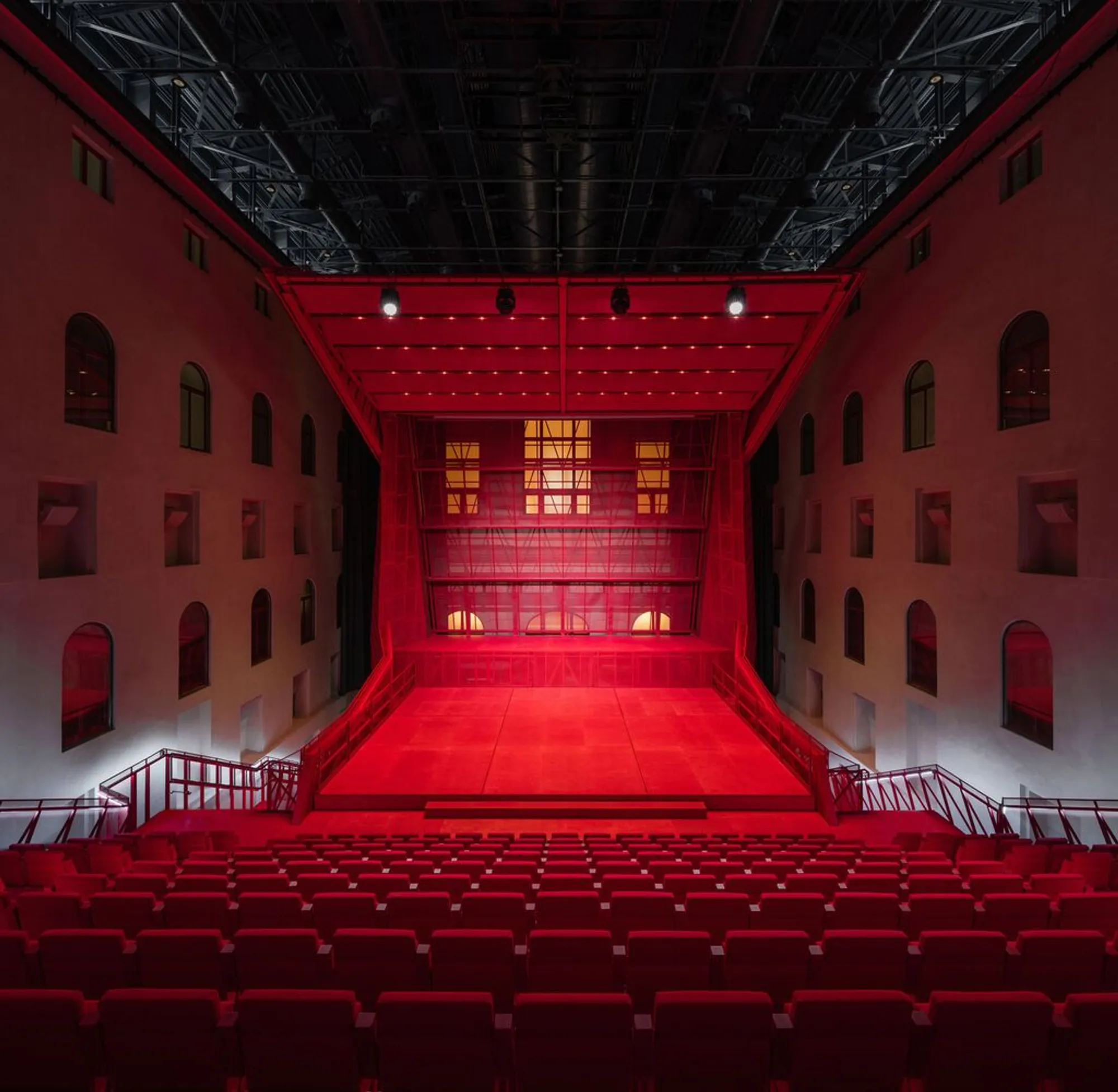
The Imperial Spa in Karlovy Vary was once a marvel of industrial wellness: a pseudo-Renaissance palace completed in 1895 by Ferdinand Fellner and Hermann Helmer, equipped with a mechanical system that pumped peat to 2,000 bathers a day. When the demand for therapeutic mud dried up, the horseshoe-plan building drifted into intermittent use and slow decay. Its central atrium, formerly the engine room of that peat conveyor, sat empty. Petr Hájek Architekti has now placed a complete concert hall inside that void, a bright red steel structure that stands on six legs and does not touch the listed masonry at all.
What makes the project genuinely compelling is the way it treats the new insertion as a continuation of the building's original logic. The spa was always about a machine hidden inside ornamental walls. Hájek simply replaced the peat machine with a musical one: a hall whose rotating acoustic panels, retractable orchestral shell, and reconfigurable seating can morph from a reverberant classical venue to a dampened cinema in minutes. Completed in 2024 after five years of design and construction, it won the Czech Architecture Award from a field of 307 projects, and at a total reconstruction cost of 59.5 million euros, it represents one of Central Europe's most ambitious heritage conversions.
The Historical Shell
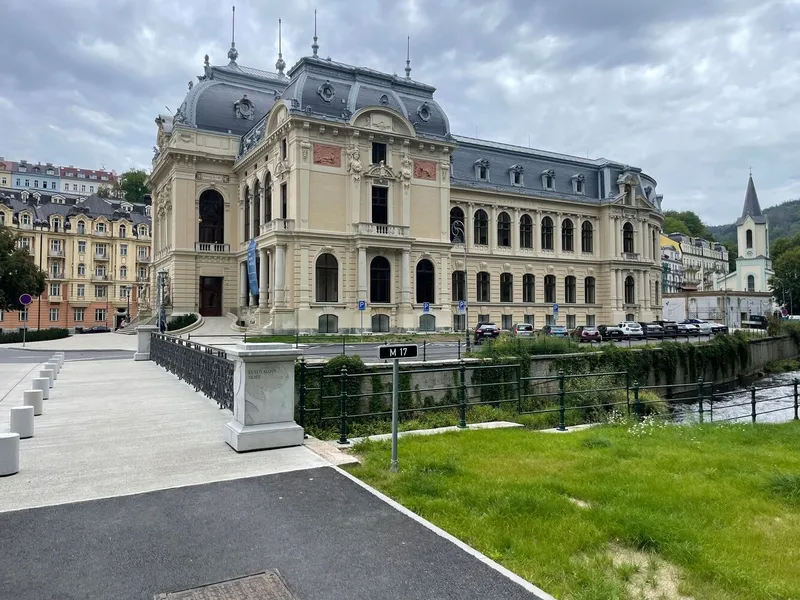
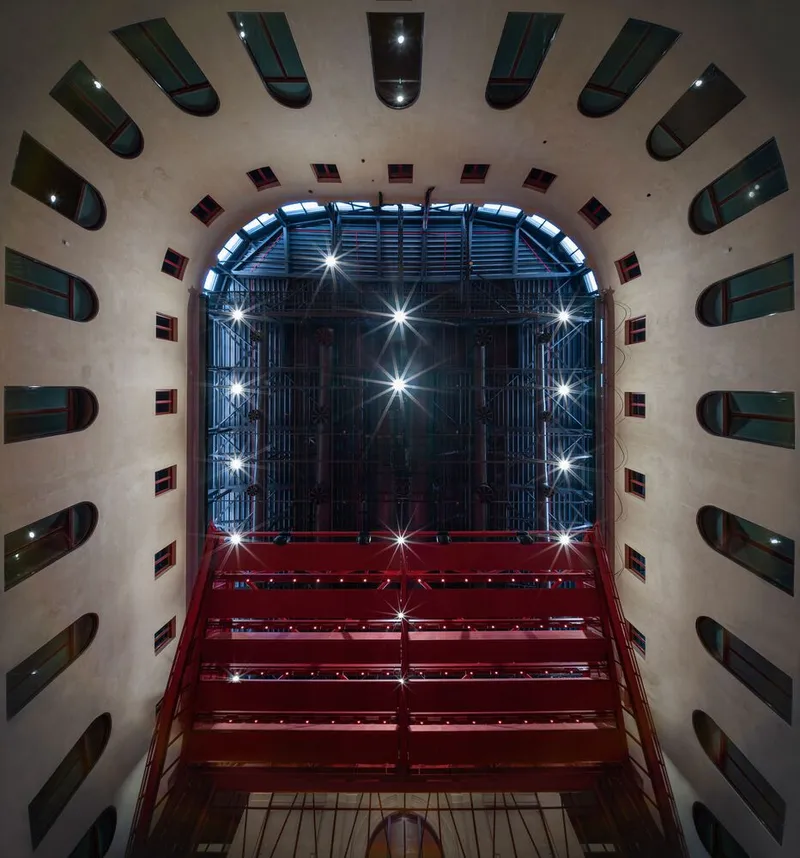
From the outside, Fellner and Helmer's Beaux-Arts facade along the river remains essentially intact: mansard roofs, arched entrance porticos, a decorative language that mixes Renaissance massing with Art Nouveau flourishes. Walk through the door, though, and the stripped interior reveals how little of the original fabric survived. Only a handful of cast-iron columns remain. The plaster arches and curved window openings that ring the atrium read as archaeological evidence rather than functioning structure.
That condition of partial survival is precisely what enabled the intervention. Rather than restore the interior to a speculative former glory, the architects treated the existing walls as a resonant frame, a masonry container awaiting a new instrument.
An Auditorium That Floats
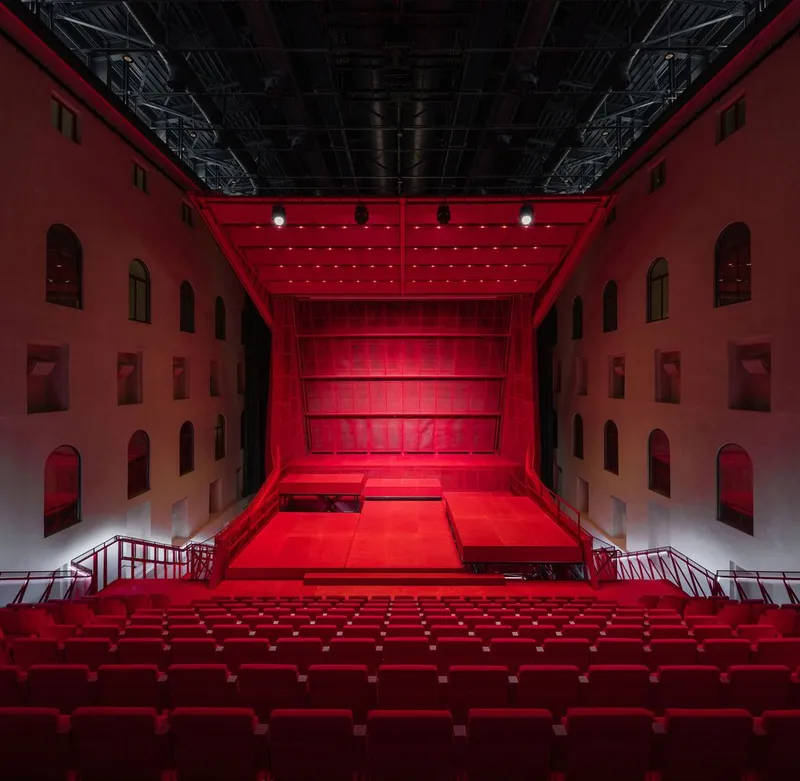
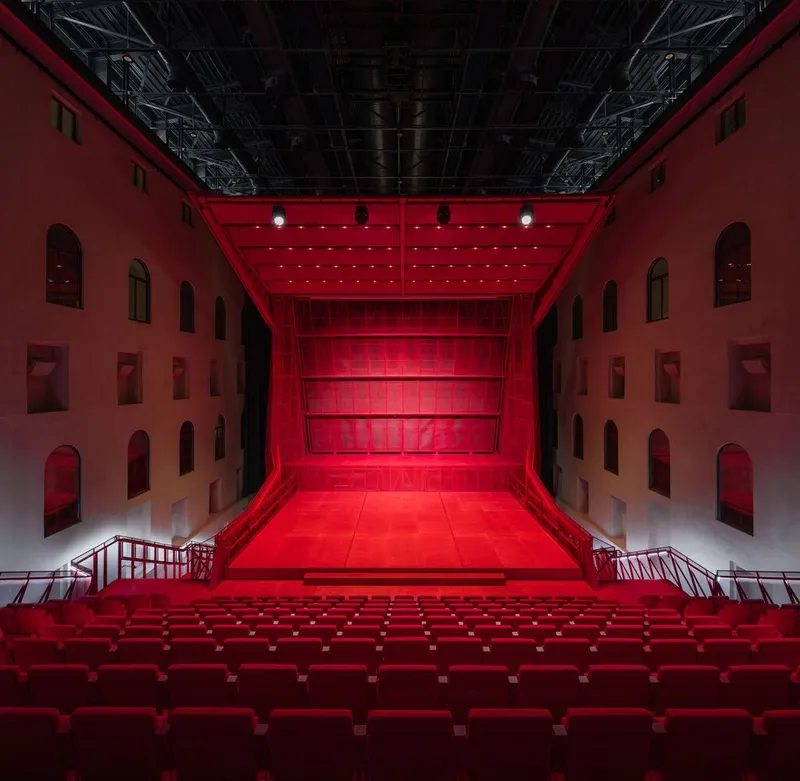
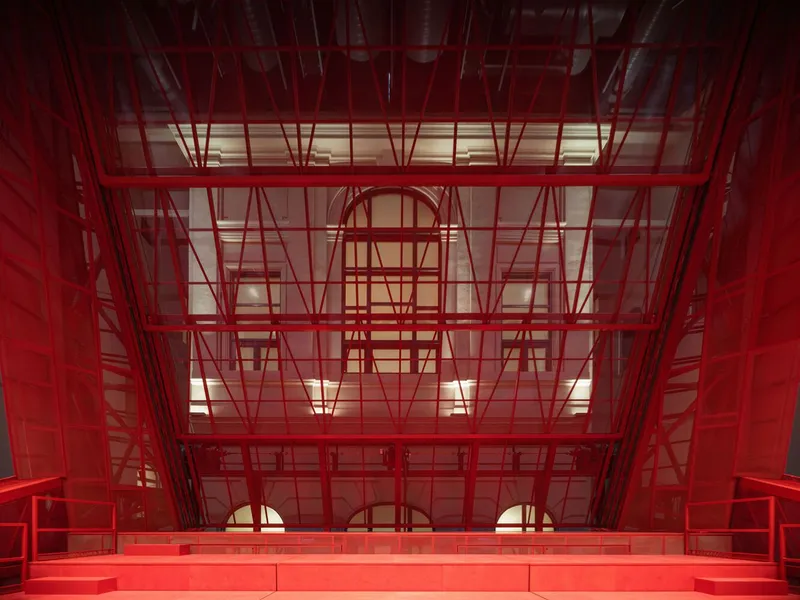
The core move is structural: a self-supporting steel framework, painted a saturated red, rises through the atrium on six legs without bearing on the heritage walls. The color is deliberate and almost confrontational. It announces the insertion as something foreign, provisional, and legible. You are never in doubt about which century you are standing in, even as arched openings from the 1890s frame every sightline.
Expanded metal cladding wraps portions of the shell, giving the structure a semi-transparent skin that lets light and sound bleed between the historic envelope and the modern volume. The 492-square-meter courtyard floor becomes a stage, and the tiered red seating cascades upward on both sides, flanking the performance area like the banks of an amphitheater.
The Musical Transformer
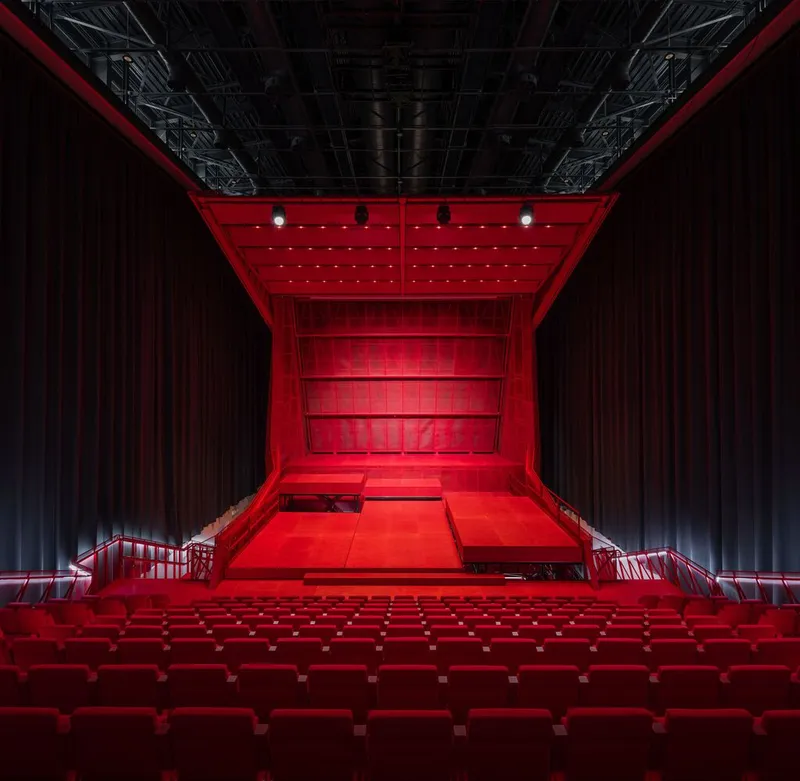
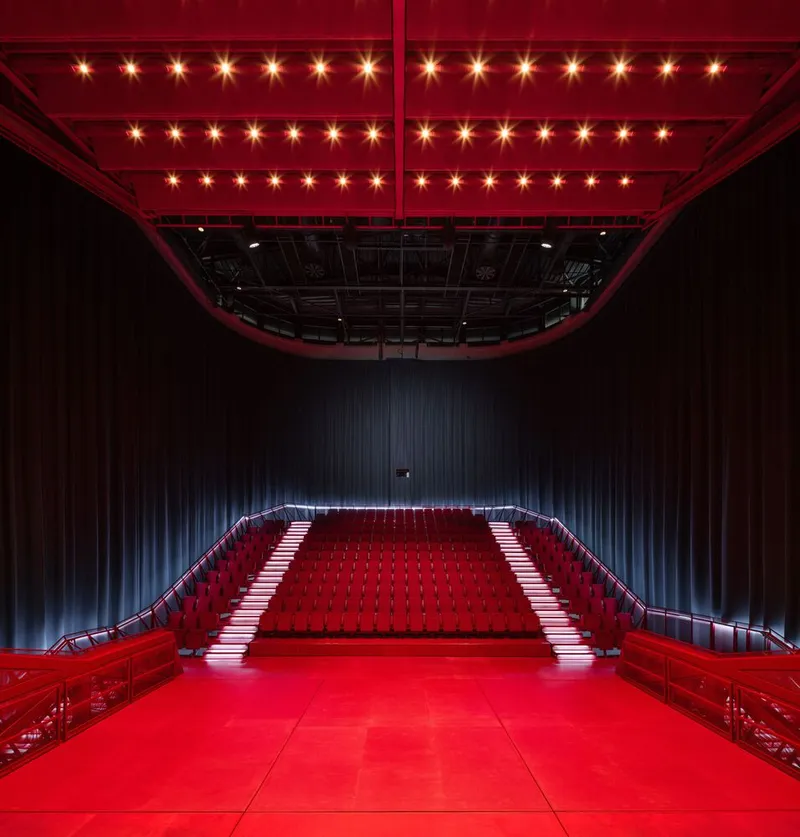
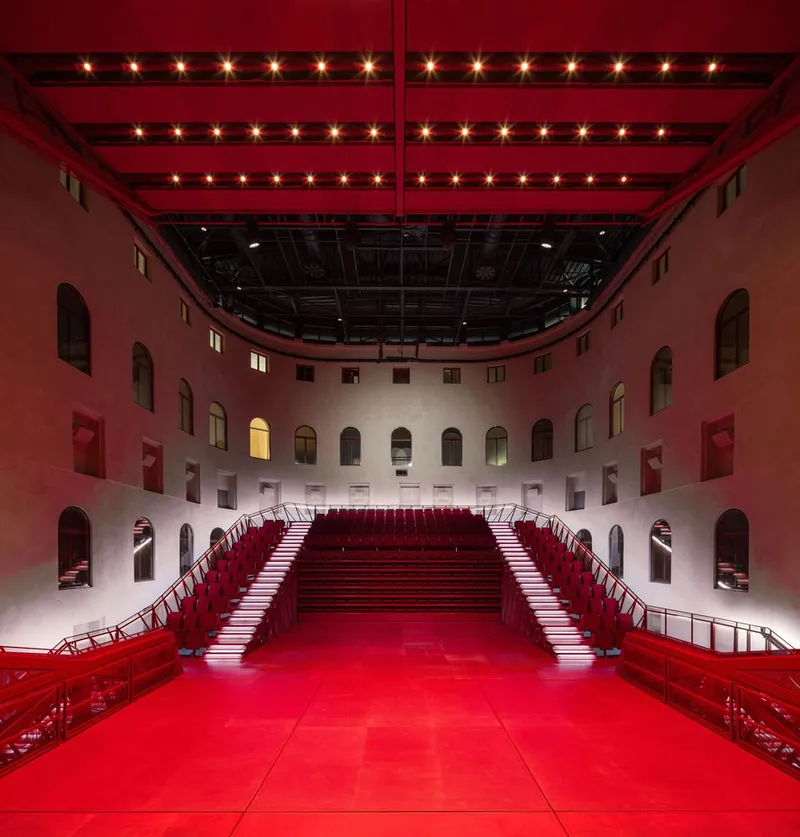
Hájek's team describes the hall as a "musical transformer," and the label is earned. Above the stage, 3D-milled plywood panels on rotating triangular armatures can reflect, scatter, absorb, or redirect sound energy depending on their orientation. A retractable orchestral shell slides into position to project sound toward the audience during classical performances, then disappears when the space needs to serve as a flat-floor conference venue or a cinema.
The stage floor itself hides wooden panels embedded in a steel grid, functioning as acoustic resonators tuned to work with the orchestra. A heavy blackout curtain can enclose the entire volume, killing reverberation and blocking all ambient light. The acoustic consulting was handled by AVT Group, while GRADIOR TECH engineered the steelwork and mechanical systems. What they produced together is a room that changes its personality completely between setups, without moving a single wall.
Prefab Puzzle Through the Roof
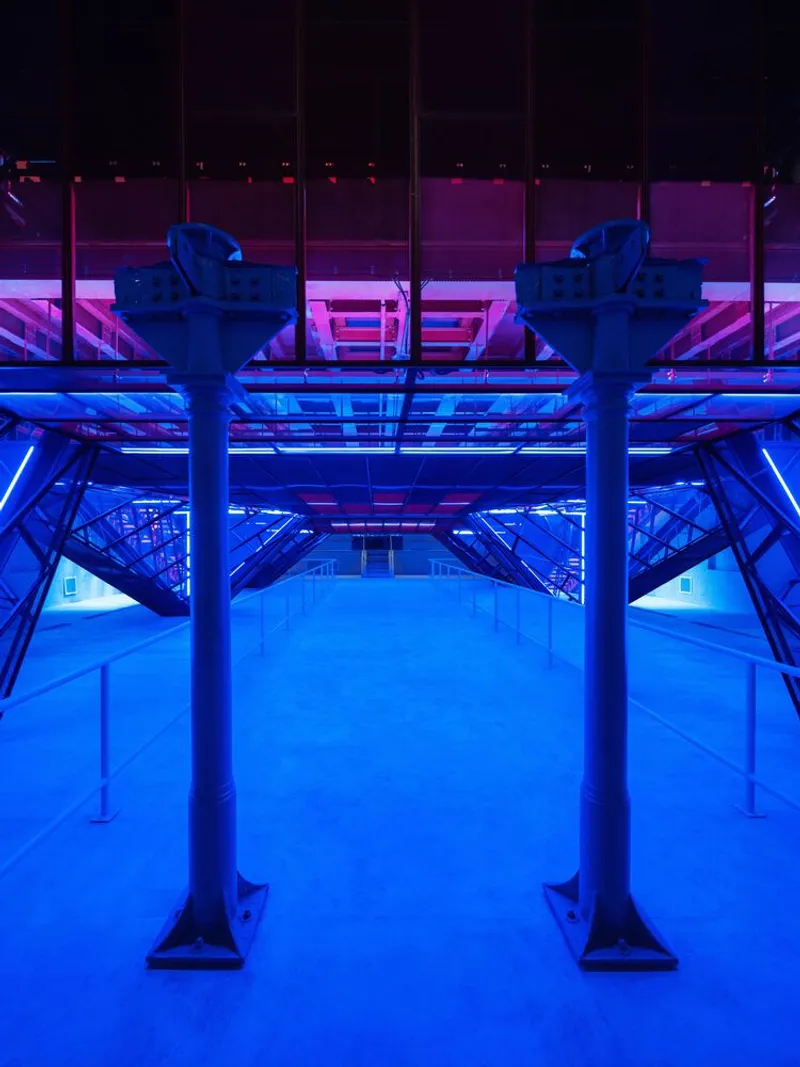
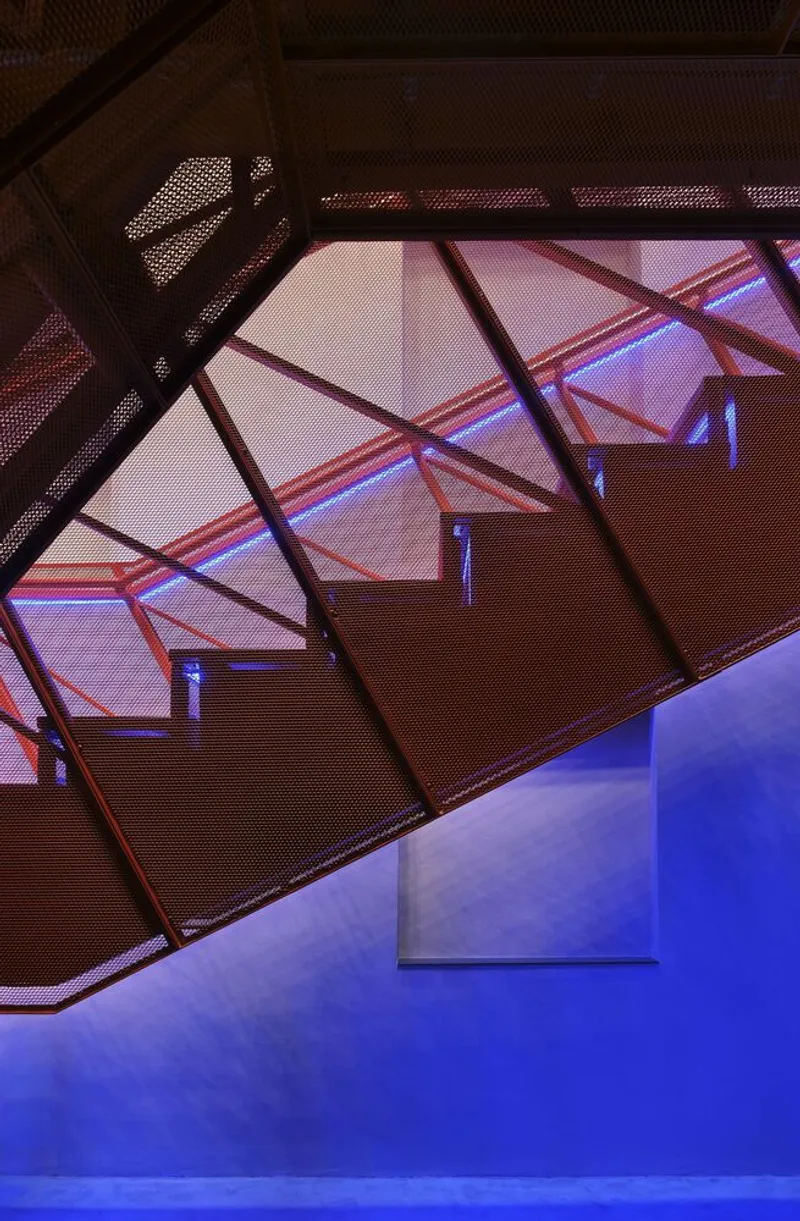
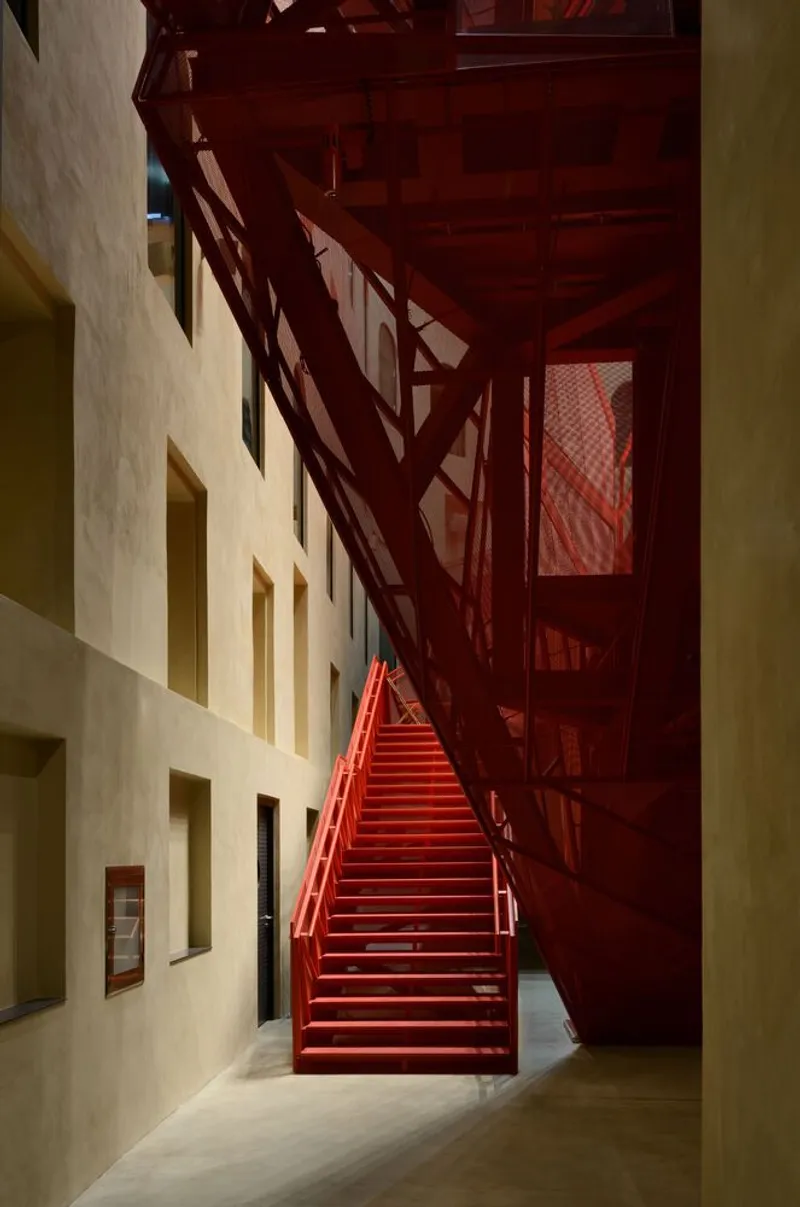
One of the most telling details of the project is logistical. The heritage envelope made it impossible to bring large components through the doors or corridors. Every steel member was instead manufactured off-site, dry-assembled in a warehouse to verify fit, numbered, disassembled, and then lifted through an opening in the roof into the atrium below. The entire auditorium was essentially built as a kit of parts.
That process of trial assembly mirrors the hall's philosophical commitment to reversibility. Every modern element is designed to be removable. If acoustic technology advances in thirty years, the panels can be swapped without altering the heritage fabric. It is adaptive reuse that explicitly plans for its own obsolescence, a rare and honest position.
Red on Stone: Atmosphere and Contrast
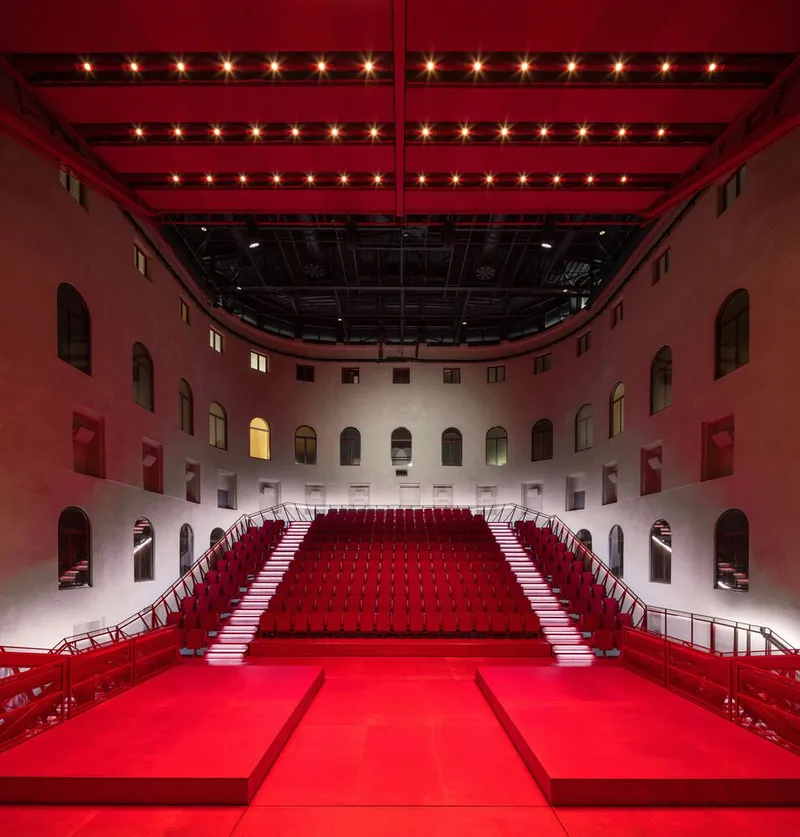
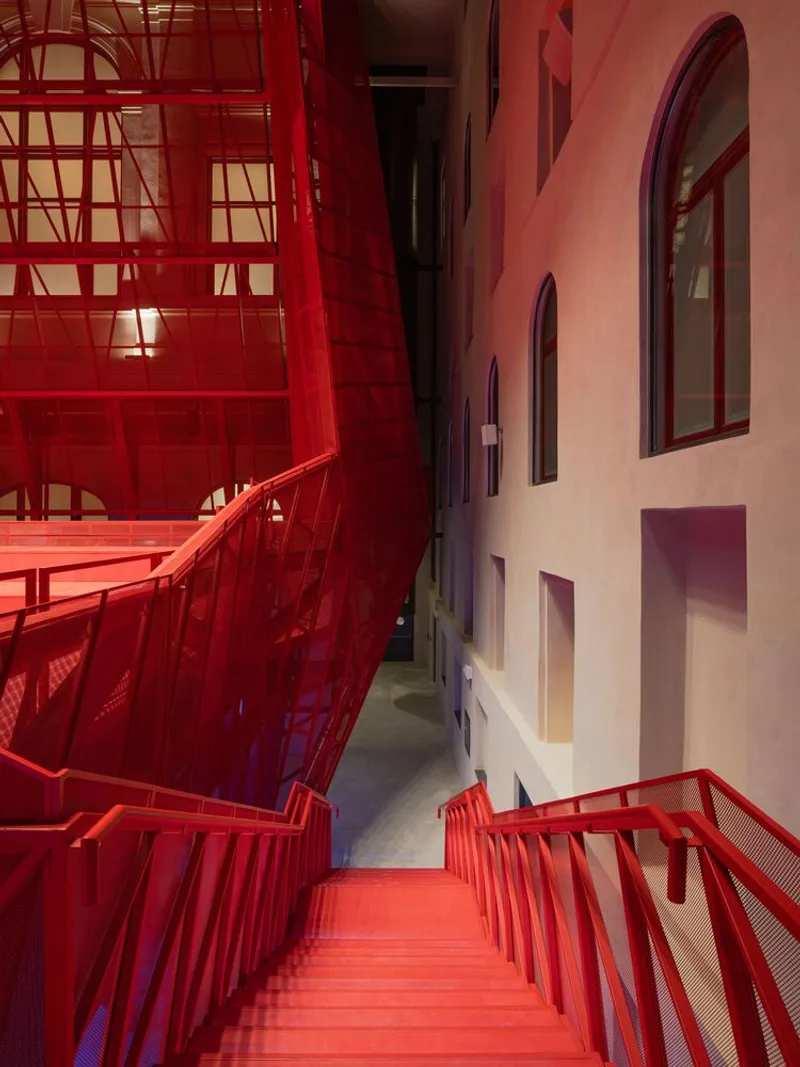
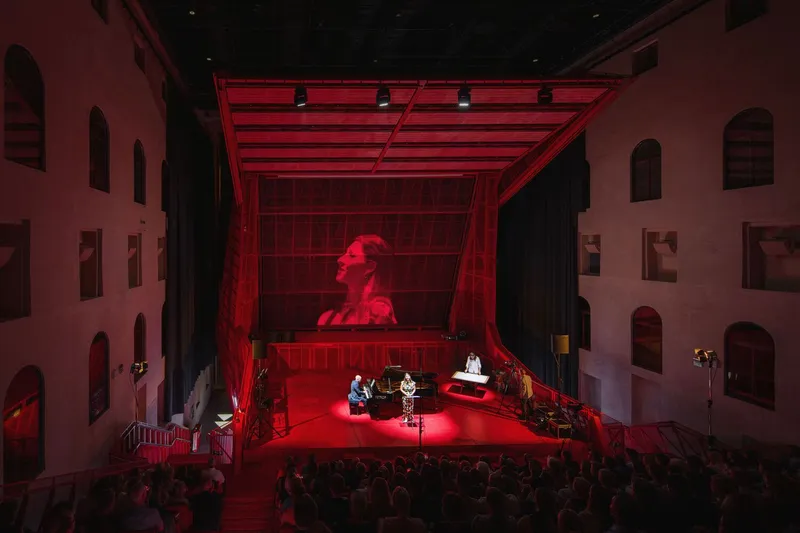
The red steel against the pale plaster and sandstone generates an almost theatrical tension that persists even when no performance is underway. Ascending the metal staircases between arched window openings, you experience the building as two interlocking volumes: one heavy and permanent, the other light and deliberately temporary. The visual clash is productive. It keeps the heritage legible by refusing to blend in.
During performances, theatrical lighting shifts the palette further. Blue and pink washes turn the exposed trusses overhead into a kind of industrial chandelier. The courtyard, once a utilitarian machine space, now feels genuinely ceremonial. That transition from workaday engine room to cultural venue is the emotional payoff of the entire project.
Overhead Infrastructure
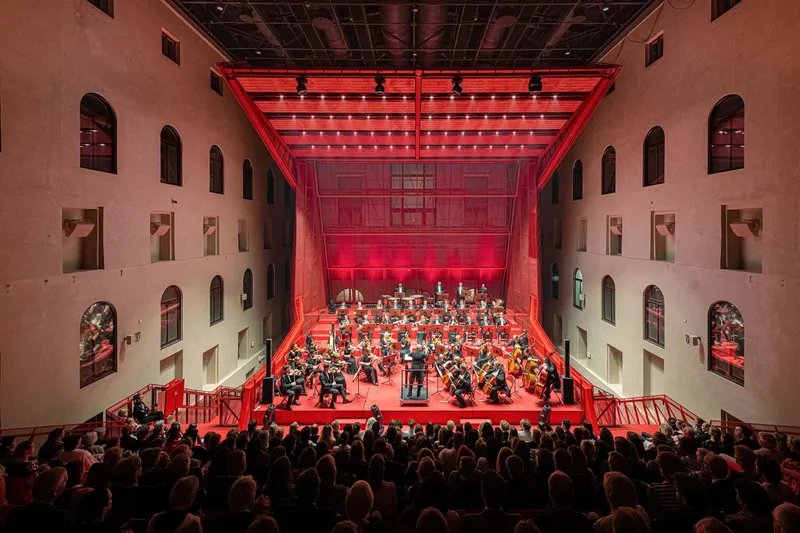
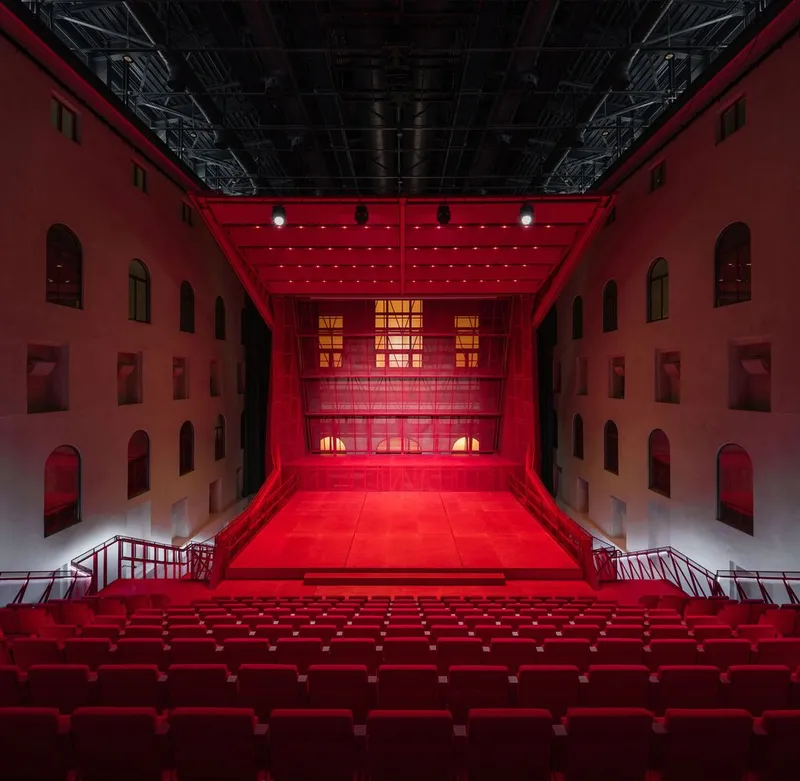
The ceiling above the auditorium is left deliberately exposed: a lattice of trusses, rigging bars, and lighting grids suspended over the audience. Ventilation and fire safety systems are routed above the main staircase roof, keeping the hall's overhead zone dedicated to performance technology. The decision to leave all of this visible reinforces the machine metaphor. You are sitting inside an instrument, and the instrument wants you to see its workings.
Plans and Drawings
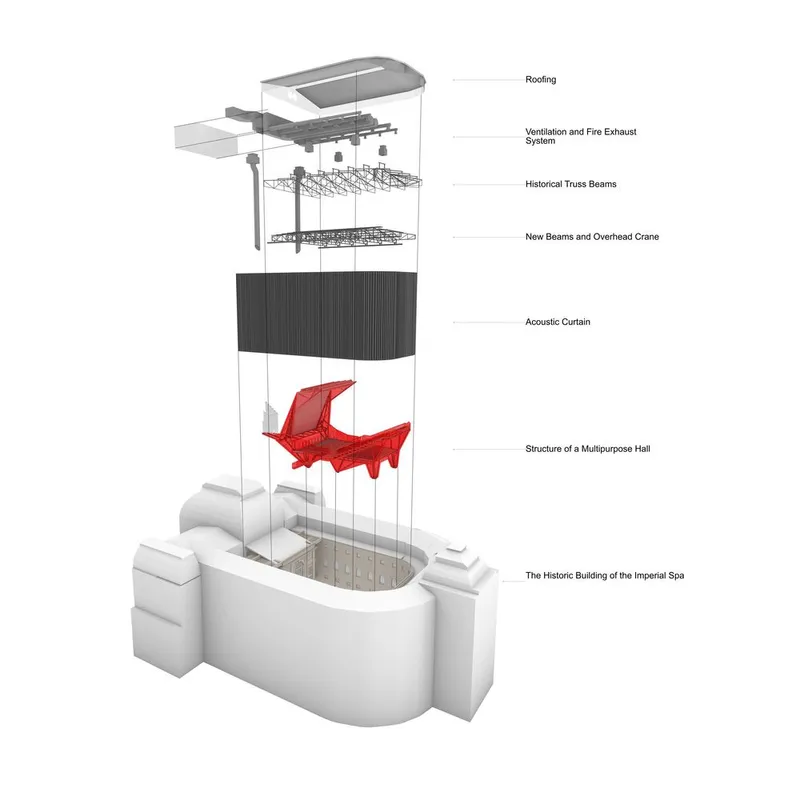
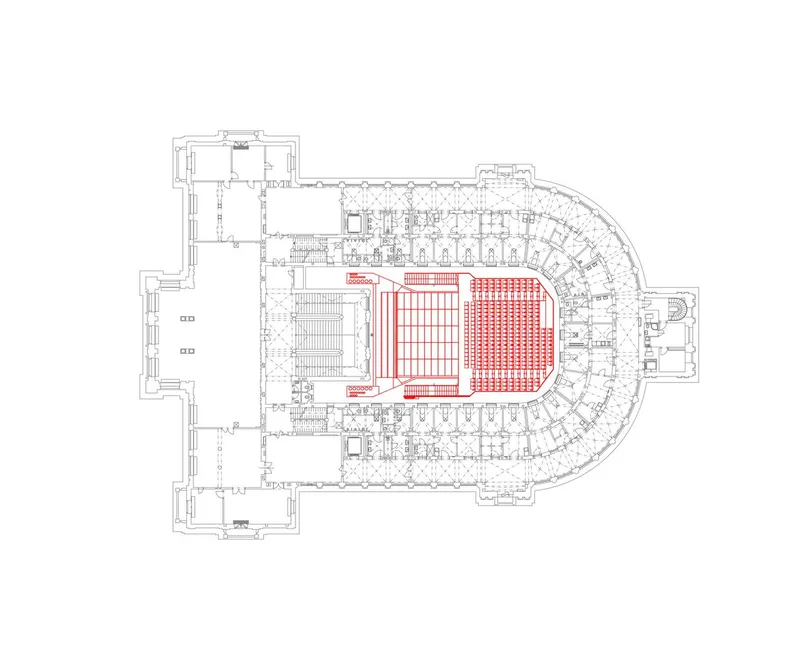
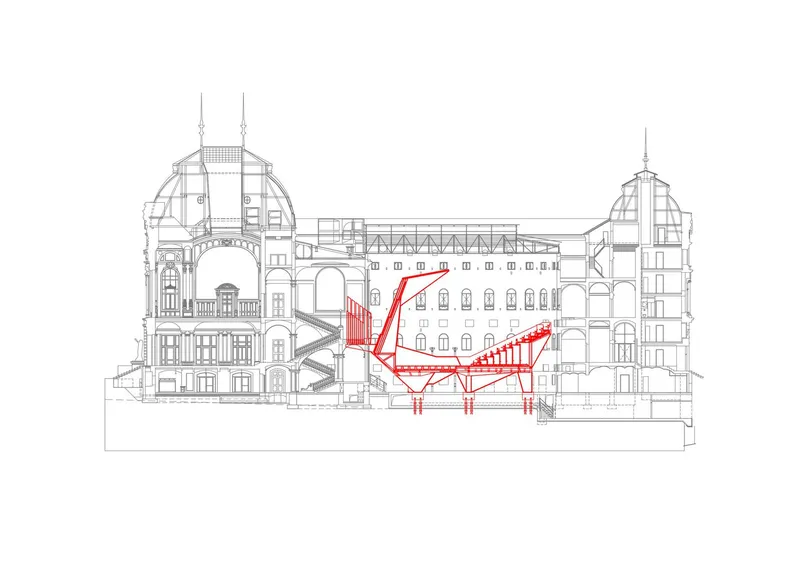
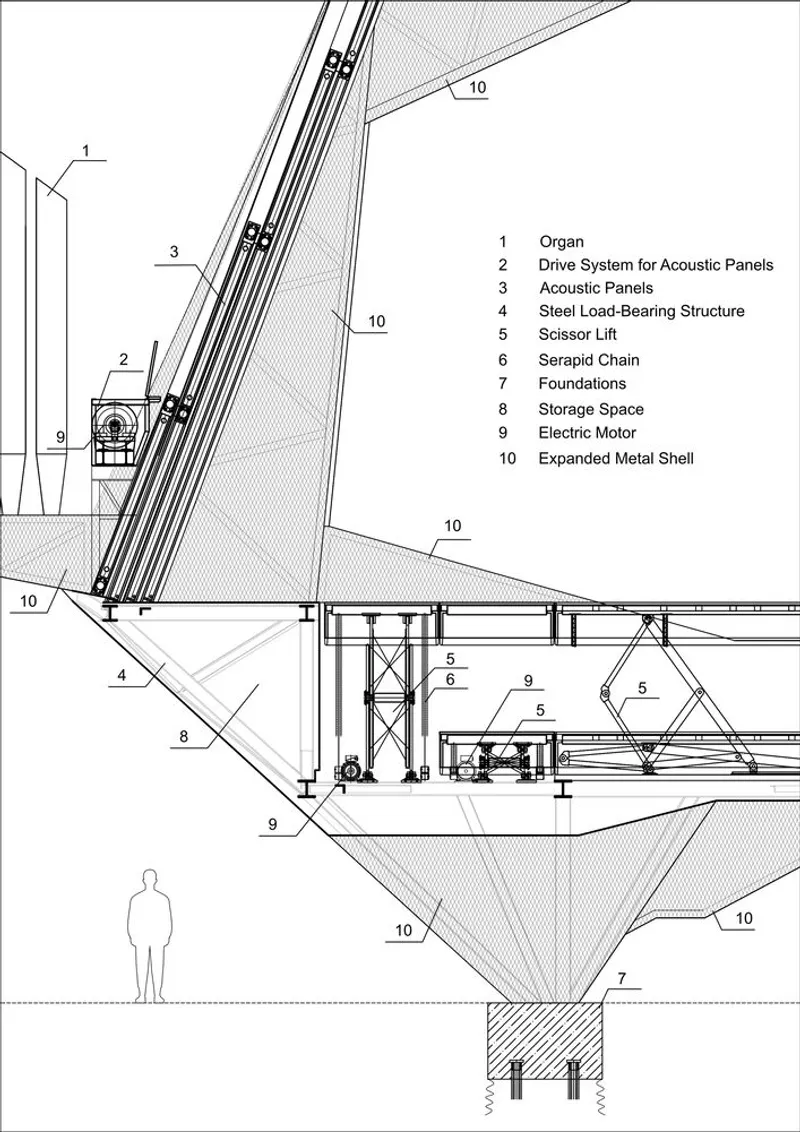
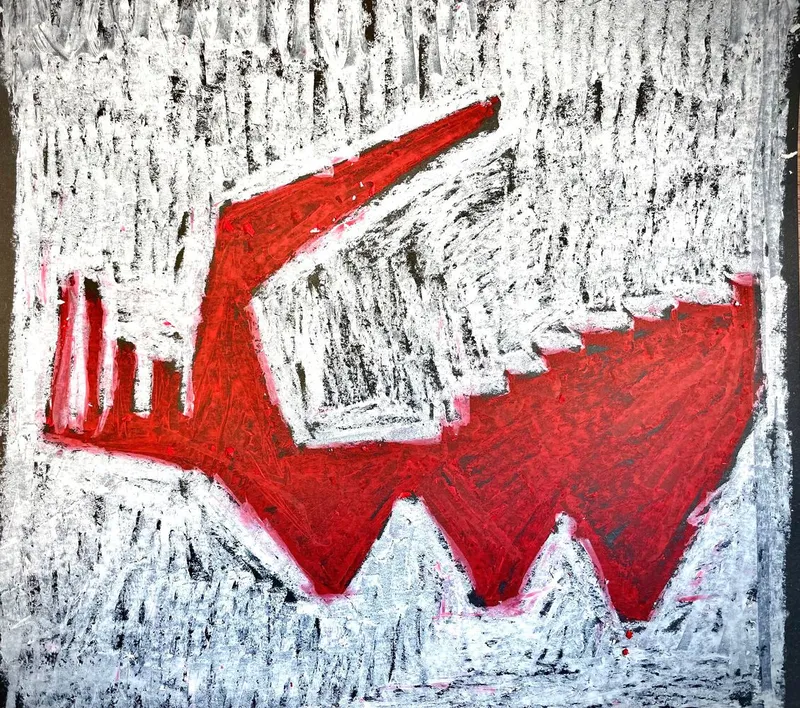
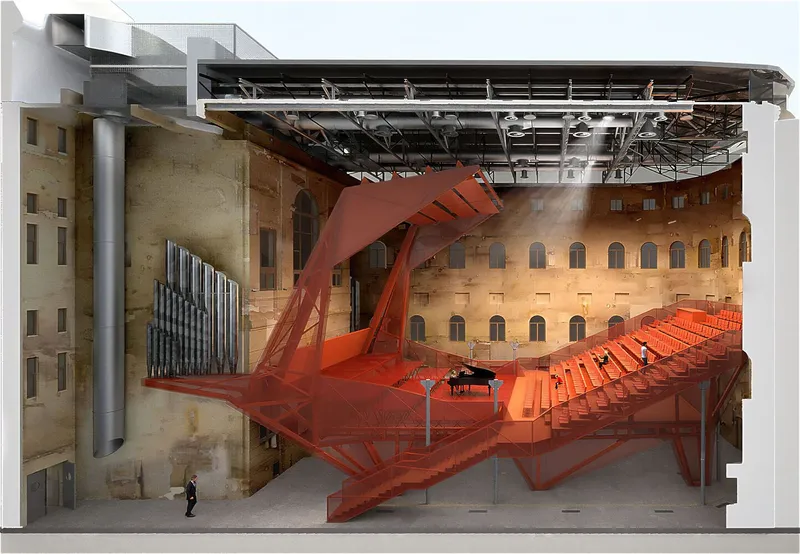
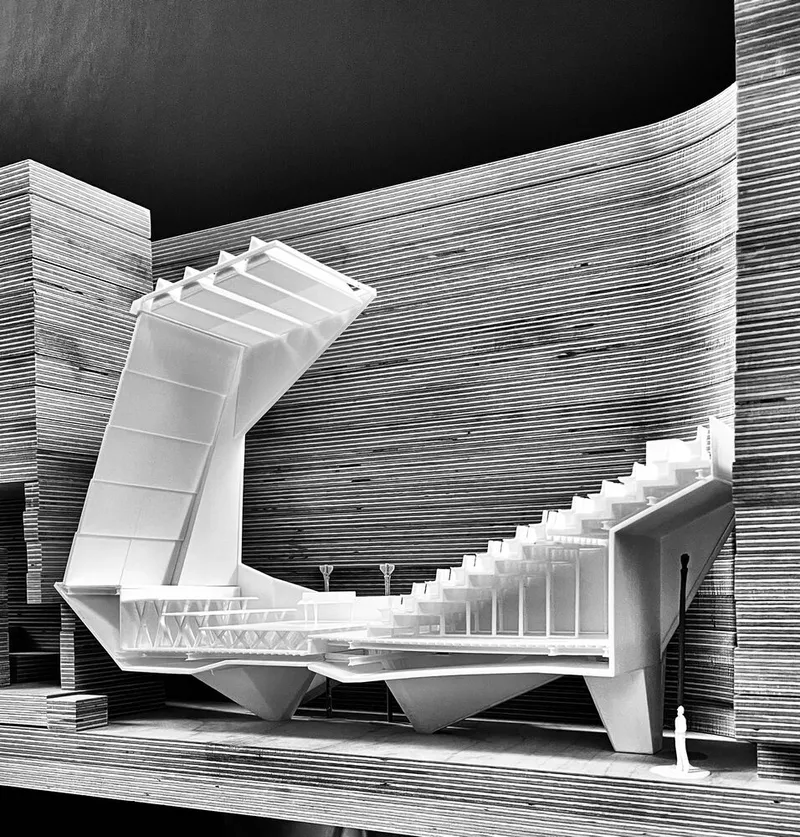
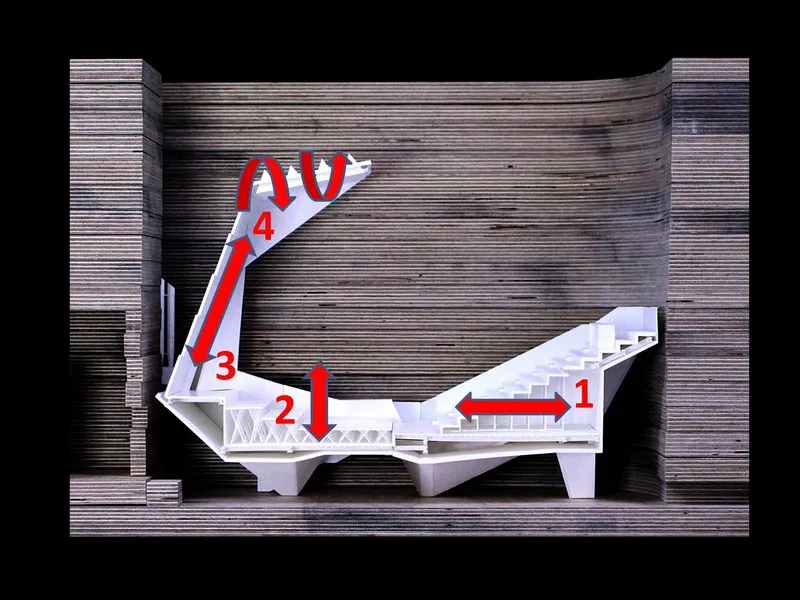
The exploded axonometric is the most revealing drawing in the set. It separates the project into its constituent layers: the historic roof, the truss system, the acoustic curtain envelope, and the red auditorium skeleton. Read top to bottom, it narrates the construction sequence. The section drawing confirms the cantilever: the auditorium structure hovers inside the masonry shell with visible daylight between old and new. Floor plans show the seating arrangement highlighted in red, filling the curved courtyard footprint like a geometric organism.
The physical models are equally instructive. One nighttime photograph of the study model shows the angular auditorium volume glowing within horizontal masonry strata, making the spatial gap between insertion and envelope strikingly clear. Red arrows on the top-view model trace circulation paths, revealing how audiences move through and around the structure rather than simply into it.
Why This Project Matters
Heritage conversion projects too often settle for one of two extremes: a seamless restoration that pretends the 21st century never arrived, or a flashy insertion that treats the old building as a backdrop. The Imperial Spa concert hall does neither. By standing free of the walls, by painting itself red, by engineering every component to be removed and replaced, it establishes a relationship with the historic fabric that is close but never fused. That clarity of separation is what allows the two eras to speak to each other without shouting.
The deeper lesson is about program. Karlovy Vary did not just gain a concert hall; it gained a room that can be a concert hall, a theater, a cinema, a conference center, and a dance venue. In a mid-sized Central European city, that kind of functional density is not a luxury but a necessity. A single-purpose auditorium might have struggled to justify the 59.5 million euro investment. A genuine transformer, one that can host a Dvořák symphony on Friday and a film festival screening on Saturday, earns its keep. Petr Hájek Architekti understood that the best way to honor a building designed around a machine was to fill it with a new one.
Concert Hall in the Imperial Spa by Petr Hájek Architekti. Karlovy Vary, Czech Republic. 492 m² courtyard area. Completed 2024. Acoustic design: AVT Group. Structural steelwork: GRADIOR TECH. Photography by Petr Polák and Ester Havlová.
About the Studio
Share Your Own Work on uni.xyz
If projects like this are the kind of work you want to make, uni.xyz is a place to publish your own, find collaborators, and enter design competitions.



Popular Articles
Popular articles from the community


Co-Life: Senior Housing Design That Reconnects Older Adults With the City
Co-Life reimagines senior housing design through healing gardens, shared streets, workshops, and a sustainable community across generations.

The Musturak Paradise: Senior Living Architecture for a Connected Future in Temara, Morocco
The Musturak Paradise reimagines senior living architecture in Temara via private homes, social spaces, culture, community, and shared care.

Conexión: Biophilic Design Reimagines High-Rise Living in Hong Kong
Conexión reimagines high-rise living in Hong Kong through biophilic design, green facades, shared spaces, daylight, water and nature within.

Co-life: Sustainable Architecture for Age-Friendly Community Living
Co-life reimagines sustainable architecture for seniors through courtyards, rammed earth, shared gardens, and spaces designed for belonging.


Similar Reads
You might also enjoy these articles


Hodi-Mandai Geram
Project Function: Preservation and revitalization of the Intangible heritage and socio-spatial identity of the Hodi by Housing, Cultural Memory Center, Sacred Grove, landscape, local tourism economy


Olio Towers: A Mid-Rise for Performers That Fuses Housing, Rehearsal, and Stage
Located blocks from Houston's Theater District, this modular tower stacks living units around a central performance atrium.

Oasis: Modular Green Housing Carved into Dhaka's Urban Fabric
A shortlisted Plugin Housing entry reclaims unauthorized settlements in Dhaka with stepped concrete volumes, green roofs, and ventilation-driven design.

Black Hole: A Floating Megastructure for the Post-Physical Era
Emiliano Mazzarotto envisions a spherical, self-scaling arena where e-sports, digital hotels, and holographic stadiums replace traditional public space.


Explore Concert Hall Competitions
Discover active competitions in this discipline



Challenge to reimagine the Iron Throne


Photograph architecture without architects


Illustrate the lost glory of Angkor Wat - Render Challenge


Design challenge to reuse E-waste
Comments (0)
Please login or sign up to add comments
No comments yet. Be the first to comment!