
Además Arquitectura Wraps a Concrete Ramp Around a Tree to Transform a Buenos Aires Schoolyard
A 143 square meter intervention in the suburb of 9 de Abril turns a simple staircase request into a spiraling landscape of play and learning.


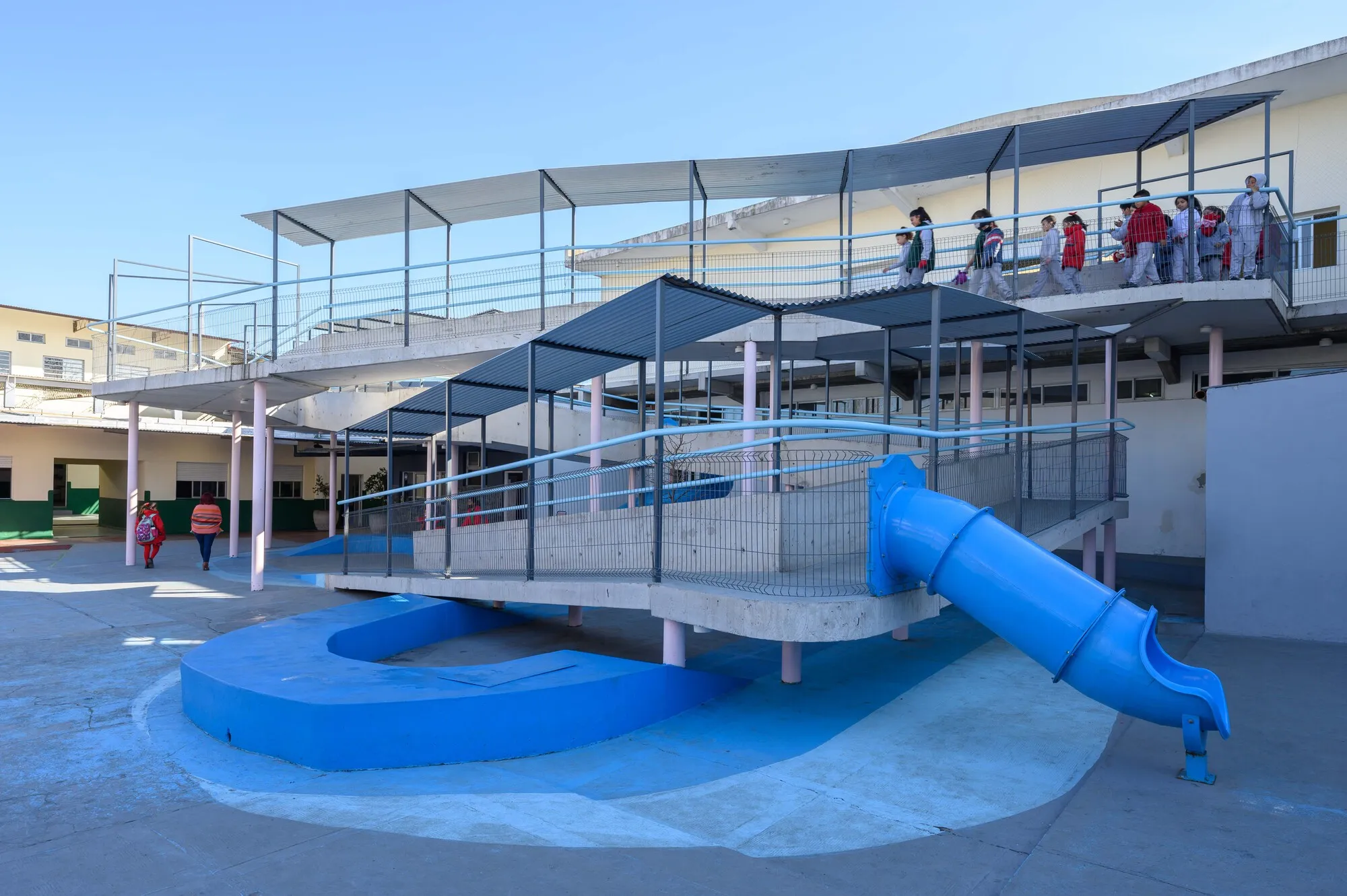
The Instituto Almafuerte asked for a ladder. What Además arquitectura, led by Leandro A. Gallo, delivered instead was a 143 square meter concrete ramp that coils around a deciduous tree, connects a ground-level courtyard to upper classrooms, and along the way invents an entire universe of slides, viewpoints, and gathering spots for small children. Located in 9 de Abril, a precarious neighborhood in the suburbs of Buenos Aires, the project proves that economy of means does not have to mean poverty of imagination.
The word "Tempo" in the project title refers to the relative speed with which action happens. It is a fitting name. The ramp does not simply move children from one level to another; it slows them down, loops them past a living tree, offers them a blue spiral slide as a shortcut, and gives them elevated terraces from which to watch the courtyard below. Every meter of circulation becomes a moment of spatial experience, calibrated for the scale and curiosity of early childhood students.
A Ramp That Refuses to Be Infrastructure
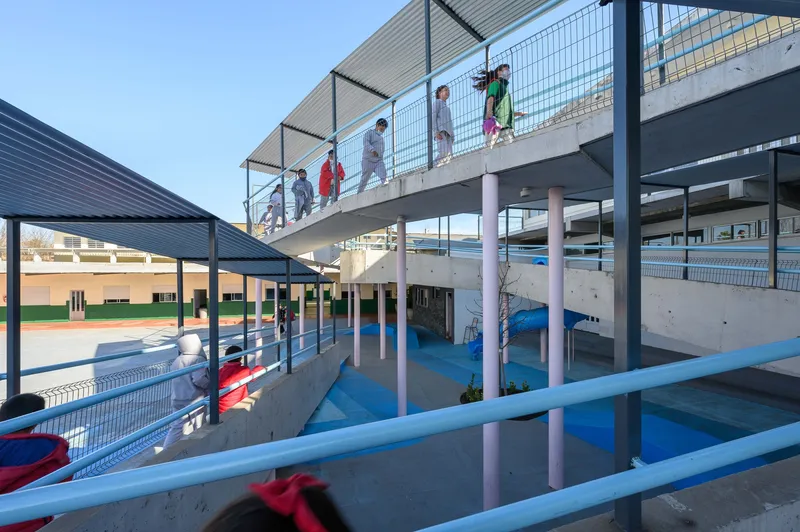
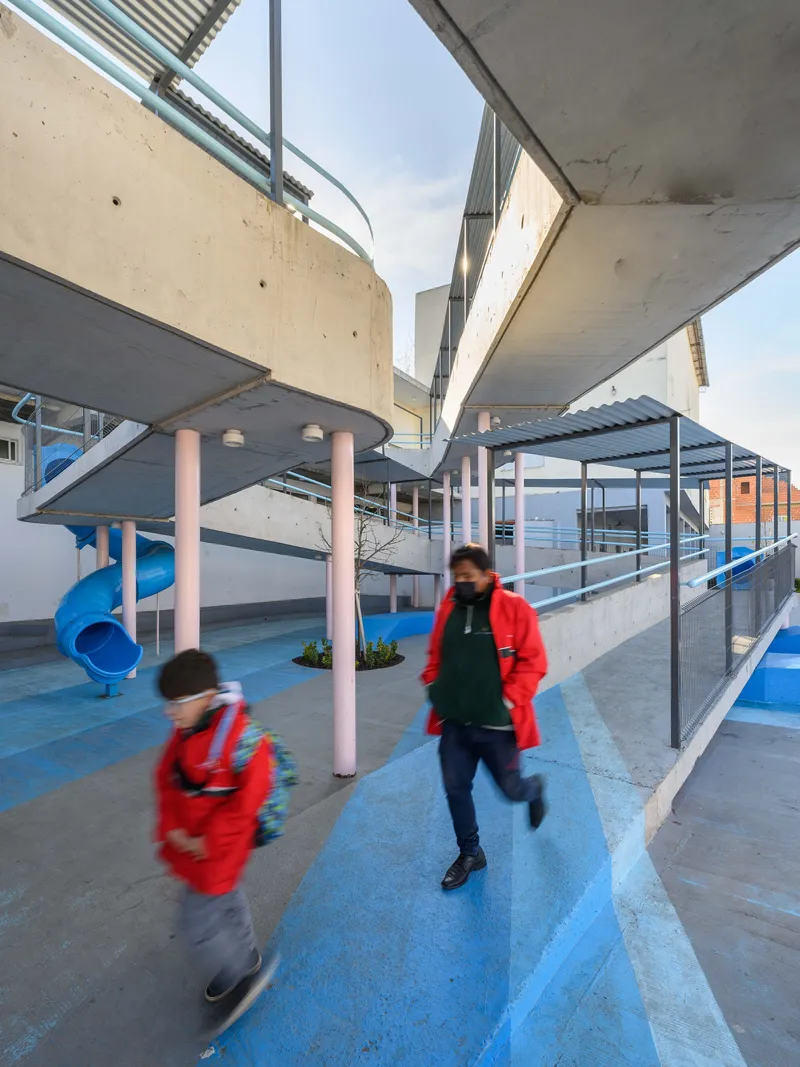
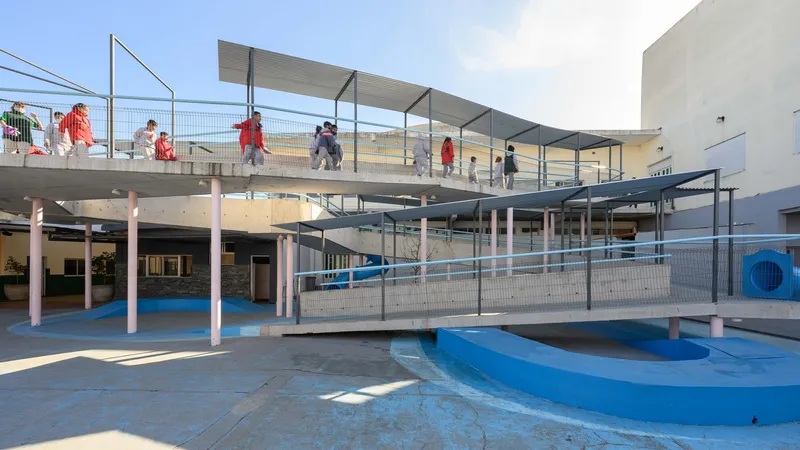
The core move is disarmingly simple. An inverted beam structure faces inward, creating a more open and lighter edge toward the exterior. Concrete platforms stack and offset, supported by pink cylindrical columns that read less as structure and more as oversized candy sticks. The ramp wraps around itself in a way that produces overlapping decks, shaded underbellies, and intermediate landings that children naturally colonize.
What could have been a utilitarian stair linking ground to first floor becomes the organizational spine of the entire courtyard. The ramp creates threshold conditions, overhead canopies, and edges to lean against. It is infrastructure that performs like architecture, which is exactly what a school in a resource-limited context needs: every built element doing triple duty.
The Tree as Teacher
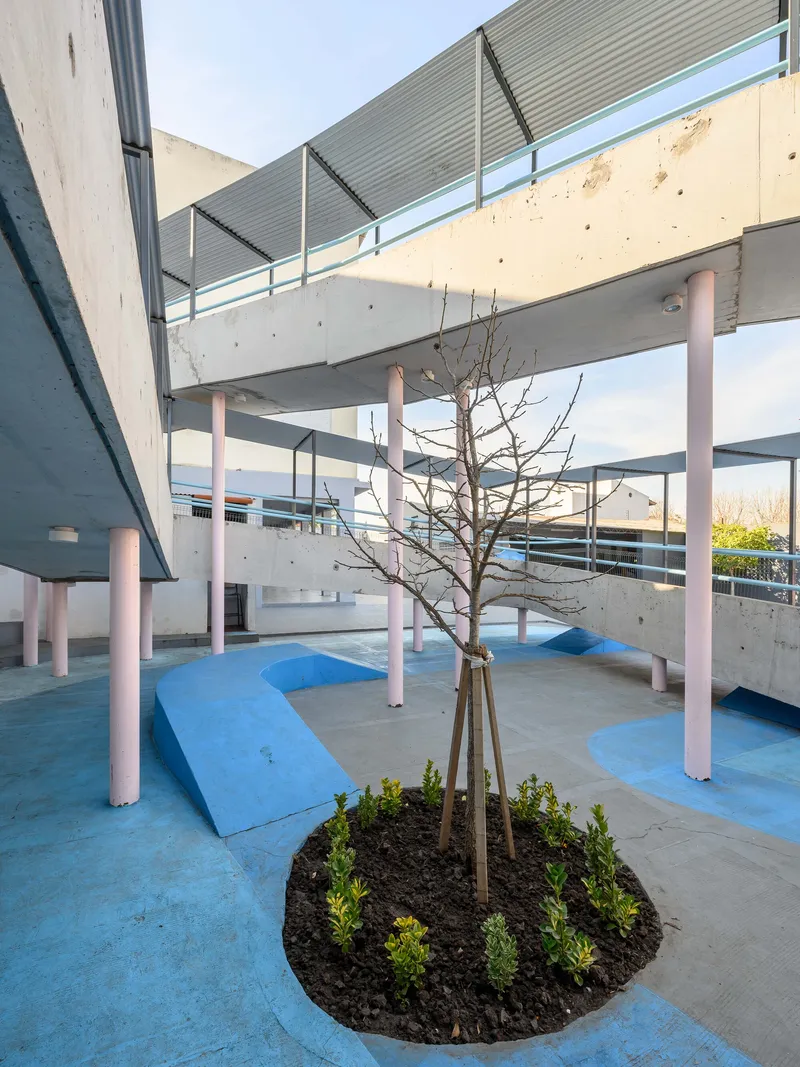
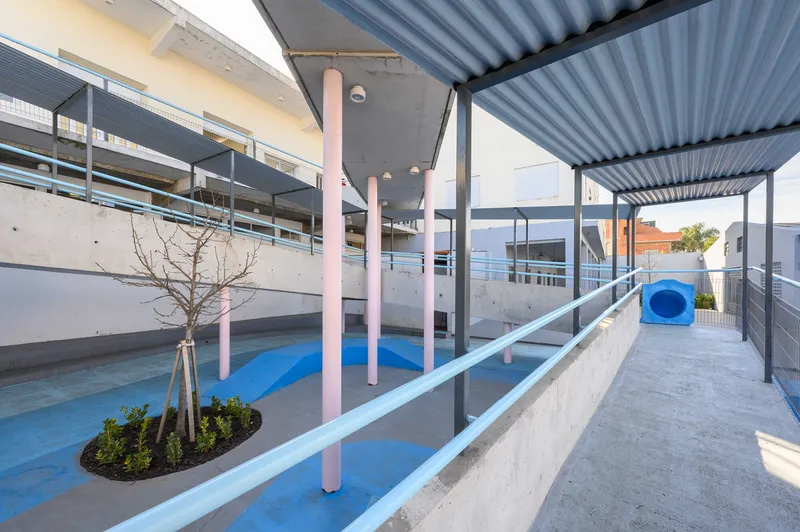
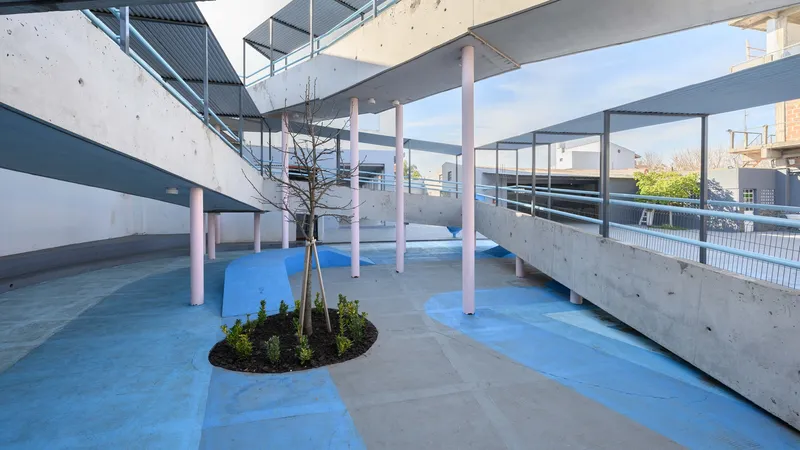
At the center of the composition sits a deciduous tree, encircled by a raised planting bed that the ramp orbits. The tree is not ornamental. It is pedagogical. As a deciduous species, it marks the passage of seasons for children who might otherwise experience the schoolyard as a static container. Leaves fall, branches bare themselves, new growth returns. The architecture frames this cycle by placing the tree at the exact convergence of circulation, sightlines, and gathering.
The ground plane around the tree is organized in concentric rings, functioning as a kind of open-air amphitheater. Multipurpose benches take advantage of topographical shifts in the courtyard surface. It is a "square" in the traditional civic sense, scaled down for six-year-olds.
Color as Statement
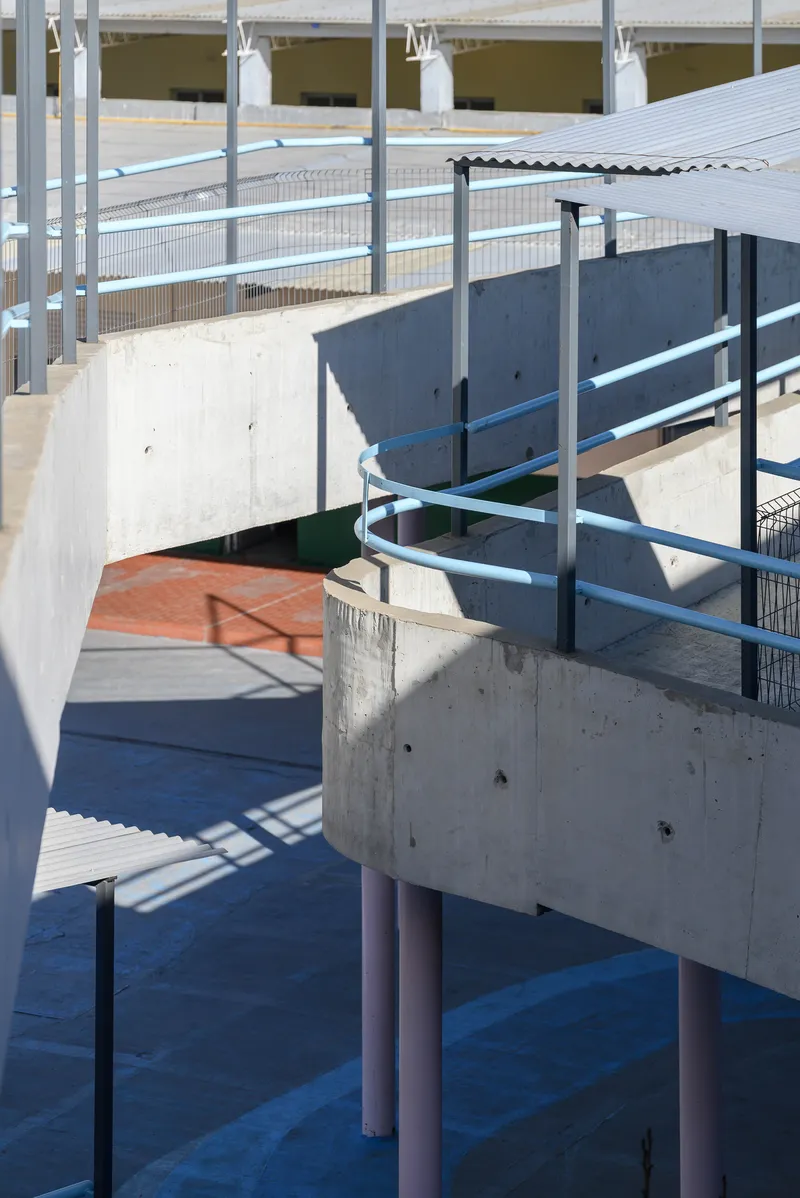
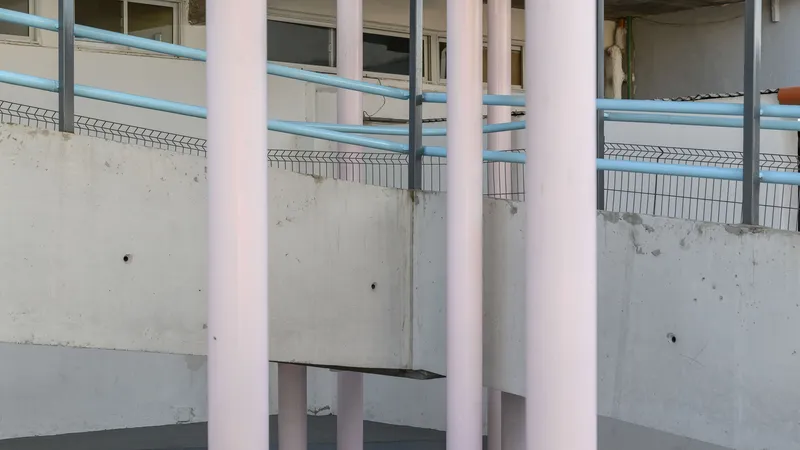
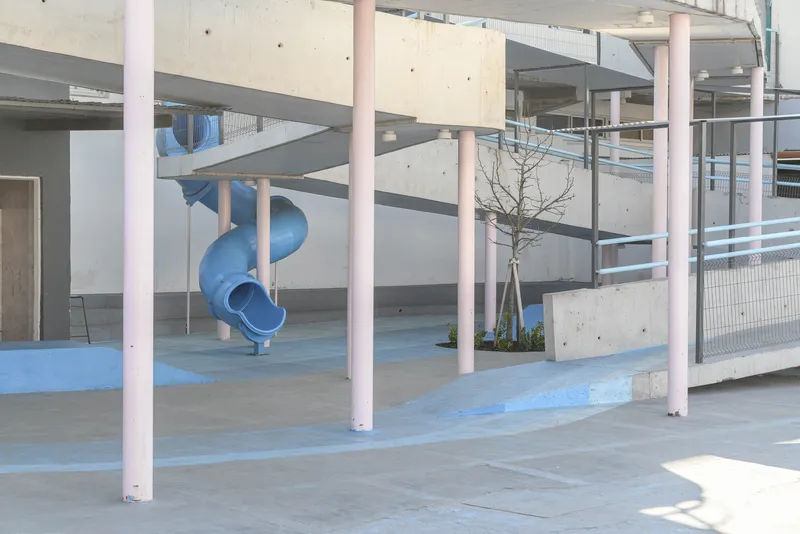
The palette is loud and deliberate. Pink columns, blue railings, blue-painted ground surfaces: these are not decorative afterthoughts. According to the architects, the blue and pink represent integration of gender and cultural diversity, a quiet political statement embedded in the material reality of the school. In a context where resources are scarce and design choices are scrutinized, choosing to make the structure visible and colorful rather than camouflaged is a conscious act.
The colors also serve a wayfinding function. The blue slide is immediately legible. The pink columns mark the structural grid. Concrete remains raw where it carries load. There is a logic to the chromatic decisions that goes beyond aesthetics, making the building readable to children who are still learning to navigate space.
The Slide, the Viewpoint, and the Slow Path
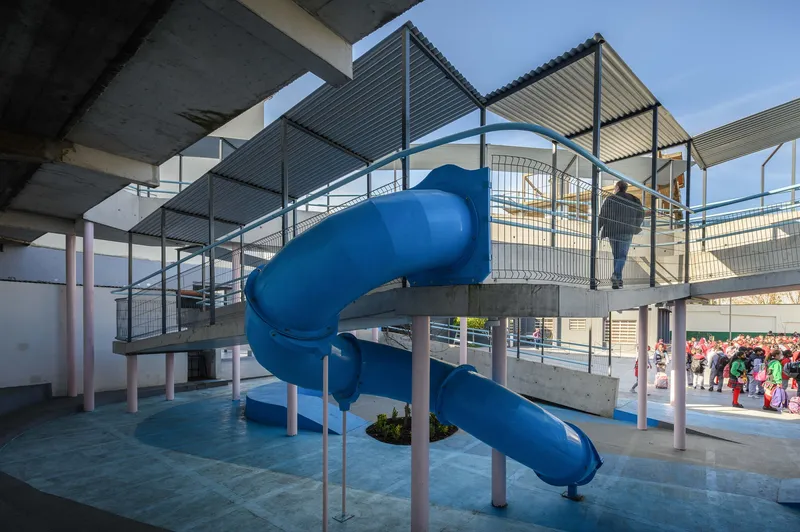
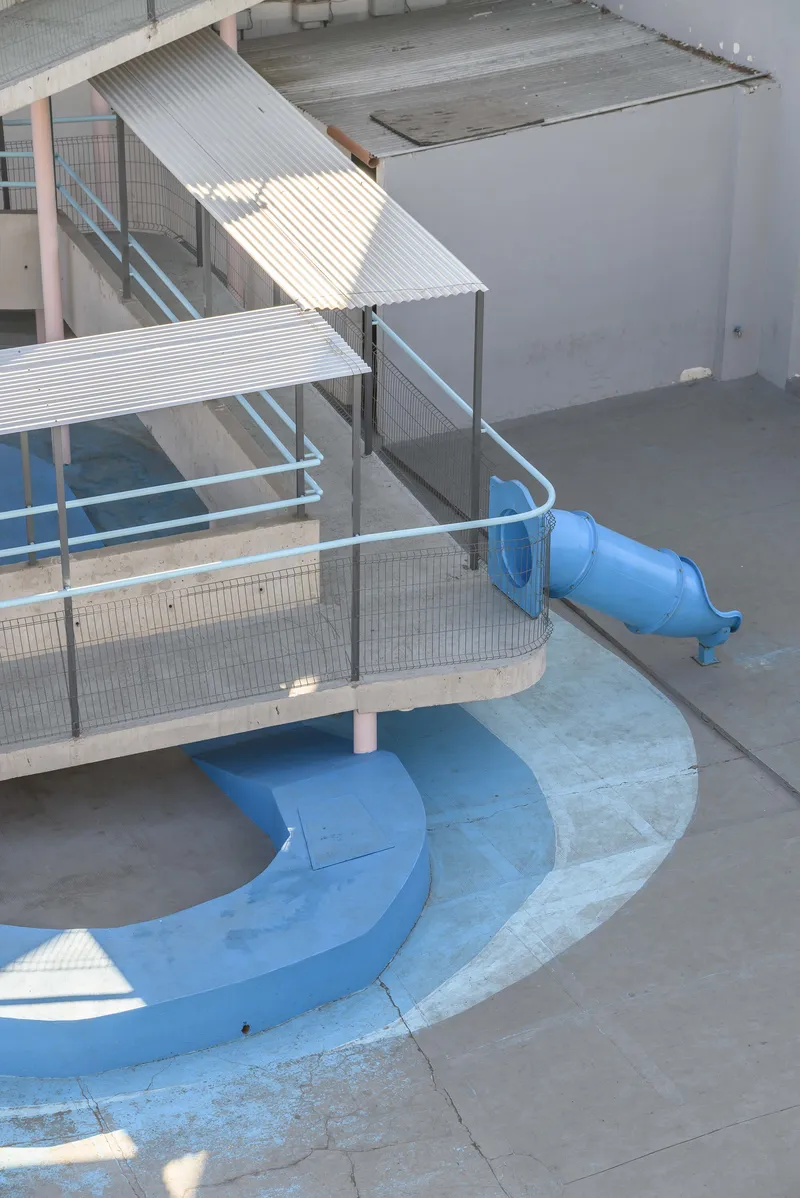
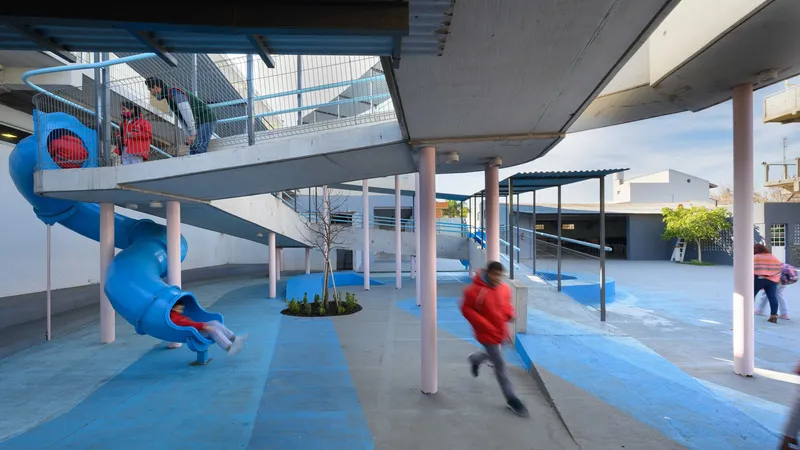
A blue spiral slide punches down from the upper platform to the courtyard below, offering an alternative to the ramp for the descent. It is not a playground add-on; it is integrated into the concrete structure, emerging from wire mesh-enclosed platforms as if the building itself is exhaling. The slide creates what the architects describe as "intermediate appropriation situations," moments along the route where a child can pause, choose a path, or simply watch.
Viewpoints punctuate the upper levels. Wire mesh railings keep children safe while remaining visually transparent, so the elevated walkways feel connected to the courtyard rather than walled off from it. The ramp serves both daily circulation, getting children to their upper-level classrooms, and school events, when the entire looping structure becomes a stage, a grandstand, and a playground simultaneously.
Life in the Structure
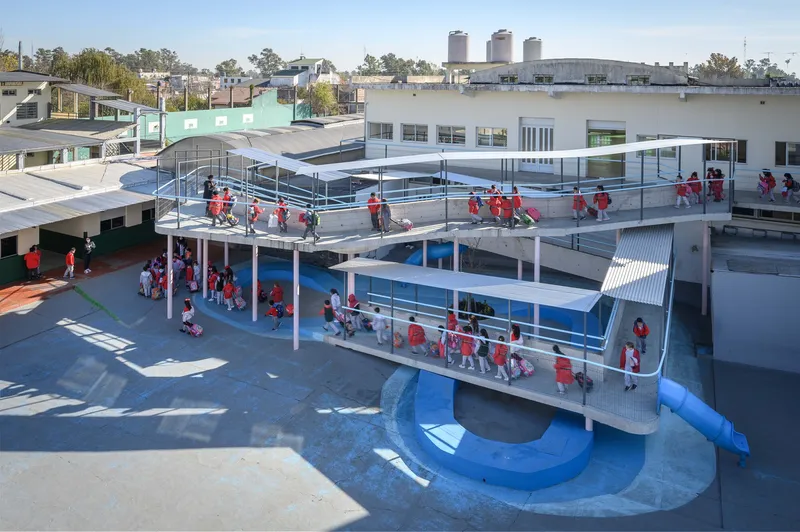
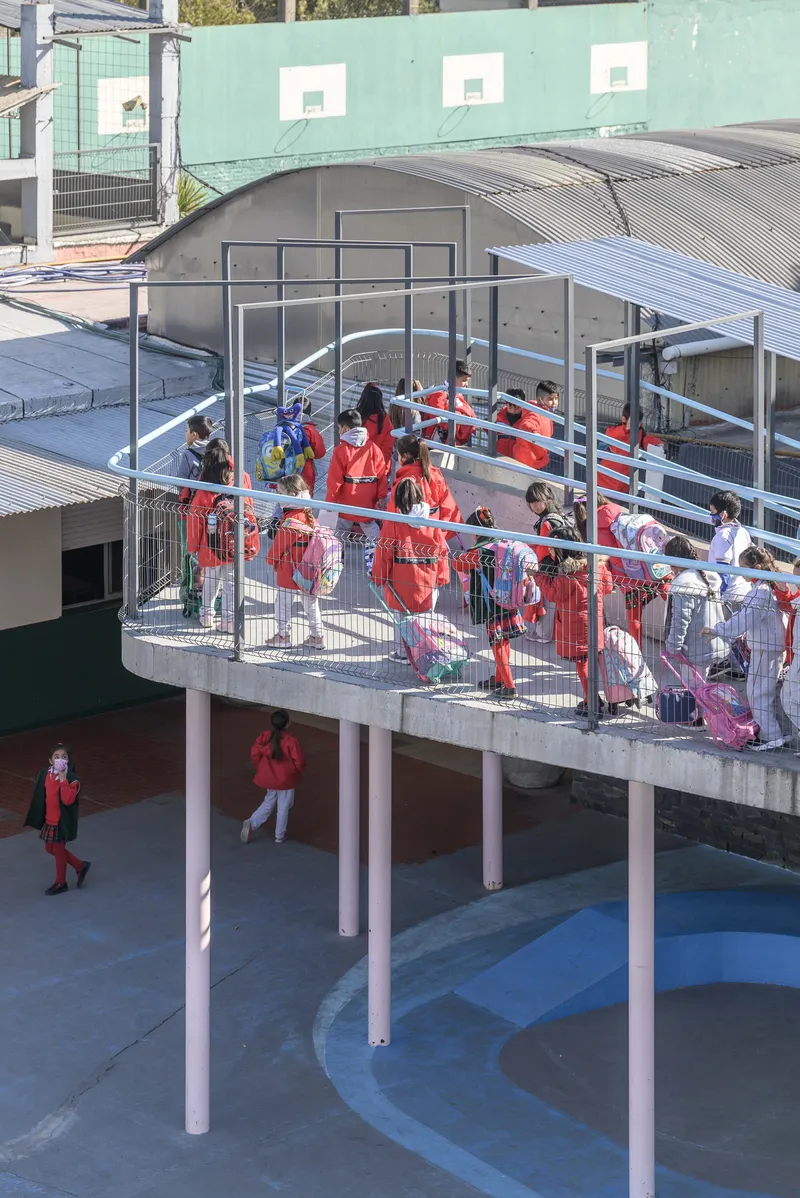
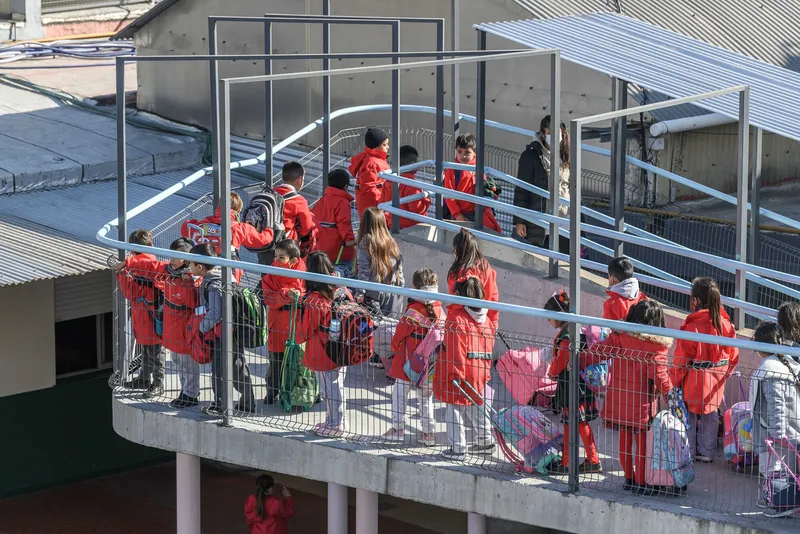
The photographs by Gonzalo Viramonte capture the building in active use, and this is where the project comes alive. Students in red uniforms stream along the ramps, cluster on platforms, and gather beneath the corrugated metal canopies. The structure is visibly inhabited, worn in, and already becoming part of the school's collective memory. There is a roughness to the construction, exposed beams, welded railings, painted surfaces that will inevitably chip, but that roughness is honest and appropriate.
The covered walkways and canopies provide shade in the Buenos Aires heat, creating microclimates within the courtyard. Sharp shadow patterns fall across the ground in late afternoon, adding a temporal dimension to the spatial one. The building does not just occupy the courtyard; it modulates light, movement, and time within it.
Material Economy and Structural Honesty
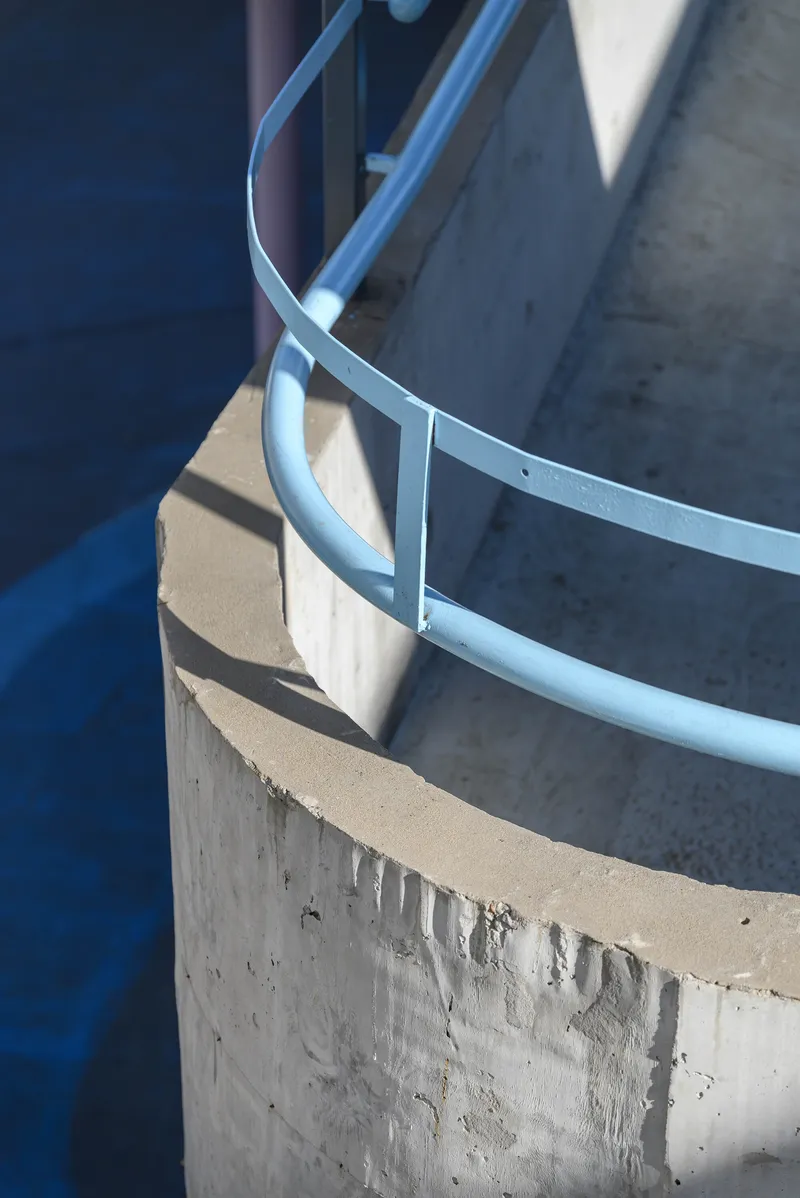
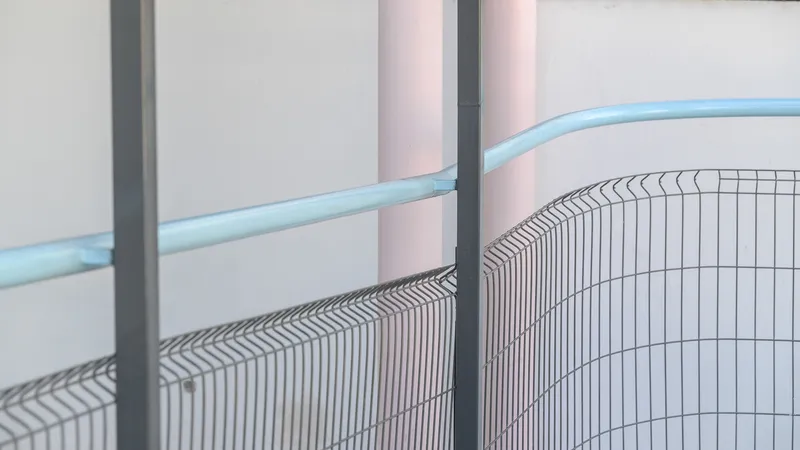
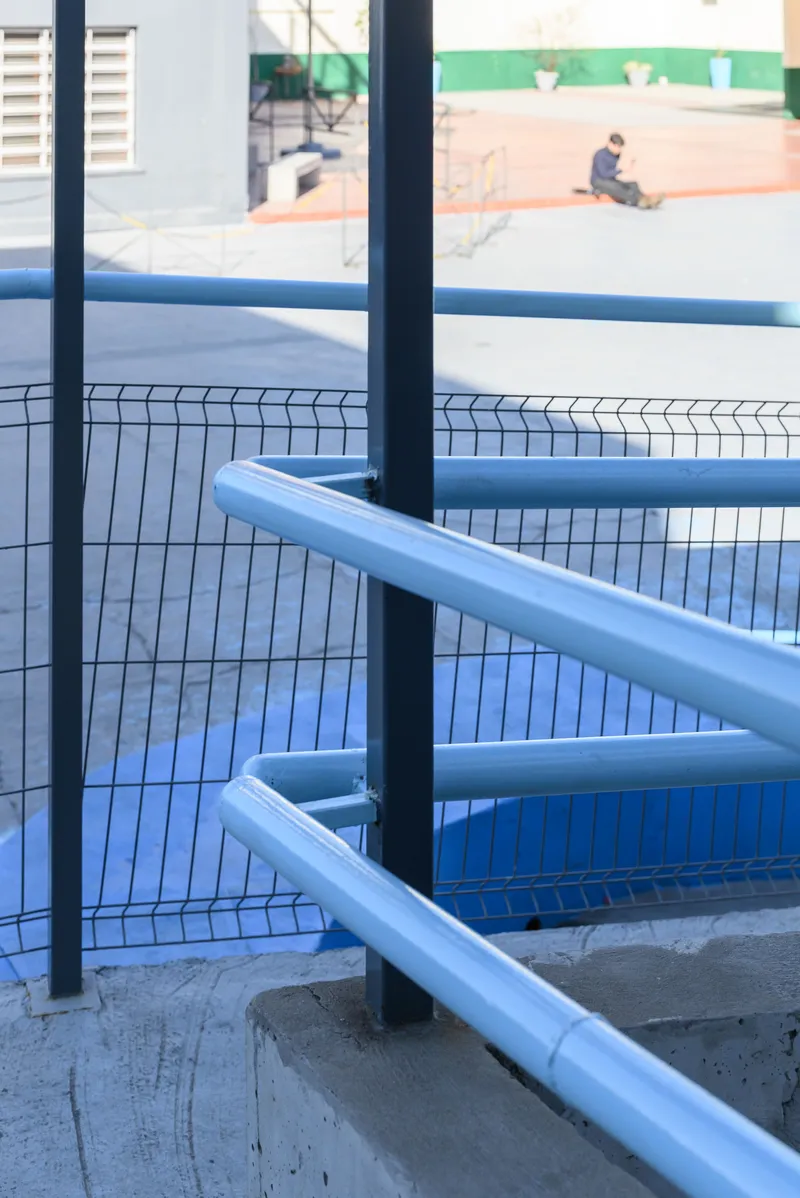
The material palette is tight: cast concrete, corrugated metal roofing, wire mesh, tubular steel, and paint. Nothing exotic, nothing imported. The concrete ramp with its inverted beam structure is the primary architectural gesture, and everything else is secondary framing. Curved blue handrails wrap planter edges with a precision that suggests care even within a modest budget. Wire mesh meets tubular steel in clean joints that avoid pretension.
This is architecture built for a school that a family manages in a precarious suburb. The materials had to be available, affordable, and durable. Además arquitectura works within those constraints without apology, finding spatial richness in the geometry of the ramp rather than in expensive finishes.
Covered Passages and In-Between Spaces
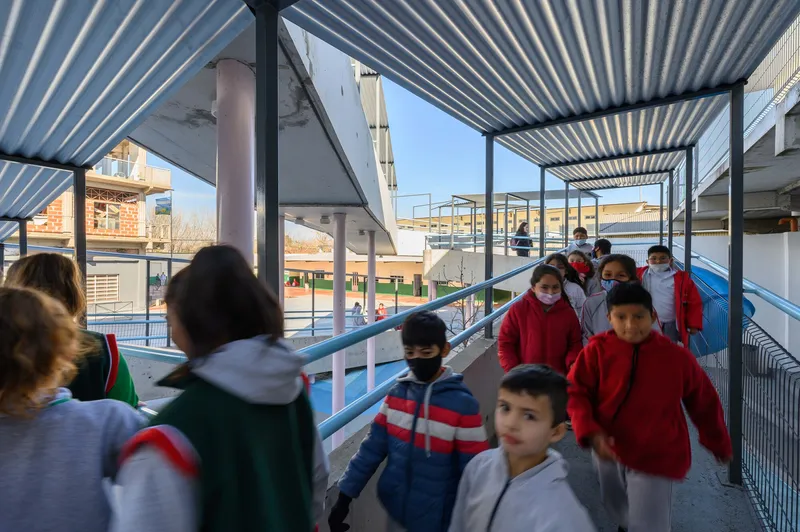
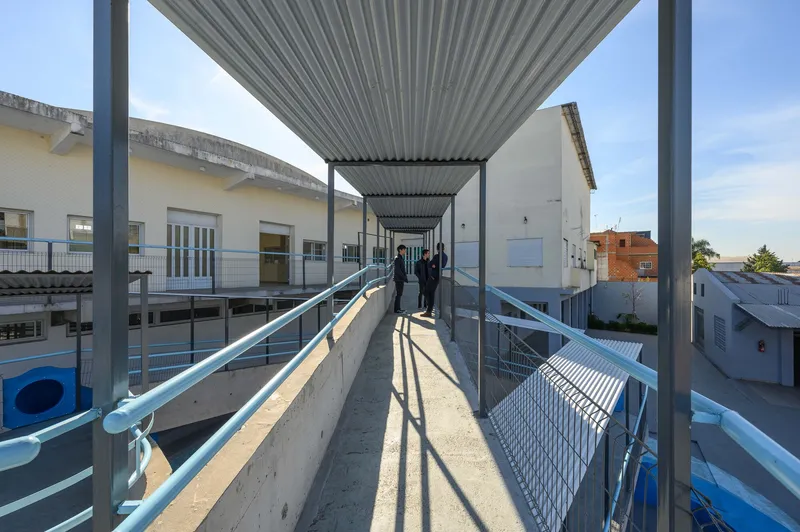
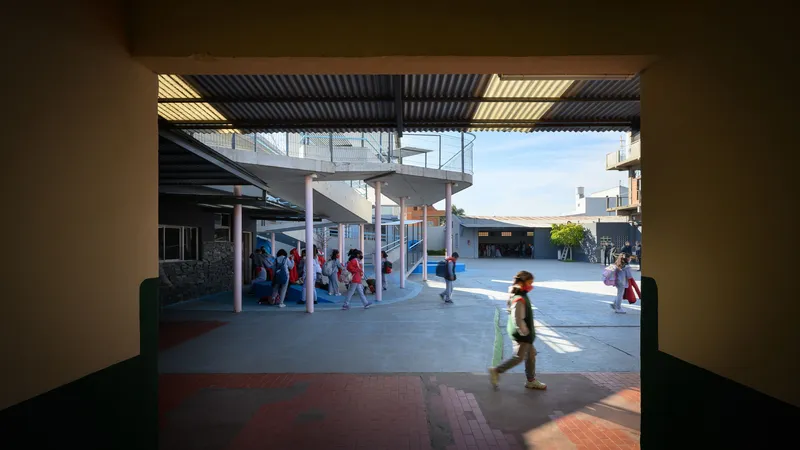
The covered walkways created beneath the corrugated metal canopies are among the quietest and most effective spaces in the project. They produce deep shadows, filter light through structural members, and create sheltered corridors that transition between interior classrooms and the open courtyard. Students pass through them without ceremony, which is exactly the point. The best school architecture is the kind children use without noticing.
Plans and Drawings
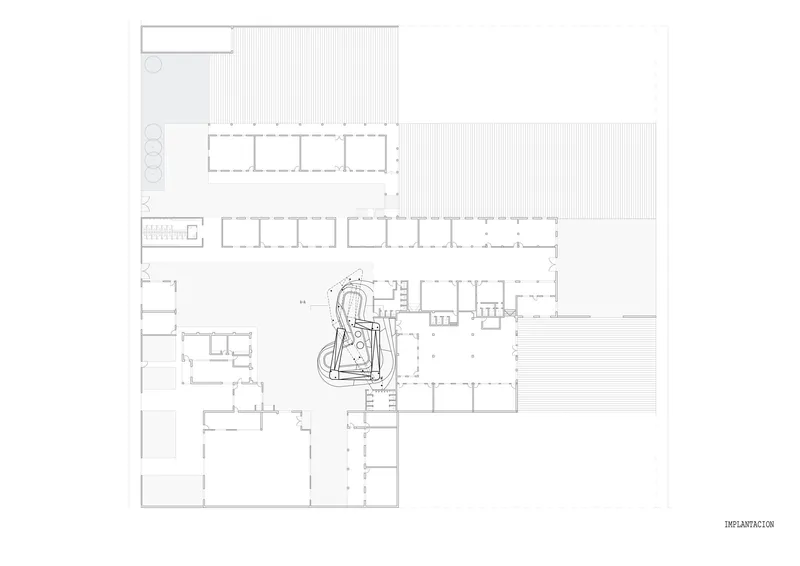
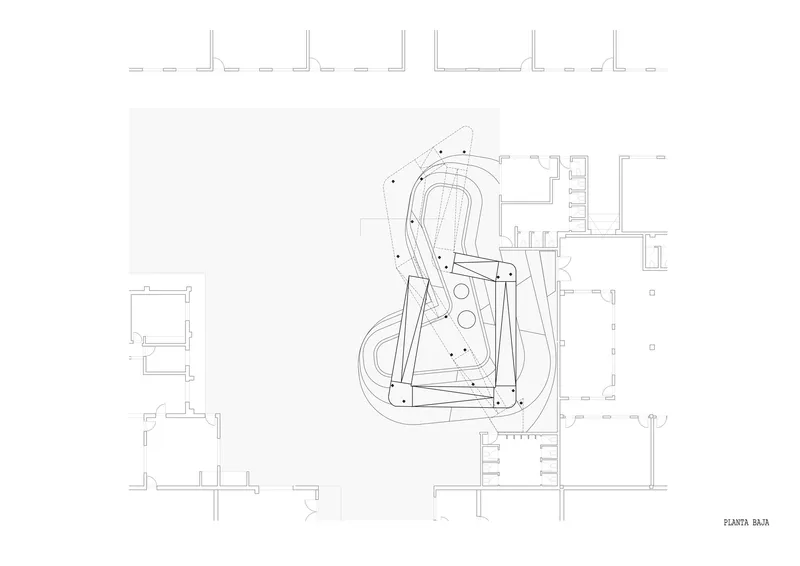
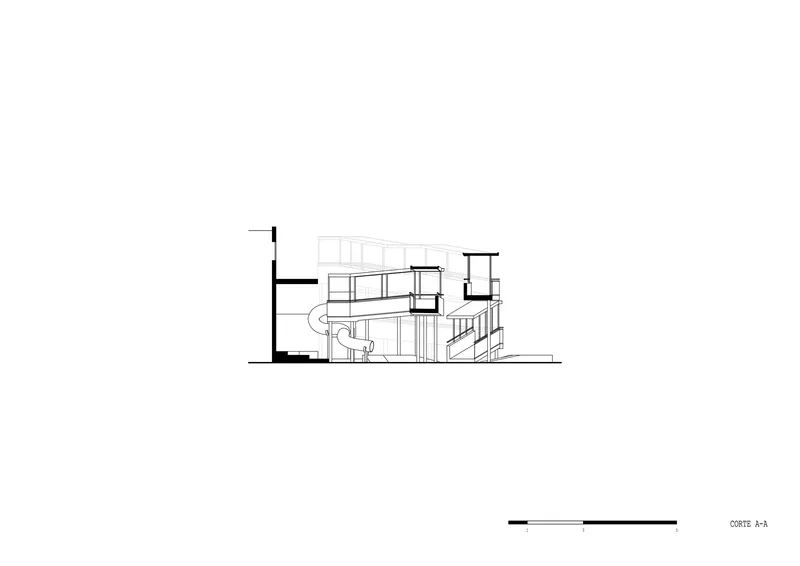
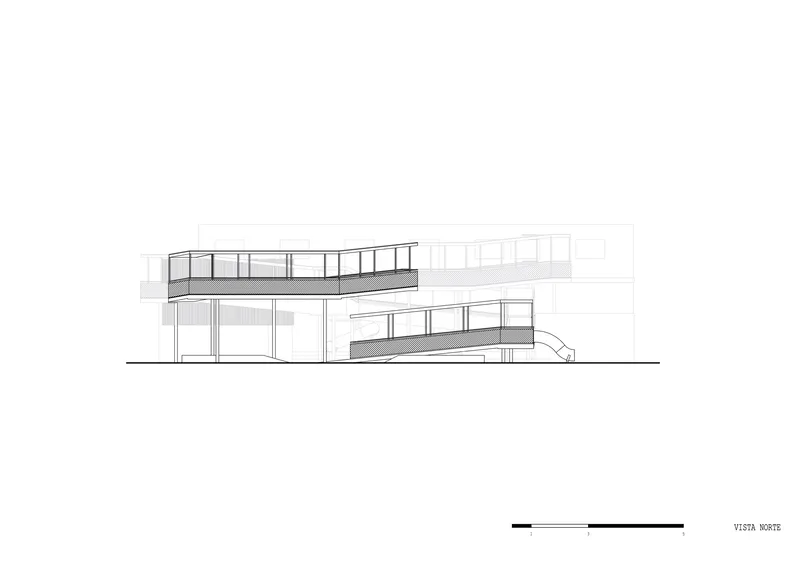
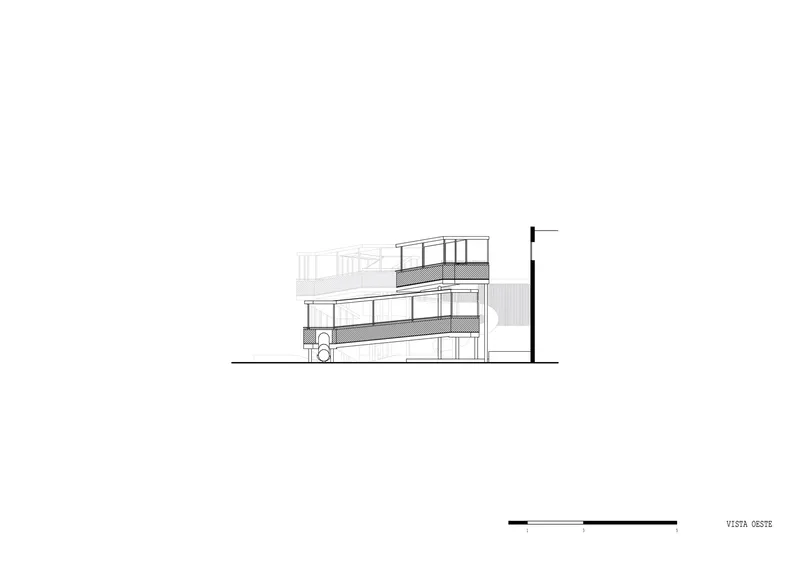
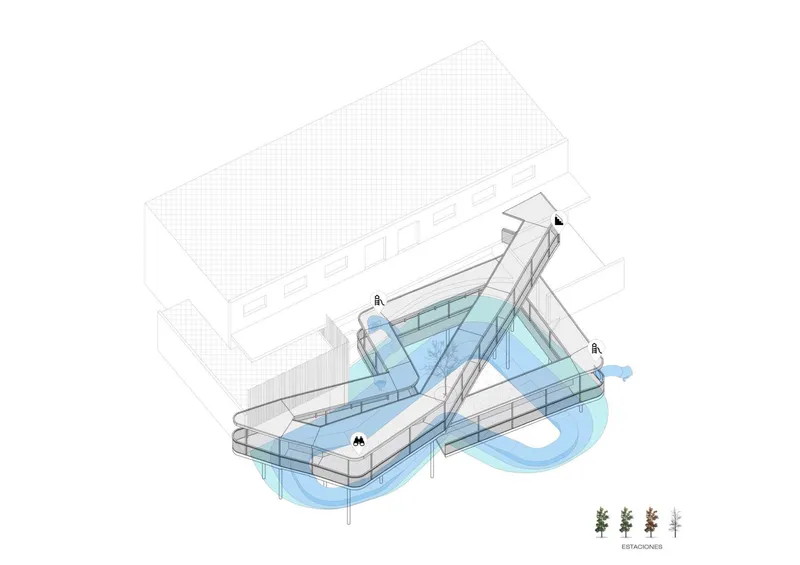
The floor plans reveal the intervention's relationship to the existing school: classroom wings frame a central courtyard, and the ramp structure is inserted as a new organizational element within it. The sections show how the multi-level concrete platforms create varied ceiling heights and spatial conditions beneath and above. The axonometric drawing is particularly revealing, illustrating how the curving ramp form carves into an angular platform beside the existing rectilinear volume. The elevations confirm the horizontal layering strategy, with cantilevered terraces, metal railings, and a narrow vertical element creating a composition that reads as both playful and structurally legible.
Why This Project Matters
The Tempo Almafuerte intervention matters because it demonstrates that design ambition is not a luxury reserved for well-funded institutions. A family-run school in a struggling Buenos Aires suburb asked for a ladder and received a piece of architecture that reorganizes the entire courtyard, introduces pedagogical landscapes, and gives young children a spatial experience worthy of their curiosity. Además arquitectura did not scale down their thinking to match the budget; they scaled up their ingenuity.
The project also offers a lesson in what "renovation" can mean in an educational context. Rather than improving what exists, the intervention redefines the relationships between classrooms, outdoor space, circulation, and play. The ramp is not a connector; it is a social condenser. The tree is not decoration; it is curriculum. The slide is not a toy; it is an alternative path through the building. Every element carries more meaning than its construction cost would suggest, and that is the kind of architecture we need more of.
Tempo Almafuerte School Intervention by Además arquitectura, lead architect Leandro A. Gallo. Located in 9 de Abril, Argentina. 143 m². Photography by Gonzalo Viramonte.
About the Studio
Share Your Own Work on uni.xyz
If projects like this are the kind of work you want to make, uni.xyz is a place to publish your own, find collaborators, and enter design competitions.


Popular Articles
Popular articles from the community


Lunar Spiral: Space Architecture Shaped by the Mathematics of the Universe
Lunar Spiral reimagines space architecture through Fibonacci geometry, lunar regolith, levitating habitats, and self-sustaining Moon living.

The Musturak Paradise: Senior Living Architecture for a Connected Future in Temara, Morocco
The Musturak Paradise reimagines senior living architecture in Temara via private homes, social spaces, culture, community, and shared care.

Riyadh For All: Intergenerational Urban Design for Active Aging in Rabat
Riyadh For All reimagines urban design in Rabat with intergenerational co-living, adaptive courtyards, and Moroccan cultural exchange today.

Co-life: Sustainable Architecture for Age-Friendly Community Living
Co-life reimagines sustainable architecture for seniors through courtyards, rammed earth, shared gardens, and spaces designed for belonging.

Similar Reads
You might also enjoy these articles

Bao Huynh Watercolor Atelier: A Serene Art Retreat in Hội An
Bao Huynh Watercolor Atelier in Hội An blends multifunctional art spaces, sustainable design, local materials, and family-friendly living in a serene environment.

Atelier Macri Concept Store Interior Design by CASE-REAL
Atelier Macri store features a "ko" counter, walnut wood details, cork displays, blending retail, gallery, and seamless customer experiences.

Manuel Vargas Izquierdo Stadium and High-Performance Sports Center: Architectural Excellence in Jalpa de Méndez
The Manuel Vargas Izquierdo Stadium blends sustainable design, inclusive sports facilities, and cultural-inspired architecture, revitalizing Jalpa de Méndez’s public spaces.

KAKR Buluh Awar Hall: Revitalizing Community and Ecology Through Bamboo Architecture
Community built bamboo hall revitalizes Buluh Awar village, empowering youth, restoring ecology, celebrating vernacular craftsmanship through sustainable architecture and culture.





Comments (0)
Please login or sign up to add comments
No comments yet. Be the first to comment!