
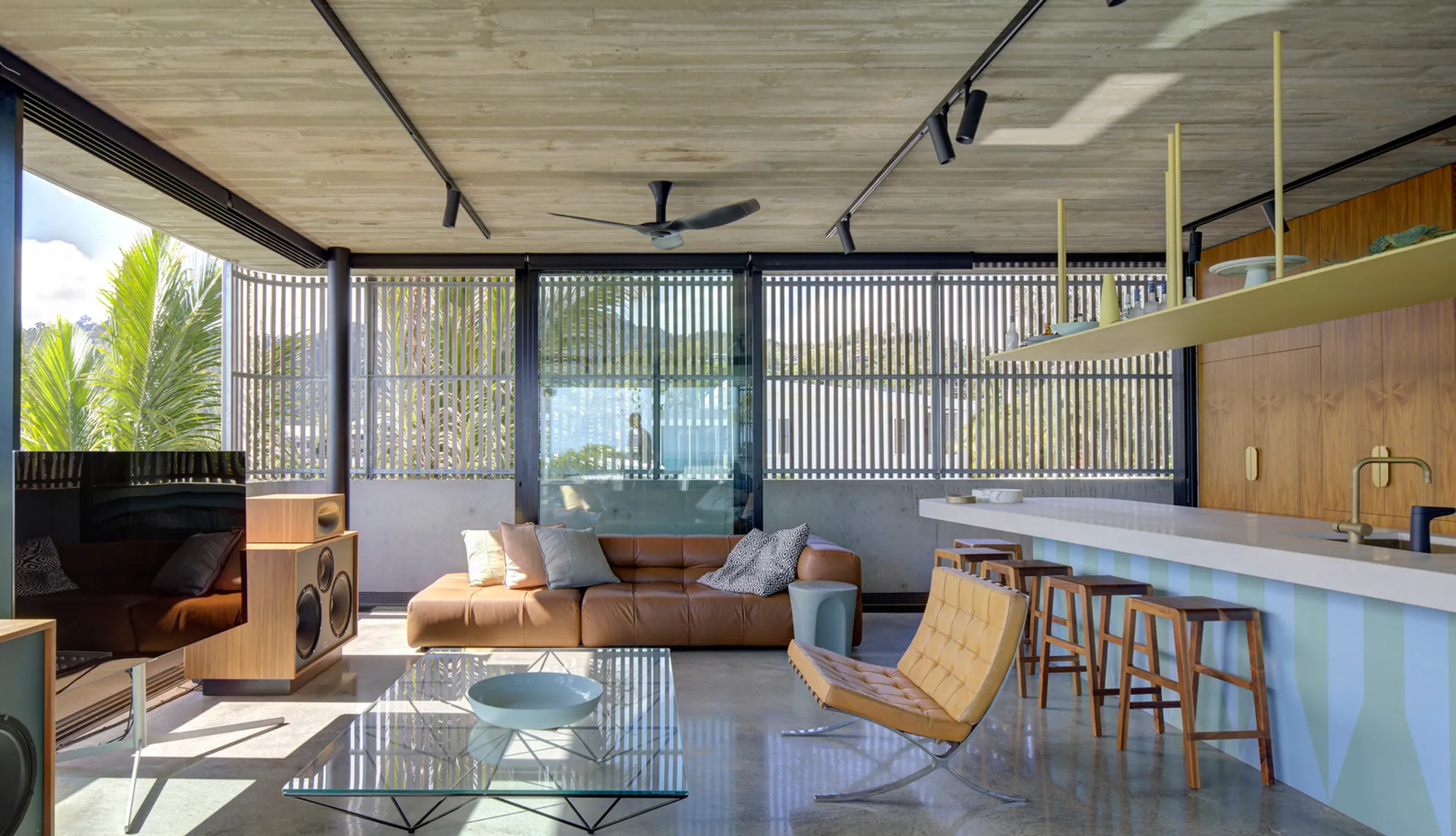
Airlie Beach House: A Masterpiece of Sustainable Coastal Home Design
A sustainable coastal home in Airlie Beach that merges passive cooling, resilient materials, and local cultural influences into a timeless retreat.


Architecture in Harmony with Nature
Located in the breathtaking coastal town of Airlie Beach, Australia, the Airlie Beach House by Glyde Bautovich is an exemplary fusion of contemporary architecture and sustainable coastal home design. Overlooking the Coral Sea, this residence captures the essence of tropical living through an innovative approach to passive cooling, material selection, and seamless integration with its environment.


A Home Designed for the Coastal Climate
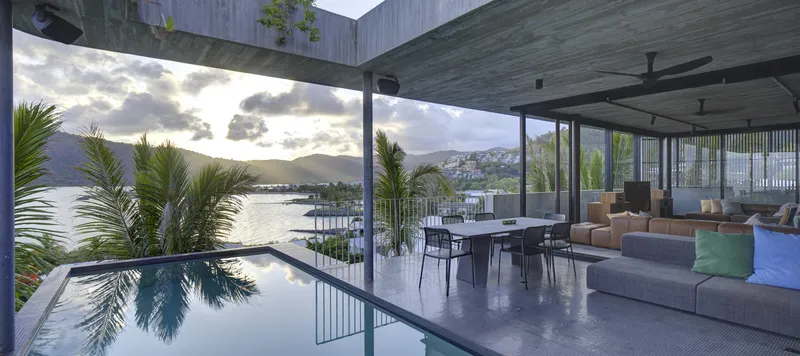
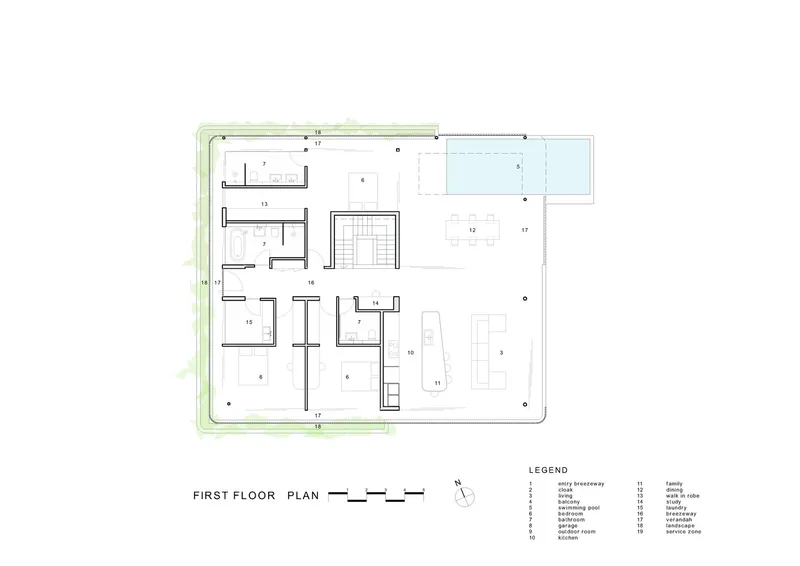
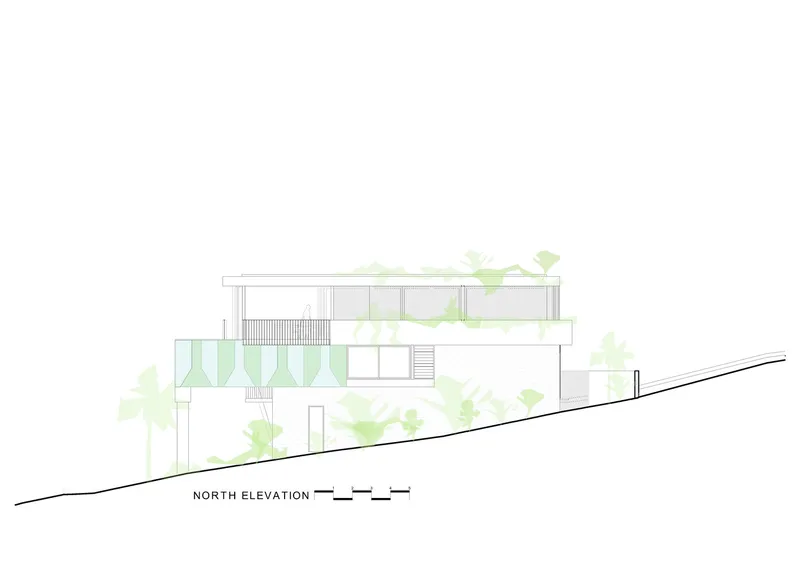
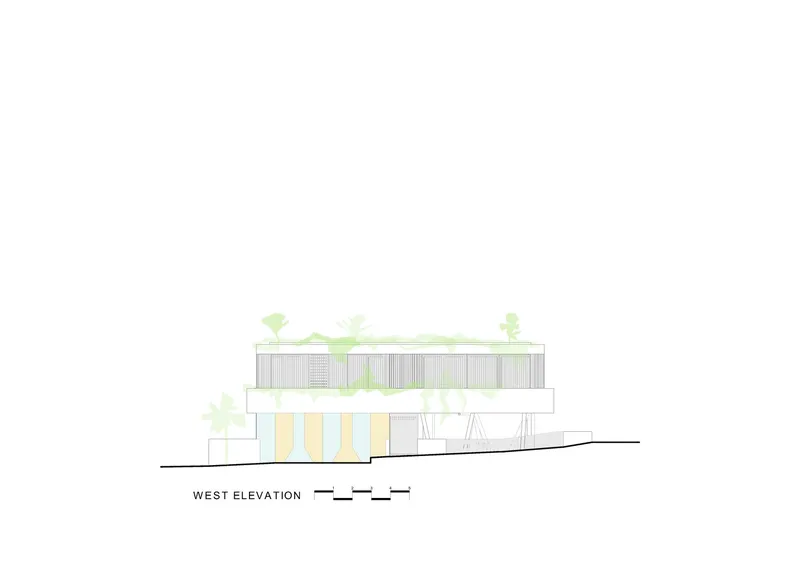
Airlie Beach, known as the gateway to the Whitsunday Islands and the Great Barrier Reef, is characterized by its intense heat and humidity. Rather than relying on artificial cooling, the design of this home harnesses natural ventilation by elevating the primary living spaces to maximize the sea breezes. The house is lined with timber-screened verandahs, creating shaded pockets that promote airflow and provide protection from the tropical sun. These deep overhangs blur the distinction between interior and exterior, reinforcing a connection to nature.


Material Selection for Longevity and Aesthetics
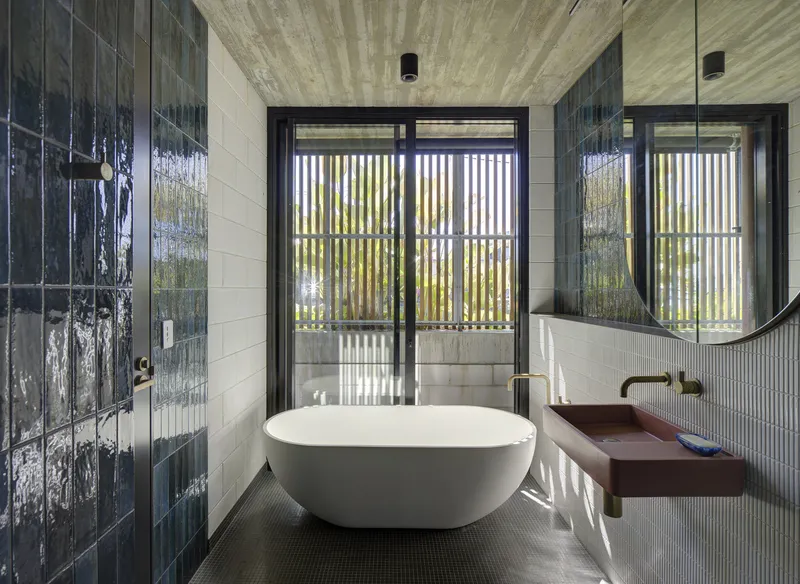
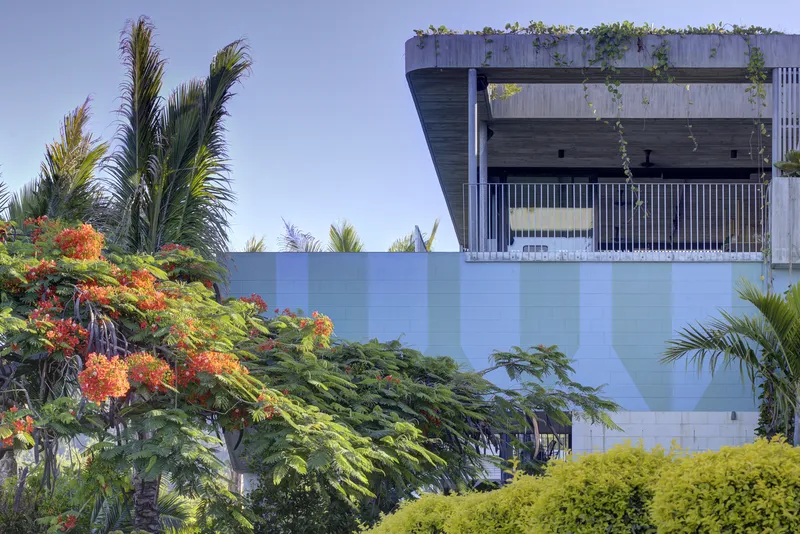
Durability and resilience were key factors in the material selection. Given the cyclonic conditions of the region, the house was constructed using reinforced concrete and core-filled blockwork, ensuring structural stability while offering a textural aesthetic that evolves over time. To soften the brutalist tendencies of concrete, the design incorporates lush landscaping, allowing the home to patina naturally and merge with its surroundings.
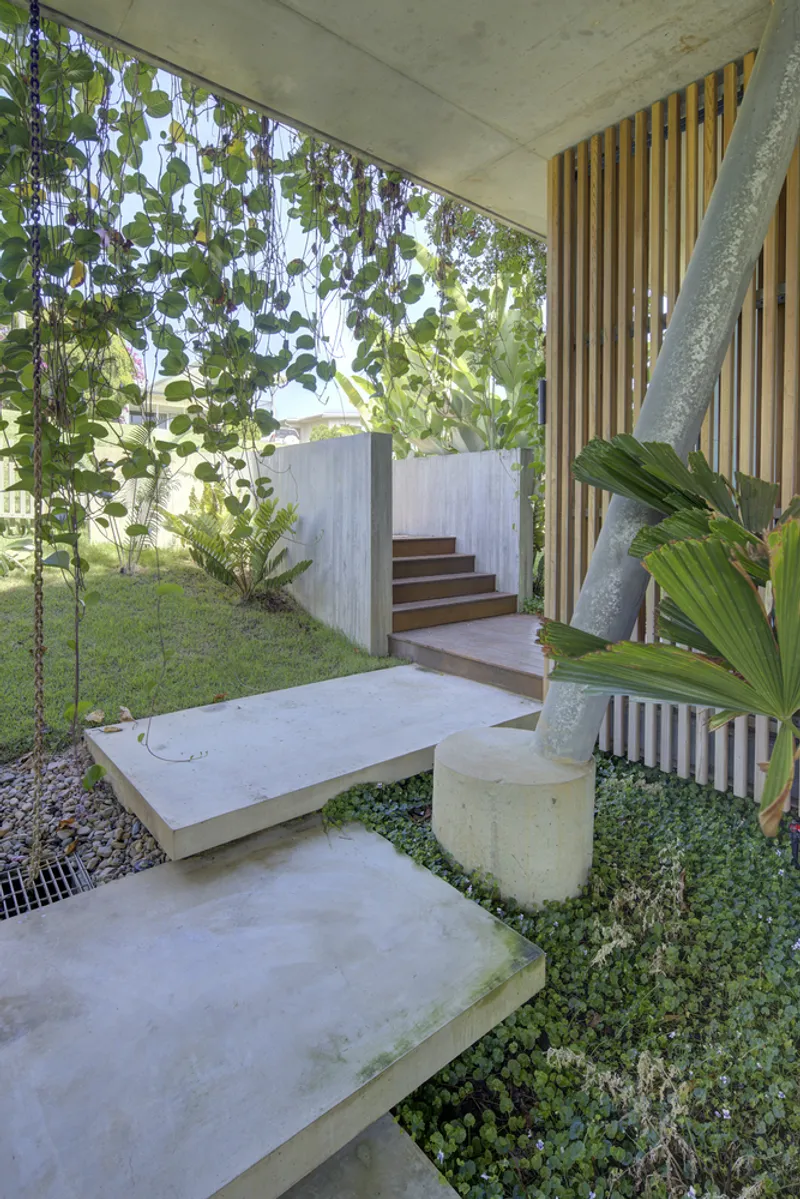

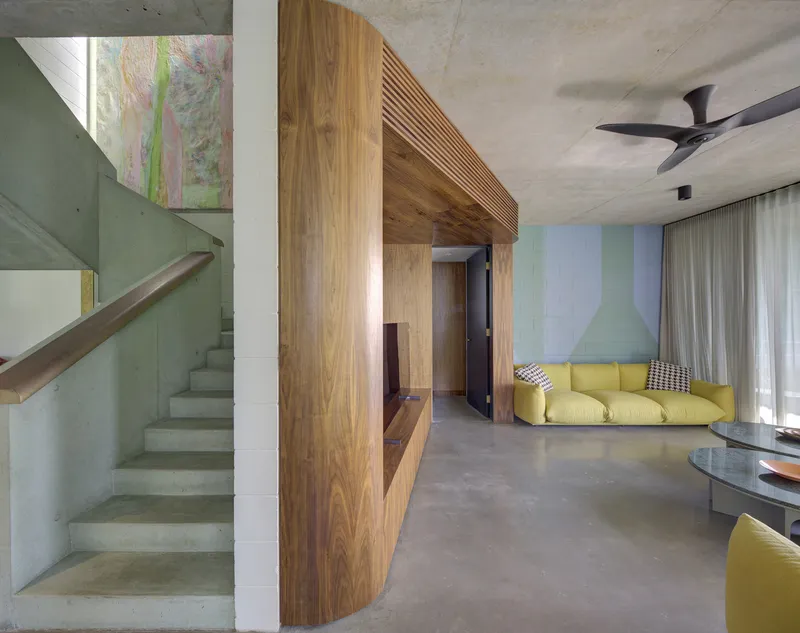
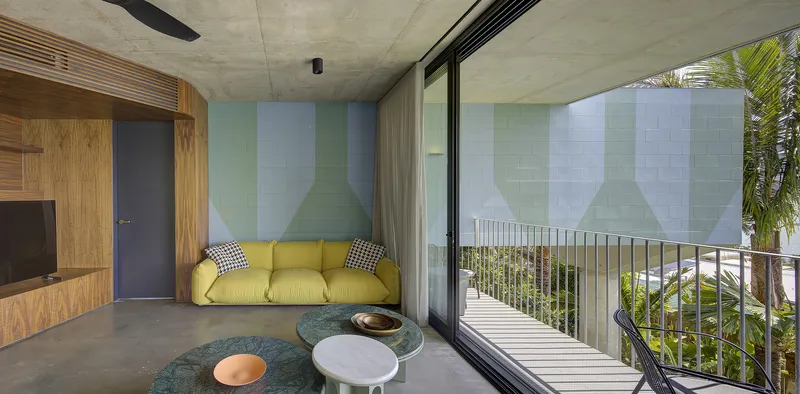

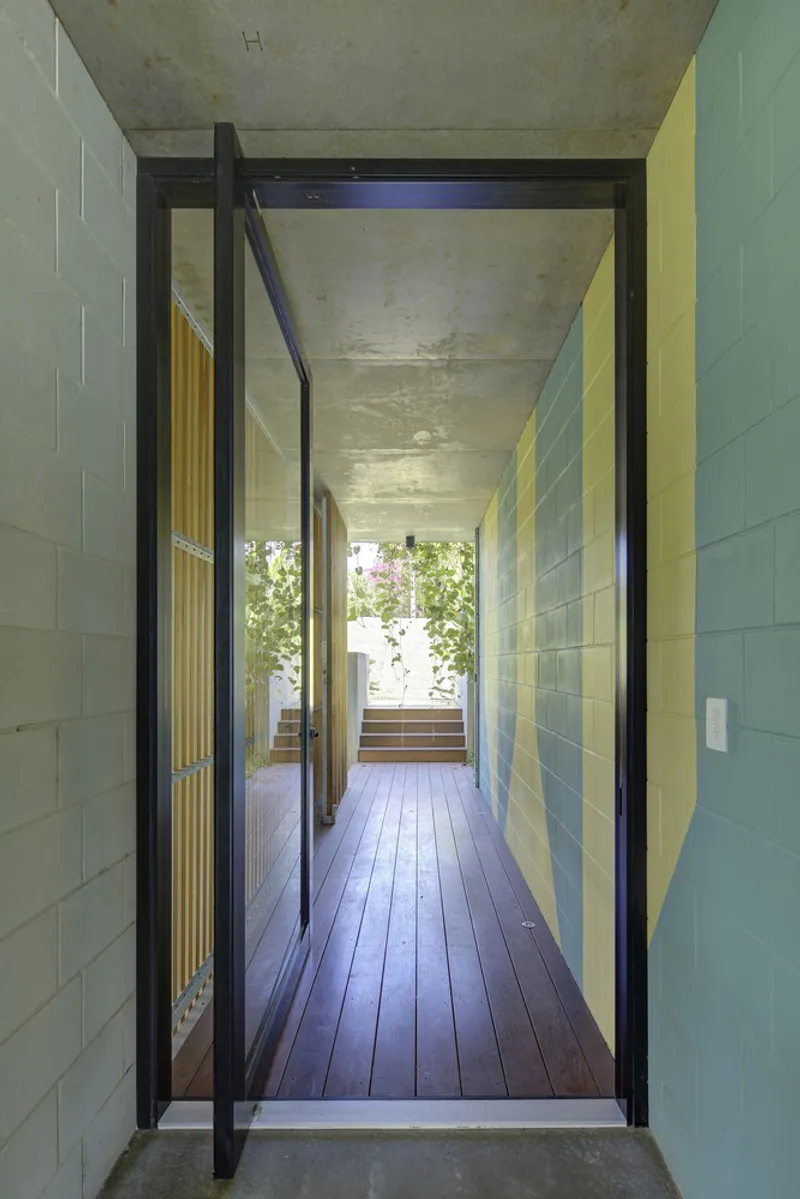
A striking element of the house is the chalky mint green concrete stairway, which introduces a subtle yet unexpected playful contrast to the robust material palette. Timber lining boards, used to form the concrete ceiling, create an ever-changing texture from reflected light and shadows, providing warmth and depth to the space.




Passive Cooling and Indoor-Outdoor Flow
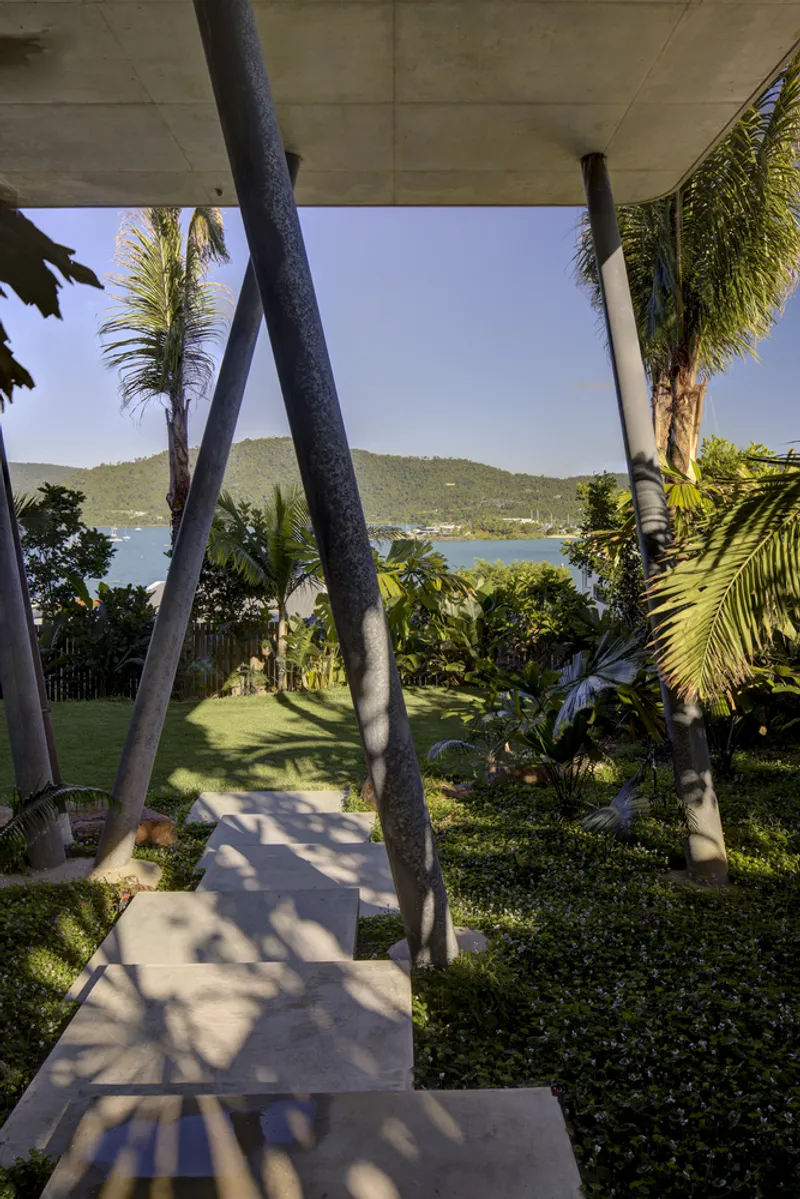
One of the home’s defining features is its commitment to sustainable coastal home design through passive cooling strategies. The underneath of the house remains open, allowing cool air to circulate freely. This shaded undercroft not only improves airflow but also serves as a community gathering space, where the owners engage with neighbors in a relaxed, informal setting.
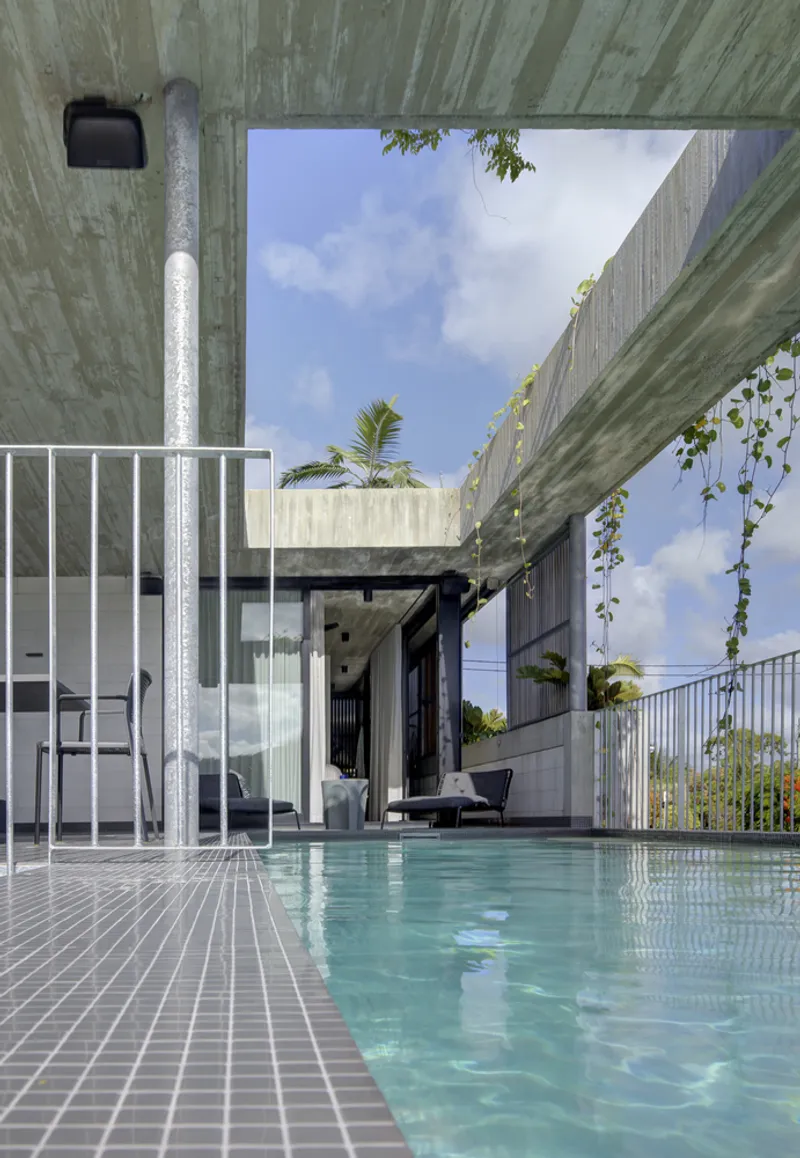


The strategically positioned pool, placed at an elevated level, establishes a visual and spatial connection between the home’s interior and the Coral Sea beyond. The design mimics the natural water formations of the area, reinforcing the theme of merging built form with landscape.

A Design Inspired by Local Landscape and Culture
A deep respect for the region’s indigenous heritage and natural formations is embedded in the design. The Ngaro Aboriginal people, the original custodians of the Whitsundays, left a legacy that influenced elements of the project. Inspired by mangrove tree roots, a triangular motif was developed and applied across various surfaces, including the kitchen, pool walls, and garage door, as a cost-effective yet meaningful design treatment.


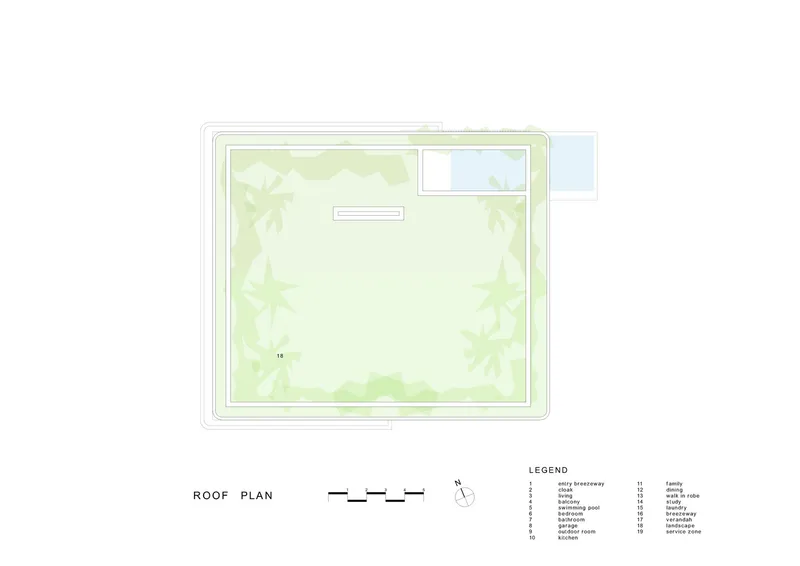
The landscape was curated to evoke the feeling of a ruin in the jungle, with ferns, palms, and native grasses enveloping the house, reinforcing its organic presence. The angled columns supporting the elevated living spaces take cues from She Oak trees, a common sight along the coastline, further embedding the home in its natural context.


A Home Built to Last
Beyond its material resilience, the Airlie Beach House is designed for long-term sustainability. By prioritizing natural cooling, thoughtful material choices, and community engagement, the home stands as a testament to how architecture can adapt to extreme climates without compromising comfort or aesthetics.



The owners, passionate about architecture and sustainable design, have created a space that not only reflects their values but also fosters a dialogue with the local community. The result is a residence that is at once solid, enduring, and playful, yet deeply connected to the landscape and culture that surround it.

All Photographs are works of Brett Boardman




Popular Articles
Popular articles from the community

EW PARK: Sustainable Architecture Reimagines the Future of Urban Parking
EW PARK reimagines city parking as a modular wooden tower combining automation, solar energy, electric mobility, and adaptable urban design.

Riyadh For All: Intergenerational Urban Design for Active Aging in Rabat
Riyadh For All reimagines urban design in Rabat with intergenerational co-living, adaptive courtyards, and Moroccan cultural exchange today.

Co-life: Sustainable Architecture for Age-Friendly Community Living
Co-life reimagines sustainable architecture for seniors through courtyards, rammed earth, shared gardens, and spaces designed for belonging.

AL-JANNAH: Sustainable Architecture and Permaculture for Afghan Widows
AL-JANNAH uses sustainable architecture and permaculture to create resilient oasis of housing, learning, work and renewal for Afghan widows.


Similar Reads
You might also enjoy these articles


Hodi-Mandai Geram
Project Function: Preservation and revitalization of the Intangible heritage and socio-spatial identity of the Hodi by Housing, Cultural Memory Center, Sacred Grove, landscape, local tourism economy


Olio Towers: A Mid-Rise for Performers That Fuses Housing, Rehearsal, and Stage
Located blocks from Houston's Theater District, this modular tower stacks living units around a central performance atrium.

Oasis: Modular Green Housing Carved into Dhaka's Urban Fabric
A shortlisted Plugin Housing entry reclaims unauthorized settlements in Dhaka with stepped concrete volumes, green roofs, and ventilation-driven design.

Black Hole: A Floating Megastructure for the Post-Physical Era
Emiliano Mazzarotto envisions a spherical, self-scaling arena where e-sports, digital hotels, and holographic stadiums replace traditional public space.


Explore Architecture Competitions
Discover active competitions in this discipline



Challenge to reimagine the Iron Throne


Photograph architecture without architects


Illustrate the lost glory of Angkor Wat - Render Challenge


Design challenge to reuse E-waste
Comments (0)
Please login or sign up to add comments
No comments yet. Be the first to comment!