

Branco Cavaleiro Architects Restores a Portuguese Manor into Residences That Honor Every Ornate Detail
In northern Portugal, the Alpuins project transforms a historic estate into refined homes where plasterwork ceilings meet contemporary living.


Rehabilitation projects exist on a spectrum. At one end, buildings are gutted and repurposed as blank containers for new programs. At the other, every cornice and balustrade is preserved in amber, producing spaces that feel more like museums than homes. The Alpuins project by Branco Cavaleiro Architects occupies a rare middle ground: a historic Portuguese manor house in the north of the country, converted into residential units that treat ornamental plaster ceilings, granite colonnades, and coffered wood ceilings not as obstacles but as active participants in domestic life.
What makes Alpuins genuinely interesting is the refusal to segregate old from new. Rather than confining historic fabric to a handful of ceremonial rooms and building clean white boxes elsewhere, the architects thread contemporary kitchens beneath 19th-century ceiling medallions and slot modern glazing into deep stone openings. The result is a building where craft from two centuries coexists without apology or ironic contrast.
Stone, Arch, and Threshold
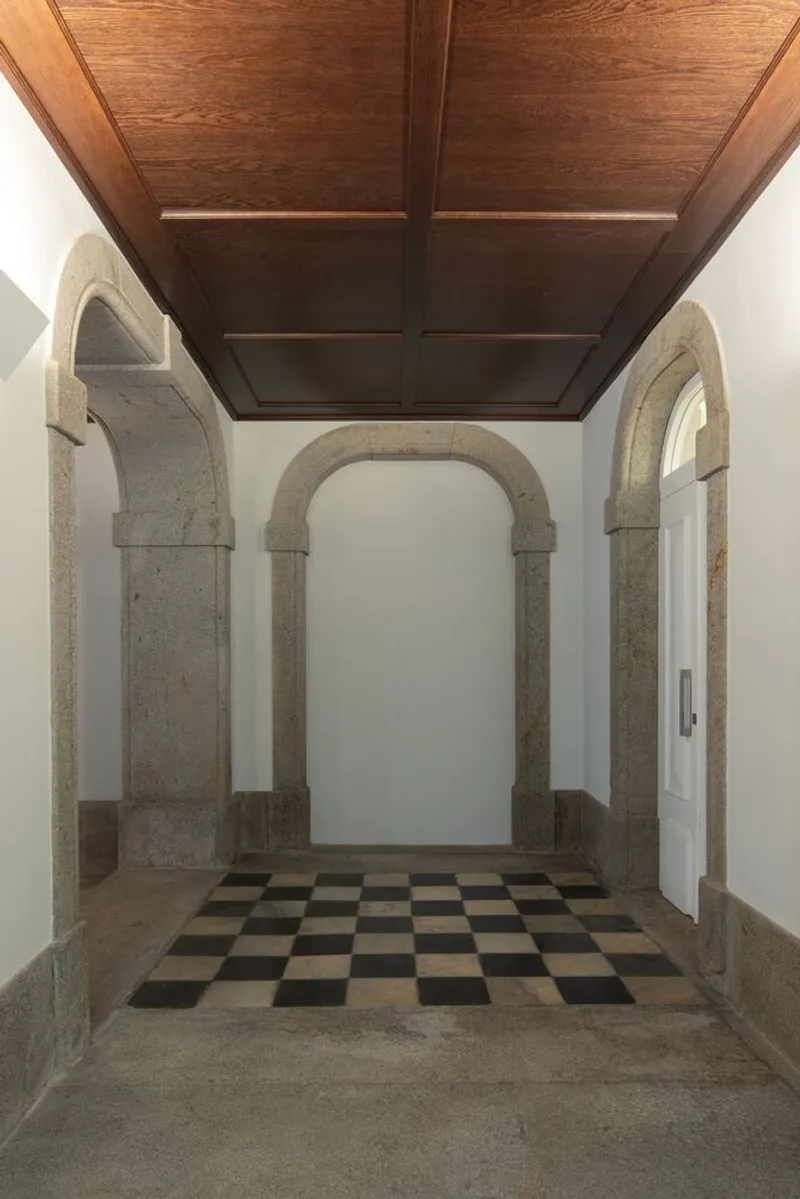
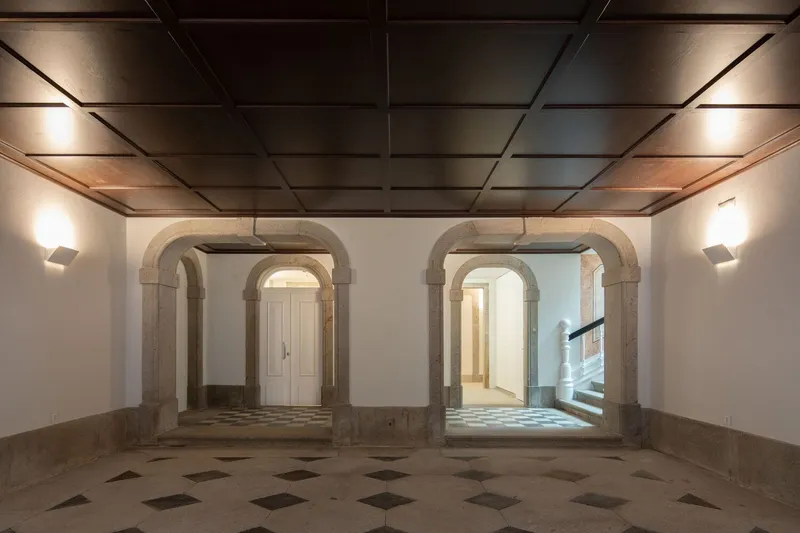
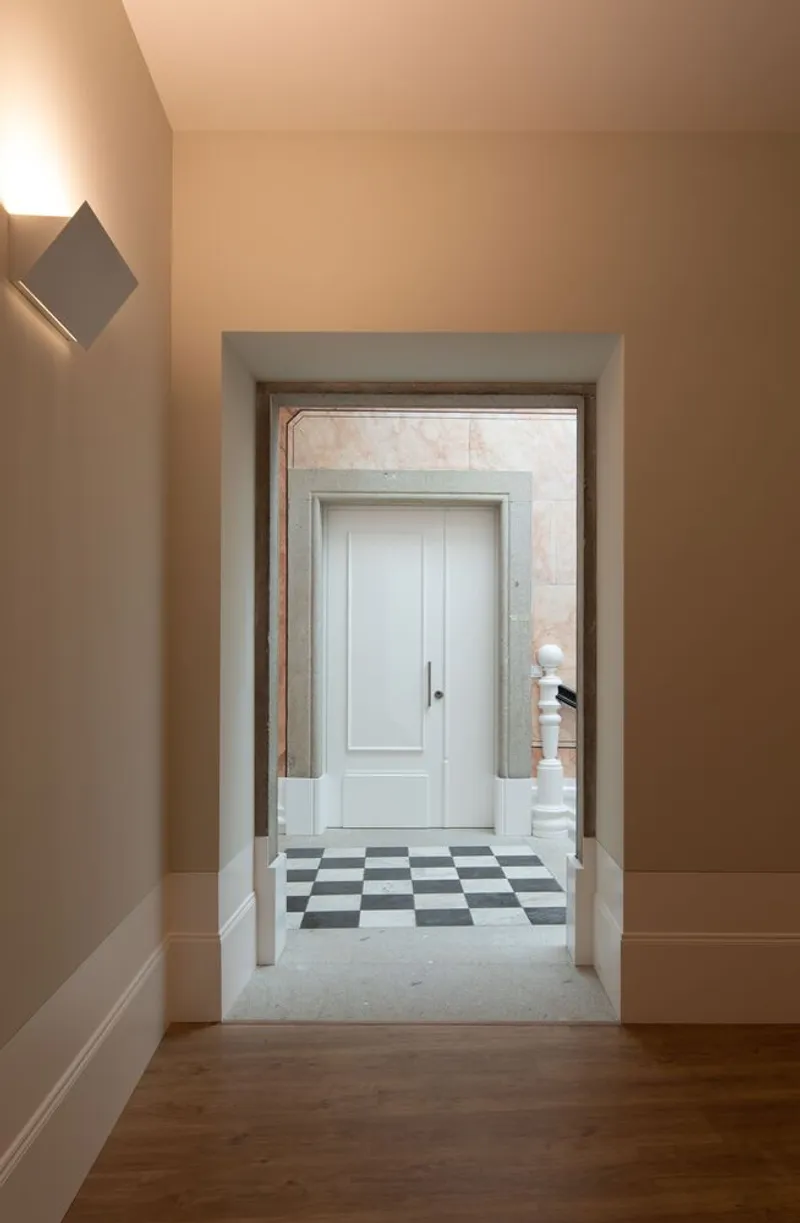
The entrance sequence tells you everything about the project's priorities. Stone arched doorways open onto checkerboard floor tiles, flanked by coffered wood ceilings and bracketed by warm wall sconces. These are not spaces that have been "restored" in the clinical sense; they feel inhabited, as though the patina of use was a design parameter. The enfilade views through successive doorways produce that telescoping perspective unique to pre-modern European houses, where each room frames the next.
The diagonal tile pattern in the ground floor hall is a quiet assertion of craftsmanship. Where many rehabilitation projects default to poured concrete or engineered plank for floors, Branco Cavaleiro Architects either retained or faithfully replicated tile work that demands precision in cutting and laying. That kind of commitment to material continuity is what separates a competent renovation from a meaningful one.
Plaster Ceilings as the Fifth Elevation
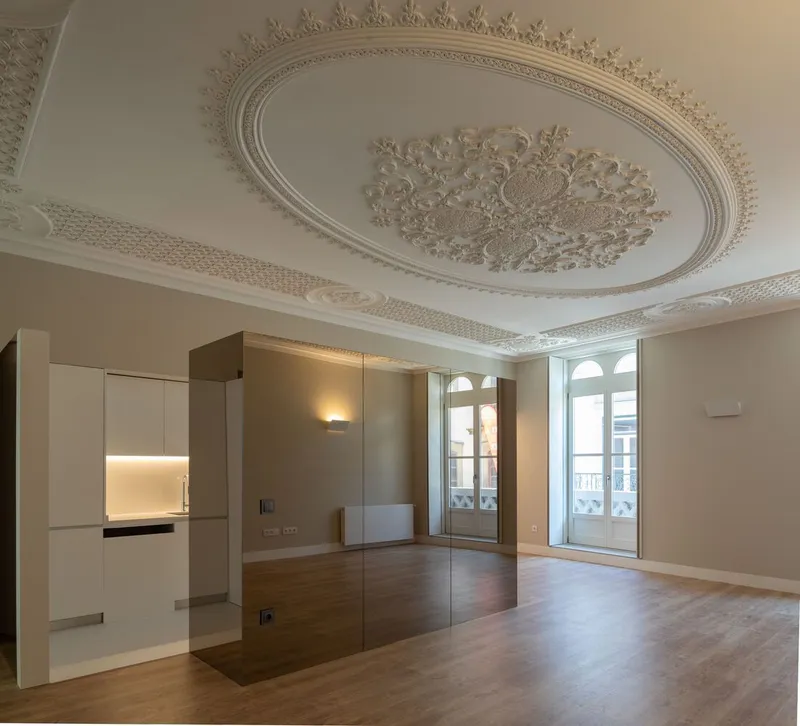
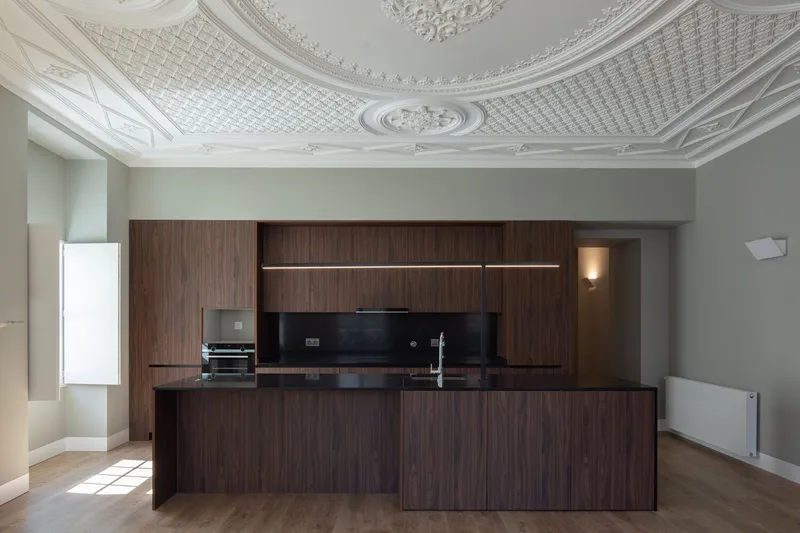
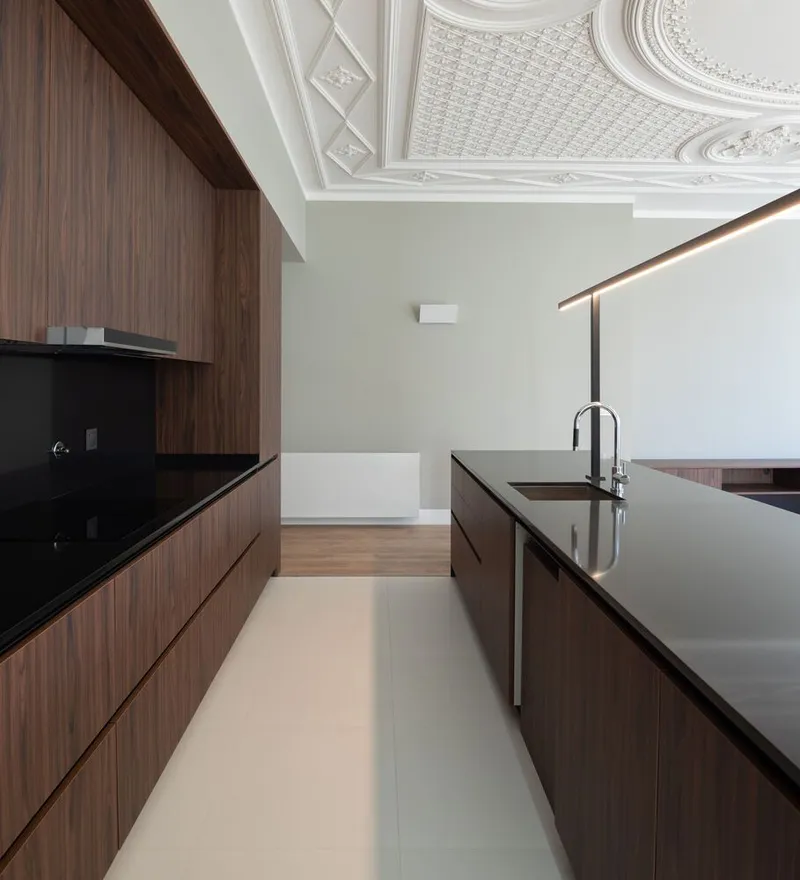
The ornamental plaster ceilings are, without exaggeration, the most significant design element in the building. Oval medallions, geometric lattice patterns, floral reliefs: these are not background decoration but the primary spatial experience of each room. The architects understood this and kept walls and furnishings deliberately restrained so the ceilings could dominate.
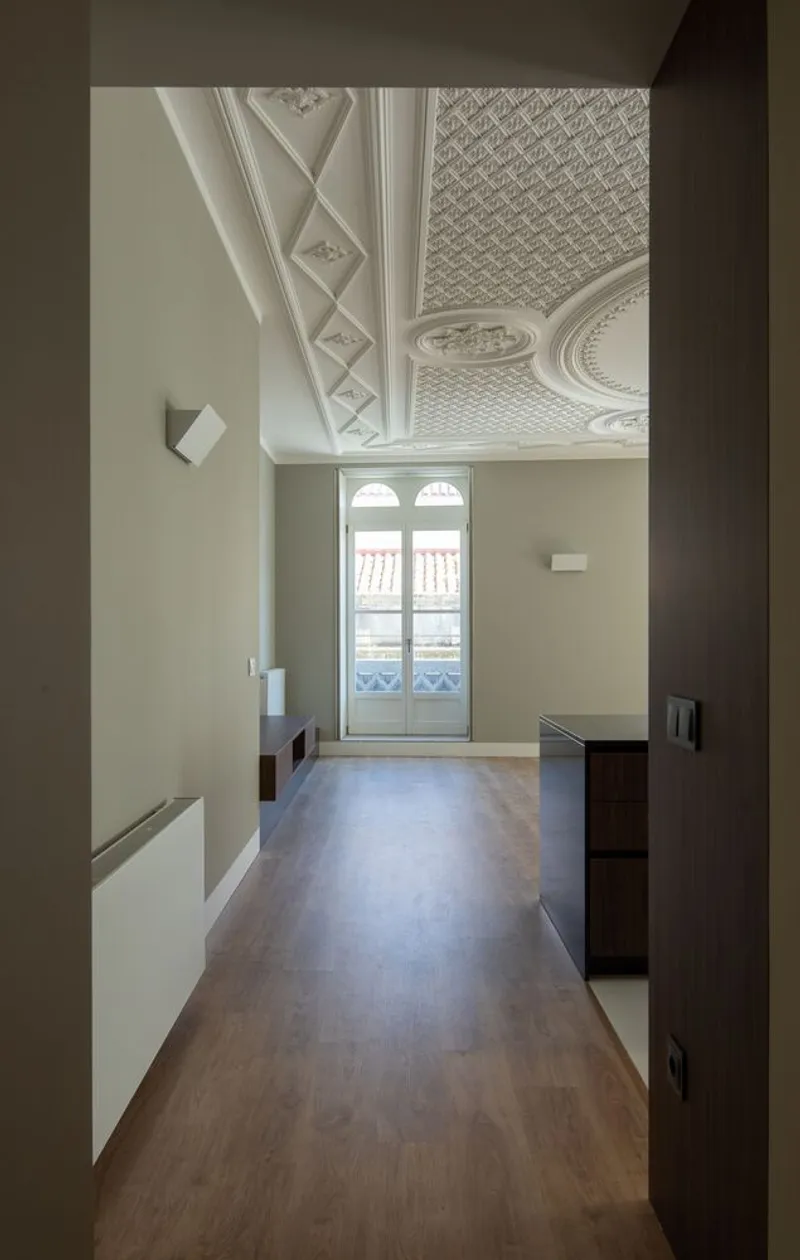
Placing a walnut kitchen island directly beneath a ceiling of raised plaster flowers and diamond motifs is a bold decision. It works because the tonal palette, dark walnut against warm white relief, is coherent, and because the kitchen joinery is detailed with enough care that it reads as a peer to the ceiling rather than an interloper. The galley kitchen with dark stone countertops performs the same trick: its linearity emphasizes the ceiling's complexity overhead.
Living Beneath the Ornament
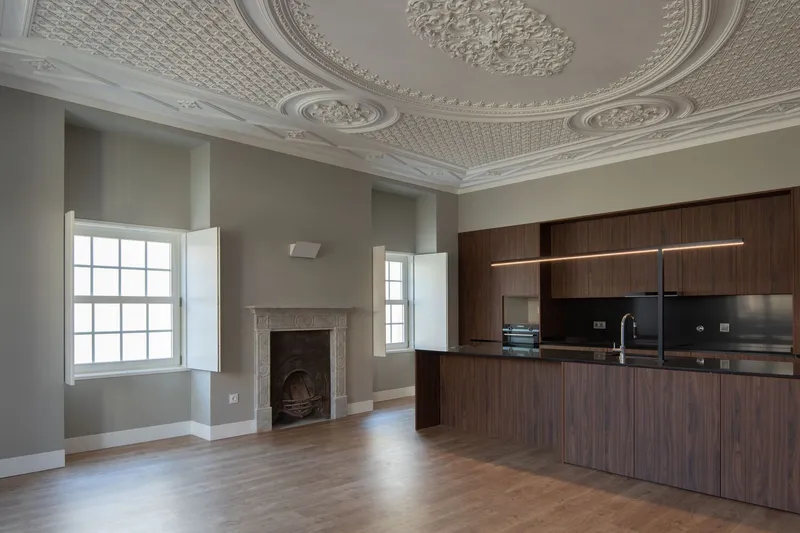
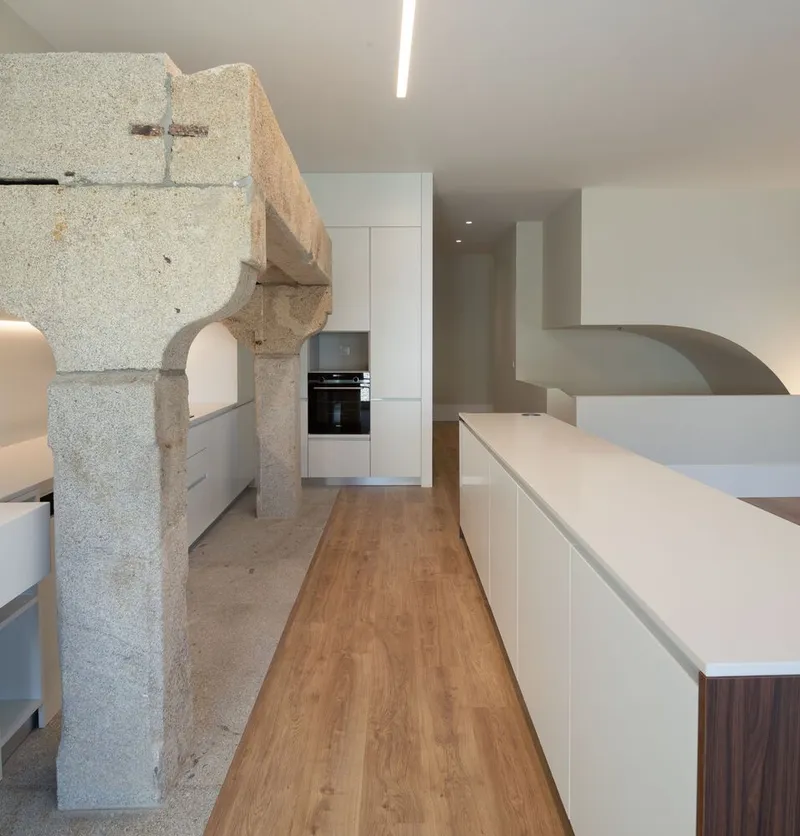
What prevents these interiors from tipping into preciousness is that they are clearly designed for occupation. The kitchen with its exposed stone column and white cabinetry is functional and uncluttered. The room with an ornate plaster ceiling, historic fireplace, and tall windows invites actual cooking and eating, not just admiration. This is the crux of the project: historic elements are not cordoned off. They are the walls and ceilings of rooms where people prepare meals, read, and sleep.
Hallways are treated with the same seriousness. The corridor view toward an arched window, with ornamental plaster above and wide timber boards below, demonstrates how even circulation space can carry the building's narrative. Light enters through deep reveals and washes across moldings, activating them in ways that flat ceilings never could.
Vertical Circulation and Light Wells
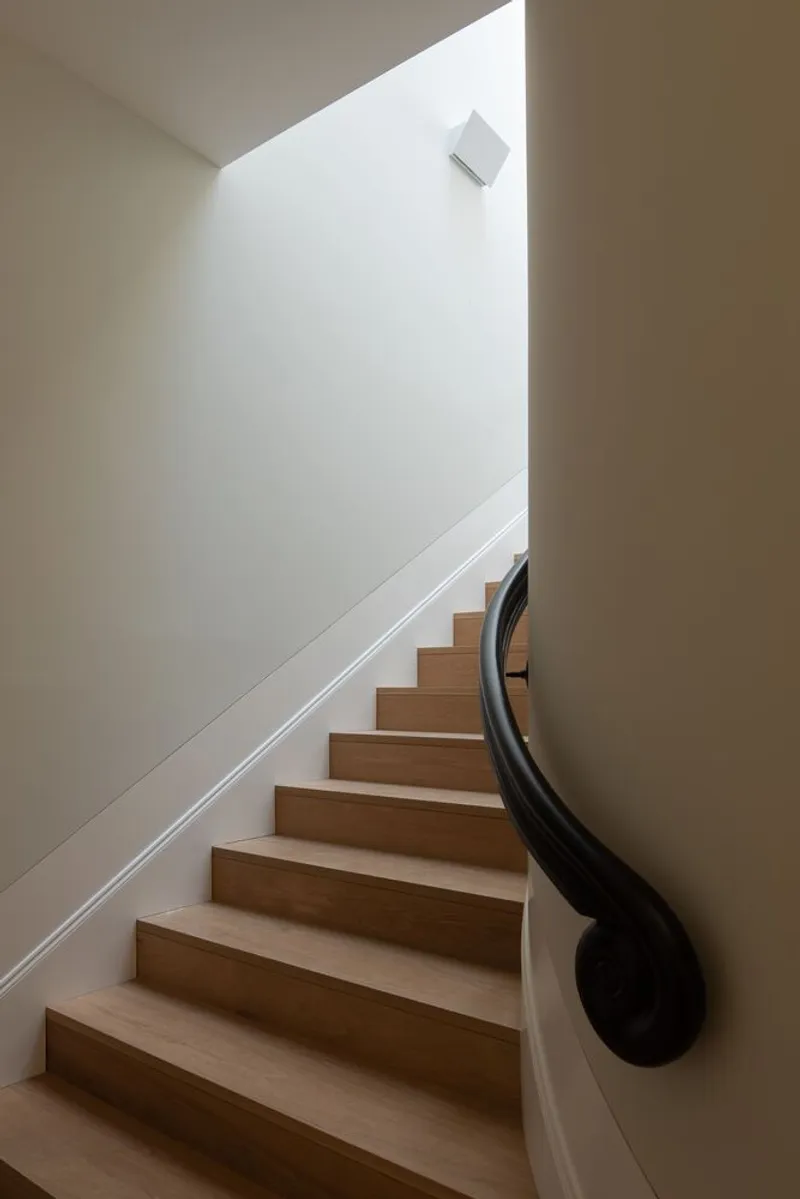
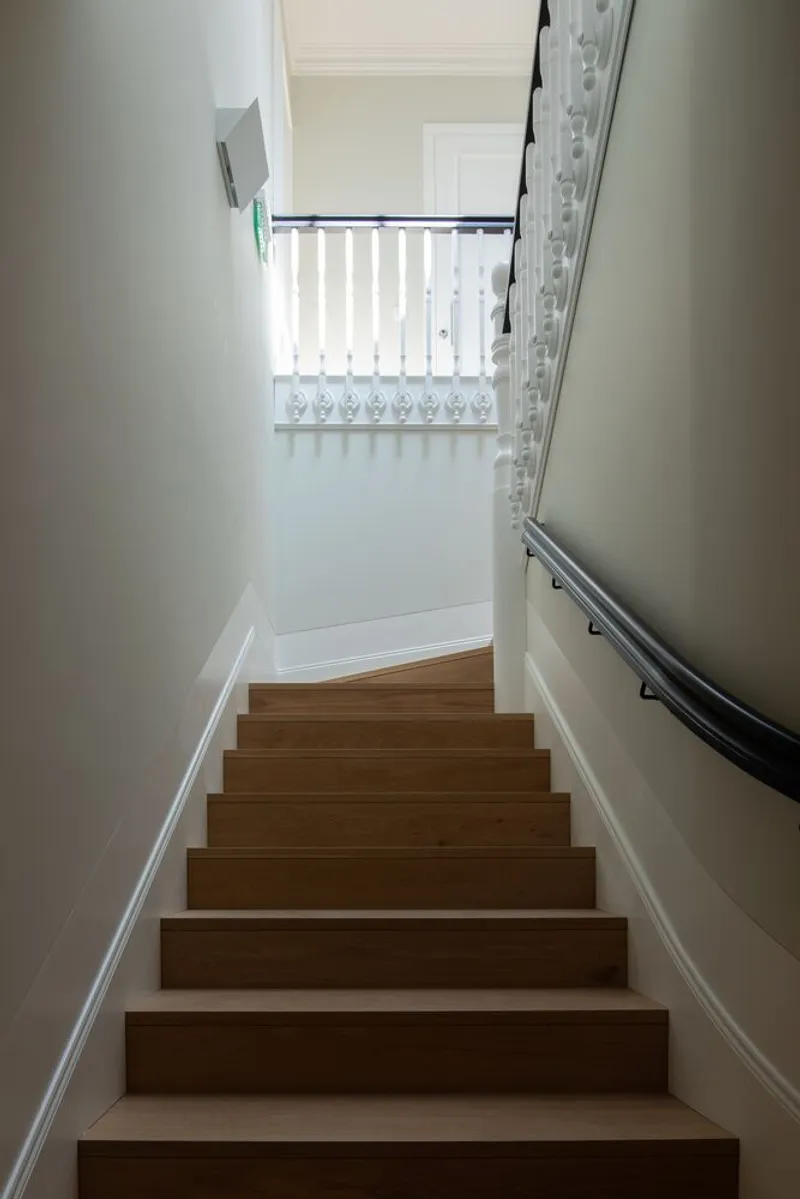
Staircases in historic buildings tend to be either preserved as period pieces or replaced entirely with steel and glass interventions. Alpuins takes a third path: the curved timber staircase with its black metal handrail is clearly contemporary in detail, yet its materiality and proportions feel native to the building. The skylit stairwell above floods the vertical core with natural light, turning what could be a dark service space into the brightest moment in the plan.
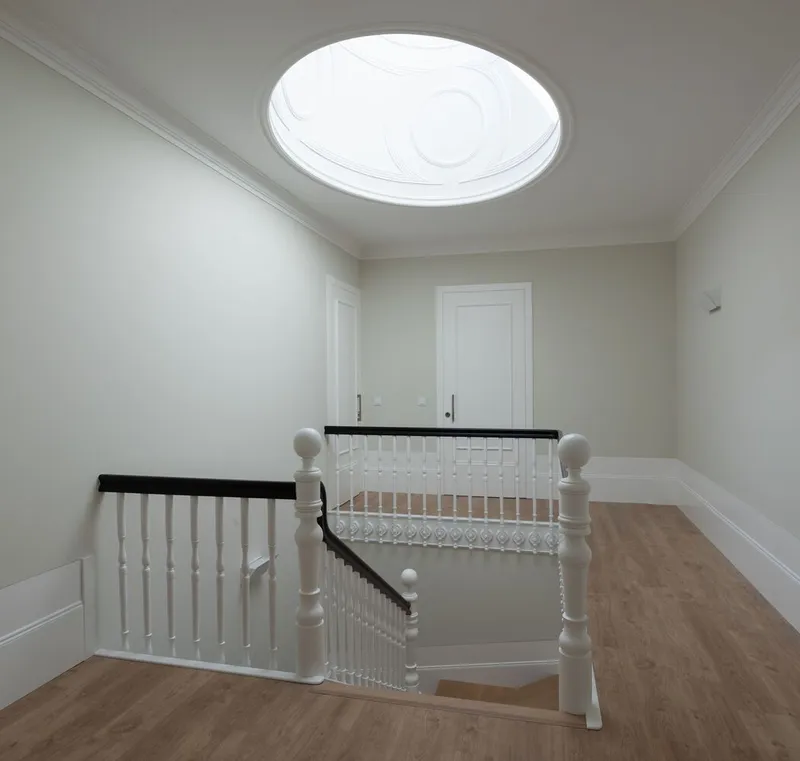
Elsewhere, the white painted wood balustrade and circular skylight with decorative molding represent a more conservative approach, restoring rather than reinventing. The coexistence of both attitudes within the same building is evidence of thoughtful decision-making. Not every element needs the same treatment; the architects distinguish between what should be preserved, what should be reinterpreted, and what should be newly made.
The Courtyard and Exterior Composition
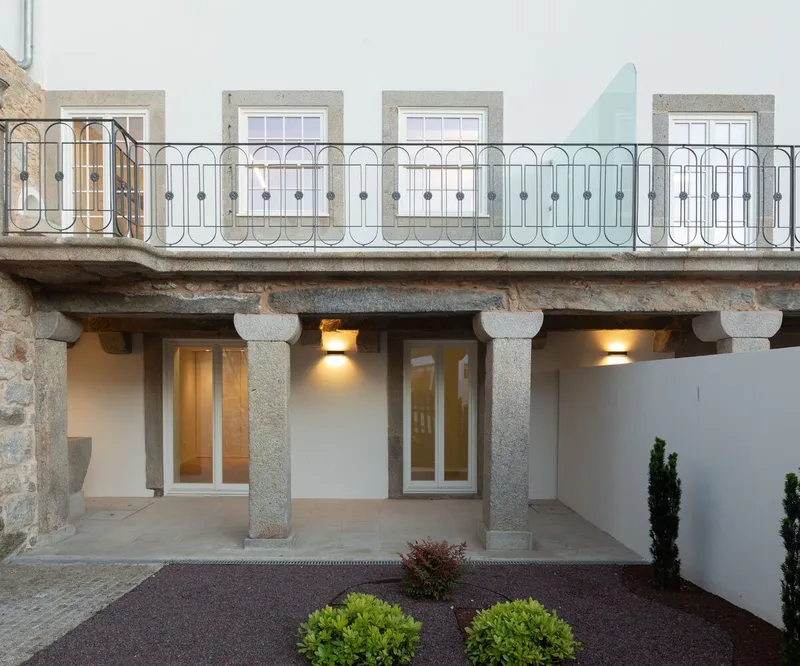
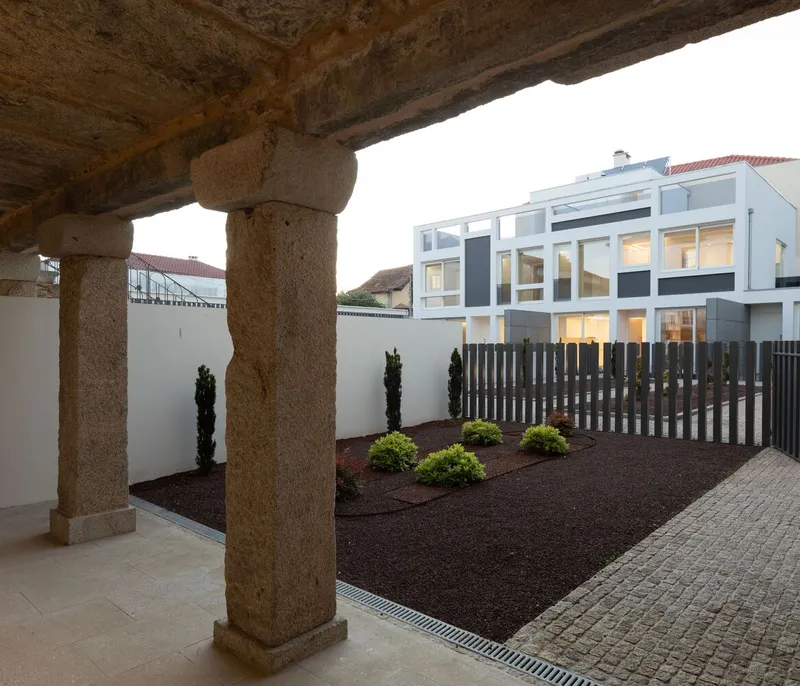
The courtyard facade with its granite columns and ornamental iron railing is the building's most legible connection to Portuguese manor house typology. At dusk, warm interior light spilling through the colonnade transforms the facade into a lantern, advertising the domestic life within. The view through the granite colonnade to the landscaped courtyard beyond layers foreground stone against middleground planting and background white facade, producing a spatial depth that feels generous for a residential project.
The dark timber screening and vertical slat elements introduce a contemporary material language to the courtyard without competing with the granite. These additions read as furniture within the historic frame: removable, lightweight, subordinate to the masonry that defines the space.
Inside Looking Out
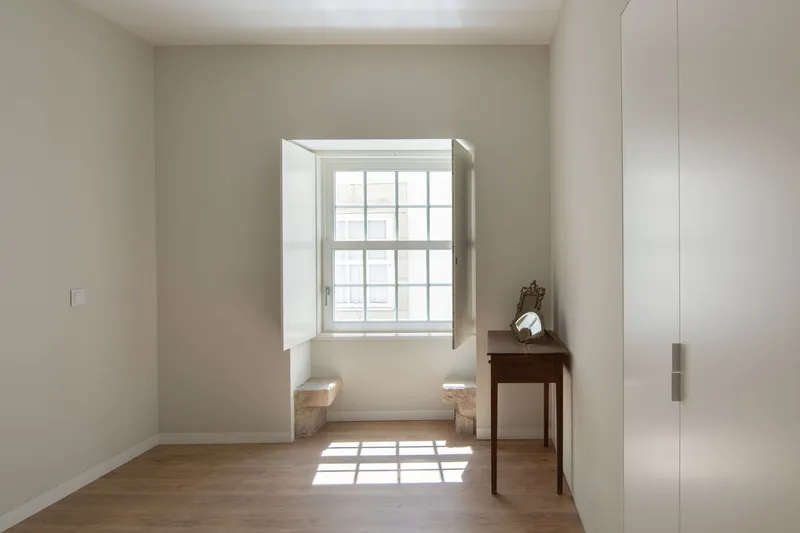
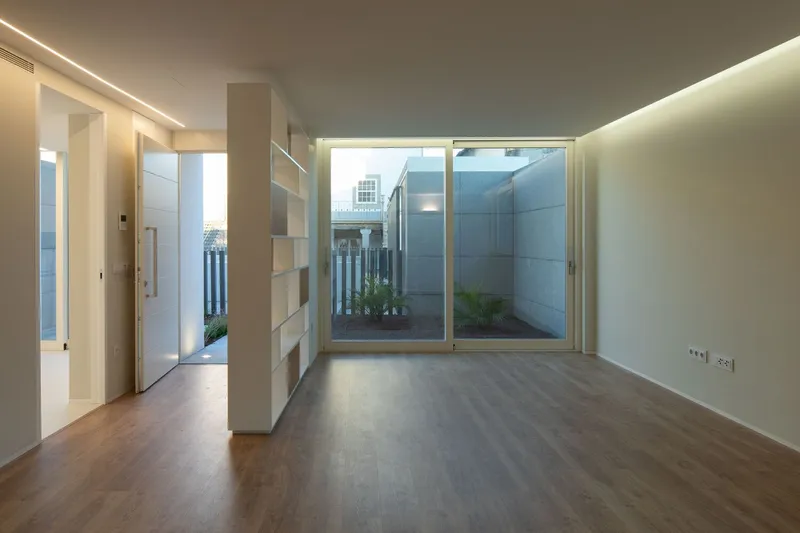
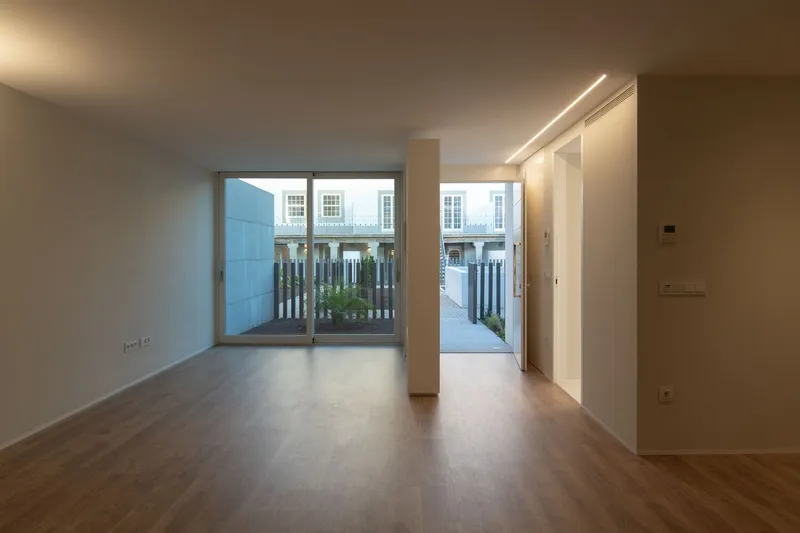
Some of the project's most compelling moments occur at the threshold between interior and exterior. The small room with its deep-set window casting a grid of shadows across pale flooring is almost monastic in its simplicity, a counterpoint to the ornamental rooms elsewhere. The built-in shelving facing a glass door to a planted courtyard suggests a reading room designed around a single view. These quieter spaces give the plan breathing room and prevent the building from becoming relentless in its decorative intensity.
The open living space with continuous cove lighting and glazed terrace doors is the most overtly modern room in the project. Here, the ceiling is smooth and the lighting concealed, a deliberate contrast that makes the ornamented rooms feel all the richer by comparison. The architects clearly understood that rhythm between complexity and calm is essential when working with this much historic material.
Rear Elevation
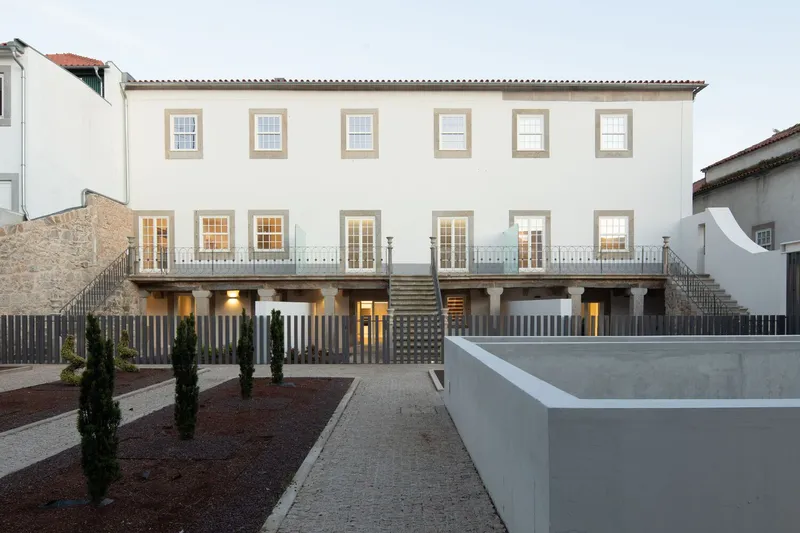
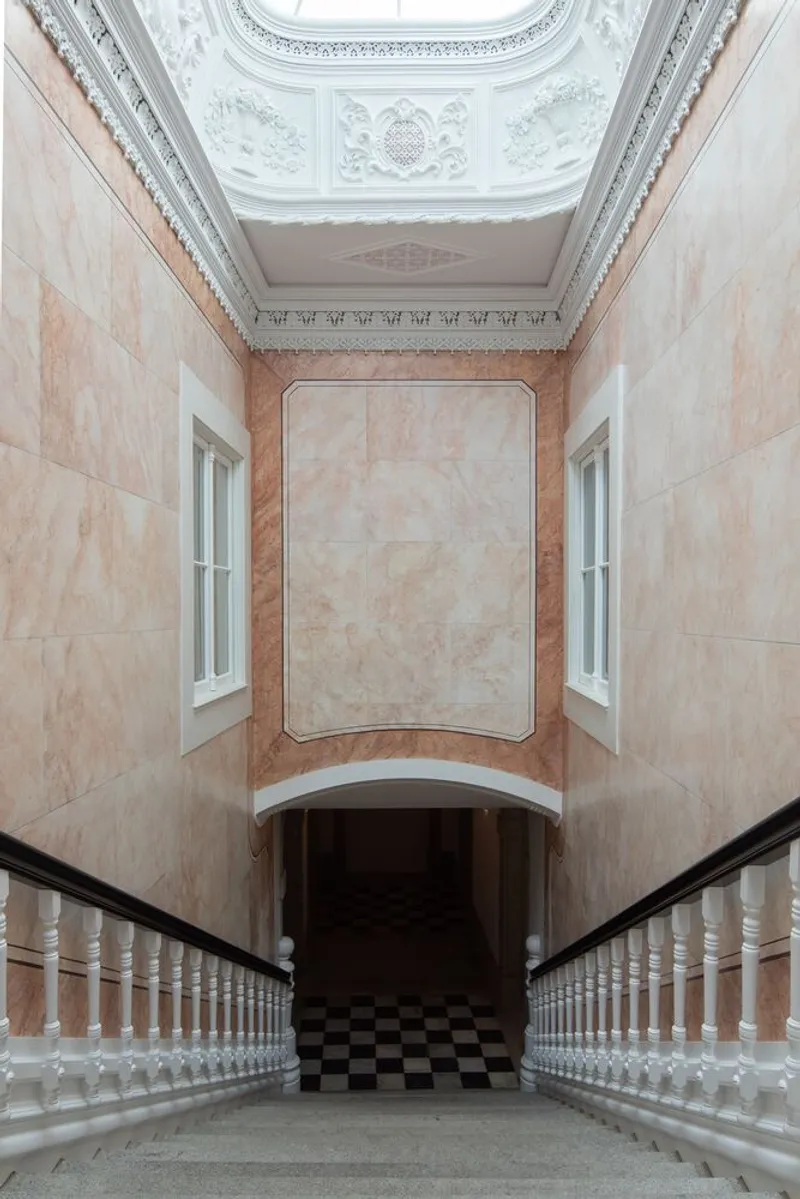
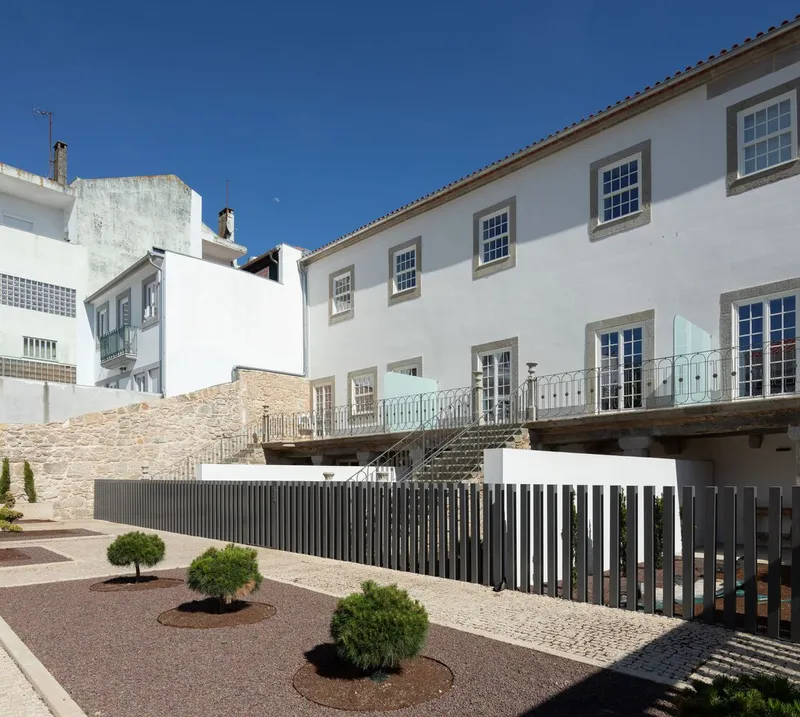
The rear elevation, with its white facade, stone-framed windows, and twin staircases ascending to an elevated terrace, reads as a more vernacular face of the building. Where the courtyard facade is formal and columned, the rear is direct: a working elevation that connects the upper levels to the garden. The stairwell interior with restored plasterwork ceiling and marbled wall finish confirms that even secondary spaces received full architectural attention.
Plans and Drawings
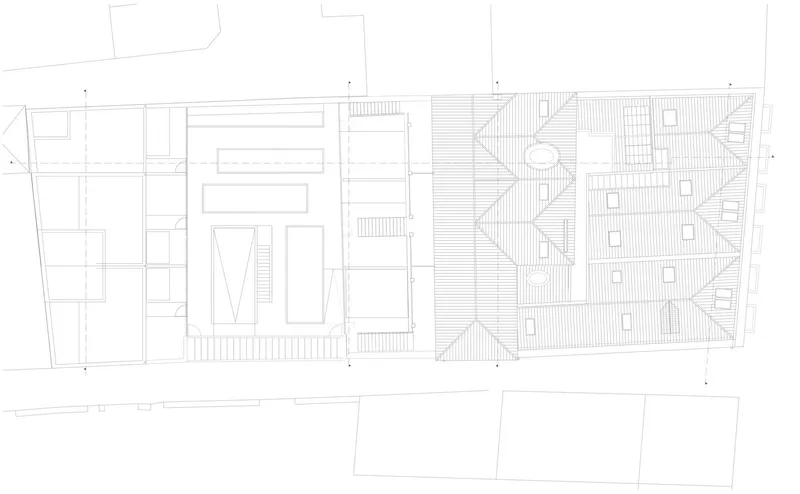
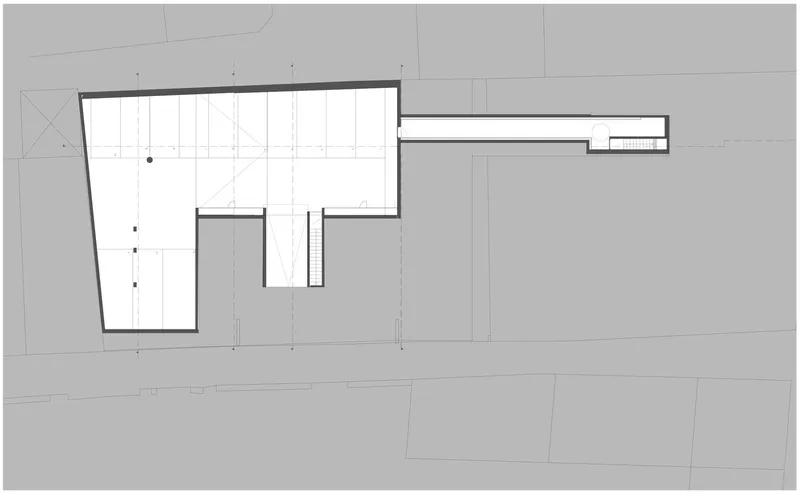
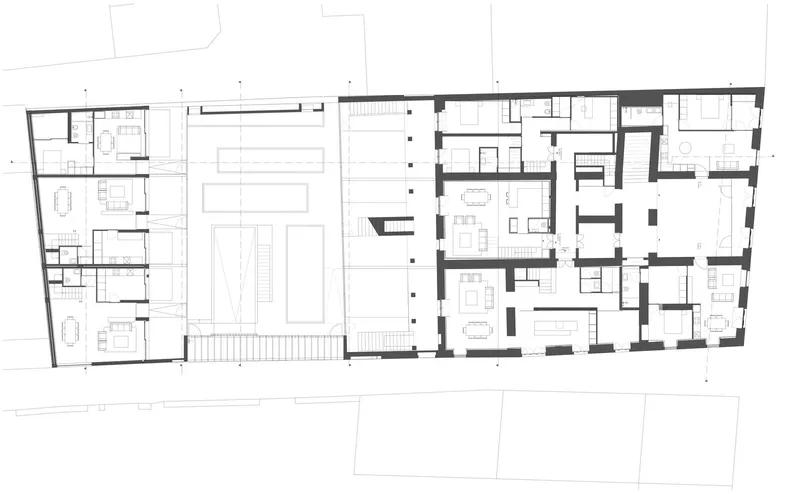
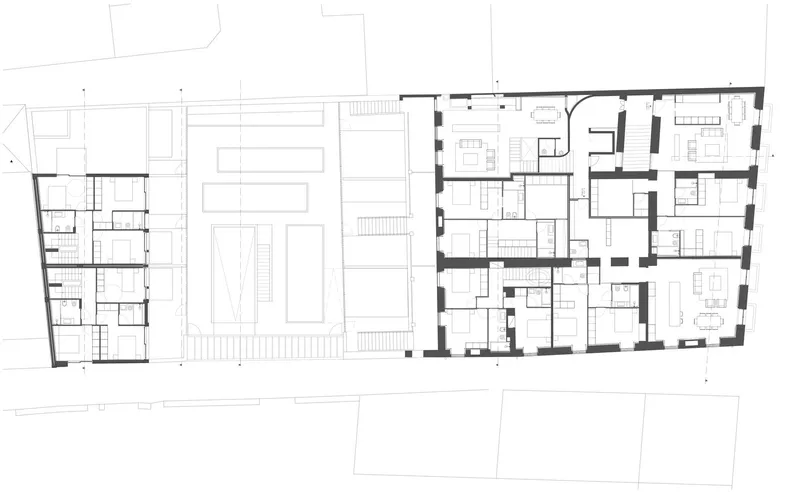
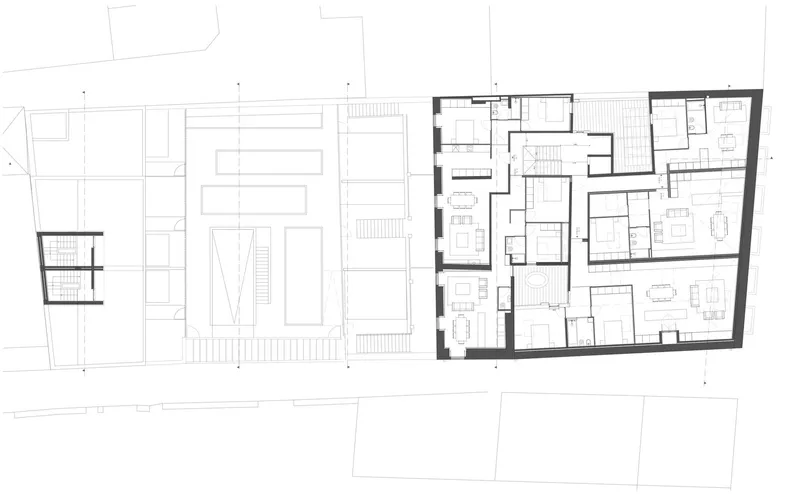
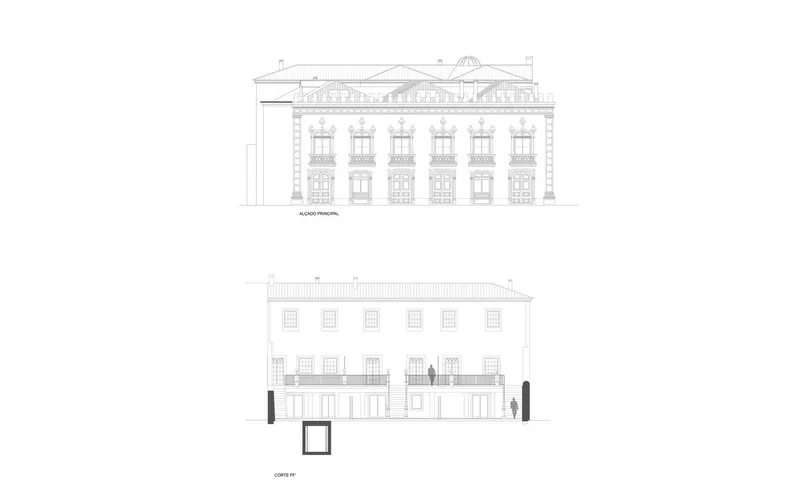
The site plan reveals the building's relationship to its surrounding plots and the L-shaped volume organized around a central courtyard. The ground floor plan shows residential units arrayed around the courtyard with a pool tucked into the exterior space, while upper floors distribute bedrooms and living areas across the angled volume. The elevation drawings depict a six-window symmetrical facade and a courtyard side view, confirming the building's classically proportioned street presence alongside the more informal courtyard expression.
What the plans make clear is the density of the program. Multiple residential units are fitted into a historic footprint without subdividing principal rooms. Circulation cores are consolidated, and the courtyard serves as both shared amenity and light source. The planning is efficient without being cramped, which is no small achievement when working within existing load-bearing walls.
Why This Project Matters
Alpuins matters because it demonstrates that historic building rehabilitation does not require choosing between preservation and livability. Branco Cavaleiro Architects treated the ornamental plaster, the granite structure, and the timber ceilings as assets rather than constraints, and then inserted contemporary domestic programs with enough skill that the old and new feel co-authored. The willingness to place a kitchen island beneath a 19th-century ceiling medallion, and to make that pairing feel inevitable, is the project's central achievement.
In a country where historic fabric is abundant and often undervalued, projects like this set a standard. They prove that the economics of residential conversion can coexist with genuine care for material heritage. The result is not a frozen artifact or a gutted shell with a heritage veneer. It is a building that is older than any of its residents and, thanks to this intervention, likely to outlast them as well.
Alpuins by Branco Cavaleiro Architects. Location: Portugal.
About the Studio
Share Your Own Work on uni.xyz
If projects like this are the kind of work you want to make, uni.xyz is a place to publish your own, find collaborators, and enter design competitions.




Popular Articles
Popular articles from the community


The Earth Pod: 3D Printed Homes for Resilient Refugee Communities
The Earth Pod reimagines refugee housing through 3D printed homes made from clay, combining resilience, self-sufficiency, and rapid shelter.

Conexión: Biophilic Design Reimagines High-Rise Living in Hong Kong
Conexión reimagines high-rise living in Hong Kong through biophilic design, green facades, shared spaces, daylight, water and nature within.

Hill & Cross Opera: Sculptural Opera House Architecture Shaped by Tallinn’s Landscape and Identity
Hill & Cross Opera reimagines opera house architecture in Tallinn through its sculptural hill, civic plaza, glass wave and a luminous cross.

Riyadh For All: Intergenerational Urban Design for Active Aging in Rabat
Riyadh For All reimagines urban design in Rabat with intergenerational co-living, adaptive courtyards, and Moroccan cultural exchange today.


Similar Reads
You might also enjoy these articles


Hodi-Mandai Geram
Project Function: Preservation and revitalization of the Intangible heritage and socio-spatial identity of the Hodi by Housing, Cultural Memory Center, Sacred Grove, landscape, local tourism economy


Olio Towers: A Mid-Rise for Performers That Fuses Housing, Rehearsal, and Stage
Located blocks from Houston's Theater District, this modular tower stacks living units around a central performance atrium.

Oasis: Modular Green Housing Carved into Dhaka's Urban Fabric
A shortlisted Plugin Housing entry reclaims unauthorized settlements in Dhaka with stepped concrete volumes, green roofs, and ventilation-driven design.

Black Hole: A Floating Megastructure for the Post-Physical Era
Emiliano Mazzarotto envisions a spherical, self-scaling arena where e-sports, digital hotels, and holographic stadiums replace traditional public space.


Explore Architecture Competitions
Discover active competitions in this discipline



Challenge to reimagine the Iron Throne


Photograph architecture without architects


Illustrate the lost glory of Angkor Wat - Render Challenge


Design challenge to reuse E-waste
Comments (0)
Please login or sign up to add comments
No comments yet. Be the first to comment!