
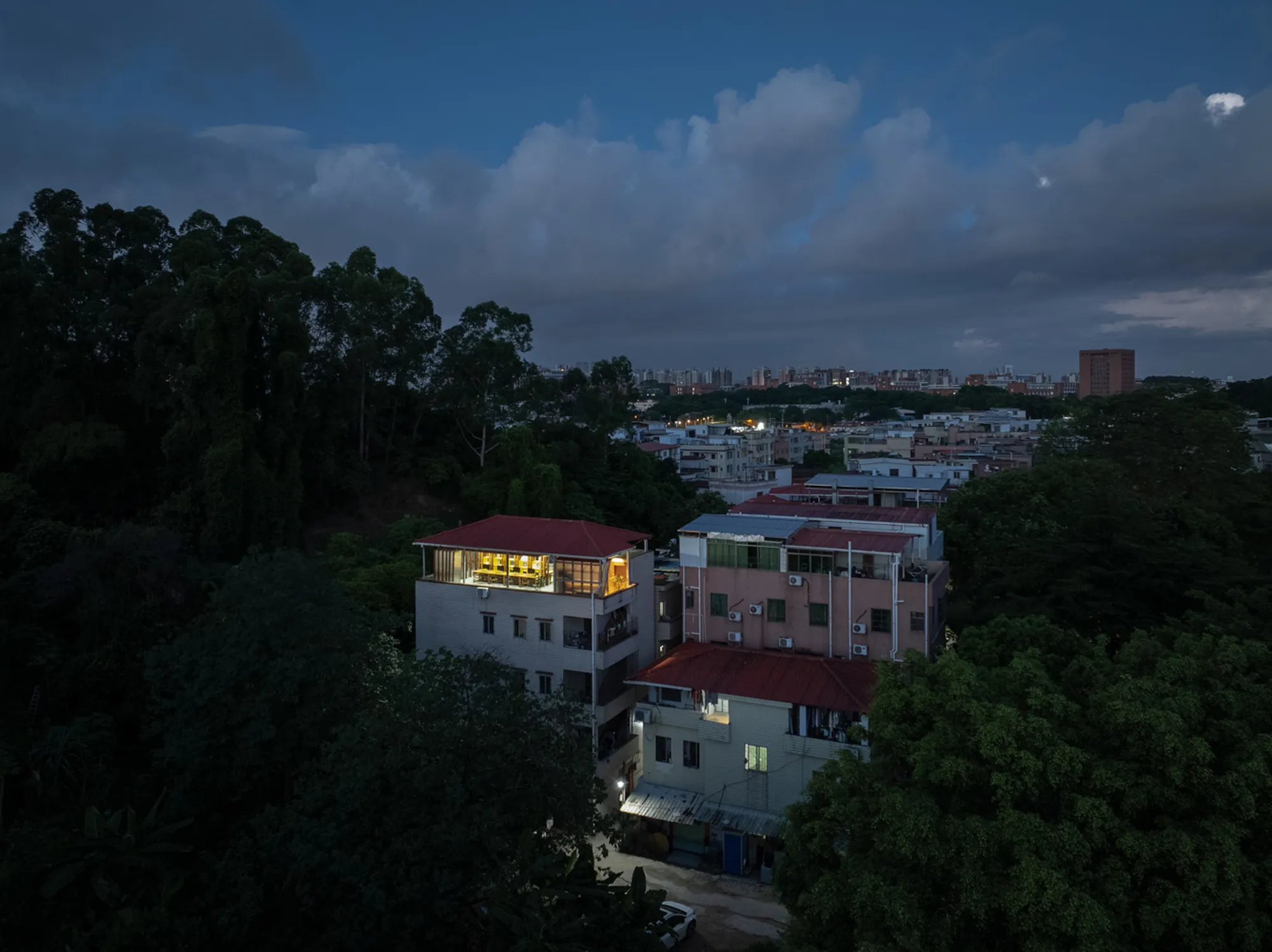
An Office Free in the Gaps of an Urban Village by LLC Studio: Embracing Nature, Flexibility, and Urban Context
An open, flexible office in Guangzhou’s urban village, blending nature, cultural context, and climate-responsive design for dynamic, human-centered workspaces.


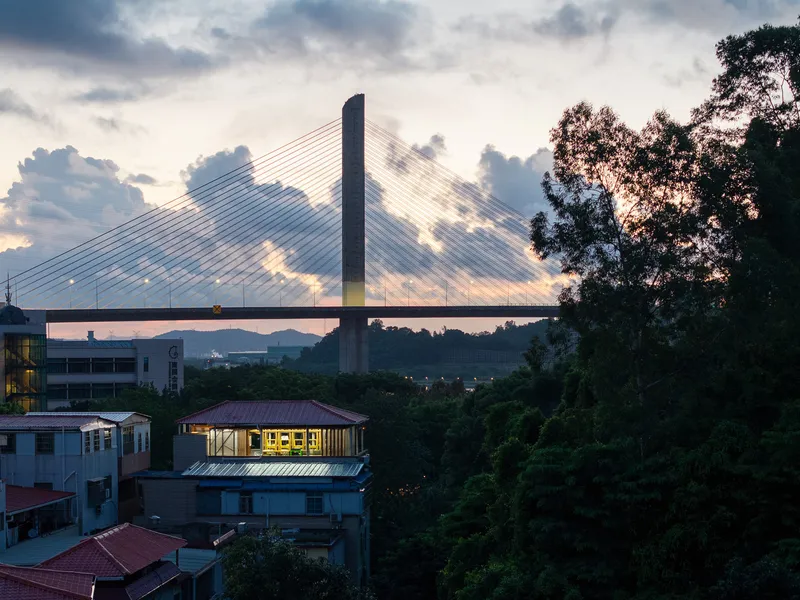
Nestled on the edge of a vibrant urban village in Guangzhou, “An Office Free in the Gaps of an Urban Village” by LLC Studio explores the intersection of nature, flexible workspaces, and urban transformation. The project occupies a unique site bordered by a school to the north, a gently sloping hill to the south, a river to the east, and the existing village settlement to the west. This dynamic setting forms the foundation for a design that actively responds to natural elements, cultural layers, and urban pressures.

Harmonizing with Nature
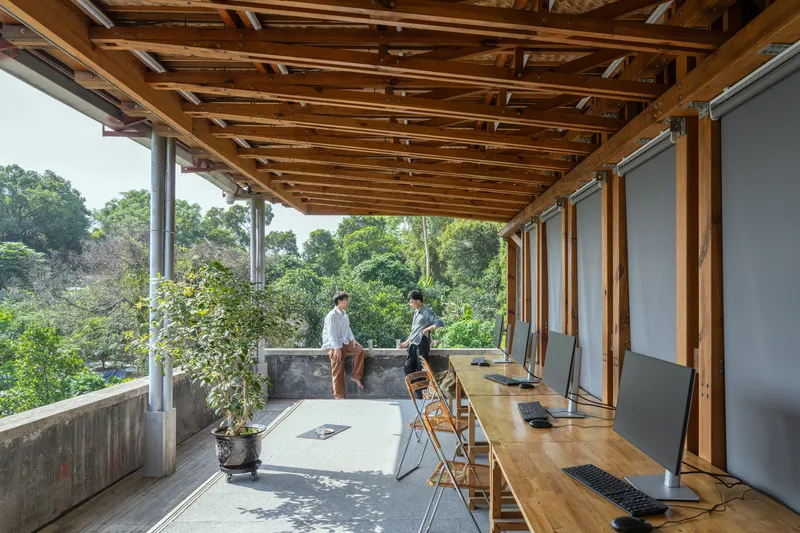
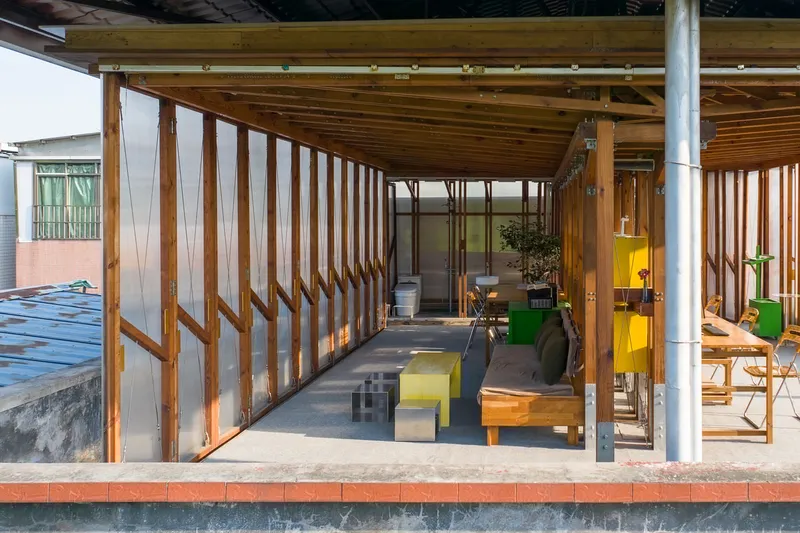
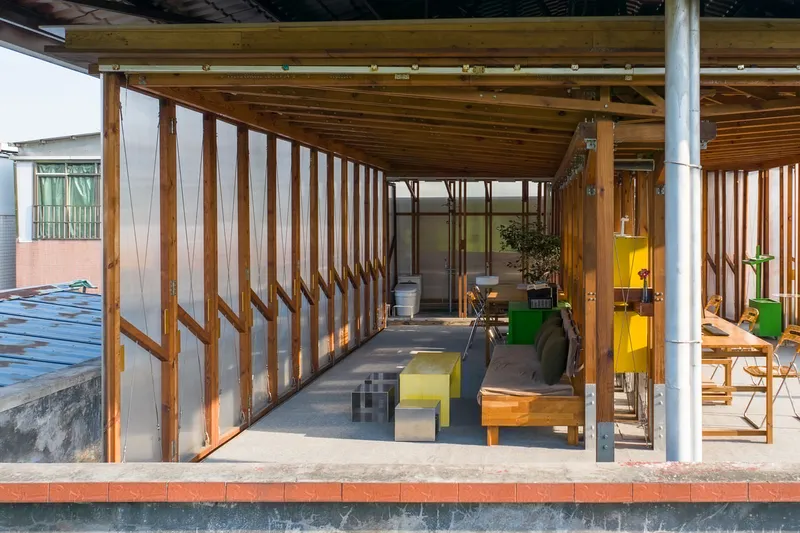
The small southern hill provides lush evergreen vegetation throughout the year, with the rhythmic sounds of birds and insects punctuating the day. Inspired by this natural environment, the building is designed to be open and permeable: all four walls of the office space can open, dissolving boundaries between interior and exterior. This connection to the surrounding environment allows occupants to experience the passage of time through natural light, seasonal changes, and daily atmospheric rhythms.
While celebrating harmony with nature, the architects also accounted for Guangzhou’s extreme weather conditions, including typhoons, heavy rainfall, and intense heat. The resilient design ensures occupants feel a respectful awe toward these natural forces, especially when wind and rain strike the lightweight structure. This approach fosters a heightened awareness of climate, environment, and the impermanence of human structures.

Cultural Context and Urban Gaps
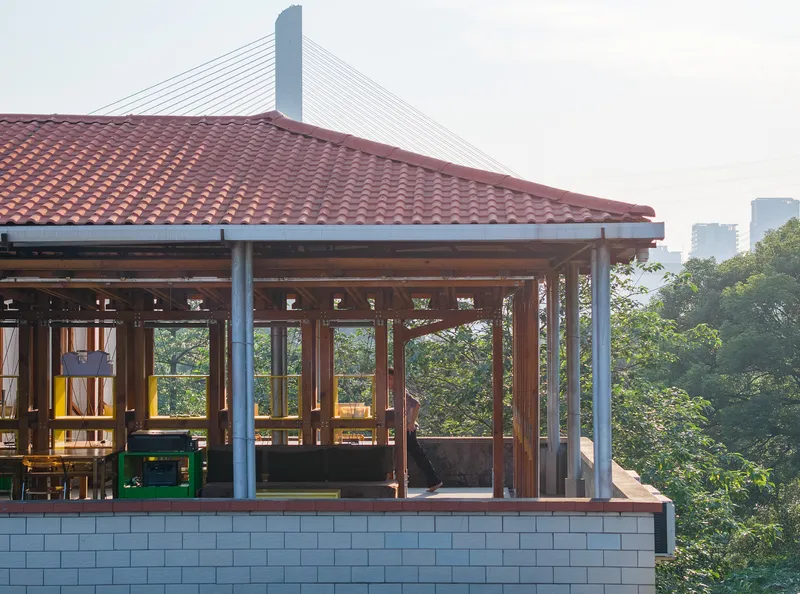
The project sits within a historically layered urban village, where self-built settlements reflect fragmented ideas from different periods. Over time, these villages have evolved as clans expanded and new populations, including students and migrant workers, introduced diverse activities. These social shifts gradually reshaped the traditional clan-based settlement patterns.
LLC Studio embraced these “urban gaps” as opportunities for experimentation and growth. The office occupies a space that mediates between past and present, blending informal urban textures with innovative architectural interventions. By situating the project within these interstitial spaces, the architects maintained the authenticity of the urban village while fostering adaptive and flexible use.


Spatial Organization and Design Concept
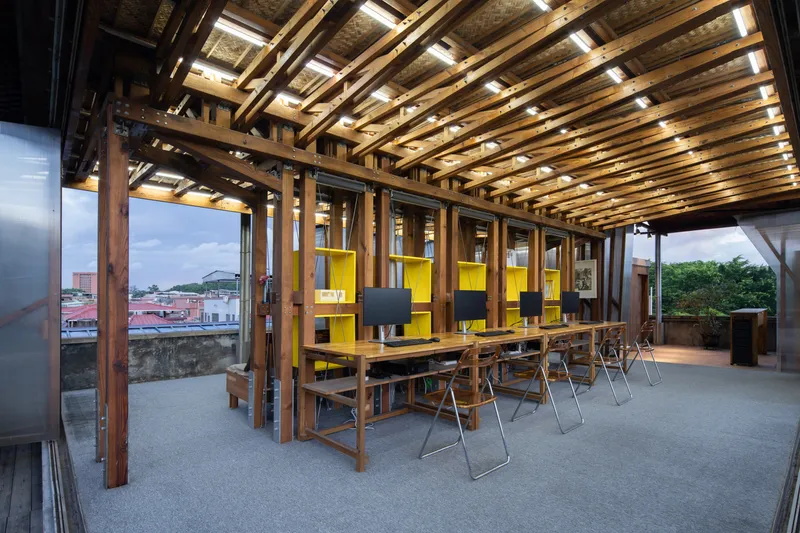
The office is composed of three distinct functional blocks: office, restroom, and bar, each constructed as an independent “box.” These boxes are framed with pinewood and enclosed using translucent polycarbonate panels, allowing walls to open fully or partially depending on the function and season.
- Office Block (45 m²): Positioned as the most prominent and emphasized area, it serves both work and leisure purposes. The walls can retract completely, inviting fresh air, natural light, and visual connection to the surroundings. This openness reduces indoor heat during summer while fostering comfort and productivity.
- Bar and Restroom Blocks: These auxiliary spaces are partially openable, maintaining functionality while allowing flexible interaction with the environment. In winter, closed walls create a continuous flow between the blocks, while summer openness blurs spatial boundaries.
The architectural layout features a central core supporting cantilevered wings, providing structural stability while creating storage and spatial separation. Originally conceived for residential use, the restroom block was adapted to office needs without losing the flexibility of movable partitions. This adaptive design underscores the project’s central theme: a fluid, human-centered, and climate-responsive workspace.

A Dialogue Between Urbanization and Flexibility
“An Office Free in the Gaps of an Urban Village” illustrates a unique conversation between urban densification, cultural heritage, and natural surroundings. It demonstrates how small-scale interventions can enhance urban life by introducing flexibility, openness, and environmental sensitivity. By responding to the specific topography, social patterns, and climate of its site, the project stands as an exemplary model of contextual office architecture in rapidly evolving urban villages.
All photographs are works of Siming Wu




Popular Articles
Popular articles from the community


The Earth Pod: 3D Printed Homes for Resilient Refugee Communities
The Earth Pod reimagines refugee housing through 3D printed homes made from clay, combining resilience, self-sufficiency, and rapid shelter.

Riyadh For All: Intergenerational Urban Design for Active Aging in Rabat
Riyadh For All reimagines urban design in Rabat with intergenerational co-living, adaptive courtyards, and Moroccan cultural exchange today.

The Ocean Hive: Sustainable Architecture for a Self-Sufficient Civilization at Sea
The Ocean Hive imagines sustainable architecture at sea, where modular habitats, algae, wave power and ocean waste sustain a growing colony.

Play: Fragments of Their World
Familiar architecture becomes modular playground design, creating safe spaces where displaced children can learn, connect, imagine and play.

Similar Reads
You might also enjoy these articles


Hodi-Mandai Geram
Project Function: Preservation and revitalization of the Intangible heritage and socio-spatial identity of the Hodi by Housing, Cultural Memory Center, Sacred Grove, landscape, local tourism economy


Olio Towers: A Mid-Rise for Performers That Fuses Housing, Rehearsal, and Stage
Located blocks from Houston's Theater District, this modular tower stacks living units around a central performance atrium.

Oasis: Modular Green Housing Carved into Dhaka's Urban Fabric
A shortlisted Plugin Housing entry reclaims unauthorized settlements in Dhaka with stepped concrete volumes, green roofs, and ventilation-driven design.

Black Hole: A Floating Megastructure for the Post-Physical Era
Emiliano Mazzarotto envisions a spherical, self-scaling arena where e-sports, digital hotels, and holographic stadiums replace traditional public space.


Explore Open Building Competitions
Discover active competitions in this discipline



Challenge to reimagine the Iron Throne


Photograph architecture without architects


Illustrate the lost glory of Angkor Wat - Render Challenge


Design challenge to reuse E-waste
Comments (0)
Please login or sign up to add comments
No comments yet. Be the first to comment!