
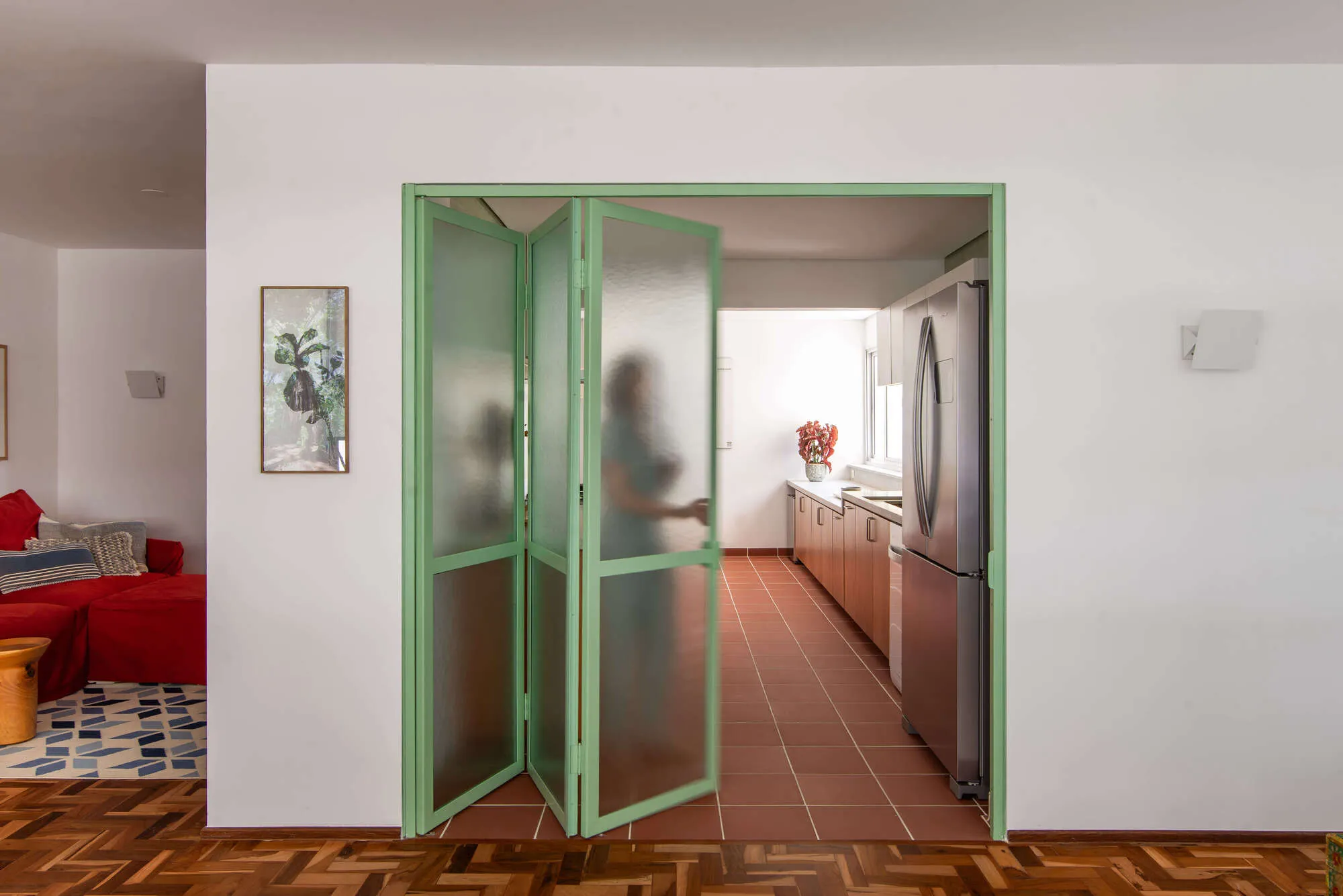
A 1970s São Paulo Apartment Reborn in Green and Terracotta
João Marujo and Orlando Naj open up a compartmentalized São Paulo apartment with folding screens, material shifts, and a restrained color palette.


The 1970s left São Paulo with a particular kind of apartment: generous in total area but carved into small, disconnected rooms designed around habits that no longer hold. João Marujo and Orlando Naj took one such 140 m² unit and, rather than gutting it into a single loft volume, made a more nuanced move. They selectively removed walls, then reintroduced division through folding screens, floor material changes, and color cues that let the plan breathe while keeping each zone legible.
What makes the André Fernandes Apartment worth studying is its refusal to treat openness as an absolute virtue. The architects clearly understood that a kitchen visible from the living room is not the same as a kitchen that merges with it. Pale green steel-framed folding doors, frosted glass panels, and deliberate flooring transitions act as soft thresholds. You can close yourself off or open everything wide. The apartment works either way, and that flexibility is the real design achievement here.
The Folding Threshold
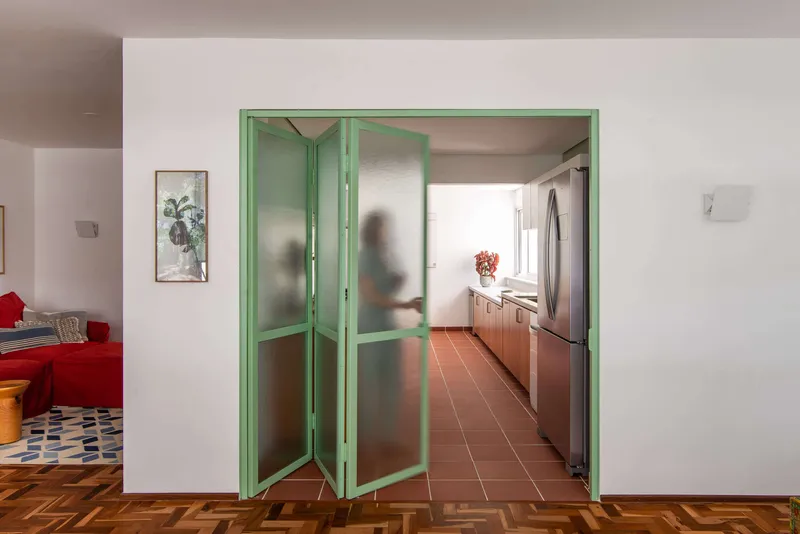
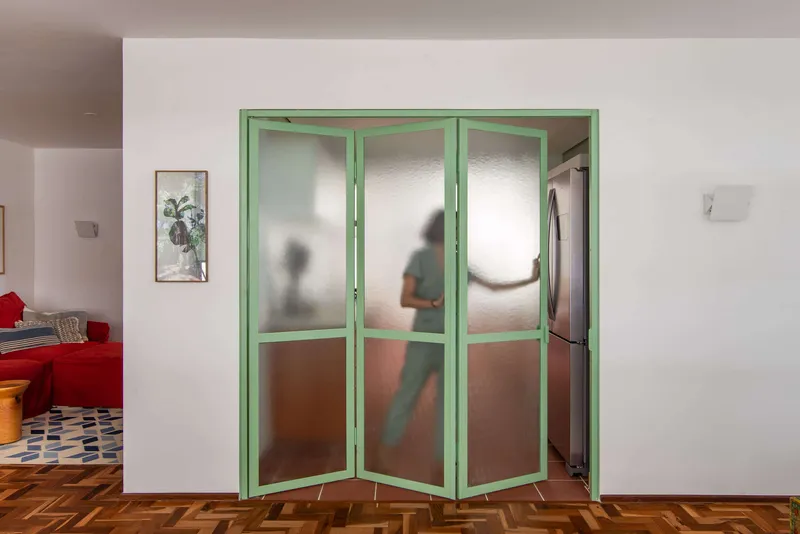
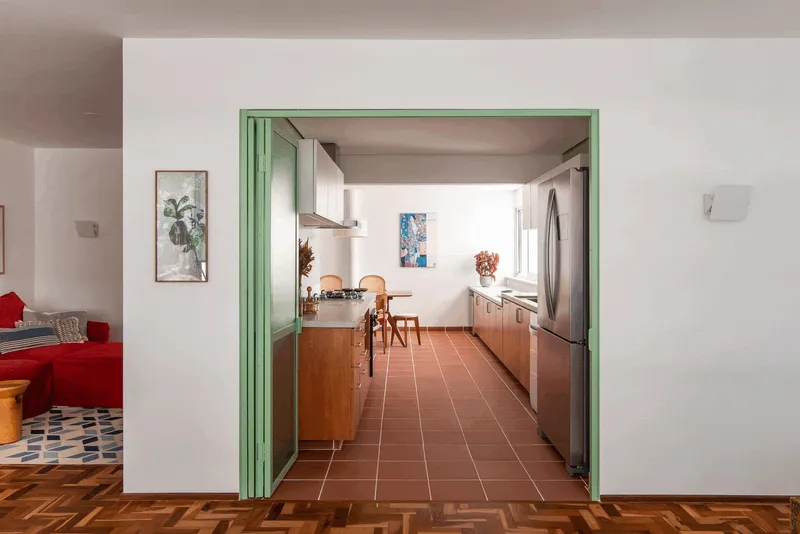
The most distinctive element in the apartment is the set of pale green folding doors that separate the kitchen from the living area. Framed in painted steel with frosted glass panels, they function more like theatrical screens than conventional doors. When closed, they filter silhouettes and movement from the kitchen side, creating a kind of translucent scrim that keeps social life legible without exposing the mess of cooking. When open, they stack neatly against the wall and the two rooms become one.
The frosted glass is critical. A clear panel would make the partition feel gratuitous, something you'd always want open. Opacity gives the closed position its own character, its own atmosphere. Light still passes, figures still register, but the kitchen becomes a backstage area. It is a small detail that transforms how the apartment is inhabited at different times of day.
Material Geography: Wood Meets Terracotta
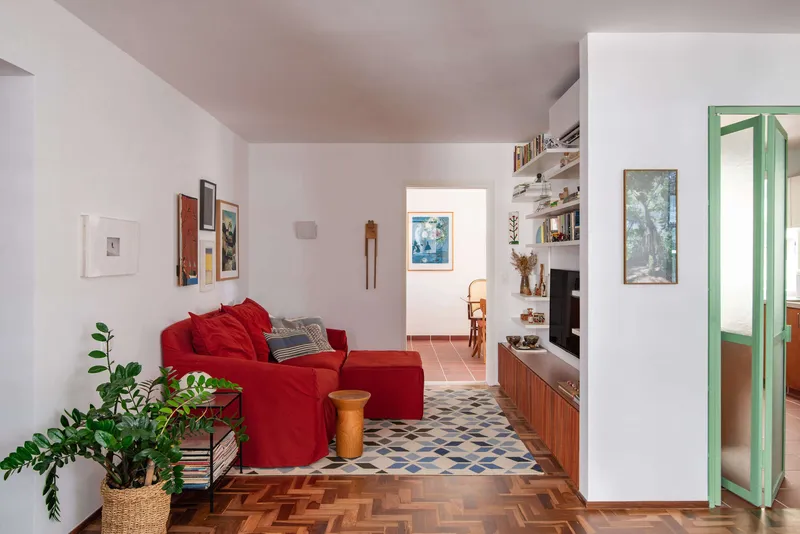
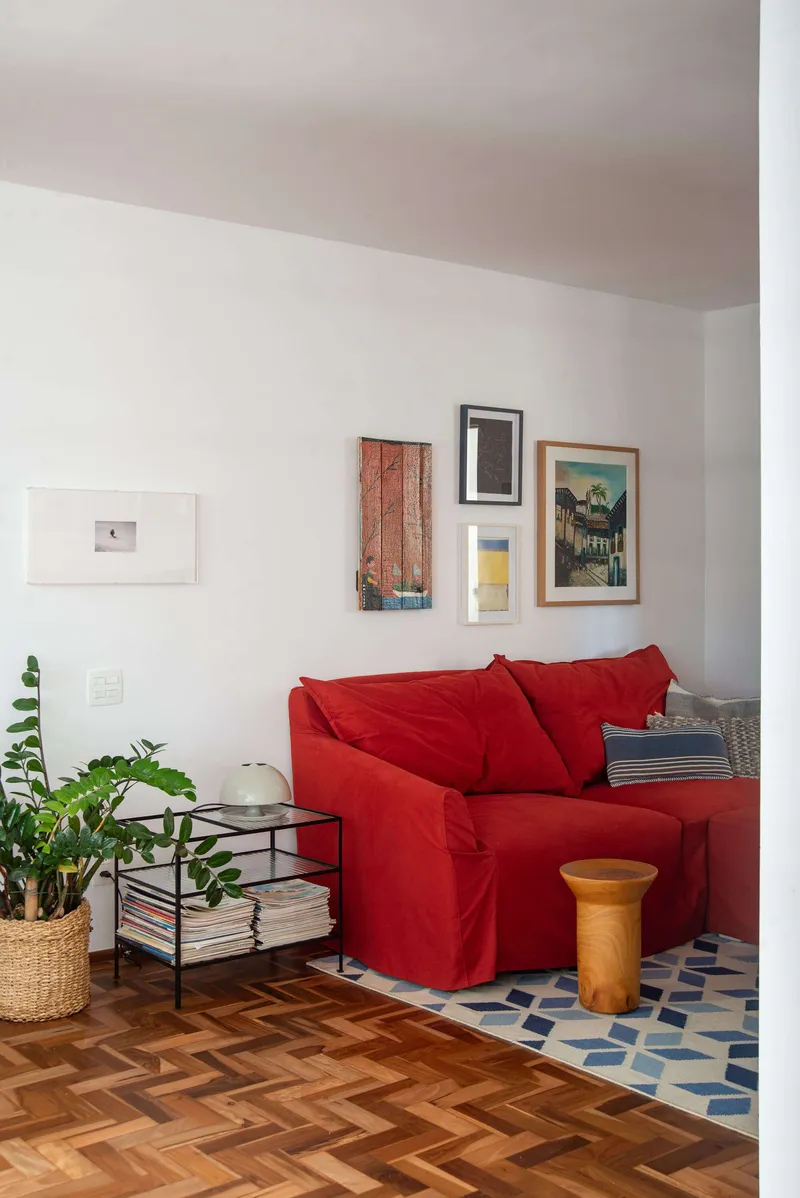
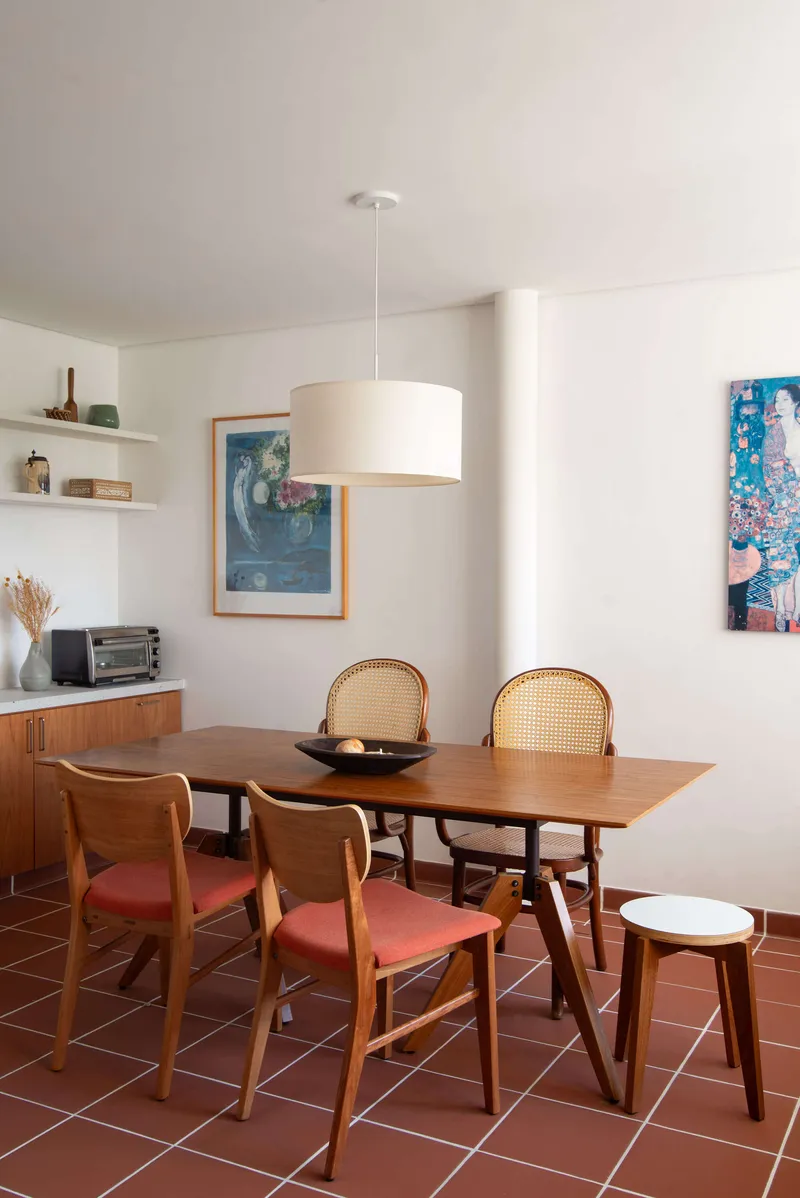
The floor does a significant amount of spatial work in this apartment. Herringbone parquet runs through the living room, bedrooms, and home office, establishing a warm, domestic register. The kitchen and dining zone, by contrast, sit on terracotta tile, a material that is tougher underfoot and cooler in tone. Where these two surfaces meet, a third material intervenes: geometric blue and white patterned tile that acts as a visual hinge between zones.
It is a technique with deep roots in Brazilian domestic architecture, where tile transitions have long served as both decorative accents and practical markers of wet versus dry zones. Here, the patterned strip is narrow enough to read as a threshold rather than a room in itself. You cross it and you know, even without looking up, that you have moved from one part of the apartment to another.
The Kitchen as Its Own Room
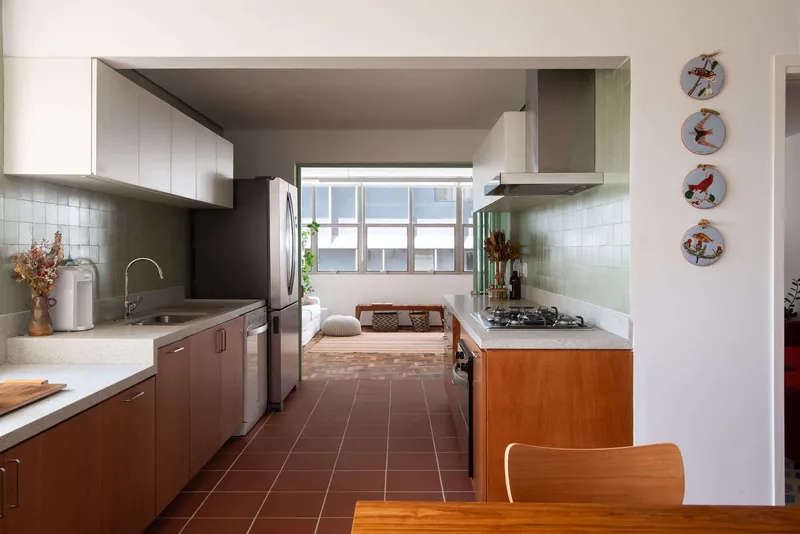
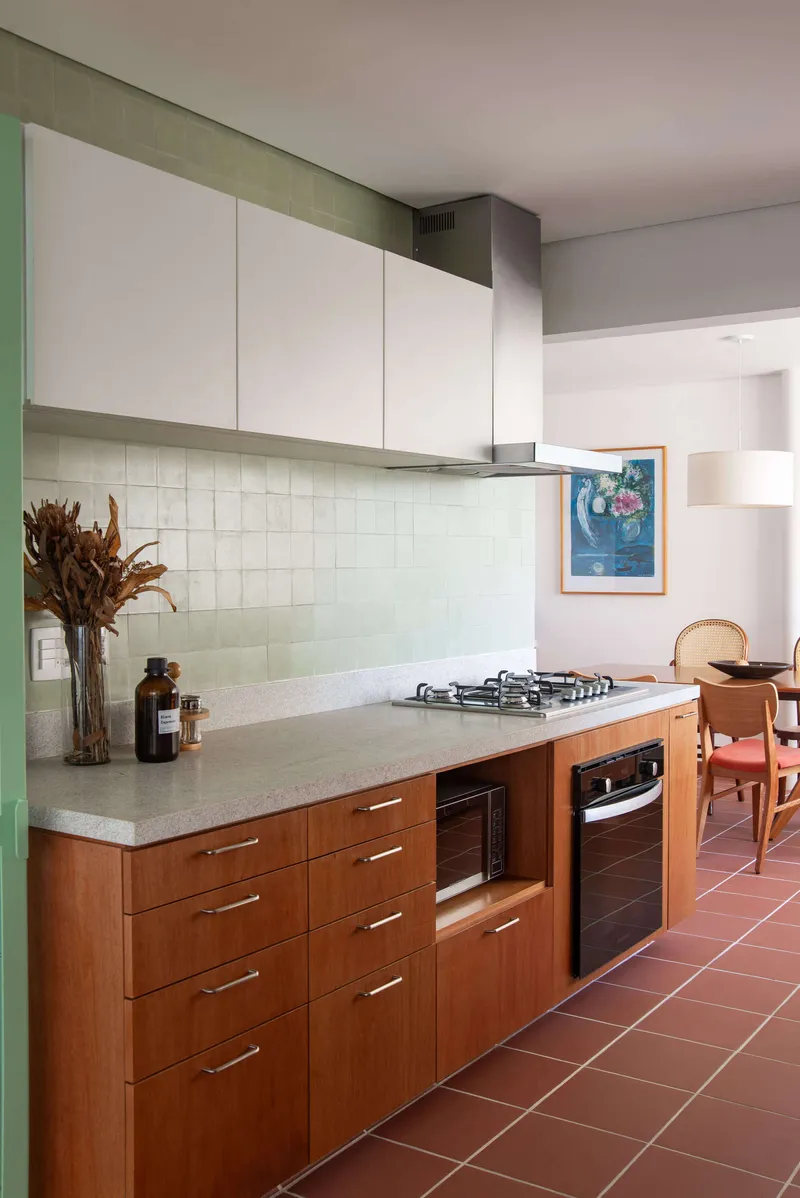
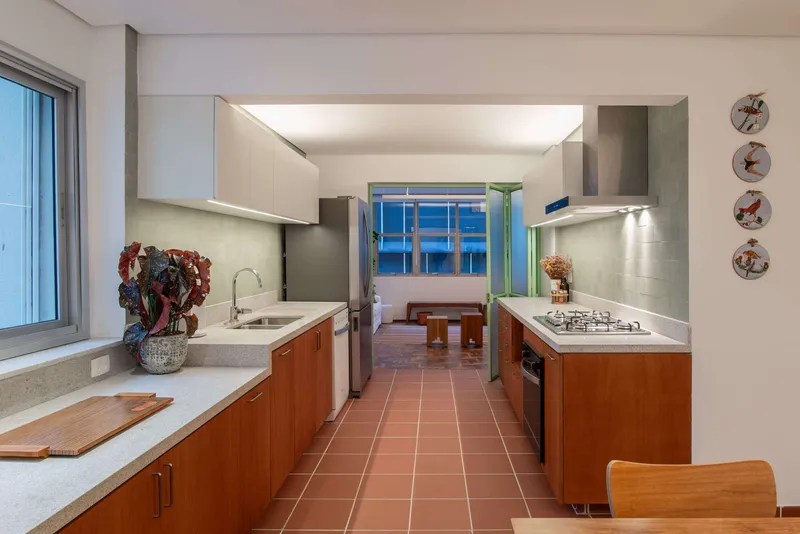
The galley kitchen is compact but carefully layered. Wood base cabinets sit below white upper storage, with a terrazzo countertop providing a durable, visually quiet work surface. The backsplash is tiled in the same pale green as the folding doors, threading the color accent through from the living room threshold into the kitchen interior. A blue louvered window at the far end pulls ventilation through the narrow space and adds yet another color note.
What is notable is the window cut into the wall between kitchen and living room, framed in the same green steel. Even when the folding doors are closed, this aperture maintains a visual connection between the two spaces. It functions like a pass-through but reads as a domestic porthole, a framing device that turns a glimpse of the living room into a composed view.
Living Room and the City Beyond
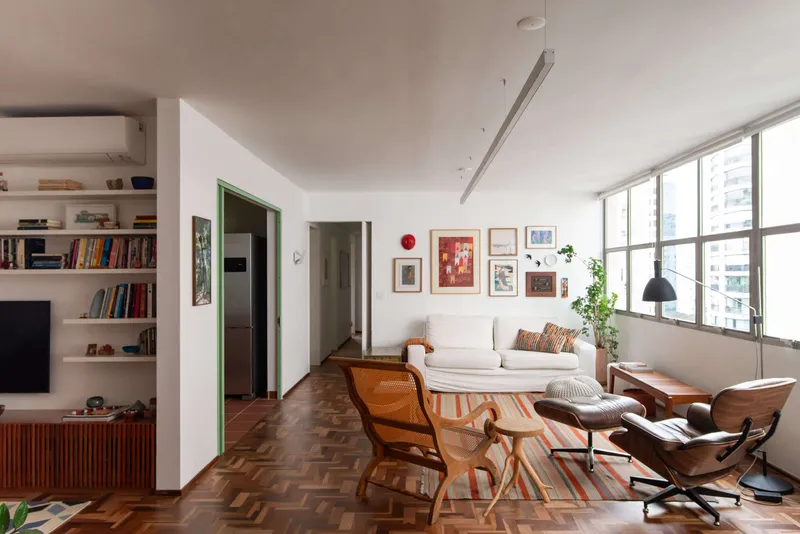
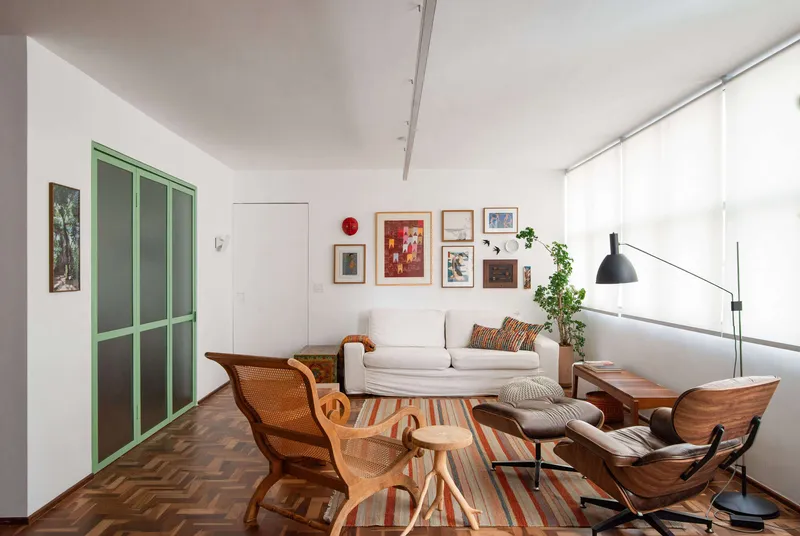
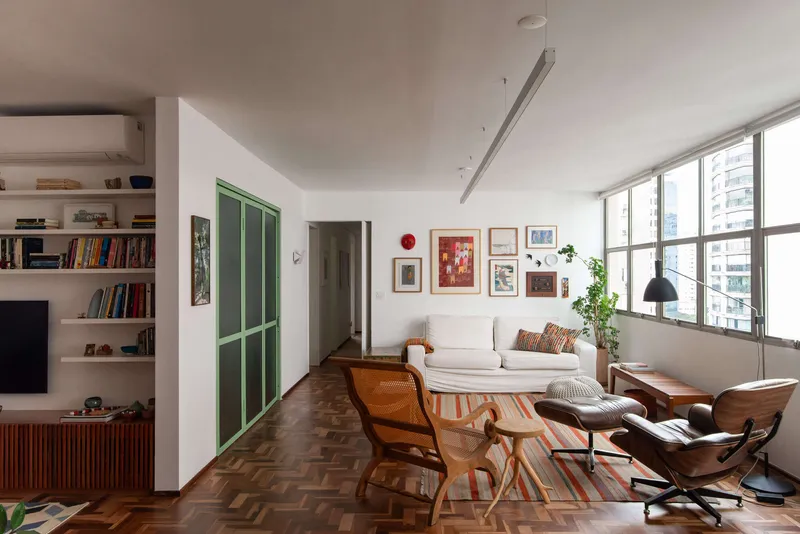
The living room is the most expansive space in the apartment, anchored by floor-to-ceiling windows that frame the São Paulo skyline. Built-in shelving along one wall provides storage without furniture clutter, while white roller shades filter the intense tropical light into a diffused glow. The herringbone floor, the green-framed sliding doors, and the long view out combine into a room that feels generous without being oversized.
The architects resisted the temptation to fill this room with bespoke furniture or bold gestures. The shelving is clean and rectilinear, the media wall is restrained, and the palette stays neutral enough for the view to dominate. In a city as visually intense as São Paulo, letting the window do the work is a confident choice.
Storage Walls and the Media Zone
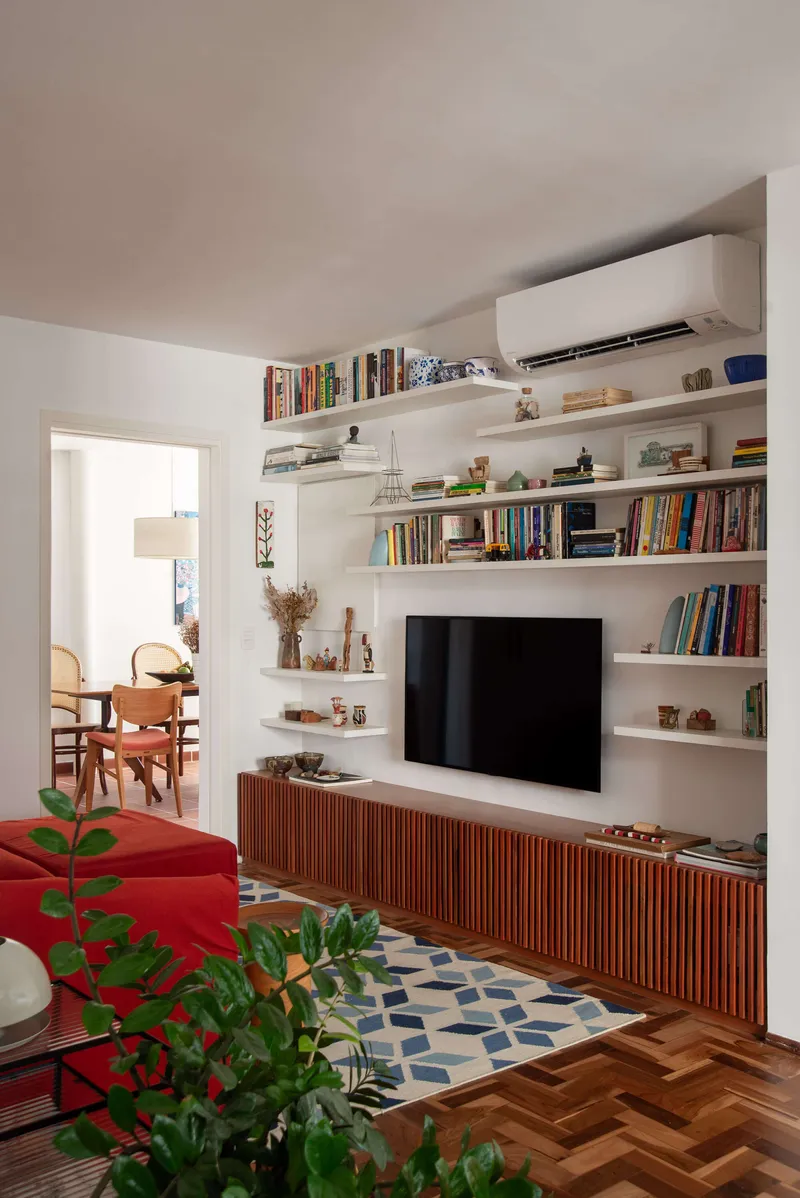
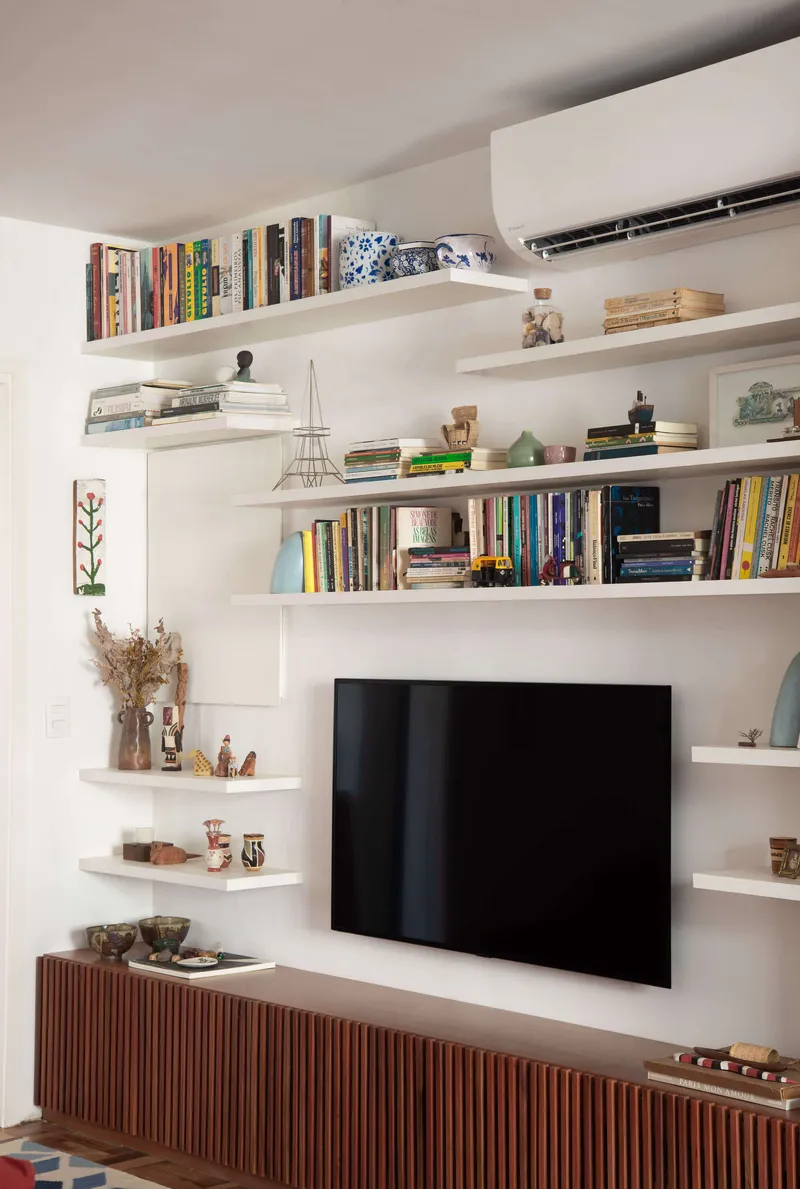
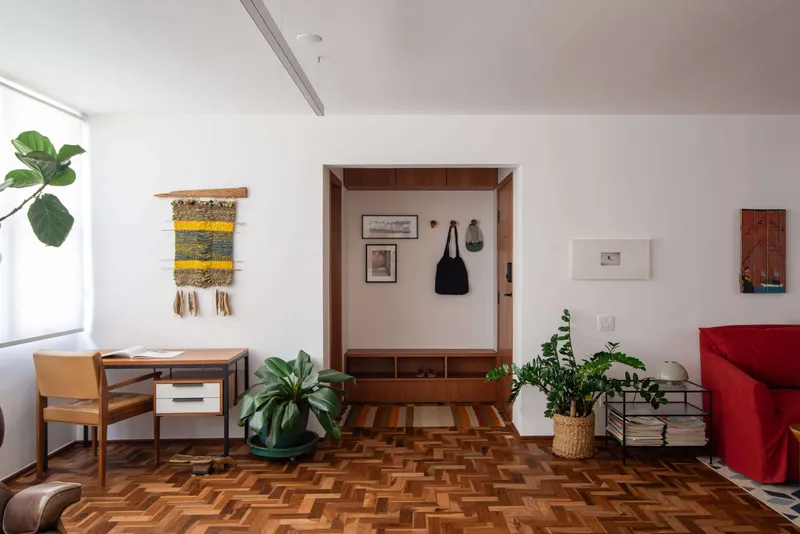
Custom joinery runs throughout the apartment, from the entry niche with its coat hooks and storage drawers to the living room media wall where floating white shelves sit above a slatted timber cabinet. The corner shelving unit wrapping around the television is a nice piece of spatial economy: it turns what could be a dead zone into a display surface for books and objects, giving the wall a sense of depth and personality.
The entry niche deserves special mention. Flanked by potted plants and finished in warm timber, it creates a moment of arrival that the original 1970s plan almost certainly lacked. It is a small insertion, but it signals immediately that this apartment has been thought through at the scale of daily habit.
Workspace and Bedroom
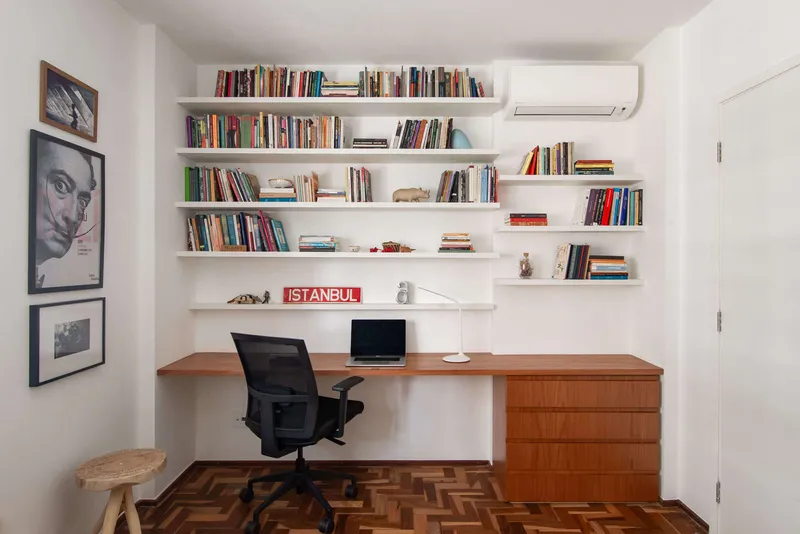
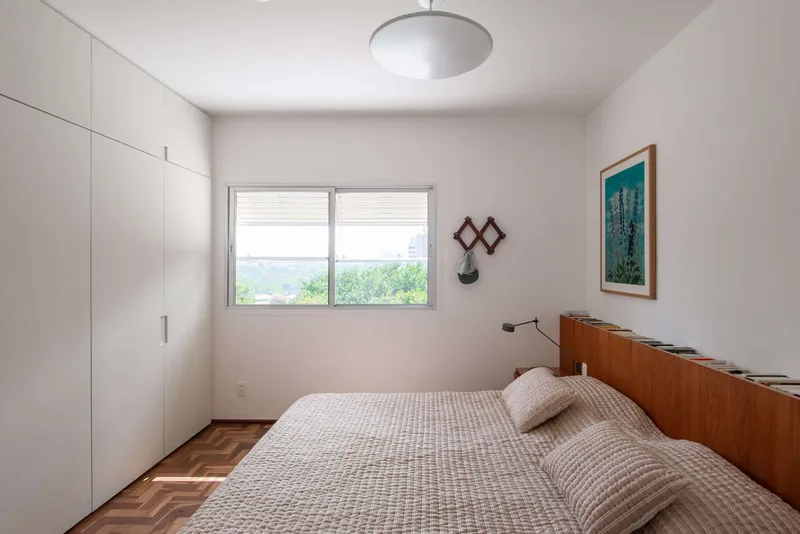
The home office occupies a room lined with a wall-length wood desk and white floating shelves, maintaining the same herringbone flooring and restrained palette as the living room. It is functional without being clinical, and the shelving provides enough open storage to keep reference material at hand without resorting to a full library wall.
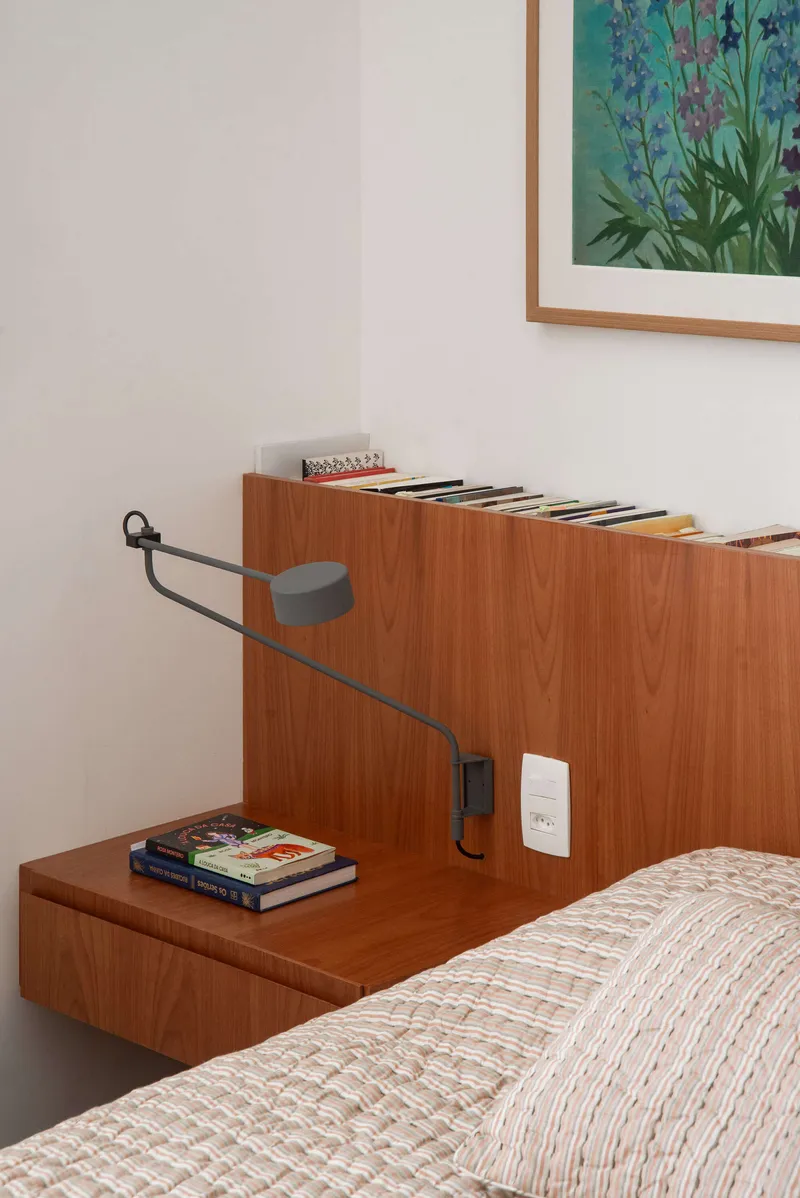
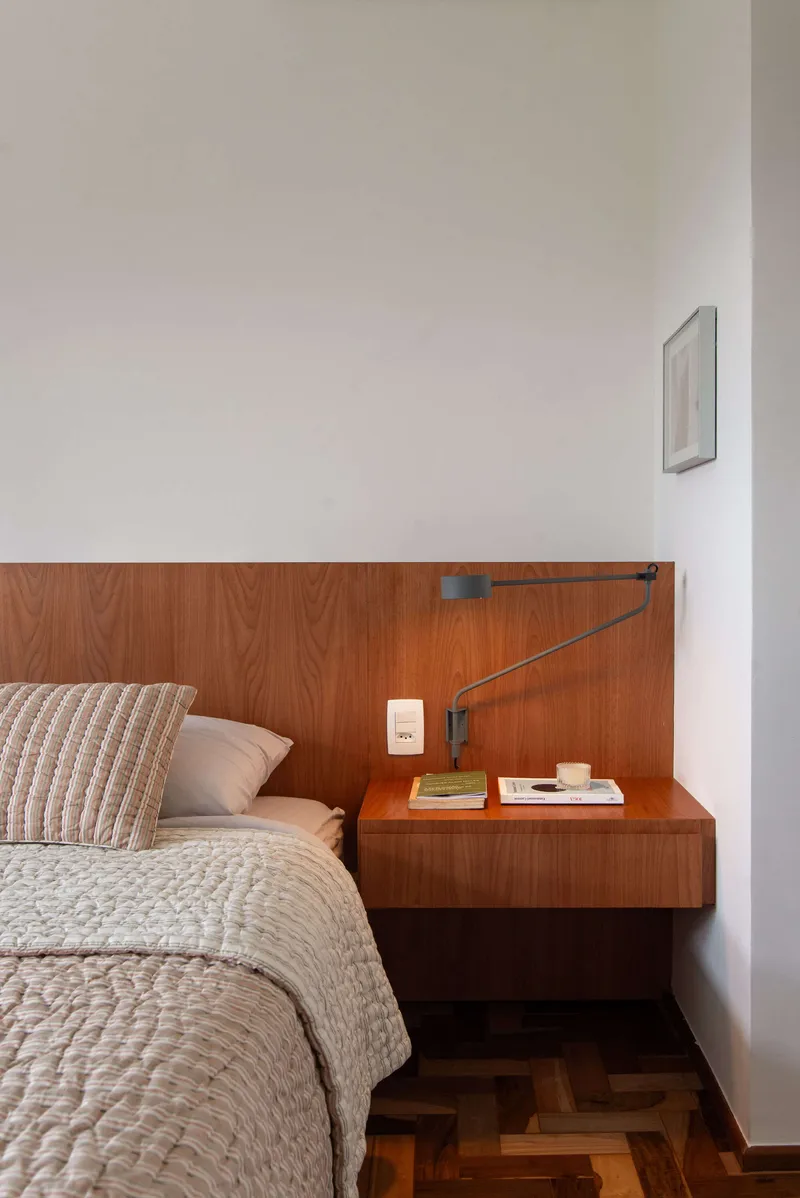
The bedroom follows the same logic of integration through joinery. A timber headboard wraps into an integrated nightstand, with an articulated reading lamp mounted directly to the wood panel. The sliding window frames greenery outside, and the whole room reads as a calm extension of the material language established in the public spaces. Nothing jars, nothing calls attention to itself, and that is precisely the point.
Dining and Kitchen at Dusk
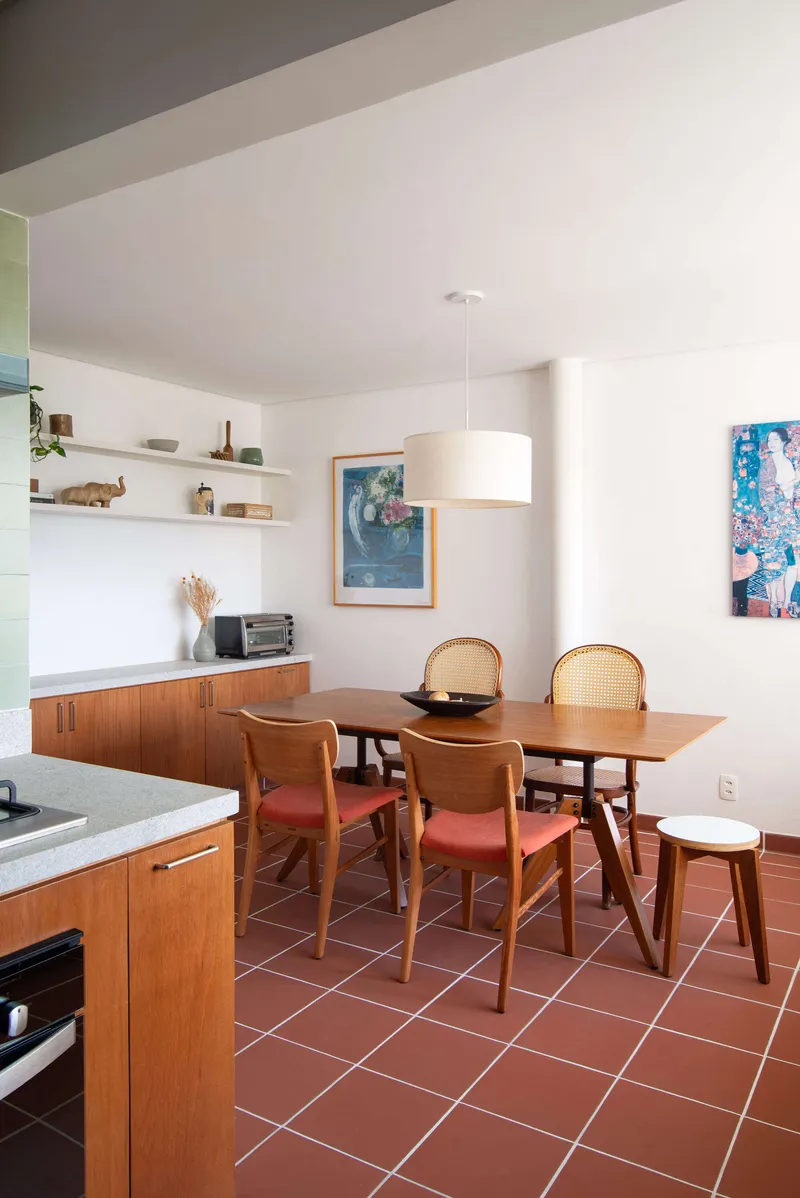
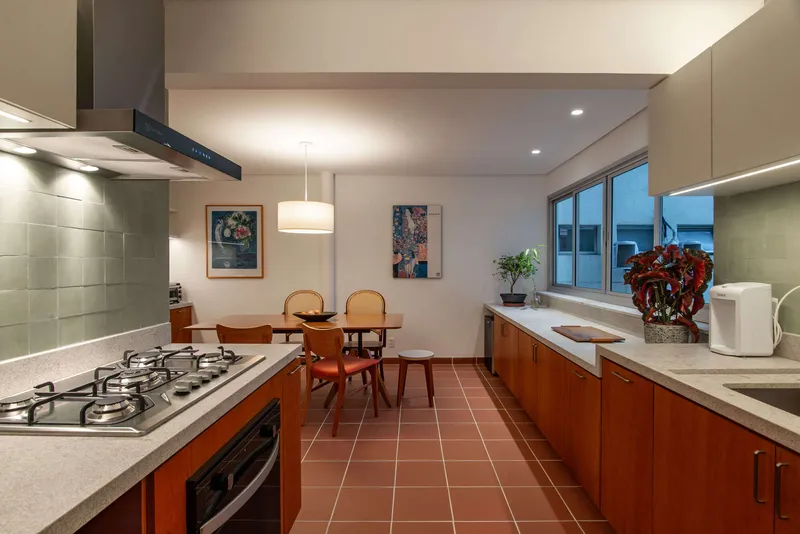
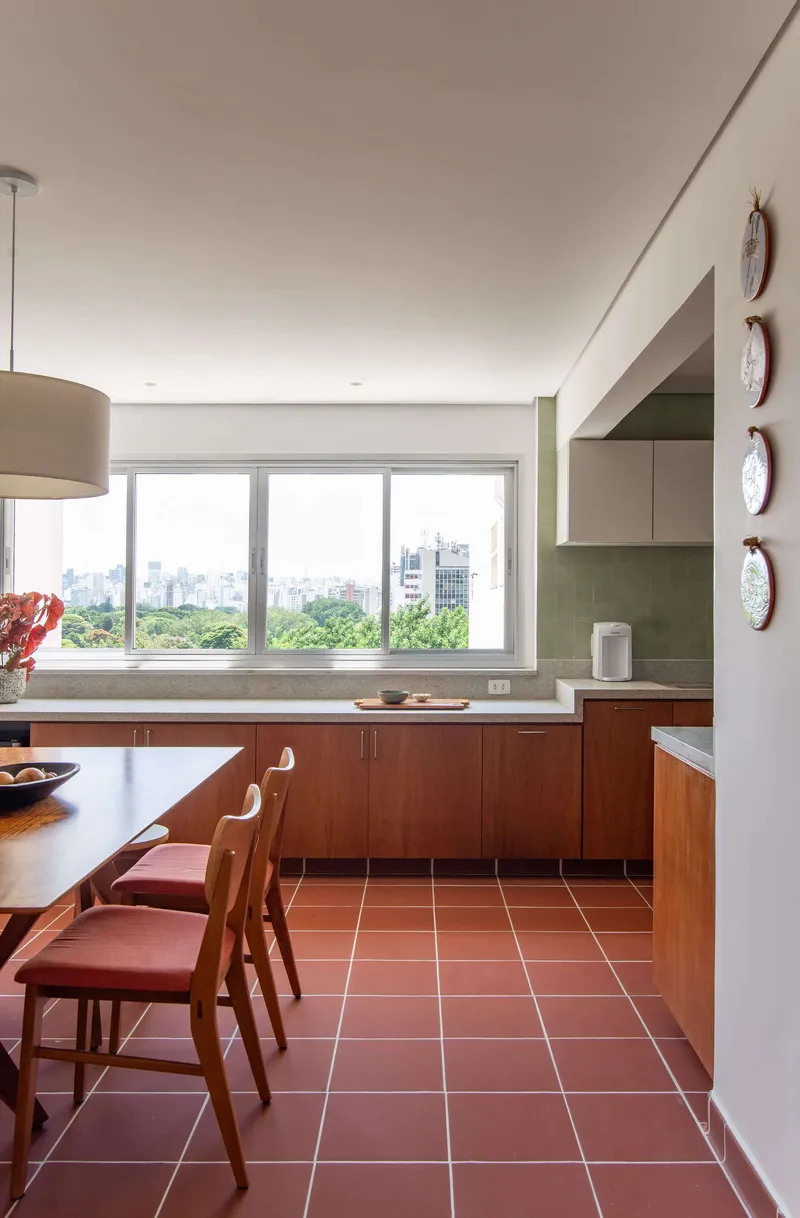
At dusk, the apartment shifts register. The terracotta tiles in the kitchen and dining zone take on a warmer hue under artificial light, and the timber cabinetry glows against the darkening sky visible through the wide kitchen window. The pendant light over the dining table pulls the seating area into focus while the kitchen recedes slightly into shadow. These are the moments that reveal how much the material and color choices were calibrated for changing light conditions, not just for photographs.
Plans and Drawings
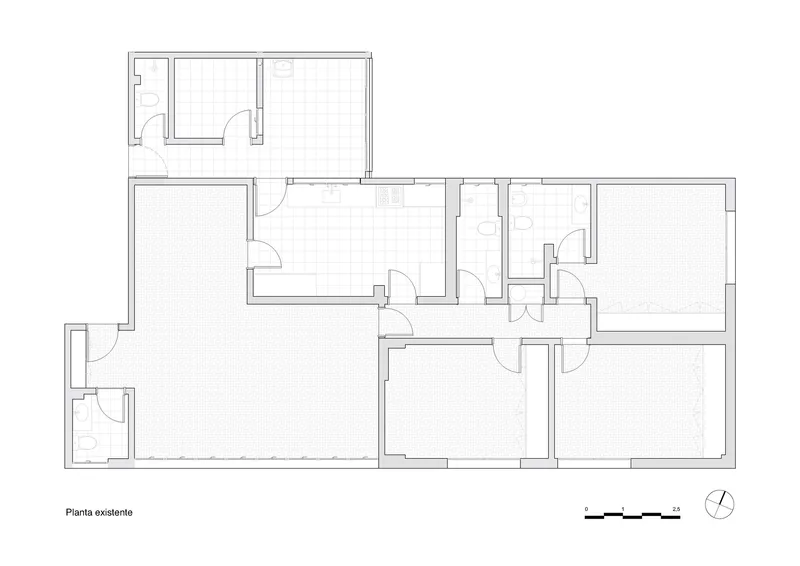
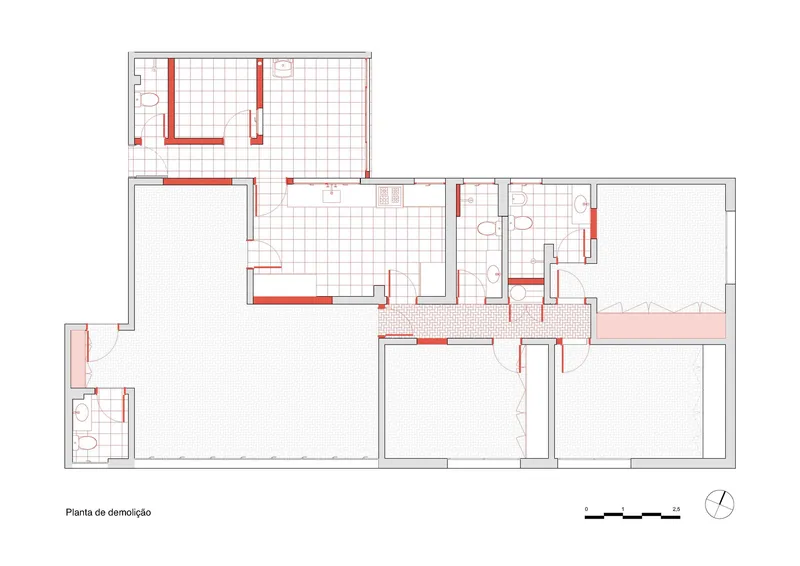
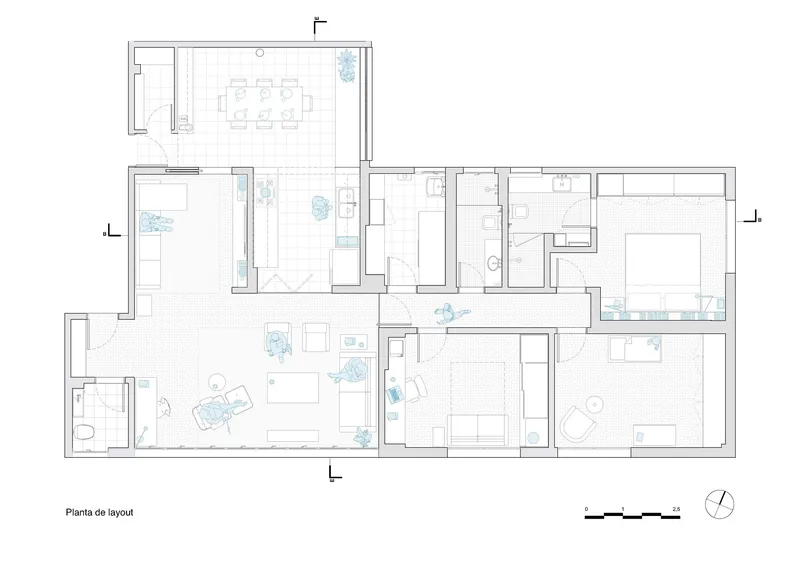
The existing floor plan reveals the apartment's original condition: a network of compartmentalized rooms connected by narrow corridors, typical of 1970s Brazilian residential construction. The demolition plan, with its red-highlighted walls, shows the extent of the surgical removals that opened the living, dining, and kitchen zones into a continuous sequence. The new floor plan demonstrates the L-shaped arrangement that emerged, with bedrooms and the home office tucked into the quieter wing while social spaces flow toward the window wall.
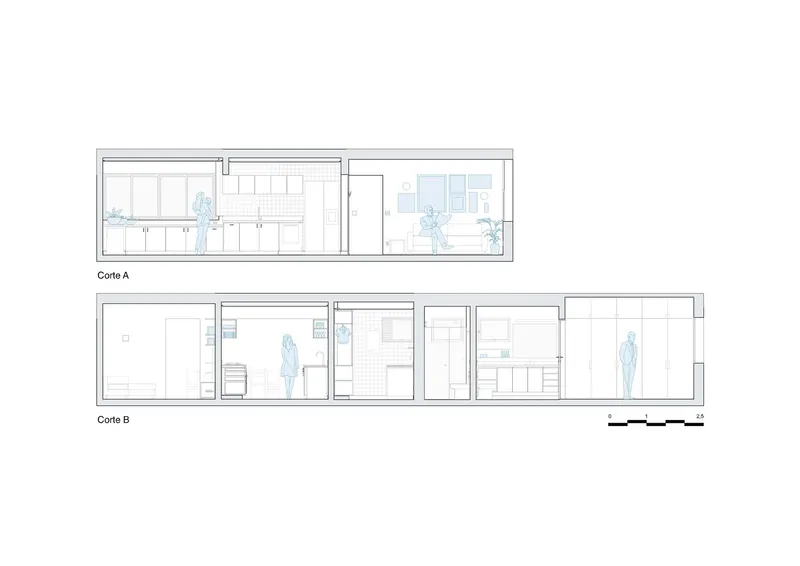
The section drawings are particularly revealing. They show how the kitchen cabinetry, storage walls, and room partitions relate to each other in height, and how the architects used the full floor-to-ceiling dimension for storage while keeping the occupied zones at a comfortable human scale. The inclusion of human figures makes these sections immediately legible and gives a clear sense of proportion.
Why This Project Matters
The André Fernandes Apartment is a useful corrective to the open-plan orthodoxy that dominates contemporary residential renovation. Instead of treating every wall as an obstacle to be demolished, Marujo and Naj understood that some boundaries are worth preserving, or worth reinventing. The folding doors, the floor transitions, and the interior windows all create a plan that can be open or partitioned depending on what the day requires. That kind of adaptability is harder to design than a single open room, and it ages better.
The project also demonstrates how a limited palette of materials and colors, applied with precision, can transform a dated apartment without erasing its character. The terracotta, the herringbone parquet, and the pale green accents feel rooted in São Paulo's material culture rather than imported from a design trend. At 140 square meters, there is no room for excess. Every decision has to earn its place, and here, every decision does.
André Fernandes Apartment by João Marujo + Orlando Naj. São Paulo, Brazil. 140 m². Completed 2024. Photography by Lela Leme.
About the Studio
João Marujo
Instagram of São Paulo-based designer João Marujo, co-author of the project.
instagram.comOrlando Naj
Instagram of São Paulo-based designer Orlando Naj, co-author of the project.
instagram.comShare Your Own Work on uni.xyz
If projects like this are the kind of work you want to make, uni.xyz is a place to publish your own, find collaborators, and enter design competitions.




Popular Articles
Popular articles from the community


The Musturak Paradise: Senior Living Architecture for a Connected Future in Temara, Morocco
The Musturak Paradise reimagines senior living architecture in Temara via private homes, social spaces, culture, community, and shared care.

Co-life: Sustainable Architecture for Age-Friendly Community Living
Co-life reimagines sustainable architecture for seniors through courtyards, rammed earth, shared gardens, and spaces designed for belonging.

Lunar Spiral: Space Architecture Shaped by the Mathematics of the Universe
Lunar Spiral reimagines space architecture through Fibonacci geometry, lunar regolith, levitating habitats, and self-sustaining Moon living.

Play: Fragments of Their World
Familiar architecture becomes modular playground design, creating safe spaces where displaced children can learn, connect, imagine and play.


Similar Reads
You might also enjoy these articles

Bao Huynh Watercolor Atelier: A Serene Art Retreat in Hội An
Bao Huynh Watercolor Atelier in Hội An blends multifunctional art spaces, sustainable design, local materials, and family-friendly living in a serene environment.

Atelier Macri Concept Store Interior Design by CASE-REAL
Atelier Macri store features a "ko" counter, walnut wood details, cork displays, blending retail, gallery, and seamless customer experiences.

Manuel Vargas Izquierdo Stadium and High-Performance Sports Center: Architectural Excellence in Jalpa de Méndez
The Manuel Vargas Izquierdo Stadium blends sustainable design, inclusive sports facilities, and cultural-inspired architecture, revitalizing Jalpa de Méndez’s public spaces.

KAKR Buluh Awar Hall: Revitalizing Community and Ecology Through Bamboo Architecture
Community built bamboo hall revitalizes Buluh Awar village, empowering youth, restoring ecology, celebrating vernacular craftsmanship through sustainable architecture and culture.

Explore Architecture Competitions
Discover active competitions in this discipline



Challenge to reimagine the Iron Throne


Photograph architecture without architects


Illustrate the lost glory of Angkor Wat - Render Challenge


Design challenge to reuse E-waste
Comments (0)
Please login or sign up to add comments
No comments yet. Be the first to comment!