

Andrea Eusebi Carves a Contemporary Interior from an Ancient Stone Shell in Abruzzo
In the village of Ofena, a 160-square-meter renovation preserves rough stone walls while inserting warm timber and plaster rooms within.


From the outside, this house in Ofena could be any other stone volume lining the foothills of Abruzzo's mountains. Its walls are thick, its arched doorway is unchanged, and its massing reads as a monolith against the scrub-covered slopes behind it. That continuity with the village fabric is deliberate. Andrea Eusebi approached the 160-square-meter dwelling with a four-part strategy of preservation, activation, demolition, and integration, keeping the exterior almost untouched while entirely reimagining the life inside.
What makes the Mountain Foothill Home worth studying is not the contrast between old and new in itself, which is practically a genre at this point, but the precision with which Eusebi stages that contrast as a temporal experience. You walk through a medieval stone threshold and within a few steps find yourself in rooms defined by vertical-grain timber, smooth plaster, and carefully placed skylights. The pitched roof was demolished to create a flatter, more monolithic silhouette, and existing window openings were widened to pull the valley and the sun into the rooms. The result is a house that belongs to two centuries at once, without apology or pastiche.
Stone Skin, Unchanged
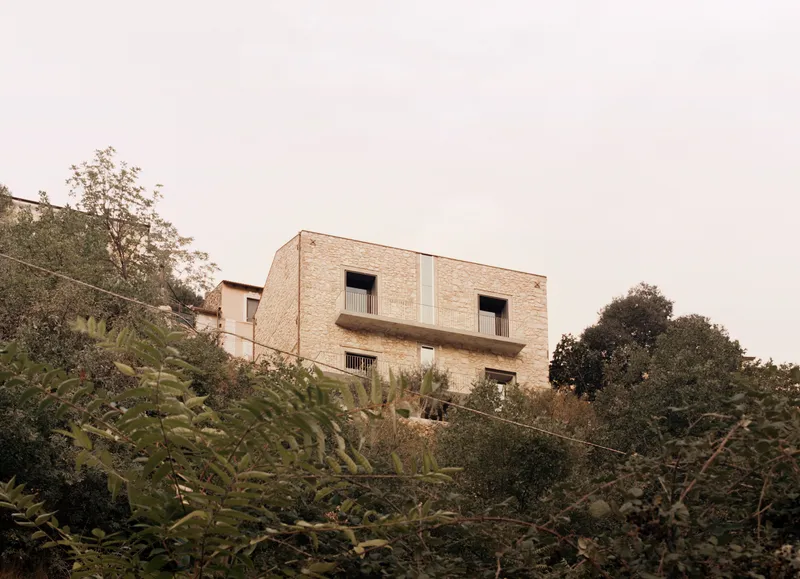
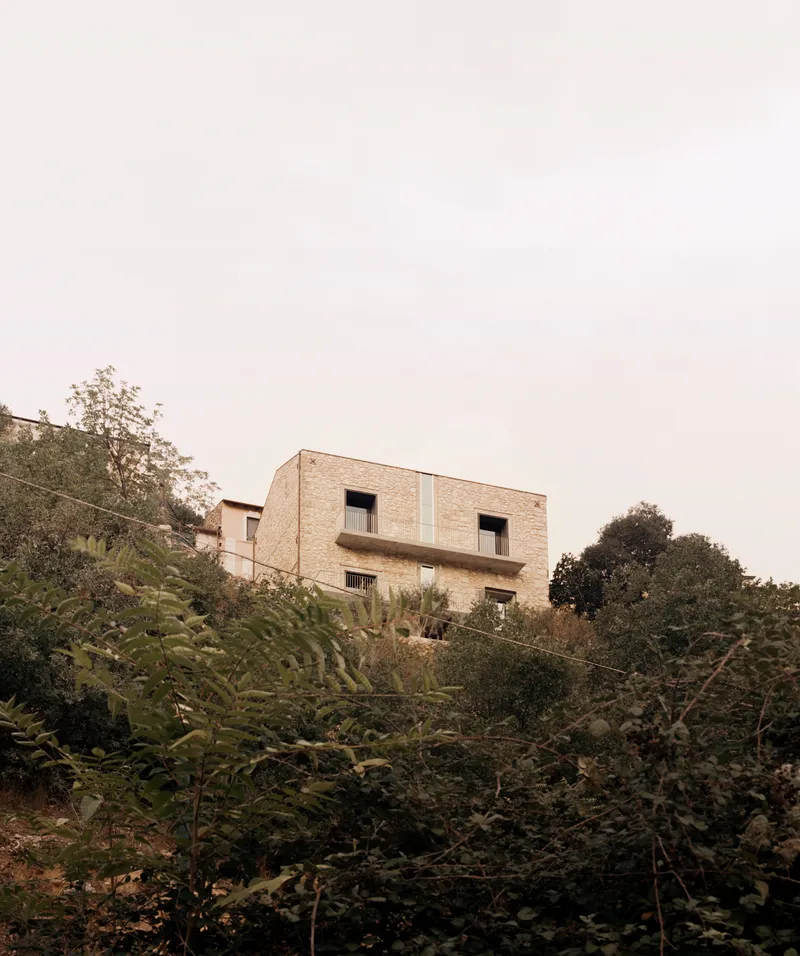
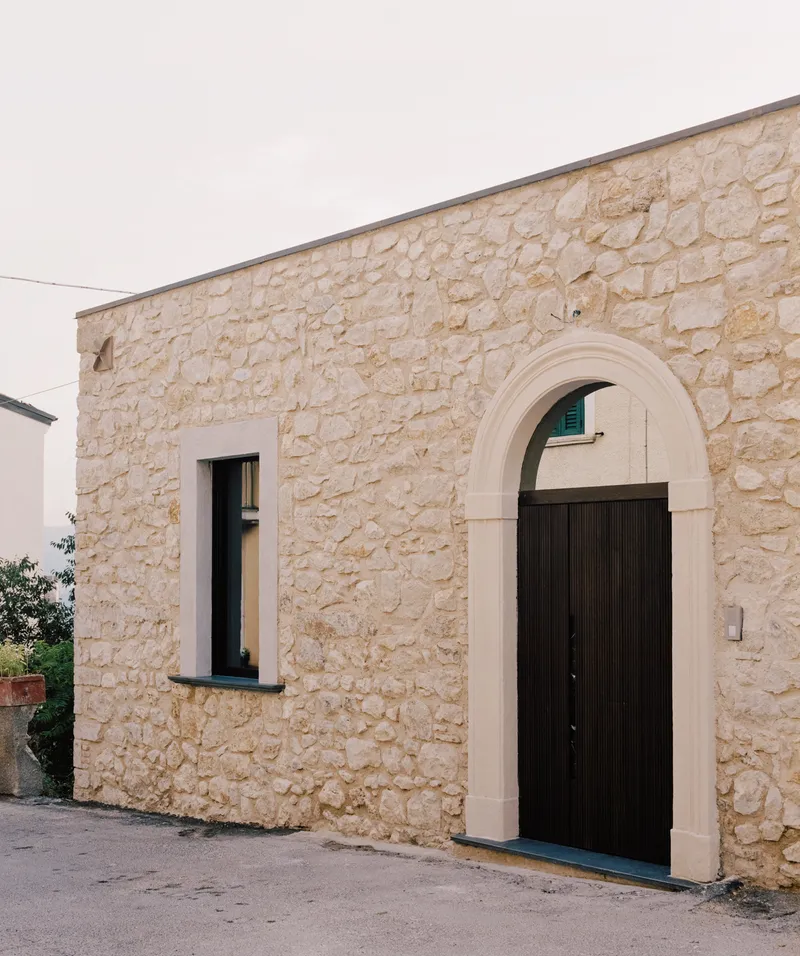
The exterior walls are the project's anchor. Built from stacked stone characteristic of the Abruzzo region, they carry the full structural load and define the building's relationship with the hillside. Eusebi preserved these surfaces almost in their entirety, understanding that their rough texture and irregular coursing are not cosmetic features but evidence of a construction logic tied to the local terrain. The arched doorway on the lower facade, fitted with a dark metal door, is the most visible sign that someone has been here recently.
Seen from the slope, the volume rises simply, its mass punctuated by recessed openings that now read as cleanly cut voids rather than the smaller, shuttered windows of a typical Abruzzo home. The widening of these apertures was one of Eusebi's key moves: it let light and views enter without compromising the stone wall's structural integrity or visual weight.
The Landscape Threshold
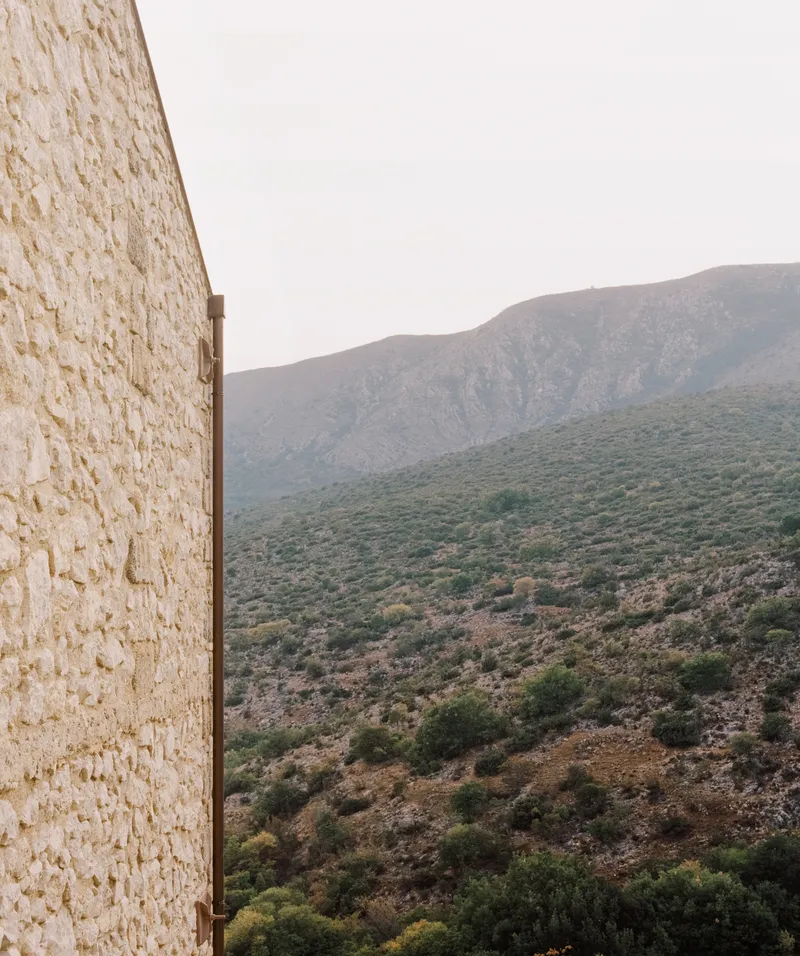
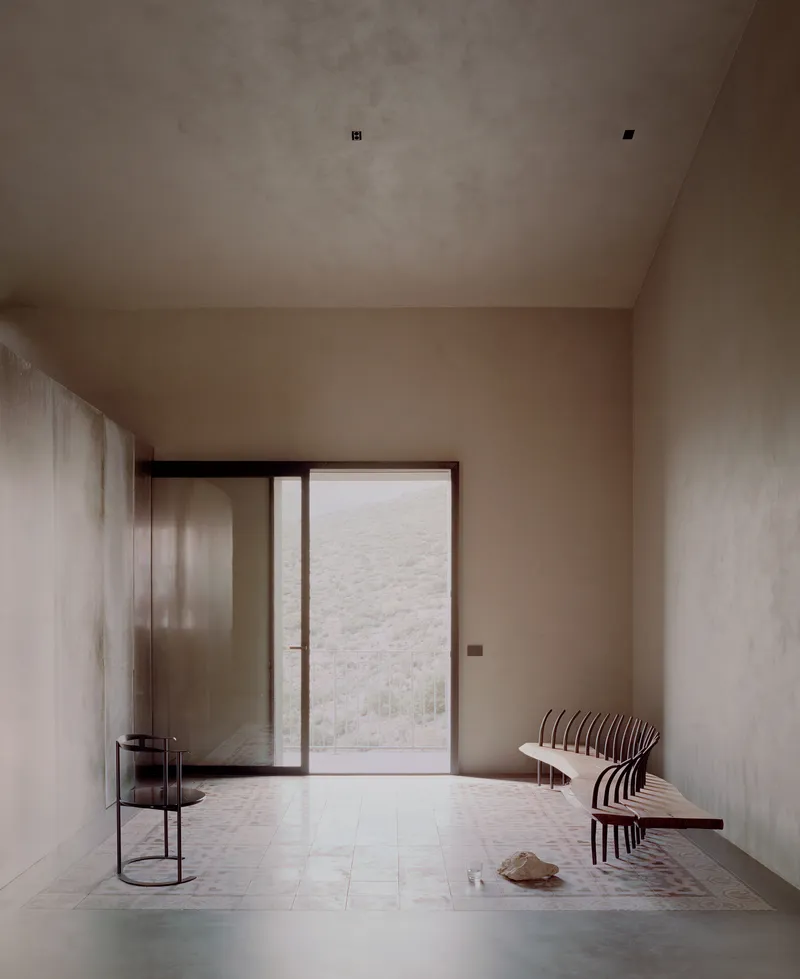
At the lower ground level, a metal slab frames an opening toward the valley and the garden. A glazed door behind it looks onto a planted courtyard where a slatted bench and a steel plant stand signal the transition from exterior to interior. The courtyard acts as a decompression chamber: you leave the landscape but haven't yet entered the domestic world. It is a detail that registers physically, slowing you down before the timber and plaster rooms absorb you.
Timber as Organizing Element
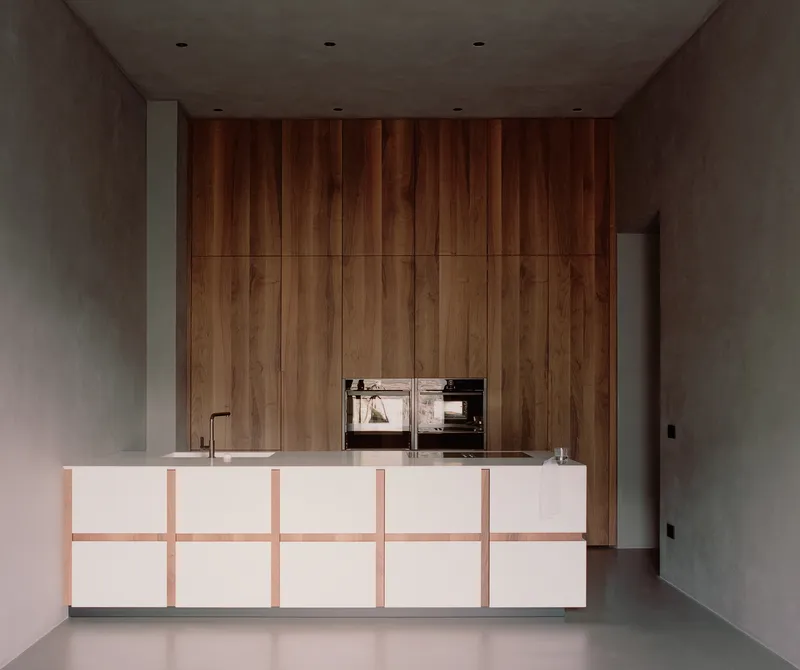
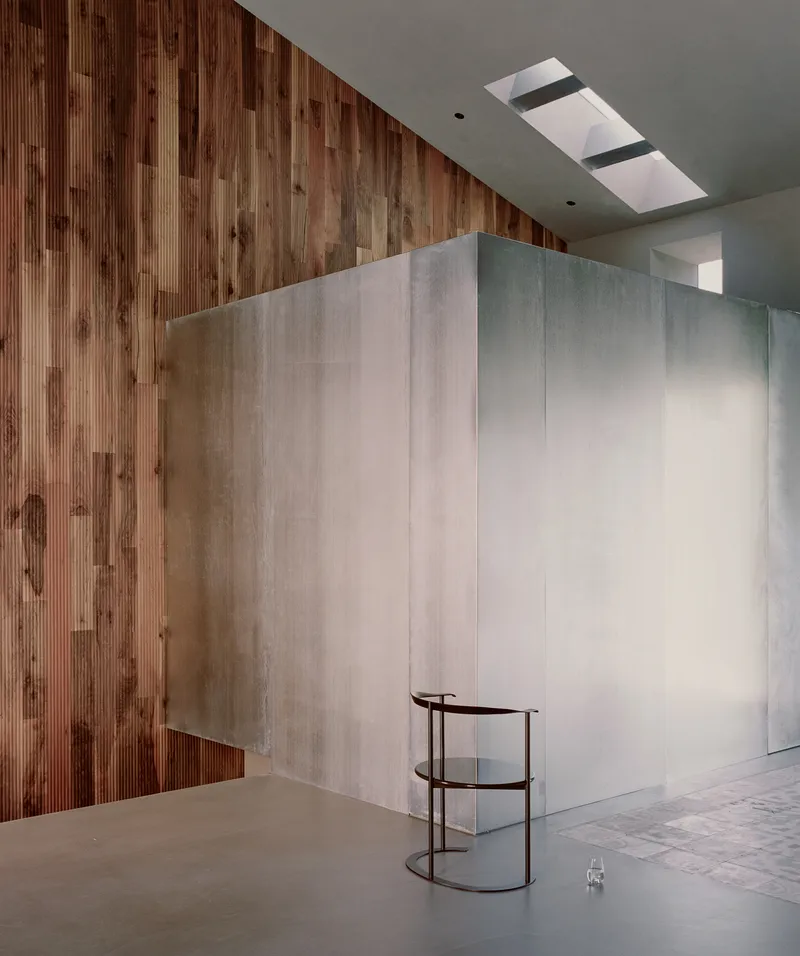
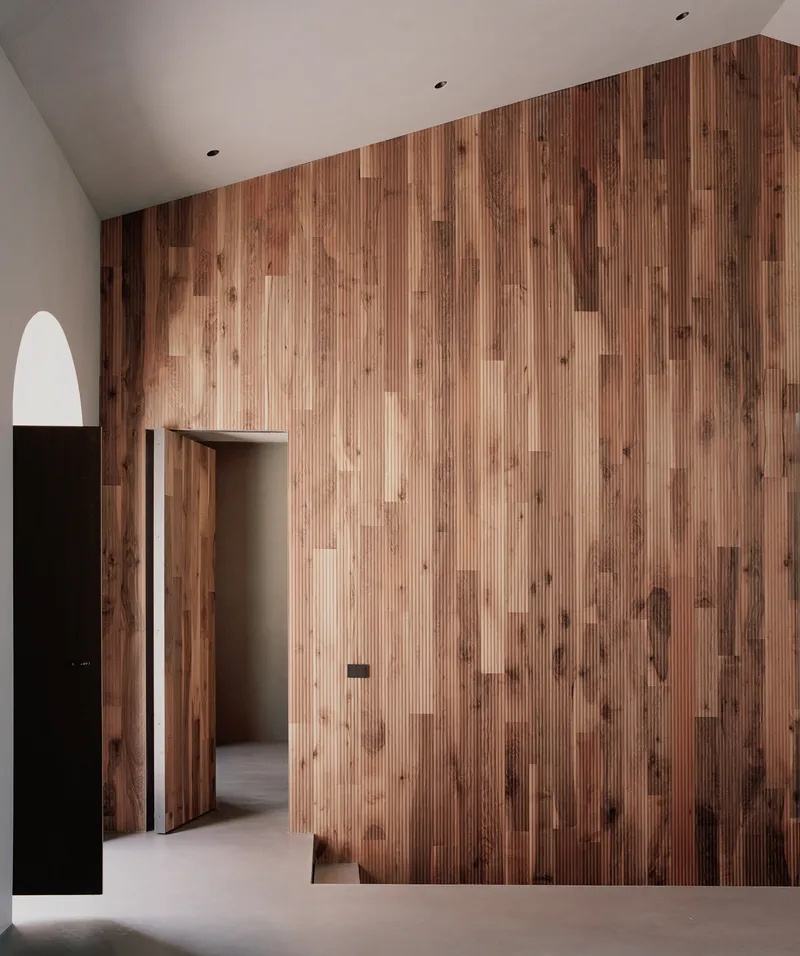
Inside, solid wood does most of the spatial work. A full-height cabinet wall anchors the kitchen, its vertical grain echoing a freestanding volume clad in pale panels that sits beside it under a skylight. These timber elements function simultaneously as storage, partition, and surface treatment, collapsing several roles into a single material palette. The furniture, produced by Eusebi Arredamenti, has a built-in quality that blurs the line between joinery and architecture.
An arched passage framed by timber-edged walls connects rooms in sequence, turning circulation into a series of framed views. The arch is not nostalgic here; it references the stone arches of the original structure and reinterprets them as openings within a warm, contemporary shell.
Plaster, Light, and the Vertical Section
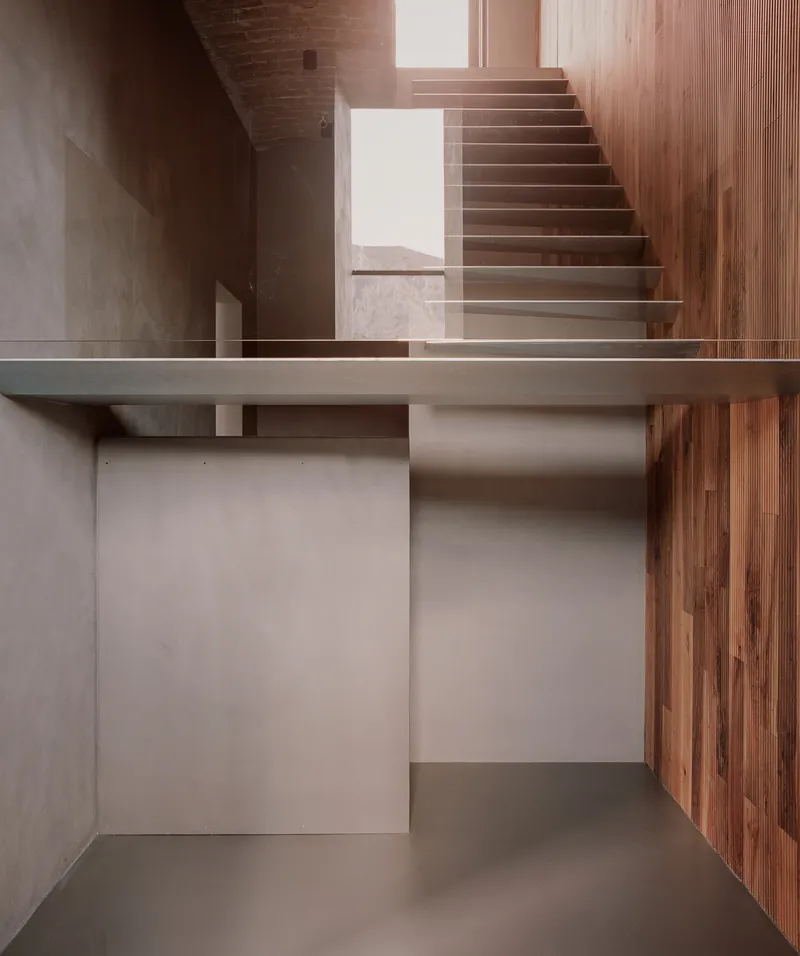
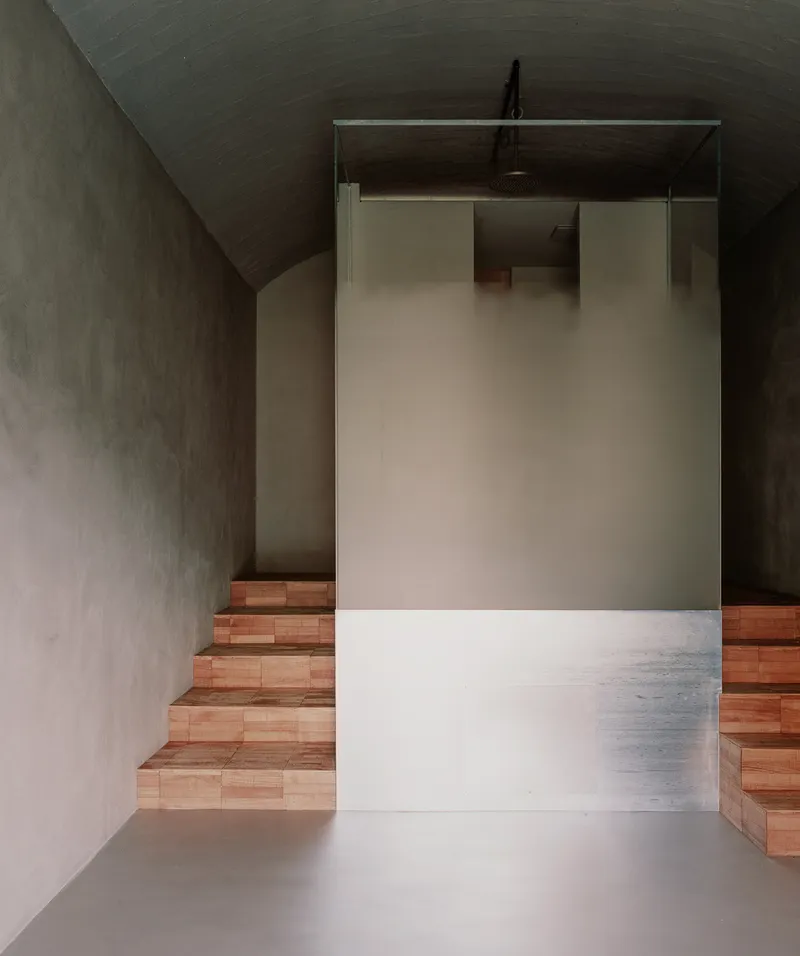
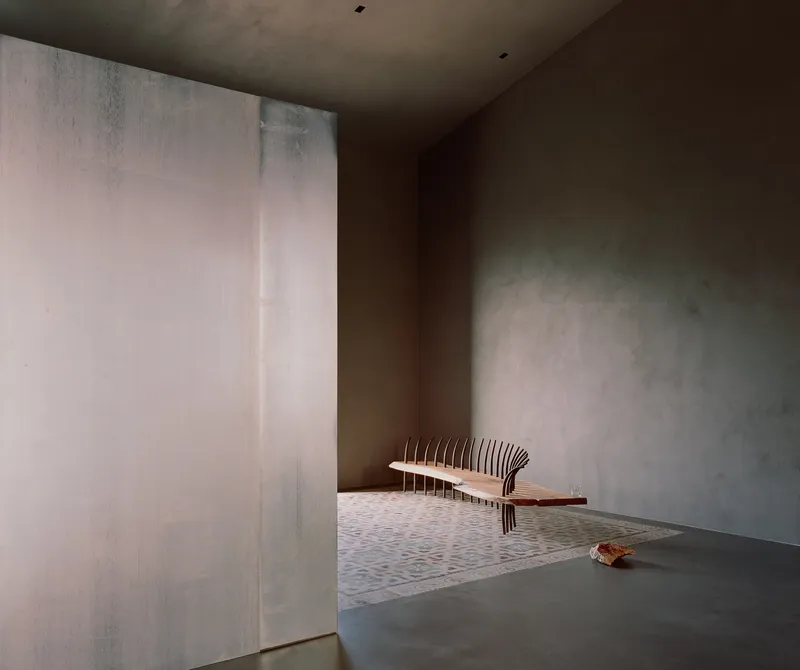
The double-height space at the core of the house is where Eusebi's section strategy becomes legible. A timber staircase rises beside a mezzanine landing, its treads and risers reading as a piece of furniture inserted into rendered plaster walls that still carry the trowel marks of their application. Overhead, soft light filters through the reconfigured roof structure, landing on surfaces that shift from rough to smooth as you move vertically.
The vaulted ceiling above the stair is one of the project's quieter achievements. It captures and distributes daylight downward without any visible fixture, giving the circulation core an almost sacral quality. This is light used structurally, not decoratively, to orient you within the section and draw your eye upward through the house.
Rooms in Sequence
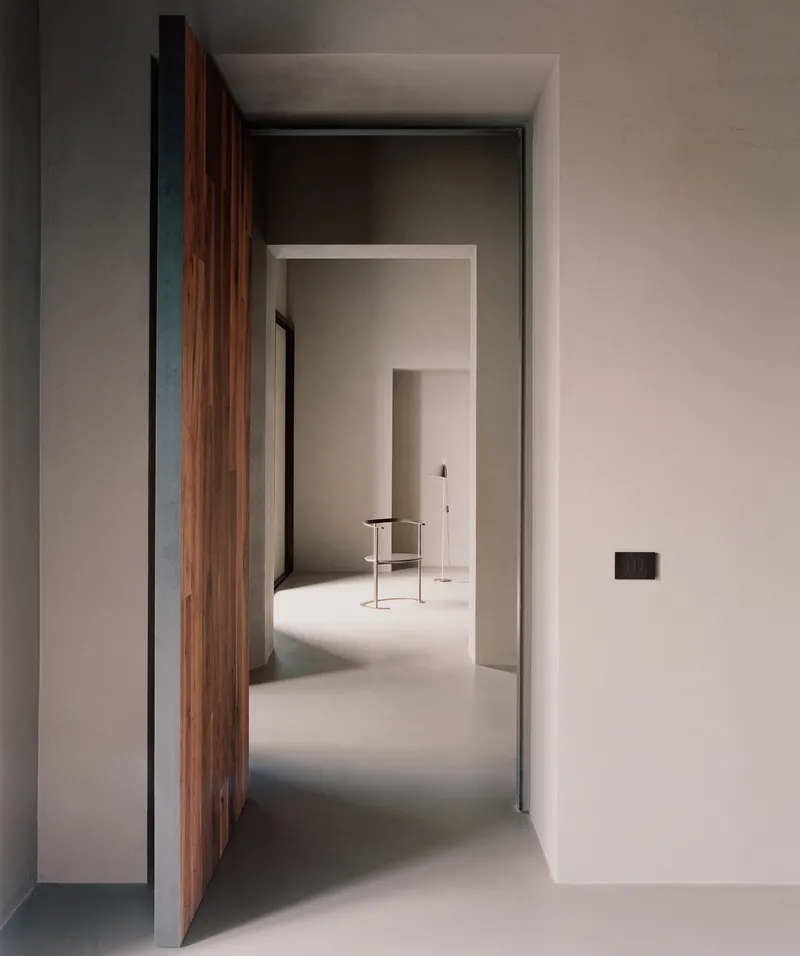
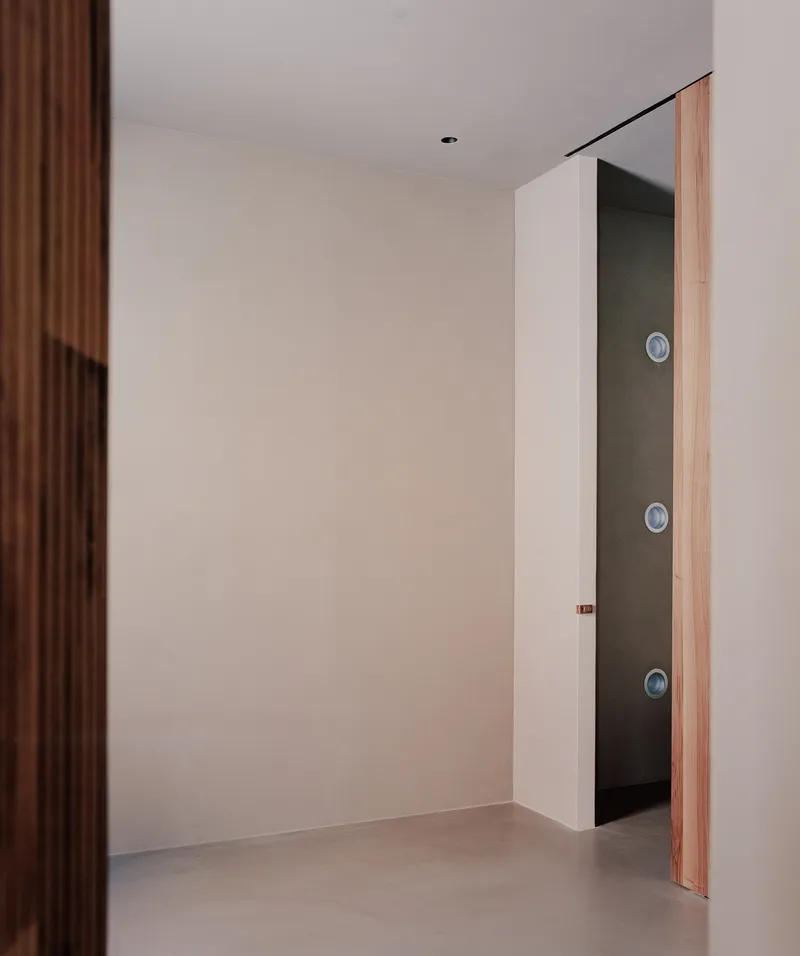
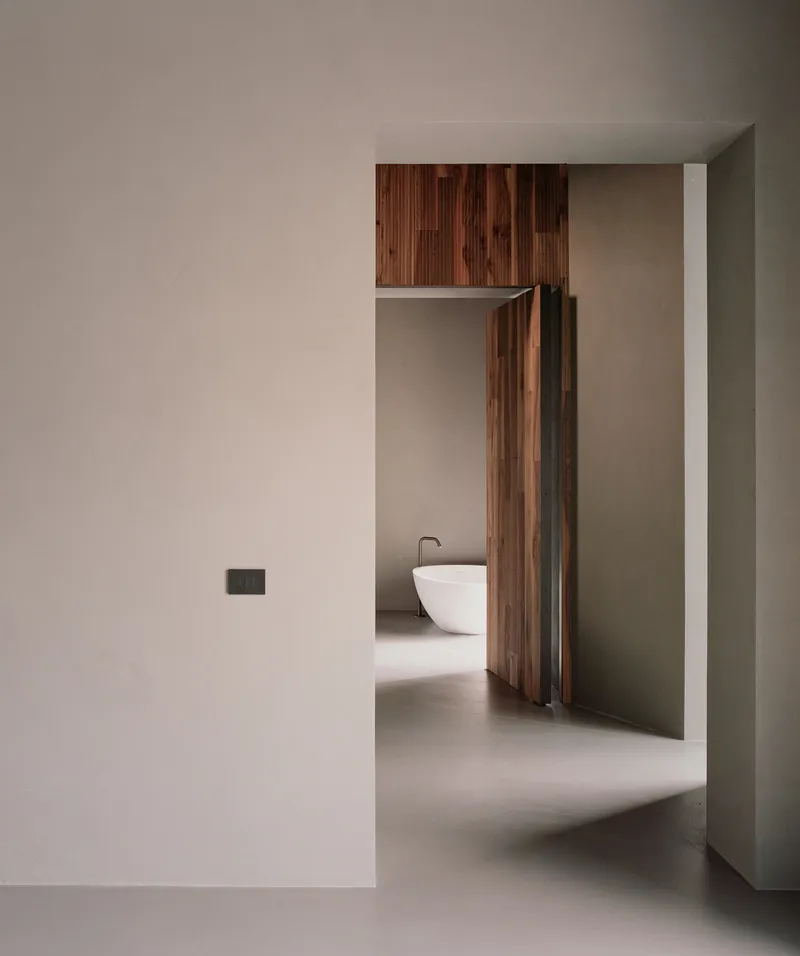
Eusebi organizes the interior as a series of enfilades. Open a timber door and you see through two or three rooms at once, each one rendered in pale plaster with a polished floor that reflects the light coming from widened windows. A corridor lined with three circular wall fixtures becomes a kind of gallery, compressed and dark, that makes the bright room at the end feel even more open by contrast.
The bathroom, visible through an open doorway, contains a freestanding white tub framed by timber cabinetry. Elsewhere, a stone vessel sink sits on a grey counter under an arched recess. These moments feel deliberate rather than decorated. Each object has been placed to hold its own in a room that offers nothing superfluous.
Material Joints
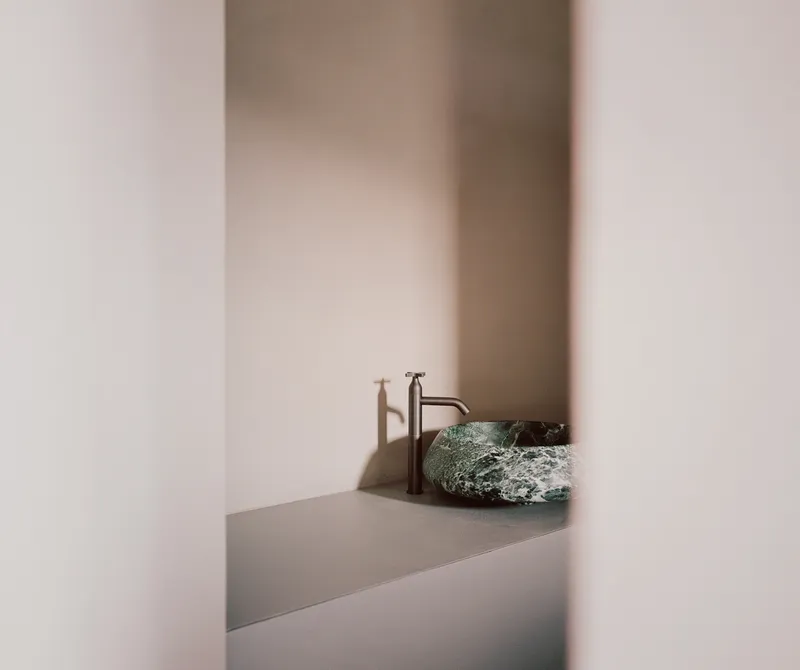
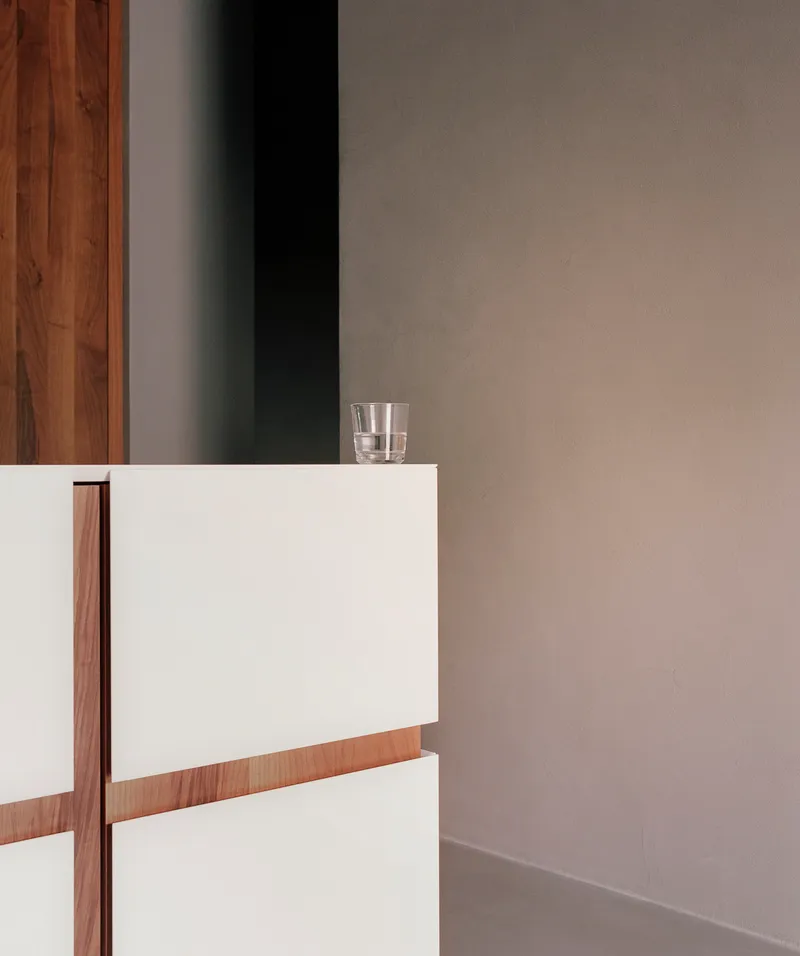
The detail shots reveal how carefully the three primary materials, stone, timber, and plaster, meet one another. A brass faucet above the stone sink introduces metal as a fourth voice, restrained and precise. At the stair, a white and timber balustrade terminates in a clean edge that is thick enough to hold a glass of water. These are not details for the sake of details; they are the places where the project's logic of old and new is tested at the closest scale.
Plans and Drawings
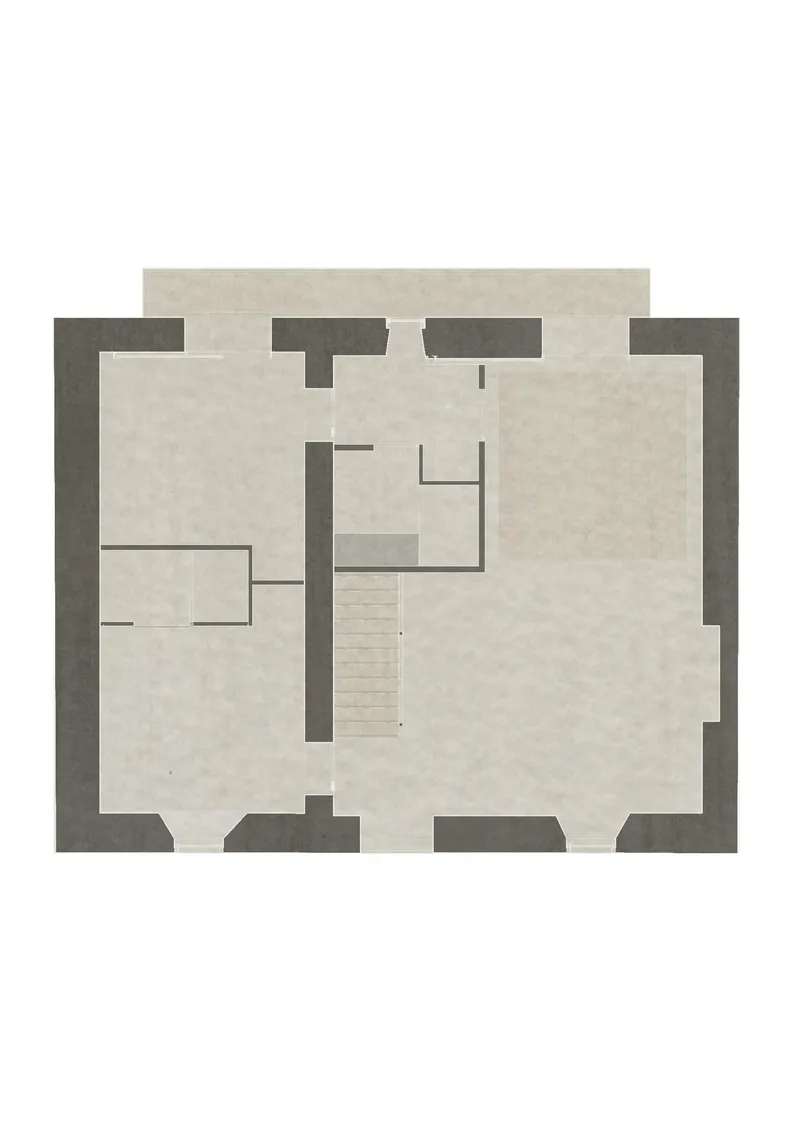
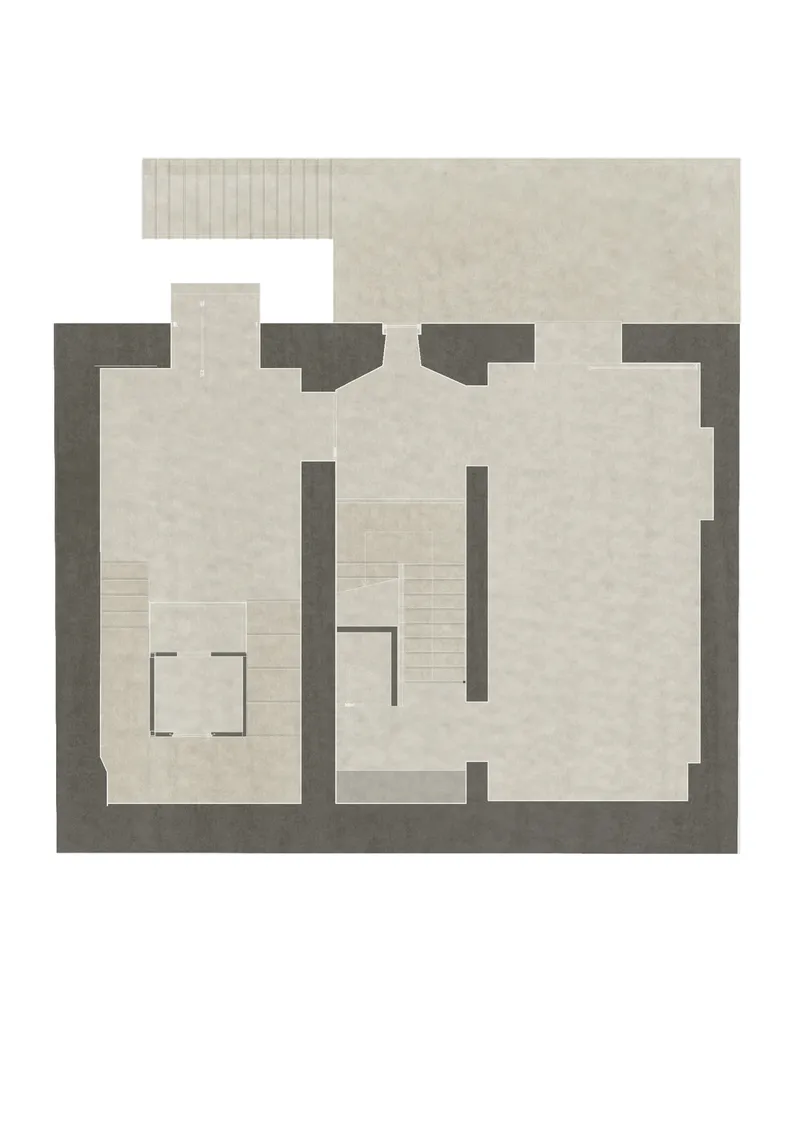
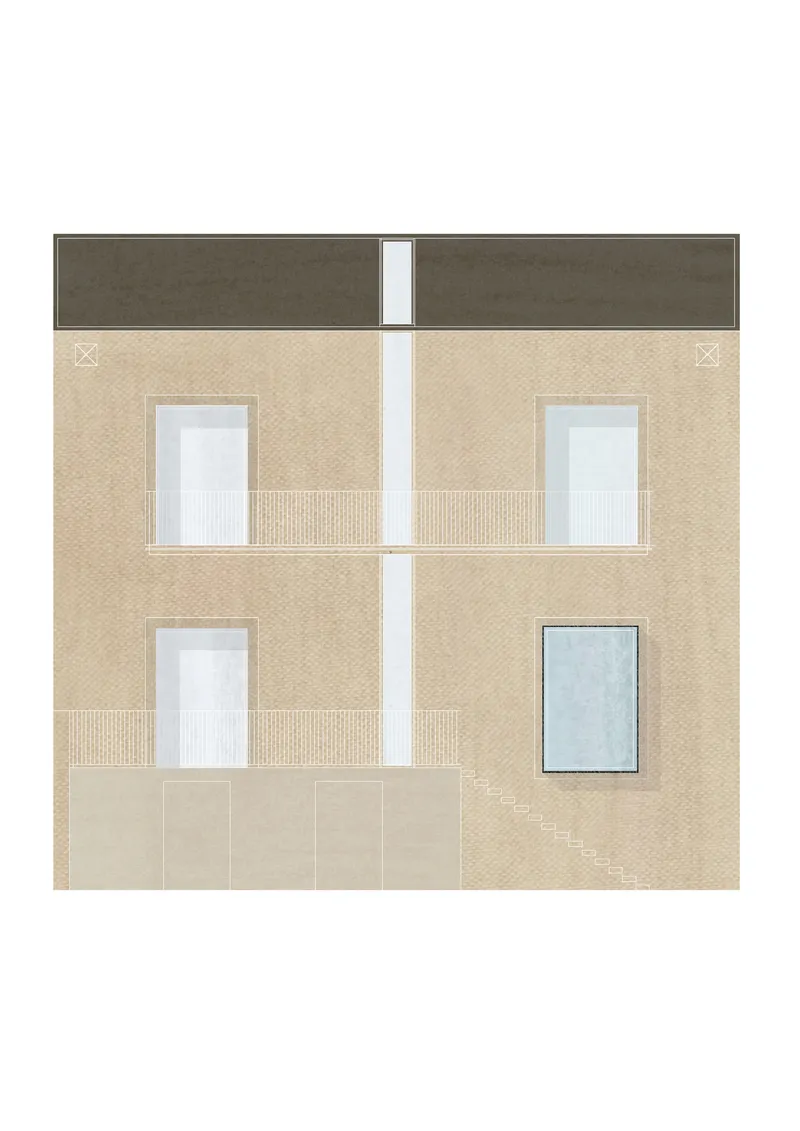
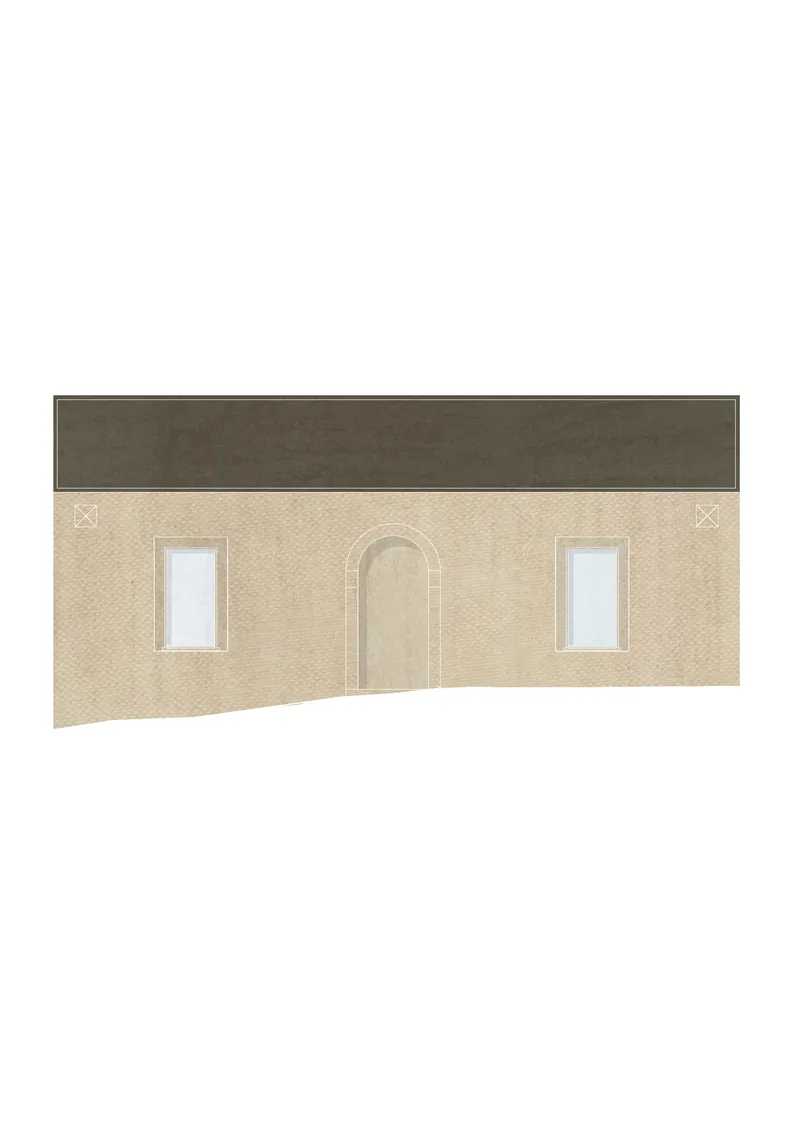
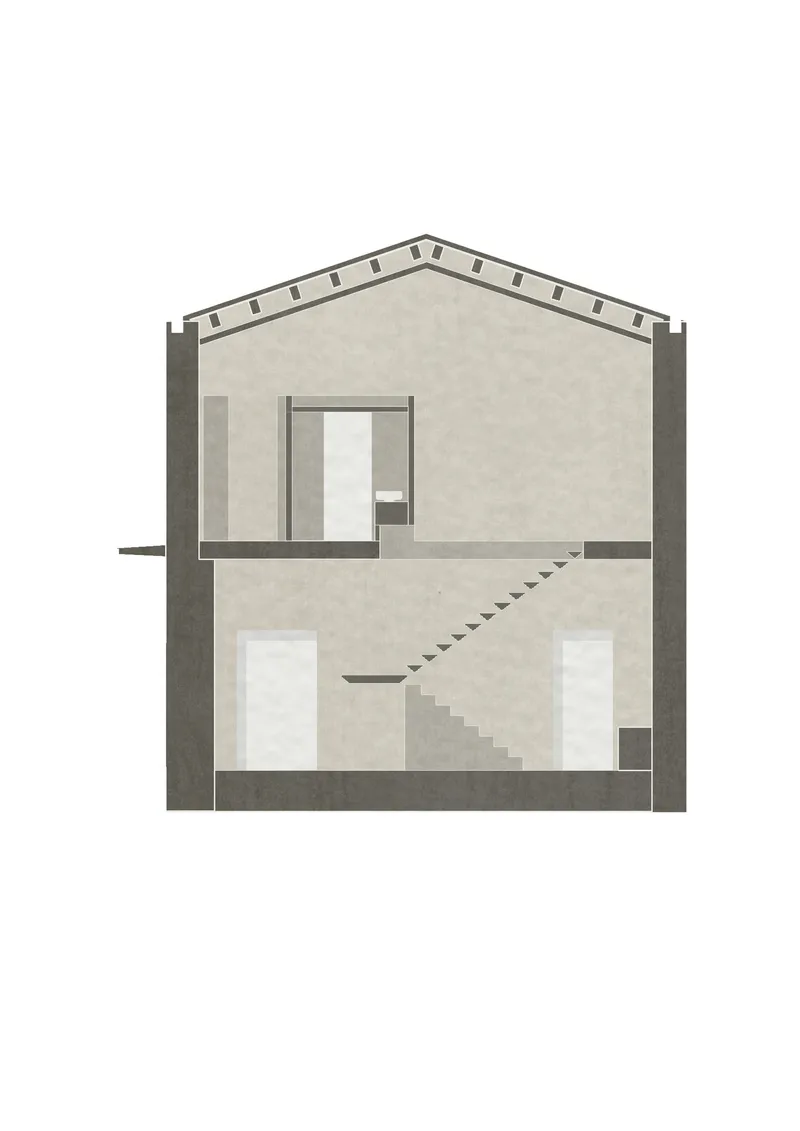
The floor plans confirm a compact, rectangular layout organized around a central staircase and a bathroom core. On the lower level, open living spaces flow toward an exterior terrace; above, bedrooms and service rooms are more cellular, taking advantage of the stone walls to define private enclosures. The elevations read as nearly identical to the existing village fabric: a beige brick facade with four rectangular windows, a central vertical slot, and the arched doorway. Only the section, showing the double-height stair connecting ground and upper levels, reveals the spatial ambition hidden inside the stone envelope.
Why This Project Matters
Renovation projects in historic Italian villages face a specific tension: how do you make a house livable by contemporary standards without turning it into a scenographic shell? Eusebi's answer is to work selectively. Demolish the pitched roof to simplify the silhouette. Widen the windows to admit light and views. Insert timber volumes that organize the plan without touching the stone walls. The strategy is legible, repeatable, and respectful of the existing structure without being deferential to it.
What elevates the Mountain Foothill Home beyond competent renovation is the experiential arc it creates. The temporal gap Eusebi describes, moving from a medieval stone exterior into rooms that could belong to a Scandinavian loft, is not a gimmick. It is an argument about how buildings accumulate time, and about the architect's role in deciding which layers to keep and which to replace. In Ofena, that argument is settled quietly, room by room, detail by detail, until the house feels both ancient and completely new.
Mountain Foothill Home by Andrea Eusebi. Located in Ofena, Abruzzo, Italy. 160 m². Completed in 2021. Photography by Simone Bossi.
About the Studio
Share Your Own Work on uni.xyz
If projects like this are the kind of work you want to make, uni.xyz is a place to publish your own, find collaborators, and enter design competitions.


Popular Articles
Popular articles from the community


Opera by the Sea Estonia: Three Shells Dissolving Architecture into Tallinn's Coastline
A winning opera house proposal replaces monumental form with interconnected shells that blur the boundary between building, park and Baltic Sea.

Opera on the Sea: Driftwood Logic Shapes a Timber Opera House on Estonia's Coast
Trevor Orgill's opera house translates the entangled drift of floating timber into a civic building where wood, water, and music converge.

Manzana Morphosis: Stretching Barcelona's Grid into a Living Landscape for 2050
A radical reworking of the Eixample manzana turns density into a tool for generous public space, vertical ecology, and environmental performance.

Temporary Home for Dogs: A Reversed Zoo Rethinks Animal Shelter Architecture
In Bucharest, a sinuous corridor and freed landscape flip the logic of containment, designing a shelter that works to make itself unnecessary.

Similar Reads
You might also enjoy these articles

Pixel Gardens: One Repeated Module Stacked Into a Terraced Social Housing Tower for Famagusta
Salem Bader's shortlisted housing tower builds a vertical neighbourhood from one repeated module, offsetting units to carve terraces, light and air.

Bao Huynh Watercolor Atelier: A Serene Art Retreat in Hội An
Bao Huynh Watercolor Atelier in Hội An blends multifunctional art spaces, sustainable design, local materials, and family-friendly living in a serene environment.

Atelier Macri Concept Store Interior Design by CASE-REAL
Atelier Macri store features a "ko" counter, walnut wood details, cork displays, blending retail, gallery, and seamless customer experiences.

Manuel Vargas Izquierdo Stadium and High-Performance Sports Center: Architectural Excellence in Jalpa de Méndez
The Manuel Vargas Izquierdo Stadium blends sustainable design, inclusive sports facilities, and cultural-inspired architecture, revitalizing Jalpa de Méndez’s public spaces.
Explore Mountain & Sea Competitions
Discover active competitions in this discipline

Challenge to design mud housing for contemporary communities

Challenge to reimagine the Iron Throne

Photograph architecture without architects

Illustrate the lost glory of Angkor Wat - Render Challenge
Comments (0)
Please login or sign up to add comments
No comments yet. Be the first to comment!