
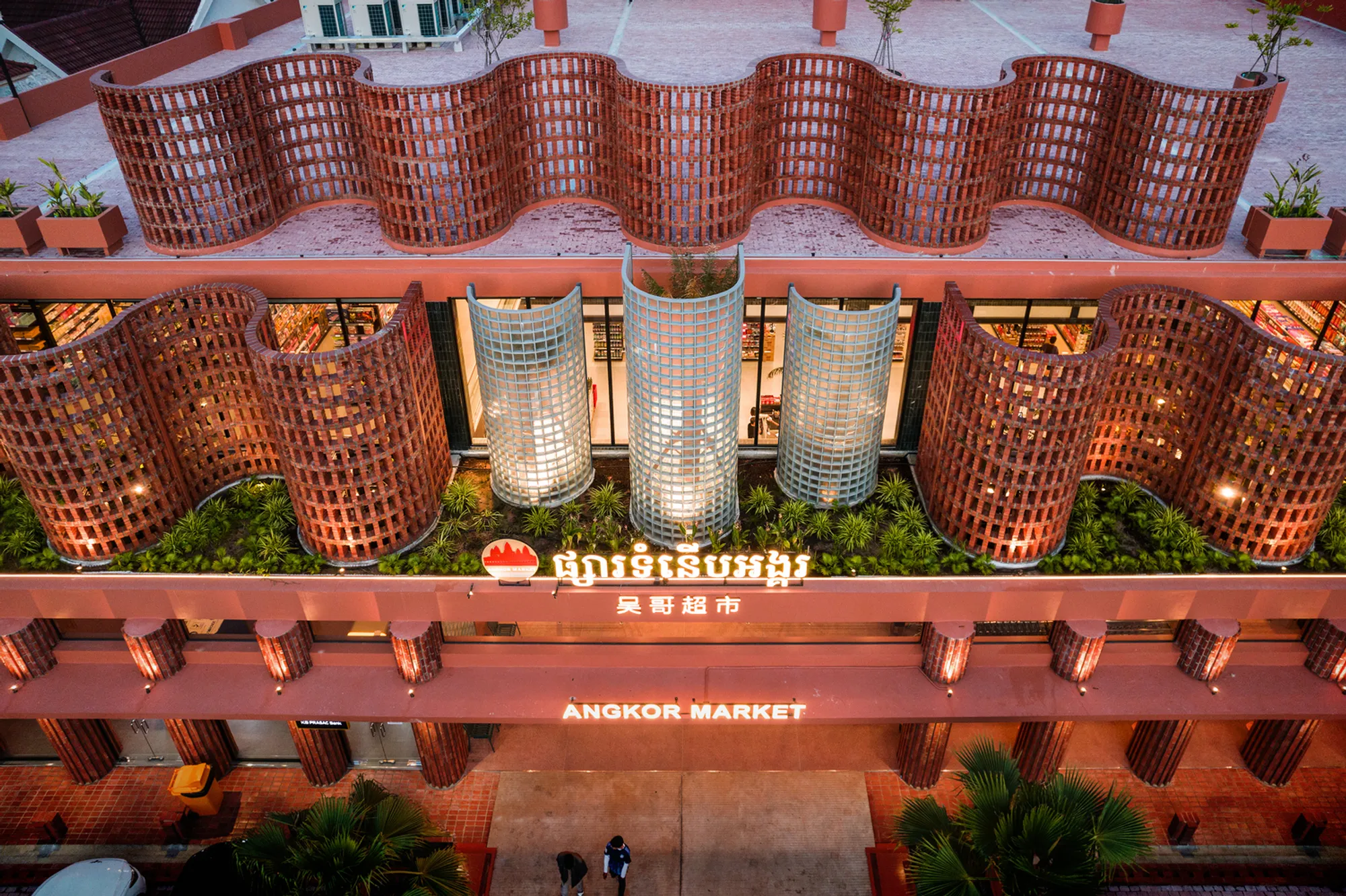
Angkor Market by UAD Architects: A Sustainable Design Balancing Heritage and Modernity
A vibrant market blending Khmer architectural heritage and sustainability, Angkor Market redefines urban spaces in Siem Reap.


A New Urban Icon in Siem Reap
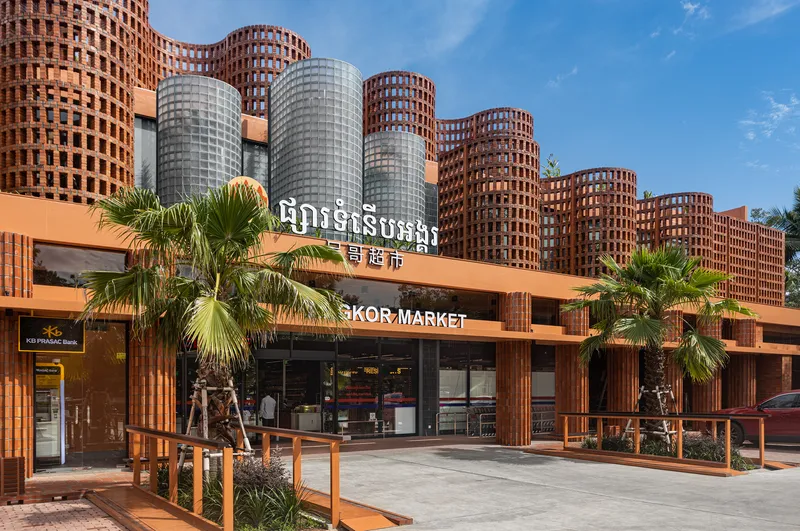
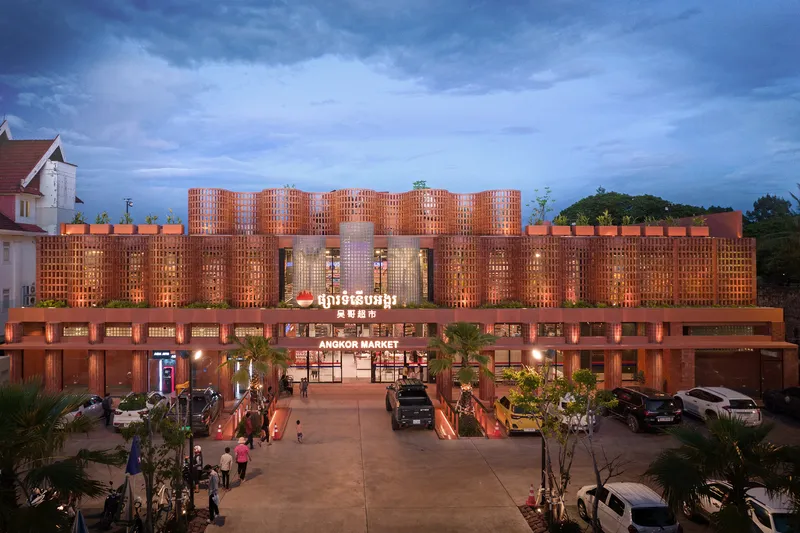
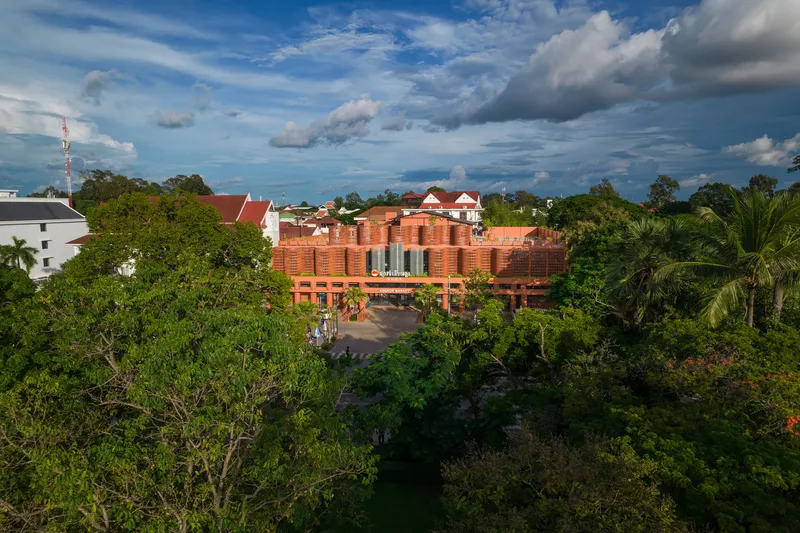
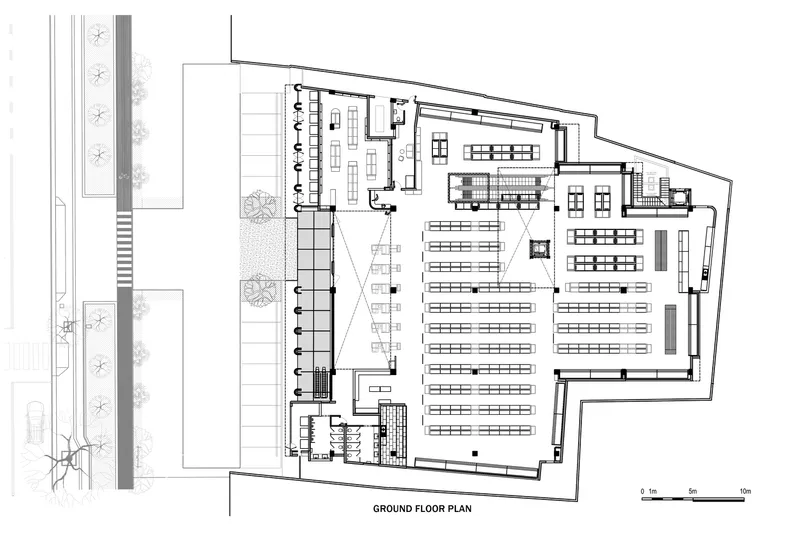
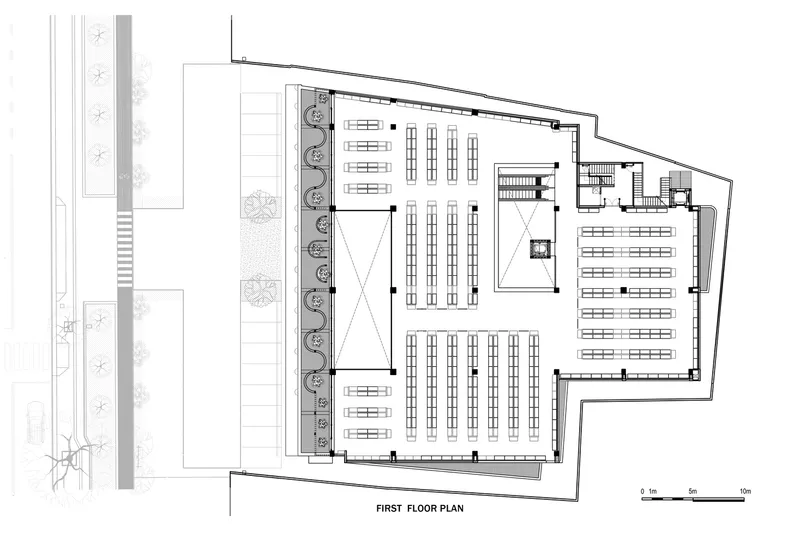
Angkor Market, designed by UAD Architects, is a contemporary architectural marvel located on Preah Sihanouk Avenue, Siem Reap, Cambodia. This two-story red-brick market not only serves as a shopping hub but also bridges the cultural and historical essence of its iconic neighborhood, which includes landmarks like the Angkor National Museum and the historic Raffles Grand Hotel d'Angkor.

Location and Context
Strategically positioned near the northern route to Angkor Wat, a UNESCO World Heritage Site, Angkor Market connects the city's downtown with its rich heritage zones. Its design embraces the area's historic charm while filling a void in the urban fabric, creating a vibrant community space.


Design Philosophy: A Harmony of Culture and Functionality
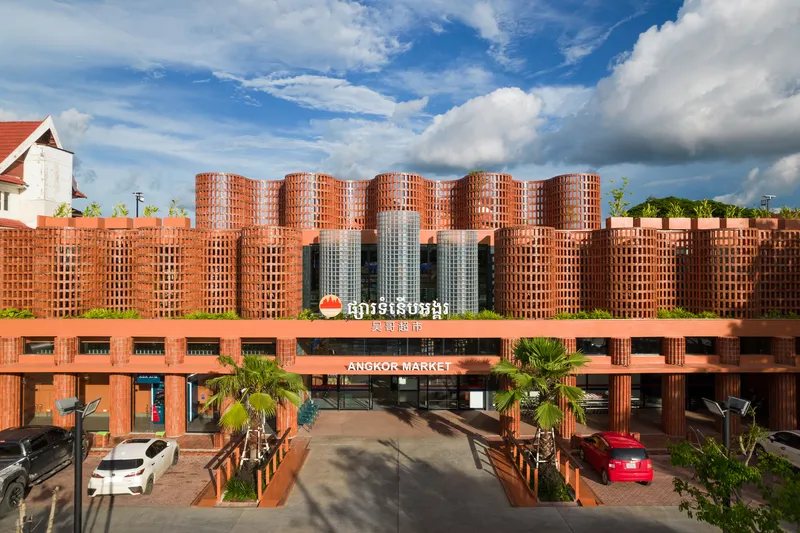
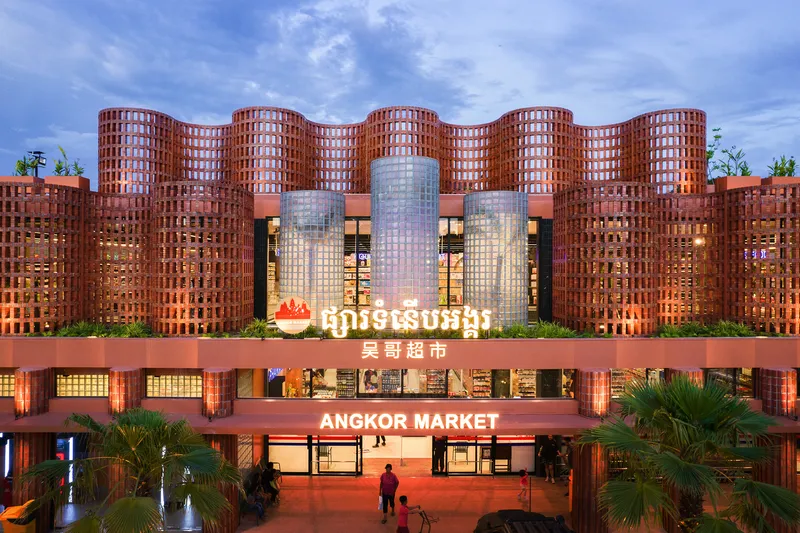
The design by Mengly Khuth and Visal Nuon focuses on sustainability and cultural integration. It reflects Khmer architecture through the use of locally sourced materials like red bricks and handcrafted tiles. This approach not only ensures durability but also celebrates Cambodia’s rich artisanal heritage.


Material Choices and Sustainability
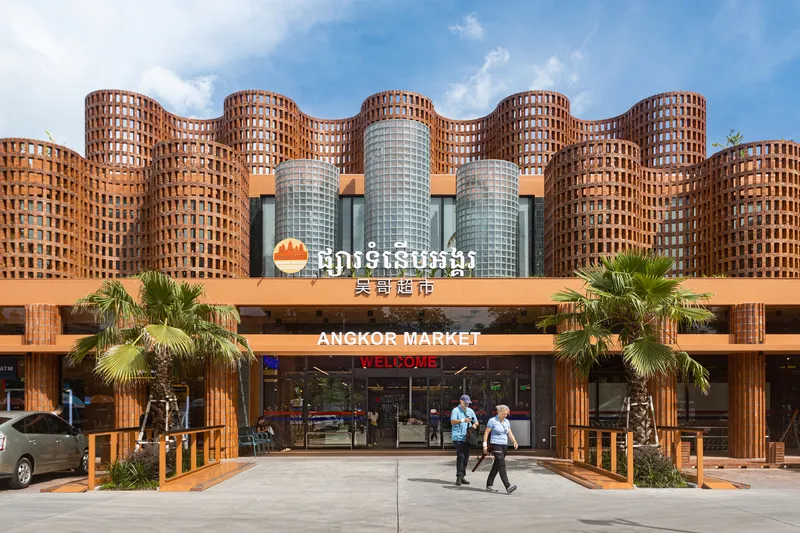
- Red Brick Facade: The market's signature wavy brick facade exudes timelessness and strength, while its unique bonding technique enhances structural integrity.
- Locally Sourced Tiles: Handcrafted Khmer tiles were chosen for their aesthetic and practical qualities, creating a balance between tradition and innovation.
- Natural Integration: Palm trees at the street level and a tropical garden bring a lush, inviting ambiance to the structure.

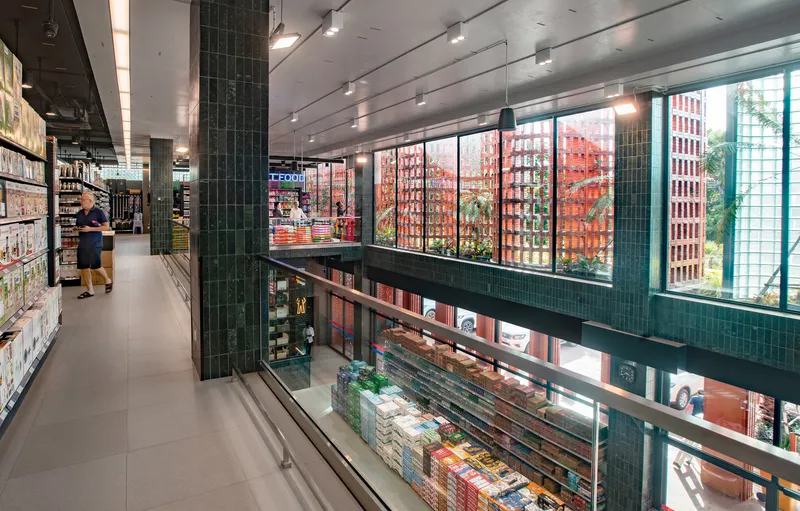


Interior Design: A Blend of Utility and Aesthetic
Inside, the market features colorful terrazzo flooring, strategic lighting, and high ceilings, which elevate the shopping experience. Natural light filters through latticework, creating an interplay of shadows that adds warmth and depth to the space.
Community and Commerce: Supporting Local Farmers
Angkor Market is more than a commercial space; it is a community-centric initiative supporting local farmers from Kulen Mountain. By dedicating areas to fresh produce and locally sourced goods, the market connects consumers with the region’s agricultural roots.
Diverse Offerings
- Grocery stores, pharmacies, and household goods create a one-stop shop for residents.
- The design ensures easy navigation through thoughtfully placed color-coded areas and signage.
Architectural Highlights
- Facade Design: The exposed brick facade combines modern aesthetics with traditional Khmer motifs.
- Spatial Experience: High ceilings and open spaces foster a sense of grandeur and ease.
- Lighting and Ambiance: A mix of natural light and strategically placed fixtures enhance visibility and create a welcoming atmosphere.


A Gathering Place for the Future
Angkor Market redefines the shopping experience by merging practicality with cultural and environmental consciousness. It stands as a beacon of Siem Reap’s commitment to blending tradition with progress, offering a space that is functional, beautiful, and deeply connected to its roots.


UAD Architects' Angkor Market is a testament to how thoughtful design can transform urban spaces. With its sustainable materials, cultural resonance, and focus on community, the market is poised to become a landmark of contemporary Cambodian architecture.

All photographs are work of Oudompheaktra Ang




Popular Articles
Popular articles from the community


The Earth Pod: 3D Printed Homes for Resilient Refugee Communities
The Earth Pod reimagines refugee housing through 3D printed homes made from clay, combining resilience, self-sufficiency, and rapid shelter.

Riyadh For All: Intergenerational Urban Design for Active Aging in Rabat
Riyadh For All reimagines urban design in Rabat with intergenerational co-living, adaptive courtyards, and Moroccan cultural exchange today.

The Ocean Hive: Sustainable Architecture for a Self-Sufficient Civilization at Sea
The Ocean Hive imagines sustainable architecture at sea, where modular habitats, algae, wave power and ocean waste sustain a growing colony.

Co-life: Sustainable Architecture for Age-Friendly Community Living
Co-life reimagines sustainable architecture for seniors through courtyards, rammed earth, shared gardens, and spaces designed for belonging.


Similar Reads
You might also enjoy these articles


Hodi-Mandai Geram
Project Function: Preservation and revitalization of the Intangible heritage and socio-spatial identity of the Hodi by Housing, Cultural Memory Center, Sacred Grove, landscape, local tourism economy


Olio Towers: A Mid-Rise for Performers That Fuses Housing, Rehearsal, and Stage
Located blocks from Houston's Theater District, this modular tower stacks living units around a central performance atrium.

Oasis: Modular Green Housing Carved into Dhaka's Urban Fabric
A shortlisted Plugin Housing entry reclaims unauthorized settlements in Dhaka with stepped concrete volumes, green roofs, and ventilation-driven design.

Black Hole: A Floating Megastructure for the Post-Physical Era
Emiliano Mazzarotto envisions a spherical, self-scaling arena where e-sports, digital hotels, and holographic stadiums replace traditional public space.


Explore Architecture Competitions
Discover active competitions in this discipline



Challenge to reimagine the Iron Throne


Photograph architecture without architects


Illustrate the lost glory of Angkor Wat - Render Challenge


Design challenge to reuse E-waste
Comments (0)
Please login or sign up to add comments
No comments yet. Be the first to comment!