
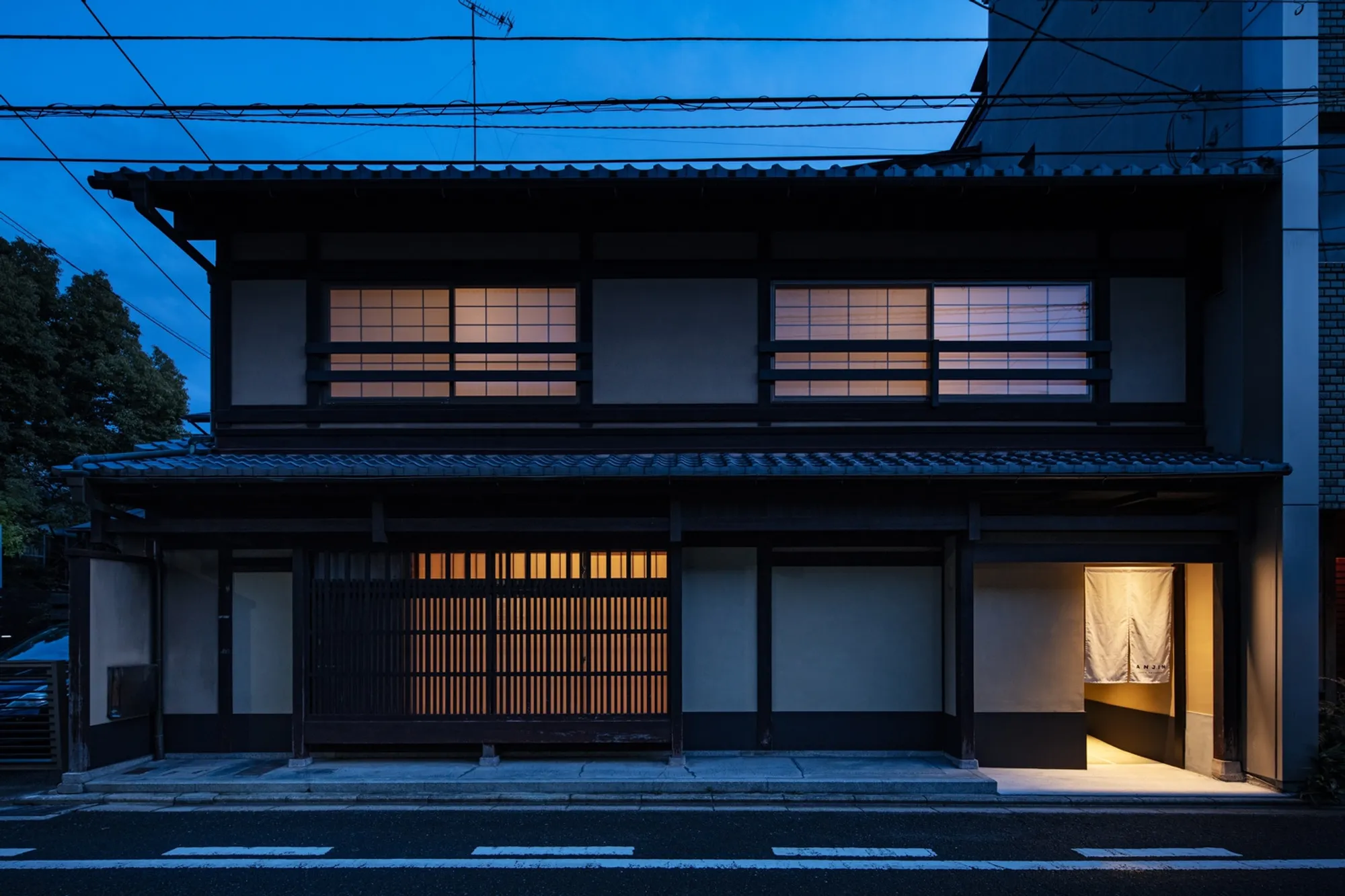
ANJIN Gosho Ebisugawa: A Contemporary Renewal of Kyoto Machiya Heritage by STUDIO ALUC
A refined Kyoto machiya renovation blending traditional spatial depth, warm wood interiors, soft lighting, and a serene Tsuboniwa for immersive contemporary lodging.


Located steps away from the historic Kyoto Imperial Palace, ANJIN Gosho Ebisugawa by STUDIO ALUC is a refined renovation project that transforms a traditional Kyoto machiya townhouse into an intimate whole-house rental accommodation. Completed in 2024 and spanning 125 m², the project embodies a delicate balance of architectural preservation, minimalist design, and a deep appreciation for Kyoto’s centuries-old urban cultural landscape.
Reinterpreting the Kyoto Machiya Typology
The original structure is a modest wooden townhouse distinguished by its wide façade and a small inner courtyard known as a Tsuboniwa—a signature element in Kyoto’s traditional residential architecture. Machiya houses are historically defined by their linear spatial organization, subdued lighting, and layered progression of rooms. STUDIO ALUC sought to reinterpret these qualities through a contemporary lens while retaining the emotional and atmospheric depth that defines Kyoto living.
Visitors enter through a traditional noren curtain, beginning a journey marked by a subtle, unfolding spatial sequence. The narrow path gently meanders toward the back of the house, creating a sense of curiosity and anticipation. Each turn reveals a new perspective—a design strategy that captures the concept of “Oku”, or depth, central to the machiya experience.
Barrier-Free Transformation with Architectural Sensitivity
New accessibility standards required the introduction of a barrier-free ramp, which led to a distinctive entrance configuration involving a compact U-turn. Instead of treating this as a limitation, the design embraces it, transforming the approach into a moment of quiet transition. Passing through the dimly lit doma, or earthen-floor entry zone, guests are enveloped by a serene and almost mystical atmosphere, reflecting the contemplative character of traditional Kyoto homes.
Light, Shadows, and Expanding Interiors
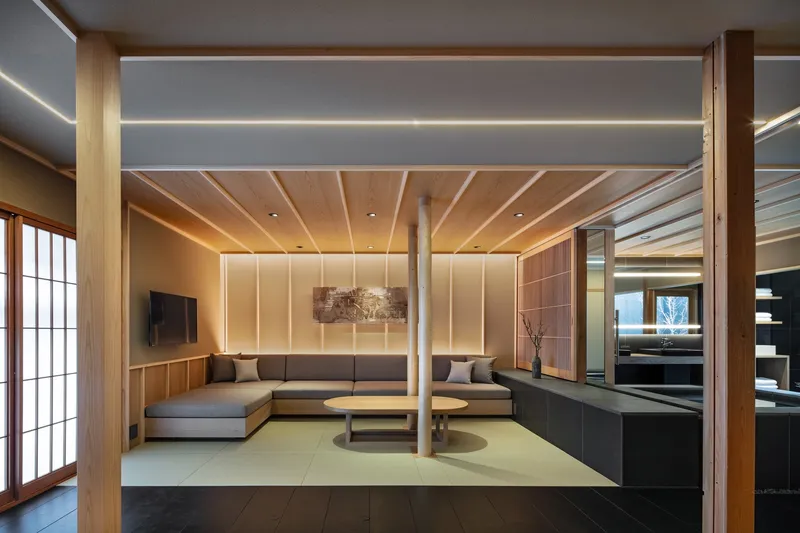
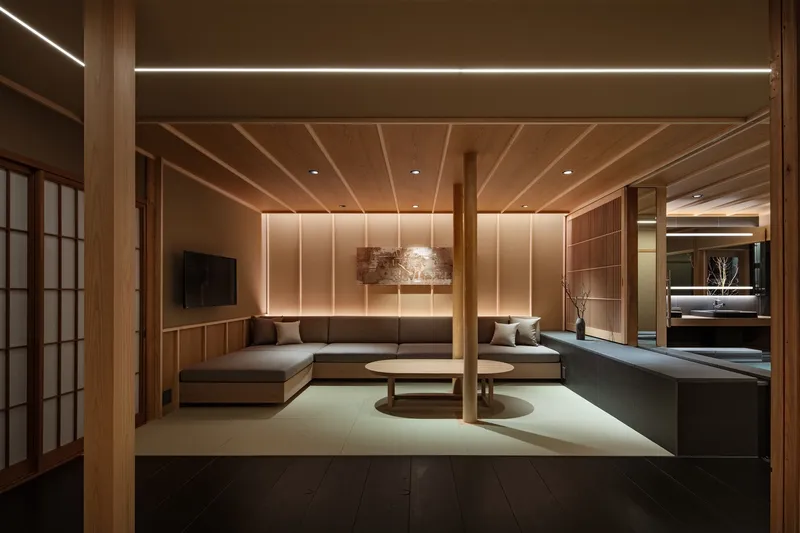
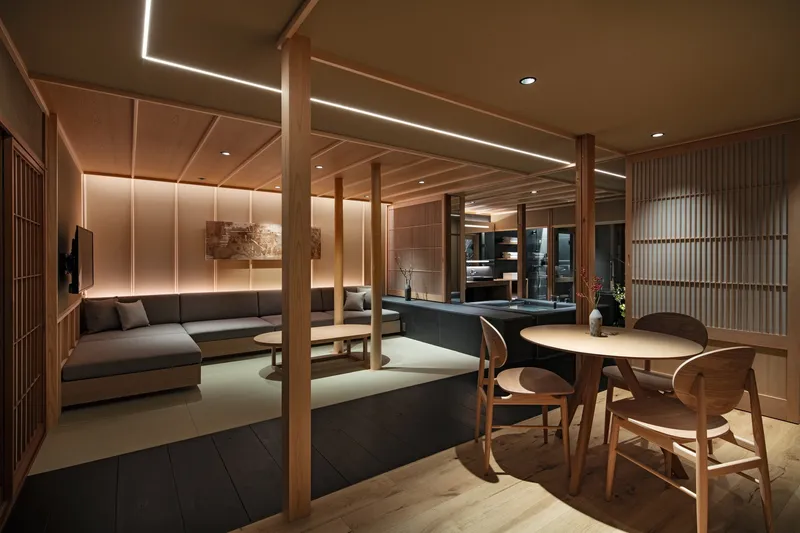
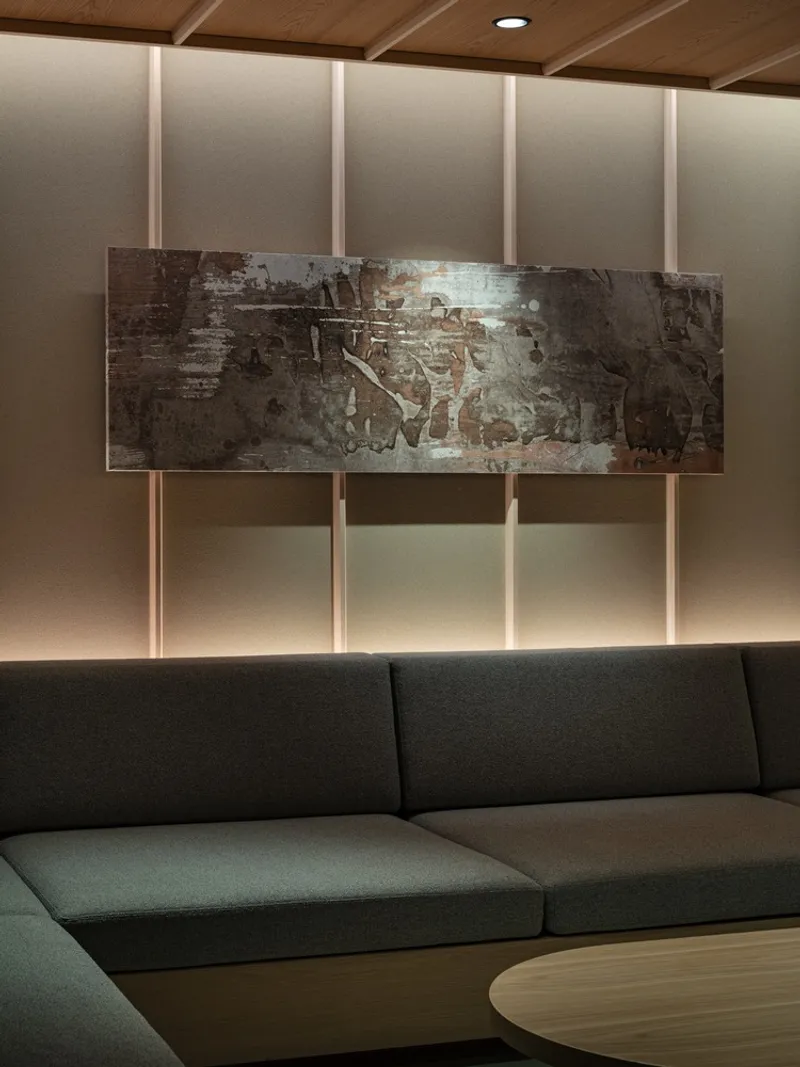
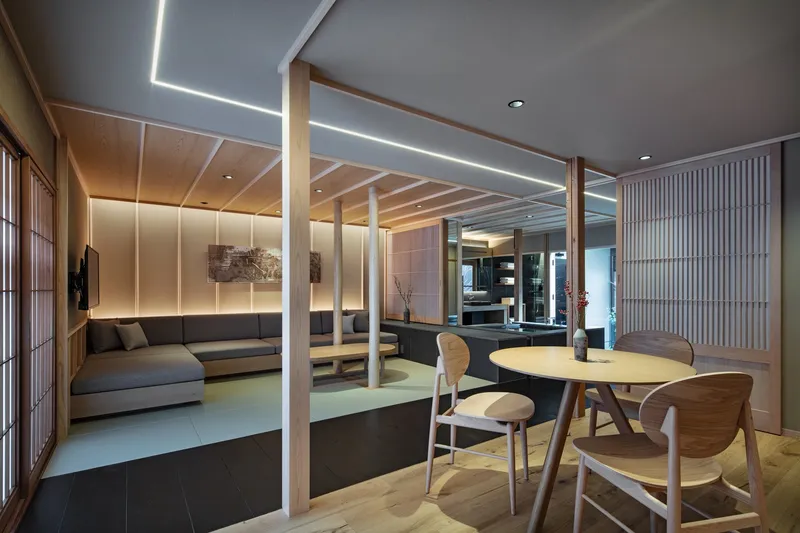
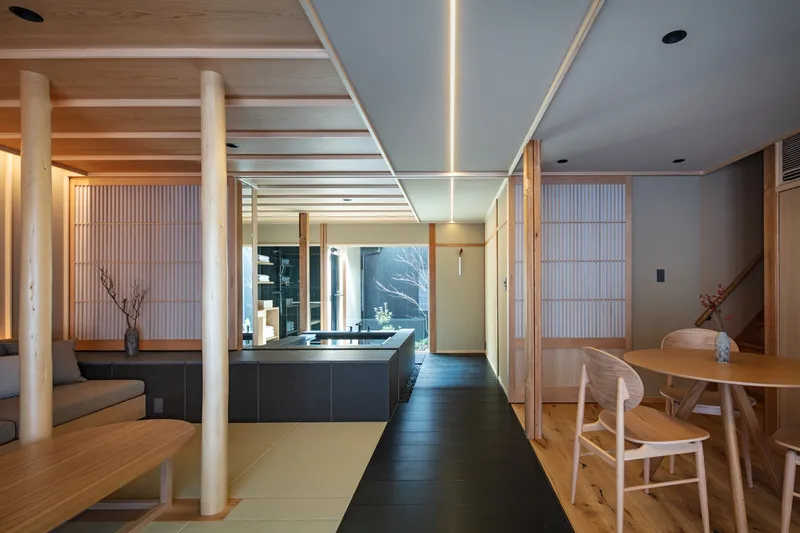
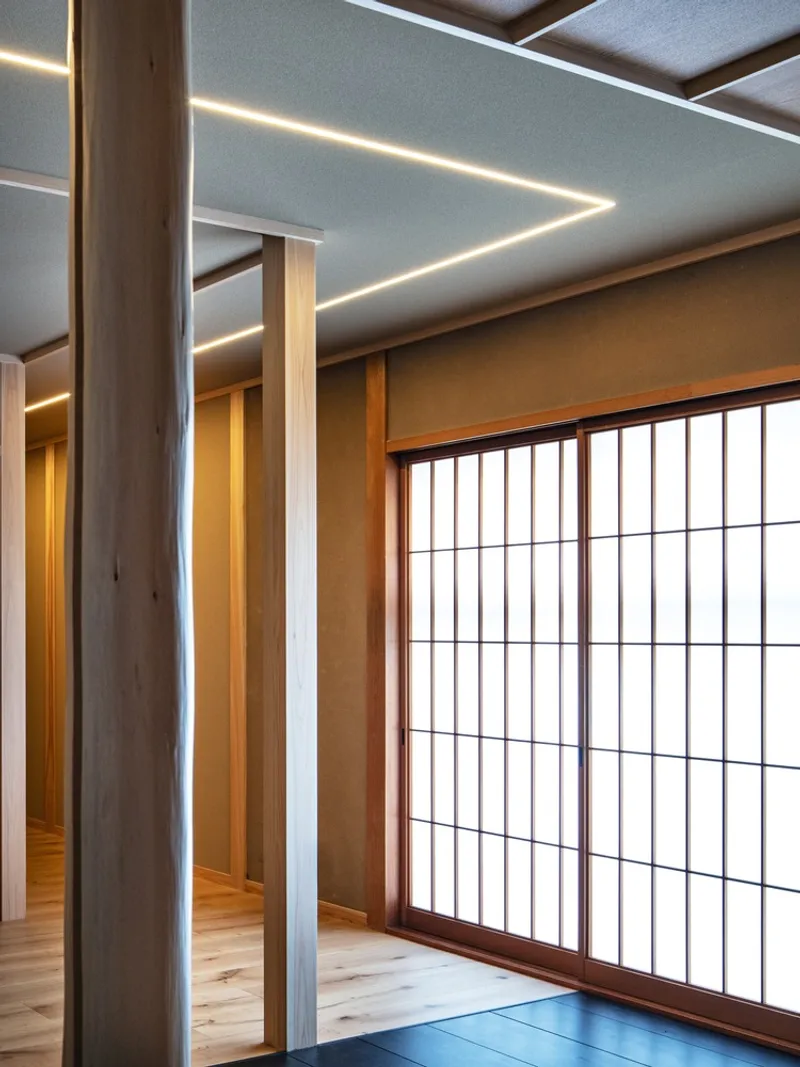
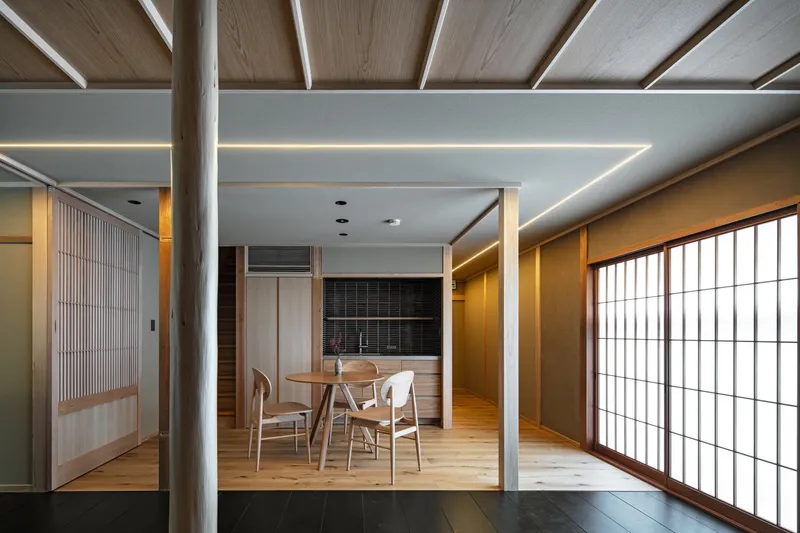
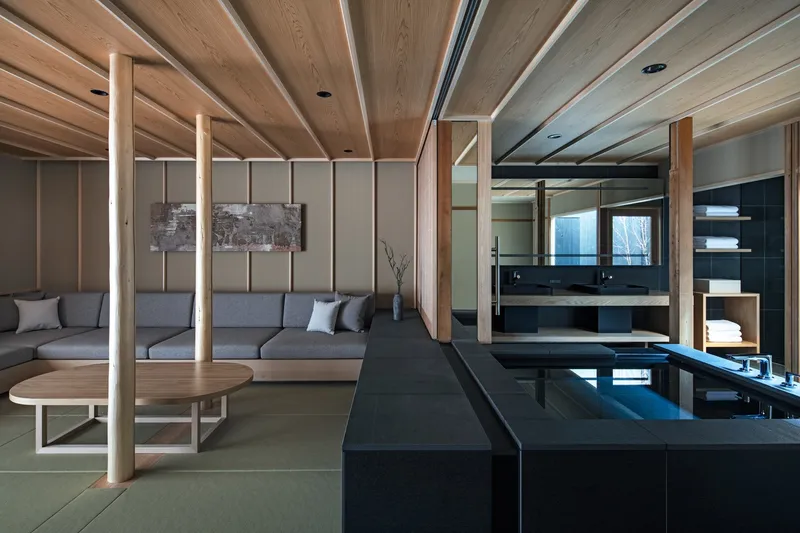
The architects employ seamless, indirect LED lighting to guide guests from the entrance toward the main living area. Upon arrival, the interior opens dramatically—a soft interplay of light and materiality that establishes a calming and welcoming ambiance. Wooden surfaces, glass elements, and soft lighting work together to amplify warmth and spatial clarity.
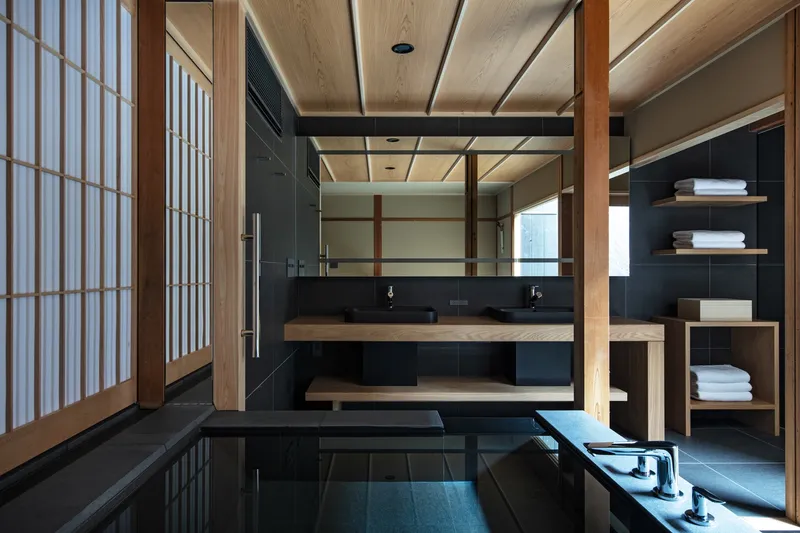
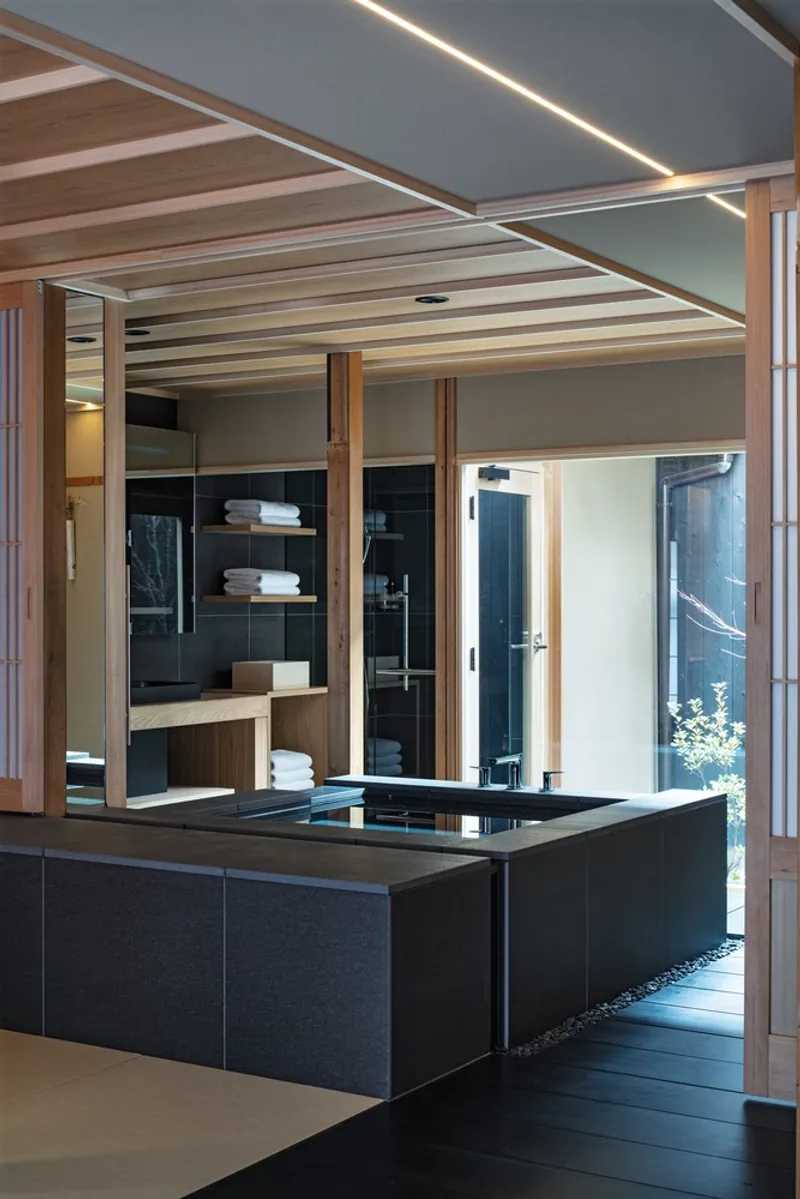
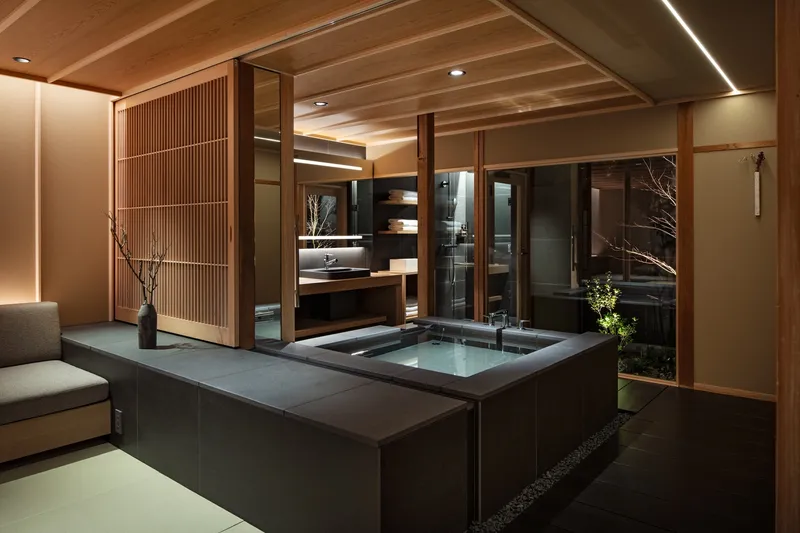
Sliding open a large shoji screen reveals the project’s most compelling design sequence. A stone-tiled bathing area lies ahead, extending the visual axis to the far wall, while natural light filters through the maple-filled Tsuboniwa. This connection to the outdoors ensures that seasonal changes—spring blossoms, summer greens, autumn red foliage—become part of the guest’s daily experience.
A Dialogue Between Past and Present
Throughout ANJIN Gosho Ebisugawa, STUDIO ALUC has crafted a thoughtful dialogue between traditional Kyoto craftsmanship and modern hospitality design. The project honors the machiya’s historic character through material authenticity, spatial restraint, and a gentle reverence for shadow and silence. At the same time, it introduces contemporary comforts, spatial openness, and refined lighting strategies that enhance the user experience without compromising cultural authenticity.
All photographs are works of Kenta Hasegawa




Popular Articles
Popular articles from the community


Hill & Cross Opera: Sculptural Opera House Architecture Shaped by Tallinn’s Landscape and Identity
Hill & Cross Opera reimagines opera house architecture in Tallinn through its sculptural hill, civic plaza, glass wave and a luminous cross.

The Earth Pod: 3D Printed Homes for Resilient Refugee Communities
The Earth Pod reimagines refugee housing through 3D printed homes made from clay, combining resilience, self-sufficiency, and rapid shelter.

Play: Fragments of Their World
Familiar architecture becomes modular playground design, creating safe spaces where displaced children can learn, connect, imagine and play.

Lunar Spiral: Space Architecture Shaped by the Mathematics of the Universe
Lunar Spiral reimagines space architecture through Fibonacci geometry, lunar regolith, levitating habitats, and self-sustaining Moon living.


Similar Reads
You might also enjoy these articles


Hodi-Mandai Geram
Project Function: Preservation and revitalization of the Intangible heritage and socio-spatial identity of the Hodi by Housing, Cultural Memory Center, Sacred Grove, landscape, local tourism economy


Olio Towers: A Mid-Rise for Performers That Fuses Housing, Rehearsal, and Stage
Located blocks from Houston's Theater District, this modular tower stacks living units around a central performance atrium.

Oasis: Modular Green Housing Carved into Dhaka's Urban Fabric
A shortlisted Plugin Housing entry reclaims unauthorized settlements in Dhaka with stepped concrete volumes, green roofs, and ventilation-driven design.

Black Hole: A Floating Megastructure for the Post-Physical Era
Emiliano Mazzarotto envisions a spherical, self-scaling arena where e-sports, digital hotels, and holographic stadiums replace traditional public space.


Explore Architecture Competitions
Discover active competitions in this discipline



Challenge to reimagine the Iron Throne


Photograph architecture without architects


Illustrate the lost glory of Angkor Wat - Render Challenge


Design challenge to reuse E-waste
Comments (0)
Please login or sign up to add comments
No comments yet. Be the first to comment!