
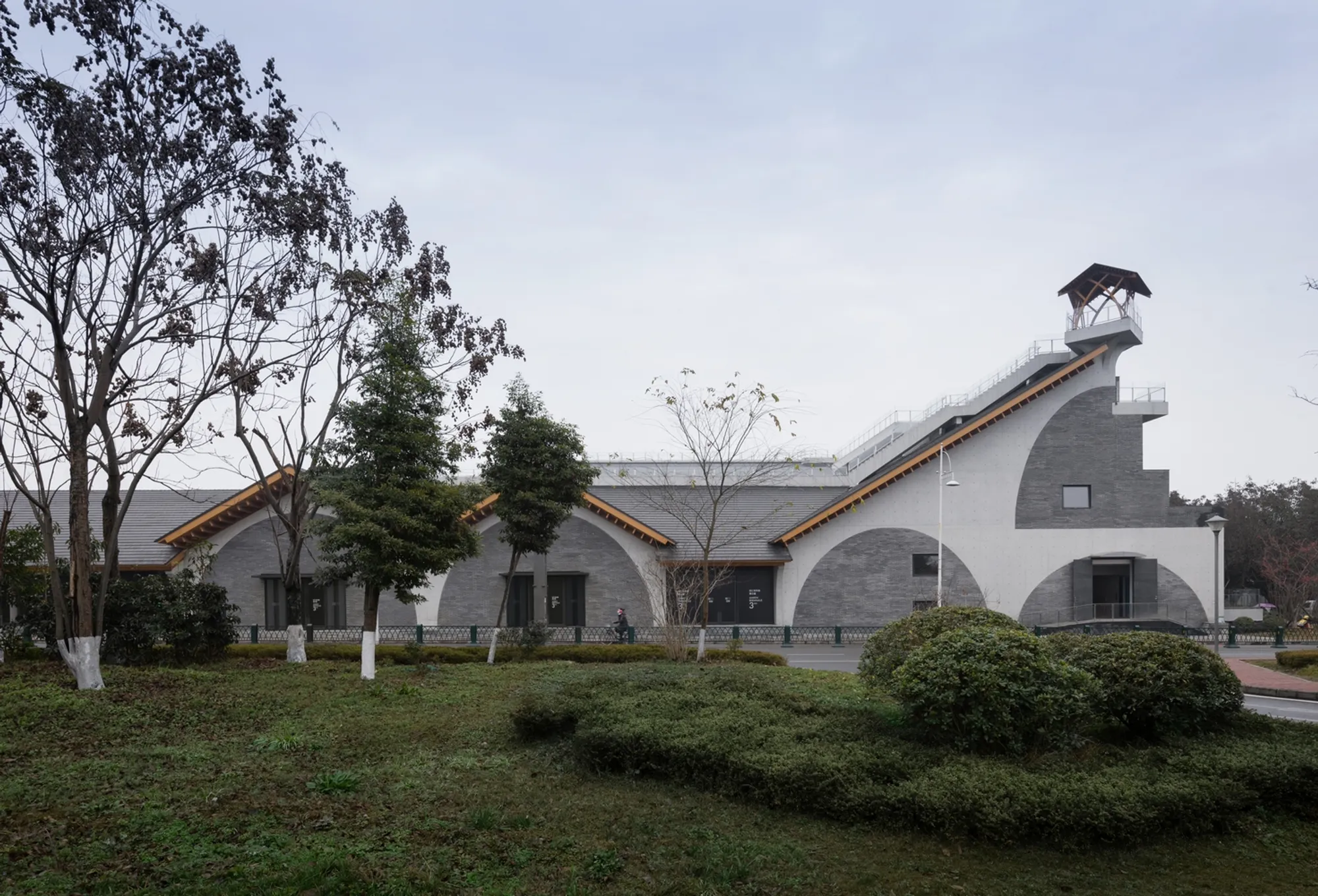
Anren Culture Center for the Sect of Great Craftsman by Atelier Li Xinggang
A contemporary cultural center blending pitched roofs, courtyards, and concrete arches to reconnect Anren’s historic fabric with landscape, craftsmanship, and community life.


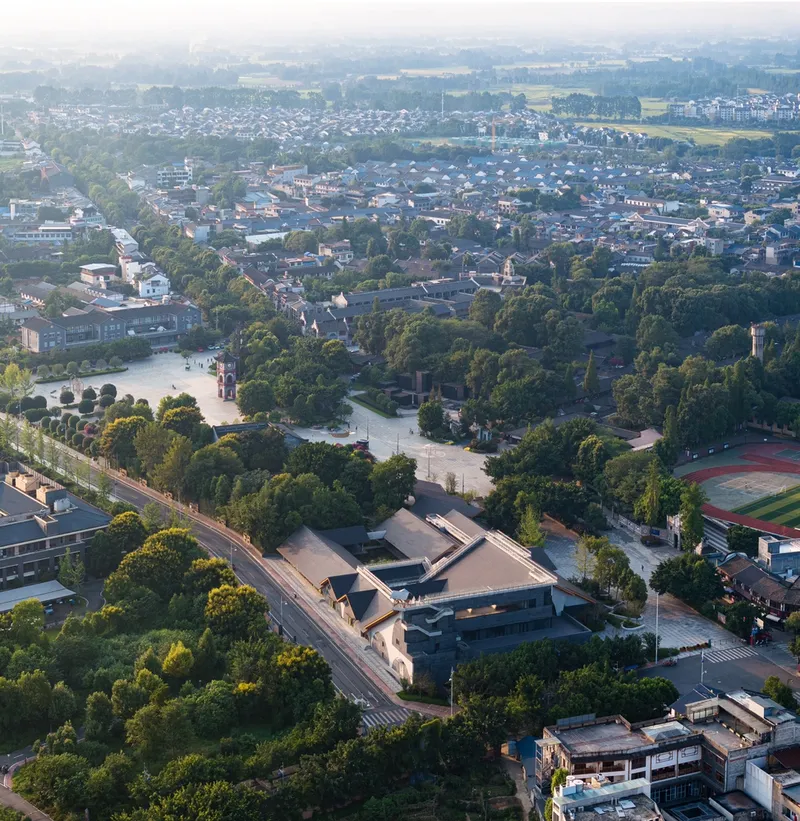
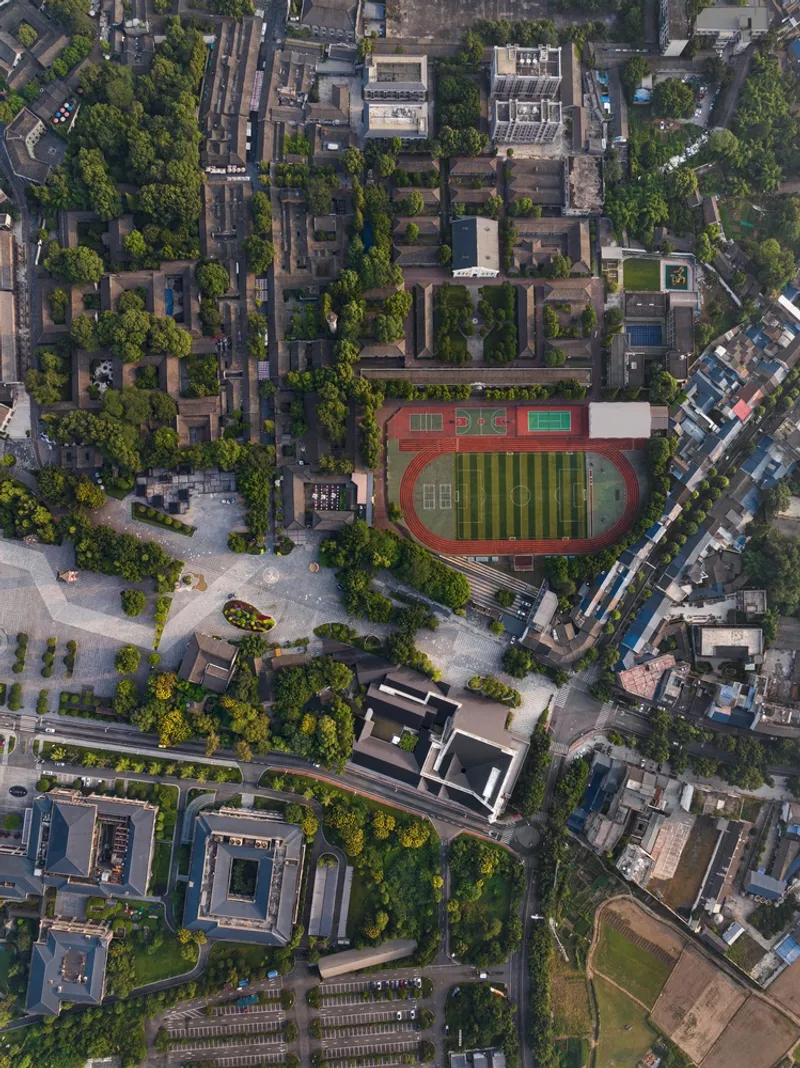
Located in the historic heart of Anren Ancient Town in Chengdu, the Anren Culture Center for the Sect of Great Craftsman redefines the relationship between contemporary architecture, heritage urban fabric, and landscape. Designed by Atelier Li Xinggang, the 7,682 m² cultural complex sits at the crossroads of old streets, manor houses, and modern developments—an area marked by architectural contradictions, mixed styles, and contrasting scales. The project responds with a nuanced approach that merges historical memory with modern spatial innovation.
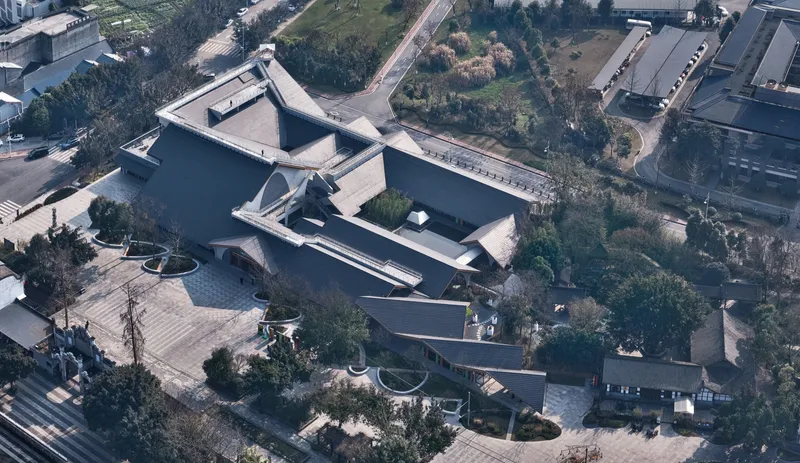
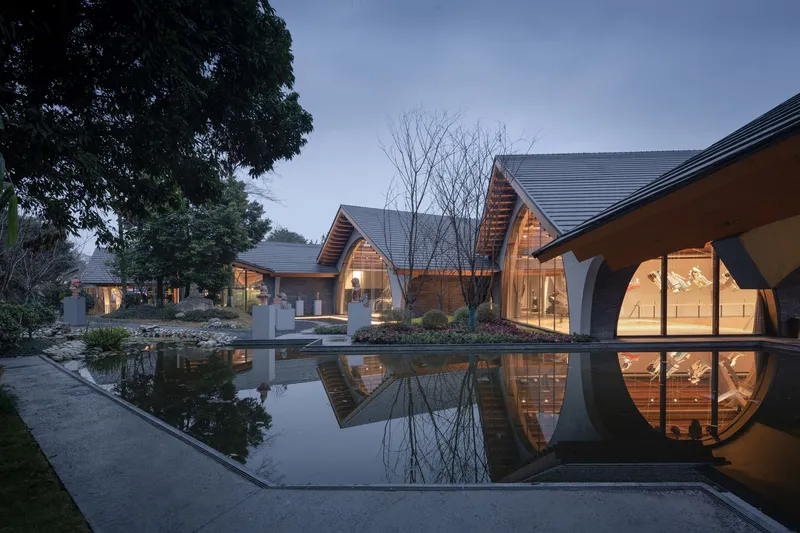
Anchored between Shuren Ancient Street, Liushi Manor, Jianchuan Museum, and the nearby Sheraton Hotel, the building becomes a vital connector within the town’s public life. The design draws inspiration from the traditional mansion typology of Anren, forming a constellation of pitched roofs arranged to create courtyards of varying sizes. These stepped roof clusters rise gradually from west to east, echoing the rhythm of the ancestral Chen Yuesheng mansion while articulating a rich and contemporary architectural language.
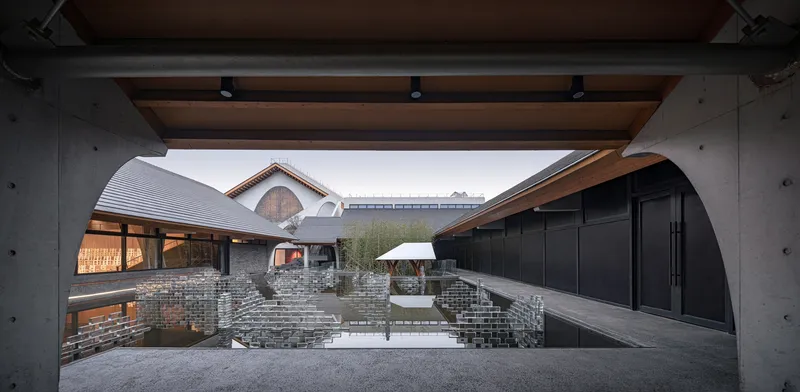
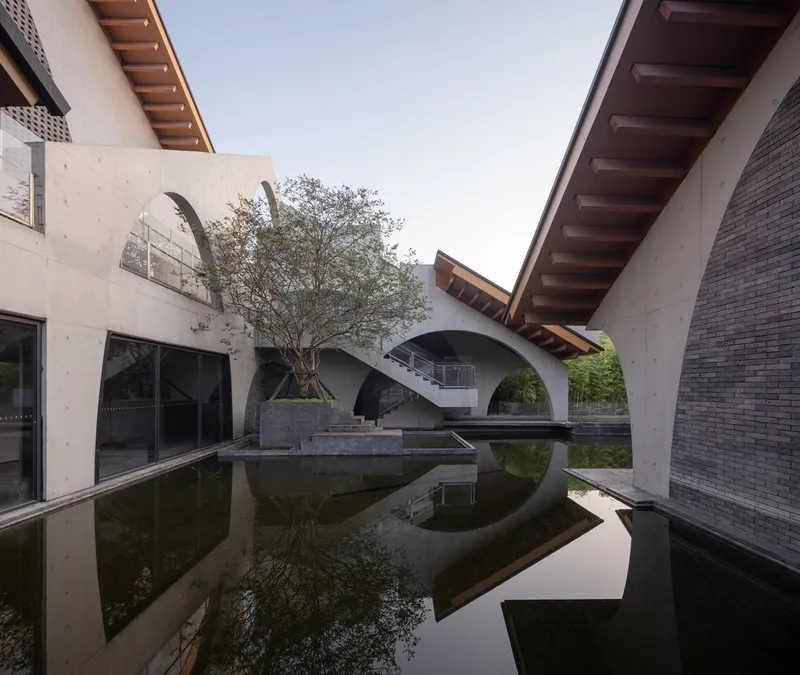
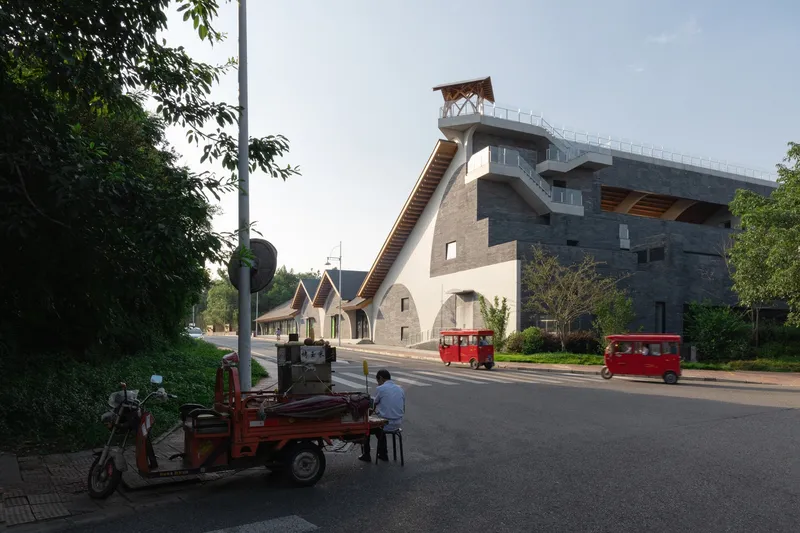
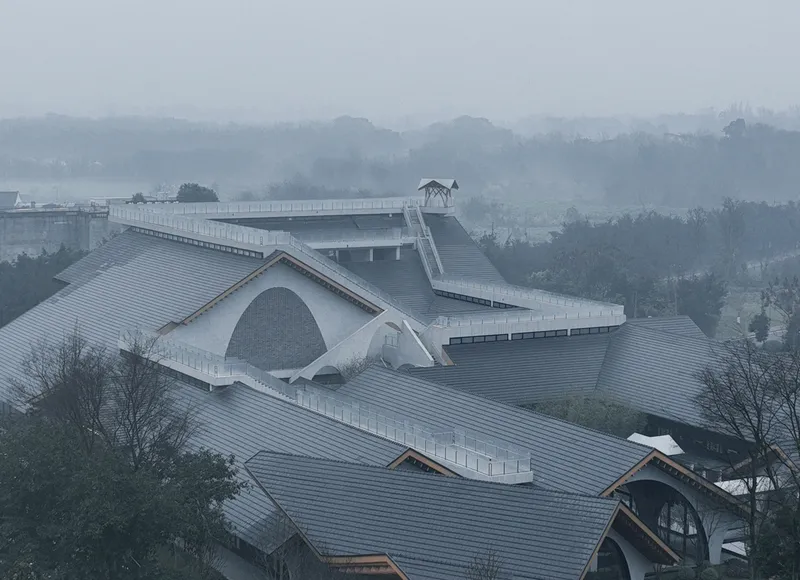
The architects use these pitched-roof masses not only as symbolic references but also as urban mediators—repairing fragmented textures and harmonizing the scales of divergent architectural eras. A distinctive feature of the project is the elevated roof walkway, which transforms the rooftops into a public promenade. Visitors ascend along the ridges and valleys of the roofs, experiencing the building as an unfolding topography connected visually to the distant Xiling Snow Mountain. This creates a powerful triad of architecture, town, and natural landscape.
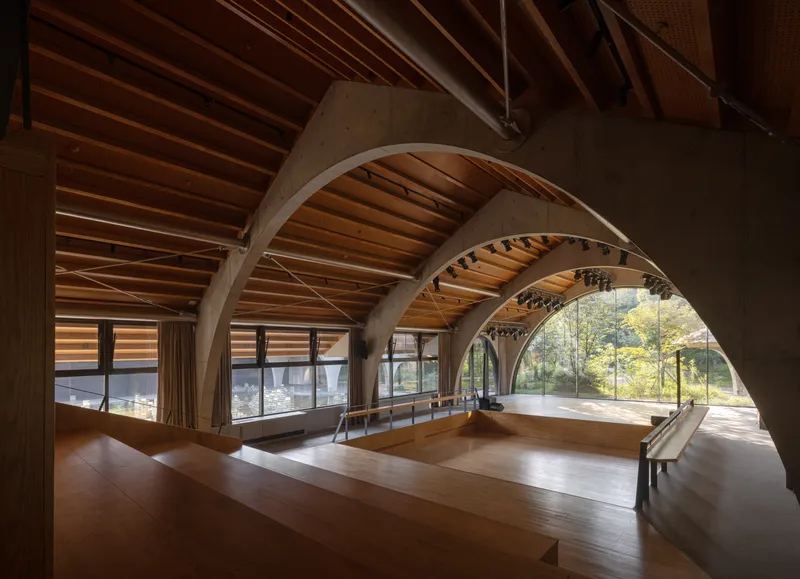
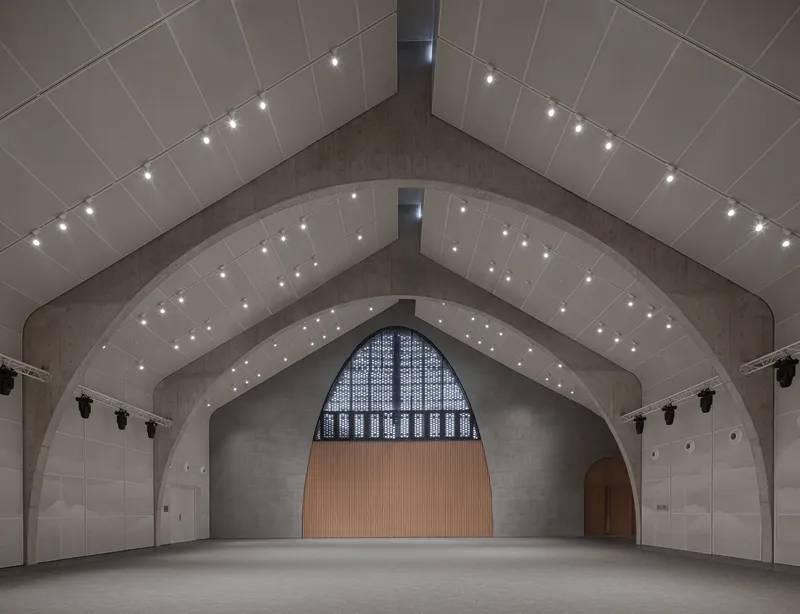
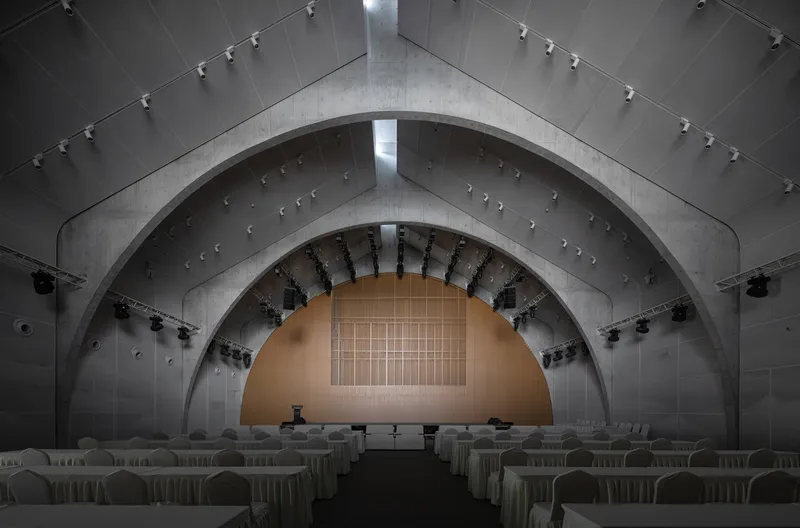
Within the interior and structural concept, the design references the eclectic archways of Anren’s mansion architecture. A modular system of 6×6-meter concrete arches defines the spatial hierarchy, generating fluid connections between indoor halls, courtyards, clerestories, and the roof path. Above these arches, a timber roof frame continues the brick-and-timber tradition, while steel pipes and tension rods ensure structural stability. This hybrid structural logic unites history with modern engineering, resulting in a bold reinterpretation of Anren’s heritage in contemporary form.
All photographs are works of Schran Image, Yimin Chen



Popular Articles
Popular articles from the community


Co-Life: Senior Housing Design That Reconnects Older Adults With the City
Co-Life reimagines senior housing design through healing gardens, shared streets, workshops, and a sustainable community across generations.

The Ocean Hive: Sustainable Architecture for a Self-Sufficient Civilization at Sea
The Ocean Hive imagines sustainable architecture at sea, where modular habitats, algae, wave power and ocean waste sustain a growing colony.

Hill & Cross Opera: Sculptural Opera House Architecture Shaped by Tallinn’s Landscape and Identity
Hill & Cross Opera reimagines opera house architecture in Tallinn through its sculptural hill, civic plaza, glass wave and a luminous cross.

Riyadh For All: Intergenerational Urban Design for Active Aging in Rabat
Riyadh For All reimagines urban design in Rabat with intergenerational co-living, adaptive courtyards, and Moroccan cultural exchange today.

Similar Reads
You might also enjoy these articles


Hodi-Mandai Geram
Project Function: Preservation and revitalization of the Intangible heritage and socio-spatial identity of the Hodi by Housing, Cultural Memory Center, Sacred Grove, landscape, local tourism economy


Olio Towers: A Mid-Rise for Performers That Fuses Housing, Rehearsal, and Stage
Located blocks from Houston's Theater District, this modular tower stacks living units around a central performance atrium.

Oasis: Modular Green Housing Carved into Dhaka's Urban Fabric
A shortlisted Plugin Housing entry reclaims unauthorized settlements in Dhaka with stepped concrete volumes, green roofs, and ventilation-driven design.

Black Hole: A Floating Megastructure for the Post-Physical Era
Emiliano Mazzarotto envisions a spherical, self-scaling arena where e-sports, digital hotels, and holographic stadiums replace traditional public space.


Explore Cultural Architecture Competitions
Discover active competitions in this discipline



Challenge to reimagine the Iron Throne


Photograph architecture without architects


Illustrate the lost glory of Angkor Wat - Render Challenge


Bring back Drive In's
Comments (0)
Please login or sign up to add comments
No comments yet. Be the first to comment!