

Apartment #1 by B+P Architects: Redefining Urban Apartment Architecture in Ta
A compact urban apartment project in Taiwan that redefines collective living through shared balconies, staggered forms, and garden buffers.


Integrating Community and Privacy in Urban Living
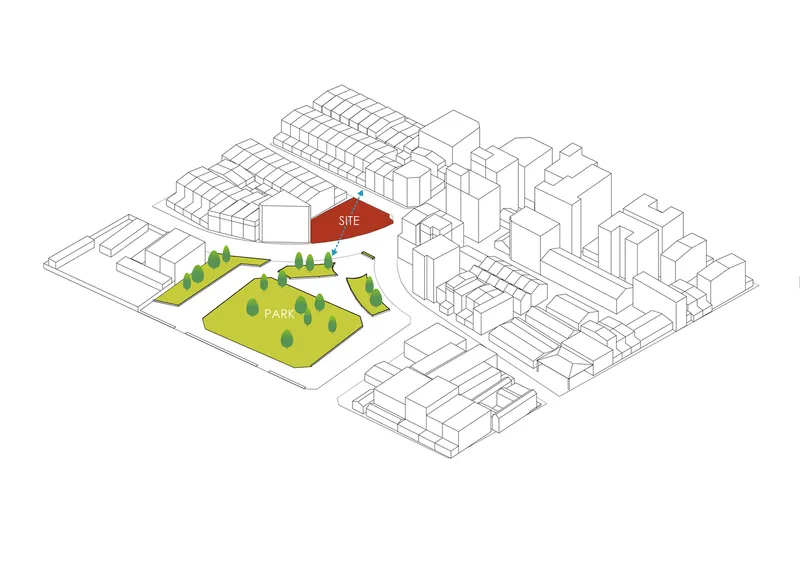
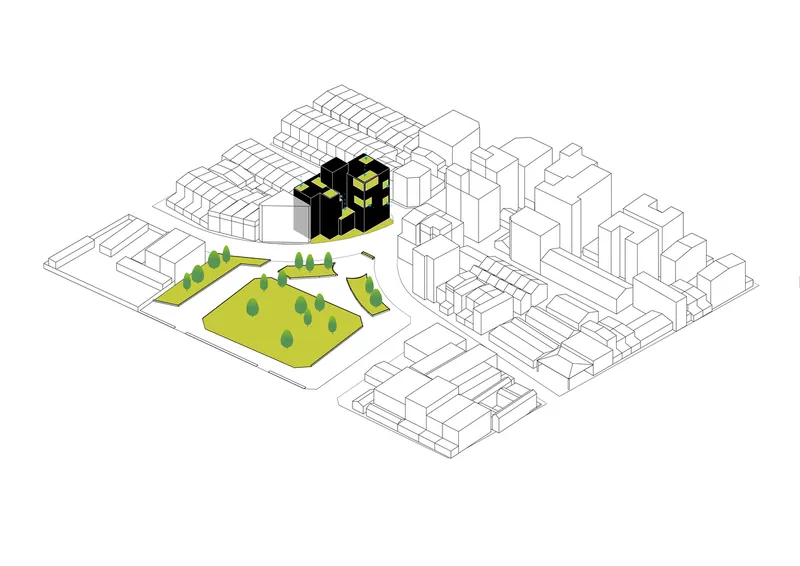
Located in Chiayi City, Taiwan, Apartment #1 by B+P Architects exemplifies a reimagined form of urban apartment architecture. Positioned behind a school district and facing a park, the building engages with its surroundings through a spatial and social lens. With narrow alleys flanking both sides and an open green expanse at its front, the project occupies a unique slice of urban grain—both intimate and contextually rich.
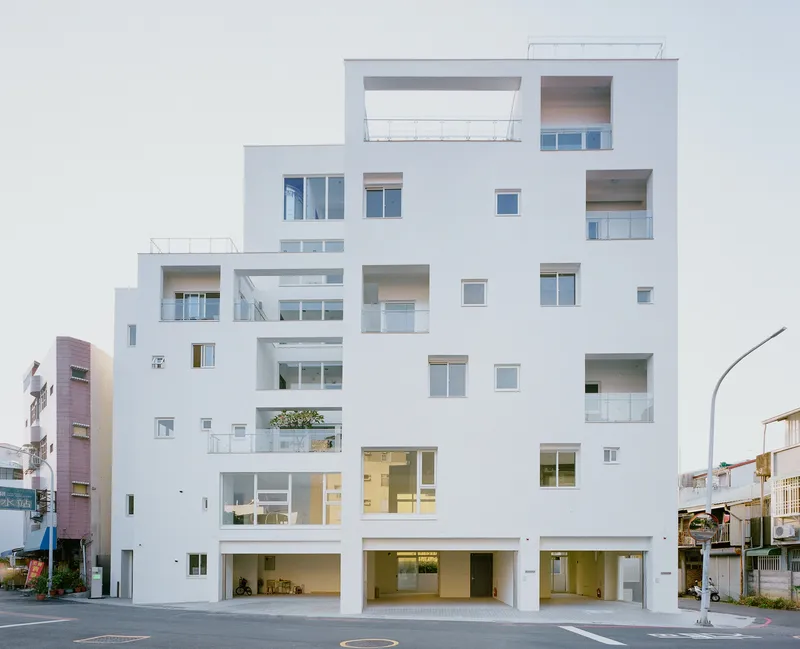
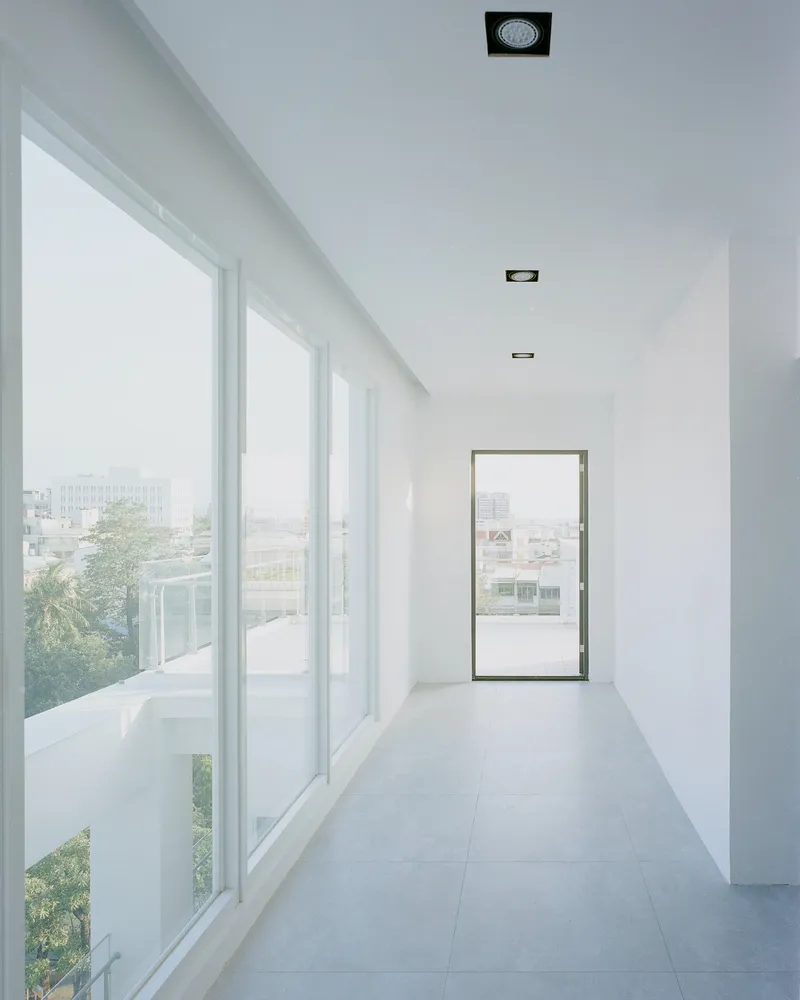


The architectural strategy centers on cultivating a neighborhood lifestyle within a dense, mixed-use urban environment. Rather than isolating residences, the design interweaves public and private realms through carefully articulated spatial transitions and shared balconies. These spaces foster interaction among neighbors while respecting the privacy of each home.

A Layered Approach to Mixed-Use Typology
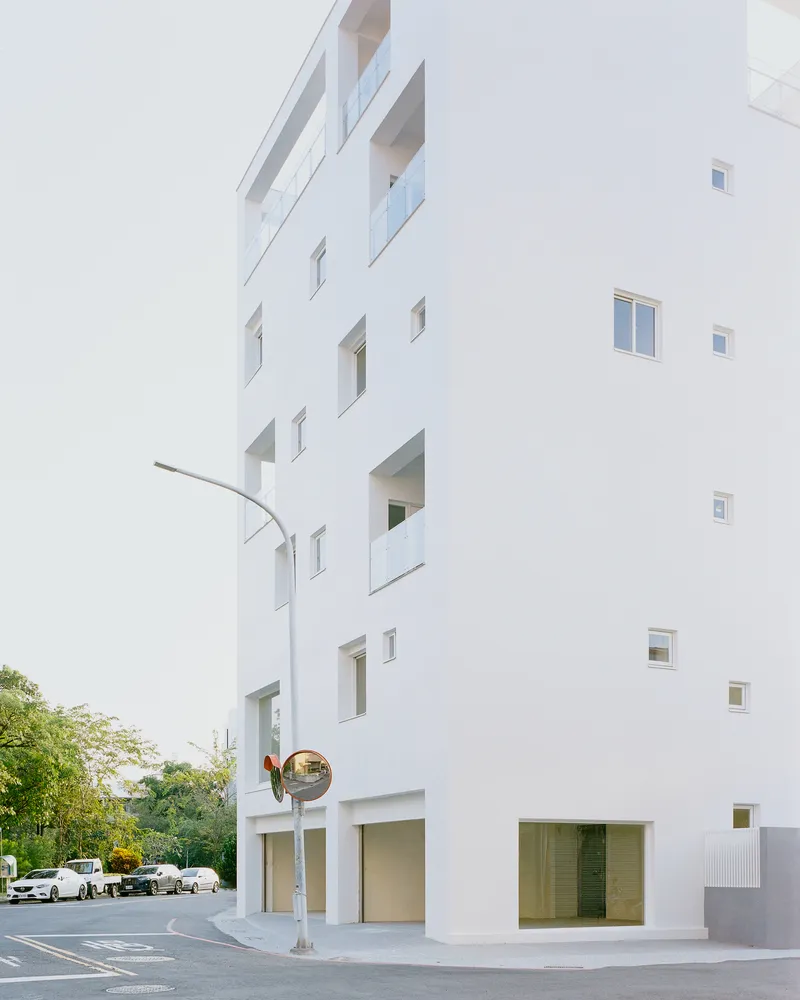
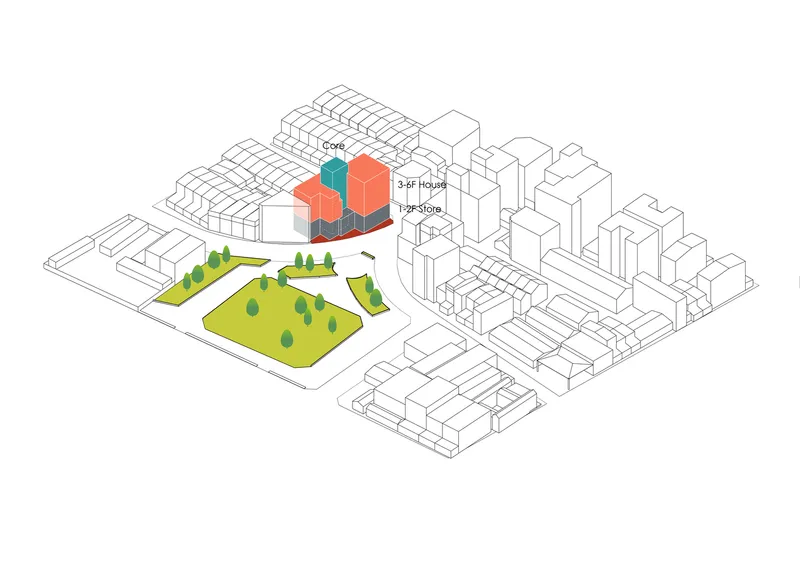
Comprising six floors above ground and a basement level, the building adopts a two-volume structure typical of southern Taiwanese cities. The front section houses two-level shop residences that open to the park and street, supporting commercial vibrancy. In contrast, the residential entrance is discreetly located at the back alley, ensuring a separation between public commercial functions and private living spaces.
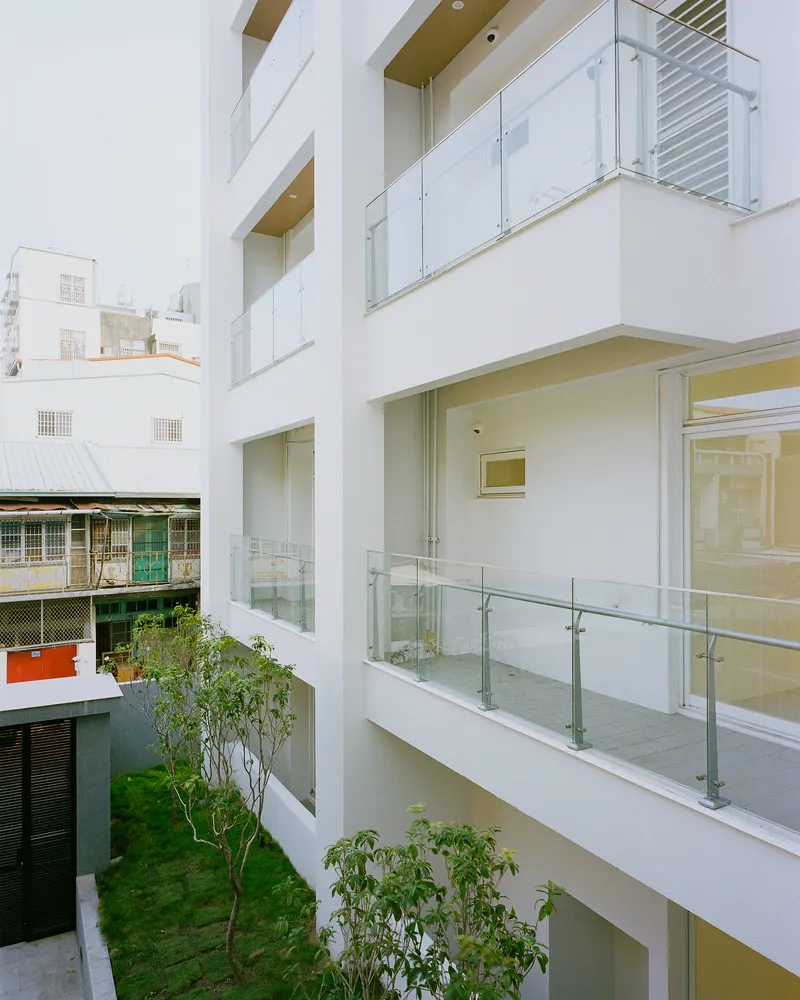
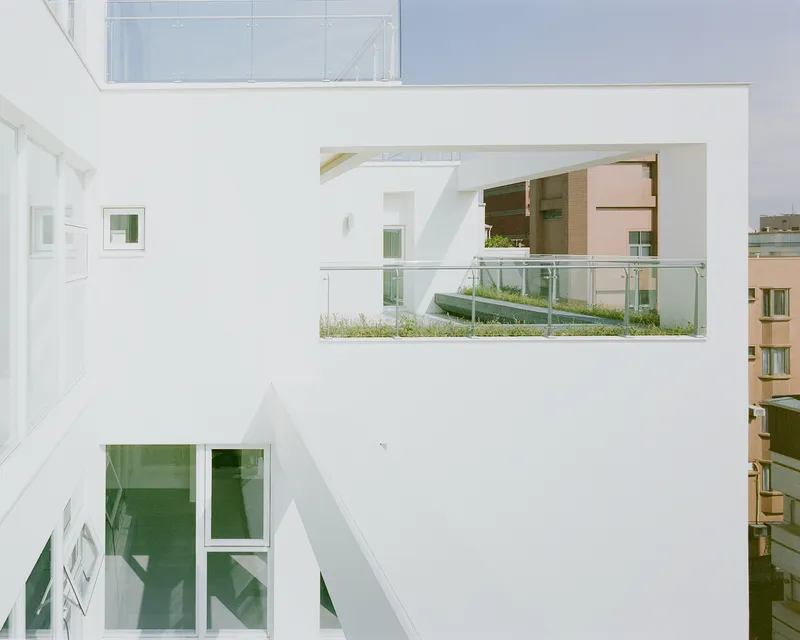
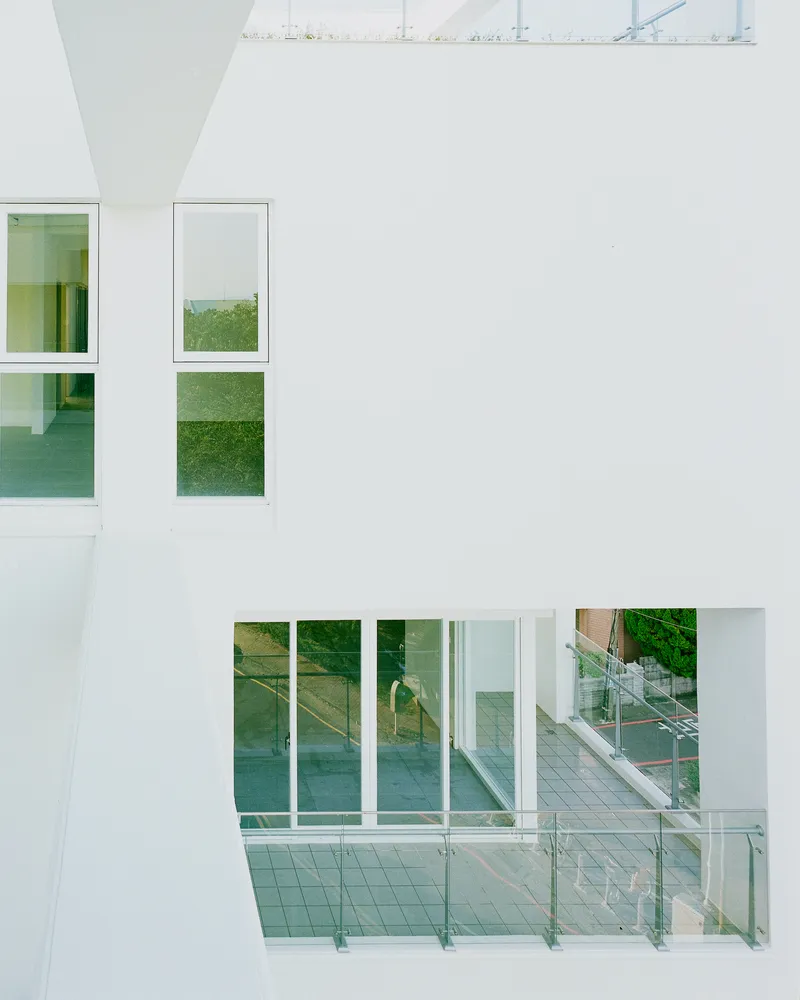
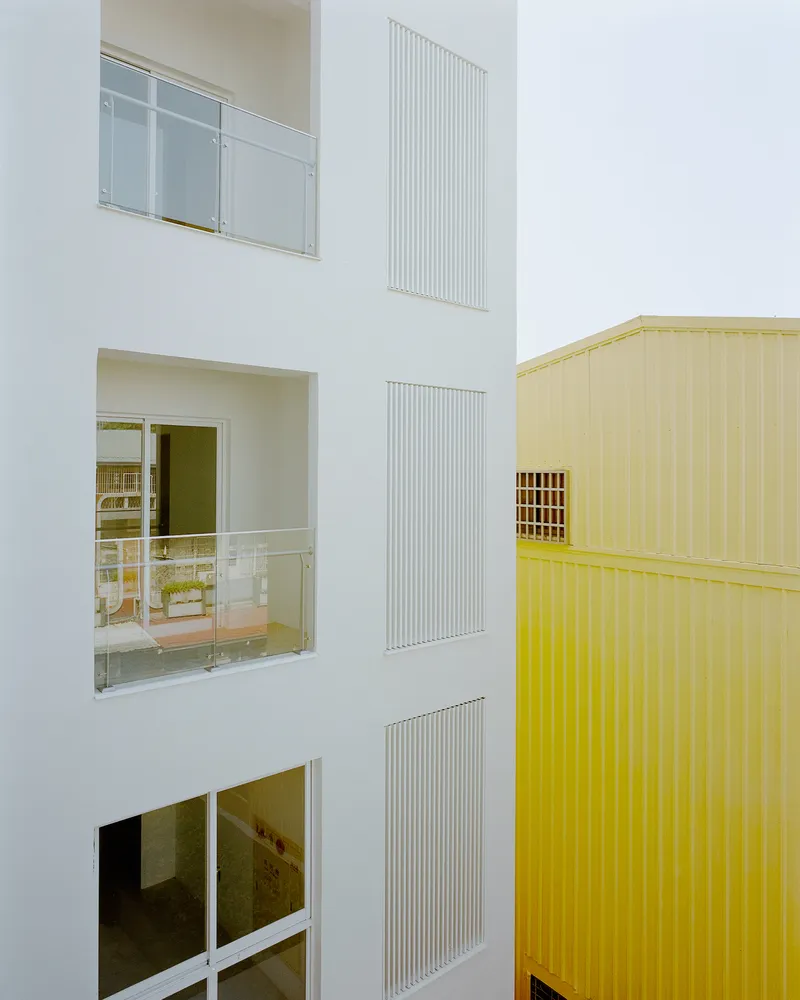
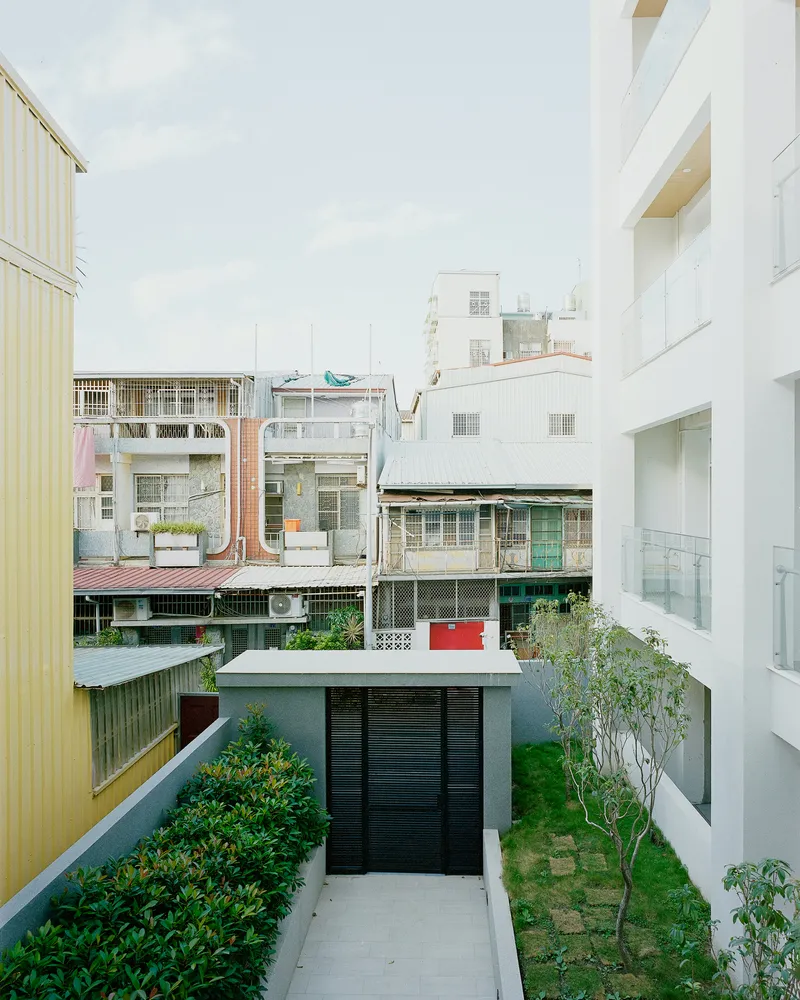
Residents access the upper-level homes through a landscaped lobby and a vertical core that includes a stairwell and elevator. This circulation system is immersed in greenery and oriented toward the park, enhancing visual and experiential connection to nature. By the third floor, residents reach the primary living levels, where architectural features begin to express the project's emphasis on communal yet private urban living.


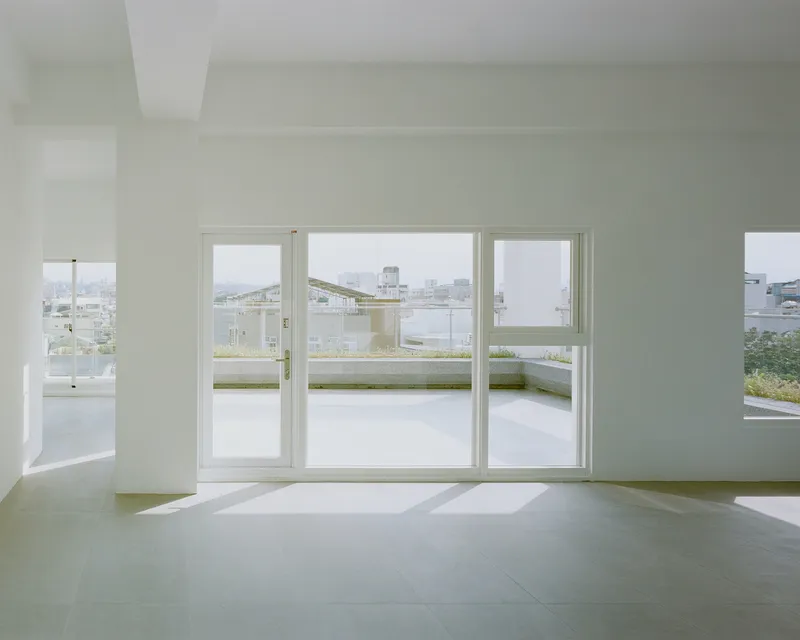

Responsive Design for Compact Urban Sites
To maximize spatial efficiency, the basement incorporates a sloped ramp for parking, freeing up surface-level space. The building mass at ground level extends to the street edge, maintaining urban continuity. Toward the rear, however, the structure pulls back slightly, creating separation from adjacent properties and ensuring natural light and airflow.


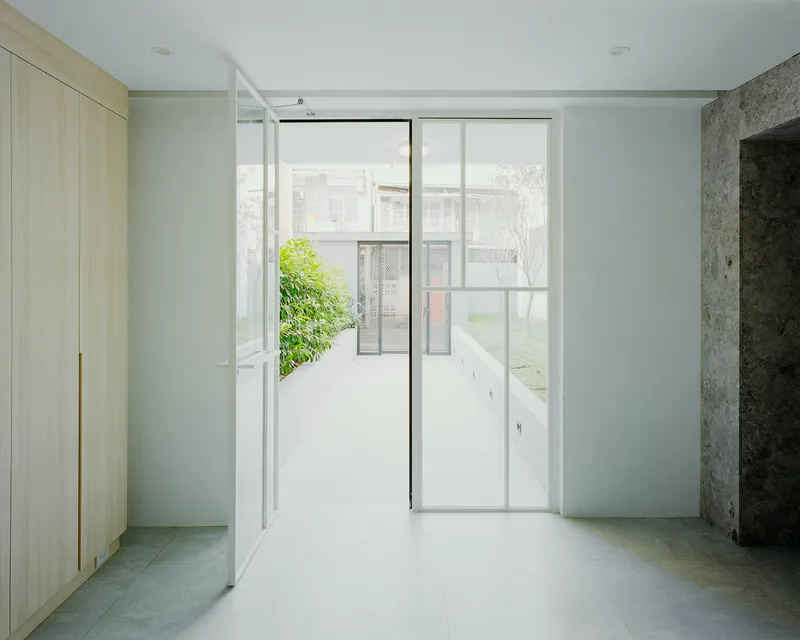
Above ground, the residential wings are staggered to create subtle offsets between units. This vertical play in massing allows for both visual variety and a respectful buffer between neighbors. It also opens up possibilities for intermediate green spaces and shared balconies that act as social thresholds.

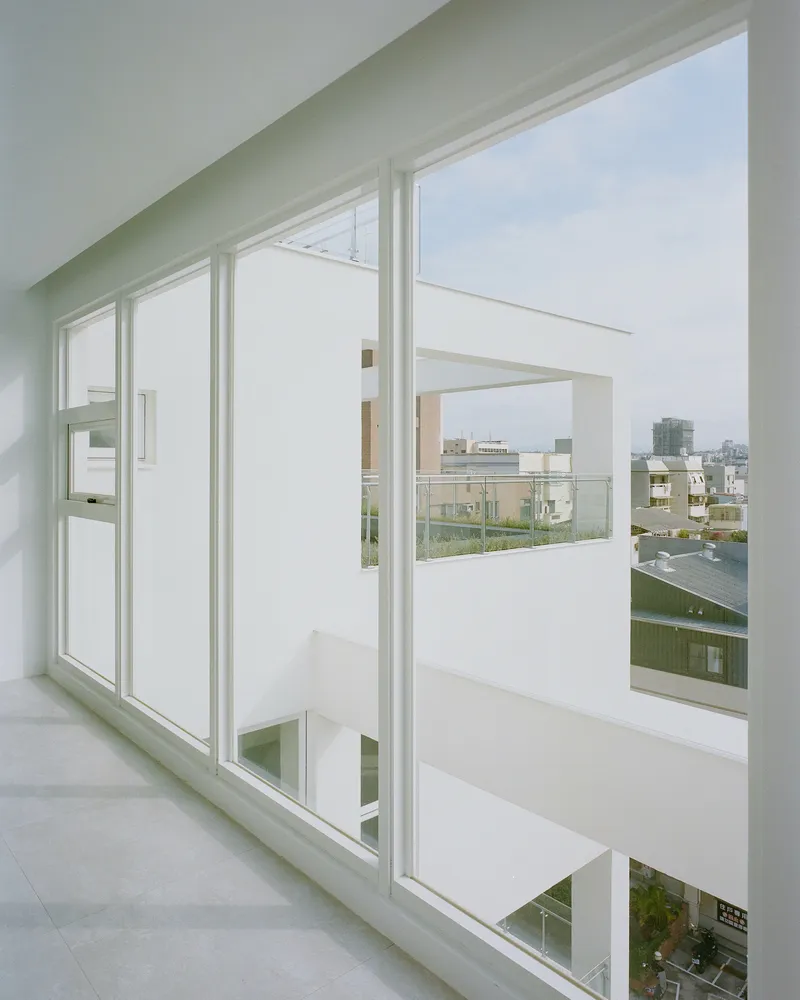
Shared Spaces That Echo Traditional Courtyards
B+P Architects delineates two layers of shared space in the project. At the urban scale, the alley leading to the residential entrance is softened with landscaping, forming a welcoming prelude to daily life. At the residential scale, communal stair halls, balconies, and planted green buffers serve as vertical extensions of neighborhood interaction.

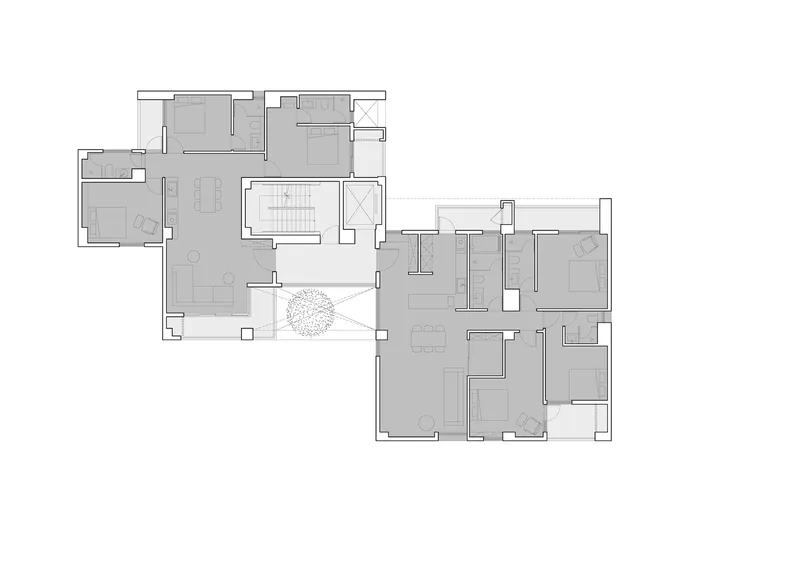
Trees are thoughtfully planted in the interstitial zones between paired units. These green pockets function as both visual and acoustic buffers, while also offering residents a touch of nature within the city. Living and dining areas open up to these shared spaces, encouraging casual visual connection and soft interaction among neighbors.

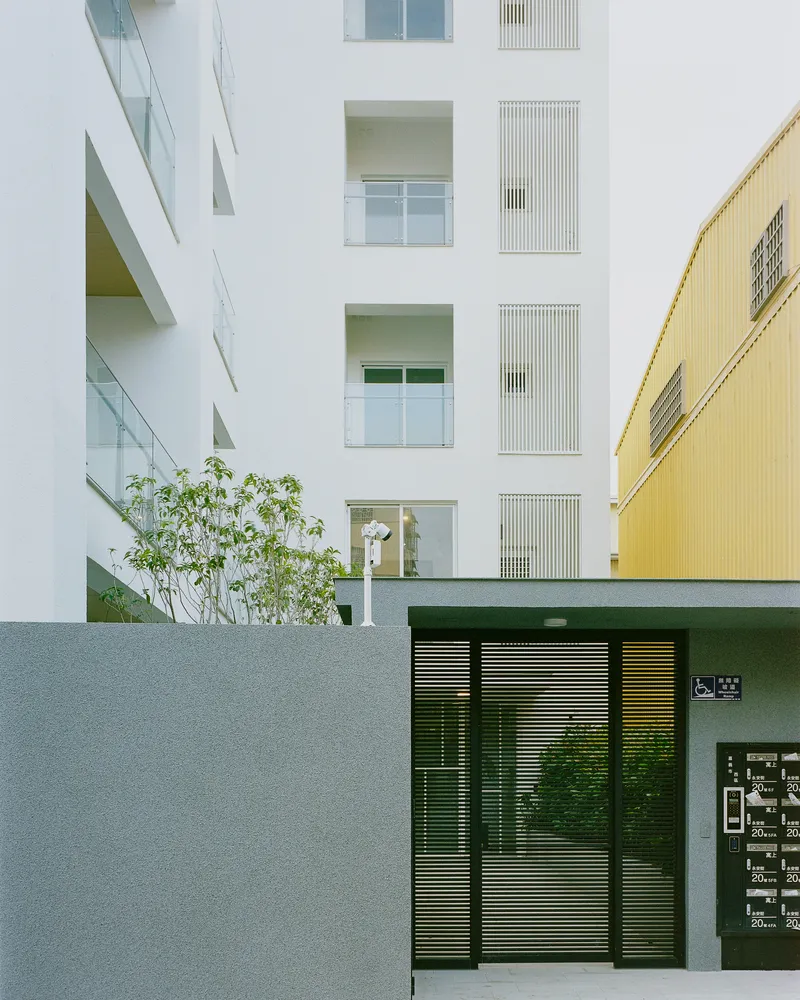
Diverse Layouts Inspired by Memory and Place
Unlike standardized apartment typologies, the units in Apartment #1 are uniquely configured from the third to sixth floors. The central stairwell acts as the spine, with private bedrooms branching out to face either the park or the rear alley. This arrangement allows each unit to form its own relationship with the surrounding urban landscape.


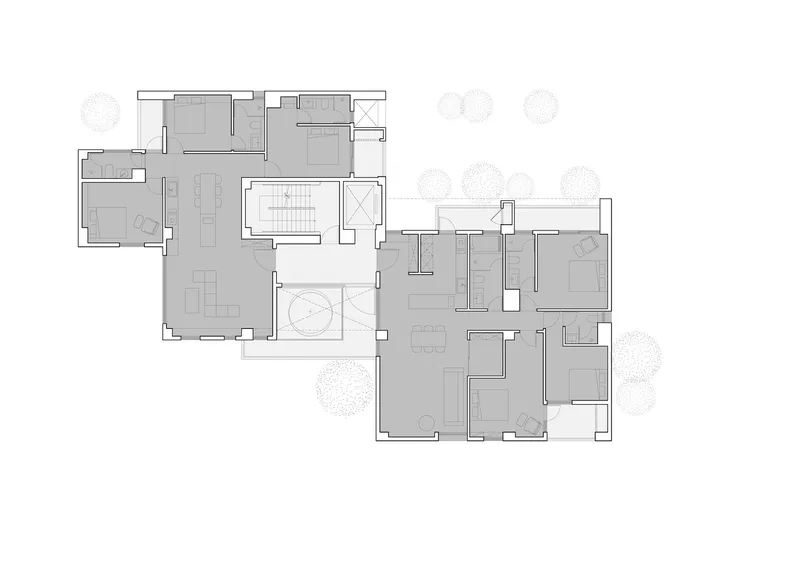
The architecture recalls the lived experience of Chiayi’s older neighborhoods—of walking home through alleys lined with gardens, gates, and fences. It is a reinterpretation of the modest, layered spaces of single-family homes into a multi-unit residential form, bringing together the familiarity of individual living with the efficiency of collective housing.


A Contemporary Vision Rooted in Tradition
Apartment #1 stands as a thoughtful exploration of how urban apartment architecture in Taiwan can evolve to accommodate density without sacrificing identity or comfort. It transforms memories of traditional housing—gardens, courtyards, alleys—into a collective spatial language suited for contemporary urban life.

Through its layered thresholds, shared balconies, and sensitive massing, the building encourages a sense of neighborhood rooted in intimacy and proximity. B+P Architects’ design is a testament to the potential of architectural design to bridge individual living habits with community-oriented spatial systems, especially in cities that retain strong neighborhood identities.


All Photographs are works of Studio Millspace


Popular Articles
Popular articles from the community


Opera on the Sea: Driftwood Logic Shapes a Timber Opera House on Estonia's Coast
Trevor Orgill's opera house translates the entangled drift of floating timber into a civic building where wood, water, and music converge.
Tsunami Convergenics: Turning Catastrophic Ocean Forces into Underwater Housing Infrastructure
A speculative underwater settlement off the coast of Onagawa, Japan, treats tsunamis and typhoons as energy sources rather than threats.
Faces of the Soviet Avant-Garde: Turning Moscow's Street Names into an Open-Air Museum
A network of sculptural installations across a Moscow residential district transforms forgotten architect names into spatial encounters with cultural memor

Manzana Morphosis: Stretching Barcelona's Grid into a Living Landscape for 2050
A radical reworking of the Eixample manzana turns density into a tool for generous public space, vertical ecology, and environmental performance.

Similar Reads
You might also enjoy these articles


Hodi-Mandai Geram
Project Function: Preservation and revitalization of the Intangible heritage and socio-spatial identity of the Hodi by Housing, Cultural Memory Center, Sacred Grove, landscape, local tourism economy


Olio Towers: A Mid-Rise for Performers That Fuses Housing, Rehearsal, and Stage
Located blocks from Houston's Theater District, this modular tower stacks living units around a central performance atrium.

Oasis: Modular Green Housing Carved into Dhaka's Urban Fabric
A shortlisted Plugin Housing entry reclaims unauthorized settlements in Dhaka with stepped concrete volumes, green roofs, and ventilation-driven design.

Black Hole: A Floating Megastructure for the Post-Physical Era
Emiliano Mazzarotto envisions a spherical, self-scaling arena where e-sports, digital hotels, and holographic stadiums replace traditional public space.

Explore Apartment Competitions
Discover active competitions in this discipline

Challenge to reimagine the Iron Throne

Photograph architecture without architects

Illustrate the lost glory of Angkor Wat - Render Challenge

Design challenge to reuse E-waste
Comments (0)
Please login or sign up to add comments
No comments yet. Be the first to comment!