
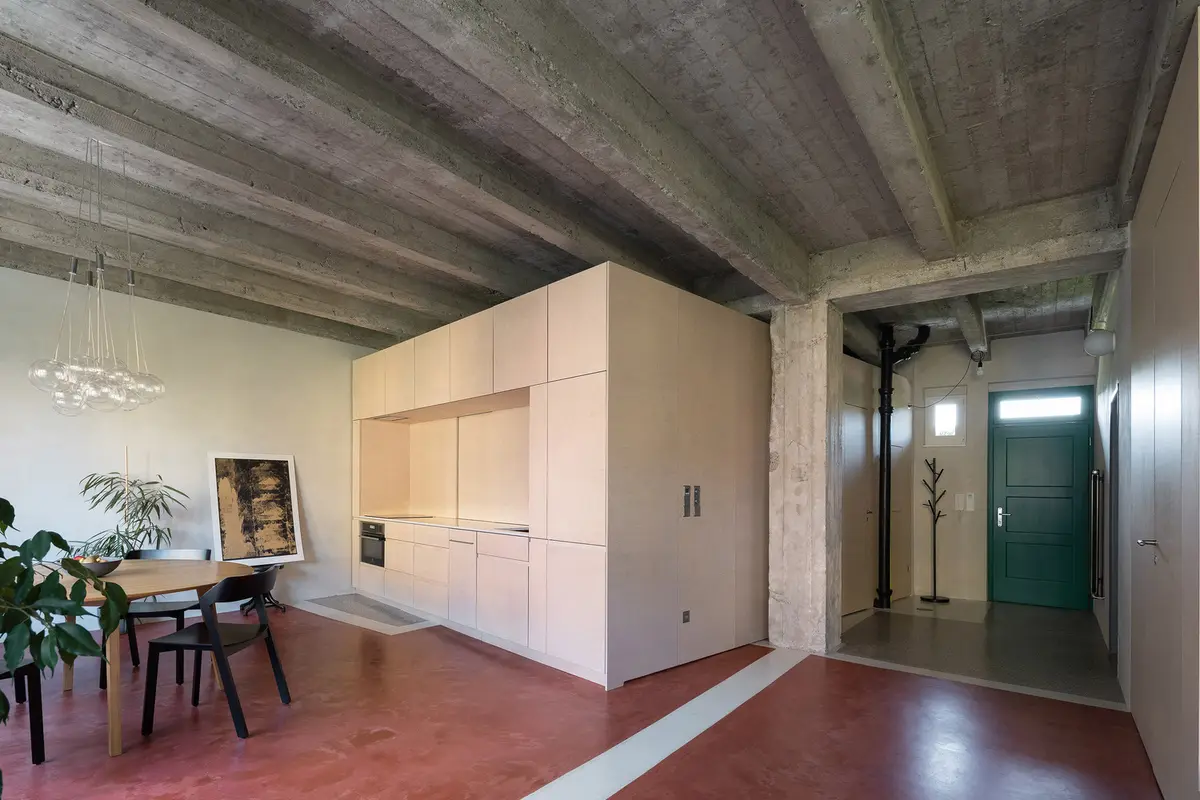
Apartment + Apartment by Progres Architekti, Prague
Apartment + Apartment by Progres Architekti in Prague blends open-plan living, historic details, wooden craftsmanship, natural light, greenery, and flexible modern spaces.


Merging Homes: A Personal Project
The Apartment + Apartment project began when the family purchased a unit adjacent to their existing home, exploring the possibility of merging the two spaces. While managing various client projects in the studio, the personal living space became a canvas for experimentation. The design focuses on airiness, natural light, flexible spaces, and greenery, creating a dynamic home that adapts to evolving family needs.
Historical Context and Architecture
Located in a functionalist apartment building, originally designed by Josef Chochol, Richard Ferdinand Podzemný, and František Míšek, the structure was celebrated for its modernist simplicity and light-filled interiors. Built in 1936, the building remains economical and airy, with its original architectural essence intact despite minor modifications over time.
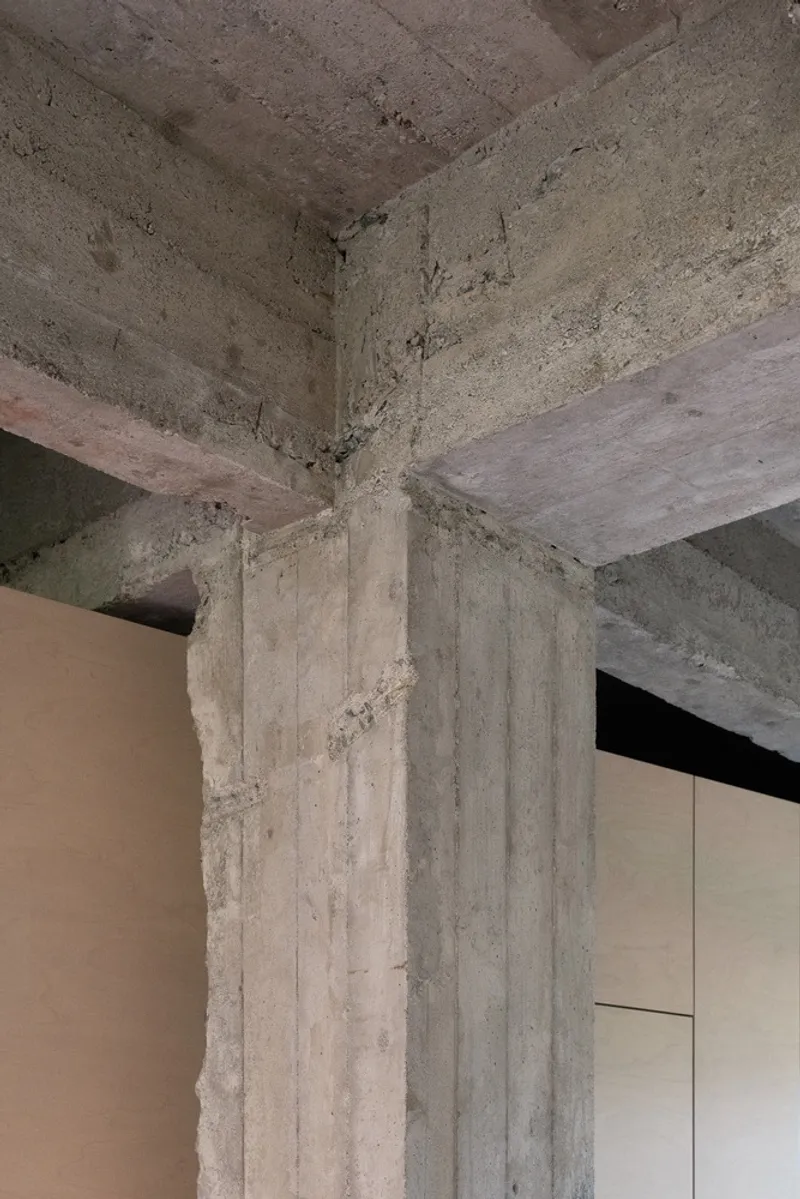
The structural system—a two-span reinforced concrete frame with ribbed ceilings and courtyard balconies—proved instrumental in the renovation. This flexible structural approach allowed the team to reconfigure interiors while respecting the building's historical integrity.
Interior Design: Open, Functional, and Transformable
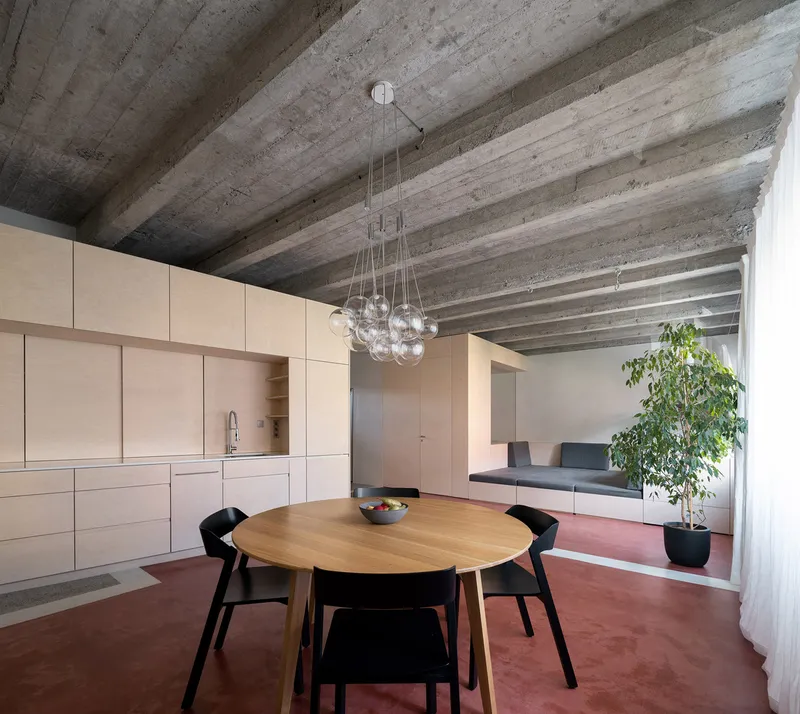
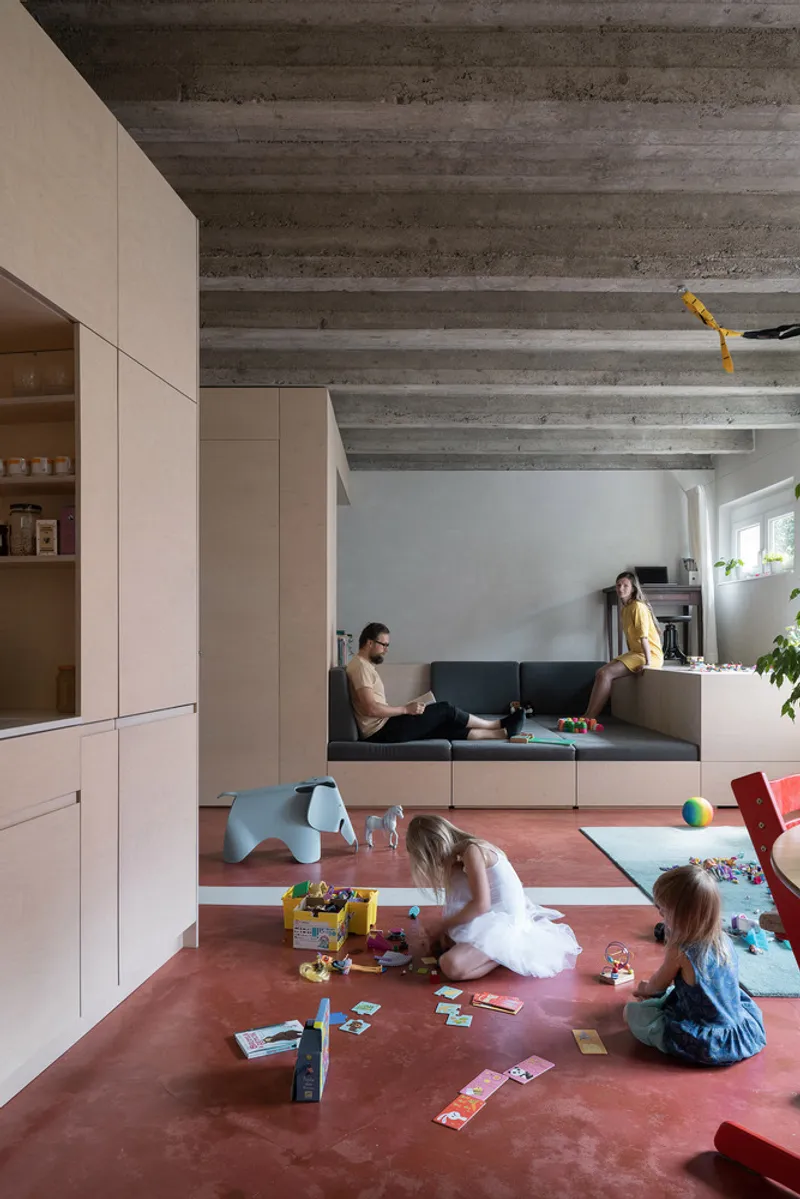
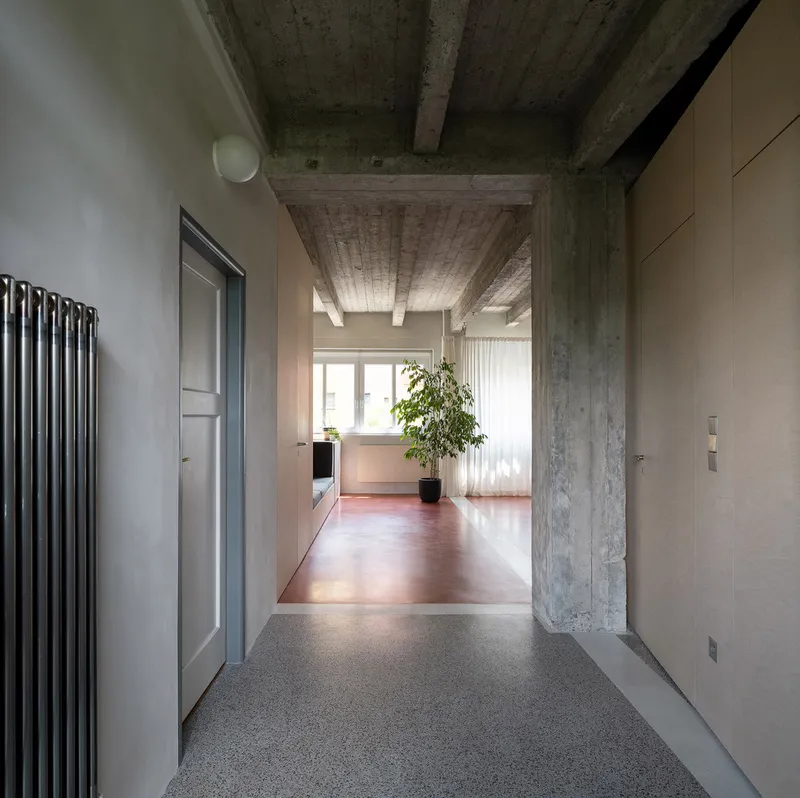
The renovation prioritized open-plan living and spatial adaptability. Original structural elements were exposed, brick linings removed, and floors preserved to reveal a high-quality, flexible core. Two corner rooms were retained due to their functionality, while the rest of the space was designed for continuous transformation.
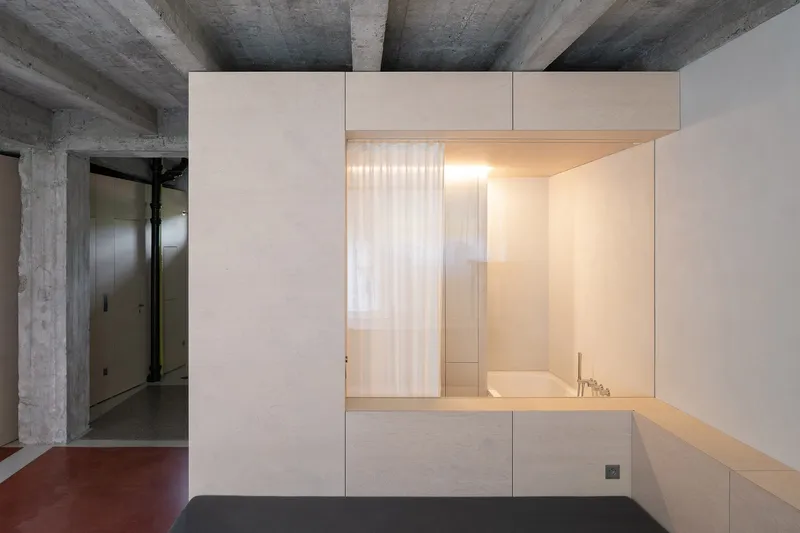
Two wooden “boxes” define independent functional areas:
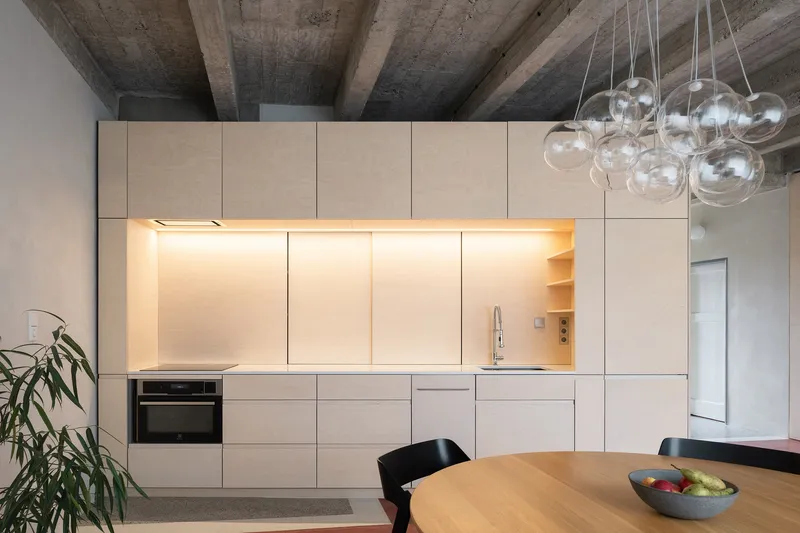
- Kitchen Box: Includes kitchen, storage, and a small toilet, creating an intermediate space with a cloakroom and utility room.
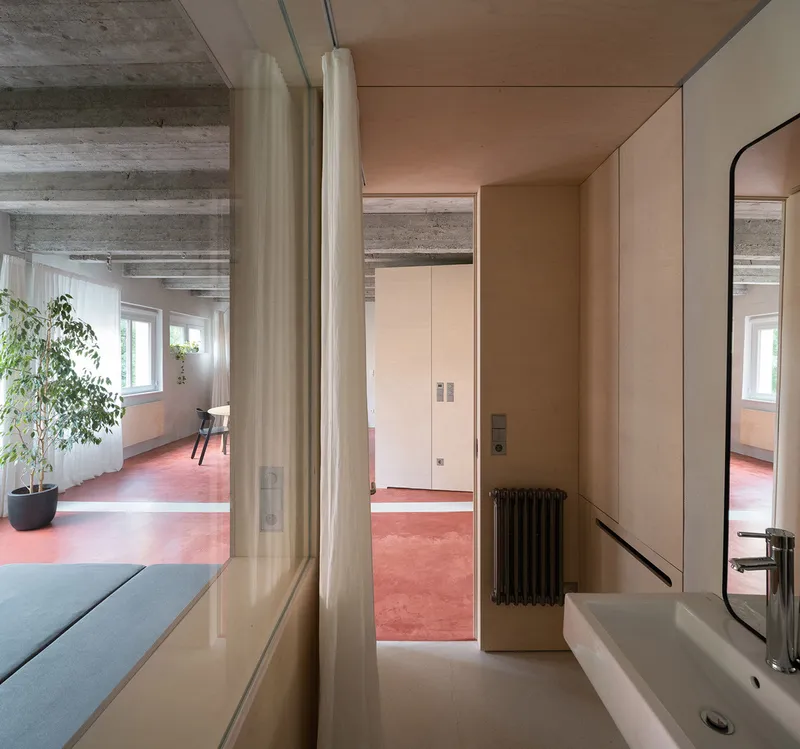
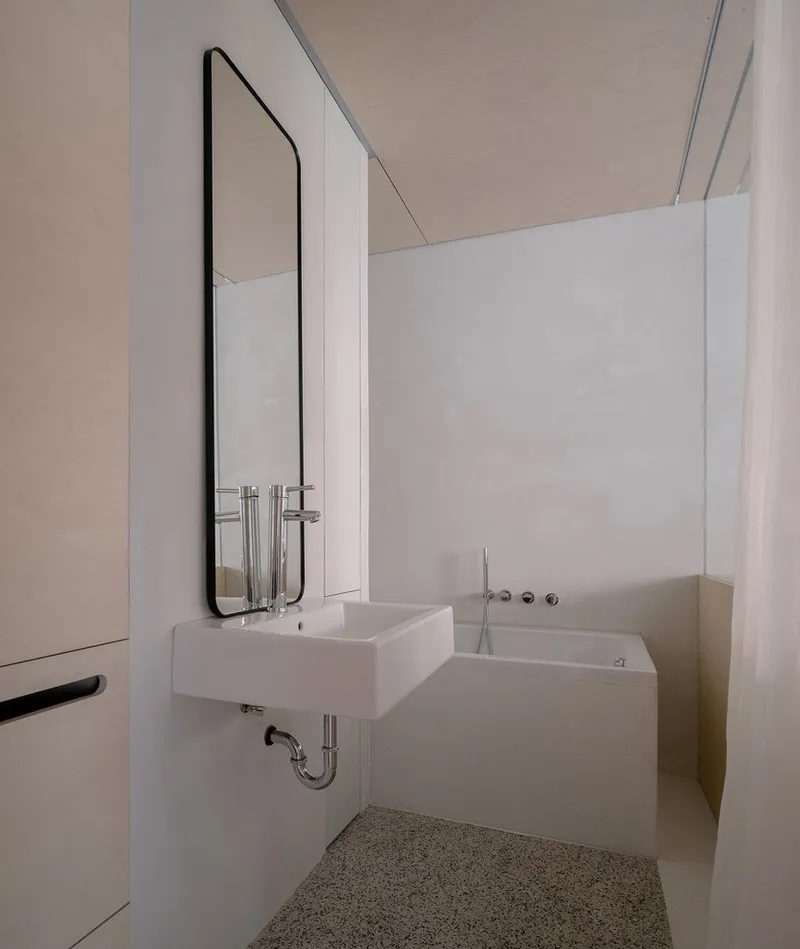
- Bathroom & Workspace Box: Contains a bathroom with a view, a resting space, and a workspace.
The remaining area remains open, allowing fluid circulation, natural light penetration, and versatility in use.
Materials and Craftsmanship
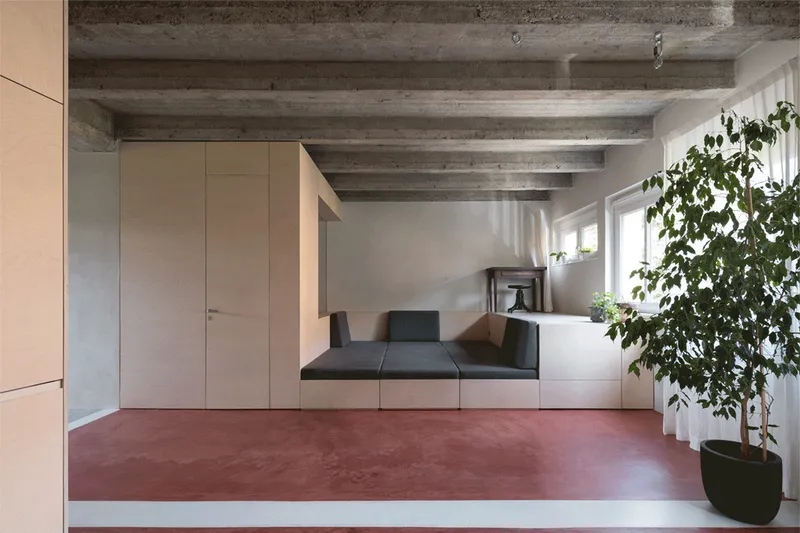
Wood is central to the design, both as structural and furniture material, blurring boundaries between walls and furnishings. The family’s joinery workshop contributed to crafting custom wooden elements, emphasizing handmade quality, warmth, and tactile experience.
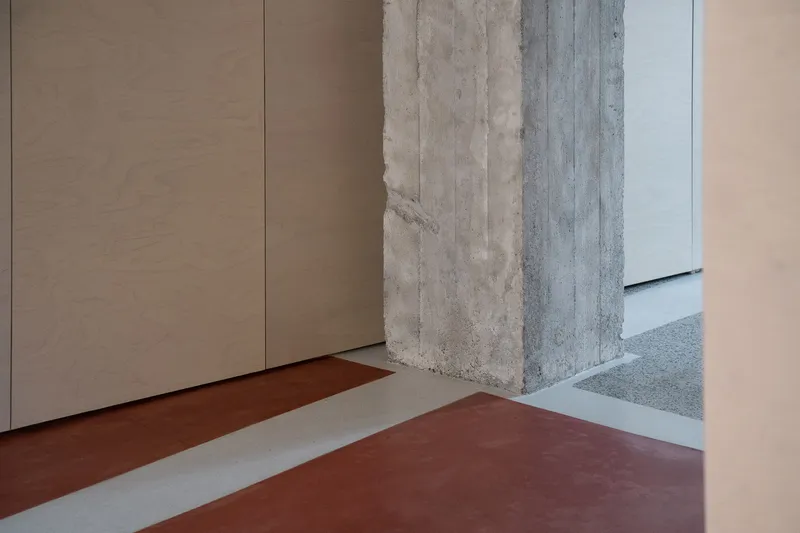
Original features such as xylolite floors, coved ceilings, and brass-fitted doors were preserved, while subtle details like a white terrazzo strip hint at the apartment’s original layout, maintaining a dialogue between past and present.
A Home of Light, Flexibility, and Connection
The Apartment + Apartment project embodies functional elegance, modernist heritage, and personal expression. Its combination of open spaces, intimate nooks, natural materials, and adaptable layouts creates a home that evolves alongside its inhabitants, celebrating both history and contemporary living.
All Photographs are works of Alexandra Timpau


Popular Articles
Popular articles from the community


David Ortega Stacks a Two-Story Mexico City Penthouse Around a Steel Stair and a Pergola-Shaded Roof Terrace
In Colonia Roma, a 300 m² penthouse uses oak joinery, a planted steel stair and a slatted roof pergola to make a new-build apartment feel like a house.

longwave studio Reorganizes a 112 m² Tainan Apartment Around the Daily Routines of a Family and Two Cats
In Tainan, Taiwan, birch plywood, rust-red furniture and a freestanding plaster wall link arrival, storage, work and family life in one apartment.

Jaramillo Van Sluys Arquitectura and Urbanismo Turn a Demolished Registry Lot in Quito into an Orchard Plaza
In Quito's Centro Histórico, a 2,800 m² plaza exposes the San Agustín convent wall and redraws its lost Augustinian orchard in volcanic stone.

Architekt Andreas Gruber Scatters 23 Dark Timber Chalets Across a South Tyrolean Forest Edge
In Molini di Tures, Amonti Chalets breaks a resort into a hamlet of gabled timber houses, with parking, storage and services pushed into the slope.

Similar Reads
You might also enjoy these articles


Hodi-Mandai Geram
Project Function: Preservation and revitalization of the Intangible heritage and socio-spatial identity of the Hodi by Housing, Cultural Memory Center, Sacred Grove, landscape, local tourism economy


Olio Towers: A Mid-Rise for Performers That Fuses Housing, Rehearsal, and Stage
Located blocks from Houston's Theater District, this modular tower stacks living units around a central performance atrium.

Oasis: Modular Green Housing Carved into Dhaka's Urban Fabric
A shortlisted Plugin Housing entry reclaims unauthorized settlements in Dhaka with stepped concrete volumes, green roofs, and ventilation-driven design.

Black Hole: A Floating Megastructure for the Post-Physical Era
Emiliano Mazzarotto envisions a spherical, self-scaling arena where e-sports, digital hotels, and holographic stadiums replace traditional public space.

Explore Archip Prague Competitions
Discover active competitions in this discipline

Design challenge to equip cities with modern furniture

Challenge to reimagine the Iron Throne

Photograph architecture without architects

Illustrate the lost glory of Angkor Wat - Render Challenge
Comments (0)
Please login or sign up to add comments
No comments yet. Be the first to comment!