

AQO Office by HYBE Design Team + TEKI Design
Minimalist office space in Shizuoka blending flexible design, natural light, and community connection through layered volumes and adaptive openness.


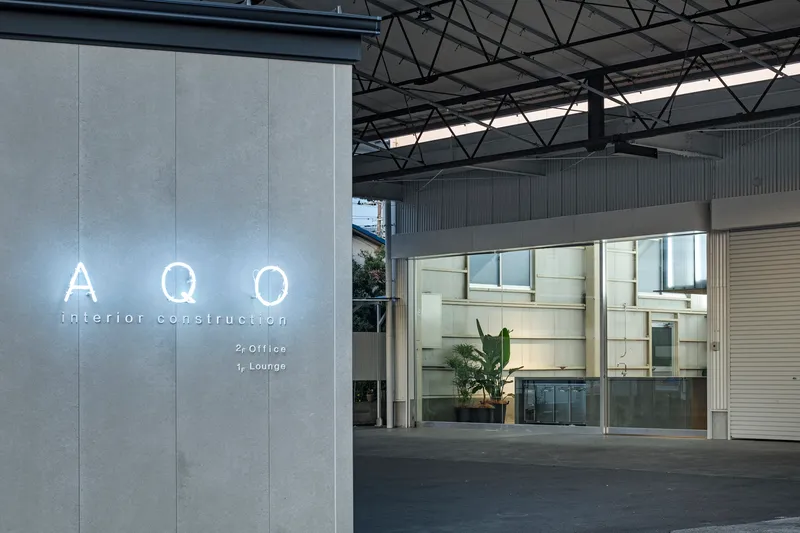
Located in Shizuoka, Japan, the AQO Office by HYBE Design Team in collaboration with TEKI Design is a 340 m² office space that redefines workplace architecture by fostering flexibility, community engagement, and spatial openness. Completed in 2022, the project reflects a thoughtful response to the evolving role of offices in local urban life.
Design Philosophy
The central question for the architects was: how can an office function as an active part of its community rather than a closed, isolated structure? With this in mind, the design prioritizes fluid boundaries, adaptable interiors, and visual transparency to invite connection between users and their environment.
Spatial Composition
The office comprises two levels with distinct spatial identities:
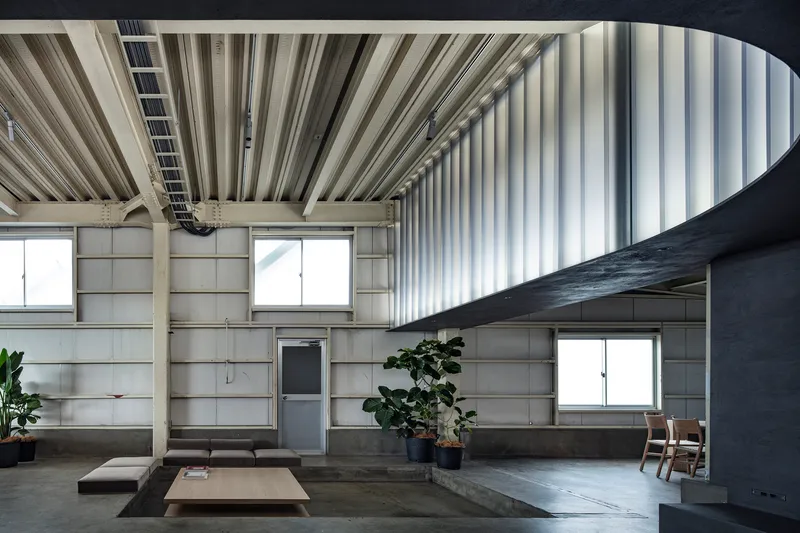
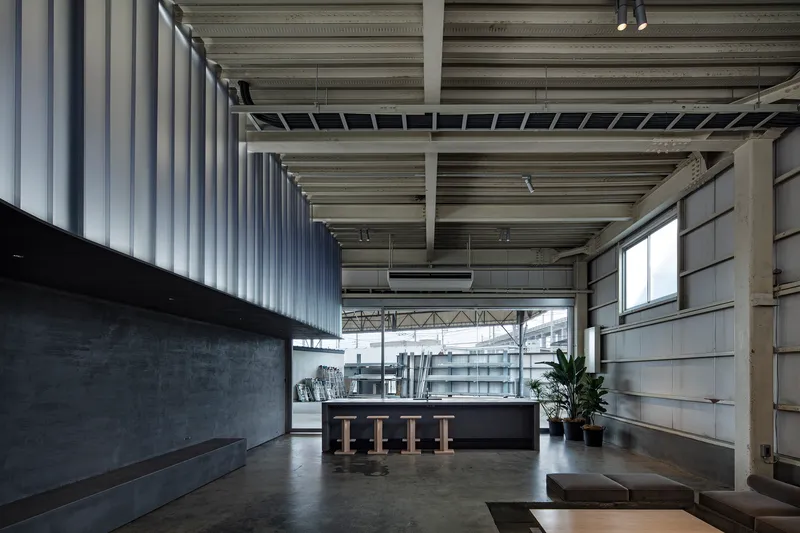
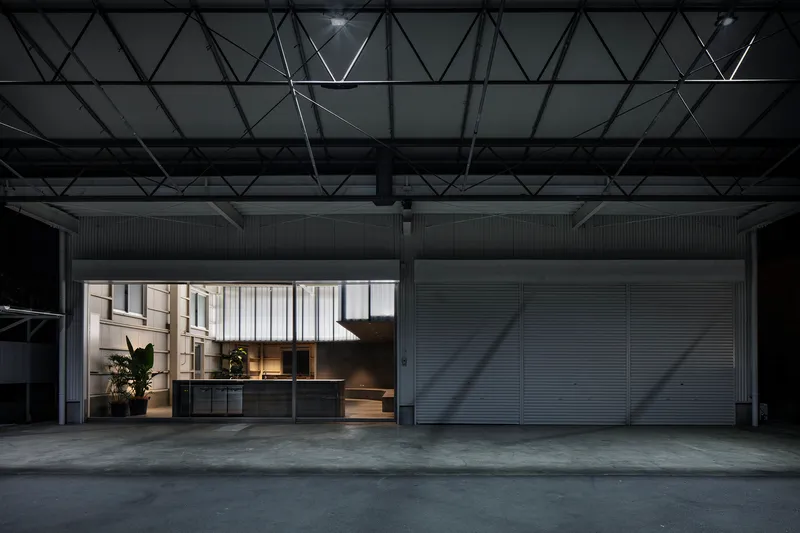
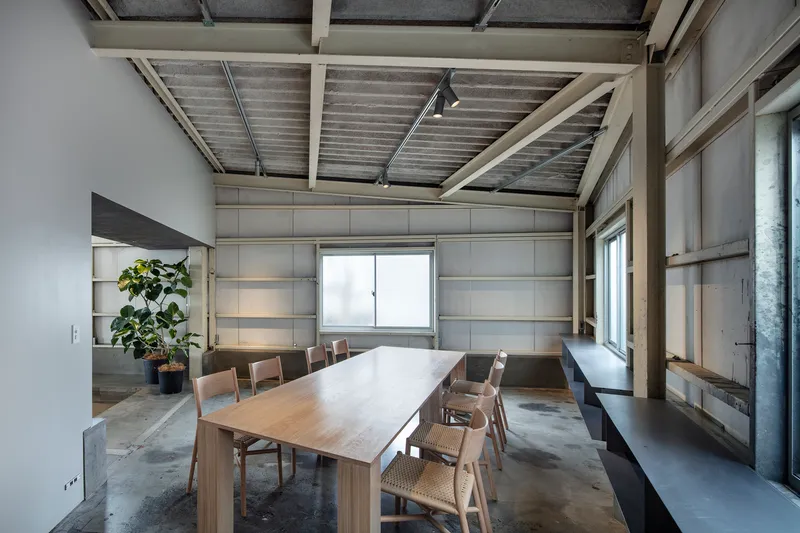
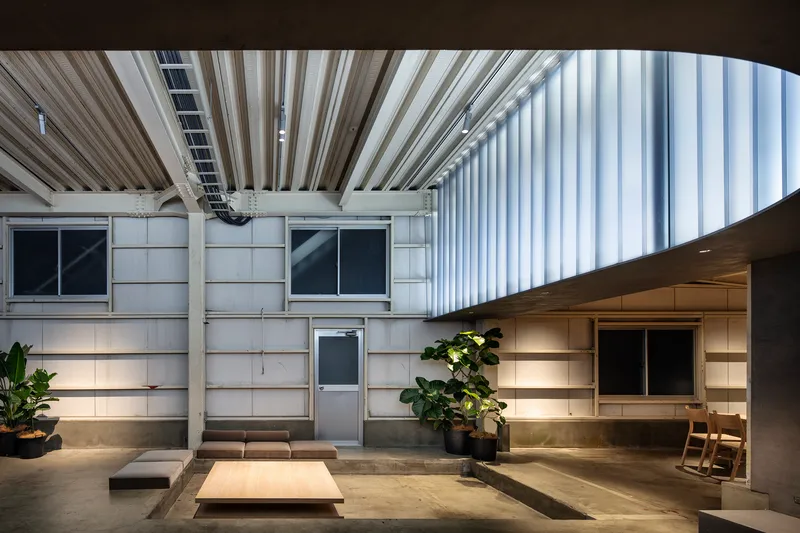
- Ground Floor: Originally a high-ceilinged, well-lit warehouse space, the ground level has been adapted using a lightweight partition wall. This wall filters natural light into the interior while maintaining a sense of openness. Core functions are discreetly embedded within a flexible, open layout that can evolve over time to accommodate new uses and workflows.
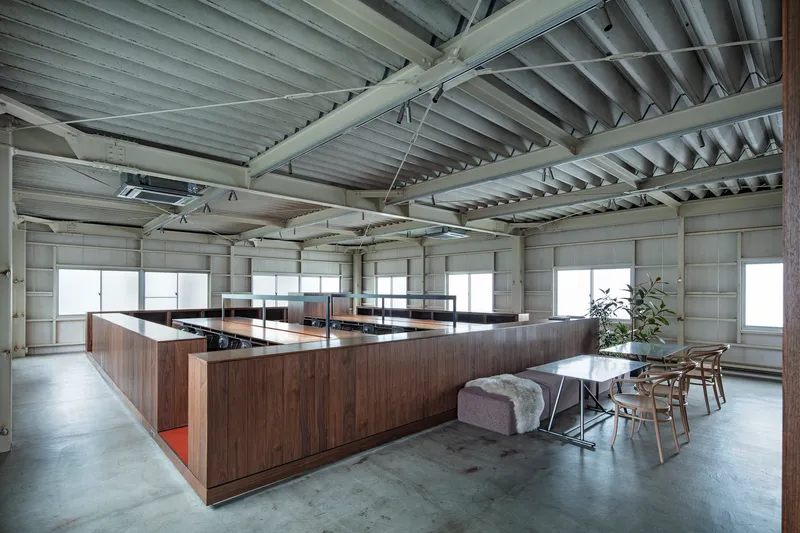
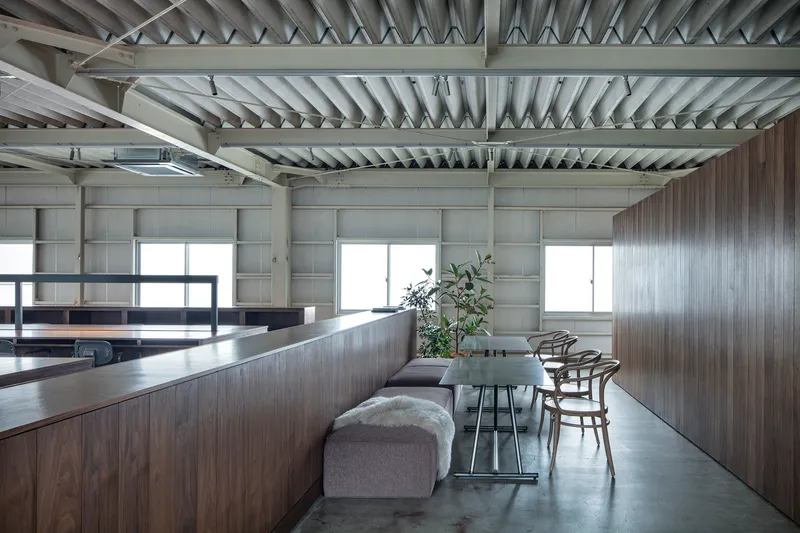
- Upper Floor: On the second floor, spatial gaps and deliberate voids between the functional volumes create zones for informal activity, collaboration, or quiet reflection. This floor mirrors the openness of the lower level but adds another layer of spatial dialogue through visual interconnection and differentiated use.

Materials and Atmosphere
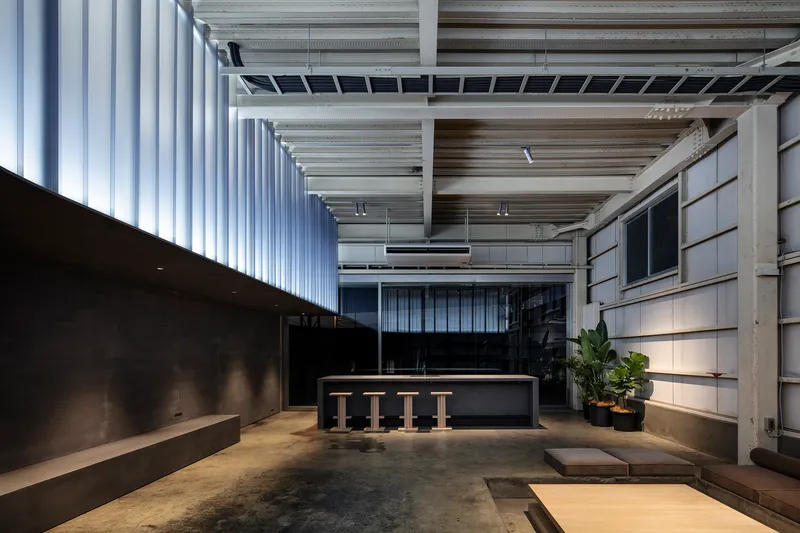
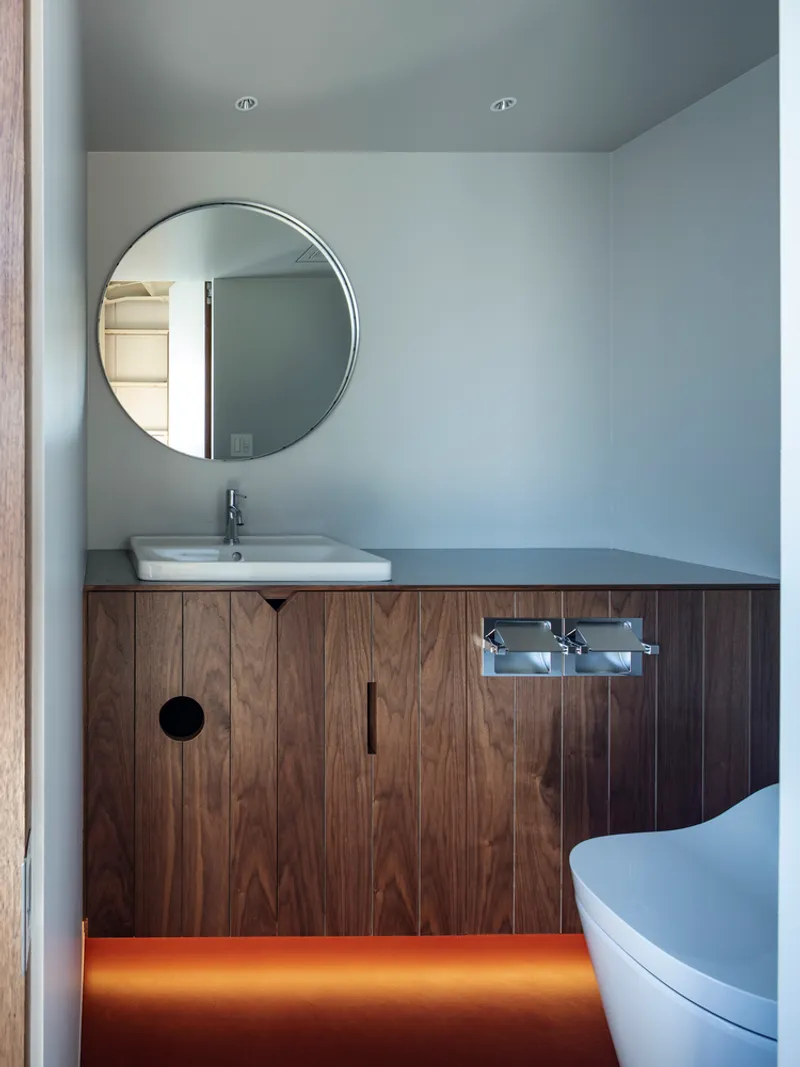
Natural materials, structural beams, and wood accents are used throughout to evoke warmth and approachability. The lighting design by Filaments accentuates the architectural elements while maintaining a calm, well-balanced working environment. Key furnishings and elements were crafted by mirai sousaku-jo, contributing to a bespoke atmosphere.
Adaptive and Inclusive Design
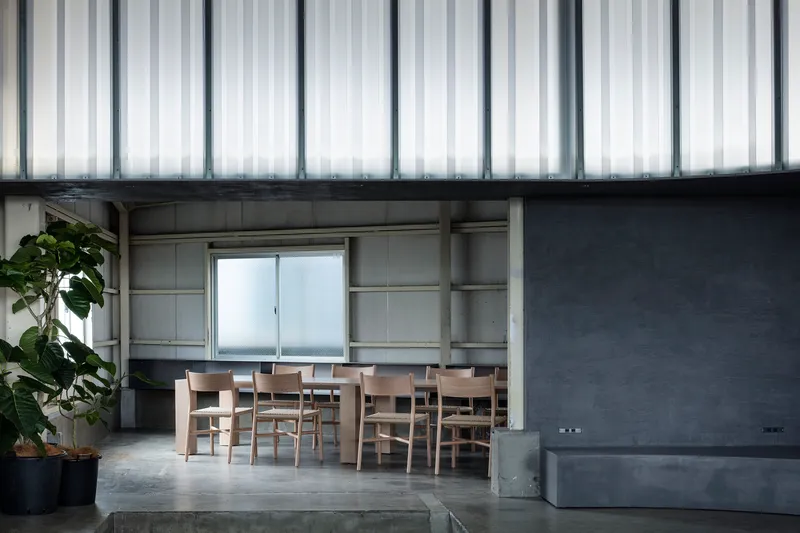
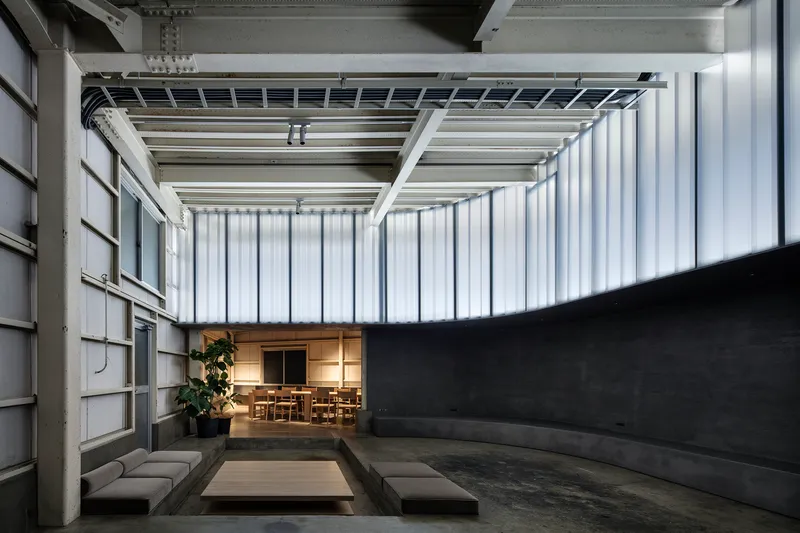
Rather than over-defining space with permanent functions, the design deliberately includes "blank spaces" — areas free of rigid programming that encourage organic occupation. This openness supports diverse work modes and allows the building to adapt over time to community or organizational shifts.
Community Connection
Set within a local context, the AQO Office is designed not just as a place of work, but as an approachable neighborhood presence. The transparency and spatial generosity of the building create an inviting threshold between public and private life, encouraging community interaction.
All the photographs are works of Kenta Hasegawa



Popular Articles
Popular articles from the community


The Ocean Hive: Sustainable Architecture for a Self-Sufficient Civilization at Sea
The Ocean Hive imagines sustainable architecture at sea, where modular habitats, algae, wave power and ocean waste sustain a growing colony.

The Musturak Paradise: Senior Living Architecture for a Connected Future in Temara, Morocco
The Musturak Paradise reimagines senior living architecture in Temara via private homes, social spaces, culture, community, and shared care.

Play: Fragments of Their World
Familiar architecture becomes modular playground design, creating safe spaces where displaced children can learn, connect, imagine and play.

Conexión: Biophilic Design Reimagines High-Rise Living in Hong Kong
Conexión reimagines high-rise living in Hong Kong through biophilic design, green facades, shared spaces, daylight, water and nature within.

Similar Reads
You might also enjoy these articles


Hodi-Mandai Geram
Project Function: Preservation and revitalization of the Intangible heritage and socio-spatial identity of the Hodi by Housing, Cultural Memory Center, Sacred Grove, landscape, local tourism economy


Olio Towers: A Mid-Rise for Performers That Fuses Housing, Rehearsal, and Stage
Located blocks from Houston's Theater District, this modular tower stacks living units around a central performance atrium.

Oasis: Modular Green Housing Carved into Dhaka's Urban Fabric
A shortlisted Plugin Housing entry reclaims unauthorized settlements in Dhaka with stepped concrete volumes, green roofs, and ventilation-driven design.

Black Hole: A Floating Megastructure for the Post-Physical Era
Emiliano Mazzarotto envisions a spherical, self-scaling arena where e-sports, digital hotels, and holographic stadiums replace traditional public space.


Explore Aotu Architecture Office Competitions
Discover active competitions in this discipline



Challenge to reimagine the Iron Throne


Photograph architecture without architects


Illustrate the lost glory of Angkor Wat - Render Challenge


Design challenge to reuse E-waste
Comments (0)
Please login or sign up to add comments
No comments yet. Be the first to comment!