
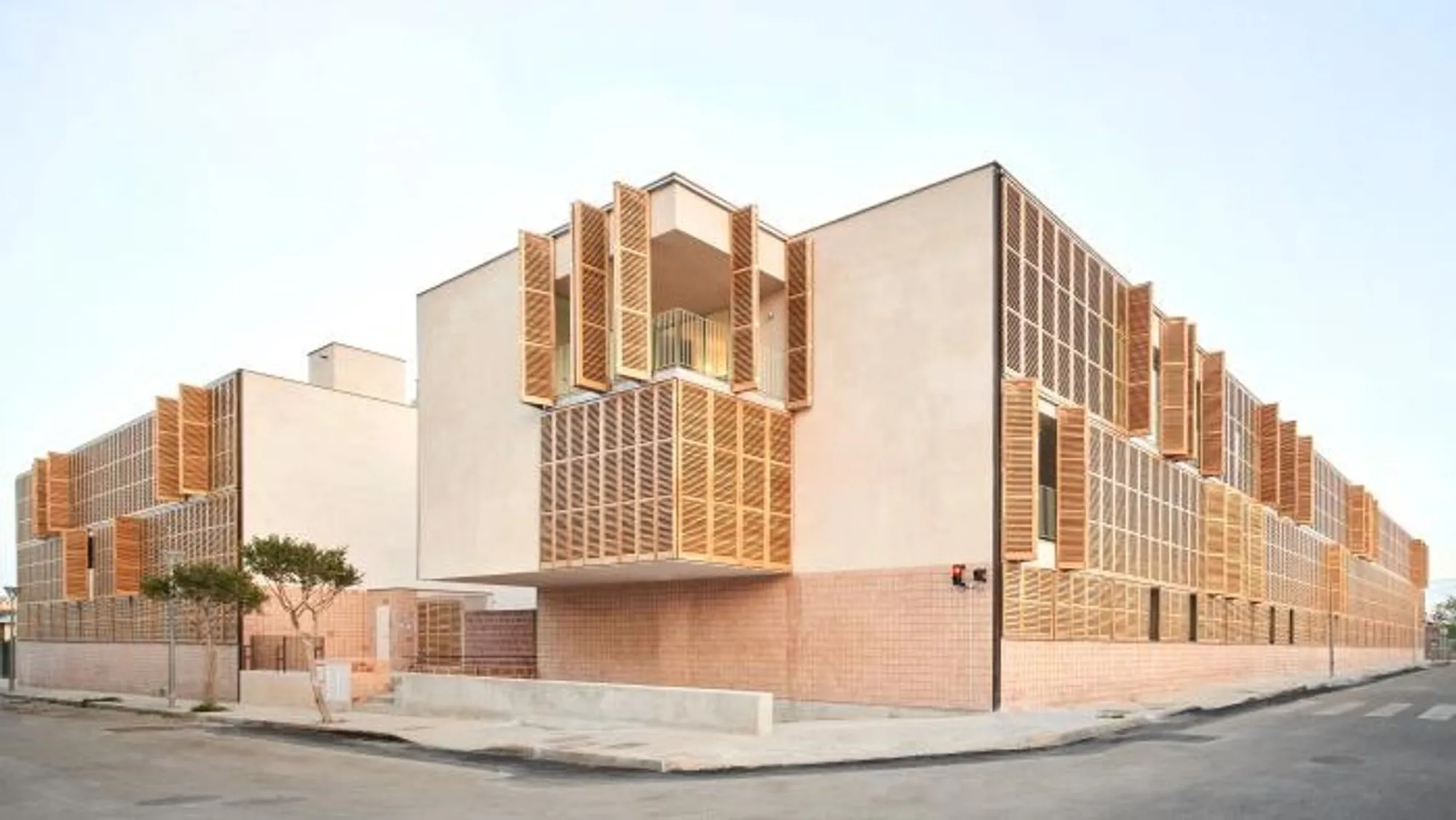
Architectural Marvel: Alventosa Morell Transforms Inca with 54 Inspiring Social Housing Units on the Balearic Islands
Revolutionizing Community Living: How Alventosa Morell's 54 Social Housing Units in Inca, Balearic Islands Are Redefining Affordable Housing?


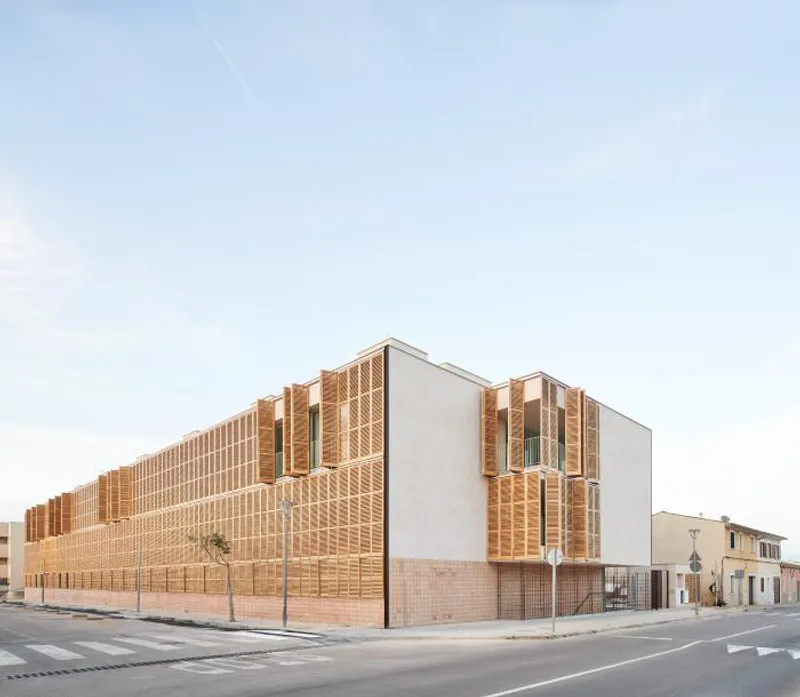
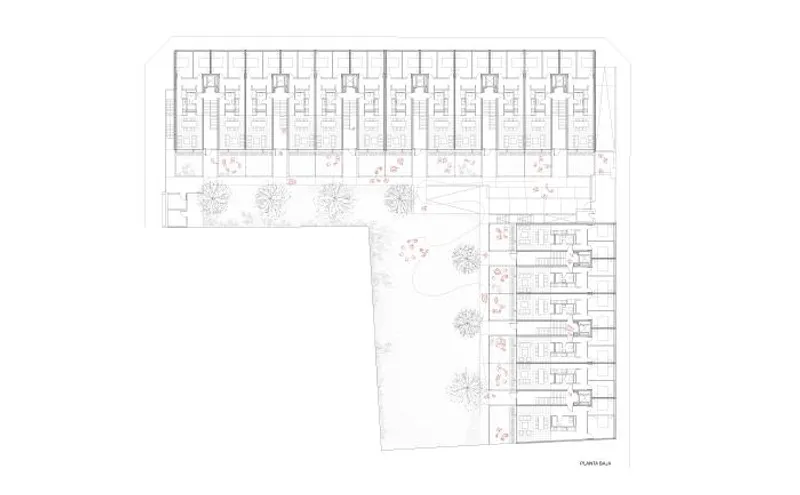
IBAVI's plot has an approximate area of 3,266 m2 and is rectangular in shape.
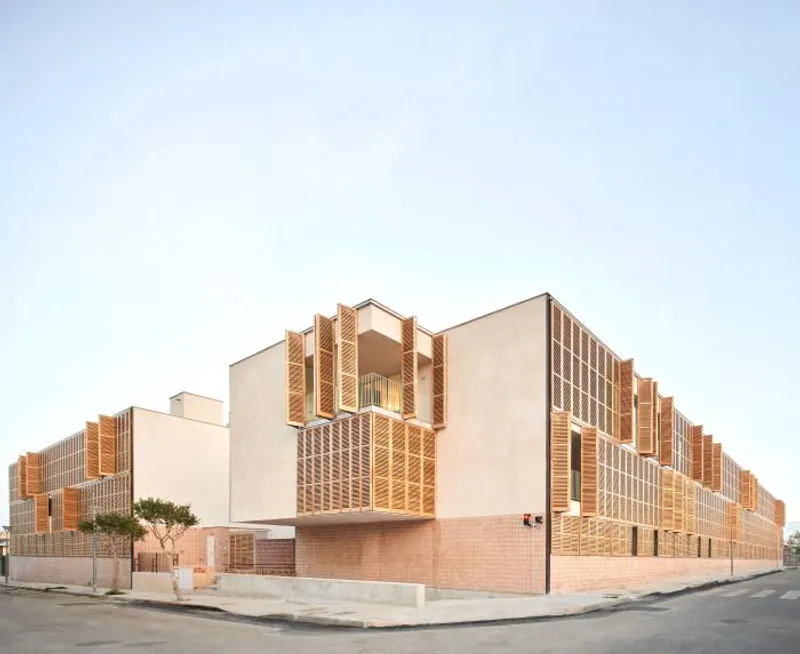
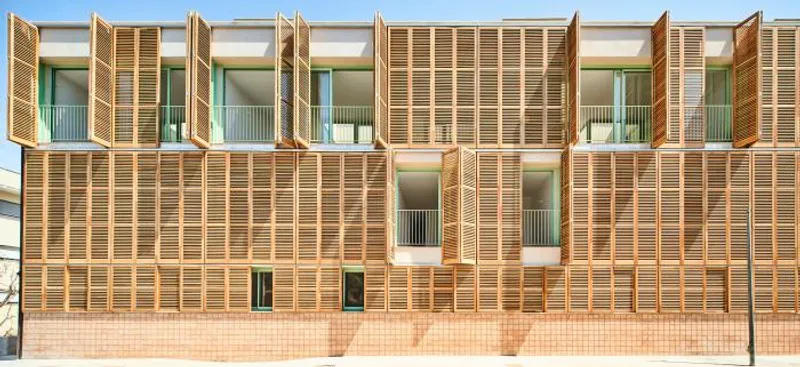
The proposed proposal addresses two essential elements, the proper integration of the building into the urban and physical landscape, as well as a solution that synthesizes the functional requirements of the program.
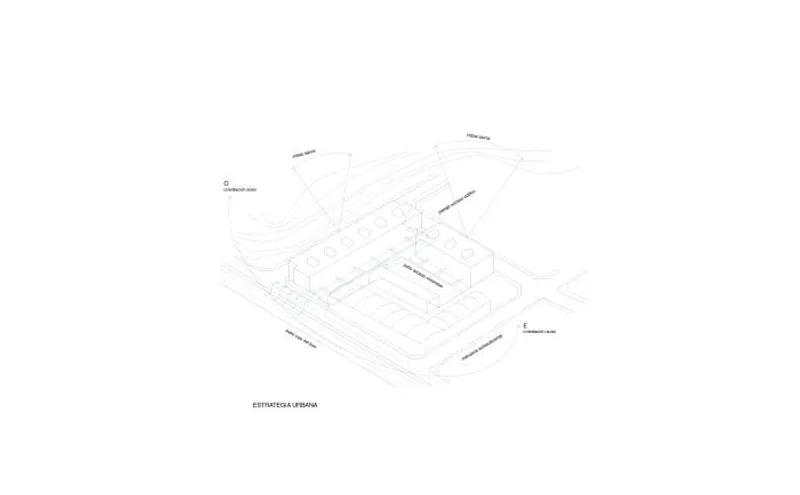
The Balearic Housing Institute (IBAVI) has proposed a program that includes an underground parking facility in accordance with municipal regulations. The 54 housing units are distributed across 18 flats per floor on the ground floor and two upper floors. There is also a communal area for the occupants to interact.
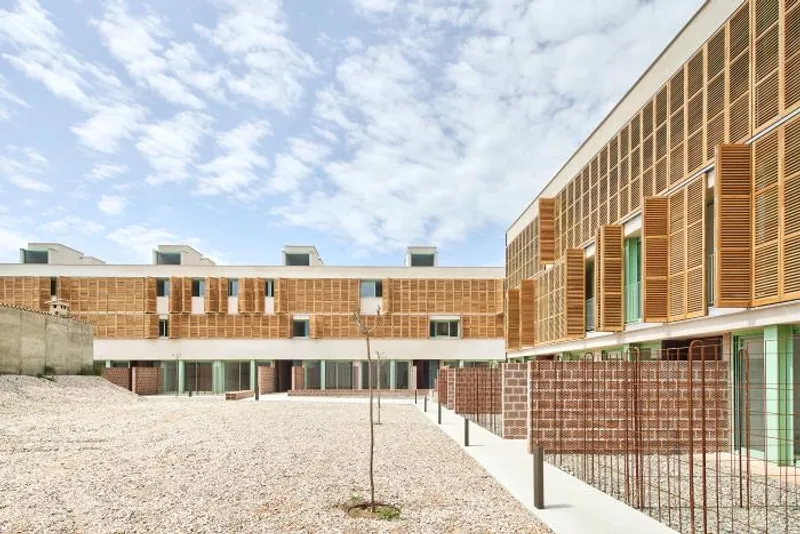
The structure is arranged along a north-south axis, resulting in the positioning of two distinct volumes, thereby forming a public area in between.

As a consequence of the strong unevenness of the land, the building has been settled on the upper level, creating an accessible route, thus we define the level +0.0 at the confluence of Raiguer Avenue with Emmet Abrahim street (the highest point of the site). as the starting level of the set.

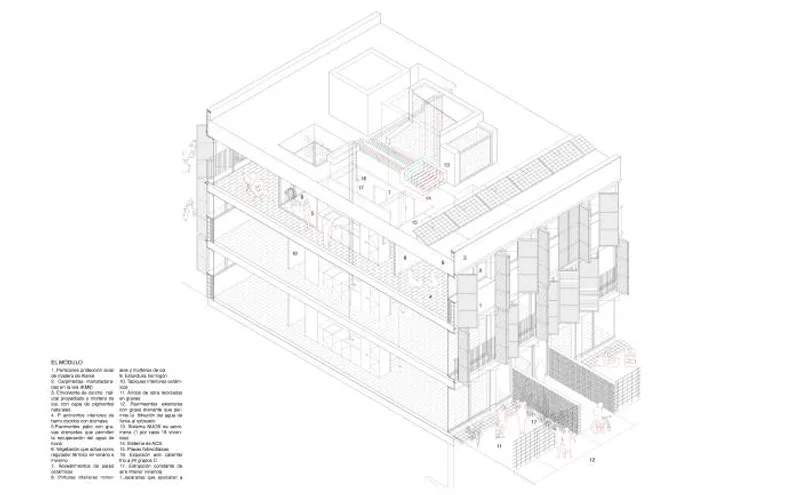
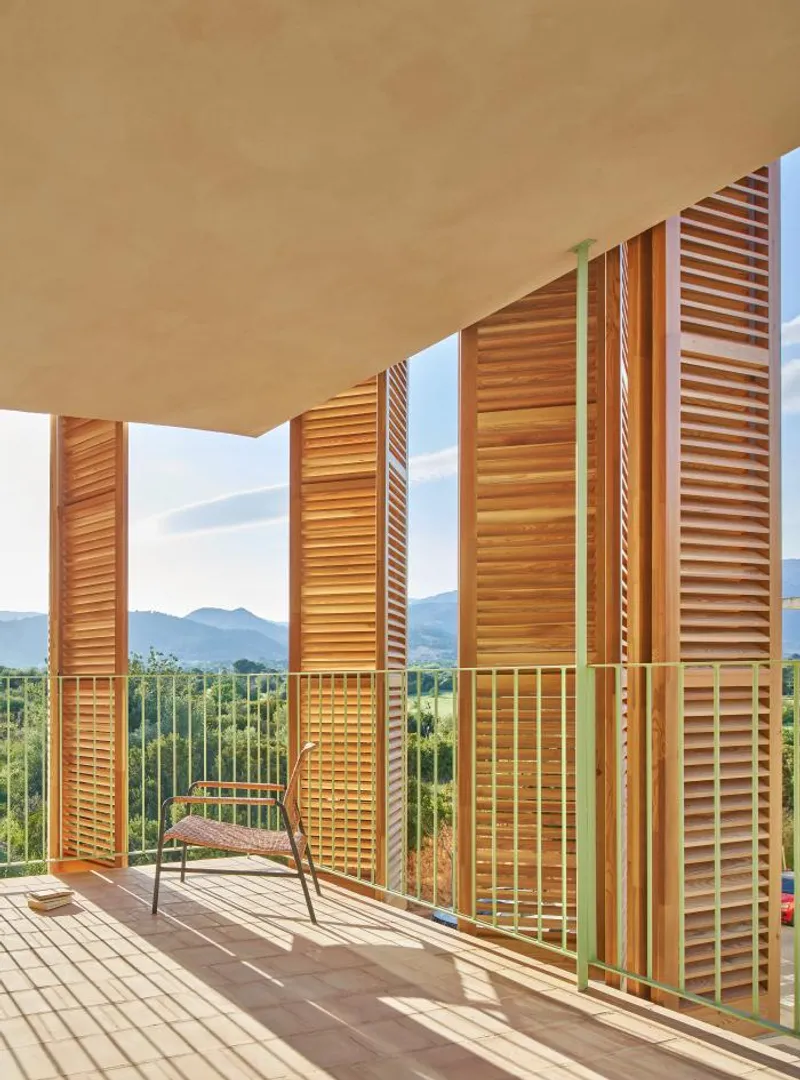
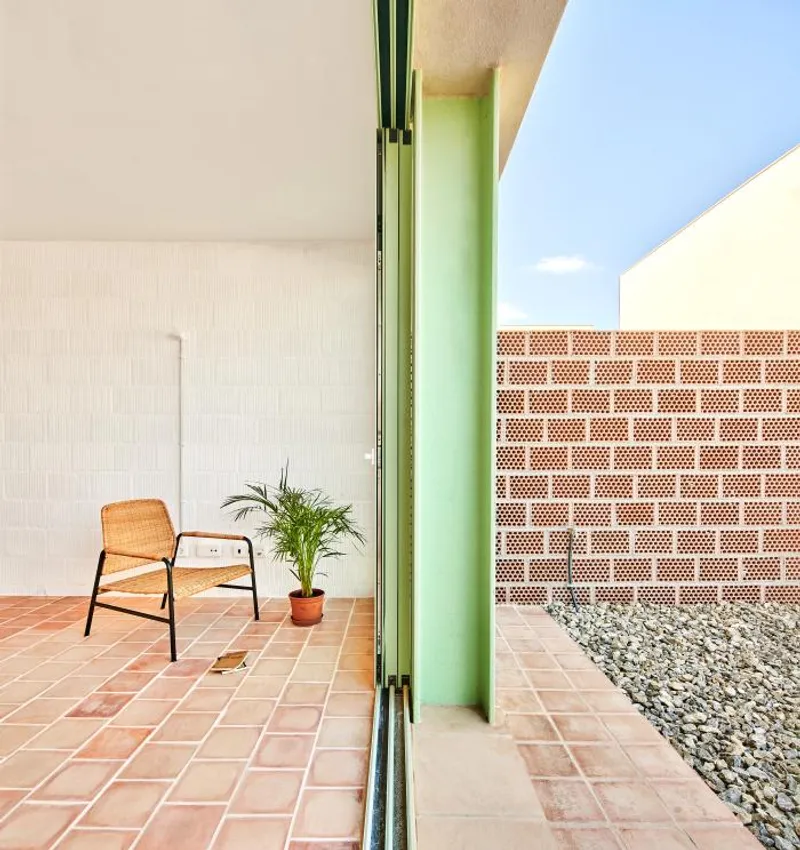
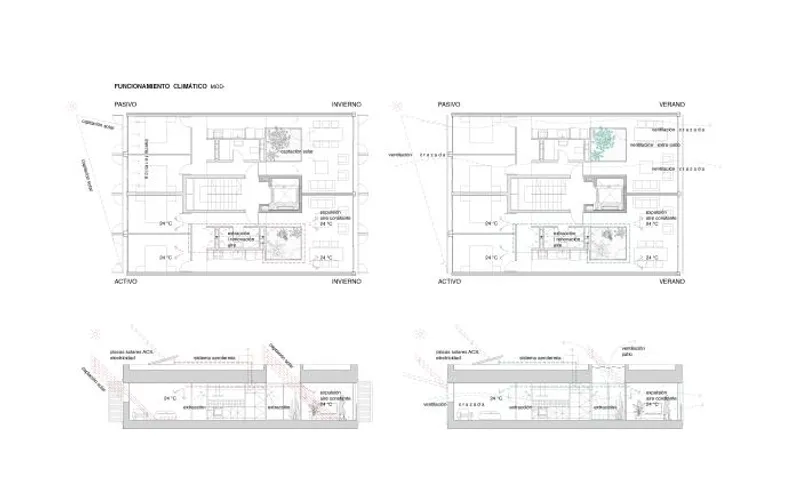
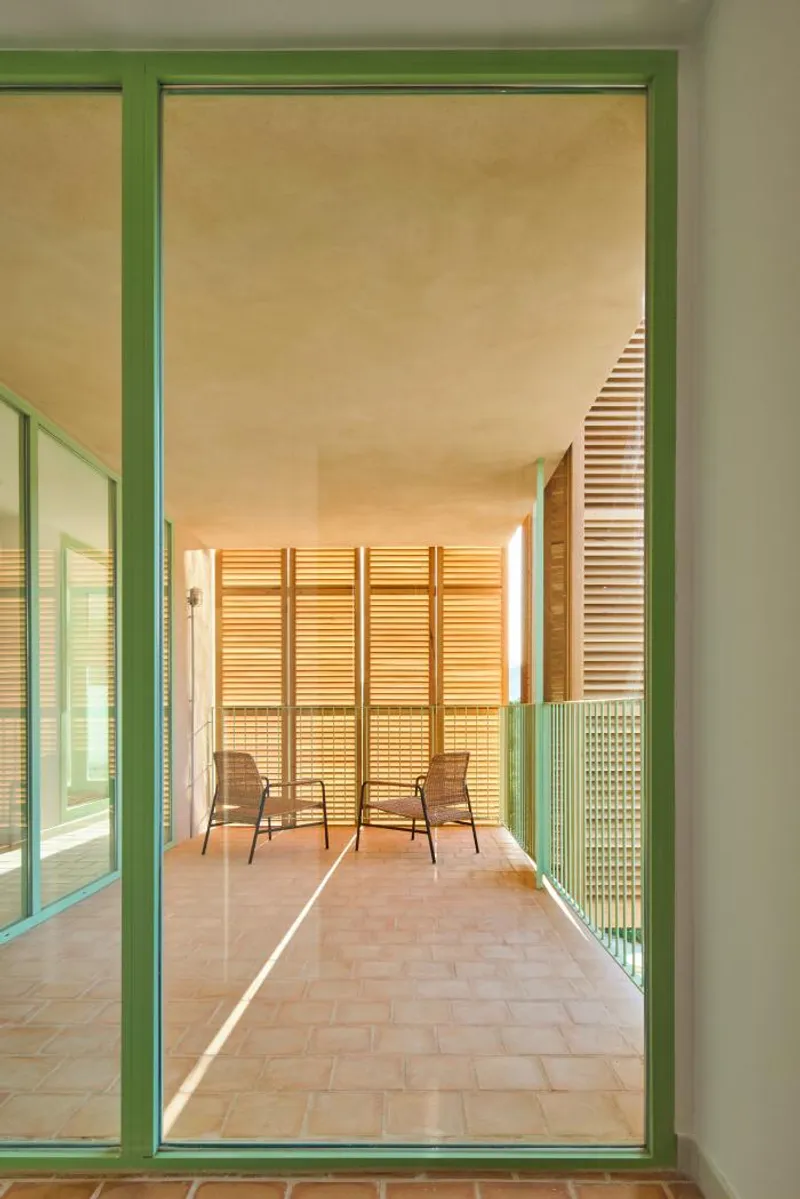
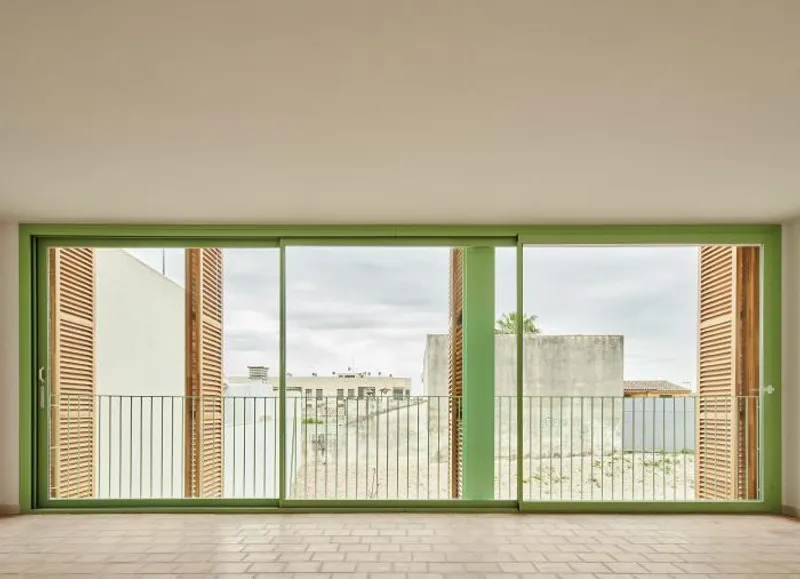
The housing module is organized around a central wet core that defines two areas with a double orientation. The location of the day and night areas are changing by height attending to the best sun orientation, winds, intimacy and views, generating different types of housing per floor. The houses have outdoor spaces: a private garden on the ground floor, and terraces on the successive floors
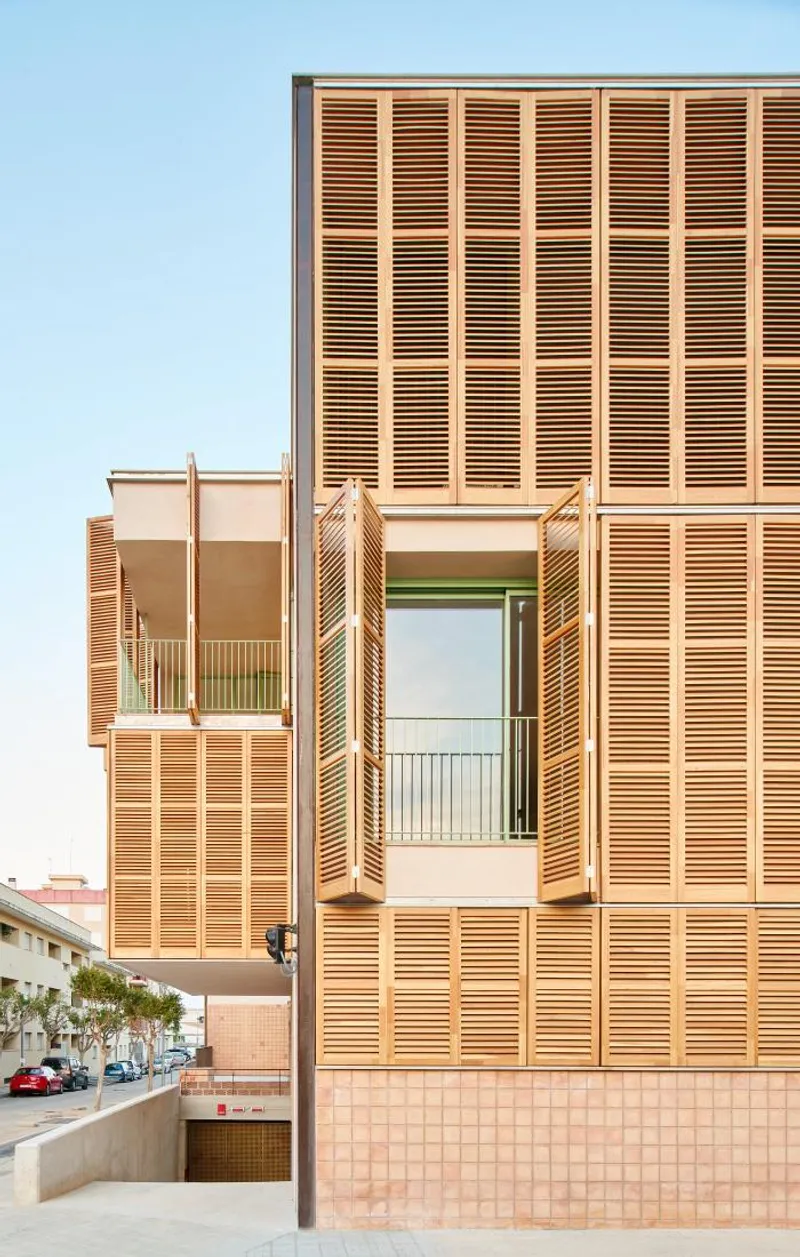
The structural solution of the building is using a system of reticular concrete slabs with large spans 35 cm thick and metal pillars. The underground is solved by means of concrete retaining walls, and the foundation by means of a system of deep foundations due to the expansive clays of the Zone.
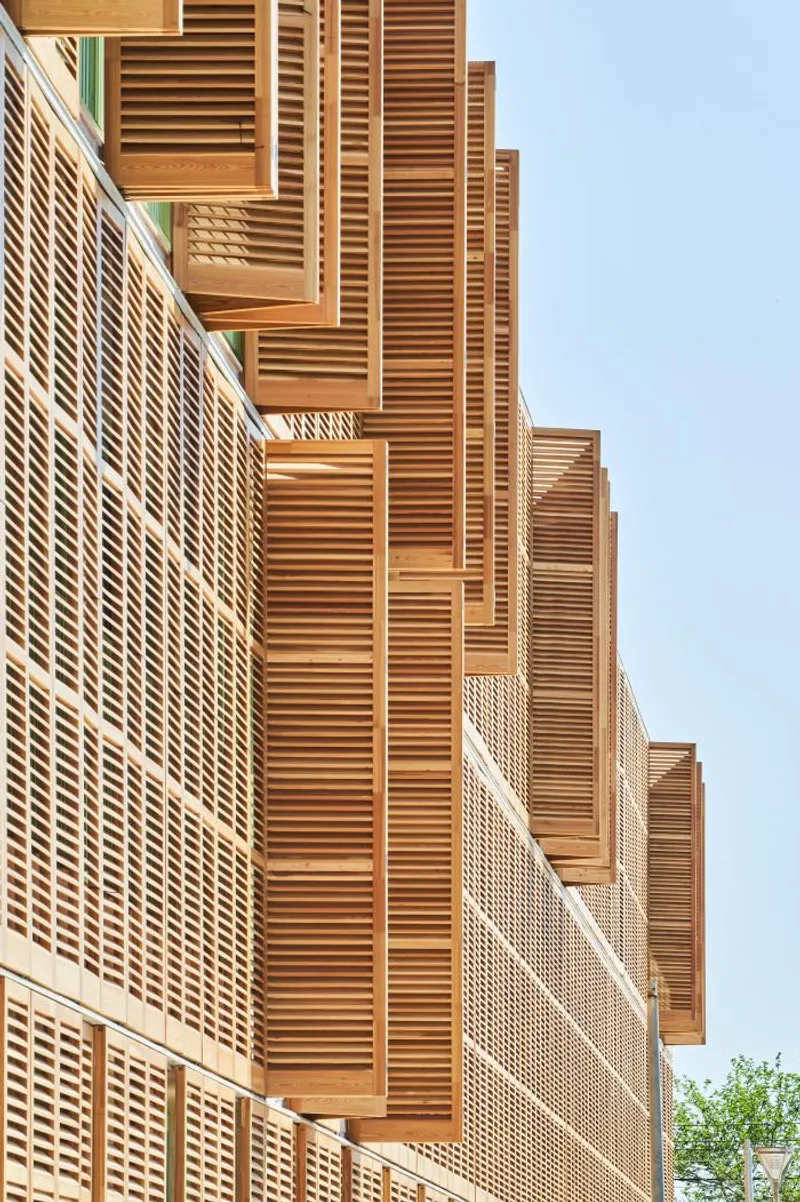
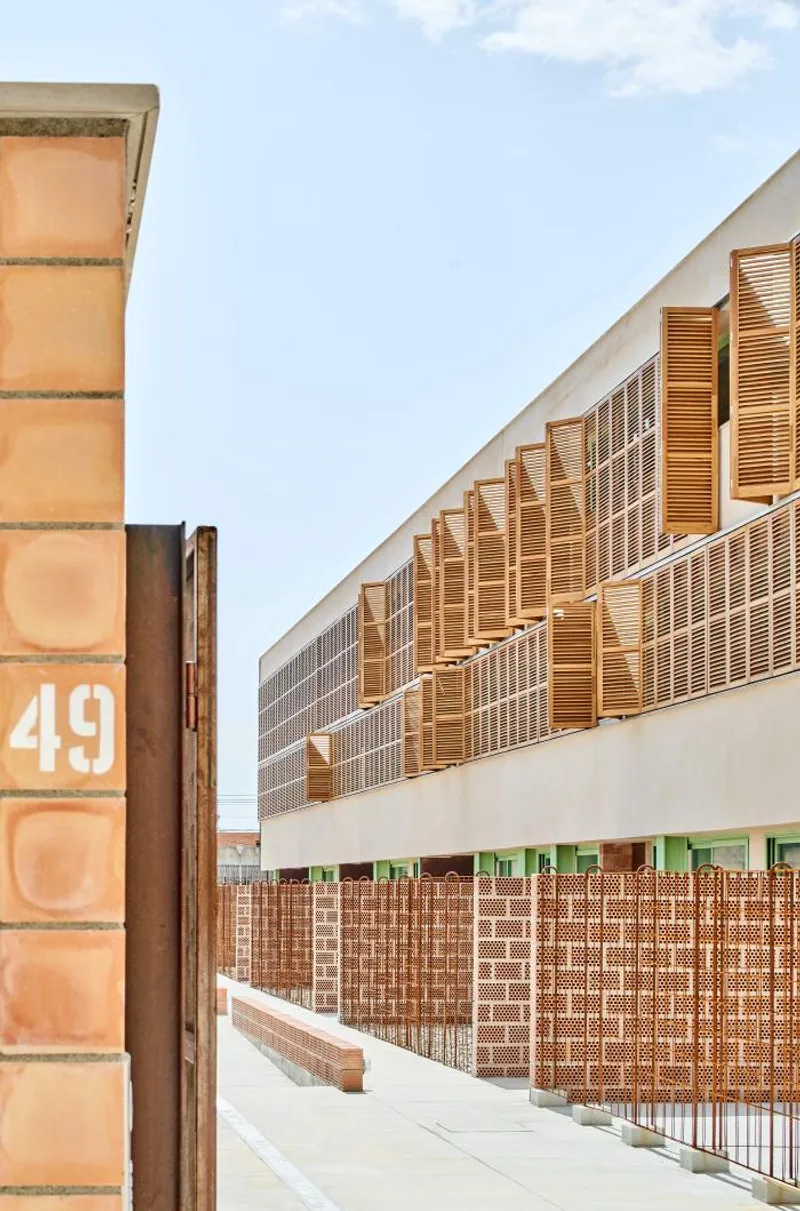
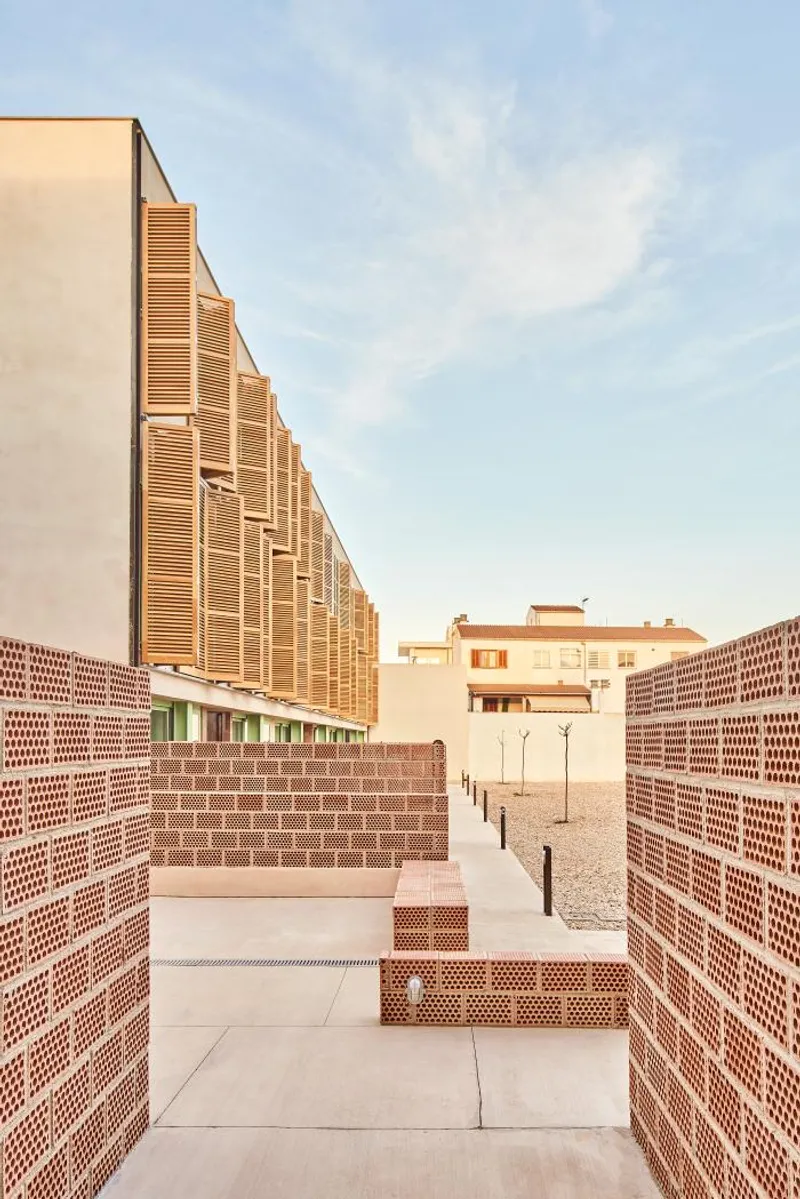
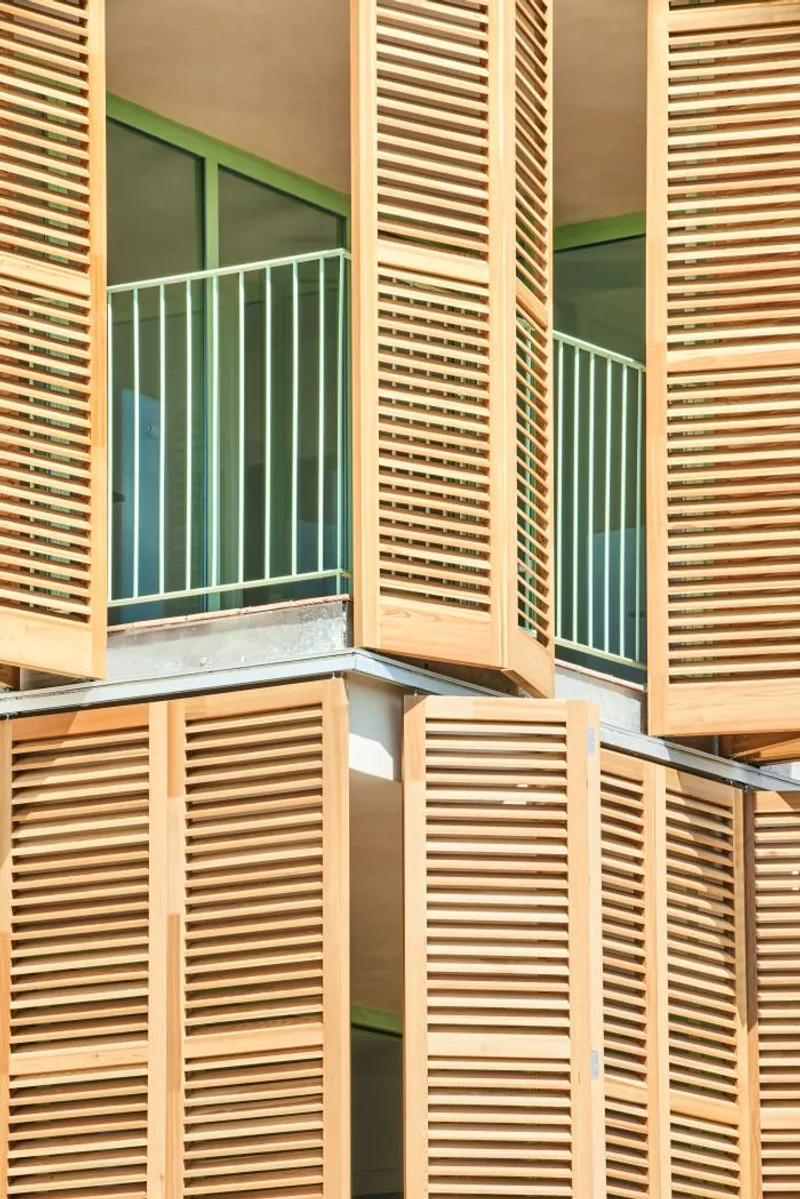
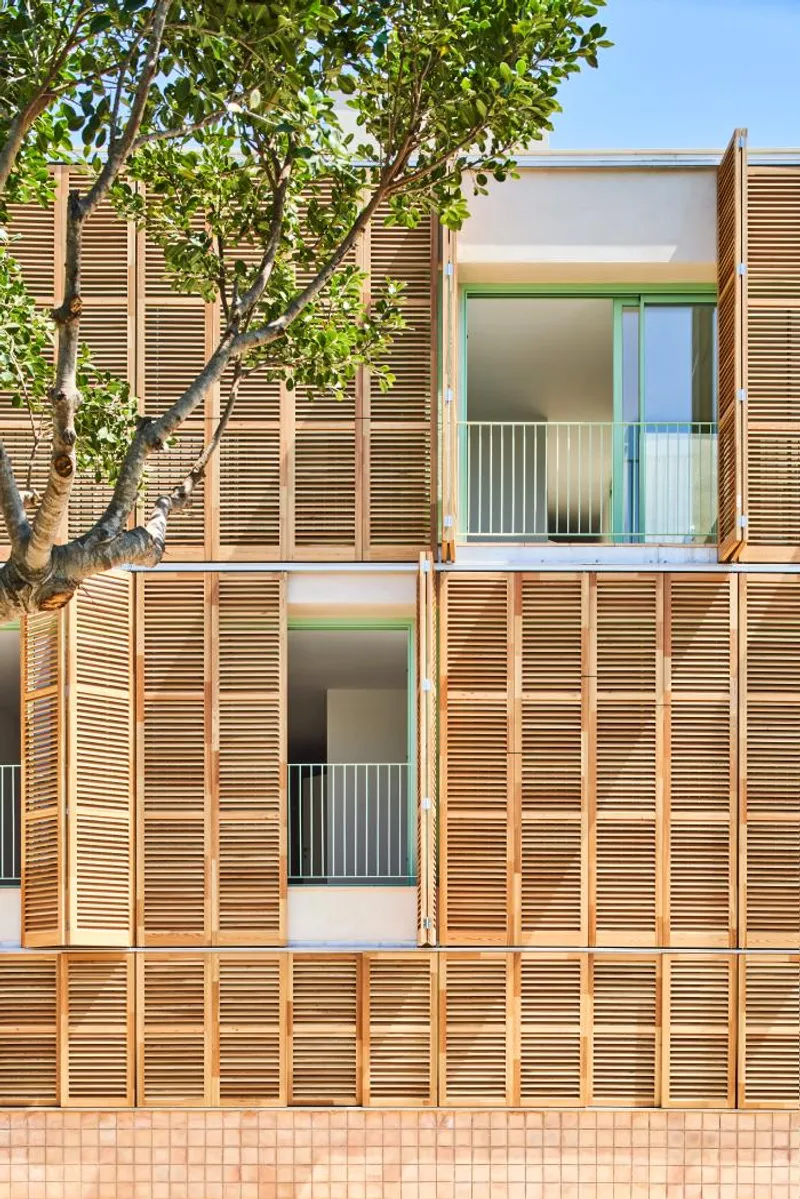
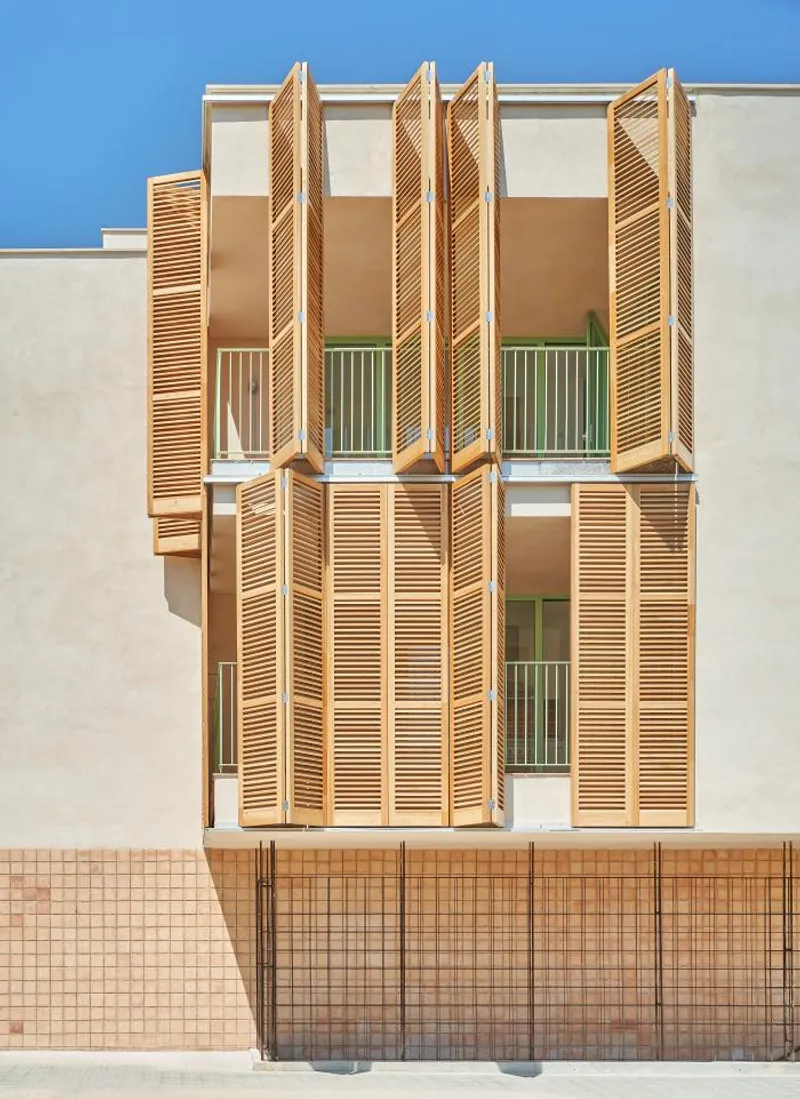
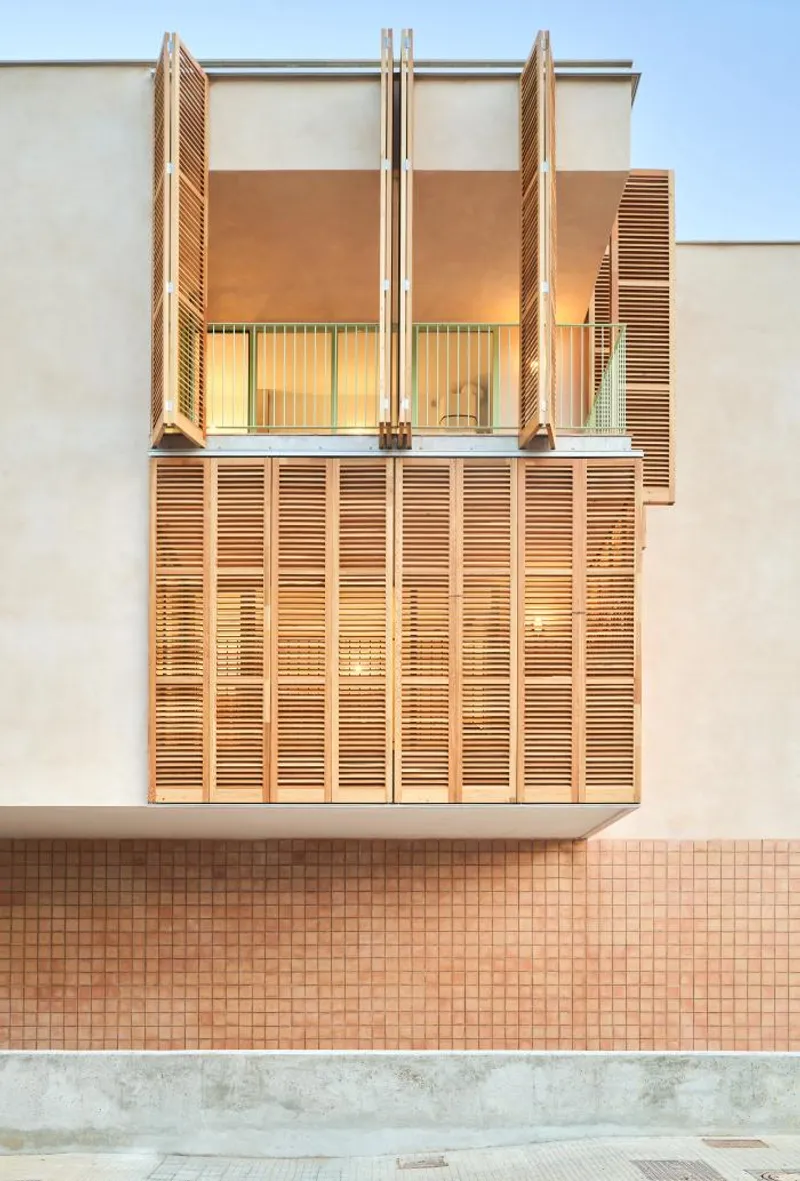
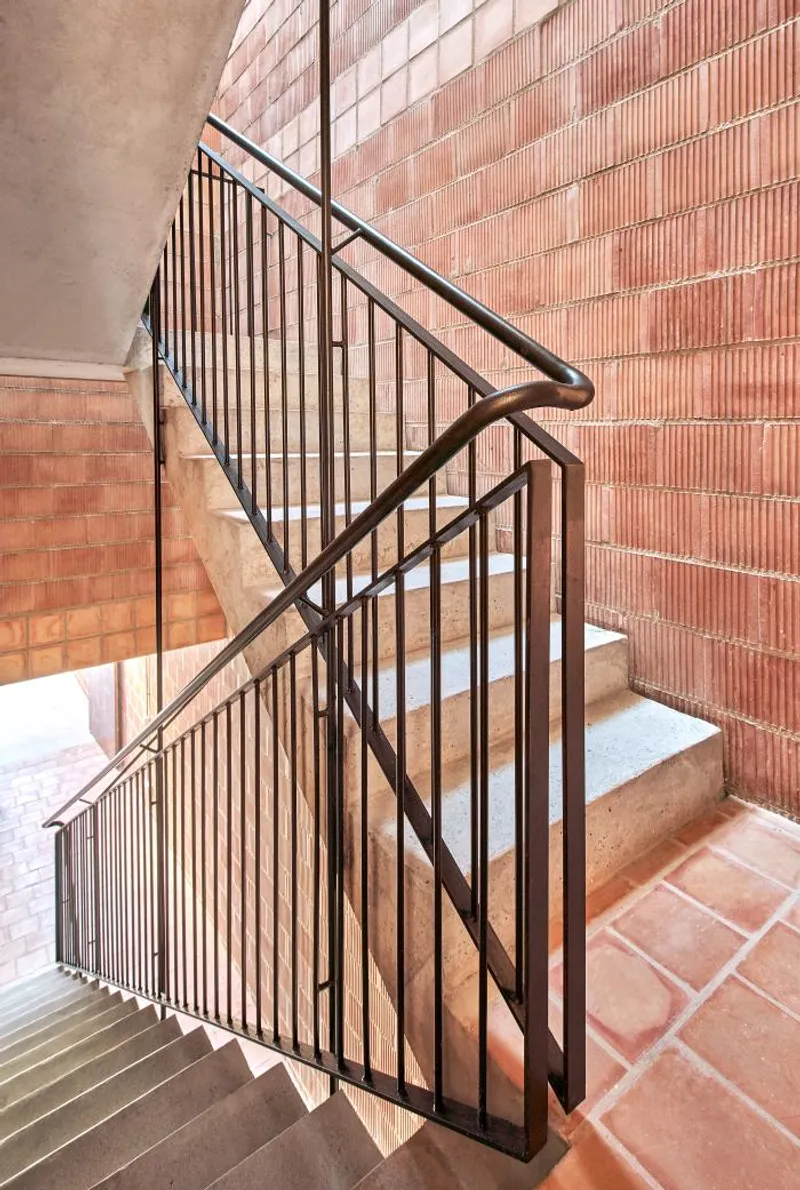
The façade layers are resolved by means of a double local ceramic sheet with recycled cotton insulation in the chamber and externally the envelope is resolved with external insulation using sprayed cork and coarse lime, on top of which is a layer of fine lime with natural pigments. The exterior carpentry is made of aluminium with a thermal break and the solar protections are made of Larch wood, certified from sustainable extraction.
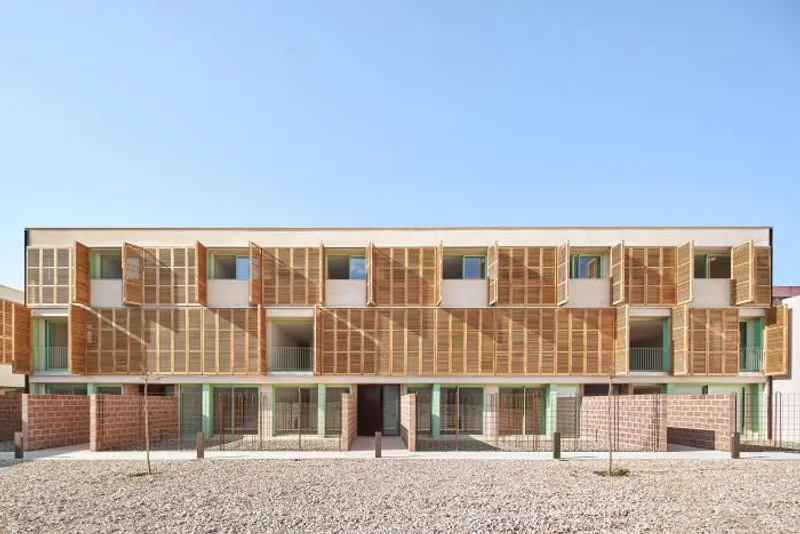
The Roofs are flat and are solved by means of an inverted insulation and waterproofing system and recycled gravel. Above these are the photovoltaic panels, aerothermal and recovery equipment, and ventilation ducts.

The interior pavements are ceramic local clay “cocked” with biomass. We have reduced the areal facilities on the bathroom areas there is the only ceiling.

The ACS, powered by the energy-efficient "NUOS" Aerothermal system, provides excellent performance with minimal energy consumption. Heat recuperators are used to ventilate homes, tempering the air with community Aerothermal systems.

The community spaces on the ground floor have been carefully designed to facilitate circulation with a concrete floor and gravel pavements that allow natural permeability of the ground to rainwater, allowing for natural drainage to the subsoil. Additionally, "Jacarandas" have been planted to provide shade and create a pleasant atmosphere as one moves through the space.









Popular Articles
Popular articles from the community

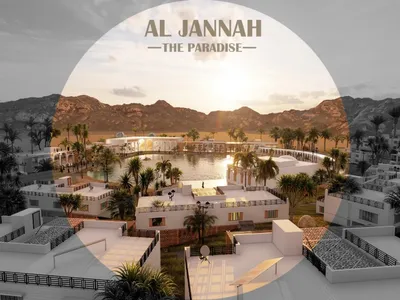
AL-JANNAH: Sustainable Architecture and Permaculture for Afghan Widows
AL-JANNAH uses sustainable architecture and permaculture to create resilient oasis of housing, learning, work and renewal for Afghan widows.

The Musturak Paradise: Senior Living Architecture for a Connected Future in Temara, Morocco
The Musturak Paradise reimagines senior living architecture in Temara via private homes, social spaces, culture, community, and shared care.

Riyadh For All: Intergenerational Urban Design for Active Aging in Rabat
Riyadh For All reimagines urban design in Rabat with intergenerational co-living, adaptive courtyards, and Moroccan cultural exchange today.

Co-Life: Senior Housing Design That Reconnects Older Adults With the City
Co-Life reimagines senior housing design through healing gardens, shared streets, workshops, and a sustainable community across generations.

Similar Reads
You might also enjoy these articles
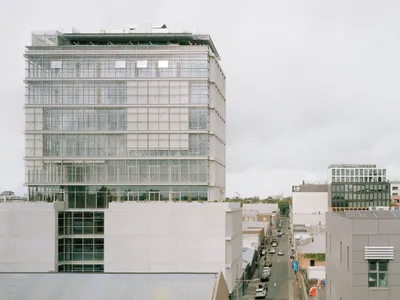
116 Rokeby Building, Collingwood
Sustainable Collingwood office building featuring double-skin façade, natural ventilation, rooftop amenities, and carbon-neutral design focused on wellbeing and longevity.
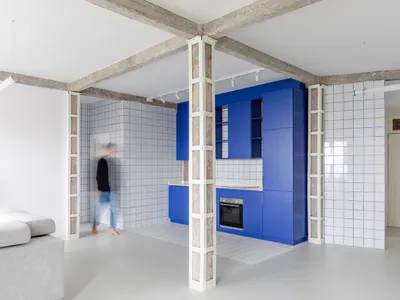
Contemporary Apartment Renovation in Spain: RV House by BIAN Opens Up to the Sea
A minimalist 1930s apartment in Santander is transformed into a flexible, sea-facing home through contemporary Spanish renovation.
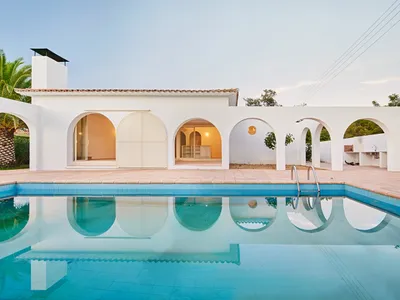
3 Marías House: A Contemporary Mediterranean Courtyard Retreat by Bajet Giramé + Burckhardt
Mediterranean courtyard home blending traditional architecture with modern design, terracotta flooring, flexible interiors, sustainable climate strategies, and garden integration.
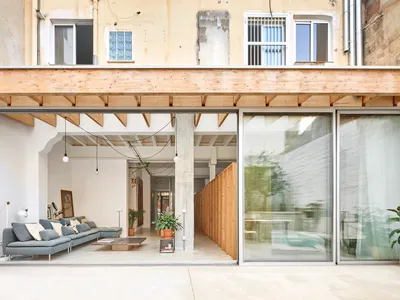
NZ10 Apartment by auba studio: Adaptive Reuse in Palma de Mallorca
Adaptive reuse apartment transforms bakery into light-filled home with patios, privacy layers, and wood interiors enhancing urban living experience.


Explore Housing Competitions
Discover active competitions in this discipline



Challenge to reimagine the Iron Throne


Photograph architecture without architects


Illustrate the lost glory of Angkor Wat - Render Challenge


Design challenge to reuse E-waste
Comments (0)
Please login or sign up to add comments
No comments yet. Be the first to comment!