
Architectural Voids in Modern Design: The Oztile Showroom by Atelier MODS
The Oztile Showroom in Busan redefines architectural voids in modern design, creating an immersive spatial experience through light, openness, and fluidity.


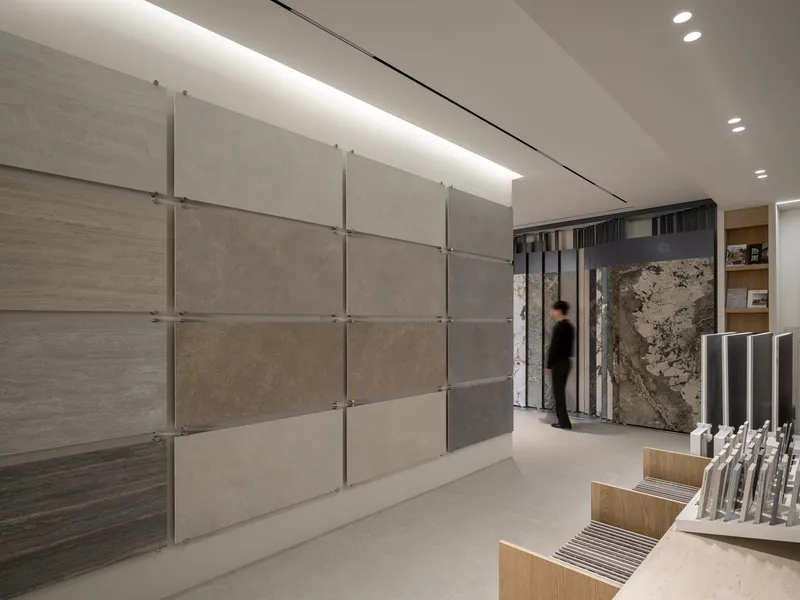
The Oztile Showroom in Songjeong, Busan, South Korea, designed by Atelier MODS, stands as a remarkable example of how architectural voids in modern design can transform spatial perception and user experience. Located on a reclaimed landfill site, the building harmonizes with both urban density and the surrounding natural landscape. By integrating void spaces into the structure, the design enhances light flow, connectivity, and fluid spatial interaction, offering an immersive architectural journey beyond conventional showroom concepts.
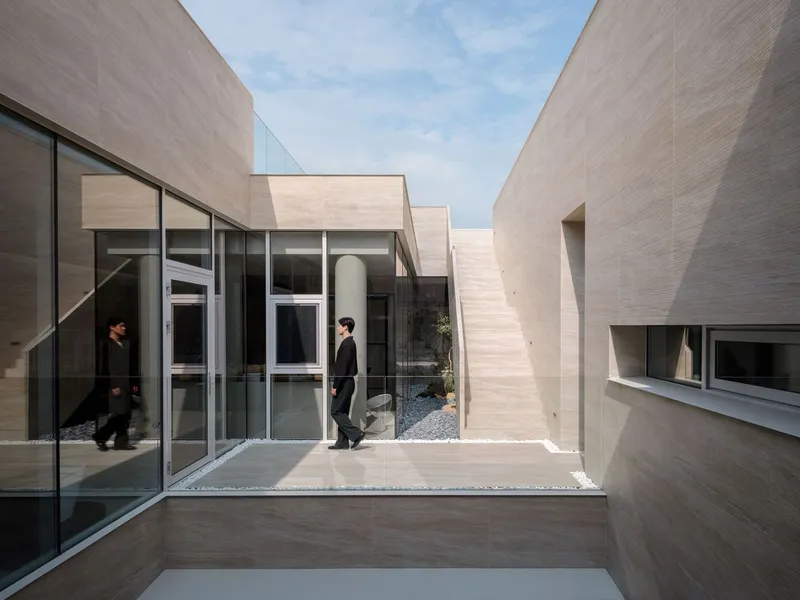
Site Context and Design Strategy
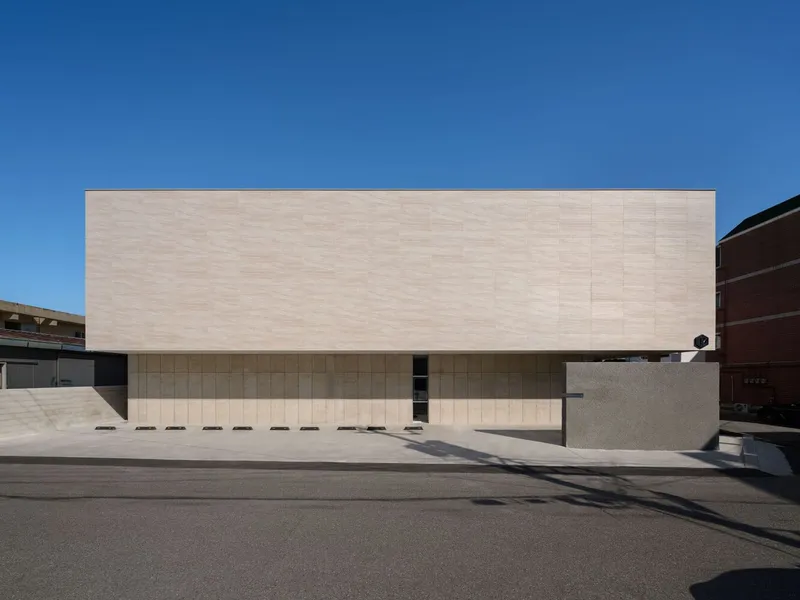
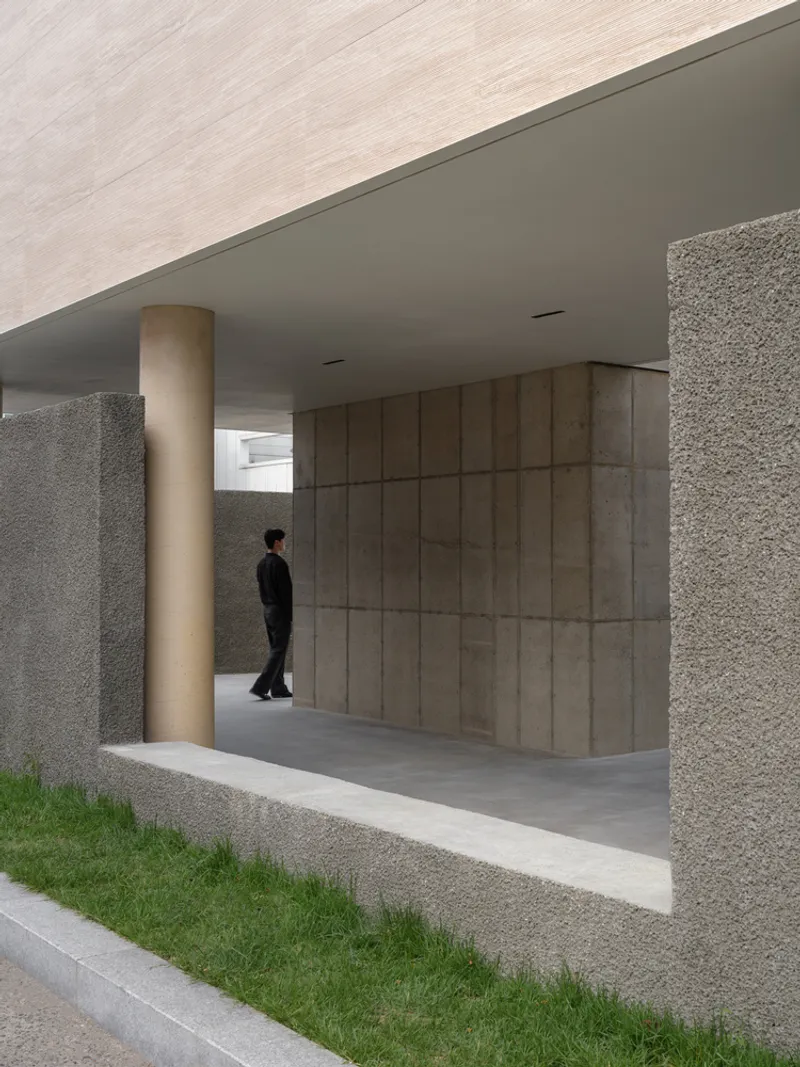
Situated near a train station and an urban trail reclaimed from a former stream, the Oztile Showroom negotiates a delicate balance between city life and nature. The architectural approach considers height restrictions and the need for privacy within a dense residential setting. The lower floor incorporates a protective fence to limit external views, while the upper floor integrates interior windows that maintain openness while ensuring privacy. The design establishes a layered boundary, engaging both the immediate urban environment and the broader cityscape.
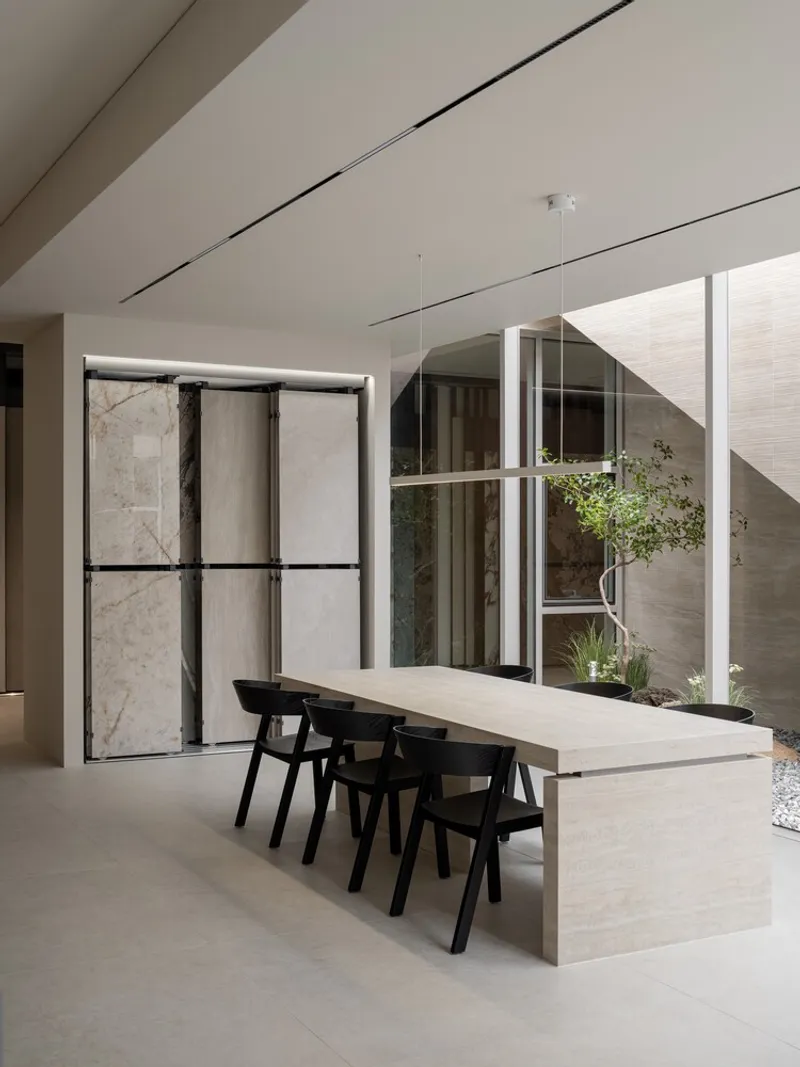
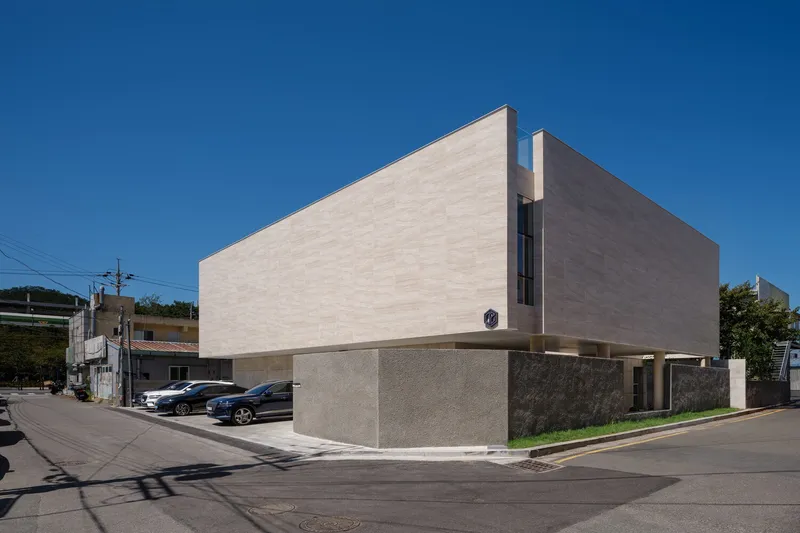
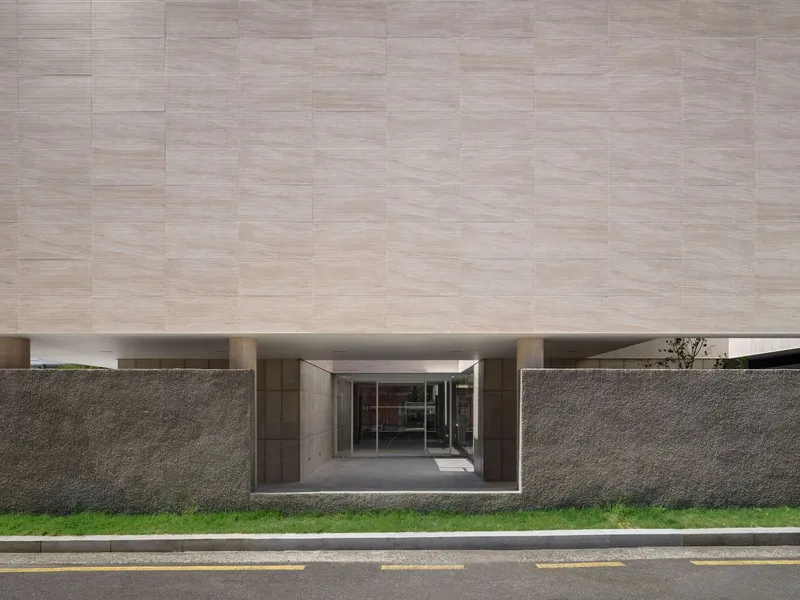
Spatial Experience and Entryway Design
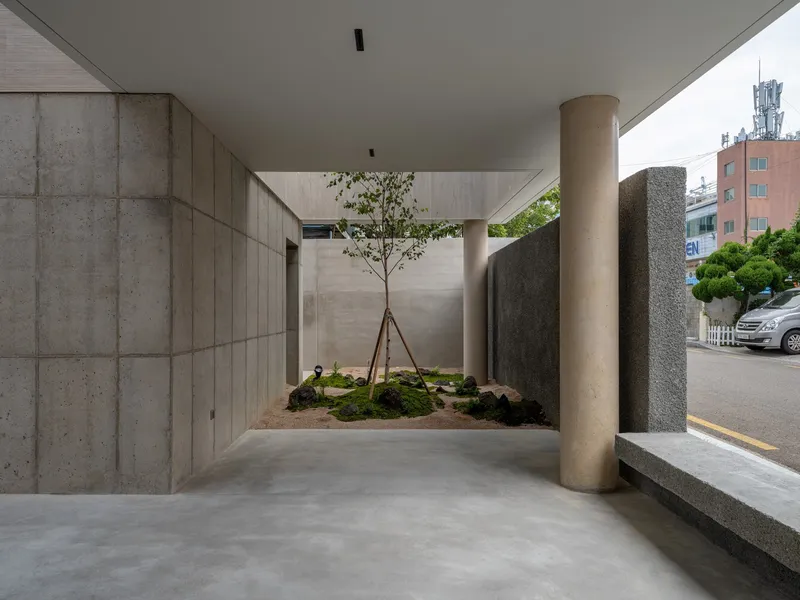
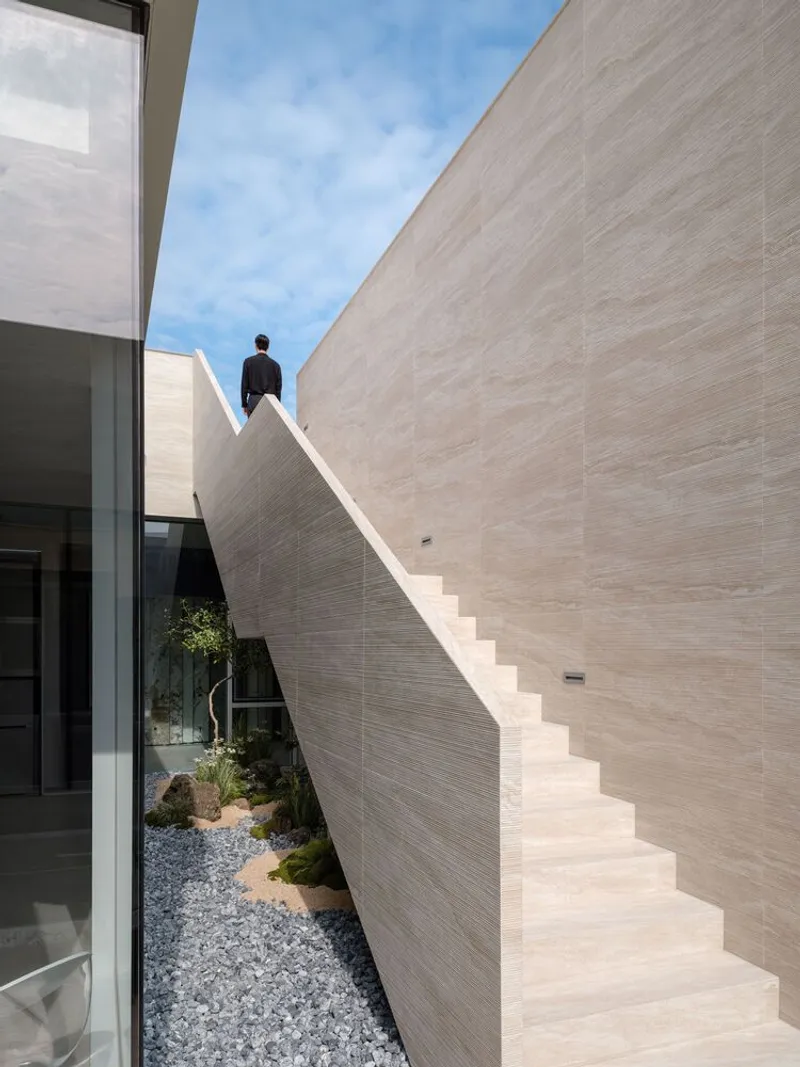
The visitor experience begins at the entry pathway, where a long, enclosing wall guides movement toward the showroom. This carefully orchestrated transition allows users to engage with the building in stages, gradually revealing the full architectural form. The interplay between the eaves, tall walls, and stone-finished surfaces creates a psychological buffer, softening the shift from exterior to interior. As visitors walk along the pathway, dynamic layers of light and shadow enhance the tactile and sensory engagement with the space.
The Role of Architectural Voids
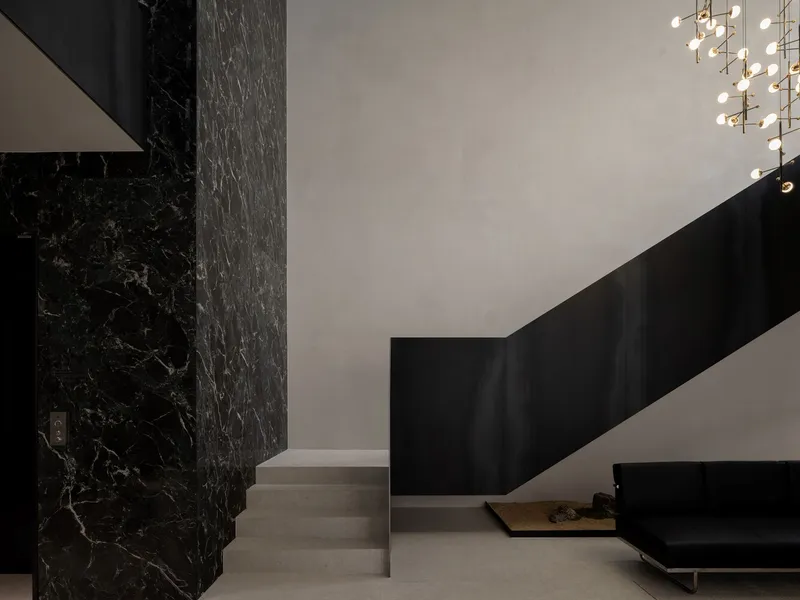
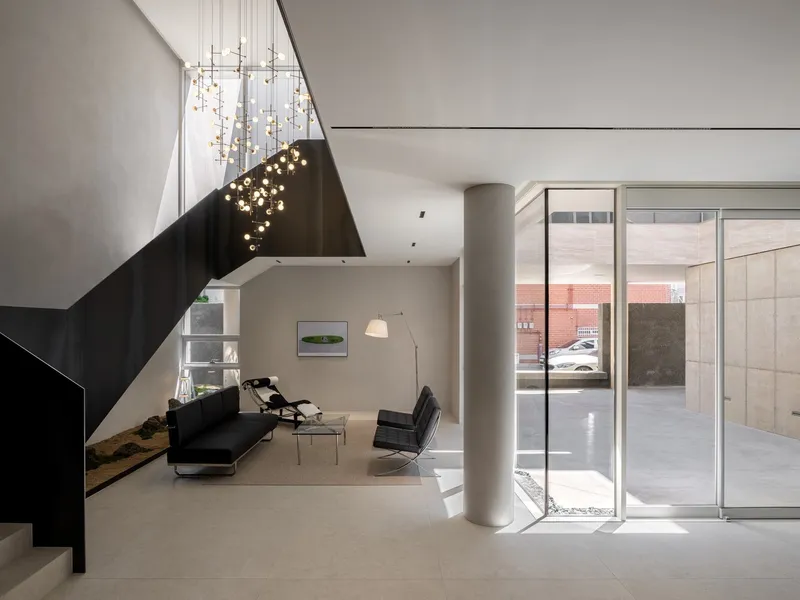
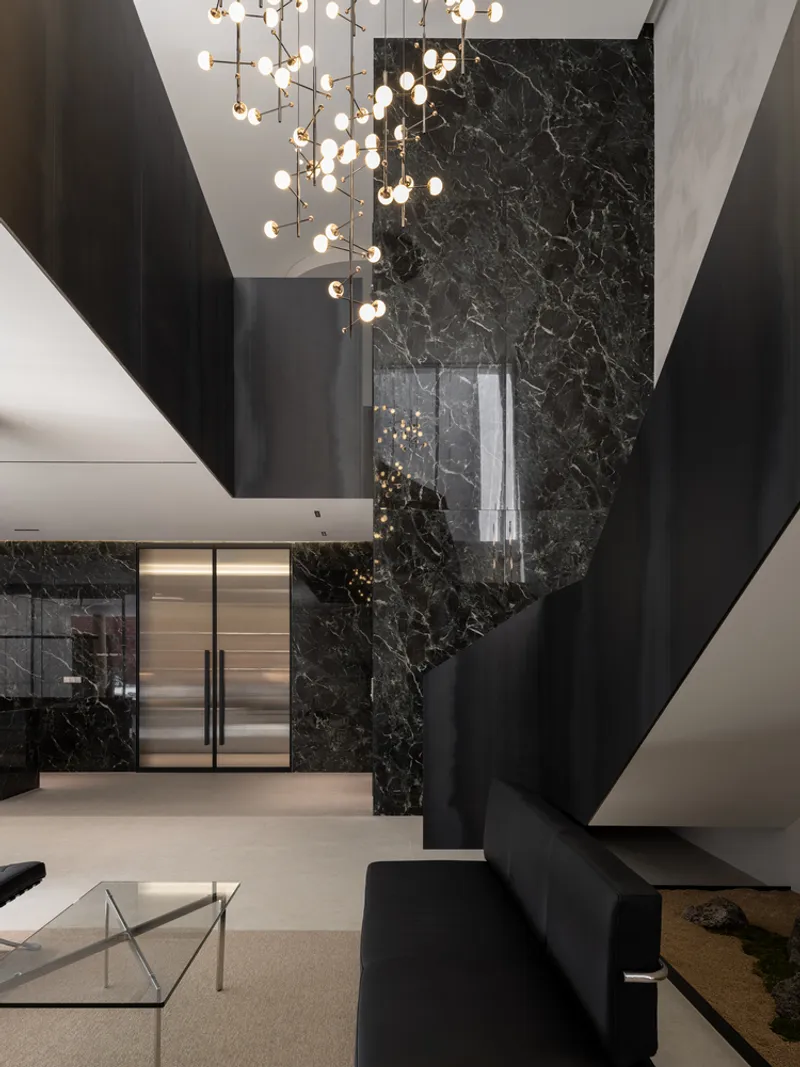
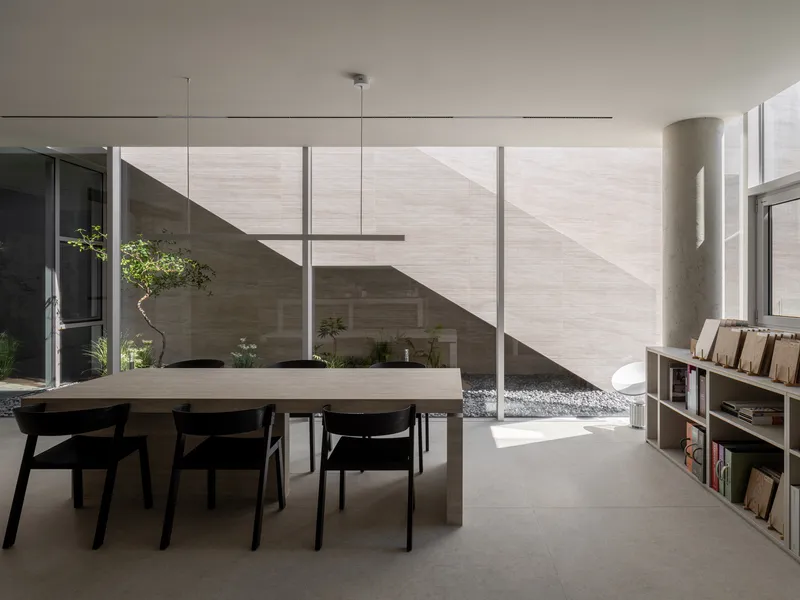
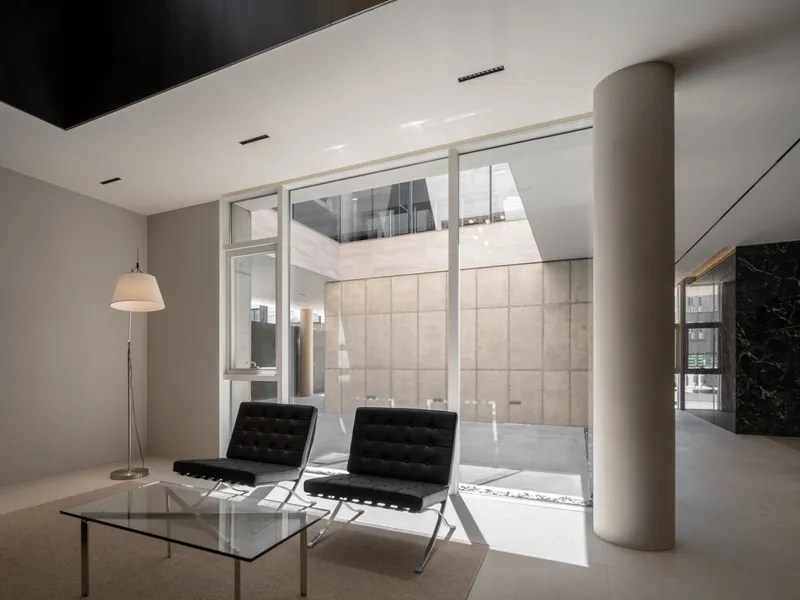
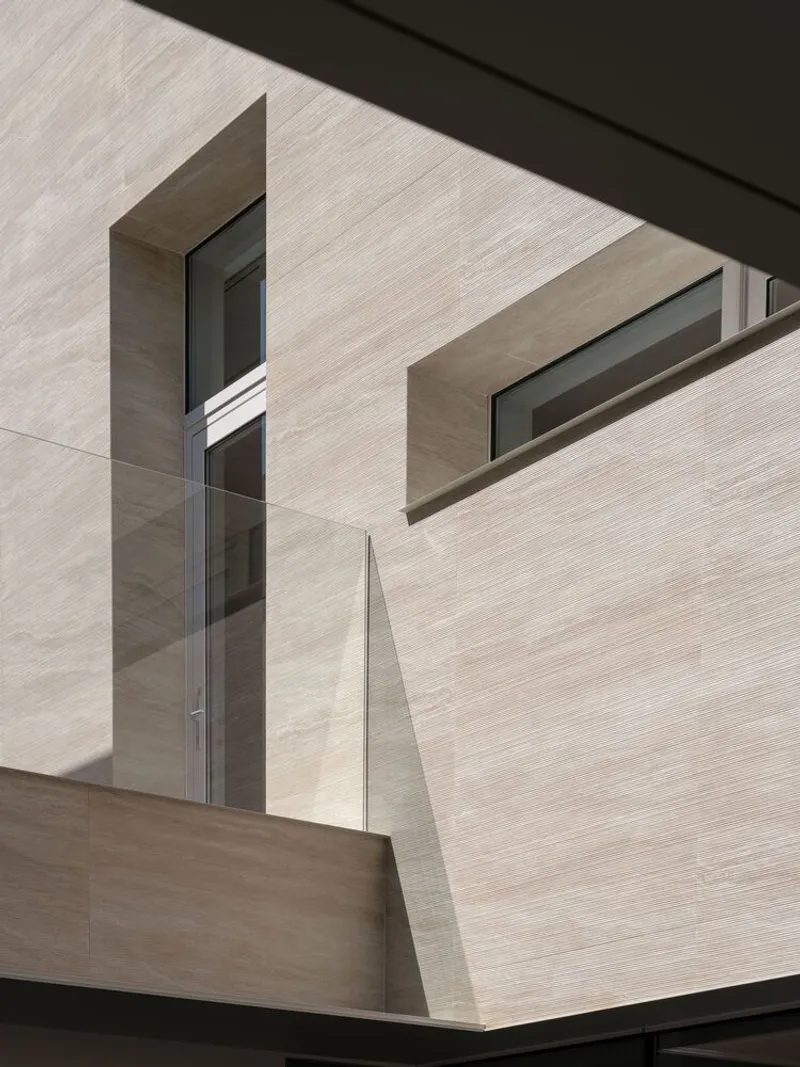
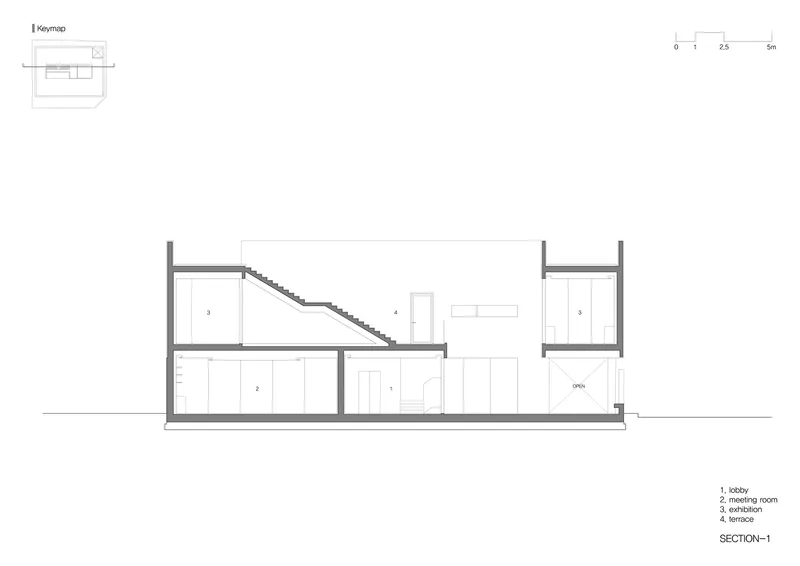
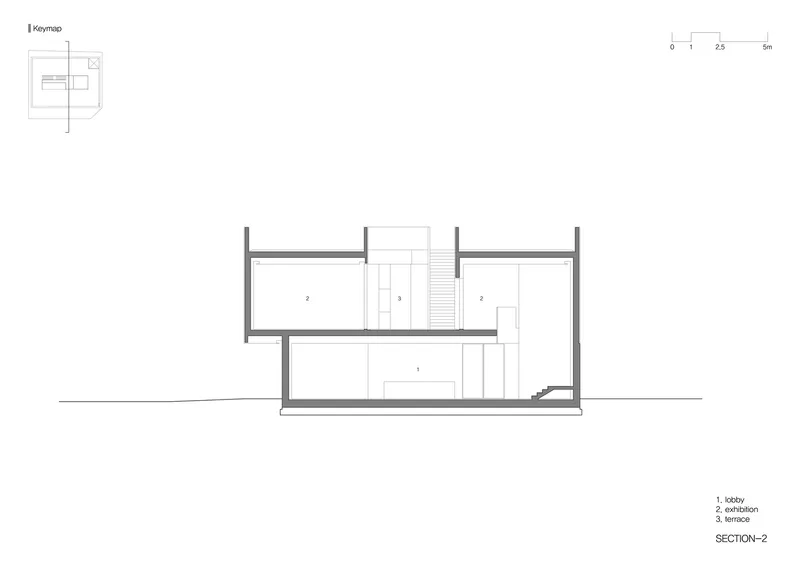
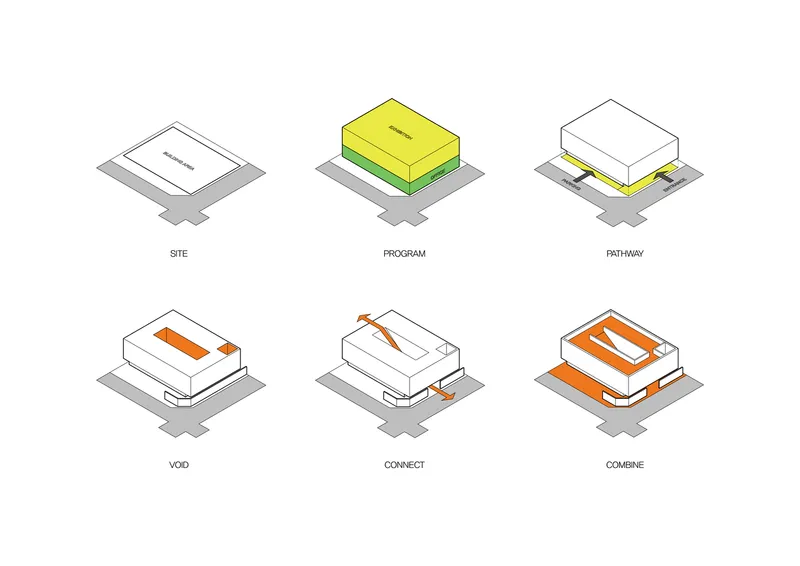
A defining feature of the Oztile Showroom is its strategic use of voids, which introduce three-dimensional depth and visual continuity throughout the structure. The design incorporates two vertical voids and one horizontal void, functioning as both spatial dividers and connectors.
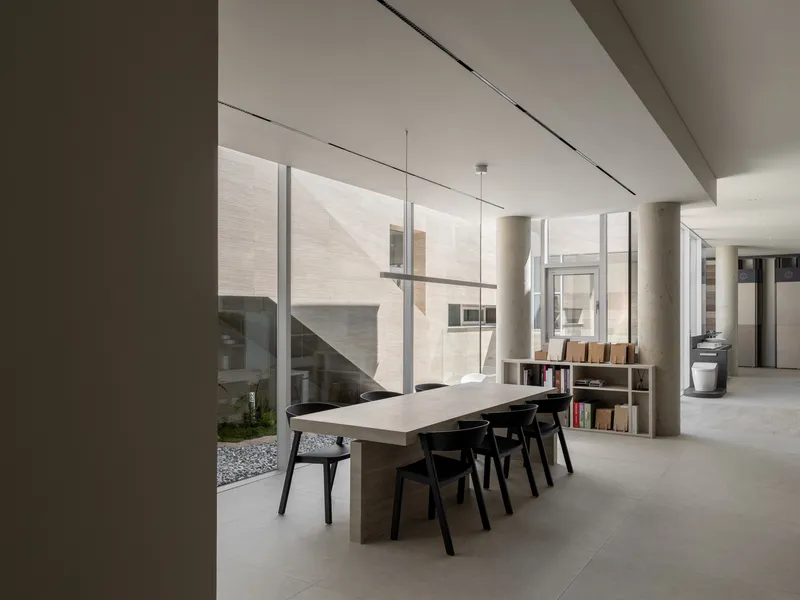
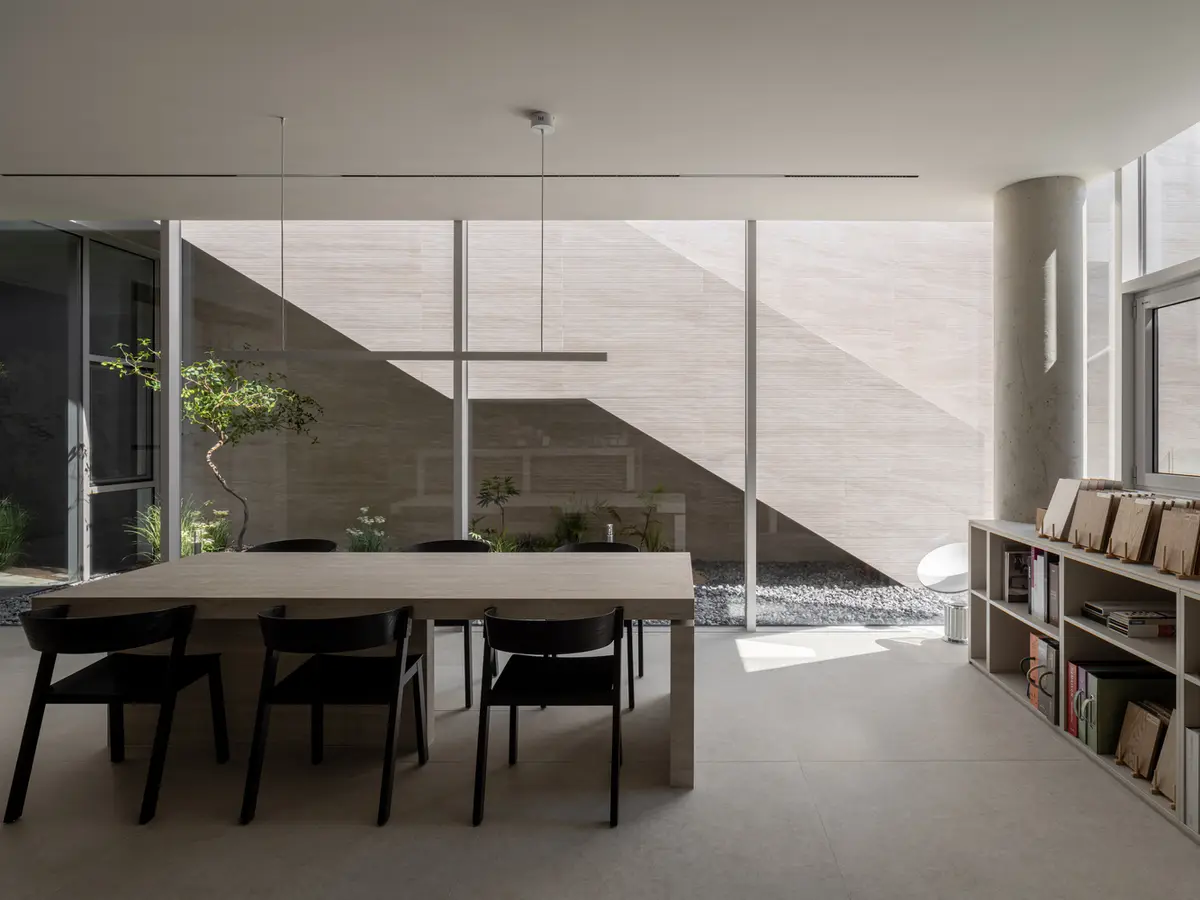
A prominent vertical void at the building’s entry corner extends deep into the interior, integrating a two-story birch tree and natural elements. This void acts as a transitional element, blurring the boundary between indoors and outdoors while promoting interaction between spaces.
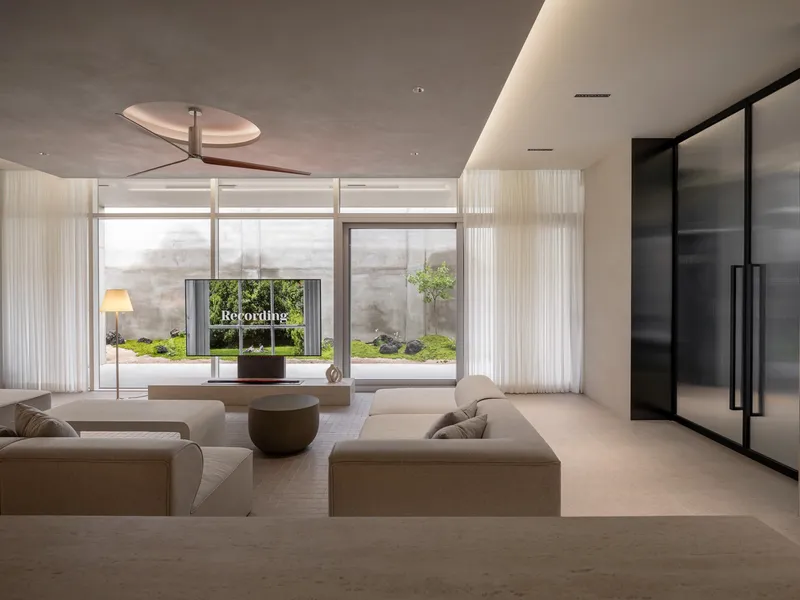
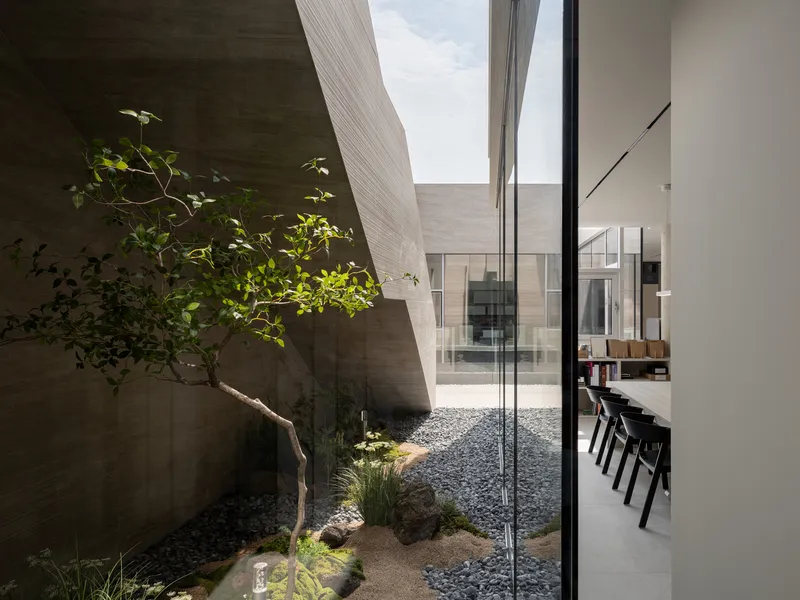
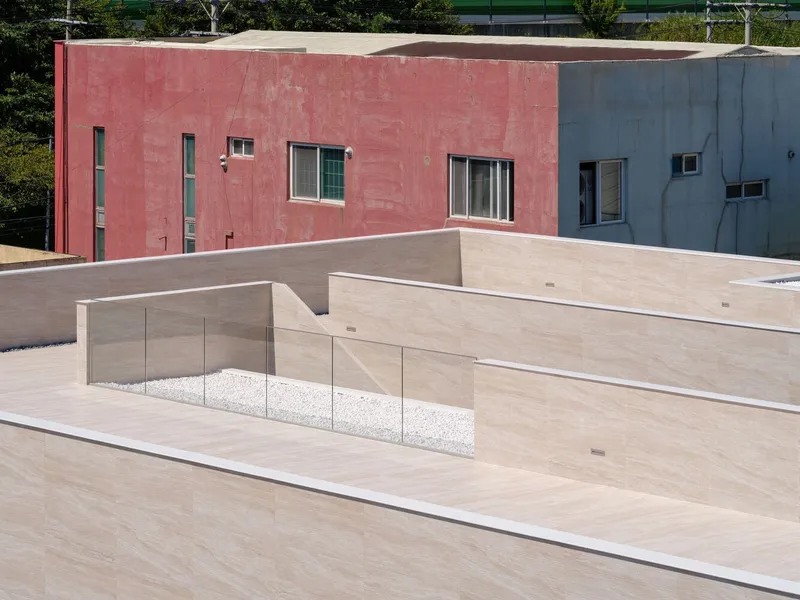
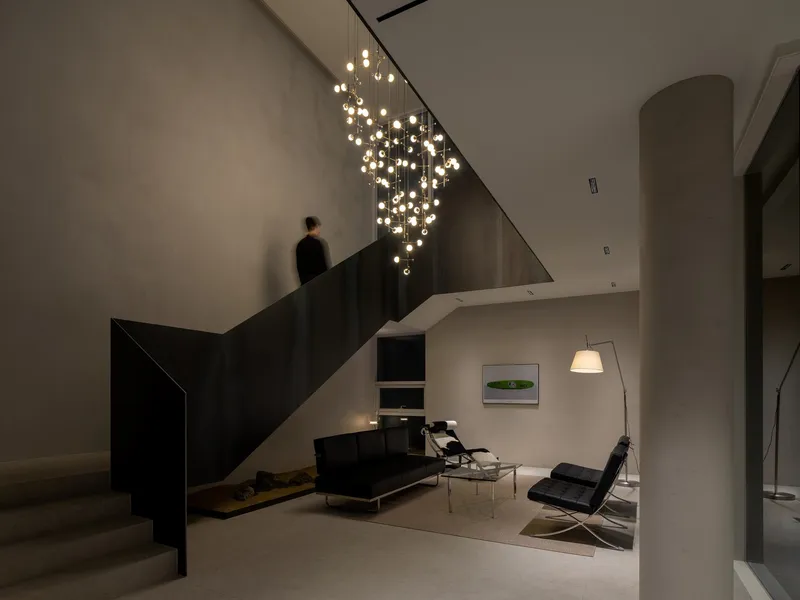
The horizontal void within the wall structure and the vertical void at the building’s center serve dual purposes. While they delineate different functional zones, they also create fluid spatial connections, fostering openness and seamless interaction among users. The architecture prioritizes movement, air circulation, and visual continuity, reinforcing the dynamic nature of modern showroom design.
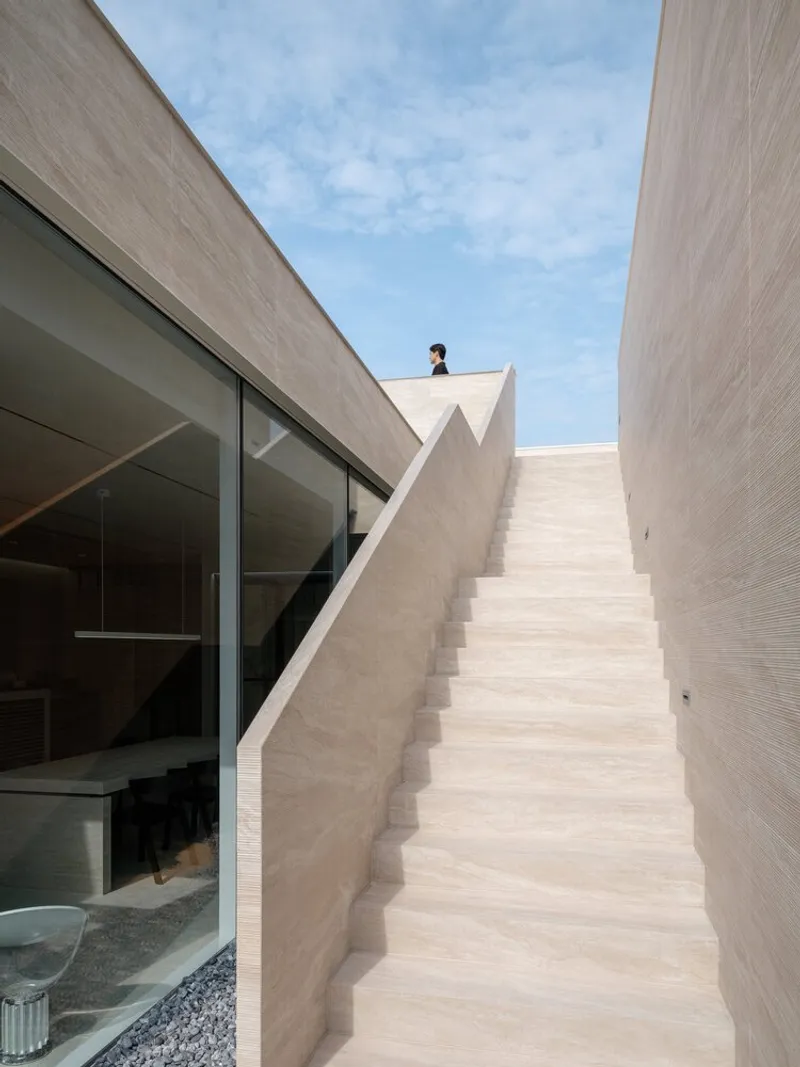
Light, Shadow, and the Evolving Architectural Experience
The Oztile Showroom is designed to respond to changing light conditions throughout the day, reinforcing the idea that architecture is a living entity. Sunlight reflects off the exterior surfaces, generating shifting patterns of light and shadow that alter the perception of space. Seasonal variations further enhance this evolving experience, making the showroom feel ever-changing and connected to the rhythm of nature.
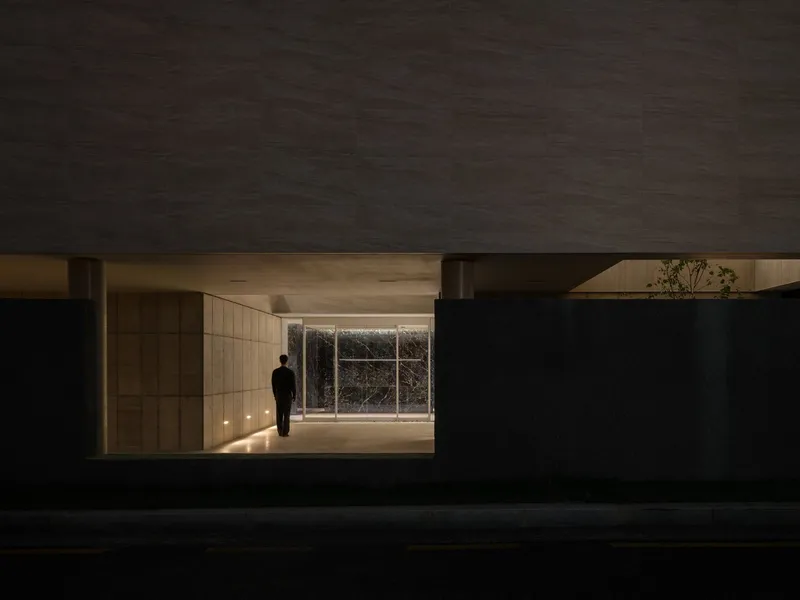
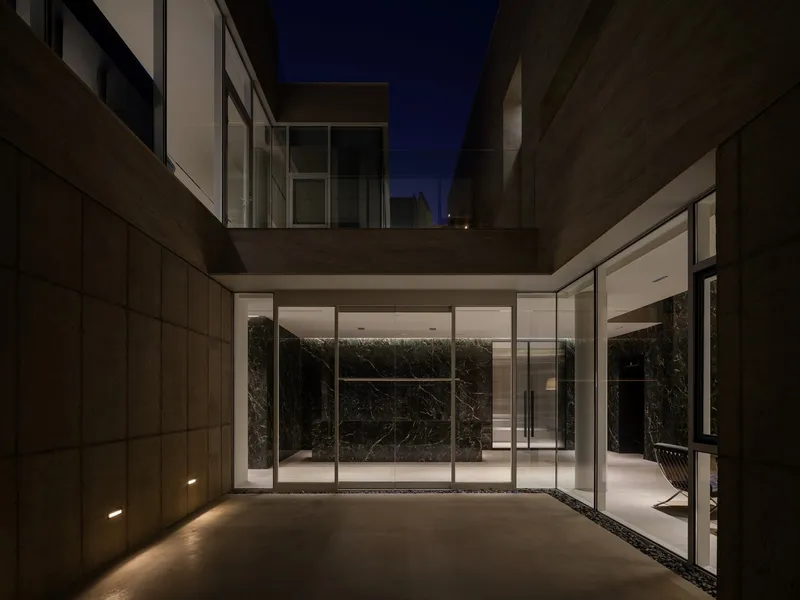
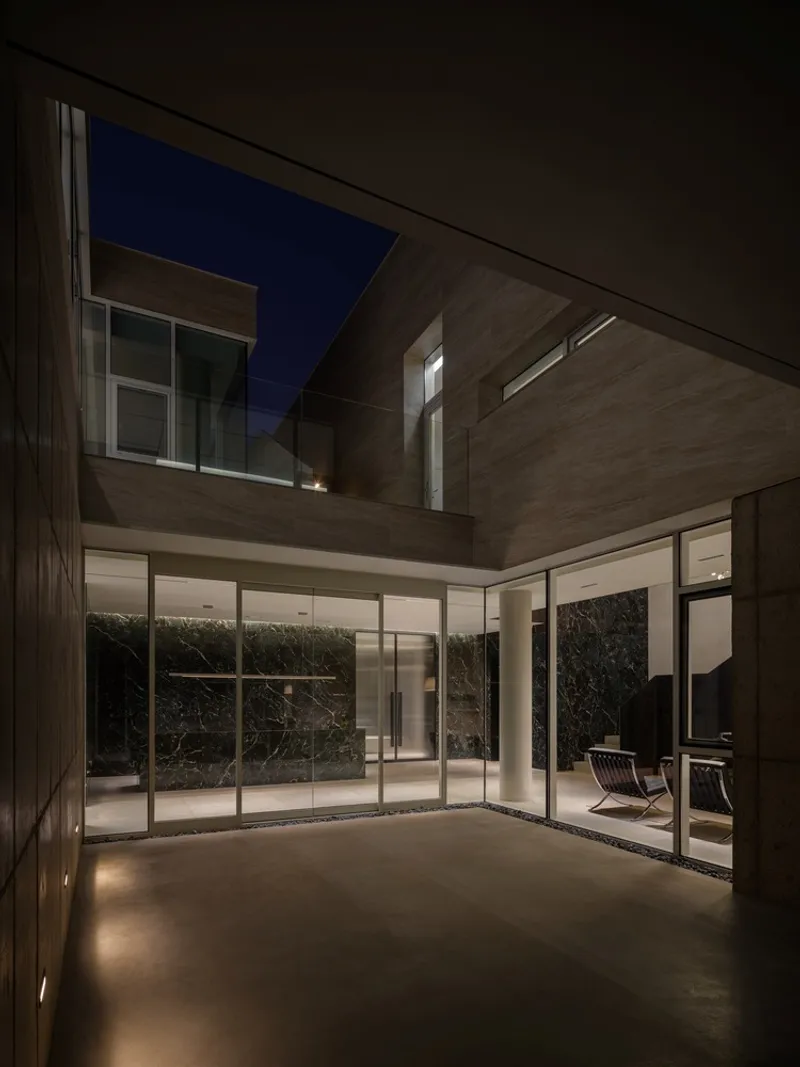
The void spaces within the building allow natural light to penetrate deep into the structure, reducing reliance on artificial lighting and emphasizing an organic interplay between solid and empty volumes. This interaction between light, shadow, and architectural voids ensures that the showroom is more than a static display space—it becomes an experiential journey shaped by time and movement.
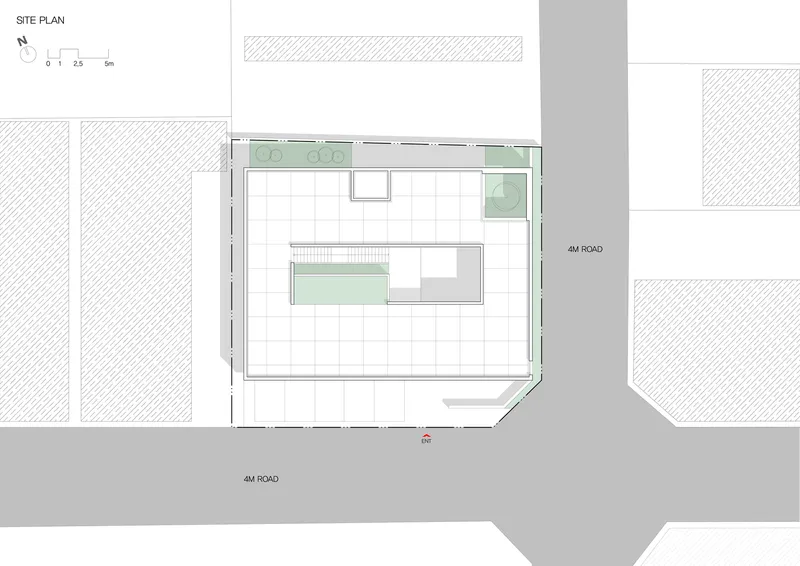
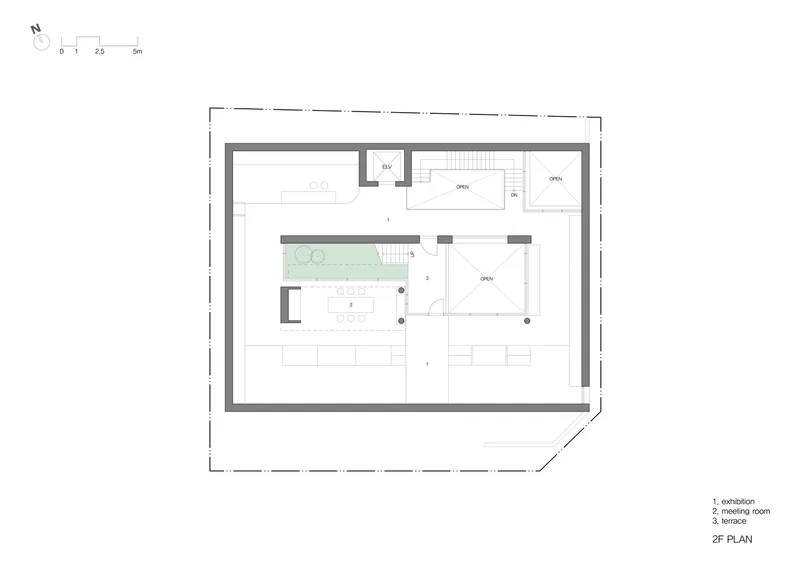
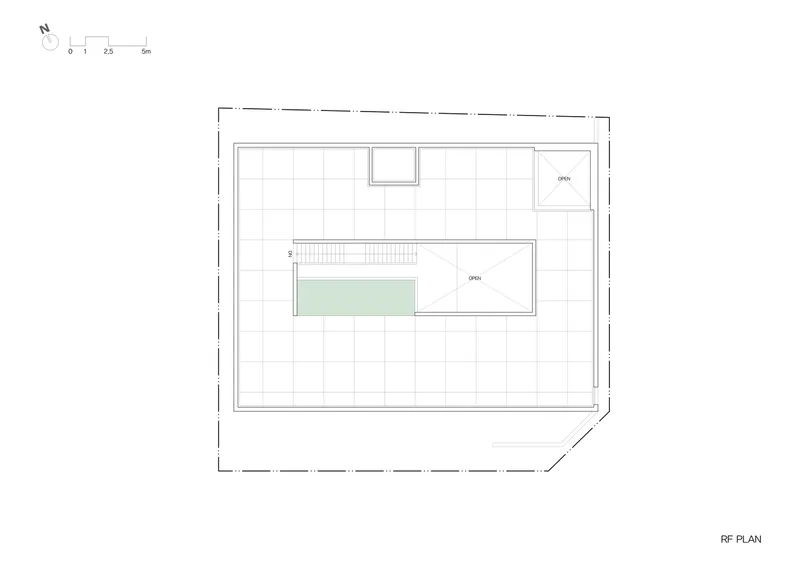
The Oztile Showroom exemplifies how architectural voids in modern design can redefine spatial relationships, enhance user interaction, and create an immersive architectural experience. By integrating voids as both separators and connectors, the building dissolves rigid spatial boundaries, fostering openness and fluidity. Through the interplay of natural light, evolving shadows, and dynamic spatial layering, the showroom transcends conventional design, standing as a testament to architecture’s ability to engage the senses and adapt to its surroundings.
All Photographs are works of MinGu Kang


Popular Articles
Popular articles from the community


U.GA Architects Wraps an Oval Rooftop Pool in Curved Board-Formed Concrete on Busan's Jeollidan-gil
In Busan's Jeonpo-dong, a 454 m² mixed-use block stacks a neighborhood facility, guest rooms and an oval rooftop pool inside spiraling concrete walls.

GROUP A Strips a 1969 Rotterdam Harbor Headquarters to Its Frame and Wraps It in Timber Louvers
In Rotterdam's M4H harbor district, Ferro Offices reuses a 1969 frame, adds one timber storey and reaches BREEAM-NL Outstanding.

LT2A and OPEN Architectes Thread a Brick and Glass High School Through a Wooded Belgian Campus
In Braine-l'Alleud, a 3,000 m² wing for Collège Cardinal Mercier pairs pale brick with a glazed colonnade, deferring to a small chapel and a dense wood.

Jaramillo Van Sluys Arquitectura and Urbanismo Turn a Demolished Registry Lot in Quito into an Orchard Plaza
In Quito's Centro Histórico, a 2,800 m² plaza exposes the San Agustín convent wall and redraws its lost Augustinian orchard in volcanic stone.

Similar Reads
You might also enjoy these articles

Bamboo Housing Challenge 2026: Design Affordable, Sustainable Homes Using Bamboo
An international design competition by Bamboo U and IBUKU inviting architects and designers to reimagine affordable housing using bamboo — with the winning design built full-scale in Bali.

Computational Design & Education: Beegraphy Design Awards Introduces 7th Category (Featuring Jiyun's Innovative Approach)
Dive into Beegraphy’s 7th Design Awards category, where computational design meets education to create immersive, interactive learning tools, inspired by Jiyun’s work.

From Parametric Lighting to Urban Furniture: Join the 2nd Workshop in Beegraphy’s Computational Design Series
Dive into Cutting-Edge Design Techniques and Practical Applications with Industry Experts

Last Call: Unleash Your Architectural Genius in SHAK's Kindergarten Design Competition
Urgent call for architects to join SHAK's kindergarten design competition before the looming deadline

Explore Ooze Architects Competitions
Discover active competitions in this discipline

Challenge to reimagine the Iron Throne

Photograph architecture without architects

Illustrate the lost glory of Angkor Wat - Render Challenge

Design challenge to reuse E-waste
Comments (0)
Please login or sign up to add comments
No comments yet. Be the first to comment!