

Architecture and emotions
'Dead' spaces in Urban cities

Architecture triggers emotions in a person. It directs us. It can make us feel safe or unsafe, small or big, it can even sometimes soothes us and alleviate grief. We are constantly surrounded by various atmospheres which brings out different kinds of emotions within us. Humans are able to elicit emotions consciously and subconsciously when they are exposed to an environment and triggered by an architectural element or a stimuli. The physicality of architecture and its architectonic elements have a direct as well as an indirect response to how it affects our emotions. The thesis is an investigation to understand the relationship between emotions and architecture and analyze what would the implications of an emotionally elicited atmosphere be to create a holistic experience for the user. The research tries to understand how environments, forms and patterns are recognized in a body and how atmospheres are created.
A question that architects often deal with is: does architecture have the ability to directly impact the emotions of their occupants? Every space influences a person, consciously or subconsciously. We are shaped by the world around us and our body reacts to an environment in every move we make. The research encompasses multidisciplinary concepts of psychology, behaviour and architectural qualities. Architectural discourses tend to create designs based on people’s needs. But how do we create a human-centric design? To understand that, we need to fully understand why people act the way they act and why they feel the way they feel. Principles of human behaviour need to be understood to a certain depth, along with how emotions are elicited and how their likings are shaped for designing. It is clear that emotions arise due to activities from various parts of the brain. Context becomes important when studying emotional behaviors. The theories demonstrate that there is a role of external stimuli (objects and environment) in eliciting emotional responses.
There are two extreme ranges of emotions that exist: positive and negative emotions. To test the impact of architecture to create sensitive space that engages the human mind and elicits positive emotions, negative emotions are chosen as an area of study to understand how atmospheres could change the emotional state. Death or the emotions associated with loss are the strongest emotions that are felt by humans, making them a critical part of the research. Hence, the thesis looks at how architecture can help alleviate grief and initiate healing. Today, due to medical advancements, attitudes and responses towards death has changed. It is often feared and ignored. Changes in lifestyles in urban areas have disconnected the idea of death which leads us to see spaces used for disposing as a mere lens of functionality. Due to the problems faced by the other methods of disposal in an urban context today, a significant shift has been observed in the eastern as well as western cultures for cremation. Due to the problems faced by the other methods of disposal in an urban context today, a significant shift has been observed in the eastern as well as western cultures for cremation. Thus crematorium is chosen to intervene as these become the only important spaces where mourners have their initial and final physical connection with the loved ones before departing. This thesis hence looks at the inadequacies of crematoriums to provide the emotional support needed to the mourner.
Crematoriums are public places which are underutilized thus at a master plan level, the thesis tries to remove the taboo and utilize them as a part of social parks for the citizens, by forming a green belt that benefits multiple users spiritually and otherwise, which enhances their everyday experiences in the neighborhood and celebrate death. The aim of the intervention is to create suitable atmospheres to actively involve its inhabitants in the evocation of their emotions about loss.
The process of dealing with grief often involves mourning rituals. When we look at what happens during the death of an individual, we realize that death creates chaos and confusion. Rituals help in providing a sense of routine and normalcy. The part of this process of engaging with rituals takes place right from the death of a person till the body is disposed. Ritual activities, when elaborate, and with people around them, it de-individualizes the mourners by visualizing facial expressions of others around them. According to an experiment performed by Harvard, it proves that Mourning rituals help alleviate the grief. Hence the initial physical completion of the process of rituals plays a very important part in mitigating grief as it restores the feeling of control and regulates emotions that are impaired by life-changing losses. From this, we realize that one of the goals of the ritual ceremony during cremation is to help mitigate grief. In a way, it responds to all five senses in our body. Traditionally the place for cremation has taken its character as of a landscape, or is seen to inhabit landscapes- as in the ‘ghat’ which resides along the riverbed or an open field. As cities grew, the culture started to evolve where the place for cremation started to emerge in a building or a cluster of buildings. These spaces started to reduce the ‘act of cremation’ as mere tasks that needed to be performed, which became irrelevant to the mourners today. Every ritual tries to elicit very specific emotions that help the mourner to go through the entire process of honouring the departed in the final hours smoothly without causing more pain. This can be applied to generalize how every human, irrespective of the religion will benefit from the idea of initiating the grieving process. Based on the study, the emotions that the traditional rituals elicited to alleviate grief were de-coded and re-applied in the project to create atmospheres that elicit similar emotions within mourners.
The movement in the building is designed in a way that acknowledges the funeral procession along with initializing the longer grieving process as well as programs that include a mourner who return back to continue with the healing. The entire path in the crematorium is designed to allow for the mourner to deal with loss and elongate the process of letting go of the body, much like how traditional ritual ceremonies were performed. The journey begins and ends with the presence of nature, allowing one to contemplate that everything belongs to nature at the end. The entrance is designed to give the mourners who feel lost, a sense of direction, thus helping them in their current state. The mourner encounters with multiple pause points through courtyards and each courtyard is used to elicit specific emotions, as they perform the funeral process. After performing the last rites, the mourners exit the area through a tunnel which connects to the public plaza on the top.
The crematorium tries to create atmospheres that mitigates grief, bring solace, soothe the mind, initiate healing and help find comfort to the mourners in the external environment.

Popular Articles
Popular articles from the community


Cloaked Colonization: A Mobile Underwater Habitat That Moves Like a Fish
Micah Abaya's shortlisted EHC Pacific entry reimagines ocean settlement as a dispersed network of self-sustaining architectural organisms.

Opera on the Sea: Driftwood Logic Shapes a Timber Opera House on Estonia's Coast
Trevor Orgill's opera house translates the entangled drift of floating timber into a civic building where wood, water, and music converge.
Faces of the Soviet Avant-Garde: Turning Moscow's Street Names into an Open-Air Museum
A network of sculptural installations across a Moscow residential district transforms forgotten architect names into spatial encounters with cultural memor

Singing Woman: Contemporary Architecture Inspired by Estonia’s Voice and the Sea
Singing Woman turns Estonia’s song culture into flowing opera house architecture, blending public life, landscape, sea, and national memory.

Similar Reads
You might also enjoy these articles
The Rhythm of Seasons
A Farmers' Market Connecting Nature and the City


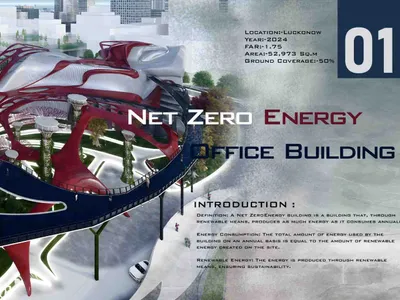
More Than a Building-Designing a Living System
More Than a Building-Designing a Living System
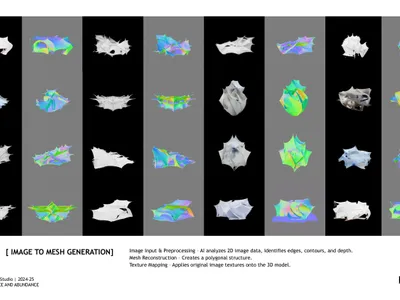
Base Beyond
DESERT COMPOUND ARID: TOURISM OF ABSENCE AND ABUNDANCE

Comments (0)
Please login or sign up to add comments
No comments yet. Be the first to comment!