
CARVE Floats a Cloud-Shaped Playground Over a Seoul Mixed-Use District
At the foot of Geomdansan Mountain, a lattice canopy and rolling hills turn a stacked residential district into a genuine public commons.

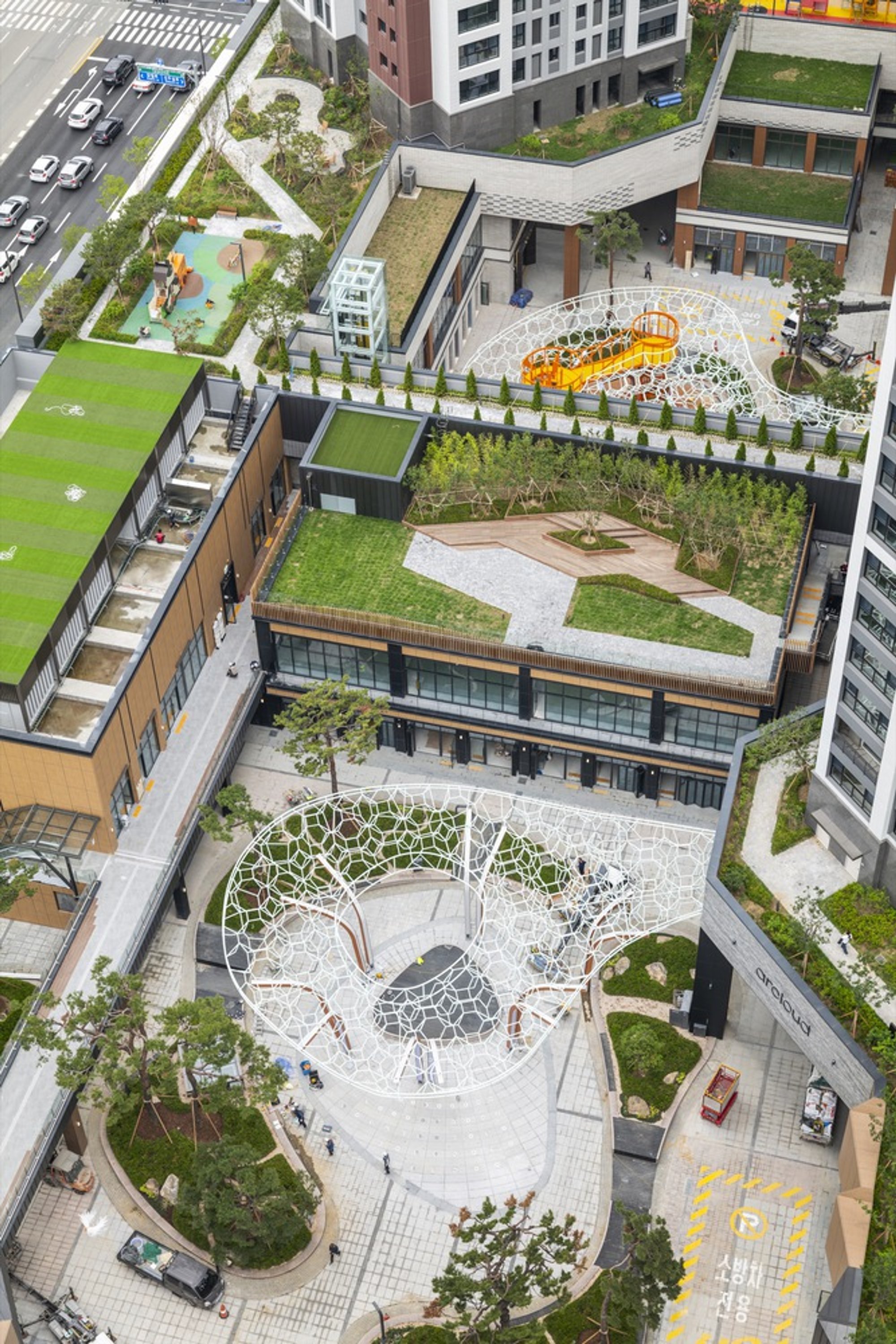
Seoul is a city of contradictions: ancient temple grounds sit beneath glass towers, forested mountains rise behind ten-lane highways, and pedestrians negotiate a landscape built overwhelmingly for cars. At Arcloud, a 7,200 square meter mixed-use development at the foot of Geomdansan Mountain on Seoul's eastern edge, CARVE has tried to tip the balance back toward people on foot. The Dutch studio, working with studio BLAD and external collaborators Walter Ryu and INPACT, designed the public realm for an ensemble of housing blocks, single-family units, retail, recreational and educational facilities completed in 2023. Their strategy was not to decorate the leftover space between buildings but to give it a single, unifying identity: a floating, cloud-like canopy that ties plazas, play areas, and green corridors together into something greater than the sum of its parts.
What makes the project genuinely interesting is the refusal to fragment. Rather than designing one climbing structure here, a shade canopy there, and a stage somewhere else, lead architect Elger Blitz and the team committed to one strong formal gesture that absorbs all of those functions. The result is amorphous from the outside and geometric from the inside: a white hexagonal lattice that stretches beyond glass facades, branches down on tree-like columns, and shelters an orange playground sculpture, a splash pool, a performance stage, and quiet lounge nets, all within its footprint. It is part infrastructure, part landscape, part spectacle, and it works because it never pretends to be only one thing.
One Shape to Hold It All
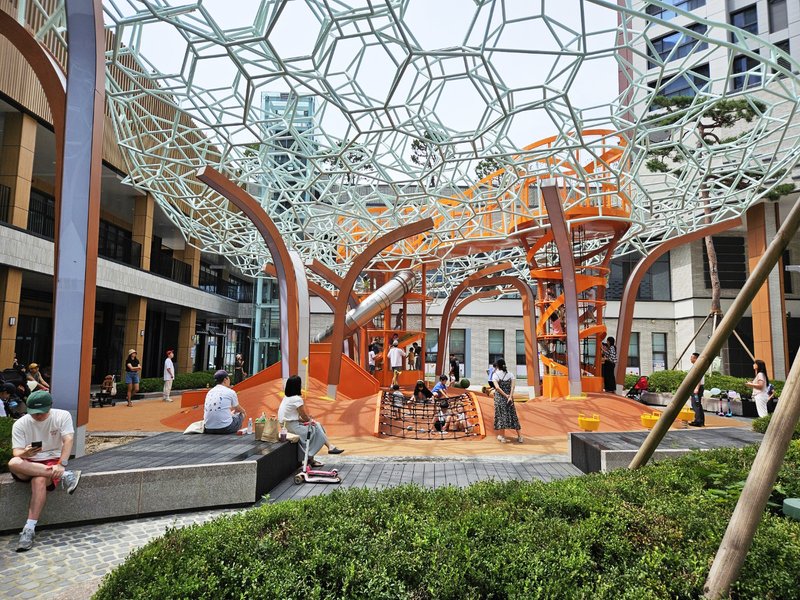
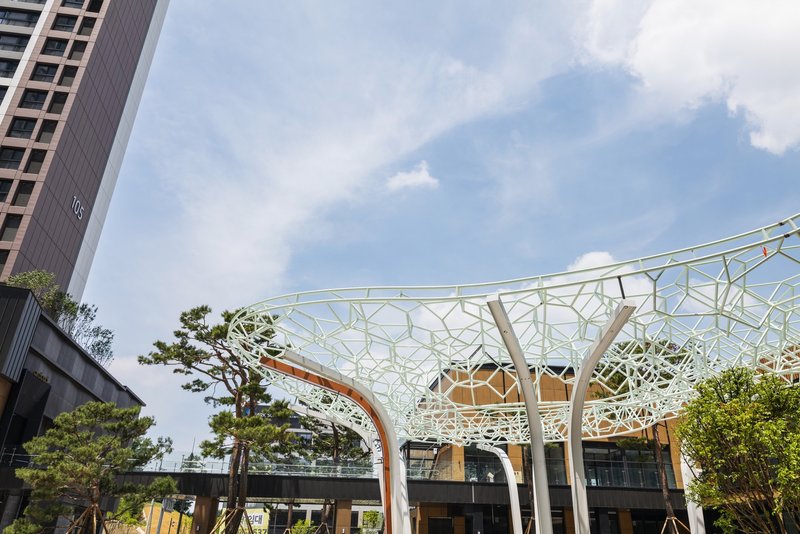
The canopy reads as a single continuous surface, a honeycomb of white hexagons that hovers above the central courtyard and extends outward to connect the development's three main public zones: a sports plaza, an events plaza, and an interior atrium. Its lightweight, self-supporting geometry spans long distances without heavy columns, so the ground beneath remains open and flexible. The lattice is transparent enough to keep shop facades visible from the plazas, functioning simultaneously as a shading device and a spatial ceiling that gives the outdoor rooms a sense of enclosure without claustrophobia.
The decision to use a single overarching form rather than discrete interventions is what separates Arcloud from the play-branded retail developments popping up across East Asia. When everything shelters under the same canopy, the transitions between shopping, playing, sitting, and performing become genuinely fluid. You drift from one activity to the next without crossing a threshold.
A Playground That Climbs Through the Section
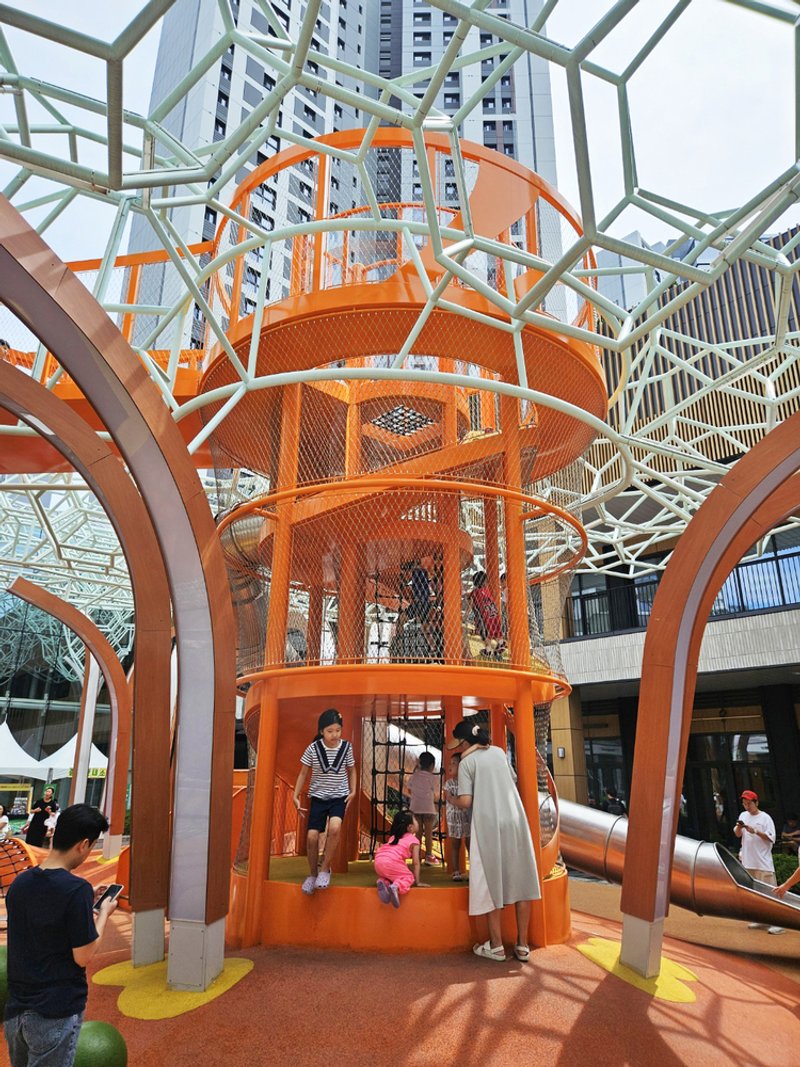
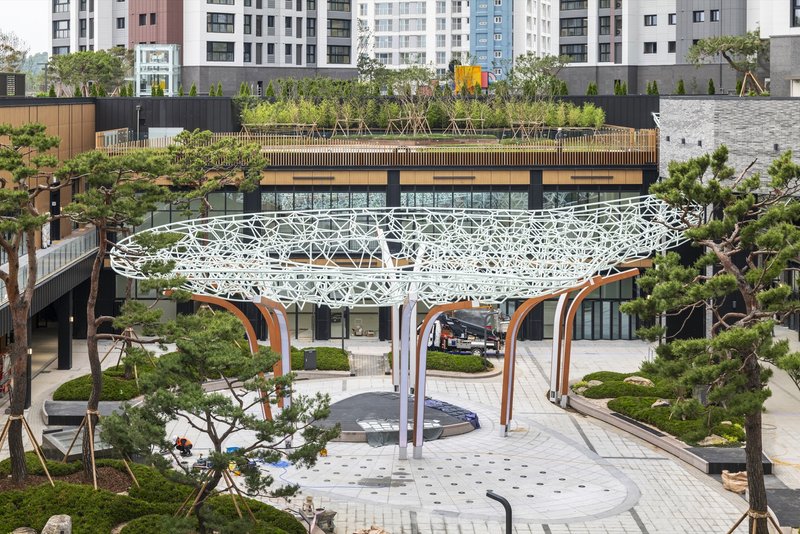
Nested within the canopy is a sinuous orange climbing sculpture that spirals upward through the structure. Children ascend through it using a variety of climbing elements and arrive at suspended lounge nets, turning vertical circulation into an adventure. The sculpture is accessible from different floors of the adjacent shopping mall, which means it functions not just as a playground but as a sectional connector, linking the parking level, the atrium, and the upper retail levels in a way that stairs and escalators never could.
The orange form against the white lattice creates a color pairing that is unapologetically playful without resorting to cartoon aesthetics. The mesh screens on the climbing tower filter light and provide safety while keeping the structure visually permeable. It is a serious piece of infrastructure that happens to be thrilling for a six-year-old.
Seoul's Hills, Replanted at Ground Level
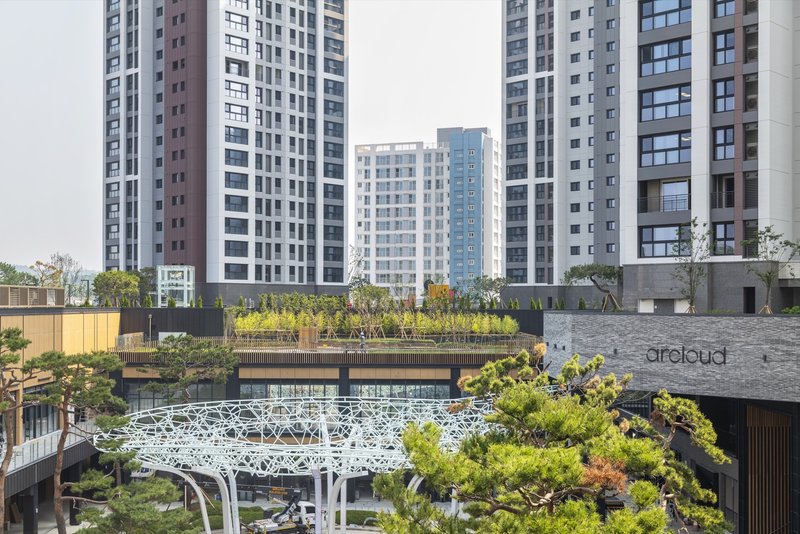
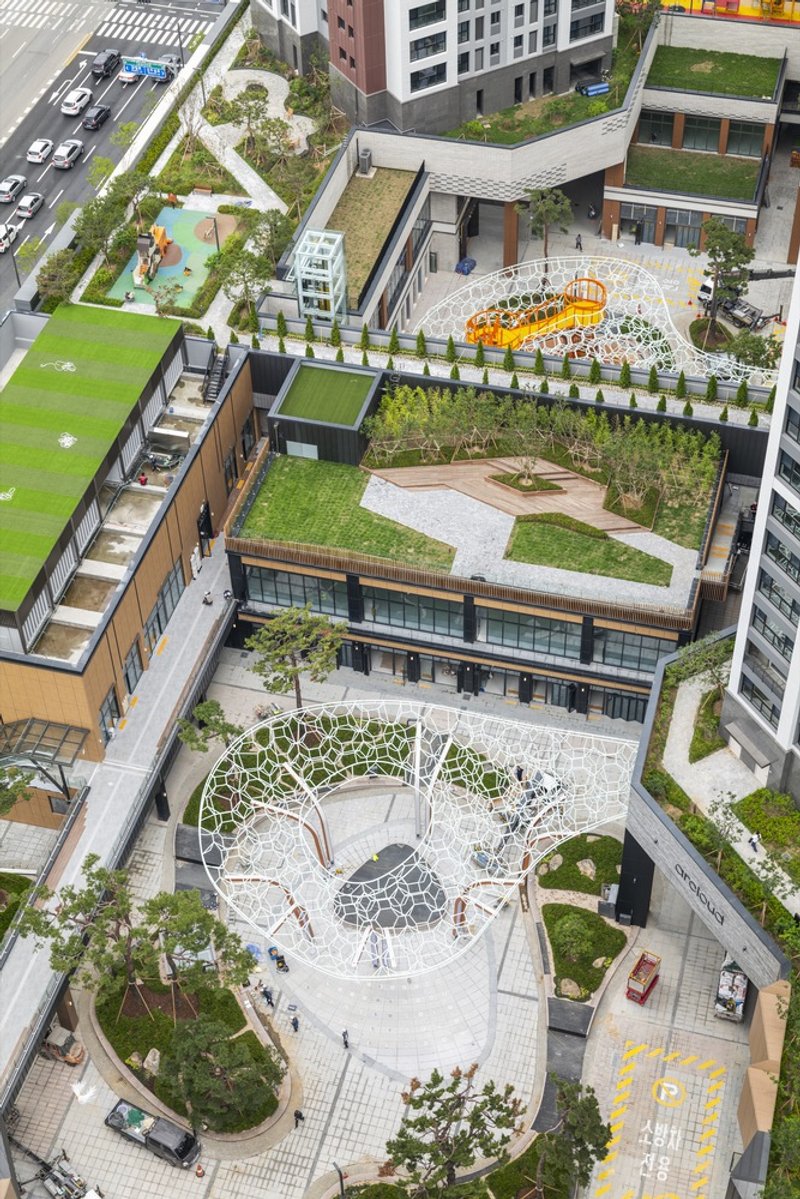
CARVE's landscape strategy pays direct homage to the topography visible from the site. Rolling green knolls planted with indigenous Korean perennials, ornamental grasses, and tall pine trees organize the public spaces into distinct zones while echoing the forested slopes of Geomdansan. The species palette deliberately mirrors the surrounding mountain vegetation, so the development's soft landscape does not feel imported. It reads as an extension of context rather than an addition to it.
A green corridor encircles and interlaces the entire site, physically stitching housing blocks, commercial volumes, and public facilities together. The floor paving draws on Bojagi, the traditional Korean wrapping cloth, translating its strong graphic lines into a surface pattern that lends cultural specificity to what could otherwise be generic hardscape. The effect is subtle but deliberate: even the ground plane tells you where you are.
Seasonal Intelligence Built Into the Surface
One of the quieter design moves is the bowl-like surface in the community plaza that doubles as a splash pool in summer. Seoul's humid continental climate swings between freezing winters and sweltering summers, so a public surface that can toggle between dry gathering space and water play is a straightforward act of climatic intelligence. It transforms the seasonal burden into an asset: the hottest months become the most active ones in the plaza.
Combined with the canopy's shading and the atmospheric lighting system woven into the lattice, the design ensures the public spaces remain inviting across a full daily and seasonal cycle. The lighting shifts the character of the cloud from a daytime shade structure to a luminous landmark at night, doubling its civic presence without adding a single square meter.
Why This Project Matters
Mixed-use developments in rapidly growing Asian cities tend to treat public space as an afterthought, the negative volume left over once the profitable floor plates are maximized. Arcloud inverts that logic. By committing to a singular, generous canopy and a landscape that takes its cues from the mountain next door, CARVE demonstrates that the communal realm can be the organizing principle rather than the residual one. The fact that the structure serves simultaneously as playground, shade device, wayfinding element, and architectural spectacle proves that multivalence does not require visual chaos.
For Seoul specifically, the project matters because it creates a pedestrian-first precinct in a city still dominated by vehicular infrastructure. The rooftop parks, ground-level plazas, and looping green corridor offer a continuous public experience that rewards walking and lingering. If the stacked-city model is going to be the default for dense Asian urbanism, Arcloud offers a compelling argument that the connective tissue between towers deserves as much design ambition as the towers themselves.
Arcloud, designed by CARVE in collaboration with studio BLAD, Walter Ryu, and INPACT. Gami-dong, Hanam-si, Gyeonggi-do, Seoul, South Korea. 7,200 m². Completed 2023. Client: Uri En and Daewoo. Lead Architect: Elger Blitz.
About the Studio
Share Your Own Work on uni.xyz
If projects like this are the kind of work you want to make, uni.xyz is a place to publish your own, find collaborators, and enter design competitions.


Popular Articles
Popular articles from the community

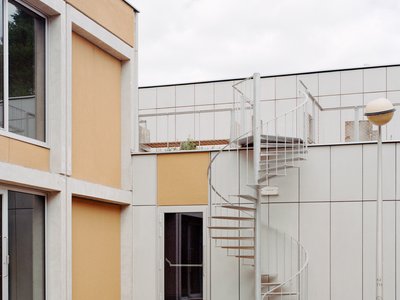
MAKER architecten Rewire a 1972 Brutalist Dormitory on the VUB Campus as a Living Lab
A modular renovation strategy in Belgium breathes new life into Willy Van Der Meeren's modernist student housing without erasing its concrete bones.

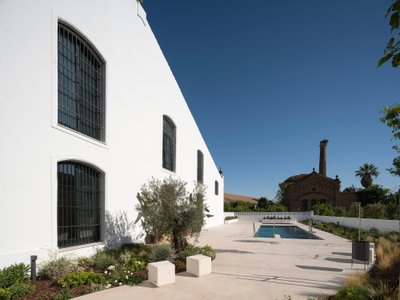
De la Riva Sherry Homes By Juan Vega Arquitectos
De la Riva Sherry Homes transform a historic winery into unique residences, blending industrial heritage, modern comfort, and community-focused courtyard living.
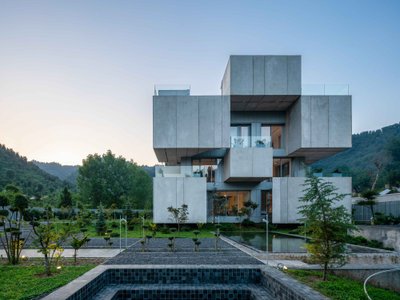
Bood Design Bureau Splits a Gilan Residence in Two to Let the Forest In
Double Side House negotiates privacy and openness through interlocking concrete volumes and planted courtyards in northern Iran's humid Caspian lowlands.
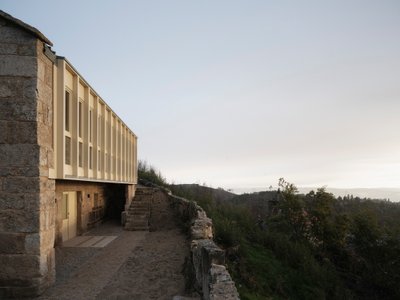
Three Architects Stitch a Social Center into a Crumbling Galician Hamlet
In Muimenta, Spain, timber and plywood volumes graft onto granite ruins to anchor a rural revitalization effort.
Similar Reads
You might also enjoy these articles

Filtering Space: A Gradual Spatial Experience
From urban intensity to spatial calm.

The Ken Roberts Memorial Delineation Competition (Krob)
As the most senior architectural drawing competition currently in operation anywhere in the world, it draws hundreds of entries each year, awarding the very best submissions in a series of medium-based categories.

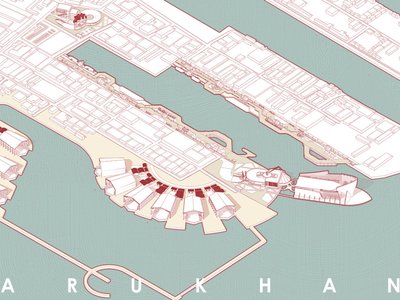
Waterfront Redevelopment and Urban Revitalization in Mumbai: Forging a New Dawn for Darukhana
A transformative waterfront redevelopment project reimagining Darukhana’s shipbreaking heritage into an inclusive urban future.
OUT-OF-MAP: A Call for Postcards on Feminist Narratives of Public Space
Rhizoma Design and Research Lab invites artists, designers, architects, researchers, and students to reflect on how feminist perspectives can reshape public space. Selected works will be exhibited in Barcelona, October 2026. Submissions open until 15 April 2026.

Explore Architecture Competitions
Discover active competitions in this discipline




The International Standard for Design Portfolios


The Global Benchmark for Architecture Dissertation Awards


The Global Benchmark for Graduation Excellence


Challenge to reimagine the Iron Throne
Comments (0)
Please login or sign up to add comments
No comments yet. Be the first to comment!