

Arenli Community by Atelier Li Xinggang: A Contemporary Town Rooted in Sichuan’s Cultural Landscape
Arenli Community blends historic heritage with contemporary living, using courtyards, mixed housing, and local materials to create a culturally rooted modern town.


Located on the outskirts of Chengdu’s Anren Ancient Town, the Arenli Community by Atelier Li Xinggang reimagines how contemporary residential environments can grow organically from historical and cultural heritage. Positioned beside the Anren 5A Tourist Center—transformed from the Republic-era Liao Wei Residence—the project occupies more than 64,000 square meters of land and achieves a total construction area of nearly 70,000 square meters. Its strategic location between an expanding urban zone and open farmland allows it to function as a new hybrid settlement, integrating commercial vitality with residential life while maintaining strong ties to the local past.

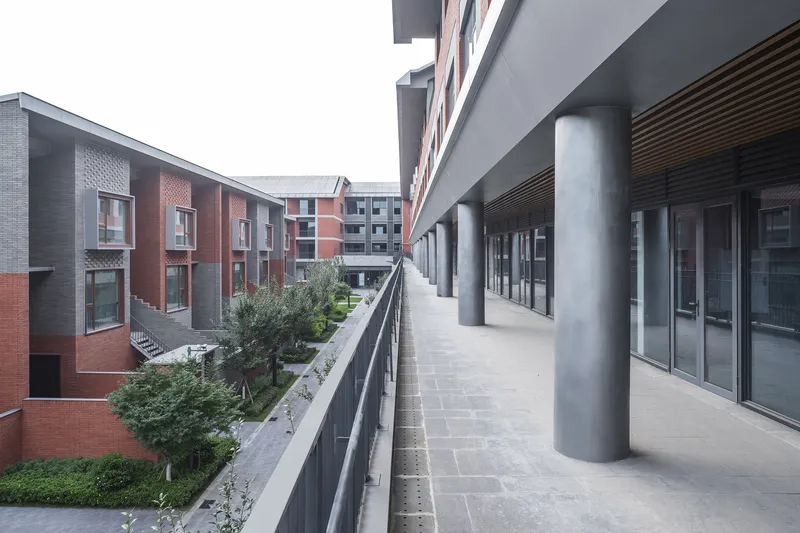
The design begins with a deep reading of the site’s historical layers. The Liao Wei Residence, now a cultural relic and visitor hub, holds a different urban orientation than the contemporary road network. Rather than forcing alignment with modern planning, the architects used this historic building as an anchor point for spatial and functional organization. Streets, courtyards, squares, and public landscapes radiate outward from this cultural core, creating a community rooted in memory while embracing the rhythms of present-day living. This approach bridges the often-separated worlds of top-down urban planning and preserved heritage architecture.
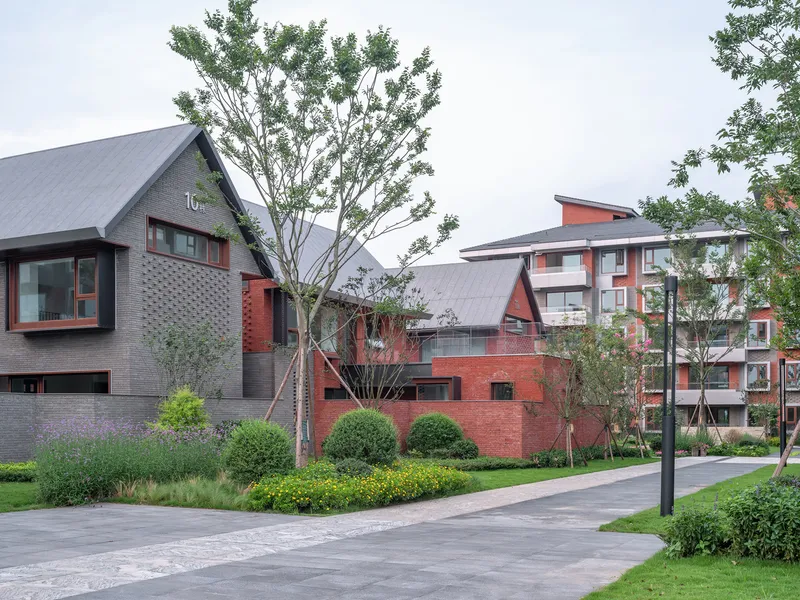


Drawing inspiration from the evolutionary patterns of western Sichuan settlements, the design references two culturally significant typologies: Linpan, the rural bamboo-and-water settlements that merge with agricultural landscapes, and Changzhen, the market town clusters that historically supported regional commerce. These models influence the layout of Arenli Community, where a mix of courtyard houses, townhouses, apartment buildings, and commercial structures creates a miniature contemporary town enriched by a sense of continuity with local traditions.
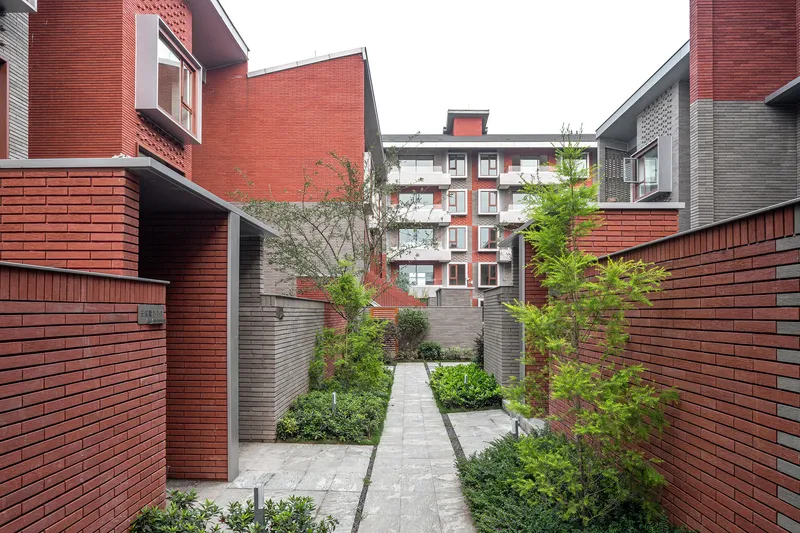
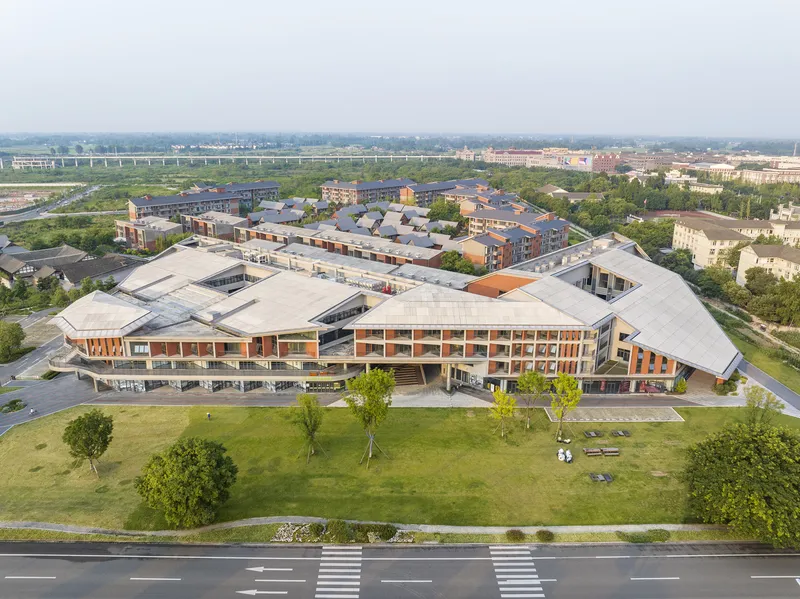
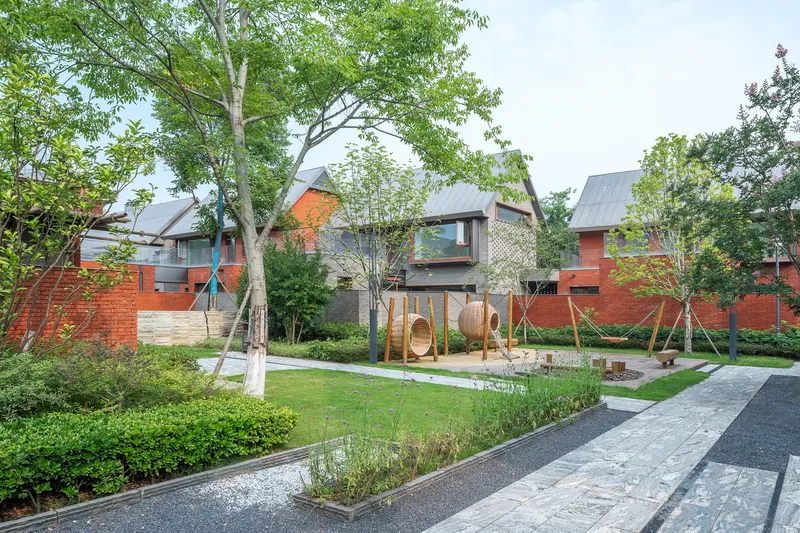
Atelier Li Xinggang carefully choreographs how buildings relate to each other to establish a multi-layered public realm. Intimate courtyards, semi-public walkways, shared gardens, and open plazas interconnect across the community, enabling fluid interactions between long-term residents and short-term visitors. This spatial porosity fosters a sense of cultural belonging and encourages authentic social exchange, reflecting the communal spirit present in the region’s historic towns.


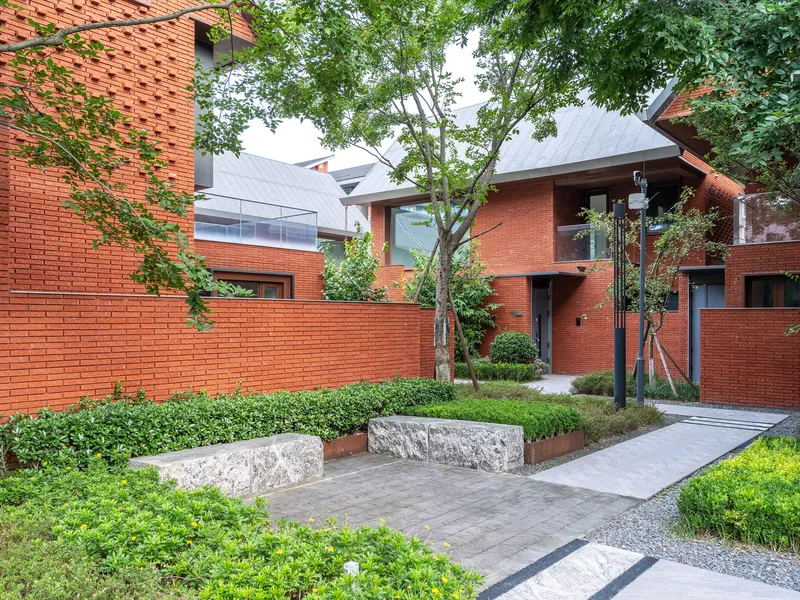
Materiality further strengthens the dialogue between heritage and modernity. Brick, cement board, and metal panels form a restrained and tactile palette that echoes the textures of Liao Wei Residence while remaining unmistakably contemporary. This balance allows Arenli Community to embody local identity without resorting to nostalgic reproduction. The historic mansion itself functions as the spiritual anchor of the development, much like an ancestral hall in traditional towns. Its presence grounds the community in shared memory and becomes a host for both organized cultural events and spontaneous public activities.






Popular Articles
Popular articles from the community


The Musturak Paradise: Senior Living Architecture for a Connected Future in Temara, Morocco
The Musturak Paradise reimagines senior living architecture in Temara via private homes, social spaces, culture, community, and shared care.

Hill & Cross Opera: Sculptural Opera House Architecture Shaped by Tallinn’s Landscape and Identity
Hill & Cross Opera reimagines opera house architecture in Tallinn through its sculptural hill, civic plaza, glass wave and a luminous cross.

Co-life: Sustainable Architecture for Age-Friendly Community Living
Co-life reimagines sustainable architecture for seniors through courtyards, rammed earth, shared gardens, and spaces designed for belonging.

Conexión: Biophilic Design Reimagines High-Rise Living in Hong Kong
Conexión reimagines high-rise living in Hong Kong through biophilic design, green facades, shared spaces, daylight, water and nature within.

Similar Reads
You might also enjoy these articles


Hodi-Mandai Geram
Project Function: Preservation and revitalization of the Intangible heritage and socio-spatial identity of the Hodi by Housing, Cultural Memory Center, Sacred Grove, landscape, local tourism economy


Olio Towers: A Mid-Rise for Performers That Fuses Housing, Rehearsal, and Stage
Located blocks from Houston's Theater District, this modular tower stacks living units around a central performance atrium.

Oasis: Modular Green Housing Carved into Dhaka's Urban Fabric
A shortlisted Plugin Housing entry reclaims unauthorized settlements in Dhaka with stepped concrete volumes, green roofs, and ventilation-driven design.

Black Hole: A Floating Megastructure for the Post-Physical Era
Emiliano Mazzarotto envisions a spherical, self-scaling arena where e-sports, digital hotels, and holographic stadiums replace traditional public space.


Explore Architecture Competitions
Discover active competitions in this discipline



Challenge to reimagine the Iron Throne


Photograph architecture without architects


Illustrate the lost glory of Angkor Wat - Render Challenge


Design challenge to reuse E-waste
Comments (0)
Please login or sign up to add comments
No comments yet. Be the first to comment!