

Asahi no Mori Internal Medicine and Gastroenterology Clinic by TSC Architects: A Warm, Wood-Centric Healthcare Environment in Owariasahi
A warm, wood-centered clinic featuring sunoko façades, exposed rafters, and light-filled interiors, creating a calm, unified healthcare environment in Owariasahi.


The Asahi no Mori Internal Medicine and Gastroenterology Clinic, designed by TSC Architects, redefines the atmosphere of community healthcare in Owariasahi, Japan. Completed in 2023 with a total area of 852 m², the project brings together three distinct medical programs: internal medicine, orthopedics, and a pharmacy: within a shared architectural language rooted in warmth, transparency, and calm spatial experience.
Located along a major arterial road with future urban expansion planned, the project responds not only to its present context but also to the long-term development of the district. The clients sought a unified design identity that would feel bright, welcoming, and non-institutional, setting the tone for a regional medical center that prioritizes comfort and patient well-being.
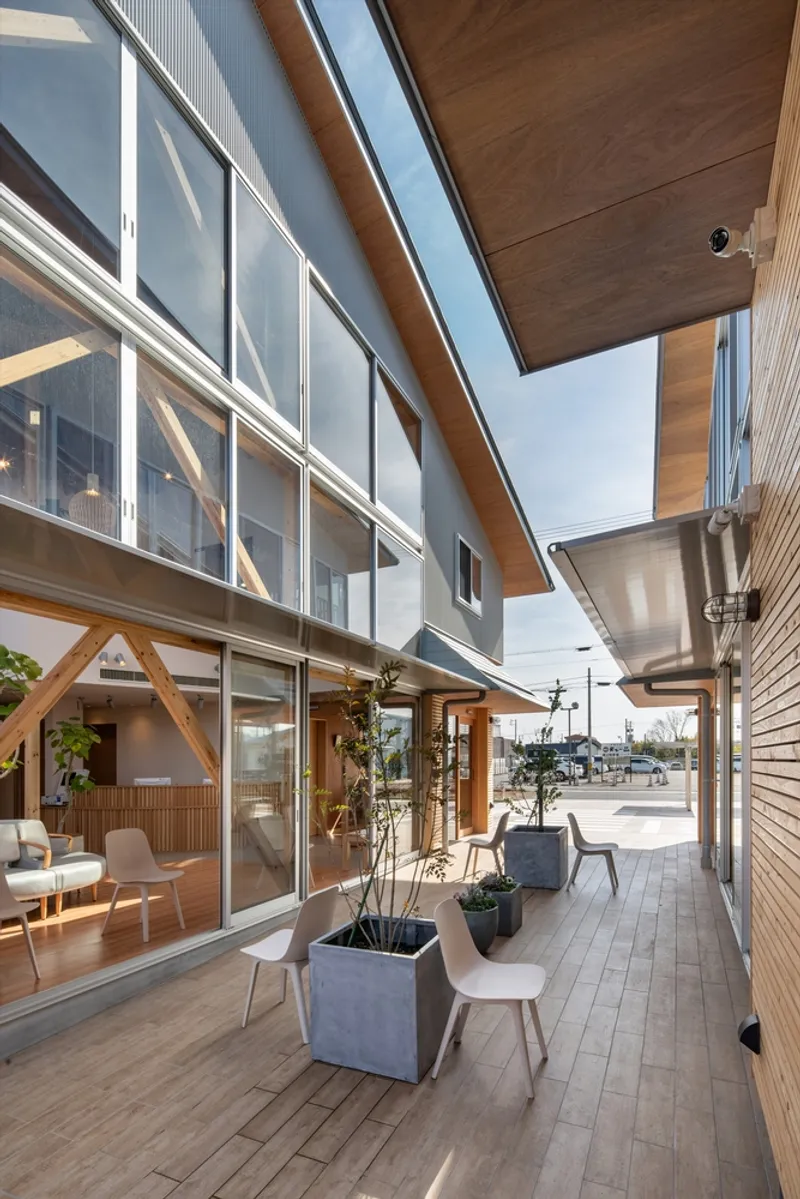
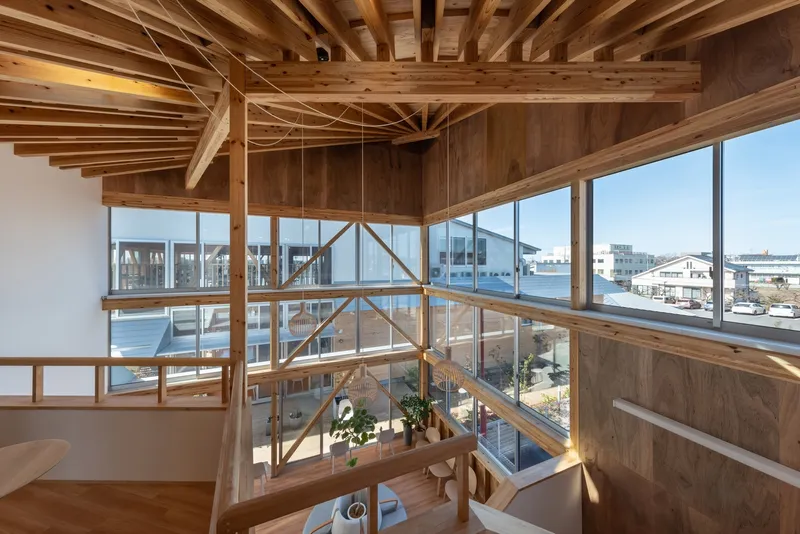
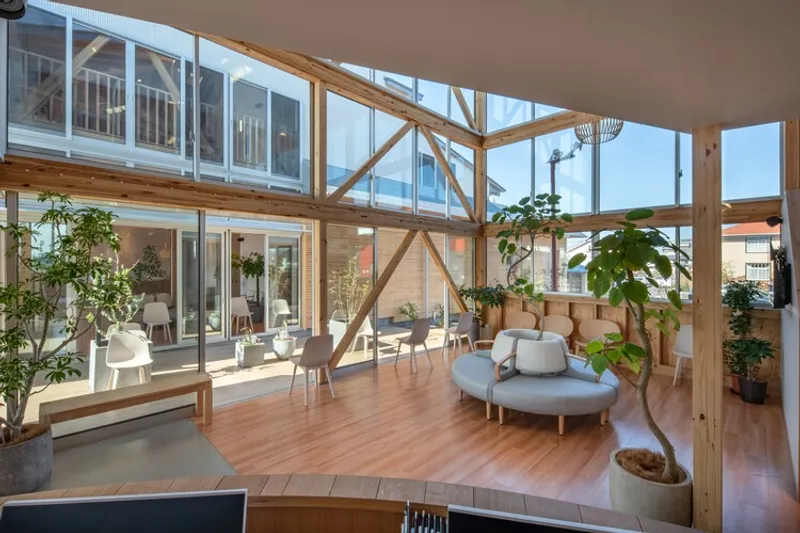
A Healthcare Landscape Defined by Wood and Connection
The design purposefully moves away from the typical commercial roadside aesthetic and instead cultivates a soothing clinical environment shaped by natural materials. TSC Architects chose wood as the primary design medium, creating a gentle atmosphere that conveys warmth the moment patients arrive.
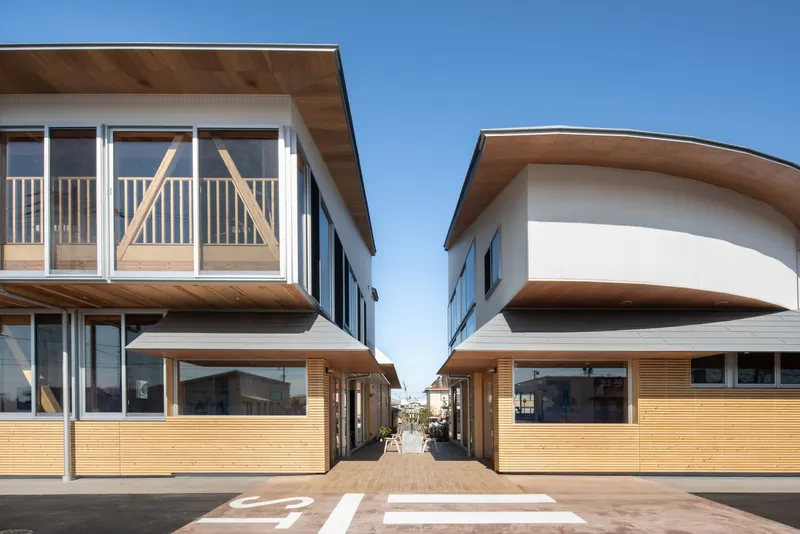
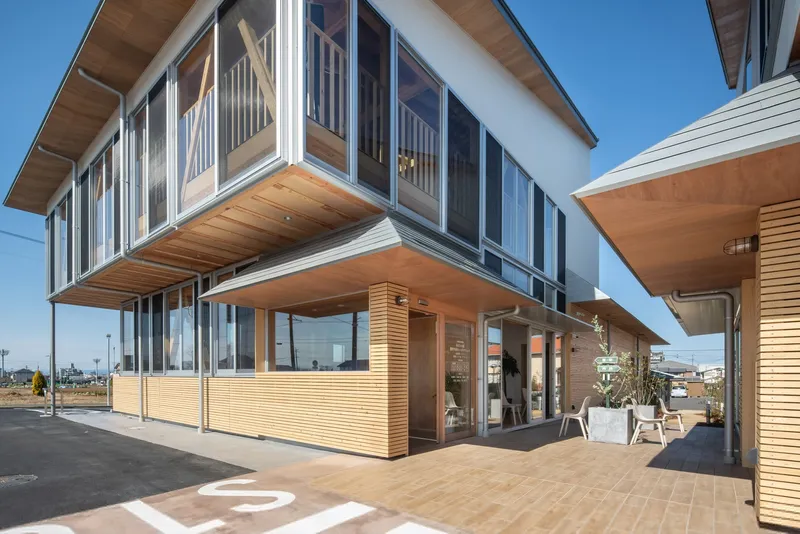
A central design feature is the sunoko-inspired wooden façade, a rattan-like slatted skin that envelopes the three buildings. This not only visually unifies the internal medicine clinic, orthopedic wing, and pharmacy but also improves the building’s environmental performance. The sunoko walls enhance airflow, allowing the exterior to dry more efficiently and improving long-term durability compared to standard wood cladding.
By visually connecting the three structures through this shared wooden code, the architecture encourages a sense of cohesion, clarity, and calm wayfinding, supporting the project’s function as a neighborhood medical hub.
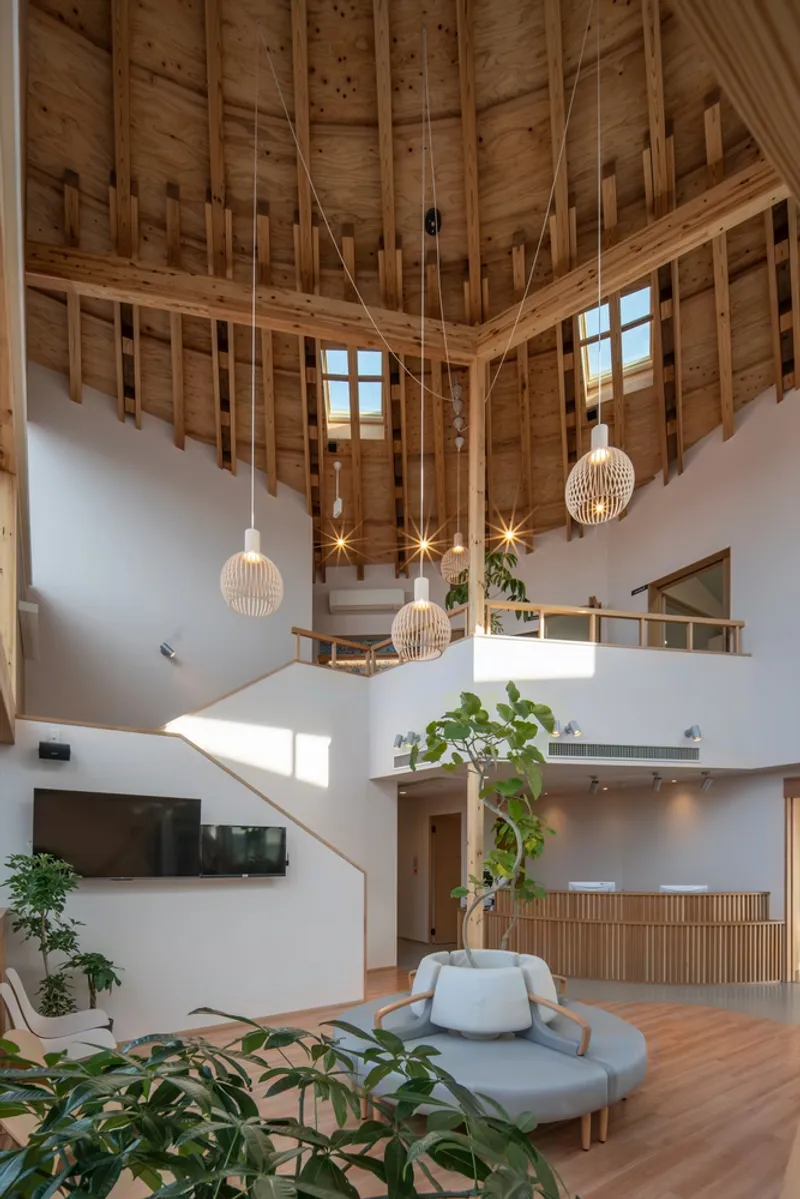
Light-Filled Interiors with Exposed Rafters
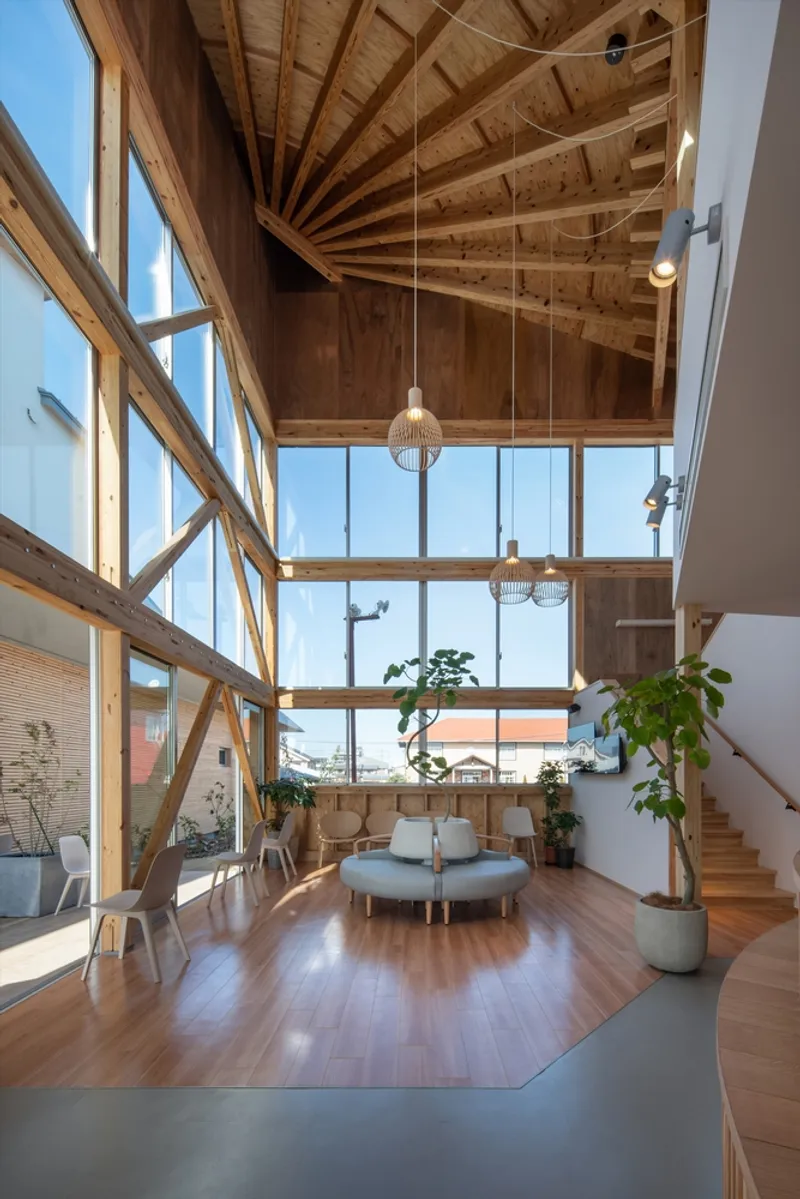
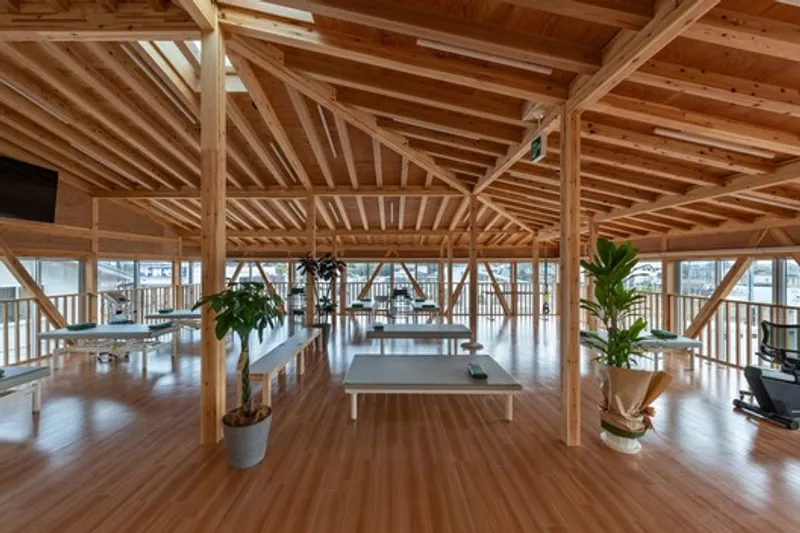
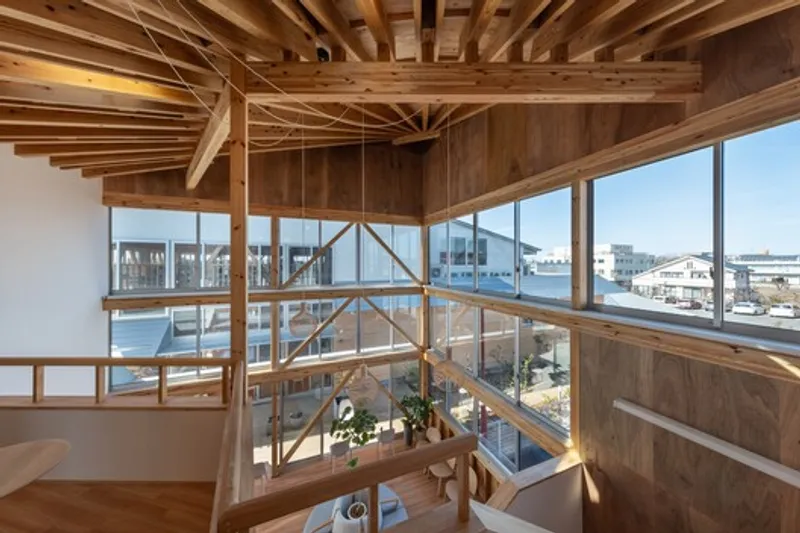
Inside, TSC Architects continue the wooden expression by exposing the rafters and structural framework, transforming functional elements into a central part of the spatial aesthetic. The exposed ceiling draws the eye upward and outward, visually extending the interior toward the natural surroundings.
To amplify this sense of openness, the design incorporates large full-height openings, positioned outside the structural frame. This strategy highlights the wooden skeleton while allowing abundant natural light to diffuse into waiting rooms, consultation areas, and circulation spaces.
All photographs are works of Hiroshi Tanigawa


Popular Articles
Popular articles from the community


Cube Design Draws an Ecological Corridor Between Two Shenzhen Hills with the Nankai Building
Beside Shenzhen's container docks, the Nankai Building pairs stacked balconies with a climbing green screen to connect two hillsides across its height.


Singing Woman: An Opera House That Performs Before the Curtain Rises
Ovidiu Cristian Pavel's conceptual opera house translates Estonia's choral identity into a sculpted waterfront landmark facing the Baltic Sea.

The Amber Palace Opera: A Geological Fiction Surfaces on Tallinn's Baltic Waterfront
Pierre Brillard reimagines a Baltic legend as a public landscape, opera house, and waterfront promenade rooted in Tallinn's coastal identity.

graciastudio Turns a Viewless Tijuana Lot Inward Around a Courtyard of Concrete, Timber and Trees
In Tijuana, Jorge Gracia's GA2 House stacks a timber-clad private floor over exposed concrete and replaces a missing view with a planted interior patio.

Similar Reads
You might also enjoy these articles


Hodi-Mandai Geram
Project Function: Preservation and revitalization of the Intangible heritage and socio-spatial identity of the Hodi by Housing, Cultural Memory Center, Sacred Grove, landscape, local tourism economy


Olio Towers: A Mid-Rise for Performers That Fuses Housing, Rehearsal, and Stage
Located blocks from Houston's Theater District, this modular tower stacks living units around a central performance atrium.

Oasis: Modular Green Housing Carved into Dhaka's Urban Fabric
A shortlisted Plugin Housing entry reclaims unauthorized settlements in Dhaka with stepped concrete volumes, green roofs, and ventilation-driven design.

Black Hole: A Floating Megastructure for the Post-Physical Era
Emiliano Mazzarotto envisions a spherical, self-scaling arena where e-sports, digital hotels, and holographic stadiums replace traditional public space.

Explore Tetsuo Kobori Architects Competitions
Discover active competitions in this discipline

Challenge to reimagine the Iron Throne

Photograph architecture without architects

Illustrate the lost glory of Angkor Wat - Render Challenge

Design challenge to reuse E-waste
Comments (0)
Please login or sign up to add comments
No comments yet. Be the first to comment!