

Atelier Extension in Tomigusuku by Studio Cochi Architects: A Contemporary Hinpun in Okinawa
A compact garden atelier in Okinawa, reinterpreting the traditional Hinpun to buffer home, town, and nature with flexible spatial boundaries.


The Atelier Extension in Tomigusuku is a 54 m² garden studio designed by Studio Cochi Architects in 2023. Located in a residential neighborhood near the airport in southern Okinawa Prefecture, Japan, this small-scale architectural intervention redefines the idea of a home atelier extension by transforming it into a spatial buffer between domestic life, the surrounding town, and the natural environment.
Rather than simply adding workspace to an existing residence, the architects envisioned the structure as a reinterpretation of the traditional Okinawan Hinpun, a cultural architectural element that mediates public and private realms. The result is a minimal yet culturally grounded atelier design that balances openness, privacy, and environmental responsiveness.
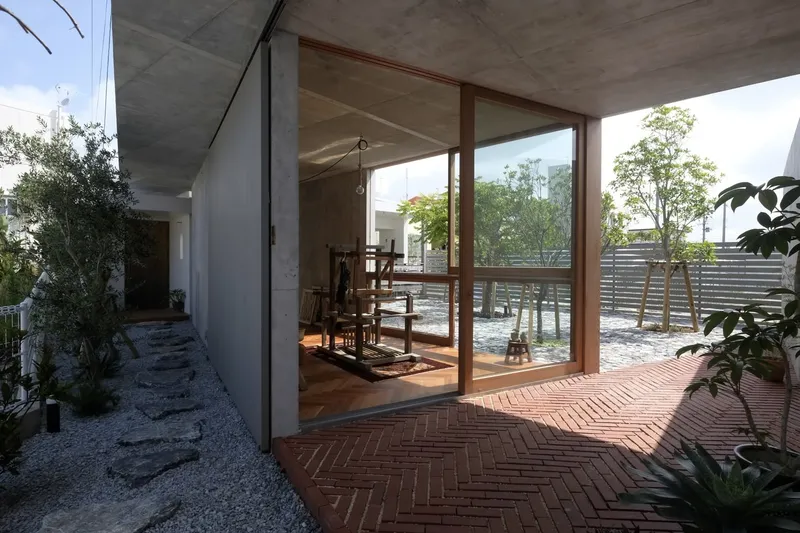
Site Context: Garden, Neighborhood, and Industrial Edges
Situated on a flagpole-like lot set slightly back from the main road, the site is surrounded by contrasting conditions: a neighbor’s yard, a construction company’s material yard, and the existing home. Despite these edges, the garden remains bright and airy.
The client’s request was clear:
- Preserve the garden
- Add a compact atelier
- Protect views toward the main house
- Improve privacy from the road and neighboring properties
Instead of isolating the workspace, the architects positioned it strategically between the house and the street, creating a transitional architectural layer that regulates sightlines and movement.
This approach transforms the extension into an urban buffer architecture solution, enhancing both privacy and openness in a dense residential context.
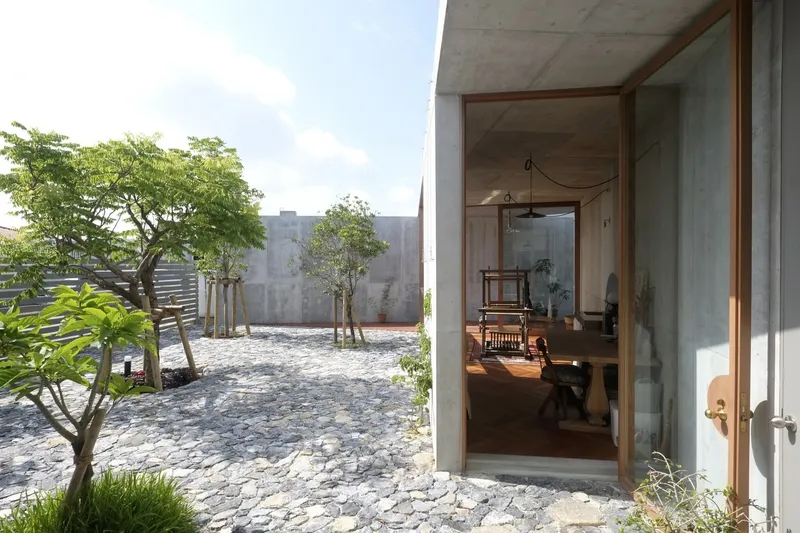
Reinterpreting the Okinawan Hinpun
In traditional Okinawan homes, the Hinpun acts as a symbolic and physical boundary between public and private realms. While not always essential to daily function, it offers:
- Visual privacy
- Protection from storms
- Controlled visitor circulation
- Psychological distance from the street
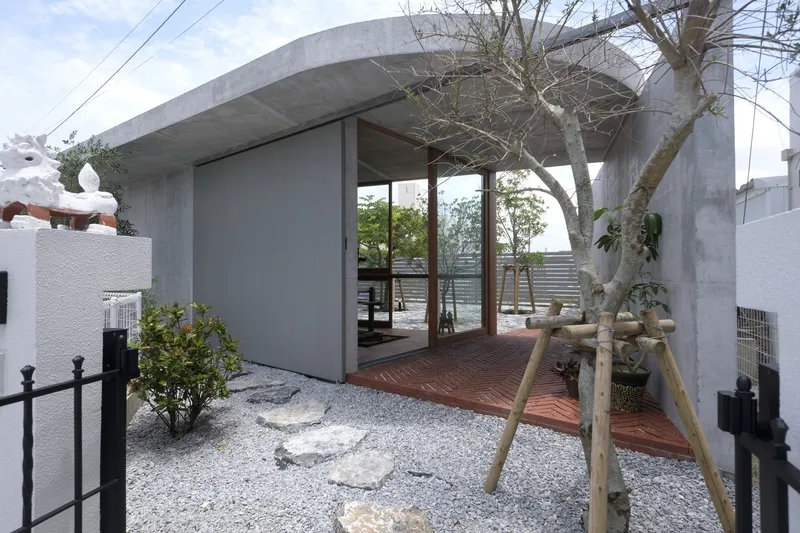
Studio Cochi Architects translated this vernacular concept into a contemporary form. The atelier is deliberately placed slightly away from the center of daily life, allowing it to function as a protective architectural threshold.
Rather than a solid wall, however, this modern Hinpun becomes a flexible spatial device, part studio, part courtyard edge, part mediator between environments.

Spatial Strategy: Courtyard as Mediator
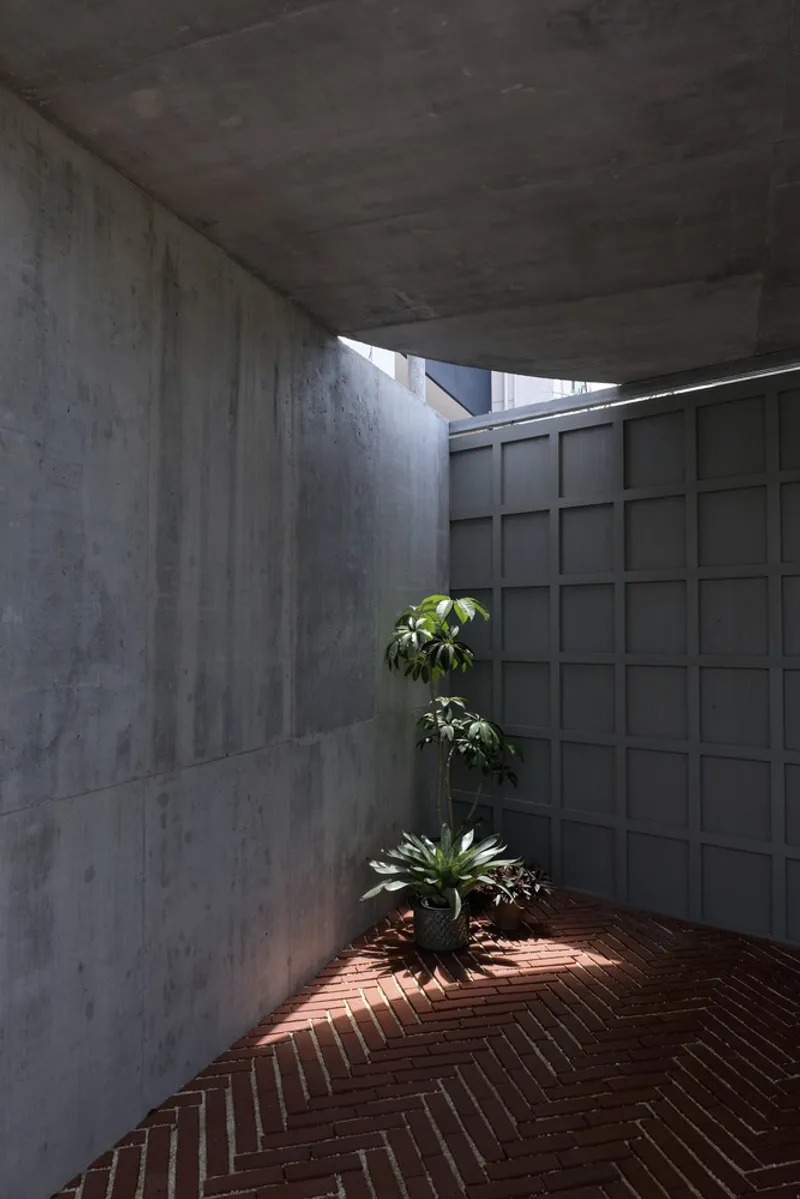
The atelier and courtyard are positioned between the primary residence and the town, effectively forming a layered spatial sequence:
Town → Front Yard → Atelier → Courtyard → Main House → East Garden
A large garden remains open toward the material yard on the east side, ensuring daylight and airflow. This strategic placement supports:
- Cross-ventilation
- Visual layering
- Flexible circulation
- Gradual privacy transitions
The atelier wall does more than block views, it shapes movement patterns. Visitors approaching either the main house or the studio experience a controlled yet fluid path, reinforcing the buffer zone architecture concept.
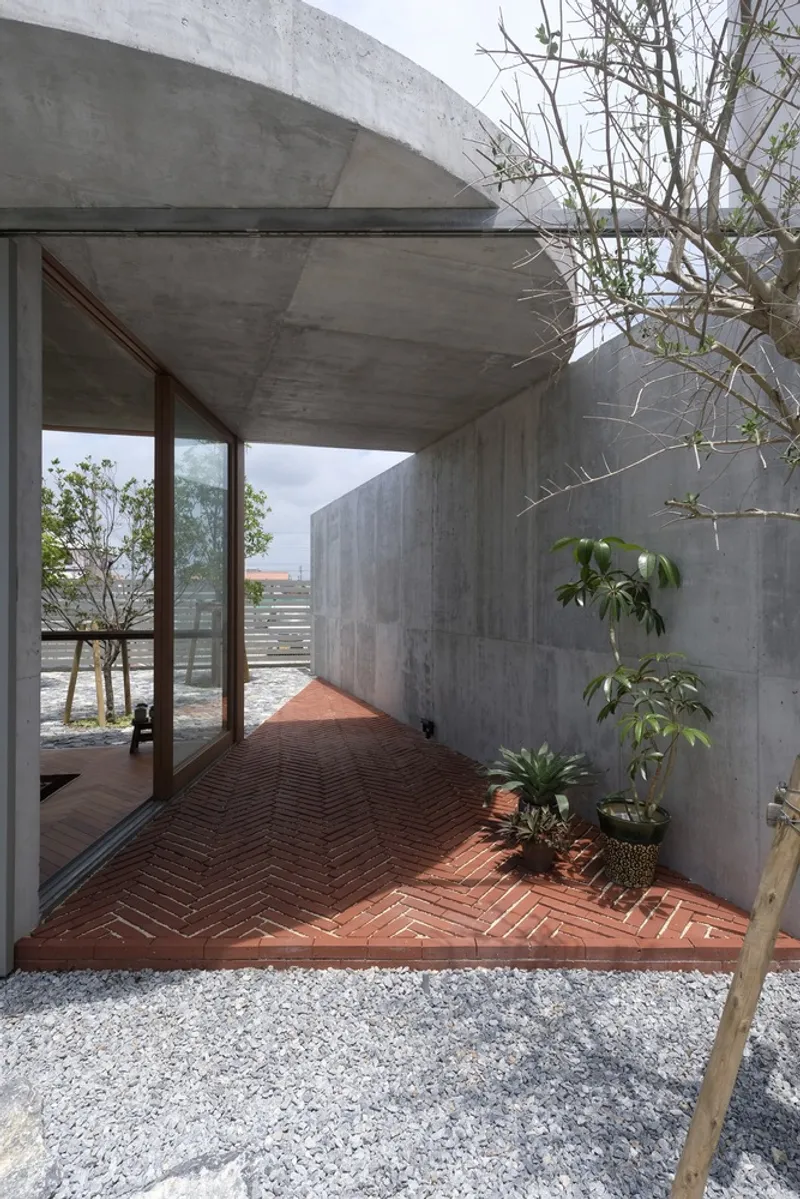

Flexible Openings: Adjustable Distance from the City
One of the project’s defining features is the large sliding door that connects the approach to the atelier. This single architectural gesture enables multiple spatial configurations:
- When open, the front yard, courtyard, and eastern garden merge into a continuous landscape.
- When closed, the atelier becomes an enclosed workspace shielded from outside views.
This adaptability allows occupants to regulate:
- Visual permeability
- Acoustic comfort
- Climate exposure
- Social openness
In Okinawa’s subtropical climate, where weather shifts quickly and typhoons are common, such flexibility becomes essential. The architecture responds to both environmental conditions and emotional states, offering users control over their relationship with nature and the city.
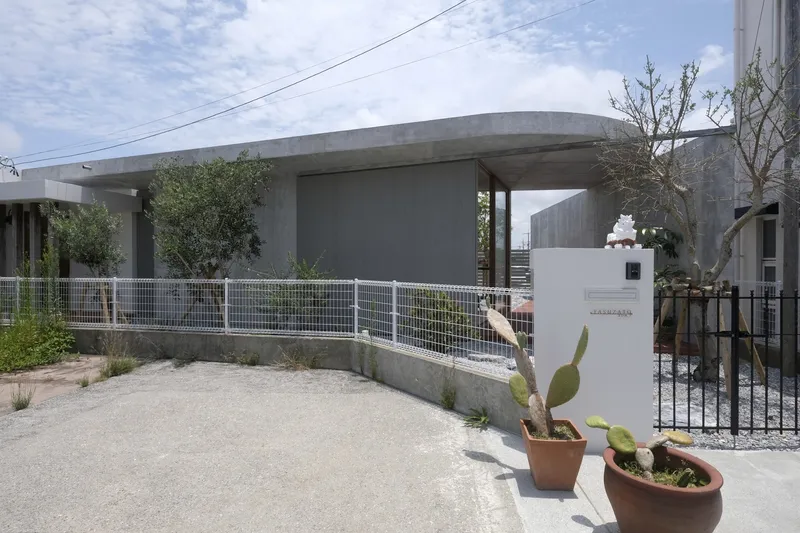
Section and Volume: Modest Scale, Generous Experience
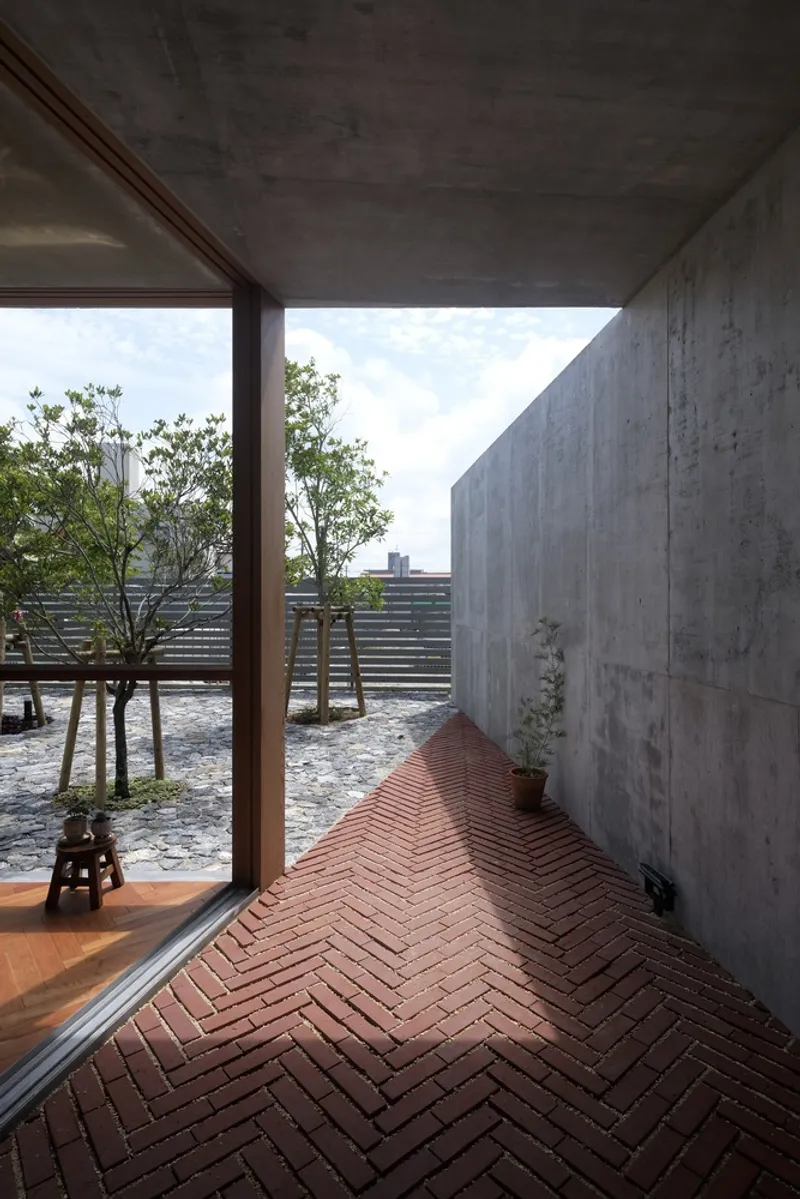
Despite its compact 54 m² footprint, the atelier feels spatially generous. Its section reveals thoughtful proportions that maximize height, daylight penetration, and cross-breezes.
Rather than dominating the garden, the volume sits quietly within it. The material palette and structural design, developed with RGB structure, support clarity and efficiency without visual excess. The project demonstrates how small-scale Japanese architecture can achieve spatial richness through precision and restraint.
Architecture as Distance Management
At its core, the Atelier Extension in Tomigusuku is about managing distance:
- Distance between house and town
- Distance between work and domestic life
- Distance between exposure and privacy
- Distance between city and nature
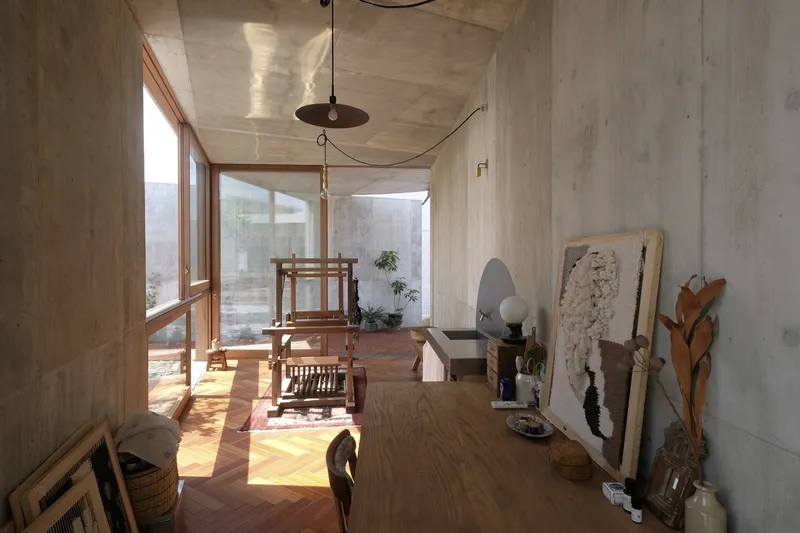
By functioning like a modern Hinpun, the atelier enables residents to “live openly” without feeling exposed. It creates what the architects describe as a generous relationship with surroundings, where boundaries are adjustable rather than fixed.
This design philosophy aligns with broader themes in contemporary Japanese residential architecture, particularly the emphasis on thresholds, intermediate spaces, and climate-sensitive design.


Popular Articles
Popular articles from the community


Cloaked Colonization: A Mobile Underwater Habitat That Moves Like a Fish
Micah Abaya's shortlisted EHC Pacific entry reimagines ocean settlement as a dispersed network of self-sustaining architectural organisms.
Opera by the Sea Estonia: Three Shells Dissolving Architecture into Tallinn's Coastline
A winning opera house proposal replaces monumental form with interconnected shells that blur the boundary between building, park and Baltic Sea.

Opera on the Sea: Driftwood Logic Shapes a Timber Opera House on Estonia's Coast
Trevor Orgill's opera house translates the entangled drift of floating timber into a civic building where wood, water, and music converge.

Faces of the Soviet Avant-Garde: Turning Moscow's Street Names into an Open-Air Museum
A network of sculptural installations across a Moscow residential district transforms forgotten architect names into spatial encounters with cultural memor

Similar Reads
You might also enjoy these articles

FAMM Arquitectura Organizes Ten Villas Around Courtyards and Jungle in Nosara, Costa Rica
El Molino pairs two elongated volumes with deep overhangs and timber louvers to build a compact coastal community five minutes from the beach.
Oscar Niemeyer's Ibirapuera Park Pavilions Define São Paulo's Cultural Identity in Concrete and Curve
A constellation of modernist volumes set within São Paulo's most important urban park, conceived for the city's 400th anniversary in 1954.
Sanjay Puri Architects Wraps a Jaipur Office Tower in Capsule-Shaped Green Buffers
A nine-level climate-responsive workplace near Jaipur Airport uses stacked planter terraces and aluminium screens to fight 40°C heat.
RHO Converts a Berlin Spree-Side Industrial Courtyard into Enkime's 1,000 m² Agency Headquarters
A social media agency's new home in Charlottenburg trades glossy branding for concrete waffle ceilings, glazed tile, and sheer curtains.

Explore Atelier Competitions
Discover active competitions in this discipline

Challenge to reimagine the Iron Throne

Photograph architecture without architects

Illustrate the lost glory of Angkor Wat - Render Challenge

Design challenge to reuse E-waste
Comments (0)
Please login or sign up to add comments
No comments yet. Be the first to comment!