
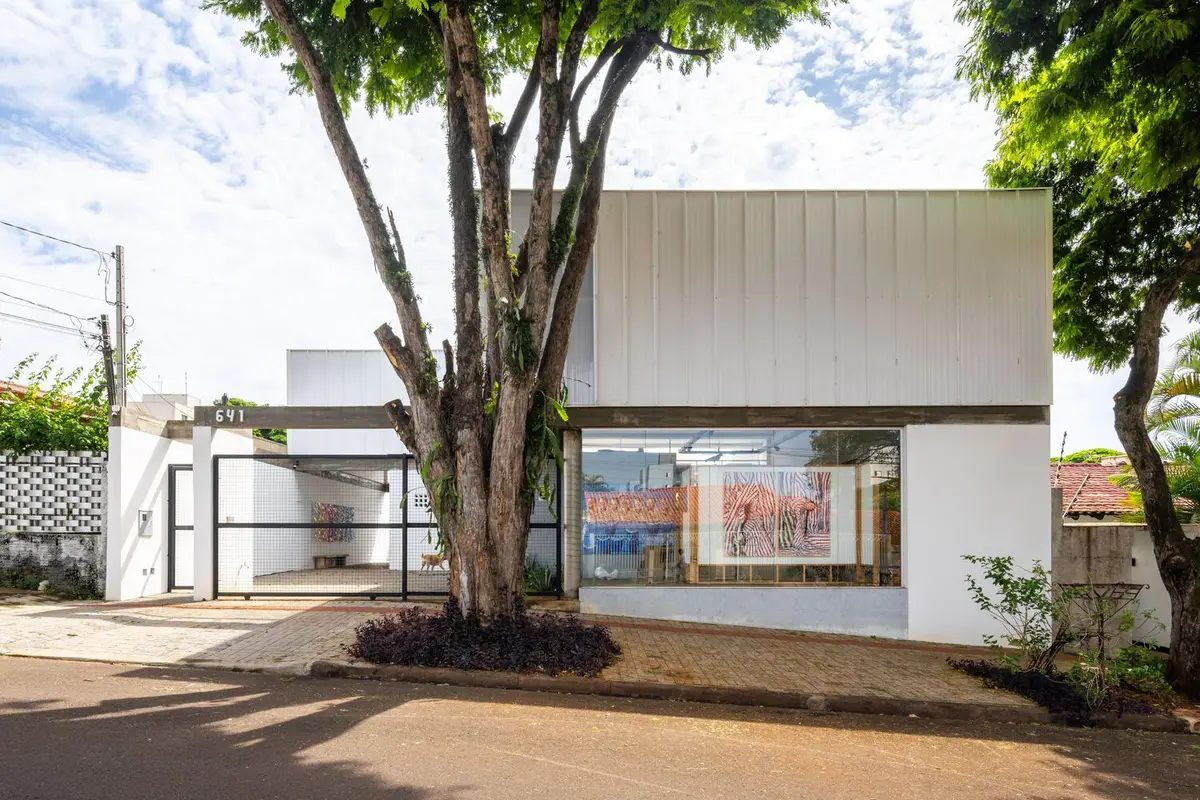
Atelier Tabaetê by Verri & Galvão Arquitetos – A Contemporary Studio Interwoven with Memory and Light
A light-filled art studio unifying old and new structures through a metal roof, flexible spaces, and a seamless connection between street and garden.


Atelier Tabaetê by Verri & Galvão Arquitetos is a refined architectural intervention that merges contemporary construction with the historical essence of a family home in Maringá, Brazil. Designed in 2023, the 265-square-meter project redefines an existing residence and its ancillary structures, transforming them into a multifunctional creative space that supports exhibition, production, and daily artistic life.
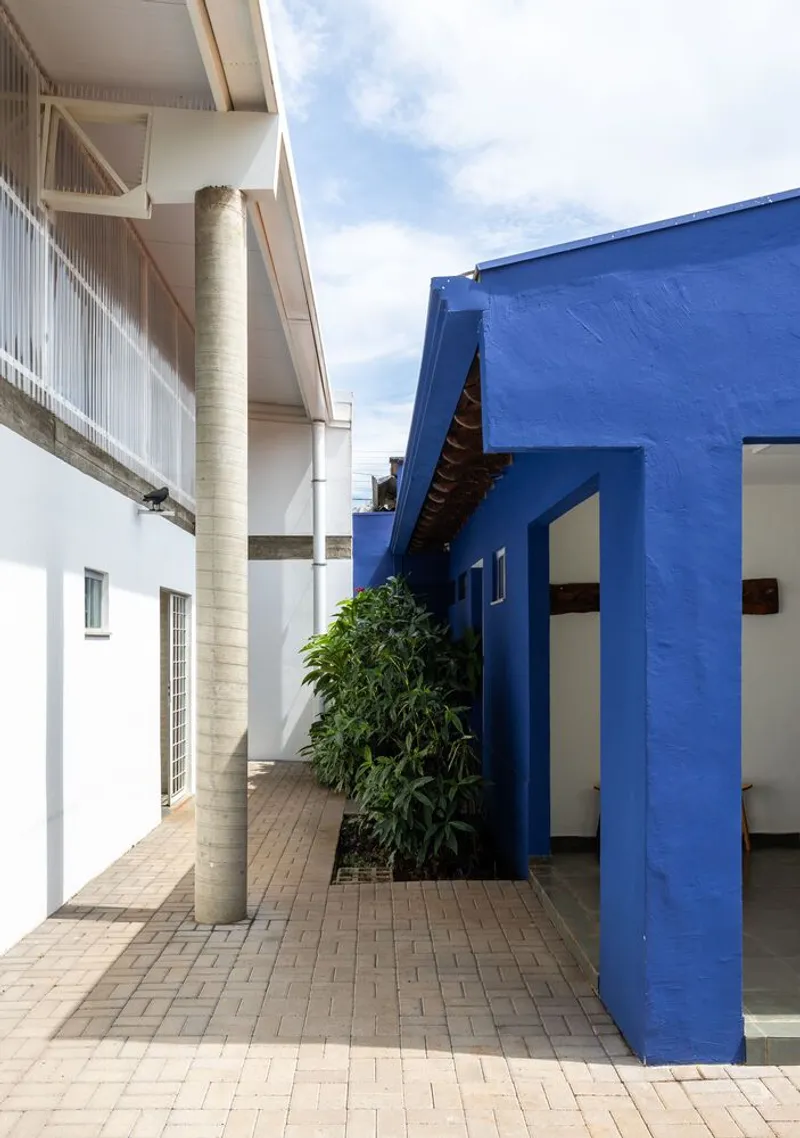
The name "Tabaetê" draws from Tupi-Guarani, where “taba” means city and “etê” means large or important—an apt tribute to the cultural resonance the studio aims to hold within the Jardim Tabaeté neighborhood. The site originally featured a typical two-slope home set on a generous lot, accompanied by secondary buildings that housed a significant collection belonging to a family of visual artists.
Preservation as a Design Principle
A central challenge for the architects was to create a new studio without compromising the existing buildings that safeguarded the artists' archives. Maintaining these structures became a key strategy, allowing the new architecture to grow organically around the old while highlighting a dialogue between time periods.
The existing house’s position naturally defined an access plaza, creating a welcoming public-facing threshold for visitors. Its lateral setbacks shaped a porch and an elongated studio zone, establishing circulation and spatial organization with minimal structural intervention.
A Singular Metal Roof Unifying Old and New
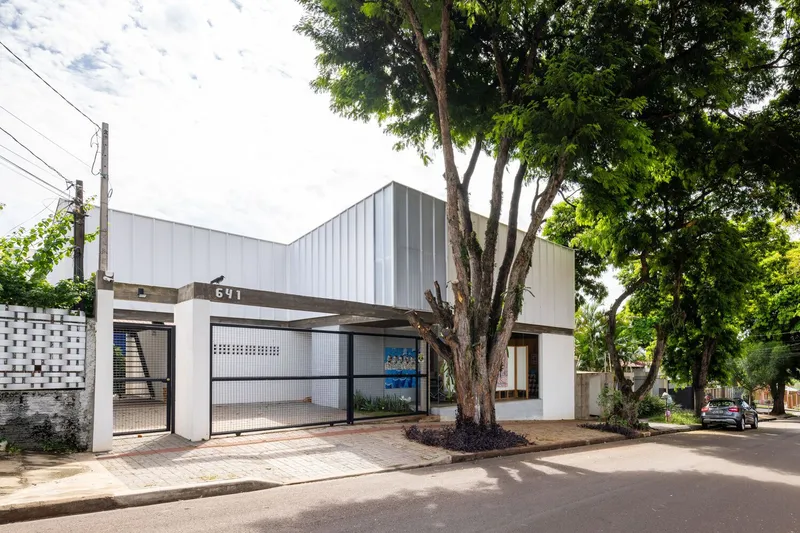
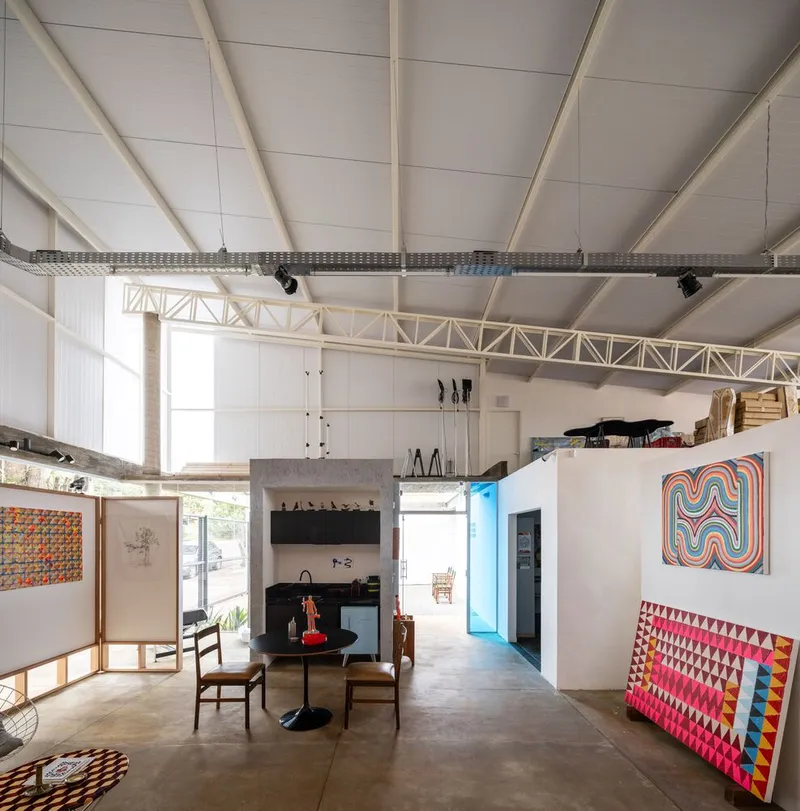
In contrast to the masonry of the original construction, the new intervention is marked by a striking single-pitched metal roof, extending across the length of the site. This design gesture unifies disparate volumes beneath one architectural element while subtly revealing the layering of history.
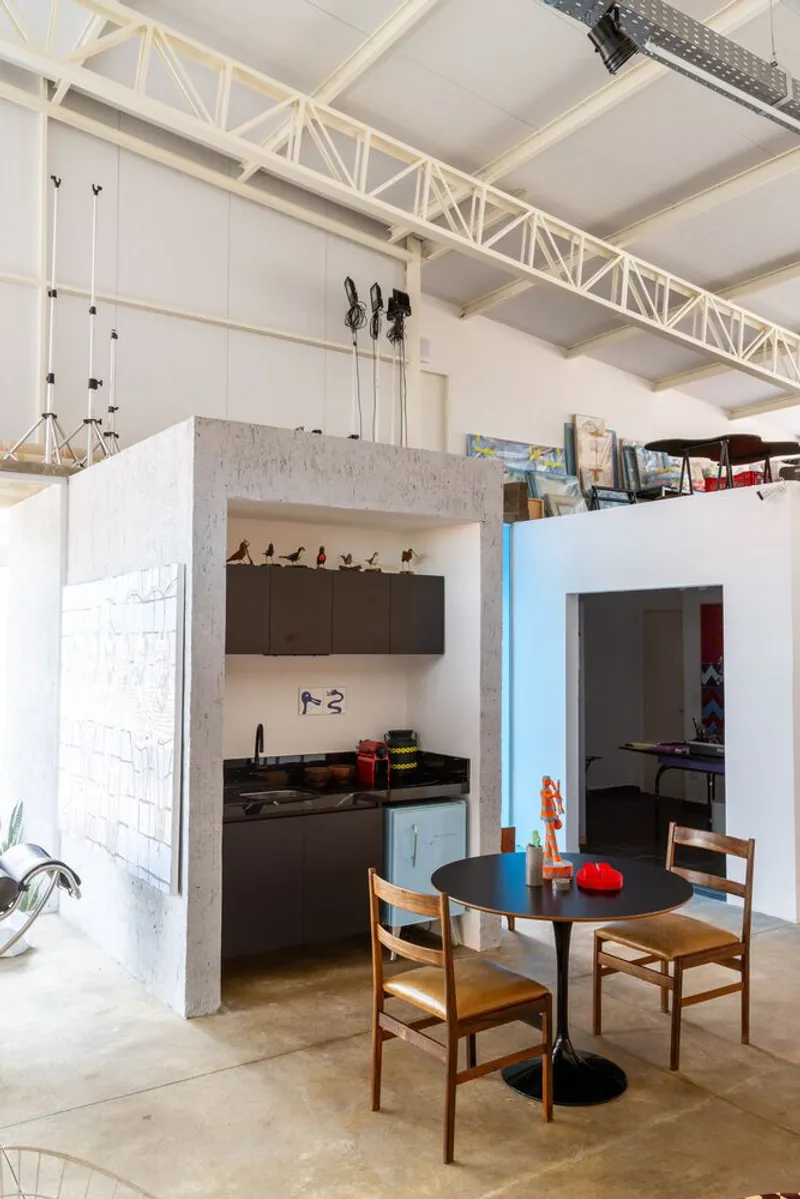
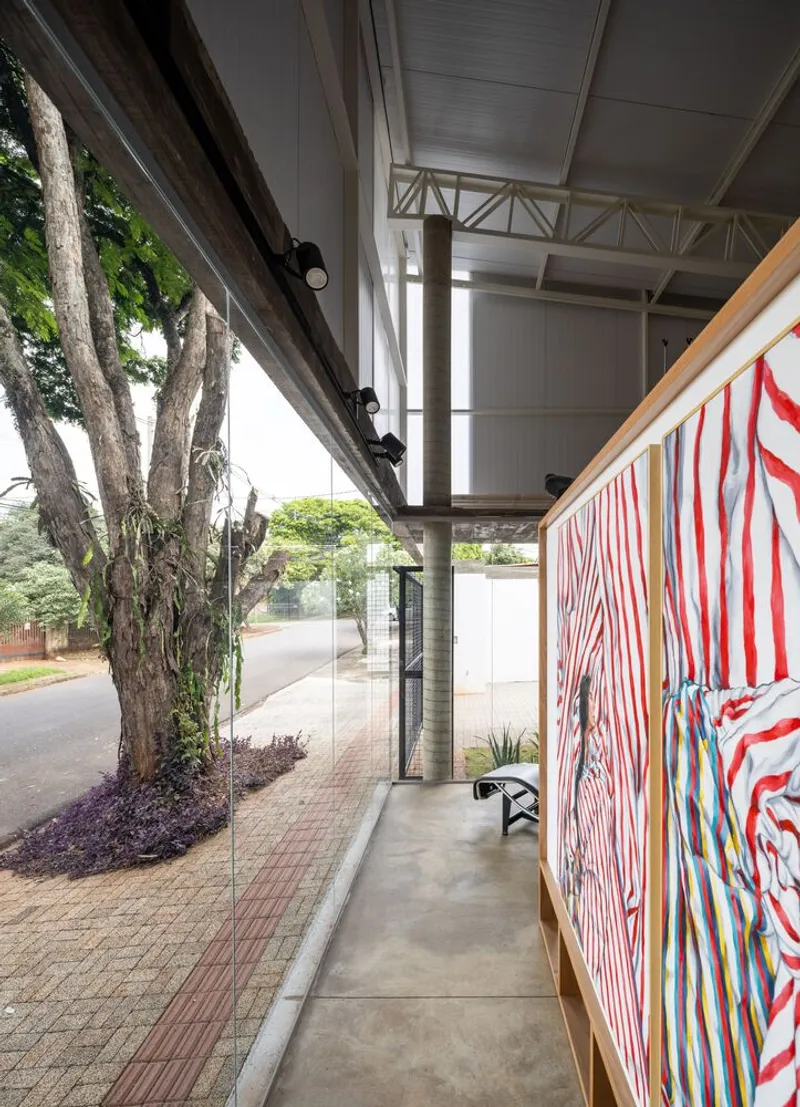
The roof is supported along the property's side boundaries and anchored by a central trussed beam resting on concrete pillars. The exposed metalwork and structural clarity emphasize the studio’s constructive honesty, celebrating the contrast between past and present.
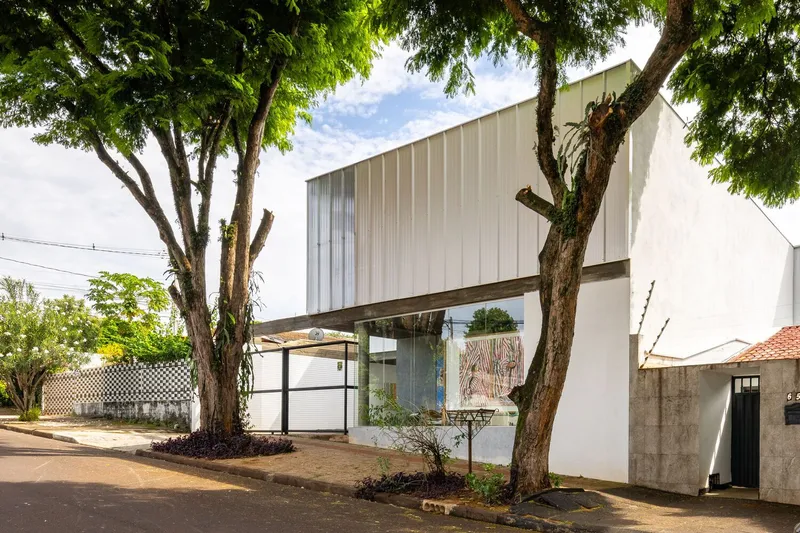
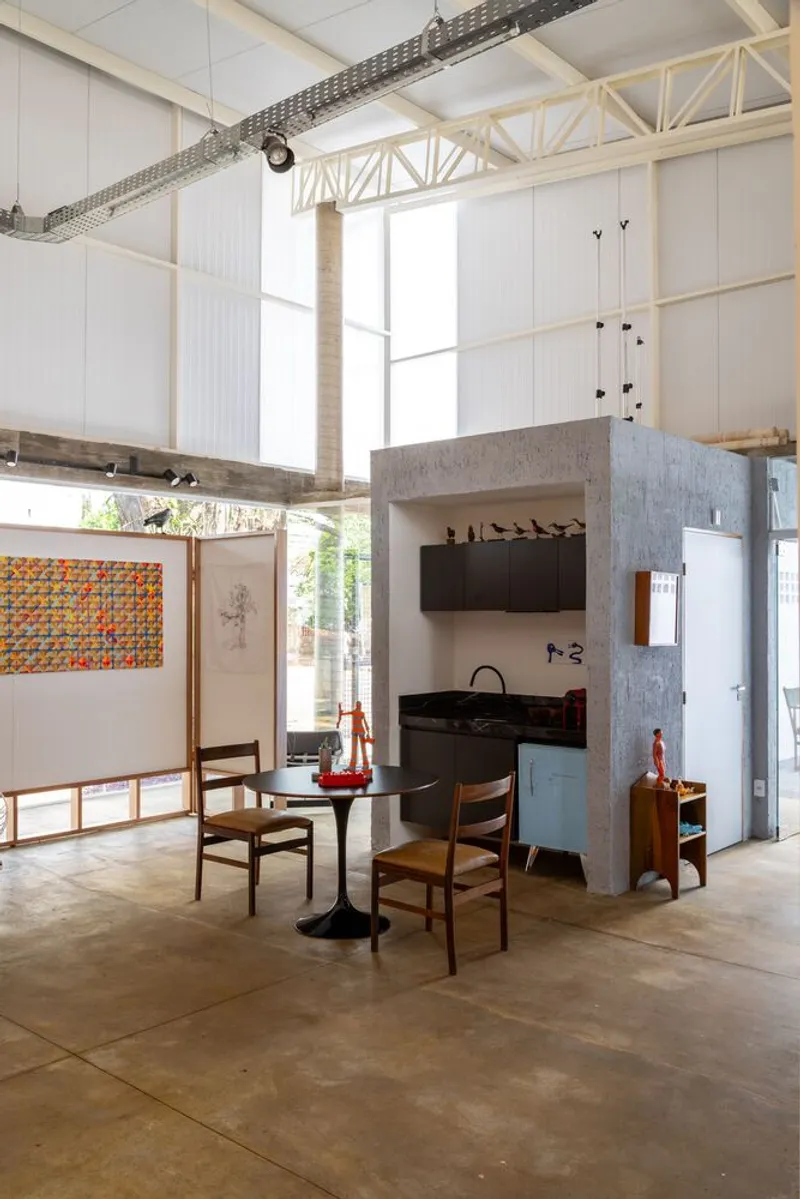
The architects introduced translucent and opaque vertical closures, bringing soft, filtered light into the interior while maintaining privacy and diffusing natural illumination across workspaces. The interplay between transparency and solidity adds a sense of depth and rhythm to the architectural envelope.
Celebrating Time Through Structure
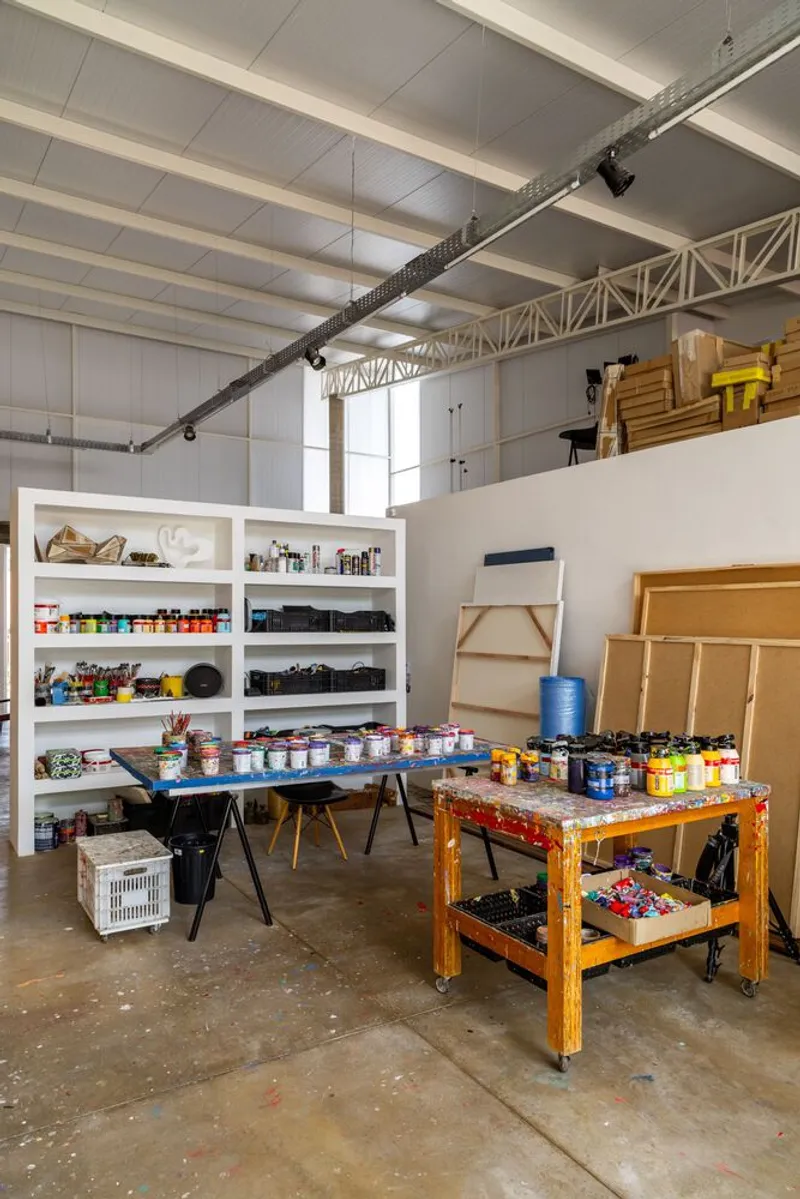
One of the most expressive gestures is the exposed concrete beam that delineates the perimeter of the new roof. This continuous line marks the boundary between the “old house” and the “new architecture,” visually stitching the two eras together. After the new covering was installed, the old roof was removed, and its slab repurposed as an elevated storage platform for the artists’ collection—a thoughtful adaptation that maximizes space and preserves memory.
A Flexible Studio Bridging Street and Garden
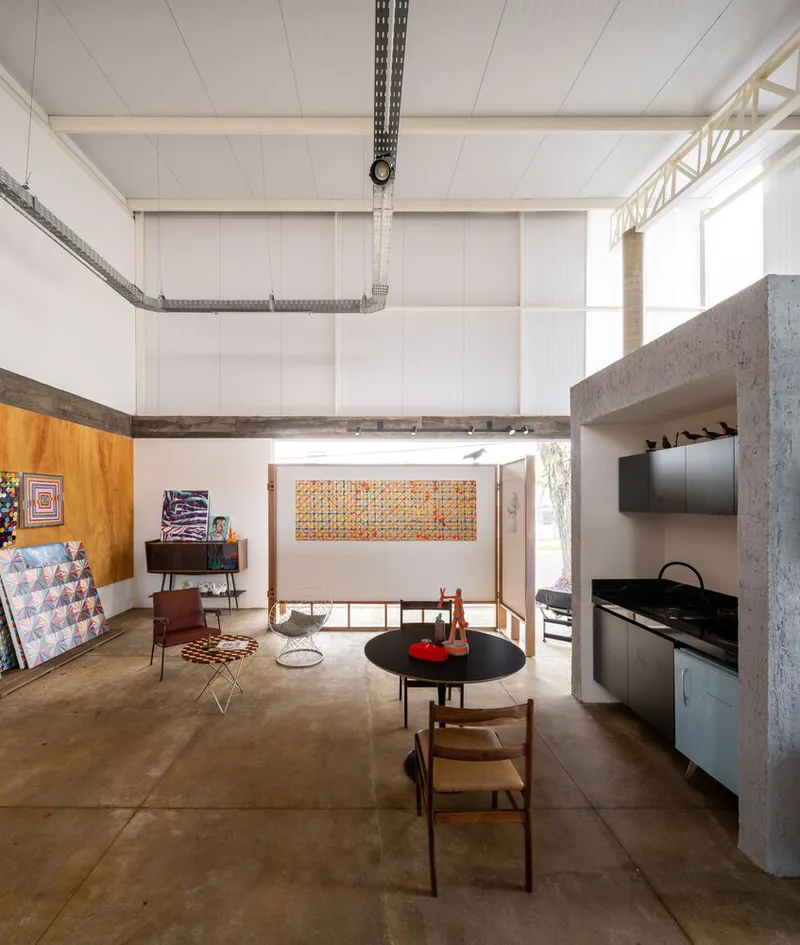
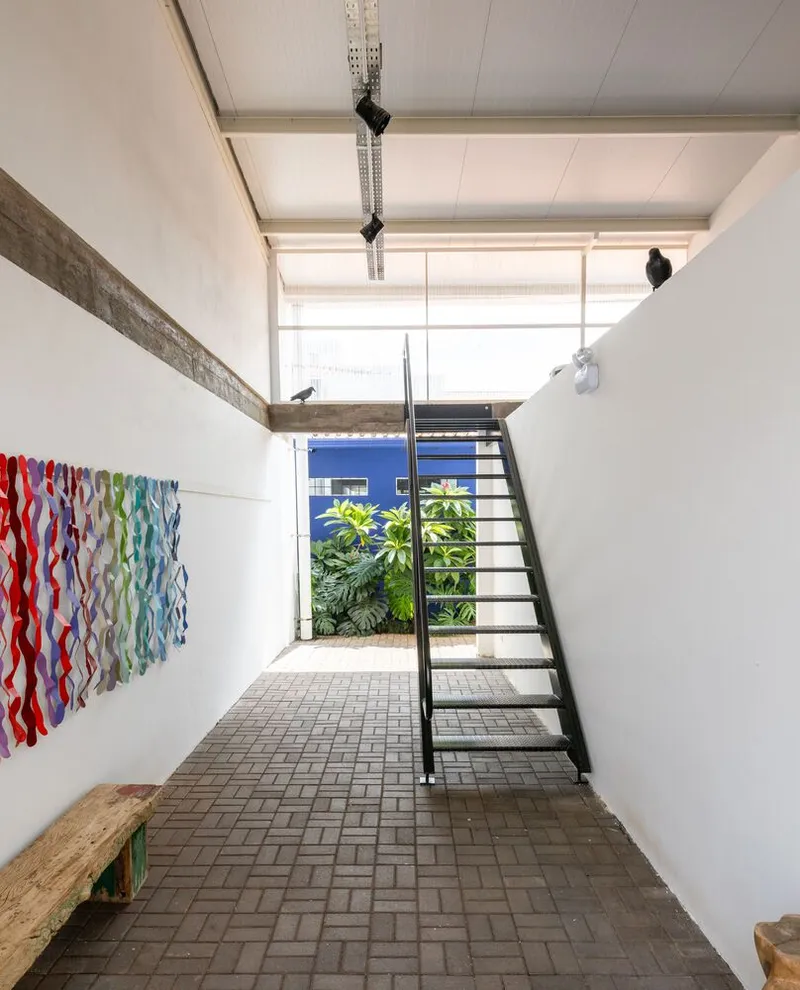
The studio volume stretches from the street frontage to the backyard, creating a fluid sequence of exhibition, creation, and social interaction. Large openings facing the neighborhood turn the space into a public showcase, reinforcing its cultural presence in the community.
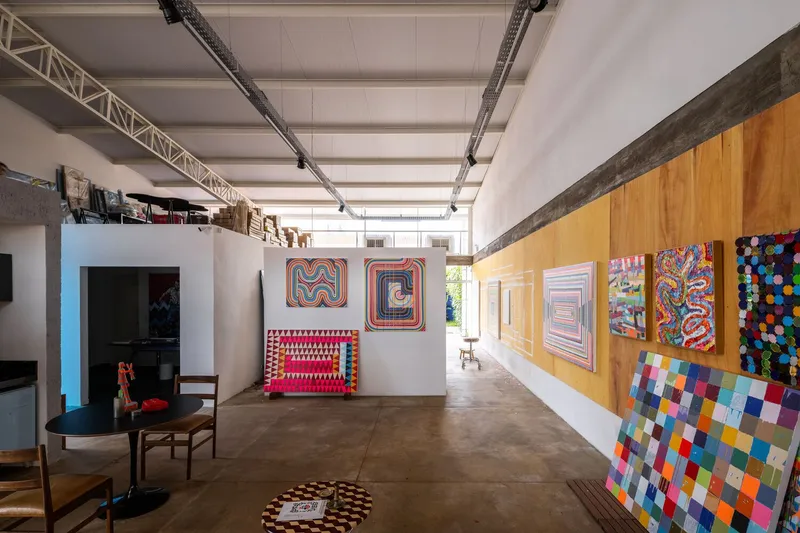
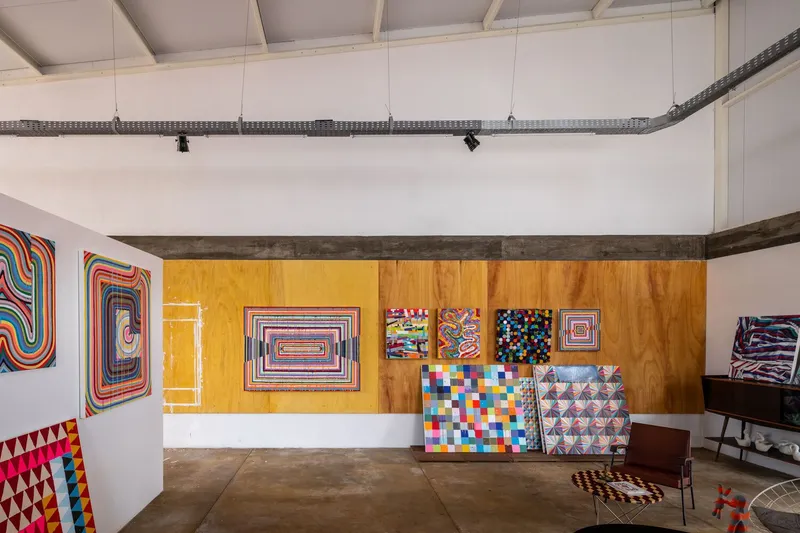
Inside, the design supports flexible programming, allowing the artists to shift seamlessly between displaying artworks, producing new pieces, hosting visitors, and fostering collaborative moments. The continuity of space, light, and structure creates a cohesive atmosphere that nurtures creativity. Select an Image


Popular Articles
Popular articles from the community


ETEH Reworks the Shared Spaces of São Domingos School in Brazil Around Timber, Color and Hanging Plants
At São Domingos School in Brazil, 436 m² of hall, refectory and library are recast with timber joinery, a yellow and blue code and trailing greenery.

Cube Design Draws an Ecological Corridor Between Two Shenzhen Hills with the Nankai Building
Beside Shenzhen's container docks, the Nankai Building pairs stacked balconies with a climbing green screen to connect two hillsides across its height.

David Ortega Stacks a Two-Story Mexico City Penthouse Around a Steel Stair and a Pergola-Shaded Roof Terrace
In Colonia Roma, a 300 m² penthouse uses oak joinery, a planted steel stair and a slatted roof pergola to make a new-build apartment feel like a house.


Opera on the Sea: Driftwood Logic Shapes a Timber Opera House on Estonia's Coast
Trevor Orgill's opera house translates the entangled drift of floating timber into a civic building where wood, water, and music converge.

Similar Reads
You might also enjoy these articles


Hodi-Mandai Geram
Project Function: Preservation and revitalization of the Intangible heritage and socio-spatial identity of the Hodi by Housing, Cultural Memory Center, Sacred Grove, landscape, local tourism economy


Olio Towers: A Mid-Rise for Performers That Fuses Housing, Rehearsal, and Stage
Located blocks from Houston's Theater District, this modular tower stacks living units around a central performance atrium.

Oasis: Modular Green Housing Carved into Dhaka's Urban Fabric
A shortlisted Plugin Housing entry reclaims unauthorized settlements in Dhaka with stepped concrete volumes, green roofs, and ventilation-driven design.

Black Hole: A Floating Megastructure for the Post-Physical Era
Emiliano Mazzarotto envisions a spherical, self-scaling arena where e-sports, digital hotels, and holographic stadiums replace traditional public space.

Explore Arquitetura E Urbanismo Competitions
Discover active competitions in this discipline

Challenge to reimagine the Iron Throne

Photograph architecture without architects

Illustrate the lost glory of Angkor Wat - Render Challenge

Design challenge to reuse E-waste
Comments (0)
Please login or sign up to add comments
No comments yet. Be the first to comment!