
Atelier XÜK Wraps a Rural Chinese Village Center in Mint Green Corrugated Metal
A plaza renovation in Huizhou, Guangdong, weaves heritage pavilions, a library, and communal terraces around an ancient banyan tree.


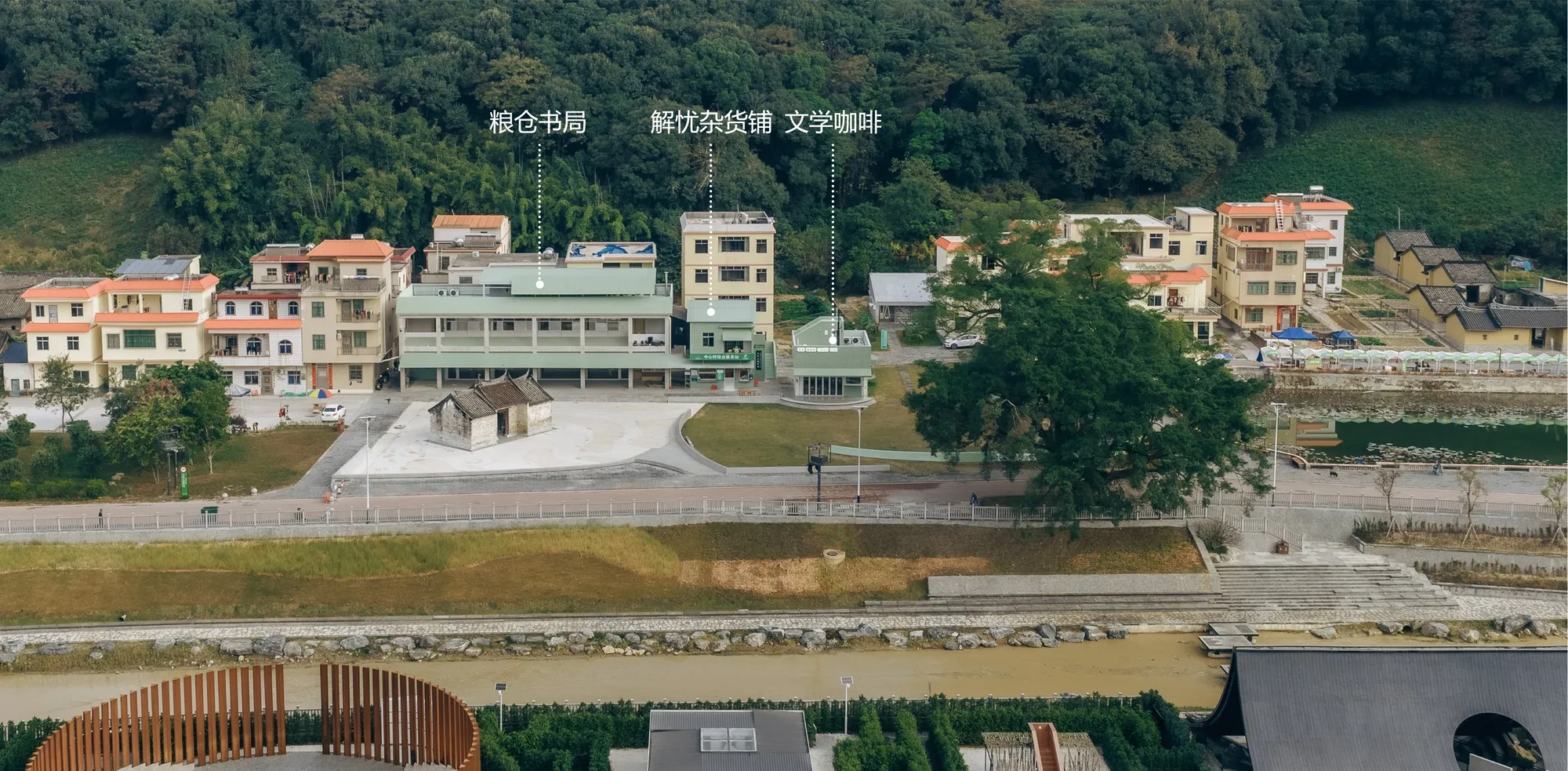
Zhongxin Village sits in a mountain basin in Huizhou, Guangdong, where a river threads through a valley and old banyan trees mark the civic heart. Atelier XÜK's renovation of the Ancient Banyan Plaza treats that heart not as a blank slate but as an organism with roots, literally and figuratively. Rather than demolishing and rebuilding, the studio layered new communal infrastructure over and around what was already there: a stone heritage pavilion, mature fig trees, a cobblestone forecourt, and the everyday patterns of villagers who use the space for ceremonies, commerce, and children's play.
What makes the project worth studying is its refusal to choose between preservation and novelty. The mint green corrugated metal and ceramic tile cladding is unapologetically contemporary, yet it defers to the existing landscape at every turn. Buildings curve where old trees stand. Ground floors remain open colonnades so the plaza breathes through them. A small library pavilion, a café, a rooftop terrace, and a long exhibition hall are all stitched together by a single material palette that reads as one civic gesture, not a collection of objects.
Reading the Site from Above
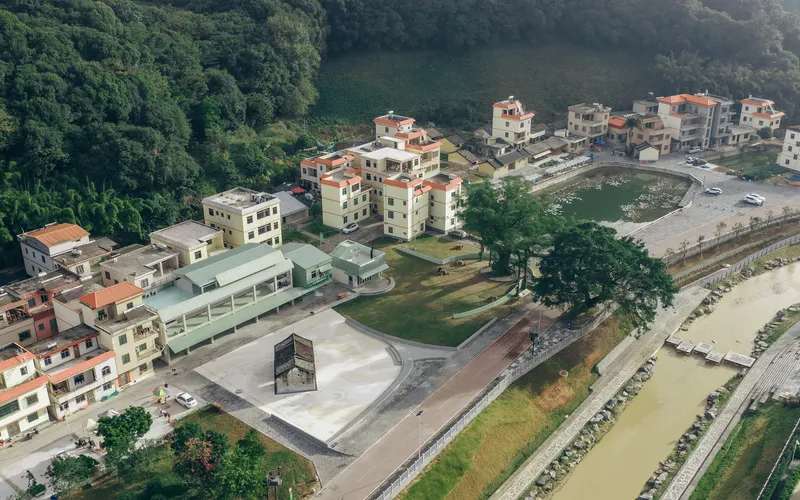
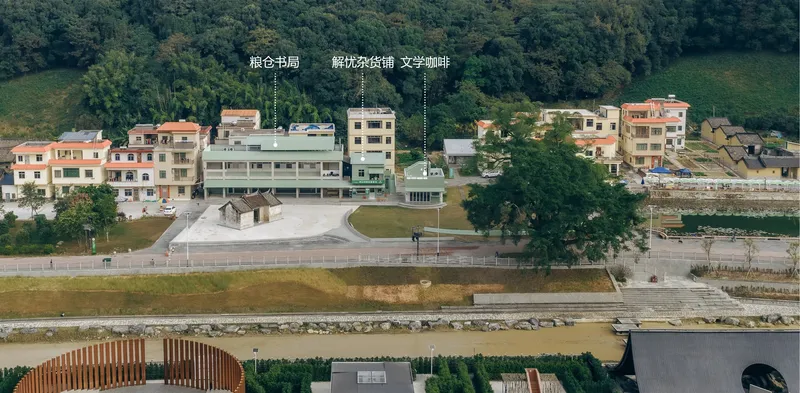
The aerial view reveals the strategy. An elongated green-roofed building runs parallel to the river, its footprint carefully avoiding the existing residential fabric. Between this bar and the water, a concrete plaza steps down in gentle terraces to meet the embankment. The geometry is not orthogonal; curved edges and angled setbacks respond to the irregular property lines and mature trees that the designers chose to keep.
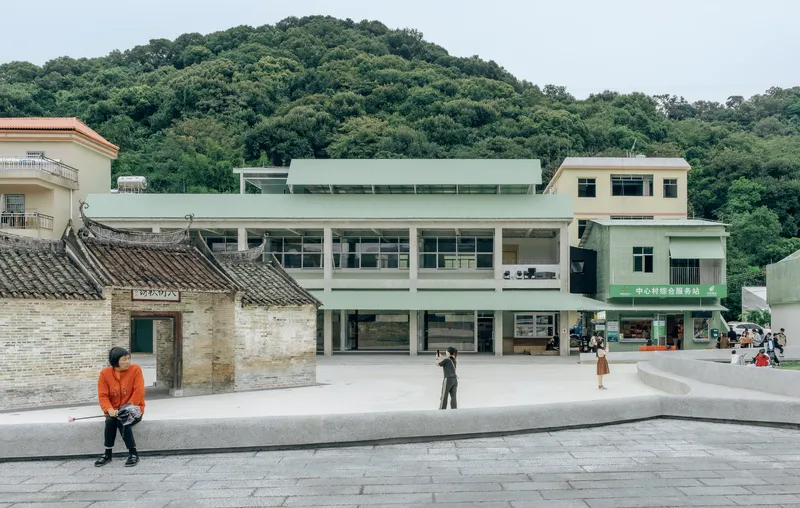
From the ground, the pale green volumes sit comfortably below the treeline, and the forested hillside remains the dominant visual backdrop. That restraint in height is critical. In a village where three-storey residential blocks already define the skyline, the civic buildings do not compete. They operate at a lower register, occupying space horizontally rather than vertically.
The Plaza as Living Room
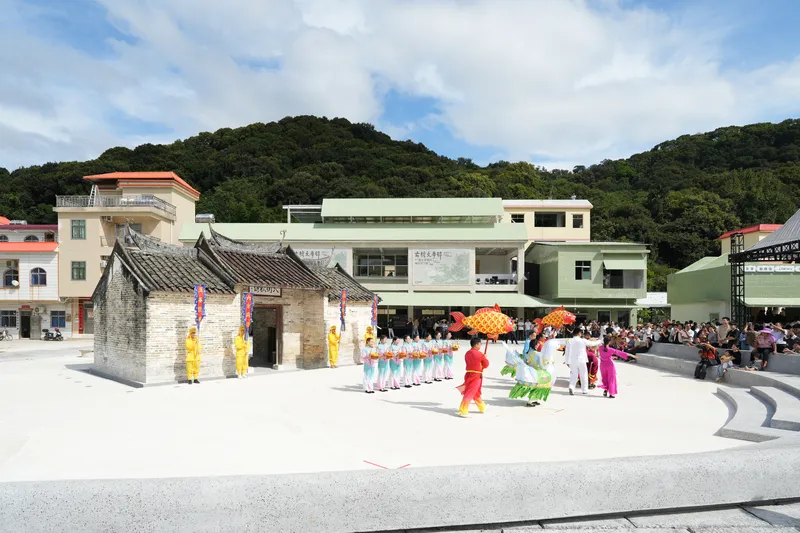
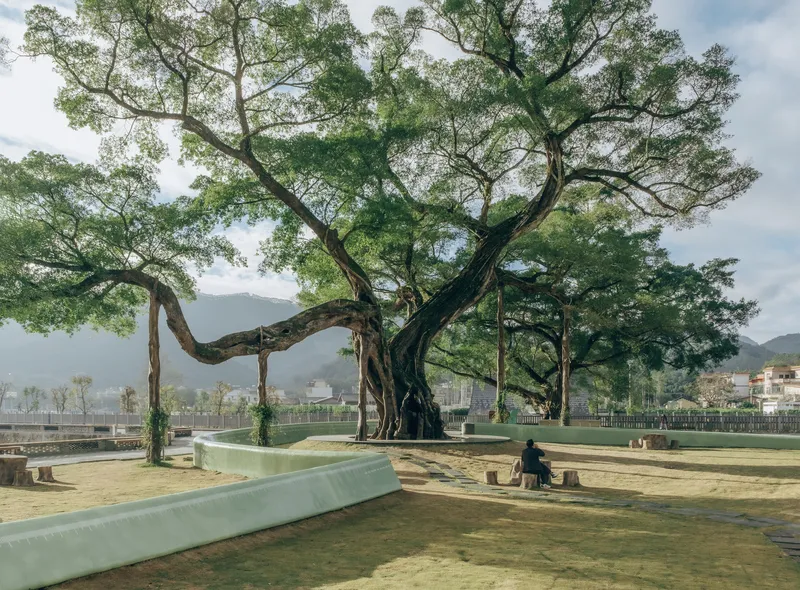
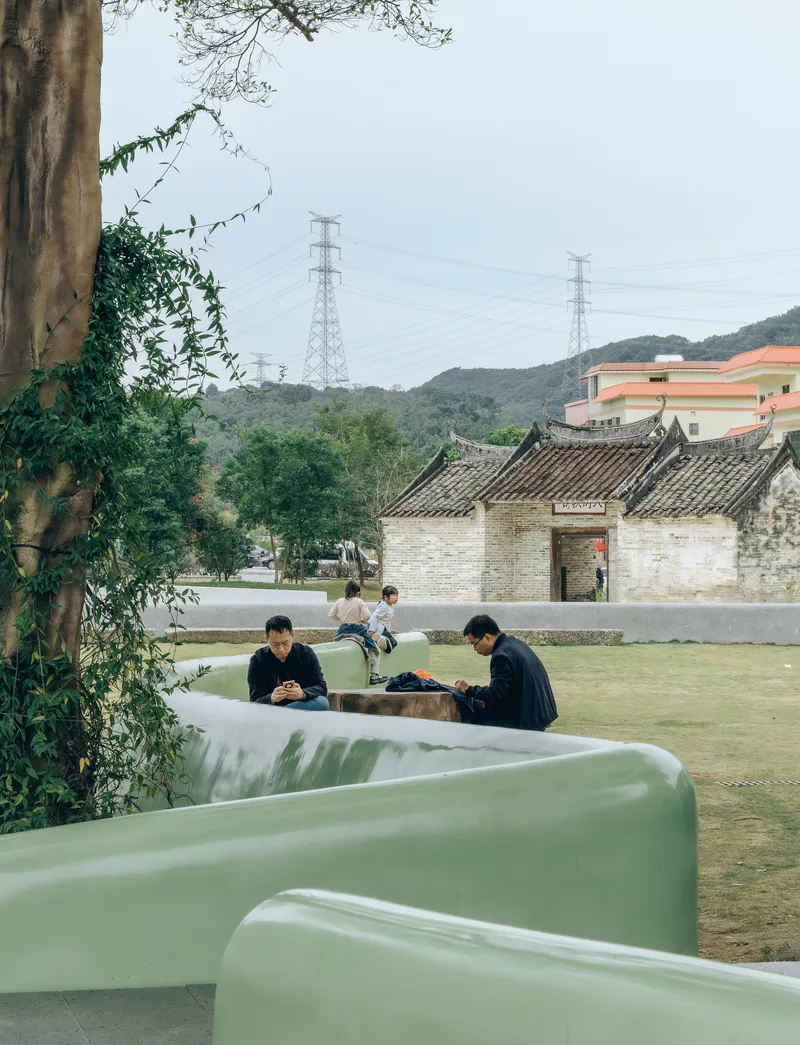
A restored stone pavilion anchors the center of the plaza, and the images make clear that it is not a museum piece. Ceremonial gatherings with performers in traditional dress use it as a stage. On quieter days, curved pale green concrete benches wrap around the old banyan tree, and visitors settle in with the informality of a park. The stepped concrete edges double as seating, amphitheater, and play surface depending on the hour.
The decision to keep the plaza largely unprogrammed is its most generous move. There is no fixed furniture layout, no designated event zone. The ground surface shifts from cobblestone to poured concrete to grass, and each material implies a different use without enforcing one. Children run, elders sit, ceremonies unfold, and the architecture stays out of the way.
Green Skin, Concrete Bones
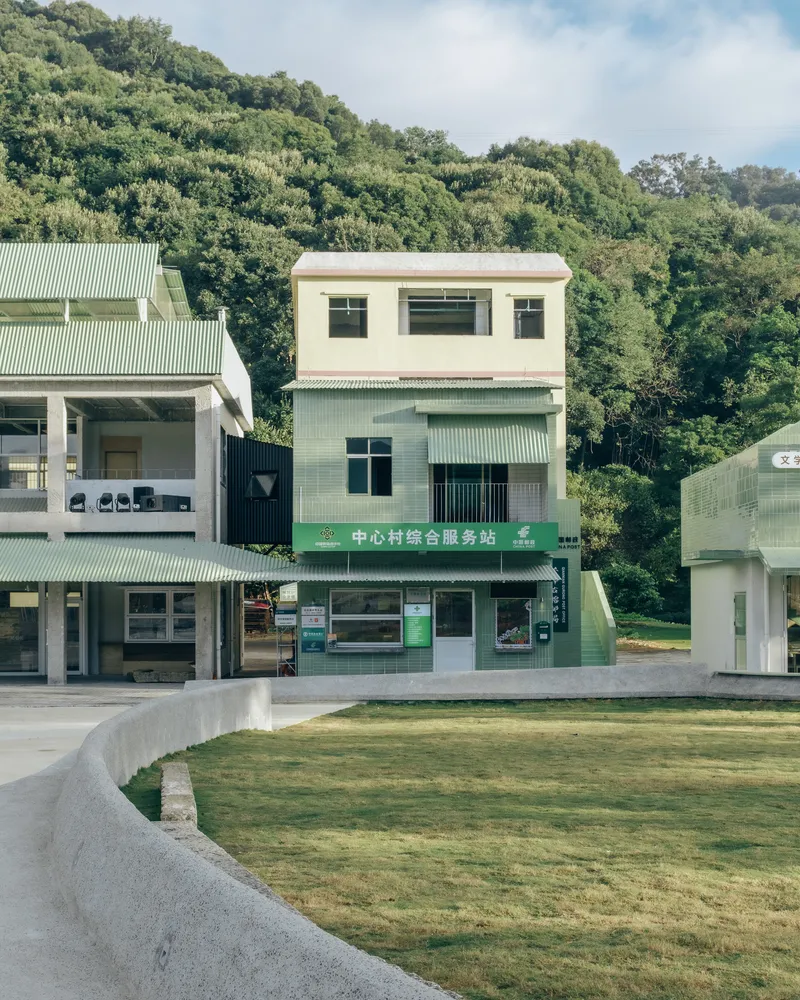
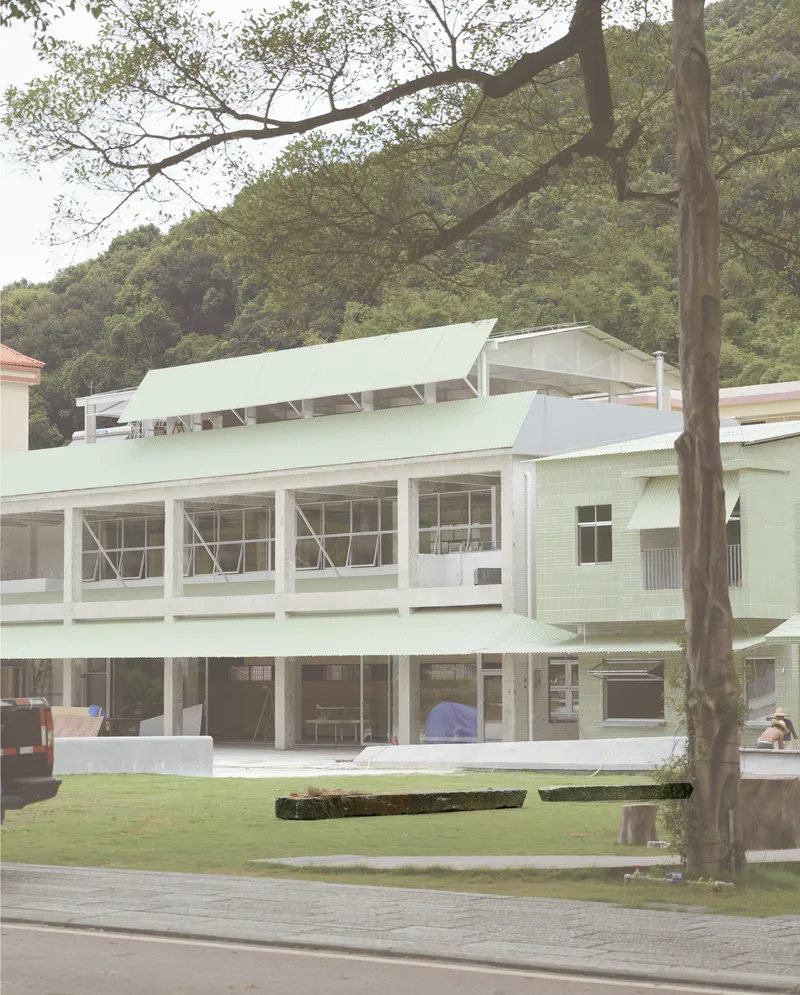
The material system is deliberately limited. Exposed concrete columns and beams provide the structural skeleton, visible everywhere from the colonnades to the interior ceilings. Mint green corrugated metal wraps the upper volumes. Pale green ceramic tiles clad the smaller pavilion roofs. White stucco fills in the gaps. The result is a building that looks lightweight and almost provisional despite being robustly constructed.
That green is a bold call. It could have gone wrong, reading as cartoonish or theme-parked. Instead it works because of the quantity: when nearly every new surface shares the same hue, the color stops being a decorative accent and becomes an environmental condition, like the patina on copper. Against the grey concrete and the dark green of the surrounding hillside, the mint tone sits in a middle register that neither disappears nor shouts.
Open Ground, Enclosed Above
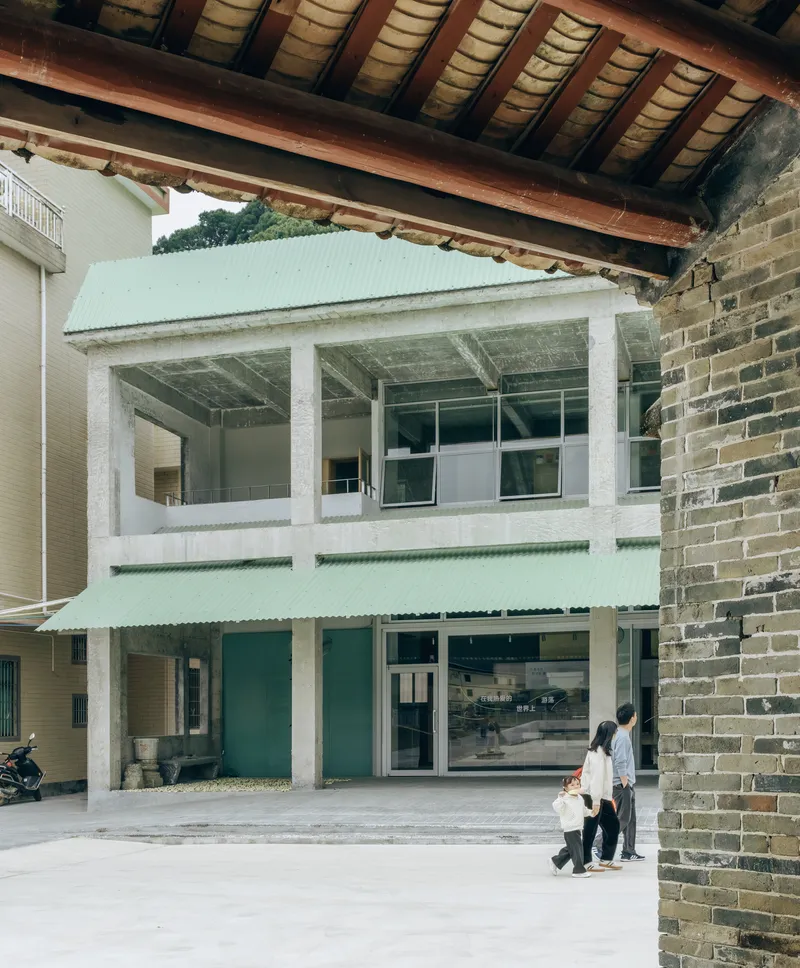
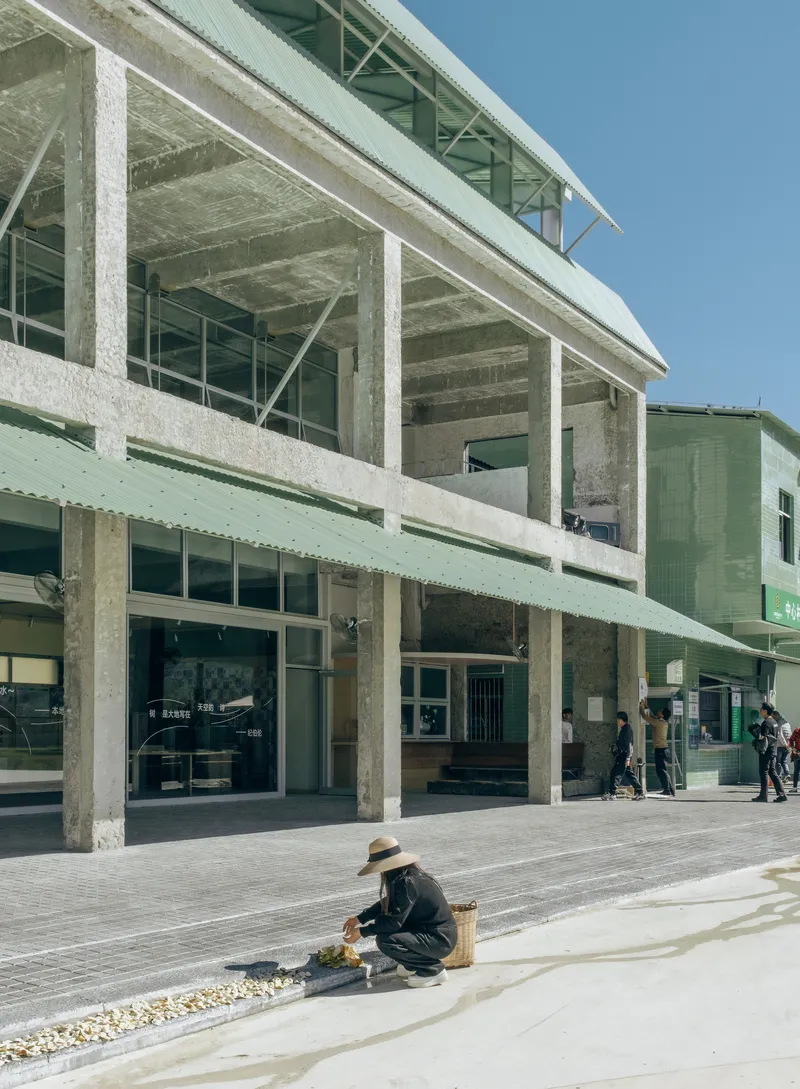
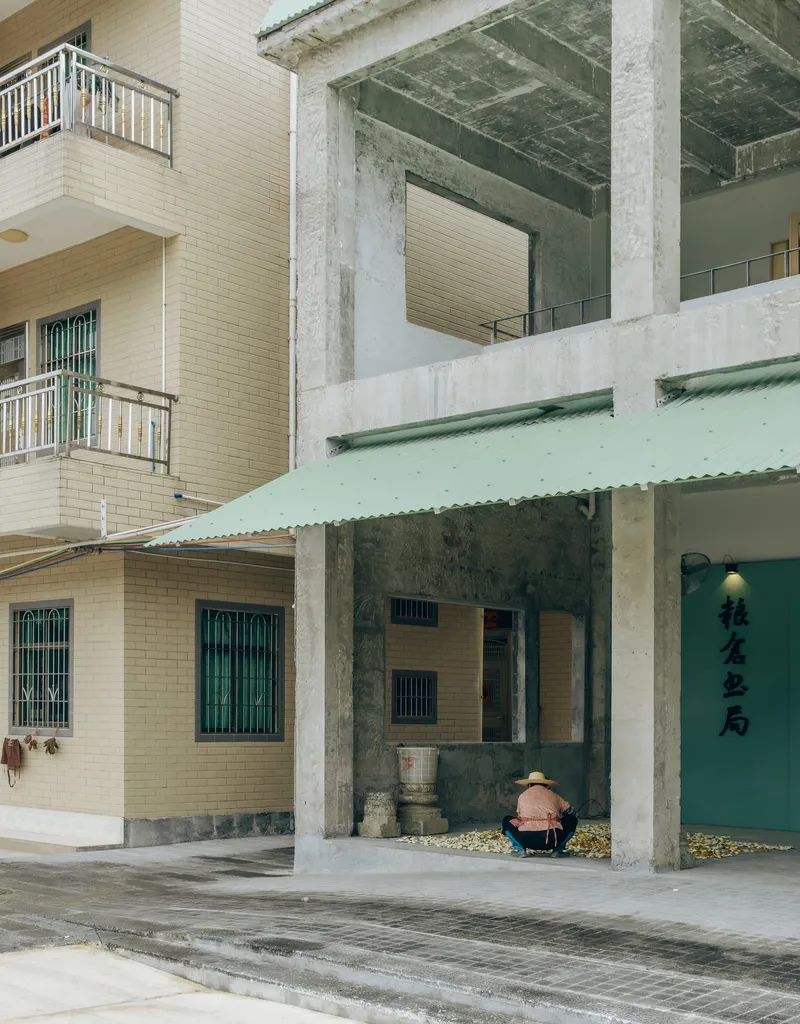
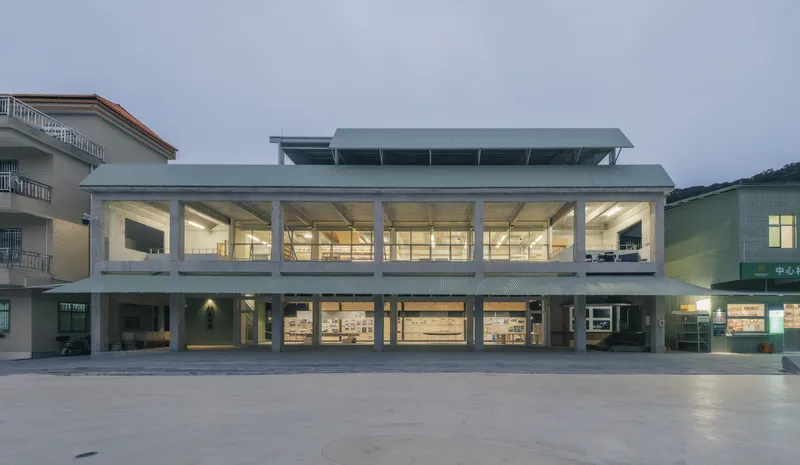
The long community building operates on a clear sectional logic: the ground floor is an open arcade, and the upper floors are enclosed volumes that hover above it. Concrete columns march in a regular grid, creating a portico deep enough to be a genuine public space rather than a decorative gesture. You can see straight through the building to the adjacent residential blocks, which means the structure never becomes a wall dividing the village.
Within this open frame, moments of enclosure occur strategically. A gravel bed catches sunlight between columns. A covered corridor displays a painted mural at floor level. The covered arcade frames views to residential buildings with their own tile cladding and metal railings, creating a visual dialogue between old and new that feels unforced.
Library, Café, and the Small Pavilion
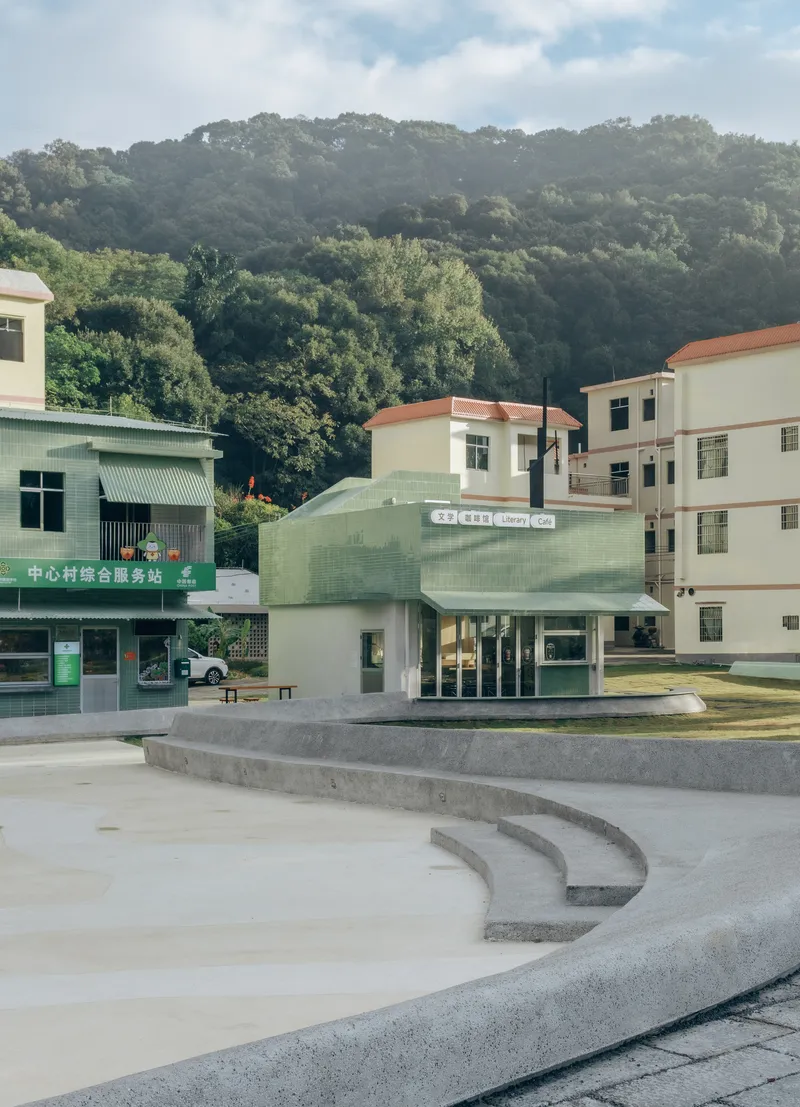
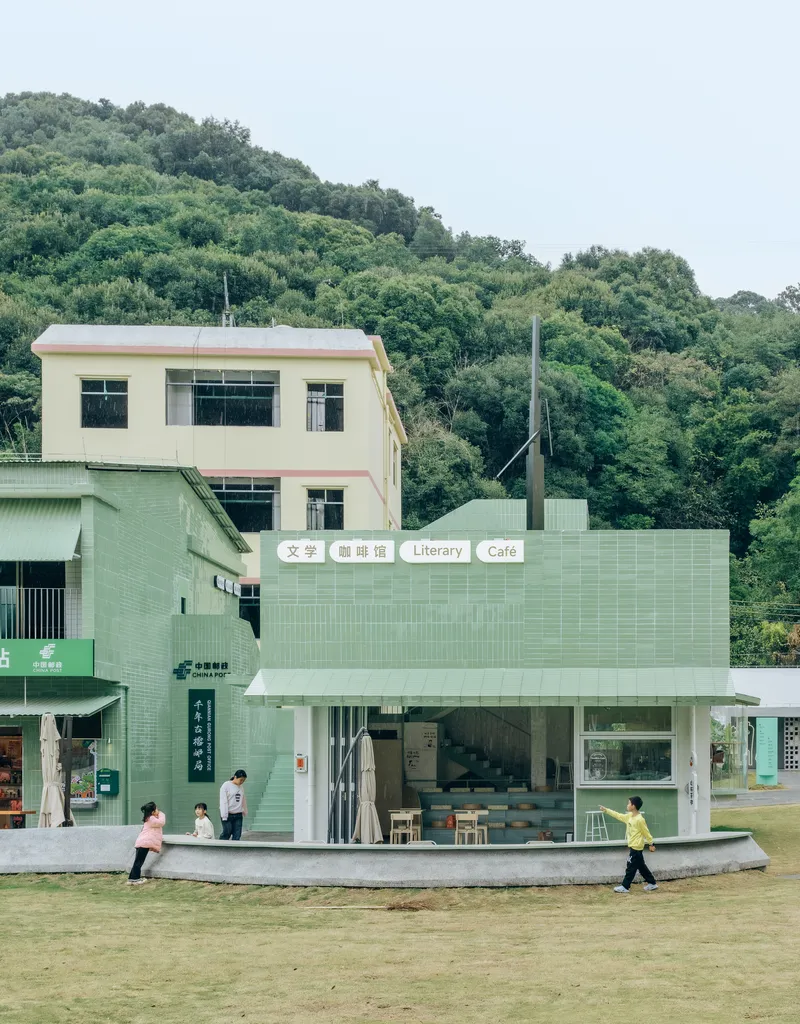
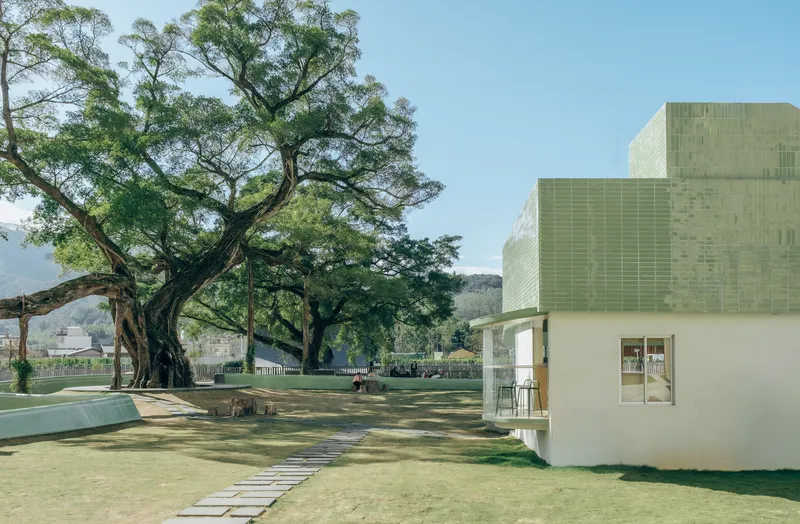
The library and café pavilion is the project's most compact gesture: a single-storey volume clad in pale green tiles with a tile-clad upper mass sitting above it. It faces the curving concrete terraces of the plaza and backs up to the old fig tree, which the designers preserved by routing a stepping-stone path around its root zone. The white plastered walls and green ceramic roof deliberately echo the village's vernacular palette while pulling it into a cleaner geometry.
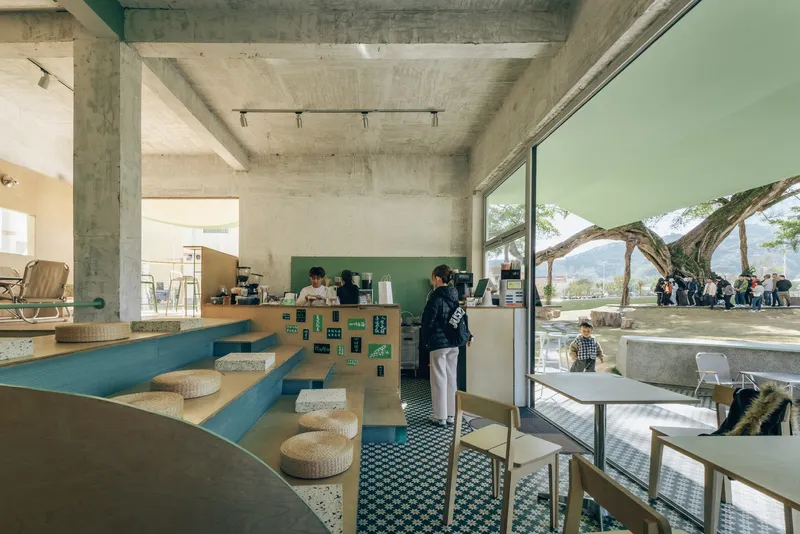
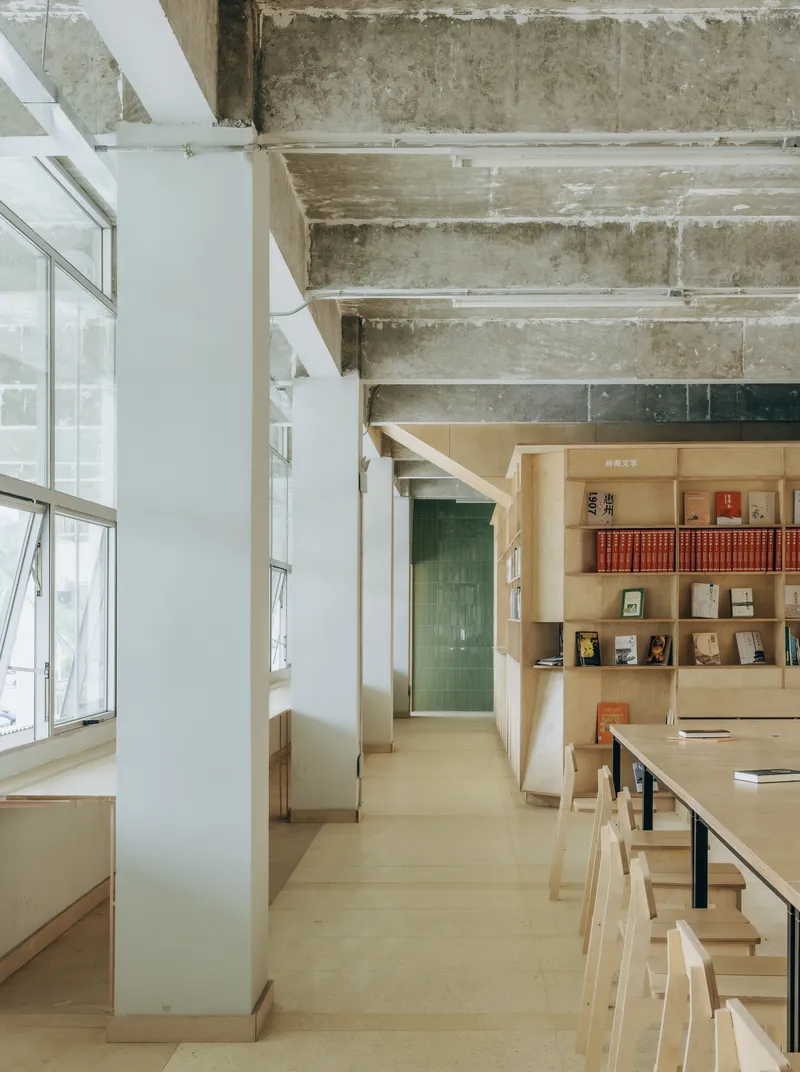
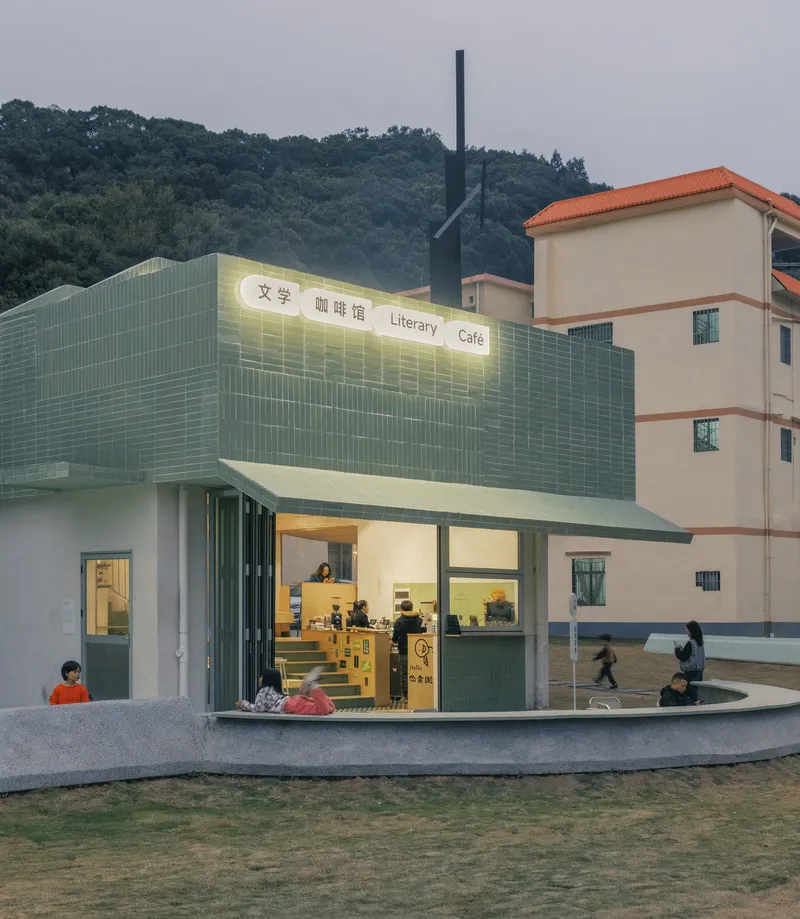
Inside, the café offers stepped blue bench seating oriented toward a large window that frames the gnarled banyan beyond. It is a simple move, but the framing is precise: the tree becomes a living painting that changes with seasons and light. The library, visible in the adjacent room, keeps things equally restrained: exposed concrete ceiling beams, light wood reading tables, and bookshelves that are full but not overstuffed. The evening view through the open glass facade shows the pavilion glowing against the darkening plaza, confirming that the building was designed as much for its nighttime civic presence as for daytime use.
Terraces, Rooftops, and the In-Between
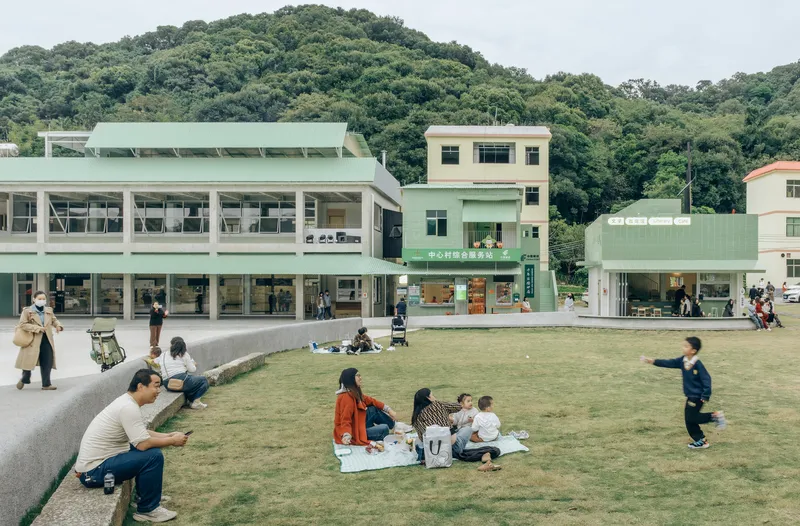
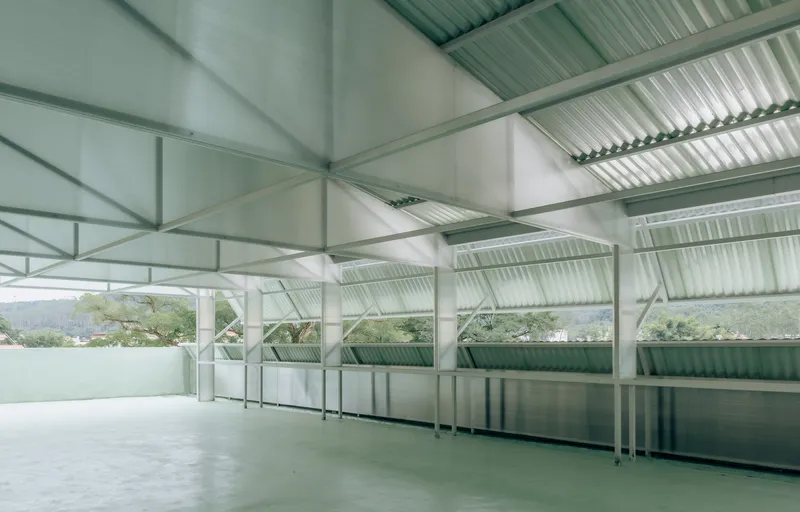
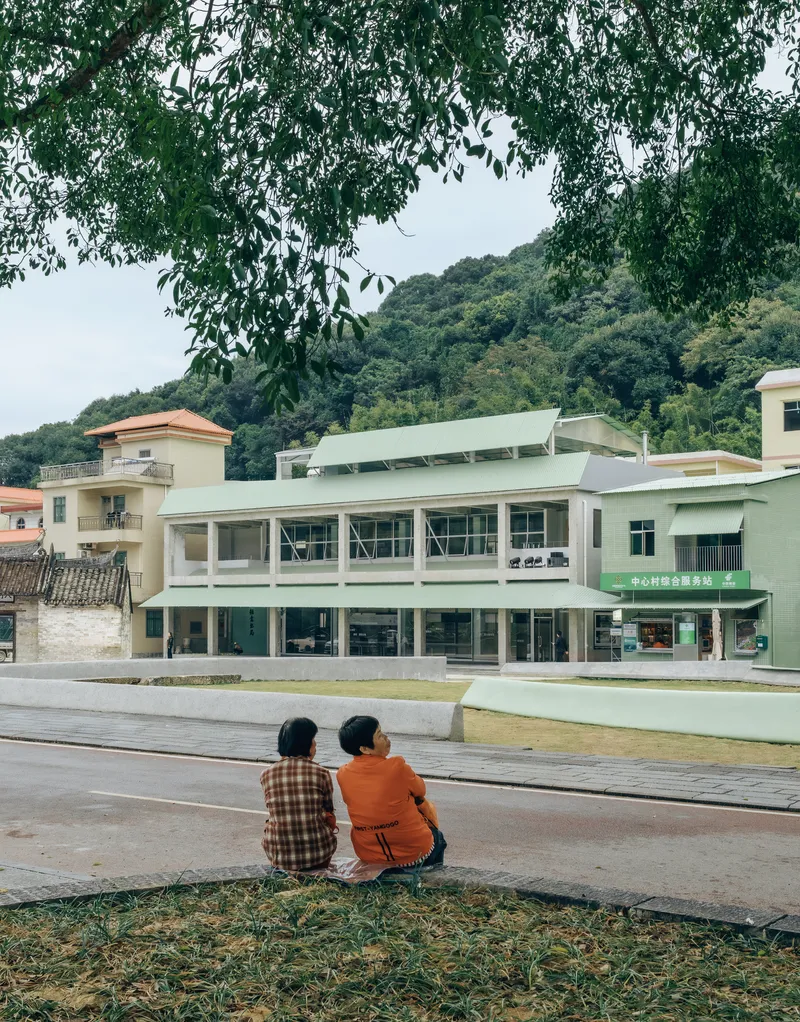
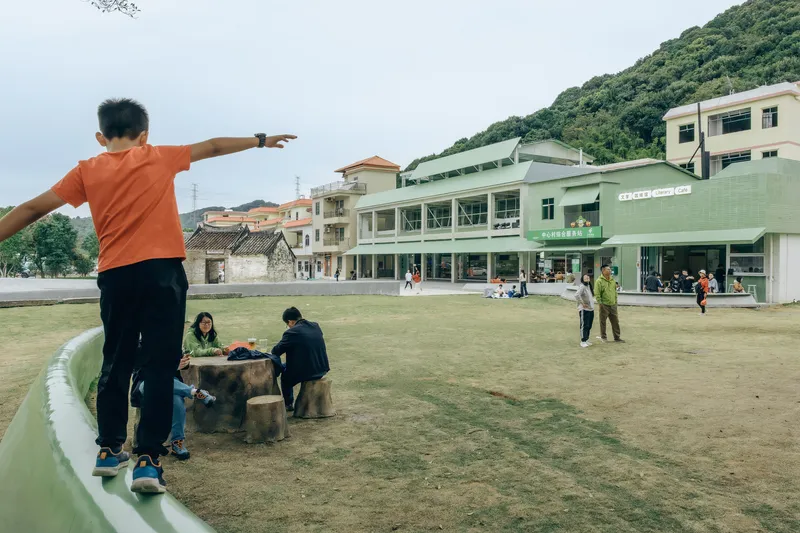
A terraced lawn stretches in front of the pale green buildings, and the photographs catch it in active use: families picnicking, children playing, adults walking under overcast skies. Above, a covered rooftop terrace with corrugated metal ceiling, exposed steel trusses, and translucent green wall panels provides a sheltered vantage point over the village. The translucent panels wash the terrace in filtered green light, a sensory detail that ties the roof experience back to the landscape color of the surrounding hills.
The stepped concrete edge between plaza and lawn creates a threshold that two figures occupy in one photograph, simply sitting and watching. That kind of residual space, the ledge where you pause, is often an afterthought. Here it appears designed with as much care as the buildings themselves.
Interior Life
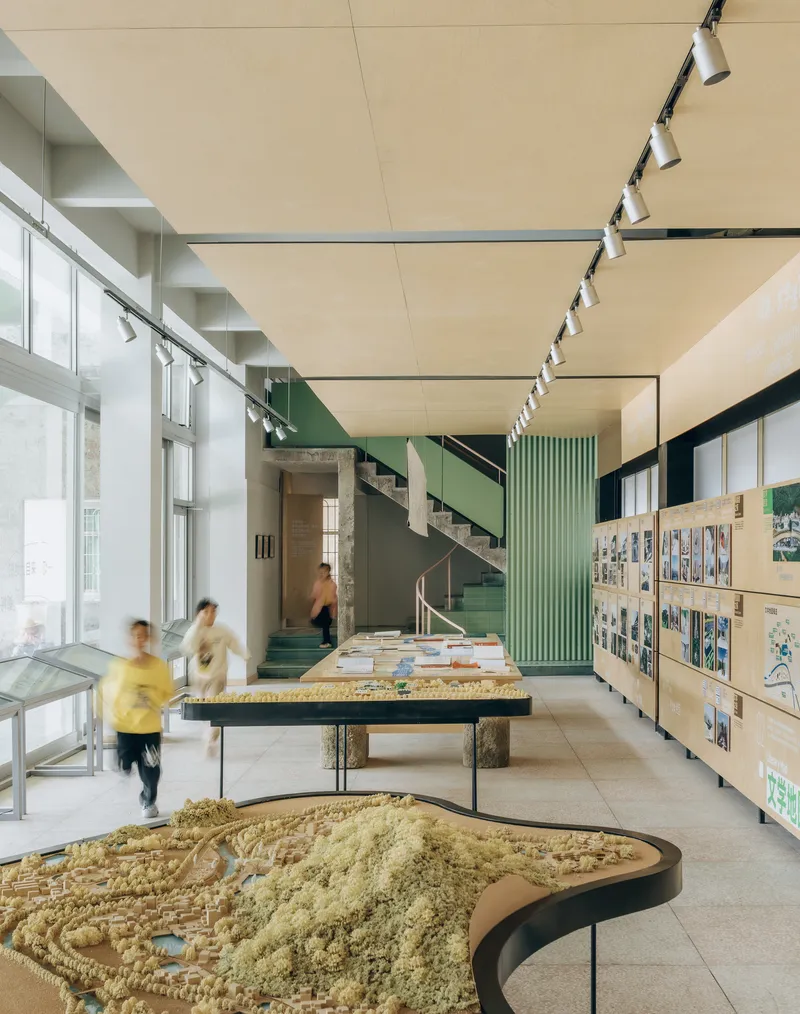
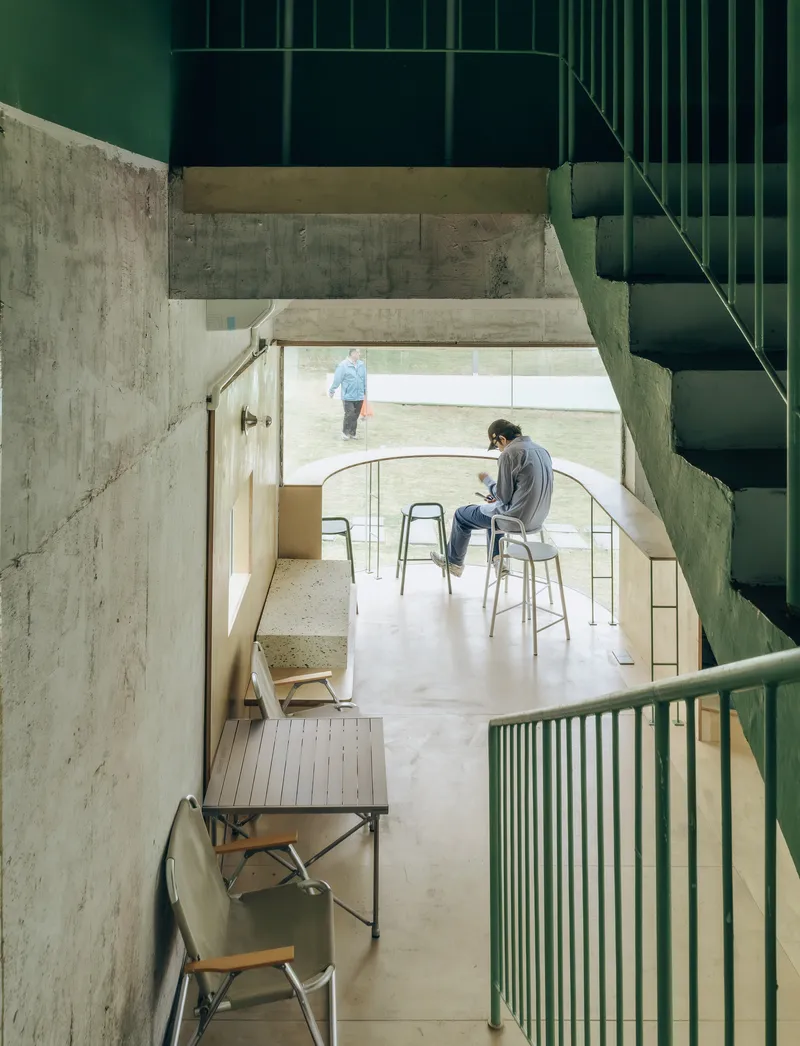
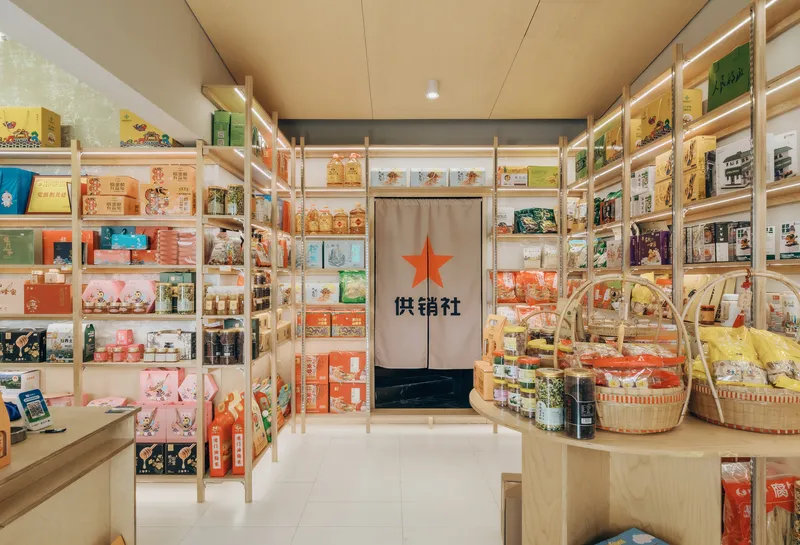
The exhibition hall houses topographic models on tables and plywood display walls, functioning as both a museum of the village's geography and a workspace for ongoing community planning. A green-sided staircase rises beyond, connecting to the mezzanine gallery. The split-level interior elsewhere shows concrete walls, a green metal staircase, and terrazzo flooring, with occupants seated casually. A retail space stocked with local packaged goods and a curtained doorway with a red star nod to the village's cooperative economy.
These interiors are not precious. They are working rooms that tolerate the scuffs and clutter of daily use. The material palette of concrete, plywood, and metal ensures that wear reads as patina rather than damage. It is a pragmatic decision that respects the economic reality of a rural community that cannot afford to maintain polished finishes.
Evening and Threshold Moments
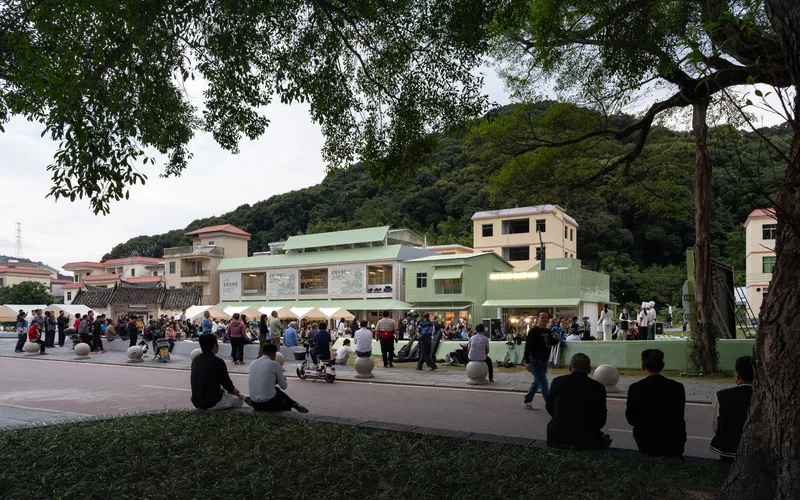
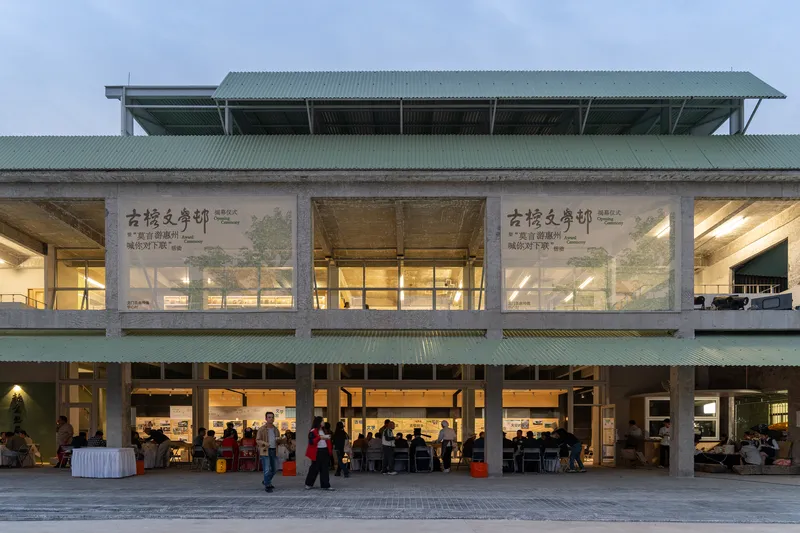
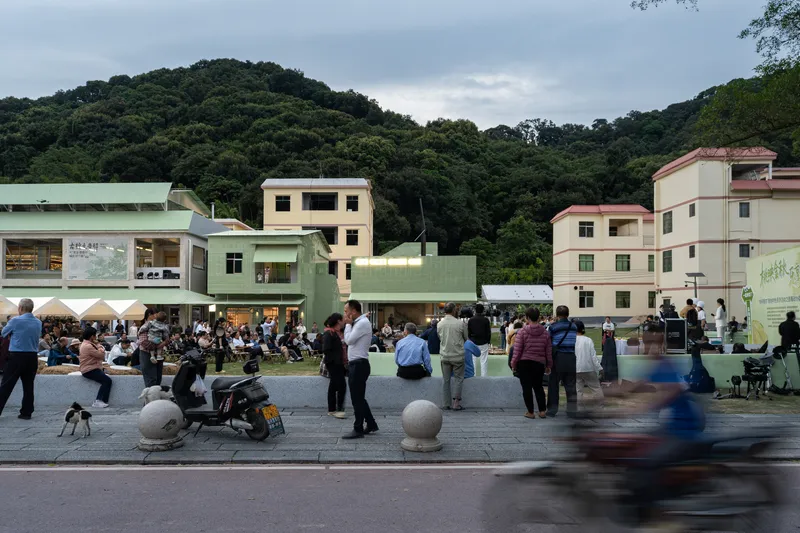
At dusk the project reveals a second character. The colonnade facade glows softly as children and adults gather on the grass. The pavilion's open glass facade draws a crowd on the plaza. The two-storey facade with exposed timber beams, green corrugated roof, and glazed infill panels becomes a lantern. These evening images matter because they show the plaza fulfilling its most important role: giving the village a collective living room that stays active after dark.
Street and Edge Conditions
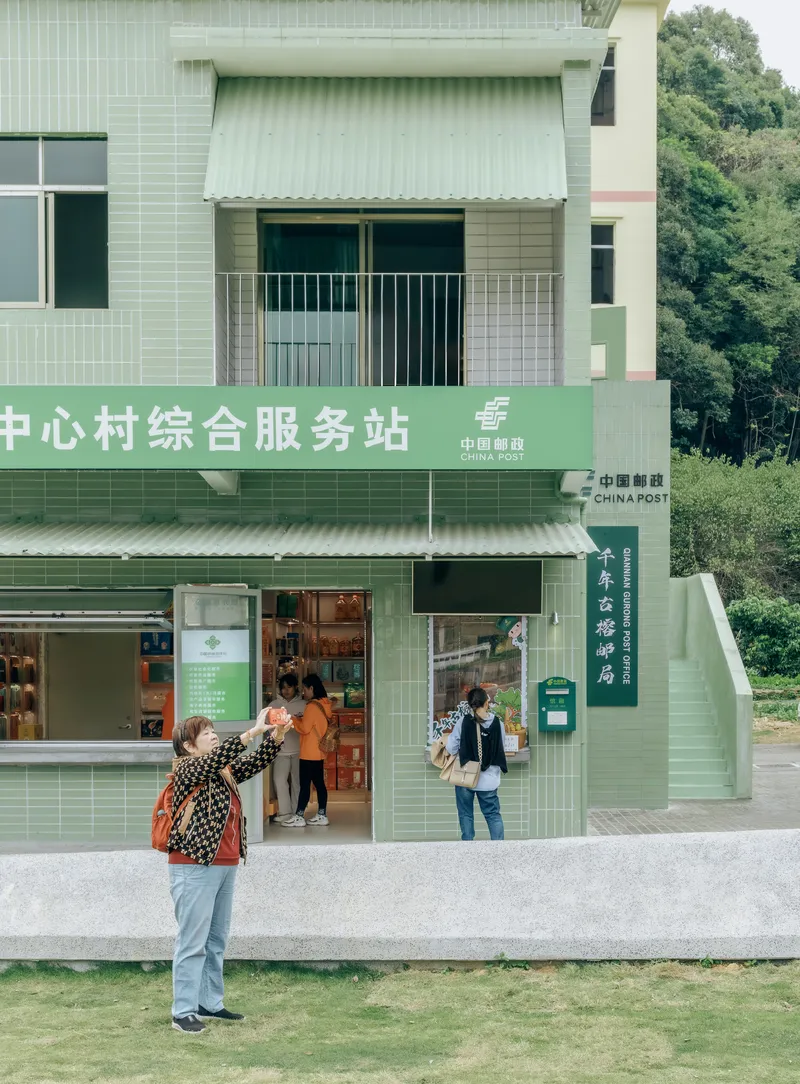
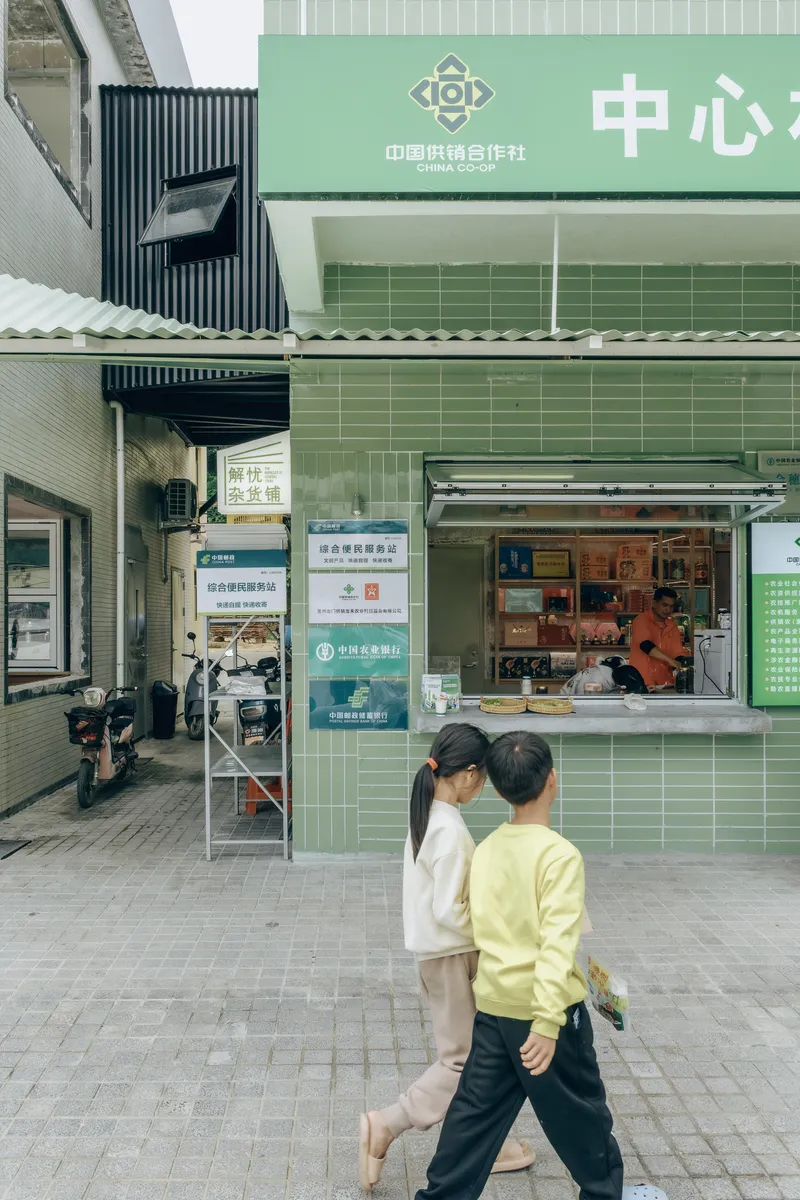
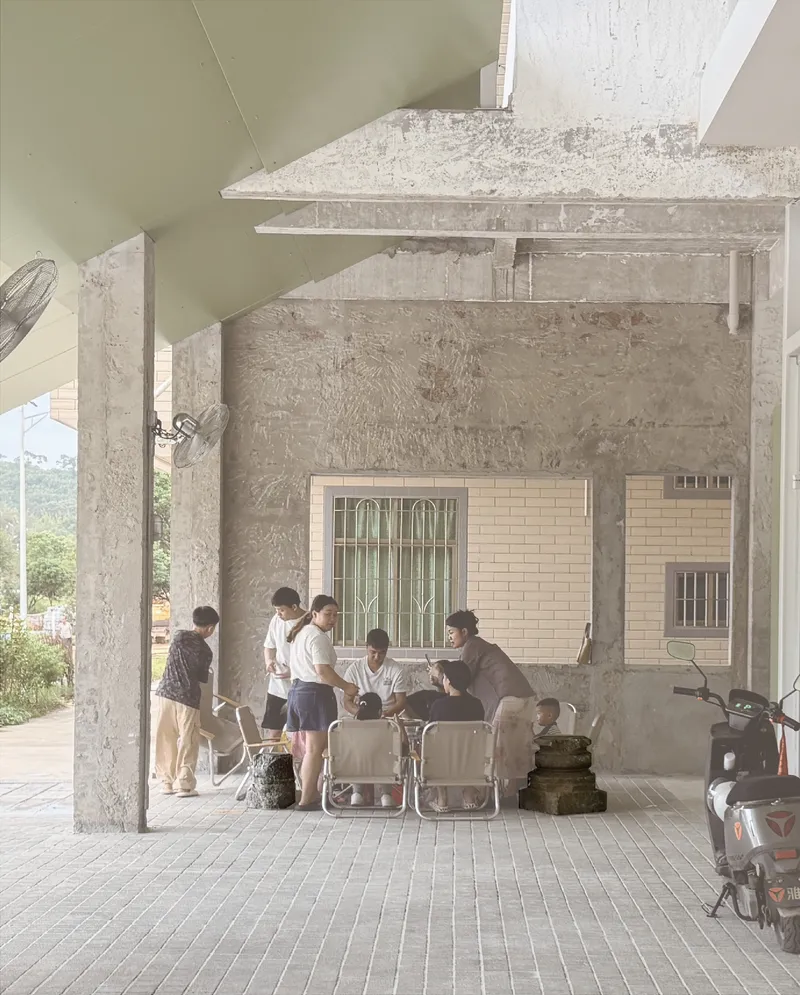
The edges of the project are as carefully considered as its center. A green-clad storefront with canopy and signage meets the street with the informality of a village shop. A mint green tiled kiosk addresses pedestrians at a smaller scale. A covered porch with concrete columns invites visitors to linger around folding chairs. None of these moments are heroic, but together they create a continuous public interface that keeps the building from turning its back on any neighboring condition.
Corridor and Mural
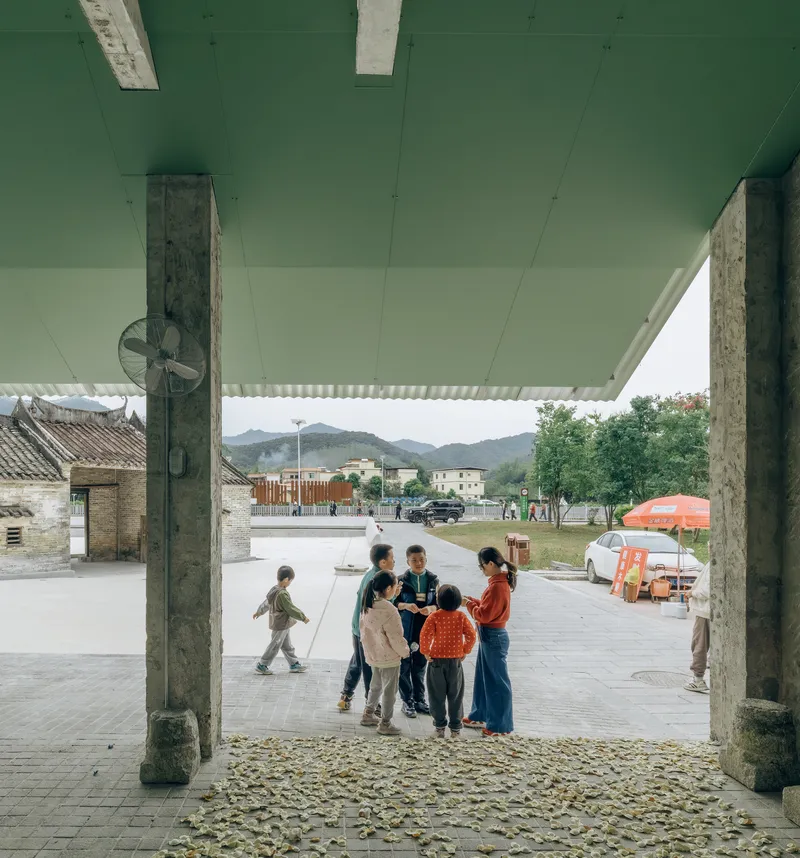
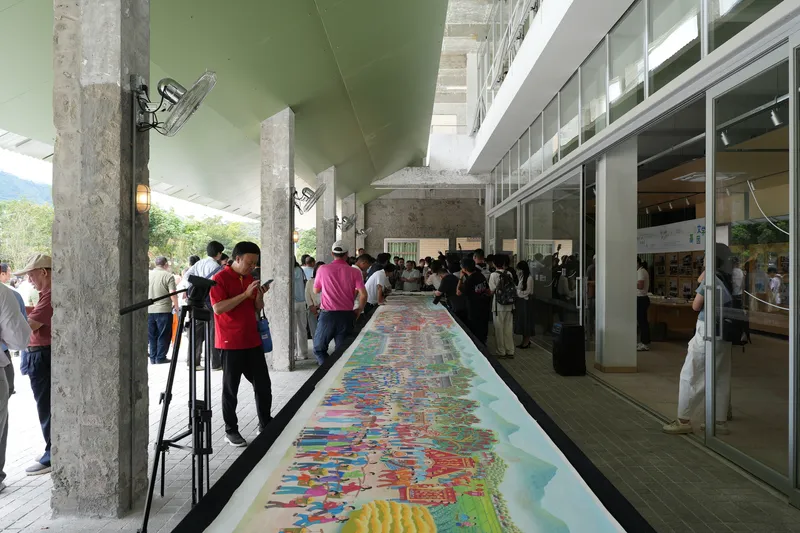
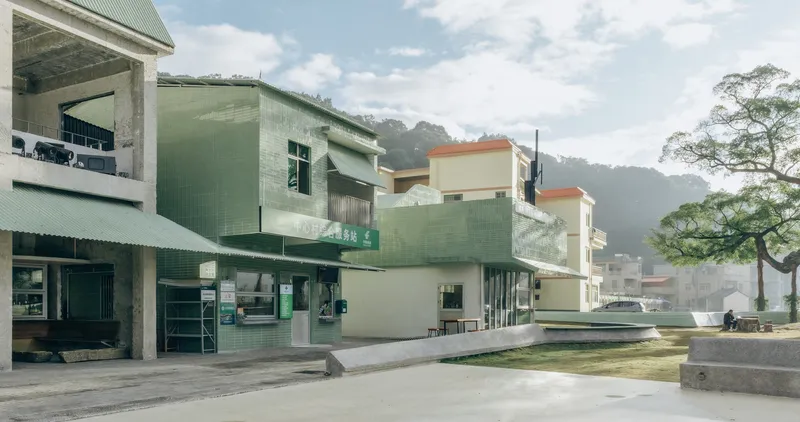
A covered exterior corridor with concrete columns runs along one edge, where visitors view a long painted mural displayed at floor level. It is an unusual curatorial choice: you look down rather than up, and the corridor becomes a gallery you walk through rather than pause in. A covered terrace with a mint green soffit overlooks children gathered on cobblestones below, merging circulation with spectating. The public plaza with its pale green buildings and concrete steps under partly cloudy skies ties all these moments into a single landscape that is simultaneously infrastructure, architecture, and public art.
Plans and Drawings
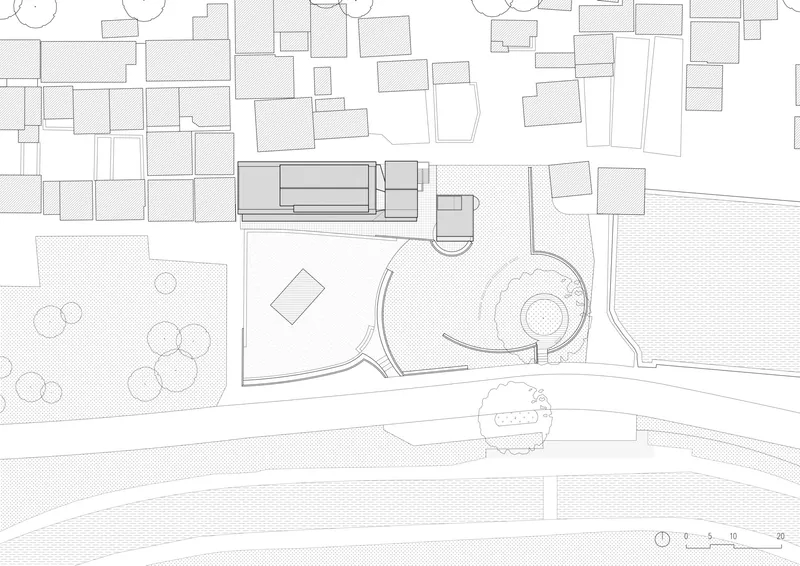
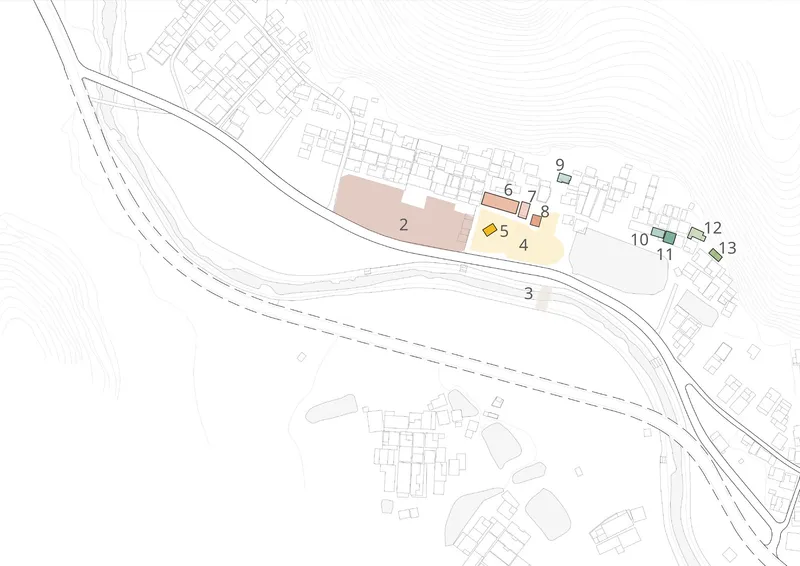
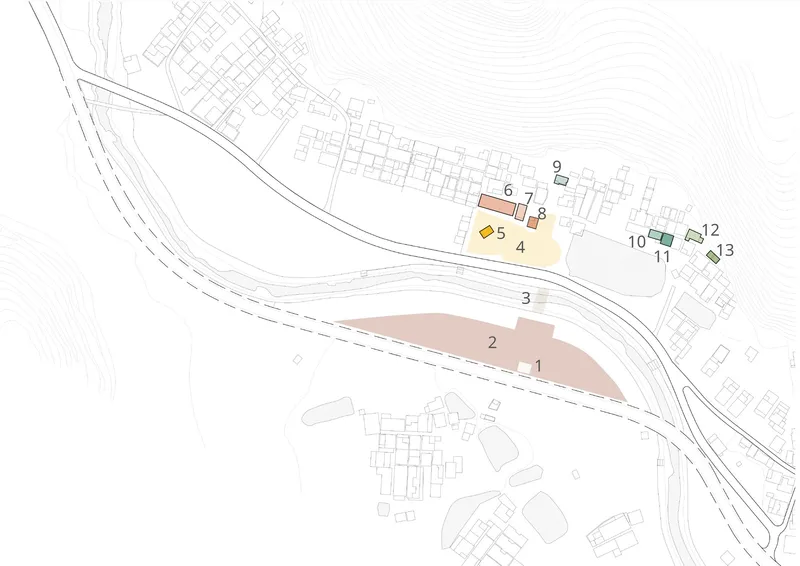
The site plans clarify the project's relationship to the village's existing grain. Colored volumes indicate new interventions positioned along a curved roadway with topographic contour lines revealing the basin geography. Numbered building clusters sit between roadways and terrain, confirming that the new work fills gaps in the existing fabric rather than imposing a foreign order.
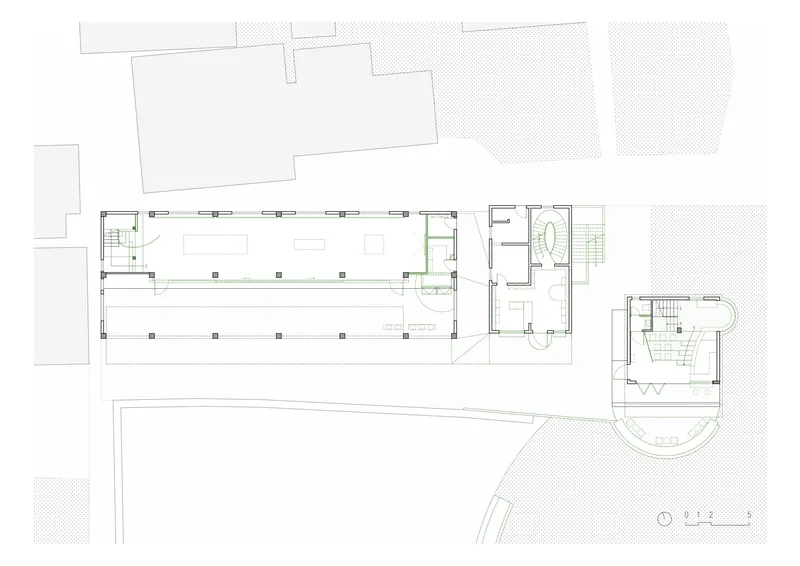
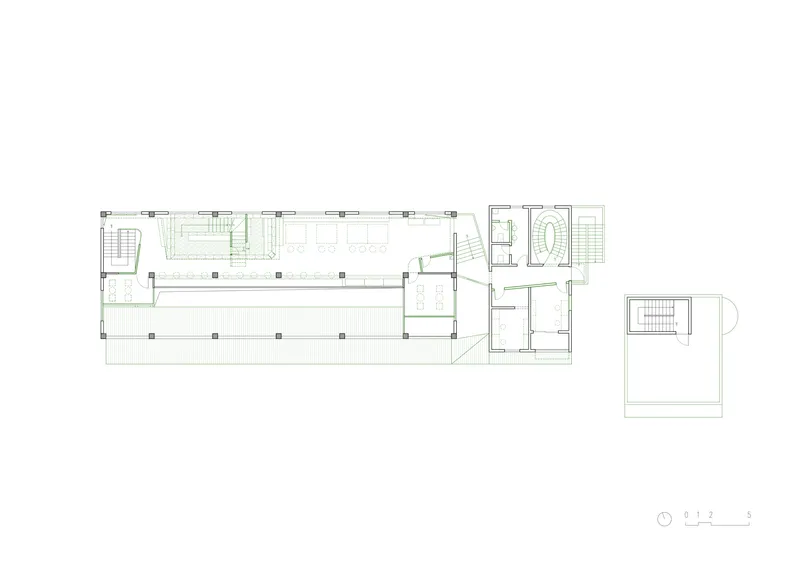
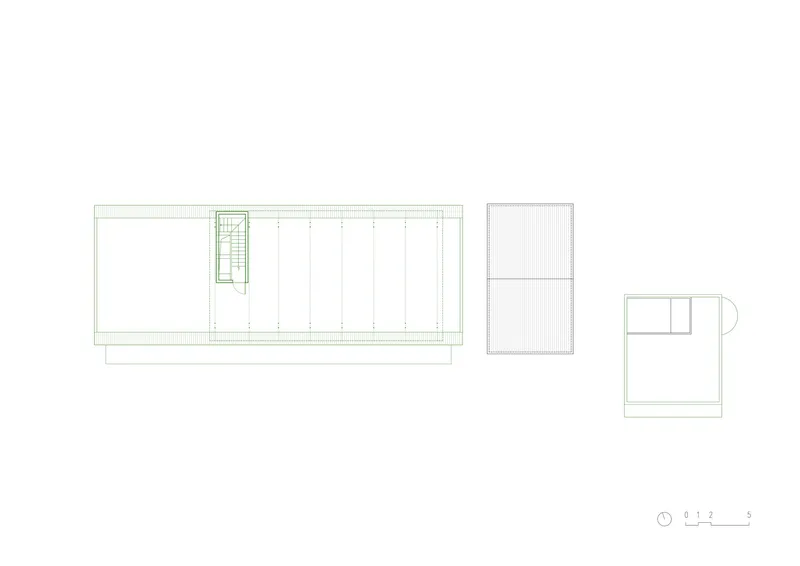
The floor plans reveal the structural logic: a long exhibition hall with a regular column grid and adjacent service rooms at ground level, and a mezzanine gallery with stairs and an open viewing area above. A separate drawing shows the long rectangular volume with its staircase and three smaller detached structures, confirming the project's archipelago organization rather than a single monolithic building.
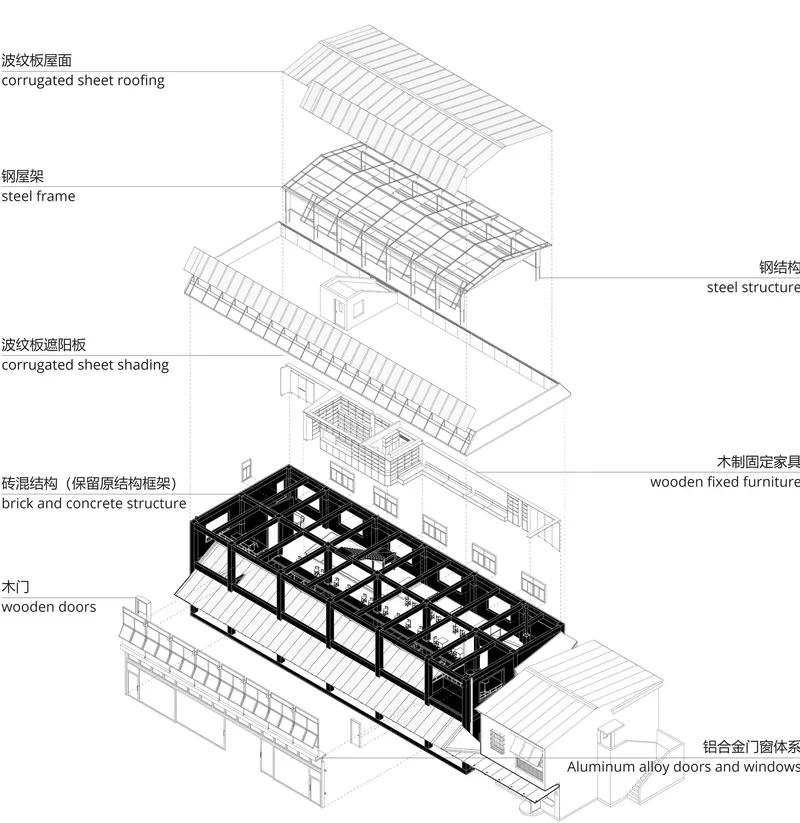
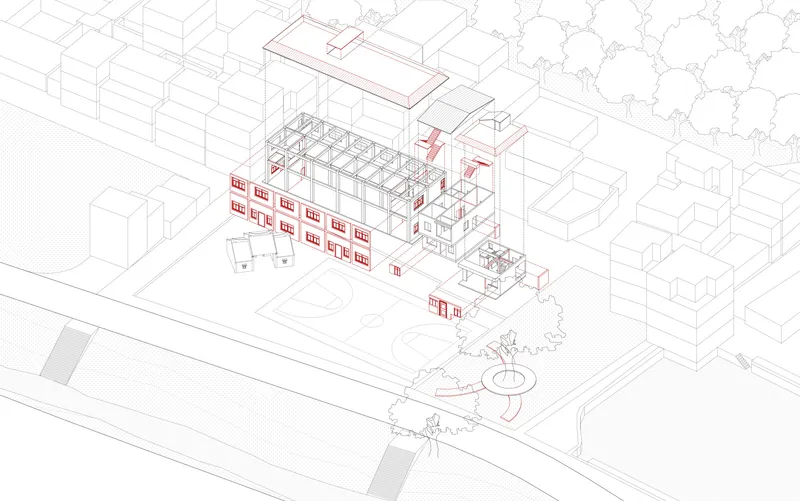
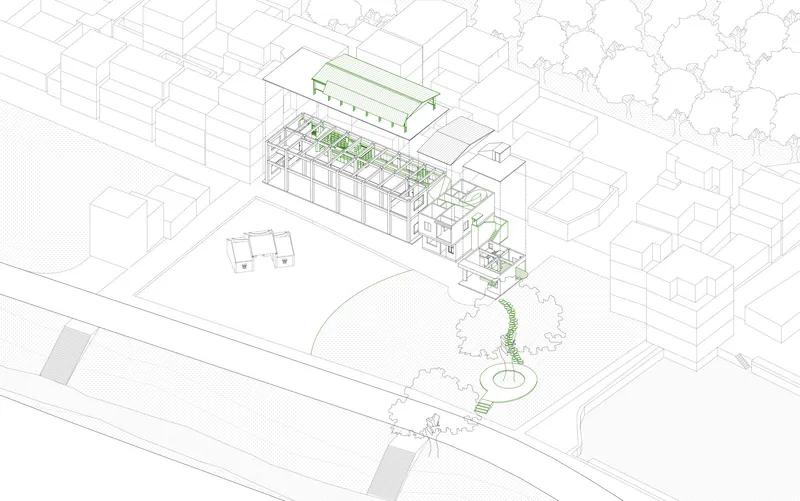
The exploded axonometric breaks the building into its constituent layers: roofing, steel frame, and concrete structure below. Red circulation paths and green planted terraces are isolated in separate axonometric views, revealing how movement and vegetation are threaded through the structural frame. The planted terraces in particular show a layered approach to landscape integration that is not visible in the photographs, where trees and green roofs merge the building into the hillside when viewed from above.
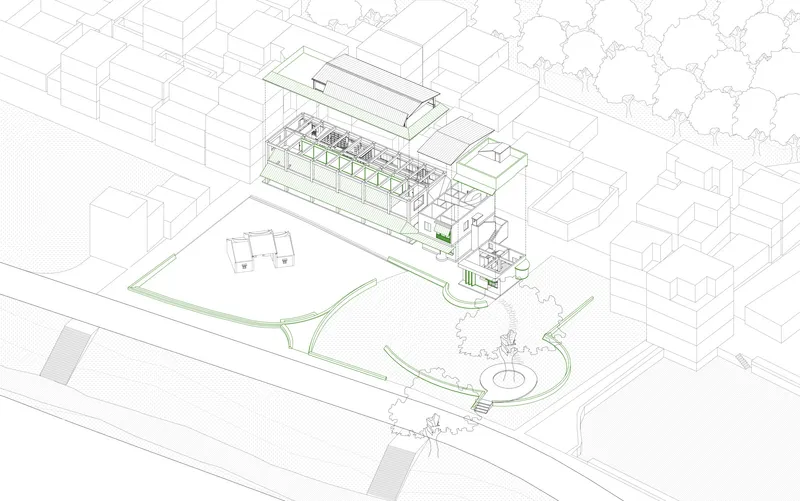
A final axonometric places the linear building with its glazed facade within the surrounding urban blocks, making visible the curved pathways that connect the plaza to the river. The elevated view confirms how the terraced plaza, preserved heritage pavilion, and long green-roofed community building work as a single civic composition rather than isolated objects.
Why This Project Matters
Rural revitalization projects in China risk two extremes: erasing local identity with generic contemporary forms, or embalming it in nostalgic reconstruction. Atelier XÜK avoids both by treating the village center as an active landscape that needed amplification rather than replacement. The old banyan tree, the stone pavilion, and the cobblestone surfaces remain. New buildings step around them with open ground floors and a unified material skin that is modern without being hostile. The result is a civic space that feels grown rather than imposed.
The project also offers a useful model for how material consistency can substitute for formal complexity. There is nothing structurally daring or spatially virtuosic here. The plans are simple. The sections are straightforward. But the discipline of a single color, a limited material set, and a ground-floor strategy of radical openness produces a coherence that more ambitious compositions often lack. For a village of this scale, that coherence is the architecture. It gives Zhongxin a legible center that can hold ceremonies, commerce, play, and quiet reading within the same breath.
Ancient Banyan Plaza Renovation, by Atelier XÜK, Huizhou, Guangdong, China. Completed 2025. Photography by Yumeng Zhu.
About the Studio
Share Your Own Work on uni.xyz
If projects like this are the kind of work you want to make, uni.xyz is a place to publish your own, find collaborators, and enter design competitions.




Popular Articles
Popular articles from the community


Lunar Spiral: Space Architecture Shaped by the Mathematics of the Universe
Lunar Spiral reimagines space architecture through Fibonacci geometry, lunar regolith, levitating habitats, and self-sustaining Moon living.

The Ocean Hive: Sustainable Architecture for a Self-Sufficient Civilization at Sea
The Ocean Hive imagines sustainable architecture at sea, where modular habitats, algae, wave power and ocean waste sustain a growing colony.

Hill & Cross Opera: Sculptural Opera House Architecture Shaped by Tallinn’s Landscape and Identity
Hill & Cross Opera reimagines opera house architecture in Tallinn through its sculptural hill, civic plaza, glass wave and a luminous cross.

The Earth Pod: 3D Printed Homes for Resilient Refugee Communities
The Earth Pod reimagines refugee housing through 3D printed homes made from clay, combining resilience, self-sufficiency, and rapid shelter.

Similar Reads
You might also enjoy these articles

Bao Huynh Watercolor Atelier: A Serene Art Retreat in Hội An
Bao Huynh Watercolor Atelier in Hội An blends multifunctional art spaces, sustainable design, local materials, and family-friendly living in a serene environment.

Atelier Macri Concept Store Interior Design by CASE-REAL
Atelier Macri store features a "ko" counter, walnut wood details, cork displays, blending retail, gallery, and seamless customer experiences.

Manuel Vargas Izquierdo Stadium and High-Performance Sports Center: Architectural Excellence in Jalpa de Méndez
The Manuel Vargas Izquierdo Stadium blends sustainable design, inclusive sports facilities, and cultural-inspired architecture, revitalizing Jalpa de Méndez’s public spaces.

KAKR Buluh Awar Hall: Revitalizing Community and Ecology Through Bamboo Architecture
Community built bamboo hall revitalizes Buluh Awar village, empowering youth, restoring ecology, celebrating vernacular craftsmanship through sustainable architecture and culture.


Explore Renovation Competitions
Discover active competitions in this discipline


Challenge to design luxury tourism on rails


VR headsets Storefront design competition


Bring back Drive In's

Designing a staircase for a client
Comments (0)
Please login or sign up to add comments
No comments yet. Be the first to comment!