
Ateno Architecture Studio Buries a Stone Residence into an Uninhabited Greek Peninsula
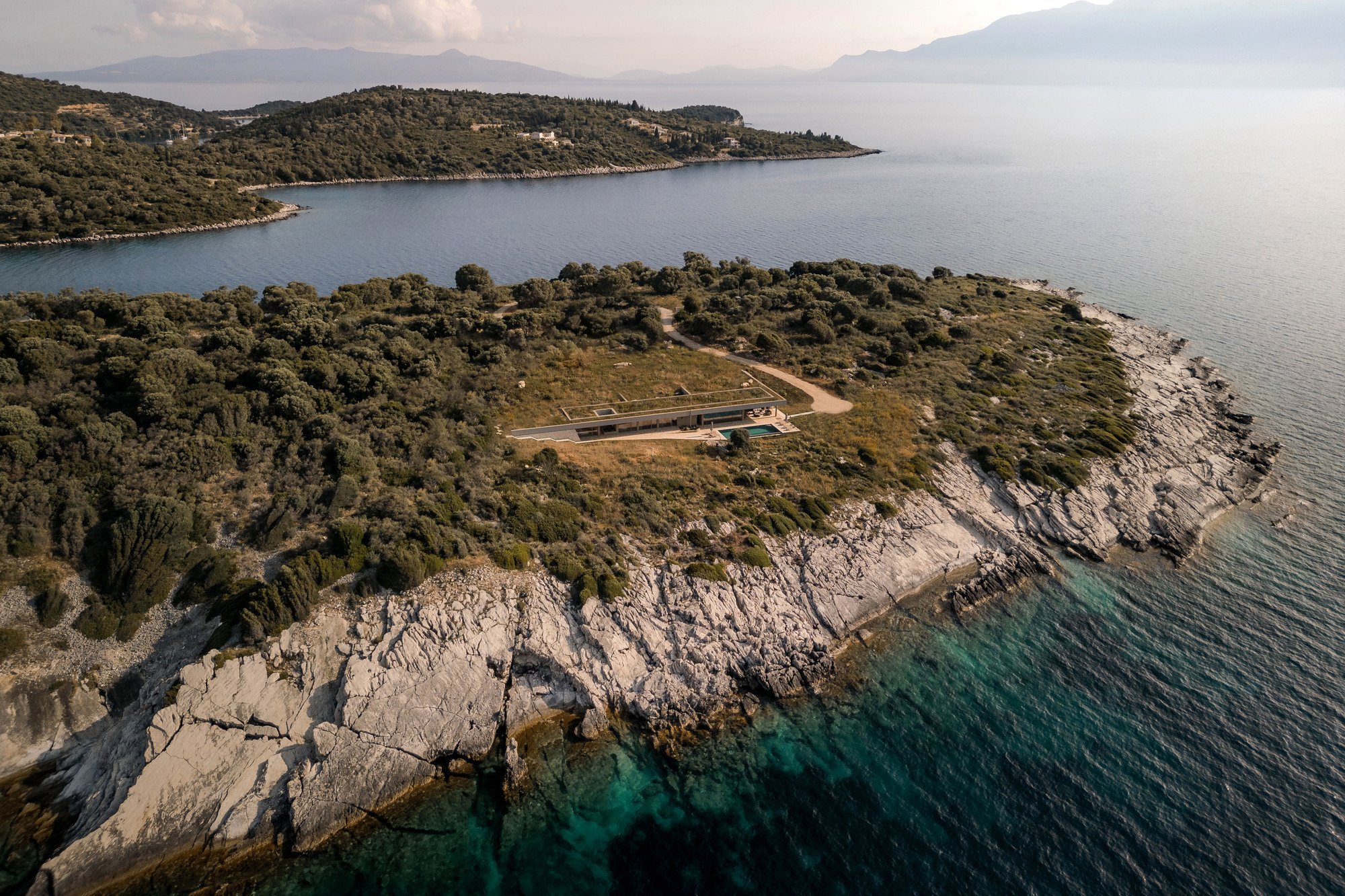
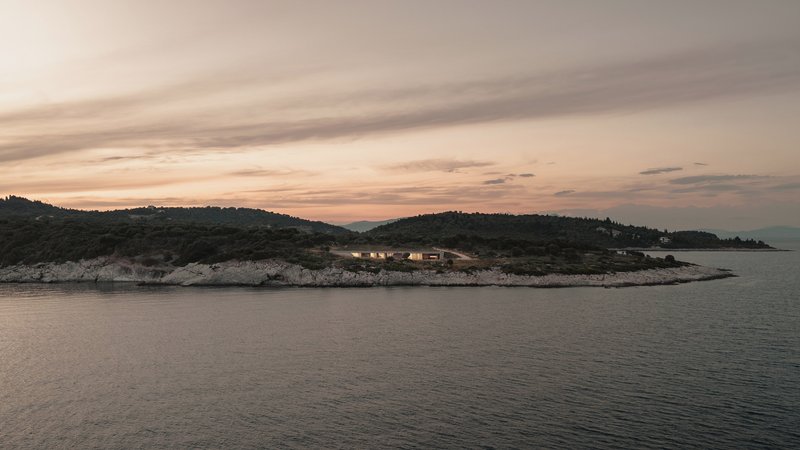
On Meganisi's rocky coast, Euthea Residence disappears beneath the terrain it occupies, visible only to passing boats on the Ionian Sea.

There is no road leading to a neighbor, no adjacent building, no village nearby. Euthea Residence is the first structure ever built on this peninsula of Meganisi, a small island off Lefkada in the Ionian Sea. Ateno Architecture Studio, led by Elias Theodorakis and Yiorgos Fiorentinos with collaborator Spiros Giotakis, faced a rare condition: designing not against an existing context but within an entirely natural one where sea, sun, and native flora are the only neighbors. The 400 square meter house responds by making itself almost invisible, tucked beneath the land rather than placed on top of it.
The name "Euthea" carries a double meaning in Greek, suggesting both a beautiful view and a straight line. Both readings are literal. The house is organized as one continuous linear volume, its rooms arranged in sequence along an elongated axis that faces the open water. A vegetated roof extends across the entire structure, allowing the terrain to flow over the building as though the ground itself had merely been lifted. The result is a residence that passing boats might mistake for a fold in the hillside. That level of restraint, on a site this dramatic, is what makes Euthea worth examining closely.
Landscape as Architecture
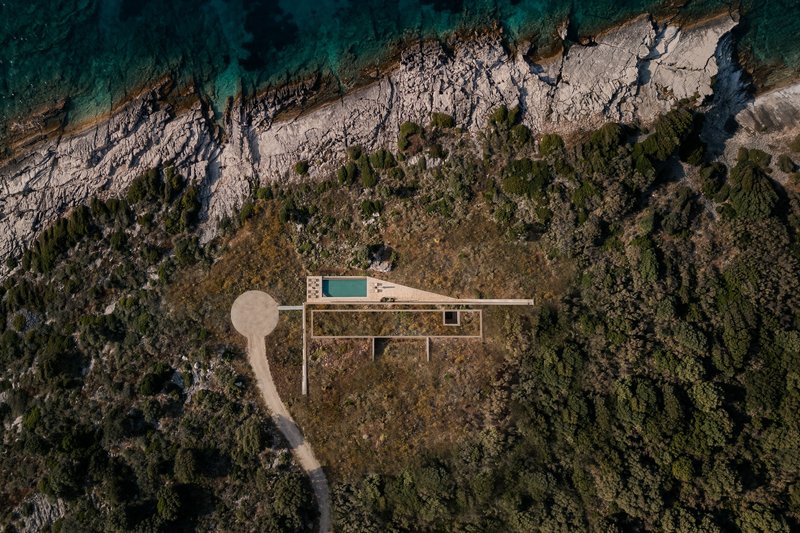
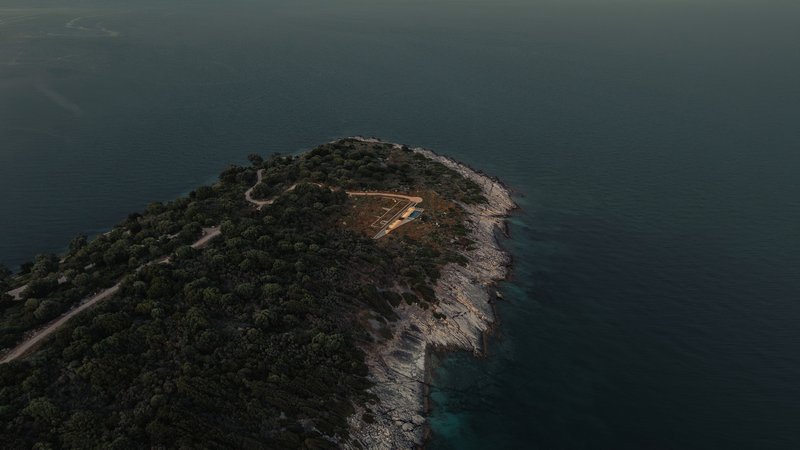
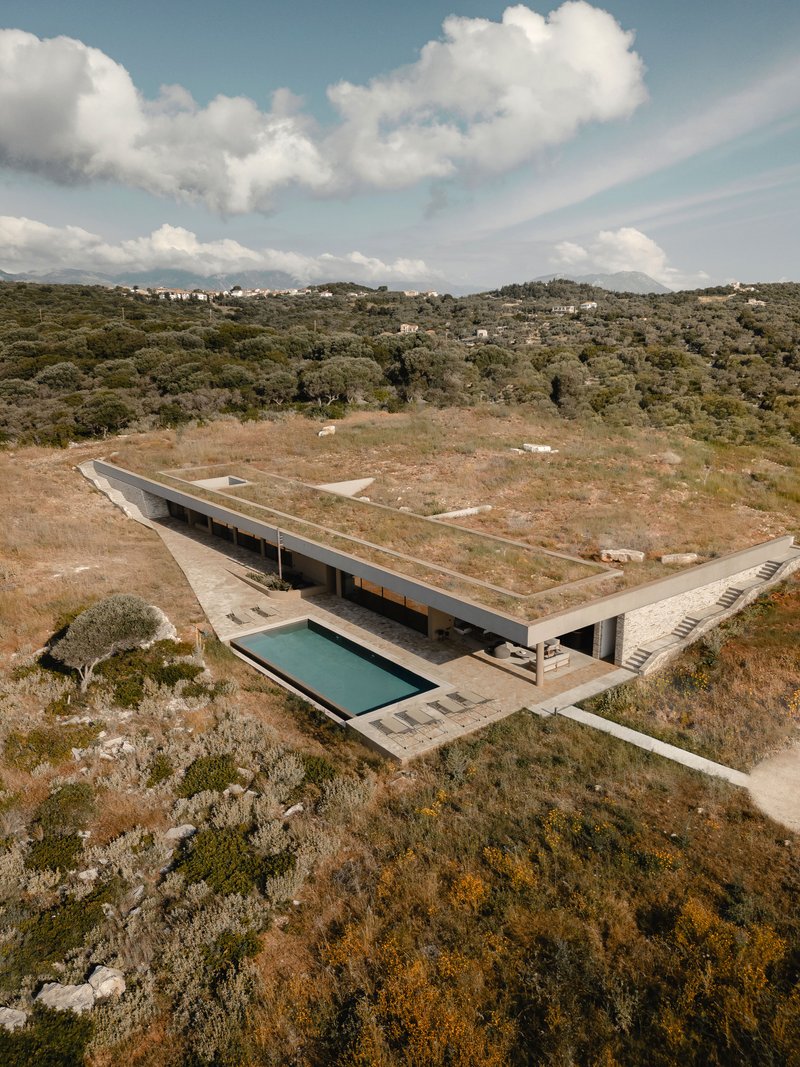
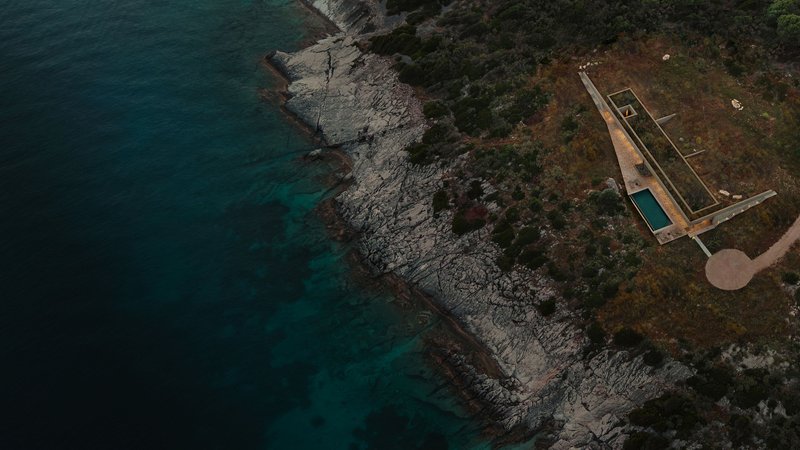
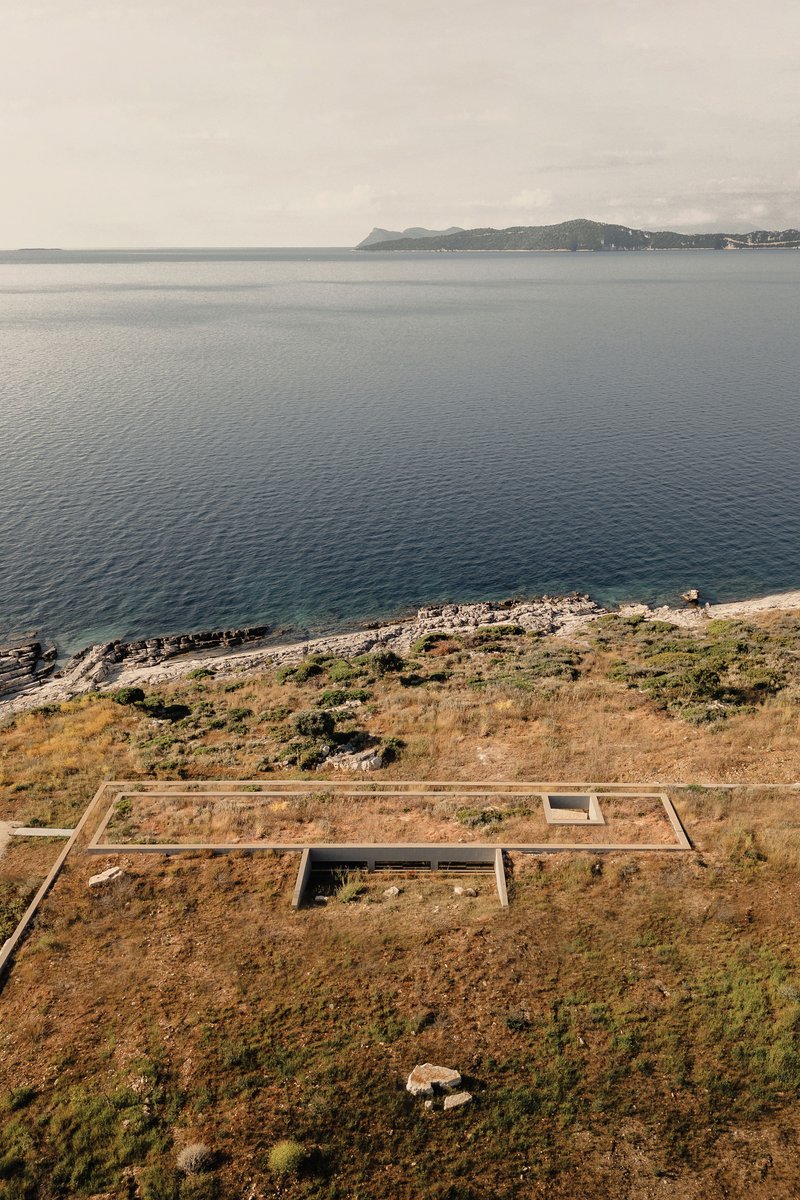
From the air, the strategy is immediately legible. The house occupies a narrow clearing on the peninsula's ridge, its planted roof merging with the surrounding scrubland so thoroughly that the built footprint reads as a natural plateau. The swimming pool terrace is the only element that breaks the camouflage, a rectangular plane of water and stone that catches light against the rocky headland.
What Ateno has done here is not simply embed a building into a hillside but perform a subtle modification of the terrain itself. The ground plane was gently elevated to create a shaded void beneath, a slit in the landscape that shelters the house's primary living functions. Native vegetation was left largely untouched around the structure, with Mediterranean flora defining the immediate context rather than any designed garden. The surrounding site remains wild, and the building seems to accept that as a non-negotiable condition.
The Horizontal Line
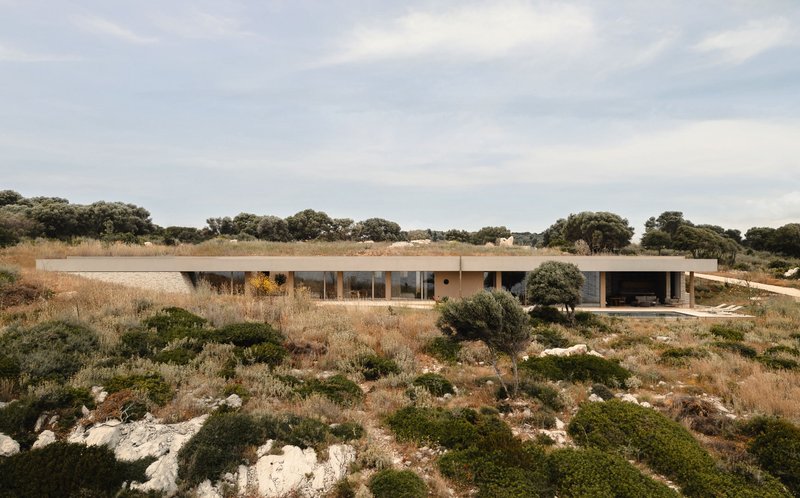
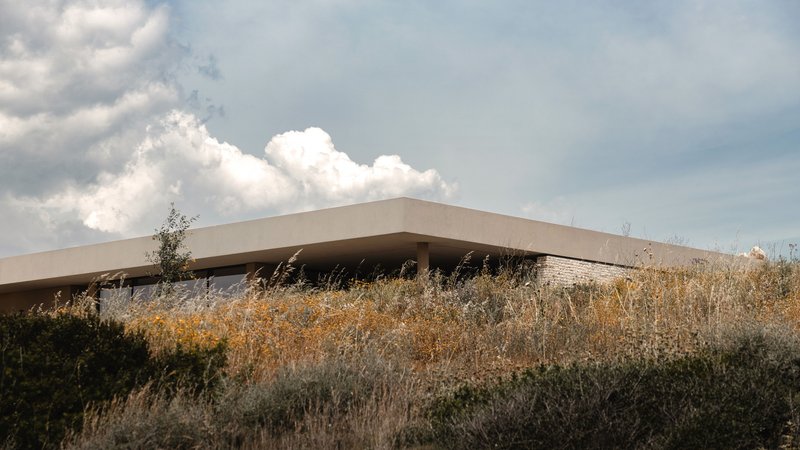
At ground level, Euthea reads as a long, low incision in the landscape. The flat roof plane barely rises above the dry grasses and olive trees that surround it. There is no moment where the house announces itself vertically. Instead, it stretches laterally, following the contours of the land and reinforcing the horizon line rather than competing with it.
The building's proportions are deliberate. From a distance, particularly from the sea, the residence registers as little more than a shadow line between earth and sky. At sunset, as seen from the water, the structure nearly vanishes into the rocky coastline. That commitment to horizontality is both an aesthetic position and a climatic one: the low profile minimizes wind exposure on a site that faces directly onto the open Ionian.
The Shaded Void
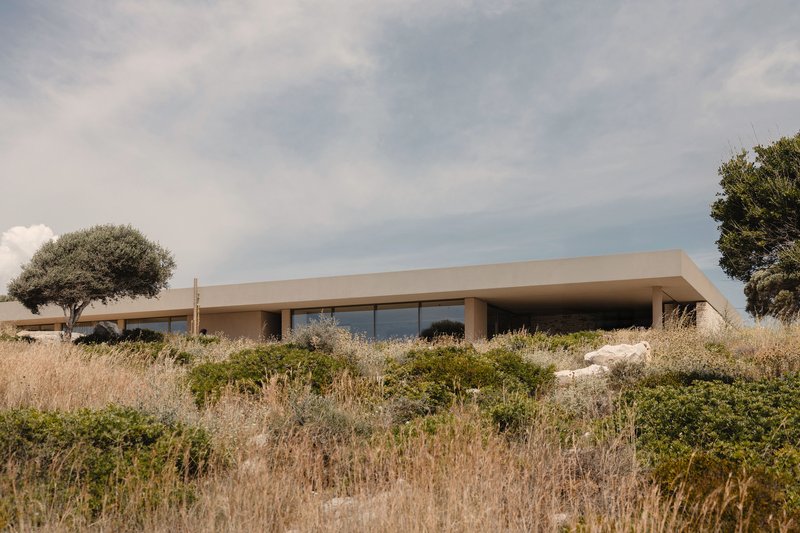
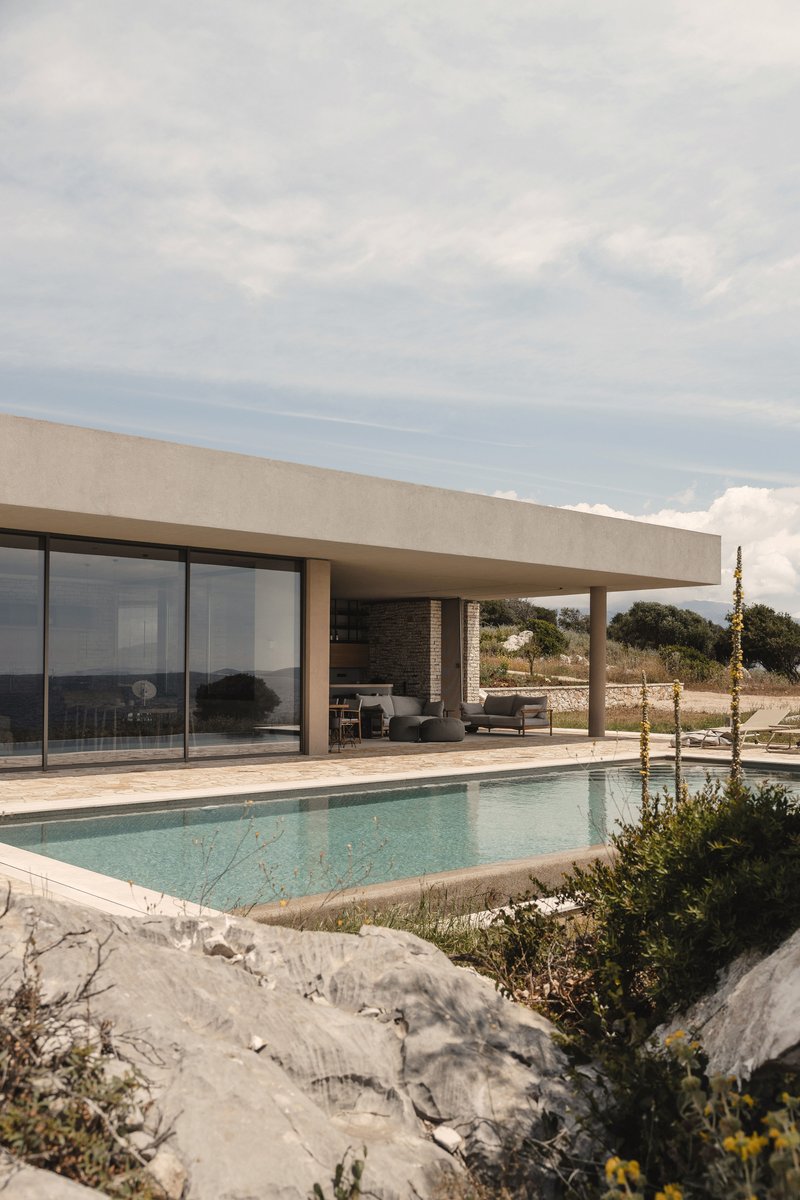
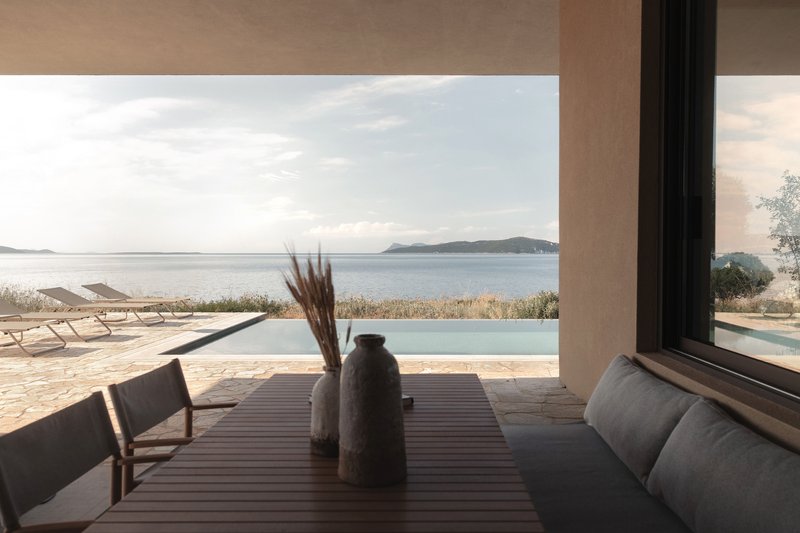
The cantilevering roof plane creates a recessed condition along the building's sea-facing edge, producing deep shade that protects interiors and terraces from the harsh Mediterranean sun without requiring mechanical systems. This is passive design at its most direct: the roof is the strategy. Living spaces sit within this elongated shadow, enjoying full views of the water while remaining sheltered from solar exposure overhead.
The covered terraces are not decorative additions but core living spaces. A timber dining table beneath the roof overhang overlooks the infinity pool and distant coastal islands, while stone walls and cylindrical columns frame views without enclosing them. The boundary between interior and exterior dissolves along this edge, which is precisely the point. When your only context is sea and sky, the architecture's job is to calibrate exposure, not create enclosure.
Stone and Earth
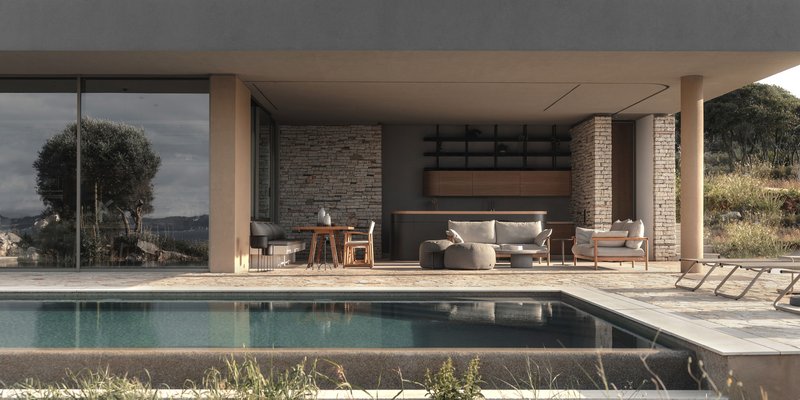
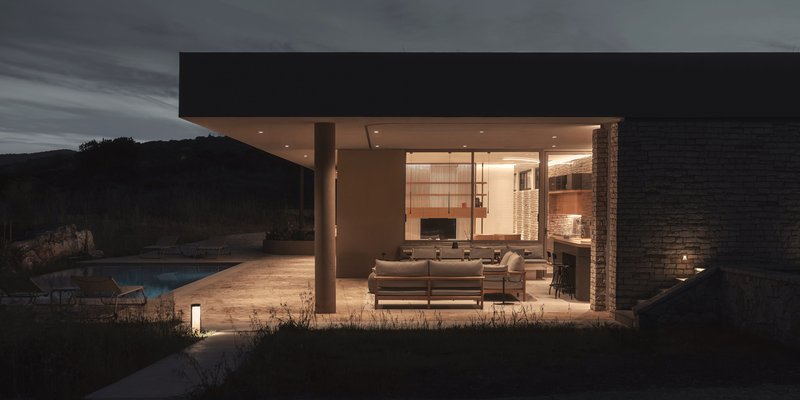
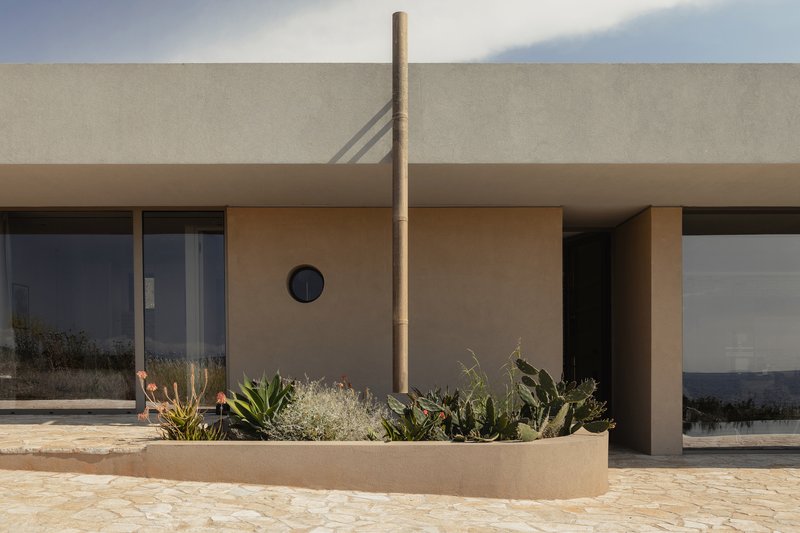
Material choices reinforce the integration strategy. Local stone, stacked and used as cladding on exterior surfaces, gives the building a tonal and textural continuity with the rocky terrain. Brick cladding appears on certain terrace elements, while wood slat panels introduce warmth in sheltered zones. The palette is deliberately narrow: earthy tones, rough textures, nothing that would catch light or draw attention from a distance.
A stacked stone fireplace on the covered terrace, illuminated at dusk, becomes the focal point of the outdoor living area. Nearby, a curved planter bed filled with cacti and succulents wraps around a cylindrical chimney, blurring the distinction between landscape element and architectural feature. These moments feel carefully considered rather than styled, rooted in the logic of the site rather than applied from a mood board.
Interior Sequence
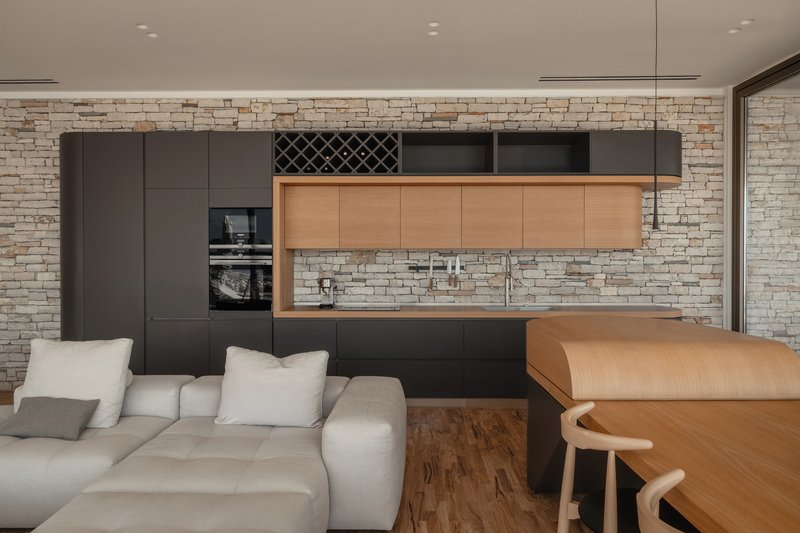
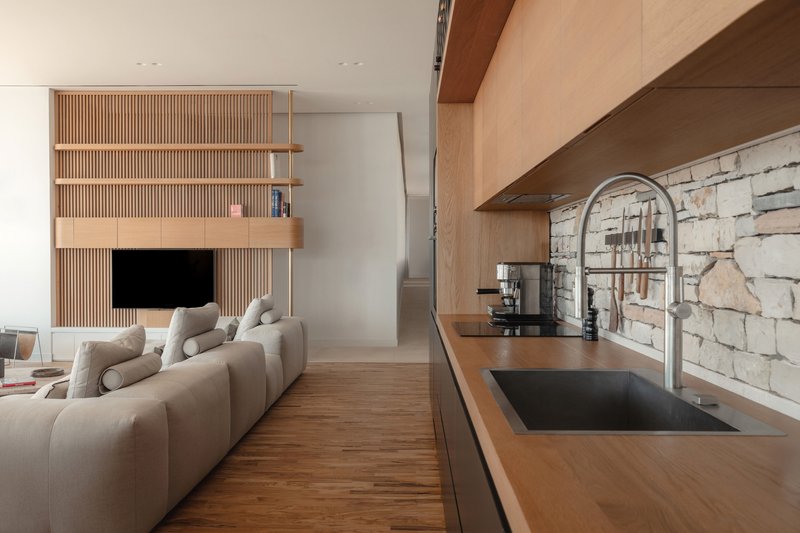
Inside, rooms are lined up in a continuous sequence along the building's longitudinal axis. The open kitchen features black and oak cabinetry set against an exposed stone wall, a material choice that pulls the exterior landscape into the domestic interior. A slatted wood media unit in the living area introduces rhythm without bulk. Throughout, the material language remains restrained: stone, wood, concrete, nothing that demands attention over the views.
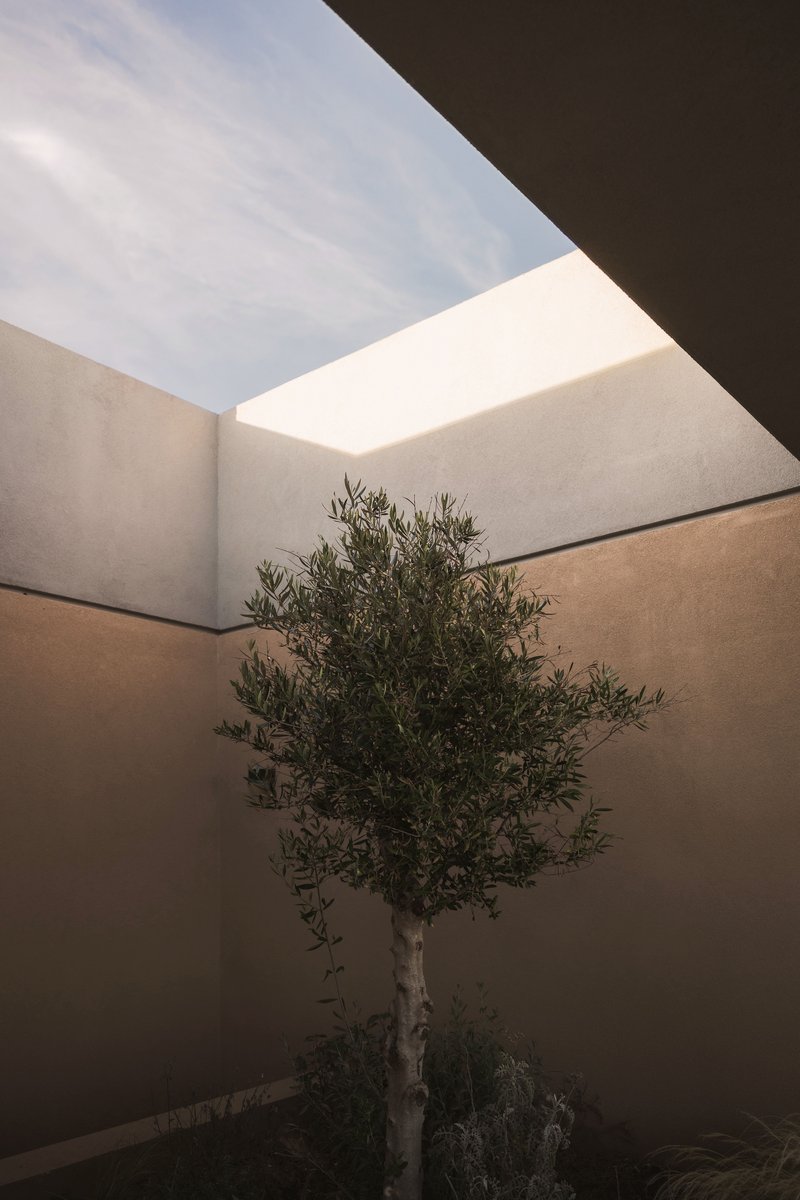
A courtyard punctuates the sequence, an open-sky moment framed by rendered walls with a single olive tree planted in earth at its center. This is not a grand atrium but a quiet pause in the plan, a space that brings light and air into the building's midsection while creating a private outdoor room oriented inward rather than toward the sea. It gives the plan a moment of compression between its expansive terraces.
Framing the Ionian
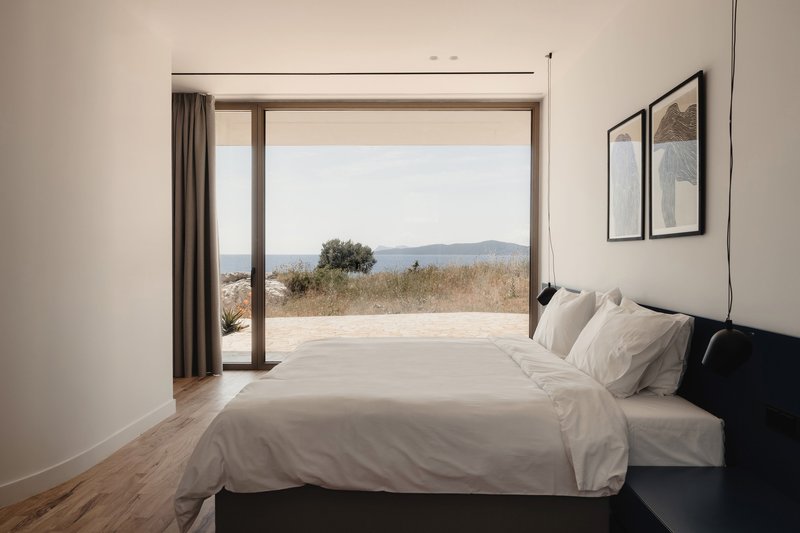
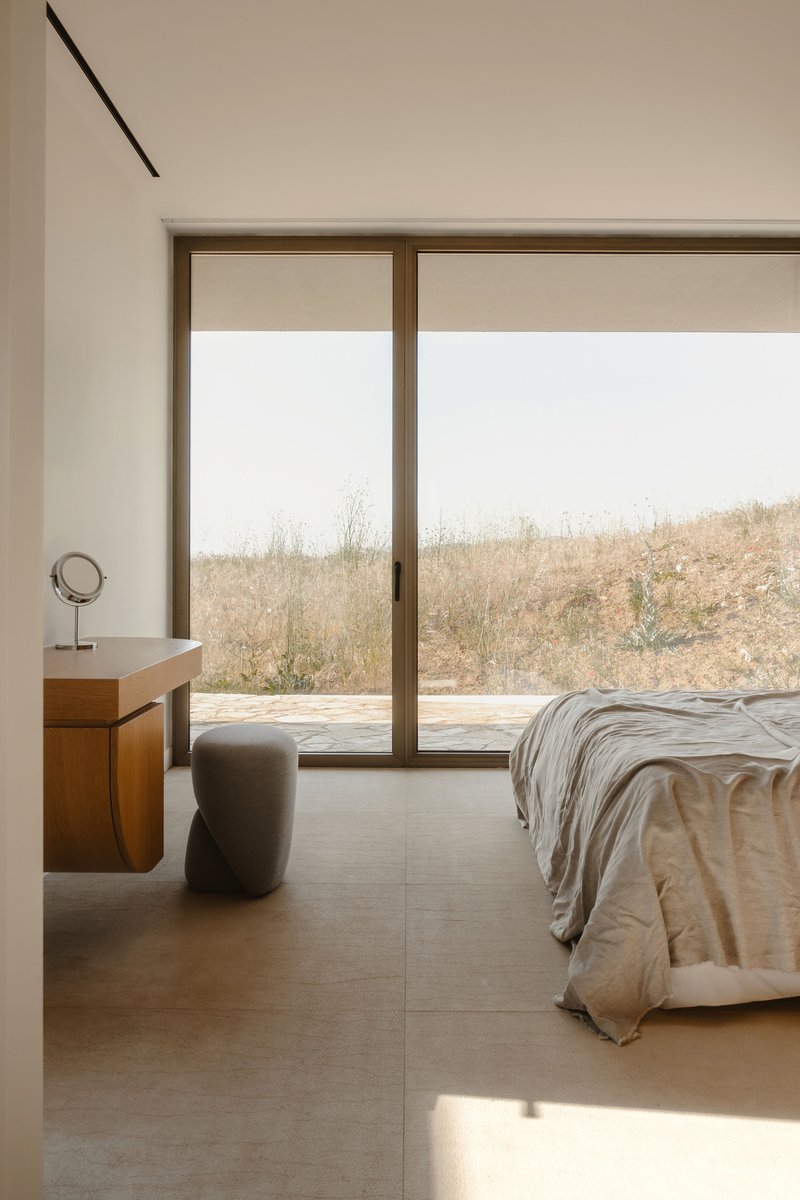
Bedrooms are placed at the building's quieter ends, each with floor-to-ceiling glazing that opens onto private terraces. One frames a distant view of hills and coastline through a wide glass wall; another slides open to reveal golden grasses on a concrete terrace, a deliberately closer and more intimate landscape. The varied framing across rooms ensures that the sea views never become monotonous. Each opening is calibrated to a slightly different relationship with the terrain.
From above, the rectangular pool terrace reads as a geometric counterpoint to the organic coastline, a precise stone and water plane cantilevered at the edge of the headland. It is the one moment where the architecture declares itself against nature rather than hiding within it, and the contrast makes both the building and the landscape more legible.
The Pool Terrace
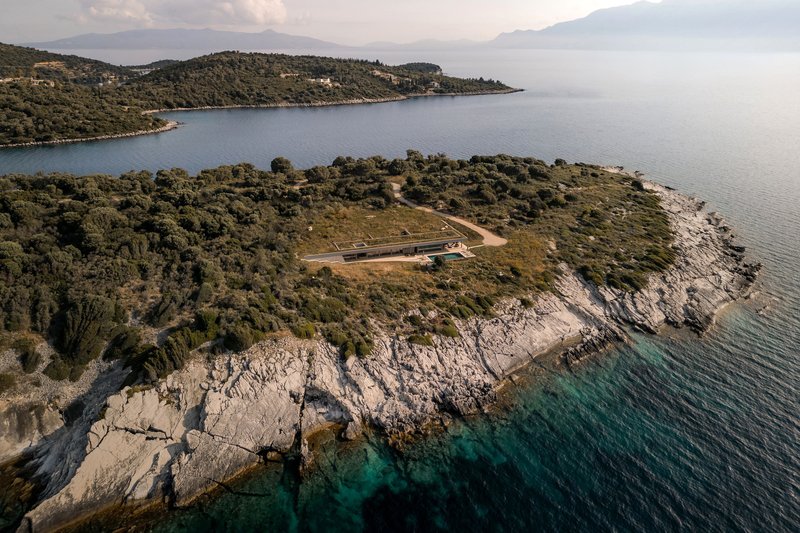
Seen from above, the relationship between the pool platform and the rocky peninsula is almost geological. The terrace extends the building's footprint toward the water's edge, its rectilinear geometry contrasting sharply with the irregular limestone outcrops below. Turquoise shallows surround the headland, and the pool's still water mirrors that color palette in miniature. It is a bold move on an otherwise self-effacing building, and it works because it is the only such gesture.
Plans and Drawings
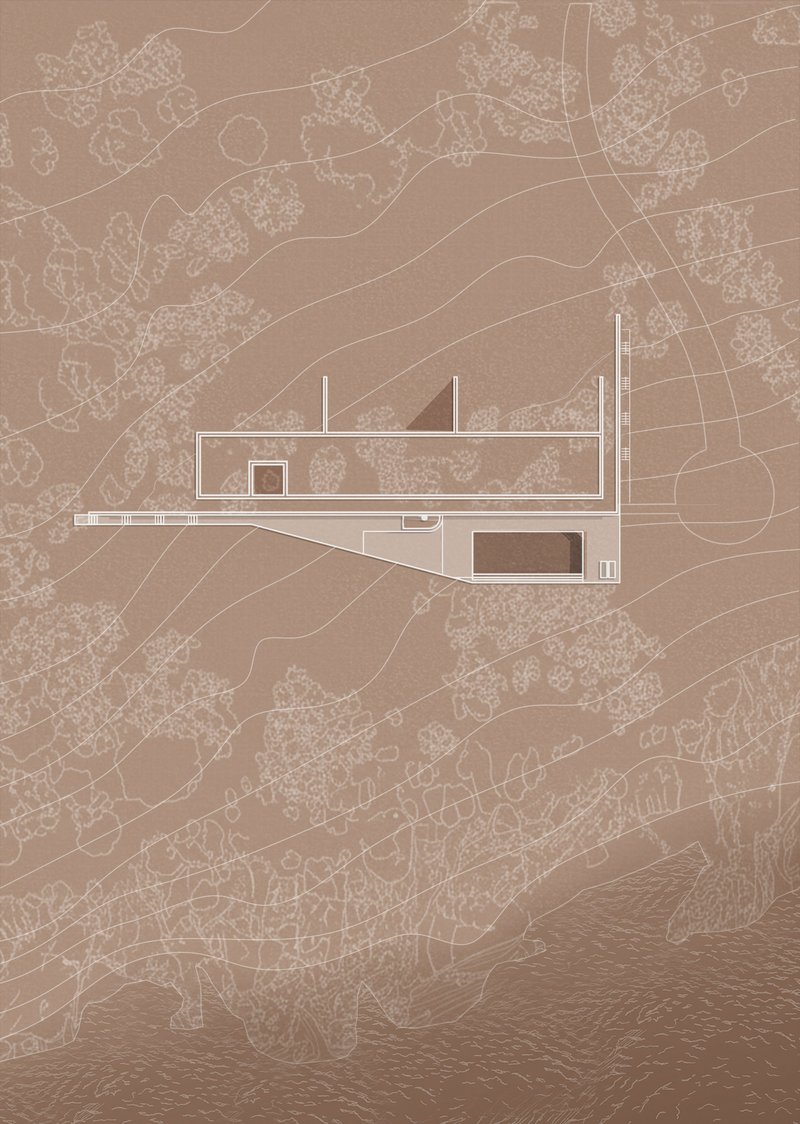
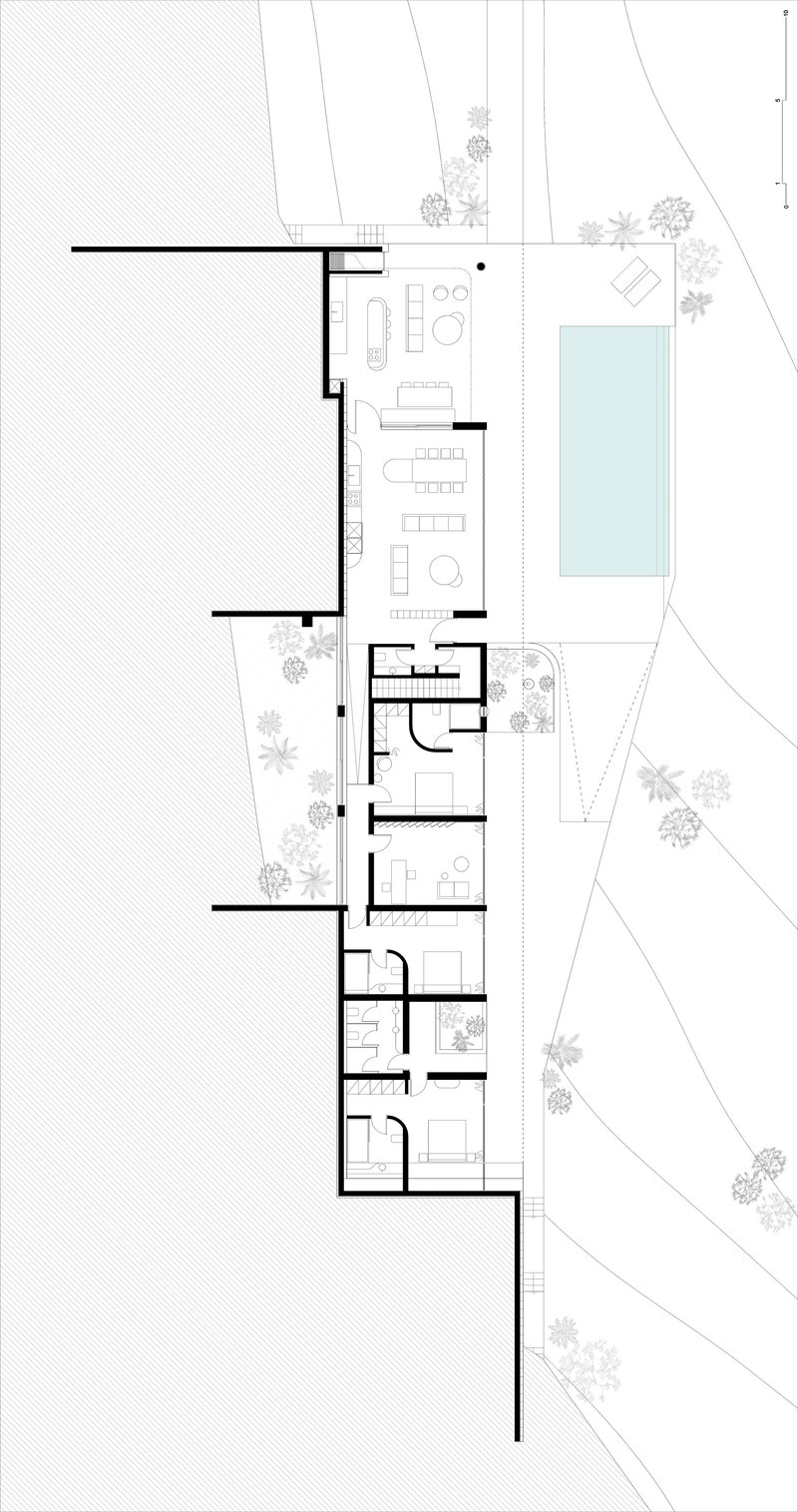
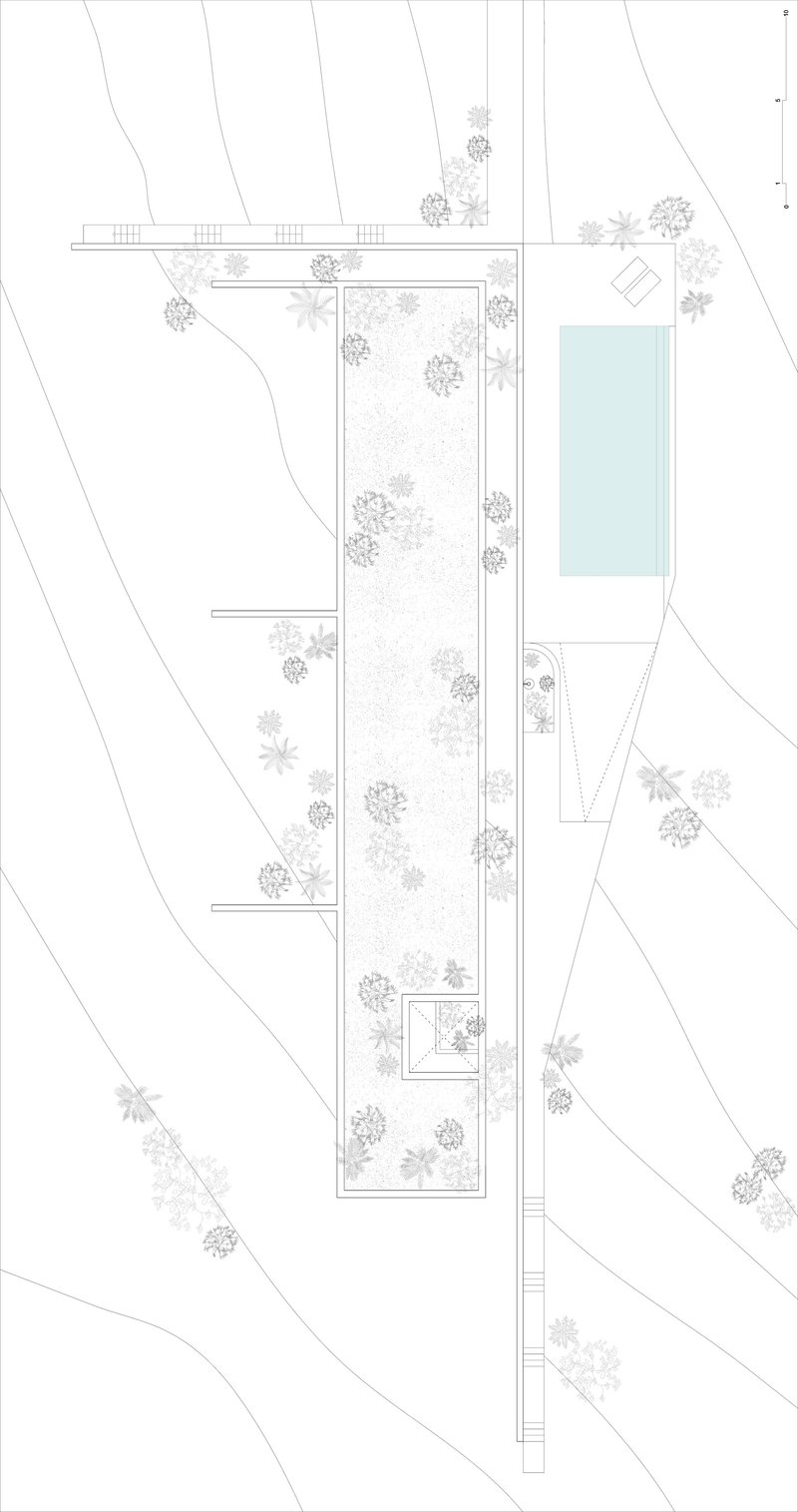
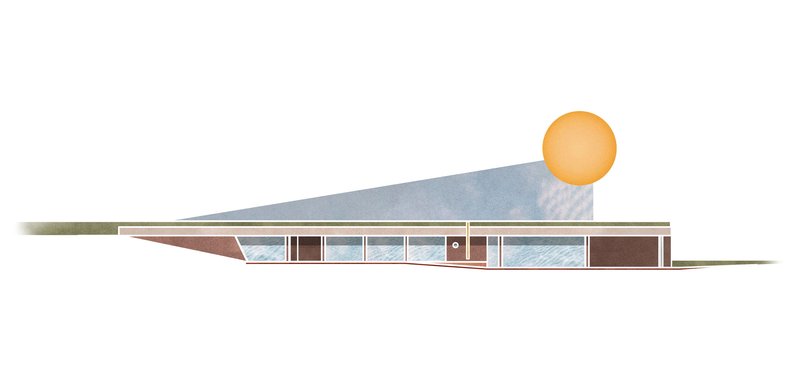
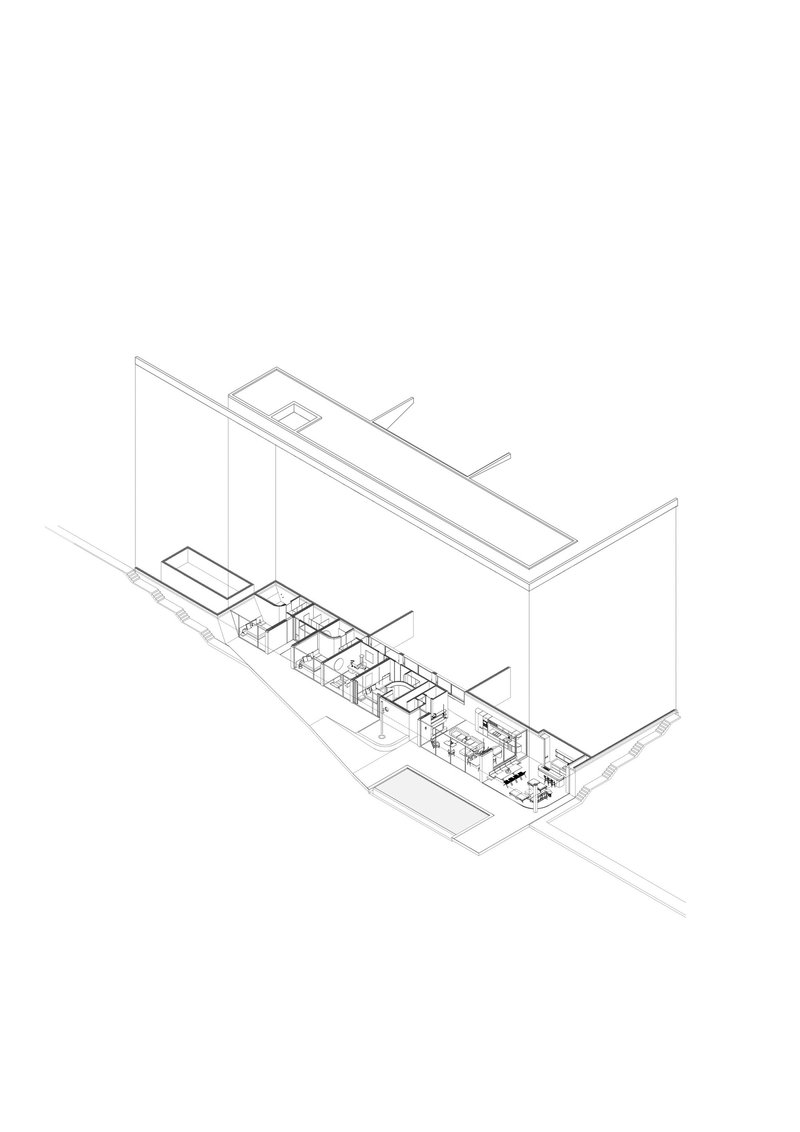
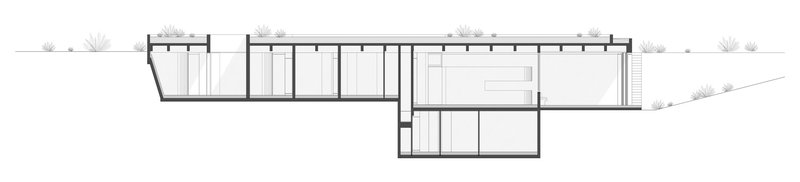
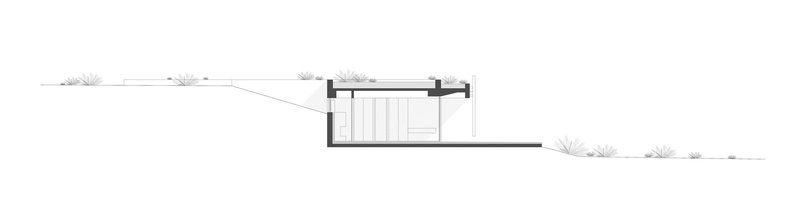
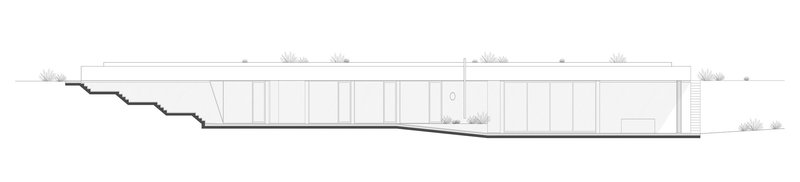
The drawings reveal the full logic of the scheme. The site plan shows how the linear volume aligns with the ridge of the peninsula, following topographic contours rather than imposing a grid. The floor plan confirms the sequential organization: rooms arranged one after another along the axis, with the swimming pool anchoring one end and courtyards providing internal relief. The sections are the most revealing documents. They show the building partially sunken into stepped terrain, its vegetated roof continuous with the slope above, and the shaded void carved beneath the lifted ground plane. The longitudinal section makes clear that the entire residence follows the natural gradient of the site, terracing gently downhill toward the sea.
The axonometric drawing exposes the interior arrangement beneath the sloping roof, with skylights punctuating the planted surface to deliver light into deeper zones of the plan. The elevation, rendered with a graphic sun overhead, emphasizes the building's low profile and sweeping horizontal roof. Together, these documents tell a story of negotiation between geometry and topography, a straight line that bends to the demands of a specific piece of ground.
Why This Project Matters
Euthea Residence is compelling because it takes the idea of landscape integration seriously rather than using it as marketing language. The vegetated roof is not a sustainability checkbox; it is the primary design move, turning the building into a continuation of the hillside. The shaded void is not a stylistic choice; it is the house's primary climate strategy. Every decision traces back to the specifics of this particular peninsula, this particular orientation, this particular ecology. In a moment when "blending with nature" has become the most overused phrase in residential architecture, Euthea earns the description by actually disappearing.
The project also raises a productive tension. Building the first structure on an uninhabited peninsula carries an inherent contradiction: the act of preserving a place through careful design simultaneously transforms it into a place that can be inhabited. Ateno's response is honest about this. The house does not pretend to be invisible. It simply works hard to minimize its disruption, keeping the surrounding site wild and limiting the architectural footprint to a single, disciplined line. Whether that restraint holds as the peninsula develops further remains to be seen, but as a first gesture, it sets a remarkably high standard.
Euthea Residence by Ateno Architecture Studio (Elias Theodorakis, Yiorgos Fiorentinos) with collaborating architect Spiros Giotakis. Located in Meganisi, Lefkada, Greece. 400 m². Completed in 2024. Photography by Triantafyllos Xanthopoulos.
About the Studio
Share Your Own Work on uni.xyz
If projects like this are the kind of work you want to make, uni.xyz is a place to publish your own, find collaborators, and enter design competitions.




Popular Articles
Popular articles from the community

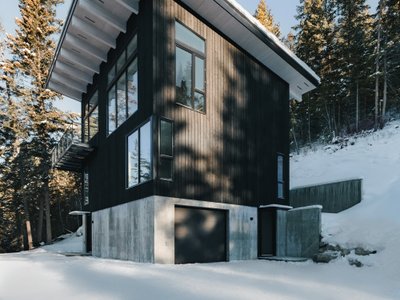
Twobytwo Architecture Studio Towers a Blackened Ski Cabin Above the Trees in Golden, BC
A compact three-storey lookout in the Kootenay mountains trades square footage for 14-foot ceilings and Columbia River Valley views.
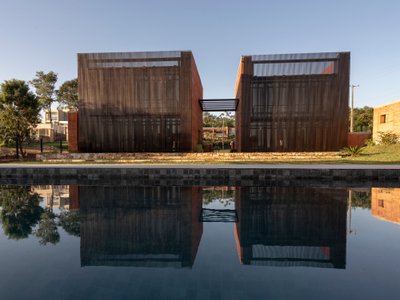
BAUEN Builds Two Rammed Earth Volumes in Paraguay Inspired by the Ovenbird's Nest
In San Bernardino, a house of compacted earth channels the instinct of a constructive bird to shelter life from the Paraguayan summer.
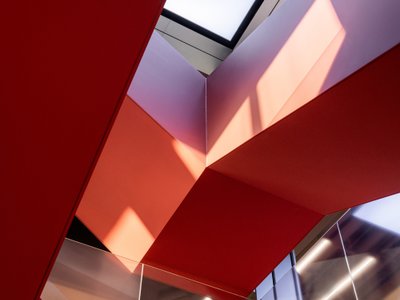
Ippolito Fleitz Group Identity Architects Turn Eight Floors in Shanghai into a Vertical Creative City
Publicis Groupe's new headquarters in Xintiandi reimagines the office as a courtyard-driven urban landscape stacked across eight floors.
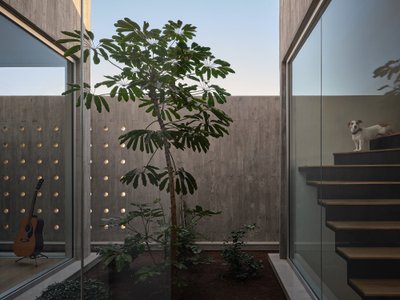
Driss Kettani Carves a Private World from Concrete Boxes on a Tight Casablanca Plot
Villa Polo stacks perforated concrete volumes around courtyards and a rooftop pool to shield a family home from the dense urban fabric.

Similar Reads
You might also enjoy these articles

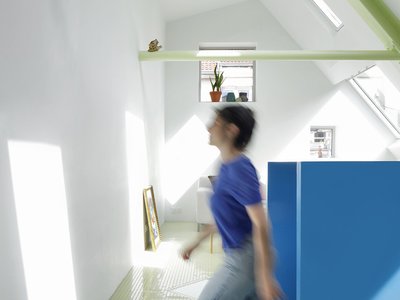
127af Flips a Tiny Bagnolet Rowhouse Upside Down with a Handcrafted Roof Extension
A 55-square-meter terraced house on the edge of Paris gains a luminous upper living floor through lightweight timber and steel.
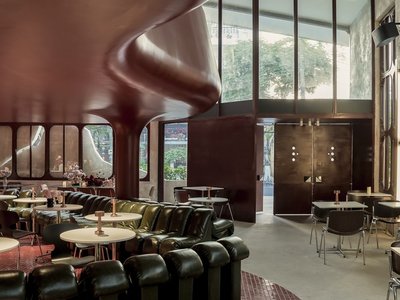
1.61 Design Workshop Wraps a 600-Square-Meter Café in Vietnam in Sculptural Burgundy Drama
Reden Café & Bistro pairs a helical staircase, mosaic floors, and deep red interiors to rethink Vietnamese hospitality space.

The Unbound Brain: A School Shaped by Cognitive Architecture
Cylindrical learning pods radiate like neurons from a central cortex, turning the floor plan into a spatial model of human thought.
Revival Vernacular Architecture: Rammed Earth Settlements for the Sahara
A modular desert community in Mauritania that fuses passive cooling techniques with earthen construction and local craftsmanship.


Explore Sports Architecture Competitions
Discover active competitions in this discipline




The Global Benchmark for Architecture Dissertation Awards


The Global Benchmark for Graduation Excellence


Challenge to design a barrier free sports center


Challenge to design an outdoor ice-rink and park
Comments (0)
Please login or sign up to add comments
No comments yet. Be the first to comment!