
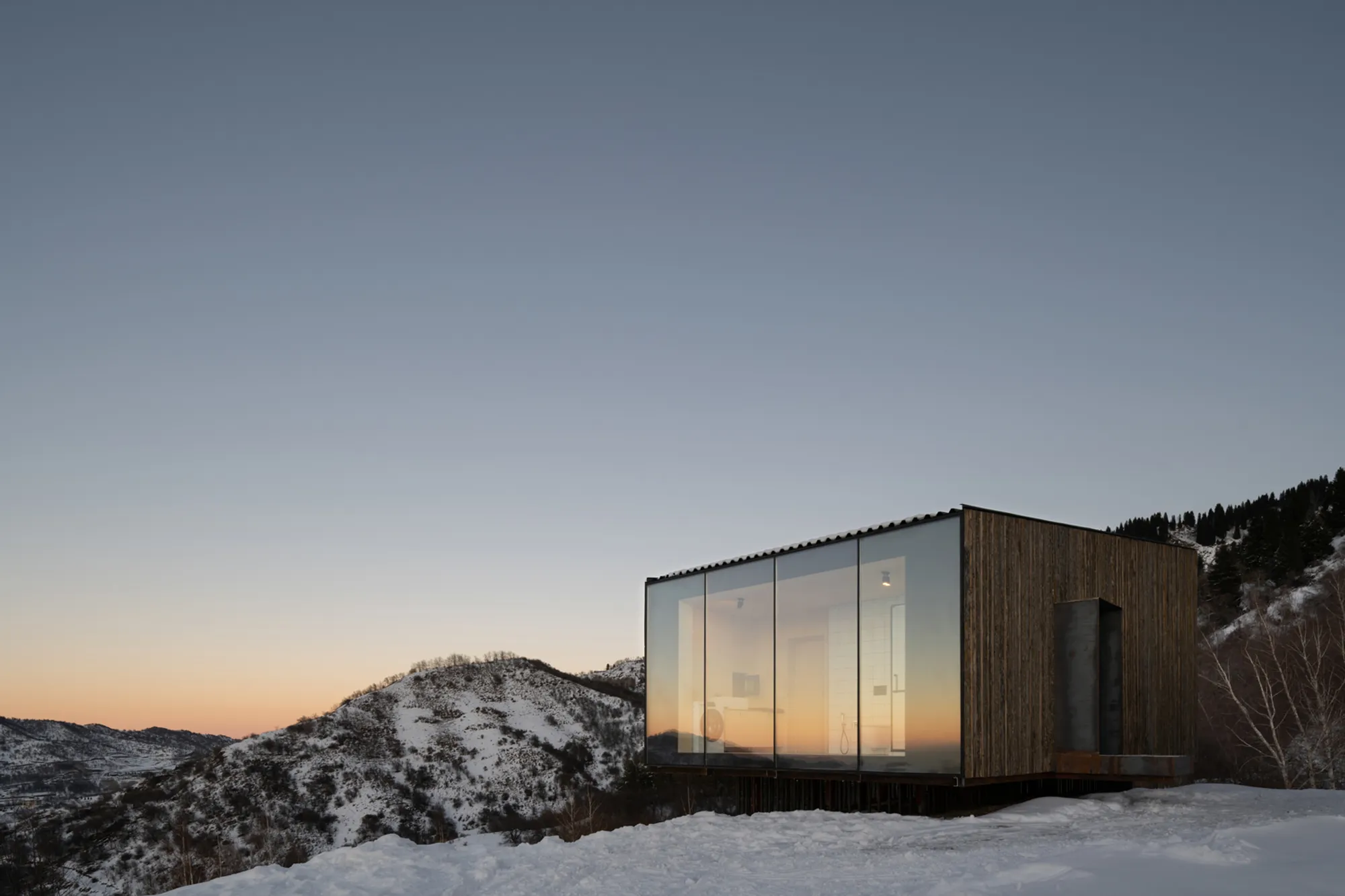
AUM Cabins: A Masterpiece of Sustainable Cabin Architecture in the Kazakh Highlands
AUM Cabins exemplify sustainable cabin architecture, blending reclaimed materials, eco-conscious design, and nomadic traditions for a harmonious retreat in Kazakhstan.


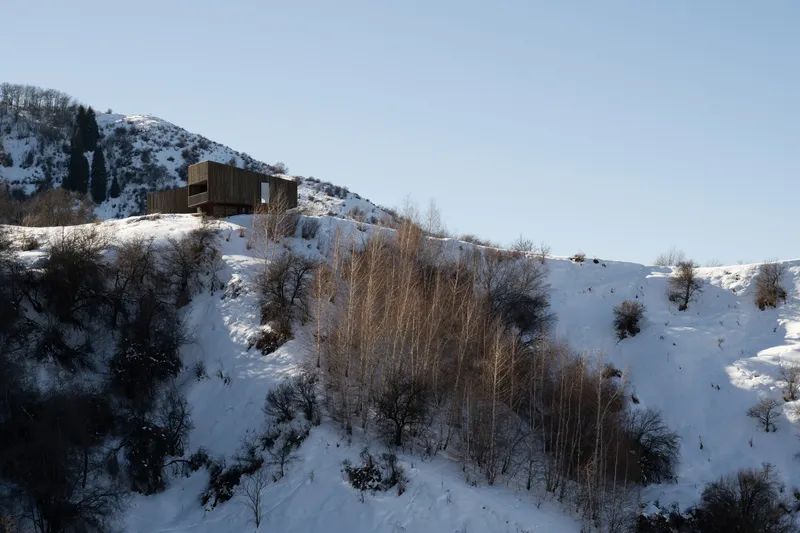
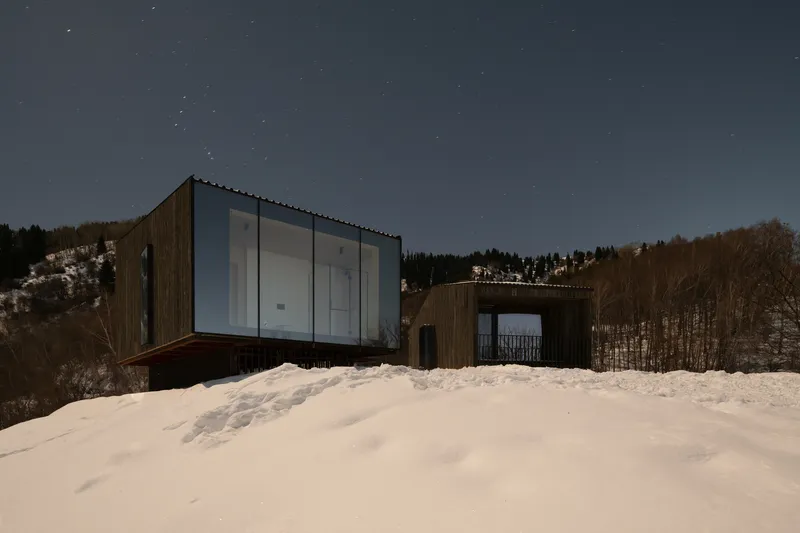
Perched at 1,650 meters above sea level, just beyond the Ile Alatau National Park, AUM Cabins by Arthur Kariev Architects redefine sustainable cabin architecture in the Kazakh Highlands. Located 25 kilometers south of Almaty, these two guest cabins blend ancient nomadic traditions with contemporary eco-conscious design, offering a retreat where modern comforts coexist with a deep respect for nature.
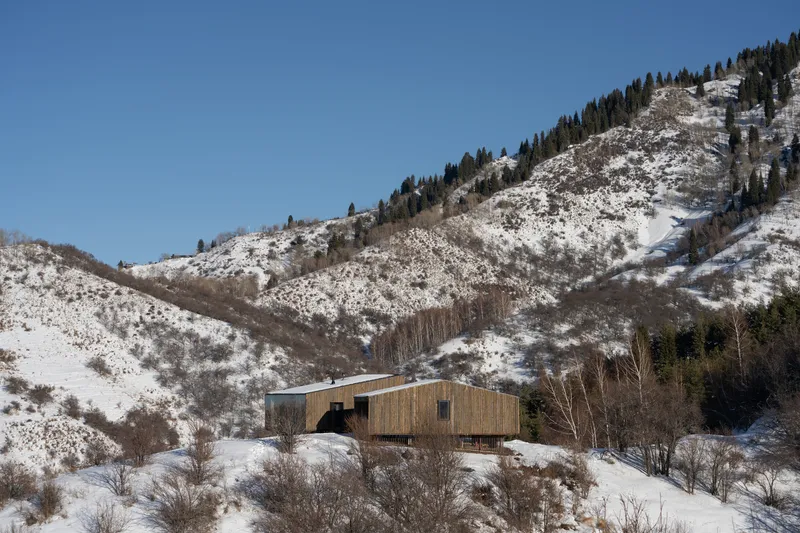
Designed to immerse visitors in the raw beauty of the Trans-Ili Alatau region, the project prioritizes environmental harmony and material reusability. The design reflects the belief that true luxury lies not in excess but in creating opportunities to reconnect with nature without disturbing the delicate ecosystem.
A Retreat Rooted in Nomadic Philosophy
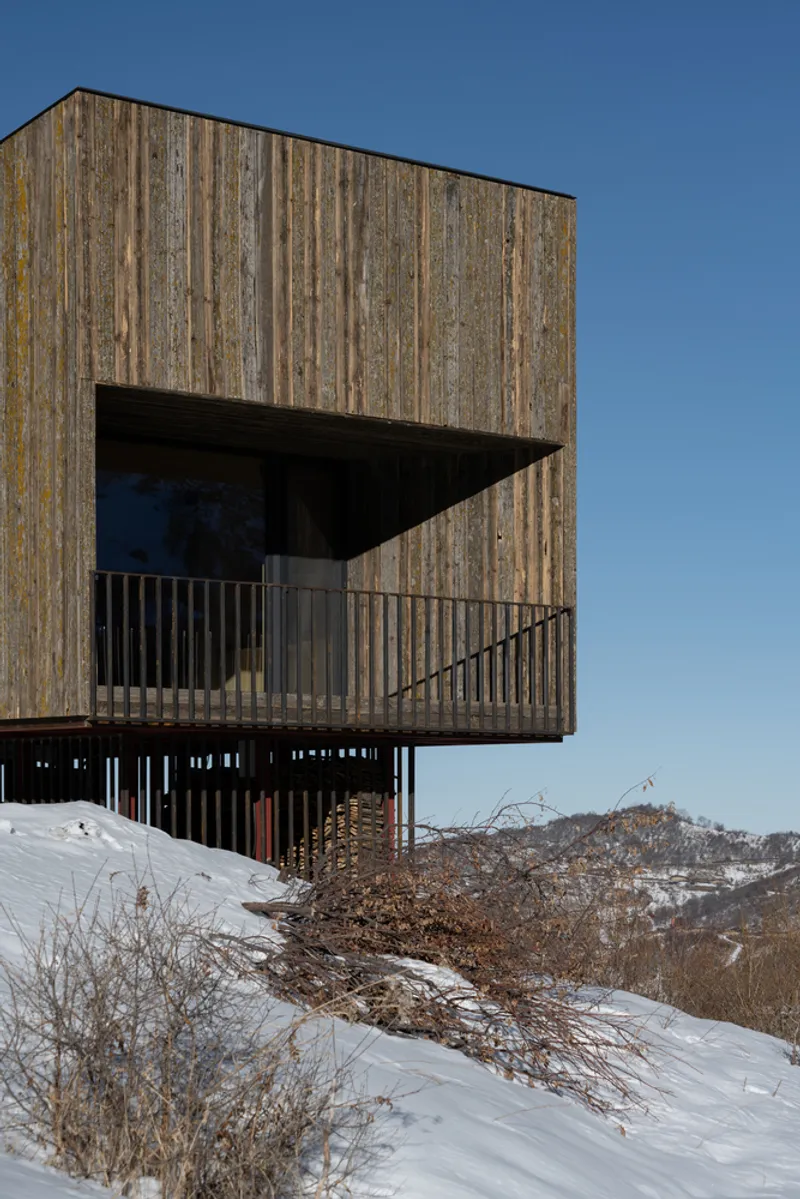
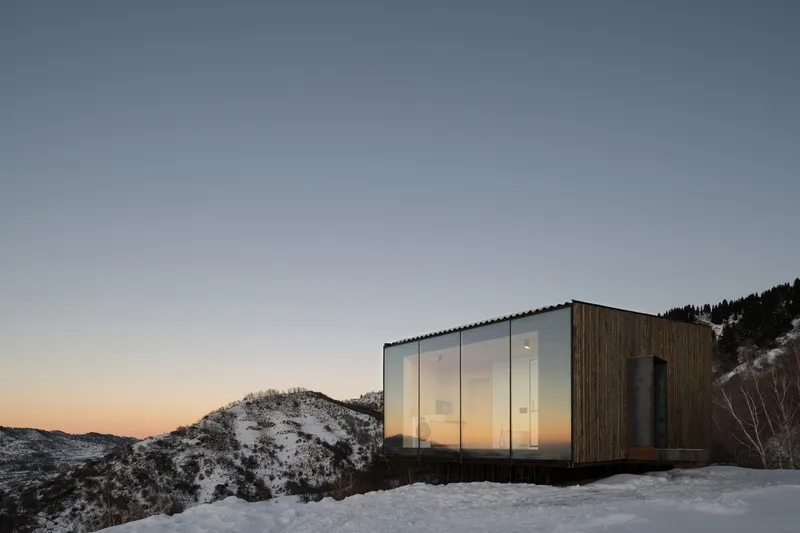
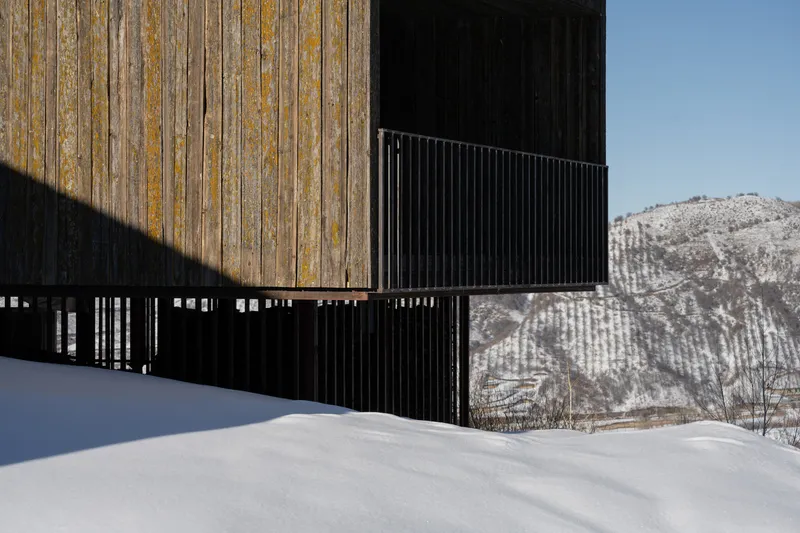
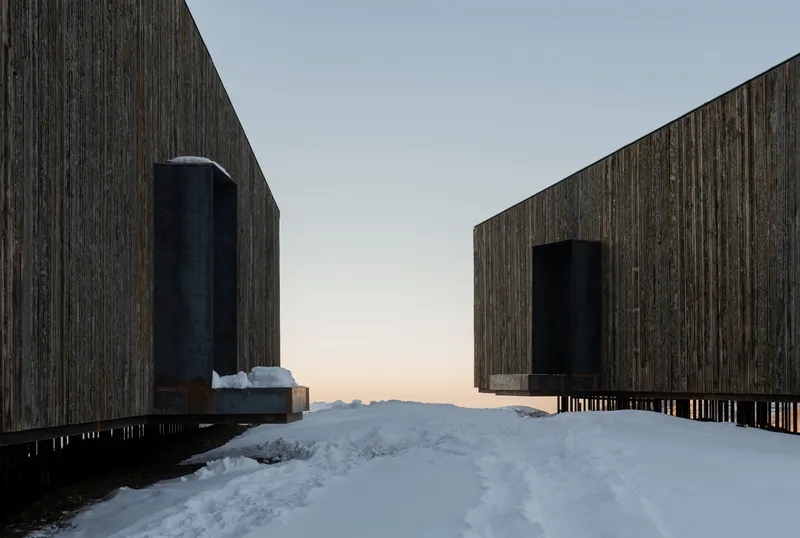
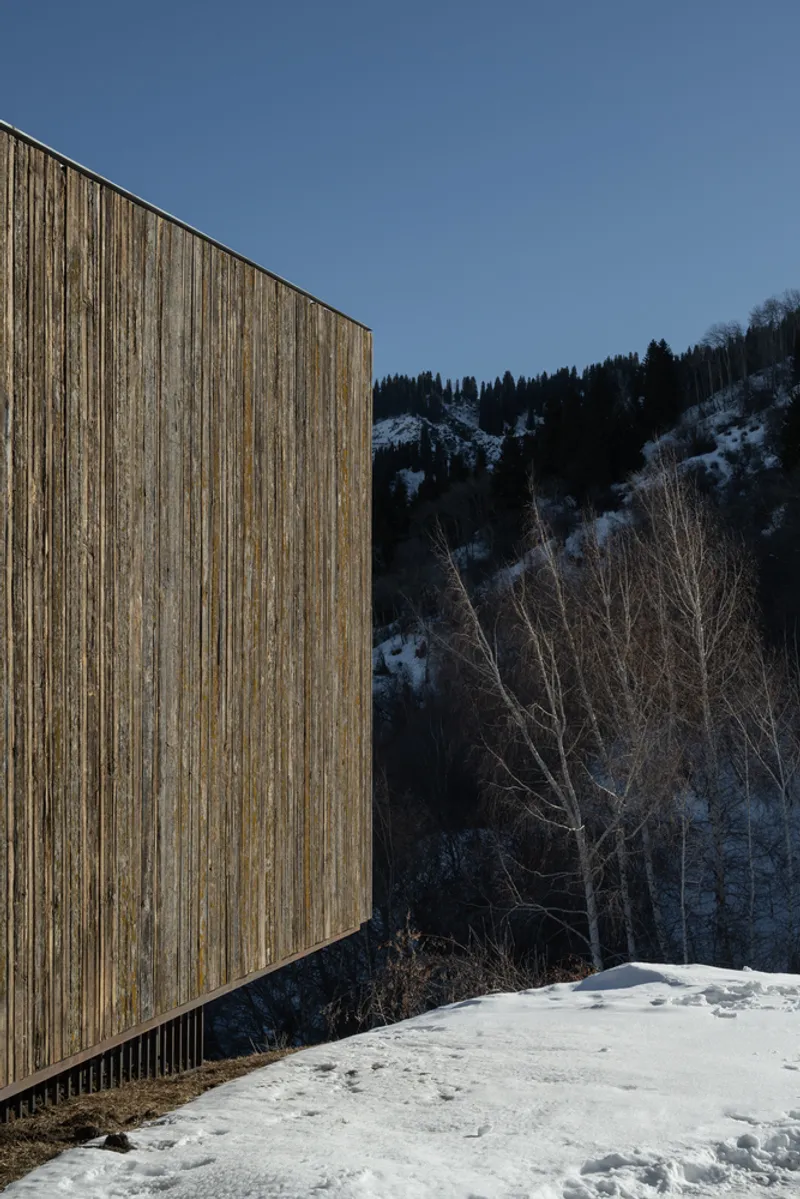
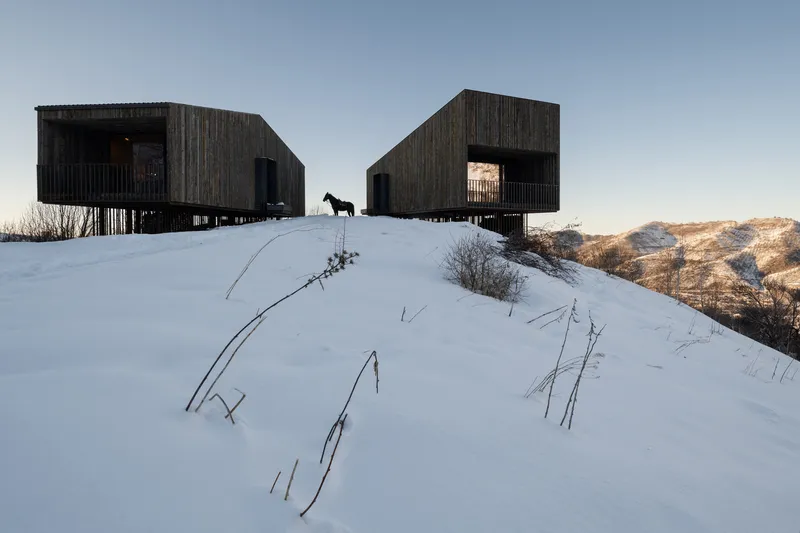
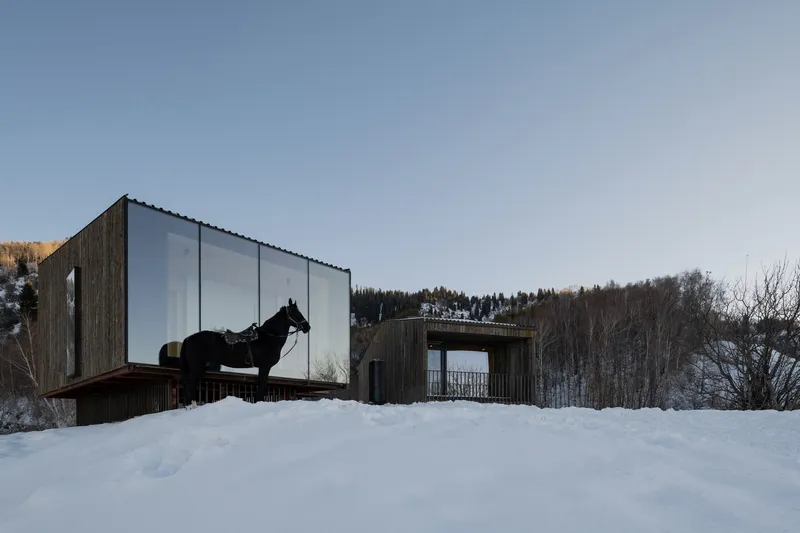
AUM Cabins embody the spirit of Kazakhstan’s nomadic heritage while embracing a modern vision of sustainability. The structures sit lightly on the land, avoiding deep foundations that would disrupt the natural terrain. Built on metal piles with timber-framed SIP panels, the cabins can be dismantled in the future, allowing materials to be repurposed.
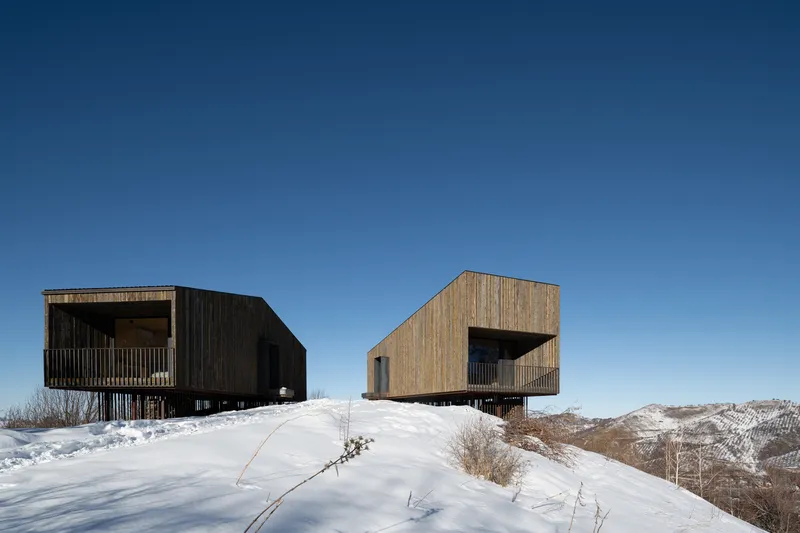
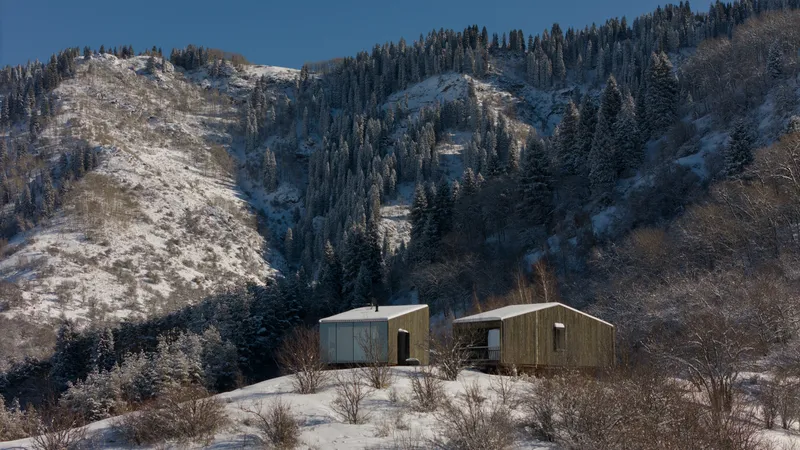
The surrounding landscape, untouched for centuries, remains carefully preserved. Underground utilities minimize visible infrastructure, while fresh water is sourced directly from a nearby spring well. Every decision reflects an ethos of minimal intervention and maximum appreciation for the land.
Reclaimed Materials: A Tribute to Time and Nature
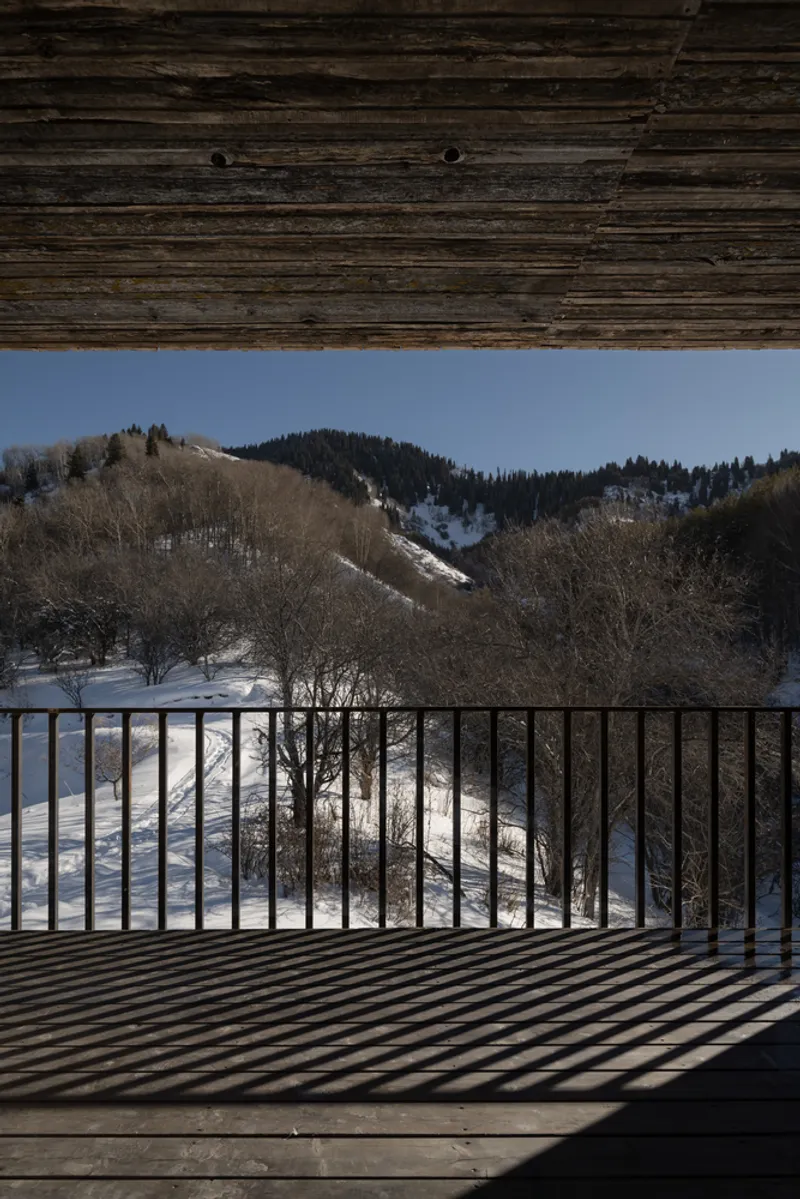
A defining feature of AUM Cabins is their façade of reclaimed larchwood, sourced from abandoned houses in the Altai Mountains of East Kazakhstan. This wood, aged over a century, carries the marks of time—traces of moss, mold, and weathering that tell a story of resilience and history.
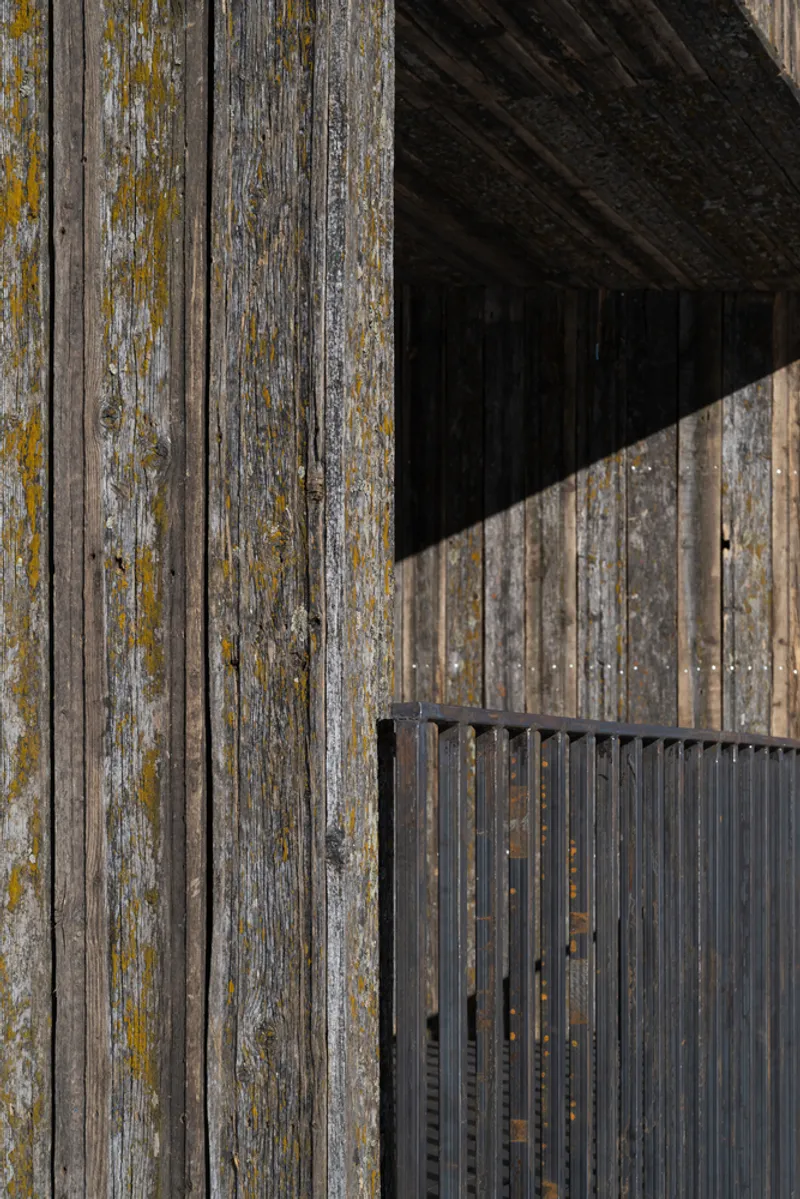
Each plank was hand-selected by Arthur Kariev himself, who spent two summers in the Altai Mountains, carefully collecting and preserving these materials. The process was as much an act of cultural preservation as it was an architectural choice, offering new life to heritage materials while restoring the sacred lands of the region.
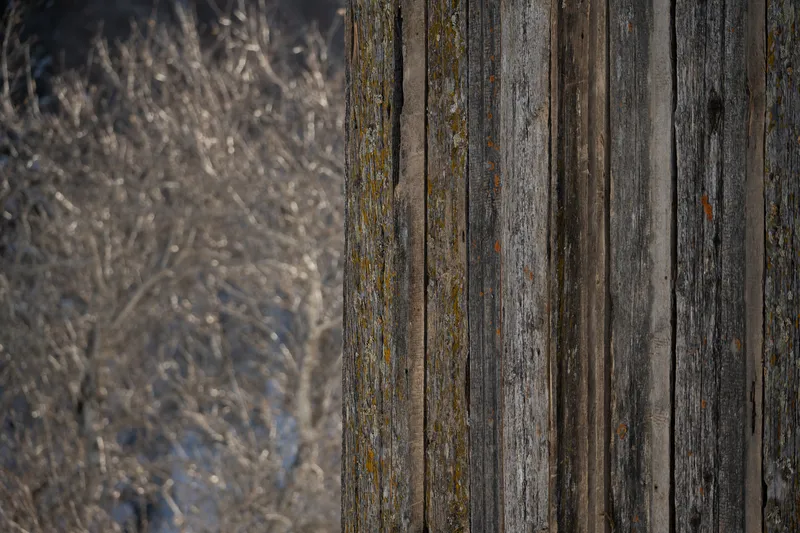
The natural texture of the wood remains intact, complete with original nails, reinforcing the authenticity and sustainability of the project. This approach not only minimizes waste but also honors the craftsmanship of the past, seamlessly integrating it into a contemporary design.
Design and Spatial Experience
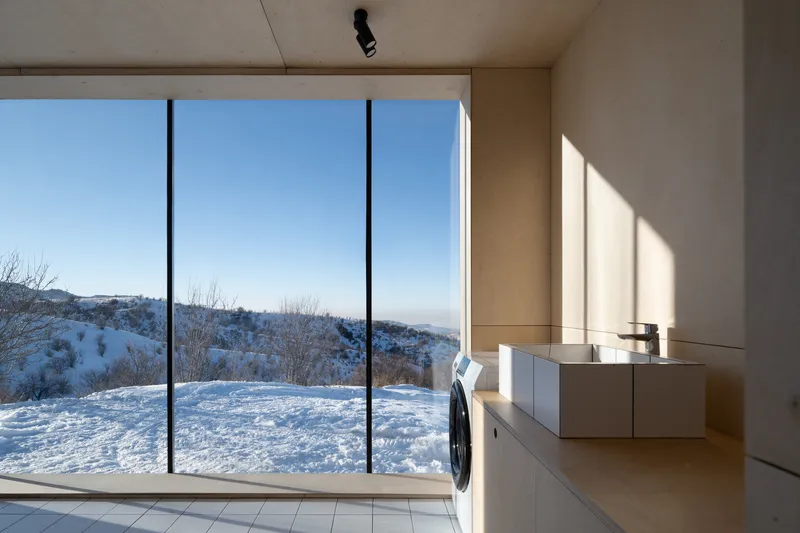
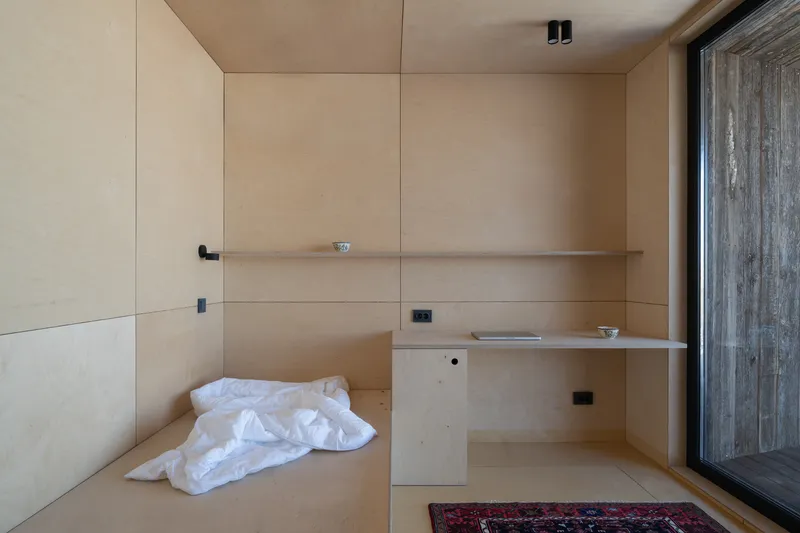
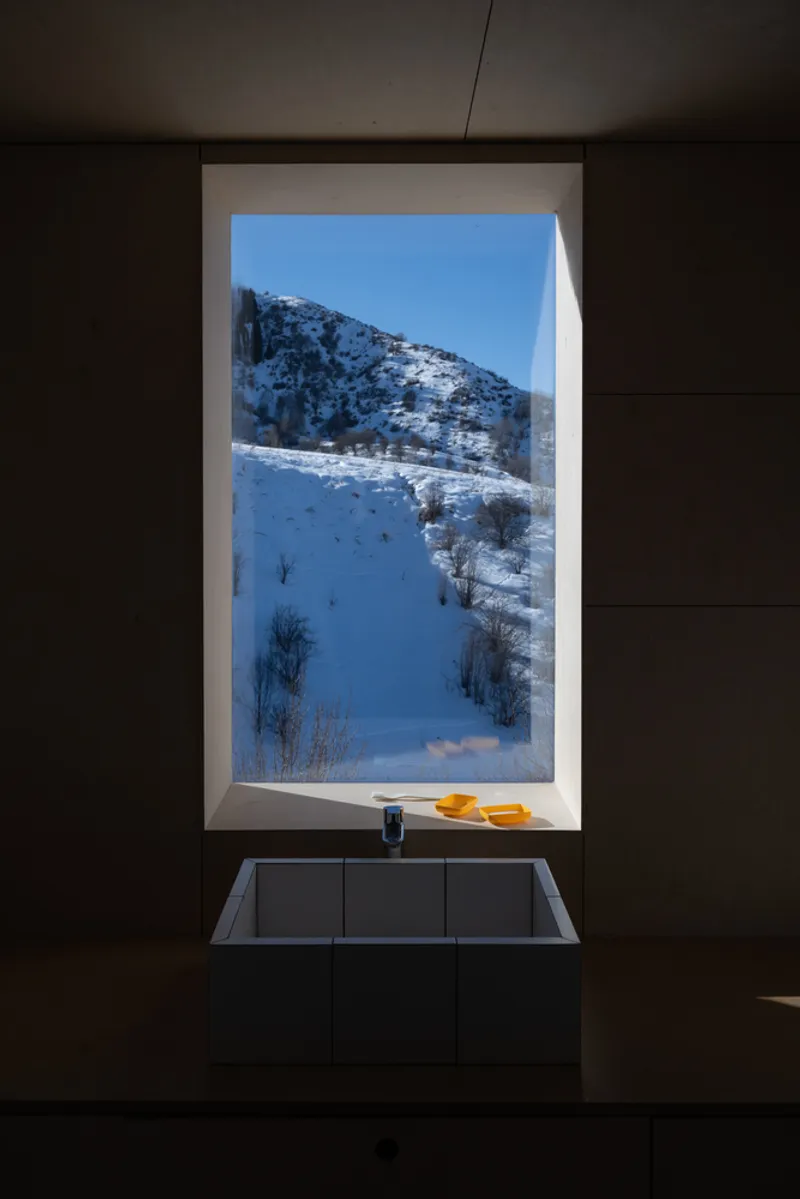
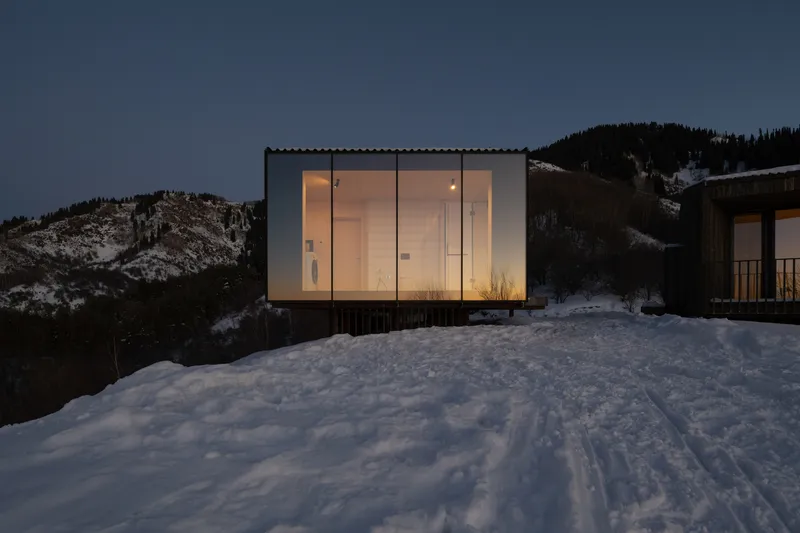
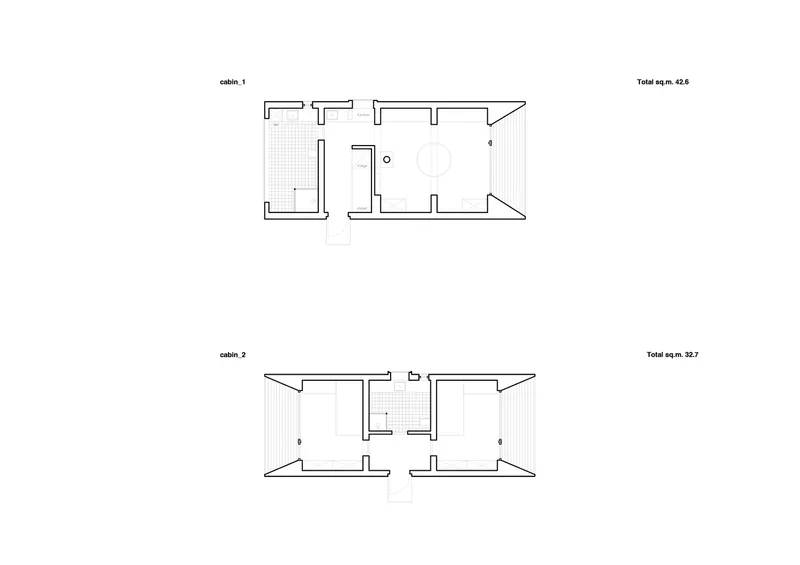
Each of the two cabins serves a distinct function while maintaining a cohesive architectural language. The first cabin, designed for intimate stays, features two bedrooms with floor-to-ceiling panoramic windows that frame the eastern sunrise. A shared compact bathroom complements the minimalist layout, ensuring a sense of retreat without excess.
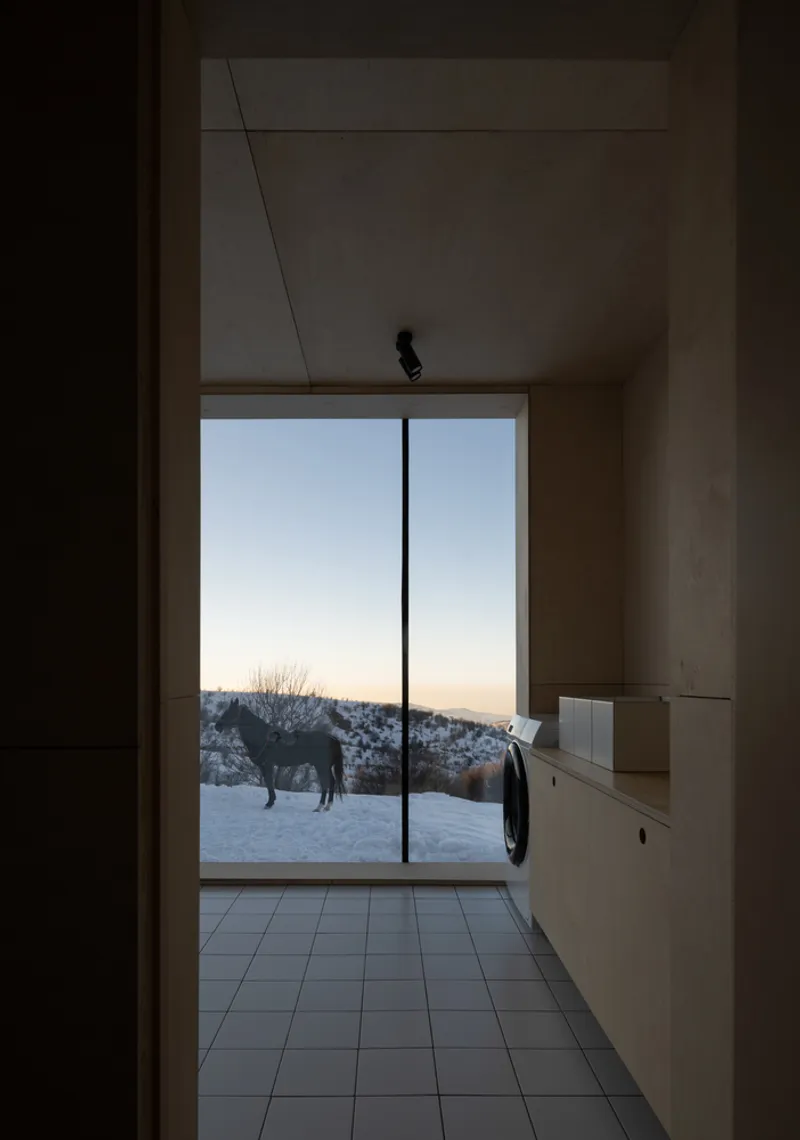
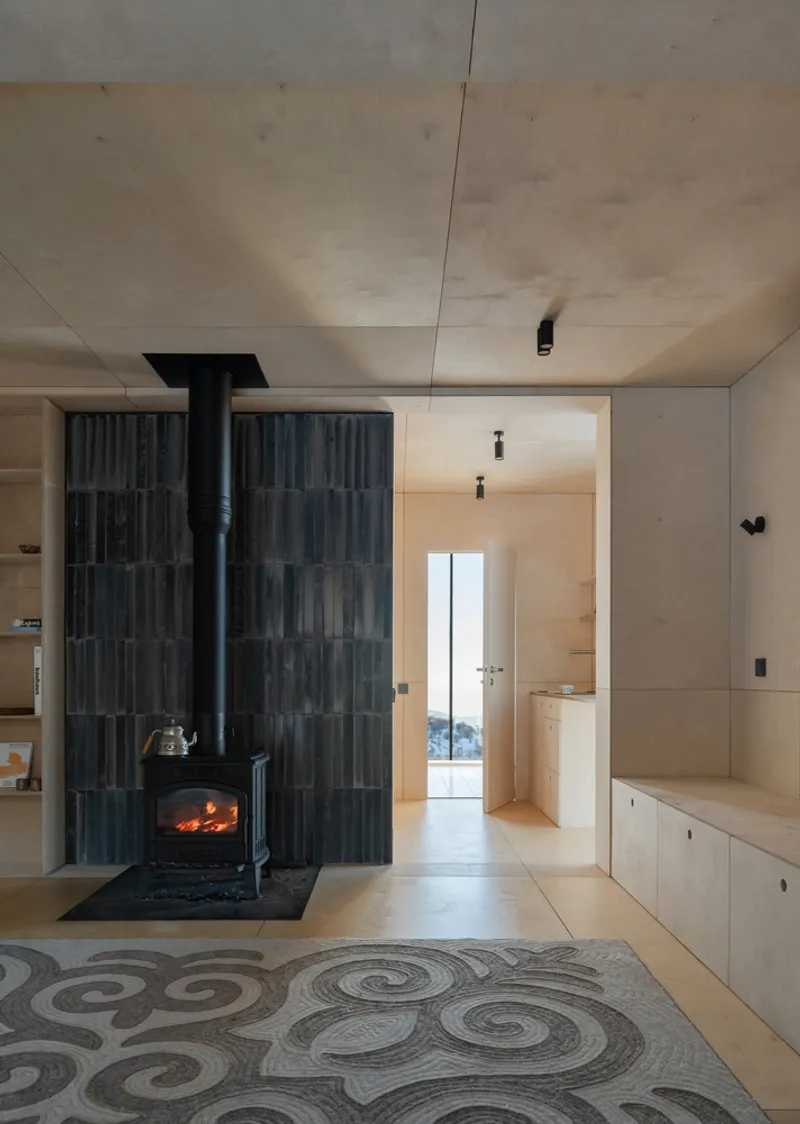
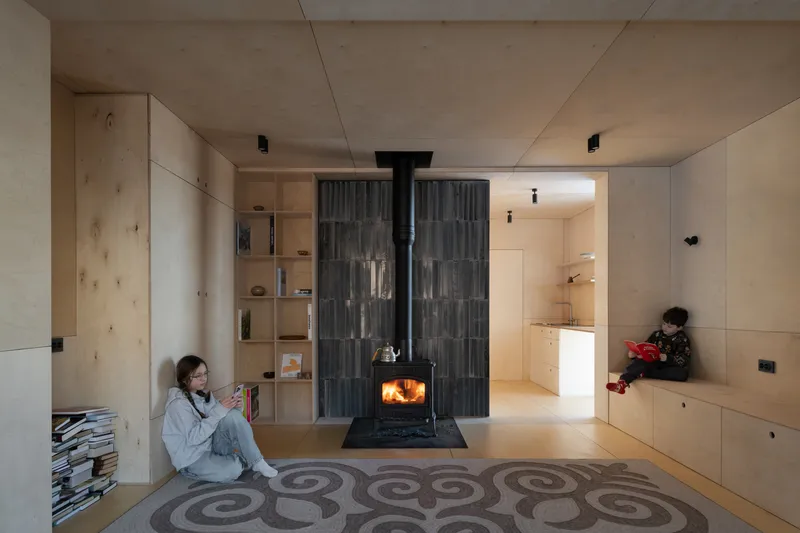
The second cabin functions as a communal space, featuring a kitchenette, a library, and a spacious living room. At the heart of this space sits a wood-burning metal stove, encased in handcrafted emerald and dark-blue tiles. This central gathering point evokes the warmth of traditional Kazakh yurts, where family and friends assemble to share stories over herbal tea served in chiny bowls.
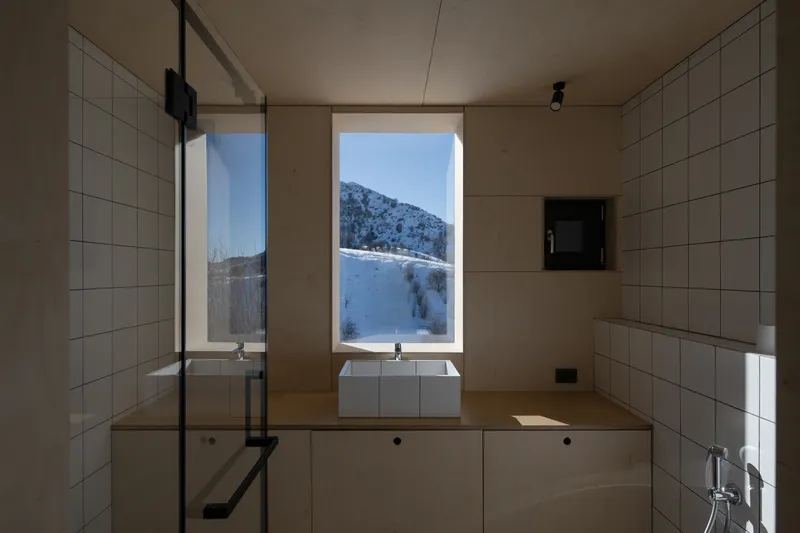
Traditional craftsmanship is woven into the interior, from handmade felt carpets (syrmaq) with intricate ethnic patterns to the textured tiles created by local artisans. Every element reflects a careful balance between modern minimalism and cultural authenticity, ensuring that visitors feel both at home and deeply connected to Kazakh traditions.
A Dialogue Between Tradition and Innovation
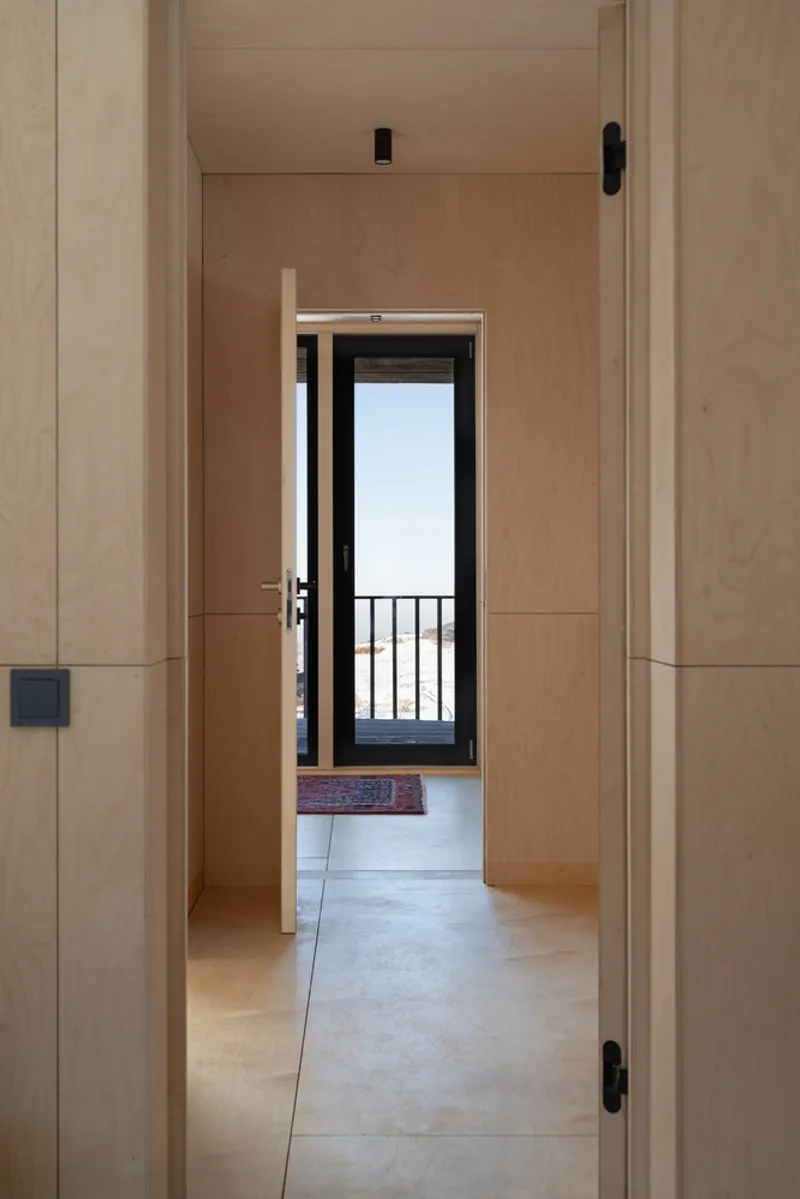
The interiors embrace an austere yet flexible aesthetic, finished in untreated plywood that is both waterproof and fire-resistant. By avoiding unnecessary decoration, the design allows guests to personalize their space, reinforcing the idea that luxury lies in simplicity and adaptability.
Despite their minimalist approach, the cabins are equipped with modern comforts, including hot showers powered by water heaters. This careful balance ensures that guests experience the purity of nature without sacrificing essential amenities.
AUM Cabins stand as a testament to architecture’s ability to bridge past and present, integrating vernacular wisdom with cutting-edge sustainability. In doing so, they redefine the meaning of contemporary retreat living, proving that sustainable cabin architecture can be both functional and poetic.
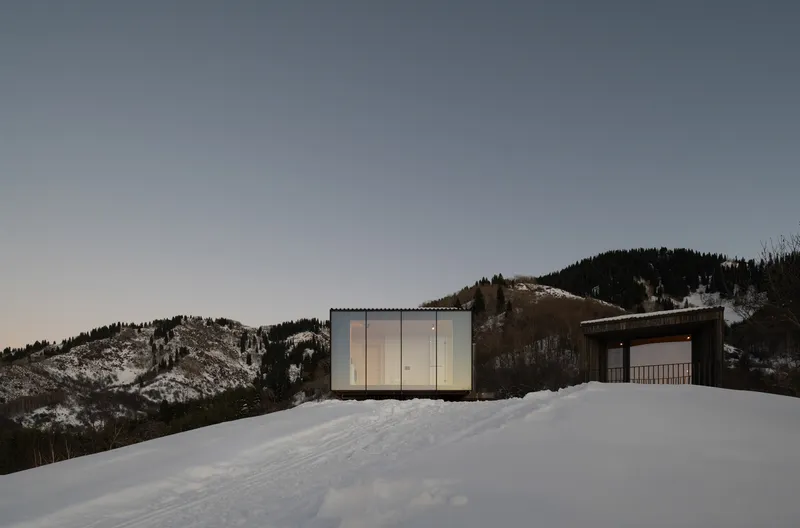
AUM Cabins are more than just a getaway; they are a philosophy in built form, demonstrating that architecture can exist in harmony with nature. Through the reuse of heritage materials, minimal environmental impact, and a celebration of nomadic traditions, these cabins offer a model for sustainable retreat design in the 21st century.
As the world seeks new ways to connect with nature, AUM Cabins prove that the answer lies in looking to the past, embracing local craftsmanship, respecting the land, and designing with sustainability at the core.
All Photographs are works of Ilya Ivanov




Popular Articles
Popular articles from the community


Lunar Spiral: Space Architecture Shaped by the Mathematics of the Universe
Lunar Spiral reimagines space architecture through Fibonacci geometry, lunar regolith, levitating habitats, and self-sustaining Moon living.

The Ocean Hive: Sustainable Architecture for a Self-Sufficient Civilization at Sea
The Ocean Hive imagines sustainable architecture at sea, where modular habitats, algae, wave power and ocean waste sustain a growing colony.

Co-Life: Senior Housing Design That Reconnects Older Adults With the City
Co-Life reimagines senior housing design through healing gardens, shared streets, workshops, and a sustainable community across generations.

Play: Fragments of Their World
Familiar architecture becomes modular playground design, creating safe spaces where displaced children can learn, connect, imagine and play.


Similar Reads
You might also enjoy these articles

Bamboo Housing Challenge 2026: Design Affordable, Sustainable Homes Using Bamboo
An international design competition by Bamboo U and IBUKU inviting architects and designers to reimagine affordable housing using bamboo — with the winning design built full-scale in Bali.

Computational Design & Education: Beegraphy Design Awards Introduces 7th Category (Featuring Jiyun's Innovative Approach)
Dive into Beegraphy’s 7th Design Awards category, where computational design meets education to create immersive, interactive learning tools, inspired by Jiyun’s work.
From Parametric Lighting to Urban Furniture: Join the 2nd Workshop in Beegraphy’s Computational Design Series
Dive into Cutting-Edge Design Techniques and Practical Applications with Industry Experts

Last Call: Unleash Your Architectural Genius in SHAK's Kindergarten Design Competition
Urgent call for architects to join SHAK's kindergarten design competition before the looming deadline


Explore Digital Nomad Housing Competitions
Discover active competitions in this discipline



Challenge to reimagine the Iron Throne


Photograph architecture without architects


Illustrate the lost glory of Angkor Wat - Render Challenge


Design challenge to reuse E-waste
Comments (0)
Please login or sign up to add comments
No comments yet. Be the first to comment!