
AUX Transforms a 19th Century Ghent Steam Brewery into a Home with a Rooftop Garden
A former steam brewery in the heart of a Ghent residential block trades grain stores and brewing kettles for living spaces and open sky.


Tucked inside a residential block on the outskirts of Ghent's city center, the Gentbrugsche Stoombierbrouwerij was founded in 1890, named for the steam-driven machinery that made it a minor marvel of its era. War, economics, and decades of subsequent use as a stone masonry workshop eventually left it abandoned. When AUX bureau voor architectuur en stedenbouw took on its reconversion in 2016, the challenge was clear: how do you make a home out of an industrial relic lodged in the middle of a block, accessible only through a narrow passageway between townhouses?
The answer is not preservation for its own sake, nor wholesale gutting. AUX, led by Wouter Vanheste and Thomas De Roeck, treated the brewery building and its adjacent water tower as a single organism, keeping the industrial skeleton visible while surgically removing just enough to let in light and air. One entire pitched roof was demolished to create a roof garden, satisfying a regulation that demanded one third of the block's built footprint be given over to green space. The result is a 260 square meter home that feels like an excavation: layers of brick, oak beam, and cast iron gradually revealed and inhabited.
Arriving Through the Block
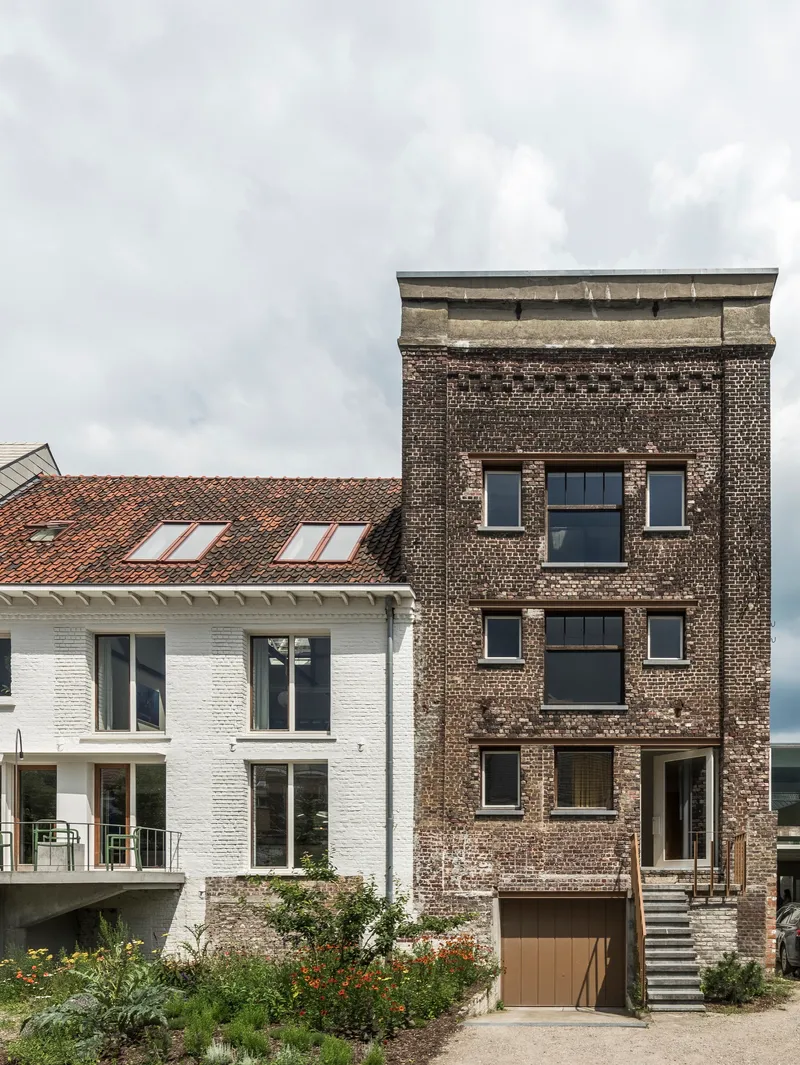
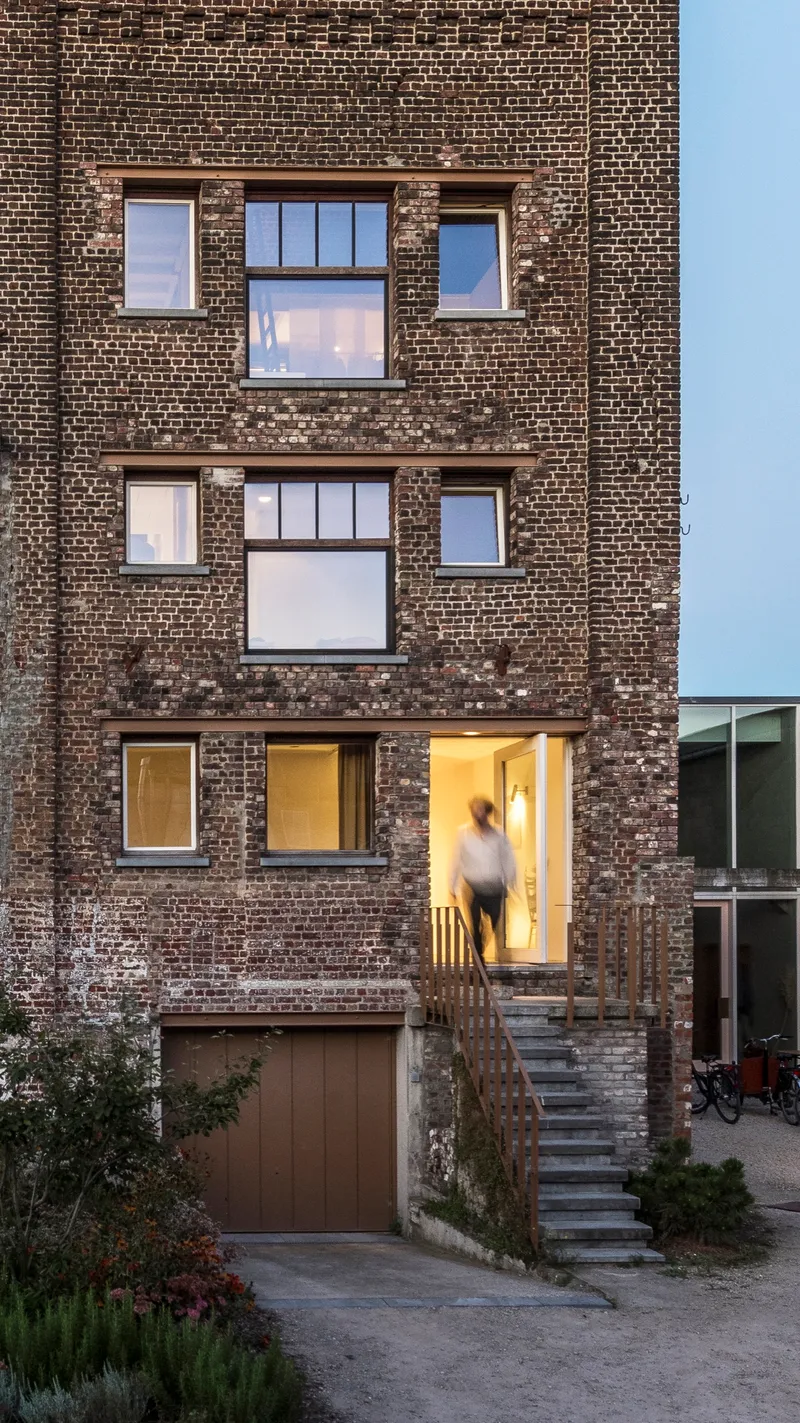
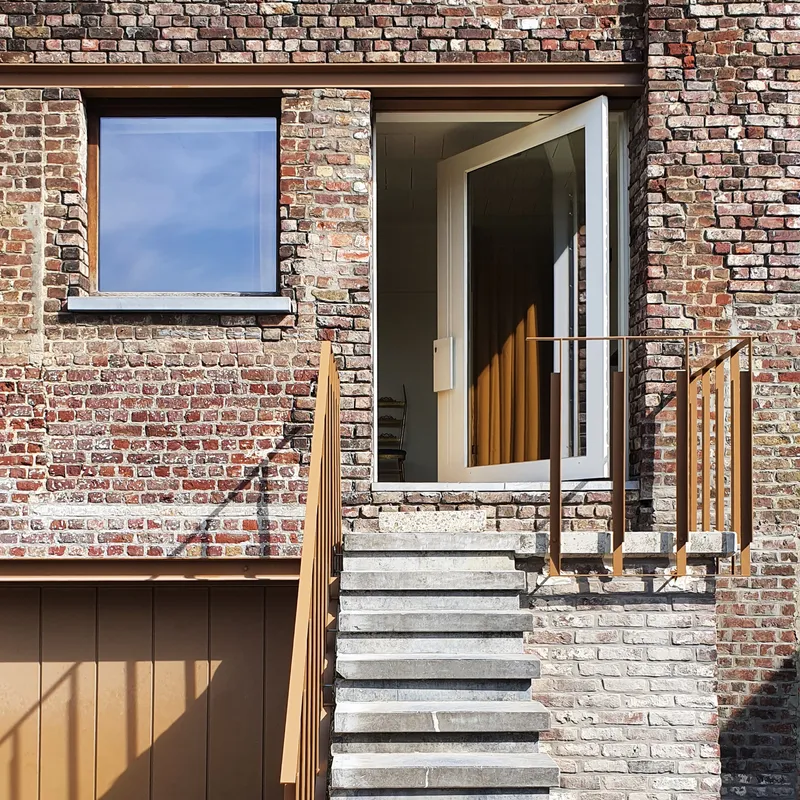
The approach tells you almost everything. You slip between townhouses, and there it is: a dark brick water tower standing seven meters square, attached to a white-painted volume capped with terracotta tiles. At dusk, the illuminated entry doorway at the top of a stone stair reads like a lantern pressed into the old wall. A timber handrail traces the ascent alongside weathered brick thick with moss, and the threshold between exterior and interior feels genuinely liminal. You are entering a building that has been many things before you.
The deliberate modesty of this arrival sequence is important. There is no grand facade, no public gesture. The brewery exists for the people who live and work inside the block, and the architecture does not pretend otherwise. That restraint gives the interior surprises their full weight.
Living Under the Trusses
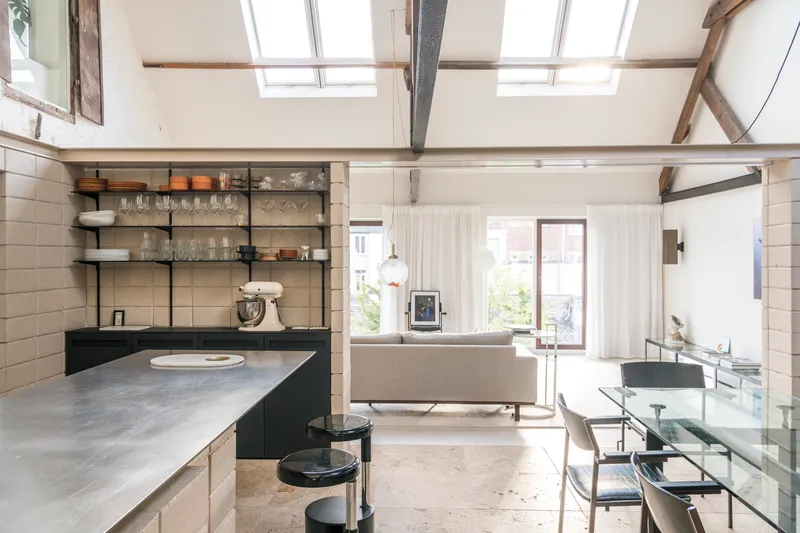
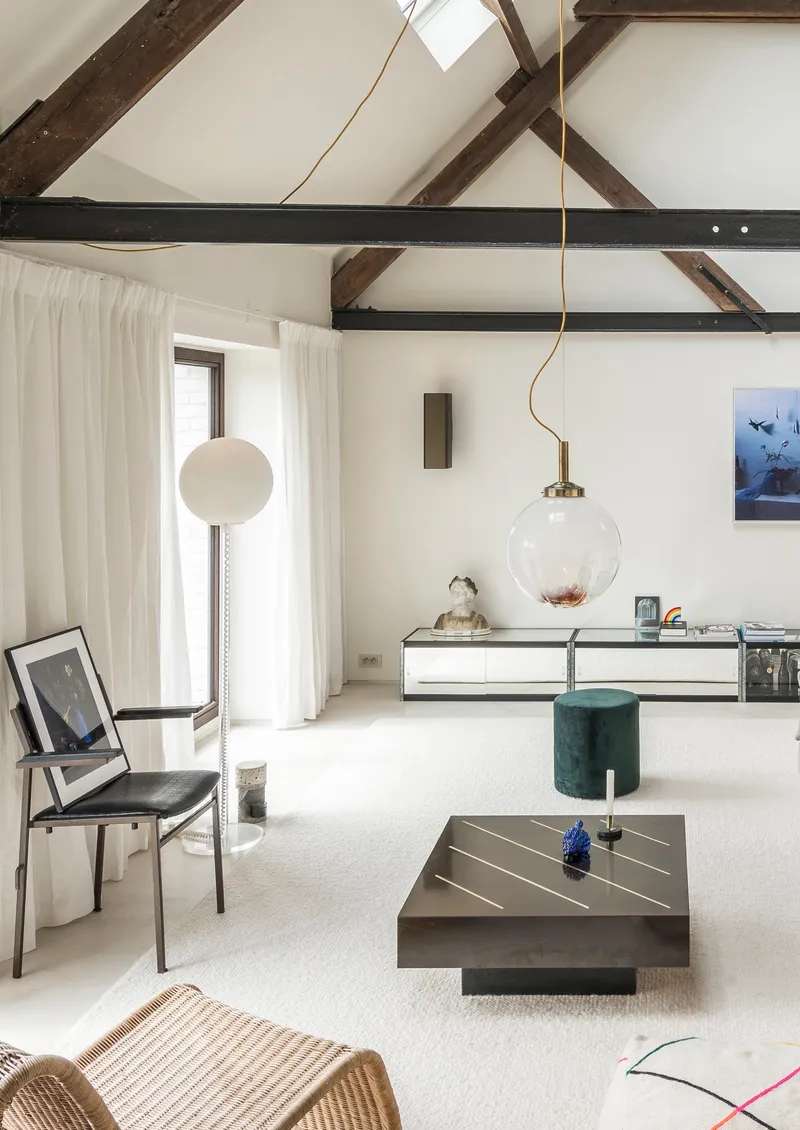
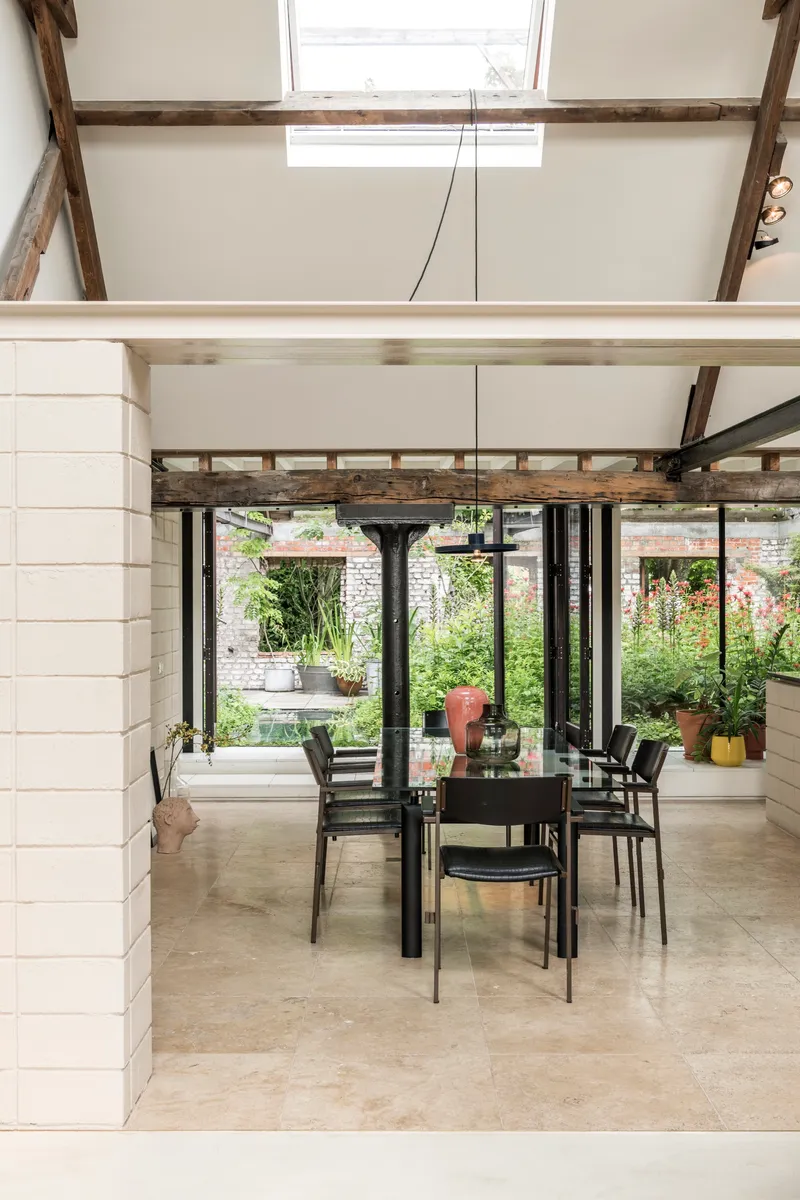
AUX placed living spaces on the top floor to capture as much daylight as possible, a pragmatic move in a building where the lowest level sits a full meter below the courtyard and the middle floor was historically given to kettles and malt rooms. The result is a sequence of rooms where heavy oak trusses and steel connectors form a skeletal canopy overhead, punctuated by generous skylights. A spherical pendant light hangs casually among the beams, neither competing with them nor apologizing for being contemporary.
The dining area, pressed against floor-to-ceiling glazing overlooking the garden, collapses the distance between the most industrial part of the structure and the most domestic act. You eat dinner beneath a framework that once stored grain and hops. The timber is real, the steel is real, and nothing has been softened for comfort. Comfort comes from the light.
Brick, Tile, and the Kitchen as Object
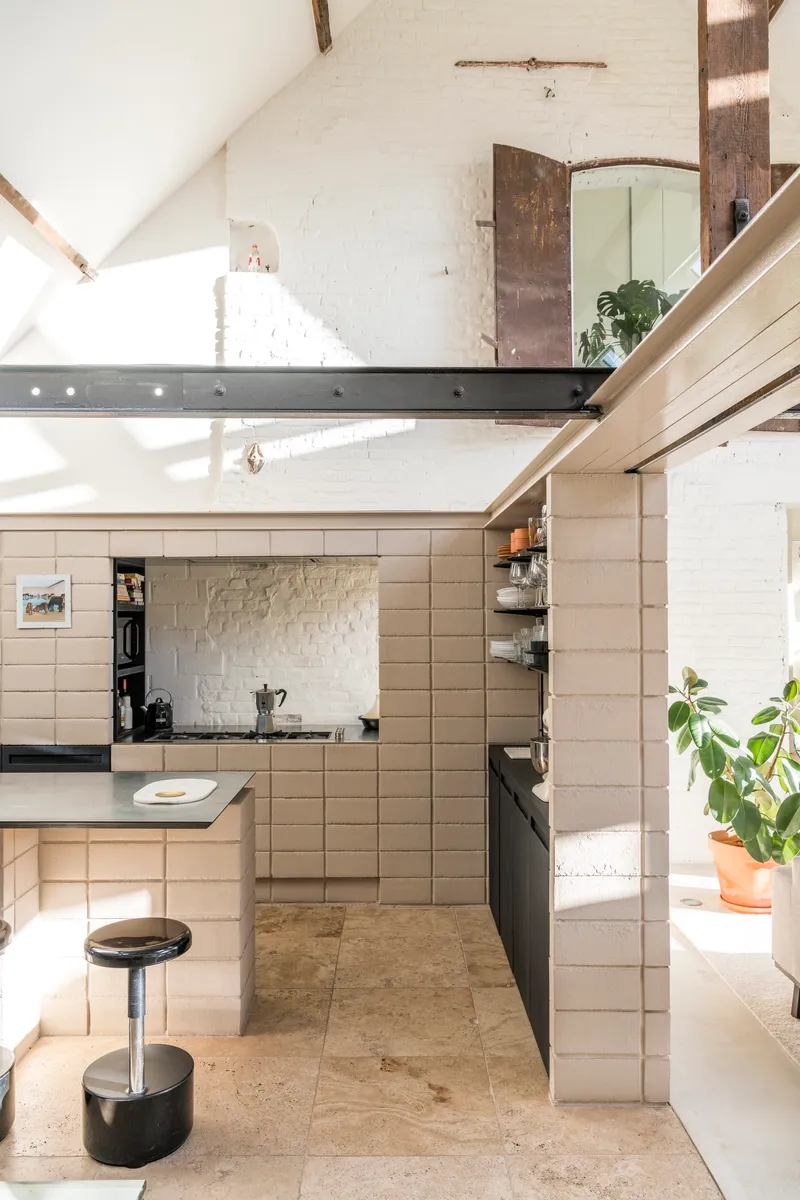
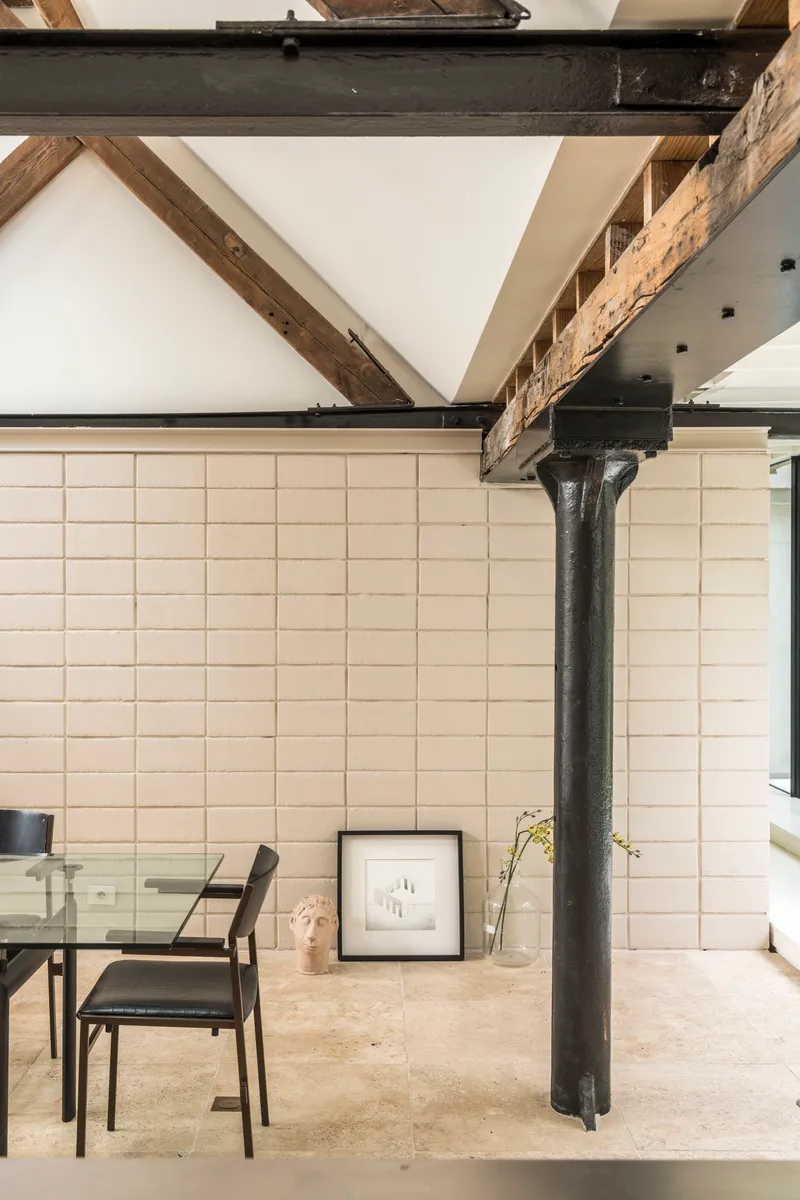
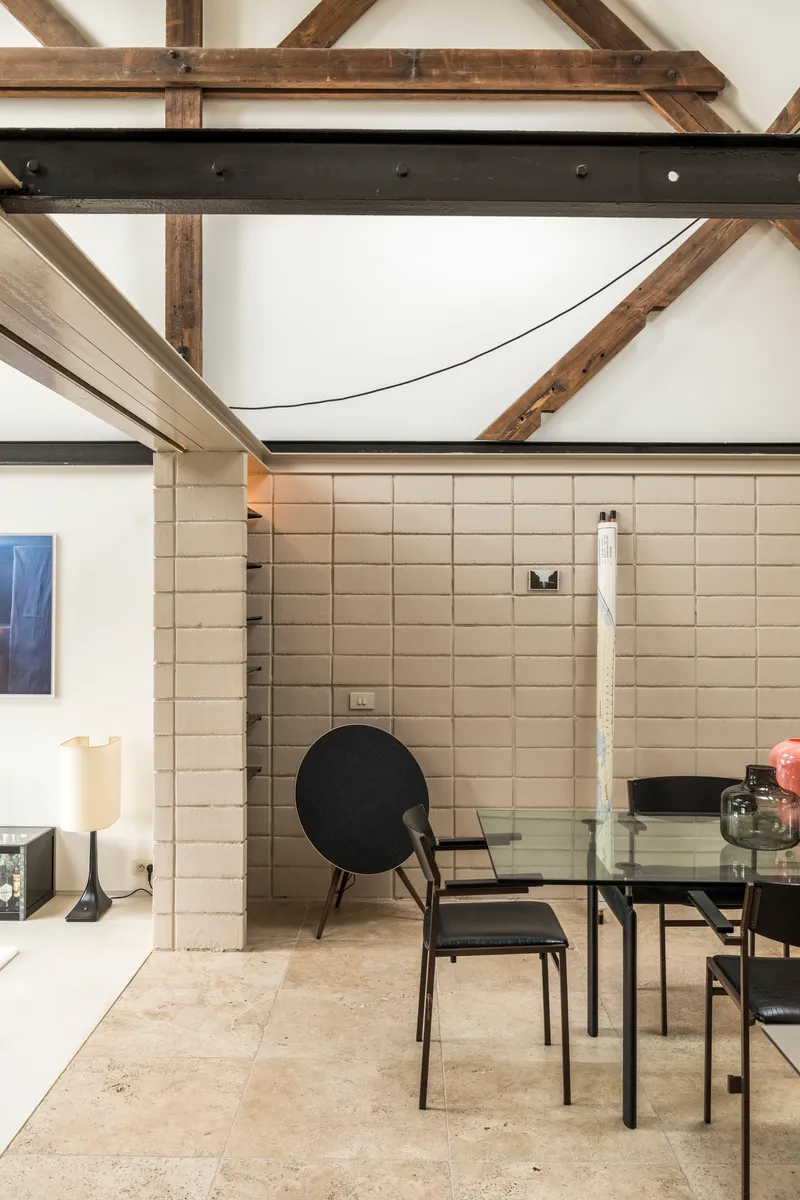
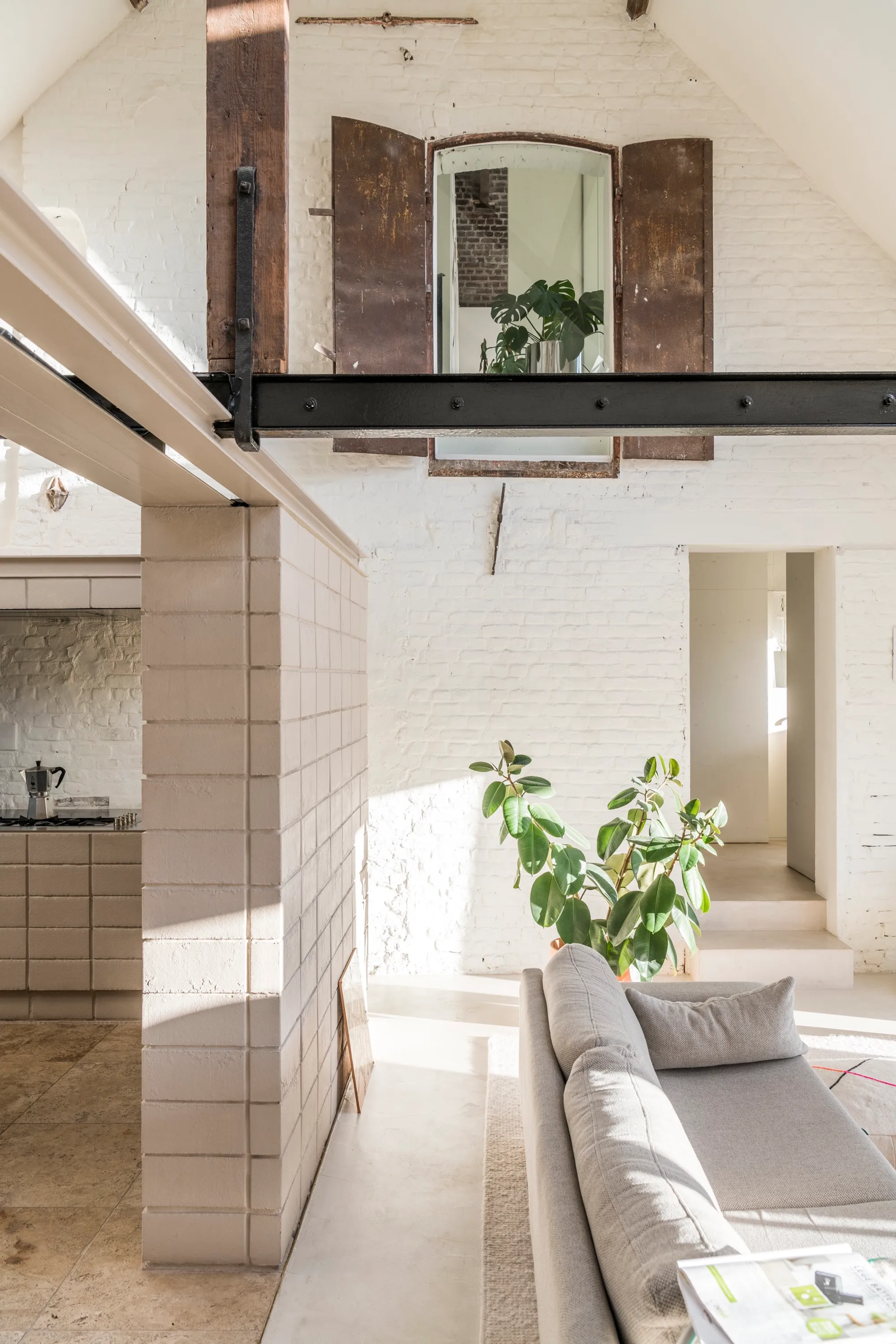
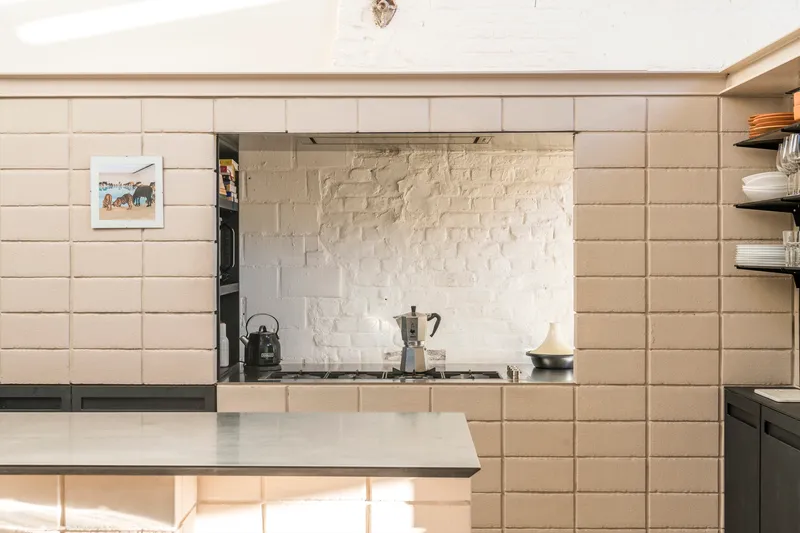
The kitchen island is one of the project's most deliberate gestures: a volume built in stacked bond tile that integrates cooking functions into niches, treating the kitchen not as cabinetry but as a small building within the building. Cream rectangular tiles wrap the surfaces, echoing the whitewashed brick alcoves behind them. A single cast iron column, original to the brewery, stands alongside steel beams in full view, doing its structural work without commentary.
AUX's rule was to accentuate the industrial character in at least one surface or element per space. Here, it is the column and the raw timber above. Elsewhere it may be an exposed vault or a steel beam. The discipline keeps the project from becoming either a museum piece or a generic loft conversion.
The Tower: Four Floors in Seven Meters
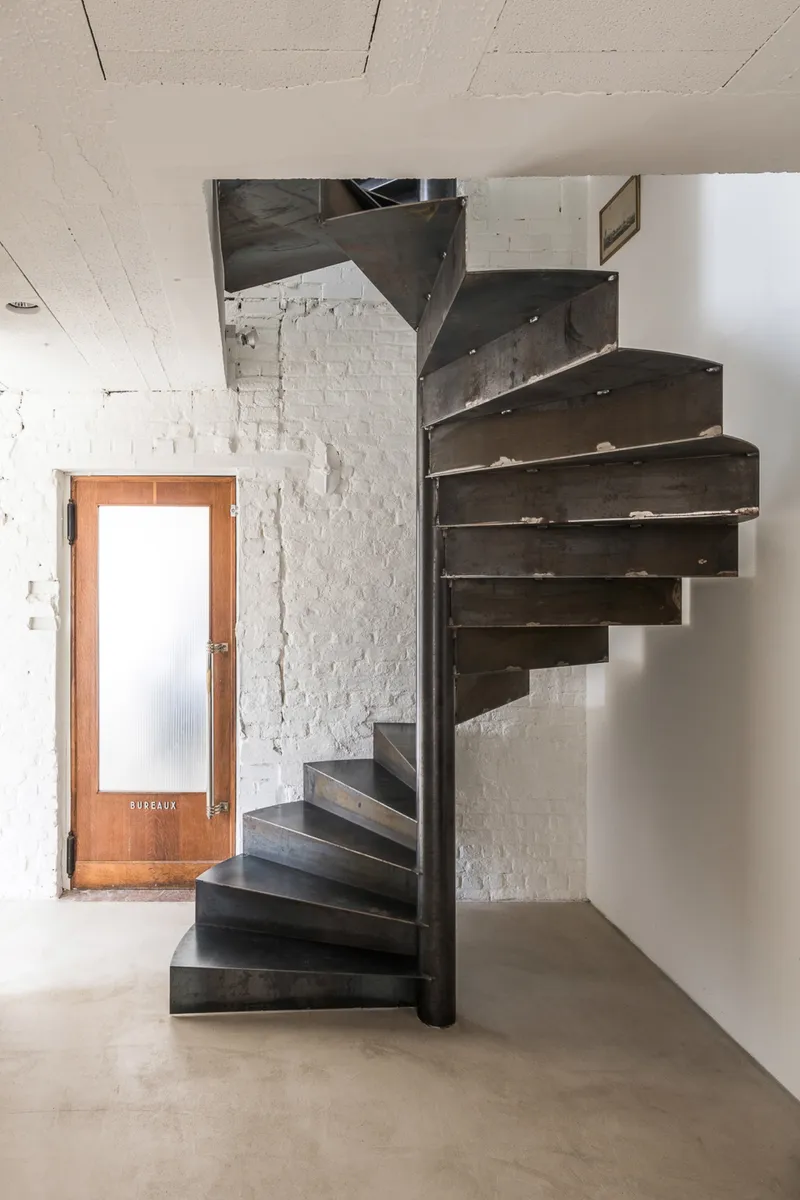
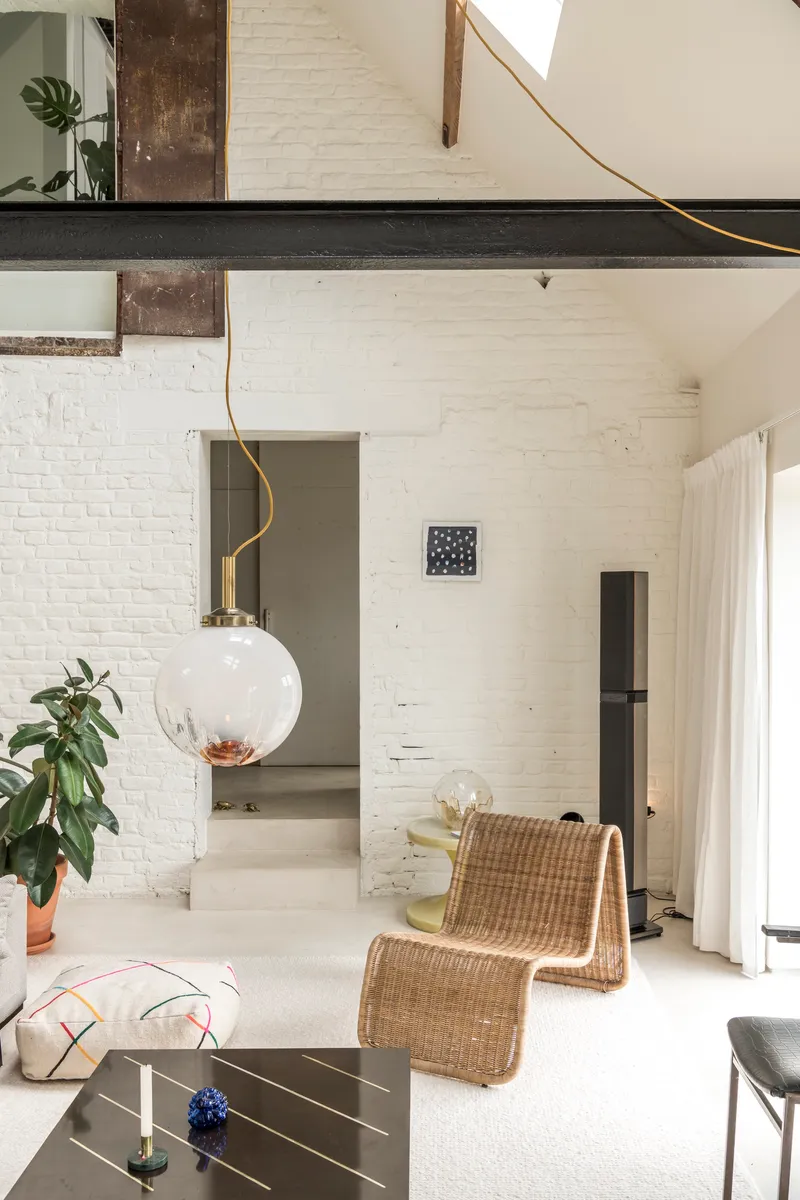
The water tower, a seven-by-seven-meter footprint, now holds four new floors connected by a black steel spiral staircase. Insulated from the inside to preserve the exterior's historical brick, the tower's interiors are stark and vertical. White walls and polished concrete floors amplify the daylight that enters through the original openings. A double-height living space with exposed white brick and a dark structural beam crossing overhead gives the volume its drama.
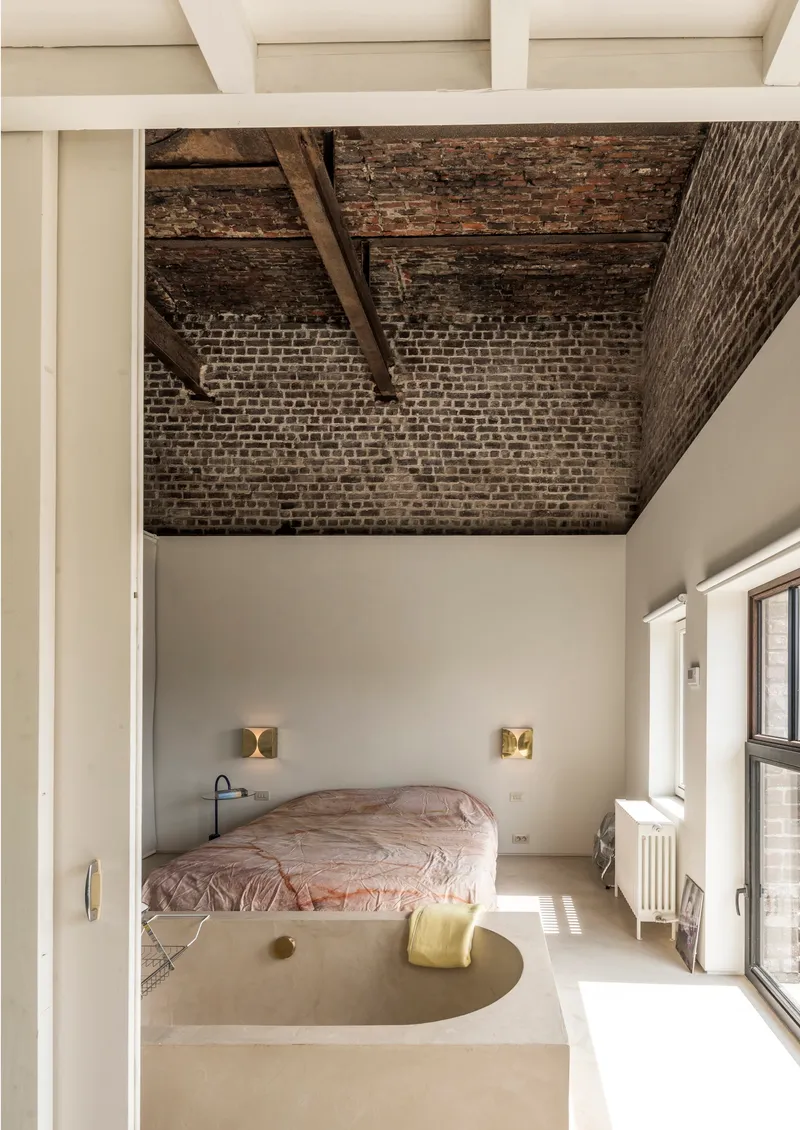
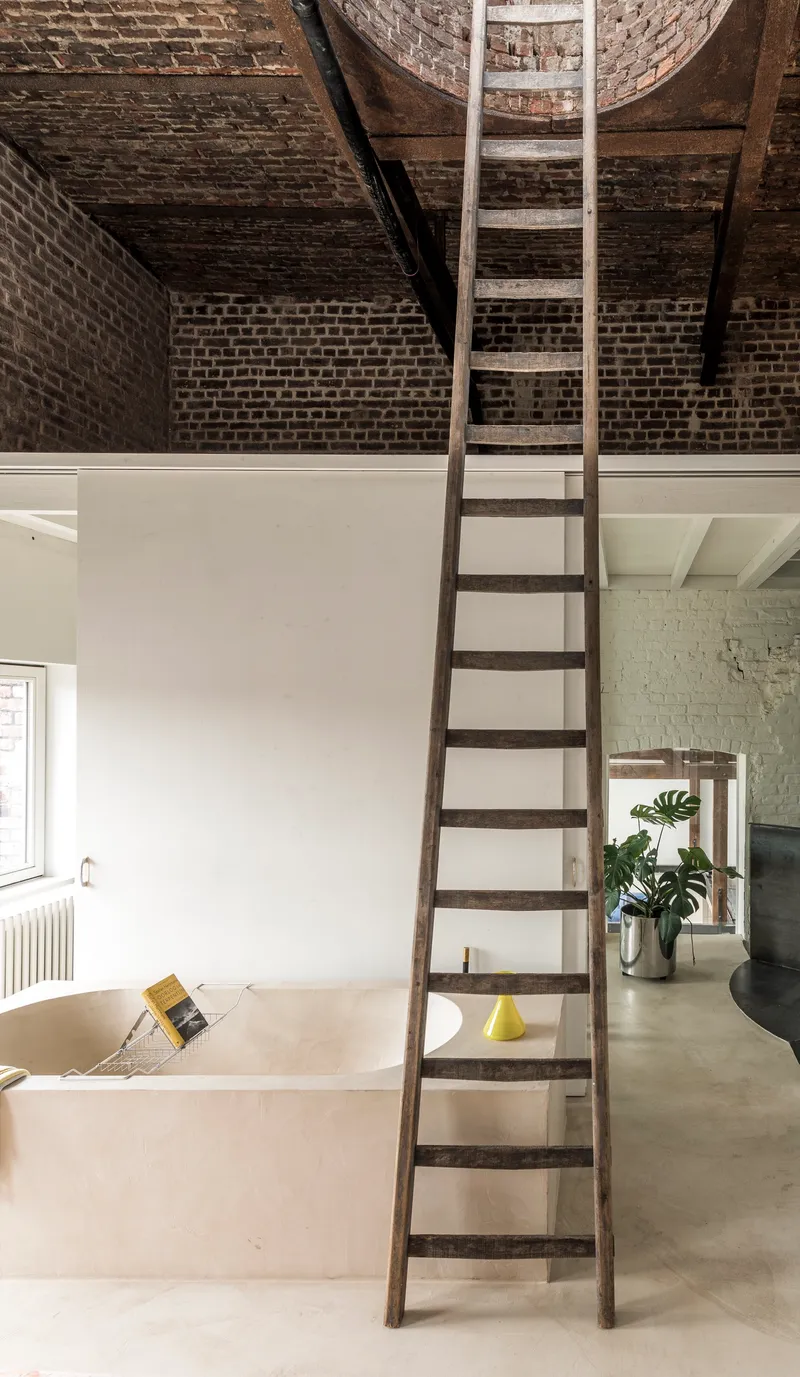
At the top, a bedroom sits beneath an exposed brick ceiling vault, the bed raised on a platform that reads like a plinth. The former service hatch between the tower and the brewery creates an unexpected connection: a line of sight between the glass shower enclosure and the living area. It is the kind of spatial joke that only comes from working with an existing building's idiosyncrasies rather than against them.
Intimate Rooms, Honest Materials
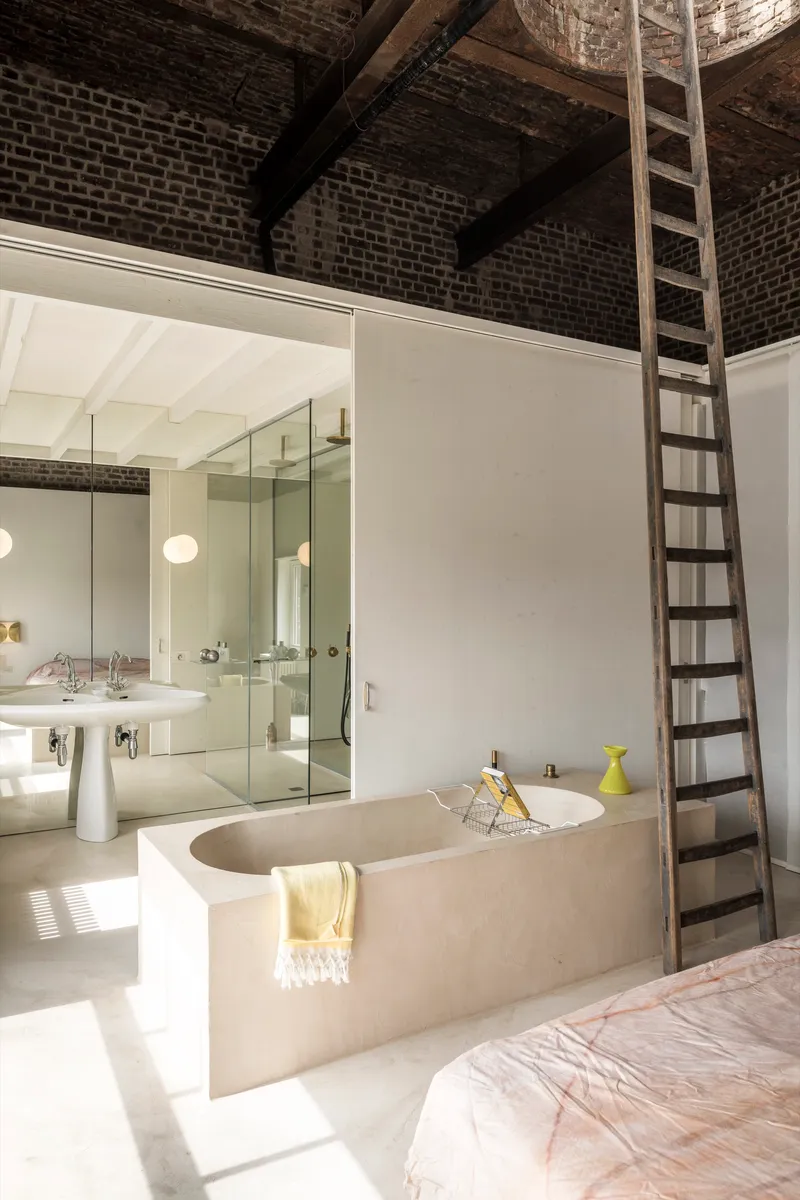
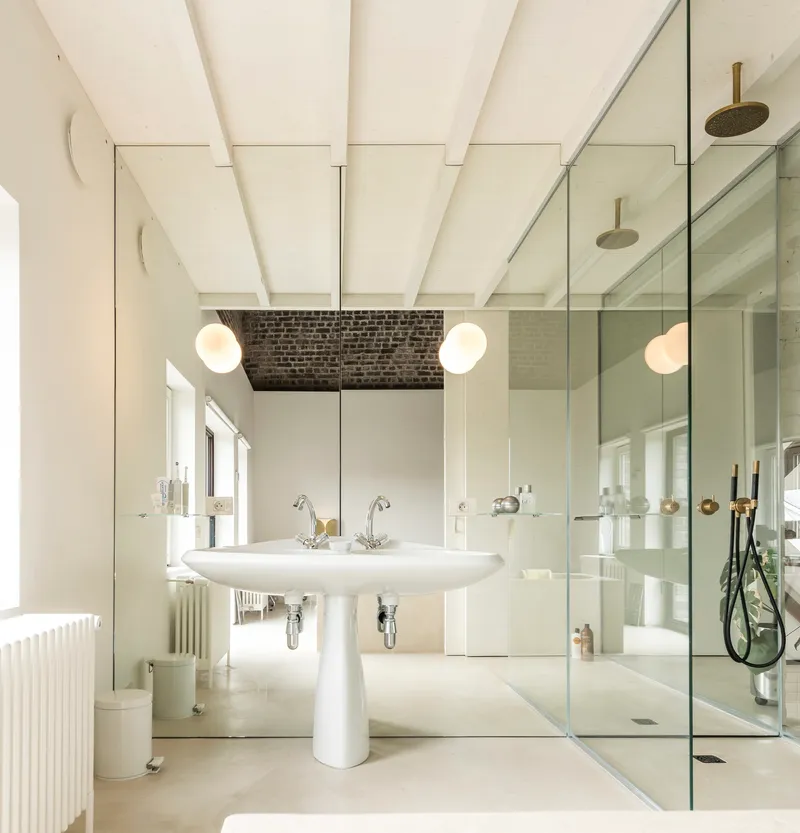
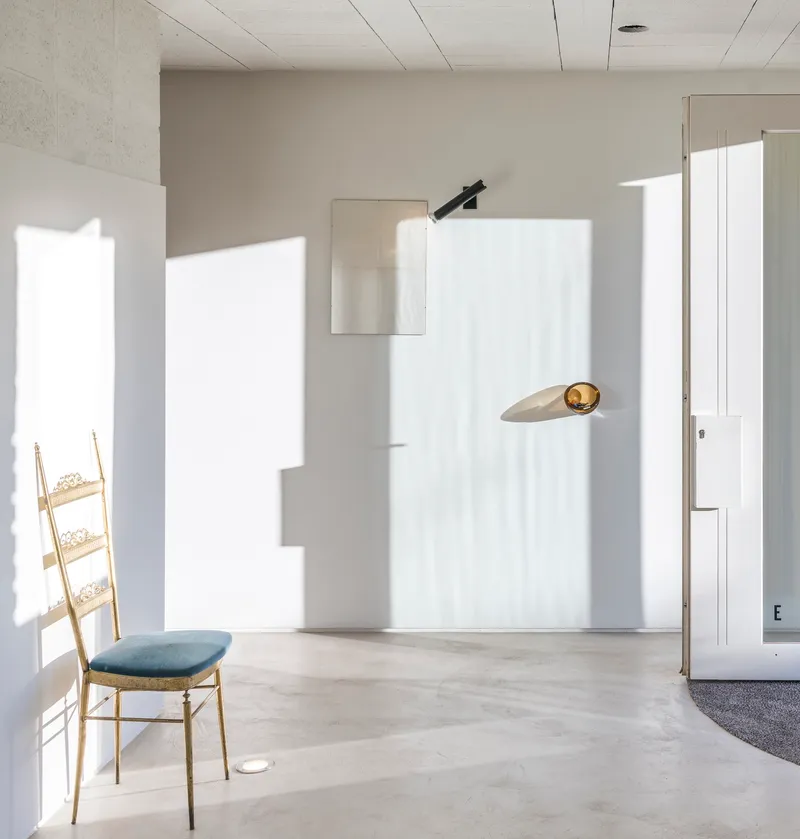
The bathrooms and smaller rooms reveal the project's material palette at its most concentrated. A sunken concrete tub sits beside a glass shower, with a narrow ladder ascending into the brick vault above. Painted wood beam ceilings, pale plywood surfaces, and concrete floors define the secondary spaces. Nothing is precious. A steel ladder leans against a white partition wall; sharp sunlight slices across plaster. These are rooms that trust their bones.
What makes these interiors convincing is their refusal to decorate. The materials do the work. Concrete, brick, timber, and steel are all left legible, and the color palette stays close to what the building already was: earth, cream, white, rust.
A Garden Where the Roof Was
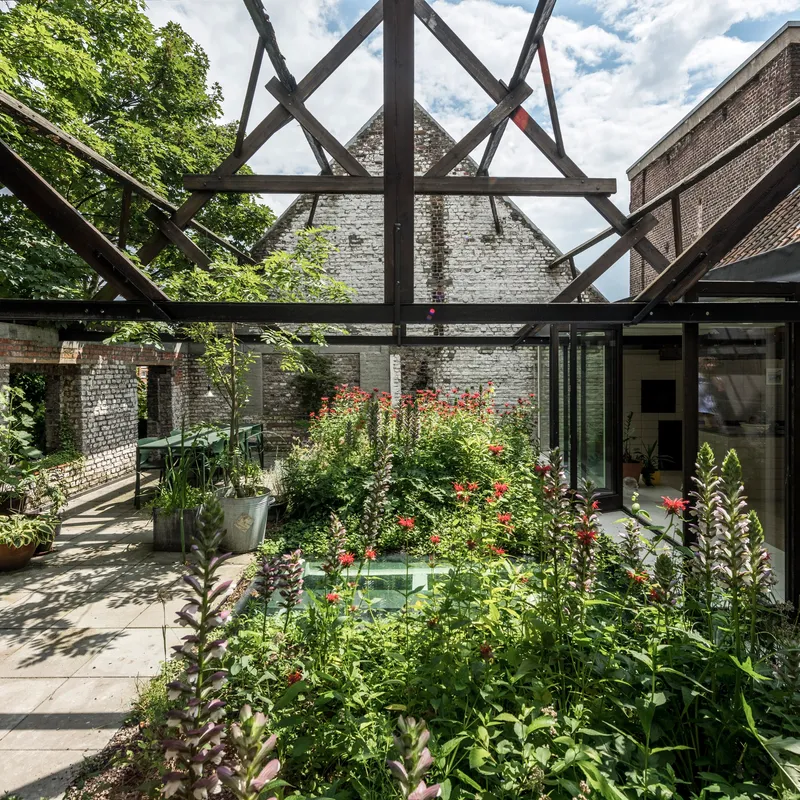
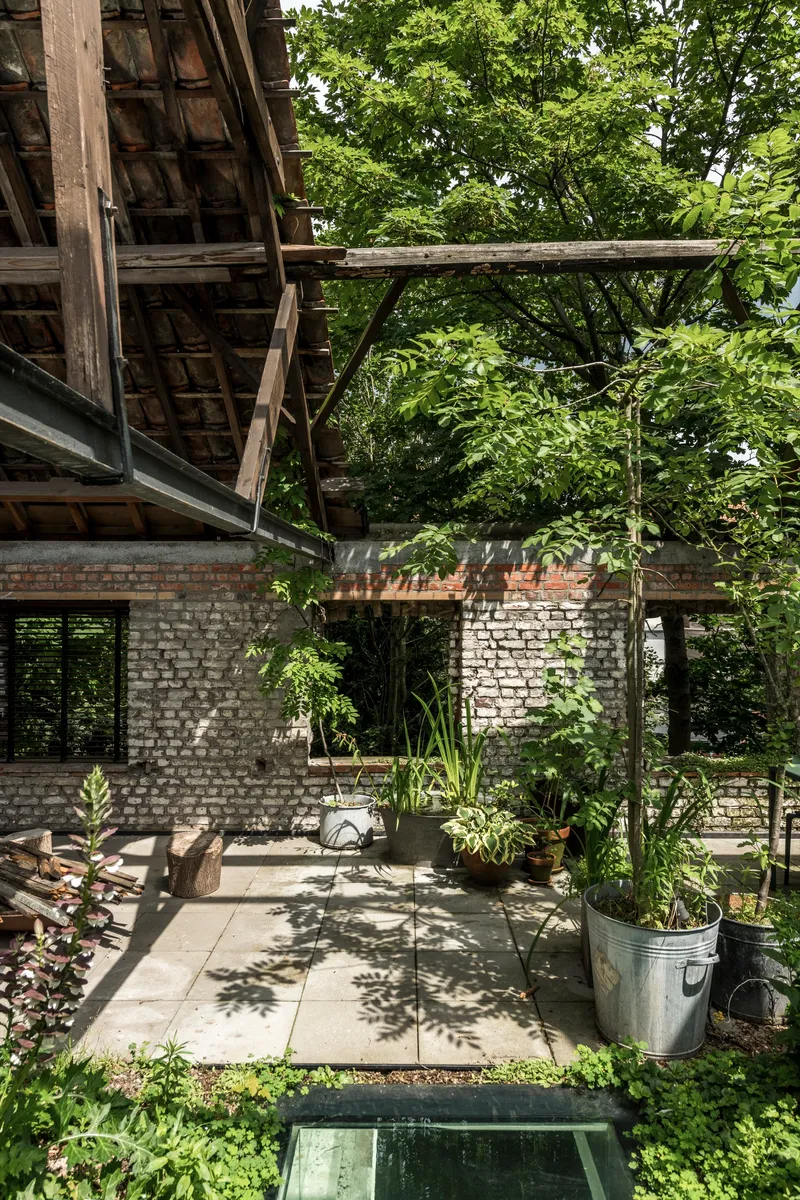
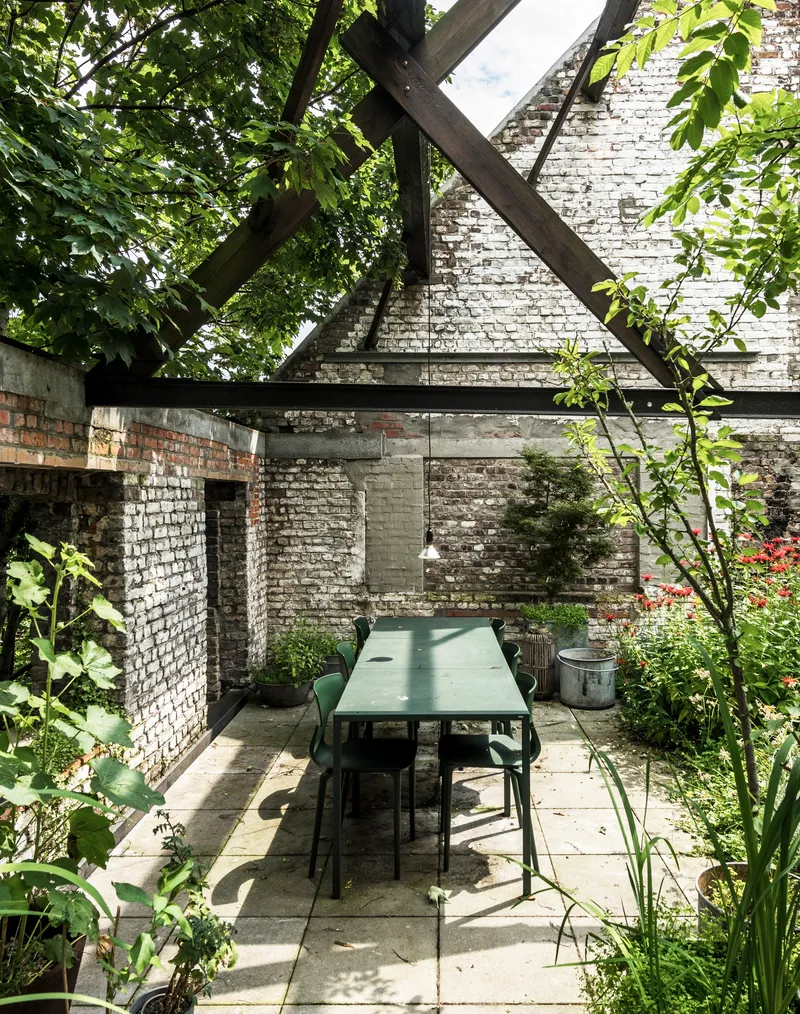
Urban regulations required that one third of the building footprint within the block be demolished and returned to garden. AUX's response was surgical: remove only the back pitched roof, half the footprint, and convert it to a roof garden. The original exterior walls of the volume were left standing, creating an outdoor room with real enclosure and intimacy despite sitting in the middle of a large block. Part of the old roof structure remains, forming a covered terrace. A steel-framed pergola fills with climbing plants.
The alternative, a ground-level garden sunk a meter below grade and starved of sunlight, would have been a concession. The roof garden is a genuine room, one that borrows the views through original window openings toward surrounding houses and gardens. A glass path across the back of the terrace channels daylight down to the architecture office below, turning the garden into infrastructure.
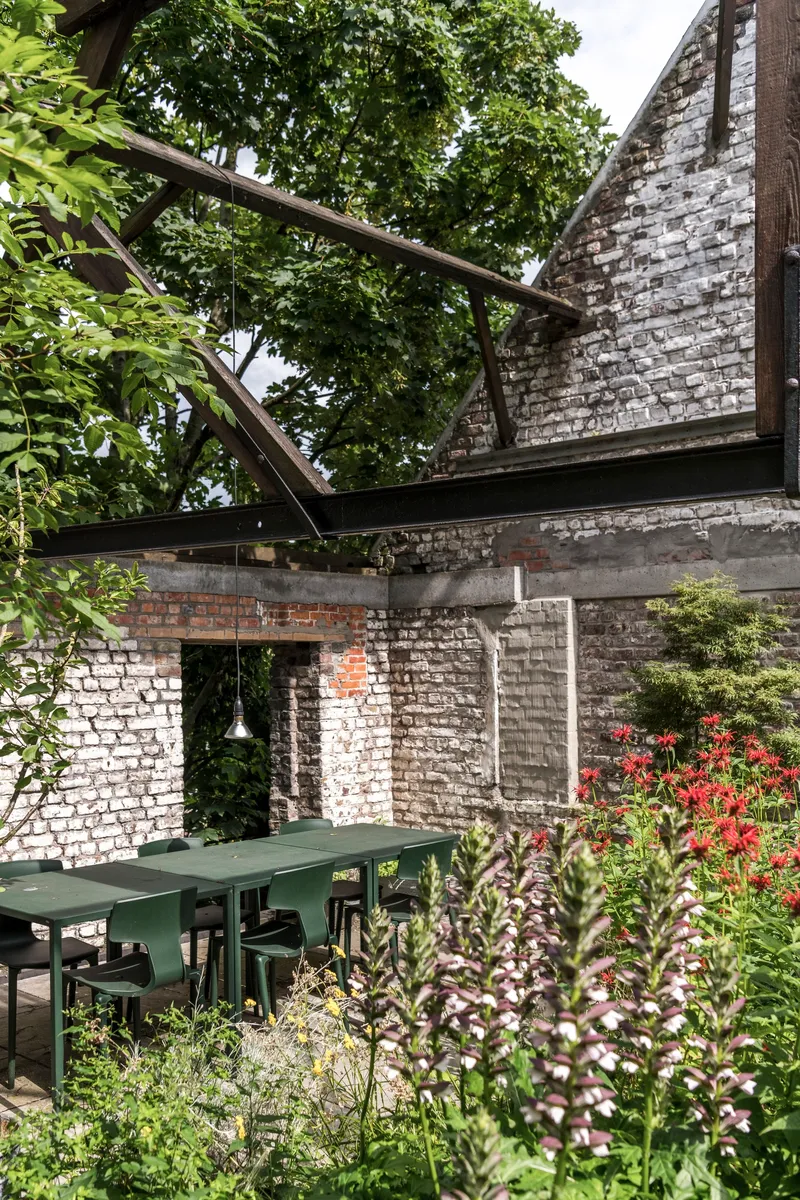
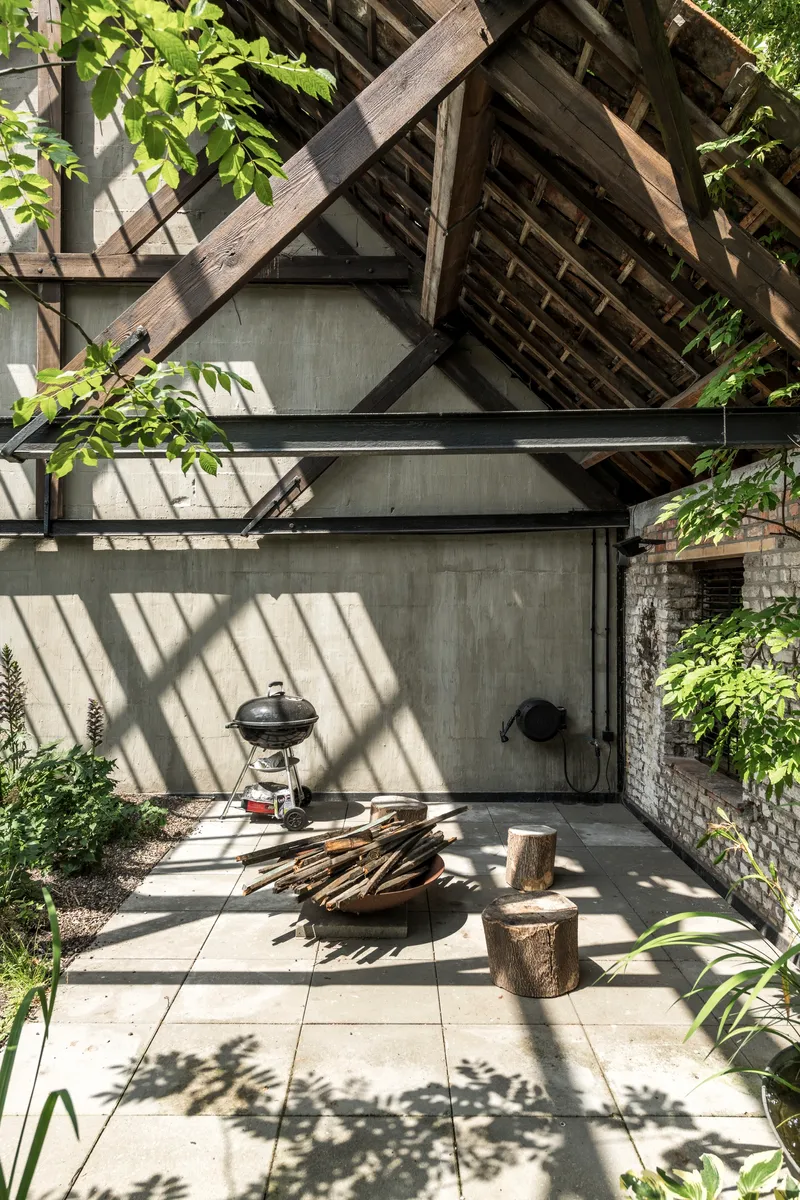
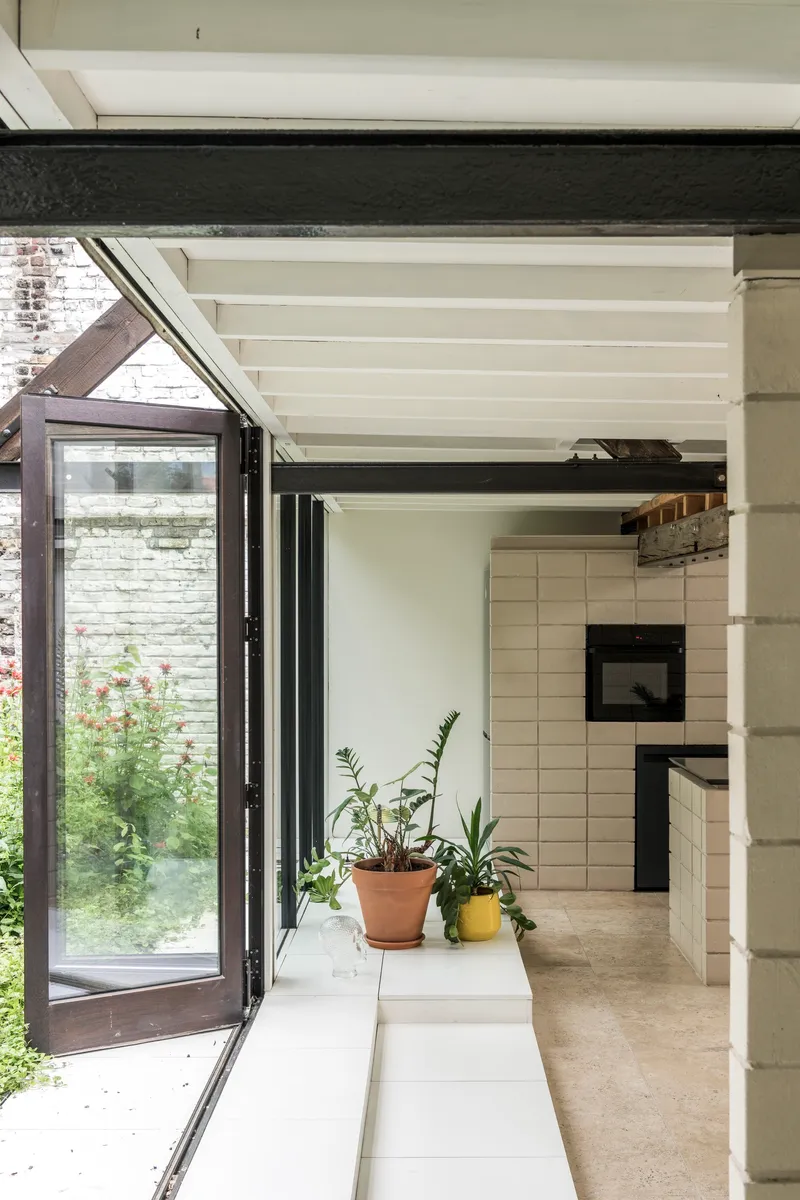
The garden's furnishing is casual: a charcoal grill, firewood stacked beneath angled timber, a steel dining table among flowering plants. Folding glass doors open the interior directly onto pots and paving. It is a backyard that happens to be on a rooftop, which is exactly the kind of impossible domesticity that makes the project work.
Work and Community Within the Block
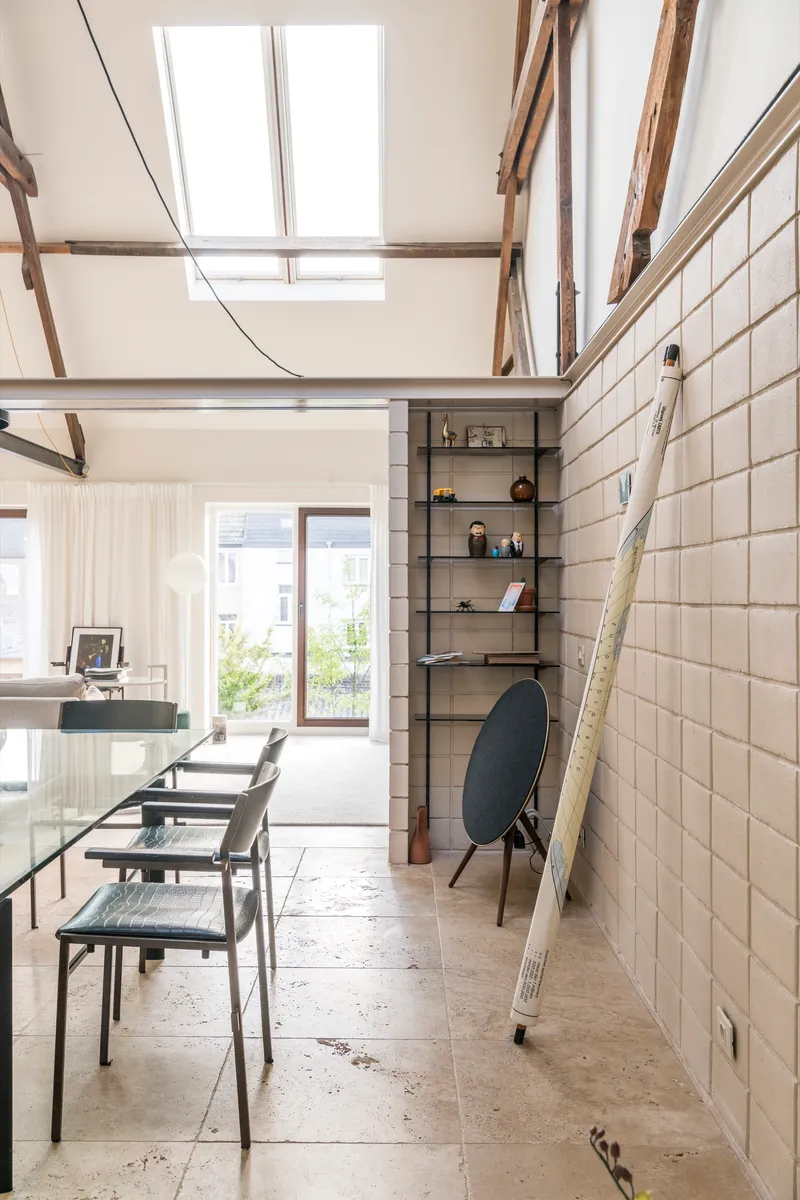
The broader site, 2,700 square meters in total, has been evolving since 2010, when the director's house and four warehouses were first converted to single-family homes. The water tower and brewery, sold in 2016, are the latest chapter. The block now houses a carpenter, a steel worker, and an architecture firm alongside residential uses. Other buildings serve as storage, garages, and workshops for both residents and neighbors.
The mix of functions is not a marketing narrative. It is what these blocks were originally: zones where housing, craft, and small industry coexisted. AUX's project restores that grain, quietly, without making a manifesto out of it.
Plans and Drawings
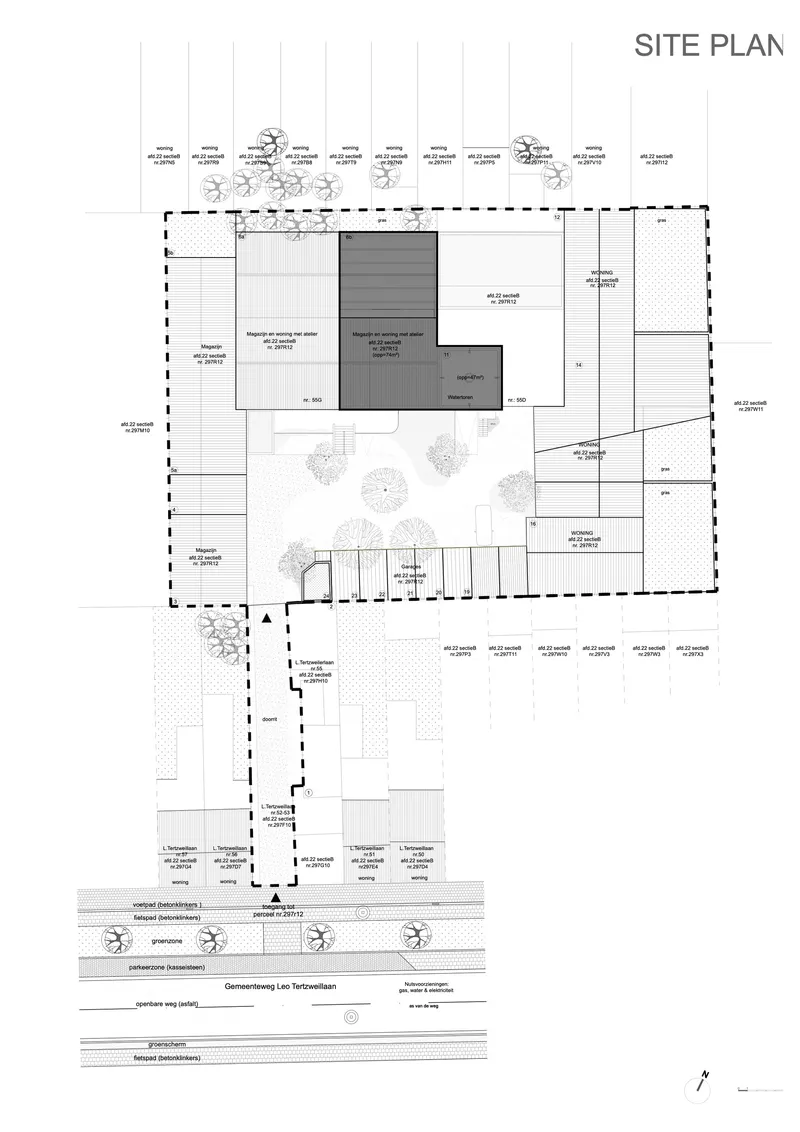
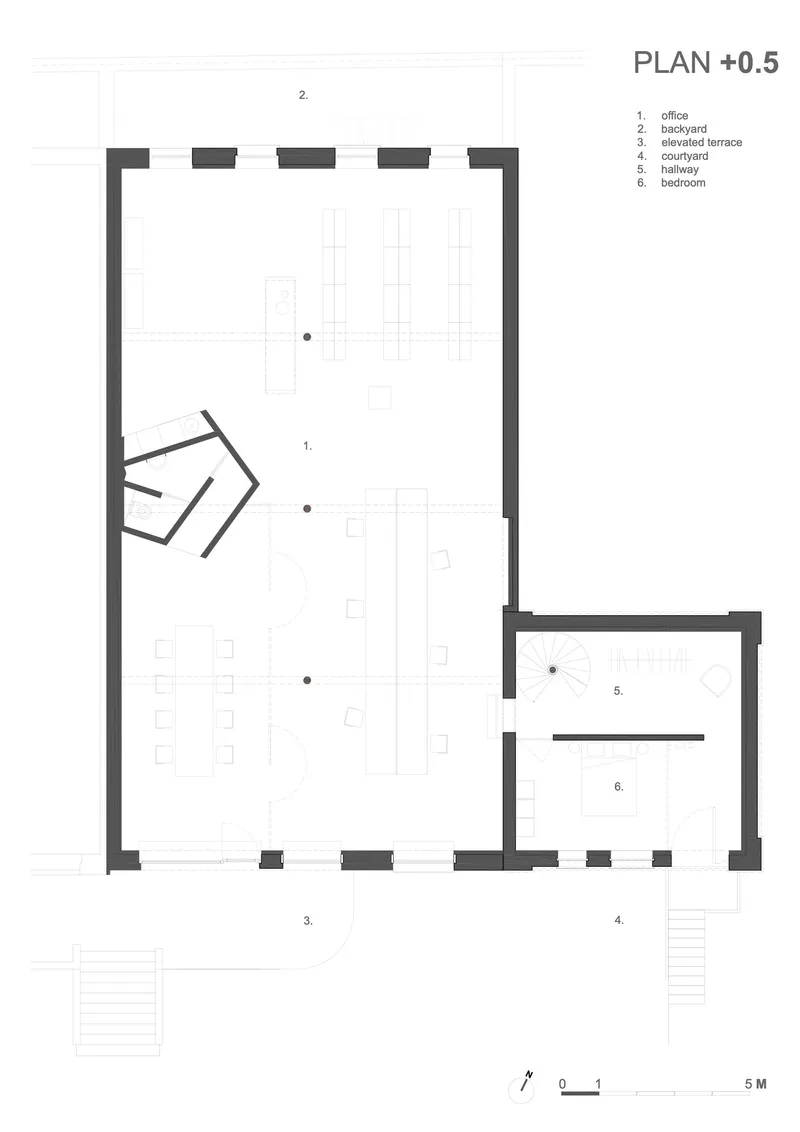
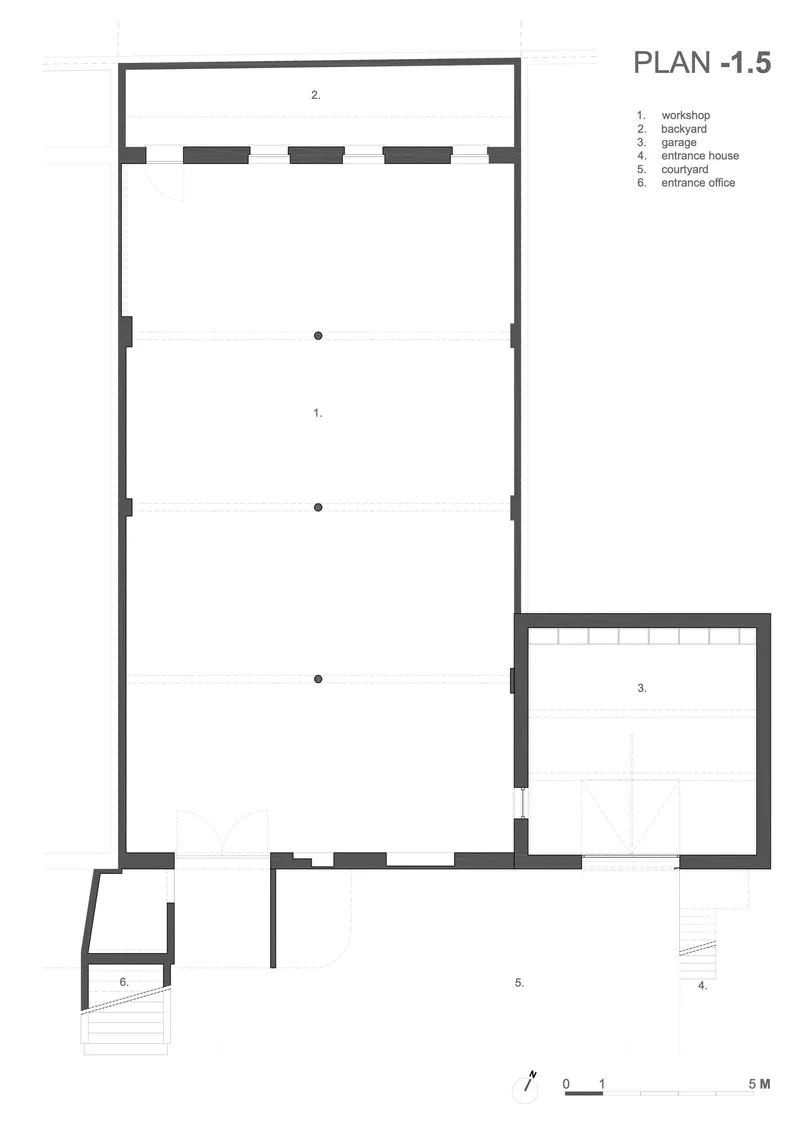
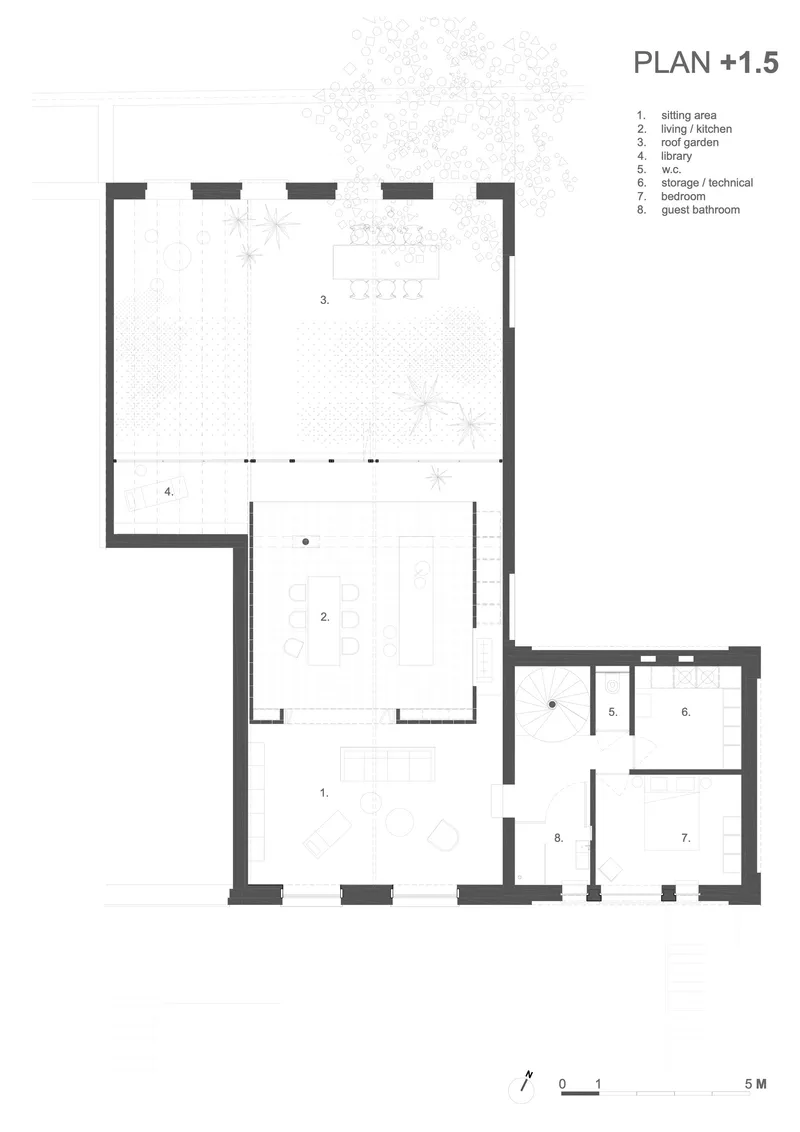
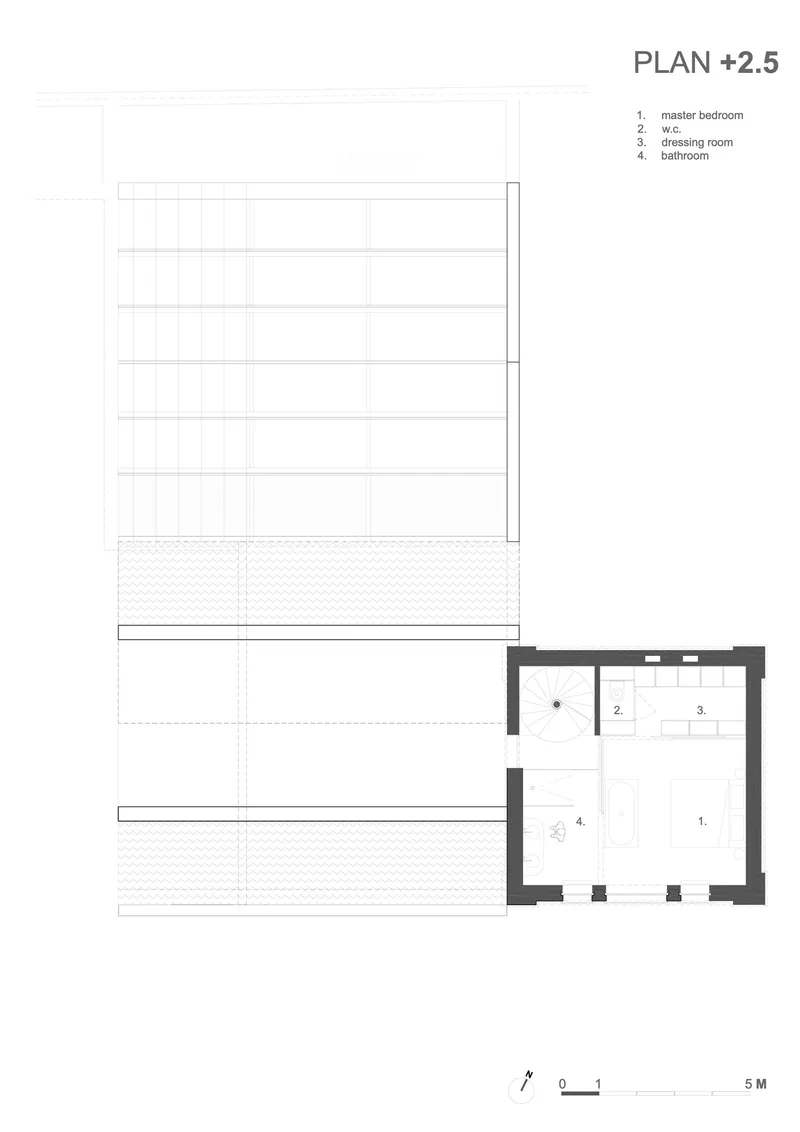
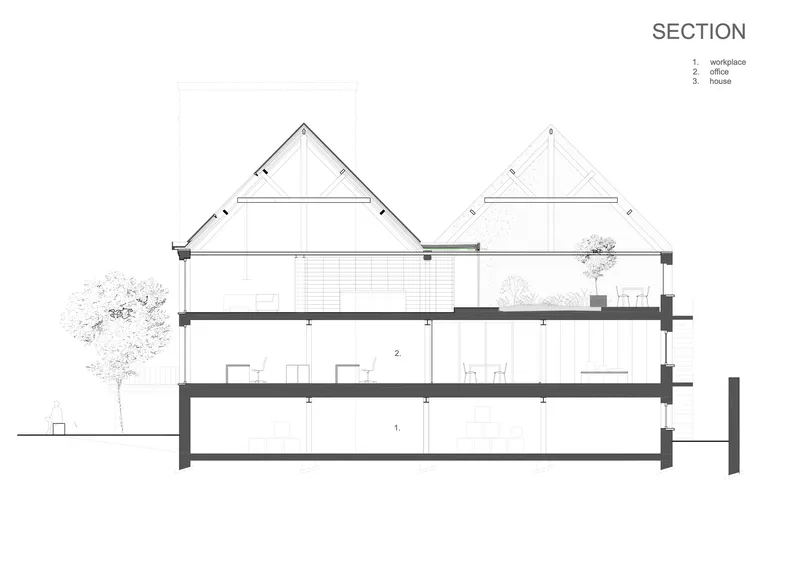
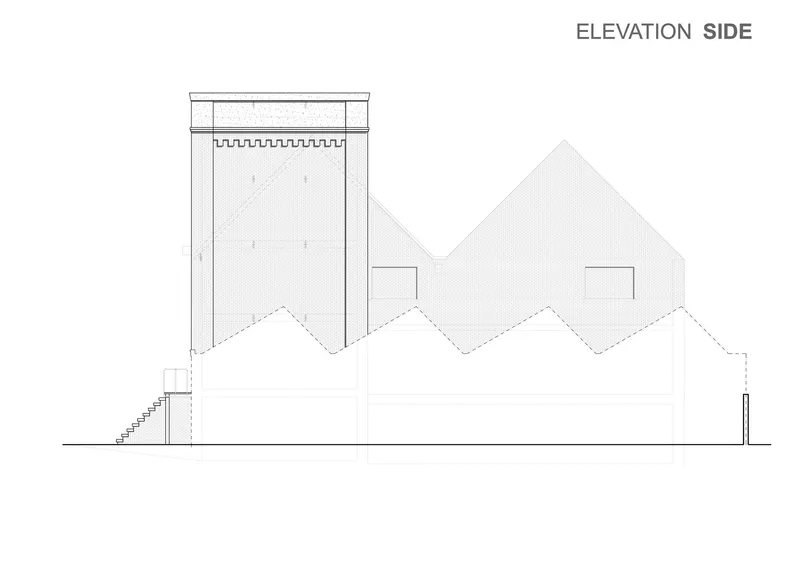
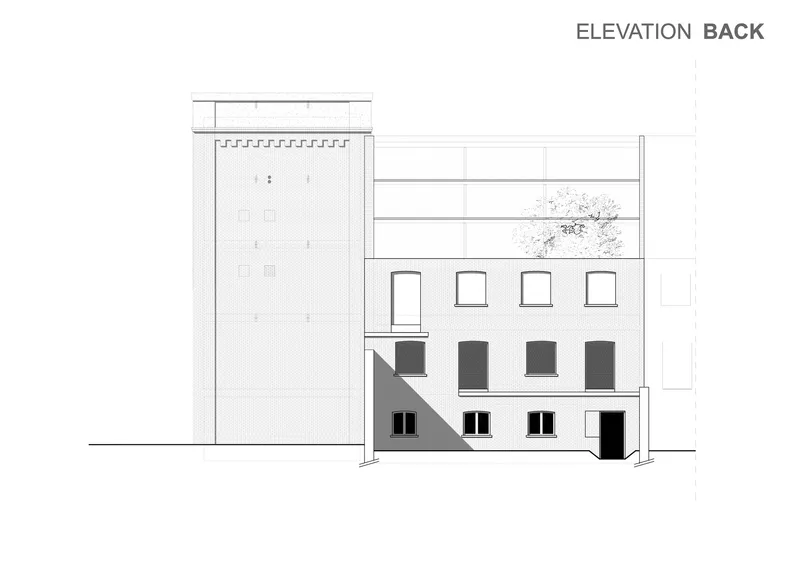
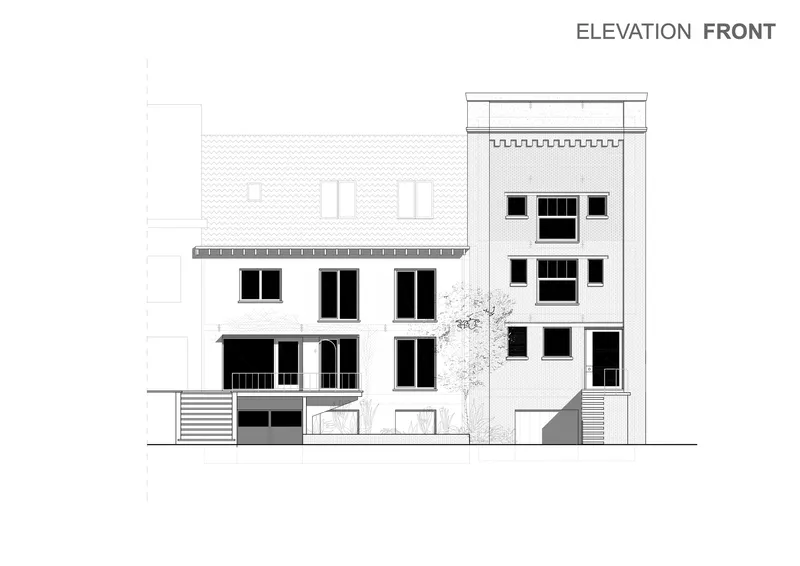
The drawings reveal the project's true complexity. The section through the paired gable roofs shows how the living level sits atop the original brewing floors, with the roof garden carved out of the back volume. The site plan makes the block interior legible: buildings packed tight, courtyard trees claiming whatever ground is left. Floor plans at the half-levels (a consequence of the tower's stacked organization) show how the program threads through small, irregular footprints. Elevations document the full range of the block's character, from the perforated tower to the sawtooth workshop roofs.
Why This Project Matters
Brewery conversions are common enough to have become a genre, and most of them lean on nostalgia: exposed brick as lifestyle accessory, the industrial sublime rendered safe for open-plan living. AUX's project in Ghent avoids that trap by treating the conversion as a negotiation rather than a celebration. The removal of an entire roof to make a garden is not sentimental. Insulating the tower from the inside to preserve the exterior is not sentimental. These are trade-offs, made visible, in a building that wears its compromises as clearly as its history.
The larger lesson is about the interior of the block. European cities are full of hidden industrial fabric, accessible through passageways, invisible from the street. What happens when these buildings are inhabited again is a question of both design and policy: how much demolition is required, what functions are permitted, who gets to live there. AUX's answer, a home that is also a workplace that is also a garden that is also a piece of 19th century industrial heritage, is specific to its site and transferable in principle. That is the best kind of precedent.
Brewery Reconversion by AUX bureau voor architectuur en stedenbouw (Wouter Vanheste, Thomas De Roeck). Ghent, Belgium. 260 m². Completed 2018.
About the Studio
Share Your Own Work on uni.xyz
If projects like this are the kind of work you want to make, uni.xyz is a place to publish your own, find collaborators, and enter design competitions.



Popular Articles
Popular articles from the community


Lunar Spiral: Space Architecture Shaped by the Mathematics of the Universe
Lunar Spiral reimagines space architecture through Fibonacci geometry, lunar regolith, levitating habitats, and self-sustaining Moon living.

Play: Fragments of Their World
Familiar architecture becomes modular playground design, creating safe spaces where displaced children can learn, connect, imagine and play.

Riyadh For All: Intergenerational Urban Design for Active Aging in Rabat
Riyadh For All reimagines urban design in Rabat with intergenerational co-living, adaptive courtyards, and Moroccan cultural exchange today.

The Musturak Paradise: Senior Living Architecture for a Connected Future in Temara, Morocco
The Musturak Paradise reimagines senior living architecture in Temara via private homes, social spaces, culture, community, and shared care.

Similar Reads
You might also enjoy these articles

Bao Huynh Watercolor Atelier: A Serene Art Retreat in Hội An
Bao Huynh Watercolor Atelier in Hội An blends multifunctional art spaces, sustainable design, local materials, and family-friendly living in a serene environment.

Atelier Macri Concept Store Interior Design by CASE-REAL
Atelier Macri store features a "ko" counter, walnut wood details, cork displays, blending retail, gallery, and seamless customer experiences.

Manuel Vargas Izquierdo Stadium and High-Performance Sports Center: Architectural Excellence in Jalpa de Méndez
The Manuel Vargas Izquierdo Stadium blends sustainable design, inclusive sports facilities, and cultural-inspired architecture, revitalizing Jalpa de Méndez’s public spaces.

KAKR Buluh Awar Hall: Revitalizing Community and Ecology Through Bamboo Architecture
Community built bamboo hall revitalizes Buluh Awar village, empowering youth, restoring ecology, celebrating vernacular craftsmanship through sustainable architecture and culture.



Comments (0)
Please login or sign up to add comments
No comments yet. Be the first to comment!