

AVA Altenrhein Wastewater Purification Plant: A Harmonious Blend of Industrial Function and Architectural Design
AVA Altenrhein Wastewater Purification Plant blends industrial function with elegant design, using wood, concrete, and uniform materials in protected Rhine surroundings.


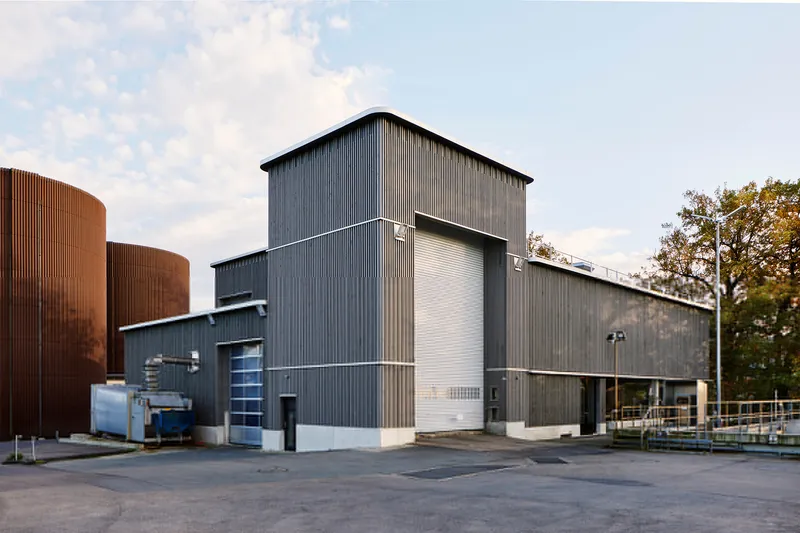
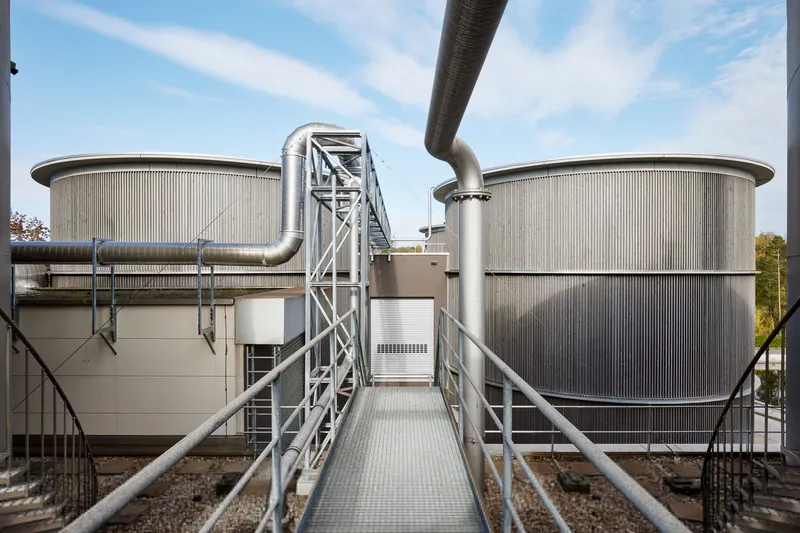
The AVA Altenrhein Wastewater Purification Plant, designed by Lukas Imhof Architektur, is a prime example of industrial architecture that seamlessly integrates functional infrastructure with aesthetic considerations. Located in the middle of a protected nature zone directly on the Rhine, the facility faced unique challenges: how to enhance the visual and spatial quality of a technical plant originally developed without architectural ambitions, while respecting the surrounding ecological context.
Architectural Approach: Strengthening Existing Qualities
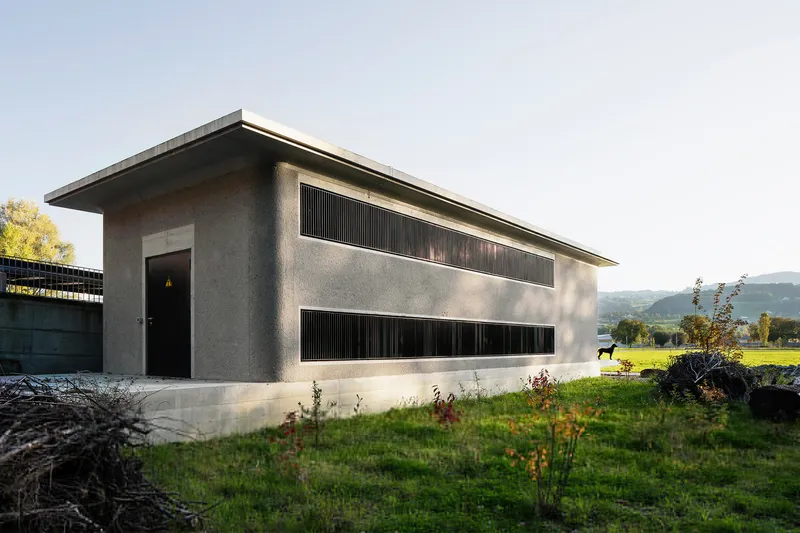
Instead of contrasting the old and new, the design strategy emphasizes continuity, uniformity, and the enhancement of existing qualities. The architects focused on amplifying the almost urban spatial qualities of the original buildings and highlighting their solid, durable execution. This approach ensures that the new additions do not merely sit alongside existing structures, but interact and enrich the entire site.
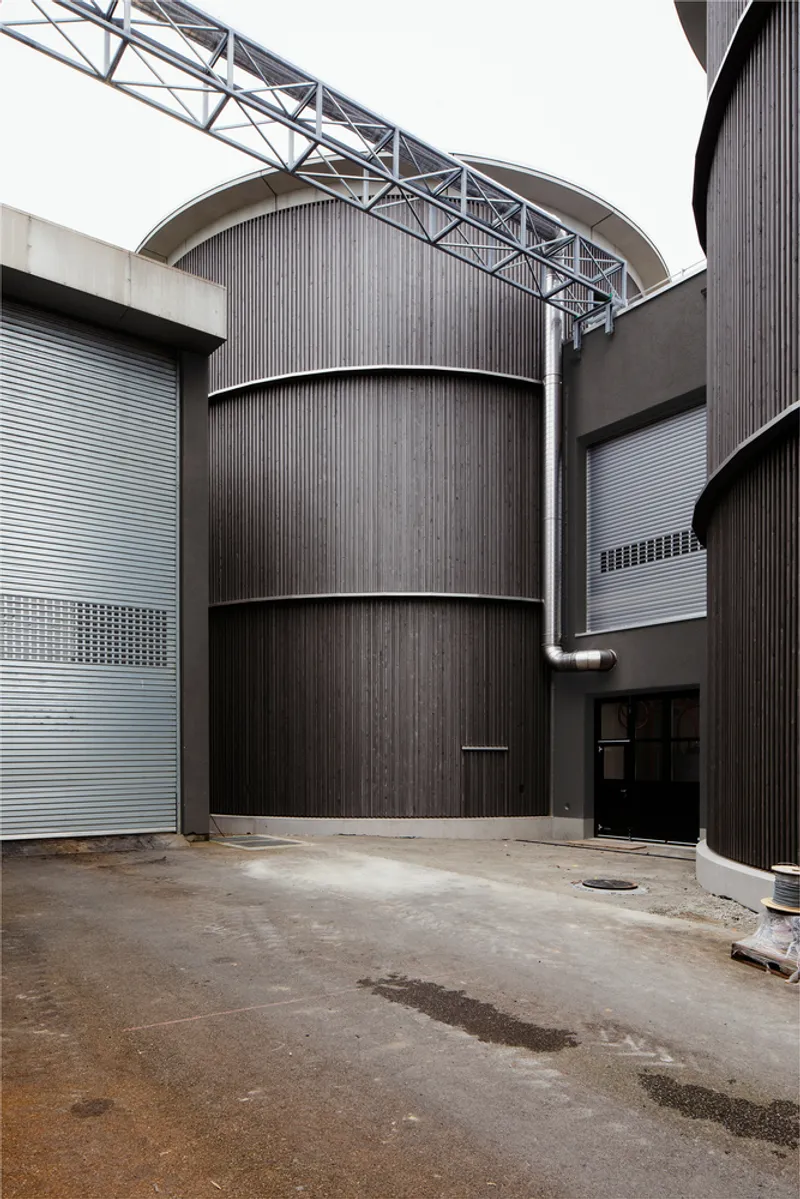
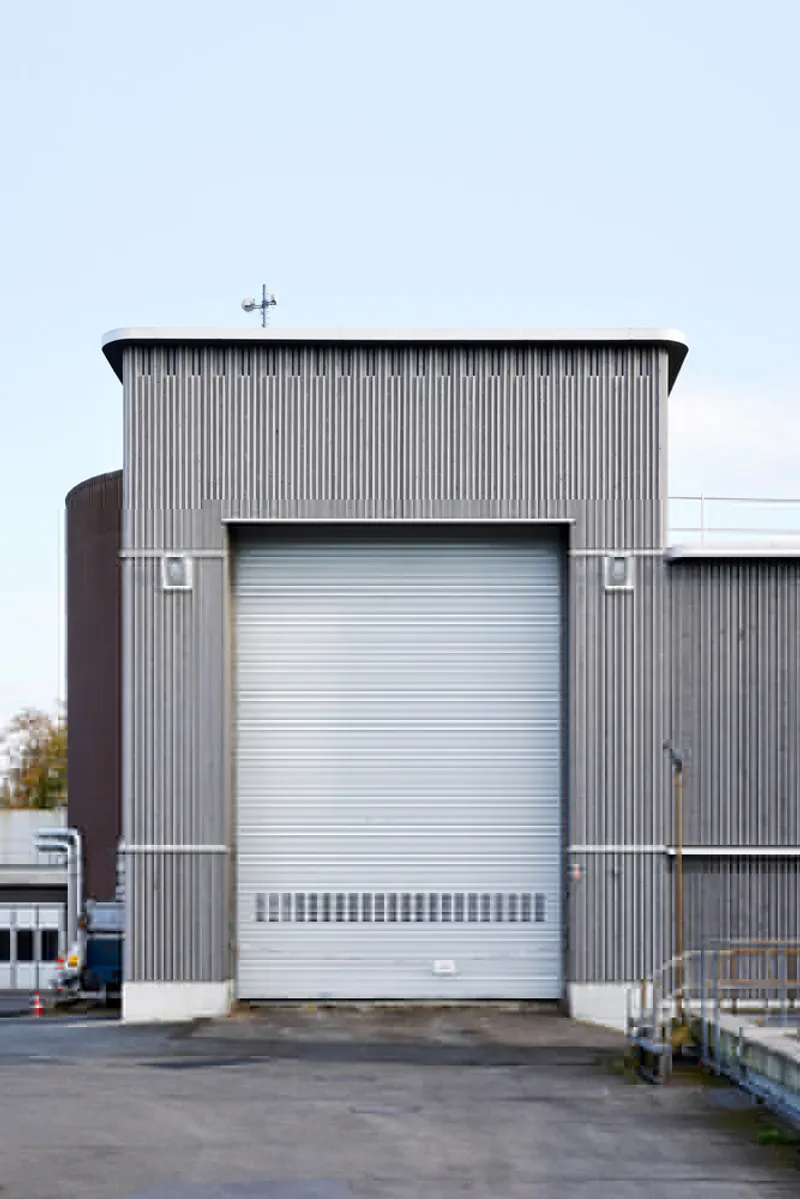
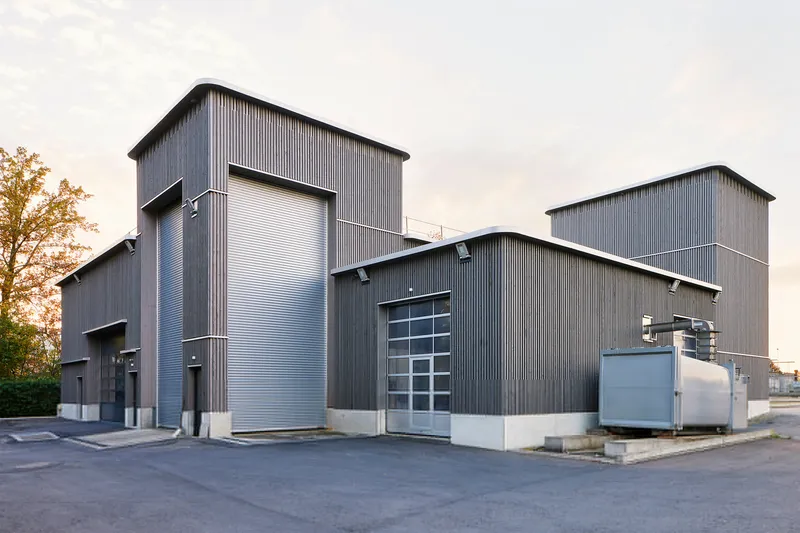
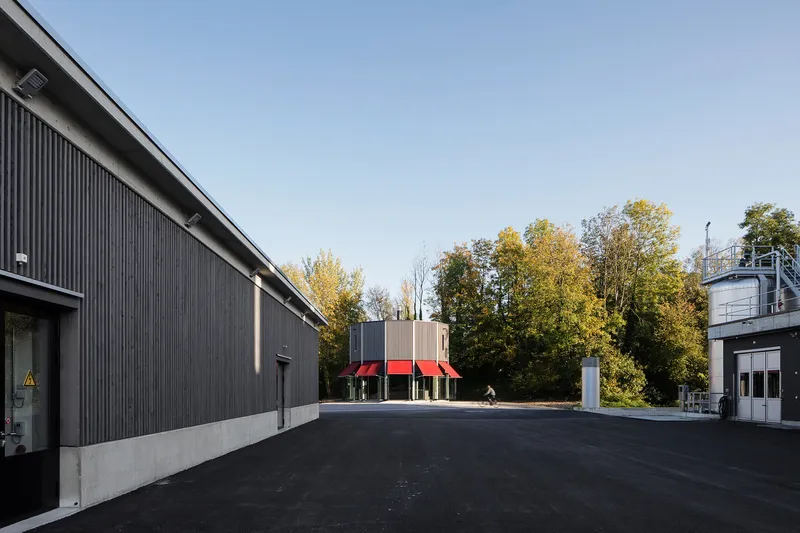
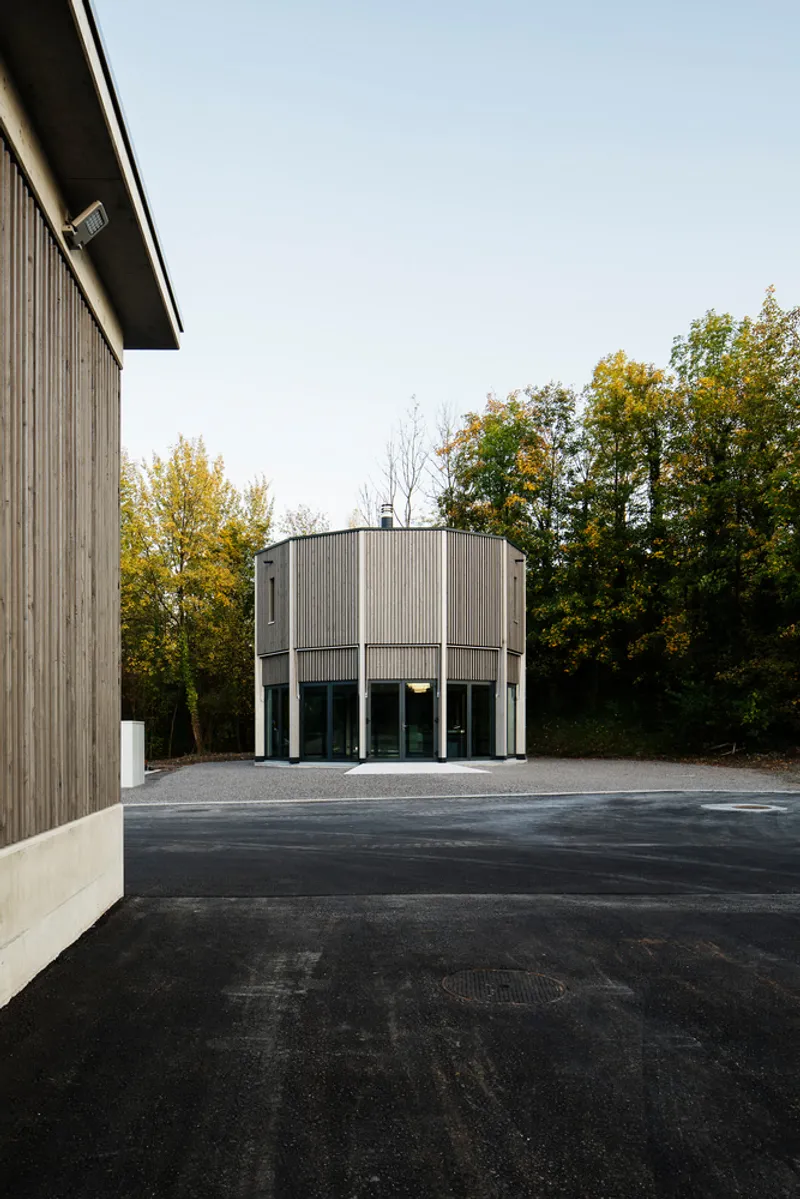
A clear example is the relationship between the new EMV building and the old structure opposite it. The old building’s exposed concrete roof was complemented by a gray-brown façade, harmonizing with the pre-greyed wooden façade of the new building. Above this, the new structure features a finely finished concrete termination with a canopy, mirroring the height of its neighbor while introducing subtle refinement. These buildings, though distinct, create a cohesive and spatially meaningful square, an interplay of “unequal siblings” that together form a strong architectural dialogue.
Design Elements and Material Strategy
The design strategy extends across the entire AVA Altenrhein site and will continue to guide future expansions. Key materials include:
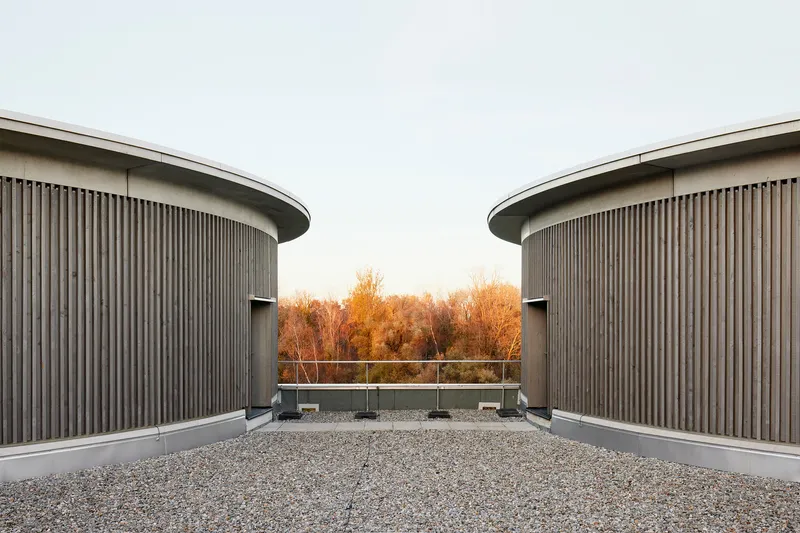
- Vertically articulated pre-greyed fir wood facades
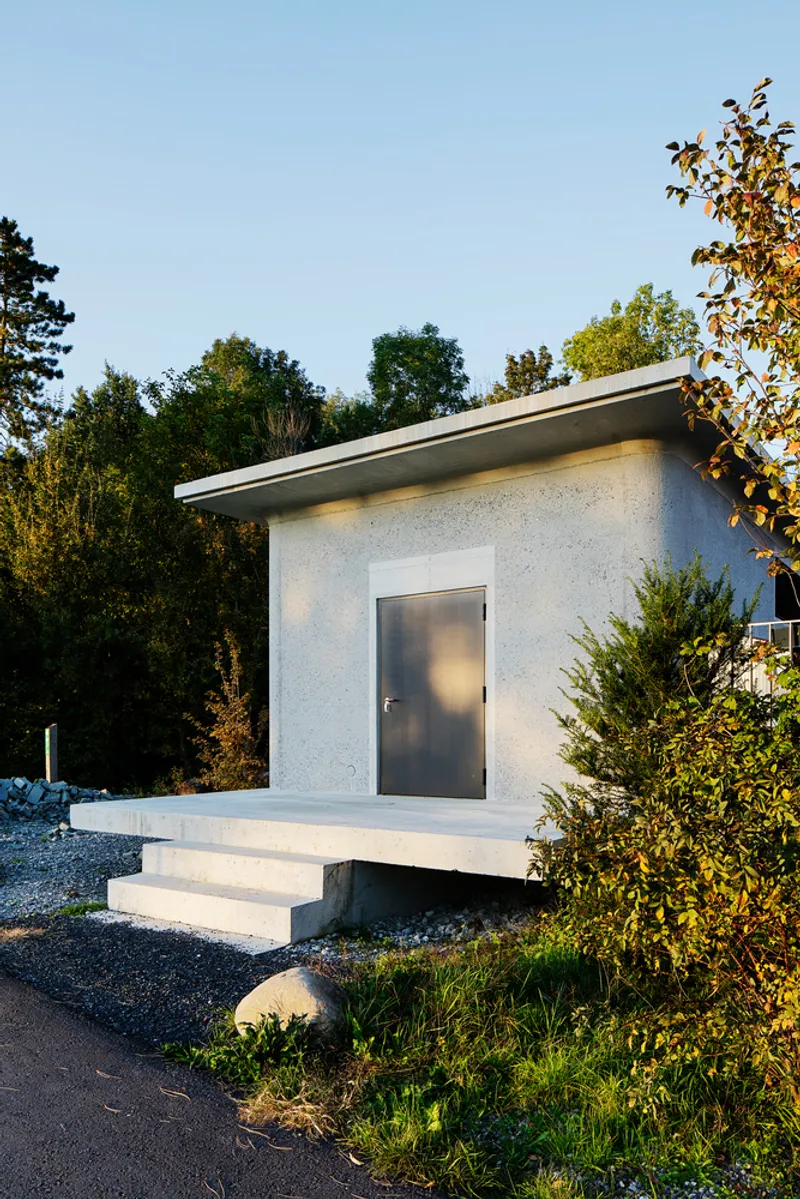
- Exposed concrete elements
- Dark-painted plaster surfaces
- Concrete canopies to protect wood facades
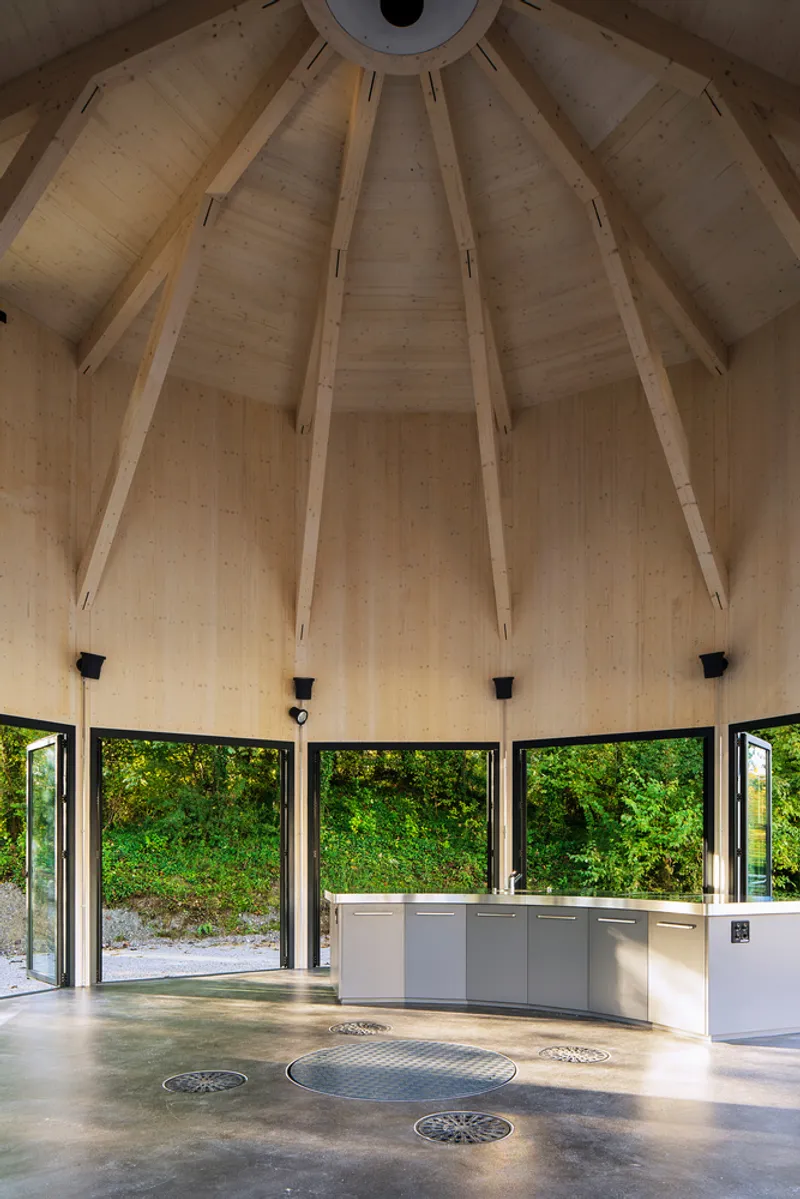
These elements are repeated across the site, from the EMC plant to stacking-mixing containers, creating a uniform, technically informed, and ecologically sensitive industrial environment. By reducing the visual language to a few carefully selected materials, the plant achieves timeless design quality while remaining highly functional.
Integration with Nature
Sited within a protected natural area along the Rhine, the AVA Altenrhein Wastewater Purification Plant balances industrial utility with environmental sensitivity. The restrained material palette and consistent architectural elements ensure the plant integrates seamlessly with its surroundings, avoiding the visual clutter typical of industrial sites.
The AVA Altenrhein Wastewater Purification Plant demonstrates that industrial infrastructure can achieve architectural excellence. By fostering a conversation between old and new structures, emphasizing continuity, and prioritizing sustainable materials, Lukas Imhof Architektur created a facility that is not only highly functional but also aesthetic, contextually sensitive, and future-ready.
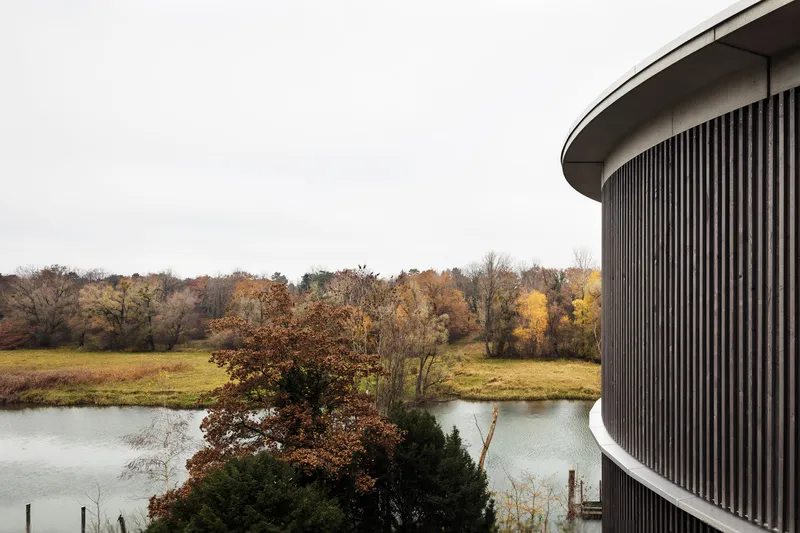
All photographs are works of Hannes Heinzer




Popular Articles
Popular articles from the community

EW PARK: Sustainable Architecture Reimagines the Future of Urban Parking
EW PARK reimagines city parking as a modular wooden tower combining automation, solar energy, electric mobility, and adaptable urban design.

The Earth Pod: 3D Printed Homes for Resilient Refugee Communities
The Earth Pod reimagines refugee housing through 3D printed homes made from clay, combining resilience, self-sufficiency, and rapid shelter.

Co-Life: Senior Housing Design That Reconnects Older Adults With the City
Co-Life reimagines senior housing design through healing gardens, shared streets, workshops, and a sustainable community across generations.

AL-JANNAH: Sustainable Architecture and Permaculture for Afghan Widows
AL-JANNAH uses sustainable architecture and permaculture to create resilient oasis of housing, learning, work and renewal for Afghan widows.

Similar Reads
You might also enjoy these articles


Hodi-Mandai Geram
Project Function: Preservation and revitalization of the Intangible heritage and socio-spatial identity of the Hodi by Housing, Cultural Memory Center, Sacred Grove, landscape, local tourism economy


Olio Towers: A Mid-Rise for Performers That Fuses Housing, Rehearsal, and Stage
Located blocks from Houston's Theater District, this modular tower stacks living units around a central performance atrium.

Oasis: Modular Green Housing Carved into Dhaka's Urban Fabric
A shortlisted Plugin Housing entry reclaims unauthorized settlements in Dhaka with stepped concrete volumes, green roofs, and ventilation-driven design.

Black Hole: A Floating Megastructure for the Post-Physical Era
Emiliano Mazzarotto envisions a spherical, self-scaling arena where e-sports, digital hotels, and holographic stadiums replace traditional public space.
Explore Architecture for Water Competitions
Discover active competitions in this discipline



Challenge to reimagine the Iron Throne


Photograph architecture without architects


Illustrate the lost glory of Angkor Wat - Render Challenge


Design challenge to reuse E-waste
Comments (0)
Please login or sign up to add comments
No comments yet. Be the first to comment!