
Axial House in Bragança Paulista by TAU Arquitetos: A Contemporary Residence Shaped by Landscape and Light
Axial House by TAU Arquitetos uses concrete, patios, and natural materials to create light-filled spaces connected to landscape and terrain.


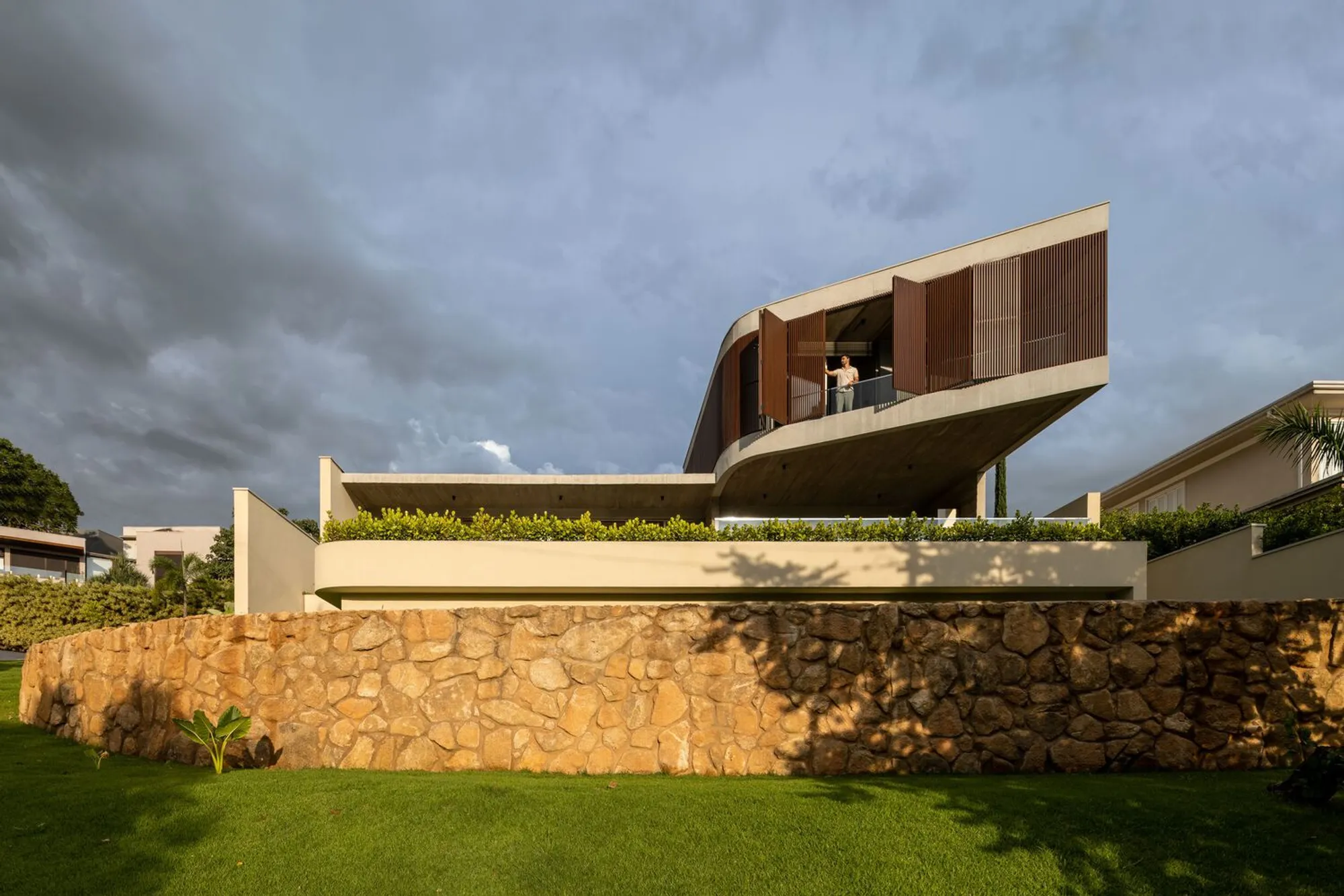
Located in the tranquil countryside condominium of Bragança Paulista, Brazil, Axial House is a striking example of contemporary residential architecture designed by TAU Arquitetos. Completed in 2022, the residence spans approximately 450 square meters and responds thoughtfully to its irregular corner lot and natural topography. Through a careful composition of spatial axes, exposed concrete structures, and integrated outdoor areas, the project establishes a strong connection between architecture, landscape, and natural light.
The design of Axial House reflects a modern architectural approach that balances functional planning, material honesty, and environmental responsiveness, creating a comfortable living environment that seamlessly integrates indoor and outdoor spaces.
Architectural Concept: Design Axes Shaped by the Terrain
The irregular geometry of the plot played a significant role in defining the architectural concept of the house. Rather than forcing a rigid grid, the architects developed a system of axial alignments that follow the terrain’s unique form. These axes guided the organization of the three-level residence, generating dynamic spatial relationships and optimizing views toward the surrounding landscape.
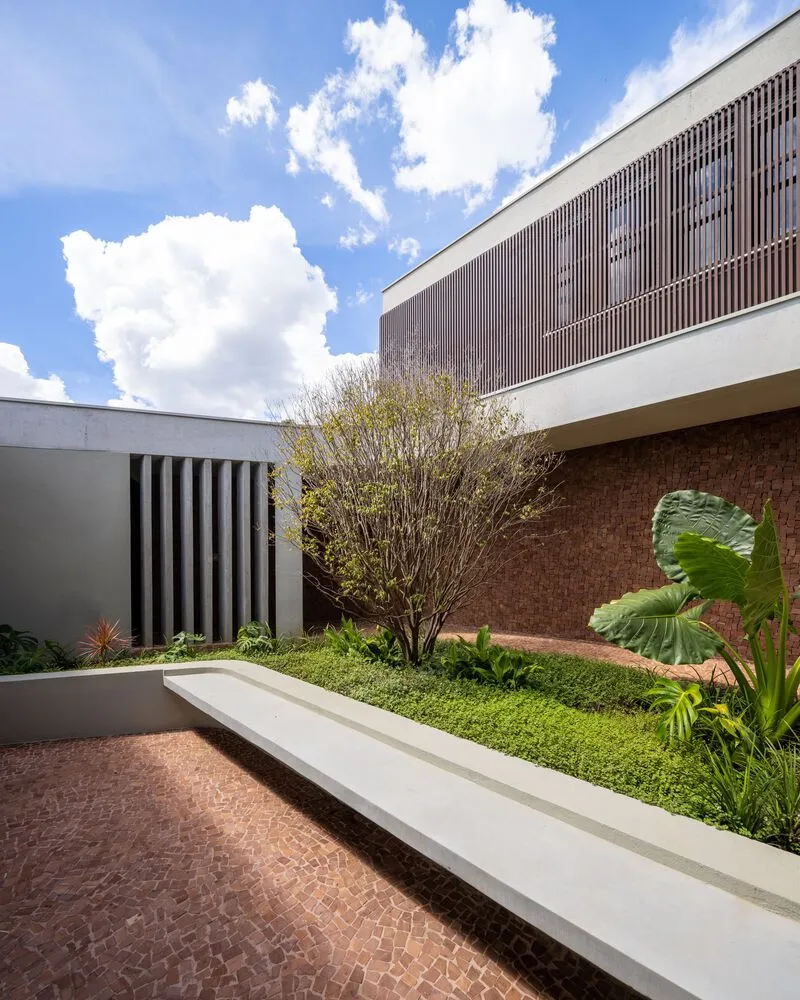
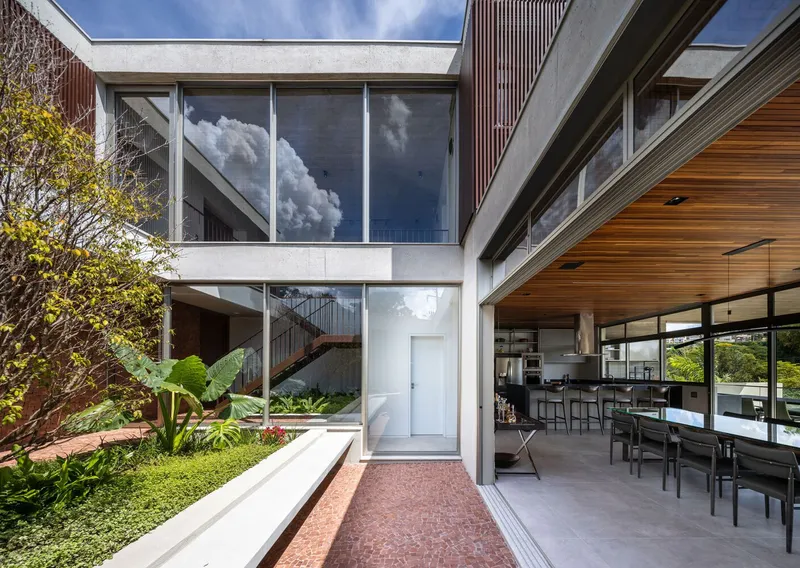
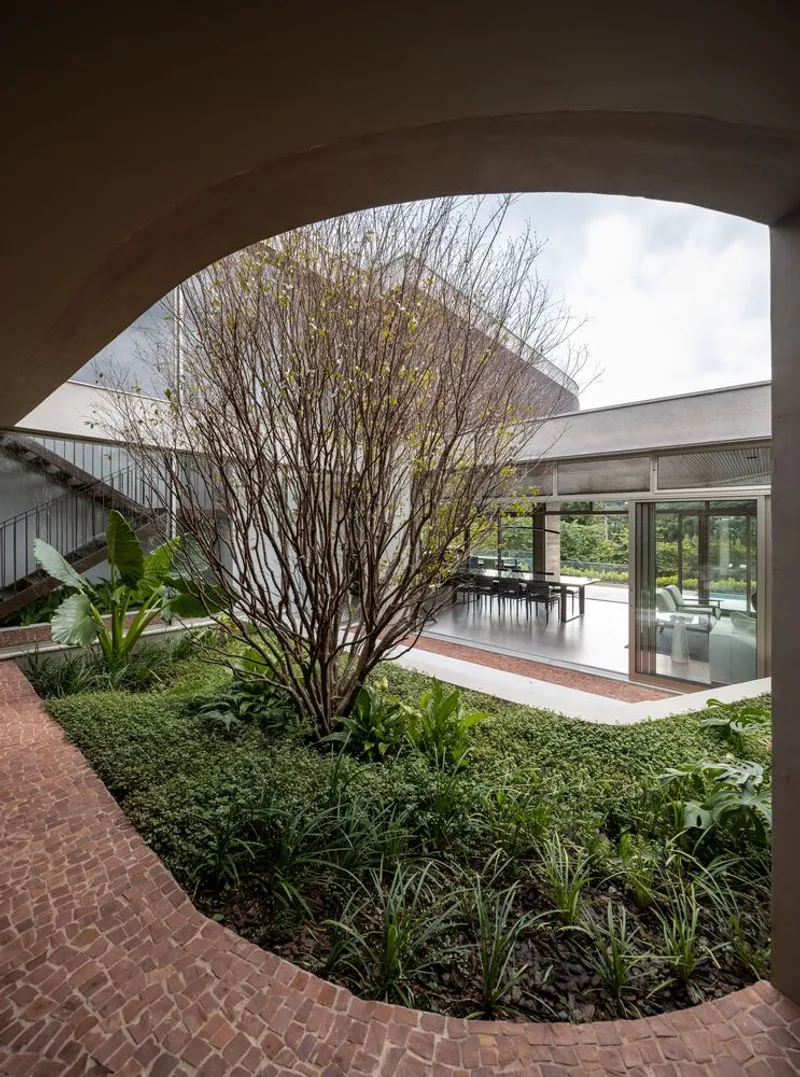
Upon arrival, visitors are welcomed by a central open patio, which acts as the spatial heart of the house. This internal courtyard introduces natural light into the interior and visually connects the home with the garden. The patio also establishes a sense of openness while maintaining privacy from neighboring properties and the street.
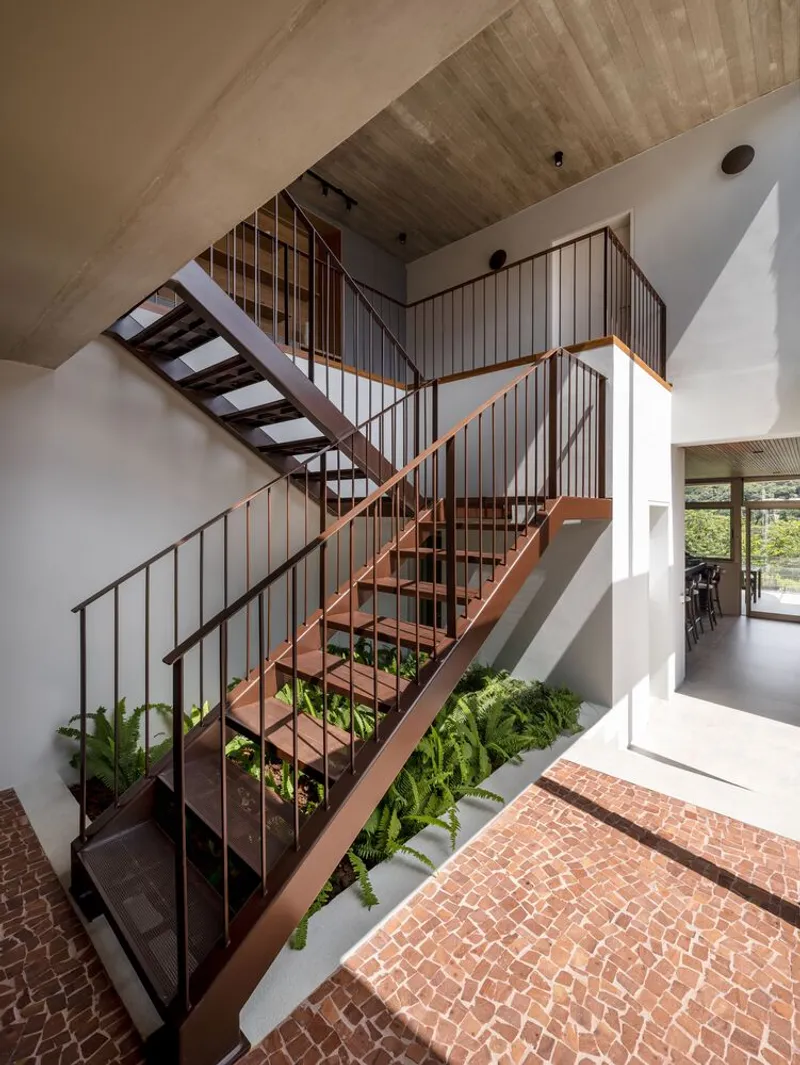
Positioned just beyond the entrance, a sculptural staircase organizes the vertical circulation of the residence. It links the ground level, social floor, and private upper floor, reinforcing the house’s axial layout and spatial hierarchy.
Spatial Organization and Interior Layout
The internal program of Axial House is distributed across three carefully planned levels, each designed to enhance comfort, privacy, and functionality.
Social Areas and Living Spaces
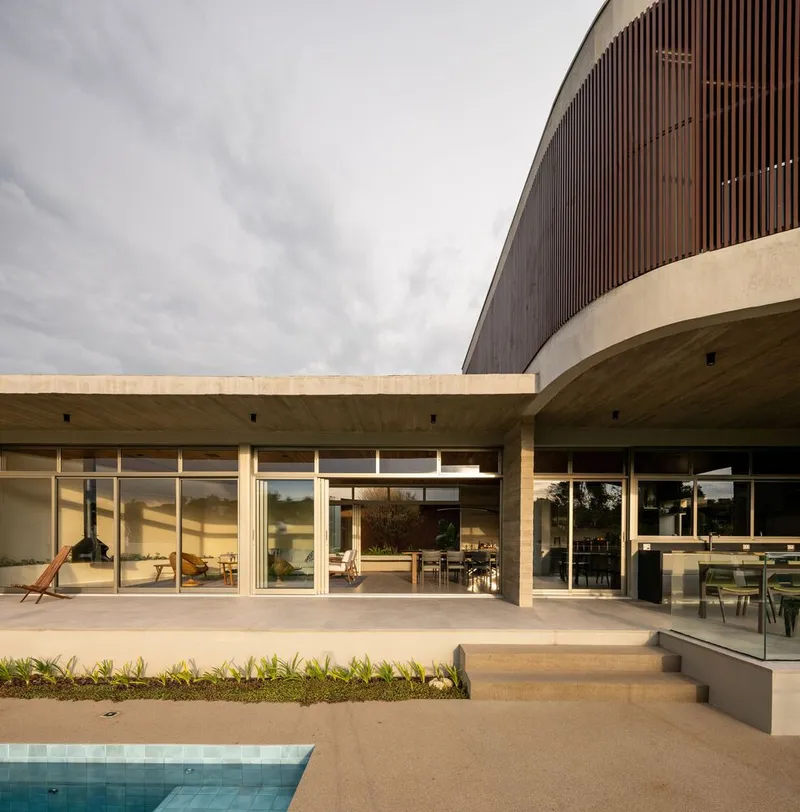
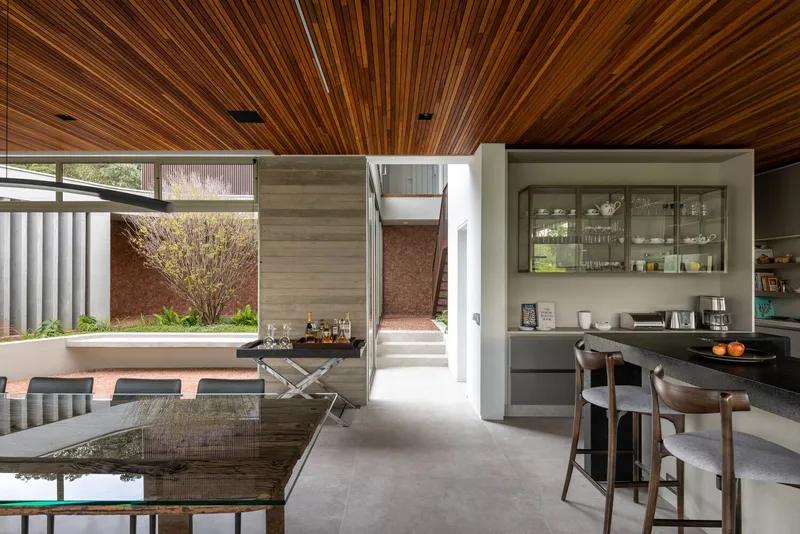
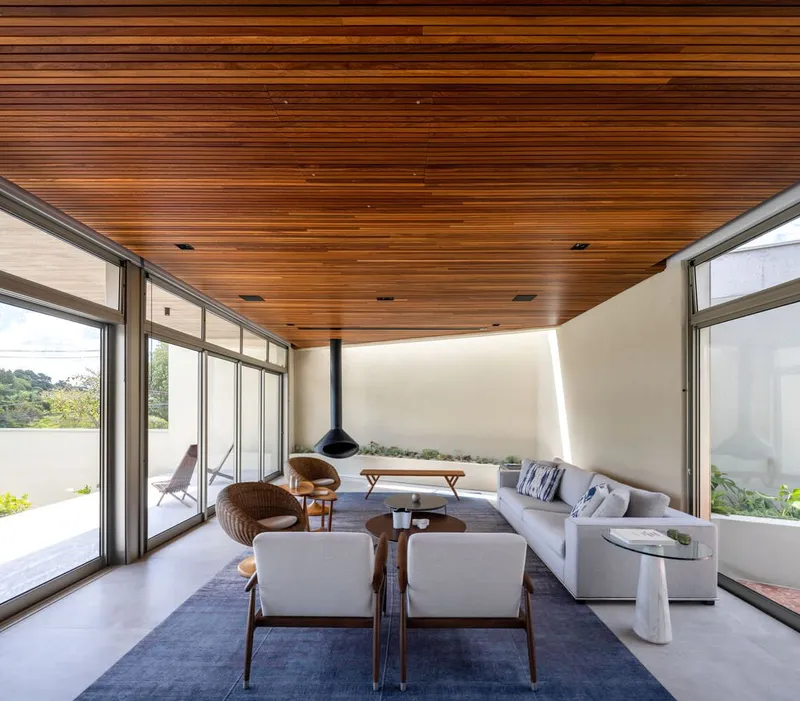
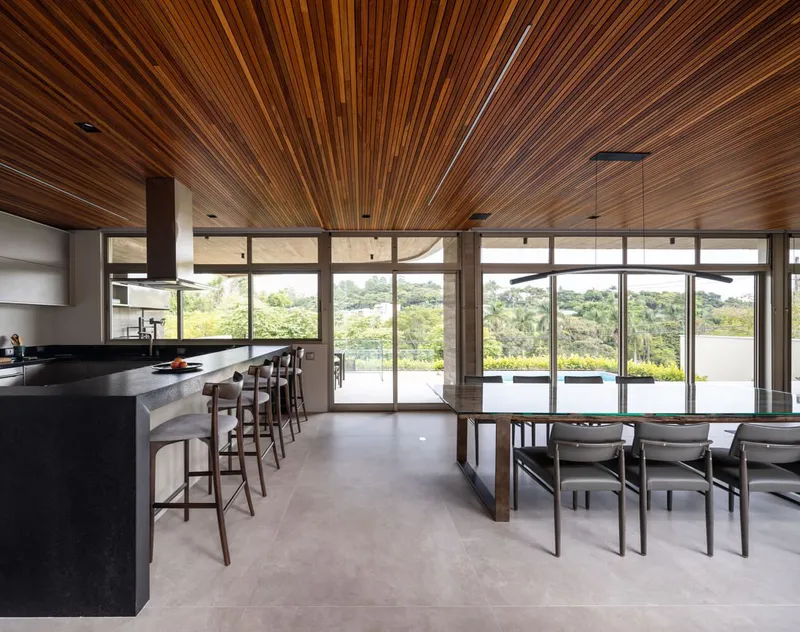
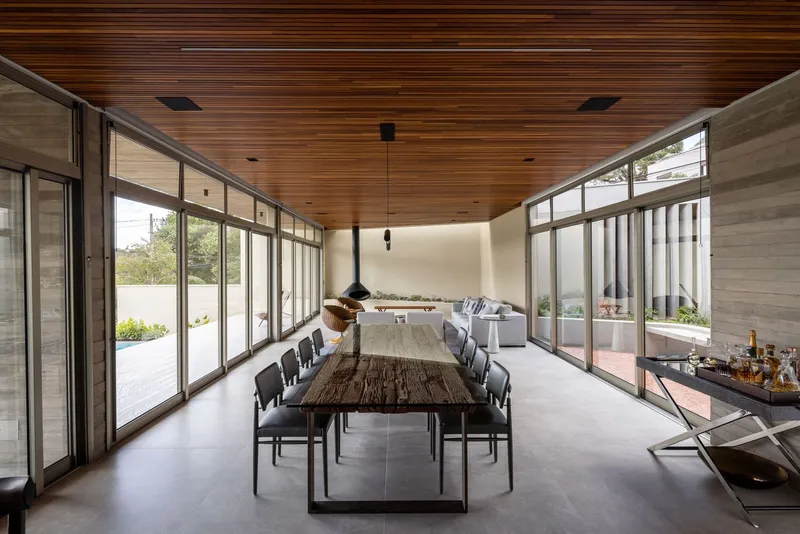
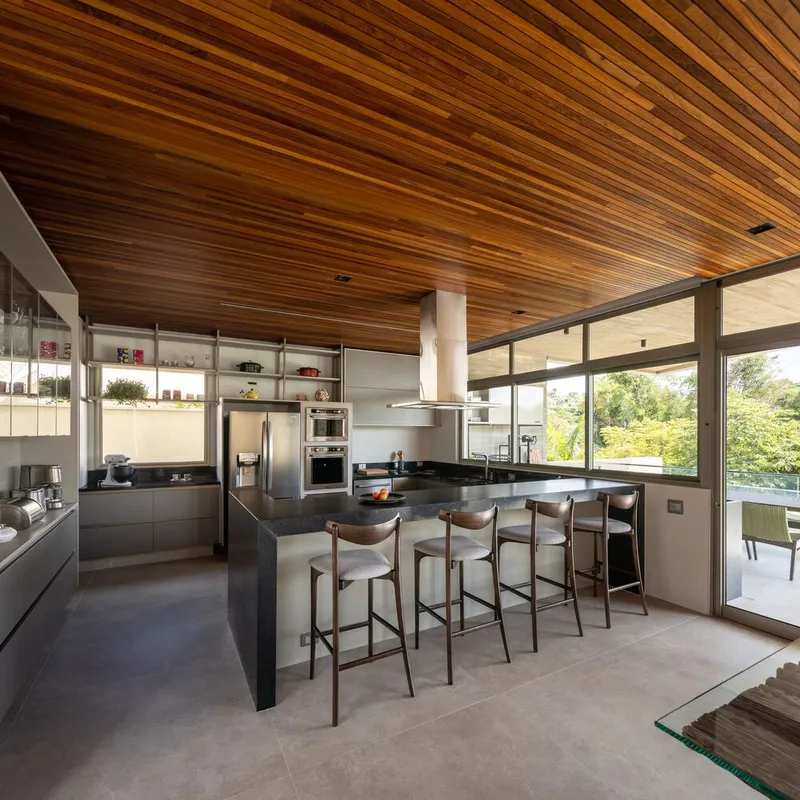
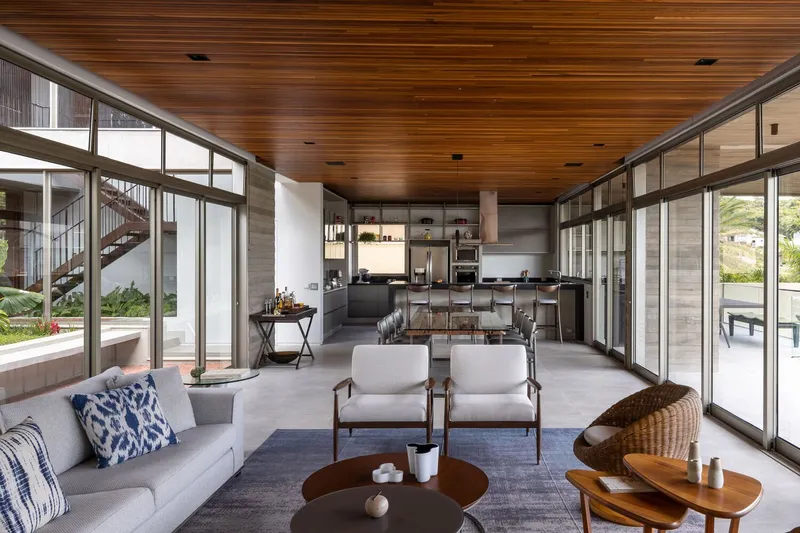
The main social spaces: including the living room, dining area, and kitchen, are located on the primary living level. These spaces are oriented toward the central patio, allowing visual continuity and an abundance of natural daylight throughout the interior.
Large openings and strategically positioned windows enhance transparency, creating fluid connections between interior environments and the surrounding landscape. This design strategy allows residents to experience changing light conditions throughout the day while maintaining a strong visual link to the garden.
Technical areas such as laundry rooms, storage spaces, and the garage are located along the side façade facing the neighboring property. This arrangement allows the primary living areas to remain open toward the most desirable views while ensuring functional efficiency within the home.
Outdoor Living and Leisure Areas
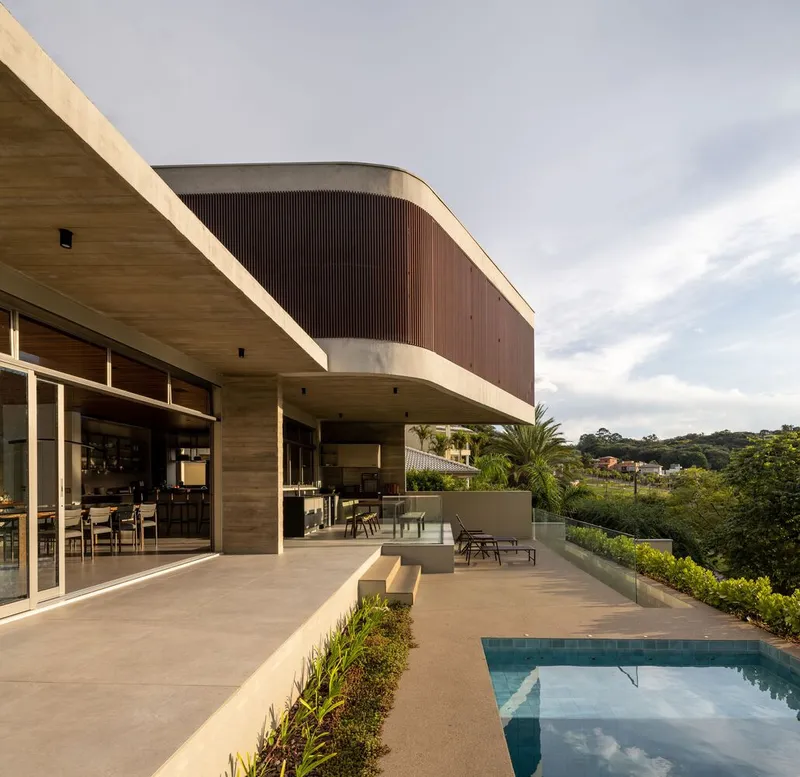
The outdoor program of Axial House is designed as an extension of the interior social spaces. The backyard includes a gourmet entertainment area and a swimming pool, creating an ideal environment for leisure and social gatherings.
A carefully designed flower bed surrounds the pool, providing privacy from the street while enhancing the landscape character of the property. The outdoor space also offers direct access to the lower level, where service functions and a bathroom are located.
In addition to the pool area, the house includes a garden and fire pit space oriented toward the street. This area creates an inviting outdoor setting while reinforcing the relationship between the residence and its surrounding environment.
Private Upper Floor
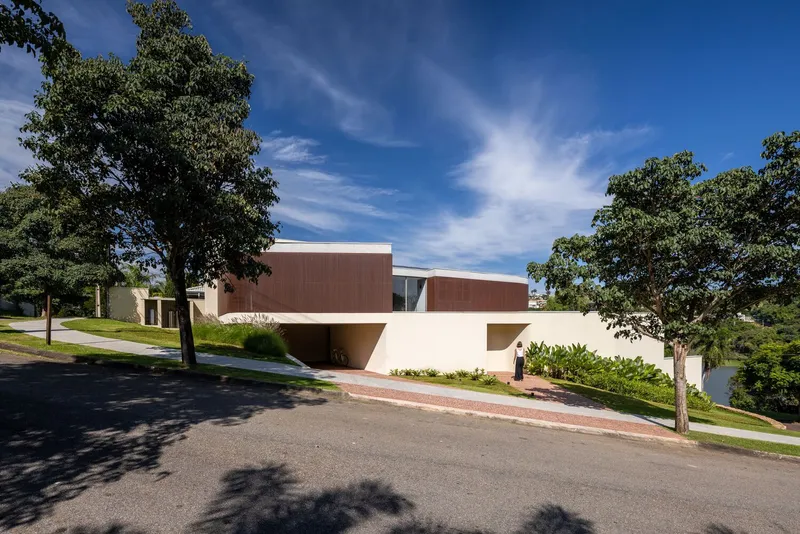
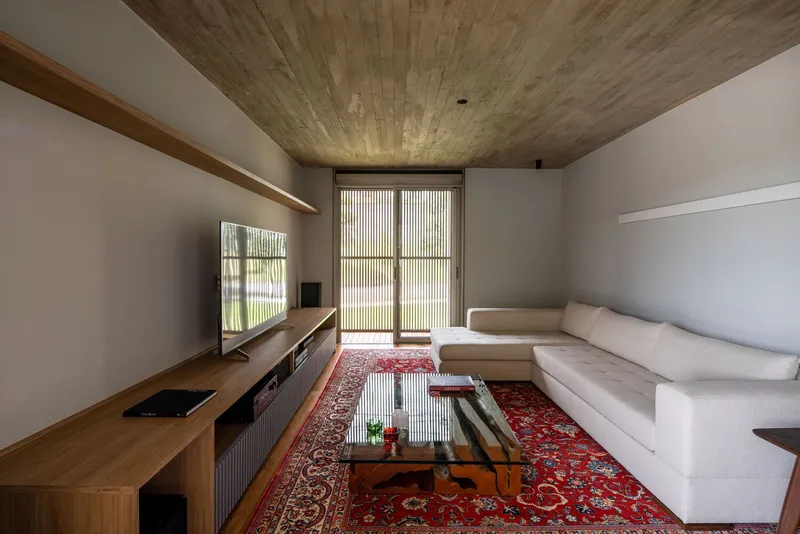
The upper level of Axial House accommodates the home’s private program. This floor includes an intimate living room, guest bedroom, bathroom, and a master suite, offering a calm and comfortable retreat for residents.
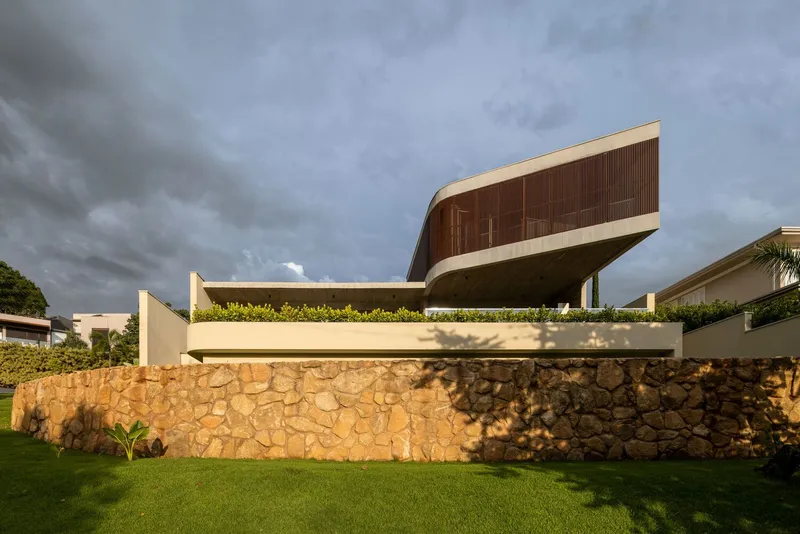
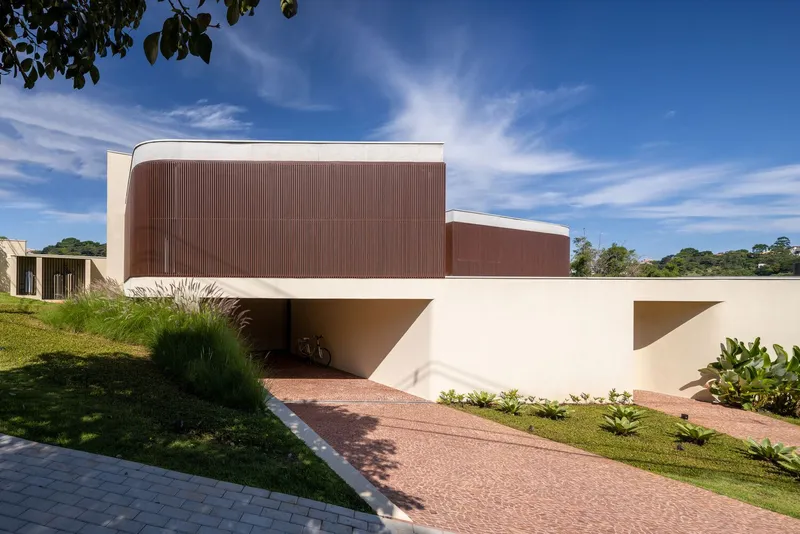
Architecturally, the upper floor is defined by exposed concrete slabs and beams, emphasizing the structural logic of the building. A corten-colored metallic brise is incorporated into the façade to regulate sunlight, improving thermal comfort while adding a distinctive visual identity to the residence.
Strategically placed openings ensure natural cross-ventilation, allowing fresh air to circulate throughout the spaces. This passive design strategy reduces reliance on mechanical cooling systems, contributing to the home's environmental efficiency.
Material Palette and Architectural Expression
Material selection plays a fundamental role in shaping the architectural identity of Axial House. Exposed concrete forms the structural backbone of the building and remains visible throughout the design, particularly in the pillars, beams, and slabs of the upper floor.
The raw texture and natural tone of concrete are balanced by the warmth of other materials. Red Portuguese stone introduces a strong tactile presence within the landscape and outdoor areas, while cumaru wood adds warmth and refinement to interior and exterior elements.
This combination of materials creates a harmonious dialogue between modern construction techniques and natural textures, reinforcing the connection between architecture and the surrounding environment.
Integration with Landscape and Natural Environment
One of the defining characteristics of Axial House is its ability to integrate architecture with nature. The project carefully responds to small variations in topography, using them to enhance views, light penetration, and spatial transitions.
The central patio, outdoor leisure areas, and large openings allow the landscape to become an integral component of the architectural experience. As a result, the residence achieves a sense of openness while maintaining the privacy and comfort required for everyday living.
A Contemporary Brazilian Residence Rooted in Context
Axial House demonstrates how thoughtful architectural design can transform challenging site conditions into opportunities for spatial innovation. By embracing the irregular terrain and emphasizing natural materials, TAU Arquitetos created a residence that feels both contemporary and deeply connected to its context.
Through its axial organization, open courtyards, and carefully articulated material palette, the house offers a sophisticated example of modern Brazilian residential architecture, where spatial clarity, environmental responsiveness, and aesthetic simplicity coexist in harmony.
All photographs are works of
Manuel Sá




Popular Articles
Popular articles from the community


Riyadh For All: Intergenerational Urban Design for Active Aging in Rabat
Riyadh For All reimagines urban design in Rabat with intergenerational co-living, adaptive courtyards, and Moroccan cultural exchange today.

Co-life: Sustainable Architecture for Age-Friendly Community Living
Co-life reimagines sustainable architecture for seniors through courtyards, rammed earth, shared gardens, and spaces designed for belonging.

The Earth Pod: 3D Printed Homes for Resilient Refugee Communities
The Earth Pod reimagines refugee housing through 3D printed homes made from clay, combining resilience, self-sufficiency, and rapid shelter.

Lunar Spiral: Space Architecture Shaped by the Mathematics of the Universe
Lunar Spiral reimagines space architecture through Fibonacci geometry, lunar regolith, levitating habitats, and self-sustaining Moon living.


Similar Reads
You might also enjoy these articles

FAMM Arquitectura Organizes Ten Villas Around Courtyards and Jungle in Nosara, Costa Rica
El Molino pairs two elongated volumes with deep overhangs and timber louvers to build a compact coastal community five minutes from the beach.
Oscar Niemeyer's Ibirapuera Park Pavilions Define São Paulo's Cultural Identity in Concrete and Curve
A constellation of modernist volumes set within São Paulo's most important urban park, conceived for the city's 400th anniversary in 1954.
How Henri Picq's 1889 Paris Pavilion Traveled 11,000 Kilometers to Become Santiago's Artequín Museum
A prefabricated iron and glass pavilion built for the Paris Universal Exposition found a second life as a children's art museum in Chile.
Sanjay Puri Architects Wraps a Jaipur Office Tower in Capsule-Shaped Green Buffers
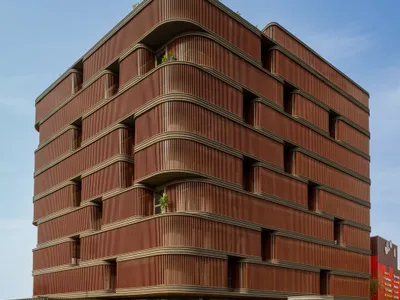
A nine-level climate-responsive workplace near Jaipur Airport uses stacked planter terraces and aluminium screens to fight 40°C heat.


Explore 2X1 Architects Competitions
Discover active competitions in this discipline



Challenge to reimagine the Iron Throne


Photograph architecture without architects


Illustrate the lost glory of Angkor Wat - Render Challenge


Design challenge to reuse E-waste
Comments (0)
Please login or sign up to add comments
No comments yet. Be the first to comment!