
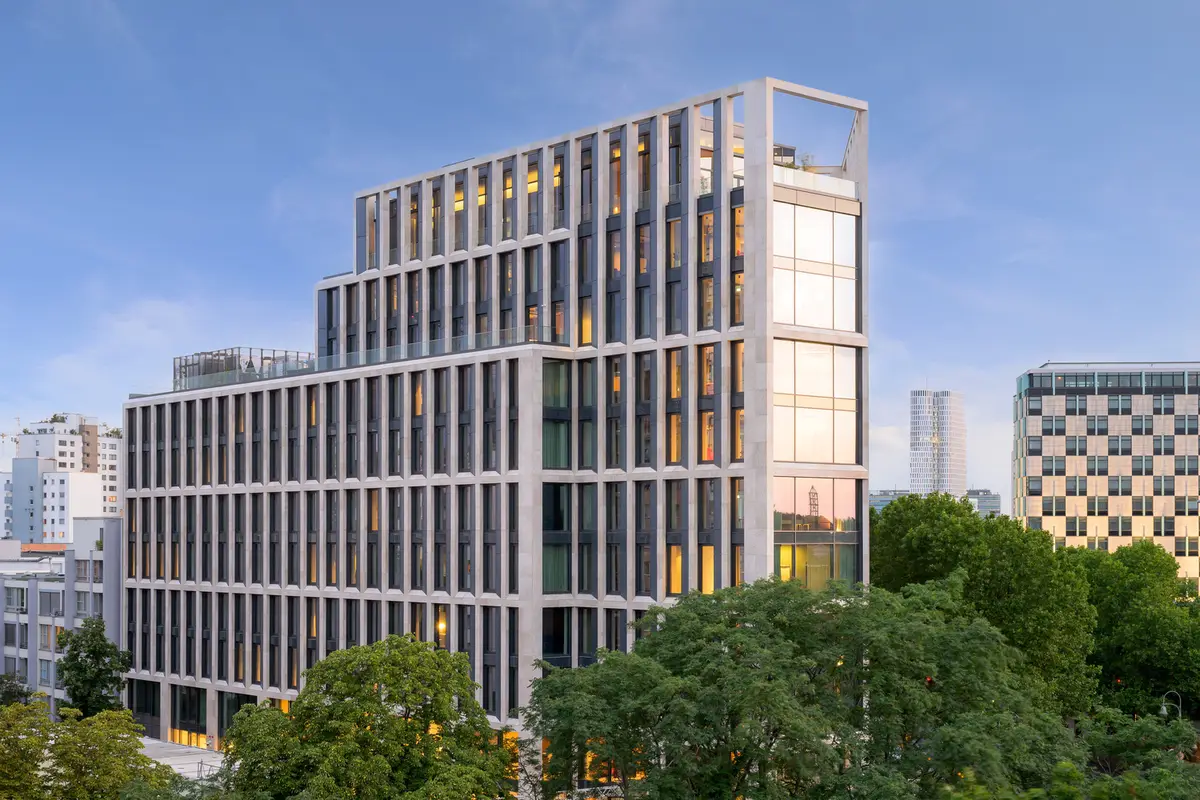
B-One Office Building by CF Møller Architects – Climate-Friendly Corporate Landmark in Berlin
B-One Office Building in Berlin by CF Møller combines sustainable design, flexible workplaces, green terraces, renewable energy, and urban-sensitive corporate architecture.


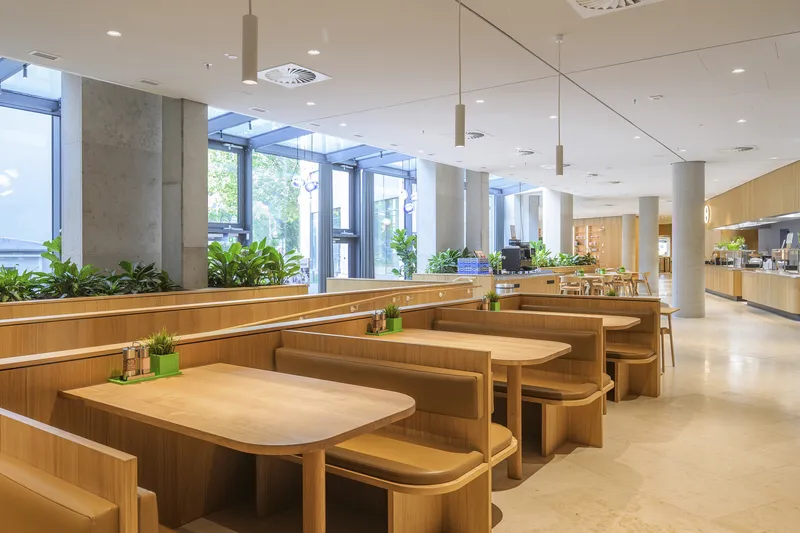
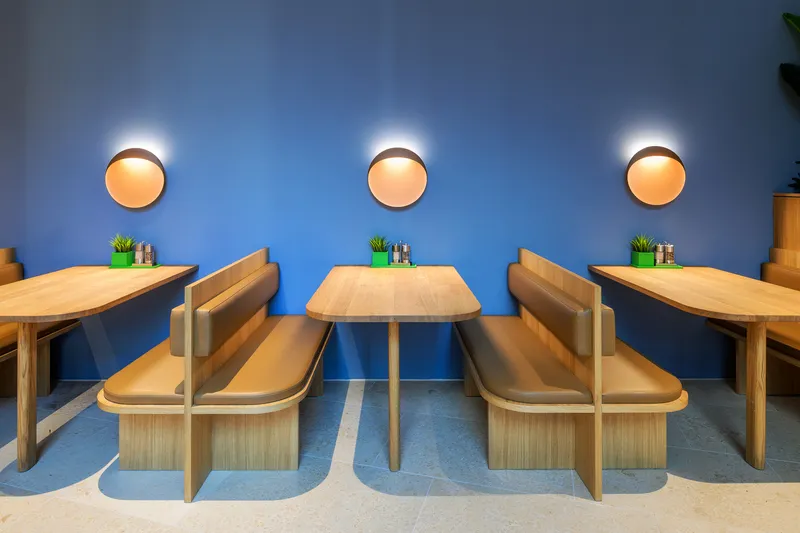
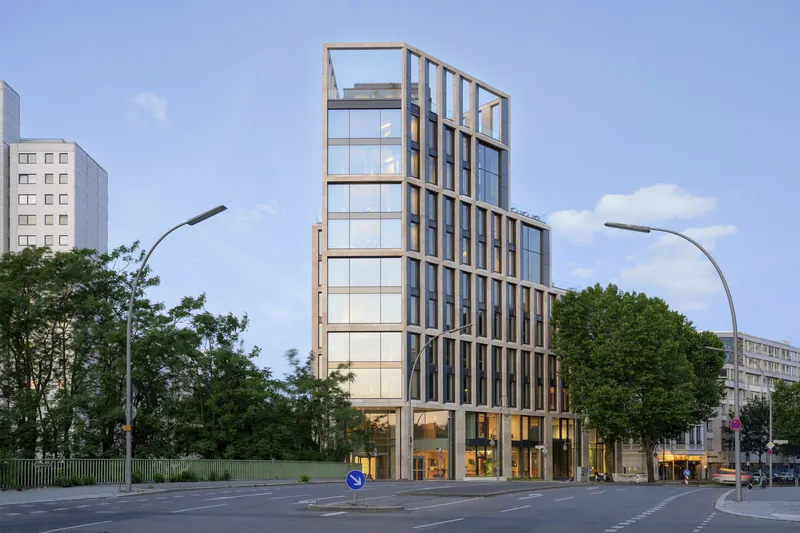
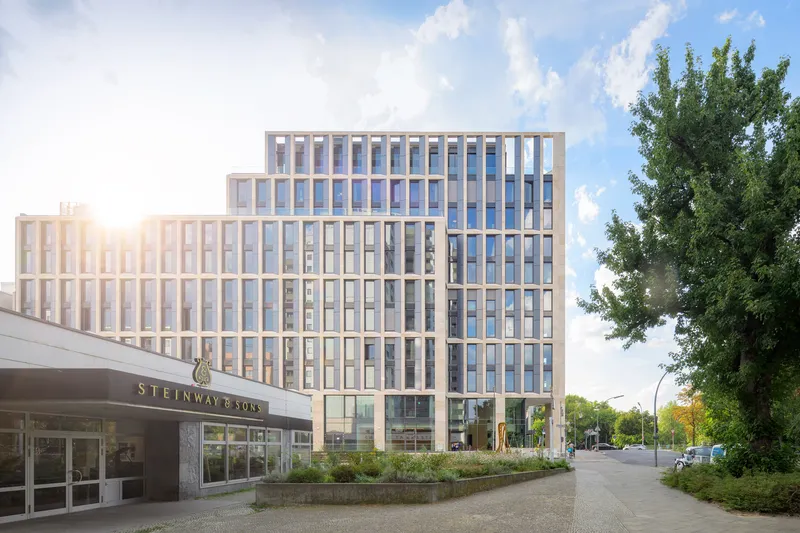
The B-One Office Building, designed by CF Møller Architects, stands as a pioneering example of sustainable corporate architecture in Berlin. Located at the gateway to the City-West district, adjacent to the Landwehrkanal and Corneliusbrücke, this 13-story office tower combines environmental responsibility, urban sensitivity, and innovative workplace design to create a modern, climate-conscious corporate landmark.
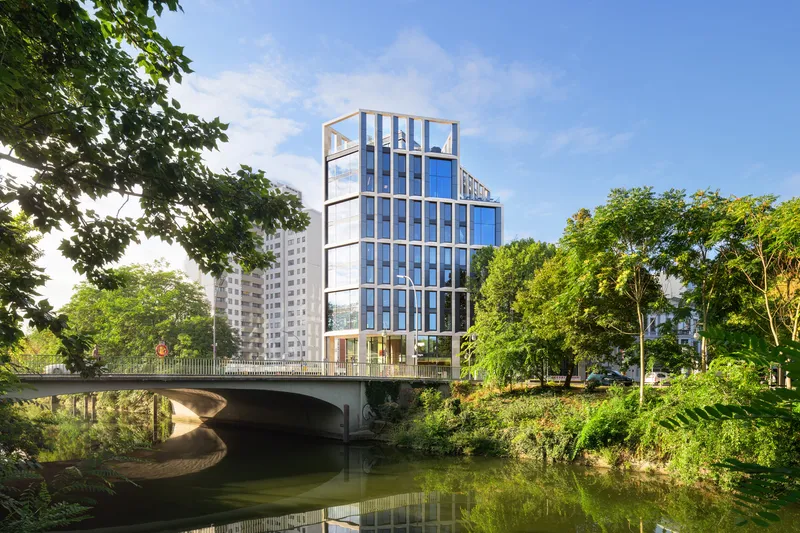
Architectural Design and Urban Context
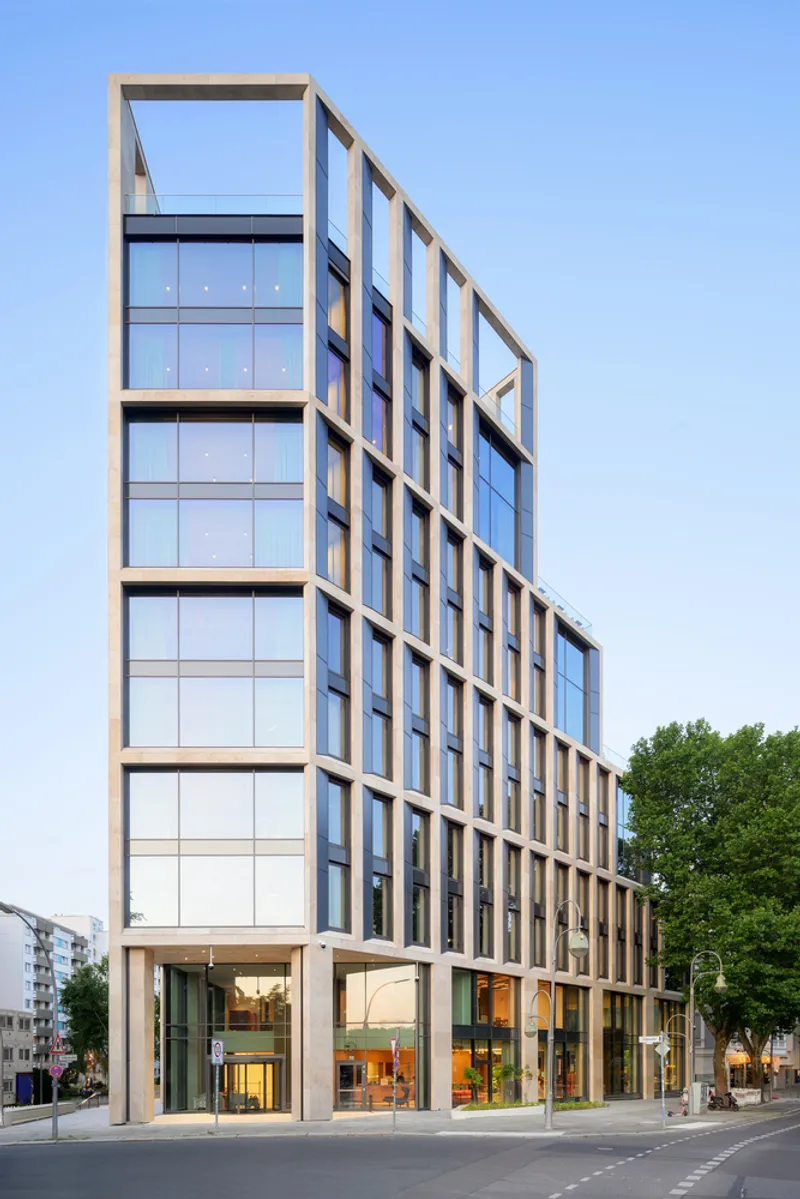
B-One’s architectural approach thoughtfully responds to Berlin’s urban fabric, completing the existing block perimeter in line with city development regulations. Its staggered façade along Budapester Strasse carefully transitions from the full-height building down to the neighboring historic villa, balancing contemporary design with respect for the surrounding scale. This integration ensures the building maintains a strong presence as a corporate landmark while harmonizing with its historic context.
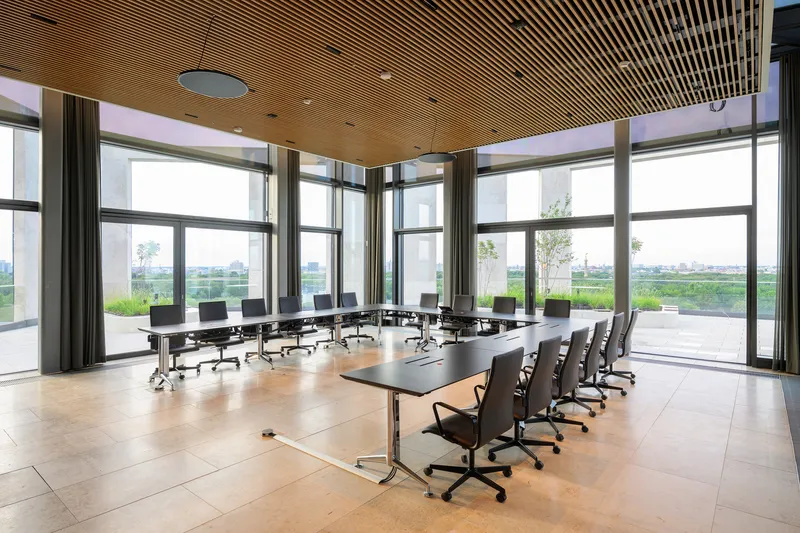
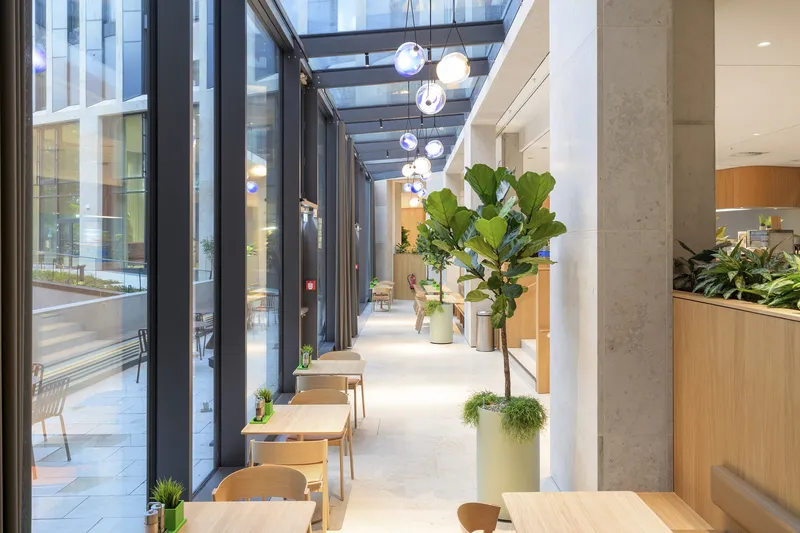
The building’s stepped massing strategy introduces planted terraces that descend rhythmically, integrating greenery throughout the vertical composition and establishing visual continuity between the cityscape and the office environment.
Sustainable Design and Environmental Performance
B-One is designed with climate-conscious architecture at its core, achieving DGNB Platinum and Diamond certifications. Its innovative energy strategies reduce energy consumption by over 50% compared to its predecessor. Key sustainable features include:
- Photovoltaic panels embedded within the natural stone façade grid for on-site renewable energy generation.
- Geothermal heating systems and concrete core temperature regulation within floor slabs.
- Self-shading façade elements to reduce solar heat gain without compromising aesthetics.
- Decentralized hybrid ventilation systems, allowing employees to control their individual office ventilation.
- Rainwater retention terraces, cascading water from roof to terraces and reusing it within the building’s landscape infrastructure.
Additionally, the two basement levels provide 120+ bicycle parking spaces and EV charging stations, promoting sustainable mobility for employees.

Flexible Workspaces and Interior Design
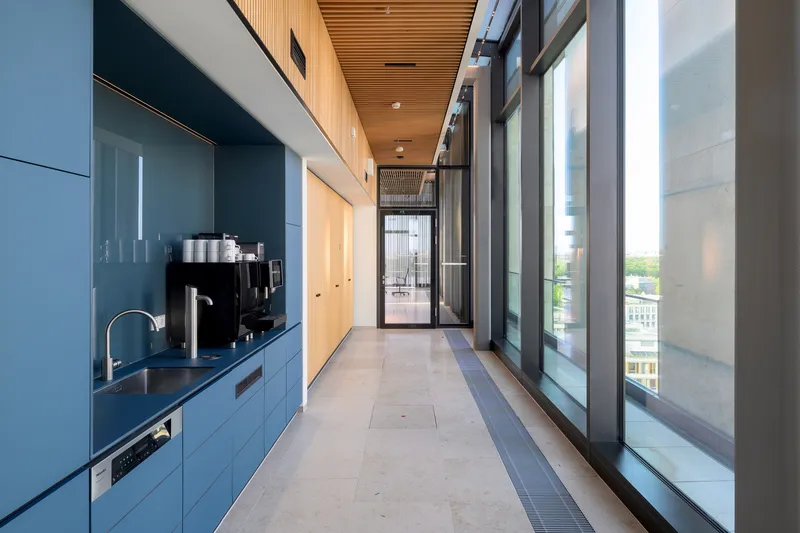
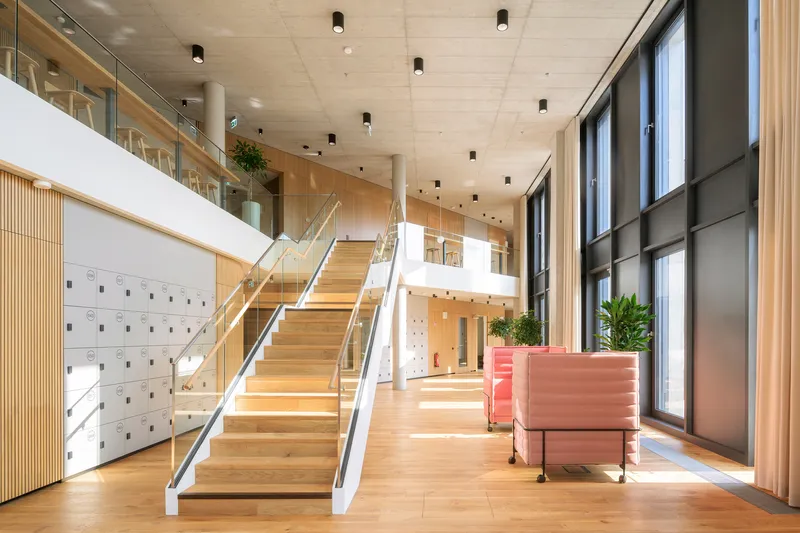
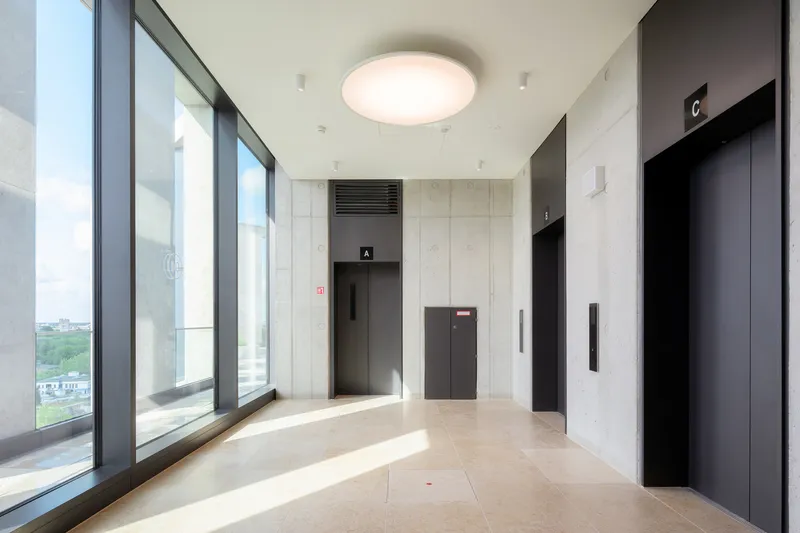
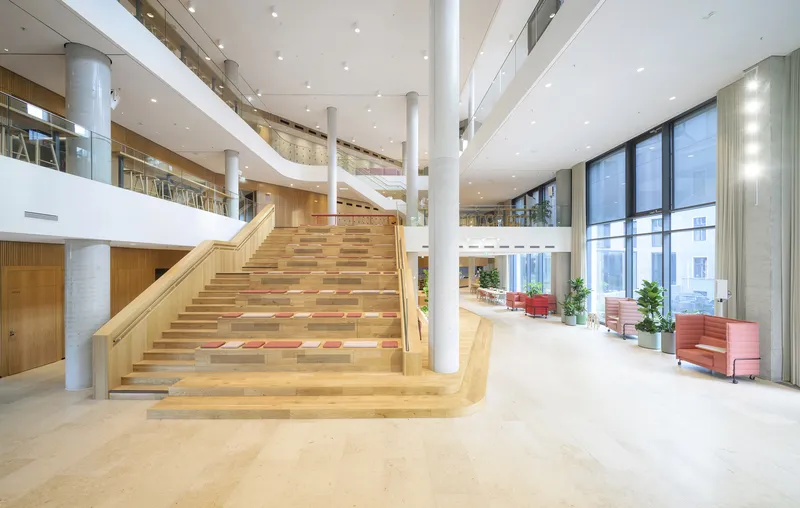
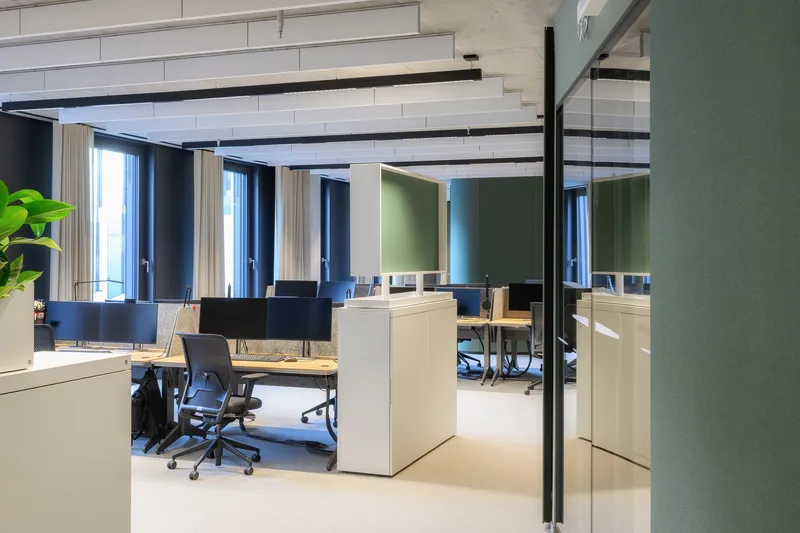
The interior design prioritizes flexible, activity-based workplaces, supporting both collaborative and focused work. The central organizing element is a multi-level town hall, featuring a grand staircase with integrated seating that doubles as a social hub and event space. This town hall connects a sequence of double-height spaces aligned with the building’s stepped profile, complemented by accessible green terraces for outdoor work and relaxation.
The building’s crown hosts roof gardens and conference facilities, offering panoramic views of Berlin while fostering interaction and community within the corporate environment. Public engagement is emphasized through gallery spaces on the ground floor, showcasing art exhibitions and cultural programming, further reinforcing Berlin Hyp’s commitment to social responsibility.

B-One: A Model for Climate-Friendly Corporate Architecture
B-One exemplifies how sustainable design, architectural excellence, and workplace innovation can coexist seamlessly. Its harmonious dialogue between historic urban context and modern design, along with integrated renewable energy systems and flexible office layouts, sets a benchmark for future green office buildings in Berlin and beyond.

All photographs are works of Franz Brück


Popular Articles
Popular articles from the community


Extended Shell: Retrofitting Kolkata's Balconies as Living Urban Thresholds
A modular retrofit system recovers the social and environmental intelligence of Kolkata's historic verandas for contemporary Park Street residents.

Singing Woman: An Opera House That Performs Before the Curtain Rises
Ovidiu Cristian Pavel's conceptual opera house translates Estonia's choral identity into a sculpted waterfront landmark facing the Baltic Sea.

Faces of the Soviet Avant-Garde: Turning Moscow's Street Names into an Open-Air Museum
A network of sculptural installations across a Moscow residential district transforms forgotten architect names into spatial encounters with cultural memor

Temporary Home for Dogs: A Reversed Zoo Rethinks Animal Shelter Architecture
In Bucharest, a sinuous corridor and freed landscape flip the logic of containment, designing a shelter that works to make itself unnecessary.

Similar Reads
You might also enjoy these articles


Hodi-Mandai Geram
Project Function: Preservation and revitalization of the Intangible heritage and socio-spatial identity of the Hodi by Housing, Cultural Memory Center, Sacred Grove, landscape, local tourism economy


Olio Towers: A Mid-Rise for Performers That Fuses Housing, Rehearsal, and Stage
Located blocks from Houston's Theater District, this modular tower stacks living units around a central performance atrium.

Oasis: Modular Green Housing Carved into Dhaka's Urban Fabric
A shortlisted Plugin Housing entry reclaims unauthorized settlements in Dhaka with stepped concrete volumes, green roofs, and ventilation-driven design.

Black Hole: A Floating Megastructure for the Post-Physical Era
Emiliano Mazzarotto envisions a spherical, self-scaling arena where e-sports, digital hotels, and holographic stadiums replace traditional public space.

Explore Office Building Competitions
Discover active competitions in this discipline

Challenge to reimagine the Iron Throne

Photograph architecture without architects

Illustrate the lost glory of Angkor Wat - Render Challenge

Design challenge to reuse E-waste
Comments (0)
Please login or sign up to add comments
No comments yet. Be the first to comment!