

Bagh Shahr Villa by Experience Studio: A Dialogue Between Independence and Connection
Bagh Shahr Villa blends exposed concrete volumes, transparent connections, and warm interiors, creating independent yet interconnected living spaces harmonized with landscape.


Bagh Shahr Villa, designed by Experience Studio in Shahrekord, Iran, is a contemporary residence completed in 2022. Covering 460 m², the villa explores the tension between independent spatial units and their fluid connections, creating a distinctive architectural language that merges landscape, structure, and lifestyle. Photographed by Deed Studio, the project highlights a bold interplay of exposed concrete, geometric volumes, and layered transparency, offering a fresh approach to modern villa design in Iran.
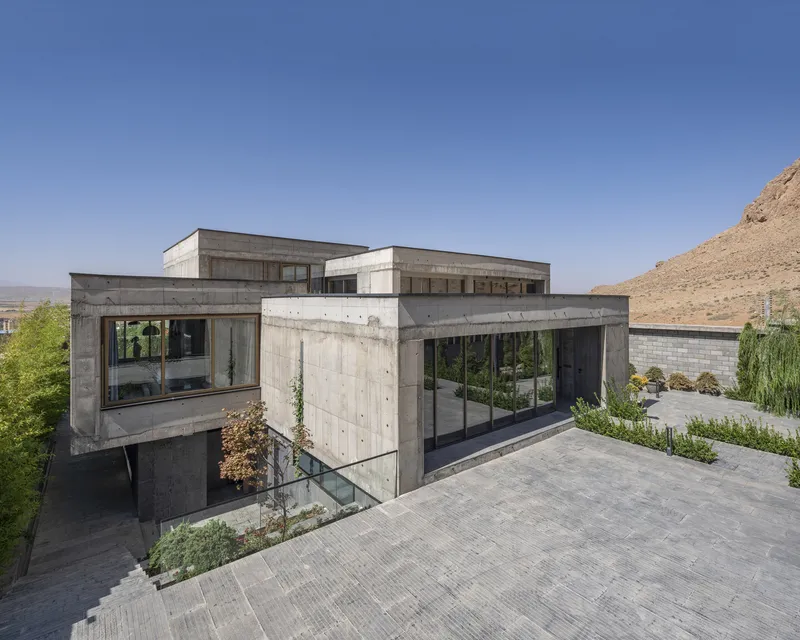

Site Context and Design Approach
Situated on a 25 x 60-meter sloping plot with a 7% gradient, the villa overlooks a plain stretching from the mountains. The area is characterized by villas of varied scales and eclectic materials. Rather than conforming to this context, Experience Studio proposed a critical response to the dominance of repetitive domino-style structures in local architecture.
Instead of beginning with the site, the design process started with a conceptual diagram. Each unit of the villa was imagined as free, independent, and unconstrained, defined only by the client’s program requirements. This diagram-driven strategy allowed for new possibilities in spatial composition and user experience.
Modular Volumes and Spatial Relationships
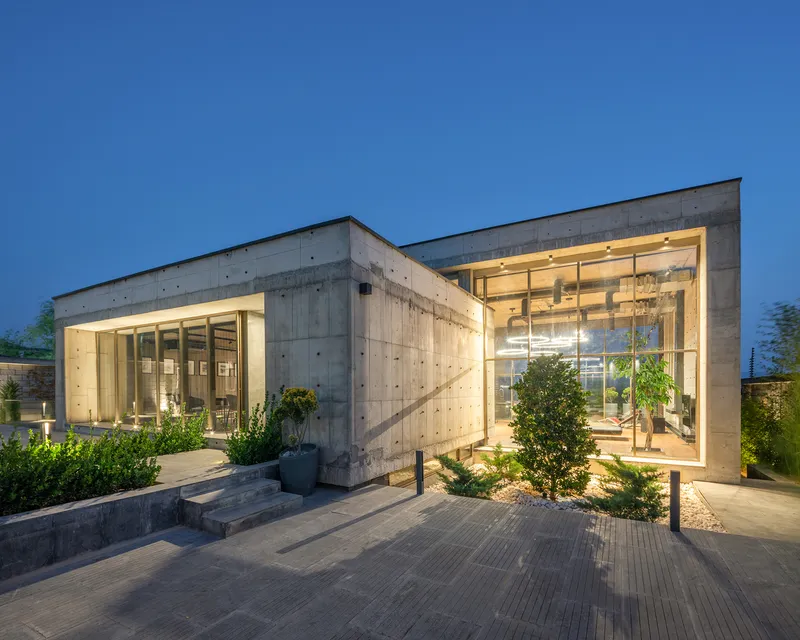
The villa is formed from a cluster of box-like volumes, each treated as an independent architectural unit. The challenge was to organize these units within the site while maintaining both individuality and cohesion.
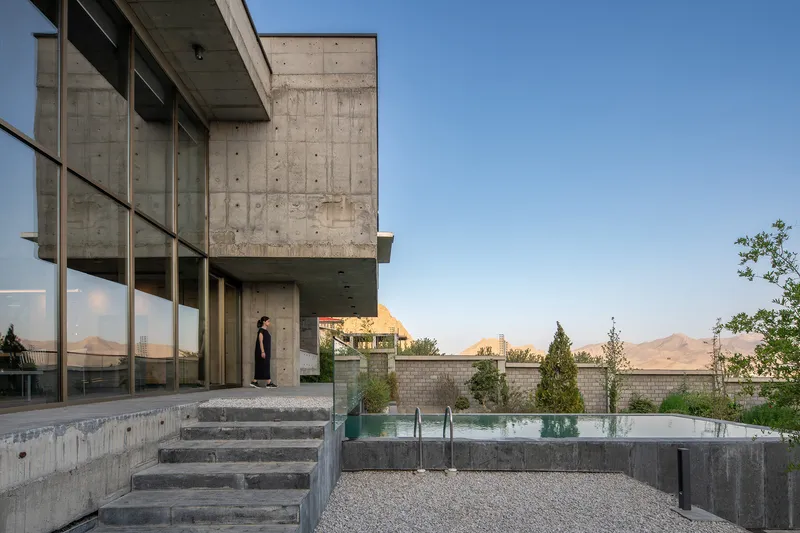
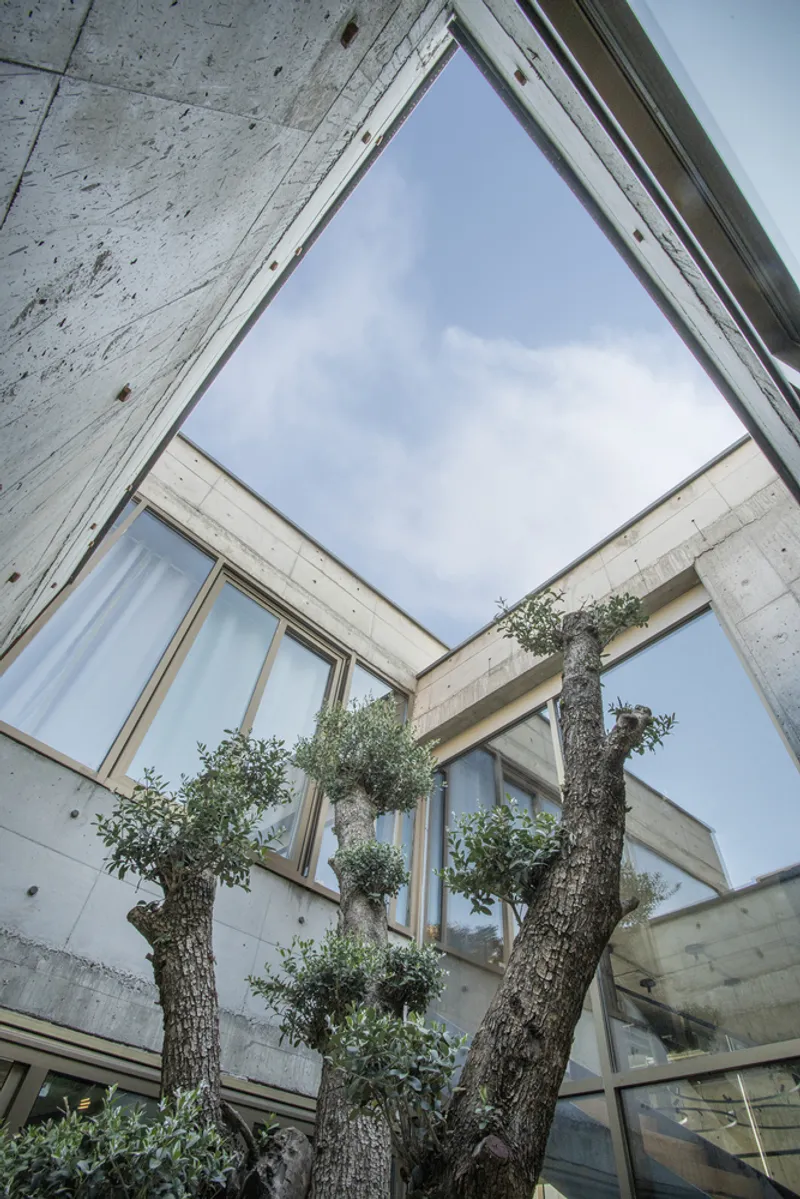
By interconnecting these volumes, the architects introduced residual spaces or in-between spaces that blur the line between interior and exterior. Transparent surfaces at key junctions transform open gaps into habitable zones, creating unexpected spatial transitions. This fluid relationship gives the villa a dynamic quality, where each movement through the house feels like a discovery.

Light, Views, and Orientation
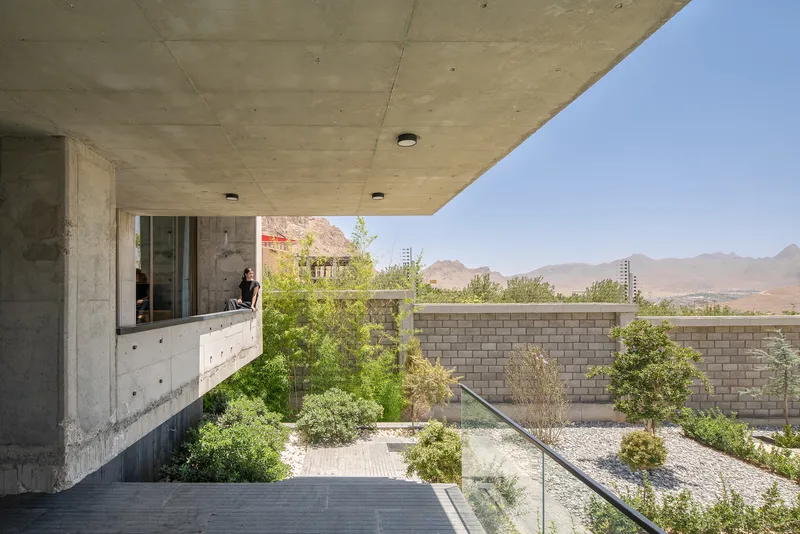
The orientation of the boxes was carefully considered to maximize views of the mountains and the city while avoiding harsh sunlight from the east and west. South and north-facing facades are treated with large glazed openings, ensuring transparency and visual continuity with the surroundings. In contrast, the rigid concrete side walls protect the villa from unwanted solar gain, maintaining both comfort and privacy.
Structural Integrity and Materiality
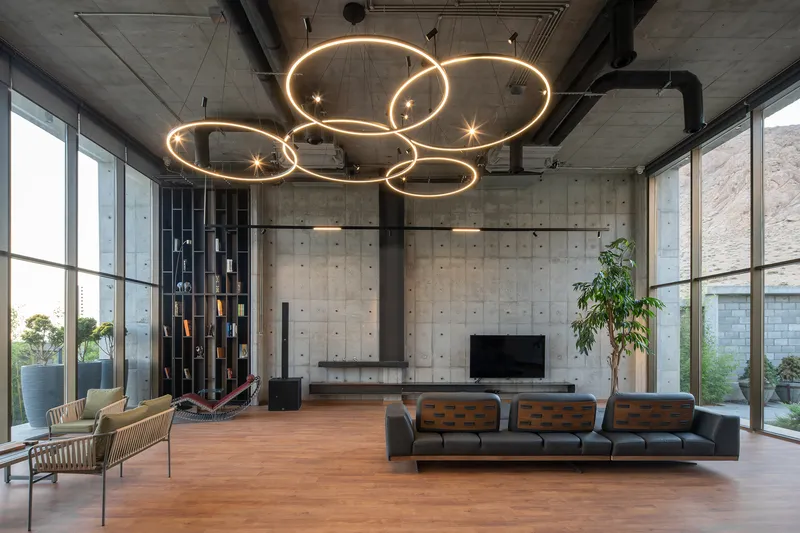
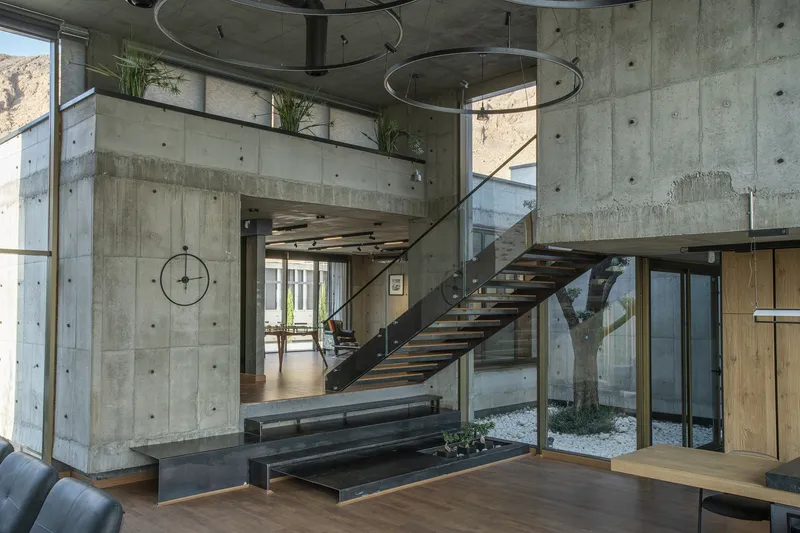
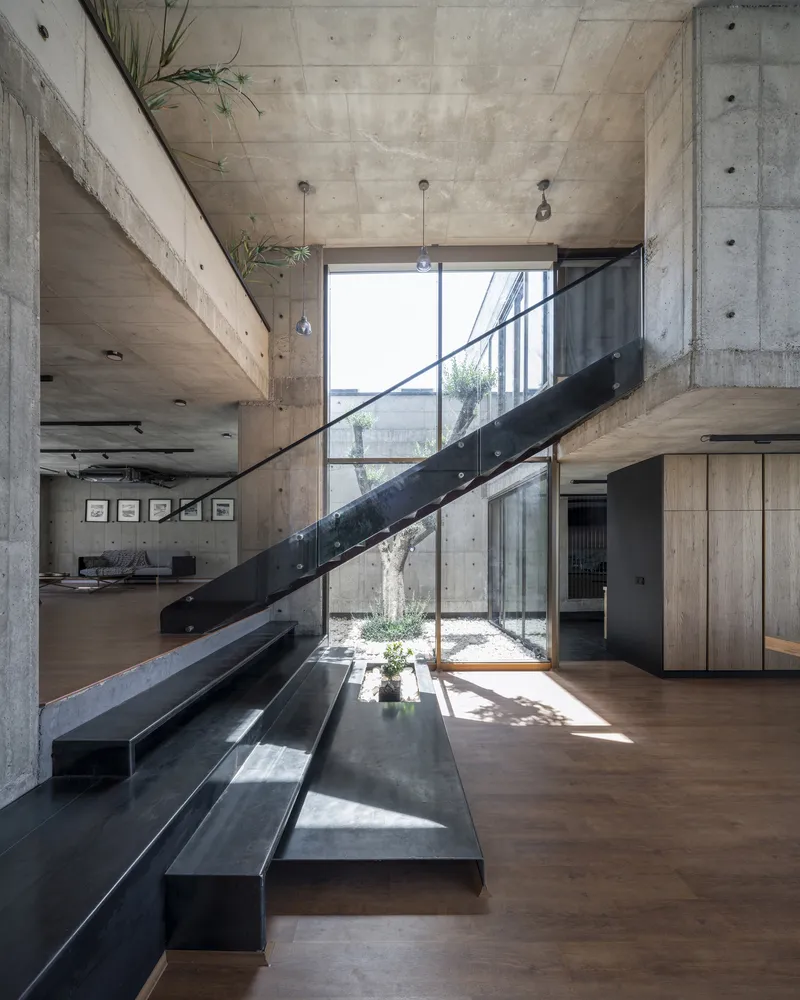
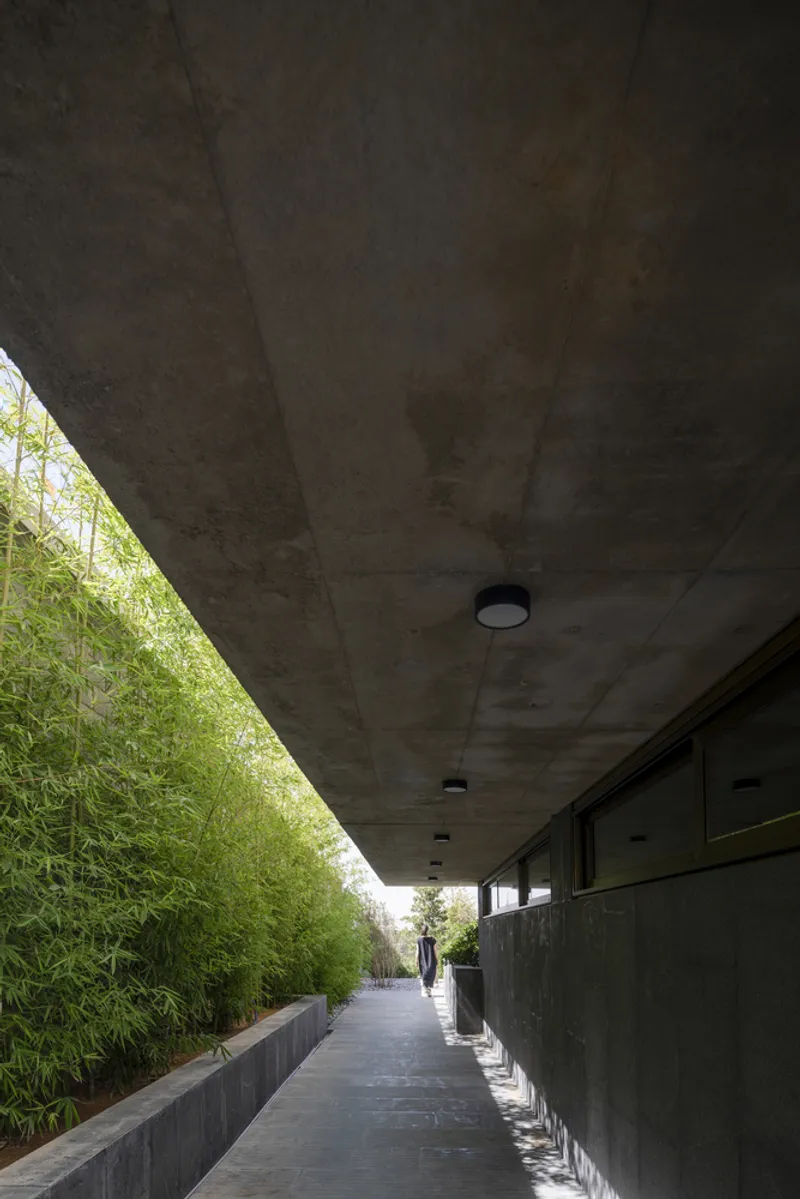
The villa’s structural system consists of concrete walls and slab roofs, chosen for their durability, simplicity, and alignment with the architectural diagram. The exposed concrete surfaces not only serve a structural function but also establish a minimalist, raw aesthetic.
Inside, concrete ceilings integrate lighting and mechanical systems seamlessly, while furniture pieces—such as cabinets, TV stands, and fireplaces—are conceived as independent objects against concrete backdrops. To balance the cool materiality, wooden parquet flooring introduces warmth, ensuring a harmonious living environment.
Circulation and Vertical Connections
A metal staircase connects the upper and lower levels, emphasizing vertical circulation and maintaining visual continuity between volumes. Varying box heights respond to the natural slope of the site, creating multi-directional views while preserving spatial independence.
The deliberate contrast between rigid concrete structures and light transparent connections enhances the architectural narrative: a balance between solidity and openness, permanence and flexibility.
Pool and Landscape Integration
At the client’s request, a swimming pool was incorporated as an independent programmatic element. Like the villa itself, it interacts with the surrounding boxes to form distinct yet connected outdoor experiences. The landscape is not treated as a backdrop but as an active participant in shaping movement, views, and light within the villa.

Bagh Shahr Villa demonstrates how architecture can challenge conventional villa typologies by rethinking spatial organization, structure, and materiality. Through its diagram-based design, the villa achieves both independence and interconnection, offering residents a constantly evolving spatial experience. The use of exposed concrete, strategic transparency, and warm material contrasts establishes a strong identity while responding sensitively to context and client needs.
All Photographs are works of Deed Studio


Popular Articles
Popular articles from the community


LT2A and OPEN Architectes Thread a Brick and Glass High School Through a Wooded Belgian Campus
In Braine-l'Alleud, a 3,000 m² wing for Collège Cardinal Mercier pairs pale brick with a glazed colonnade, deferring to a small chapel and a dense wood.

David Macias Steps a Doorless Stone and Plaster House Down a Tropical Colombian Hillside
In the humid hills of Colombia, Threshold House replaces the front door with an open void and terraces its 850 m² down the slope instead of fighting it.

Jaramillo Van Sluys Arquitectura and Urbanismo Turn a Demolished Registry Lot in Quito into an Orchard Plaza
In Quito's Centro Histórico, a 2,800 m² plaza exposes the San Agustín convent wall and redraws its lost Augustinian orchard in volcanic stone.

longwave studio Reorganizes a 112 m² Tainan Apartment Around the Daily Routines of a Family and Two Cats
In Tainan, Taiwan, birch plywood, rust-red furniture and a freestanding plaster wall link arrival, storage, work and family life in one apartment.

Similar Reads
You might also enjoy these articles


Hodi-Mandai Geram
Project Function: Preservation and revitalization of the Intangible heritage and socio-spatial identity of the Hodi by Housing, Cultural Memory Center, Sacred Grove, landscape, local tourism economy


Olio Towers: A Mid-Rise for Performers That Fuses Housing, Rehearsal, and Stage
Located blocks from Houston's Theater District, this modular tower stacks living units around a central performance atrium.

Oasis: Modular Green Housing Carved into Dhaka's Urban Fabric
A shortlisted Plugin Housing entry reclaims unauthorized settlements in Dhaka with stepped concrete volumes, green roofs, and ventilation-driven design.

Black Hole: A Floating Megastructure for the Post-Physical Era
Emiliano Mazzarotto envisions a spherical, self-scaling arena where e-sports, digital hotels, and holographic stadiums replace traditional public space.

Explore Architecture Competitions
Discover active competitions in this discipline

Challenge to reimagine the Iron Throne

Photograph architecture without architects

Illustrate the lost glory of Angkor Wat - Render Challenge

Design challenge to reuse E-waste
Comments (0)
Please login or sign up to add comments
No comments yet. Be the first to comment!