
Beijing 751 Library by Do Union Architecture: Revitalizing Industrial Heritage into a Cultural Landmark
The Beijing 751 Library transforms an industrial ash pool into an open cultural hub, blending concrete arches, glass walls, and preserved machinery.

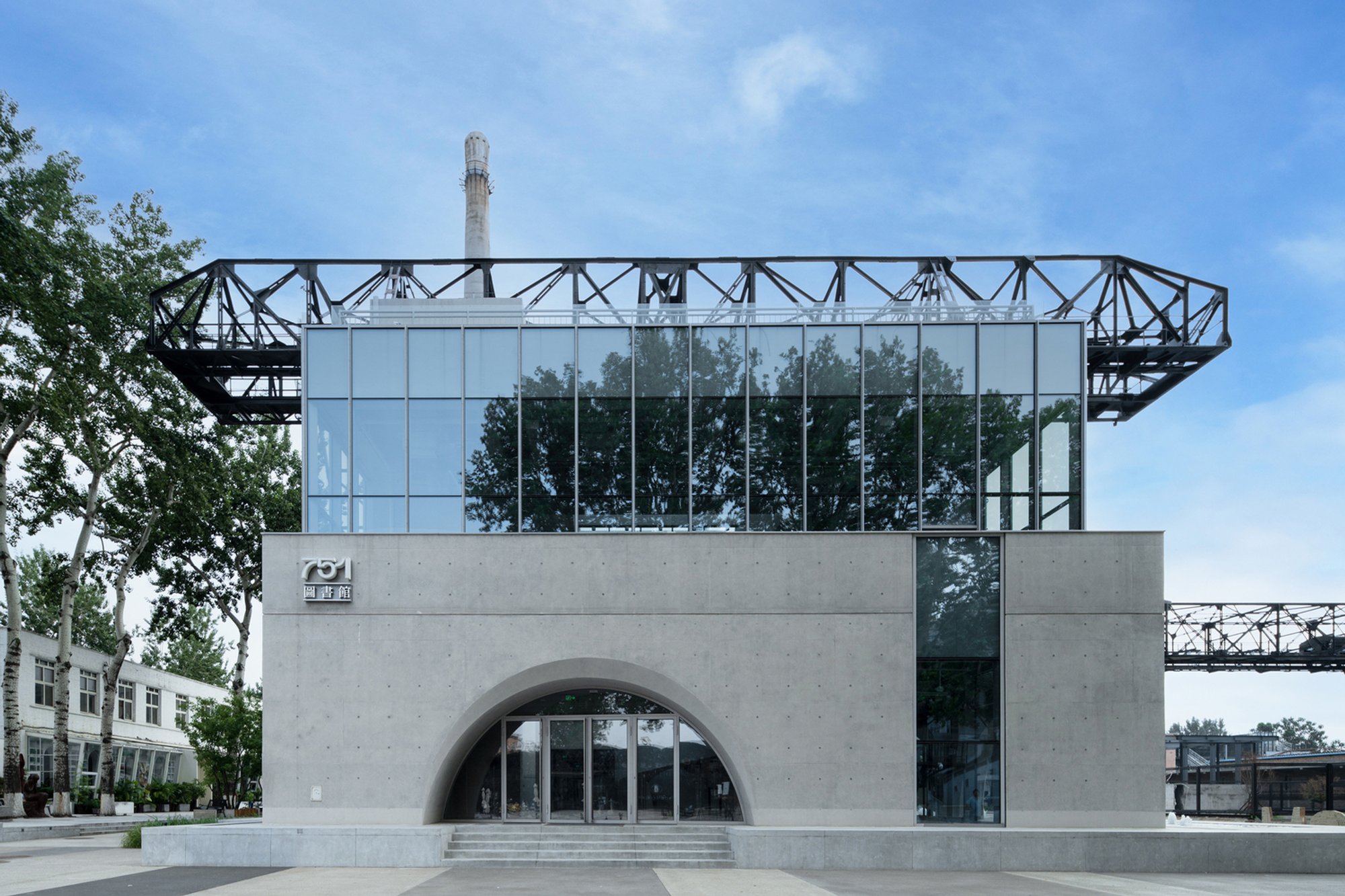
The Beijing 751 Library, designed by Do Union Architecture, stands as a bold example of industrial adaptive reuse within the iconic 751 to 798 Art District, China’s largest creative zone and an important hub for Beijing Fashion Week and Beijing Design Week. Completed in 2024 and spanning 2,700 m², the project transforms a former ash-washing pool into a fully open, human-centered cultural destination that celebrates the district’s industrial past while introducing a contemporary architectural identity.
Context: A Site Rooted in Industrial Memory
The 751 to 798 Art District originated in the 1950s with East German assistance, once hosting vast electronics factories and heavy industrial infrastructure. The library site marks the end of 798 Road, directly facing Locomotive Plaza, one of the district’s main public nodes.
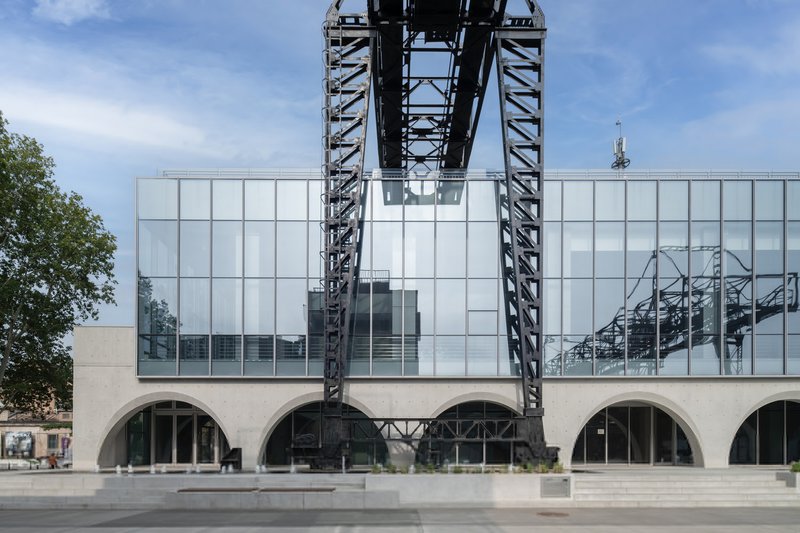
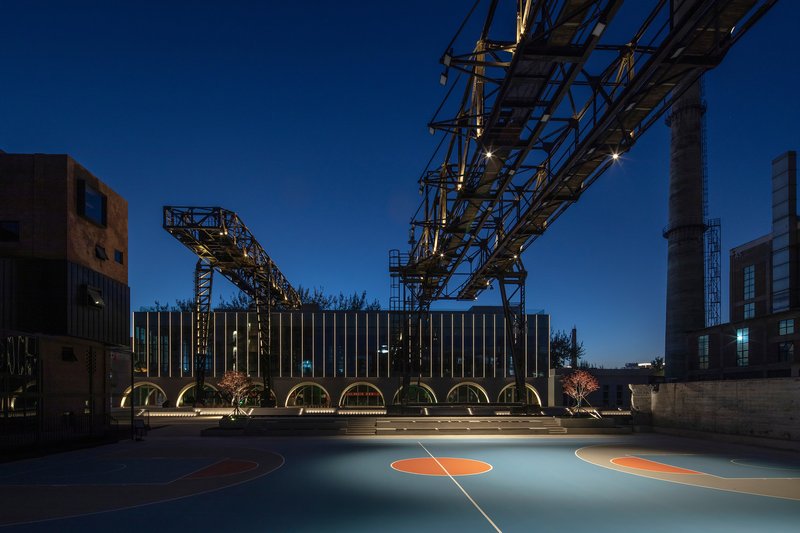
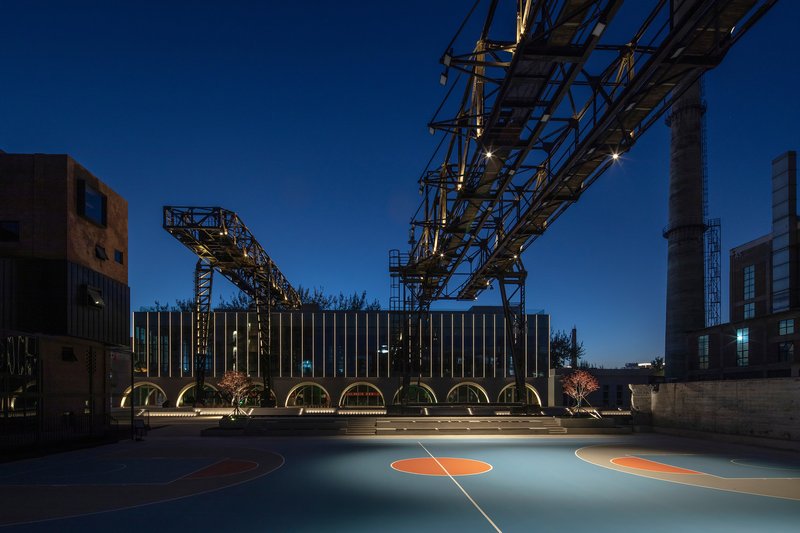
The original footprint was a residual coal ash-washing pool, once equipped with an overhead crane used to transport and dump ash from surrounding facilities. After decommissioning in 2010, the area was fenced off, interrupting nearly 300 meters of continuous commercial frontage leading toward the plaza. The new library strategically restores this lost urban connectivity.
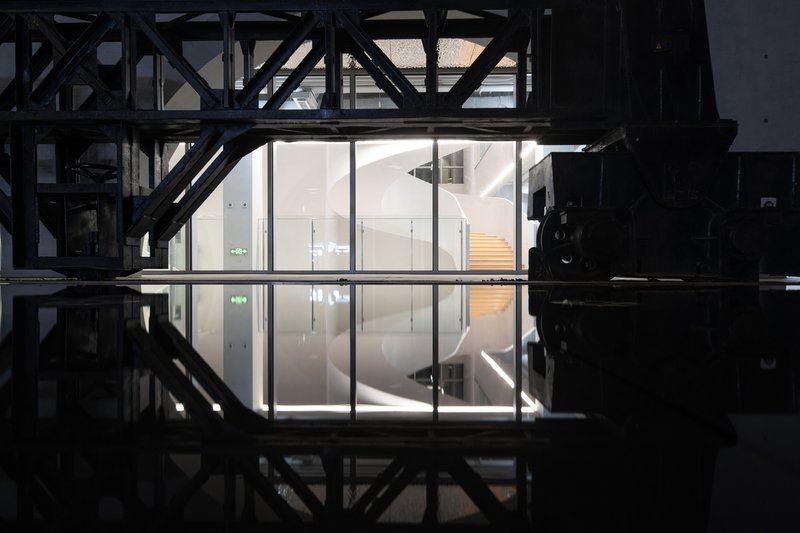
A Catalyst for the Revitalization of Locomotive Plaza
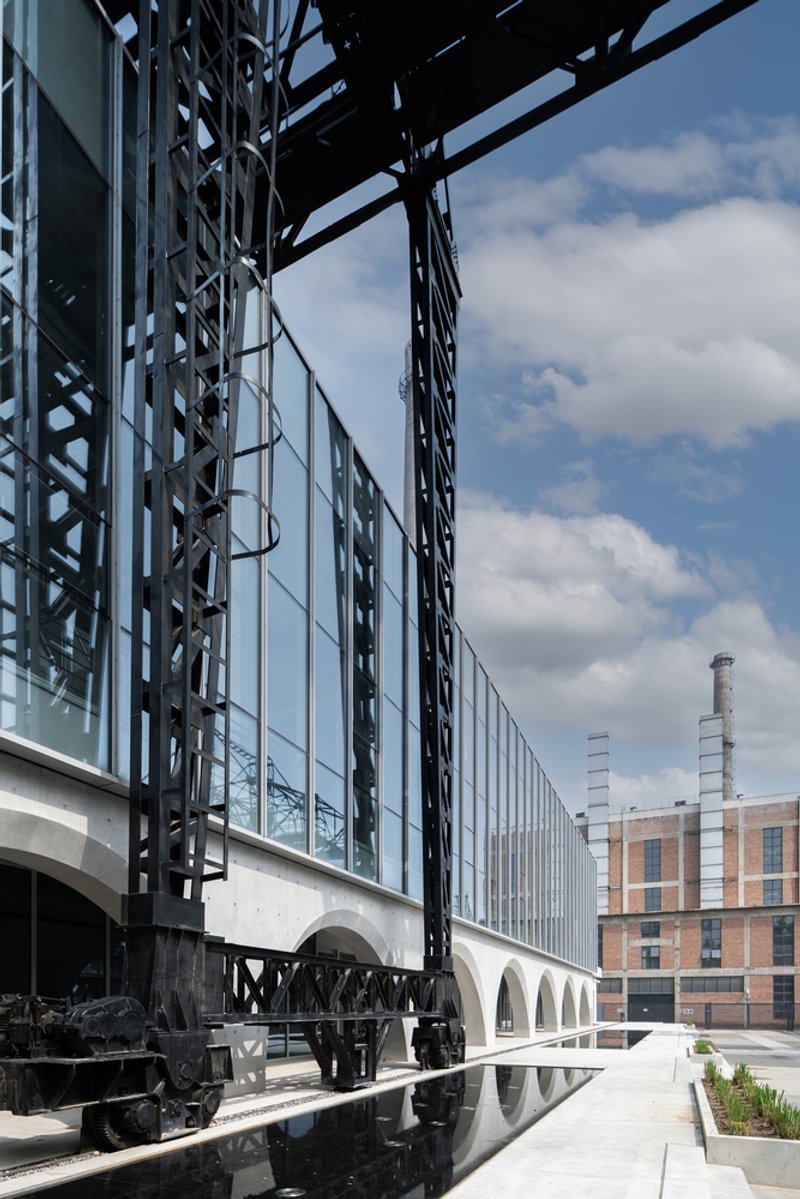
As part of the district-wide renewal, the Beijing 751 Library serves as a cultural anchor that stimulates public life and strengthens pedestrian activity. Its open boundaries align with the original industrial outline, creating fluid transitions between the new structure and historical relics such as:
- Coal conveyor systems
- Industrial boilers
- Railway tracks
- Overhead cranes
- Decommissioned locomotives
This relationship produces a dynamic urban interface where old and new coexist in visual and spatial dialogue.
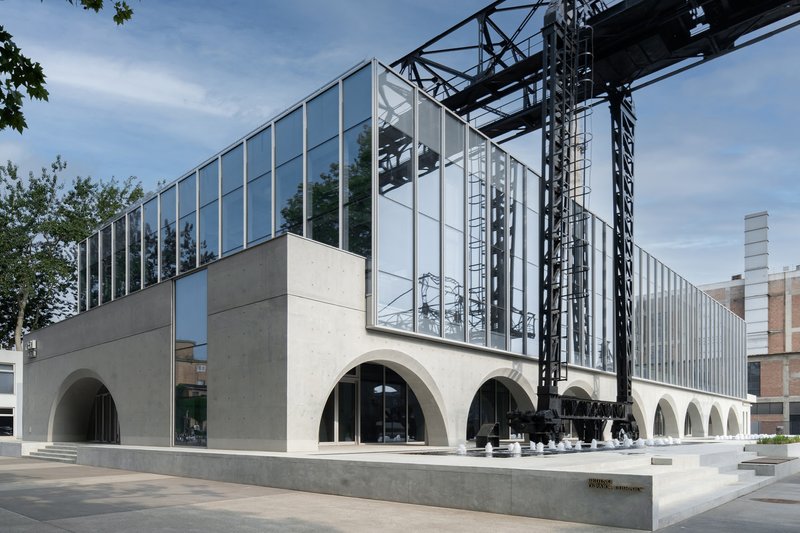
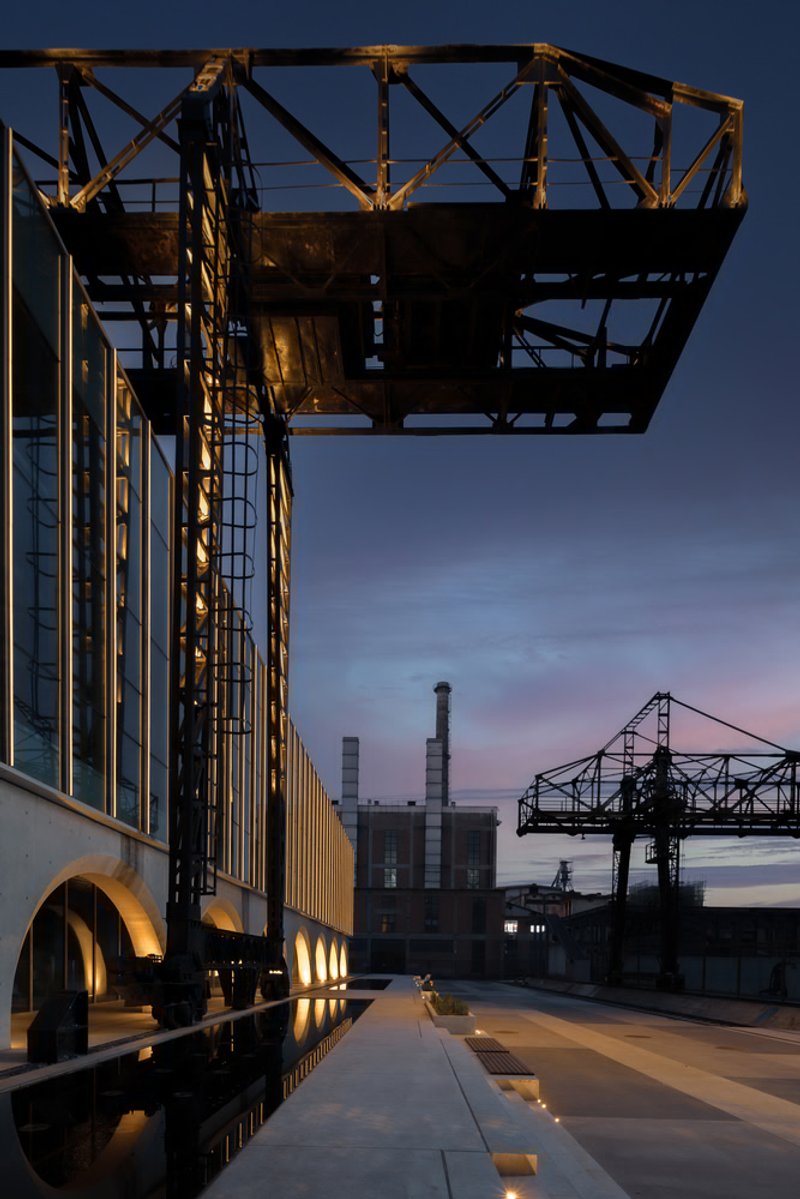
Industrial Landscape Integrated into Public Space
Do Union Architecture extends the surrounding landscape into the northern and southern “hinterlands” of the former factory site, forming an active cross-shaped public district. Industrial fragments, kept deliberately scattered, merge with contemporary interventions, generating a layered experience that honors the site's manufacturing history.
The design transforms the once-closed industrial facility into a vibrant urban scene, reinterpreting industrial memory through a contemporary, human-scaled approach.
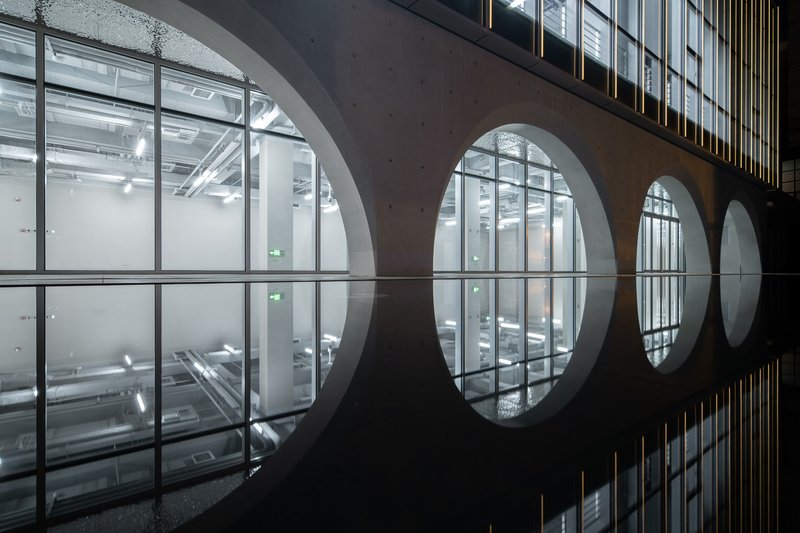
Program: A Multifunctional Cultural Complex
While the building’s primary function is a library, it expands the idea of a cultural space by integrating:
- Reading and research areas
- Cultural forums and lecture halls
- Multi-purpose conference rooms
- Café and dining zones
The structure consists of two floors above ground and one level below, enabling flexible circulation and diverse programming suitable for both locals and visitors.
Architectural Expression: Concrete, Light, and Industrial Heritage
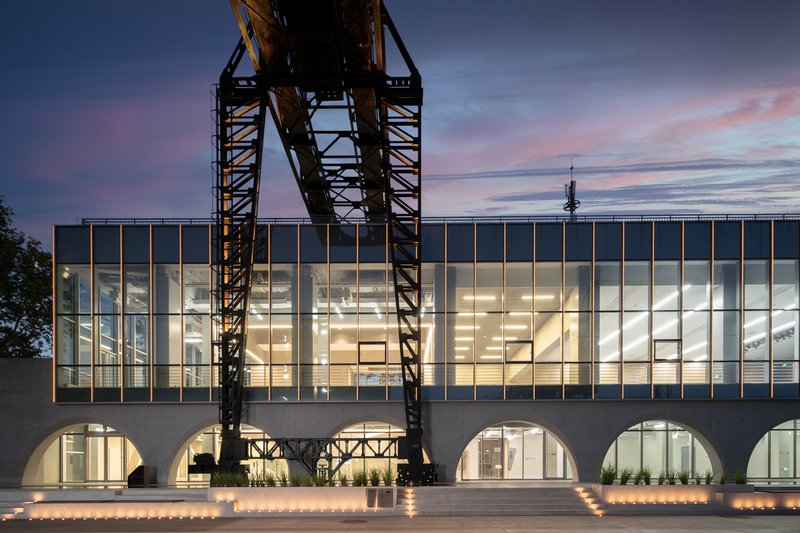
The library’s architectural character is defined by continuous fair-faced concrete arches wrapping the façade, an elegant contrast to the rough, weathered industrial surroundings. A key feature is the preserved overhead crane, dramatically incorporated into the building’s massing. Its visible presence and potential movement introduce a kinetic quality unattainable in a typical library.
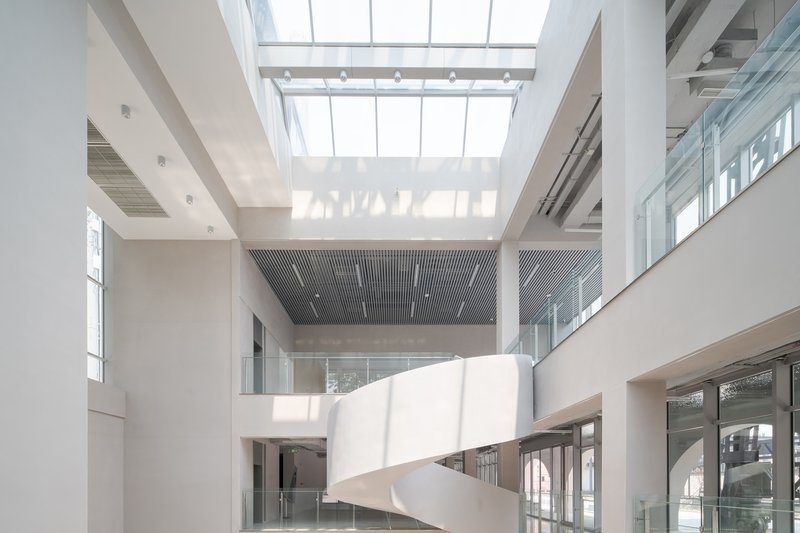
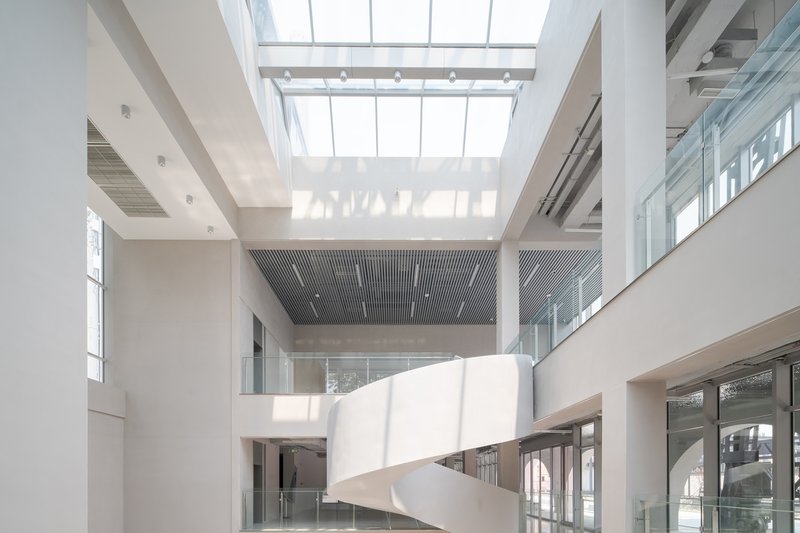
Large glass curtain walls and expansive skylights flood the interior with natural light while capturing panoramic views of the industrial relics outside. These reflections enhance the building’s sculptural quality and create a fluid, ever-changing relationship between interior and exterior.
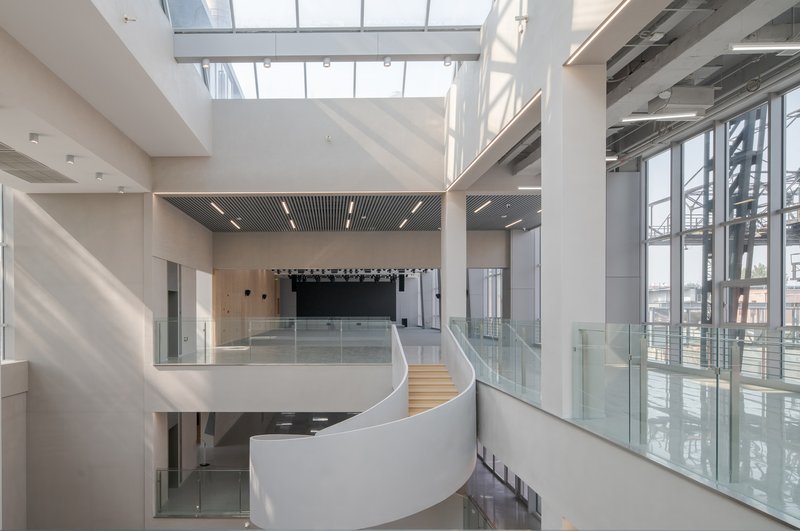
Interior Space: Openness and Immersive Industrial Atmosphere
The design team carved out half of the ground floor to achieve a triple-height transparent atrium, forming a nearly unobstructed visual axis across the building. This openness allows the surrounding industrial landscape to penetrate deeply into the interior, transforming machinery, cranes, and pipes into unexpected architectural backdrops.
The compact footprint is reorganized to create dramatic vertical and horizontal connections, enriching the spatial experience and allowing visitors to engage with both books and industrial history in a single immersive environment.
The Beijing 751 Library by Do Union Architecture is more than a library, it is a milestone in the evolution of the 751 to 798 Art District and an exemplary case of transforming industrial vestiges into contemporary cultural infrastructure. Through sensitive preservation, spatial openness, and adaptive reuse, the project revitalizes a forgotten industrial void into a vibrant urban landmark that celebrates Beijing’s creative and industrial heritage.
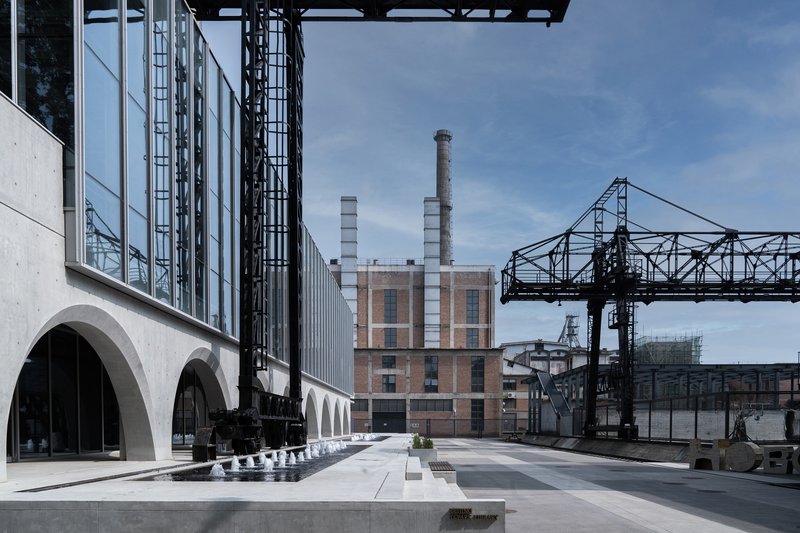
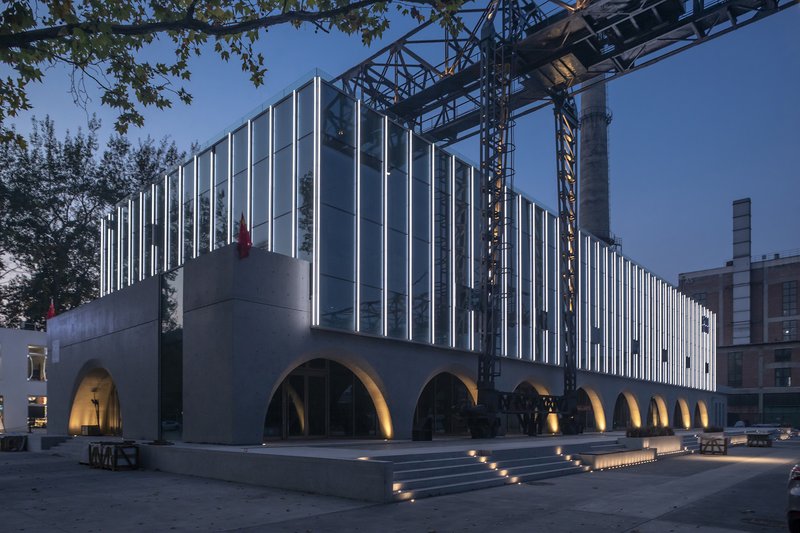
All photographs are works of Xuanang Tian, Zhou Li



Popular Articles
Popular articles from the community

Guangzhou's Twin Towers Interiors Move Like Water
DuShe Architectural Design shapes the lobbies of a massive Guangzhou transit hub with undulating ceilings and deep geological materiality.
Residence BB 214: Quiet Precision in Ludhiana
Minimalist Architecture & Design Studio composes a residence of white volumes, filtered light, and deliberate restraint in Punjab's urban fabric.
Cafe MADA: A Chiang Rai Pavilion in a Mango Orchard
BodinChapa Architects threaded a 254 m² black-roofed cafe through an existing mango orchard in Chiang Rai, Thailand, built around mature trees.
Art 1 Office Strips Athens Back to Its Bones
Neiheiser Argyros transforms a 40-year-old Athens office building into a vivid, materially rich workplace anchored by red steel, exposed concrete, and roof

Similar Reads
You might also enjoy these articles

Filtering Space: A Gradual Spatial Experience
From urban intensity to spatial calm.


The Ken Roberts Memorial Delineation Competition (Krob)
As the most senior architectural drawing competition currently in operation anywhere in the world, it draws hundreds of entries each year, awarding the very best submissions in a series of medium-based categories.

Waterfront Redevelopment and Urban Revitalization in Mumbai: Forging a New Dawn for Darukhana
A transformative waterfront redevelopment project reimagining Darukhana’s shipbreaking heritage into an inclusive urban future.
OUT-OF-MAP: A Call for Postcards on Feminist Narratives of Public Space
Rhizoma Design and Research Lab invites artists, designers, architects, researchers, and students to reflect on how feminist perspectives can reshape public space. Selected works will be exhibited in Barcelona, October 2026. Submissions open until 15 April 2026.


Explore Architecture Competitions
Discover active competitions in this discipline




The International Standard for Design Portfolios


The Global Benchmark for Architecture Dissertation Awards


The Global Benchmark for Graduation Excellence


Challenge to design public laboratory
Comments (0)
Please login or sign up to add comments
No comments yet. Be the first to comment!