
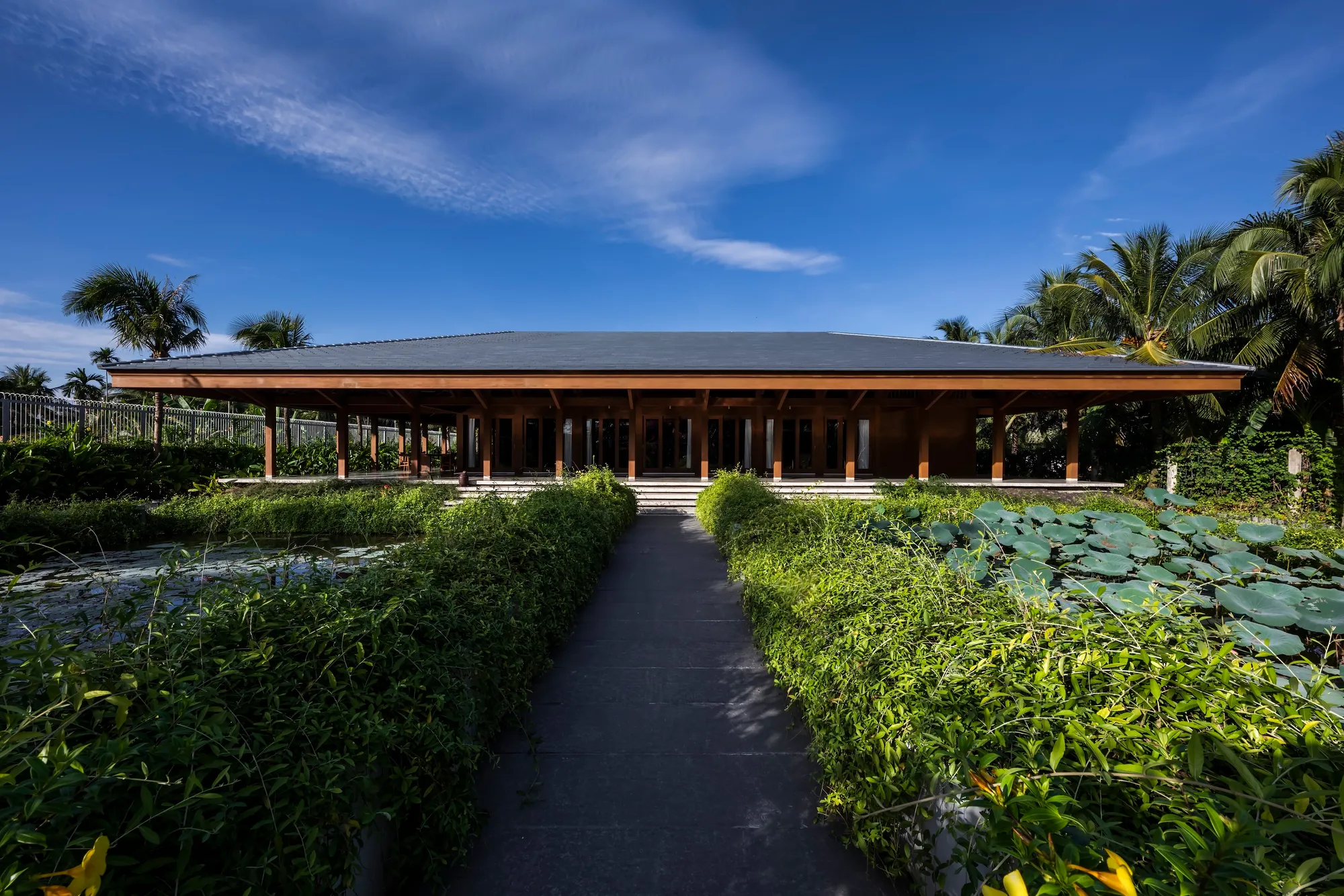
A Timber Temple Rooted in the Coconut Groves of Bến Tre
VTN Architects designs a Buddhist temple and ancestral hall as a low-slung timber pavilion nestled among the palm forests of southern Vietnam.


Bến Tre province sits at the mouth of the Mekong Delta, a landscape defined by water, coconut palms, and a pace of life that resists the vertical ambitions of Vietnam's cities. It is the kind of place where any new building has to justify its presence against a backdrop that is already, by most measures, complete. VTN Architects, led by Vo Trong Nghia, have built a career on treating that tension seriously, and this 450 square meter Buddhist temple and ancestral hall is one of the quieter, more resolved outcomes of that commitment.
What makes this project worth studying is not its spiritual program, which is common enough across the delta, but the way its architecture dissolves the boundary between shelter and landscape. The building barely rises above the tree canopy. Its deep verandahs, exposed timber trusses, and open edges turn a house of worship into something closer to a clearing in the forest: a space that is simultaneously constructed and found. The result feels less like a building placed on a site and more like a condition that the site was always waiting to produce.
Landscape as Architecture
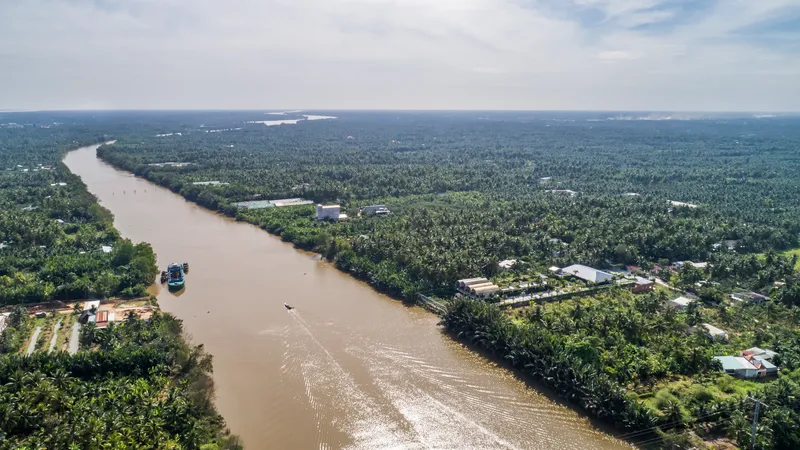

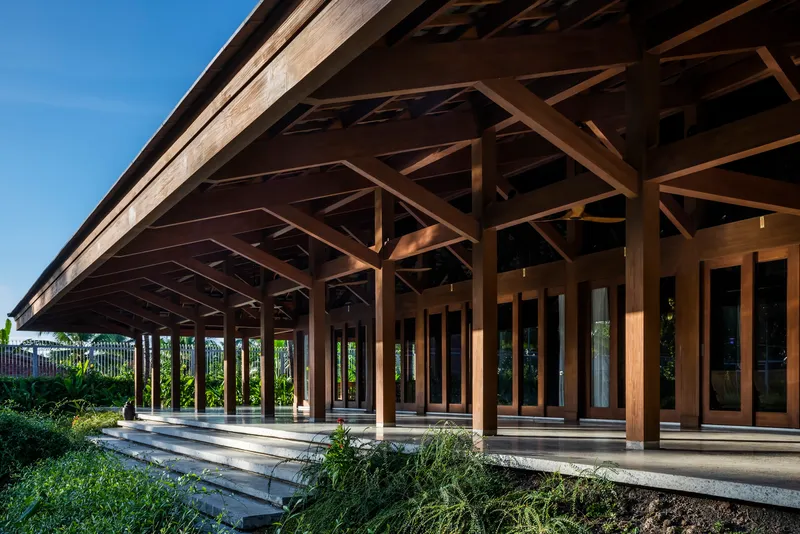
The aerial view tells you almost everything. The temple is surrounded by, and submerged within, a dense palm forest threaded by a river. It is not a focal point in the landscape; it is a participant. VTN's decision to keep the building low, spreading its program horizontally beneath a shallow pitched roof, means the structure defers to the canopy rather than competing with it. This is a deliberate inversion of the monumental tendency in religious architecture.
At twilight, the planted approach path leading through beds and lotus ponds toward the pavilion reveals the layering strategy at work. The building does not announce itself with a gate or a facade. Instead, you move through zones of increasing enclosure: open garden, planted threshold, colonnade, interior. The deep eaves and timber columns along the planted edge function as a transition device, blurring where the garden stops and the building begins.
The Colonnade and the Verandah
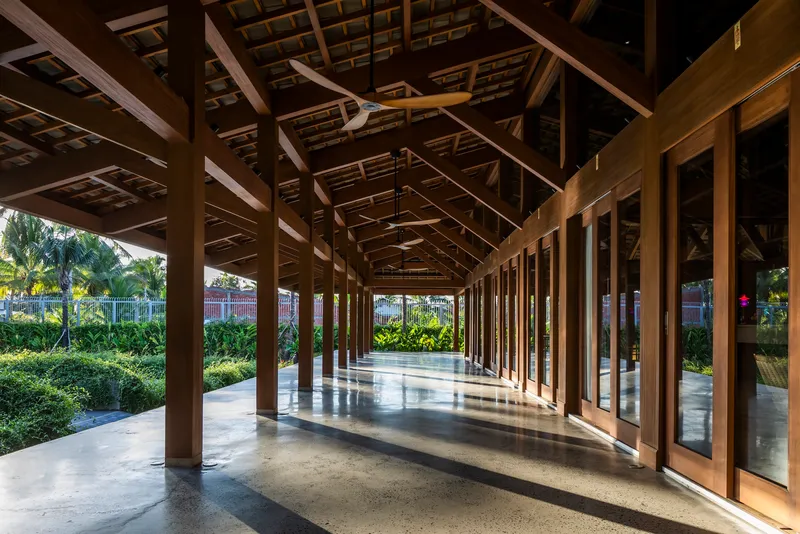


The covered colonnade is the key spatial element here. Its polished concrete floor and regularly spaced timber columns create a rhythm that is almost classical in its discipline, yet the garden views filtering through those columns keep the experience firmly tropical. Light enters not as a controlled theatrical event but as a diffuse, shifting presence, modulated by the planting beyond.
The verandah wraps the building on all sides, acting simultaneously as circulation, social space, and environmental buffer. This is not a novel strategy in Vietnamese vernacular architecture, but VTN executes it with a precision that elevates it from convention to proposition. The covered terrace overlooking palm trees operates as a room without walls, a space that belongs to both inside and outside without fully committing to either.
Timber Structure as Ornament

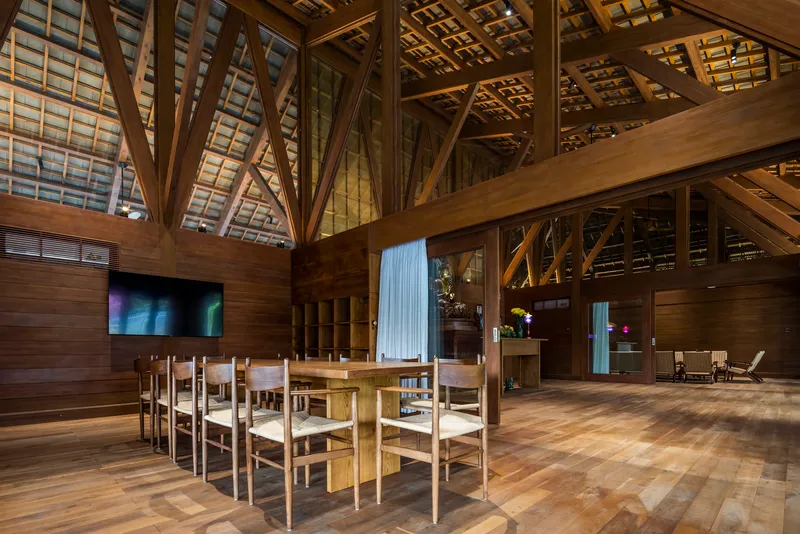
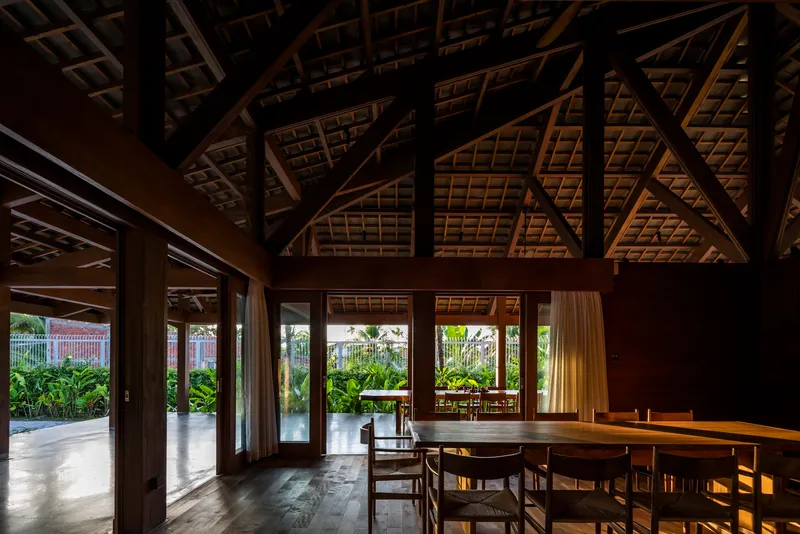
The exposed timber truss system is the building's most visible architectural gesture. Diagonal bracing, ridge beams, and purlins are all left visible, turning the roof structure into the primary interior experience. There is no applied decoration anywhere. The ornament, such as it is, comes entirely from the logic of construction: the grain of the wood, the joinery at the nodes, the shadow lines cast by the trusses onto the walls below.
In the dining area, timber chairs sit beneath these diagonal braced trusses with wood-paneled walls catching afternoon light through glazed doors. The palette is deliberately restrained: timber, concrete, glass, and not much else. This restraint gives the structure room to perform. You read the roof not as a surface but as a system, and that legibility lends the interior a sense of honesty that feels appropriate for a space of worship and gathering.
Light and Dusk

Hiroyuki Oki's photographs at dusk reveal a quality of light that daytime images cannot fully communicate. The timber-framed dining hall, illuminated from within, glows like a lantern set into the dark mass of surrounding vegetation. The building's openness, which during the day reads as permeability and connection to the garden, transforms at night into something more intimate: a warm interior visible through its own structural frame.
This dual character, open by day and luminous by night, gives the building a temporal range that static architecture often lacks. The shallow pitched roof, the glazed openings, and the exposed trusses all collaborate to produce a space that changes mood with the hours. It is a building designed not just for a program but for a climate, and for the specific quality of equatorial light that defines life in the delta.
Plans and Drawings
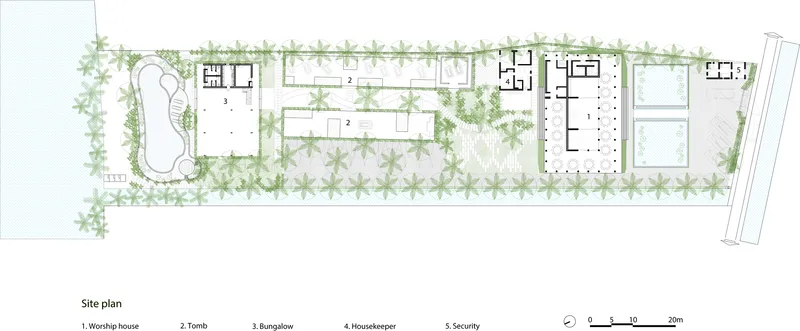
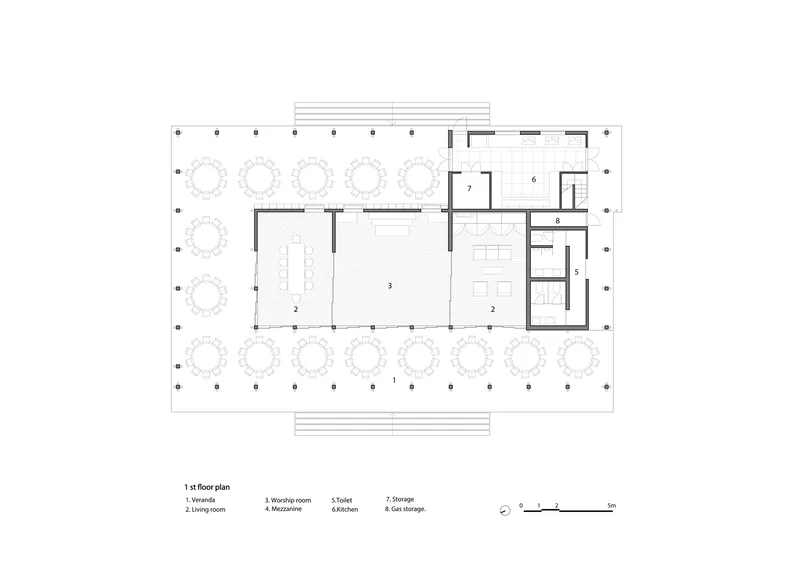
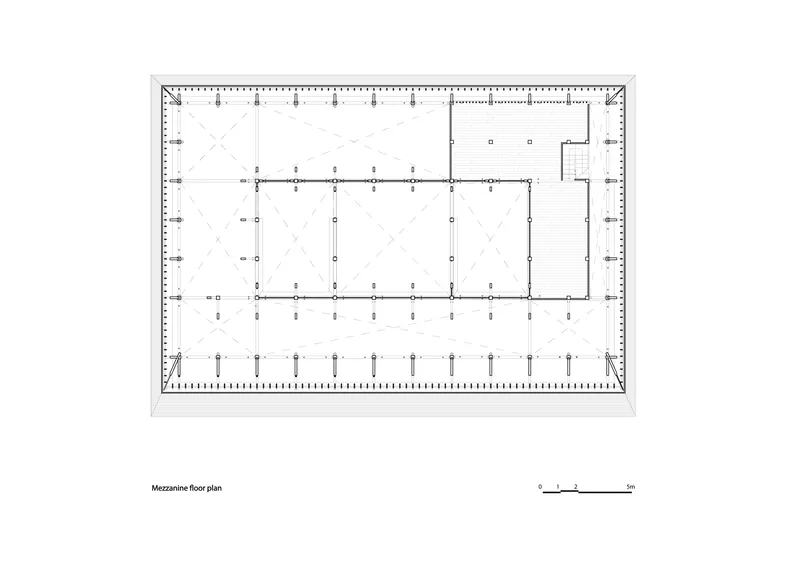
The site plan confirms the compound logic of the project. The worship house sits at the center of a dispersed ensemble that includes a tomb, bungalow, and service buildings for housekeeping and security, all arranged within a generous landscape. Circular tree symbols populate the drawing, reinforcing the idea that the planting is not an afterthought but a co-equal element of the design. The ground floor plan shows the worship room and living spaces wrapped by a continuous verandah, a diagram of interiority surrounded by threshold.

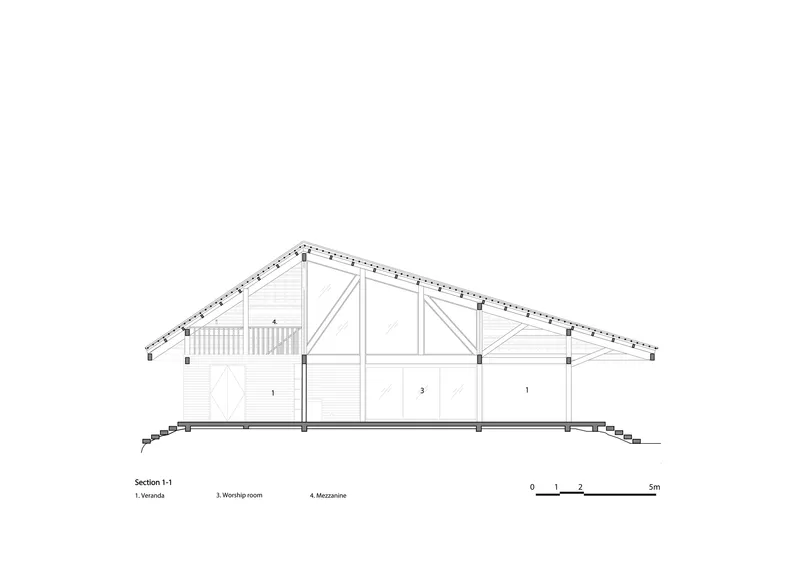

The roof plan reveals a trapezoidal form with sloped edge conditions, a geometry that is simple in plan but produces subtle spatial variation underneath. The two section drawings are perhaps the most revealing: they show the shallow pitched roof supported by exposed diagonal bracing over both the living and worship spaces, with the verandah acting as a spatial and structural buffer between the column line and the enclosure. The proportional relationship between the roof's overhang and the interior volume is carefully calibrated. The building breathes through its edges.
Why This Project Matters
Religious buildings in Southeast Asia are too often caught between two modes: pastiche historicism that reproduces temple typologies without engaging contemporary construction, or globalized minimalism that strips away all cultural resonance in the name of modernity. VTN's Ben Tre temple navigates a third path. It draws on the vernacular logic of the delta, the deep eaves, the wrapped verandah, the timber structure, but deploys these elements with a spatial precision and material economy that is unmistakably contemporary.
At 450 square meters, the building is modest in scale, and that modesty is part of its argument. Not every act of devotion requires a monument. Sometimes what is needed is a clearing: a place where the forest is allowed in, where the structure defers to the canopy, and where the line between shelter and landscape is kept deliberately uncertain. Vo Trong Nghia's work has always circled this idea. In Bến Tre, the circle tightens.
Ben Tre Buddhist Temple & Ancestral Hall by VTN Architects (Vo Trong Nghia Architects), Bến Tre, Vietnam. 450 m², completed 2021. Photography by Hiroyuki Oki.
About the Studio
Share Your Own Work on uni.xyz
If projects like this are the kind of work you want to make, uni.xyz is a place to publish your own, find collaborators, and enter design competitions.



Popular Articles
Popular articles from the community

REBIRTH: Sustainable Architecture Shaped by Community, Resilience and Renewal
REBIRTH uses sustainable architecture, circular design, local materials and shared spaces to restore community, dignity and hope for widows.
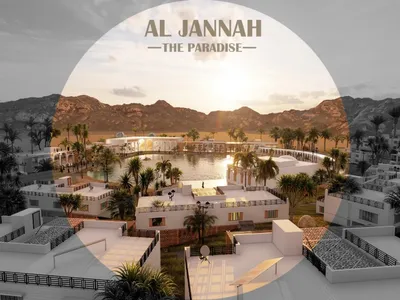
AL-JANNAH: Sustainable Architecture and Permaculture for Afghan Widows
AL-JANNAH uses sustainable architecture and permaculture to create resilient oasis of housing, learning, work and renewal for Afghan widows.
EW PARK: Sustainable Architecture Reimagines the Future of Urban Parking
EW PARK reimagines city parking as a modular wooden tower combining automation, solar energy, electric mobility, and adaptable urban design.
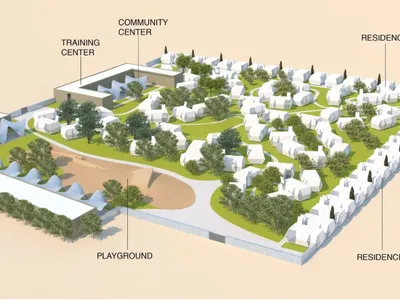
Garden of Hope: Sustainable Architecture for a Resilient Community in Qandahar
Garden of Hope reimagines sustainable architecture as secure, organic community where women rebuild lives through housing, work, and nature.

Similar Reads
You might also enjoy these articles

Bao Huynh Watercolor Atelier: A Serene Art Retreat in Hội An
Bao Huynh Watercolor Atelier in Hội An blends multifunctional art spaces, sustainable design, local materials, and family-friendly living in a serene environment.

Atelier Macri Concept Store Interior Design by CASE-REAL
Atelier Macri store features a "ko" counter, walnut wood details, cork displays, blending retail, gallery, and seamless customer experiences.

Manuel Vargas Izquierdo Stadium and High-Performance Sports Center: Architectural Excellence in Jalpa de Méndez
The Manuel Vargas Izquierdo Stadium blends sustainable design, inclusive sports facilities, and cultural-inspired architecture, revitalizing Jalpa de Méndez’s public spaces.

KAKR Buluh Awar Hall: Revitalizing Community and Ecology Through Bamboo Architecture
Community built bamboo hall revitalizes Buluh Awar village, empowering youth, restoring ecology, celebrating vernacular craftsmanship through sustainable architecture and culture.


Explore Religious Building Competitions
Discover active competitions in this discipline



The Global Benchmark for Architecture Dissertation Awards

Challenge to design a portable theatre

Design Challenge - Contemporary interpretation of a religious complex

Challenge to design a portable music platform
Comments (0)
Please login or sign up to add comments
No comments yet. Be the first to comment!