

Bharat Bhavan Chennai: A Culture Park That Refuses to Be a Monument
Decentralized masses, porous edges, and cross-programming dissolve the boundary between cultural institution and everyday urban life in Chennai.


What happens when you strip a cultural institution of its monumental impulse? When instead of one grand building demanding attention, you scatter a constellation of modest volumes across a park and let the city walk right through? Bharat Bhavan Chennai answers by proposing a Culture Park where auto stands, food courts, amphitheatres, and art galleries share the same ground plane, and where the most important architectural gesture is not a façade but the absence of a fence.
Designed by Surabhi Shingarey and Ramalakshmi Ramachandran as a shortlisted entry to the Bharat Bhavan 2020 competition, the project sits on a site along South Canal Bank Road in Chennai. Bounded by historic urban fabric to the north, the sea to the east, estuarine landscapes to the south, and rapid development to the west, the site is a threshold between the city's layered past and its accelerating present. The designers treat that condition not as a problem to resolve but as the very premise of their design: architecture as a social framework, not an object.
Three Strategies Against Hierarchy
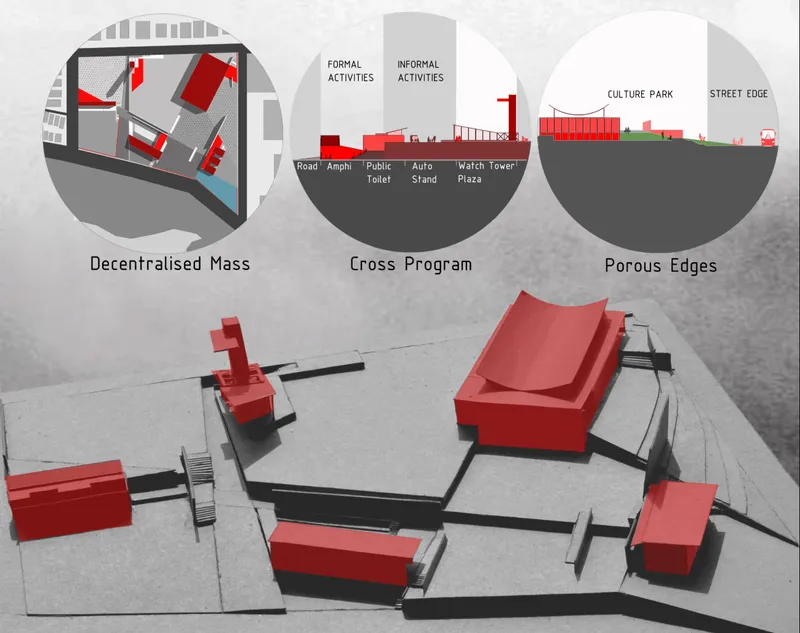
The conceptual diagram lays out the project's DNA with clarity. Three planning strategies operate simultaneously: decentralized masses that break the program into dispersed volumes, eliminating any dominant center; cross-programming that weaves formal cultural spaces together with everyday urban functions like public toilets, auto stands, and food courts; and porous edges that dissolve the boundary between street, park, and building. The aerial axonometric view reveals how these principles produce a field of red volumes connected by black pathways, a landscape that reads more as a neighborhood than an institution.
What makes this diagrammatic thinking convincing is its refusal to privilege any single element. There is no front door, no primary axis, no crescendo of approach. Users choose their own paths, their own pauses, their own modes of engagement. The architecture invites entry rather than demanding attention, which is a quietly radical position for a national cultural competition.
A Civic Ecosystem in Physical Form
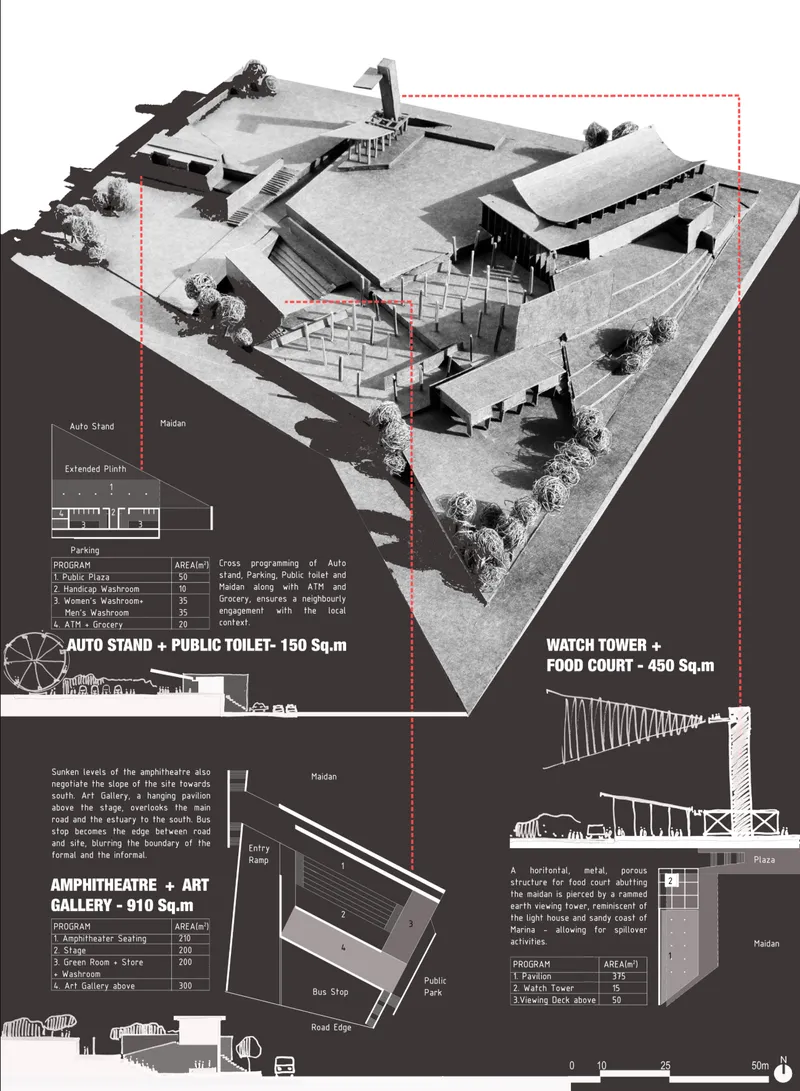
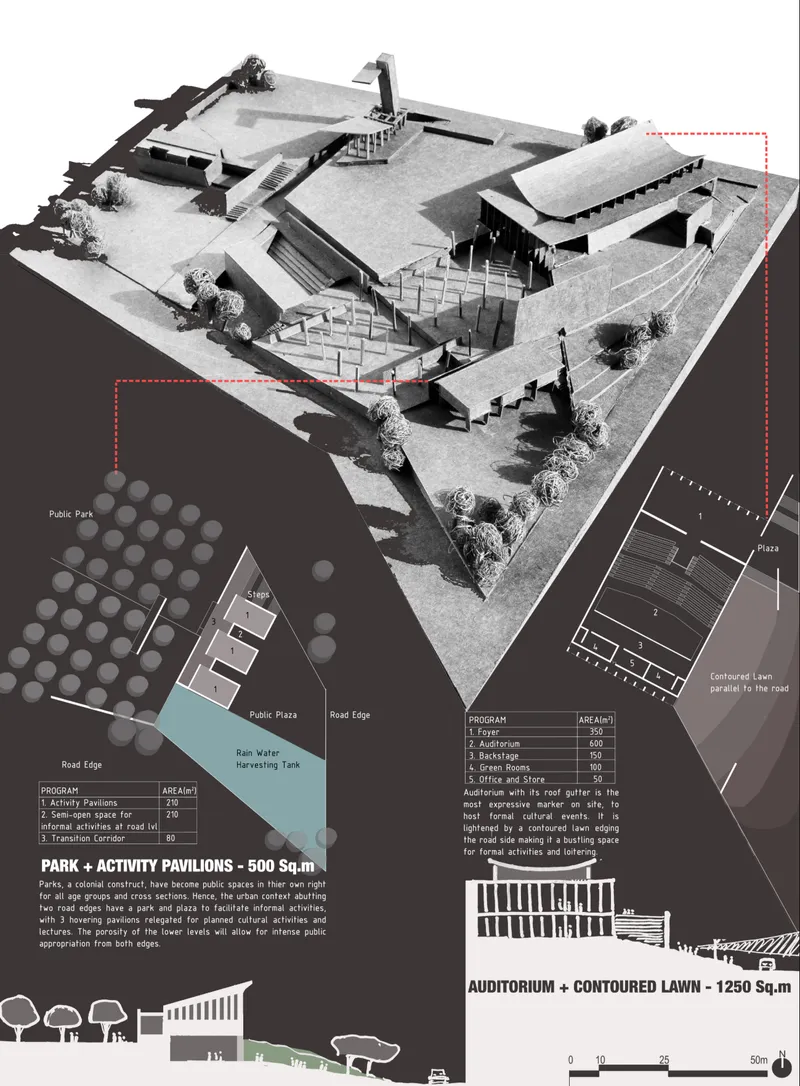
The physical model boards give the proposal its spatial credibility. The first board isolates the watch tower and its surrounding public facilities within a sculpted landscape of trees and paths, demonstrating how the tower acts as a subtle landmark recalling Chennai's coastal memory rather than a dominating vertical. The second board pulls back to show the full ensemble: park pavilions, auditorium zones, and plan diagrams that map program distribution across the site. Together, they reveal a civic ecosystem where an amphitheatre negotiates the site's slope through sunken seating, offering visual connections to the road, the maidan, and the estuary beyond.
The program list itself tells a story. Public plazas, an amphitheatre paired with an art gallery, a watch tower with food courts, and essential public amenities are all integrated seamlessly into the landscape. None of these elements is treated as secondary or service infrastructure. The auto stand gets the same spatial dignity as the gallery. That equivalence is the project's clearest political statement.
Timber, Openness, and the Everyday Sublime
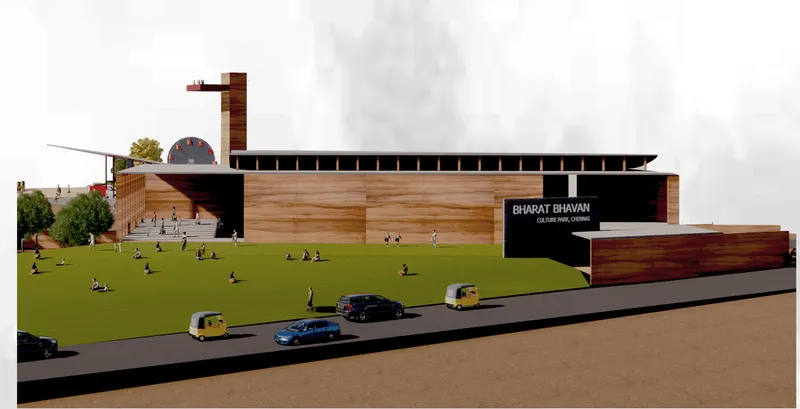
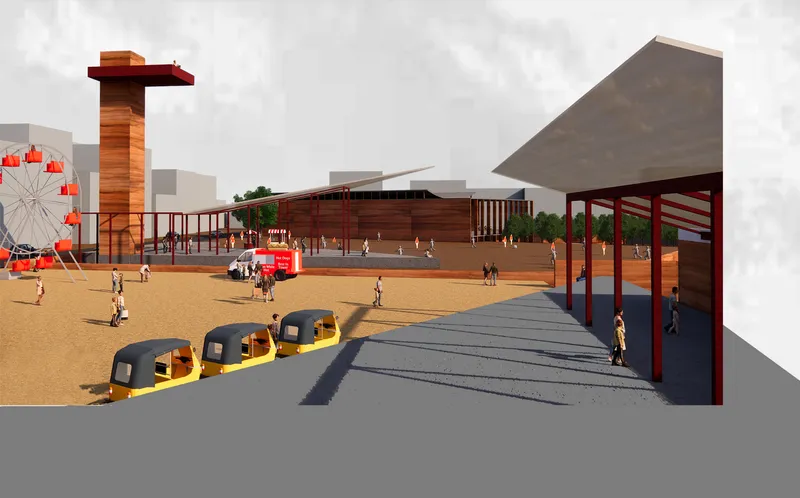
The renderings bring warmth to what could have remained an abstract proposition. The horizontal timber-clad auditorium building stretches low across the ground, its exposed roof beams casting deep shadows while people gather casually on the surrounding lawn. The red observation tower rises just enough to orient visitors without overwhelming the skyline. Across the open plaza, covered pavilions mediate between sun and shade, and everyday vehicles share the ground plane with pedestrians. The material palette of timber cladding and exposed structure reinforces the project's commitment to contextual, approachable architecture.
These images succeed because they depict a place that already feels inhabited. Children run, people linger under canopies, a few sit on the grass. The architecture is not waiting to be activated by a program director; it is already working simply by being open, shaded, and connected.
Layered Interiors That Breathe
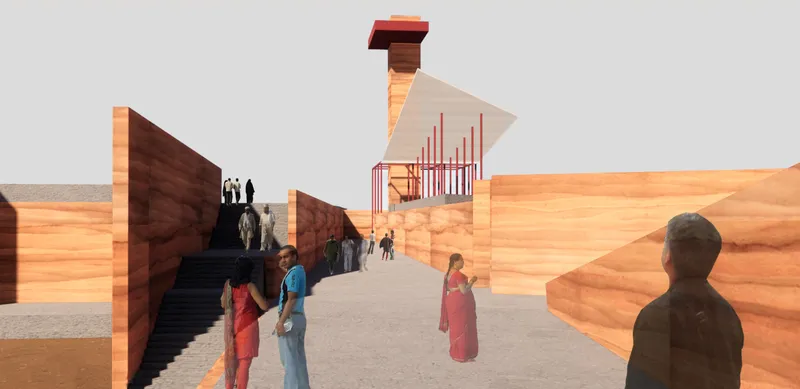
The interior courtyard view reveals the spatial depth hidden within the project's modest volumes. Layered timber walls create a filtered threshold between inside and outside, while a central stair rises toward the tower element above, pulling light and air down into the heart of the building. Visitors move through the space as they might move through a street: freely, with multiple options, no single prescribed route. The courtyard condition, drawn from centuries of South Indian spatial practice, is deployed here not as nostalgia but as a viable strategy for ventilation, social encounter, and visual porosity in a tropical coastal climate.
Why This Project Matters
Bharat Bhavan Chennai matters because it asks the competition's most uncomfortable question head-on: What is culture, and who is public? By refusing to answer with a single iconic form, Shingarey and Ramachandran propose that culture is not something housed in a building but something that emerges from the overlap of daily life, performance, commerce, and rest. The Culture Park model positions architecture as infrastructure for encounter rather than a container for curated content.
In a context where public cultural projects often default to spectacle, this entry's insistence on non-iconic, decentralized, porous design feels both timely and necessary. It reminds us that the most generous architecture is sometimes the kind that steps back, opens up, and lets a city be itself.
View the Full Project
About the Designers
Designers: Surabhi Shingarey, Ramalakshmi Ramachandran
Enter a Design Competition on uni.xyz
uni.xyz runs architecture and design competitions year-round that reward proposals with spatial conviction and real site intelligence.
Project credits: Bharat Bhavan, Chennai by Surabhi Shingarey, Ramalakshmi Ramachandran Bharat Bhavan 2020 (uni.xyz).


Popular Articles
Popular articles from the community


Tsunami Convergenics: Turning Catastrophic Ocean Forces into Underwater Housing Infrastructure
A speculative underwater settlement off the coast of Onagawa, Japan, treats tsunamis and typhoons as energy sources rather than threats.

Faces of the Soviet Avant-Garde: Turning Moscow's Street Names into an Open-Air Museum
A network of sculptural installations across a Moscow residential district transforms forgotten architect names into spatial encounters with cultural memor

Temporary Home for Dogs: A Reversed Zoo Rethinks Animal Shelter Architecture
In Bucharest, a sinuous corridor and freed landscape flip the logic of containment, designing a shelter that works to make itself unnecessary.

Singing Woman: An Opera House That Performs Before the Curtain Rises
Ovidiu Cristian Pavel's conceptual opera house translates Estonia's choral identity into a sculpted waterfront landmark facing the Baltic Sea.

Similar Reads
You might also enjoy these articles

Play: Fragments of Their World: Remembered Architecture Rebuilt as a Modular Playground for Refugee Camps
Tom Gardner abstracts domes, arches and towers from the homelands of displaced families into a kit of child-scaled play parts for camp settlements.
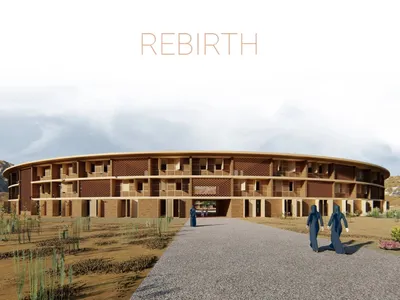
REBIRTH: A Circular Settlement Where Afghan Widows and Their Children Rebuild Life Together
A shortlisted Resile entry turns the circle into a protective ring of timber and brick, gathering homes, classrooms and gardens around a shared landscape.
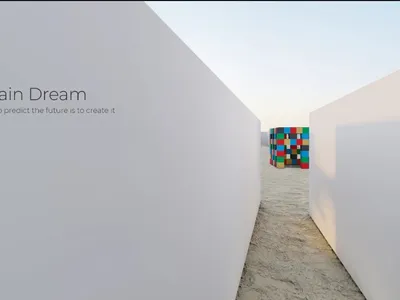
The Main Dream: A Recycled Plastic Kit That Lets Refugee Children Build Their Own Playground
Thirty-centimetre interlocking cubes that connect on three axes turn play into construction, letting children author the spaces they occupy.

Lunar Spiral: A Fibonacci-Driven Moon Settlement Rising from Shackleton Crater
Golden-spiral geometry organises buried infrastructure and orbiting habitable spheres into a lunar base designed to grow as life on the Moon expands.

Explore BMS College Of Architecture Competitions
Discover active competitions in this discipline

Challenge to reimagine the Iron Throne

Photograph architecture without architects

Illustrate the lost glory of Angkor Wat - Render Challenge

Design challenge to reuse E-waste
Comments (0)
Please login or sign up to add comments
No comments yet. Be the first to comment!