
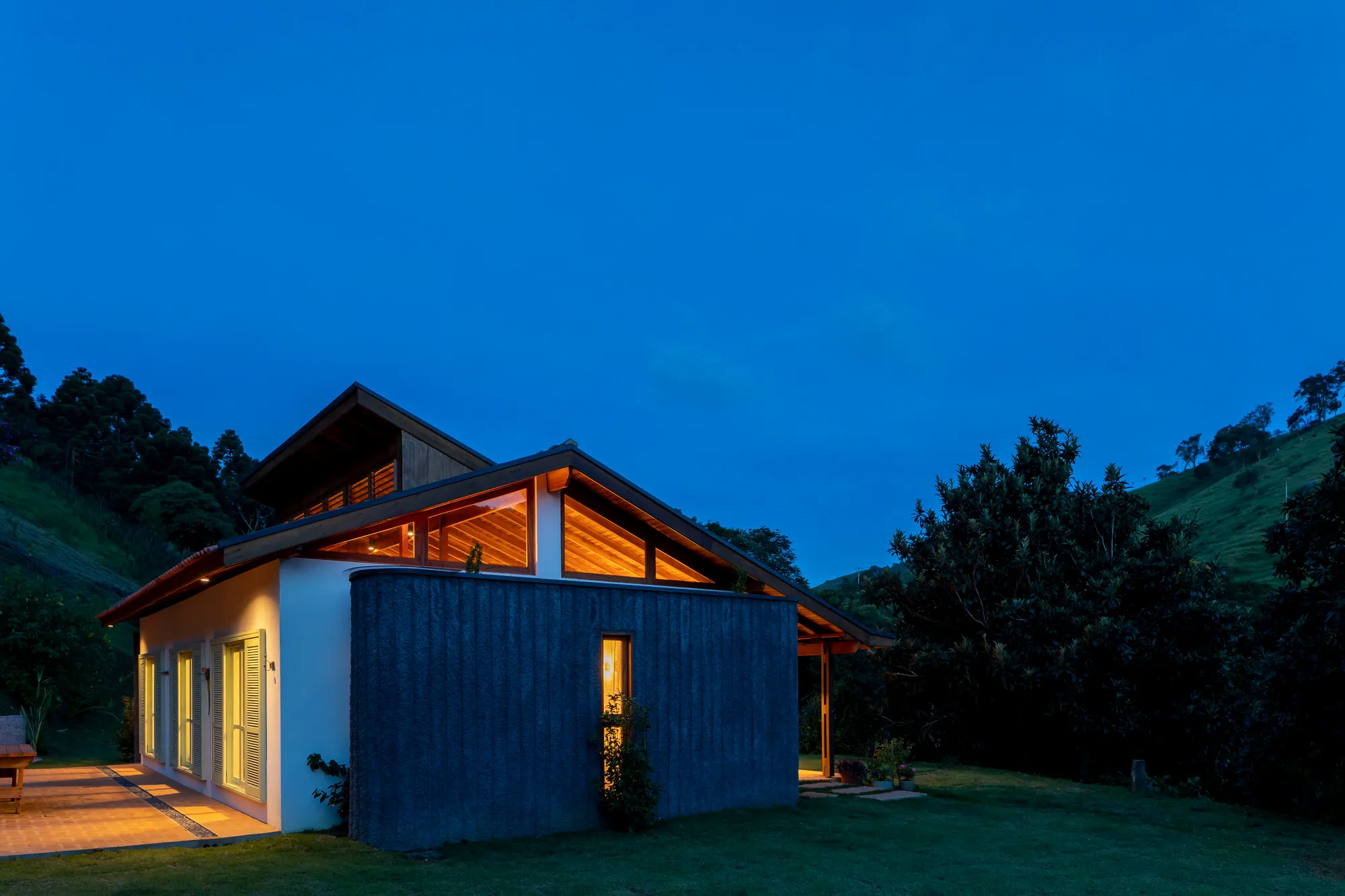
Black Stone House by vapor arquitetura
A contemporary rural house in Cunha, Brazil, combining adaptive reuse, stone volumes, and ecological land zoning into a sustainable living system.


Black Stone House, designed by vapor arquitetura, is a contemporary rural residence set within a 1-hectare property in Cunha, São Paulo, Brazil. Completed in 2022, the project goes beyond the design of a single house, proposing a holistic strategy for inhabiting, restoring, and activating a previously cleared rural landscape. Through careful reuse, environmental zoning, and restrained architectural gestures, the project establishes a balanced dialogue between contemporary living and the traditional rural culture of São Paulo state.
Architecture as Landscape Strategy
The site presented a common yet critical condition in Brazilian rural subdivisions: land cleared for sale, often stripped of its ecological complexity. From the outset, the architects were tasked not only with designing a residence but also with restructuring the land’s environmental logic. An extensive analysis of the existing rural network informed the placement of buildings, infrastructure, and future programs across the property.
Rather than concentrating development in a single footprint, the project organizes the land into five graduated zones of use, ranging from social and domestic areas near the house to agroforestry and native forest restoration zones. This strategy transforms the residence into the nucleus of a broader ecological and productive system.
Reusing the Existing Rural Fabric
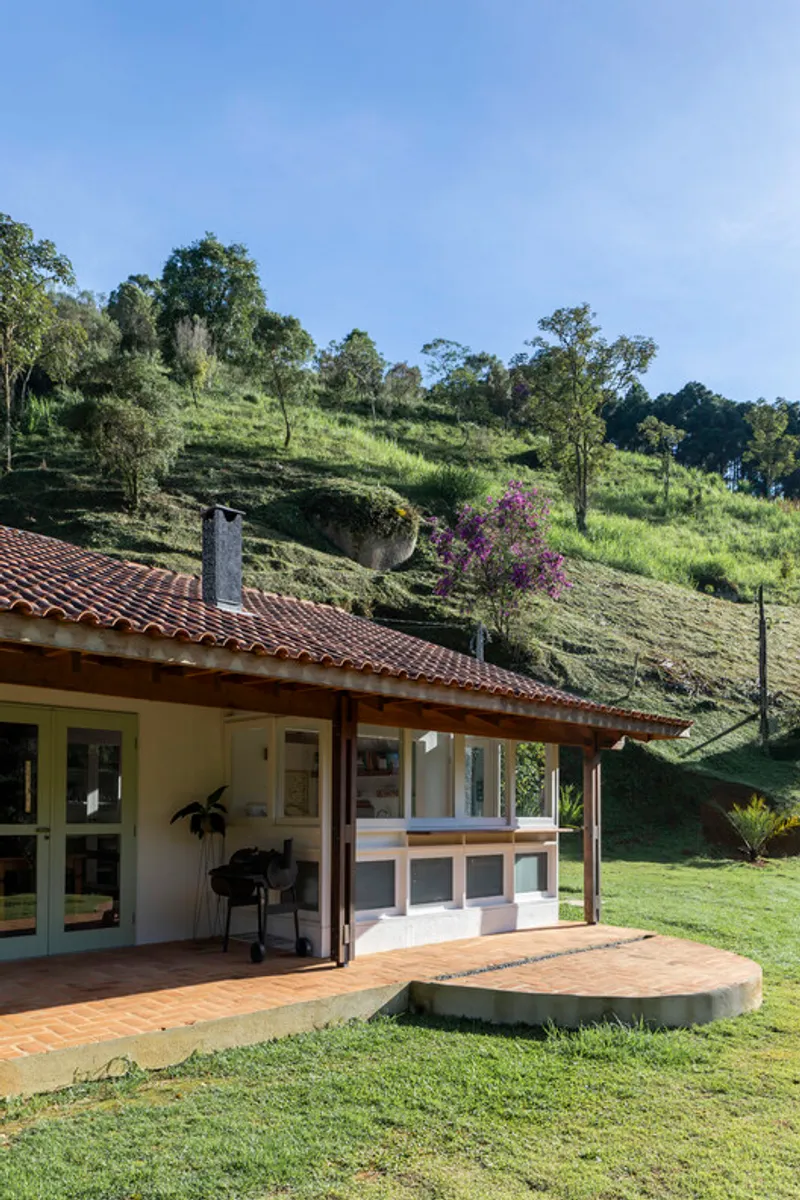
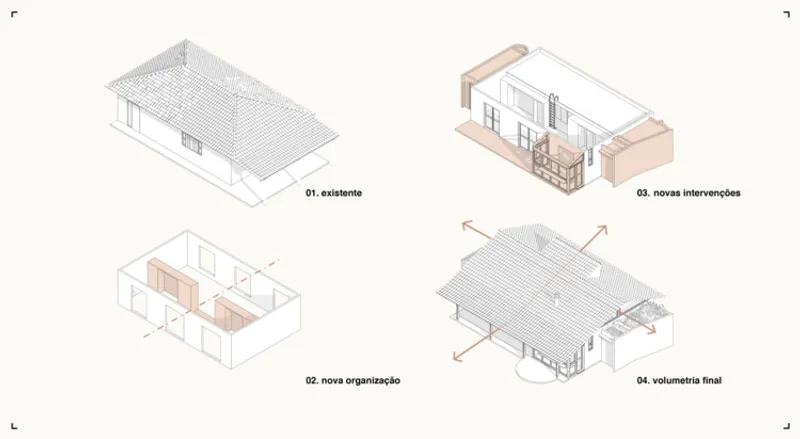
The new residence occupies the site of an existing country house located on a naturally favorable plateau. Instead of demolition, the architects chose to preserve and adapt the original structure, reinforcing the project’s sustainable ethos. Only the perimeter walls of the old house were retained; the roof was dismantled, with clay tiles and portions of the timber structure reused in the new construction.
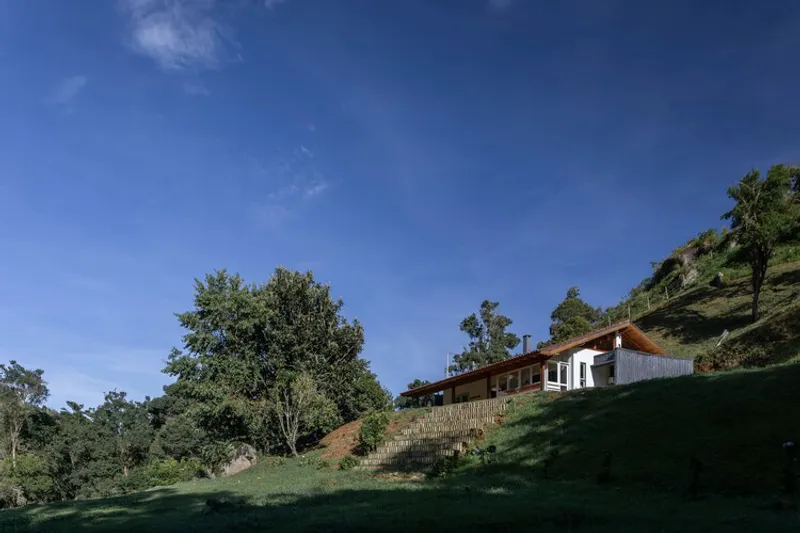
This approach allowed the house to retain a sense of continuity with local building traditions while accommodating contemporary spatial needs. The result is a compact, welcoming rural home that feels deeply rooted in its context rather than imposed upon it.
Stone Volumes as Functional Anchors
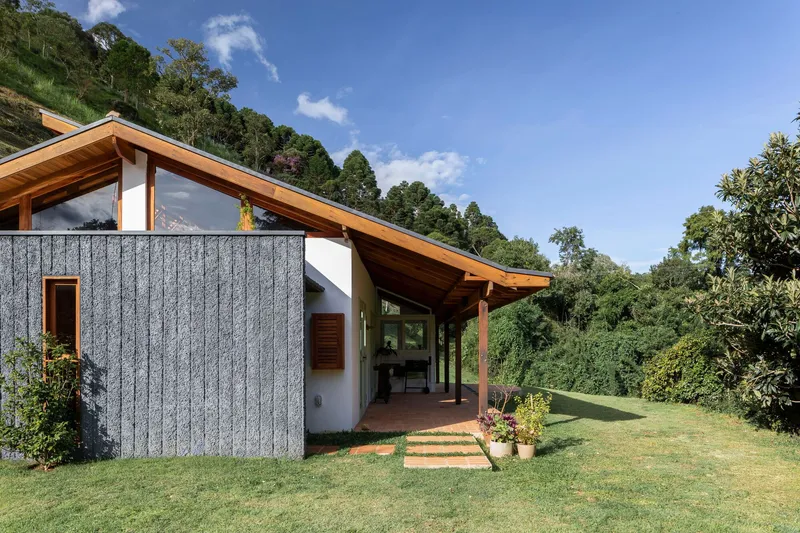
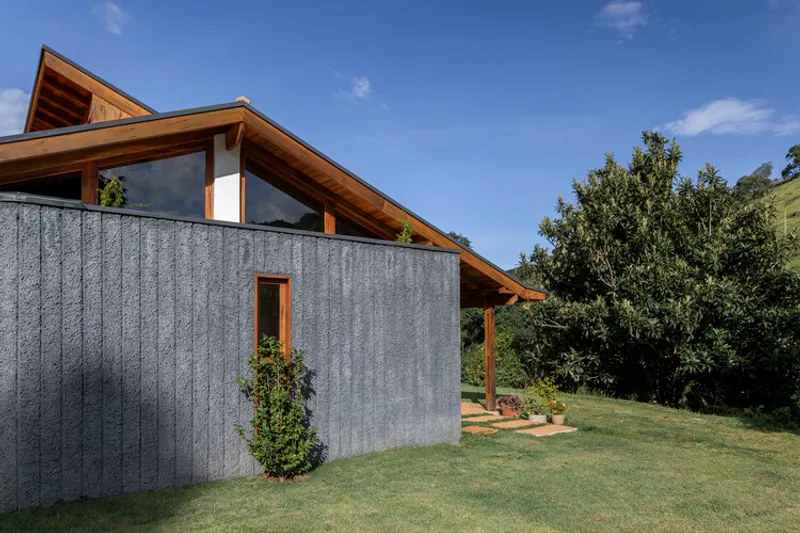
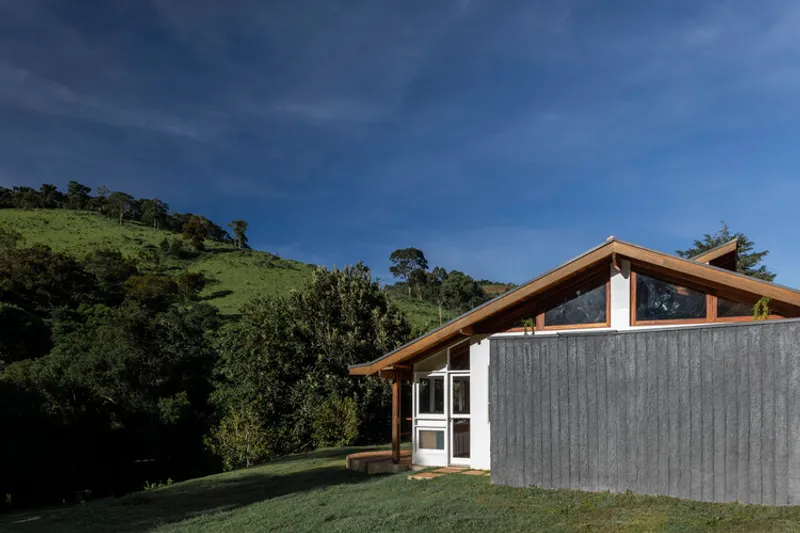
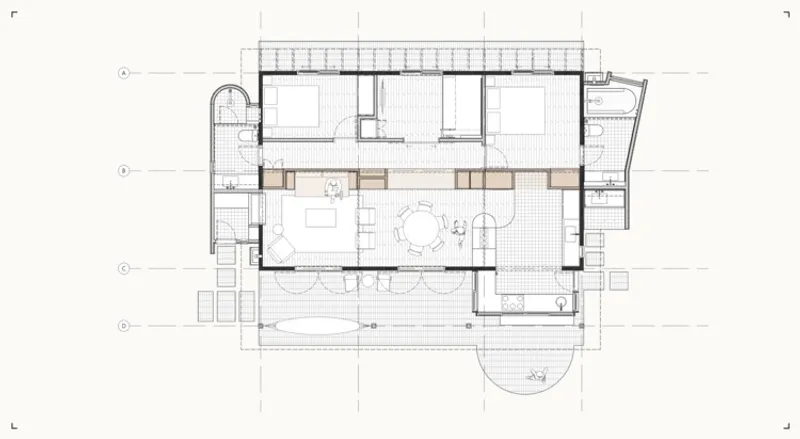
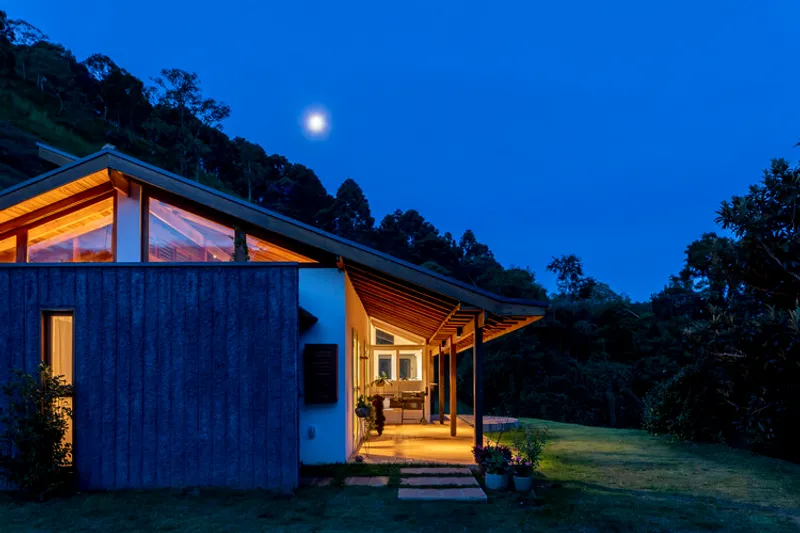
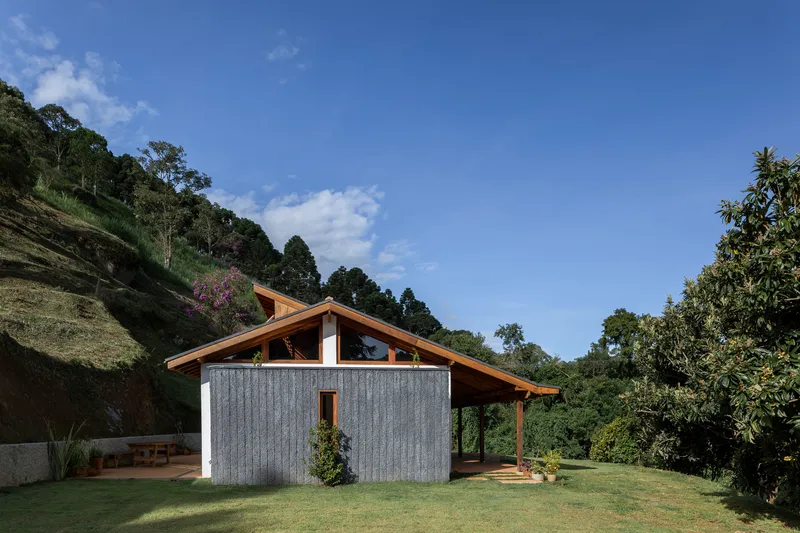
One of the defining architectural moves of Black Stone House is the addition of new opaque side volumes, conceived as “stones” embedded in the landscape. These elements house bathrooms and technical infrastructure, deliberately contrasting with the lighter, more open social areas.
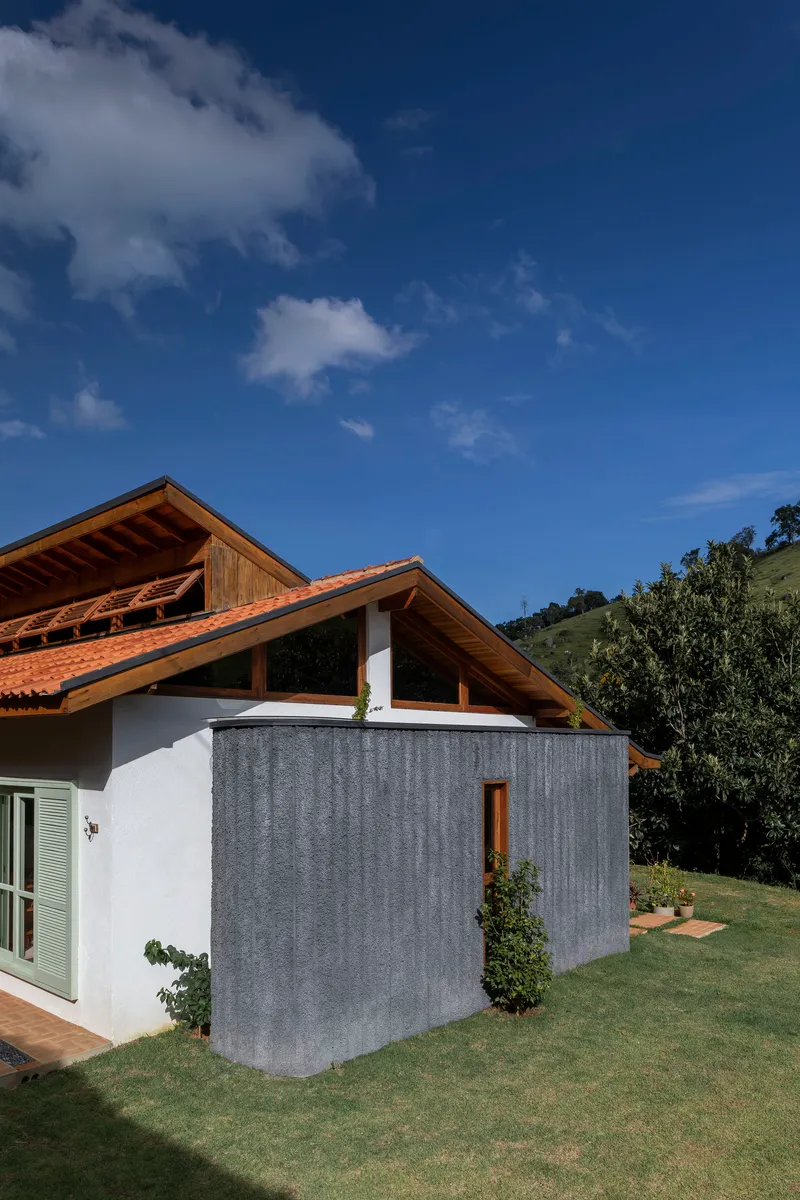
Their dark, solid appearance references the rocks scattered across the terrain, reinforcing the house’s connection to the land. Strategically placed openings ensure privacy while minimizing visual and social exposure, especially toward shared outdoor areas.
Courtyard and Programmatic Expansion
Beyond the main house, the project unfolds as a small rural compound. An old barn was converted into a service building containing laundry facilities and support spaces for gardens and vegetable cultivation. On a lower plateau, a sunlit courtyard anchors two new volumes arranged in a negative layout.
One volume contains the water and sanitation block, including a clean sewage system connected to the river, a sauna, and a small studio. The opposing volume accommodates a future commercial space with independent access from the road. Together, these buildings frame an outdoor room that becomes a social and functional heart of the lower site.
Further up the hillside, rental chalets are planned within an area designated for vegetation restoration, creating a gradual transition between built form and native forest.
Interior Organization and Material Clarity
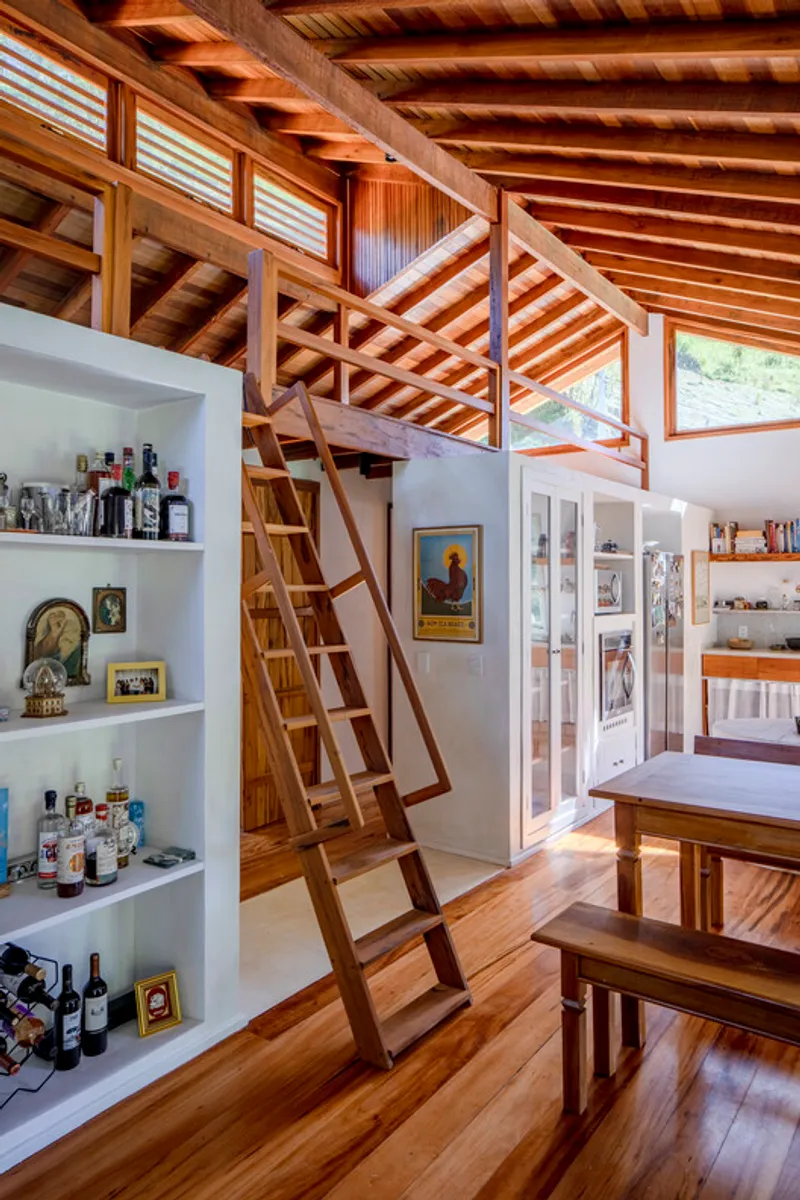
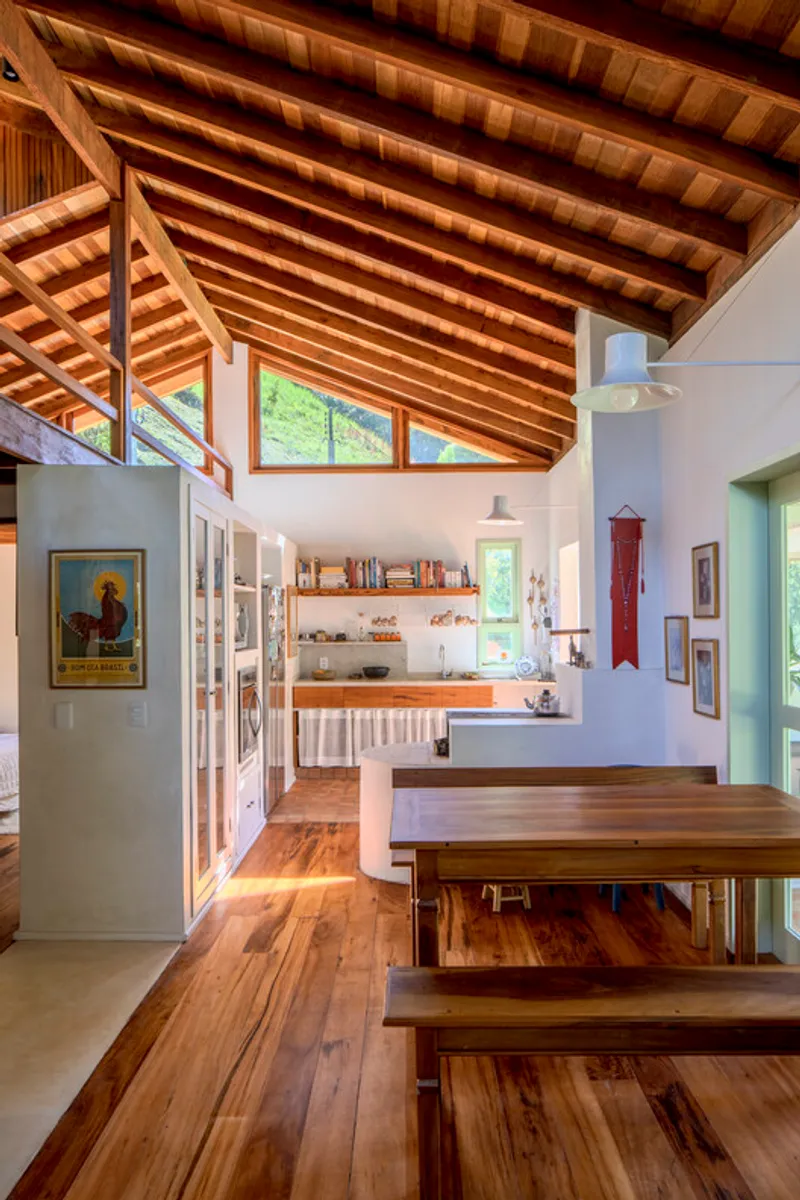
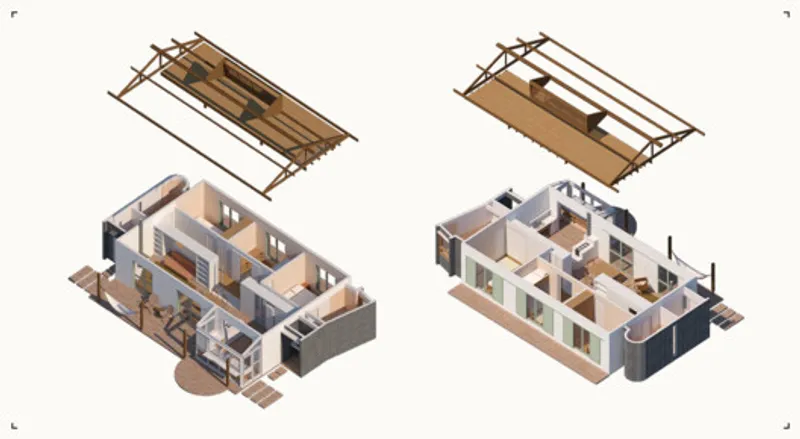
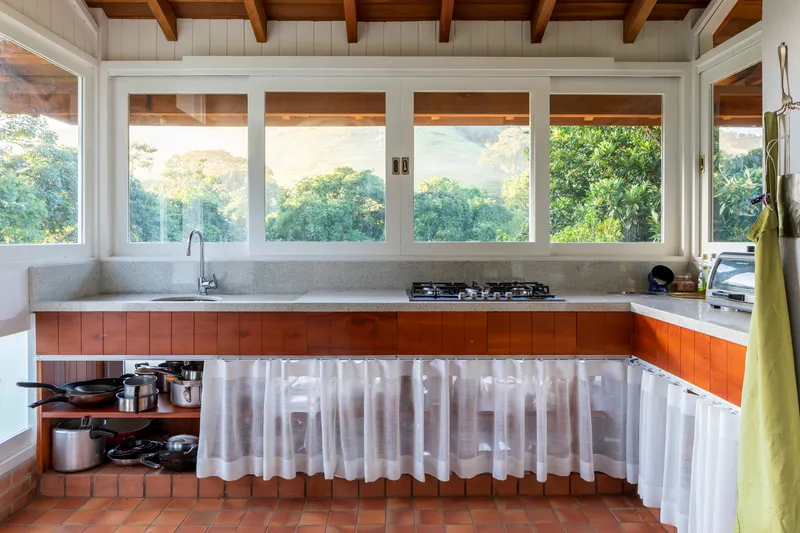
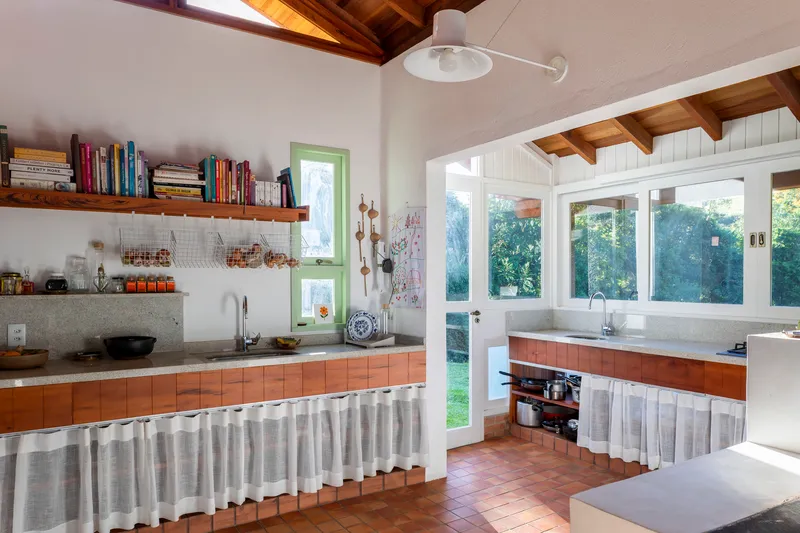
Inside the house, a central longitudinal masonry strip organizes the spatial layout. On one side, the private zone accommodates three compact bedrooms and bathrooms. On the other, the social zone unfolds as an open living and kitchen space connected directly to a generous covered balcony.
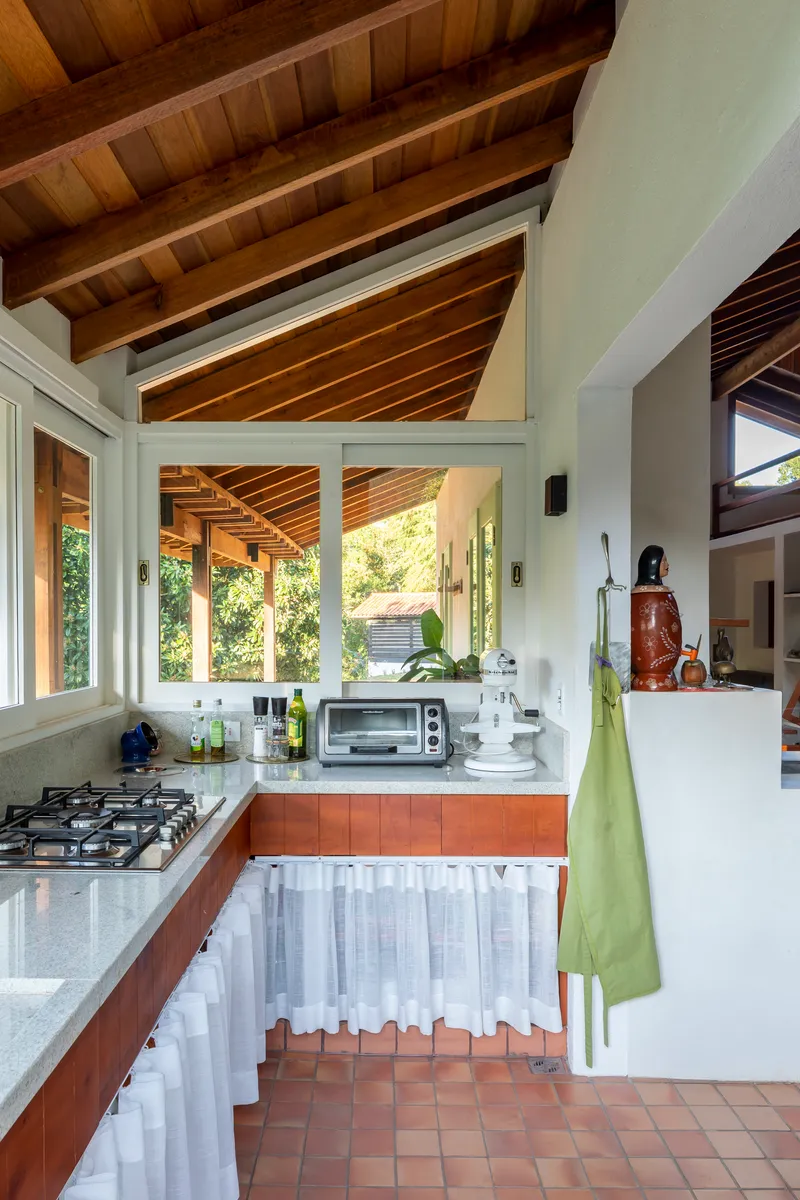
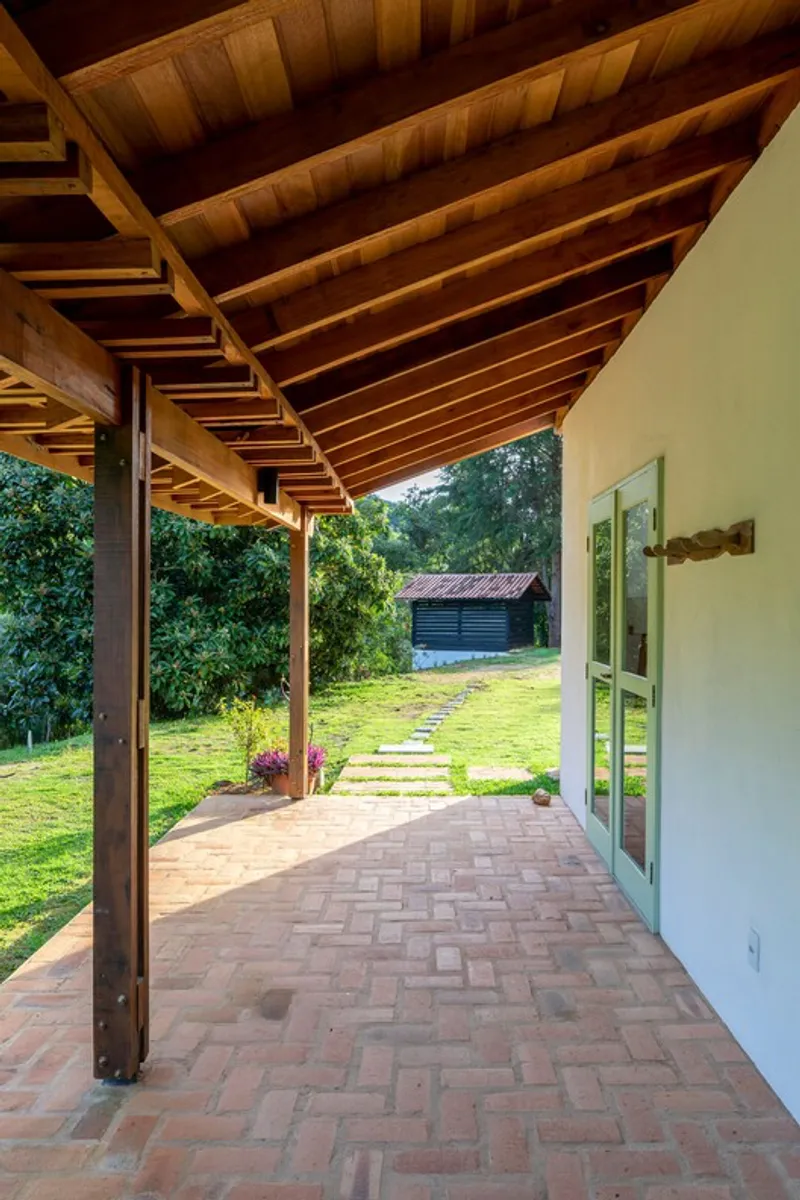
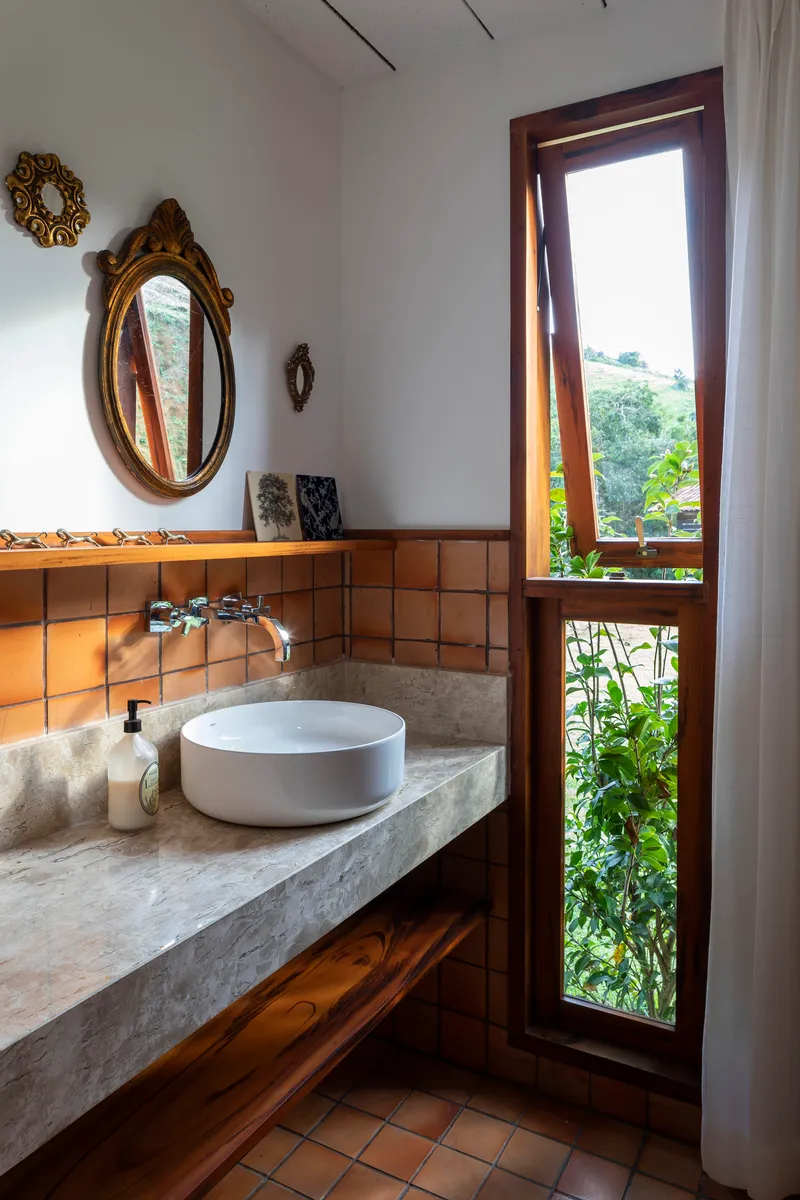
Material transitions reinforce this spatial logic. Ceramic tiles define cooler service areas, solid Muiracatiara wood flooring warms the living spaces, and exposed brick flooring extends into outdoor zones. The restrained palette enhances the tactile experience while maintaining visual continuity throughout the house.
Vertical Expansion and Spatial Comfort
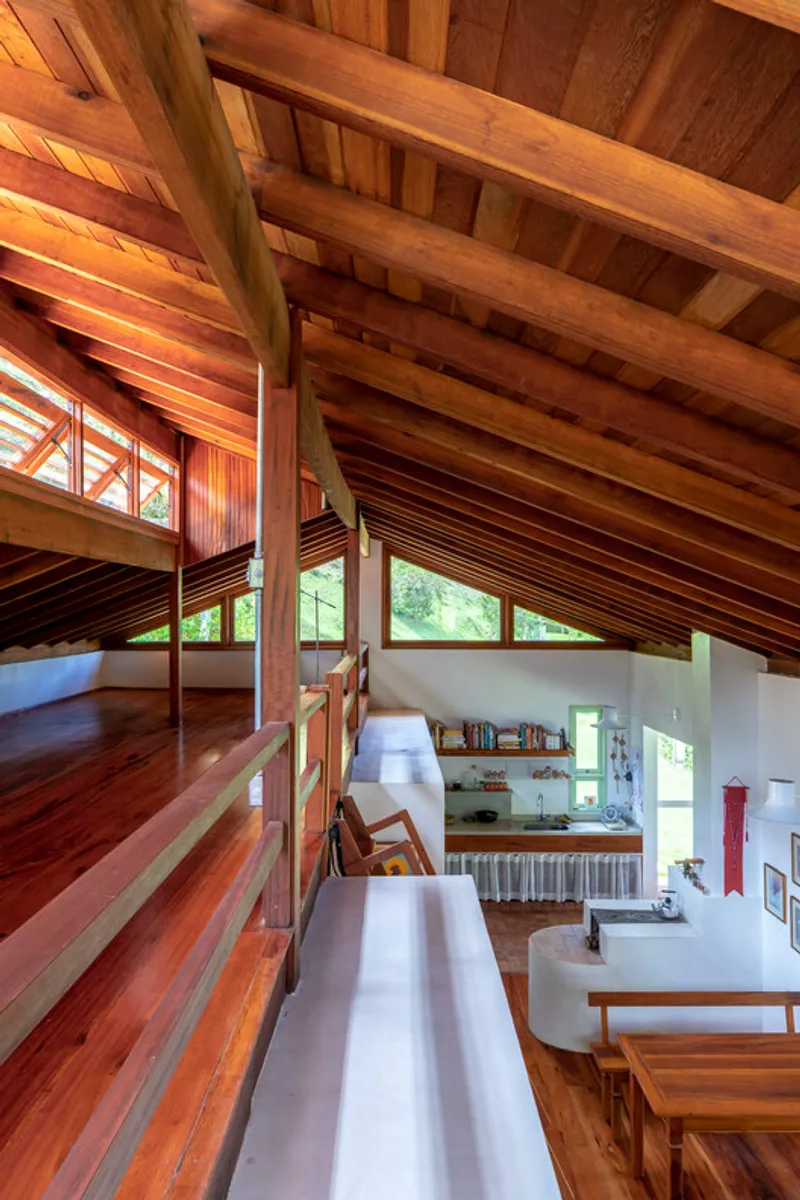
Above the bedroom wing, a mezzanine opens onto the double-height living room, occupying the highest point beneath the gabled roof. This elevated space expands the social area without increasing the house’s footprint, offering flexibility for work, leisure, or guests while preserving intimacy in the private rooms below.
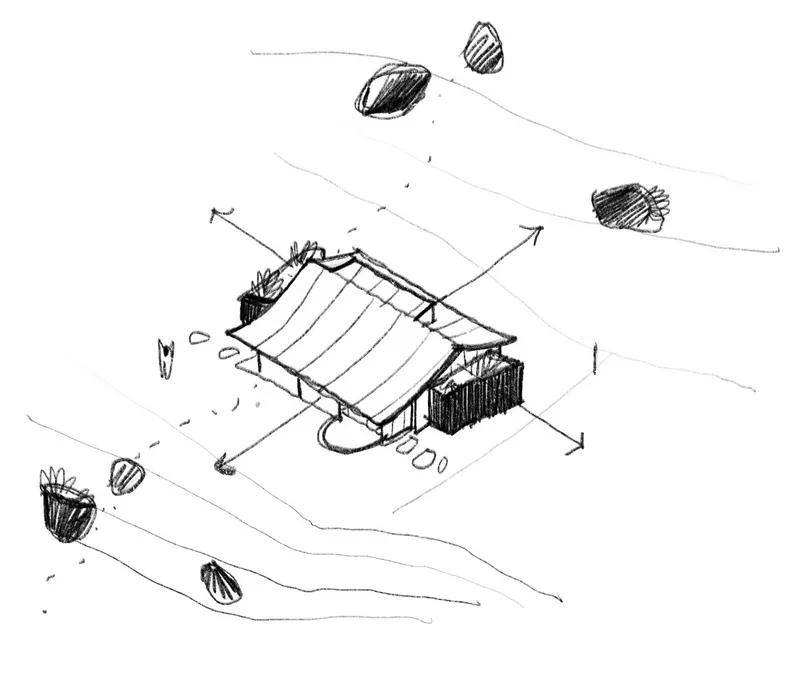
The new roof structure—wooden, gabled, and topped with reused clay tiles—features a ventilated shed element that introduces natural light and promotes passive airflow, improving comfort in the rural climate.
A Contemporary Rural Ethos
Black Stone House is neither nostalgic nor purely modernist. Instead, it embodies a contemporary rural ethos, where architectural restraint, environmental responsibility, and cultural continuity coexist. By reusing materials, preserving existing structures, and integrating ecological restoration into the design process, vapor arquitetura demonstrates how rural housing can be both modest and ambitious.
The project stands as a model for sustainable rural living in Brazil—one that treats architecture not as an isolated object, but as an evolving system embedded within land, culture, and time.
All the Photographs are works of Pedro Napolitano Prata



Popular Articles
Popular articles from the community


The Ocean Hive: Sustainable Architecture for a Self-Sufficient Civilization at Sea
The Ocean Hive imagines sustainable architecture at sea, where modular habitats, algae, wave power and ocean waste sustain a growing colony.

Co-life: Sustainable Architecture for Age-Friendly Community Living
Co-life reimagines sustainable architecture for seniors through courtyards, rammed earth, shared gardens, and spaces designed for belonging.

Play: Fragments of Their World
Familiar architecture becomes modular playground design, creating safe spaces where displaced children can learn, connect, imagine and play.

Riyadh For All: Intergenerational Urban Design for Active Aging in Rabat
Riyadh For All reimagines urban design in Rabat with intergenerational co-living, adaptive courtyards, and Moroccan cultural exchange today.


Similar Reads
You might also enjoy these articles


Hodi-Mandai Geram
Project Function: Preservation and revitalization of the Intangible heritage and socio-spatial identity of the Hodi by Housing, Cultural Memory Center, Sacred Grove, landscape, local tourism economy


Olio Towers: A Mid-Rise for Performers That Fuses Housing, Rehearsal, and Stage
Located blocks from Houston's Theater District, this modular tower stacks living units around a central performance atrium.

Oasis: Modular Green Housing Carved into Dhaka's Urban Fabric
A shortlisted Plugin Housing entry reclaims unauthorized settlements in Dhaka with stepped concrete volumes, green roofs, and ventilation-driven design.

Black Hole: A Floating Megastructure for the Post-Physical Era
Emiliano Mazzarotto envisions a spherical, self-scaling arena where e-sports, digital hotels, and holographic stadiums replace traditional public space.


Explore Housing Competitions
Discover active competitions in this discipline



Challenge to reimagine the Iron Throne


Photograph architecture without architects


Illustrate the lost glory of Angkor Wat - Render Challenge


Design challenge to reuse E-waste
Comments (0)
Please login or sign up to add comments
No comments yet. Be the first to comment!