
Boatyard Hotel Interiors by WJ STUDIO: A Poetic Fusion of Nature, Architecture, and Tranquility in Suzhou
Boatyard Hotel by WJ STUDIO blends modern interior design with Jiangnan traditions, offering a tranquil, nature-inspired riverside retreat.


Nestled within the serene landscape of Shanwan Village in Wujiang District, Suzhou, the Boatyard Hotel is a refined retreat that merges modern interior design with the region’s cultural heritage and riverside charm. Designed by WJ STUDIO, with architectural support from GOA, this 1200 m² hospitality project reimagines what it means to live in rhythm with nature—creating an immersive guest experience where time and space flow like the surrounding water.
Contextual Design in a Water Village Setting
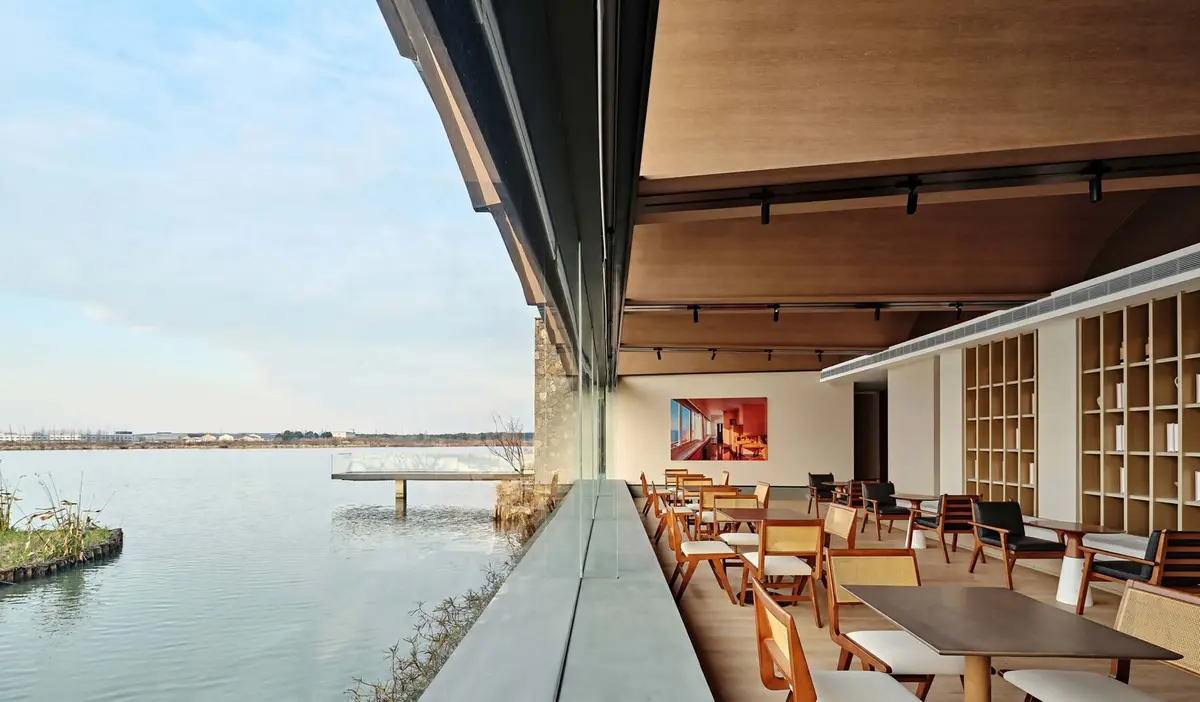
Located in a tranquil water town famed for its poetic sceneries and ancient waterways, the Boatyard Hotel becomes an extension of the landscape itself. Its design channels the slow pace and reflective atmosphere of Jiangnan’s traditional life. Here, river views, courtyards, and arched bridges are not just features—they are part of a living story. The building’s exterior evokes docked boats through a series of high and low arched roofs, creating a dynamic yet grounded visual rhythm, harmonizing with the surrounding mountains and waterfront.
Spatial Storytelling and Temporal Layers
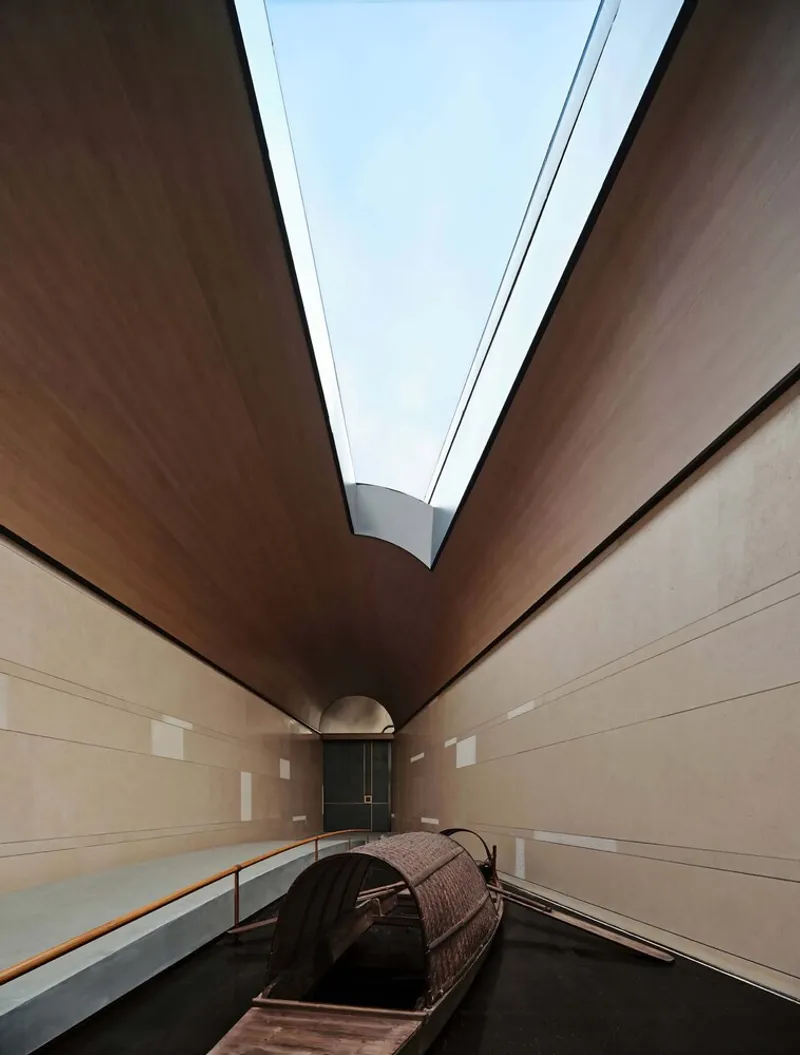
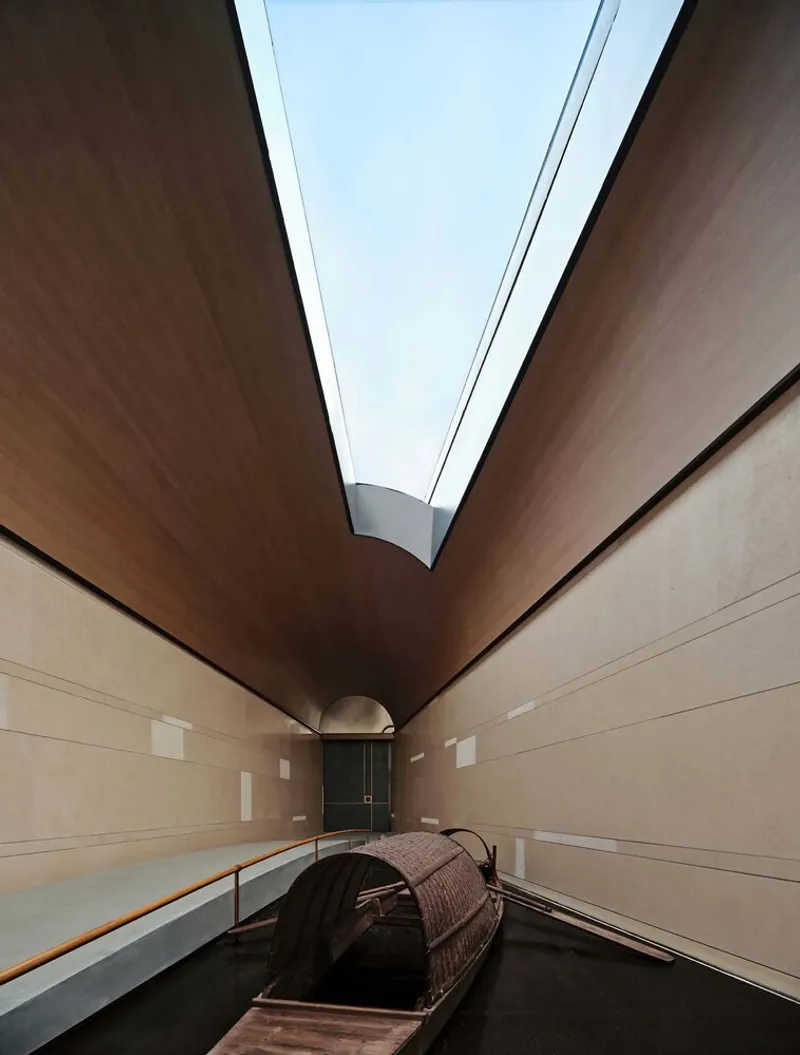
Upon entering, guests are greeted by a slightly arched trestle bridge and a crow-top boat moored at the side—an artistic gesture toward regional boat culture. Natural light filters through skylights, sketching ephemeral patterns across stone slabs. In the rain, the delicate sound of droplets evokes memories of Jiangnan, deepening the immersive quality of the environment.
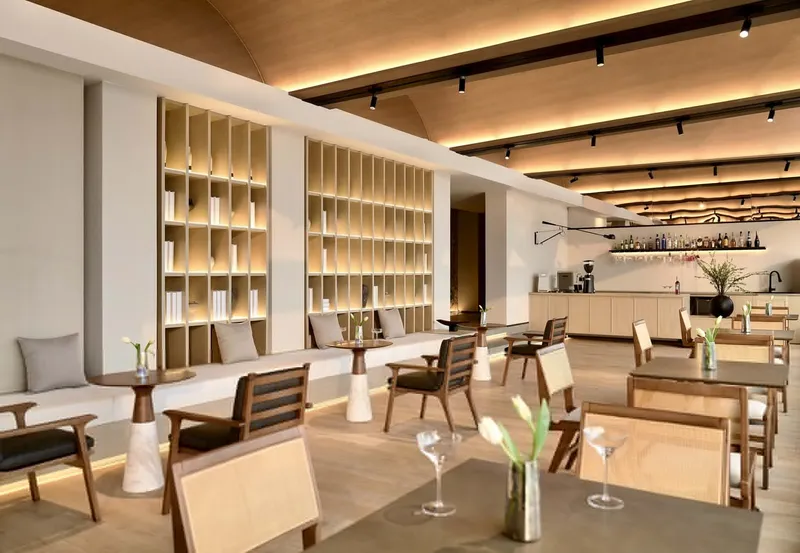
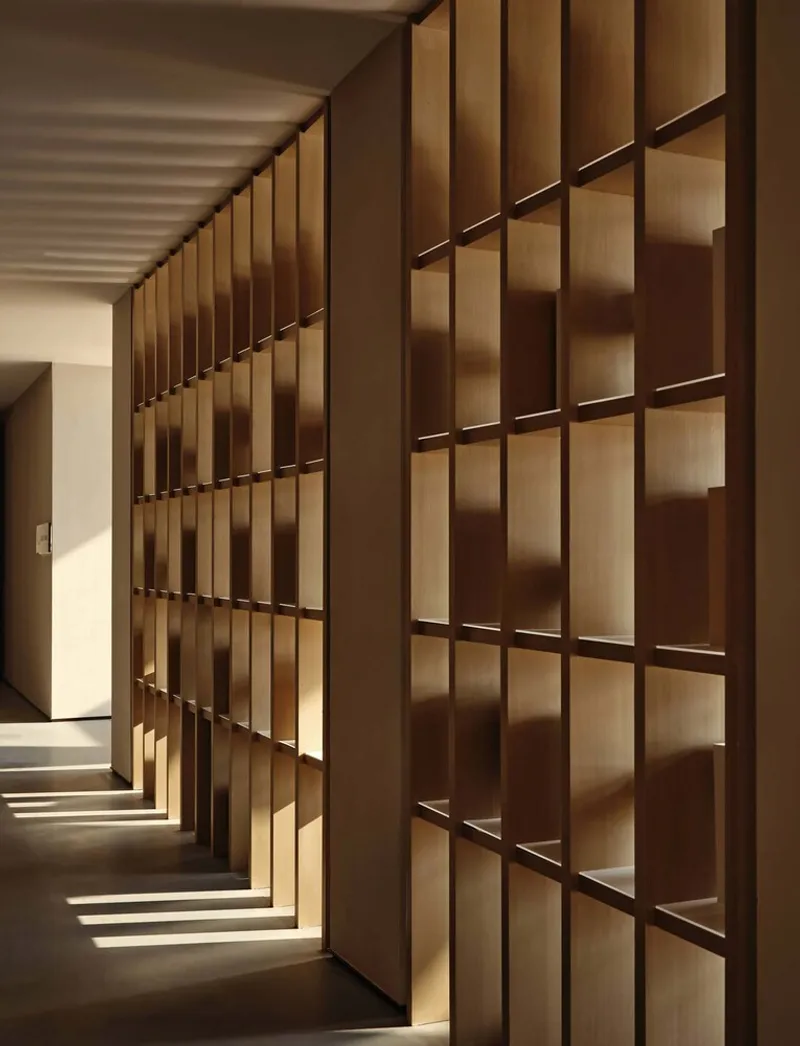
Inside, WJ STUDIO introduces a three-dimensional spatial experience, where light, material, and movement converge. The interior is conceived as a living scroll—an architectural narrative that unfolds moment by moment. Each detail, from shelving elements to custom water-patterned benches, contributes to a holistic atmosphere of introspection and elegance.
Seamless Indoor-Outdoor Integration
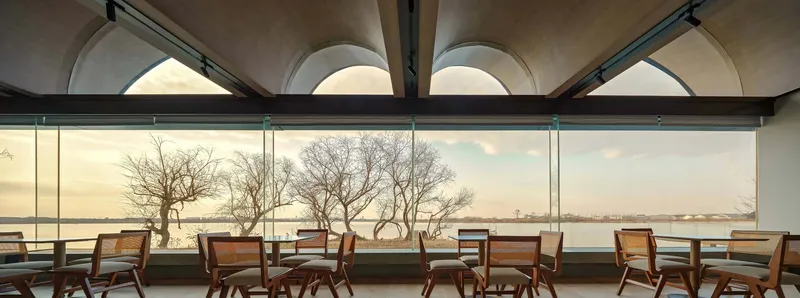
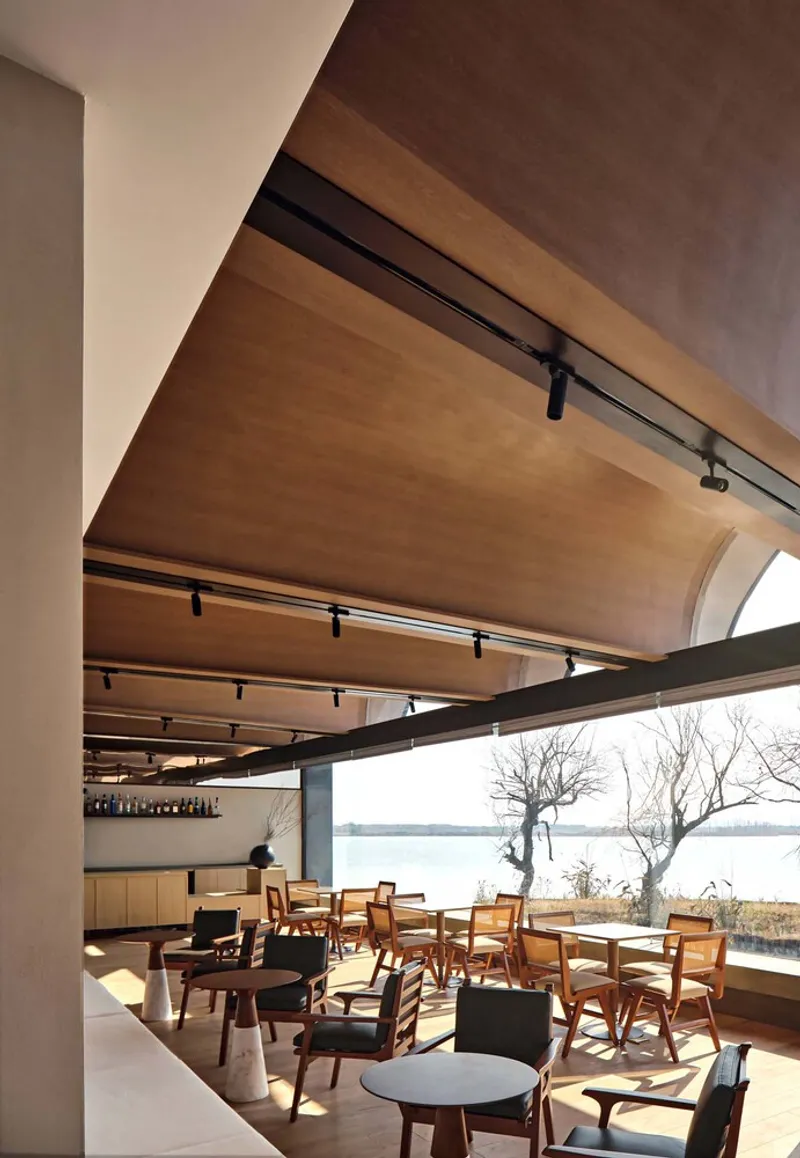
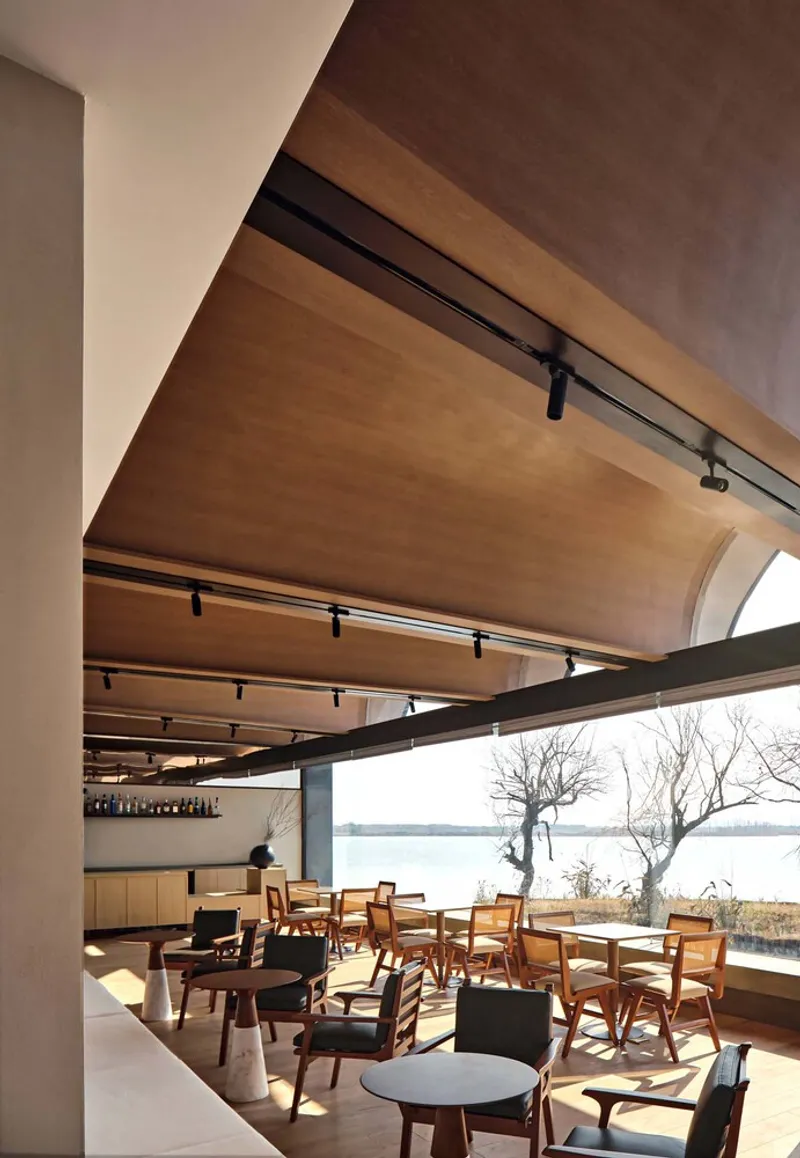
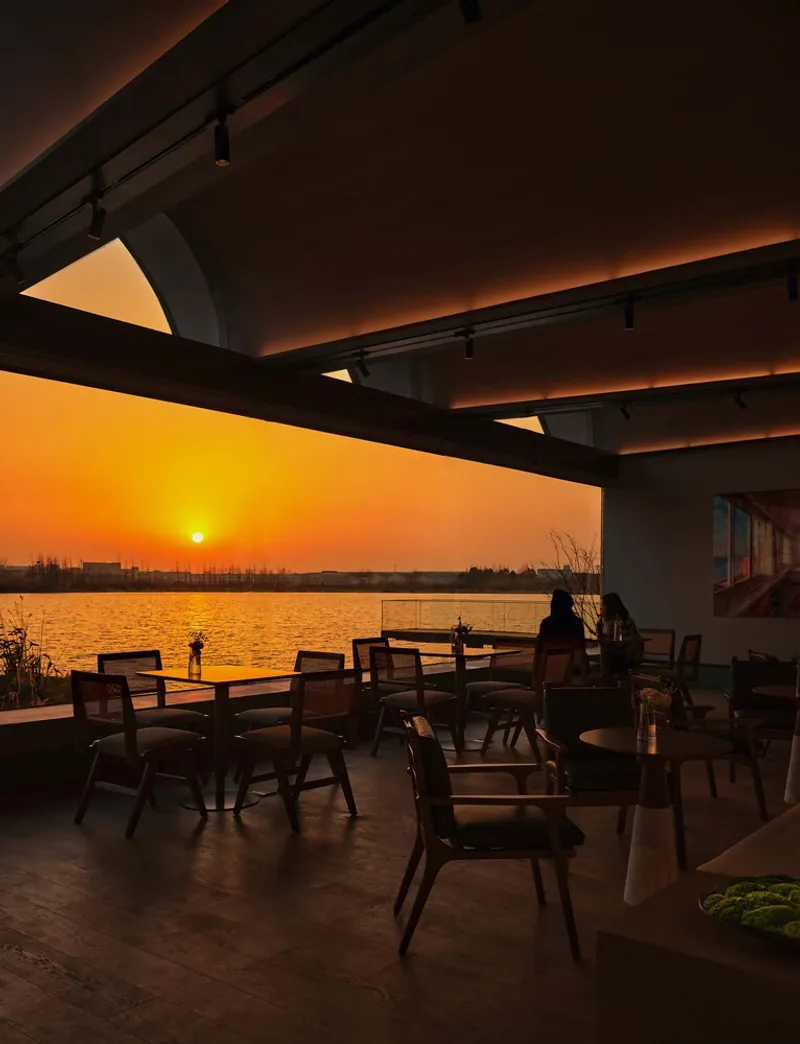
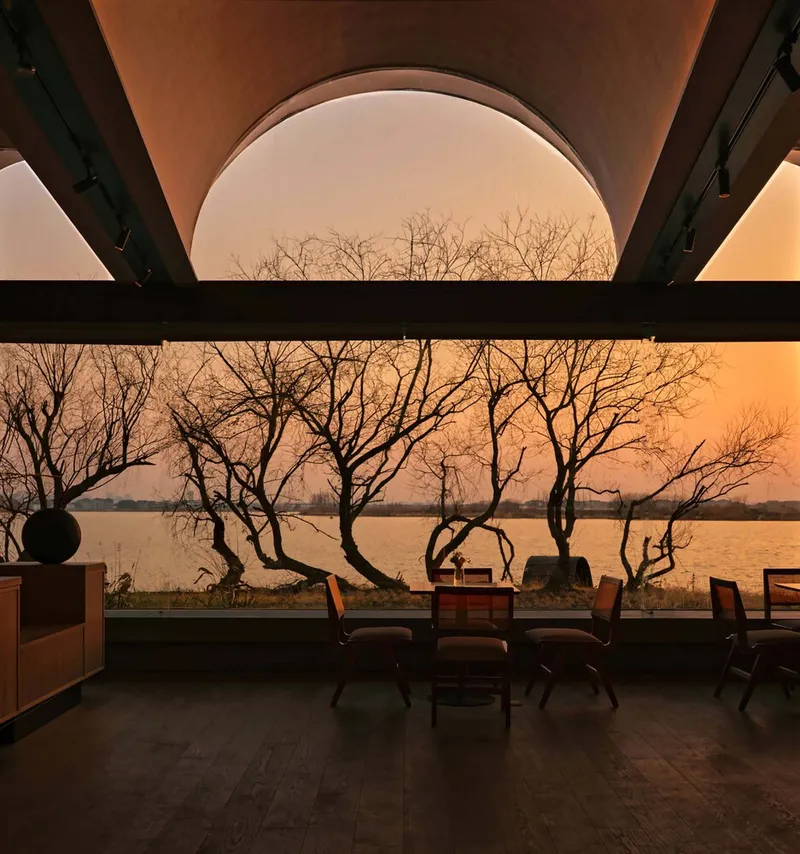
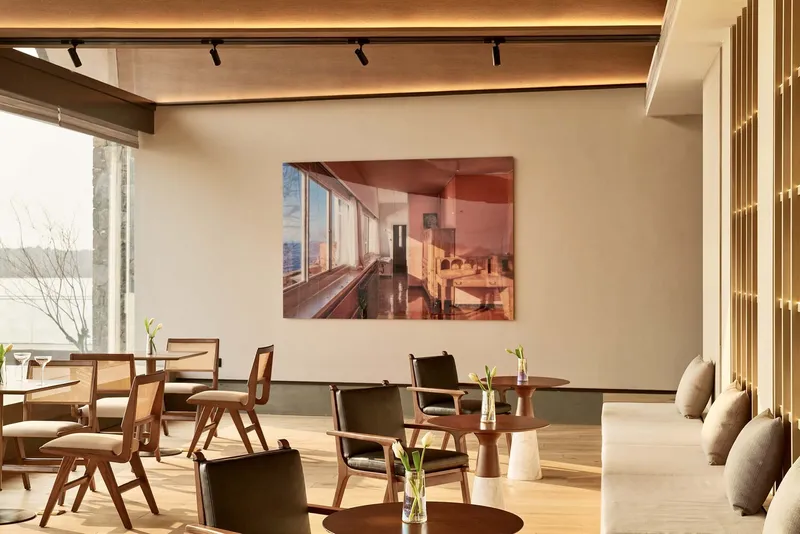
A defining feature of the Boatyard Hotel’s interior is its seamless integration with nature. Full-height floor-to-ceiling windows open toward the riverbank, transforming rooms into open-view pavilions. The recessed bench that mimics the shape of a boat invites quiet contemplation, while a concealed island opposite the window adds a mysterious visual balance—only noticeable when one turns back, reinforcing the theme of temporal awareness and discovery.
Corridor as Scroll: Visual Rhythm in Architecture
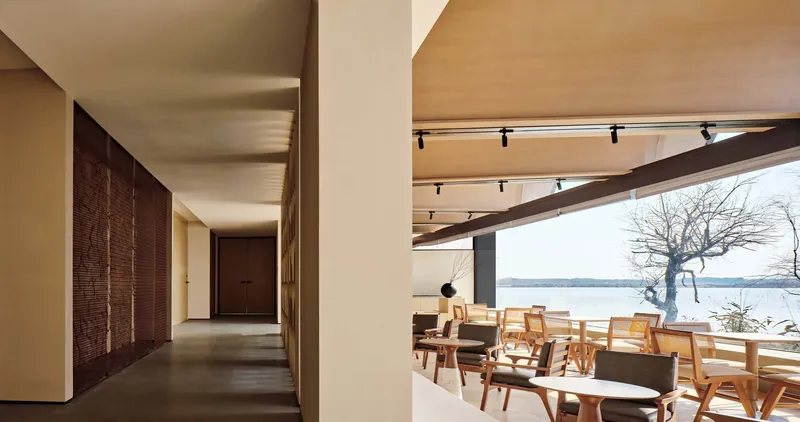
The corridor promenade acts as a transitional space, designed not just for movement but for pause and reflection. It functions as a reading lounge and coffee bar, its elongated horizontal layout echoing traditional Chinese scrolls. With an arched ceiling that gently frames the riverbank scenery, the space invites comparison to Corbusier’s “Mother’s House,” where bay windows offer meditative vistas of water and sky.
Living with the Land: Emotional Resonance in Spatial Design
Throughout the hotel, natural materials and earthy tones reinforce a dialogue between architecture and the land. The spatial organization encourages a journey inward—from courtyard to lounge, from guestroom to view. The design doesn't follow a linear axis but instead invites discovery through a fragmented yet poetic sequence, breaking conventional hotel planning and creating emotional resonance.
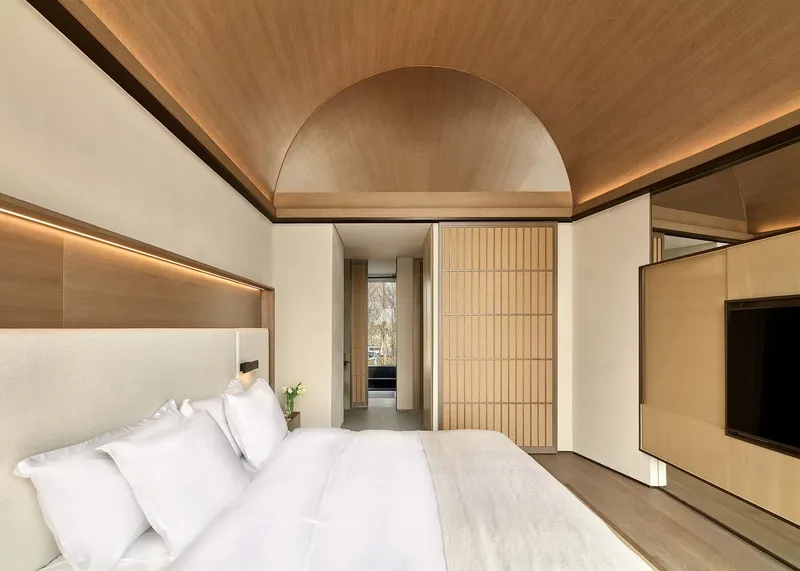
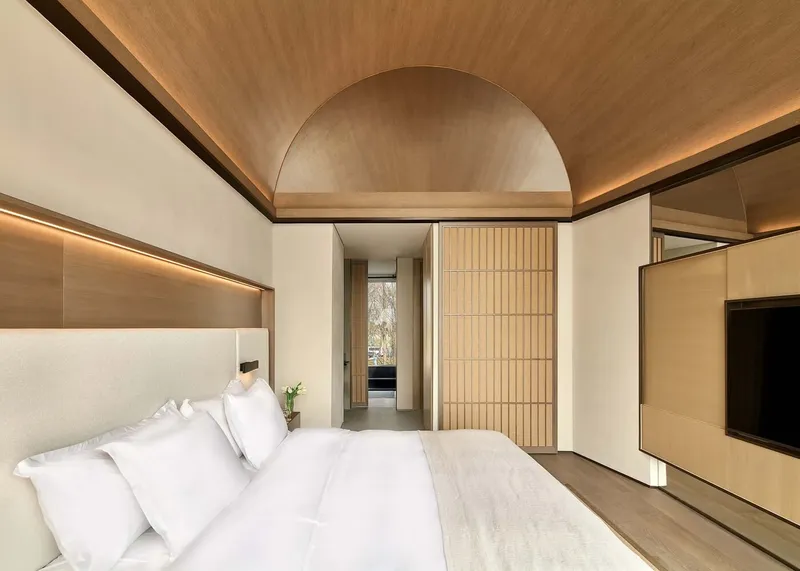
The guest rooms facing the river become quiet sanctuaries, offering panoramic views that frame the waterfront like artwork. Vaulted ceilings, gentle light slits, and curated furnishings elevate the spatial experience into something personal and meditative. Whether staying for reflection or exploration, the interior becomes a metaphorical “docked boat,” a place for anchoring the soul and returning to simplicity.
All Photographs are works of Hai Zhu


Popular Articles
Popular articles from the community


U.GA Architects Wraps an Oval Rooftop Pool in Curved Board-Formed Concrete on Busan's Jeollidan-gil
In Busan's Jeonpo-dong, a 454 m² mixed-use block stacks a neighborhood facility, guest rooms and an oval rooftop pool inside spiraling concrete walls.

Cube Design Draws an Ecological Corridor Between Two Shenzhen Hills with the Nankai Building
Beside Shenzhen's container docks, the Nankai Building pairs stacked balconies with a climbing green screen to connect two hillsides across its height.

longwave studio Reorganizes a 112 m² Tainan Apartment Around the Daily Routines of a Family and Two Cats
In Tainan, Taiwan, birch plywood, rust-red furniture and a freestanding plaster wall link arrival, storage, work and family life in one apartment.

Architekt Andreas Gruber Scatters 23 Dark Timber Chalets Across a South Tyrolean Forest Edge
In Molini di Tures, Amonti Chalets breaks a resort into a hamlet of gabled timber houses, with parking, storage and services pushed into the slope.

Similar Reads
You might also enjoy these articles


Hodi-Mandai Geram
Project Function: Preservation and revitalization of the Intangible heritage and socio-spatial identity of the Hodi by Housing, Cultural Memory Center, Sacred Grove, landscape, local tourism economy


Olio Towers: A Mid-Rise for Performers That Fuses Housing, Rehearsal, and Stage
Located blocks from Houston's Theater District, this modular tower stacks living units around a central performance atrium.

Oasis: Modular Green Housing Carved into Dhaka's Urban Fabric
A shortlisted Plugin Housing entry reclaims unauthorized settlements in Dhaka with stepped concrete volumes, green roofs, and ventilation-driven design.

Black Hole: A Floating Megastructure for the Post-Physical Era
Emiliano Mazzarotto envisions a spherical, self-scaling arena where e-sports, digital hotels, and holographic stadiums replace traditional public space.

Explore Interior Design Competitions
Discover active competitions in this discipline

Challenge to design luxury tourism on rails

Challenge to reimagine the Iron Throne

Photograph architecture without architects

VR headsets Storefront design competition
Comments (0)
Please login or sign up to add comments
No comments yet. Be the first to comment!