
Bofia Restaurant by AZAZ Architects: A Contemporary Tribute to Saudi Street Food Culture
Bofia Restaurant blends Saudi street food culture with modern design, featuring tiled interiors, floating forms, and immersive lighting experiences.


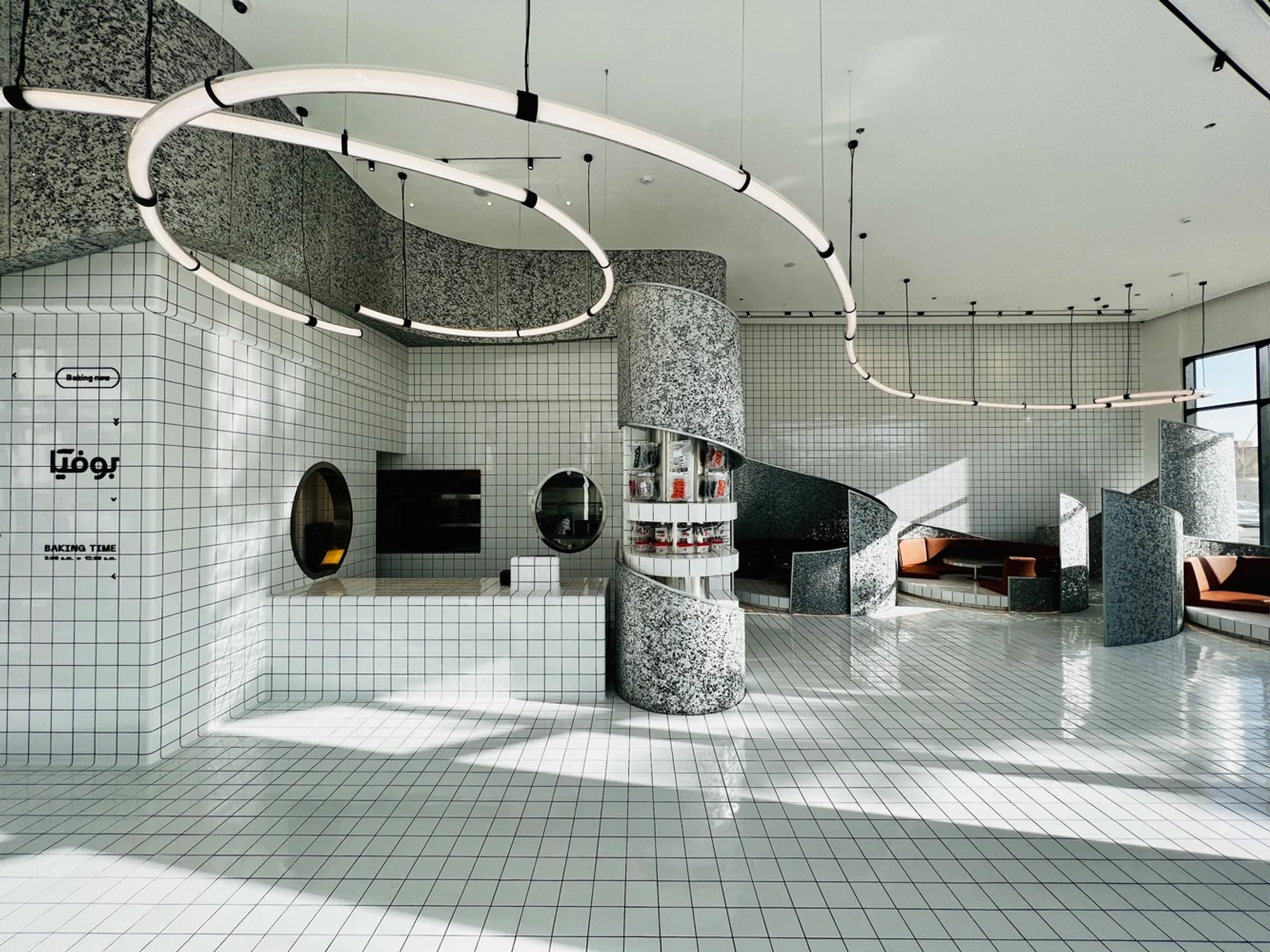
Located in the heart of Riyadh, Bofia_The Tiled Cloud is a bold reinterpretation of the traditional Saudi "bofia"—a ubiquitous, no-frills street canteen known for its fast, affordable local cuisine. Designed by AZAZ Architects, the project reimagines this humble culinary typology through a contemporary architectural lens, transforming it into an immersive, elevated dining experience rooted in local culture and material innovation.
The concept behind Bofia Restaurant is as much about cultural storytelling as it is about spatial design. In Saudi Arabia, bofias are deeply ingrained in daily life—convenient, accessible, and always close by. Yet, despite their cultural prominence, they have often been excluded from the architectural renaissance sweeping through the country’s food and hospitality sector. AZAZ Architects saw an opportunity to change that narrative, creating what they call an “architectural fantasy turned reality.”
Design Concept: The Tiled Cloud
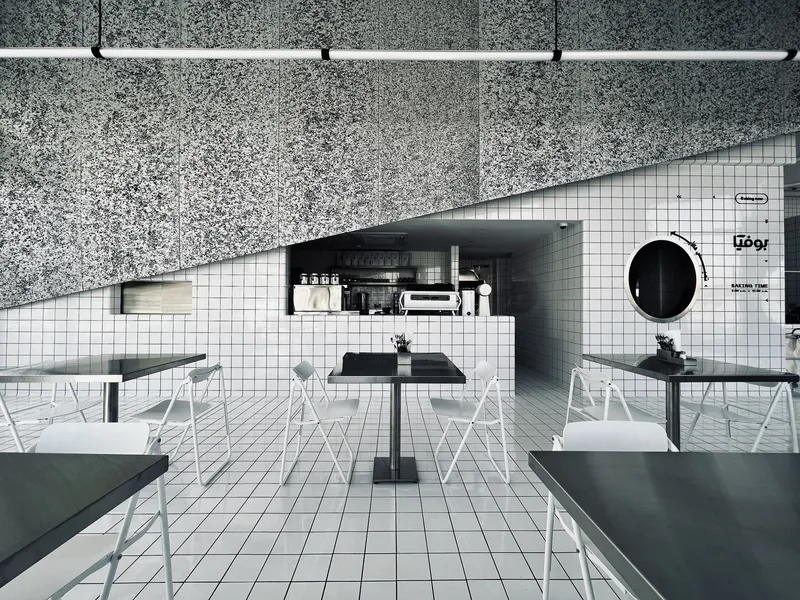
Housed within a modest, rectilinear building, the restaurant subverts expectations with an interior structure that evokes the feeling of a floating mass—what the architects describe as “a cloud” suspended in space. This cloud-like form acts as a spatial divider, separating the vibrant front-of-house public zones from the busy service areas, while maintaining visual fluidity and openness.
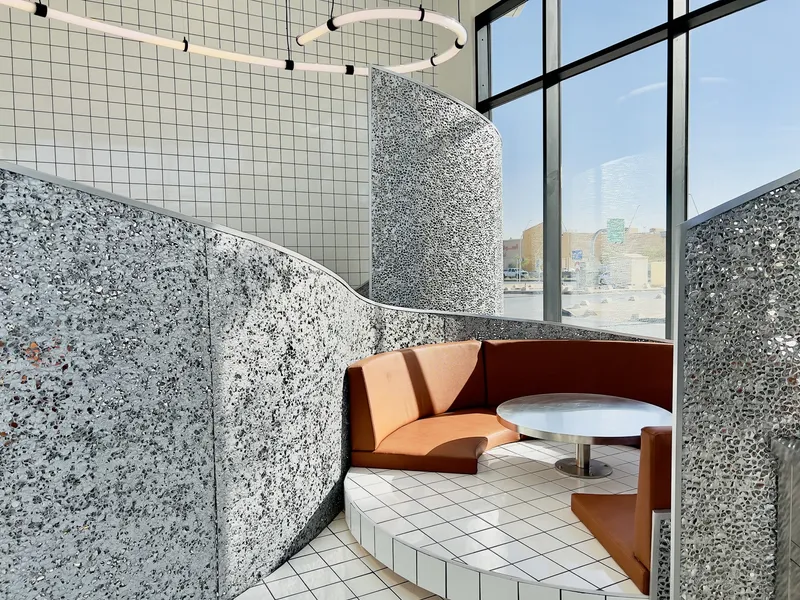
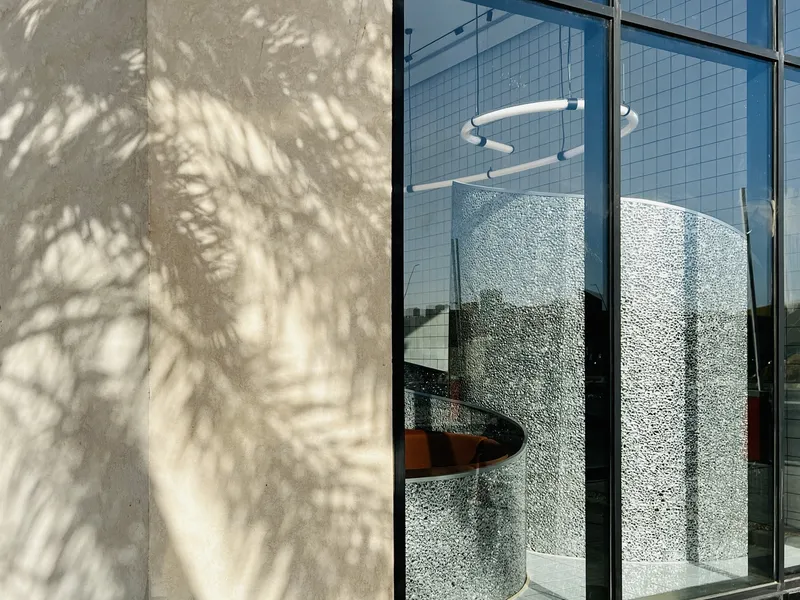
The interior is clad entirely in white ceramic tiles, forming a continuous, high-reflectivity surface that amplifies natural and artificial light. This monochromatic backdrop is animated by carefully orchestrated lighting designed by Light Func, allowing the space to shift in mood and tone between day and night. Striking accents of silver metallic aluminum foam and precise detailing in DTile, Alusion, and Opinion Ciatti furniture contribute to a sophisticated yet experimental aesthetic.


Minimalism or Maximalism? A Dual Interpretation
Visitors often find themselves at a crossroads when interpreting the space—some see it as a minimalist gesture in its material restraint, while others perceive it as a maximalist expression of bold geometry and strong contrast. This duality is intentional, reinforcing the dynamic identity of the space and its layered cultural references.
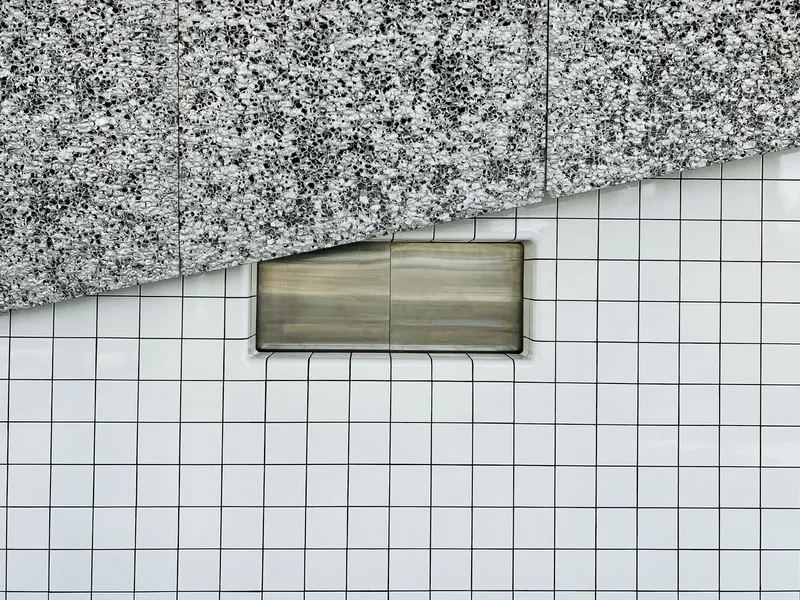
Material Language and Cultural Anchoring
More than just a restaurant, Bofia_The Tiled Cloud is a spatial manifesto—a reflection of how local identity, tradition, and contemporary architecture can harmonize without losing authenticity. By embedding material experimentation within a culturally familiar program, AZAZ Architects push the boundaries of what street food spaces can become.

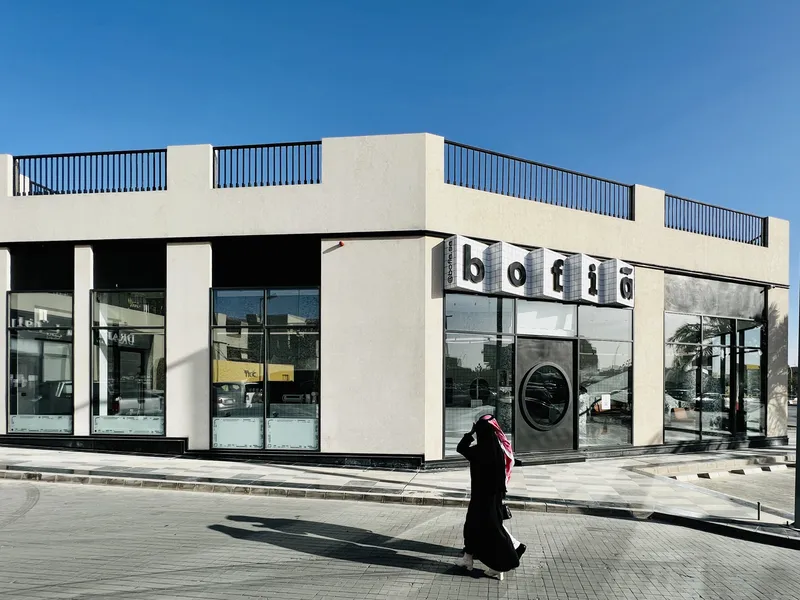
All Photographs are works of Mansor Alsofi




Popular Articles
Popular articles from the community

AL-JANNAH: Sustainable Architecture and Permaculture for Afghan Widows
AL-JANNAH uses sustainable architecture and permaculture to create resilient oasis of housing, learning, work and renewal for Afghan widows.

Hill & Cross Opera: Sculptural Opera House Architecture Shaped by Tallinn’s Landscape and Identity
Hill & Cross Opera reimagines opera house architecture in Tallinn through its sculptural hill, civic plaza, glass wave and a luminous cross.

Co-life: Sustainable Architecture for Age-Friendly Community Living
Co-life reimagines sustainable architecture for seniors through courtyards, rammed earth, shared gardens, and spaces designed for belonging.

The Ocean Hive: Sustainable Architecture for a Self-Sufficient Civilization at Sea
The Ocean Hive imagines sustainable architecture at sea, where modular habitats, algae, wave power and ocean waste sustain a growing colony.


Similar Reads
You might also enjoy these articles


Hodi-Mandai Geram
Project Function: Preservation and revitalization of the Intangible heritage and socio-spatial identity of the Hodi by Housing, Cultural Memory Center, Sacred Grove, landscape, local tourism economy


Olio Towers: A Mid-Rise for Performers That Fuses Housing, Rehearsal, and Stage
Located blocks from Houston's Theater District, this modular tower stacks living units around a central performance atrium.

Oasis: Modular Green Housing Carved into Dhaka's Urban Fabric
A shortlisted Plugin Housing entry reclaims unauthorized settlements in Dhaka with stepped concrete volumes, green roofs, and ventilation-driven design.

Black Hole: A Floating Megastructure for the Post-Physical Era
Emiliano Mazzarotto envisions a spherical, self-scaling arena where e-sports, digital hotels, and holographic stadiums replace traditional public space.


Explore Interior Design Competitions
Discover active competitions in this discipline


Challenge to design luxury tourism on rails


Challenge to reimagine the Iron Throne


Photograph architecture without architects


VR headsets Storefront design competition
Comments (0)
Please login or sign up to add comments
No comments yet. Be the first to comment!