

Bon Pastor 54 Social Housing Units: A Modern Approach to Sustainable Urban Living in Barcelona
The Bon Pastor 54 Social Housing project blends sustainable design with community living, transforming Barcelona's historic neighbourhood with modern architecture.


Bon Pastor 54 Social Housing
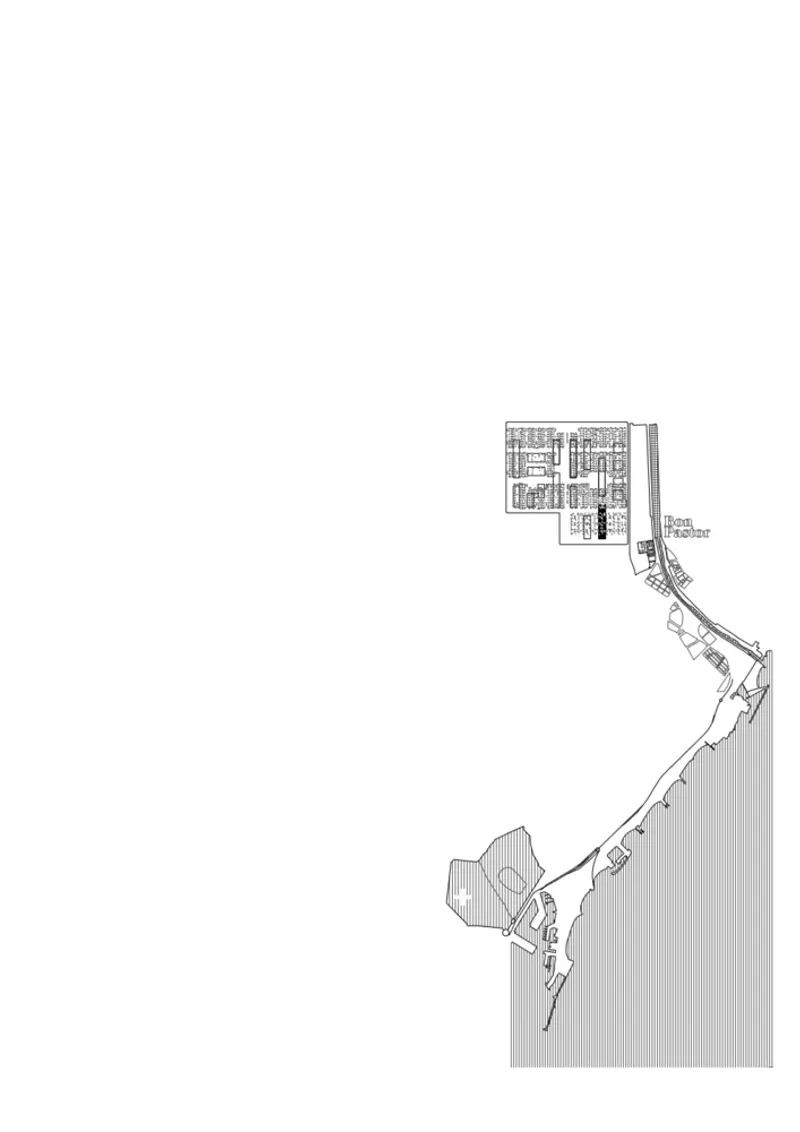
The Bon Pastor 54 Social Housing Units by Peris+Toral.arquitectes is an exemplary project that combines sustainable urban design with the social and community-oriented values of its original neighborhood. Located in the historic Bon Pastor district of Barcelona, Spain, the project replaces the 784 Casas Baratas (cheap houses) built in 1929 with modern freestanding housing blocks designed to rehouse the original residents. This transformation reimagines social housing while preserving community life and integrating sustainable architectural practices.
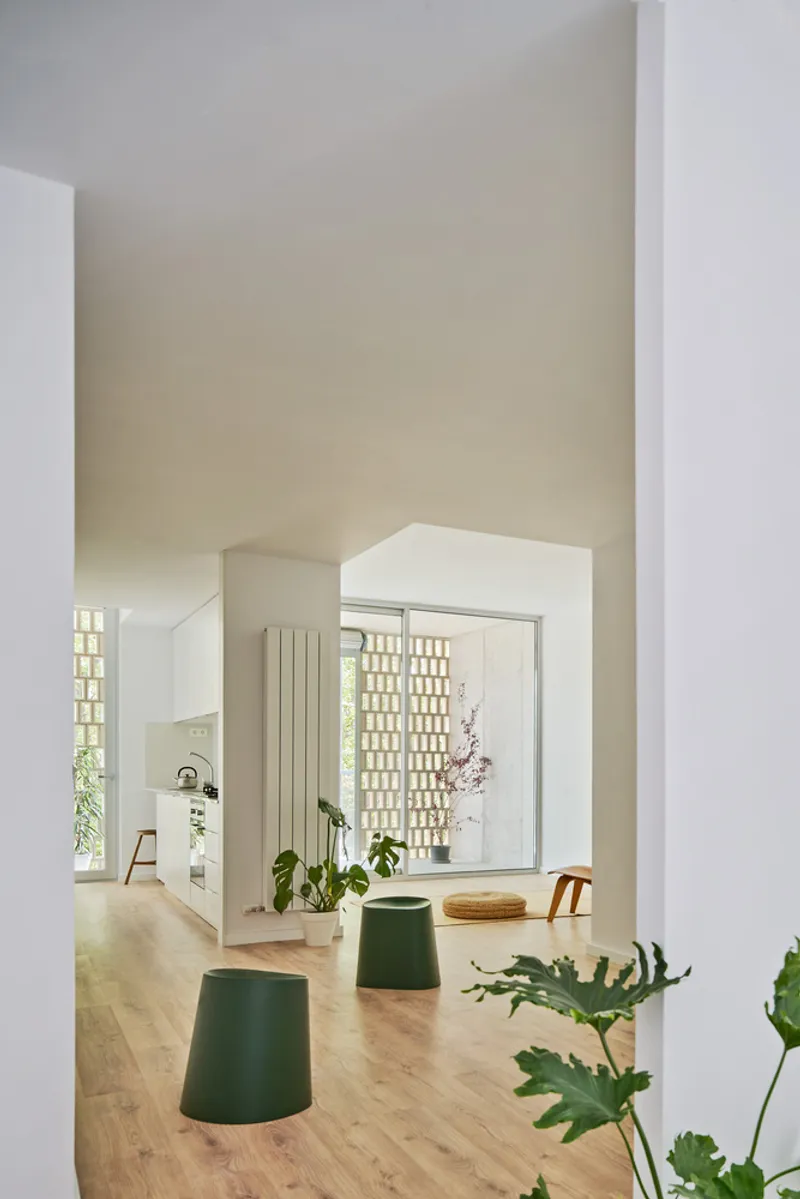
The Remodelling Plan: Replacing the Old with the New
The Bon Pastor neighborhood has long been a vibrant community where single-story homes promoted close-knit, street-level interactions among residents. The remodelling plan for this district involves replacing the old Casas Baratas with higher-density, freestanding buildings to accommodate more residents and provide improved living conditions. While the new design incorporates the benefits of modern high-rise living, such as panoramic views of the Besòs River, it also aims to maintain the intimate sense of community and outdoor living that characterized the original settlement.
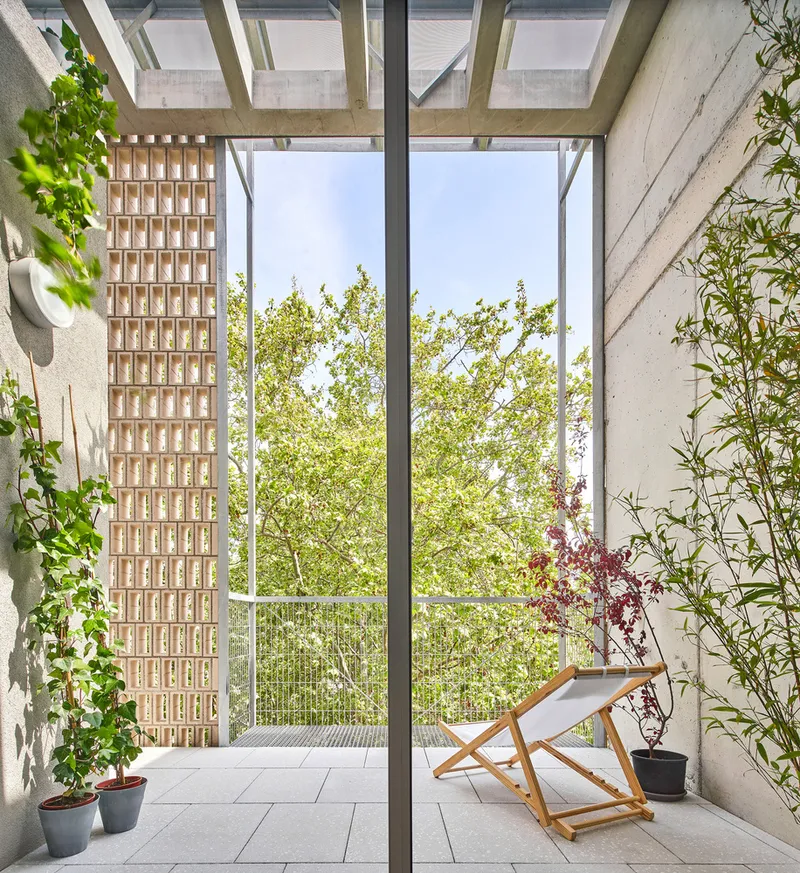
Designing for Community: Creating Spaces that Foster Interaction
One of the key objectives of the Bon Pastor 54 Social Housing project was to retain the community atmosphere of the original neighborhood. The challenge was balancing the advantages of vertical housing with the close relationships and outdoor spaces that made the single-story homes so unique. To achieve this, Peris+Toral.arquitectes focused on designing intermediate spaces that blur the line between private homes and public areas.
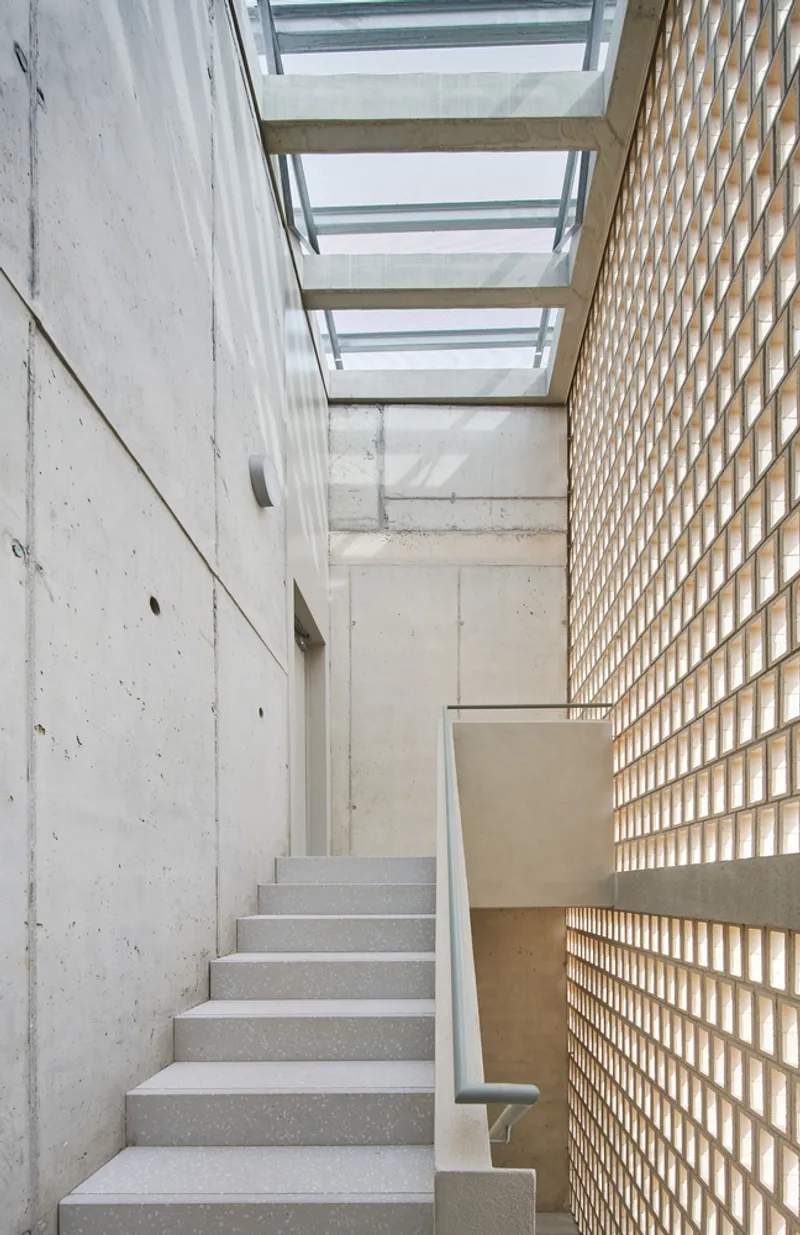
Courtyards and Communal Spaces: A Bridge Between Public and Private
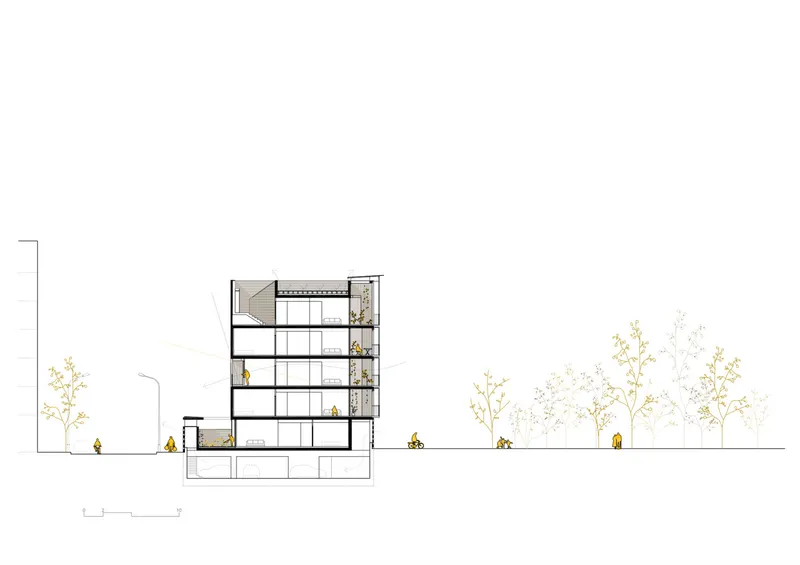
At ground level, the building's design includes communal courtyards that provide access to the foyers, creating a shared public space that brings residents together. These courtyards serve as a buffer between the private dwellings and the busy street, fostering a sense of privacy while still maintaining strong social connections. The use of these spaces ensures that residents can interact with their neighbors and enjoy a communal atmosphere while still living in a multi-story environment.
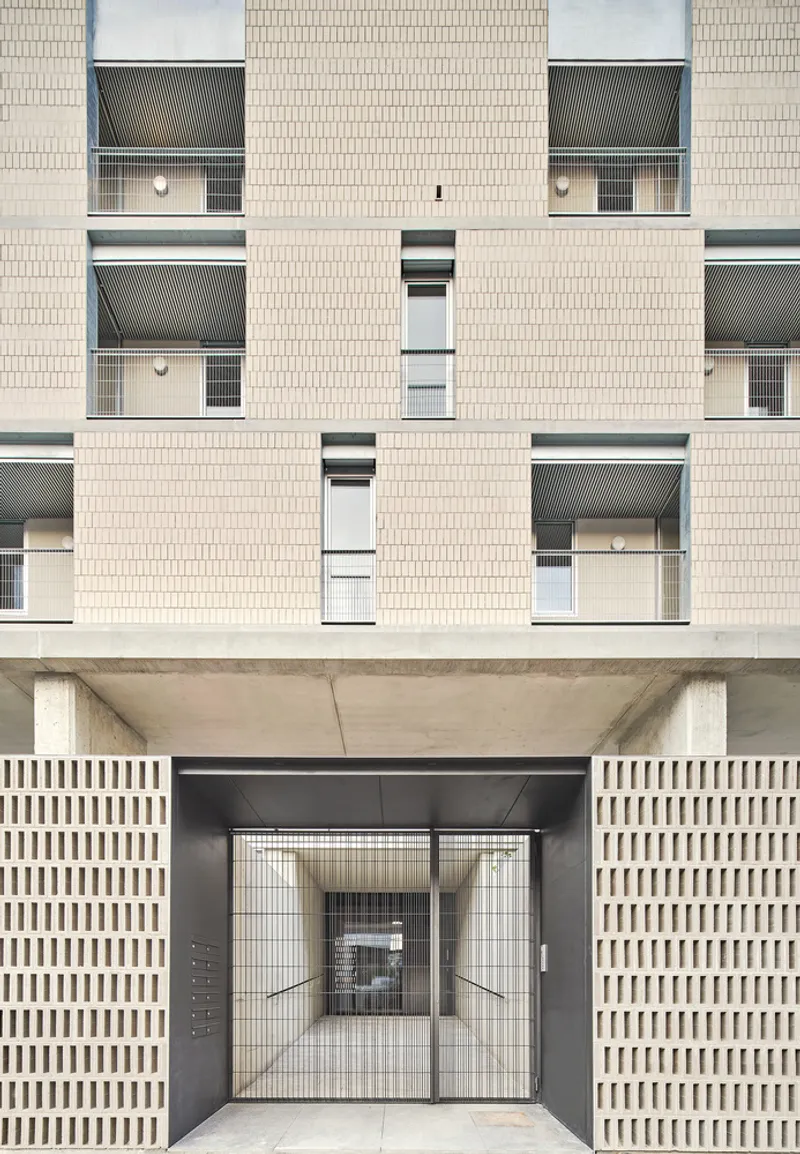
Terraces and Outdoor Living: Connecting with Nature
The generous terraces on the first floor are designed as outdoor rooms, providing residents with private spaces to enjoy the surrounding parkland and riverfront views. These terraces not only serve as private retreats but also create a seamless connection between the building’s residents and the new park that borders the river. This integration of green spaces into the urban fabric helps preserve the community-focused nature of the neighborhood, offering a sustainable solution that enhances residents' quality of life.
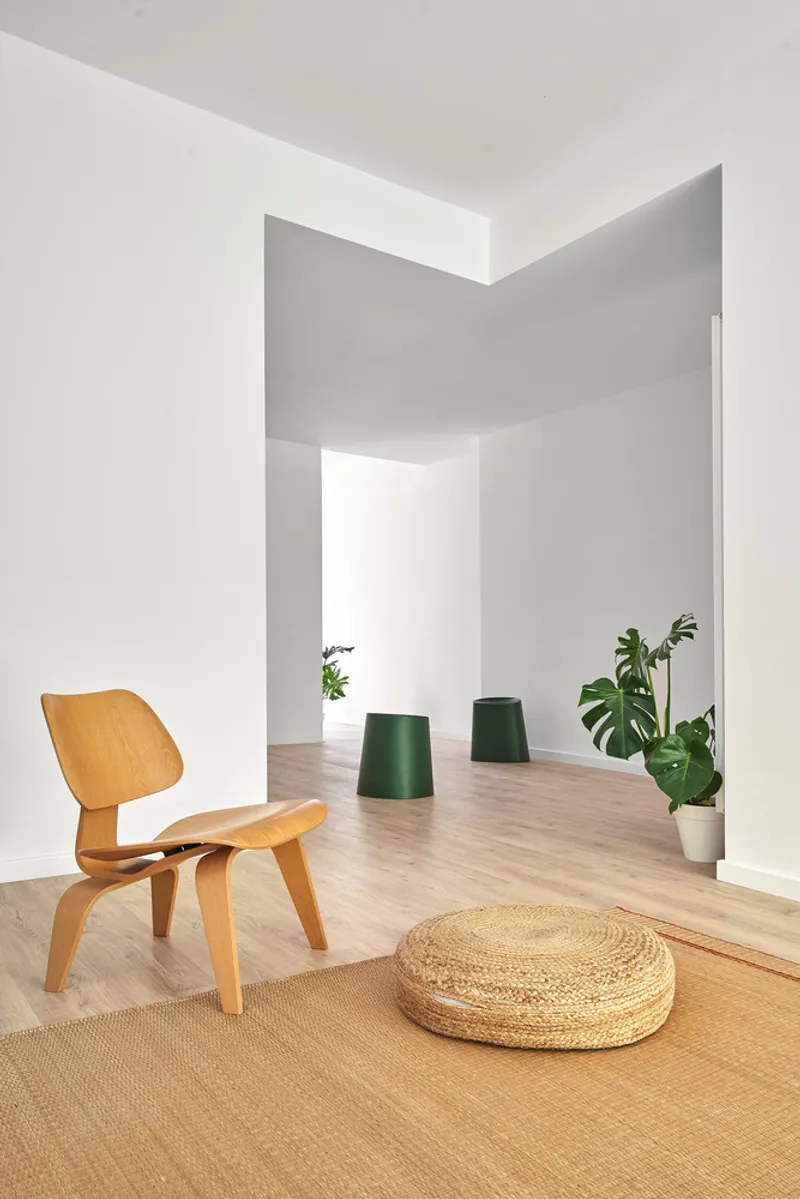
Sustainable Architecture: Designing for the Future
Sustainability is a key consideration in the design of Bon Pastor 54 Social Housing Units. The project incorporates natural ventilation, sustainable building materials, and adaptable spaces that can evolve with future needs. For example, the car park is designed with natural lighting and ventilation, creating a healthier environment and allowing for potential future uses as the needs of the community change.
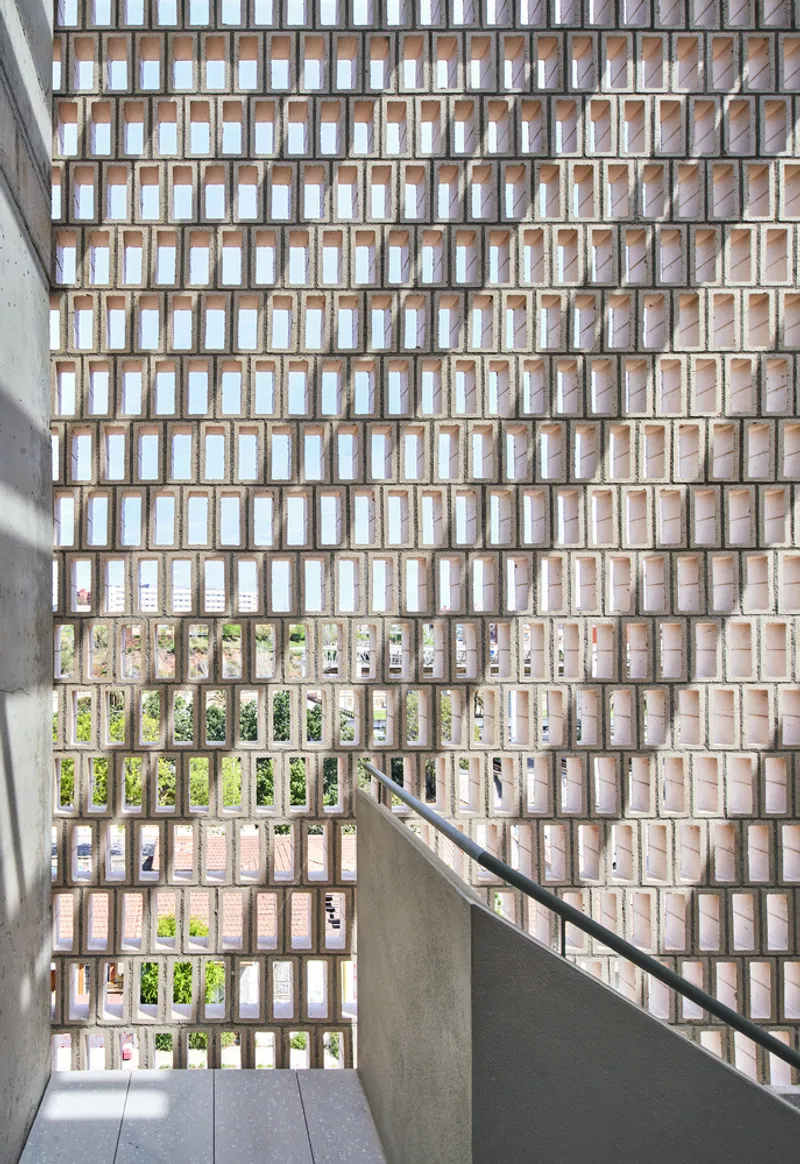
Sustainable Materials: Exposed Brick and Lattices
The use of exposed brickwork in the building’s façade is a direct response to the local planning regulations, and it also offers an opportunity to introduce lattices that give the building’s exterior a porous texture. These lattices serve both aesthetic and functional purposes, allowing for airflow and providing support for the incorporation of vegetation on the building’s exterior. This helps to reduce the heat island effect while also improving the aesthetic quality of the development.
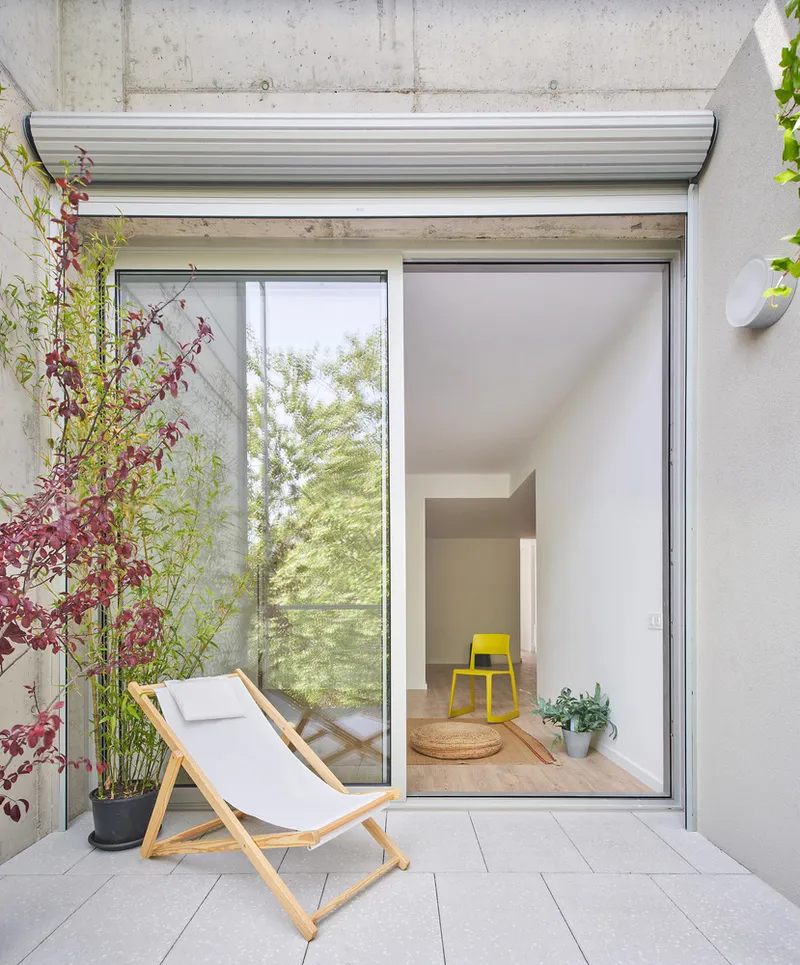
Cross-Ventilated Dwellings: Optimizing Airflow and Views
Each apartment in the Bon Pastor 54 Social Housing Units is designed with cross-ventilation in mind. The apartments are arranged around a central, freestanding bathroom, which divides the living spaces and allows for uninterrupted airflow through the apartment. This layout not only improves air circulation but also maximizes natural light and views from both façades. The integration of terraces that wrap around the apartments further enhances the sense of openness and connection to nature, providing residents with unobstructed sightlines to the river and surrounding greenery.
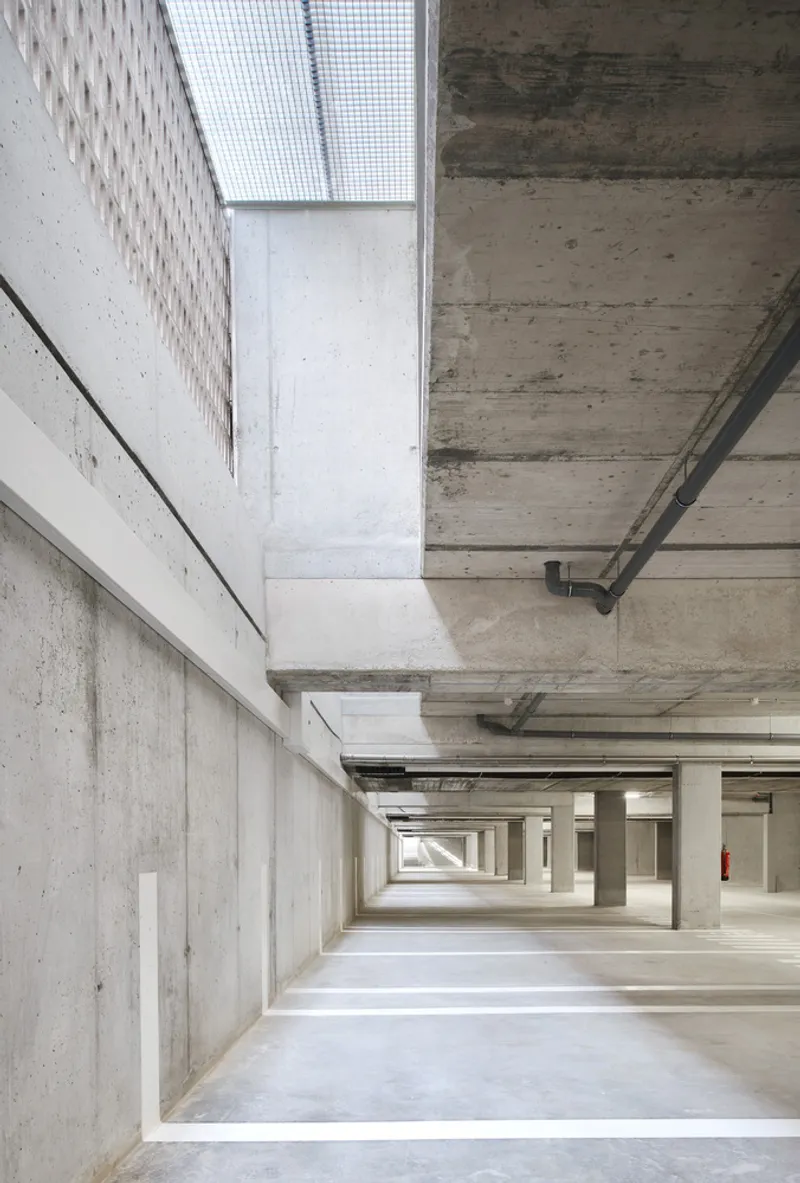
Architectural Features: Functionality Meets Aesthetics
The design of the Bon Pastor 54 Social Housing Units places a strong emphasis on creating a visually appealing building that is both functional and sustainable. Key architectural features include:
Lattice Facade: Vertical Communication Externalized
The lattice façade of the building externalizes the vertical circulation, creating a unique and visually striking exterior. The design allows for transparency, offering glimpses of the vertical circulation system while enhancing the building's overall aesthetic.
Car Park and Adaptability: Future-Proofing the Space
The car park is designed with natural ventilation and lighting, providing a healthier environment for residents. Its design is flexible, allowing it to adapt to other uses in the future, ensuring that the space remains functional and adaptable as the needs of the community evolve.
A Model for Future Social Housing
The Bon Pastor 54 Social Housing Units is a prime example of how modern architectural design can address the evolving needs of social housing while preserving the values of community and sustainability. Through its innovative use of space, sustainable materials, and focus on community interaction, this project offers a model for future social housing developments in urban environments.
By integrating green spaces, cross-ventilated apartments, and communal courtyards, Peris+Toral.arquitectes has successfully created a harmonious living environment that balances the benefits of modern high-rise living with the community spirit of the original Bon Pastor neighborhood. This project not only meets the needs of its residents but also sets a new standard for socially responsible and sustainable urban design.
All Photographs are work ofJosé Hevia


Popular Articles
Popular articles from the community


Architekt Andreas Gruber Scatters 23 Dark Timber Chalets Across a South Tyrolean Forest Edge
In Molini di Tures, Amonti Chalets breaks a resort into a hamlet of gabled timber houses, with parking, storage and services pushed into the slope.

longwave studio Reorganizes a 112 m² Tainan Apartment Around the Daily Routines of a Family and Two Cats
In Tainan, Taiwan, birch plywood, rust-red furniture and a freestanding plaster wall link arrival, storage, work and family life in one apartment.

U.GA Architects Wraps an Oval Rooftop Pool in Curved Board-Formed Concrete on Busan's Jeollidan-gil
In Busan's Jeonpo-dong, a 454 m² mixed-use block stacks a neighborhood facility, guest rooms and an oval rooftop pool inside spiraling concrete walls.

Cube Design Draws an Ecological Corridor Between Two Shenzhen Hills with the Nankai Building
Beside Shenzhen's container docks, the Nankai Building pairs stacked balconies with a climbing green screen to connect two hillsides across its height.

Similar Reads
You might also enjoy these articles


Hodi-Mandai Geram
Project Function: Preservation and revitalization of the Intangible heritage and socio-spatial identity of the Hodi by Housing, Cultural Memory Center, Sacred Grove, landscape, local tourism economy


Olio Towers: A Mid-Rise for Performers That Fuses Housing, Rehearsal, and Stage
Located blocks from Houston's Theater District, this modular tower stacks living units around a central performance atrium.

Oasis: Modular Green Housing Carved into Dhaka's Urban Fabric
A shortlisted Plugin Housing entry reclaims unauthorized settlements in Dhaka with stepped concrete volumes, green roofs, and ventilation-driven design.

Black Hole: A Floating Megastructure for the Post-Physical Era
Emiliano Mazzarotto envisions a spherical, self-scaling arena where e-sports, digital hotels, and holographic stadiums replace traditional public space.

Explore Social Housing Competitions
Discover active competitions in this discipline

Challenge to reimagine the Iron Throne

Photograph architecture without architects

Illustrate the lost glory of Angkor Wat - Render Challenge

Design challenge to reuse E-waste
Comments (0)
Please login or sign up to add comments
No comments yet. Be the first to comment!