
Brighton High School by JAWSARCHITECTS: A Contemporary Model of Educational Architecture in Australia
Brighton High School by JAWSARCHITECTS redefines educational architecture in Australia, blending Aboriginal heritage, community identity, and contemporary learning design.


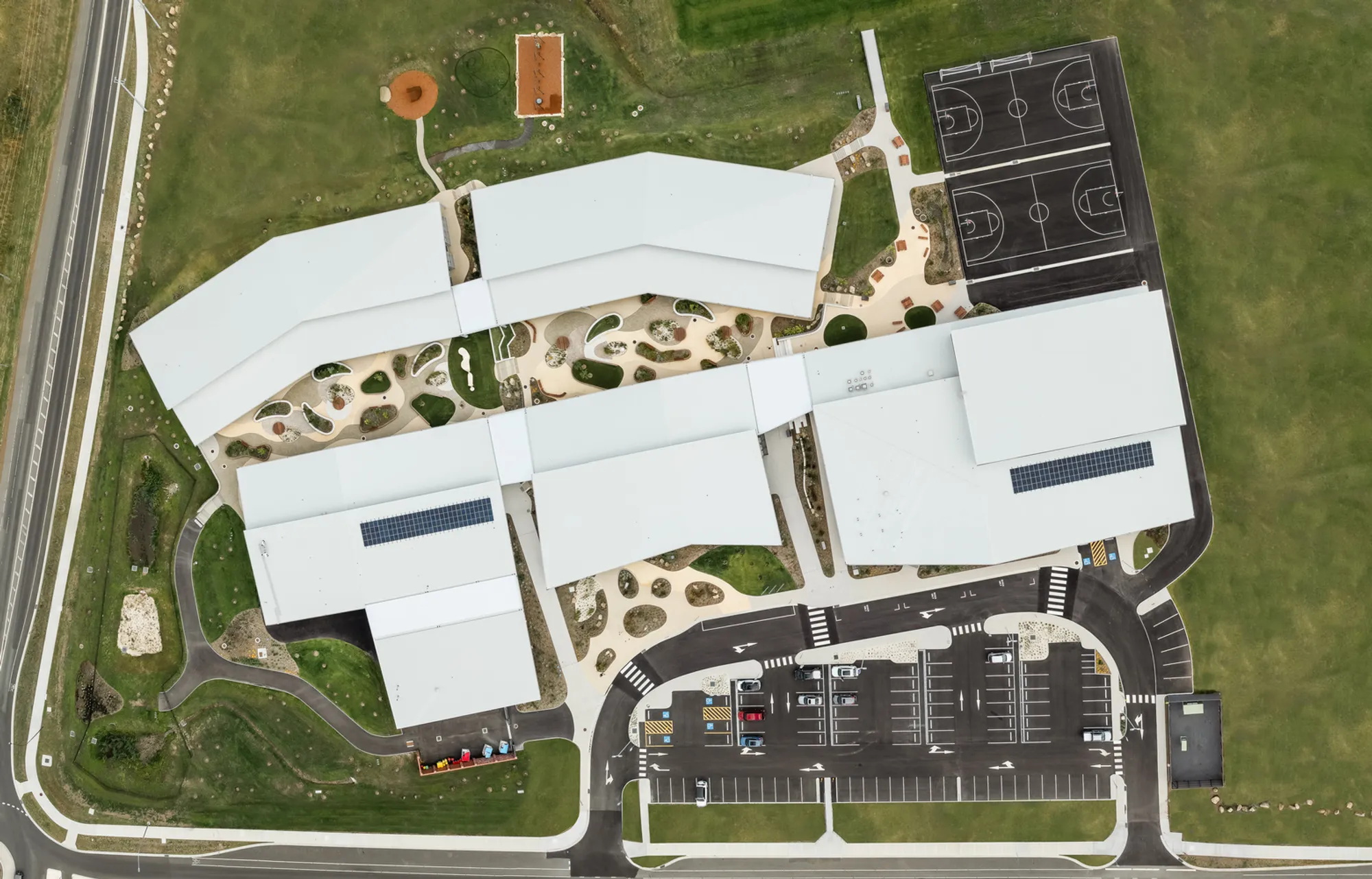
Completed in 2024 by JAWSARCHITECTS, Brighton High School in Battery Point, Australia, redefines the concept of educational architecture in Australia. Designed for up to 600 students across Years 7 to 12, the 7,602 m² campus emphasizes inclusivity, cultural connection, and the integration of indoor and outdoor learning environments. With photographs by Natasha Mulhall, the project demonstrates how architecture can embrace community heritage while supporting modern pedagogical frameworks.
Cultural and Historical Context
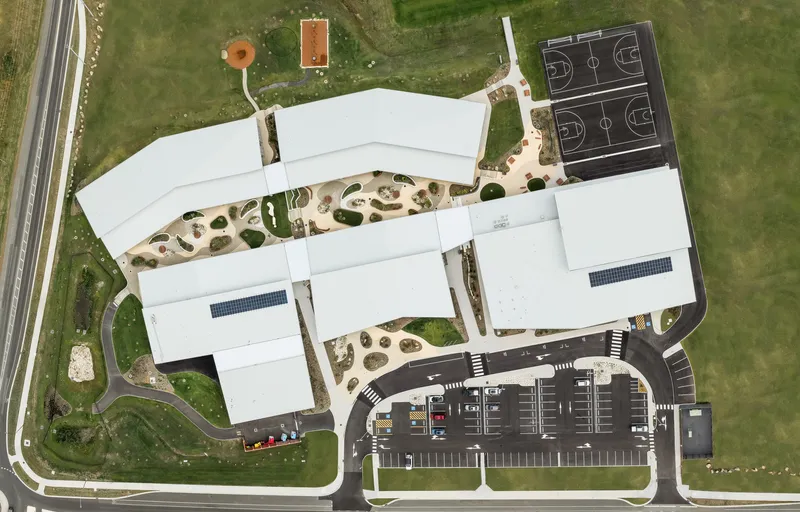
The design draws deeply from the Palawa / Tasmanian Aboriginal heritage. The Jordan River, known as Kutalayna, has historically served as both a boundary and a gathering place for the Big River and Oyster Bay people. This cultural landscape became a guiding principle in the master plan, shaping the school into two interdependent precincts that embrace a central gathering space. By weaving cultural memory into its architecture, the school provides students with a profound appreciation of history while strengthening their sense of place.
Master Plan and Spatial Organization
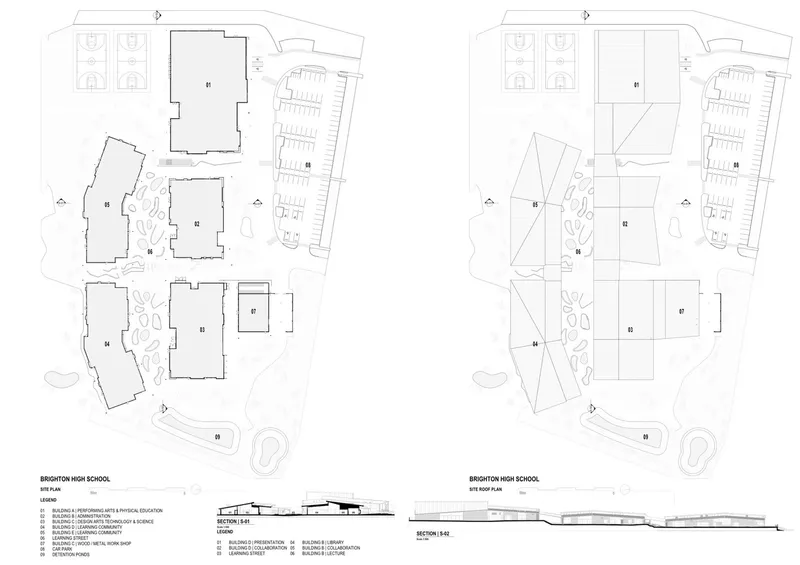
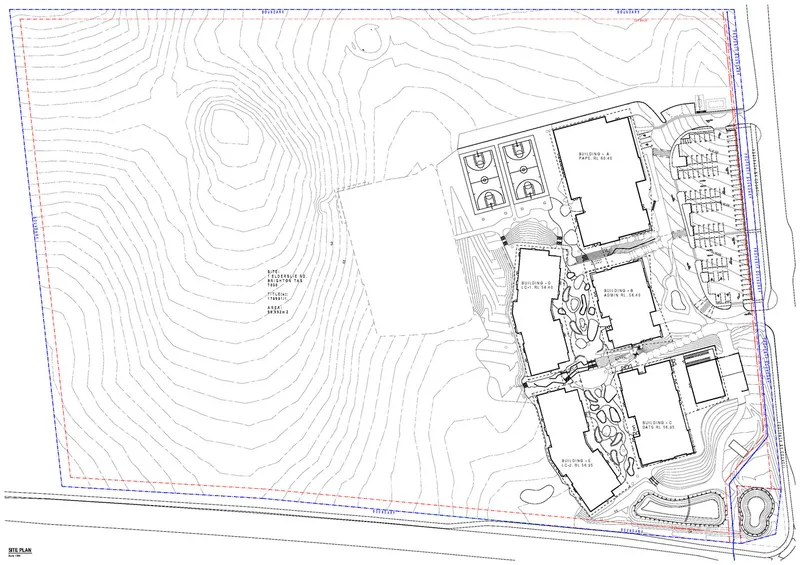
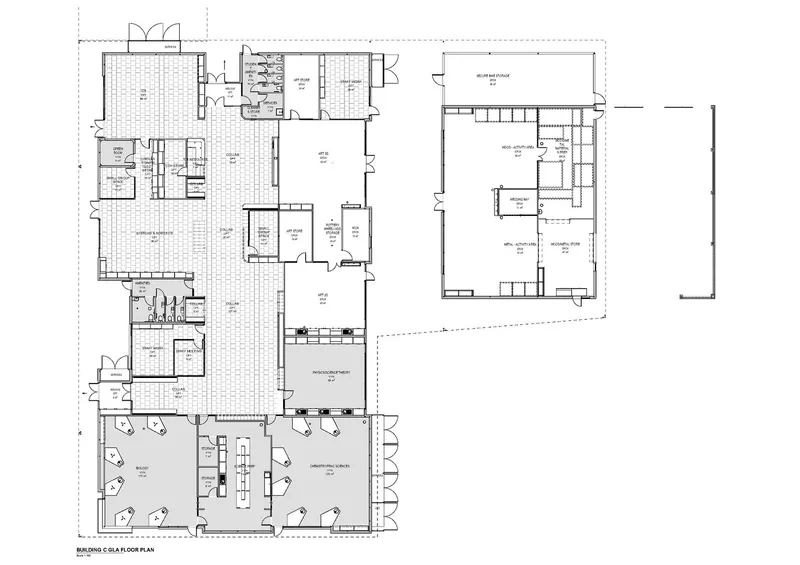
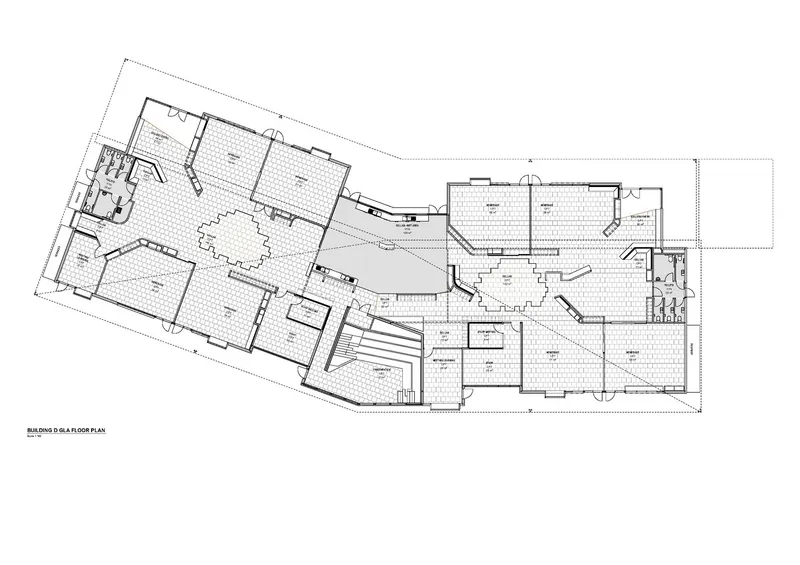
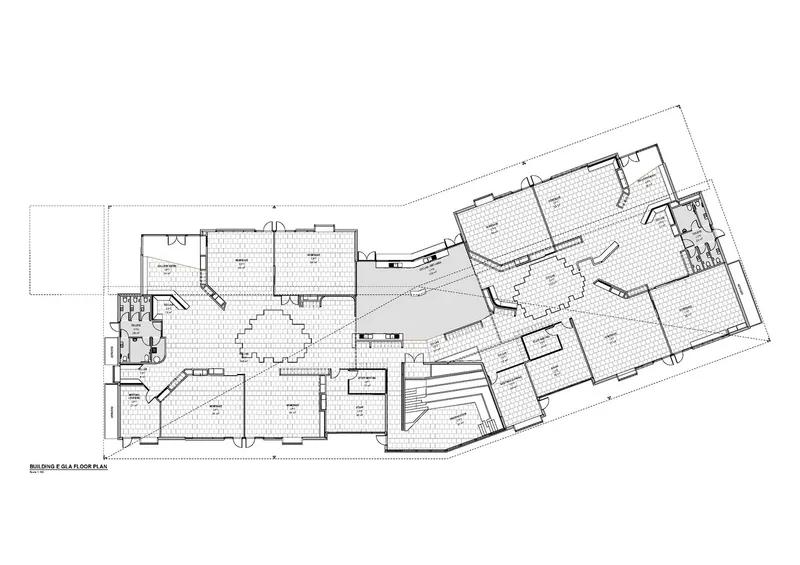
The campus is divided into two precincts, reflecting the cultural significance of Kutalayna while addressing modern educational needs.
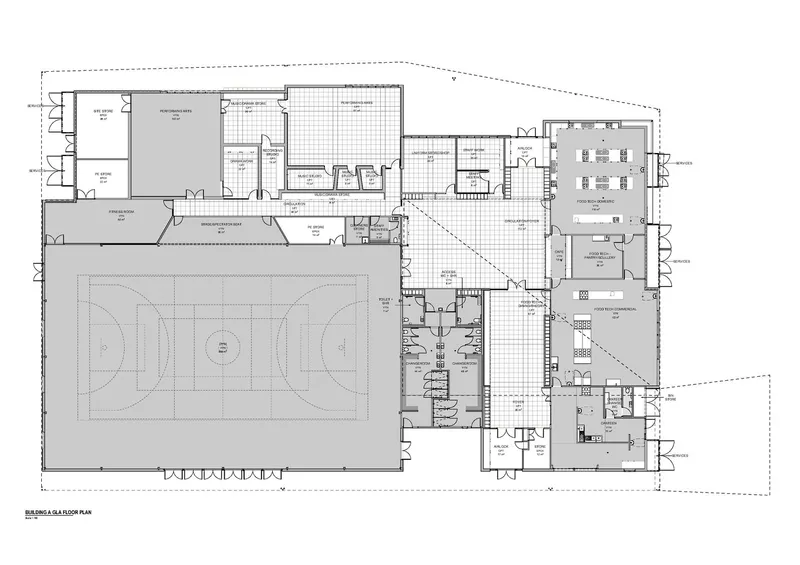
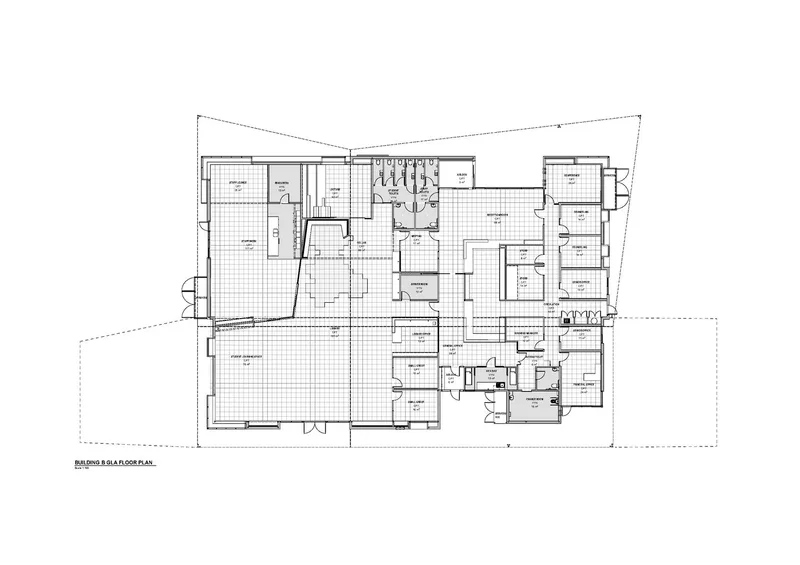
- The northern precinct forms the civic edge, housing community-based structures. Designed at a domestic scale, the architecture feels familiar, approachable, and welcoming.
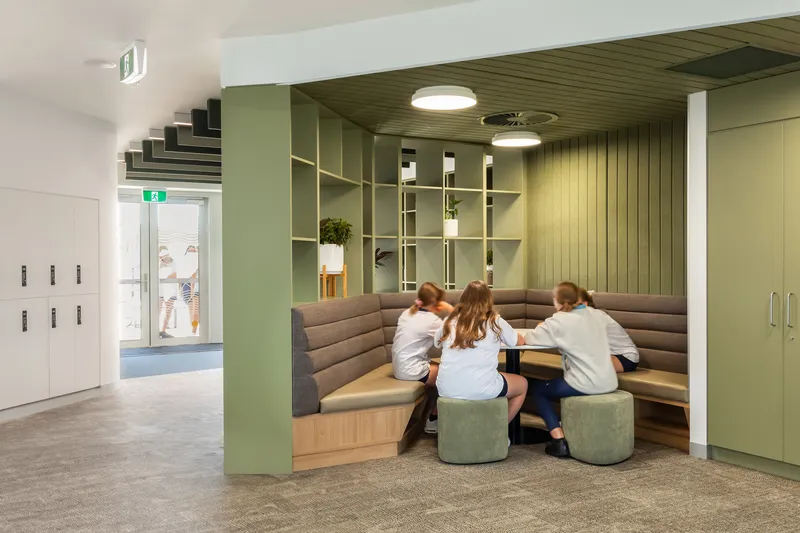
- The southern precinct is defined by flexible learning communities. Teaching spaces are positioned along the perimeter and directly connect with landscaped outdoor areas, enhancing student wellbeing through natural interaction and light-filled environments.
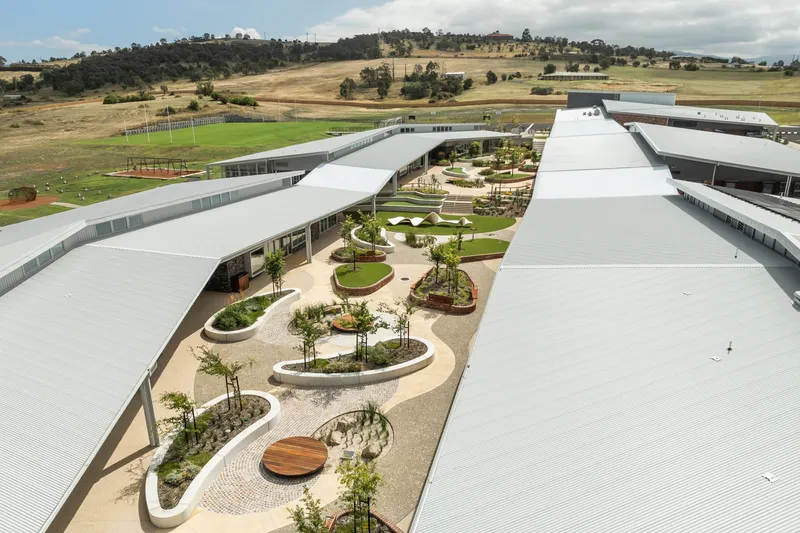
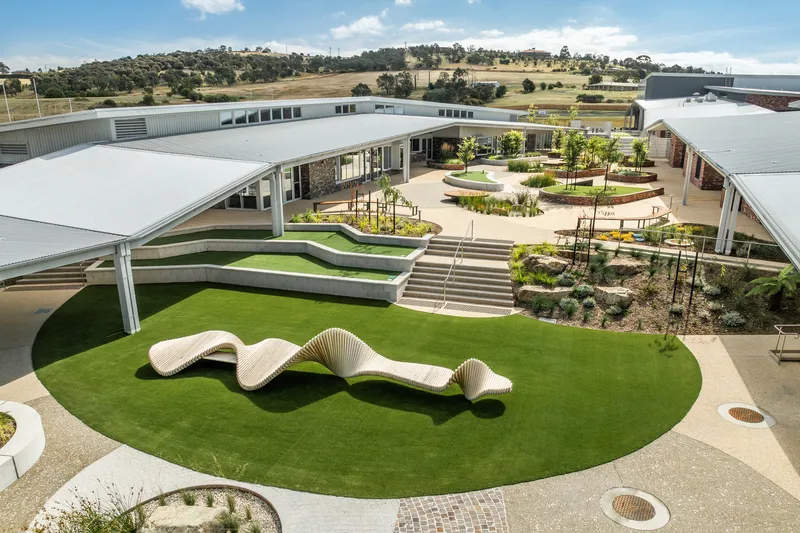
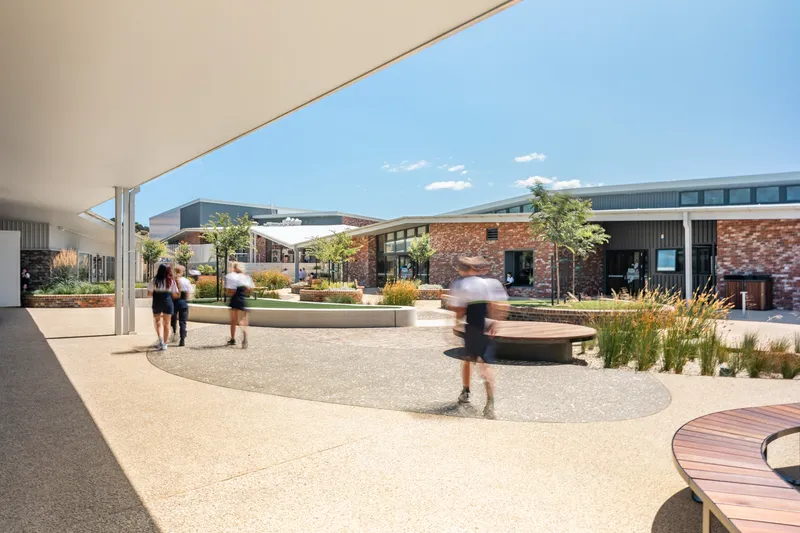
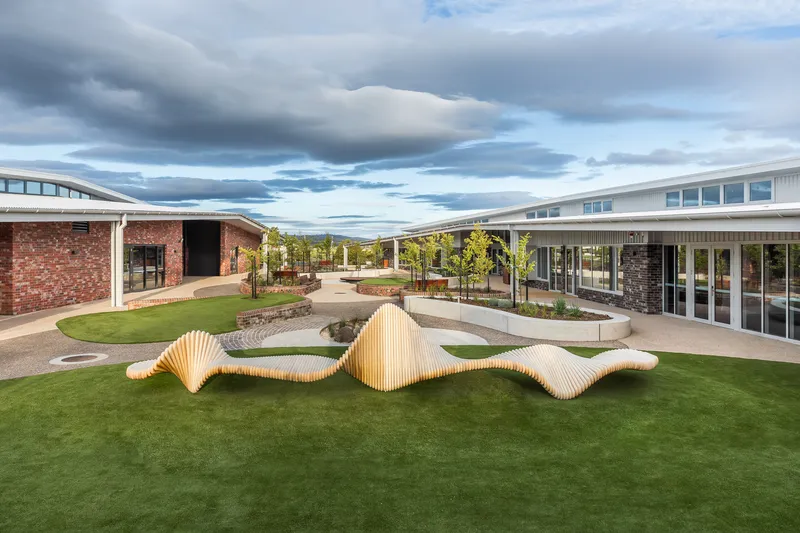
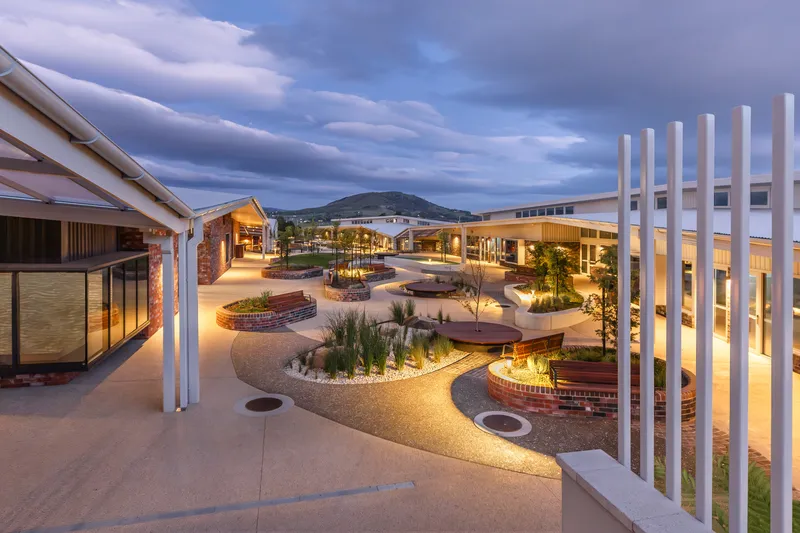
At the heart of the school lies the Learning Street, a sinuous landscaped spine that organizes the entire campus. It functions as a central hub for gatherings, informal learning, quiet reflection, and recreation, embodying the balance between cultural storytelling and modern education.
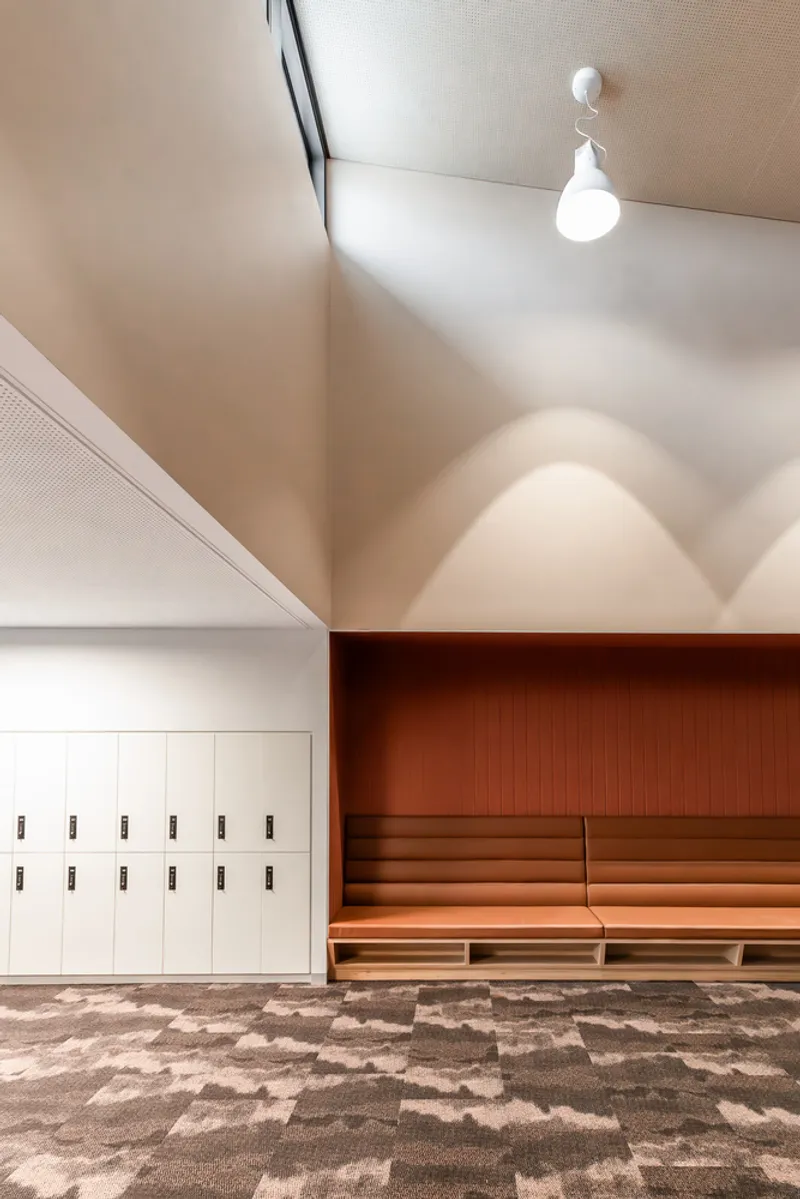
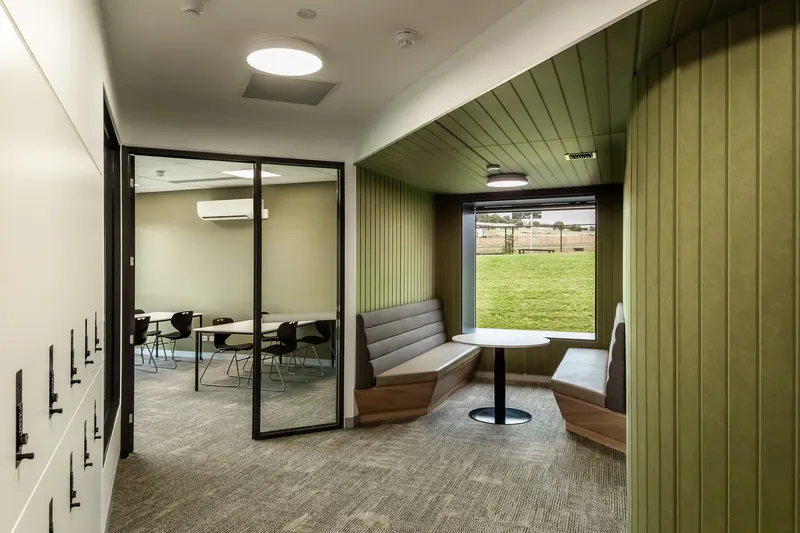
Architectural Language and Design Features
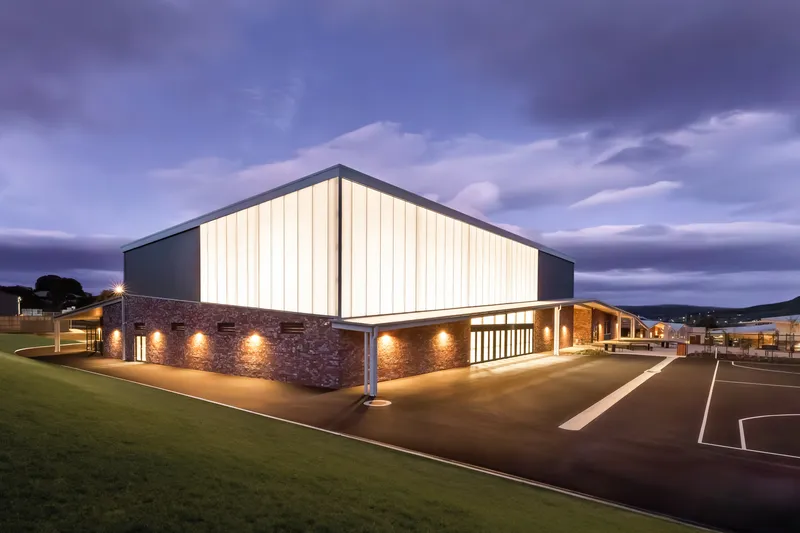
The architectural language is guided by geomorphology and cultural symbolism. The building forms, massing, and material textures reference the territories of the Aboriginal mobs who traditionally inhabited the region. Patterned brickwork with varied colors symbolizes both coastal and highland landscapes, establishing a cohesive yet diverse identity.
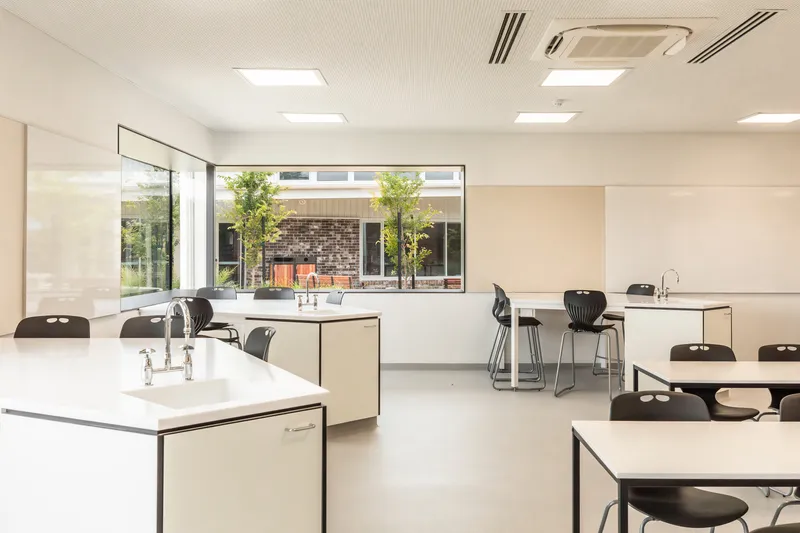
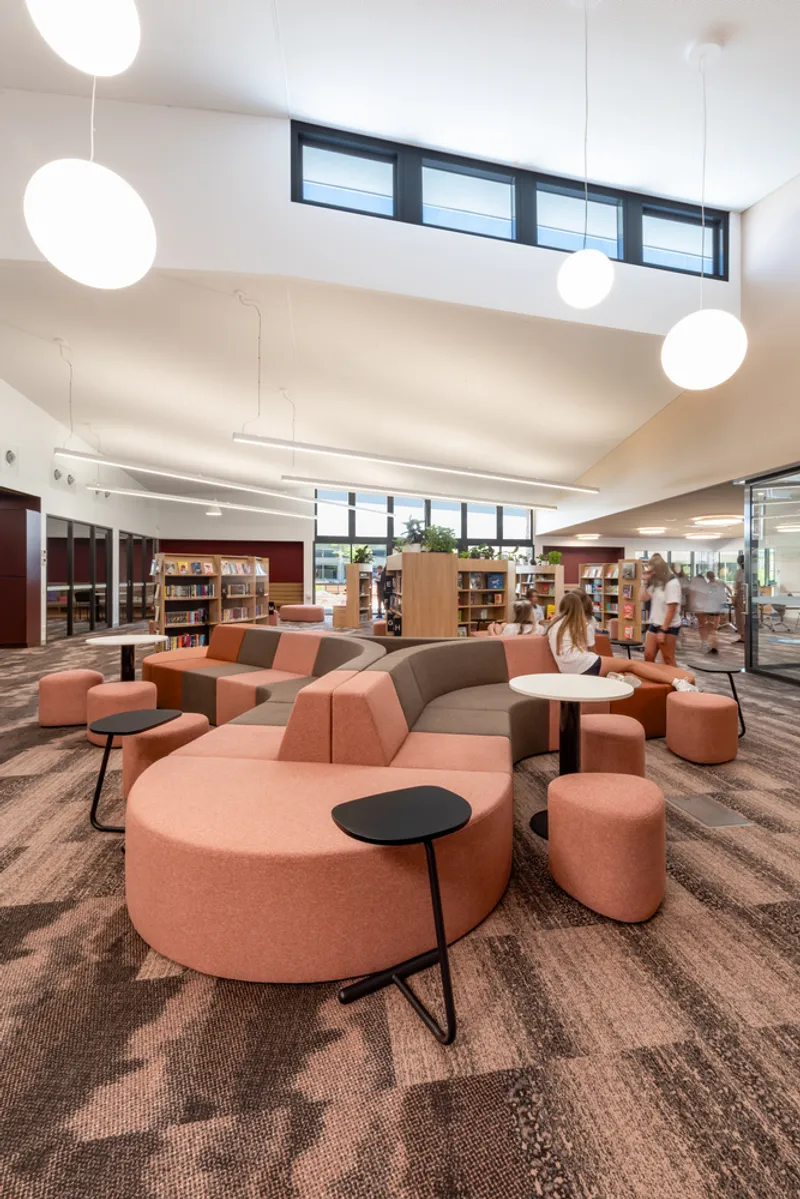
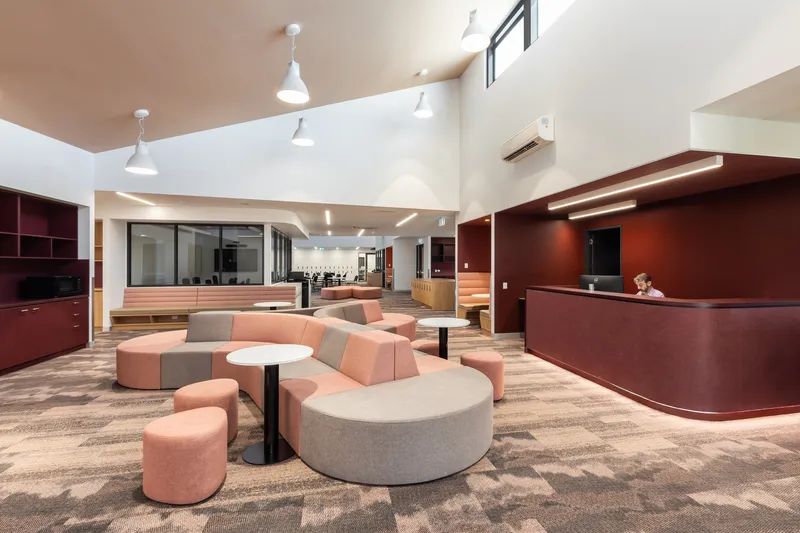
The roof design is inspired by surrounding hills and forests. Folded roof forms layer together like tree canopies, symbolizing shelter and community. Highlight windows break up roof planes, filling interiors with natural light while creating collaboration spaces with varied atmospheres.
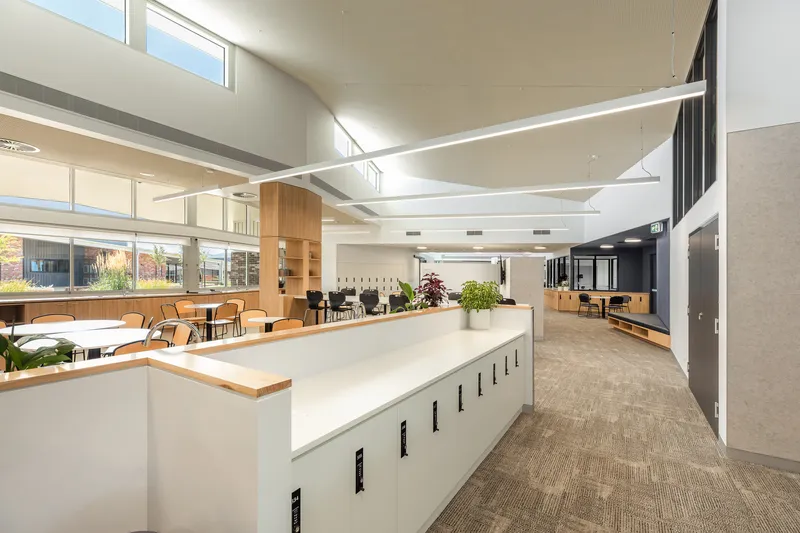
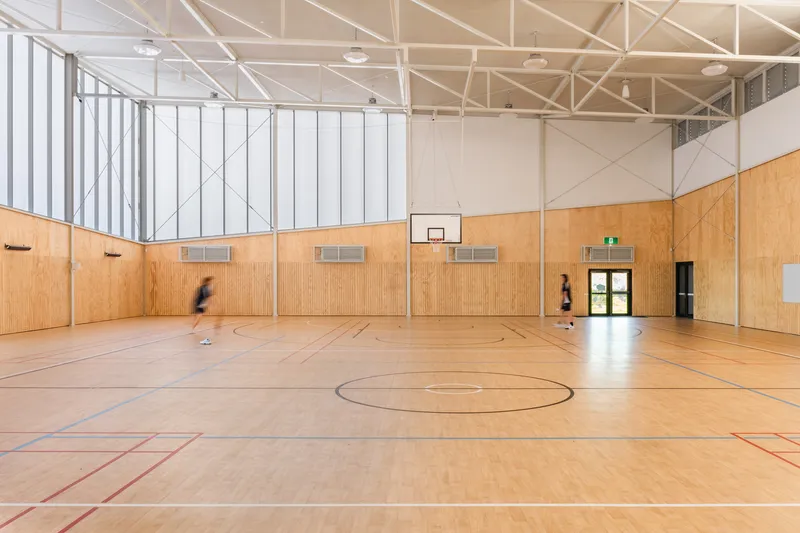
Covered walkways extend beyond the buildings, offering shaded circulation routes along the Learning Street. These areas serve as communal thresholds where students can gather, interact, and build friendships, reinforcing the values of knowledge sharing and respectful connection.
Educational Architecture for Wellbeing and Collaboration
Brighton High School represents a forward-thinking model of educational architecture in Australia. It integrates pedagogy with cultural awareness, natural landscapes, and human-centered design. By prioritizing flexibility, wellbeing, and inclusivity, the school creates a learning environment that adapts to contemporary needs while grounding itself in heritage and community.
A Benchmark for Future Educational Design
Brighton High School by JAWSARCHITECTS sets a benchmark for modern educational architecture in Australia. Through its integration of Aboriginal cultural narratives, environmentally responsive design, and innovative learning spaces, it demonstrates how architecture can shape not only educational outcomes but also social identity and belonging. It is more than a school—it is a cultural landmark that inspires respect, collaboration, and growth.
All Photographs are works of Natasha Mulhall




Popular Articles
Popular articles from the community


The Musturak Paradise: Senior Living Architecture for a Connected Future in Temara, Morocco
The Musturak Paradise reimagines senior living architecture in Temara via private homes, social spaces, culture, community, and shared care.

Lunar Spiral: Space Architecture Shaped by the Mathematics of the Universe
Lunar Spiral reimagines space architecture through Fibonacci geometry, lunar regolith, levitating habitats, and self-sustaining Moon living.

Hill & Cross Opera: Sculptural Opera House Architecture Shaped by Tallinn’s Landscape and Identity
Hill & Cross Opera reimagines opera house architecture in Tallinn through its sculptural hill, civic plaza, glass wave and a luminous cross.

Play: Fragments of Their World
Familiar architecture becomes modular playground design, creating safe spaces where displaced children can learn, connect, imagine and play.


Similar Reads
You might also enjoy these articles

Bamboo Housing Challenge 2026: Design Affordable, Sustainable Homes Using Bamboo
An international design competition by Bamboo U and IBUKU inviting architects and designers to reimagine affordable housing using bamboo — with the winning design built full-scale in Bali.

Computational Design & Education: Beegraphy Design Awards Introduces 7th Category (Featuring Jiyun's Innovative Approach)
Dive into Beegraphy’s 7th Design Awards category, where computational design meets education to create immersive, interactive learning tools, inspired by Jiyun’s work.
From Parametric Lighting to Urban Furniture: Join the 2nd Workshop in Beegraphy’s Computational Design Series
Dive into Cutting-Edge Design Techniques and Practical Applications with Industry Experts

Last Call: Unleash Your Architectural Genius in SHAK's Kindergarten Design Competition
Urgent call for architects to join SHAK's kindergarten design competition before the looming deadline


Explore Architecture Competitions
Discover active competitions in this discipline



Challenge to reimagine the Iron Throne


Photograph architecture without architects


Illustrate the lost glory of Angkor Wat - Render Challenge


Design challenge to reuse E-waste
Comments (0)
Please login or sign up to add comments
No comments yet. Be the first to comment!