

Bruzkus Greenberg Turns a Berlin Office Building into a Living Room at Alexanderplatz
The shared amenity floors of C1 Workplace trade corporate sterility for domestic warmth at one of Berlin's busiest intersections.


The hardest sell in commercial real estate right now is the office itself. With remote work firmly embedded in professional culture, landlords and designers face a blunt question: why would anyone leave the comfort of home to sit under fluorescent lights? At C1 Alexanderplatz, Bruzkus Greenberg responds by refusing to make the shared floors feel like an office at all. The ground and first floors of this 15,000 square meter building read more like a well-appointed members' club, complete with a cinema, a library, a bar, and a cafe, all stitched together with a material palette that borrows from hospitality and residential design in equal measure.
Sitting on the site of Berlin's former Central-Markthalle, C1 is a nine-story perimeter block development designed by Faber & Faber Architects that continues the alignment of Karl-Liebknecht Strasse. Bruzkus Greenberg's commission covered the two lower amenity levels and the office fit-outs above. The result is a building where six conventional office floors rest on top of what the studio calls a "third place," a 1,185 square meter lounge territory with up to 30 meeting areas, 47 workstations, a 28-seat cinema, and a 70-seat conference zone. The ambition is legible and specific: make the communal heart of the building so inviting that tenants treat it as an extension of their own workspace.
Arrival and Reception
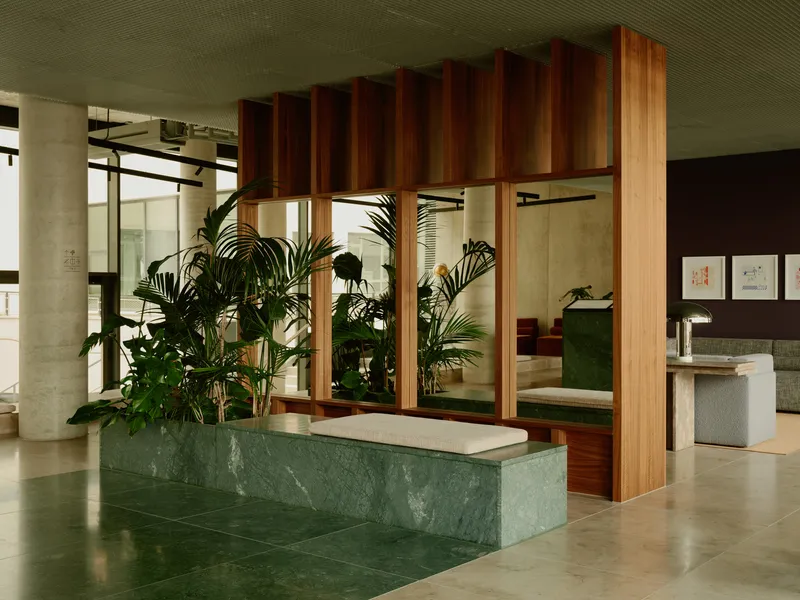

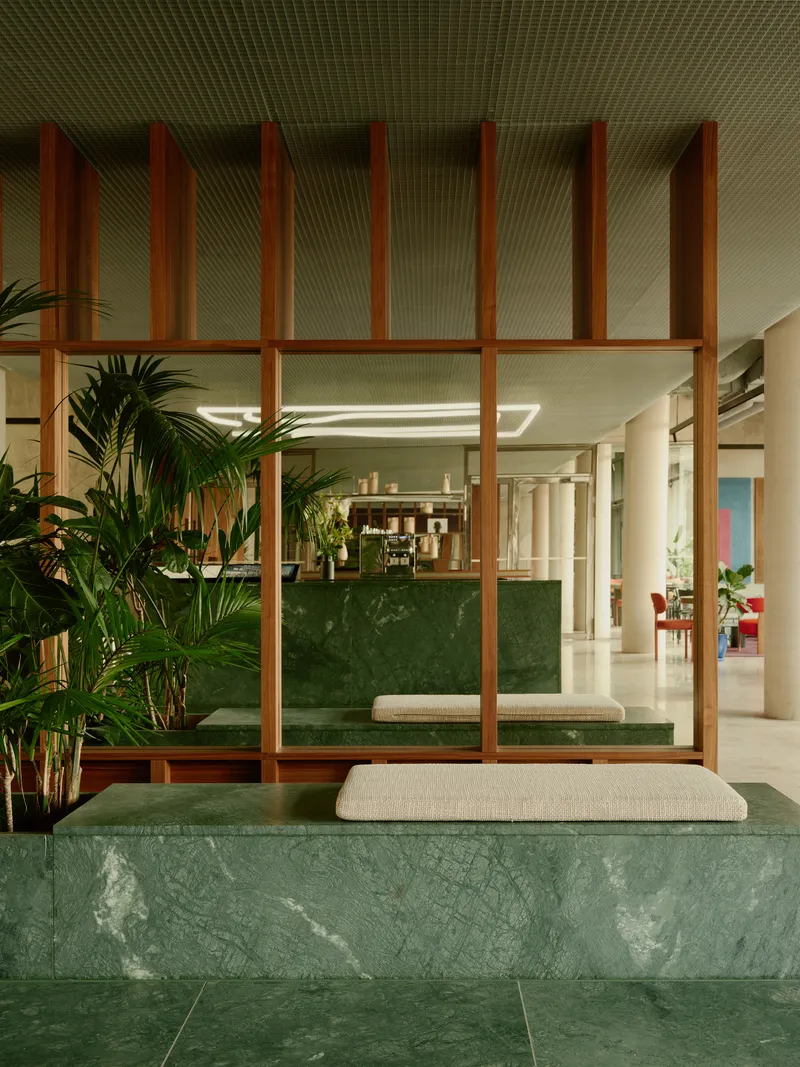
The ground floor entrance sets the tone immediately. A reception counter clad in deep green marble anchors the lobby, framed by a suspended timber slat installation overhead and flanked by indoor palms. The material choices are deliberate: the marble is rich without being cold, and the timber slats filter the overhead lighting into a softer register than the exposed concrete structure above would suggest on its own. It is a hotel lobby move, not a corporate one, and it works.
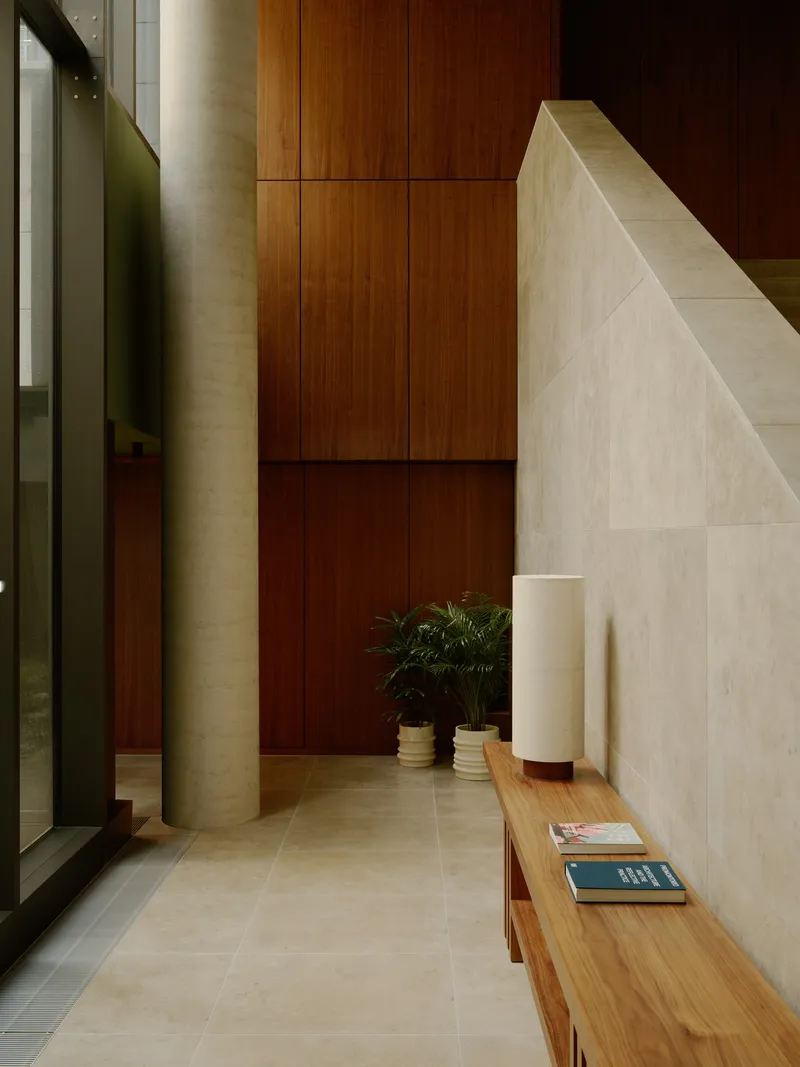
Moving deeper into the plan, a limestone stair volume and cylindrical concrete columns establish a rhythm that carries through the entire lower level. A timber bench with a potted plant at the entry corridor signals informality. You are not being processed through a turnstile; you are being welcomed into a room.
The Arena and Lounge Territories
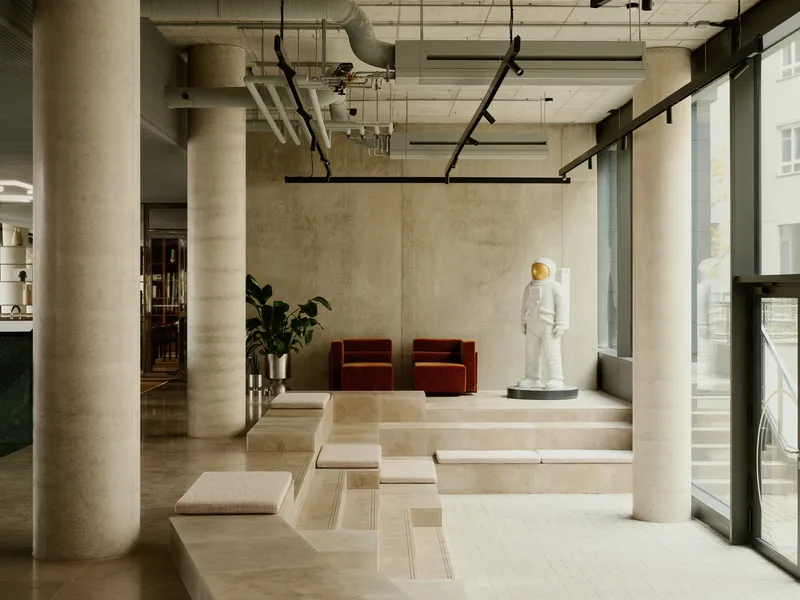
The first floor's centerpiece is the "arena," a raised platform with smooth stone steps and cylindrical columns that doubles as informal amphitheater seating near full-height windows. Red velvet chairs cluster around it, lending a theatrical quality that feels earned rather than forced. The stone flooring grounds the space while the generous glazing pulls daylight across the steps, making this a spot people will actually gravitate toward for impromptu presentations or just a change of scenery.
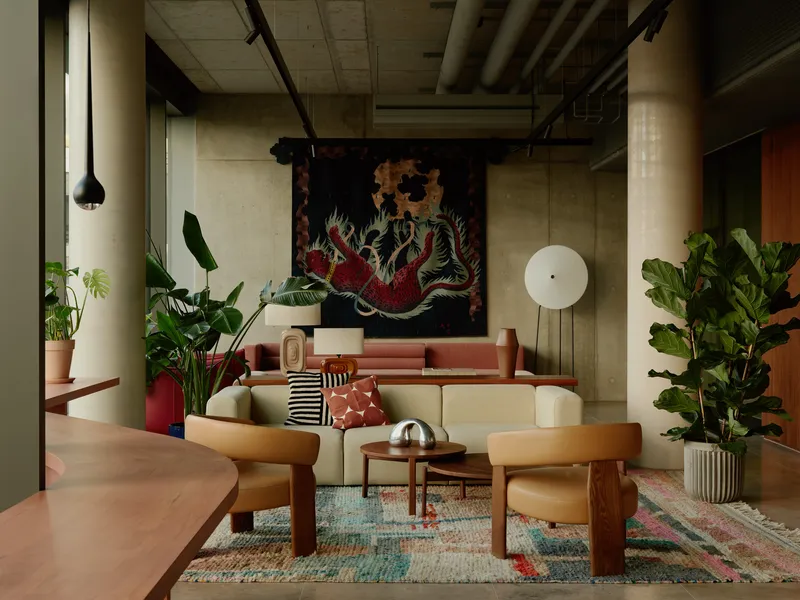
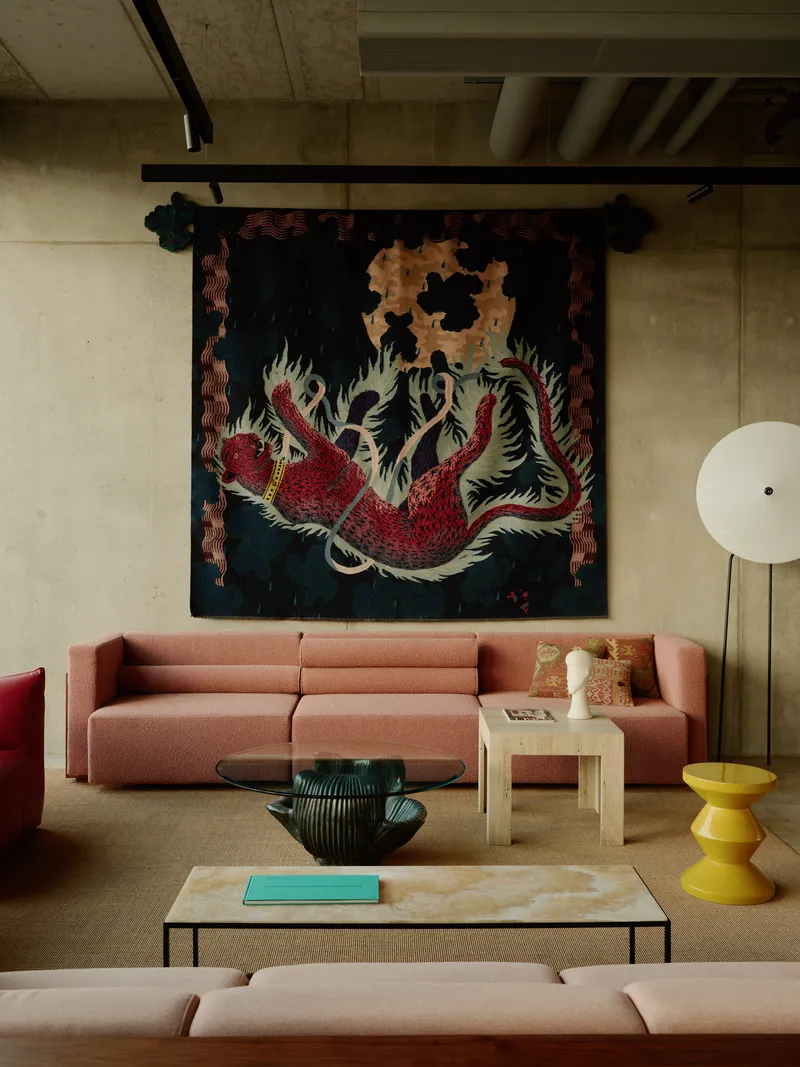
Adjacent lounge zones deploy a different register. Curved sectional sofas gather beneath a large textile dragon tapestry that dominates the rear wall, its folk-art energy a counterpoint to the exposed ceiling ducts and track lighting above. Bruzkus Greenberg describes the design language as "reduced but opulent," and these lounges illustrate what that phrase means in practice: the infrastructure is left raw, the furniture is lavish, and the art is unapologetically decorative. The tension between the two keeps the rooms from tipping into either industrial cliché or boutique preciousness.
Dining, Library, and the Kitchen Table

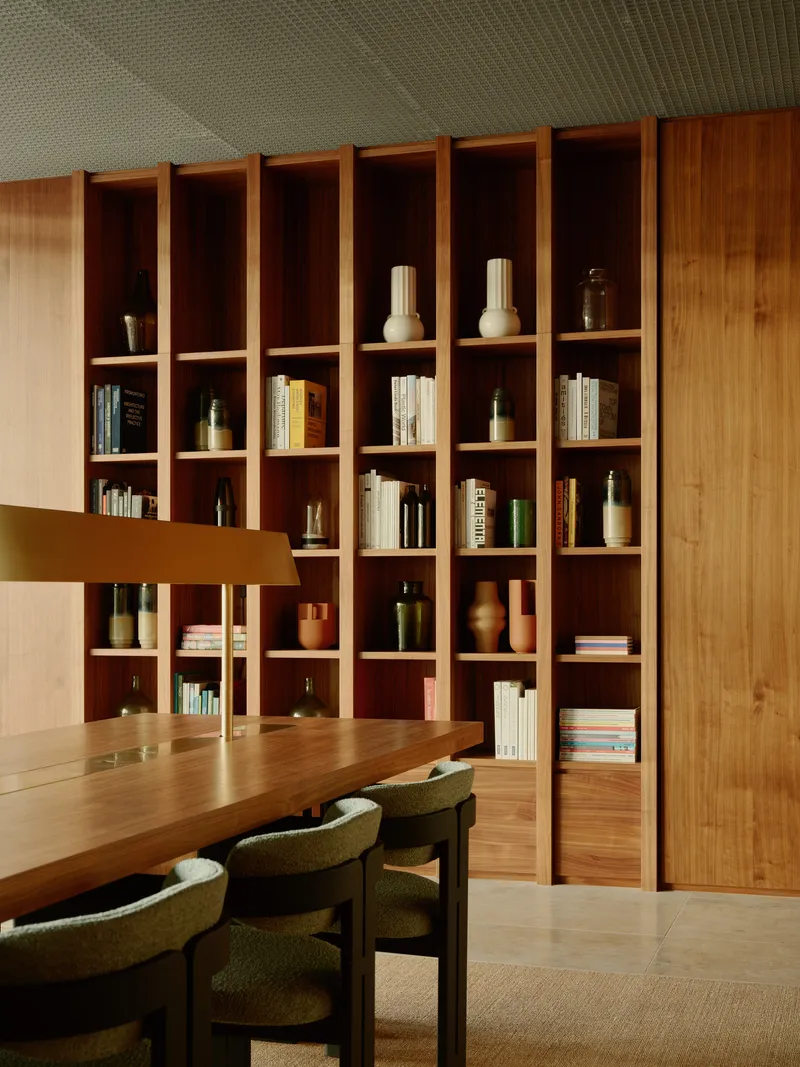
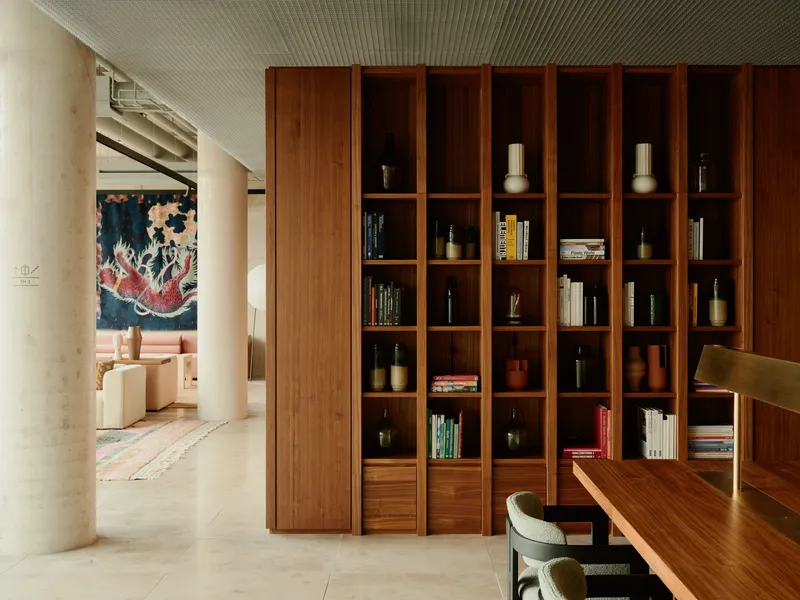
If the lounges play the role of living room, the dining zones anchor the domestic metaphor's other essential space: the kitchen table. Walnut dining tables face timber shelving walls stocked with ceramic vessels and books, with glass doors opening to adjacent offices. The shelving is both functional and spatial, acting as a porous room divider that lets light and sight lines pass through while still creating acoustic and psychological separation between zones.
A floor-to-ceiling wooden bookcase performs a similar trick at a larger scale, dividing a dining area from a living room beyond. Through the stacks, you catch glimpses of artwork and the concrete columns that structure the plan. It is a residential move scaled up: the bookshelf as architecture. Green upholstered chairs and carefully placed ceramics reinforce the sense that someone lives here, or at least that someone cared enough to curate every surface.
Material Detail and Custom Furniture
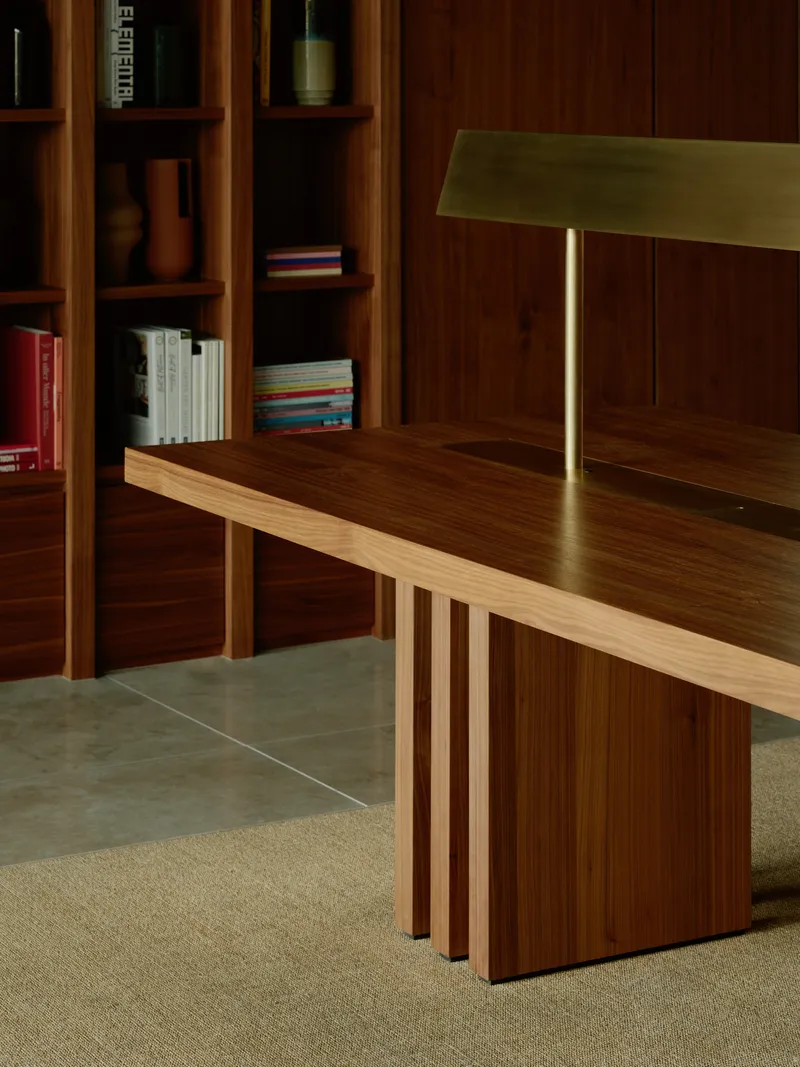
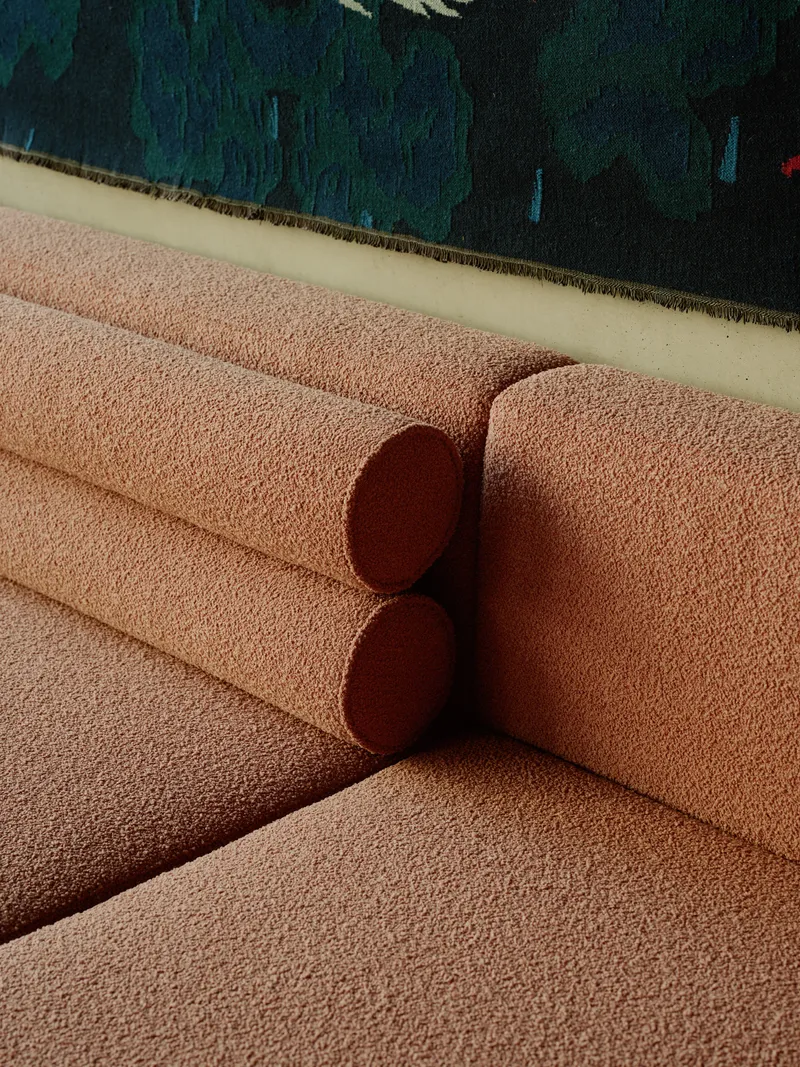
Bruzkus Greenberg designed a custom line of sofas and tables for the lobby spaces, and the close-up views reveal the care that went into them. A brass lamp with a slatted timber base sits on a walnut table beside matching shelving; a pink textured sofa with a cylindrical bolster cushion leans against a deep blue tapestry. The color pairings are confident and specific, never defaulting to the gray-on-gray palette that plagues most commercial interiors.
Green marble reappears as a bench material on the lower level, paired with cushion seating and a planted timber screen partition. The consistency of the green marble, from reception desk to bench to incidental detail, gives the project a through-line that reads as intentional rather than repetitive. Vintage pieces and bespoke designs sit side by side without hierarchy, reinforcing the collected-over-time quality that distinguishes a home from a showroom.
Meeting Rooms and Focused Work
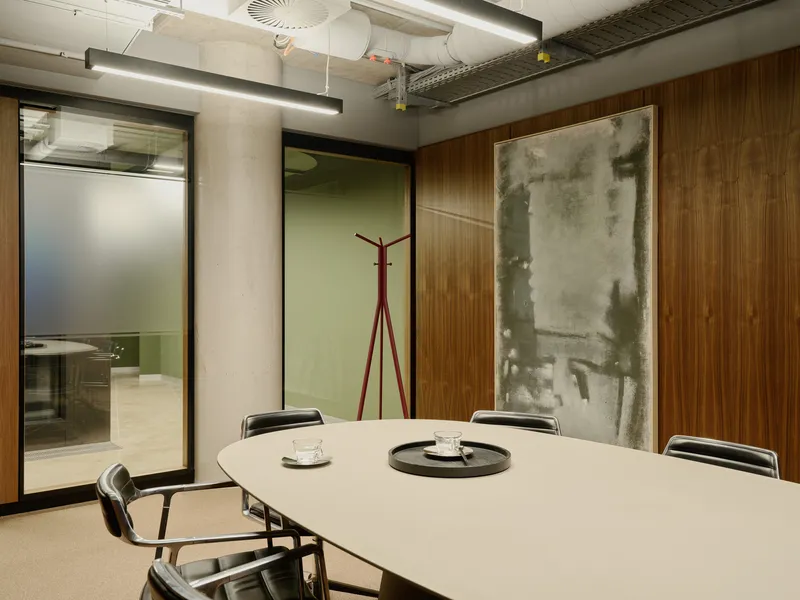


The meeting rooms pull back from the exuberance of the lounge areas without abandoning their warmth. An oval table sits beneath exposed concrete ceiling ducts, flanked by wood paneling and a single artwork. The palette is quieter, the furniture simpler, the distractions fewer. These are rooms designed for concentration, and they know it.
Smaller seating nooks offer a middle ground between the open lounge and the enclosed meeting room. Upholstered banquettes with cone-shaped tables and woven textile wall panels create intimate pockets within the larger floor plate. An orange corduroy modular sofa against bare concrete reads as a deliberate provocation: softness against hardness, color against gray. The individual spaces are grouped into what the studio calls "well-scaled neighborhoods," and the term is apt. Each zone has a distinct character without breaking from the whole.
Cafe, Courtyard, and Threshold
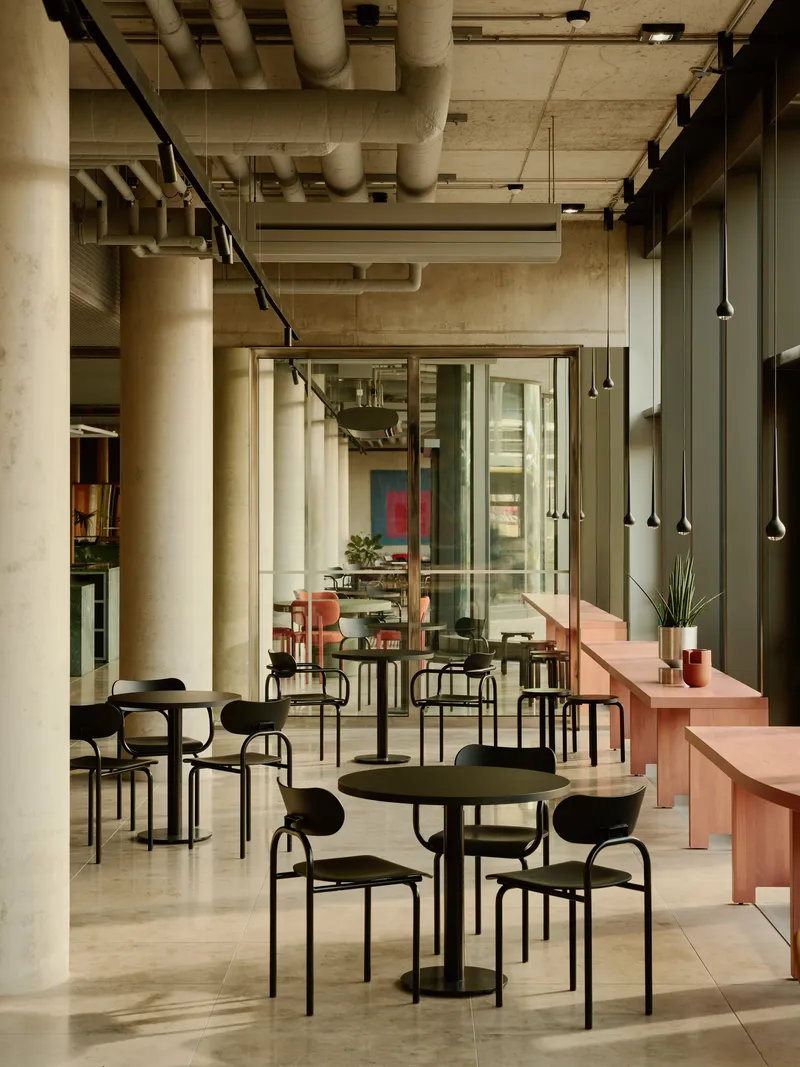
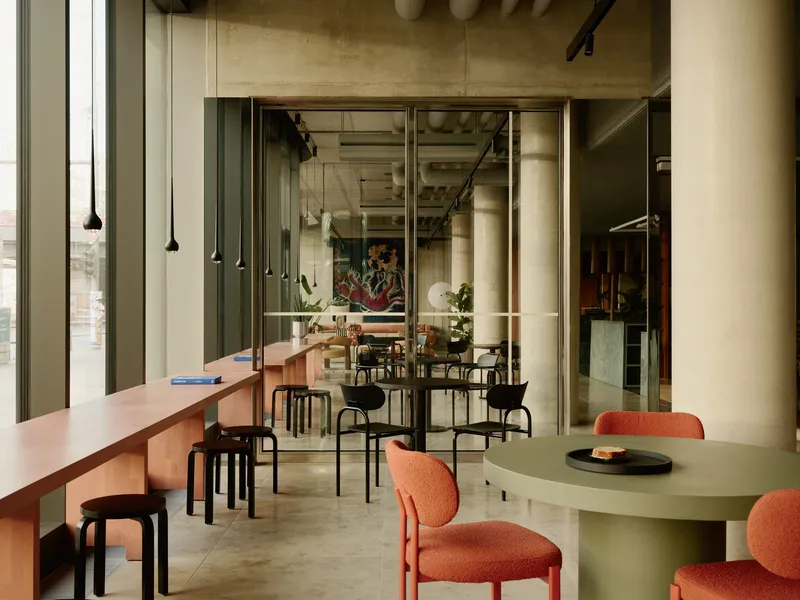
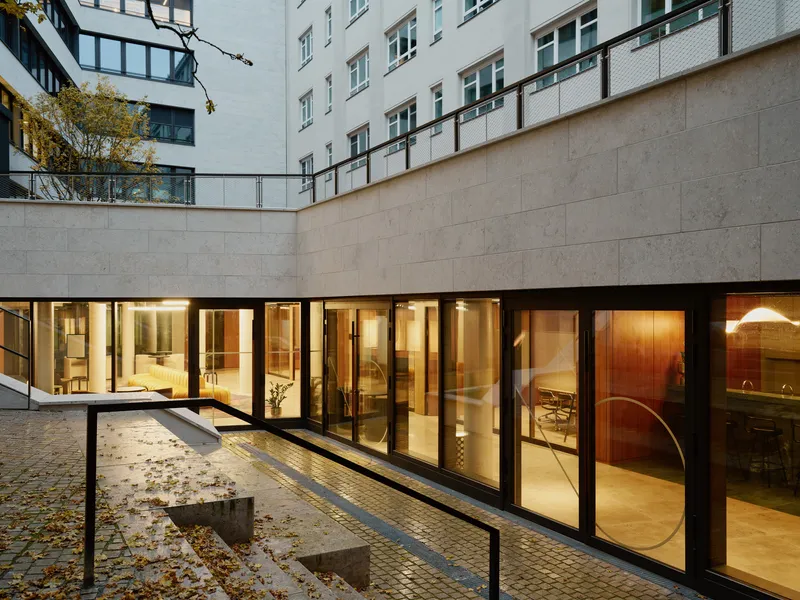
The cafe area runs along the building's cylindrical concrete columns, with round tables and pendant lights occupying the rhythm between structural bays. It is the most public-facing of the amenity spaces, open enough to feel like a neighborhood coffee shop while remaining part of the building's internal ecosystem. Adjacent to it, a dining area with pendant lights and mixed seating looks through glass partitions to the spaces beyond, reinforcing the visual connectivity that runs throughout the lower floors.
The inner courtyard, visible through glazed ground floor openings, brings daylight and seasonal change into the plan. Limestone walls and scattered autumn leaves give it a quieter character than the interiors. The courtyard also serves a practical function: it provides access to the underground garage and bicycle parking below, connecting 100 bike spaces and 11 car spaces to the building's lobby via two of seven elevators. The sustainability credentials are serious, too. C1 holds DGNB Platinum and Gold certifications, WiredScore Platinum, and SmartScore Gold, with a rooftop PV system and AI-supported building management.
Interstitial Details
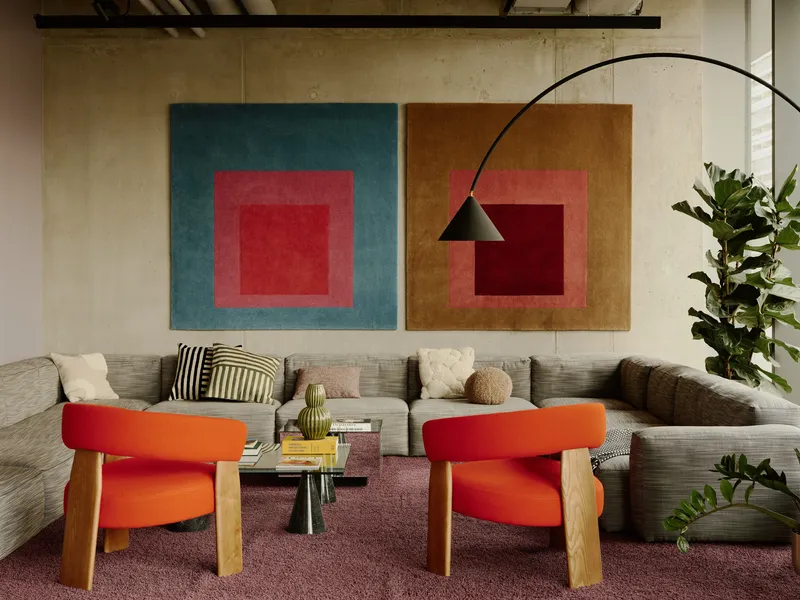


Some of the strongest moments happen between the main rooms. A seating area with two square canvas artworks above a sectional sofa and an arched floor lamp occupies a transition zone that could easily have been dead space. A lounge cluster beside a timber and olive panel storage wall under a slatted ceiling turns a corridor into a destination. These interstitial moments are where the "third place" concept becomes most convincing: they suggest that the entire lower level is habitable, not just the designated program areas.
An interior view through open glass doors reveals a shelving unit with ceramic vessels beneath a green grooved ceiling, a detail that rewards close looking. The color of the ceiling picks up the green marble from the lobby, creating a chromatic thread that ties the sequence of rooms together at the periphery of your attention.
Plans, Drawings, and Custom Furniture Studies
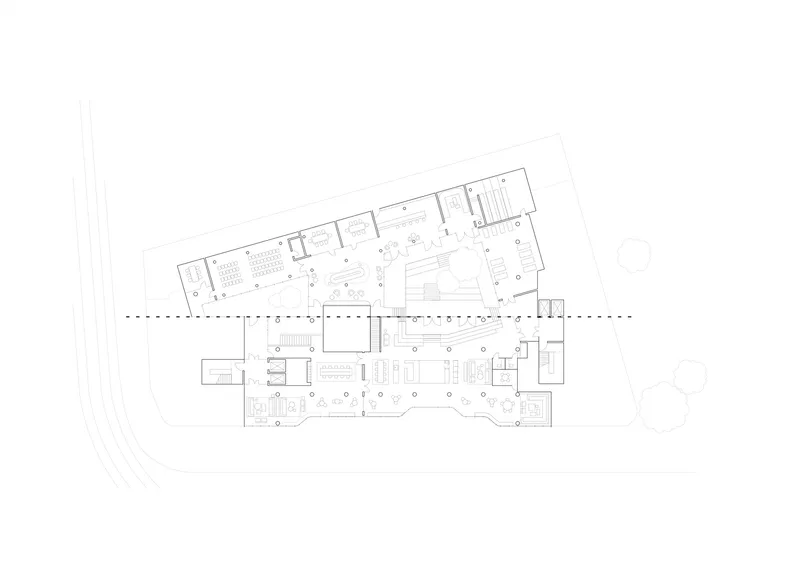

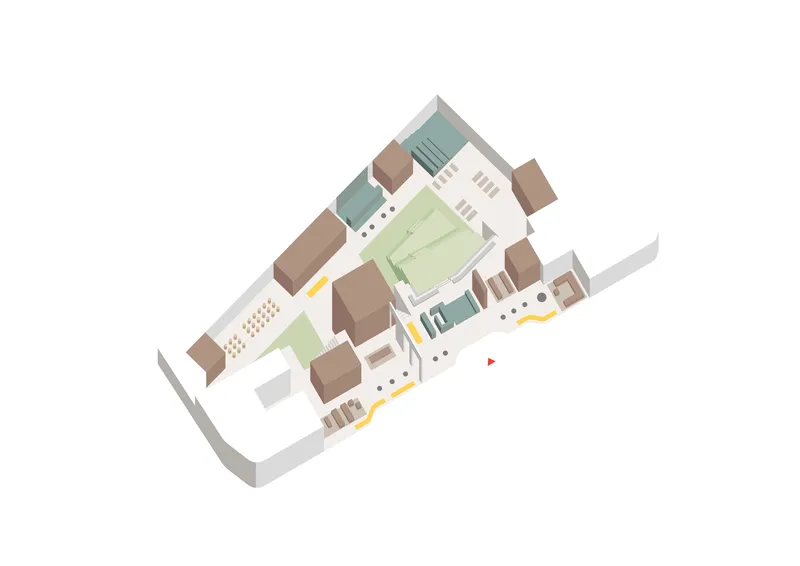


The floor plans reveal the angled two-wing layout with a central circulation spine that organizes the building. Green zones in the upper wing mark planted courtyards, while an axonometric drawing shows the full block with its courtyard, pitched-roof volumes, and pedestrian pathways highlighted in yellow. The drawings make legible what the photographs only imply: the careful calibration of public, semi-public, and private zones within a single perimeter block.
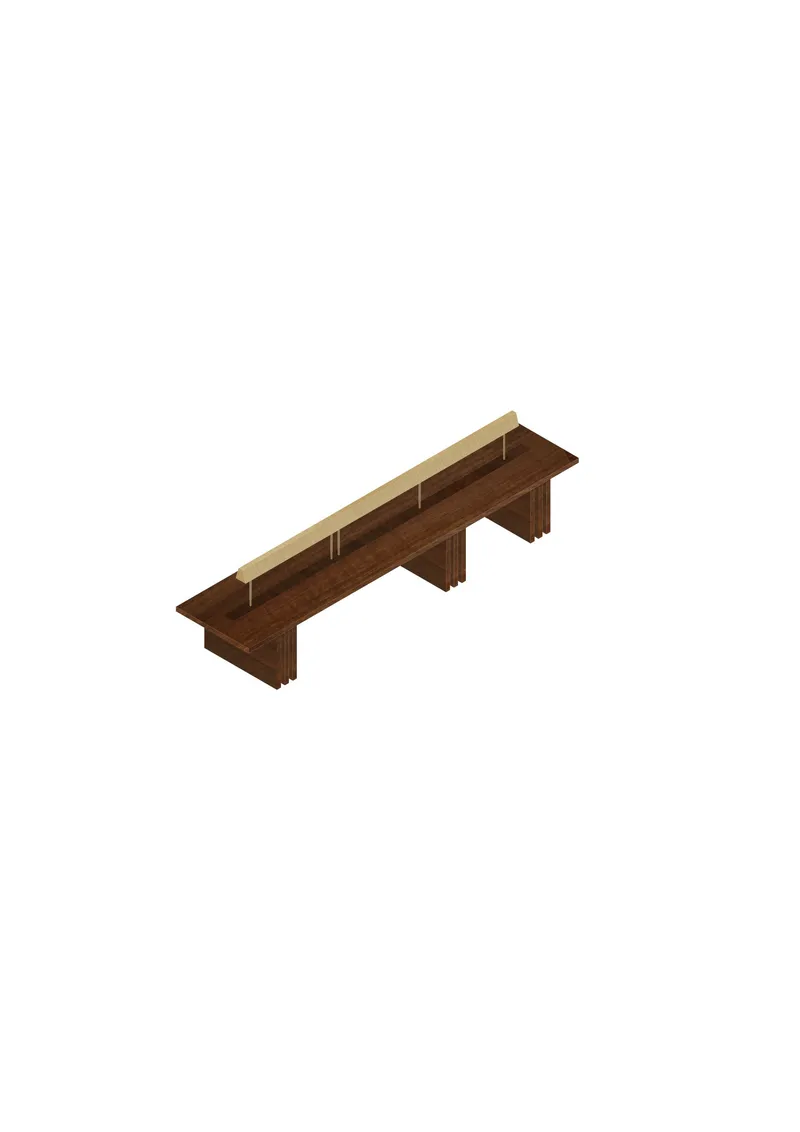
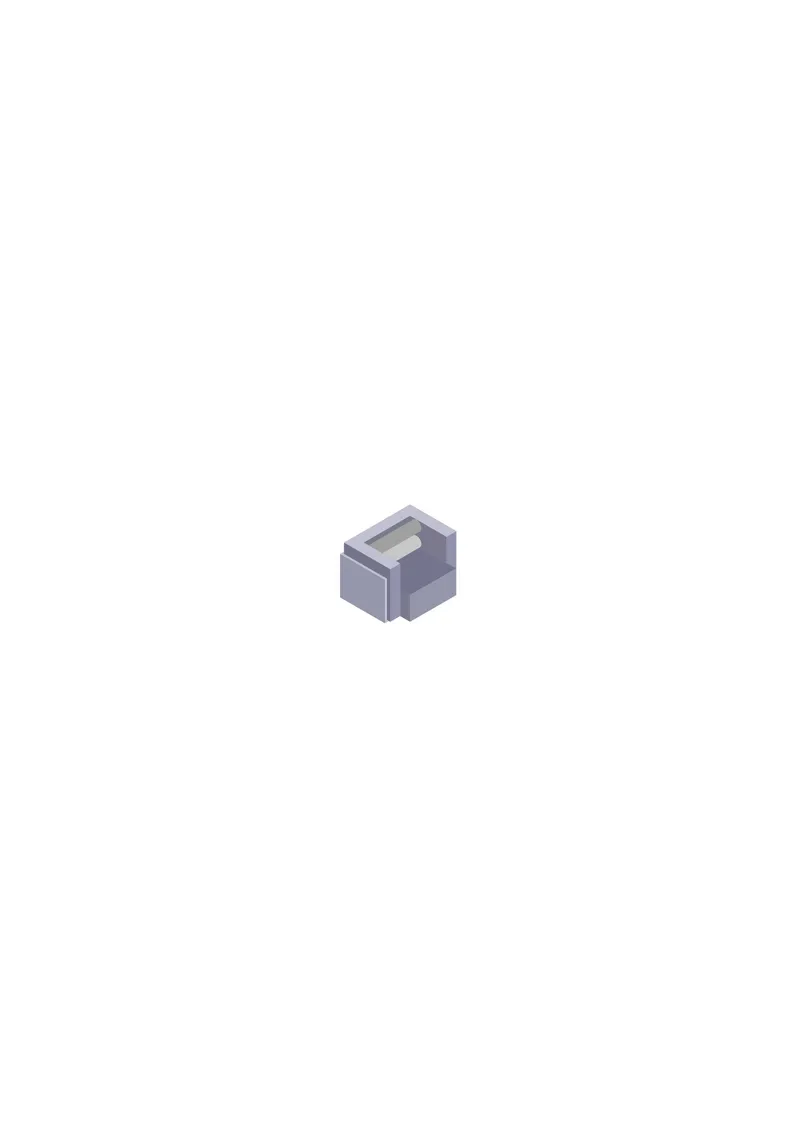
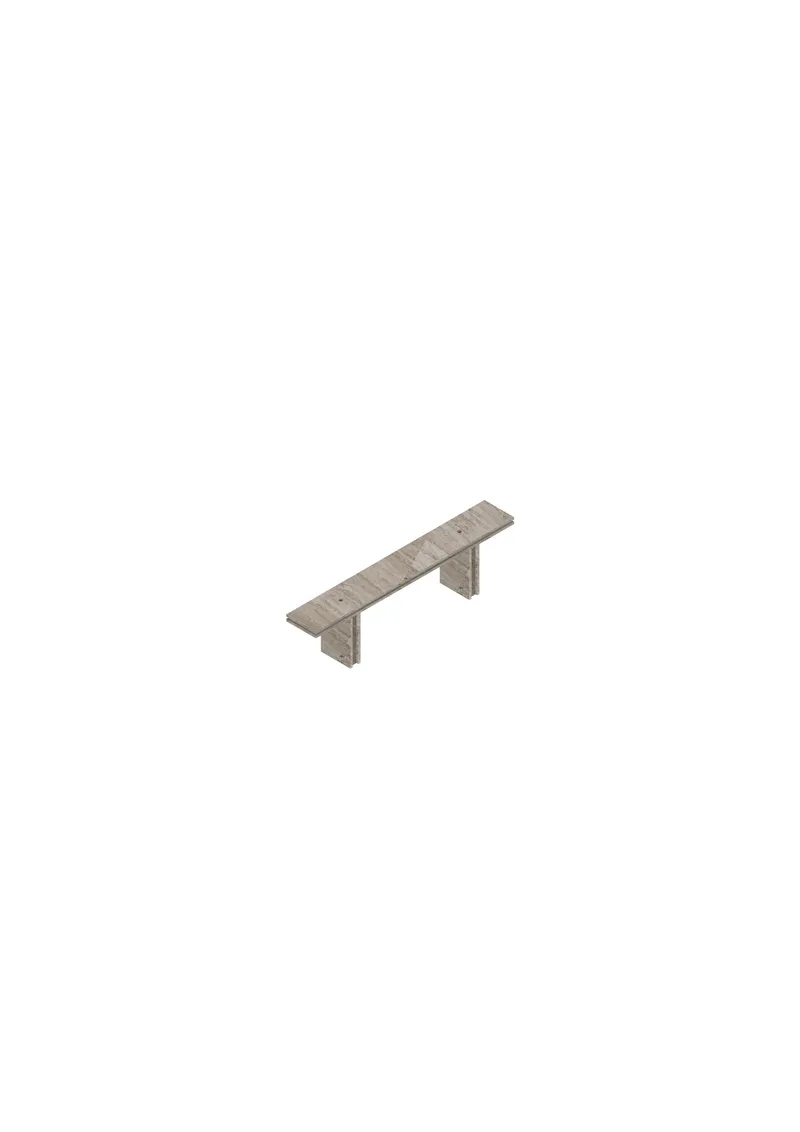
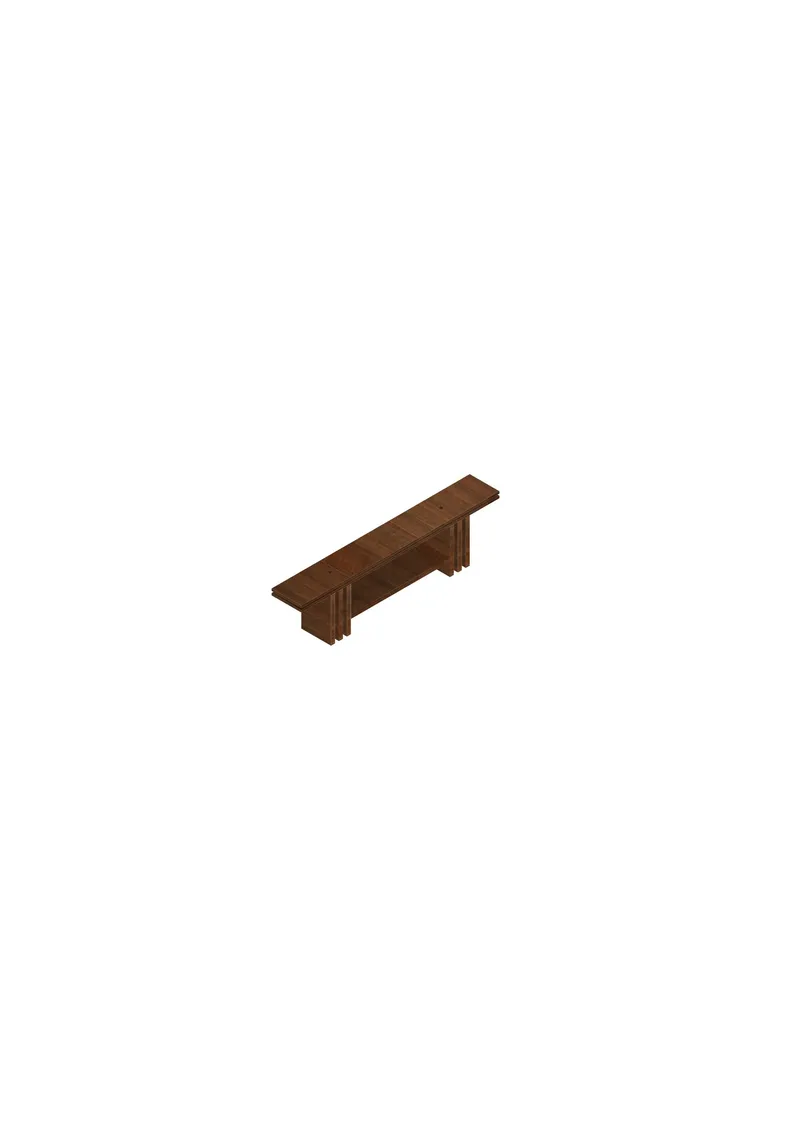
The isometric furniture studies are a welcome inclusion. Detailed drawings of timber benches, cubic reception volumes with recessed openings, and elongated basin forms demonstrate that the custom furniture was designed with the same rigor as the architecture. The slatted bench and solid-end support bench appear to be the pieces visible in the lobby photographs, confirming that the bespoke elements were conceived as part of the spatial strategy, not as afterthoughts.
Why This Project Matters
C1 Workplace is a clear-eyed response to the crisis of relevance facing commercial office design. Rather than loading a building with gimmicky amenities or performative wellness features, Bruzkus Greenberg identified the actual competition, the home office, and designed against its weaknesses. Your apartment has a couch and a coffee machine, but it does not have a stone arena, a 28-seat cinema, or a walnut library with ceramic objects curated by a design team. The argument is not that the office should replace the home but that it can offer something the home cannot: a richly articulated social infrastructure that makes being around other people feel good.
The project also demonstrates that sustainability and sensory richness are not in conflict. A building with DGNB Platinum certification, AI-supported engineering, and a rooftop PV array can still have velvet chairs, green marble, and a dragon tapestry. That combination, technical ambition dressed in domestic warmth, is what gives C1 its relevance beyond Berlin. It proposes a model for the post-pandemic workplace that is neither the sterile open plan nor the cozy WeWork pastiche but something more considered and more durable.
C1 Workplace by Bruzkus Greenberg. Berlin, Germany. 1,600 m² (amenity levels within a 15,000 m² building). Completed 2025. Photography by Robert Rieger.
About the Studio
Share Your Own Work on uni.xyz
If projects like this are the kind of work you want to make, uni.xyz is a place to publish your own, find collaborators, and enter design competitions.


Popular Articles
Popular articles from the community


Singing Woman: An Opera House That Performs Before the Curtain Rises
Ovidiu Cristian Pavel's conceptual opera house translates Estonia's choral identity into a sculpted waterfront landmark facing the Baltic Sea.

Tsunami Convergenics: Turning Catastrophic Ocean Forces into Underwater Housing Infrastructure
A speculative underwater settlement off the coast of Onagawa, Japan, treats tsunamis and typhoons as energy sources rather than threats.

Extended Shell: Retrofitting Kolkata's Balconies as Living Urban Thresholds
A modular retrofit system recovers the social and environmental intelligence of Kolkata's historic verandas for contemporary Park Street residents.

Opera by the Sea Estonia: Three Shells Dissolving Architecture into Tallinn's Coastline
A winning opera house proposal replaces monumental form with interconnected shells that blur the boundary between building, park and Baltic Sea.

Similar Reads
You might also enjoy these articles

Pixel Gardens: One Repeated Module Stacked Into a Terraced Social Housing Tower for Famagusta
Salem Bader's shortlisted housing tower builds a vertical neighbourhood from one repeated module, offsetting units to carve terraces, light and air.

Bao Huynh Watercolor Atelier: A Serene Art Retreat in Hội An
Bao Huynh Watercolor Atelier in Hội An blends multifunctional art spaces, sustainable design, local materials, and family-friendly living in a serene environment.

Atelier Macri Concept Store Interior Design by CASE-REAL
Atelier Macri store features a "ko" counter, walnut wood details, cork displays, blending retail, gallery, and seamless customer experiences.

Manuel Vargas Izquierdo Stadium and High-Performance Sports Center: Architectural Excellence in Jalpa de Méndez
The Manuel Vargas Izquierdo Stadium blends sustainable design, inclusive sports facilities, and cultural-inspired architecture, revitalizing Jalpa de Méndez’s public spaces.

Explore Workplace Competitions
Discover active competitions in this discipline

Challenge to design a portable theatre

Challenge to design a portable music platform

Challenge to design an open learning module for the elderly
Comments (0)
Please login or sign up to add comments
No comments yet. Be the first to comment!