

Buenos Aires House: A Contemporary Brazilian Residence Celebrating Art, Light, and Fluid Living
Estúdio Mariane Rios designs layered concrete and metal volumes in Bonfim Paulista, integrating muxarabi screens, curated lighting, and fluid open-plan living.


Introduction: Architecture as Art Gallery and Living Space
In the suburban landscape of Bonfim Paulista, Brazil, the Buenos Aires House emerges as a sophisticated study in contemporary residential design where architecture, art, and everyday living converge seamlessly. Designed by estúdio mariane rios and completed in 2025, this 535-square-meter residence transcends conventional notions of domestic space to become simultaneously a family home, an art gallery, and a carefully choreographed experience of light, material, and spatial flow.
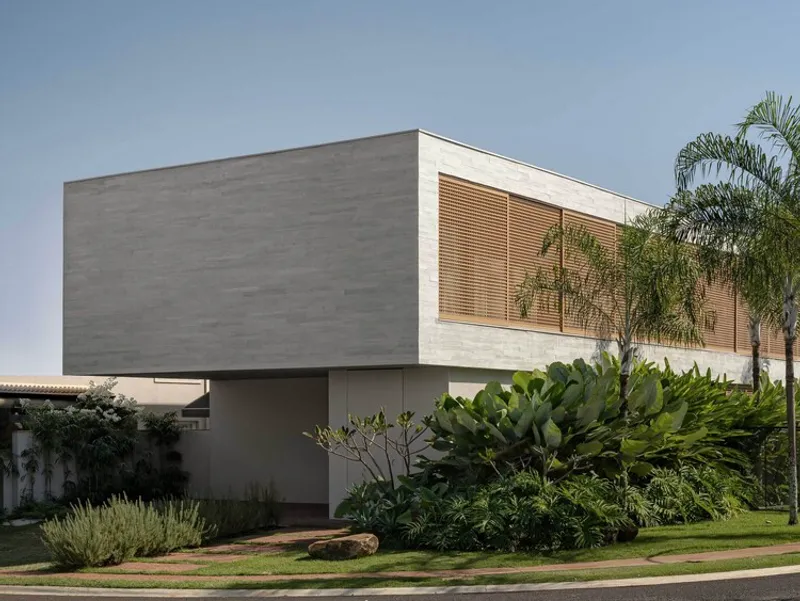
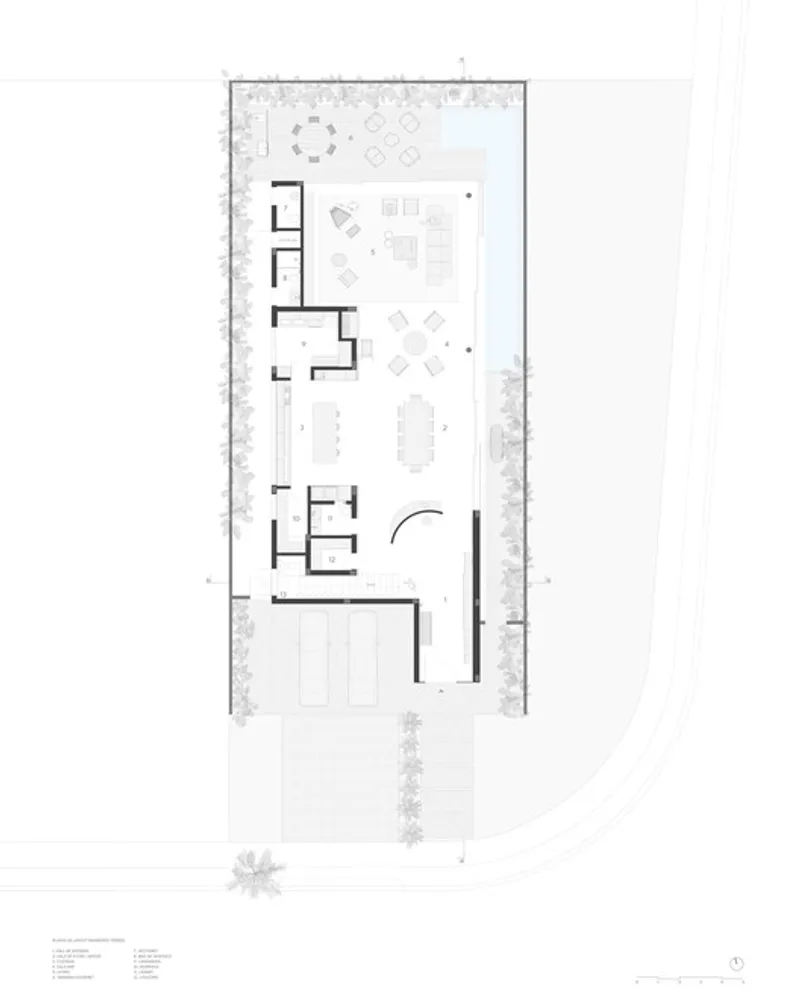
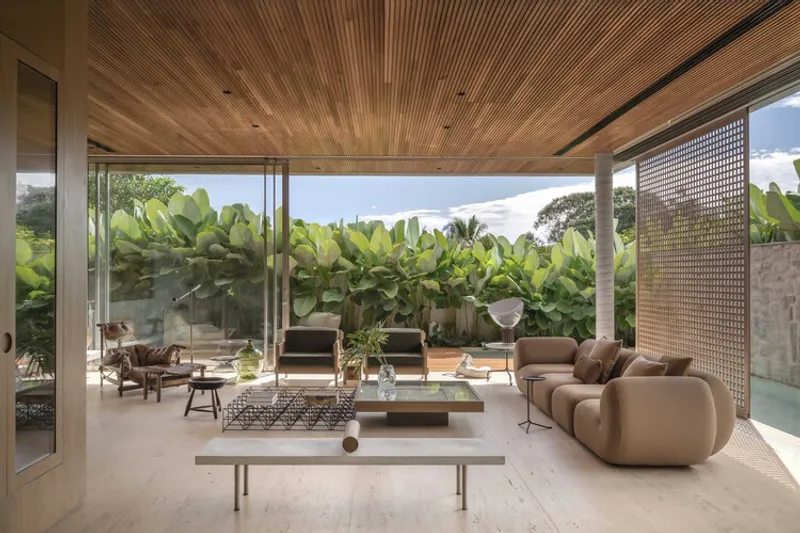
The project represents a mature exploration of how contemporary Brazilian architecture can honor regional building traditions—particularly the use of muxarabi screening systems—while embracing modern open-plan living, international design sensibilities, and a sophisticated art collection. This is not architecture that shouts for attention but rather creates a refined backdrop against which life, art, and natural phenomena can unfold with maximum clarity and beauty.
For a family with deep appreciation for the arts, estúdio mariane rios has crafted more than shelter; they have created a setting where design excellence permeates every scale, from the urban massing strategy to the smallest furniture detail, establishing a coherent aesthetic vision that celebrates both restraint and richness.
Conceptual Framework: The Logic of Layering
Dual-Volume Composition
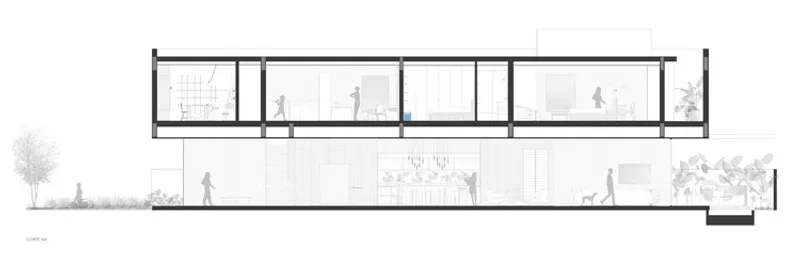
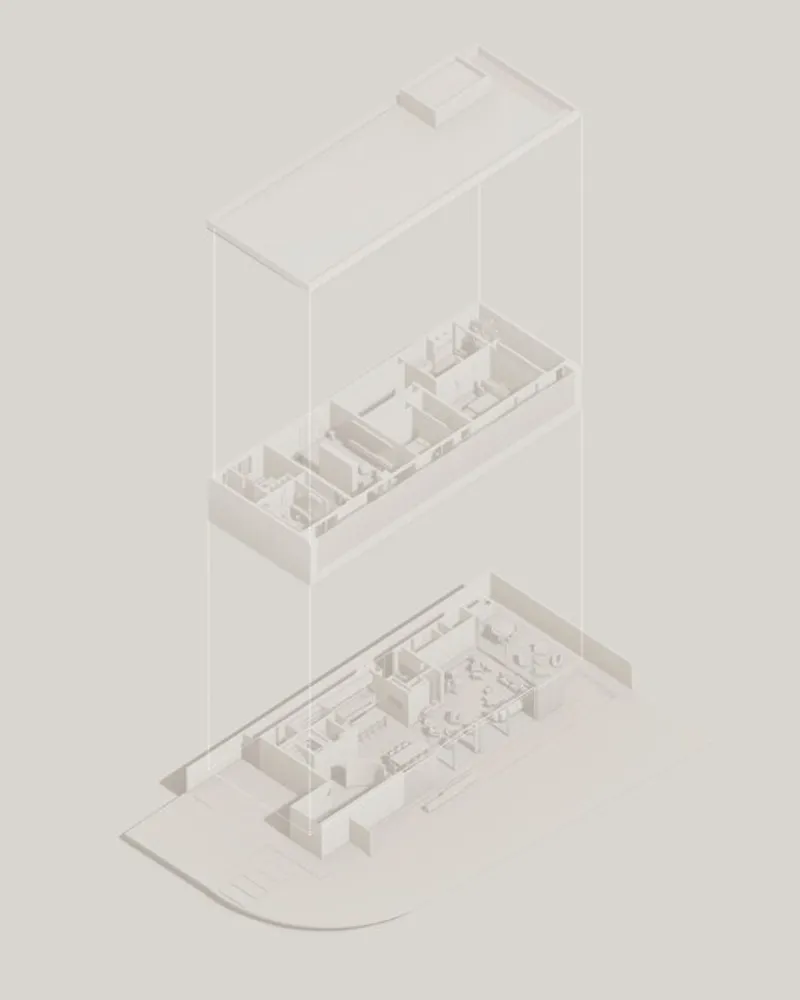
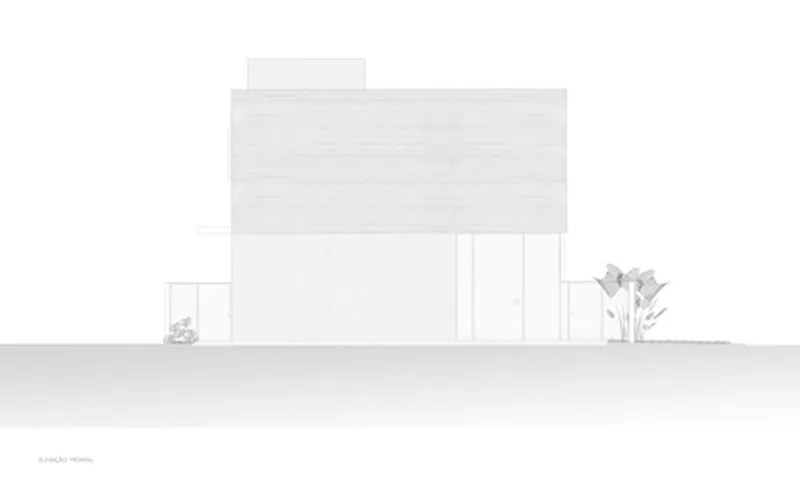
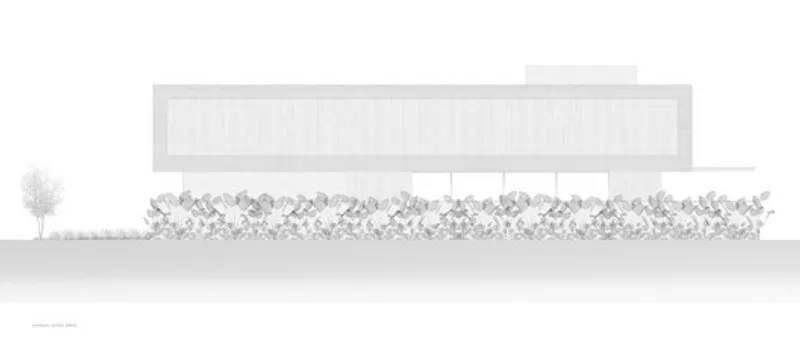
The fundamental design gesture organizing the Buenos Aires House involves the strategic overlapping of two distinct volumes on a lot distinguished by having two street frontages—a relatively unusual condition that offers both opportunities and challenges. Rather than treating the site as having a singular front and back, the architects embraced this duality, creating a compositional strategy that responds to multiple orientations simultaneously.
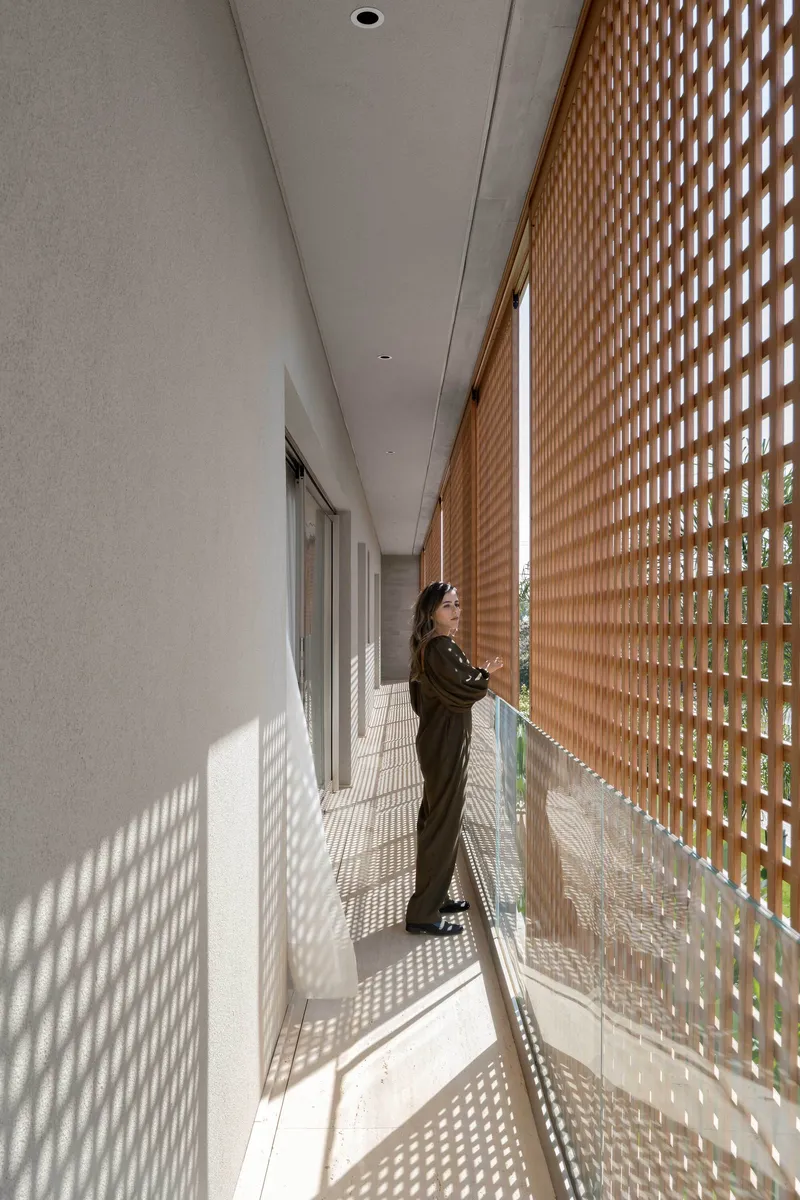
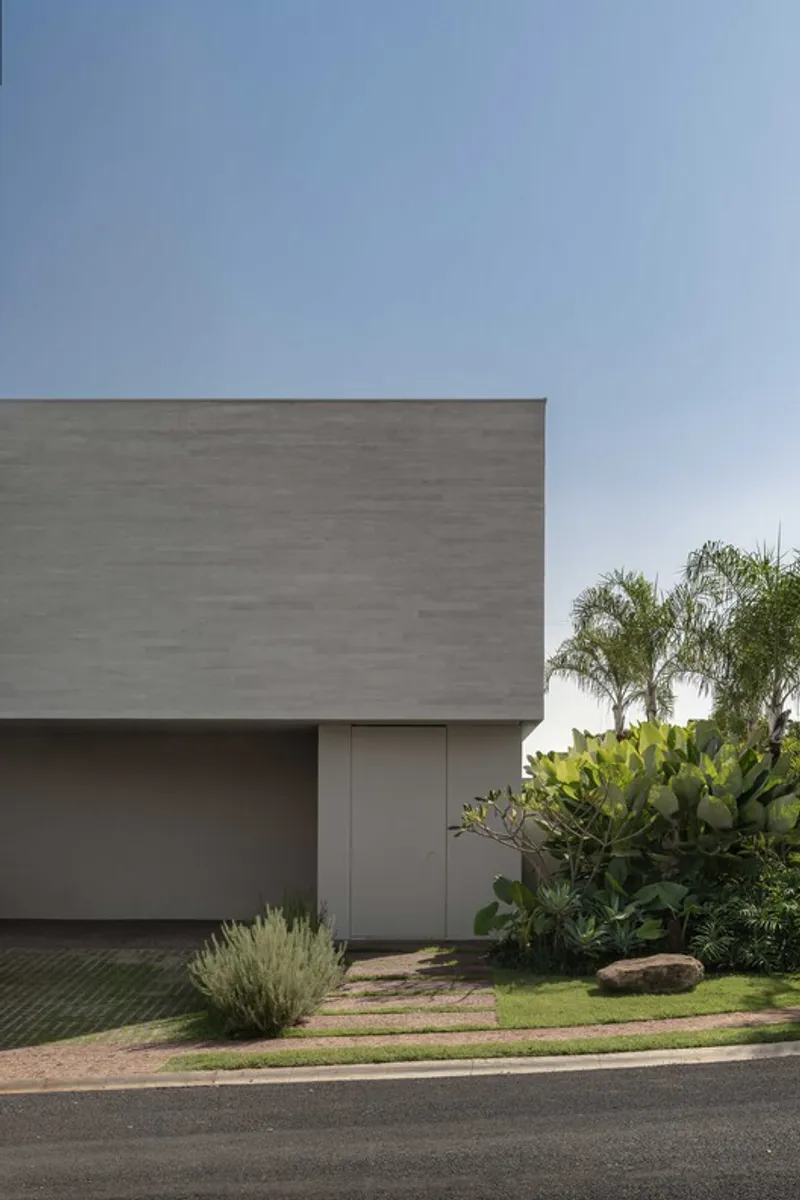
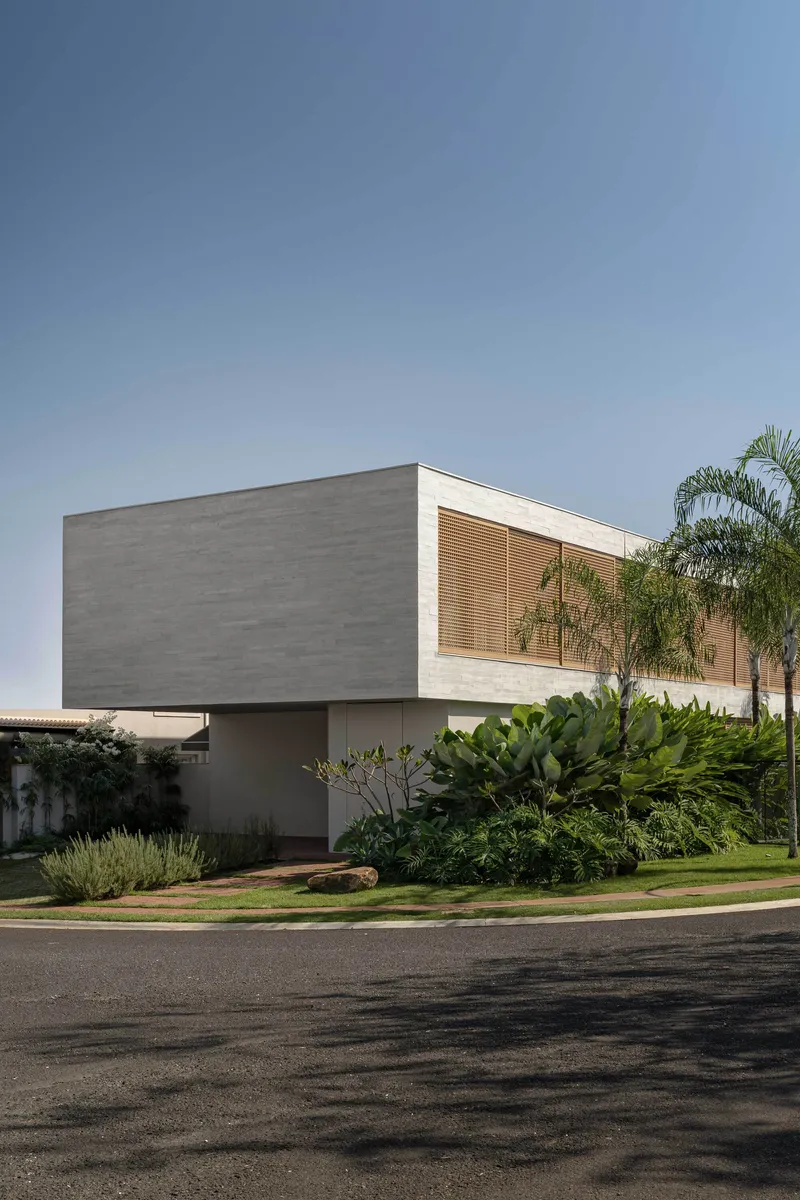
The upper volume presents as the denser, more substantial element of the composition. Marked by concrete slats that create a distinctive textural quality and regulate solar exposure, this volume appears to float above the base, creating a dynamic interplay between mass and void, opacity and transparency, enclosure and openness. The concrete slats reference the traditional muxarabi screens found throughout Brazilian and broader Latin American architecture—devices that provide privacy, ventilation, and solar shading while creating ever-changing patterns of light and shadow.
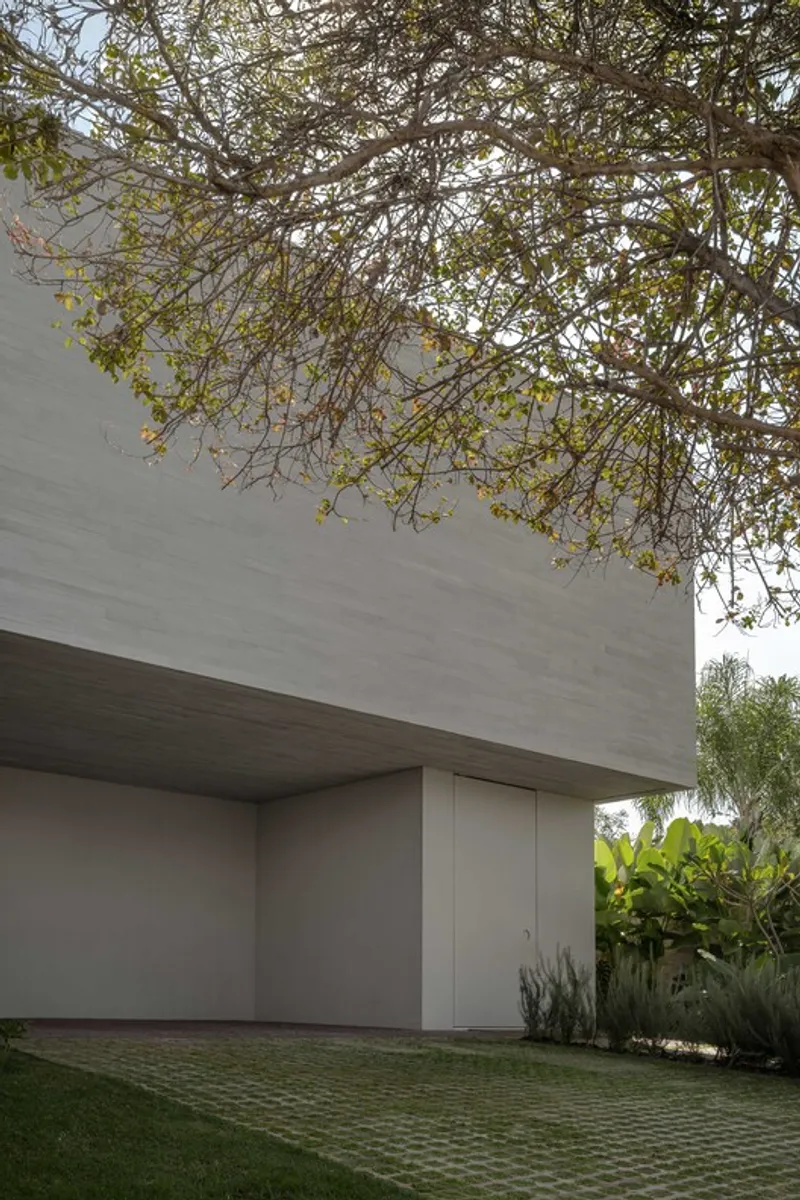
This upper volume rests deliberately on a contrasting ground floor characterized by monochromatic treatment that combines painted surfaces and metal sheets in carefully calibrated shades of gray. The tonal variation within the gray palette—from warm charcoals to cool silvers—prevents monotony while maintaining chromatic unity. The metal cladding introduces an industrial edge that balances the more organic qualities of the concrete and wood used elsewhere in the project.
The Corner Lot Strategy
The dual-frontage condition that distinguishes this site required careful consideration of how the house presents itself to the public realm while maintaining privacy for interior spaces. The stacked volume approach addresses this beautifully: the more open, transparent ground floor engages the street with a welcoming presence, while the denser upper floor provides greater privacy for bedrooms and family areas. This vertical gradation from public to private follows intuitive patterns of domestic life while creating architectural drama through the interplay of different formal languages.
Muxarabi Screens: Heritage, Function, and Poetry
Historical Context and Contemporary Application
The muxarabi—also spelled "muxarabie" or "muxarabiya"—represents one of the most distinctive elements of traditional Luso-Brazilian architecture, with roots extending back to Moorish Spain and North Africa. These intricate wooden lattice screens served multiple pragmatic functions in pre-air conditioning eras: providing ventilation while maintaining privacy, filtering harsh sunlight while admitting diffused illumination, and allowing women in patriarchal societies to observe street life without being observed.
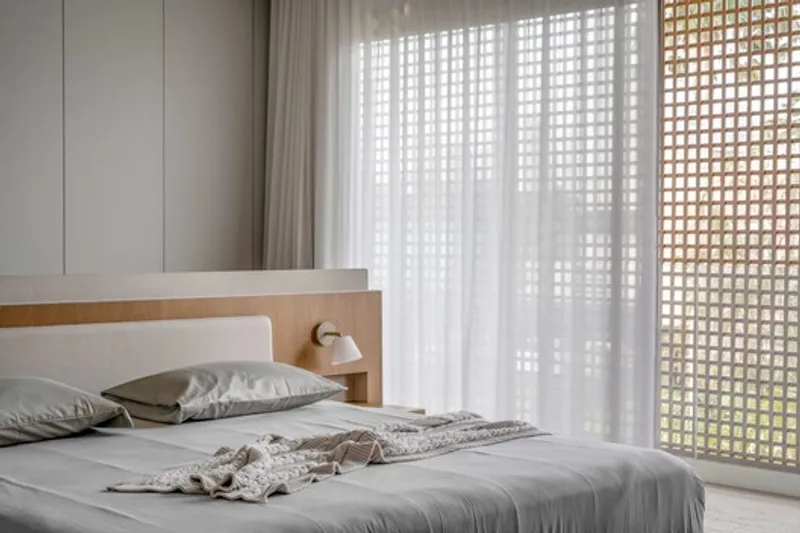
In the Buenos Aires House, estúdio mariane rios reinterprets this traditional building element through contemporary means, utilizing sliding panels of the muxarabi type as complements to translucent dividers. This approach honors cultural heritage without succumbing to nostalgic reproduction, finding fresh relevance for historical building techniques within thoroughly modern architectural language.
Functional Performance
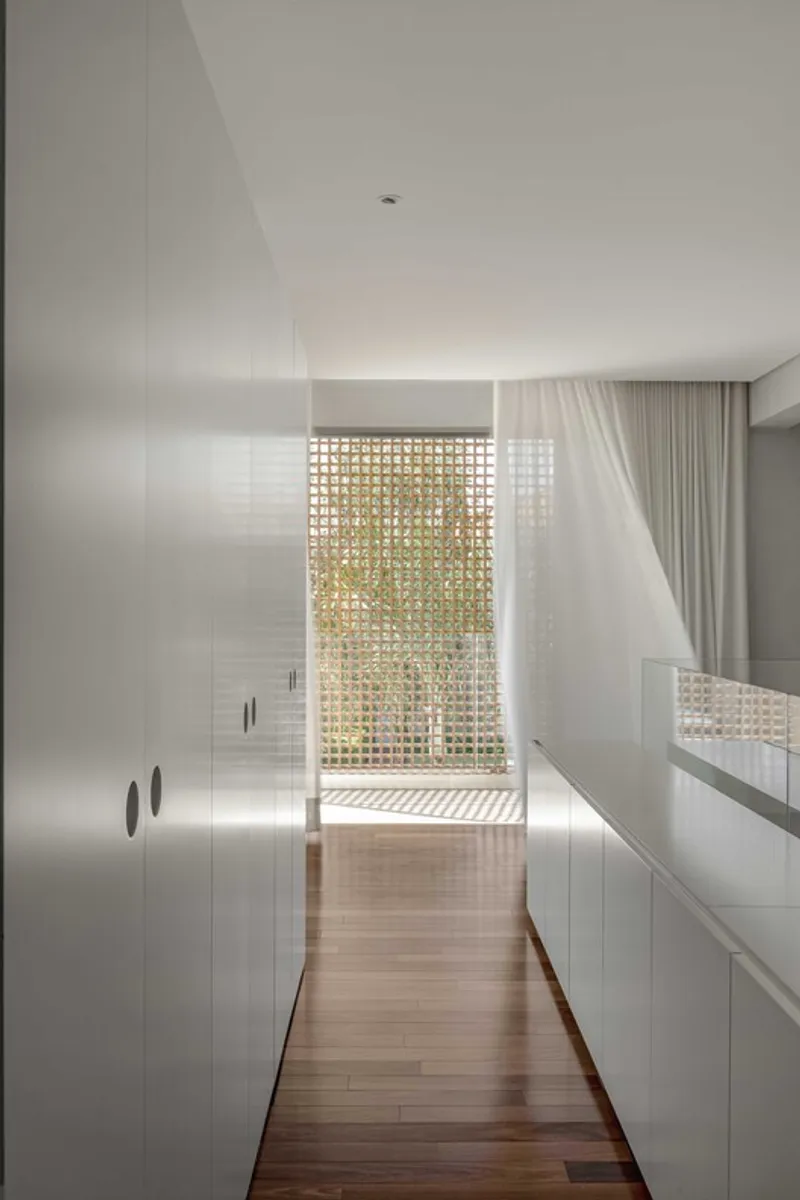
Beyond their cultural resonance, these sliding muxarabi panels deliver remarkable functional performance. They ensure privacy from neighboring properties and public streets without creating the psychological burden of solid walls. They promote natural ventilation, allowing breezes to flow through screened openings while maintaining security. Most poetically, they orchestrate variations of light and shadow throughout the day as the sun's position shifts, creating an ever-changing interior environment that connects inhabitants to daily and seasonal rhythms.
Upper Floor Application
On the upper floor, a continuous balcony runs along the entire side elevation, housing the movable muxarabi panels and creating a transitional zone between fully interior and fully exterior space. This generous gallery connects the master suite, children's bedrooms, playroom, and intimate family living room to an outdoor living area commanding views of the garden below. The sliding panels allow residents to modulate the character of this space continuously—fully opening for maximum connection to the outdoors, partially screening for dappled light effects, or fully closing for weather protection or privacy.
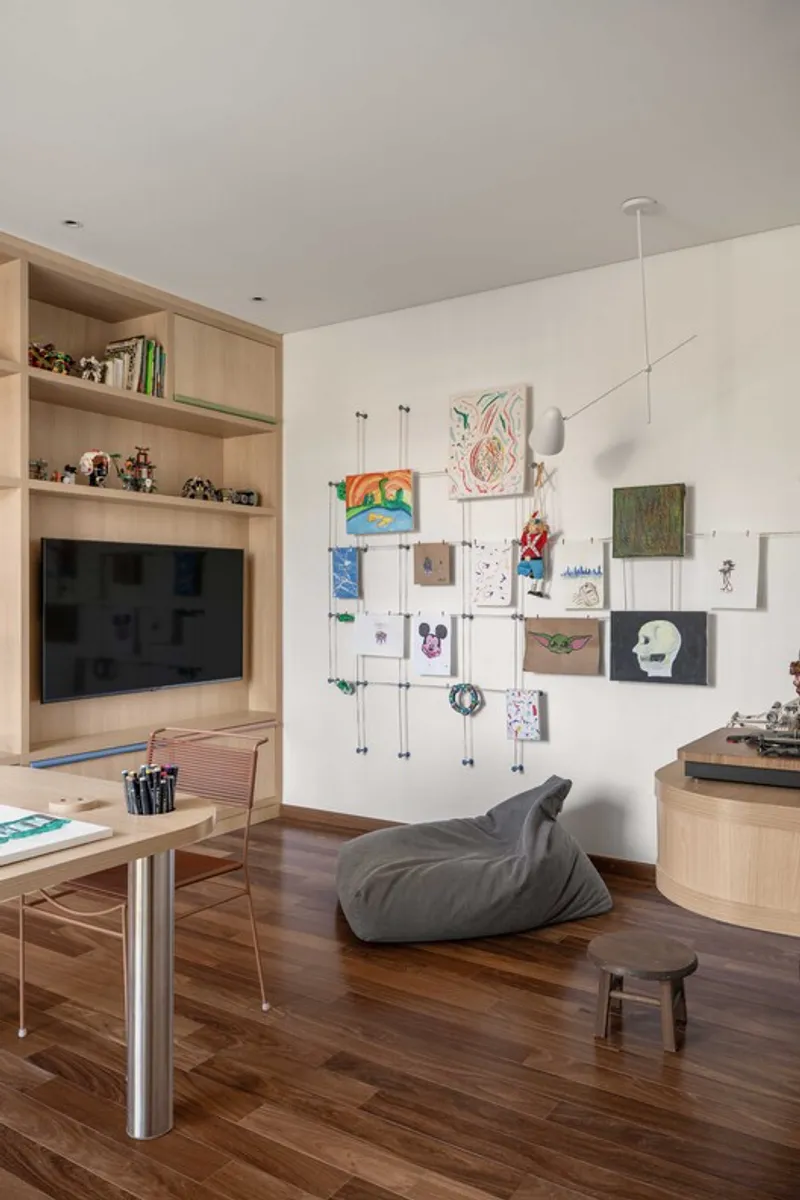
The balcony serves as more than circulation; it becomes a living space in its own right—a place for morning coffee, children's play, evening conversation, or solitary contemplation. The flexibility afforded by the movable screens means this single space can serve multiple functions throughout the day and across seasons, adapting to changing needs and conditions.
Ground Floor Implementation
On the ground floor, the muxarabi panels serve an analogous function, now articulating the social spaces rather than private quarters. Here, the screens mediate between interior living areas and the surrounding garden, allowing the social heart of the home to expand or contract according to occasion. When entertaining, panels can slide open to create seamless indoor-outdoor flow. During intense sun exposure, they can filter light while maintaining visual connection to landscape. In evening hours, they can provide privacy while preserving the sense of openness that characterizes contemporary living.
The Entrance Sequence: Art as Welcome
Gallery-Hall Integration
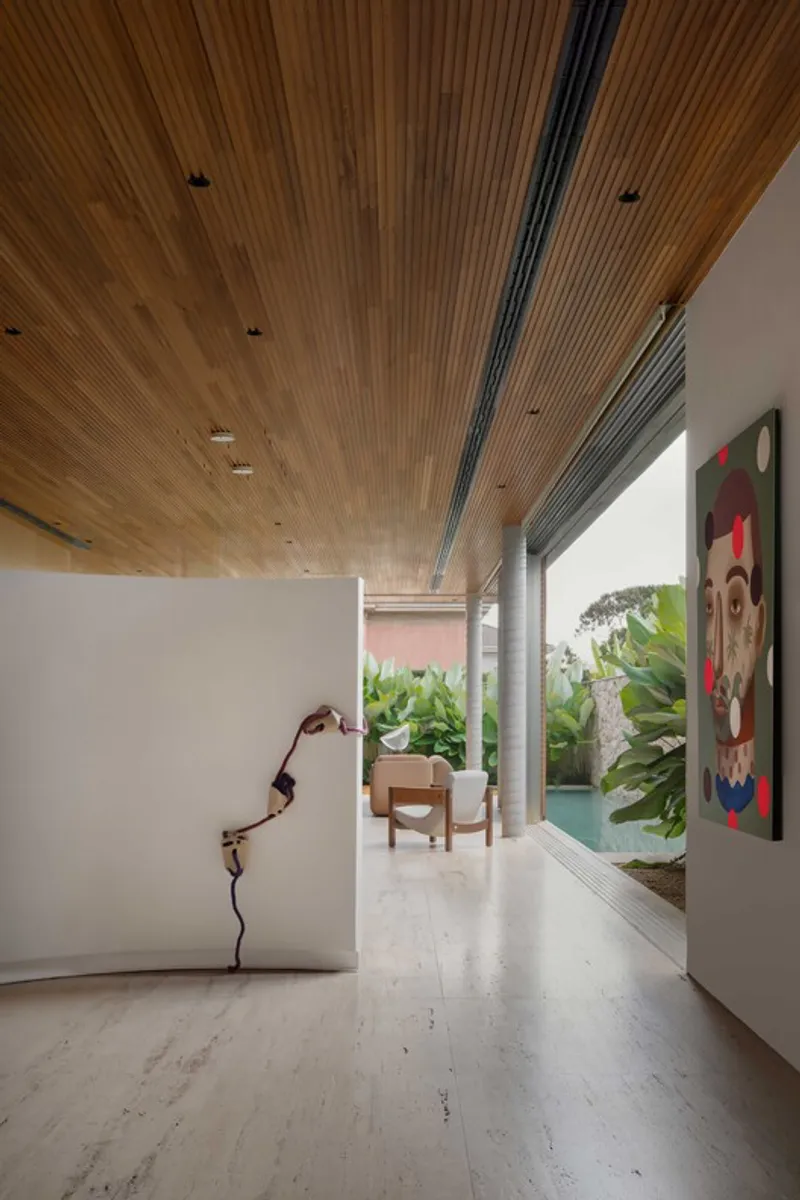
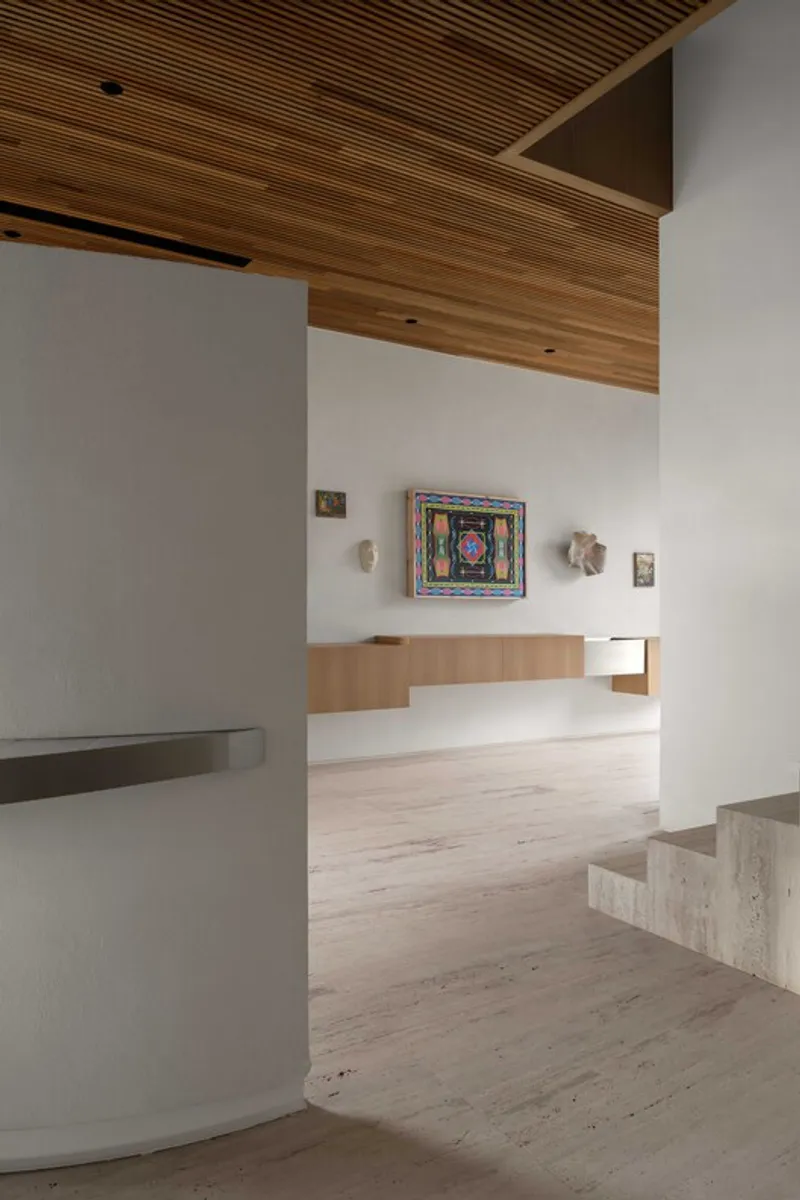
The entrance hall establishes the house's character immediately and unequivocally. Rather than a minimal transitional space to be passed through quickly, estúdio mariane rios conceived the entry as a gallery—a deliberate statement of the family's passion for art and their commitment to living with curated objects in daily life rather than relegating them to formal display.
This gallery-hall embodies several layers of meaning. Practically, it provides the decompression zone necessary between street and intimate home life. Spatially, it establishes the architectural vocabulary that will govern the rest of the house—clean lines, neutral backgrounds, sophisticated lighting. Culturally, it signals that this home values aesthetic experience as integral to everyday existence.
The Monumental Sideboard
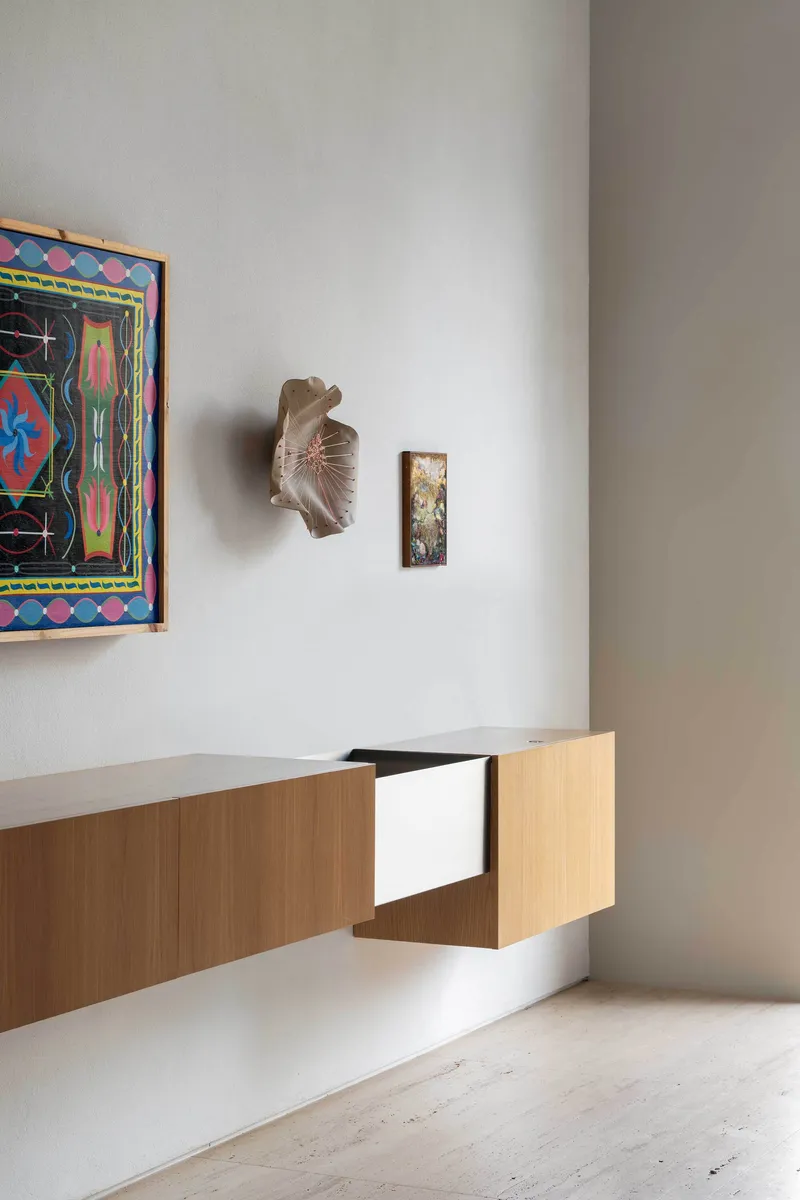
To accommodate the diverse programmatic needs of each family member—storage for different personal items, display areas for rotating art pieces, technical infrastructure for electronics—the architects designed a monumental modular sideboard exceeding five meters in length. This substantial piece of furniture becomes architectural in scale and ambition, functioning as both storage and spatial divider, both functional object and sculptural installation.
The brilliance of this element lies in its modular variability. Rather than presenting as a uniform mass, the sideboard comprises modules that vary in use, function, opening systems, storage types, heights, and depths. This variation creates visual rhythm and dynamism despite—or perhaps because of—the piece's substantial scale. The eye moves across the composition discovering different formal treatments, material finishes, and functional details, preventing the monotony that often afflicts large built-in furniture.

The Stainless Steel Module
One module, executed in stainless steel rather than wood, functions as a tray for personal items—keys, phones, mail—those transitional objects that accompany us between outside and inside. This metallic element serves multiple purposes: practically, the stainless steel's smooth, wipeable surface suits this high-touch function; compositionally, the reflective material creates a visual breathing point within the wood-dominated furniture, providing chromatic relief and drawing the eye; conceptually, it signals the liminal nature of the entrance hall as a threshold space where outside concerns are deposited before fully entering home life.
Signature Lighting: Curating the Luminous Environment
Lighting as Art Installation
The Buenos Aires House demonstrates exceptional attention to lighting design, treating illumination not merely as a technical requirement but as an opportunity for artistic curation. The architects specified signature pieces from internationally recognized lighting designers, creating what amounts to a collection of luminous sculptures distributed throughout the house.
Ingo Maurer: The entrance hall and adjacent restroom feature Oop's and Lucellino Doppio fixtures by German lighting designer Ingo Maurer, known for poetic, often whimsical designs that challenge conventional notions of what light fixtures should be. Lucellino, with its wing-like elements, brings an element of delicate fantasy to the entrance sequence, softening the more austere architectural geometry.
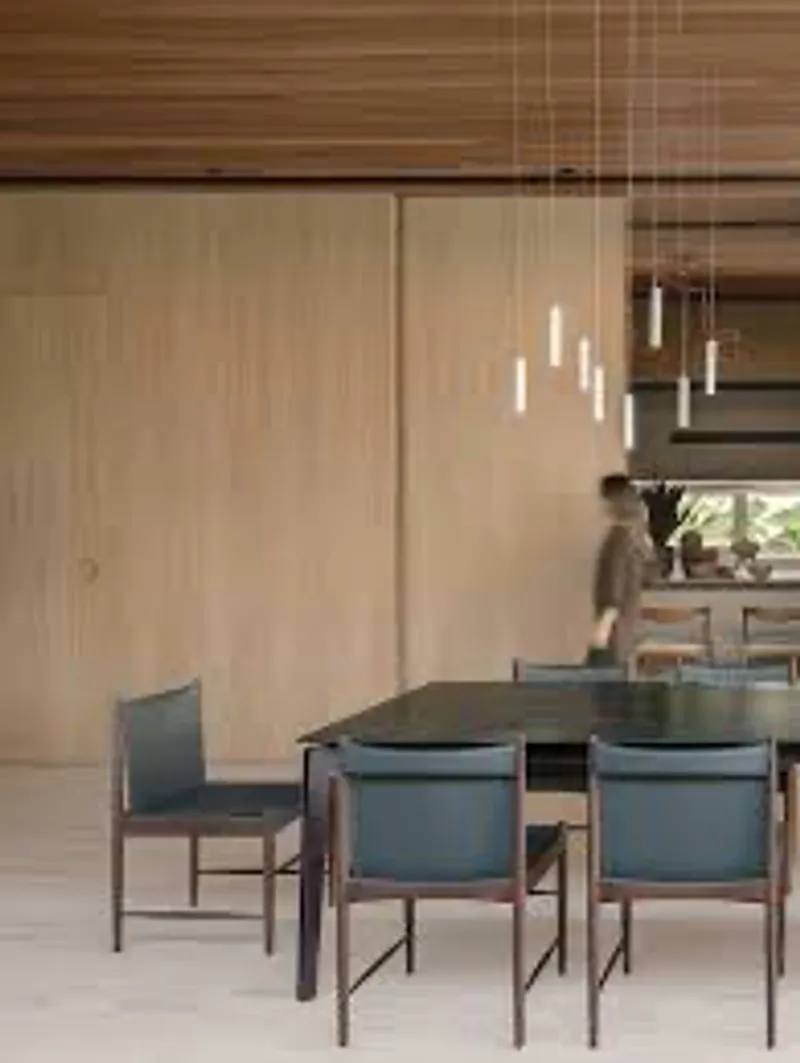
Davide Groppi: Above the dining table, Simbiosi pendants by Italian designer Davide Groppi provide focused task lighting while creating dramatic focal points. Groppi's minimalist aesthetic complements the architectural restraint governing the project while the carefully designed light distribution ensures the dining table becomes a natural gathering point.
Flos and Jader Almeida: The living area features the iconic Taccia lamp by Flos—a design classic created by Achille and Pier Giacomo Castiglioni in 1962 that remains perpetually contemporary—alongside Memory by Brazilian designer Jader Almeida, connecting international modernist heritage with contemporary Brazilian design culture.
Strategic Light Distribution
This careful selection and placement of lighting fixtures achieves multiple objectives. It provides practical illumination calibrated to specific tasks and activities. It creates focal points that organize visual attention and spatial reading. It introduces sculptural objects that enrich the interior landscape. And it demonstrates the family's sophisticated design sensibility, extending their art collection into the realm of functional objects.

The lighting strategy recognizes that domestic life unfolds across different times of day requiring different luminous environments. Morning light might emphasize clarity and energy. Afternoon illumination can be more subdued, filtered. Evening lighting becomes more intimate, theatrical, creating ambiance for relaxation and social gathering. The combination of architectural daylighting strategies (the muxarabi screens) and carefully specified artificial lighting allows for this temporal modulation.
The Curved Wall: Guiding Movement and Supporting Art
Spatial Organization Through Geometry
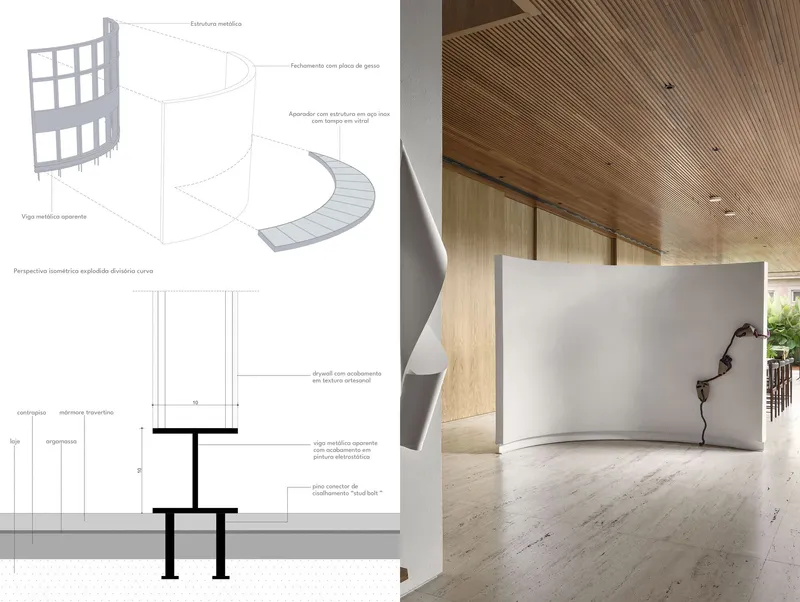
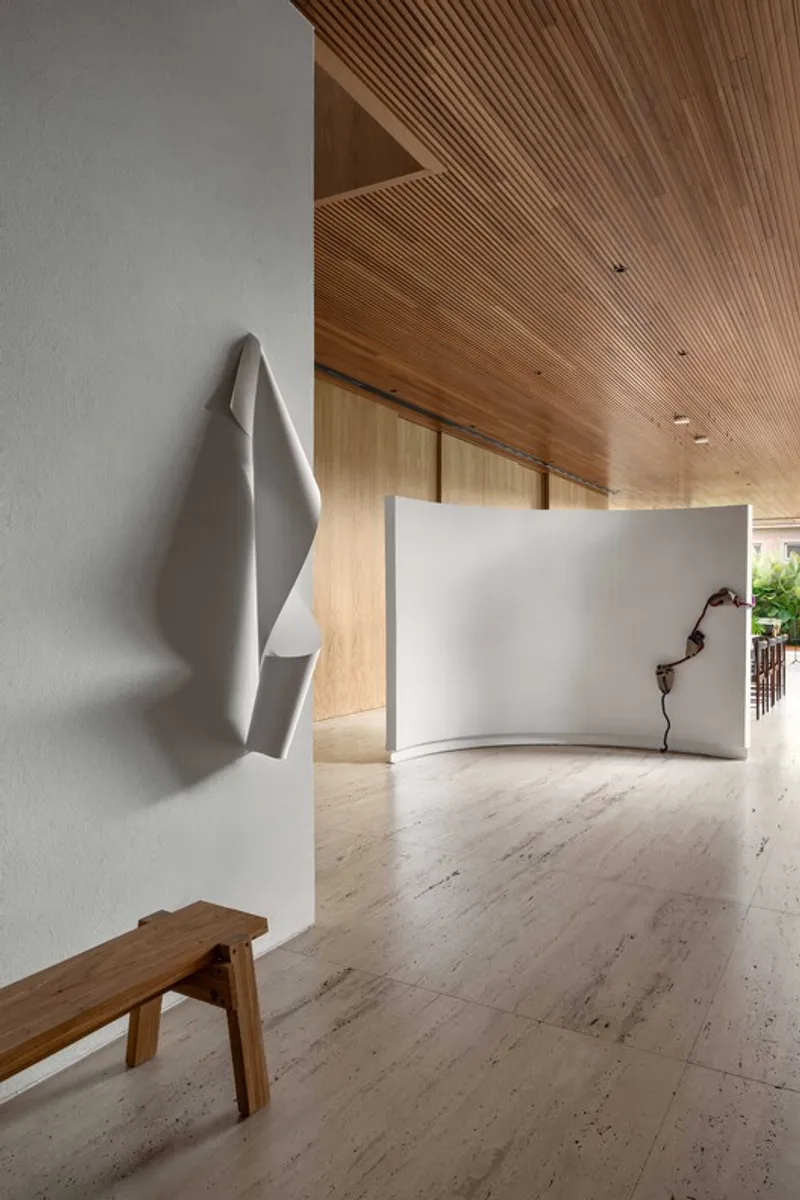
From the entrance hall, circulation through the house follows a curved wall—a bold geometric gesture that serves multiple functions simultaneously while establishing a distinctive formal character. This curving element acts as a dividing structure between different programmatic zones, creating separation without solid barriers, defining territories while maintaining visual connection.
The curve softens what might otherwise be a harsh perpendicular transition between entrance sequence and living areas. Where right angles create abrupt shifts, the curve provides gradual transition, easing movement through space while creating a sense of choreographed progression. Visitors flow naturally along this guiding element, their path predetermined yet feeling completely natural.
Support for Art and Furniture
Beyond its spatial organizing function, the curved wall serves as a display surface for artworks, its gentle geometry providing a more interesting backdrop than flat walls while its clean finish allows art to remain the focus. The curve creates varying viewing angles as one moves past, allowing artworks to be experienced from multiple perspectives rather than a single frontal view.
The curve also provides structural support for the dining sideboard—another substantial piece of custom furniture that continues the entrance hall's theme of modular, multifunctional design. This sideboard features a stainless steel structure supporting a hand-painted modular glass top. The glass modules follow the curve's geometry, creating a unified formal language that links architectural element and furniture piece.
The Translucent Morning Effect
In the morning hours, when eastern light streams through windows, the glass-topped sideboard creates a remarkable translucent effect, glowing with captured sunlight. This ephemeral daily phenomenon demonstrates how thoughtful design can create moments of beauty that cost nothing to operate, require no maintenance, and connect inhabitants to natural cycles. The architects anticipated this effect and designed to enhance it, understanding that the most memorable aspects of domestic space often involve such subtle interactions between architecture, light, and time.
Open-Plan Living: Fluidity and Connection
Spatial Flow Philosophy
The Buenos Aires House embraces open-plan living—a spatial strategy that has dominated contemporary residential design for decades yet continues to evolve in sophistication. Here, the open plan is not merely about removing walls but about carefully orchestrating relationships between different functional zones, managing sightlines, controlling acoustic propagation, and creating both openness and intimacy within the same space.
Kitchen-Dining Integration
The kitchen opens completely to the dining room, eliminating the traditional separation between food preparation and food consumption, between cook and guests. This arrangement reflects contemporary social patterns where cooking increasingly becomes a shared, social activity rather than isolated labor. Friends gather around the kitchen island while dinner preparations proceed. Children do homework at the dining table while parents cook nearby. The boundaries between these activities blur, and the architecture accommodates this blurring.
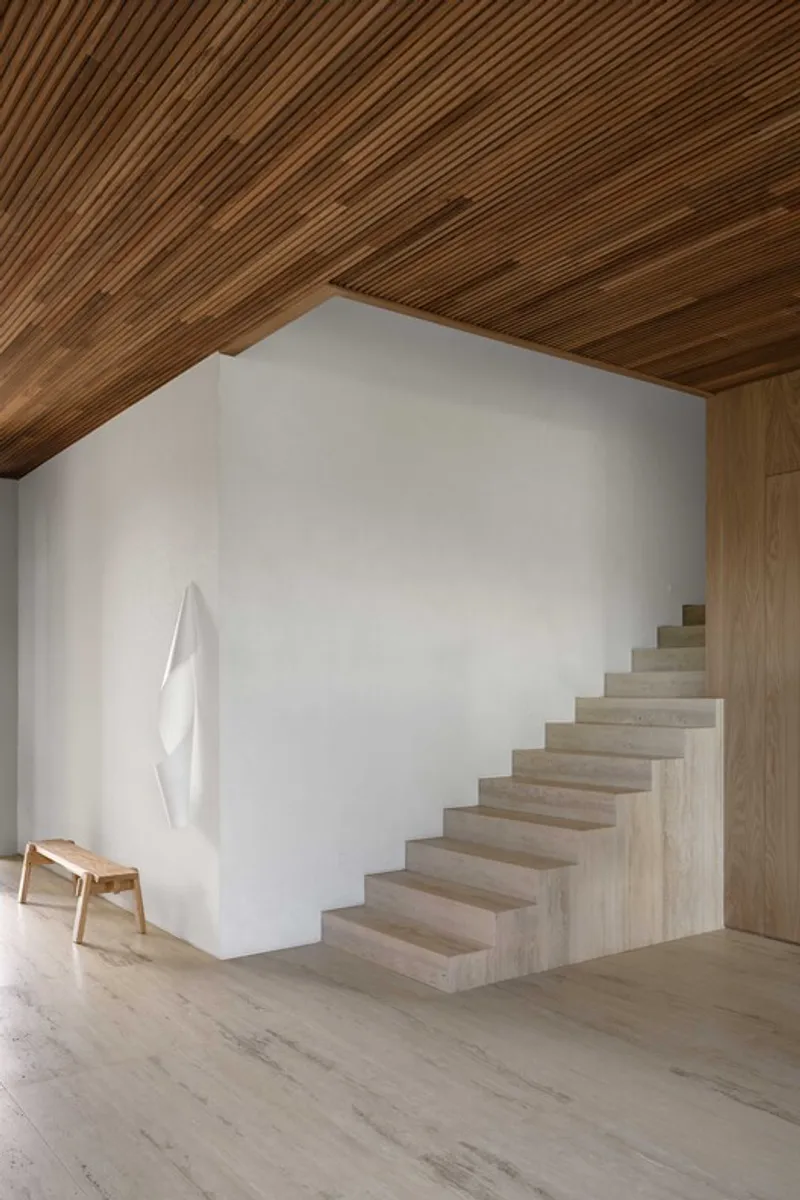
The Oak Veneer Wall
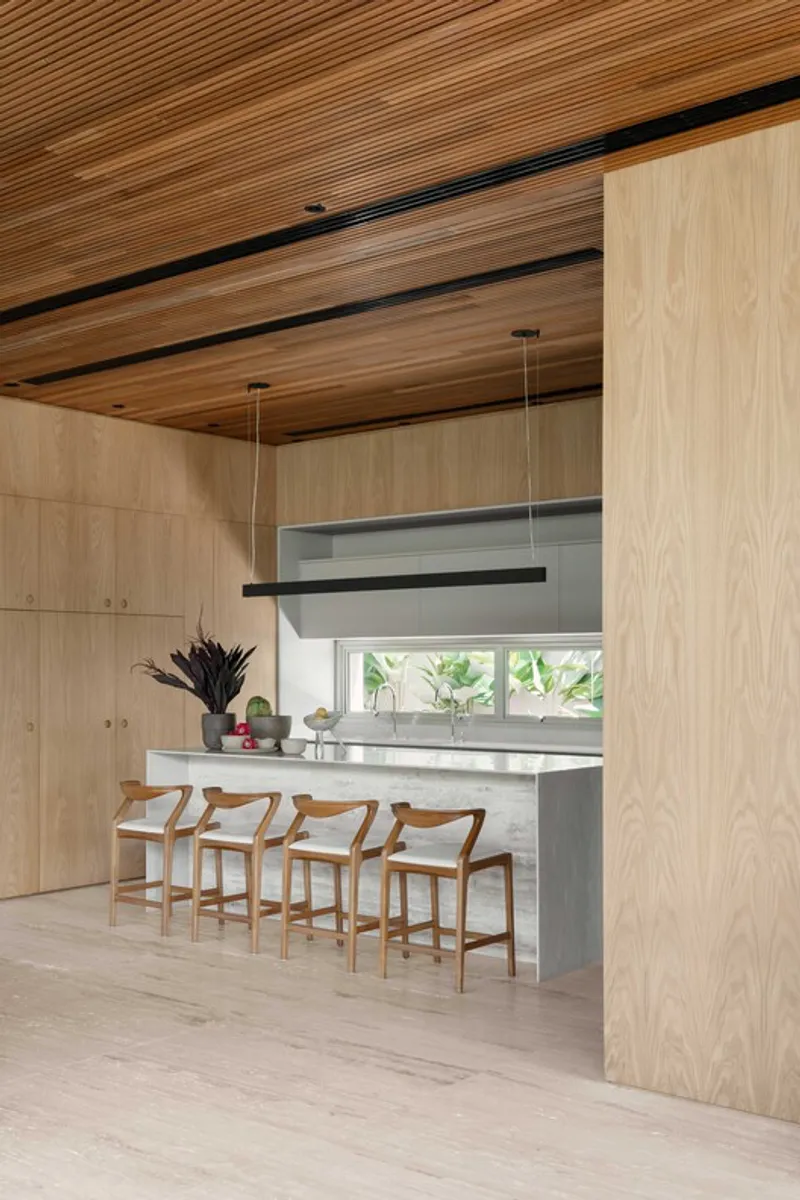
Integrated into the kitchen-dining area, a continuous wall clad in oak veneer conceals the pantry and china cabinet—all the necessary storage and support spaces that enable the kitchen to function while maintaining visual simplicity. This approach reflects a sophisticated understanding of how contemporary open-plan living succeeds: not by eliminating storage and service spaces but by concealing them behind unified architectural surfaces that read as walls rather than as accumulated furniture and appliances.
The oak veneer introduces warmth into a space otherwise dominated by cooler materials—stone, stainless steel, glass. The wood grain provides organic texture that prevents the kitchen from feeling too clinical or commercial. And the continuous surface creates calm visual field that allows other elements—the signature lighting, the curated objects, the garden views—to command attention.
The Central Island
The kitchen's central island faces the garden—a strategic orientation that ensures functionality while maintaining visual connection with the landscape beyond. Every work area looks outward rather than toward walls, making food preparation a more pleasurable experience by connecting it to natural light, changing weather, garden activity, and the passage of time marked by shifting sun angles and seasonal transformations.
The island provides multiple functions: primary workspace for cooking, casual dining counter for quick meals, buffet surface when entertaining, homework station for children, and social gathering point where family and guests naturally congregate. This multiplicity of function justifies the island's prominent position and substantial scale, making it the spatial anchor around which kitchen life revolves.
Material Palette: Restraint and Richness
The Gray Foundation
The ground floor's monochromatic gray palette—combining painted surfaces and metal cladding—establishes a neutral foundation that allows other elements to register with maximum clarity. This restrained approach reflects confidence: the architecture doesn't need to shout through bold color but can speak through form, proportion, light, and material quality.

Gray, often dismissed as drab or boring, proves endlessly sophisticated when handled with the care evident here. The range from warm charcoals to cool silvers creates subtle variation that prevents monotony. The combination of different finishes—matte paint, reflective metal, textured concrete—adds richness within the monochromatic scheme. And the neutral backdrop allows the signature furniture, art collection, and lighting fixtures to become the sources of visual interest and chromatic accent.
Wood as Warmth
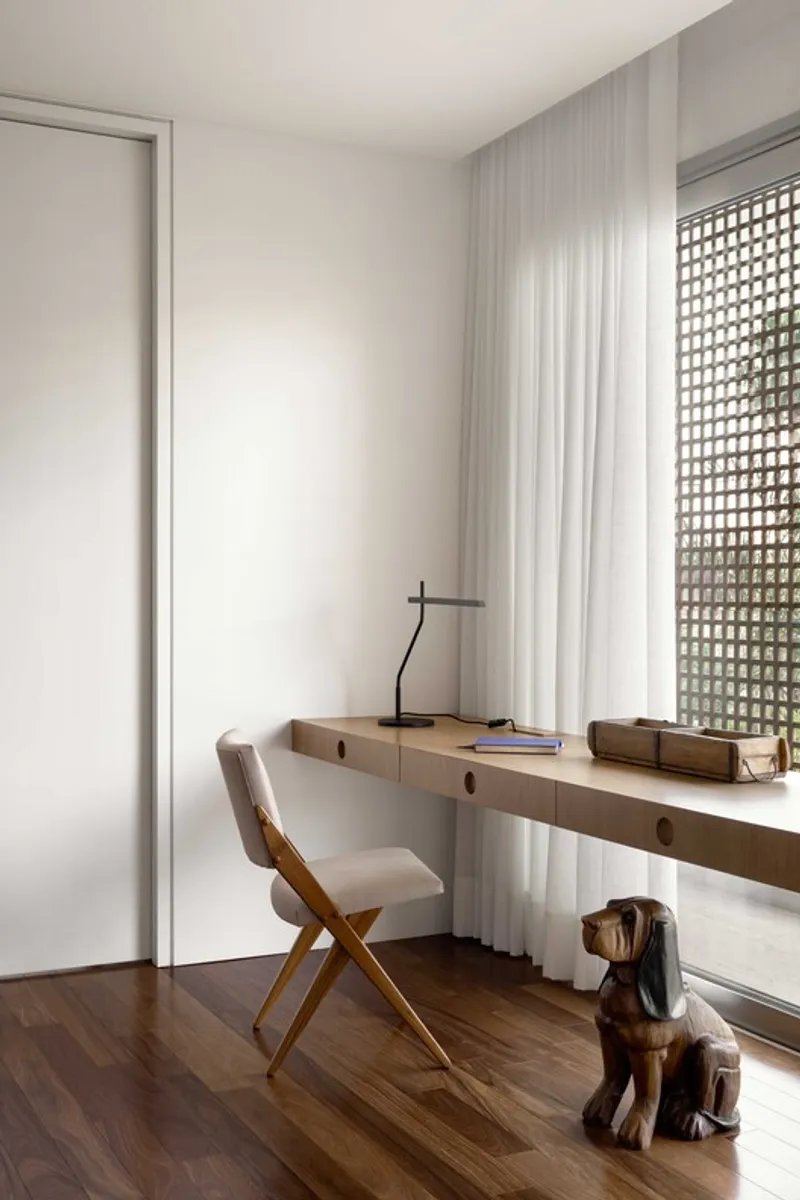
Throughout the house, wood introduces organic warmth that balances the cooler industrial materials. The oak veneer in the kitchen, wooden slat furniture, timber-framed muxarabi screens—these elements provide textural and chromatic relief while connecting the house to natural materials and traditional building crafts.
The use of wood veneers rather than solid timber represents practical sophistication: veneers provide dimensional stability that solid wood cannot match in large panels, they make efficient use of precious hardwood resources by applying thin layers over stable substrates, and they allow for grain-matching and book-matching that creates unified visual fields impossible with solid boards.
Concrete Slats
The concrete slats defining the upper volume introduce textural complexity and structural expression. Unlike smooth concrete surfaces that read as pure geometry, the slats create depth through shadow, movement through repetition, and visual interest through rhythm. They also provide solar shading while admitting light, demonstrating how structural and environmental performance can align with aesthetic expression.
Metal and Glass
Stainless steel and glass appear strategically throughout—in furniture modules, in the curved sideboard, in balustrades and fixtures. These materials introduce reflectivity that amplifies light, transparency that maintains visual connection, and industrial precision that balances the more organic qualities of wood and concrete.
Interior-Exterior Relationships: Dissolving Boundaries
The Garden Connection
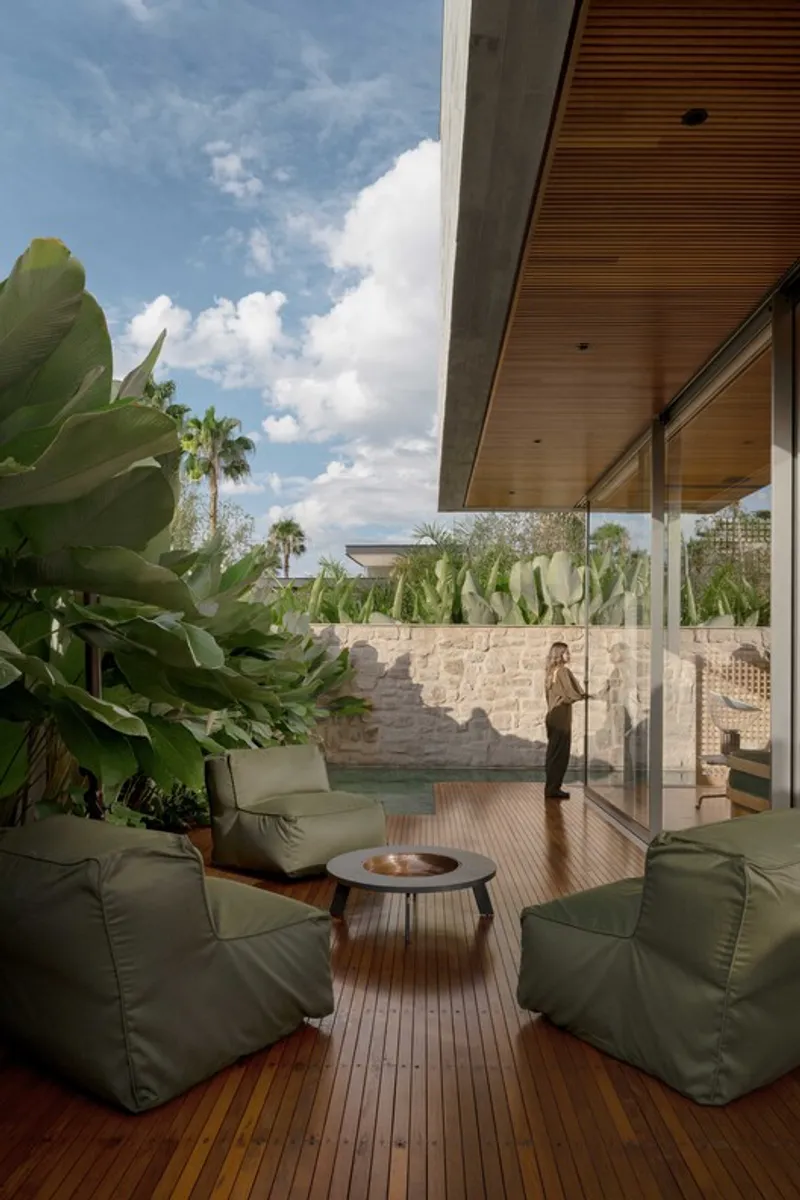
Throughout the Buenos Aires House, visual and physical connections to the garden receive consistent attention. The central kitchen island faces outward. The dining area opens to exterior spaces. The upper-floor balcony provides outdoor living areas. The muxarabi screens create filtered transitions rather than hard boundaries.
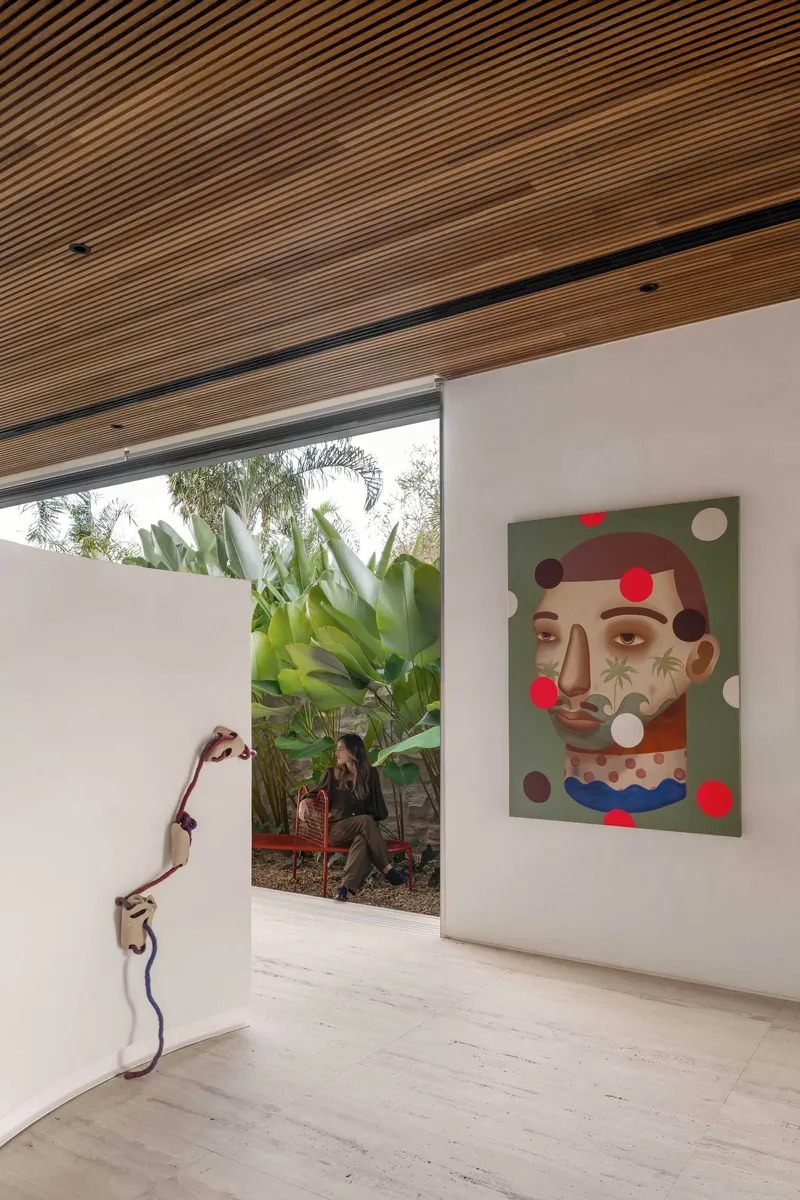
This commitment to interior-exterior connection reflects Brazilian architectural traditions—the work of Oscar Niemeyer, Lina Bo Bardi, Paulo Mendes da Rocha—where buildings open generously to landscape and climate, where boundaries between inside and outside blur, where domestic life extends beyond the building envelope to inhabit gardens, terraces, and courtyards.
Climate Considerations
Brazil's tropical and subtropical climates make this connection not merely aesthetic but climatically appropriate. Natural ventilation through screened openings reduces mechanical cooling needs. Deep overhangs provide shade while maintaining daylight access. Outdoor living spaces extend the usable area of the house while remaining comfortable year-round.
The house demonstrates that sustainable design need not announce itself through technological display but can emerge from fundamental architectural strategies—orientation, shading, natural ventilation, appropriate material selection—refined over centuries of building in specific climates.
Spatial Hierarchy and Programmatic Organization
Public to Private Gradient
The house establishes clear spatial hierarchy moving from public to increasingly private zones. The entrance gallery serves as semi-public threshold. The living and dining areas function as social heart accessible to guests. The kitchen straddles social and family realms. Upper floor bedrooms and family rooms provide private retreats.
This gradation allows the house to accommodate different scales of gathering—from large parties spilling through ground floor social spaces into gardens, to family dinners at the dining table, to intimate conversations in the upstairs living room, to personal retreats in bedrooms—without confusion or conflict between different modes of occupation.
Flexibility and Adaptability
While the house presents as a unified, carefully resolved design, the spatial organization allows for adaptation to changing family needs. Bedrooms can shift functions as children age. The playroom might become study or guest room. The balcony spaces can be screened or opened according to season and need. The modular furniture systems can be reconfigured.
This flexibility extends the house's useful life, allowing it to accommodate a family's evolution without requiring major renovation. It represents sustainable design at the level of social sustainability—creating spaces that remain relevant across decades rather than becoming quickly obsolete.
The Role of Custom Furniture
Architectural Integration
The Buenos Aires House demonstrates the power of custom furniture designed in coordination with architecture rather than added as afterthought. The entrance sideboard, the curved dining sideboard, the oak veneer concealing kitchen storage—all these elements blur boundaries between furniture and architecture, becoming integral to the spatial concept rather than independent objects placed within neutral containers.
This level of integration requires close collaboration between architect and client, requires substantial budget allocation to custom fabrication, and requires design vision that considers every scale from urban massing to cabinet hardware. The result justifies this investment through achieving a level of coherence and refinement impossible when architecture and furniture come from separate sources.
Modular Logic
Both major furniture pieces—entrance sideboard and curved dining sideboard—employ modular logic that provides variation within repetition. Modules share common dimensions and structural systems but vary in specific functions, material finishes, and opening mechanisms. This approach creates visual interest through difference while maintaining underlying order that prevents chaos.
The modular strategy also allows for maintenance and modification. Individual modules can be accessed, repaired, or replaced without disturbing adjacent elements. Components can be reordered or reconfigured if needs change. The furniture becomes a system rather than a fixed object, introducing temporal flexibility into apparently permanent elements.
Cultural Context: Contemporary Brazilian Residence
Architectural Heritage
The Buenos Aires House participates in rich traditions of Brazilian residential architecture while clearly belonging to the present moment. The muxarabi screens connect to colonial-era buildings throughout Brazil and Latin America. The open-plan living and strong indoor-outdoor connections echo modernist masterworks of mid-century Brazilian architecture. The sophisticated material palette and attention to craft reflect contemporary design culture's values.
This layering of historical references and contemporary approaches creates architecture that feels simultaneously rooted and fresh, familiar and surprising. It demonstrates how contemporary design can honor tradition without replicating it, can learn from history without being imprisoned by it.
Suburban Context
Located in Bonfim Paulista—a district of Ribeirão Preto in São Paulo State—the house occupies suburban territory characterized by generous lot sizes, garden landscapes, and relative privacy. This context differs dramatically from dense urban cores where external constraints powerfully shape architectural outcomes. The relative freedom of suburban development allows for more horizontal sprawl, more generous outdoor spaces, and more variation in volumetric massing.

The two-volume stacking strategy responds to this context by creating architectural interest on a corner lot visible from multiple directions, establishing presence without overwhelming the residential scale of the neighborhood.
Sustainability Through Design Intelligence
While the project description doesn't foreground environmental performance, multiple design strategies demonstrate sustainable thinking:
Natural Ventilation: The muxarabi screens enable cross-ventilation that reduces mechanical cooling loads.
Solar Shading: The concrete slats and sliding screens prevent unwanted solar heat gain while maintaining daylighting.
Durable Materials: Concrete, metal, and quality wood products offer longevity with minimal maintenance.

Flexible Space: The adaptable interior organization extends the building's useful life across changing family needs.
Landscape Integration: Maintaining garden connections preserves ecological values while enhancing livability.
Quality Over Quantity: The emphasis on design excellence over mere size demonstrates that sustainability includes making things well enough to be preserved and cherished rather than discarded and replaced.
Lessons for Contemporary Residential Design
The Buenos Aires House offers several insights applicable to residential design more broadly:
Material Restraint: Limiting the palette to gray, wood, concrete, metal, and glass creates coherence that allows design quality to emerge through proportion and detail rather than chromatic variety.
Custom Integration: Designing furniture as architectural elements rather than independent objects creates higher levels of spatial refinement and functional optimization.
Lighting as Art: Specifying signature lighting fixtures curated for specific locations elevates the everyday experience while supporting design culture.
Traditional Reinterpretation: Contemporary reinterpretation of traditional building elements like muxarabi screens honors heritage while serving current needs.
Open-Plan Sophistication: Successful open planning requires careful attention to sightlines, acoustic control, and the balance between openness and intimacy.
Indoor-Outdoor Connection: In appropriate climates, dissolving boundaries between interior and exterior extends living space while reducing environmental conditioning needs.


Popular Articles
Popular articles from the community


Cloaked Colonization: A Mobile Underwater Habitat That Moves Like a Fish
Micah Abaya's shortlisted EHC Pacific entry reimagines ocean settlement as a dispersed network of self-sustaining architectural organisms.

Singing Woman: Contemporary Architecture Inspired by Estonia’s Voice and the Sea
Singing Woman turns Estonia’s song culture into flowing opera house architecture, blending public life, landscape, sea, and national memory.
Temporary Home for Dogs: A Reversed Zoo Rethinks Animal Shelter Architecture
In Bucharest, a sinuous corridor and freed landscape flip the logic of containment, designing a shelter that works to make itself unnecessary.

Manzana Morphosis: Stretching Barcelona's Grid into a Living Landscape for 2050
A radical reworking of the Eixample manzana turns density into a tool for generous public space, vertical ecology, and environmental performance.

Similar Reads
You might also enjoy these articles


Hodi-Mandai Geram
Project Function: Preservation and revitalization of the Intangible heritage and socio-spatial identity of the Hodi by Housing, Cultural Memory Center, Sacred Grove, landscape, local tourism economy


Olio Towers: A Mid-Rise for Performers That Fuses Housing, Rehearsal, and Stage
Located blocks from Houston's Theater District, this modular tower stacks living units around a central performance atrium.

Oasis: Modular Green Housing Carved into Dhaka's Urban Fabric
A shortlisted Plugin Housing entry reclaims unauthorized settlements in Dhaka with stepped concrete volumes, green roofs, and ventilation-driven design.

Black Hole: A Floating Megastructure for the Post-Physical Era
Emiliano Mazzarotto envisions a spherical, self-scaling arena where e-sports, digital hotels, and holographic stadiums replace traditional public space.

Explore Brazilian Architecture Competitions
Discover active competitions in this discipline

Challenge to reimagine the Iron Throne

Photograph architecture without architects

Illustrate the lost glory of Angkor Wat - Render Challenge

Design challenge to reuse E-waste
Comments (0)
Please login or sign up to add comments
No comments yet. Be the first to comment!