
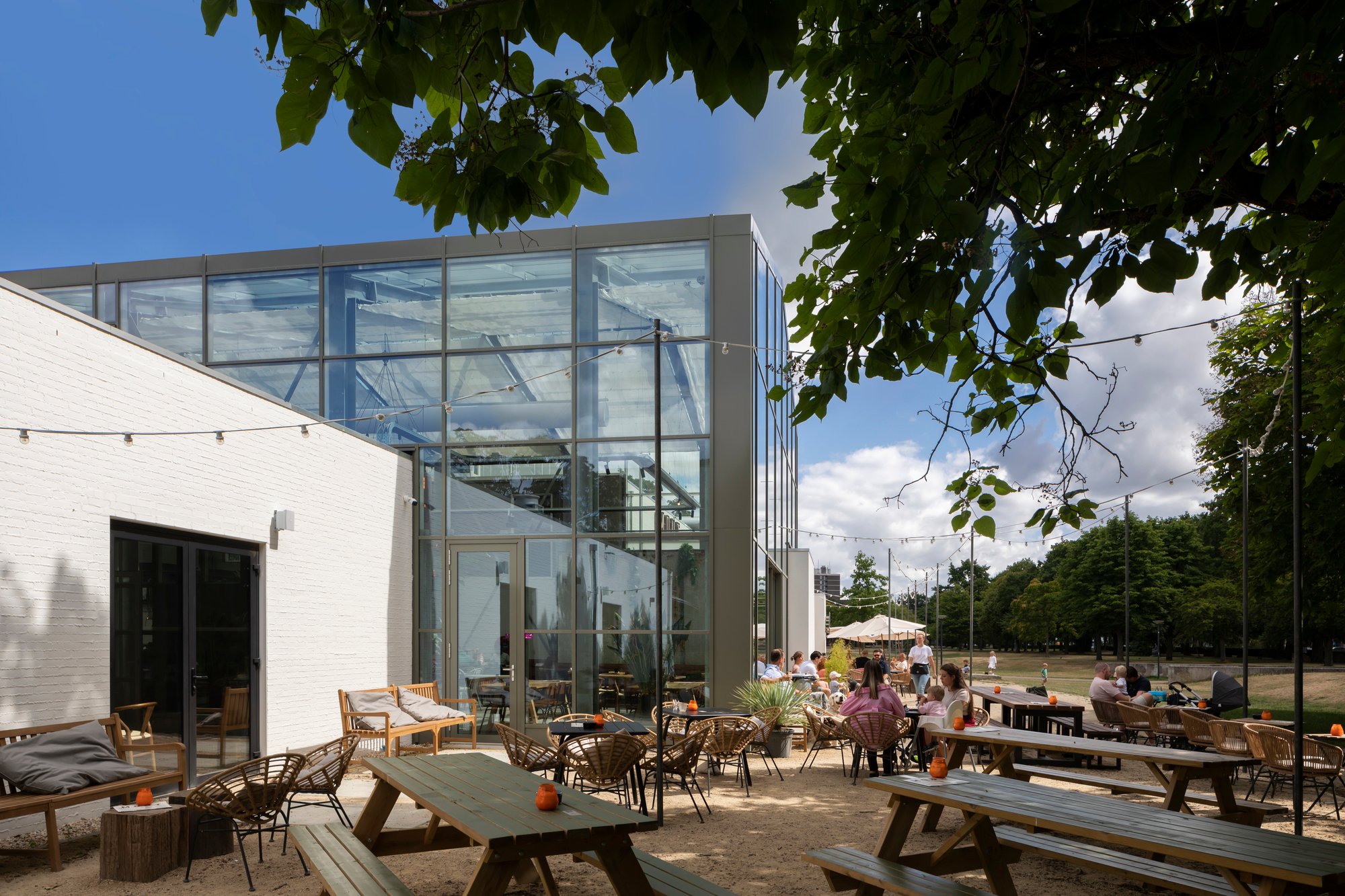
Buro Moon Converts a Dutch Museum into a Brewery, Café, and Food Hall Linked by a Greenhouse
A vacated 1970s museum in Venlo's Julianapark finds new life as MOUT, reconnecting to its surrounding landscape through glass, steel, and beer.

When the Museum van Bommel van Dam was vacated in 2017, Venlo lost a cultural anchor but inherited an architectural problem. The original building, dating from 1971 and expanded in 1985, had grown into a long, closed-off mass that turned its back on Julianapark, hiding monumental Catalpa trees behind blank facades. It belonged to the city's Post-65 heritage but held no formal monument status, which gave Buro Moon room to intervene decisively: demolishing parts of the structure, inserting a transparent greenhouse volume, and converting the remainder into MOUT, a combined brewery, café, and food hall that opened in 2022.
What makes the project worth studying is not just the adaptive reuse, which is increasingly routine, but the specificity of the strategy. Buro Moon did not simply gut and refinish. They subtracted volume to give the park back its space, then added a galvanized steel and glass conservatory that references the "Venlo-Kas," a greenhouse typology popular in the region after World War II. The result is a compact park pavilion that trades the museum's introverted posture for radical transparency, pulling daylight, greenery, and the surrounding canopy into everyday social use.
A Greenhouse as Connective Tissue
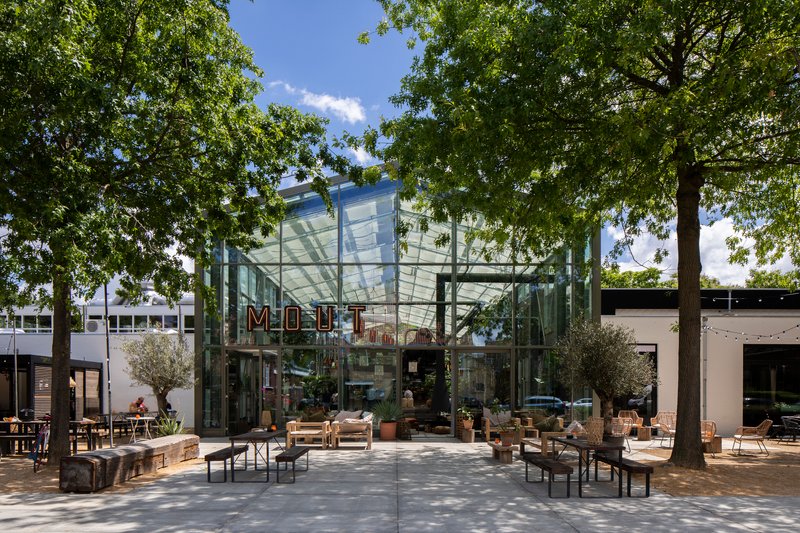
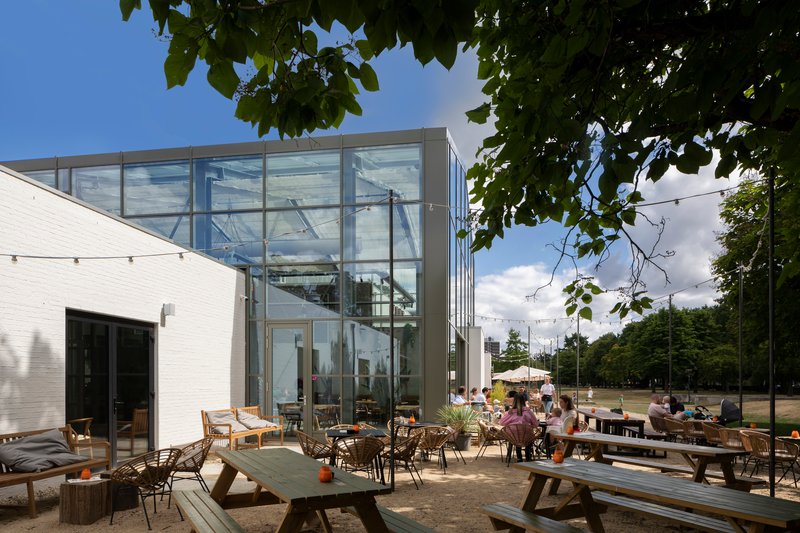
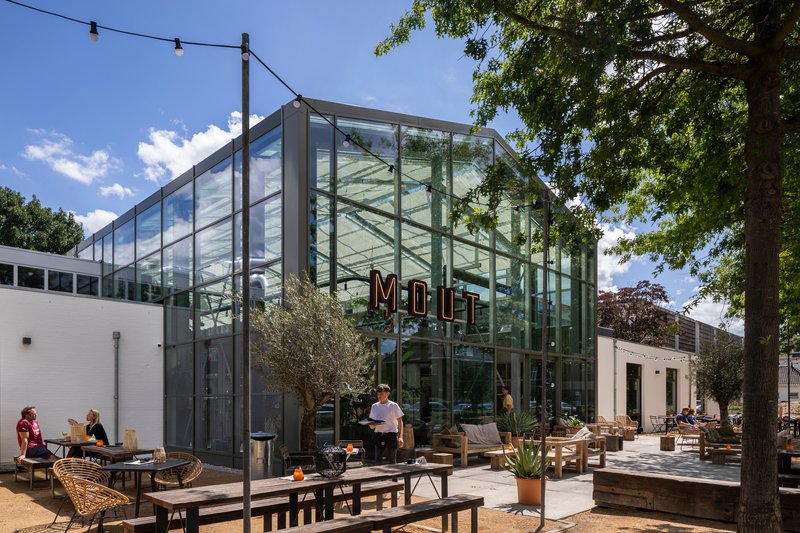
The new glass conservatory is the hinge of the entire project. It sits between the two former exhibition halls, now converted to brewery and food hall respectively, and houses a large central bar. Structurally it is straightforward: a galvanized steel frame supporting translucent roof panels and glass walls, with aluminum profiles finished in moss-grey on the exterior and left raw on the inside. But its spatial effect is anything but neutral. It collapses the boundary between indoors and out, framing mature trees through floor-to-ceiling glazing and flooding the interior with shifting, dappled light.
The Venlo-Kas reference is not decorative nostalgia. Greenhouses are the dominant architectural vernacular of this part of the Netherlands, where horticulture has shaped the landscape for generations. By borrowing that form, Buro Moon gives the addition local legibility. Visitors immediately understand the new volume as something lighter and more provisional than the masonry halls flanking it, and that contrast is entirely intentional.
Interior Rawness and the Refusal to Finish
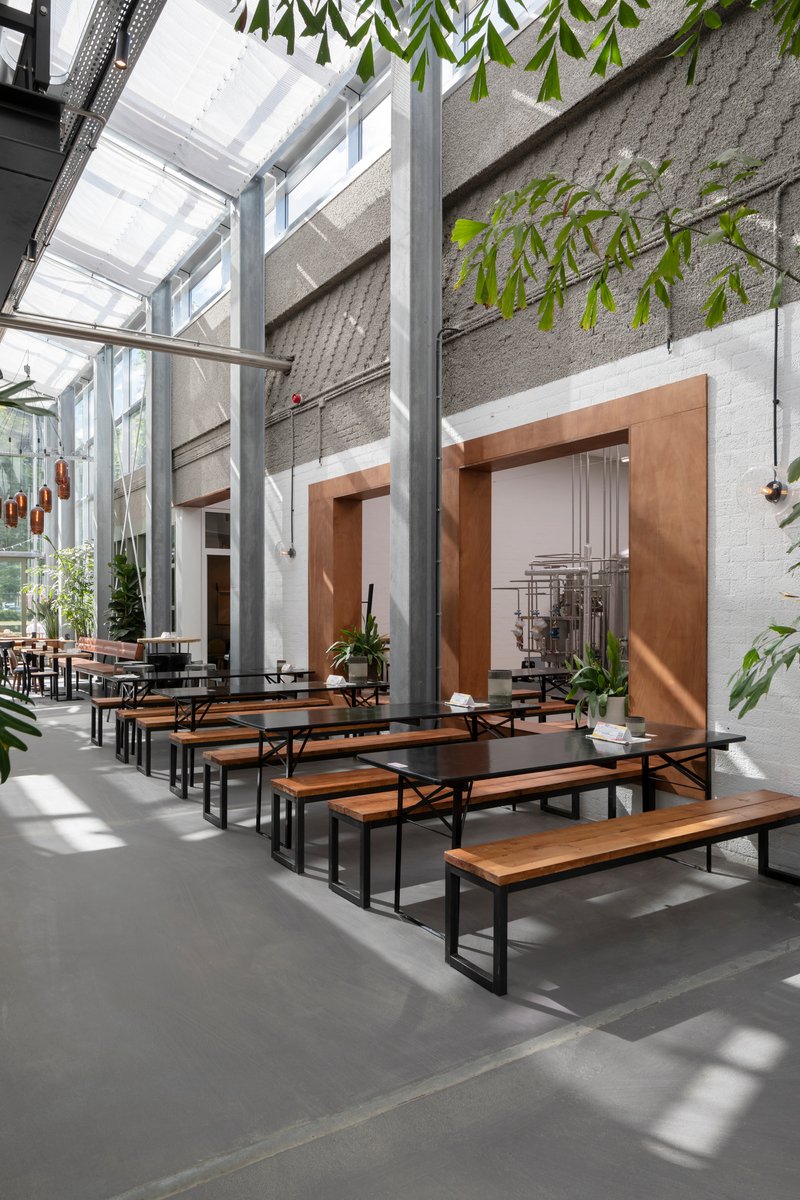
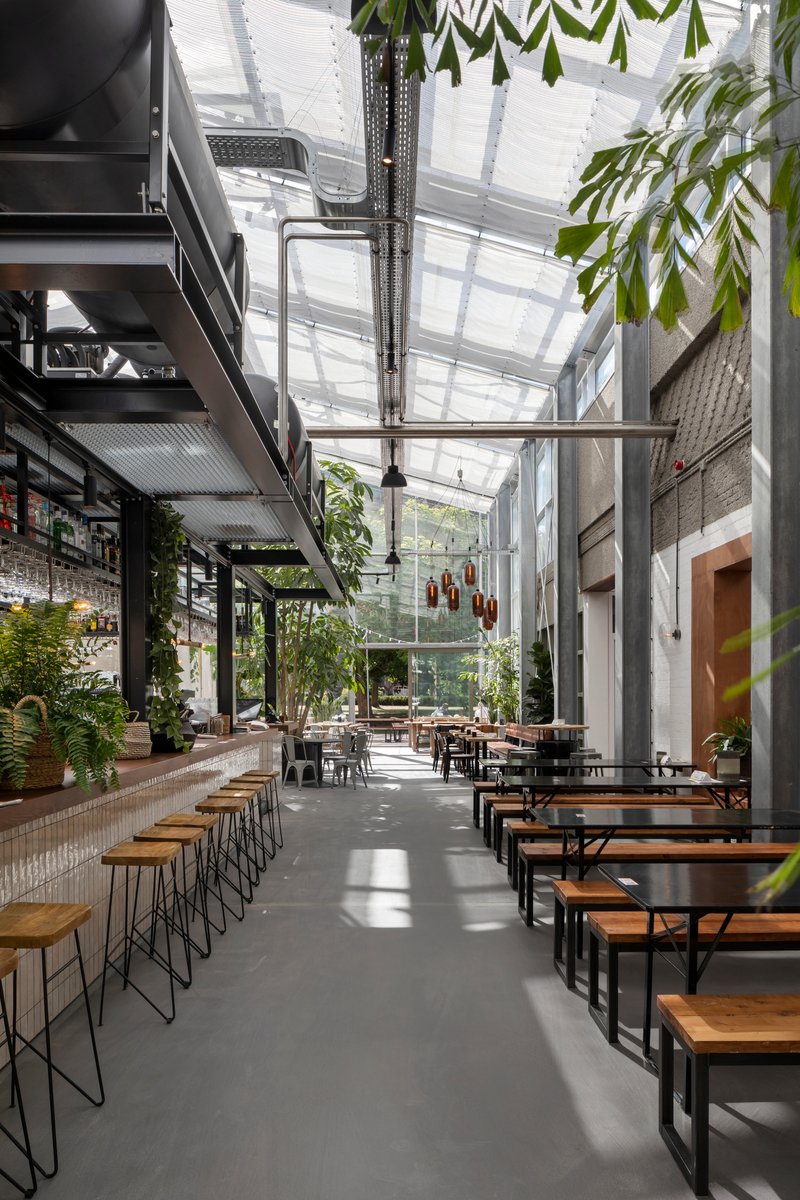
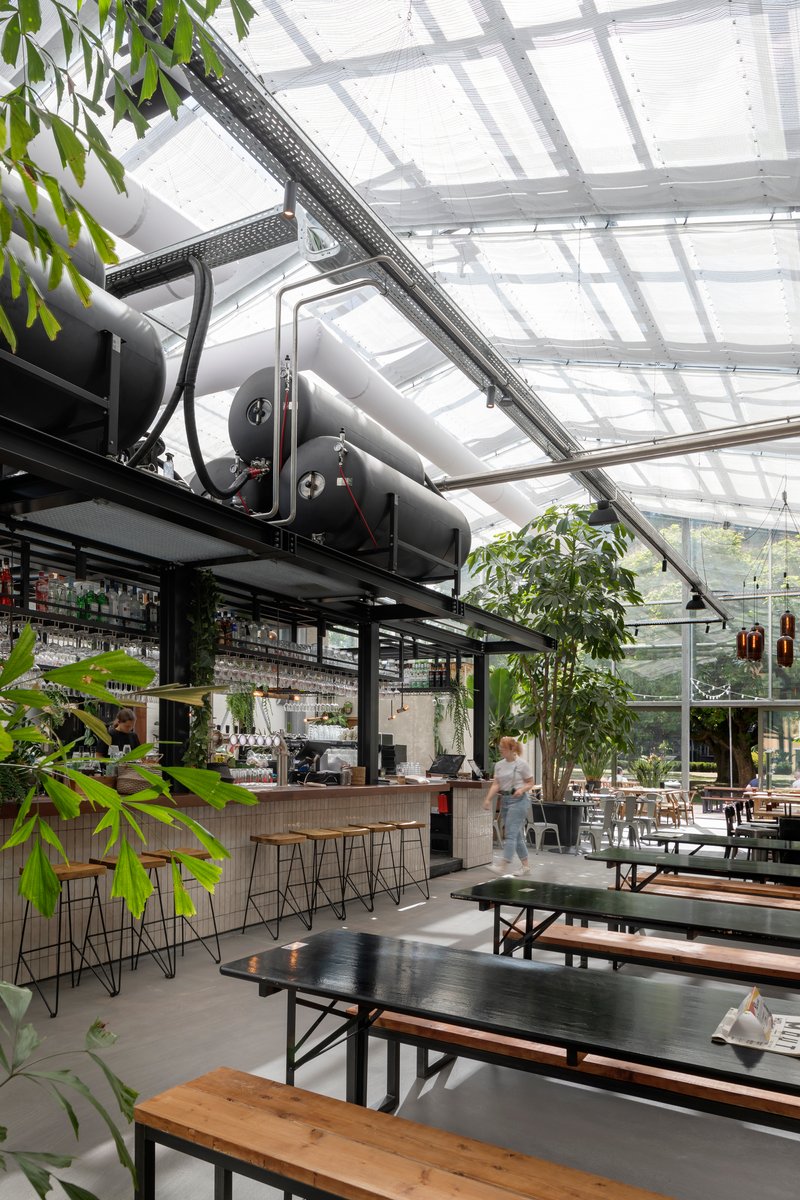
Inside the retained halls, Buro Moon kept surfaces pure, rough, and uncolored. Exposed concrete beams span overhead, black ductwork runs openly beneath skylights, and the characteristic roof structures of the original museum are left legible. This is not a polished hospitality interior. It reads closer to an industrial workspace, which suits a building whose primary production is beer. The strategy also avoids the trap of over-designing a heritage structure into something precious. By leaving the bones visible, the architects let the 1970s construction speak without competing with it.
Meranti wooden panels and timber-framed openings add warmth without softening the overall tone. Hanging plants and potted greenery filter light and break up the scale of the double-height spaces, but they feel like occupation rather than decoration. The communal timber benches and metal tables reinforce the social, market-hall atmosphere.
The Brewery as Spectacle
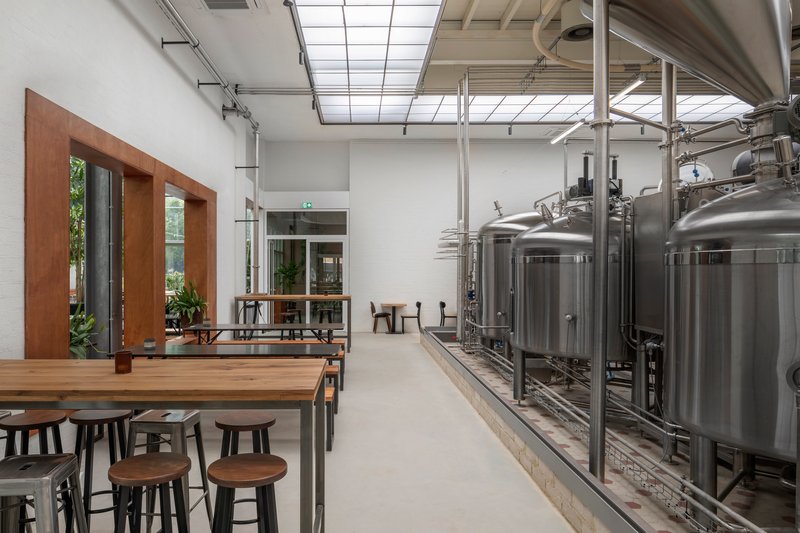
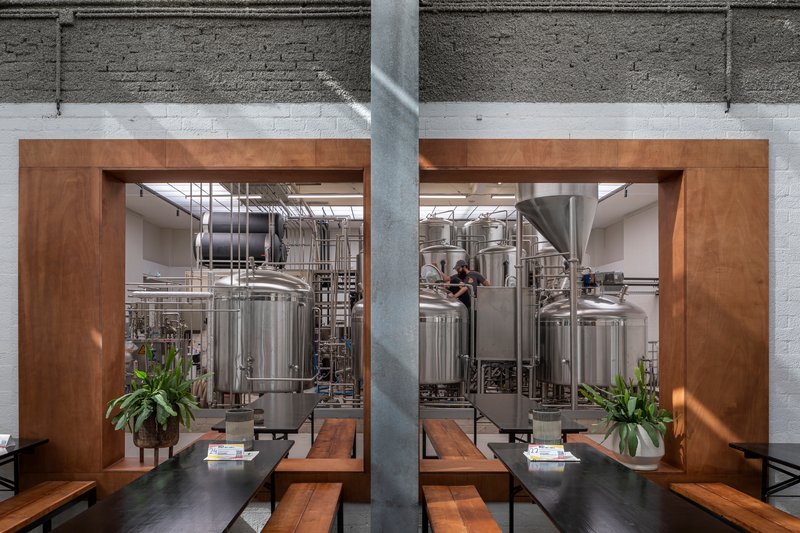
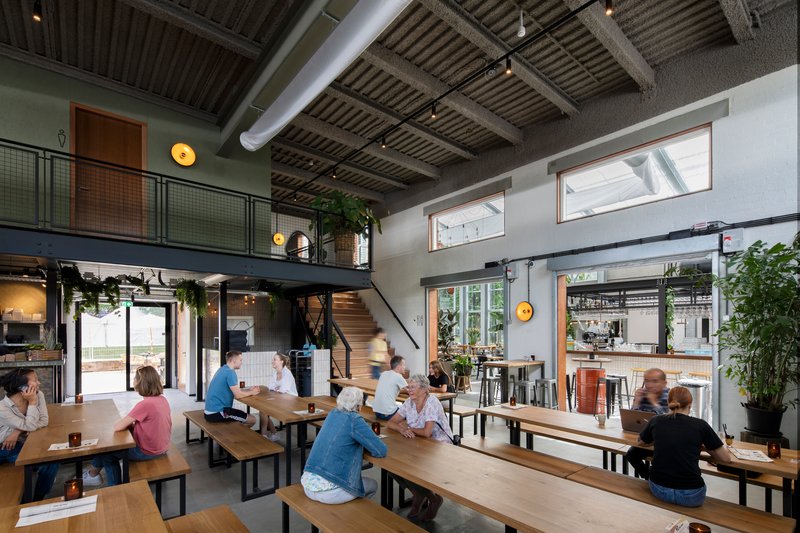
One of the two former exhibition halls now contains the brewery production floor, with exposed steel brewing vessels visible through timber-framed openings from the adjacent seating area. The decision to make the production process visible rather than hiding it behind walls gives MOUT a programmatic honesty that most food-and-drink venues lack. You can watch the beer being made while you drink it, which is both a marketing move and a spatial one: it activates a hall that might otherwise feel like a dead end.
The double-height taproom with its mezzanine level adds vertical layering to a building that was originally quite flat in section. Patrons gather on both levels, looking down at communal tables or across at the brewing equipment. The mezzanine also recovers usable floor area lost when parts of the building were demolished, a pragmatic response to the subtraction strategy.
The Bar and Food Hall
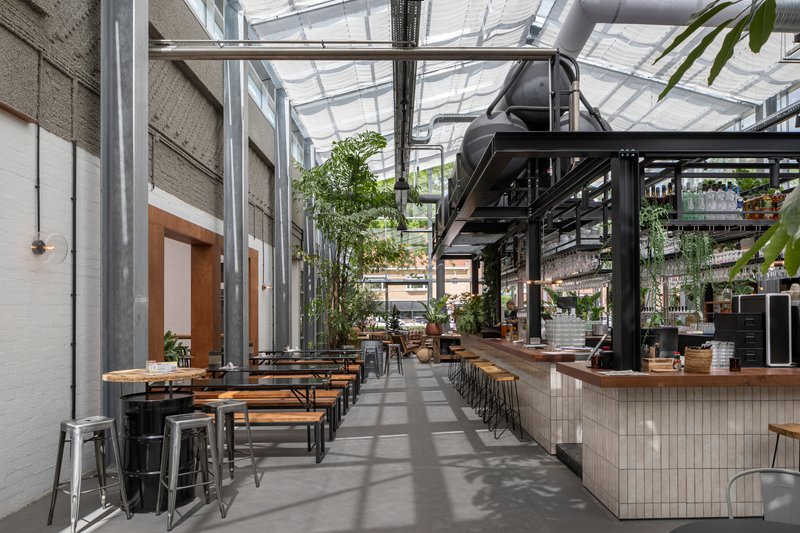
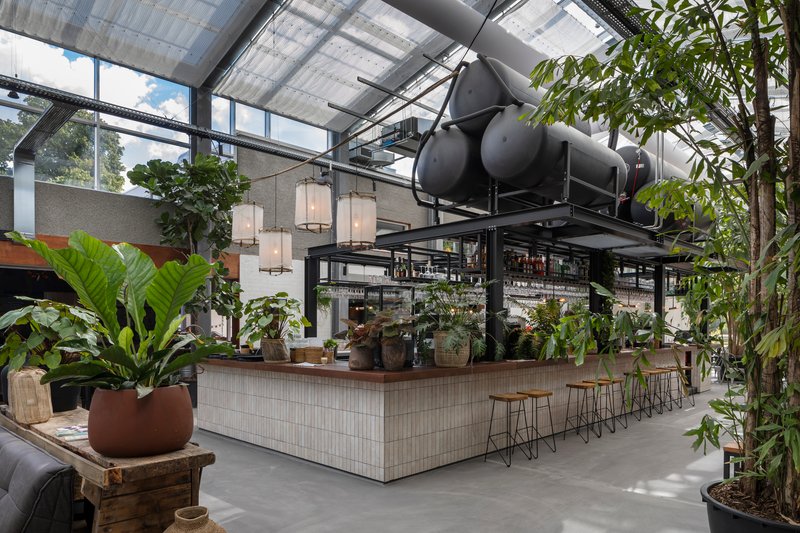
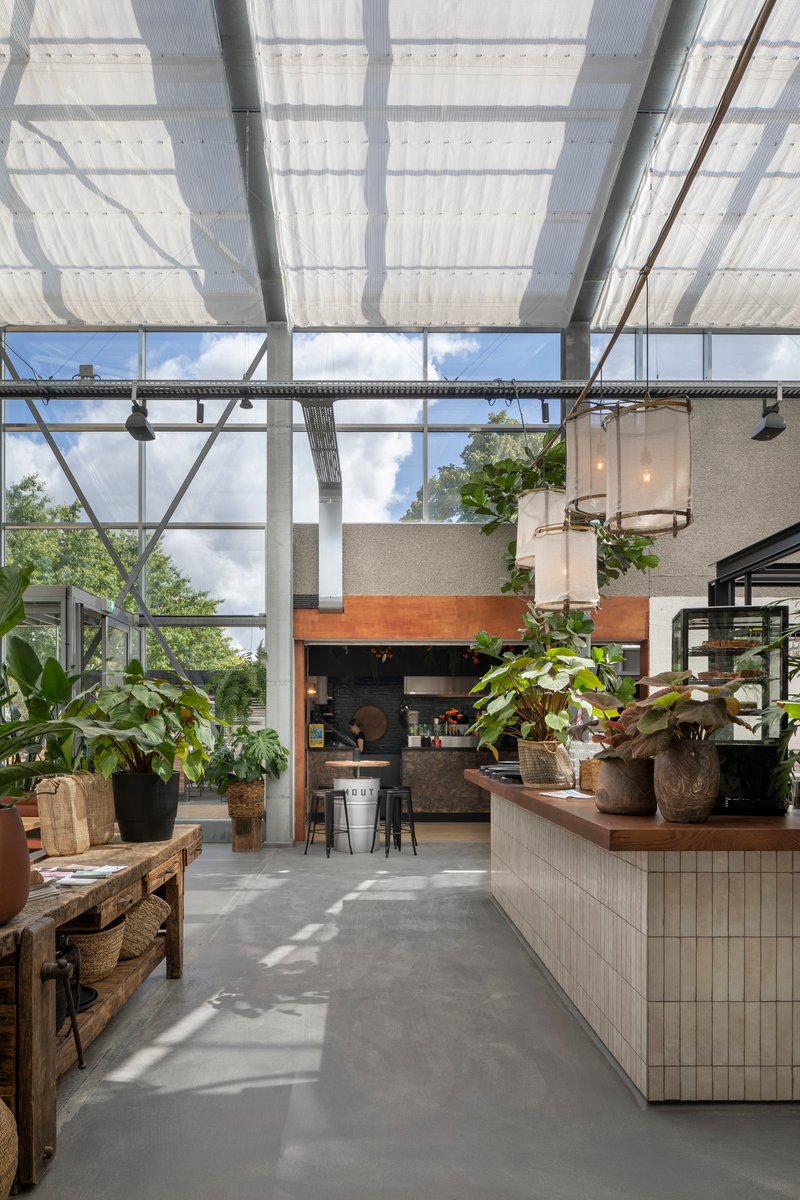
The central bar, clad in white tile, anchors the greenhouse volume and acts as the social nucleus of the entire complex. White tile is a deliberate choice: it reads as utilitarian, almost clinical, connecting the bar visually to the brewing equipment and kitchen volumes rather than to a cocktail lounge. The kitchen volume itself sits under the glass roof with a timber counter on a tiled base, catching dappled sunlight that shifts throughout the day.
Potted plants line the bar and fill gaps between structural columns, reinforcing the conservatory atmosphere. Mechanical ductwork and skylights remain exposed overhead. The food hall in the second former exhibition hall extends this approach, with communal seating beneath hanging foliage and exposed concrete. Together, the three programmatic zones, brewery, café, and food hall, read as distinct rooms with a shared material language rather than a single undifferentiated space.
Reconnecting to the Park
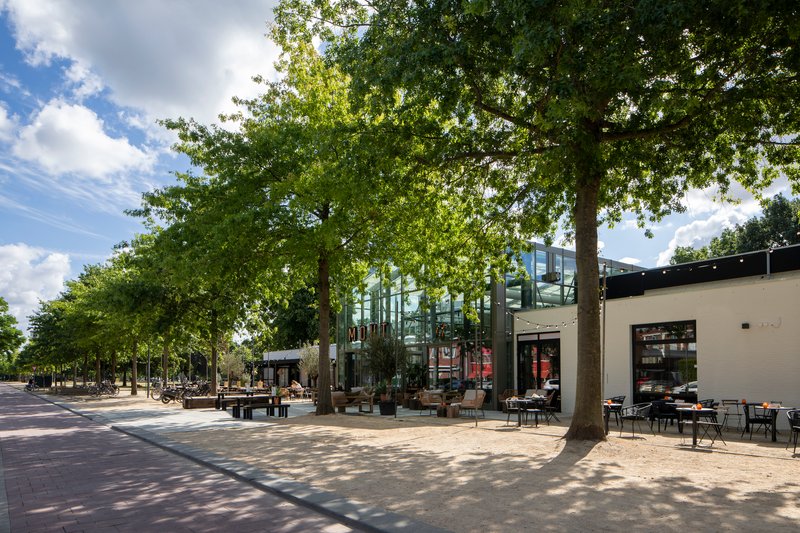
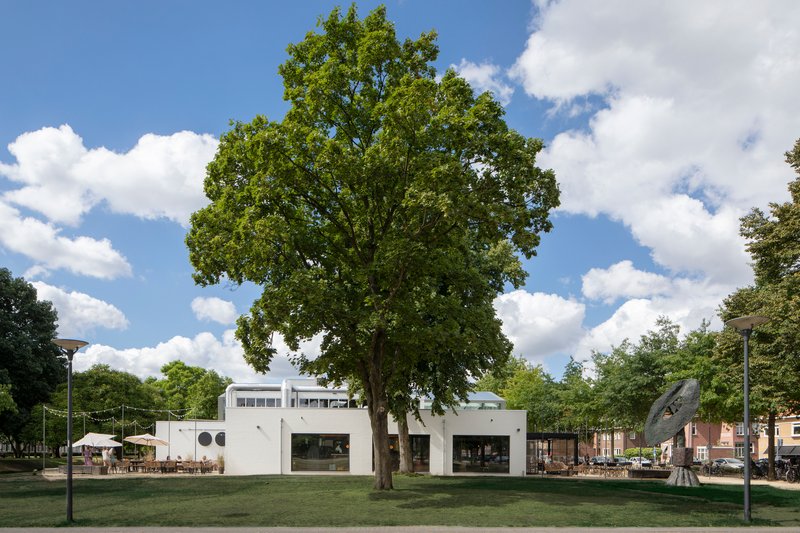
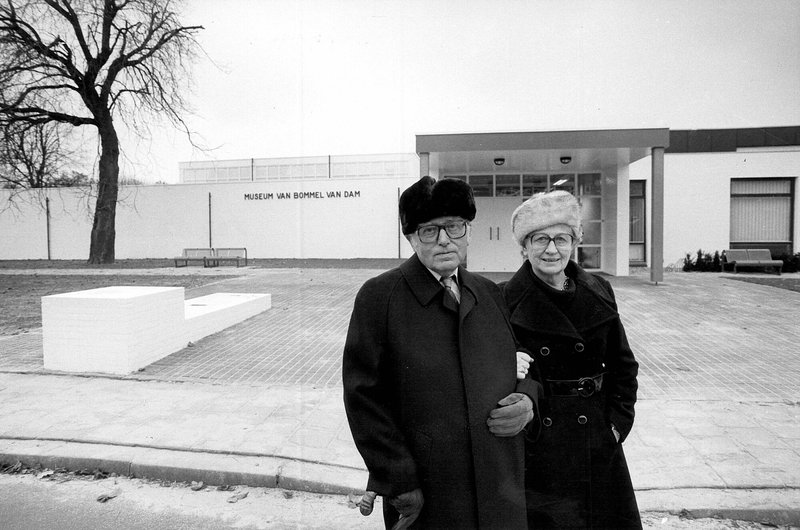
Perhaps the most consequential decision was demolishing parts of the original building to create more space for Julianapark. The long museum volume, which had stretched along the park edge as a wall, was trimmed back into a compact pavilion. New facade openings provide direct access to the park. Planted pergolas on the park side and a terrace design that follows the park's organic lines soften the transition between building and landscape. The monumental Catalpa trees that were formerly pressed against a blank rear facade are now integrated into the building experience, visible through glass walls and framing outdoor seating.
The white-walled entrance pavilion with its porthole windows and clerestory glazing retains something of the museum's civic presence, but its scale is friendlier now. Set in lawn beneath a mature oak, it reads as a garden folly more than an institution. That shift in register, from museum to park pavilion, is the real project.
Plans and Drawings
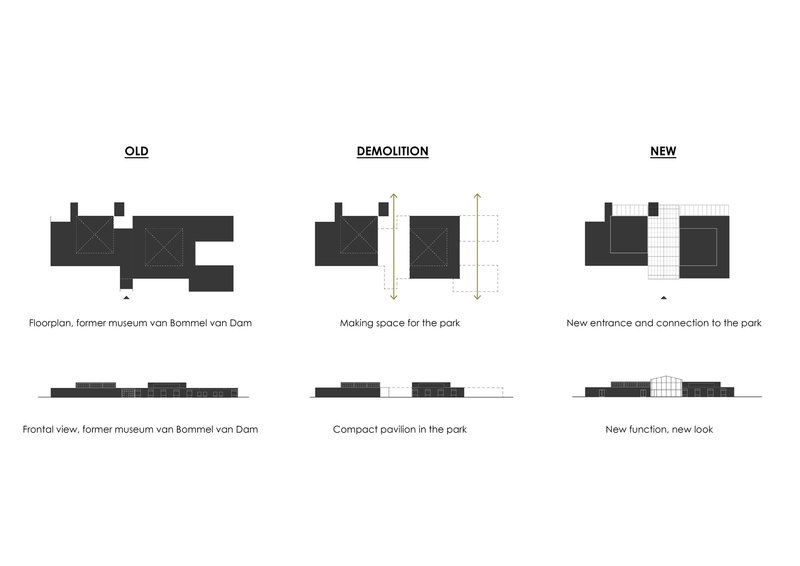
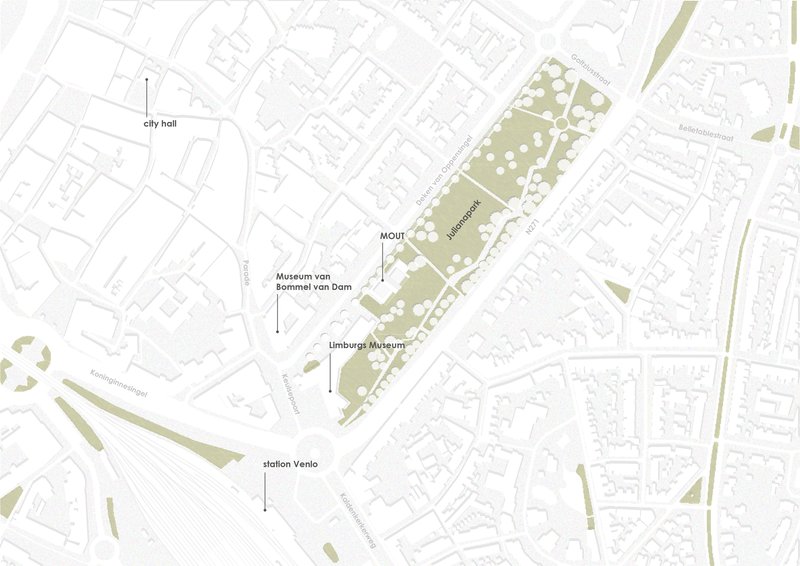
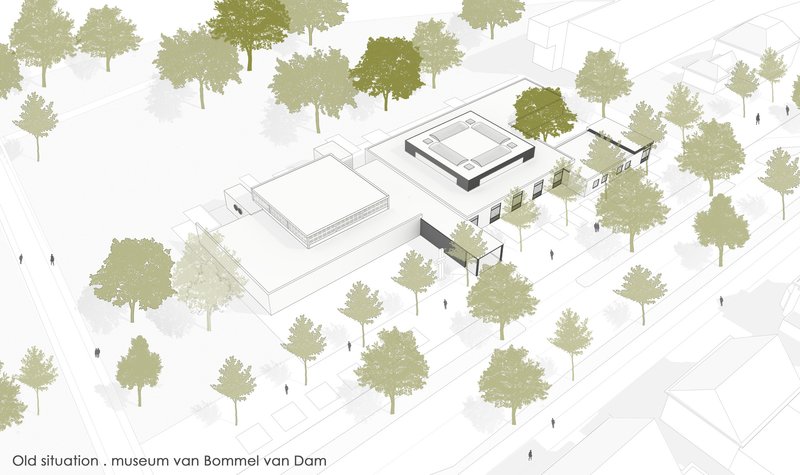
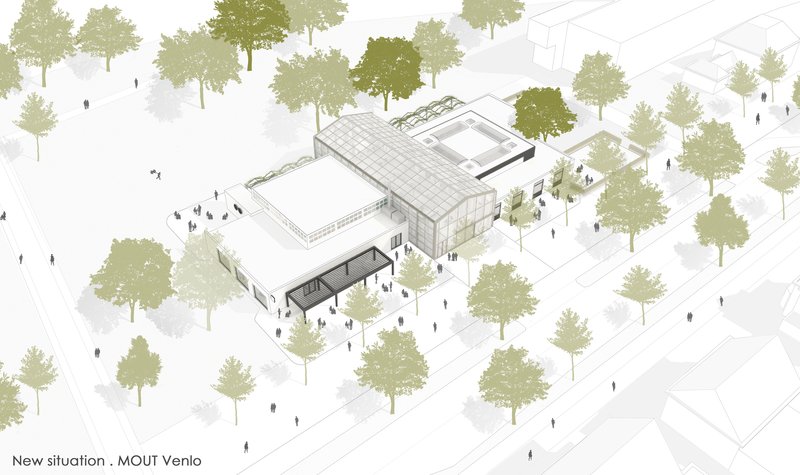
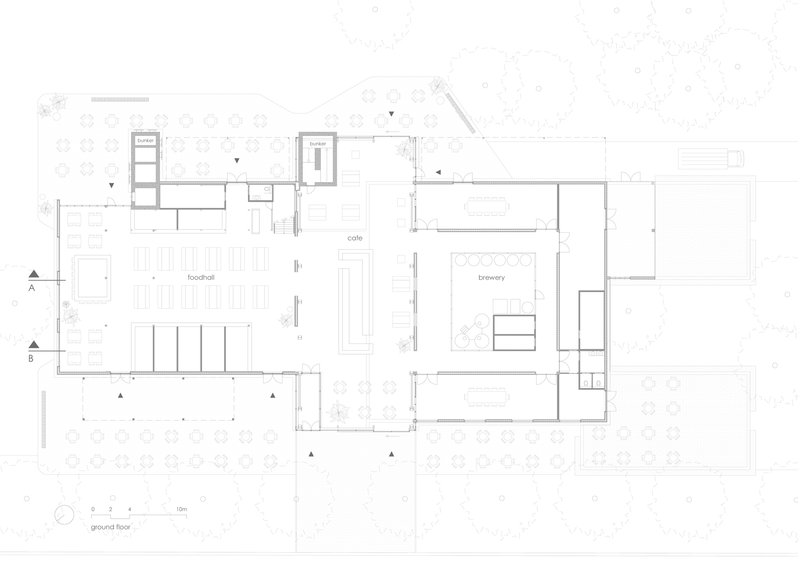
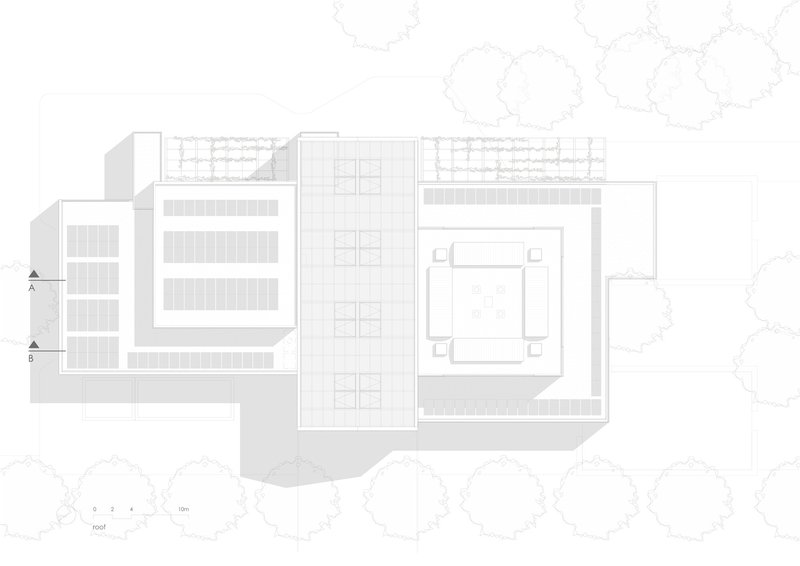
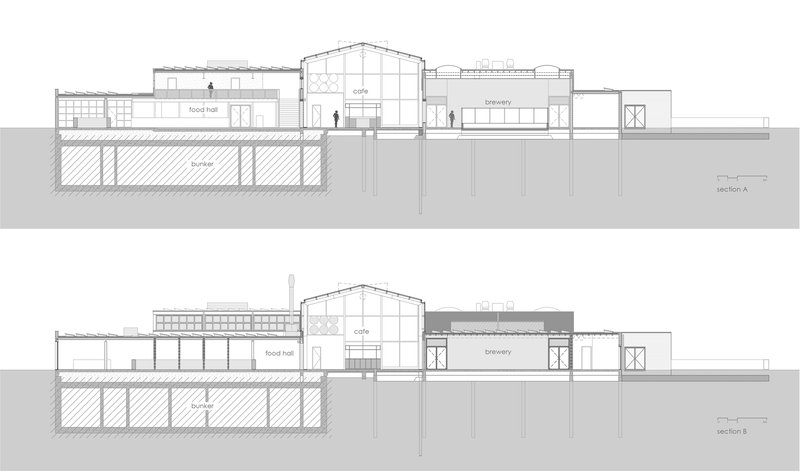
The phasing diagram reveals the logic of the transformation clearly: the original museum's elongated plan is first stripped of its non-essential volumes, then the greenhouse is inserted as a connective bridge, and finally the remaining halls are reprogrammed. The site plan shows how MOUT sits within the green corridor of Julianapark, surrounded by tree canopy on three sides. The ground floor plan makes the tripartite organization legible: café, food hall, and brewery arranged around the central courtyard-like greenhouse. The section drawings expose the gabled roof forms over the retained halls, with a basement level below, while the roof plan confirms how the new volumes nestle beneath the existing tree canopies rather than competing with them.
Why This Project Matters
Adaptive reuse projects often succeed by addition: new wings, new skins, new programs layered onto old structures. MOUT Venlo is notable for what it removes. By demolishing parts of the building, Buro Moon gave the park back territory it had lost and transformed a defensive, inward-looking museum into something porous and social. The greenhouse insertion, with its local typological roots and its commitment to material honesty (galvanized steel and aluminum selected for their recyclability at end of life), demonstrates that sustainability and cultural specificity can be the same conversation.
The project also raises a question that more cities will face as Post-65 buildings age out of their original programs: what do you do with heritage that is not quite monumental? MOUT offers one answer. You keep the roof structures, expose the bones, and let a new use bring the life that preservation alone cannot guarantee. The building is not frozen. It is working again, making beer and serving food beneath the same concrete beams that once sheltered contemporary art. That is a kind of continuity worth paying attention to.
MOUT Venlo Coffee by Buro Moon. Located in Venlo, The Netherlands. 1,600 m². Completed in 2022. Photography by Melanie Samat.
About the Studio
Share Your Own Work on uni.xyz
If projects like this are the kind of work you want to make, uni.xyz is a place to publish your own, find collaborators, and enter design competitions.



Popular Articles
Popular articles from the community

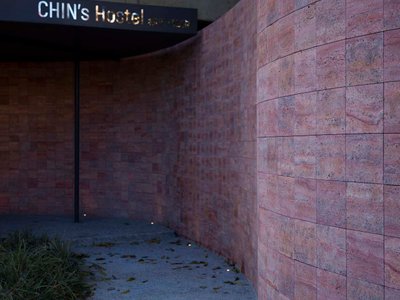
VEIVE Architects Builds a Mountain Hostel That Disappears into a Hangzhou Hillside
On the Huihang Ancient Trail in Xiangjian Village, a shelter of wood, steel, and rammed earth roots itself in the rural landscape.
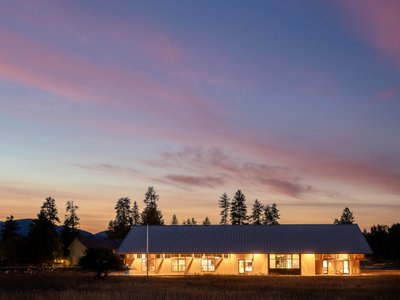
Johnston Architects Reimagines the Methow Valley Hay Barn as a Small-Town Library in Winthrop
A 7,300-square-foot timber library channels the region's agrarian vernacular to serve a rural Washington community of 400 year-round residents.
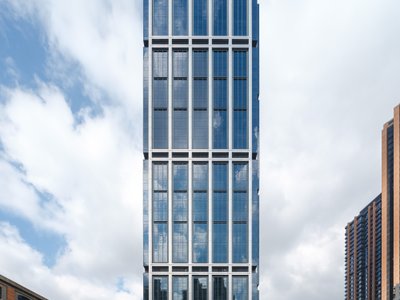
Foster + Partners Wraps a 200-Meter Shanghai Tower in Stainless Steel and Industrial Memory
The Suhe Centre Office Tower anchors a regenerated waterfront district in Shanghai with an all-steel structure that nods to local warehouse heritage.
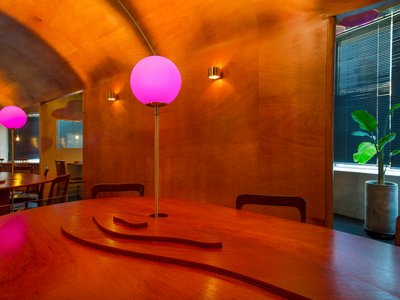
Indiesalon Carves a Plywood Cave into a Seoul Bistro's Second Floor
Munhwa Bistro's second Seongsu branch wraps diners in a laminated timber vault laced with colored light and mirror illusions.
Similar Reads
You might also enjoy these articles

127af Flips a Tiny Bagnolet Rowhouse Upside Down with a Handcrafted Roof Extension
A 55-square-meter terraced house on the edge of Paris gains a luminous upper living floor through lightweight timber and steel.
1.61 Design Workshop Wraps a 600-Square-Meter Café in Vietnam in Sculptural Burgundy Drama
Reden Café & Bistro pairs a helical staircase, mosaic floors, and deep red interiors to rethink Vietnamese hospitality space.

The Unbound Brain: A School Shaped by Cognitive Architecture
Cylindrical learning pods radiate like neurons from a central cortex, turning the floor plan into a spatial model of human thought.
Revival Vernacular Architecture: Rammed Earth Settlements for the Sahara
A modular desert community in Mauritania that fuses passive cooling techniques with earthen construction and local craftsmanship.
Explore Industrial Building Competitions
Discover active competitions in this discipline




The Global Benchmark for Architecture Dissertation Awards


The Global Benchmark for Graduation Excellence

Bring back Drive In's
Comments (0)
Please login or sign up to add comments
No comments yet. Be the first to comment!