

Campus Simons: A Landmark in Industrial Architecture by GKC Architectes
An overview of Campus Simons, a state-of-the-art, sustainable distribution center designed by GKC Architectes, emphasizing modern industrial architecture.


Located in the Espace d’innovation Chauveau, in the northern sector of Quebec City, the Campus Simons stands as a testament to modern industrial architecture. Designed by GKC Architectes, this distribution center for Maison Simons, a major retail chain, exemplifies the integration of form, function, and sustainability in a large-scale industrial setting. The project spans over 53,420 square meters on a site of 195,360 square meters, blending advanced design principles with environmental stewardship.

Architectural Vision
The architectural vision behind Campus Simons draws inspiration from the fashion industry, mirroring the processes of modeling and weaving. This concept manifests in the building’s pure lines and contemporary aesthetic, which promote both architectural cohesion and occupant well-being. The design features two overlapping volumes—one solid and the other glazed. This interplay symbolizes the transformation from raw materials to a finished, woven product.
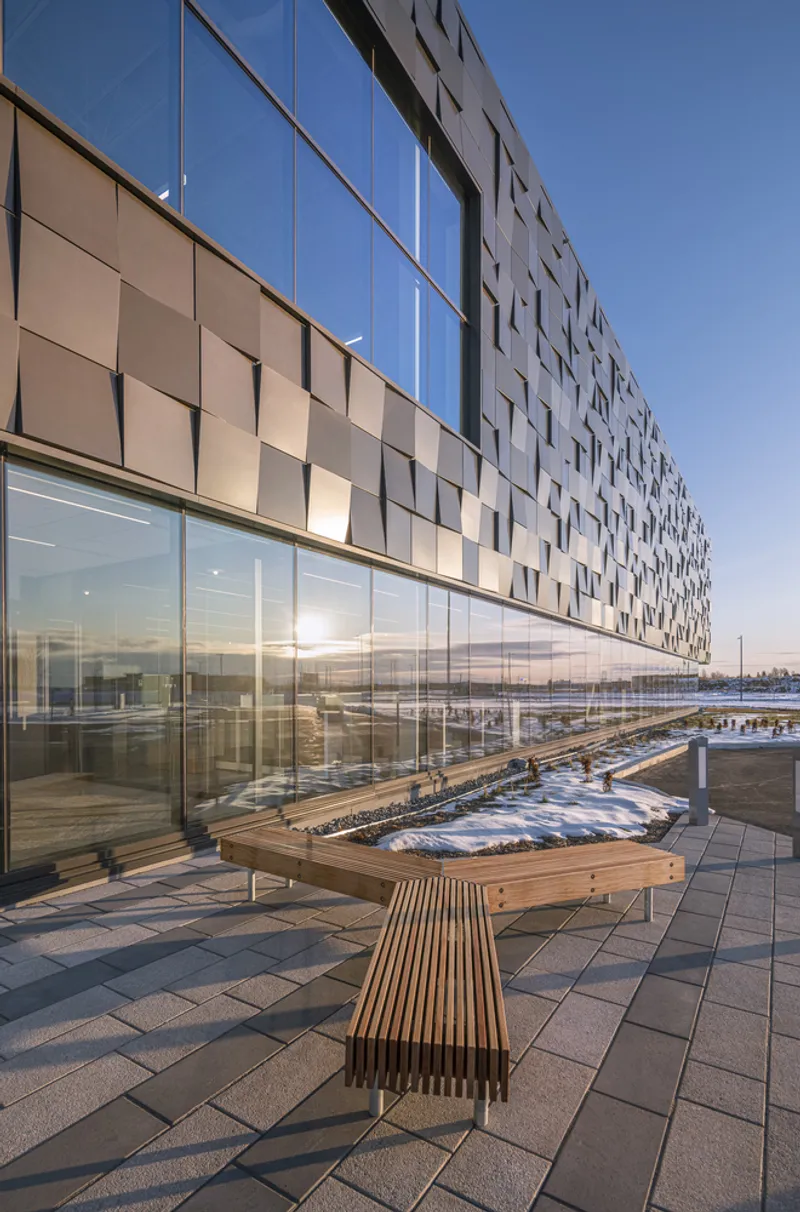

Solid Volume
The solid volume, primarily aluminum-paneled, captures the dynamism of creative thought. Its exterior interacts with light and shadow, creating a visual rhythm akin to the vibrancy of artistic design.

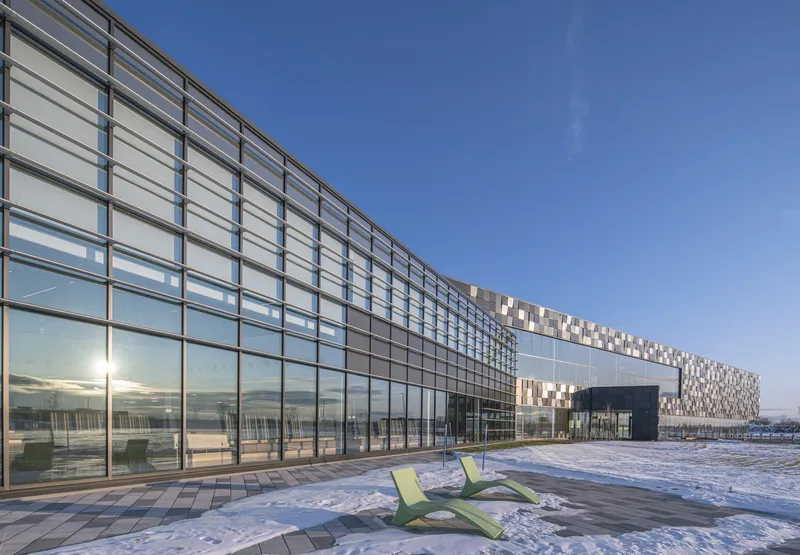

Glazed Volume
In contrast, the glazed volume represents the final woven product. This part of the structure exudes tranquility and openness, with interiors flooded with natural light. This design choice not only enhances aesthetic appeal but also promotes a serene and productive work environment.

Sustainability and Environmental Integration
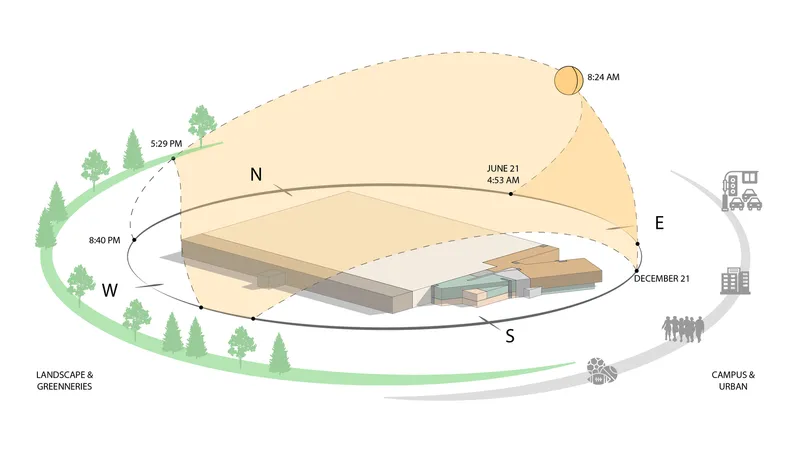
Sustainability is a core principle in the design of Campus Simons. The project adheres to bioclimatic design principles, emphasizing solar orientation to enhance indoor comfort and bioenergy efficiency. Renewable and environmentally friendly materials were selected to minimize the building’s ecological footprint. This commitment to green construction aligns with LEED® certification standards, reflecting the project's harmony with its natural surroundings.


Landscape and Architecture Balance
The design maintains a balance between landscape and architecture, aiming to reduce environmental impact. Special attention was given to preserving the wooded areas around the site, ensuring that the development harmonizes with its natural context.

Interior Design and Functionality
The interior design of Campus Simons emphasizes transparency and connectivity between indoor and outdoor spaces. This approach provides users with visual escapes and a direct relationship with the landscaped environment, fostering a sense of openness and cohesion.


Flow and Flexibility
The programming of the interior spaces focuses on efficient flow and flexibility. A main artery connects the offices and distribution center, facilitating natural and direct paths within the building. This layout creates a dynamic, human-centric work environment that supports collaboration and adaptability.


Natural Light and Collaborative Spaces
Spaces are designed to be bathed in natural light, enhancing the daily well-being of employees. Collaborative areas are strategically placed throughout the building, encouraging interaction and fostering a sense of community. This design philosophy aligns with the values and culture of Maison Simons, aiming to create a stimulating and inspiring work environment.


Campus Simons by GKC Architectes is more than a distribution center; it is a symbol of modern industrial architecture that seamlessly integrates functionality, aesthetic appeal, and sustainability. The project’s innovative design and environmental considerations set a benchmark for future industrial developments, reflecting a deep commitment to both the well-being of its occupants and the health of the planet. Through this architectural masterpiece, Maison Simons not only enhances its operational capabilities but also reinforces its dedication to creating inspiring spaces for its community.
Location: Québec, Canada
Architects: GKC Architectes
Total Area: 53,420 m²
Completion Year: 2020
Photographers: Stéphan Poulin, Stéphane Groleau
Manufacturers: AutoDesk, Dri-Design, Kingspan Insulated Panels, Lumion, Saramac Schok Beton, Trimble Navigation
Structure: Magela
General Contractor: The Reliance Construction Group
Landscape Architects: BC2
Civil Engineering: EXP
Product Highlight: Dri-Design Metal Panels - Tapered Series


Popular Articles
Popular articles from the community

Temporary Home for Dogs: A Reversed Zoo Rethinks Animal Shelter Architecture
In Bucharest, a sinuous corridor and freed landscape flip the logic of containment, designing a shelter that works to make itself unnecessary.
Tsunami Convergenics: Turning Catastrophic Ocean Forces into Underwater Housing Infrastructure
A speculative underwater settlement off the coast of Onagawa, Japan, treats tsunamis and typhoons as energy sources rather than threats.

Opera on the Sea: Driftwood Logic Shapes a Timber Opera House on Estonia's Coast
Trevor Orgill's opera house translates the entangled drift of floating timber into a civic building where wood, water, and music converge.

Faces of the Soviet Avant-Garde: Turning Moscow's Street Names into an Open-Air Museum
A network of sculptural installations across a Moscow residential district transforms forgotten architect names into spatial encounters with cultural memor

Similar Reads
You might also enjoy these articles

Shakur's House: Exposed Brick as an Interior Organiser in a 168 m² Mashhad Residence
Brick moves indoors in this Mashhad residence, where masonry walls, glass partitions and teal planes sequence a compact home without closing it off.

Day and Night Park: A Time-Based Urban Newsstand in Beijing
A temporary urban newsstand in Beijing blending travel, light, and reading through poetic colors, compact form, and community-focused design.

Modernist Patio Renovation in El Masnou, Barcelona by Oliver Segura Arquitectura + Cebrià Arquitectura
Modernist patio renovation blending tradition and innovation with a movable pool, leveled floors, and Catalan materials in El Masnou.

Alto Residencial Coop: Cooperative Housing Development in Santiago de Compostela by Carbajo Barrios Arquitectos
A linear cooperative housing complex blending white volumes and perforated metal façades, enhancing community living, natural light, privacy, and urban integration.

Comments (0)
Please login or sign up to add comments
No comments yet. Be the first to comment!