

Canyon Entrance Pavilion by Medeza + Querencia Design Center
Canyon Entrance Pavilion in Los Cabos blends brutalist concrete design with radial layout, creating a sensory threshold into a sculpted desert garden.


A Desert Threshold
The Canyon Entrance Pavilion stands as a striking architectural landmark, marking the main arrival to a private family club in the arid landscapes of Los Cabos, Baja California Sur. Serving both as a threshold and sculptural statement, the pavilion guides visitors into a sensory journey, blending desert aesthetics with functional elegance.
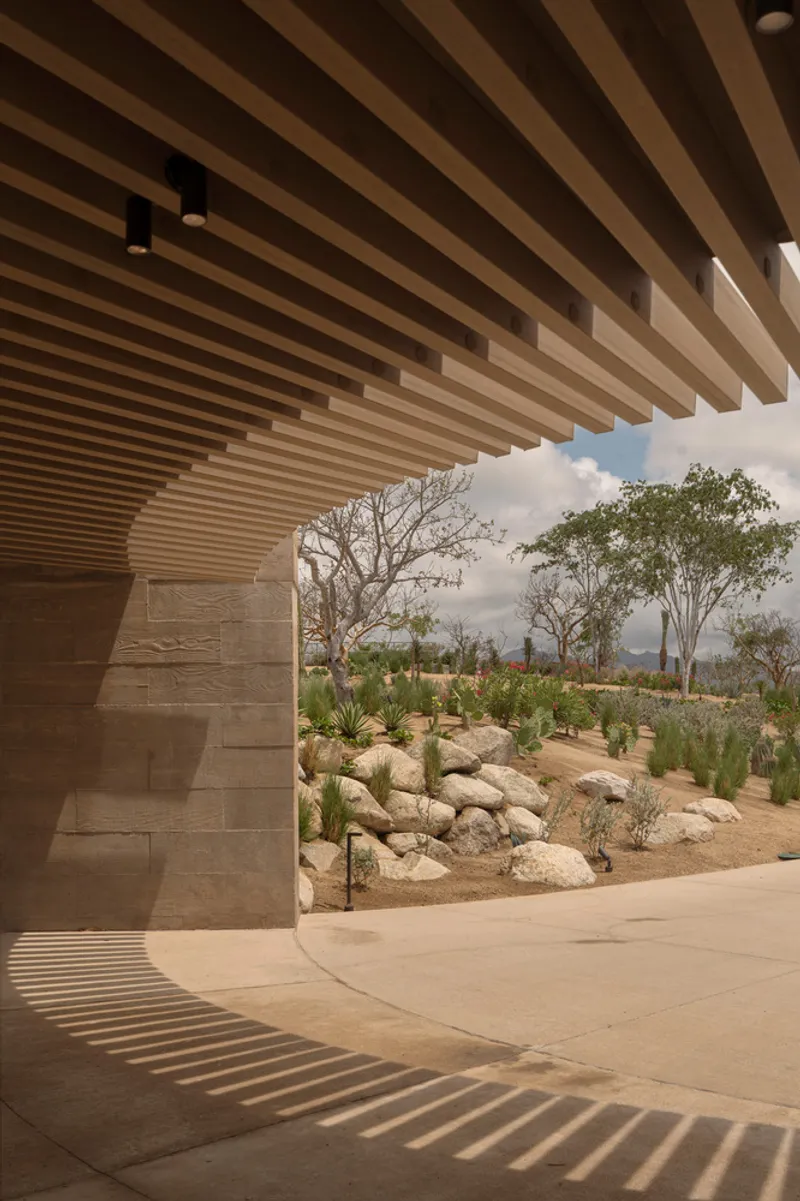
Design Concept: Radial Composition and Sensory Journey
Conceived as a radial composition, the pavilion orchestrates a deliberate compression of space, heightening anticipation before opening into a sculpted desert garden. This approach emphasizes the experience of arrival, transforming a simple entrance into an immersive spatial narrative. Visitors encounter a rhythm of movement, light, and materiality, deepening their connection with the surrounding Baja California desert.
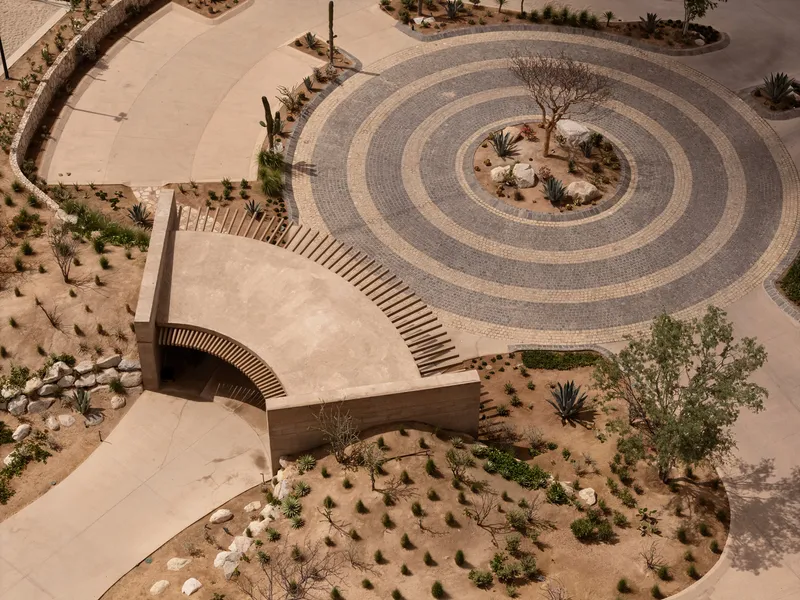
Architectural Language: Brutalist Desert Influence
The pavilion draws inspiration from the legacy of brutalist desert architecture, embracing the raw honesty of concrete and its interaction with sunlight. Its design celebrates the play of light and shadow, allowing the structure to “breathe” within its environment. Pigmented concrete walls and sculpted forms create a dialogue between architecture and nature, reinforcing the pavilion’s grounded yet ethereal presence.

Structural Innovation: Concrete, Beams, and Balance
Two pigmented concrete walls anchor the composition, supporting a 17-meter radial sloped concrete slab. This slab carries 41 ribbed beams radiating like the spokes of a silent sundial. The result is a balanced architectural form, merging solidity and openness—both monumental and delicate. This engineering feat ensures that the pavilion harmonizes with its desert context while providing a unique spatial experience.
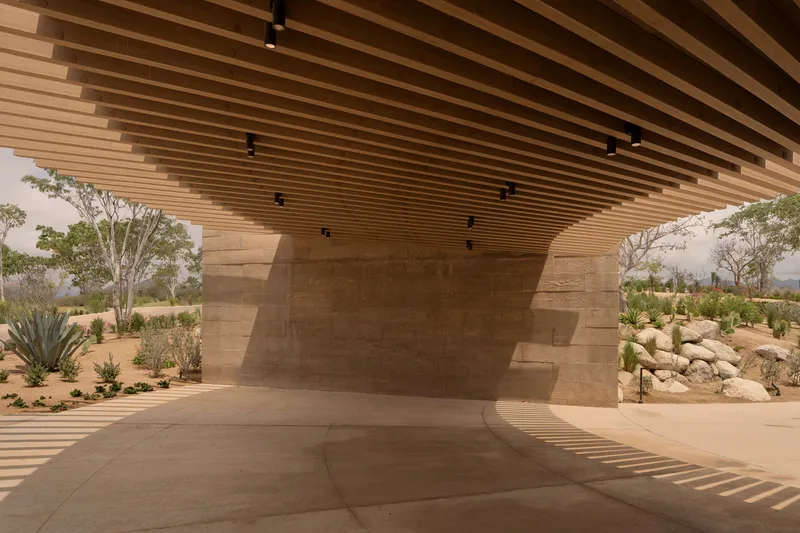
Collaboration and Craftsmanship
The pavilion is the product of a collaboration between Francisco Parra, chief architect of MEDEZA, and the Querencia Design Center, who meticulously oversaw both design and execution. Their shared vision ensured the pavilion became a crafted landmark that celebrates the intersection of desert architecture, materiality, and experiential design.
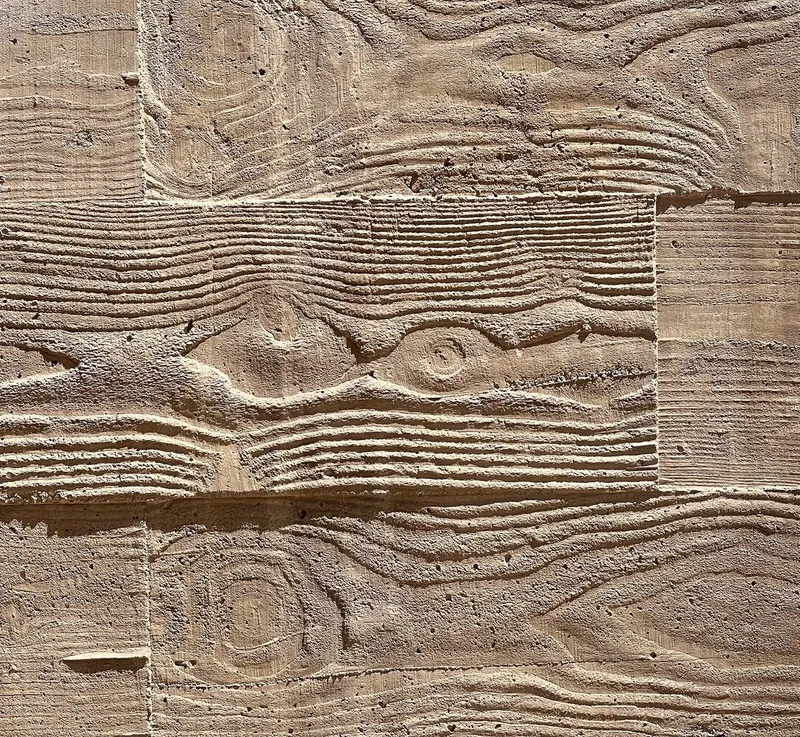
All Photographs are works of Cesar Belio




Popular Articles
Popular articles from the community


The Ocean Hive: Sustainable Architecture for a Self-Sufficient Civilization at Sea
The Ocean Hive imagines sustainable architecture at sea, where modular habitats, algae, wave power and ocean waste sustain a growing colony.

The Musturak Paradise: Senior Living Architecture for a Connected Future in Temara, Morocco
The Musturak Paradise reimagines senior living architecture in Temara via private homes, social spaces, culture, community, and shared care.
AL-JANNAH: Sustainable Architecture and Permaculture for Afghan Widows
AL-JANNAH uses sustainable architecture and permaculture to create resilient oasis of housing, learning, work and renewal for Afghan widows.
EW PARK: Sustainable Architecture Reimagines the Future of Urban Parking
EW PARK reimagines city parking as a modular wooden tower combining automation, solar energy, electric mobility, and adaptable urban design.


Similar Reads
You might also enjoy these articles


Hodi-Mandai Geram
Project Function: Preservation and revitalization of the Intangible heritage and socio-spatial identity of the Hodi by Housing, Cultural Memory Center, Sacred Grove, landscape, local tourism economy


Olio Towers: A Mid-Rise for Performers That Fuses Housing, Rehearsal, and Stage
Located blocks from Houston's Theater District, this modular tower stacks living units around a central performance atrium.

Oasis: Modular Green Housing Carved into Dhaka's Urban Fabric
A shortlisted Plugin Housing entry reclaims unauthorized settlements in Dhaka with stepped concrete volumes, green roofs, and ventilation-driven design.

Black Hole: A Floating Megastructure for the Post-Physical Era
Emiliano Mazzarotto envisions a spherical, self-scaling arena where e-sports, digital hotels, and holographic stadiums replace traditional public space.

Explore Desert Architecture Competitions
Discover active competitions in this discipline


Challenge to design a portable theatre


Challenge to design a portable music platform


Challenge to design an open learning module for the elderly


Challenge to reimagine the Iron Throne
Comments (0)
Please login or sign up to add comments
No comments yet. Be the first to comment!