
Cap Karoso Resort: A Sustainable Luxury Retreat in Sumba by GFAB Architects
Cap Karoso Resort in Sumba blends sustainable luxury, local materials, and beachfront design, featuring villas, suites, spa, organic dining, and solar power.


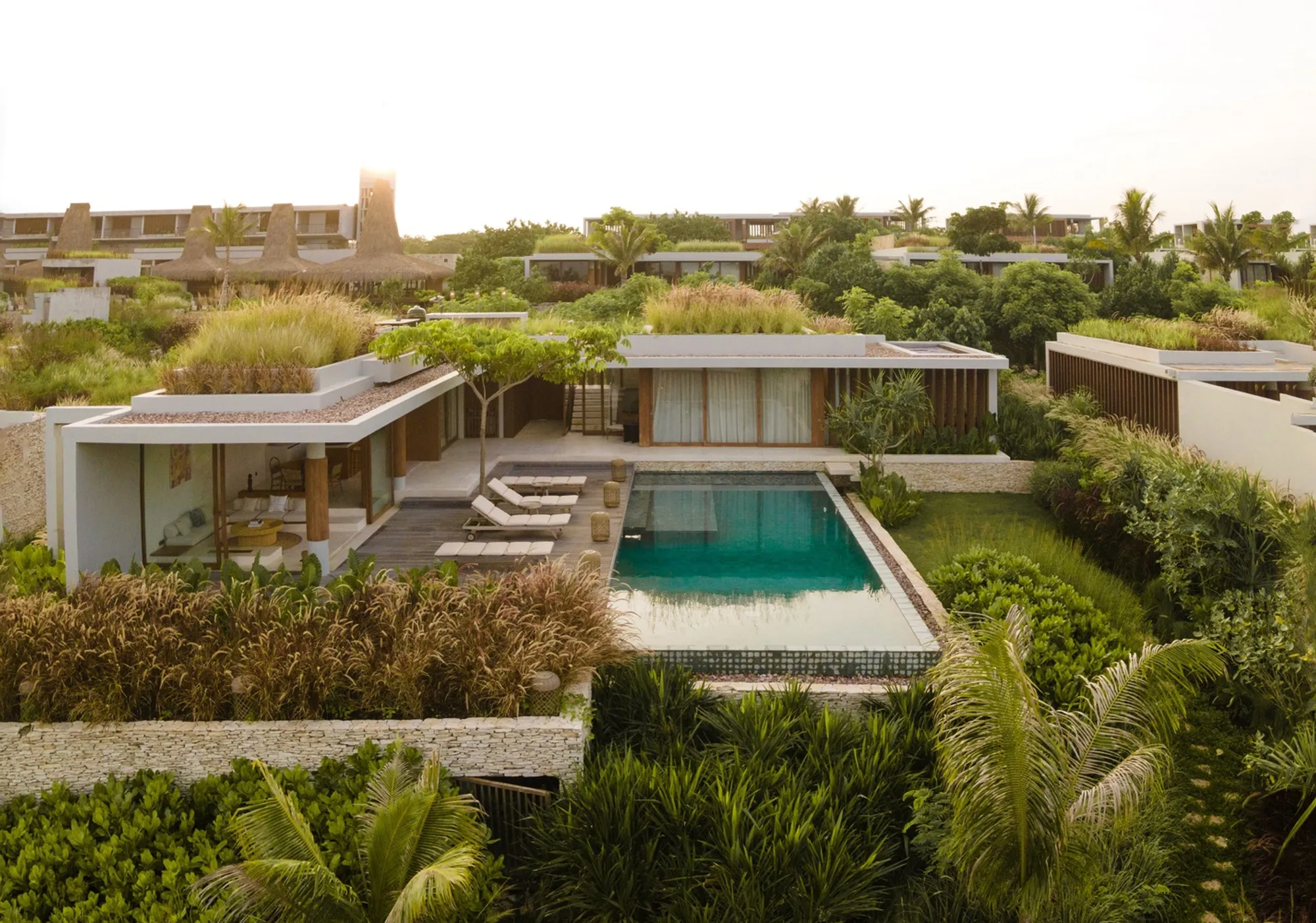
Located on the pristine eastern coastline of Sumba, Indonesia, Cap Karoso Resort is an exceptional example of contemporary hospitality architecture blending sustainability, local culture, and luxury design. Completed in 2023 by GFAB Architects, this 19,403 m² beachfront resort caters to French clientele seeking an immersive island escape, offering unparalleled views of the sunset over the Indian Ocean.
Architectural Vision and Design Concept
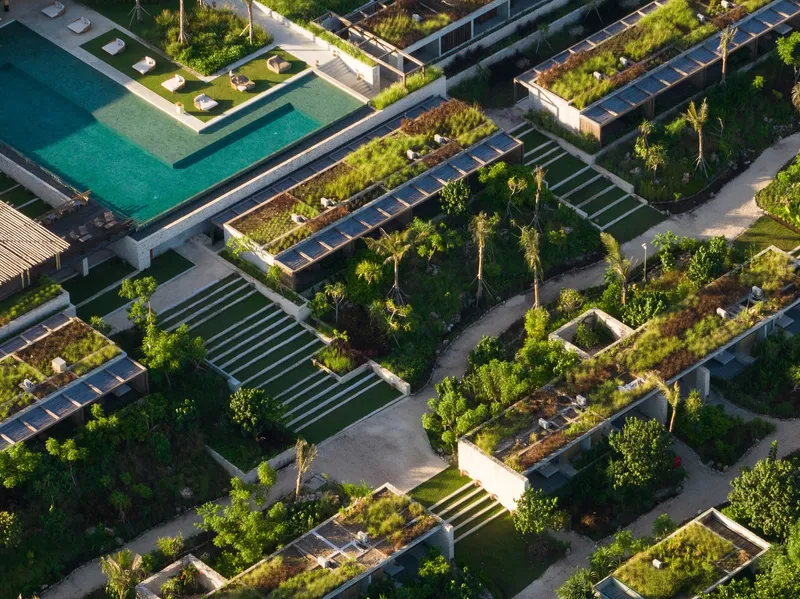
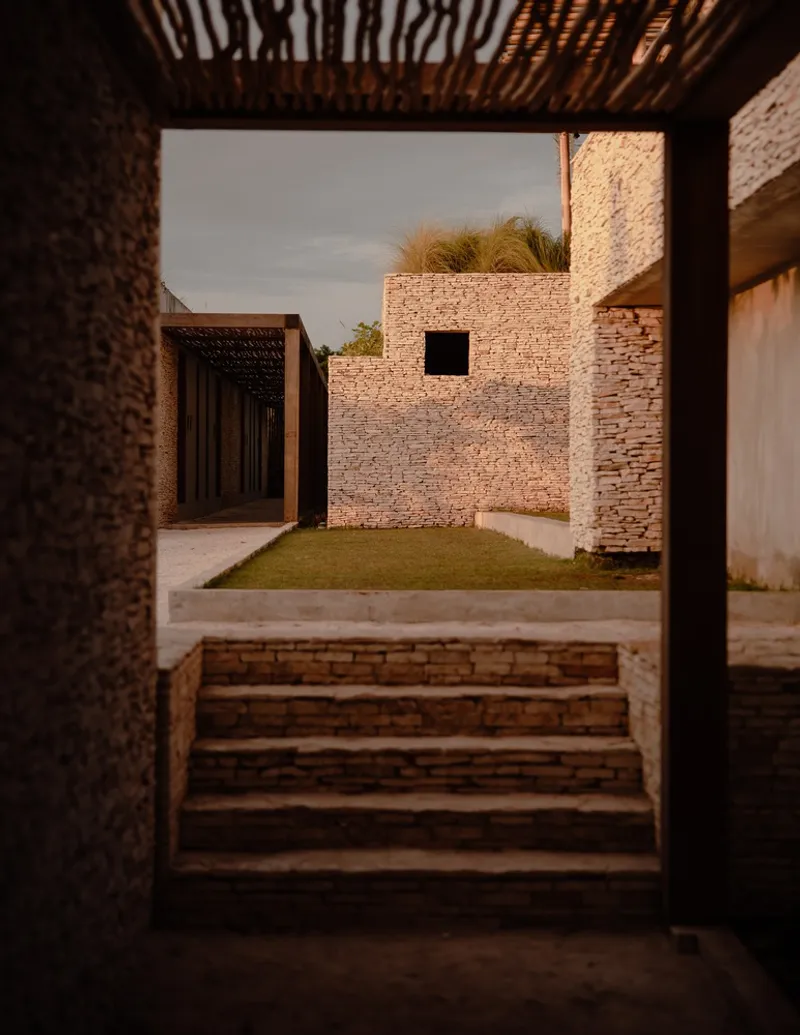
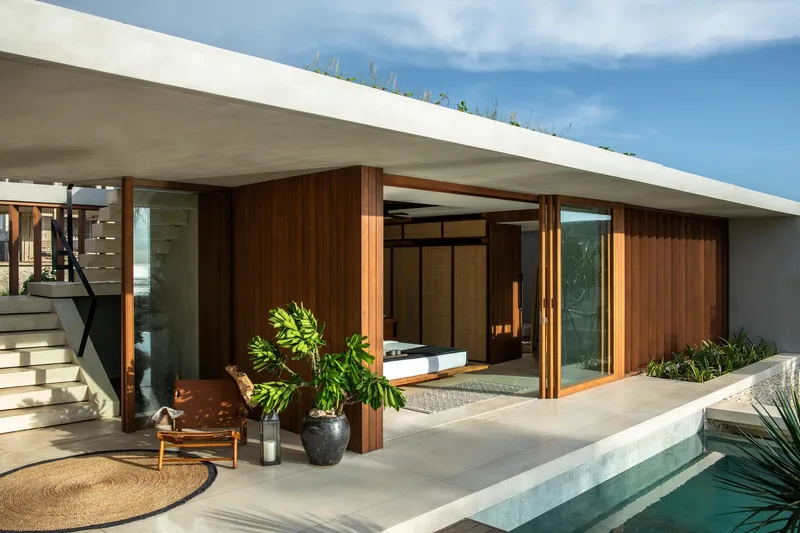
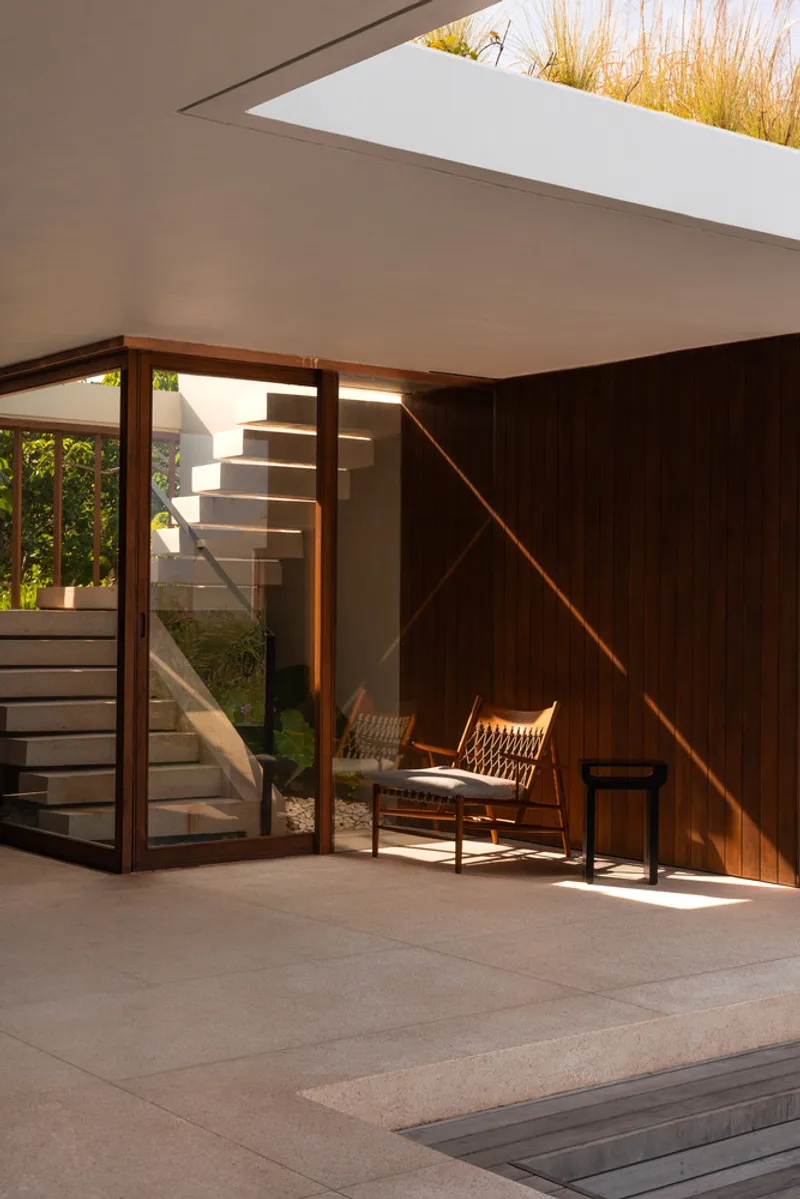
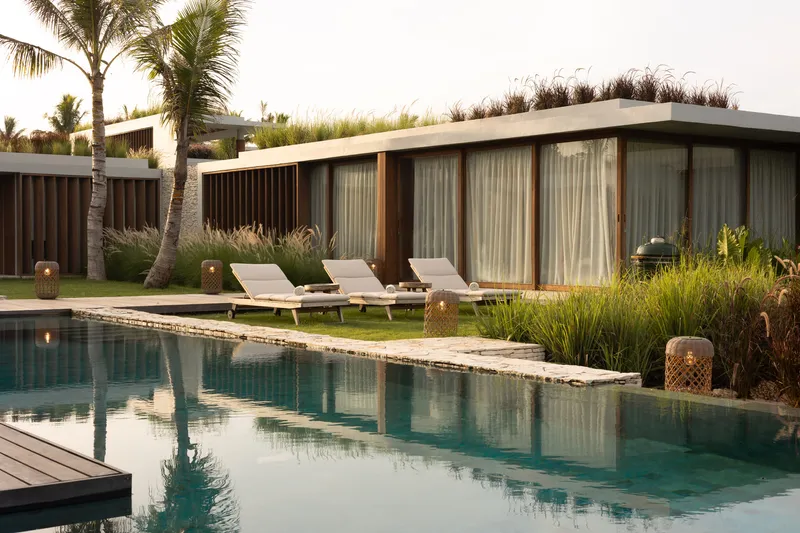
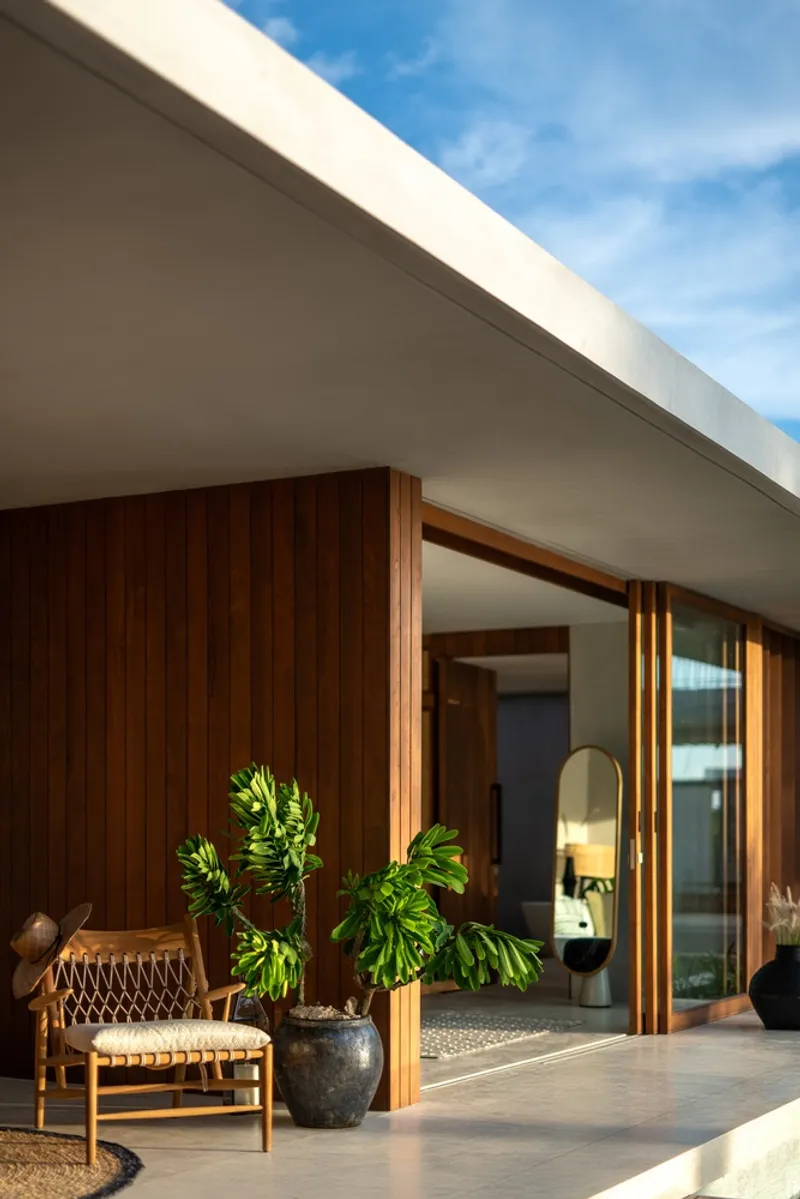
Set on gently sloping land along the shore, Cap Karoso Resort embraces the natural contours of the site, ensuring every suite and villa benefits from uninterrupted sea views. The design creatively addresses the island’s limited skilled labor availability by combining simple brutalist concrete forms with local stone, timber, and woven materials, reflecting the raw yet refined essence of Sumba’s cultural heritage.
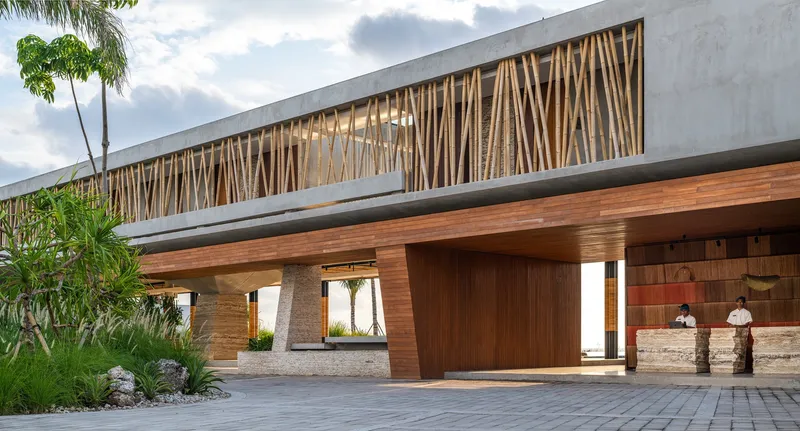
The resort consists of 47 suites and 20 villas, available in 2 and 3-bedroom configurations. The main building crowns the site, featuring guestrooms on the upper floor and a striking open-plan reception below. Here, a travertine block desk imported from Italy contrasts with a wall inspired by traditional Ikat weaving looms, merging global sophistication with local craft traditions.
Culinary Experiences and Organic Integration
Cap Karoso Resort emphasizes communal dining and farm-to-table experiences. The specialty restaurant features a 9-meter-long chef’s table extending from the kitchen island, inviting guests to witness culinary creativity using fresh ingredients sourced from the resort’s own organic farm, located just 500 meters away. The resort regularly hosts visiting chefs, reinforcing its position as a gastronomic destination on Sumba.
Sustainability and Environmental Integration
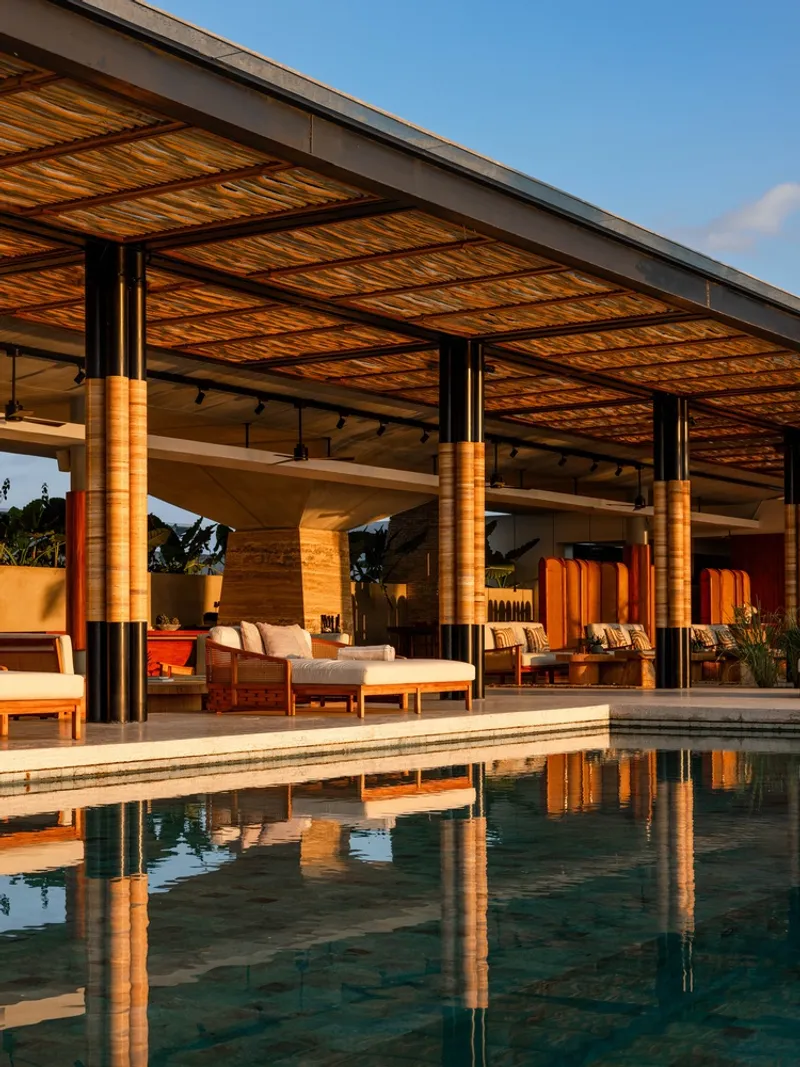
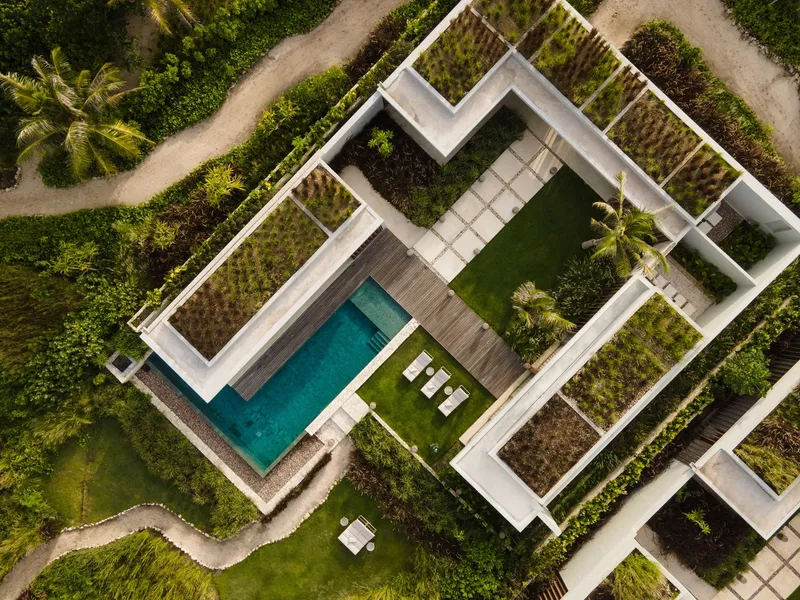
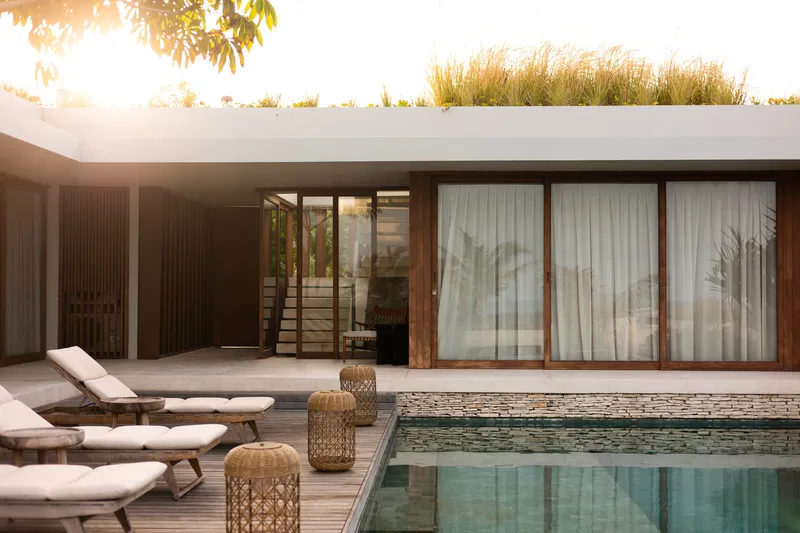
Sustainability is central to the resort’s design. The main building’s roof functions as a solar farm, supplying a significant portion of the resort’s energy needs. Surrounding the infinity pool, shaded lounging areas provide relaxation, while spa and wellness pavilions are designed with traditional Sumbanese roofing, arranged to evoke a village layout.
All other roofs serve as green planters, populated with vegetation adapted to Sumba’s harsh beachfront climate, minimizing water requirements. This is crucial as the island experiences long dry seasons and occasional brackish groundwater near the coast.
Beach Club and Guest Amenities
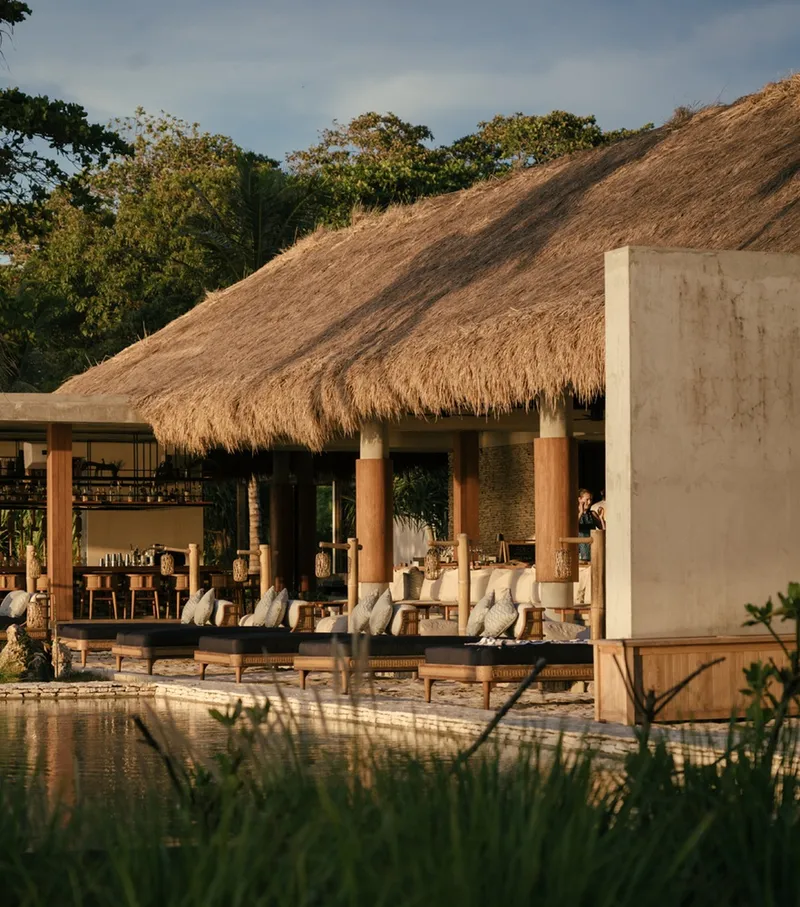
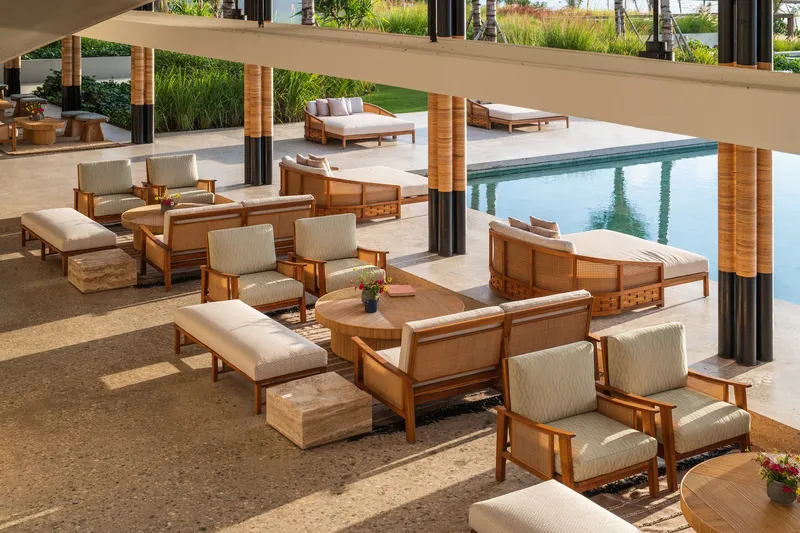
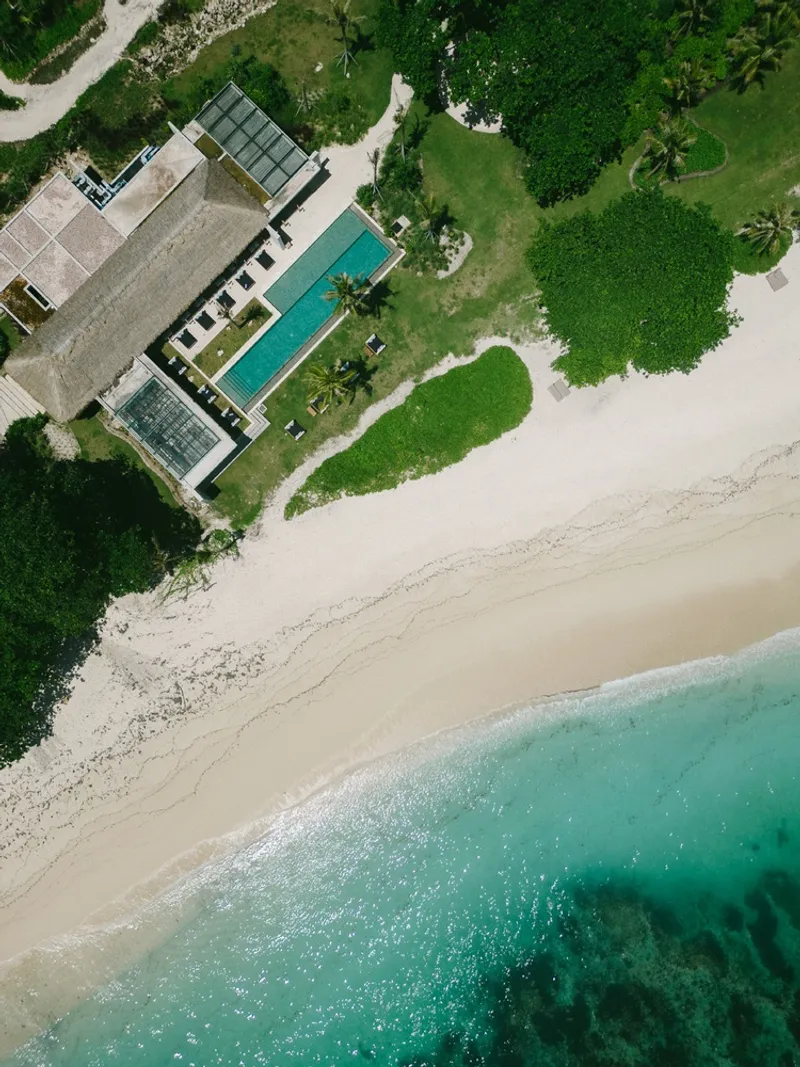
At the base of the resort, the beach club functions as the main restaurant and social hub. Its design combines Alang–Alang grass roofs, brutalist concrete elements, and locally carved teak screens. A sunken bar encourages interactive dining, while layered lounging areas stretch toward the beach, creating a seamless indoor-outdoor experience. Open kitchens and a small deli enhance transparency and guest engagement.
Challenges and Recognition
Constructed during the pandemic, Cap Karoso Resort’s remote location posed significant logistical challenges. Despite these hurdles, the project’s commitment to sustainability, design excellence, and cultural authenticity earned it the prestigious AHEAD “Best Resort SE Asia” award in 2023, cementing its status as a benchmark for luxury eco-resorts in Indonesia.
Cap Karoso Resort is more than a luxury destination—it is a harmonious fusion of local craft, modern architecture, and sustainable hospitality, offering guests a one-of-a-kind experience amidst the untouched beauty of Sumba.
All photograps are works of Alexandre Pietra, Eric Martin, Alex Grabchilev, Toni Breton, Ben Richards



Popular Articles
Popular articles from the community


Play: Fragments of Their World
Familiar architecture becomes modular playground design, creating safe spaces where displaced children can learn, connect, imagine and play.

Co-life: Sustainable Architecture for Age-Friendly Community Living
Co-life reimagines sustainable architecture for seniors through courtyards, rammed earth, shared gardens, and spaces designed for belonging.

The Earth Pod: 3D Printed Homes for Resilient Refugee Communities
The Earth Pod reimagines refugee housing through 3D printed homes made from clay, combining resilience, self-sufficiency, and rapid shelter.

The Musturak Paradise: Senior Living Architecture for a Connected Future in Temara, Morocco
The Musturak Paradise reimagines senior living architecture in Temara via private homes, social spaces, culture, community, and shared care.

Similar Reads
You might also enjoy these articles


Hodi-Mandai Geram
Project Function: Preservation and revitalization of the Intangible heritage and socio-spatial identity of the Hodi by Housing, Cultural Memory Center, Sacred Grove, landscape, local tourism economy


Olio Towers: A Mid-Rise for Performers That Fuses Housing, Rehearsal, and Stage
Located blocks from Houston's Theater District, this modular tower stacks living units around a central performance atrium.

Oasis: Modular Green Housing Carved into Dhaka's Urban Fabric
A shortlisted Plugin Housing entry reclaims unauthorized settlements in Dhaka with stepped concrete volumes, green roofs, and ventilation-driven design.

Black Hole: A Floating Megastructure for the Post-Physical Era
Emiliano Mazzarotto envisions a spherical, self-scaling arena where e-sports, digital hotels, and holographic stadiums replace traditional public space.

Explore Hospitality Building Competitions
Discover active competitions in this discipline



Challenge to reimagine the Iron Throne


Photograph architecture without architects


Illustrate the lost glory of Angkor Wat - Render Challenge


Design challenge to reuse E-waste
Comments (0)
Please login or sign up to add comments
No comments yet. Be the first to comment!