

Carbon Spring: A Sustainable Architecture Memorial Transforming Waste into Experience
A waste-to-energy architectural journey where heat, carbon, and ritual converge, exposing climate impact through immersive spatial storytelling.


In the evolving discourse of sustainable architecture, projects are no longer confined to reducing environmental impact through passive strategies or material efficiency alone. Increasingly, architecture is being deployed as a medium for awareness, narrative, and behavioral transformation. Carbon Spring, a shortlisted entry in the Hourglass competition by Yiou Wang and Linru Wang, exemplifies this shift.
This project proposes a radical rethinking of climate-responsive design by integrating a waste-to-energy system with a ritualistic bathhouse experience. It positions architecture not merely as a shelter or infrastructure, but as an experiential system that exposes the hidden consequences of mass tourism and carbon emissions.

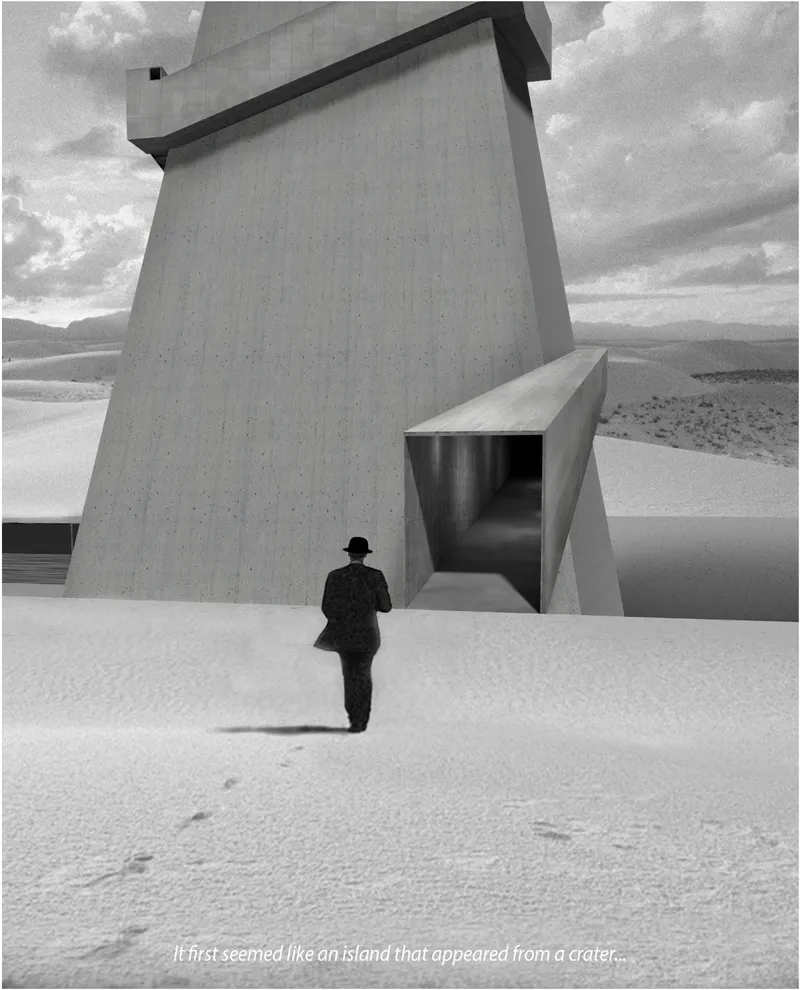
Concept: Waste-to-Energy Meets Spatial Narrative
At its core, Carbon Spring operates as a waste-to-energy-to-onsen system, where exhaust heat and gases generated from a waste-to-energy plant are repurposed to power a carbonated bathhouse. This transformation is not just technical, but symbolic.
Carbon dioxide, typically invisible and abstract in discussions of climate change, is reinterpreted as a tangible medium. Through filtration and diffusion, CO₂ becomes part of a therapeutic bathing environment, forcing visitors to confront the paradox of pleasure derived from environmental degradation.
The project critiques the environmental cost of mass tourism. It frames the traveler not as a passive visitor, but as an active participant in a cycle of consumption, energy production, and environmental consequence.
Spatial Strategy: A Dual Journey of Anticipation and Exodus
The architectural narrative unfolds through two distinct but interconnected circulation paths:
- Path of Anticipation: An enclosed, ascending spiral that wraps around the structure. This path builds psychological tension and expectation, guiding visitors toward the bathhouse.
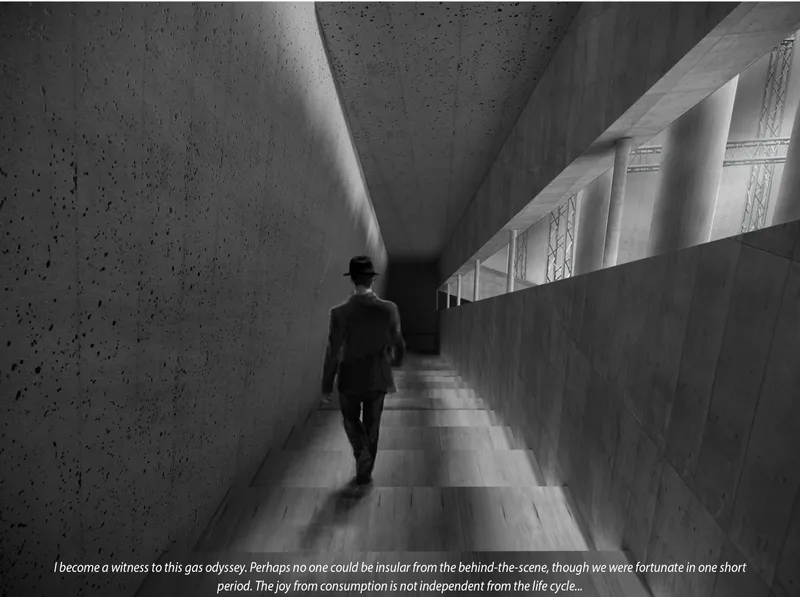
- Path of Exodus: A descending route embedded within the tower’s envelope, where visitors encounter the infrastructural reality of heat pipes, gas systems, and mechanical processes.
These paths do not intersect, reinforcing a conceptual separation between desire and consequence. The ascent is introspective and abstract, while the descent is confrontational and revealing.
This duality creates a powerful experiential sequence. Visitors first engage with architecture as spectacle and ritual, then as infrastructure and evidence.
Architecture and Form: Monumentality with Purpose
The form of Carbon Spring is deliberately monolithic and austere. Rising from a stark landscape, the tower embodies both industrial infrastructure and sacred monument. Its geometry is defined by a spiraling system that organizes movement, structure, and environmental flows.
Below ground, the waste-to-energy plant anchors the project. It processes waste, generating heat and gases that are channeled upward through the tower. Above, the bathhouse sits as a culmination point, where energy is transformed into sensory experience.
The vertical integration of these systems establishes a clear architectural hierarchy: extraction, transformation, and experience.
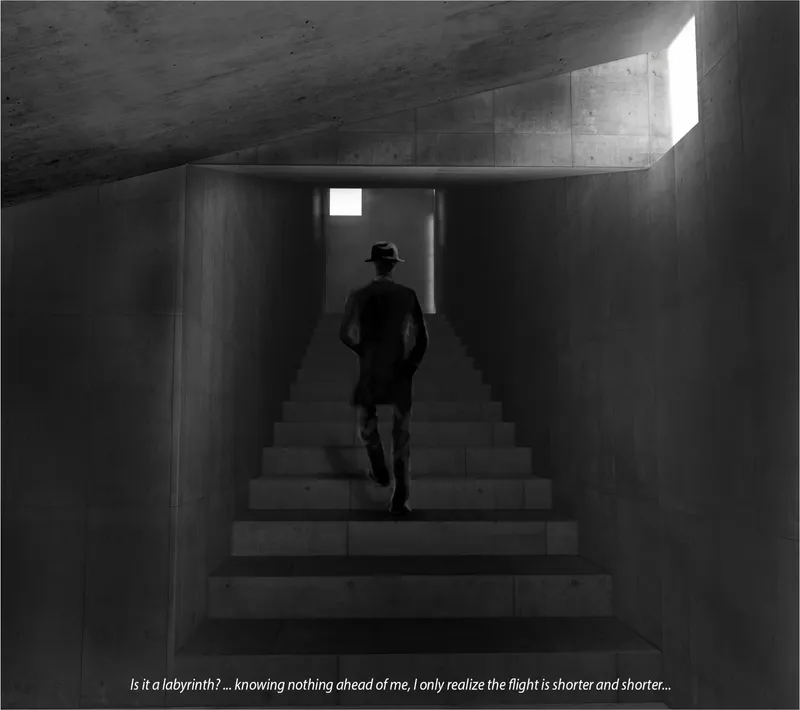
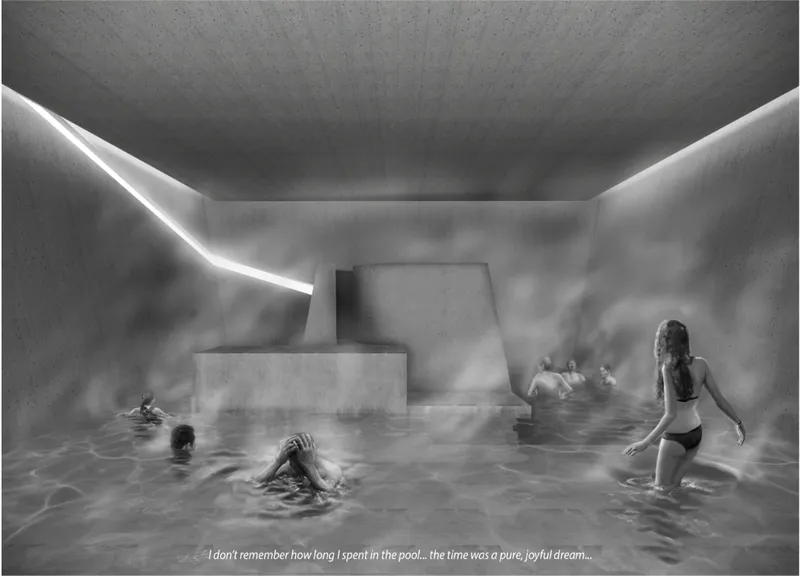
Environmental Strategy: Mediating Carbon and Perception
Unlike conventional sustainable architecture that aims to minimize emissions invisibly, Carbon Spring makes carbon processes explicit. The project includes:
- Filtration systems that capture CO₂ from exhaust gases
- Heat exchange mechanisms to maintain bath temperatures
- Controlled diffusion of carbonated water within the bathing space
By slowing the release of emissions and redirecting them into a closed experiential loop, the design challenges conventional perceptions of waste and resource.
The bathhouse acts as a mediator between industrial processes and human experience. It transforms environmental data into spatial and sensory phenomena, allowing users to physically engage with otherwise intangible systems.
Psychological Dimension: Architecture as Ethical Device
One of the most compelling aspects of Carbon Spring is its psychological framework. The project constructs a narrative arc where anticipation leads to pleasure, followed by discomfort and reflection.
Visitors ascend in isolation, moving through a controlled and introspective environment. Upon reaching the bathhouse, they experience warmth, immersion, and collective presence. However, the descent reveals the underlying systems that made this experience possible.
This shift reframes the visitor as a voluntary witness. The project does not impose guilt, but creates conditions for awareness. It subtly communicates that enjoyment and environmental impact are inseparable.
Temporal Layer: Lifecycle and Ephemerality
The project incorporates a temporal dimension through the lifecycle of its systems. Over time, the efficiency of the waste-to-energy process declines, leading to the gradual dormancy of the structure.
This planned obsolescence reinforces the project’s narrative. The architecture is not eternal, but contingent on human activity and environmental conditions. It becomes a marker of both innovation and limitation.
Carbon Spring positions itself at the intersection of infrastructure, ritual, and environmental ethics. It expands the definition of sustainable architecture beyond performance metrics to include experiential and psychological impact.
By transforming waste into energy, and energy into experience, the project constructs a closed-loop system that is both functional and symbolic. It challenges users to reconsider their role within larger ecological systems and demonstrates how architecture can act as a catalyst for awareness.
In a time when climate change demands not only technical solutions but cultural shifts, Carbon Spring offers a compelling model. It is not just a building, but a narrative device that reveals the hidden cycles of consumption and consequence embedded in modern life.




Popular Articles
Popular articles from the community


Hill & Cross Opera: Sculptural Opera House Architecture Shaped by Tallinn’s Landscape and Identity
Hill & Cross Opera reimagines opera house architecture in Tallinn through its sculptural hill, civic plaza, glass wave and a luminous cross.

The Earth Pod: 3D Printed Homes for Resilient Refugee Communities
The Earth Pod reimagines refugee housing through 3D printed homes made from clay, combining resilience, self-sufficiency, and rapid shelter.

EW PARK: Sustainable Architecture Reimagines the Future of Urban Parking
EW PARK reimagines city parking as a modular wooden tower combining automation, solar energy, electric mobility, and adaptable urban design.

The Ocean Hive: Sustainable Architecture for a Self-Sufficient Civilization at Sea
The Ocean Hive imagines sustainable architecture at sea, where modular habitats, algae, wave power and ocean waste sustain a growing colony.


Similar Reads
You might also enjoy these articles

Eco Chapel: A Green Architecture Pavilion Designed in Symbiosis with the Forest
Eco Chapel uses green architecture to weave prayer, learning and reuse into a forest pavilion shaped by modular hexagonal canopies for life.
Kaffeebühnen: Coffee Shop Architecture Designed as a Civic Stage Between Vienna’s City and Park
Kaffeebühnen turns coffee shop architecture into a civic stage, linking Vienna’s park edge, urban life, warm timber yards, and coffee craft.
Healing Façade: Sustainable Architecture for Reforestation, Community, and Sacred Ecology in Ethiopia
Healing Façade reimagines sustainable architecture as a living wall that restores soil, catches water and renews Ethiopia's forest churches.


Urban Forest: A Vertical Ecosystem for 5,000 Workers in Singapore's Changi Business Park
Radially stacked pods and layered green decks turn a 7-acre plot into 47 acres of ecological workspace projected for 2040.

Explore Architecture Competitions
Discover active competitions in this discipline



Challenge to reimagine the Iron Throne


Photograph architecture without architects


Illustrate the lost glory of Angkor Wat - Render Challenge


Design challenge to reuse E-waste
Comments (0)
Please login or sign up to add comments
No comments yet. Be the first to comment!