
Carcará House: Honest Materials in Brazil's Highlands
Victoria Nizarala Arquitetura builds a 210 m² retreat in Ibicoara from concrete block, timber, and clay tile, proving restraint can be radical.


Nestled in the Chapada Diamantina region of Bahia, Carcará House sits between forested slopes at an altitude where mist rolls through pine trees and the air carries the smell of wet clay. Victoria Nizarala Arquitetura designed this 210 m² residence not as a showpiece but as a quiet participant in its landscape, built from materials you can source within a short drive: concrete blocks, local timber, clay roof tiles, and corrugated metal. The result is a house that feels both inevitable and deliberate, as though it had always been waiting to appear on this particular clearing.
What makes Carcará House worth studying is the discipline behind its apparent simplicity. Every joint is visible, every material is unfinished, and every opening is calibrated to frame a specific slice of the valley. The house refuses to hide its construction logic, and that transparency becomes its primary aesthetic gesture. In a moment when Brazilian residential architecture often gravitates toward either stark white minimalism or heavy brutalism, this project charts a third path: vernacular intelligence applied with contemporary spatial thinking.
Landscape as Client
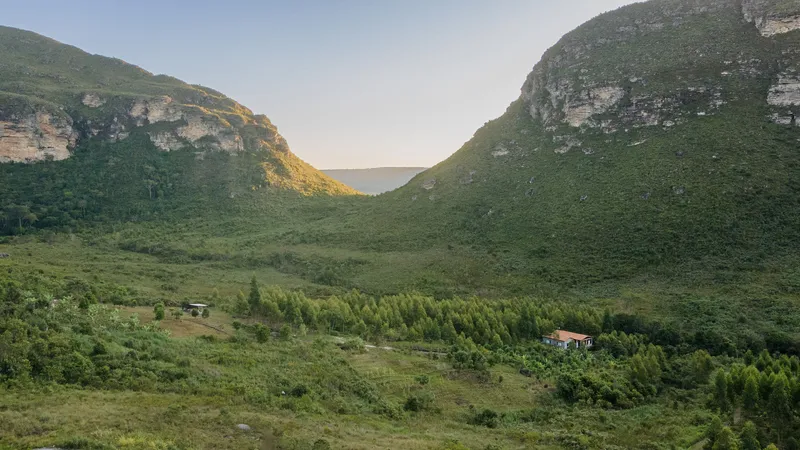
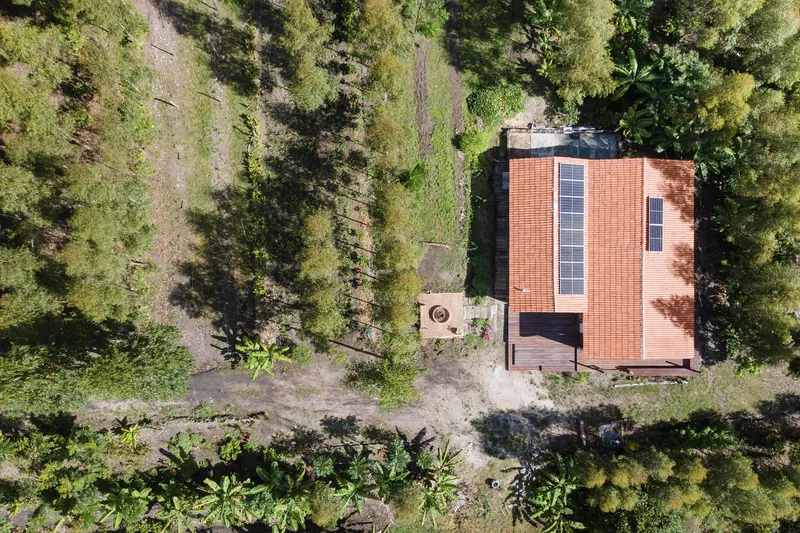
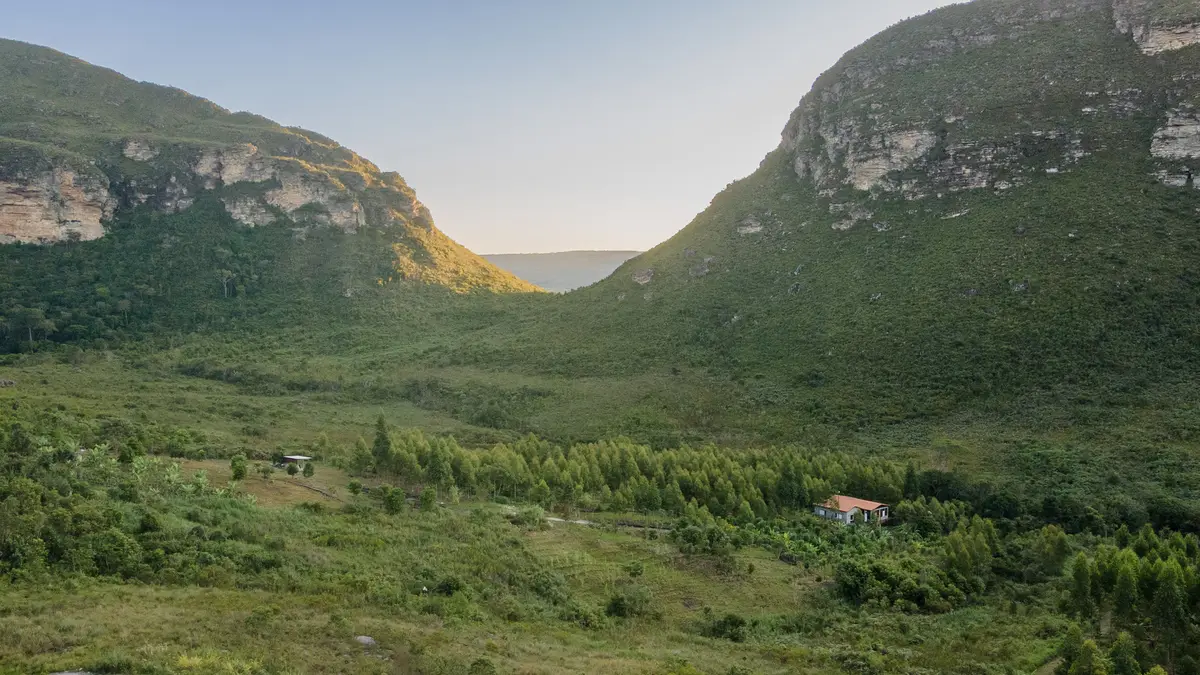
Seen from a distance at dusk, the house reads as a low ridge between the green mountainsides, its gabled roofline mimicking the terrain's contour. An aerial view reveals just how lightly the building sits on its site: a compact rectangular footprint surrounded by native vegetation, with solar panels on the roof signaling a commitment to energy autonomy. The clearing was kept deliberately minimal, preserving the tree canopy that buffers the house from wind and direct sun.
The orientation toward the valley is not incidental. The main living spaces face the broadest panorama, where forested slopes drop away to reveal distant cliff formations. By keeping the building profile low and stretching the deck outward, the architects let the landscape dominate. You are always aware of where you are.
The Deck as Threshold
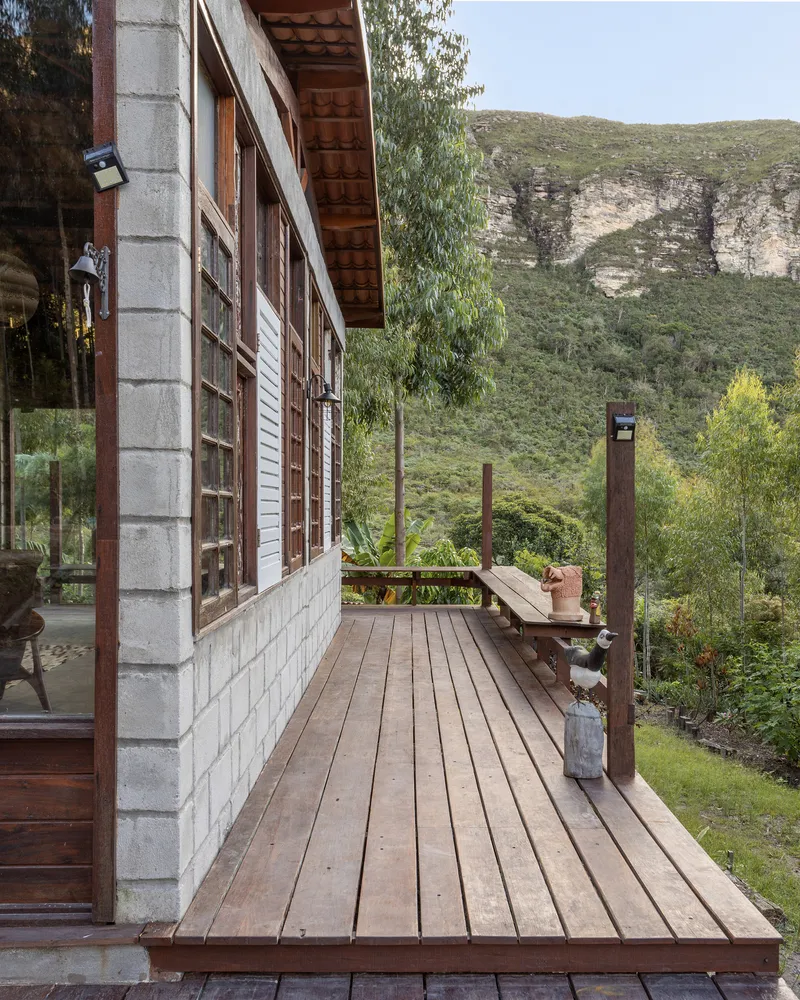
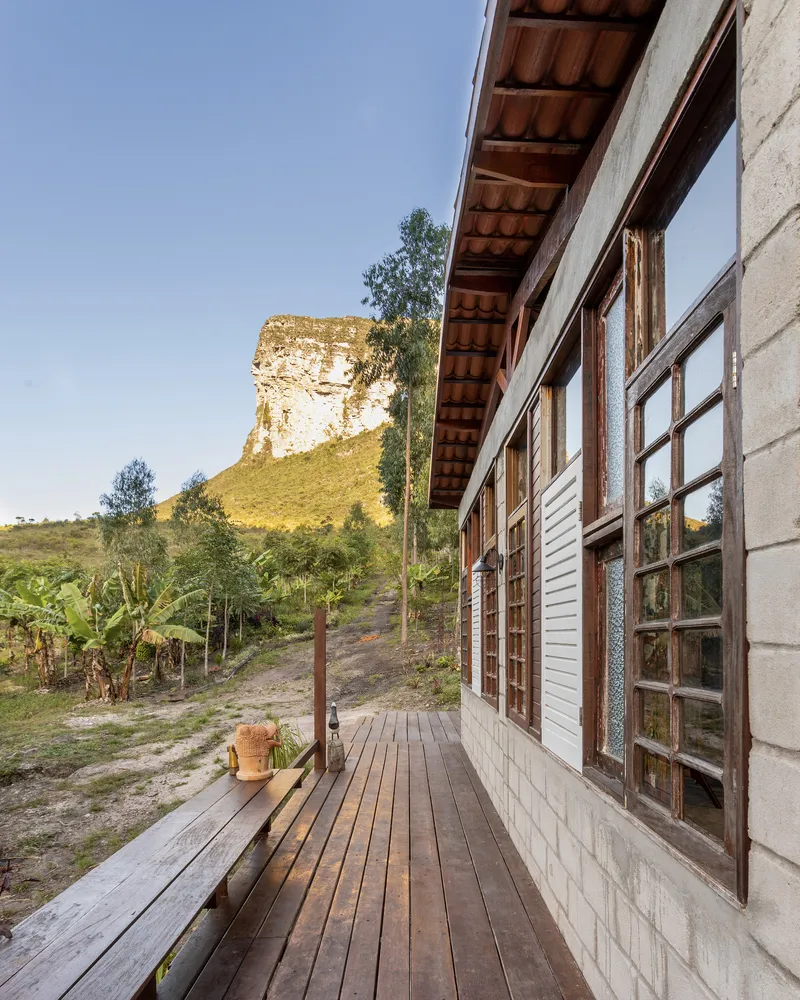
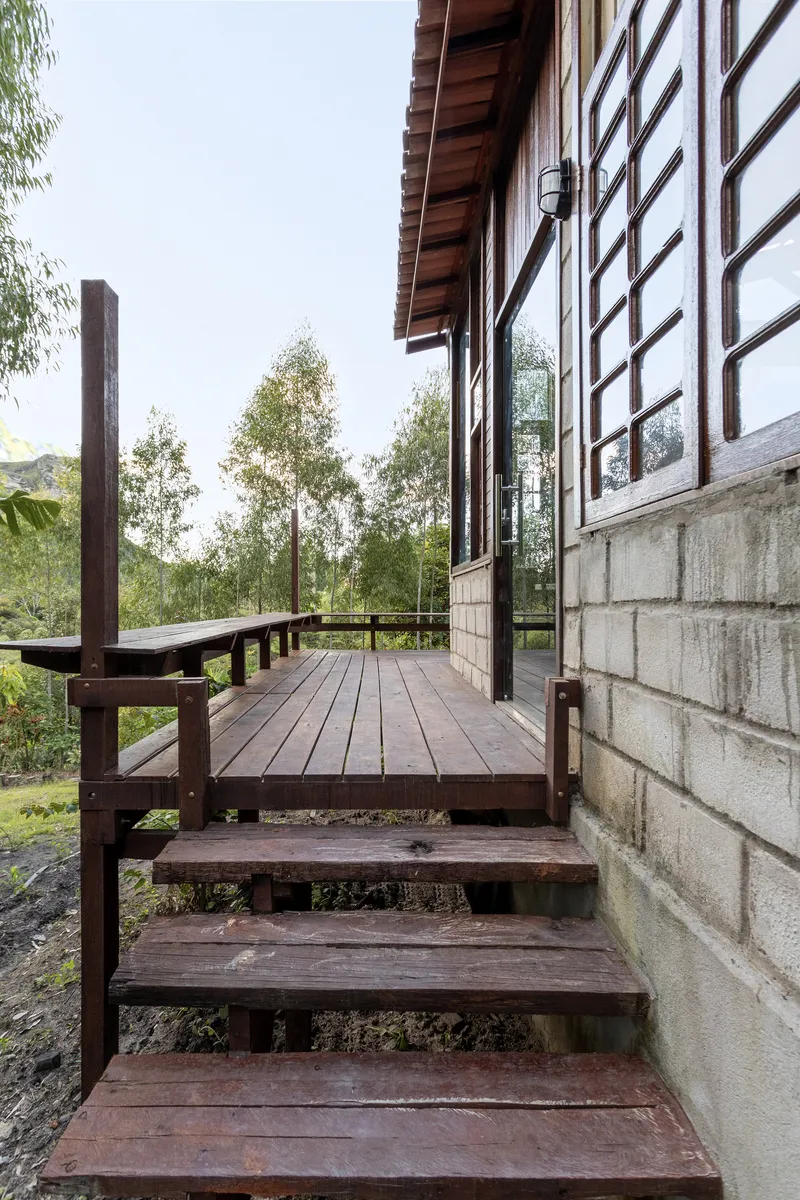
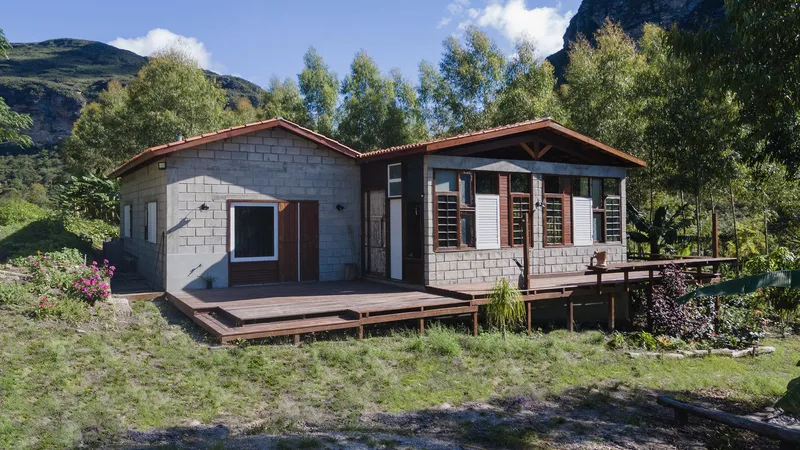
The timber deck wraps around the house like a wide veranda, functioning as a transitional zone between interior domesticity and the wildness beyond. Covered by the extension of the clay tile roof, this space is neither fully inside nor fully outside. It is where meals happen, where hammocks swing, where boots dry. In the Brazilian interior, this kind of covered outdoor room is not a luxury; it is the most used space in the house.
The detail at the entrance is particularly telling. Corrugated metal panels sit alongside timber doors and concrete block walls without any trim or transitional material trying to mediate between them. The honesty extends to the timber stairs descending from the elevated porch, their construction logic completely exposed. Nothing pretends to be something it is not.
Facade Composition and Material Palette
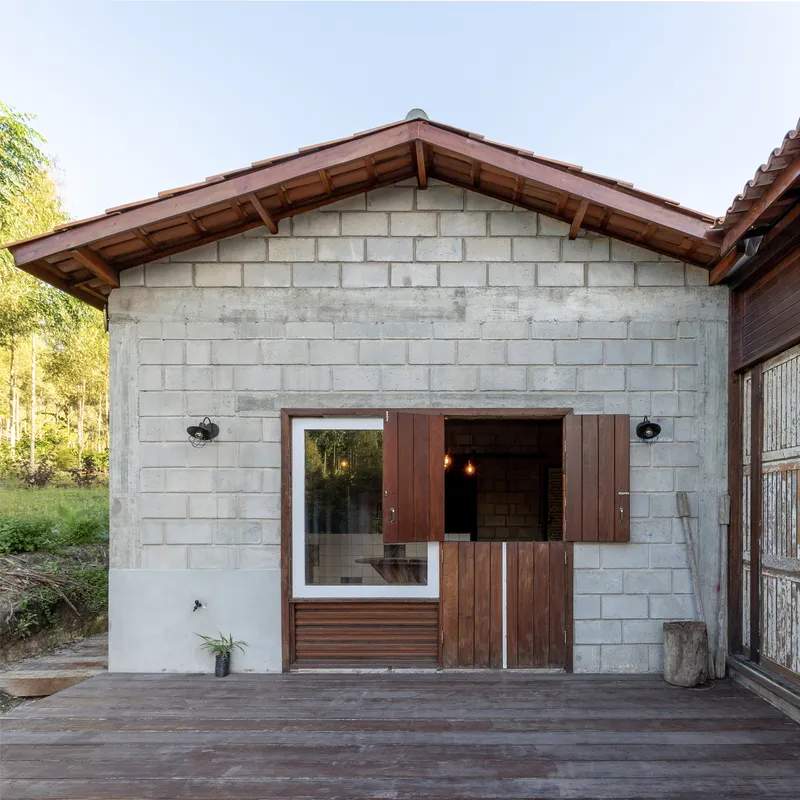
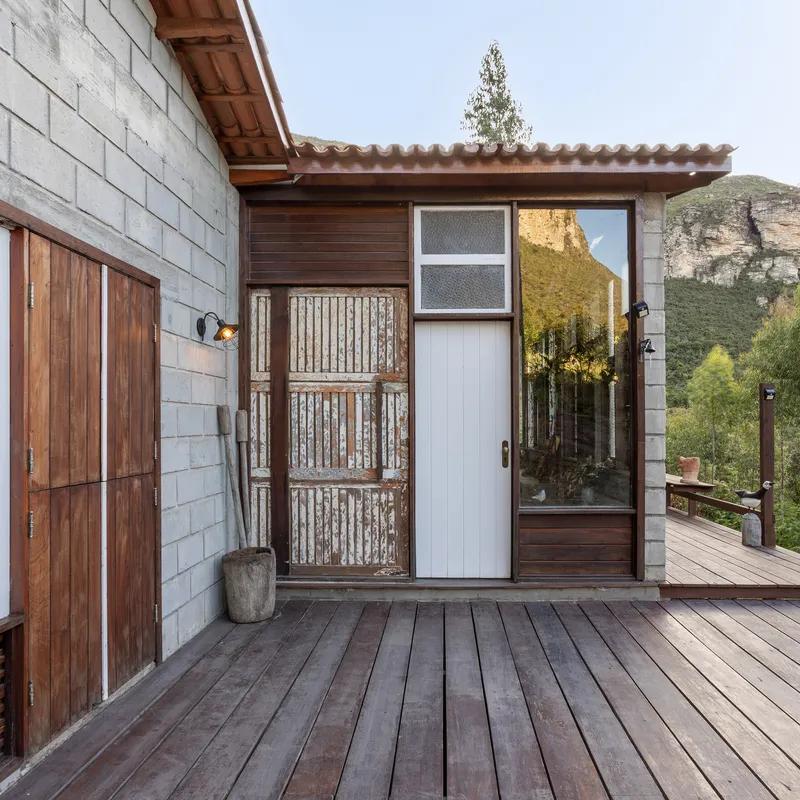
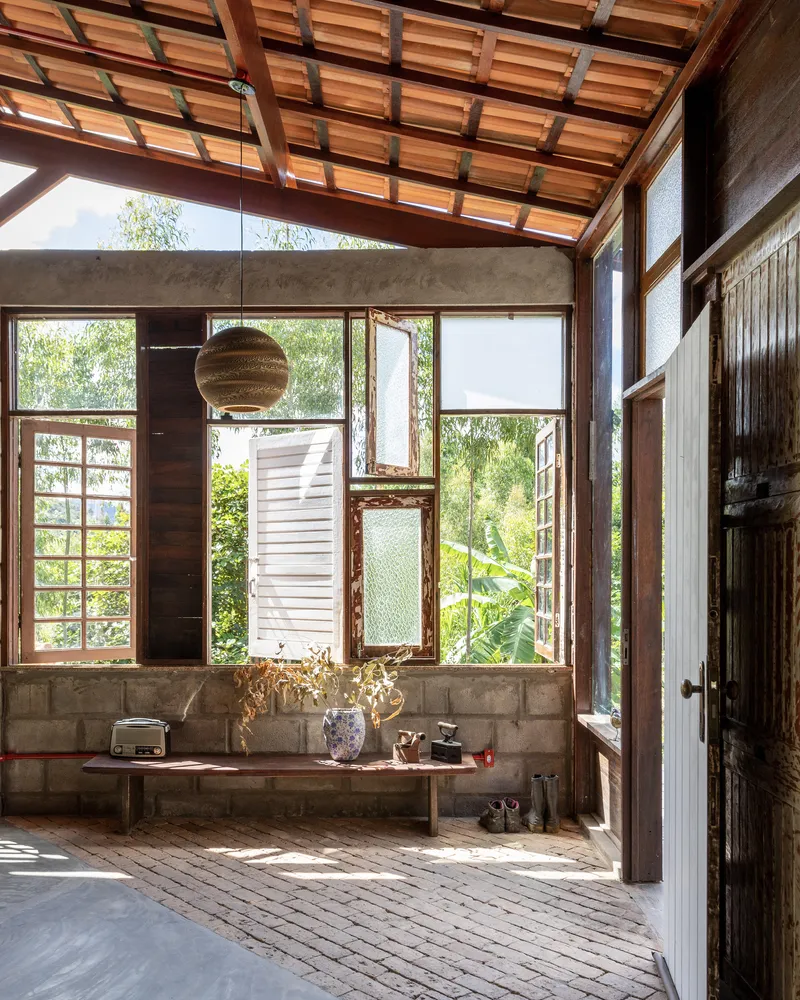
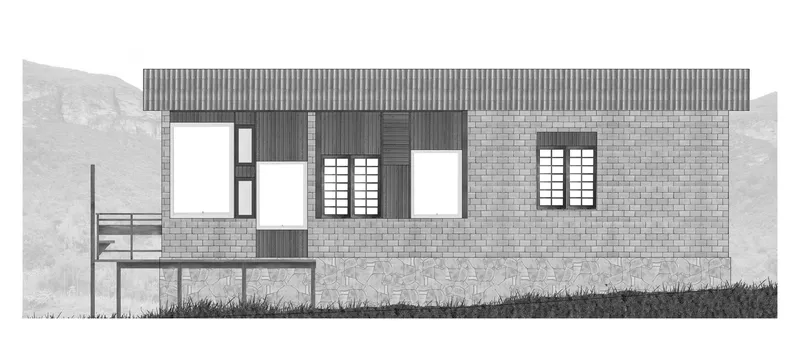
The gable-end facade is the house's most public face, and it establishes the vocabulary immediately: exposed concrete block laid in a running bond, timber shutters that swing open to reveal gridded windows, and exposed rafter tails beneath a generous overhang. There is no render, no paint, no attempt to unify these materials under a single finish. Each one ages at its own rate, which means the house will develop a patina that records the passage of time in the Chapada's humid climate.
The variety of window types across different facades is worth noting. Some are large gridded panels filtering light through a lattice. Others are small timber-framed openings punched into the block wall. The architects clearly worked elevation by elevation, adjusting perforation to balance views, ventilation, and privacy rather than applying a single rule across the board.
Living Spaces Under Exposed Structure
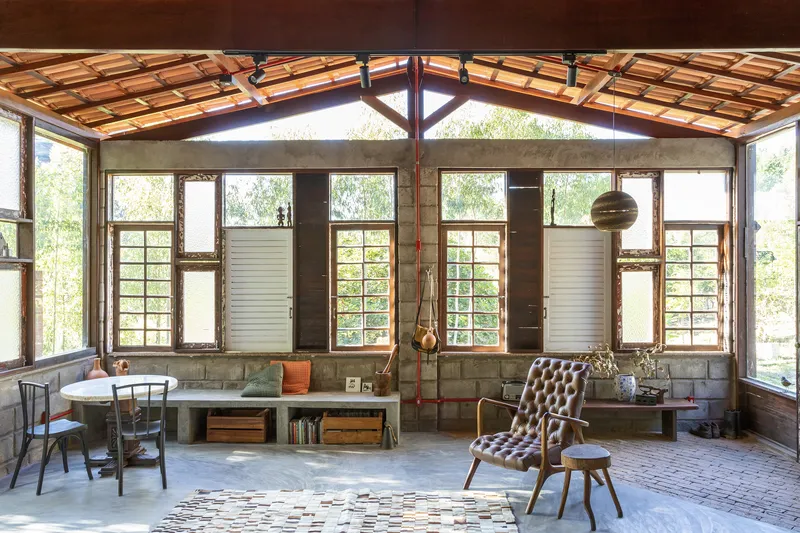
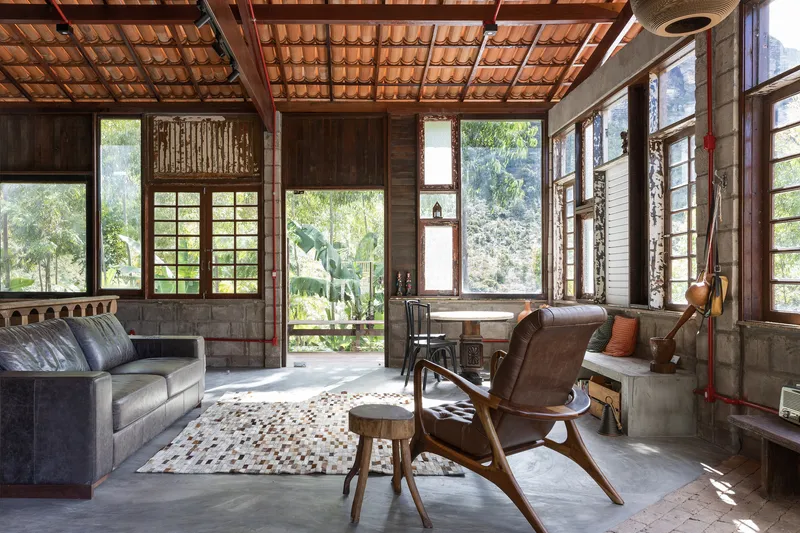
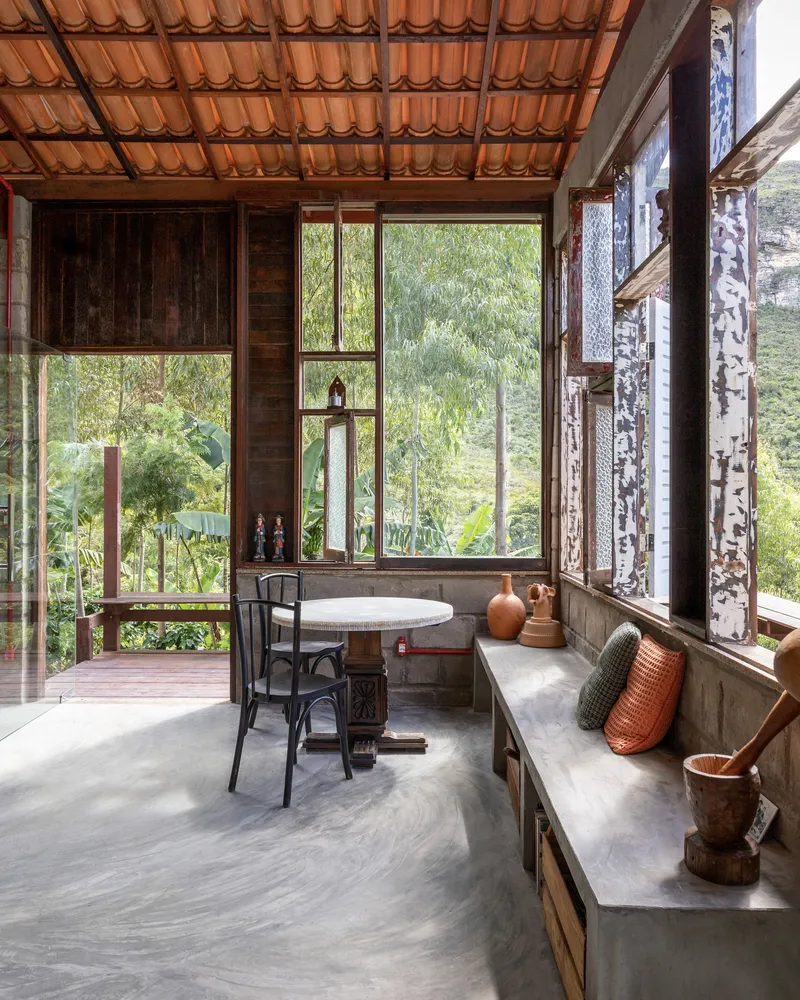
Inside, the roof structure is the architecture. Timber rafters and clay tile soffits create a warm, textured ceiling plane that hovers above the concrete block walls. Because there is no dropped ceiling or insulation layer, the thermal mass of the clay tiles and the ventilation through the ridge work together to regulate temperature passively. The living room captures this logic at its most generous: high ceilings, grid windows filtering green light from the surrounding vegetation, and a floor level that puts you at eye height with the tree canopy outside.
The dining nook, with its built-in concrete bench seating beneath timber-framed windows, is one of the most successful moments in the house. It compresses space and pulls the view in close, framing the hillside vegetation like a painting you sit inside. The restraint of the material palette, concrete, timber, and nothing else, lets the landscape do the decorative work.
Kitchen and Private Rooms
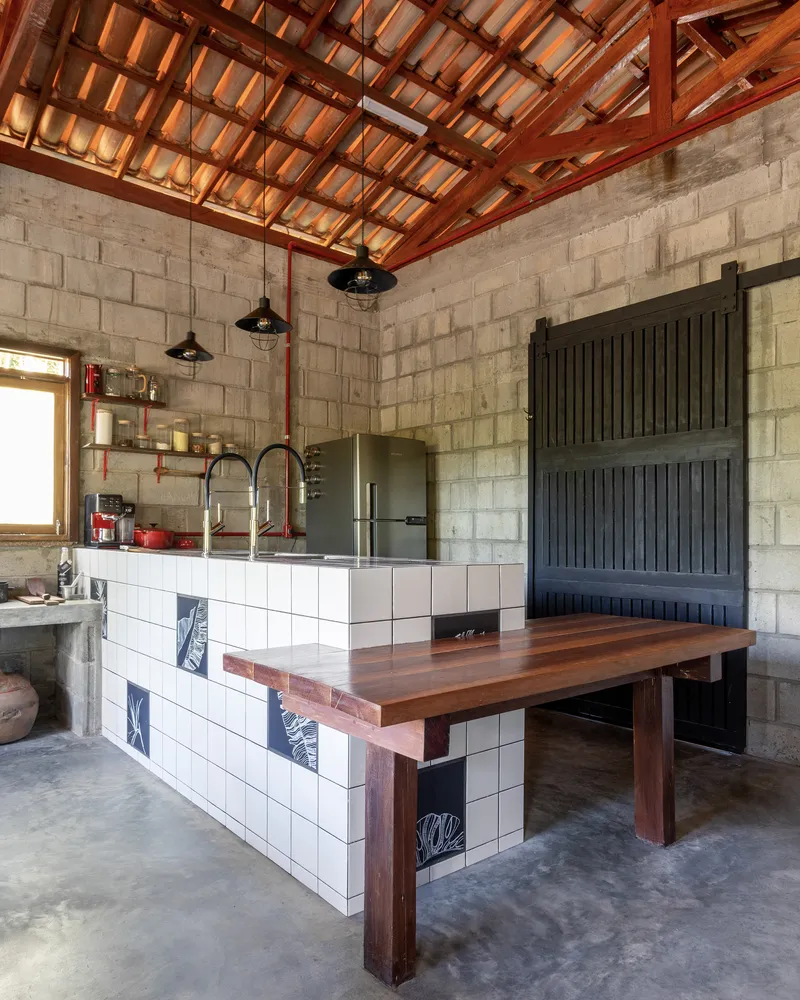
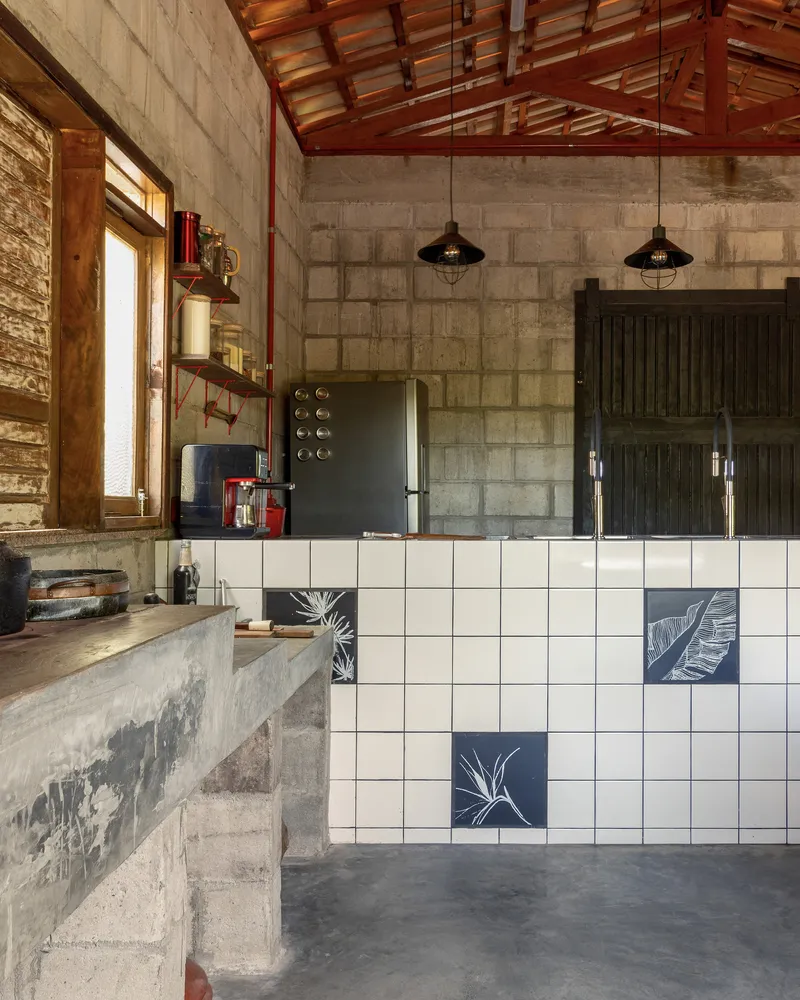
The kitchen anchors the house's social core with a white-tiled island topped by a thick timber countertop. Botanical motif tiles add a rare moment of decorative specificity, a nod to regional craft traditions that breaks the otherwise austere material logic without undermining it. Above, the exposed clay tile ceiling continues uninterrupted, tying the kitchen volume back to the living spaces.
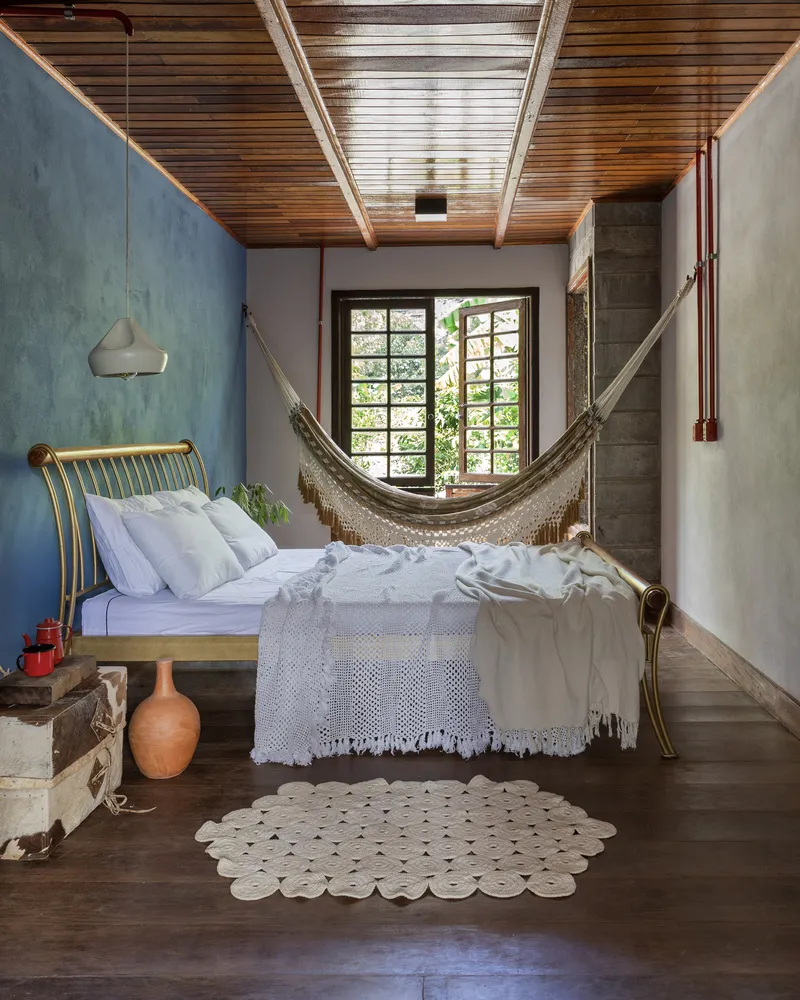
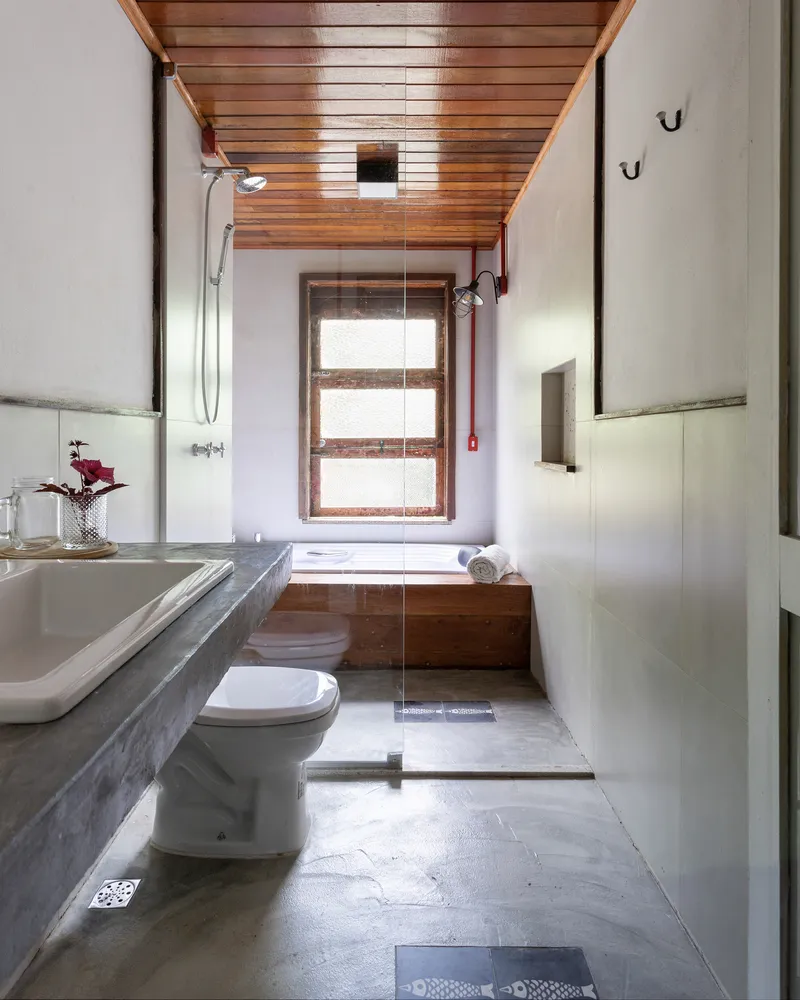
The bedroom wing is quieter in ambition but no less considered. Timber plank ceilings lower the scale, a hammock replaces a reading chair, and a gridded window frames a single composition of vegetation and sky. The bathroom takes the timber warmth to its most intimate expression: a wood-clad tub beneath a horizontal window, with tongue-and-groove planks overhead. These rooms understand that comfort does not require complexity.
Passage and Light
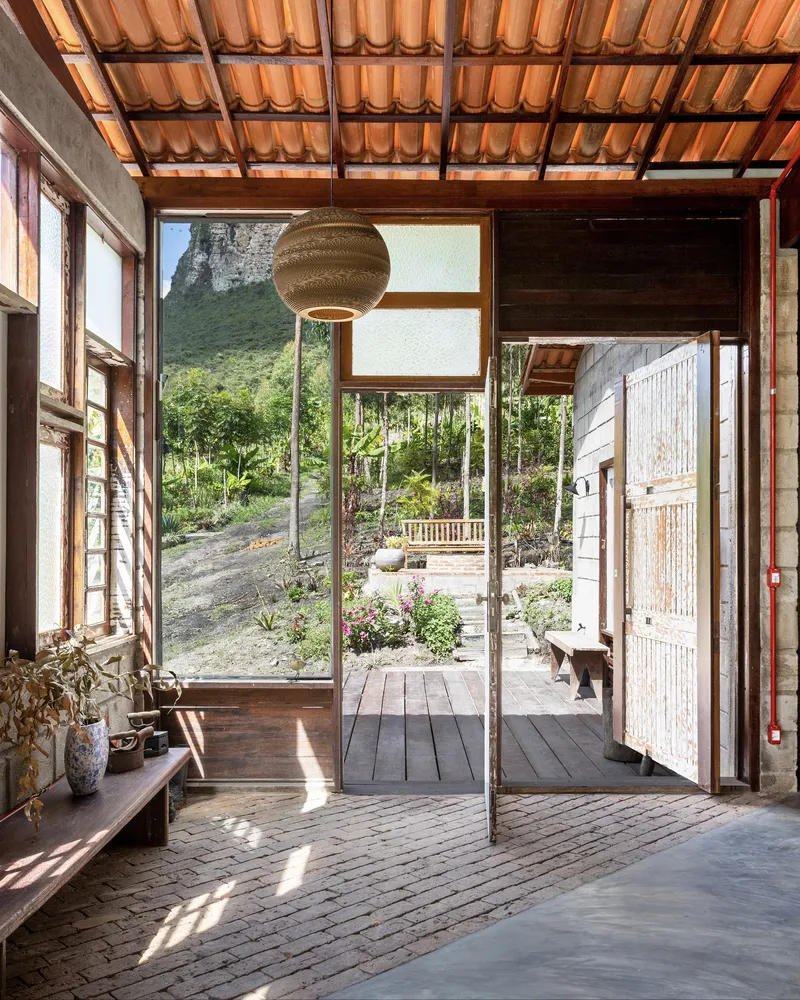
The entry foyer demonstrates how carefully daylight was choreographed throughout the house. Standing inside and looking out through the open doors, you see the garden courtyard framed as a luminous rectangle, the exposed clay tile ceiling glowing warm overhead. Light enters the house in controlled doses: filtered through grid screens, bounced off concrete floors, or admitted directly through open doorways. The architects clearly understood that in a subtropical highland climate, managing light is as important as managing rain.
Plans and Drawings
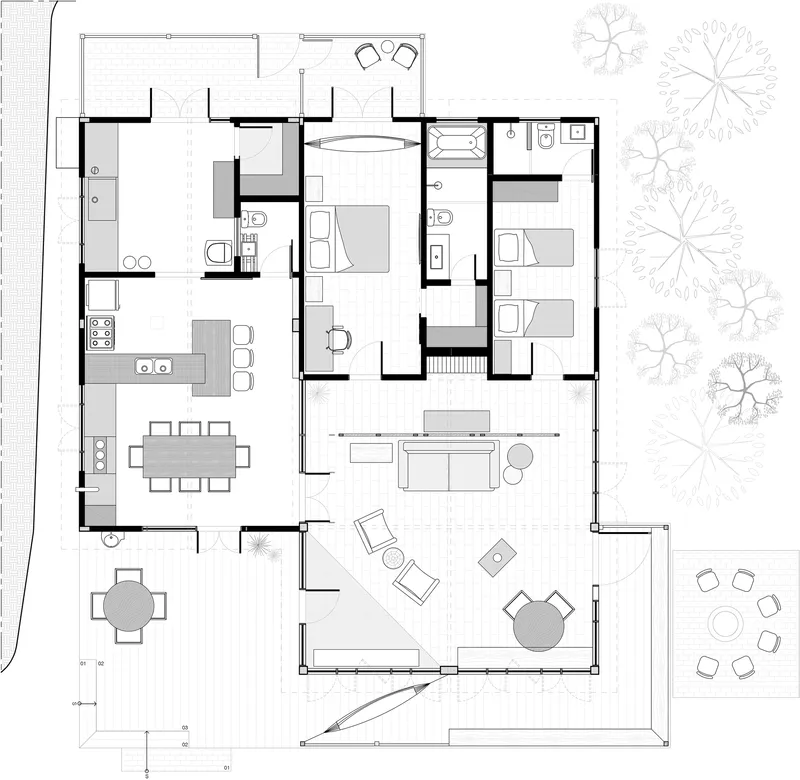
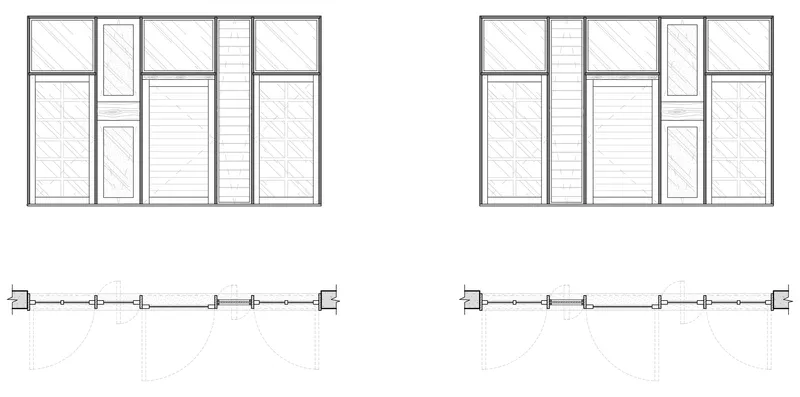
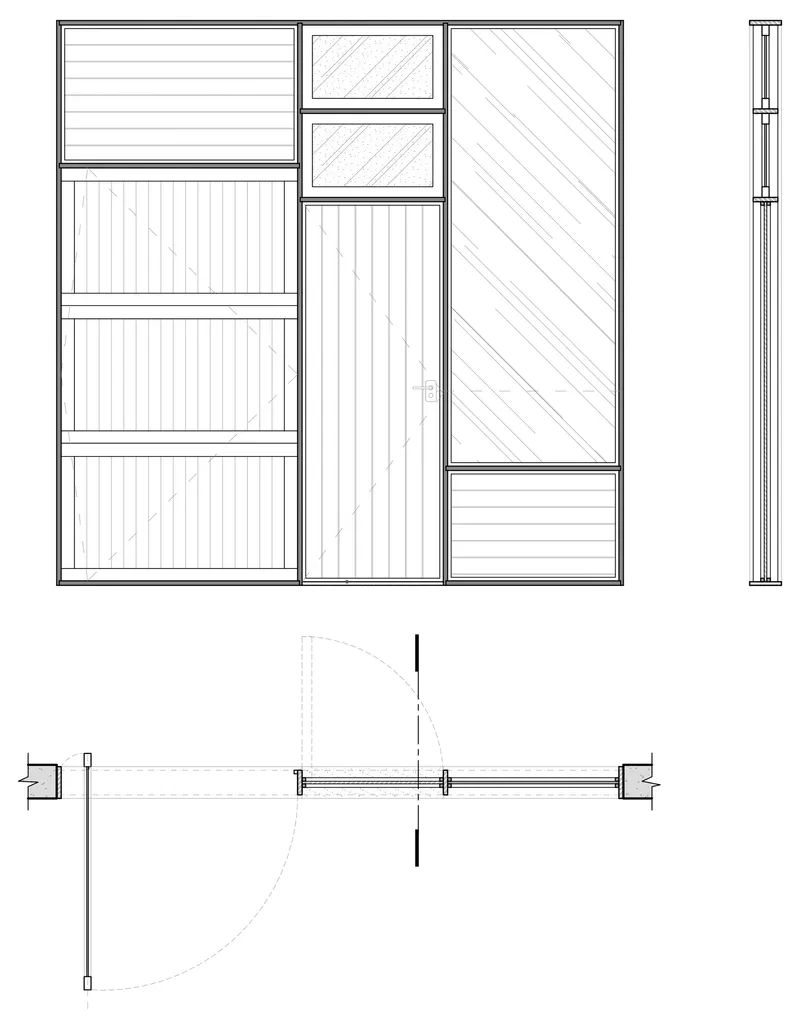
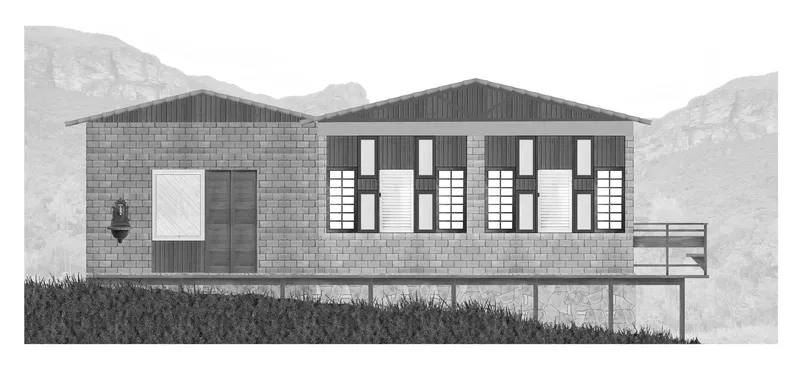
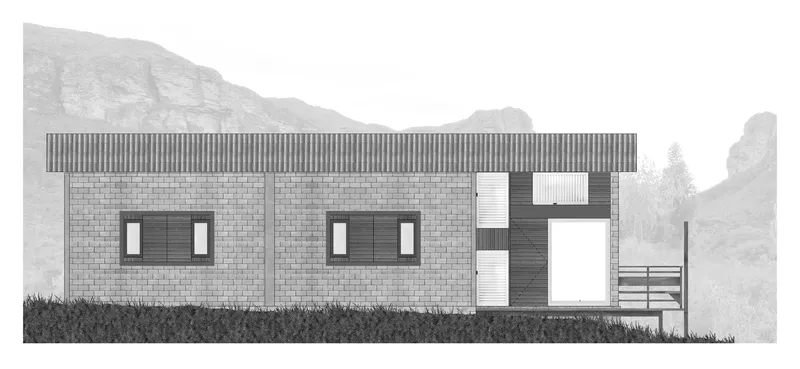
The floor plans reveal a straightforward organizational strategy: a bedroom wing at one end, kitchen and dining at the center, and the covered terrace extending the social space outward. The two-level plan shows how the terrain's slope is absorbed by a half-level shift, keeping the house low while gaining a generous covered zone beneath the deck. It is a solution as old as hillside building itself, executed here with precision.
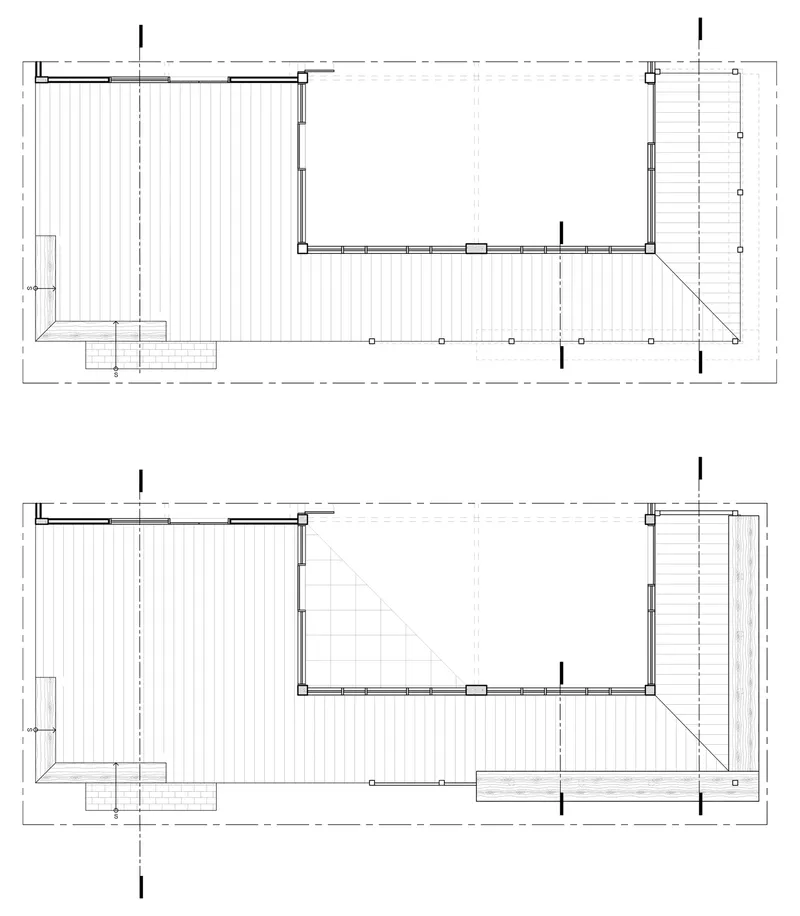
The elevation drawings are particularly instructive. They show how the facade's apparent informality is actually a carefully composed patchwork of vertical and horizontal paneling, shuttered openings, and exposed structure. The section drawing includes a swing radius notation for the facade panels, evidence that each operable element was designed to clear its neighbors and the structural columns. The rendered elevations, set against the mountain silhouette, confirm that the house's profile was shaped in dialogue with the ridgeline behind it.
Why This Project Matters
Carcará House matters because it demonstrates that a limited budget and a limited palette are not limitations at all. They are design tools. By refusing to import materials or technologies foreign to the region, Victoria Nizarala Arquitetura produced a house that belongs to its site in a way that more expensive, more technologically sophisticated buildings rarely achieve. The solar panels on the roof are the only concession to the twenty-first century; everything else could have been built with the knowledge and hands available in Ibicoara.
More broadly, the project is a rebuke to the idea that contemporary residential architecture must announce itself through formal novelty. Carcará House is not trying to be new. It is trying to be correct: correct for its climate, its terrain, its builders, and its inhabitants. That ambition, pursued with rigor and without sentimentality, produces architecture that will outlast most of its flashier contemporaries.
Carcará House by Victoria Nizarala Arquitetura. Ibicoara, Brazil. 210 m². Completed 2021. Photography by Dander Freitas.
About the Studio
Share Your Own Work on uni.xyz
If projects like this are the kind of work you want to make, uni.xyz is a place to publish your own, find collaborators, and enter design competitions.


Popular Articles
Popular articles from the community


The Ocean Hive: Sustainable Architecture for a Self-Sufficient Civilization at Sea
The Ocean Hive imagines sustainable architecture at sea, where modular habitats, algae, wave power and ocean waste sustain a growing colony.

Conexión: Biophilic Design Reimagines High-Rise Living in Hong Kong
Conexión reimagines high-rise living in Hong Kong through biophilic design, green facades, shared spaces, daylight, water and nature within.

Hill & Cross Opera: Sculptural Opera House Architecture Shaped by Tallinn’s Landscape and Identity
Hill & Cross Opera reimagines opera house architecture in Tallinn through its sculptural hill, civic plaza, glass wave and a luminous cross.

Co-Life: Senior Housing Design That Reconnects Older Adults With the City
Co-Life reimagines senior housing design through healing gardens, shared streets, workshops, and a sustainable community across generations.

Similar Reads
You might also enjoy these articles

Bao Huynh Watercolor Atelier: A Serene Art Retreat in Hội An
Bao Huynh Watercolor Atelier in Hội An blends multifunctional art spaces, sustainable design, local materials, and family-friendly living in a serene environment.

Atelier Macri Concept Store Interior Design by CASE-REAL
Atelier Macri store features a "ko" counter, walnut wood details, cork displays, blending retail, gallery, and seamless customer experiences.

Manuel Vargas Izquierdo Stadium and High-Performance Sports Center: Architectural Excellence in Jalpa de Méndez
The Manuel Vargas Izquierdo Stadium blends sustainable design, inclusive sports facilities, and cultural-inspired architecture, revitalizing Jalpa de Méndez’s public spaces.

KAKR Buluh Awar Hall: Revitalizing Community and Ecology Through Bamboo Architecture
Community built bamboo hall revitalizes Buluh Awar village, empowering youth, restoring ecology, celebrating vernacular craftsmanship through sustainable architecture and culture.


Comments (0)
Please login or sign up to add comments
No comments yet. Be the first to comment!